Tag: citizen

  • Every citizen will gain GHS20k in shares under my leadership – Nana Frimpomaa

    Every citizen will gain GHS20k in shares under my leadership – Nana Frimpomaa

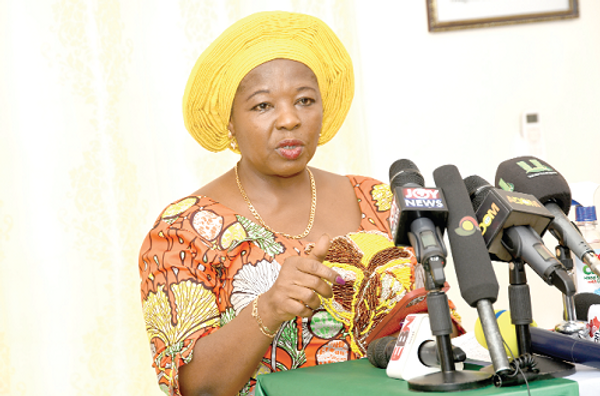
    The flagbearer of the Convention People’s Party (CPP), Nana Frimpomaa Sarpong Kumankuma, has announced a strategic focus on human capital investment as a cornerstone for Ghana’s development.

    In her proposal, each Ghanaian would be entitled to GH₵20,000 in shares, which would be allocated not as cash but as a stake in state enterprises, farms, and businesses.

    This initiative aims to foster partnerships between the government and citizens, empowering Ghanaians to co-own national assets and actively participate in the country’s economic growth.

    “Every Ghanaian will be given GH ₵20,000 as your shares. It is not money that you are going to take and put in your pocket but it is money that will give you rights to the businesses, the state farms and the state enterprises.

    “It is not going to be the now government fully-owned enterprises, it would be a partnership between government and the citizens but you will be empowered,” she said on JoyNews AM show.

    She further explained that, if granted the political mandate, this initiative would be implemented through the local government system.

    This approach ensures that each individual receives their share directly from their local government, enhancing community involvement and accountability.

  • I won’t vote again, the delegates take GHS5K and give us GHS200 to vote for NPP – Citizen

    I won’t vote again, the delegates take GHS5K and give us GHS200 to vote for NPP – Citizen

    A Ghanaian citizen, identified as Afia, has expressed frustration over the disillusion with voting processes.

    She has vowed not to vote again because she believe that delegates (who are typically party representatives or key decision-makers) receive GHS 5,000 as a bribe or incentive, while ordinary voters like herself only receive GHS 200 to vote for the New Patriotic Party (NPP).

    “Recently, Shirley informed us, the pure water vendors, that we would each receive GHS 500 to start our businesses. However, when some of us showed up, we were told that this isn’t our voting center. It seems that, even though we are all NPP members, Shirley is insisting that you must vote in his constituency to get the GHS 500.”

    “When they come, they try to sway your vote by offering GHS 200. Meanwhile, the delegates have already received GHS 5,000, along with fridges and other items, and then they approach me, trying to convince me to vote for the NPP,” Afia expressed.

  • Citizens must seek approval before fixing roads – Local Government Service

    Citizens must seek approval before fixing roads – Local Government Service

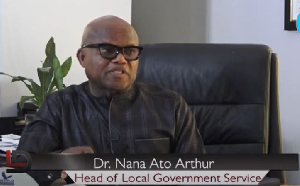
    The Head of the Local Government Service, Dr. Nana Ato Arthur, has addressed the importance of obtaining approval from district assemblies for road construction by private individuals.

    He emphasized that while individuals may have the resources to develop roads in their areas, this does not automatically grant them the authority to proceed without proper approval.

    In an interview with Etsey Atisu on The Lowdown, broadcast on GhanaWeb TV, Dr. Arthur highlighted that there are established procedures for road development, similar to those required for land use.

    “If a citizen in a given area wants, let’s say, this 500meter road in front of our house tarred in the area, you have to go the assembly, get approval from the assembly, for the assembly to know that this road is being done privately by these residents along this corridor.

    “You cannot just get up and say I live here, I have money, I am tarring this 5-10meter road – this stretch around our area, without approval from the assembly… yes, it is helping, but you can’t be doing things haphazardly because the assembly would have even come that this is the way this road has been designed… mind you, even when you have your piece of land and you want to put up a building, there are procedures,” he said.

    Dr. Nana Ato Arthur responded to a recent incident involving Nana Addo Boaman, the Chief of Nahinso in the Ashanti Region, who was arrested by the Asokwa Municipal Assembly for carrying out road construction without the necessary official approval.

    The chief had previously appealed to authorities for help with the deteriorating road conditions in his area, which were causing frequent flooding.

    However, his requests had gone unanswered, prompting him to take matters into his own hands.

  • United States contractor convicted of being a spy for Ethiopia

    United States contractor convicted of being a spy for Ethiopia

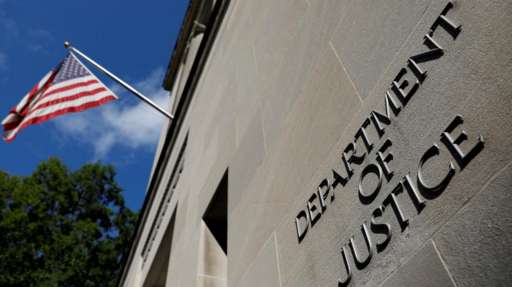
    An Ethiopian-born contractor, Abraham Teklu Lemma, who had worked for the State and Justice departments in the United States, has been apprehended and charged with transmitting classified information to Ethiopia.

    The Justice Department alleges that Abraham Teklu Lemma, aged 50, had been sharing classified information with an individual linked to Ethiopia’s intelligence service since August of the previous year.

    While the department did not explicitly mention the African nation he was accused of spying for, it has been reported by various US media outlets, including the New York Times, as Ethiopia.

    Lemma is facing three charges, including collecting or conveying defense information to support a foreign government, unauthorized possession of national defense information, and willfully retaining it.

    A naturalized US citizen of Ethiopian descent residing in Silver Spring, Maryland, Lemma worked as an IT administrator for the Department of State and as a management analyst for the Department of Justice.

    He had been granted top-secret security clearance and access to classified US systems.

    If convicted of espionage, he could potentially face the death penalty.

  • American citizen held captive in Niger for six years has been released

    American citizen held captive in Niger for six years has been released

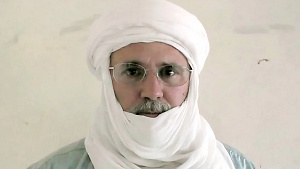
    An American humanitarian worker, Jeffrey Woodke, who was abducted in Niger more than six years ago and held prisoner by terrorists had been freed.

    President Joe Biden’s national security advisor, Jake Sullivan tweeted on Monday, March 19 2023, that an American humanitarian worker who was abducted in Niger more than six years ago

    “I’m gratified & relieved to see the release of U.S. hostage Jeff Woodke after over 6 years in captivity. The U.S. thanks Niger for its help in bringing him home to all who miss & love him. I thank so many across our government who’ve worked tirelessly toward securing his freedom,” Sullivan tweeted.

    Jeffery Woodke is now being offered support and transport. He was released outside of Niger in the Mali-Burkina Faso area, the official said.

    “We are working closely with partners in the region and beyond to ensure safe transport and immediate access to the best medical and psychiatric support we can offer,” a senior administration official told reporters on Monday. “Where exactly Jeff chooses to go will be a bit up to him.”

    The US government has been working on efforts to secure Woodke’s release for years, relying on both intelligence and military resources, the official said. But ultimately the government of Niger was central to securing his release, the official said.

    US Secretary of State Antony Blinken hailed the release of Woodke at a press conference at the State Department later on Monday.

    “As you know, I have no higher priority or focus than bringing home any unjustly detained American, wherever that is in the world,” said Blinken. “We won’t rest until they’re all home and, like Jeffery, reunited with their families.”

    Blinken thanked Niger’s government, Special Envoy for Hostage Affairs Roger Carstens and “all of those who have been working at the department” on Woodke’s case.

    Blinken visited Niger earlier this month.

    “We have certainly been in touch with them about what a priority it is, for us to secure the release of Americans like my Jeff Woodke, and that’s something that the Secretary confirmed when he was out there,” the official said, adding that Niger would be able to share more details about the release.

    On his trip, Blinken announced $150 million in new humanitarian aid for the region.

    “It will help provide life-saving support to refugees, asylum seekers, and others impacted by conflict and food insecurity in the region,” Blinken said in a statement about the aid which will go to Niger, Burkina Faso, Chad, Mali and Mauritania.

    Terror groups linked to al Qaeda and ISIS have been active in Niger for years.

    Without saying which specific terrorist group held Woodke, the official pointed to several “intersecting overlapping terrorist networks in that part of West Africa.” The official added that these terrorist networks see “kidnapping and hostage-taking as part of their business model frankly, and as a source of revenue and support.”

    The official thanked the government of Niger which was involved in the efforts to secure his release, adding that the US did not pay any ransom to terrorists.

    The US did not pay any ransom to terrorists to get Woodke released, the official said.

    “There was no direct negotiation here between the US government and the terrorist organizations, it is worth making that clear. Certainly, we did not pay a ransom a concession to a terrorist organization here,” the official said.

    “Emerging as our best line of effort among many that we have tried over the years was working to see what a very good and capable and thankfully willing partner in Niger was able to deliver in their own engagement,” the official added.

    In addition to the release of Woodke, French journalist Olivier Dubois, who was abducted in 2021 in Mali, was freed Monday, according to a tweet by French President Emmanuel Macron.

    Dubois was moved to Niger after his release.

    “We feel joy and immense relief. Our colleague was held hostage for 711 days in Mali. His captivity was the longest for a French journalist held hostage since the Lebanon war,” a statement by Reporters Without Borders said.

    Dubois was kidnapped in the Gao region north of Mali by an al Qaeda-linked group known as the GSIM.

    “We thank the French authorities for having implemented the necessary means to obtain his release. It is the honour of France not to let the hostages down and to allow them to regain their freedom,” added the RWB statement.

  • Libya a ‘den of mercenaries’, say war-weary citizens

    After 10 months of fighting that has torn their country apart, exhausted Libyans voice deep fears and say their fate is no longer in their own hands.

    The oil-rich North African country has been mired in chaos since a 2011 NATO-backed uprising that killed long-time dictator Muammar Gaddafi, with two rival administrations vying for power.

    The conflict deepened last April when military strongman Khalifa Haftar, who controls much of Libya’s south and east, launched an assault to seize Tripoli, the base of the UN-recognised Government of National Accord (GNA).

    A fragile ceasefire, brokered by Moscow and Ankara, was established on January 12. And at an international summit in Berlin a week later, world leaders agreed to end all foreign interference in Libya and to uphold a weapons embargo.

    But on the streets of Libya, war-weary citizens are increasingly hopeless, telling AFP that their resource-rich country has become a plaything of foreign powers.

    The fighting has drawn in a range of foreign combatants, among them reportedly Russian mercenaries, Sudanese militiamen for hire and members of pro-Turkish Syrian units.

    Mohammad al-Barouni, a student from Tripoli, charged that foreign players had been sending weapons and fighters into Libya “without fear or shame”. “After 10 months of fighting… the capital and its suburbs have become a den of mercenaries where arms are flooding in, in broad daylight”, he said.

    Nouri Bengharsa, a civil servant, complained that “since the fall of Gaddafi, Libyans have allowed foreigners to meddle in their affairs, and now they can’t get rid of them”.

    Libyan politicians were partly to blame because they are “incapable of dialogue in their own country,” he said while shopping in a vegetable market in Janzour, west of the capital.

    “Yet they run to foreign capitals where they have specific agendas dictated to them.”

    The UN Security Council has been plagued by divisions over Libya and has been unable to adopt any resolution on the conflict for the past 10 months.

    Salem al-Mahmudi, a vendor, said the international community had “not managed to tame” the countries that support eastern commander Haftar or Fayez al-Sarraj’s Tripoli-based GNA.

    Those countries were exploiting the truce to dispatch new military reinforcements ahead of a “great battle” in Tripoli, Mahmudi said.

    Haftar has the backing of Egypt, the United Arab Emirates and Russia, among others, while the GNA is mainly supported by Qatar and Turkey.

    Despite the ceasefire and the commitments made in Berlin, the military escalation has intensified.

    Mahmudi said “Libyan airports and ports are used to transfer arms and fighters in the full view of the international community… which doesn’t dare even name the states fuelling the conflict”.

    “The warring parties see a military solution as the only way to end the fighting,” said the trader, aged in his 50s, adding that this option was “more realistic” as no political solution had so far been reached.

    The UN’s Libya envoy Ghassan Salame last week accused “unscrupulous” foreign actors — without specifying who — of continuing to meddle in Libya’s conflict, in violation of the Berlin commitments.

    Warring parties “have continued to receive a sizable amount of advanced equipment, fighters and advisors from foreign sponsors”, he told the Security Council, warning that such moves “threaten to precipitate a new and much more dangerous conflagration”.

    Representatives on both sides of the conflict were meeting in Geneva this week in a UN-sponsored joint military commission. They agreed on the principle of turning their shaky truce into a lasting ceasefire, Salame said.

    The UN envoy said the two sides would meet again for talks on economic cooperation, in Cairo on February 9, and could hold political talks on resolving the conflict in Geneva in two weeks’ time.

    Ibtissam al-Mezoughi, a retired public servant and mother of four, voiced deep scepticism about the ongoing diplomacy in faraway capitals.

    Whether meetings are held in “Berlin or Geneva, it’s not a question of ending the war, but of putting the finishing touches on international actors’ areas of influence”, she said.

    “The Libyans have lost control. It’s too late”, she said, voicing fear that her country, now divided into zones of foreign influence, was becoming “another Syria”.

    Source: AFP