Kwaku Sey, aged 19 and a resident of Dambai Lakeside, reportedly lost his life on Sunday, May 5, amidst clashes between the police and enraged youth at the Dambai Town Hall, the capital of Eastern Krachi in the Oti region.
According to Francis Gesaloge Boyesah Okoro, a community resident, the police, during a night patrol, intervened to apprehend some “ghetto” youths allegedly consuming narcotics.
Mr Okoro claimed that Sey resisted arrest, leading to a chaotic situation where warning shots were fired, inadvertently hitting Sey with a stray bullet. Sey succumbed to his injuries later at the hospital.
Emmanuel Atali, the Assemblyman for Dambai Lakeside, corroborated the altercation’s occurrence, stating he heard a gunshot around 8:00 pm on Sunday and discovered Sey lying in a pool of blood.
He promptly reported the incident to the police, and Sey’s body was transferred to Worawora Hospital for preservation.
The incident triggered panic among residents, prompting them to seek refuge.
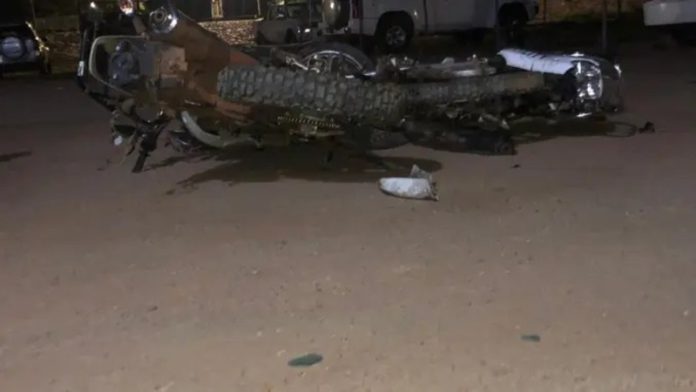
Additionally, some irate youths damaged two police motorcycles on the scene.
In response, authorities have arrested two individuals to aid in the ongoing investigation. However, there has been no official statement from the police regarding the incident when the Ghana News Agency sought verification at the station.
On Sunday, November 5, more than 20 individuals lost their lives as shells struck a market located in a suburb near Khartoum, the capital of Sudan, as reported by a committee of lawyers advocating for democracy.
This incident represents the most recent occurrence of violence in the ongoing conflict that began in April, involving the military forces led by Abdel Fattah al-Burhan and his former deputy, Mohamed Hamdan Daglo, who commands the Rapid Support Forces (RSF).
According to a statement from the pro-democracy lawyers’ committee, the shelling took place in Omdurman during a fierce firefight between the two opposing factions.
“More than 20 civilians have been killed and others have been wounded,” said the statement, which was sent to AFP. The committee keeps track of rights violations during the conflict and its civilian victims.
A medical source reported on Saturday that 15 civilians lost their lives as a result of shells hitting residential houses in Khartoum. Omdurman has frequently been the epicenter of intense clashes between the opposing sides.
Although most of the conflict had previously been concentrated in the capital and the western Darfur region, witnesses have noted its expansion to areas south of Khartoum.
According to a conservative estimate by the Armed Conflict Location & Event Data Project, the Sudan conflict has claimed the lives of more than 10,000 individuals.
However, humanitarian organizations and medical professionals have consistently cautioned that the actual toll surpasses the documented numbers, as many of the wounded and deceased never make it to hospitals or morgues.
The war has forced an estimated 5.5 million people to flee, with displacement occurring both within Sudan and across its borders, as reported by the United Nations.
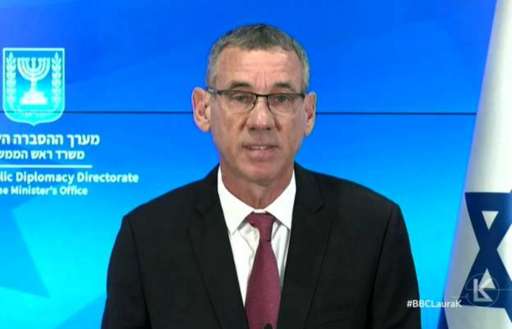
Senior adviser to the Israeli Prime Minister, Mark Regev, has dismissed criticisms from humanitarian organizations regarding Israel’s actions possibly constituting war crimes.
Amidst Israel’s military offensive in the Gaza Strip, where more than 2,300 people have lost their lives, Israel made the decision to cut off power and water to Gaza. The airstrikes came in response to a recent attack by Hamas, which resulted in over 1,300 casualties in Israel.
When questioned about the casualties in Gaza, Regev disputed the reported numbers, attributing them to Hamas. He argued that there was no clear differentiation between combatants and civilians.
Recently, the BBC corroborated a video displaying the aftermath of an attack on a convoy of civilians attempting to escape northern Gaza.
The footage showed at least 12 bodies. While Gaza authorities claim it was an Israeli airstrike, Regev maintained that Israel does not intentionally target innocent civilians who are not involved in combat.
He suggested that some footage emerging from Gaza might be manipulated, though he did not delve into specifics.
Hamas, recognized as a terrorist organization by various countries, including the UK and the US, has urged Palestinians to disregard Israel’s evacuation directives for northern Gaza.
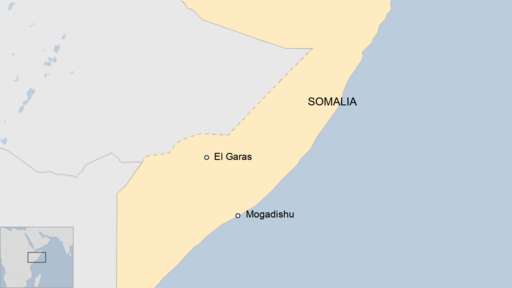
Reportedly, an air strike targeting Islamist militants in central Somalia has resulted in the alleged deaths of seven civilians, including a grandmother and five children.
The Somali government had previously announced the elimination of three senior al-Shabab members in El Garas village through a sophisticated operation, as reported by the Somali National News agency, Sonna.
The three al-Shabab members were tracked by government intelligence when they sought refuge in a civilian residence to evade the strike. However, the government has denied responsibility for the civilian casualties, with Deputy Information Minister of Somalia, Abdirahman Yusuf, telling the BBC that “[Al-Shabab] placed explosive devices in a civilian house, which caused the deaths of innocent people.”
Ahmed Nur Mohamud, the husband of 60-year-old Kaha Warsame, who, along with her grandchildren, reportedly perished in the strike, recounted that he was about 1km (1,100 yards) away from the house when the bombing occurred, accompanied by his second wife and their children. He expressed his anguish, stating, “I tried to call them, and their phones were off… When I tried to reach my family’s house around 03:00, there were government soldiers, and I was afraid to go in. I arrived at the house later and realized that the government had taken the bodies with them.” Ahmed Nur Mohamud also described seeing two bombs hitting his family’s dwelling, one on their hut and another on the goat’s shelter.
Witnesses corroborated that the Somali army had removed deceased individuals from the residence. Furthermore, the deputy information minister confirmed to the BBC that Somali soldiers had arrived at the scene following the bombardment.
In his quest for closure, Ahmed Nur is requesting to view the bodies of his wife and grandchildren, emphasizing, “We have never been involved with al-Shabab; we are civilians. I’m requesting the bodies of my family for burial. I demand compensation for my blood relative.”
Ethiopian doctors based in the capital, Bahir Dar, in the Amhara region, have reported that a significant number of civilians have lost their lives in recent clashes between local militias and government forces, as conveyed to the BBC.
A physician at the primary hospital in the city reported that the casualties encompassed not only adults but also included elderly individuals and a five-month-old infant.
Local residents recounted that a militia had seized control of a prison facility, resulting in the release of inmates.
Tensions have escalated since April, following the government’s announcement of dismantling regional forces throughout Ethiopia. This move sparked protests among Amhara nationalists, who argued that it would weaken their region.
In a statement issued on Tuesday, the government noted relative tranquility in certain parts of the region, while actions were being taken to disband militias in the two largest cities, Bahir Dar and Gondar.
As a response to the situation, Ethiopian Airlines has declared the suspension of flights to four airports in the region, including Bahirdar and Gondar, for a duration of three days.
Armed attackers raided two villages in southeast Kenya, killing five residents in the process, according to the police.
The police source said the attack on Sunday took place in the Lamu County villages of Juhudi and Salama, which border Somalia.
The attackers also burned houses and destroyed property.
A 60-year-old man was bound with a rope and “his throat slit, his house was burnt with all belongings”, police said. Three others were killed in a similar manner while a fifth victim was shot.
Resident Hassan Abdul said that “women were locked in the houses and the men ordered out, where they were tied with ropes and butchered”.
A secondary school student was among the five people killed, Abdul said, adding that “all those killed were slashed and some of them had been beheaded”.
Another local resident, Ismail Hussein, said that the fighters stole food supplies before leaving, firing their arms into the air.
Police described the incident as a “terrorist attack”, a phrase they typically use to refer to incursions by Somalia’s al-Shabab group.
Lamu is near Kenya’s border with Somalia and fighters from al-Shabab frequently carry out attacks in the area in a bid to push Kenya to withdraw troops from Somalia, where they are part of an international peacekeeping force defending the central government.
Kenya first sent troops into Somalia in 2011 to combat the al-Qaeda-affiliated group and is now a major contributor of troops to an African Union (AU) military operation against the group.
But it has suffered a string of retaliatory assaults, including a bloody siege at the Westgate mall in Nairobi in 2013 that claimed 67 lives and an attack on Garissa University in 2015 that killed 148 people.
In Somalia itself, al-Shabab has continued to wage deadly attacks despite a major offensive launched last August by pro-government forces, backed by the AU Transition Mission in Somalia (ATMIS).
ATMIS, which has 22,000 troops, has been assisting Somalia’s federal government in its war against al-Shabab since 2022 when it replaced the AU Mission in Somalia (AMISOM).
Last week, four people were killed in northeast Kenya, with police saying al-Shabab was responsible. The incident took place when a vehicle was escorting a convoy of buses between the towns of Banisa and Mandera. Another security team from Banisa was attacked when it responded, police said.
On June 14, eight Kenyan police officers were killed when their vehicle was destroyed by an improvised explosive device in a suspected attack by al-Shabab, police said.
In the last two weeks, attacks linked to al-Shabab have killed another 10 people, according to police reports.
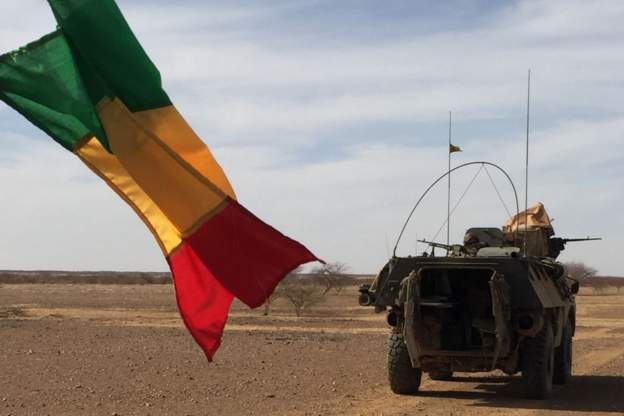
UN human rights investigators have indicated that Malian troops and foreign military personnel killed more than 500 people in a village in central Mali last year.
A new report says the killings in the village of Moura happened during an operation against a jihadist group.
After an exchange of gunfire, the villagers were rounded up and killed. Dozens of women were raped.
The foreign troops were described as white men speaking an unfamiliar language.
They’re widely believed to have been members of the Russian mercenary group, Wagner, which is active in Mali.
The UN Human Rights Commissioner Volker Turk said the killings could amount to war crimes and crimes against humanity.
The African Union (AU) reiterated its plea for a truce on Thursday, April 27 and urged Sudan’s neighbors and the world community to assist those fleeing the country’s deadly violence.
AU Commission Chairperson Moussa Faki Mahamat “continues to follow with growing concern the plight of civilians caught in the deadly conflict in Sudan,” his office said in a statement.
“The chairperson renews the call on Sudan’s neighboring countries, relevant regional and global agencies to facilitate the transit and safety of civilians crossing their borders unhindered,” the same source said.
Mr. Faki reiterated his call on the Sudanese army and the Rapid Support Forces (RSF) paramilitaries to “immediately agree on a permanent ceasefire to facilitate the delivery of humanitarian assistance to Sudanese in need.
Multiple attempts at a truce since the fighting began on April 15 have all failed.
A few hours before the expiry of a three-day ceasefire at midnight (22:00 GMT), which has hardly been respected, the army announced on Thursday evening that it would “extend the ceasefire for another 72 hours”, “following an initiative by Saudi Arabia and the United States”.
The paramilitaries have not yet commented on this announcement.
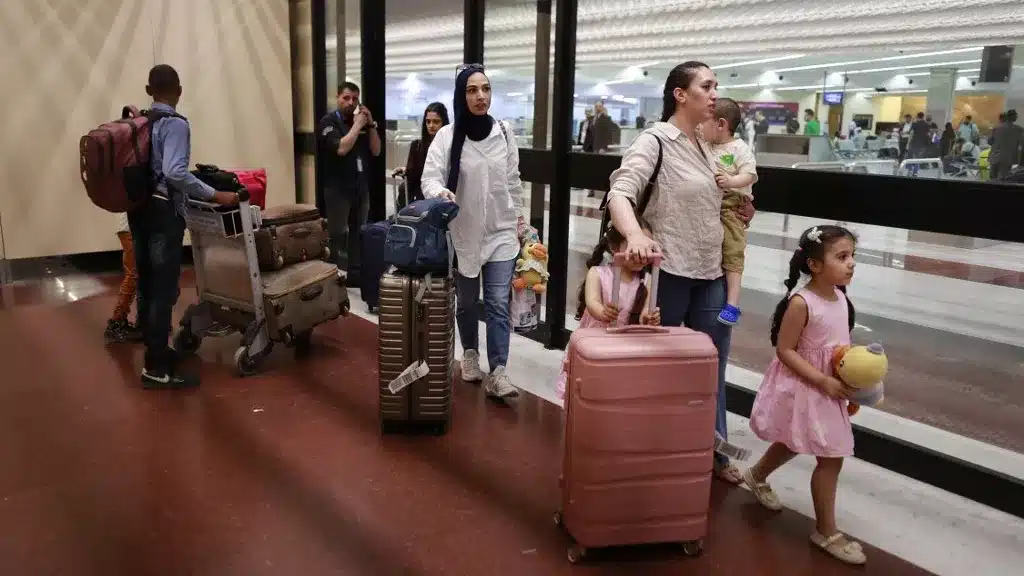
The fighting has caused a massive exodus in this country of 45 million people, one of the poorest in the world.
Tens of thousands of people have already arrived in neighbouring countries: Chad in the west, Ethiopia in the east, South Sudan and the Central African Republic in the south and Egypt in the north.
On the second day of clashes that left dozens dead, fierce fighting has persisted in the capital of Sudan despite a brief ceasefire to address humanitarian concerns, including the evacuation of wounded.
At least five civilians were killed and 78 wounded Sunday, bringing the two-day toll to 61 dead and more than1000 wounded, said the Sudan Doctors’ Syndicate.
According to Abdalla Hamdok, Former Sudanese Prime Minister:
“Peace remains the only feasible choice for the people of Sudan to avoid plunging the country into a civil war. Therefore, I call for an immediate cease-fire and to reach an agreement, which leads to a permanent cessation (of hostilities).”
The clashes are part of a power struggle between Gen. Abdel-Fattah Burhan, the commander of the armed forces, and Gen. Mohammed Hamdan Dagalo, the head of the Rapid Support Forces group.
The two generals are former allies who jointly orchestrated an October 2021 military coup that derailed Sudan’s short-lived transition to democracy.
The international community, which watched helplessly as the coup d’état took place in October 2021 and has not managed to convince the generals to sign a plan to end the crisis, is multiplying its calls for a ceasefire. The Arab League is meeting urgently at 09:00 GMT in Cairo, at the call of Egypt and Saudi Arabia, two influential players in Sudan.
The divisions between General Abdel Fattah al-Burhane, head of the army, and General Mohamed Hamdane Daglo, known as “Hemedti”, head of the Rapid Support Forces (RSF) – thousands of ex-militiamen of the Darfur war who have become official auxiliaries of the regular troops – degenerated into violence on Saturday morning in the streets of this country of 45 million inhabitants, among the poorest in the world, torn by war for decades.
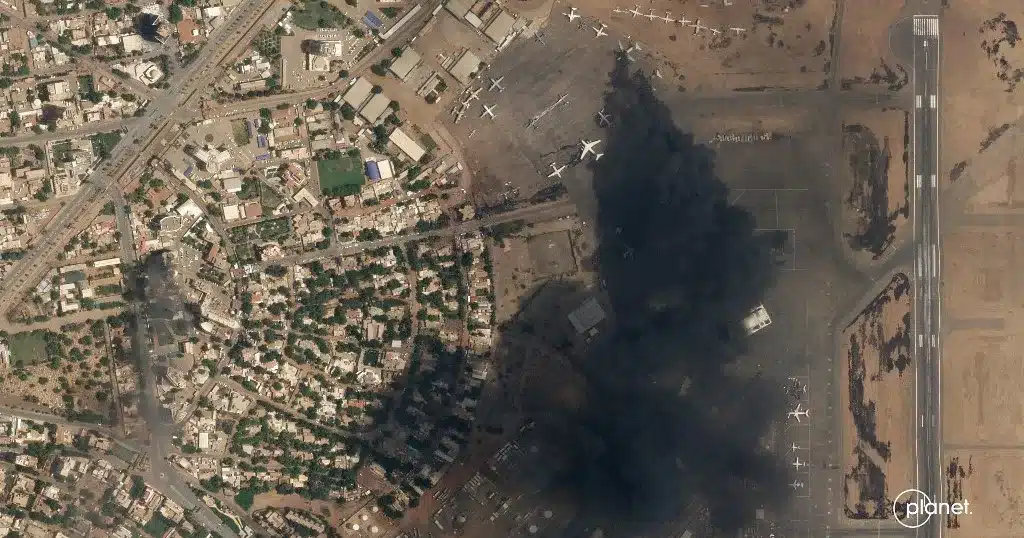
The violence continued Sunday morning. The deserted streets of Khartoum were filled with the smell of gunpowder after explosions and gunfire rang out throughout the night. The military had warned in the evening on Facebook: “the air force will conduct operations to finish with the rebel militias of the Rapid Support, civilians must stay home.
In the morning, heavy gun battles opposed military and paramilitary in the northern suburbs of the capital, as well as in the south of Khartoum, witnesses reported. Throughout the capital, men in fatigues, weapons in hand, were walking through streets empty of civilians, while columns of smoke have been rising since Saturday from the city center where the main institutions of power are located.
Artillery fire
Witnesses also reported artillery fire in Kassala, in the country’s coastal east.
According to pro-democracy doctors, 56 civilians were killed, more than half of them in Khartoum and its suburbs, while “dozens” of military and paramilitary personnel died, although no precise figures are available. In addition, about 600 people were killed.
The conflict had been brewing for weeks, preventing any political solution in a country that has been trying since 2019 to organize its first free elections after 30 years of Islamo-military dictatorship.
Impossible as it is to know which force is holding what. The RSF announced that it had taken the airport in a few hours on Saturday, but the army denied this. The RSF also claimed to be holding the presidential palace. The army denied this and said it was holding the headquarters of its general staff, one of the main power complexes in Khartoum.
A human rights NGO in Burkina Faso has leveled charges against the army over the killing of at least 25 civilians, including a woman and a baby, in the east of the country this week, according to a statement carried by AFP on Friday.
Neither the army nor the Burkinabe government reacted initially to these accusations. The east of Burkina Faso is one of the regions most affected by the violence of jihadist groups, fought by the army and its auxiliaries.
On Wednesday evening (1 February), “the Collective against Impunity and Stigmatisation of Communities (CISC) was seized by several relatives of victims” reporting “allegations of summary executions of civilians attributed to the Burkinabe Defence and Security Forces (FDS) in the localities of Piega, Sakoani and Kankangou”, said a CISC statement received by AFP on Friday.
The executions took place as a convoy of “more than a hundred vehicles” left Wednesday for the Boungou gold mine, “escorted by dozens of 4×4 pick-up vehicles carrying several FDS in military uniforms”, in these three localities along the National Road 4 (RN4), according to the CISC.
Twelve deaths (including three women and a baby) were reported in the village of Sakoani, about 125 km from Fada N’Gourma, the capital of the eastern region, seven (including four women) in the village of Piega, 60 km from Fada N’Gourma, and six in the hamlet of Kankangou in the territory of the village of Sampiéri, according to CISC.
Inhabitants of Sakoani contacted by AFP testified to the discovery of “eleven bodies” without life after the passage of the convoy.
“The death toll continues to rise as the information reaches us from the field,” the ICSC said.
According to the NGO, the victims are described by witnesses as “unarmed civilians”.
Demanding an end to these “crimes against humanity”, the CISC says it is continuing to “collect information in order to bring all those responsible and their sponsors to justice” and has called for “an independent and impartial judicial enquiry into these crimes”.
Other cases of extrajudicial executions are regularly reported by the population in several regions of Burkina, the CISC said.
On New Year’s Eve, civilian army auxiliaries were accused of killing 28 people in northwestern Burkina.
Burkina Faso has faced increasing attacks by jihadist groups linked to al-Qaeda and the Islamic State since 2015.
In two separate strikes on Saturday in northern and eastern Burkina Faso, at least two Burkinabe soldiers and six civilians were murdered, according to information obtained by AFP on Monday from local and security sources.
The first attack took place near Bouroum, in the northern province of Namentenga, where “a team of defense and security forces (FDS) on a mission hit an improvised explosive device,” a security source told AFP.
“Unfortunately, two soldiers were killed and five wounded who were evacuated for appropriate care,” the source said.
The second attack, also on Saturday, occurred in the village of Kokodé, on the Tendokogo-Bittou road, in the east-central part of the country, near Ghana.
“Armed individuals intercepted a public transport bus, also causing casualties,” the security source said.
Another securitysource said “six civilians were killed by the assailants, who also robbed the bus passengers.
“Among the victims is an important economic operator in the region,” said a member of the union of traders in the region, confirming the toll of the attack.
Since 2015, Burkina Faso has been regularly plagued by jihadist attacks that have killed thousands and forced some two million people to flee their homes.
These attacks by groups linked to the Islamic State and al-Qaeda targeting military and civilians have increased in recent months, mainly in the north and east of the country.
Captain Ibrahim Traoré, the transitional president who emerged from a military coup on September 30 — the second in eight months — has set himself the goal of “reconquering the territory occupied by these terrorist hordes.
Between December 1 and 10, 39 “terrorists” were killed in an anti-jihadist operation conducted in northwestern Burkina Faso, the army said.
Called “Feleho” or “take back one’s property” in the local Bwamou language, this operation aimed at “securing the Banwa province” in the Boucle du Mouhoun region (north, bordering Mali), made it possible to liberate a dozen localities under siege by armed groups, according to the army.
Four teachers were among the six civilians murdered in a suspected jihadist attack on Sunday in Bittou, a town in Burkina Faso close to the Ghana-Togo border, according to security and local sources on Monday November 5.
A group of armed men burst into a neighbourhood in Bittou late Sunday afternoon and opened fire on a group of workers, killing six people, a security source told AFP.
“The defence and security forces as well as the Volunteers for the Defence of the Fatherland (VDP), civilian auxiliaries to the army, “immediately set off after the terrorists, who retreated to the nearby Nouhao forest”, according to this source.
Confirming the attack and the death toll, the regional coordination of the Federation of National Unions of Education and Research Workers (F-Synter), said in a statement that four teachers from the departmental high school of Bittou, including the headmaster, were among the victims.
“This cowardly and barbaric murder is the second to be suffered by education staff in our region after the one in Maytagou on 27 April 2019,” said Ouédraogo Al Hassan, regional coordinator of F-Synter.
Located in the Centre-East region, Bittou is on the road between Ouagadougou and Lomé. It is an important town close to the borders of Togo and Ghana where commercial activity is very important.
Since 2015, Burkina Faso has been regularly plagued by increasingly frequent jihadist attacks that have killed thousands and forced some two million people to flee their homes.
These attacks have increased in recent months, mainly in the north and east of the country.
On 26 November, four Burkinabe soldiers were killed in an improvised explosive device in the north of the country and three civilians died in another attack in the north-east, according to security and local sources.
Somali forces on Monday stormed a hotel in the capital, Mogadishu, where Islamic extremists had been holed up for more than 18 hours after killing eight civilians and trapping dozens in the building, officials said.
Police spokesperson Sadik Dodishe said all six extremists died during the operation at the Villa Rosa hotel, and one member of the security forces was also killed.
Dodishe said about 60 people who had been trapped in the hotel were freed and none of them were injured. It was not immediately clear whether others were missing.
According to Dodishe, five of the attackers were killed by security forces, and one blew himself up.
Islamic extremist group al-Shabab claimed responsibility for the attack.
Mogadishu resident Mohamed Suleyman told the AP that two of his relatives, both civilians, died in the attack. “It’s a great sadness to learn that two of my relatives were among those killed in yesterday night’s attack,” he said. “We were informed by their colleagues who managed to escape the attack after jumping (over the perimeter) wall of the hotel.”
Ali Moalim, another Mogadishu resident, said he saw “two bodies of the security forces carried by their fellow soldiers.”
Al-Shabab said in a broadcast on its own radio frequency Sunday that its fighters attacked the hotel, which has a restaurant popular with government and security officials. The attack is believed to have started with an explosion before gunmen penetrated the hotel’s gates.
The hotel is not far from the presidential palace, Villa Somalia, in one of the most protected parts of central Mogadishu. A successful attack near the seat of the federal government is likely to instill deep fear among residents of the seaside capital that has long been prone to attacks by militants.
Such militant attacks are common in Mogadishu and other parts of the Horn of Africa nation.
The latest attack comes amid a new, high-profile offensive by the Somali government against al-Shabab, which still controls large parts of central and southern Somalia.
Extremist fighters loyal to the group have responded by killing prominent clan leaders in an apparent effort to dissuade support for the government offensive, and attacks on public places frequented by government officials and others persist.
Hotels and restaurants are frequently targeted, as are military bases for government troops and foreign peacekeepers.
Last month at least 120 people were killed in two car bombings at a busy junction in Mogadishu. Al-Shabab carried out that attack, the deadliest since a similar attack at the same spot killed more than 500 people five years ago.
Al-Shabab opposes Somalia’s federal government, which is backed by African Union peacekeepers, and seeks to take power and enforce a strict version of Sharia law.
The United States has described al-Shabab as one of al-Qaida’s deadliest organizations and targeted it with scores of airstrikes in recent years. Hundreds of U.S. military personnel have returned to the country after former president Donald Trump withdrew them.
Many civilianshave been killed in an air strike in the Ethiopian western town of Mandi, about 500km (310 miles) west of the capital Addis Ababa, sources have told the BBC.
Residents said the strike happened around lunchtime on Wednesday in the town where Oromo Liberation Army (OLA) militias have been in control for days after a fight with government security forces.
A resident anonymously told the BBC that the government was targeting the militias but majority of those who were killed and wounded were civilians.
He said an OLA vehicle parked by the roadside with some of its members inside was hit by a drone causing bombs that the fighters had to explode, killing civilians around the area.
His friend and a gospel preacher Tariku Wanna, a father of one daughter, was among those who died. He said they had lunch together at the area before he left him to go somewhere.
“After five minutes the drone bombed them. When I returned to that place I found his body lying down on the ground. I saw many scattered bodies but didn’t count, but the majority of them were civilians,” he said.
The BBC tried to reach Tariku’s wife but she was in a state of complete shock and disbelief.
Another resident of the town, who spoke to the BBC anonymously for the sake of his own safety, put the number of civilians killed in the air strike to at least 20.
He said around seven to eight people died instantly while another 13 were admitted to hospital and died there from their injuries.
The OLA’s spokesperson Oda Tarbi put the number of civilians killed at 30, but didn’t mention the number of their soldiers who were killed.
The BBC couldn’t verify the number of casualties from the hospitalsources.
Politicians have condemned the attack with the Oromo Liberation Party calling it “barbaric” asking the government not to target civilians.
The Ethiopian government has not commented on the matter. The BBC reached out to the Oromia region’s security official but he declined to comment.
There are reports from Mali that 27 civilians have been killed during three attacks on villages which are home to people from the Dogon ethnic group.
Local officials believed the three attacks, between Tuesday night and Wednesday evening, had been carried out by Islamist militants, who often say they are defending Fulani herders against rival Dogon farmers.
As Islamist militant violence has spread from the north of Mali to the centre of the country, this has fuelled reprisal killings between herding and farming communities.
The army has in recent years been criticised by rights groups and residents for failing to protect civilians in central Mali.