Tag: clash

  • Deadly clash in Gbeniyiri claims four lives, several hurt

    Deadly clash in Gbeniyiri claims four lives, several hurt

    Violent clashes between residents and herdsmen in Gbeniyiri and surrounding communities in the Sawla-Tuna-Kalba District of the Savannah Region have claimed the lives four individuals and five others injured.

    The injured are receiving treatment at various health facilities in the area.

    The violence erupted after a resident was killed during a robbery attack. In revenge, some relatives of the deceased launched an attack on herdsmen suspected to be behind the crime.

    Last year, several properties were destroyed, with more than 50,000 individuals displaced due to the tension in the area. The ongoing conflict in Gbenyiri stems from a land dispute between a Gbenyiri resident and the chief’s son, which began on Saturday, August 23.


    The unresolved conflict is spreading to Kalba and other parts of the district. Despite the deployment of 400 police personnel to the area to ensure law and order, clashes between the rival groups persisted.


    Unknown assailants shot a middle-aged man to death near Kalba, a suburb of the Sawla-Tuna-Kalba District in the Savannah Region, on Sunday, September 7.

    The gunmen ambushed the deceased person and opened fire as he rode his motorcycle. According to the police, the deceased, whose identity is yet to be revealed traveled from his community, Uro to Kalba to charge his mobile phone due to the lack of power in his area.


    The body of the deceased has since been deposited at the St. Anne’s Catholic Hospital in Damongo by the Ghana Police Service. The incident is amid the ongoing protracted conflict in Gbenyiri, which has claimed multiple lives.

    The latest death brings the official toll from the conflict to 32.
    Residents have, however, expressed fear over the security situation. Speaking to the media, a resident noted, “With this killing, who do you think will trust the system again? Some of us suspected this to happen because the guys are still around in Kalba town, and if you deceive yourself and go there, they will just end your life like this farmer. To me, this reaffirms the fears and mistrust in the system. The authorities need to do more than just talk and go”.


    Meanwhile, a seven-member mediation committee has been established by the Interior Ministry in response to the ongoing land conflict in Gbenyiri in the Savannah Region.


    The committee has been tasked with a one-month mandate to assist the government in finding a lasting solution to the tension in the area.

    During the inauguration ceremony at the Interior Ministry in Accra, the sector Minister, Mubarak Mohammed Muntaka, noted that the establishment of the committee was a recommendation from the National Security Council.


    The Inspector General of Police (IGP), Christian Tetteh Yohunu, alongside senior officials from the Armed Forces, Prisons Service, and Immigration Service, have already visited Kalba, Sawla, and other affected communities in efforts to bring calm to the area.

    In a related development, President John Mahama has initiated steps to restore peace in the Sawla-Bole area of the Savannah Region following renewed tensions between the Gonja and Brifor communities.


    Upon his return from a state visit to Singapore, the President received a full briefing from the National Security Coordinator and the Minister for the Interior on the latest developments in the conflict.


    While abroad, Mr. Mahama held a telephone conversation with the King of Gonja, Yagbonwura Jira Bikunuto Jewu Soale I, during which they discussed measures to end the clashes and foster lasting peace in the area.


    As part of efforts to de-escalate the situation, the President has dispatched a government delegation led by the Minister for the Interior, Hon. Muntaka Mohamed-Mubarak, to engage the Yagbonwura and other key stakeholders.


    Meanwhile, security has been reinforced with the deployment of additional police and military personnel to the conflict zone. President Mahama has urged all parties to support the peace initiatives being rolled out, stressing the importance of dialogue in resolving outstanding disputes.


    He has further directed the government delegation to work closely with the Regional Security Council, traditional authorities, and community leaders to ensure calm is restored and law and order upheld.


    Minister for the Interior, Muntaka Mohammed-Mubarak, has assured the Overlord of Gonja, Yagbonwura Bii-Kunuto Jewu Soale I, that the government will take every necessary step to restore peace in the Sawla-Bole area.


    “We have taken note of all the concerns, and we have also assured him that we will do everything humanly possible to ensure that peace will be restored. But we need his cooperation and the cooperation of all others. Surely, what talking can solve, dance cannot solve,” he stated.


    “Surely, what talking can solve, dance cannot solve, so we are hoping that after all the lengthy discussion and the conclusion that we have come to, we will go and implement our part, we are hopeful that they will also listen to us and also adhere to whatever agreement that we’ve had,” he noted.


    Less than a week ago, the sector minister imposed a curfew on the Sawla-Tuna-Kalba township and its surrounding communities in the Savannah Region. The curfew is in effect from 6:00 p.m. to 6:00 a.m., commencing on Wednesday, August 27, 2025, and remains in place until further notice.


    This measure was taken in response to the recent outbreak of conflict in the area. In addition to the curfew, there is a total ban on the possession of firearms, ammunition, or any offensive weapons. Any individual found with such items will be arrested and prosecuted.


    Furthermore, no two or more persons are permitted to ride on motorbikes throughout the day, and the wearing of war regalia has also been prohibited.


    Last year, intense security measures were implemented in the Bole and Sawla districts of the Savannah Region due to the chieftaincy dispute between the Bolewura and the Jahori clan.


    This heightened security response followed a ruling by the Tamale High Court concerning the dispute between the Jahori and Bolewura factions.


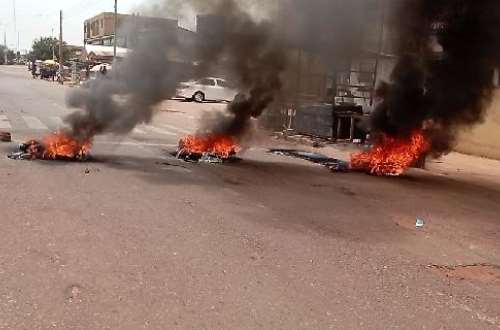
    In response to the court ruling, youths from Bole set fire to houses belonging to members of the Jahori community residing in both Bole and Sawla districts.


    The devastating fires resulted in significant property losses for the affected individuals, leaving many tenants in despair and tears. In recent years, the country has witnessed a number of casualties and destruction of property arising from chieftaincy disputes.


    The Minister for the Interior, Muntaka Mubarak, has also reviewed the earlier curfew hours imposed on Bawku and Nalerigu townships following recent attacks.

    The previous curfew, which ran from 6 a.m. to 2 p.m., has been revised to 6 p.m. to 6 a.m. The minister took this decision after receiving advice from the National Security Council.


    The Bawku Municipality in the Upper East Region and the East Mamprusi Municipality in the North East Region are affected by the new directive.


    The curfew has created an environment conducive for the evacuation of students from educational institutions in the affected areas, some of whom had unfortunately been targeted during the conflict.


    In a statement issued on July 27, the government announced that it is stepping up its approach from peacekeeping to peace enforcement in Bawku and other affected areas due to the recent escalation of violence, which threatens to derail the peace-building process.


    These heightened tensions and conflicts have had an impact on the country’s global peace ranking. Ghana has been ranked 61st out of 163 countries in the 2025 Global Peace Index (GPI), marking a continued decline in its standing on peacefulness.


    The latest ranking follows a downward trajectory from 55th in 2024, 51st in 2023, and 40th in 2022.

    Despite the decline, Ghana still ranks ahead of several of its West African neighbors, including Senegal (69th), Liberia (70th), and Nigeria (148th).


    The Global Peace Index, compiled annually by the Institute for Economics and Peace (IEP), measures the peacefulness of nations based on 23 indicators across three broad domains: societal safety and security, ongoing domestic and international conflict, and militarization.

  • Deadly clashes in Bunkprugu/Nakpanduri leave two dead, 500 homeless

    Deadly clashes in Bunkprugu/Nakpanduri leave two dead, 500 homeless

    Violent clashes in the Bunkprugu/Nakpanduri district of the North East Region have caused significant destruction and displacement.

    The unrest, which broke out last week in Ngagma-Gbregu, stemmed from tensions over the enskinment of rival leaders by the Chief of Binde.

    The turmoil resulted in two fatalities and left more than 500 people without shelter.

    For three days, chaos engulfed the area, leaving a path of devastation. Over 150 structures were engulfed in flames, and more than 5,000 bags of stored produce were lost, deepening the struggles of those affected. Women and children have been hit hardest, enduring days without adequate nourishment.

    Seeking urgent relief, the displaced have appealed to authorities for immediate support, particularly food aid.

    During a visit, the constituency’s legislator, Abednago Bandim, engaged with the affected families and urged the government to take swift action to ease their hardship.

  • Five students hospitalized after violent clash at Assin Nsuta SHS

    Five students hospitalized after violent clash at Assin Nsuta SHS

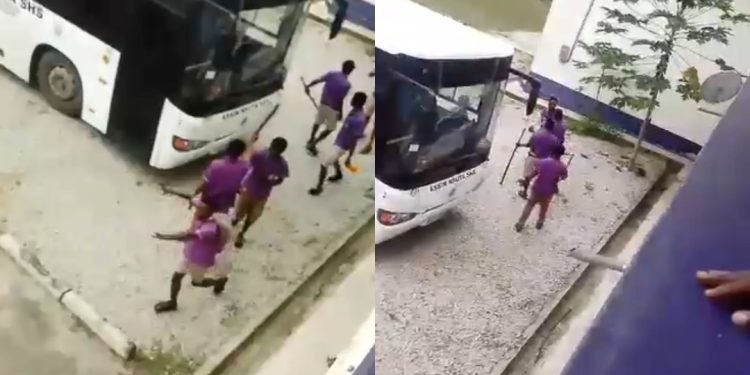
    A violent altercation at Assin Nsuta Agricultural Senior High School in the Central Region has left several students injured, with five currently hospitalized.

    The clash erupted between Form Two and Form Three students after an incident involving a Form Three student and a Form One student.

    The confrontation began when the Form Three student was found in a sexual act with a Form One student in an unfinished building on campus. This led to a conflict when the Form Three student slapped a Form Two student who witnessed the incident.

    Three days later, Form Two students retaliated, leading to a widespread fight. Armed with clubs and knives, the students engaged in a chaotic brawl, which only ended when the police intervened to restore order.

    Assemblyman Bashiru Kwame Amakrah, representing the Assin Nsuta-Bepokokoo Electoral Area, described the situation, stating, “The relationship was between a form three student and a form one student. The form two student who saw the two almost in the act of having sexual intercourse approached them infuriating the form three student who slapped the form two student.”

    “The Form Two later retaliated and it turned into a free-for-all fight where five students have been hospitalised while several other students sustained minor injuries.

    “The Assistant Headmaster in charge of Administration also sustained injuries. The headmaster took some students to the police station to seek a medical form to the hospital for treatment. It took the intervention of the Police to save the situation.”

  • Violent clash in Agona Kwanyarko results in injuries and property damage

    Violent clash in Agona Kwanyarko results in injuries and property damage

    A clash between youth groups from Agona Kwanyarko Zongo and Agona Fawomaye has resulted in three injuries and property damage, stemming from a dispute over a GH¢500 debt.

    Reportedly, Yaw Baah, a resident of Agona Fawomaye, purchased a tree from Kofi Annan for GH¢900.

    Unbeknownst to Baah, another member of Kofi Annan’s family had also sold the same tree to someone else.

    Months later, Baah approached Kofi Annan for the outstanding GH¢500 payment, which Annan partially settled with GH¢400, leaving a balance.

    In an interview with Adom News, Kofi Annan, admitting to owing the remaining amount, recounted being approached by a friend of Baah while at a drinking spot.

    Mr Annan’s refusal to pay immediately led to a physical altercation.

    Following the altercation, Baah called for reinforcements from Fawomaye and Kwanyarko Zongo, armed with weapons.

    The ensuing clash involved gunfire, as well as attacks with broken bottles, cutlasses, and sticks, resulting in property destruction, including damage to television sets and Electricity Company of Ghana (ECG) properties.

    In response to the incident, residents of Agona Kwanyarko expressed concerns about potential reprisal attacks from the town’s youth. Assemblyman Benjamin Sackey of Agona Kwanyarko Ahoroso-Odumase Electoral Area called for calm and urged the police to intervene to maintain peace.

    As of now, no arrests have been reported, while those injured are receiving medical treatment.

  • Amansie South: One person shot dead after youth clash with miners

    Amansie South: One person shot dead after youth clash with miners

    At least one person is has been shot dead after an altercation between workers at the Asanko Gold Mine and youth from the Amansie South District in the Ashanti Region.

    According to a news report by UTV, the person shot was one of the youth of Amansie South, and this resulted in further clashes between the miners and the youth.

    The District Chief Executive of Amansie South, Clement Opoku Gyamfi, who confirmed the incident in an interview with UTV that was monitored by GhanaWeb, said that the youth who was shot had been taken to the hospital.

    “Some of the youth enter one of the pits of Asanko Gold to mine in order to find something to eat. And they were confronted by the security of the mining company, which led to a clash and some gunshots being fired.

    “One of the youths was hit by a gunshot, and he is now in the hospital getting treatment. The news of one of the youth being shot resulted in reprisal attacks, which led to one of the trucks of Asoka Gold being completely burned, and other vehicles and facilities of the company being damaged,” he said in the Twi dialect.

    Opoku Gyamfi called on the youth to remain calm as the incident is being investigated.

    The General-Manager of Asanko Mines, Ahmed Muhadeeni Yahaya, also said the youth who entered the mining pit were illegal miners.

    He added that the policemen protecting the pit only opened fire on them because they (the youth) started attacking them with cutlasses.

  • George Pell’s funeral marred with protesters in Sydney

    George Pell’s funeral marred with protesters in Sydney

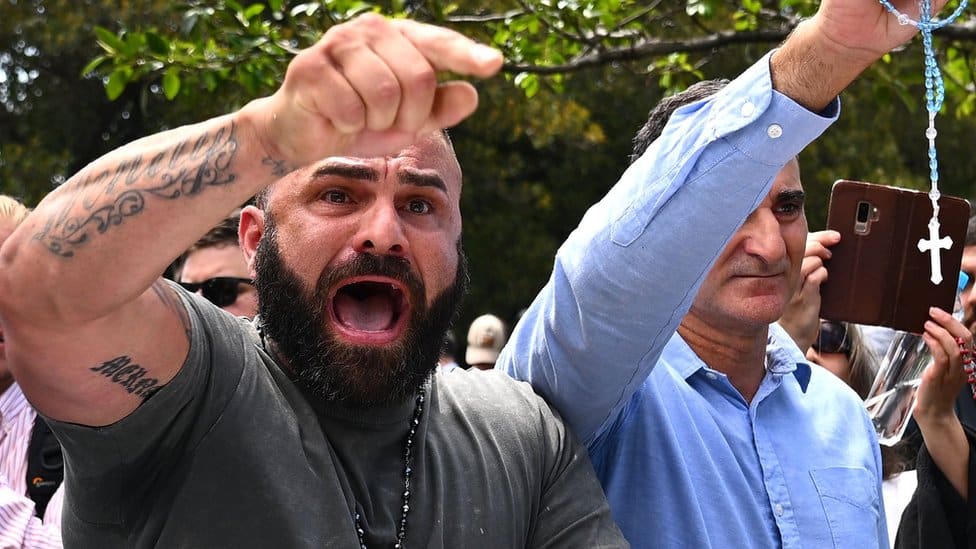
    Cardinal George Pell’s funeral on Thursday in Australia, mourners murmured prayers and sang hymns; however, hecklers kept shouting his damnation.


    The Catholic priest, who passed away last month at the age of 81 due to complications from surgery, leaves behind a difficult legacy.

    He was once the top assistant to the Pope and the top Catholic in Australia.

    But unsubstantiated claims that he committed child sexual abuse and covered it up damaged his reputation.

    These accusations dominated Thursday’s events in Sydney. Police outside St. Mary’s Cathedral took action at one point to separate irate mourners from chanting protesters. One protester was earlier detained.

    Inside the church, where Cardinal Pell served as the city’s archbishop for over a decade, dignitaries including former Prime Ministers John Howard and Tony Abbott filled pews. Hundreds more gathered in a forecourt to watch the requiem Mass on big screens.

    Noticeably absent were Prime Minister Anthony Albanese and New South Wales Premier Dominic Perrottet – himself a devout Catholic. Both sent delegates.

    In a message read to the congregation, Pope Francis praised Cardinal Pell’s “dedication to the gospel and to the Church”, while Archbishop of Sydney Anthony Fisher lauded him as “giant of the Catholic Church in Australia” who had been wrongly demonised.

    Over six decades, Cardinal Pell rose to prominence in the Church as a strong supporter of traditional Catholic values.

    He took on the role of Vatican treasurer in 2014 but left in 2017, returning to Australia to face trial on child sexual abuse charges. He was convicted, then later acquitted on appeal.

    Many of Cardinal Pell’s supporters believe he was unfairly persecuted, and that his record on the issue of child sexual abuse is part of what made him great.

    Mr Abbott, who spoke at the funeral, claimed Cardinal Pell had been the first Australian Catholic to sack child abusers and report them to police. Others pointed to the landmark – but controversial – compensation scheme he set up.

    “He was greatest man I’ve ever known,” Mr Abbott said.

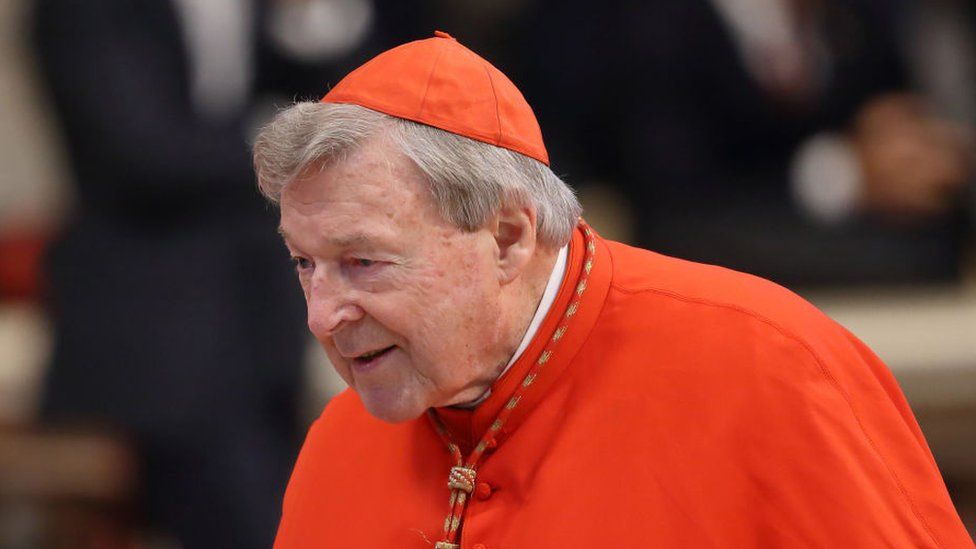
    Cardinal George Pell
    Image caption,Cardinal George Pell was Australia’s highest-ranking Catholic

    Others who gathered to pay their respects said he was a kind man, quick to offer support and encouragement to those going through challenging times.

    One mourner told the BBC he hopes the cardinal will be remembered “for the things he did and not for the things that he was accused of”.

    “He was a good man,” Nathan, 33, added. “He fought for the rights of many people, contrary to popular belief.”

    But outside the cathedral square, child abuse survivors remembered him as someone who had failed to protect them.

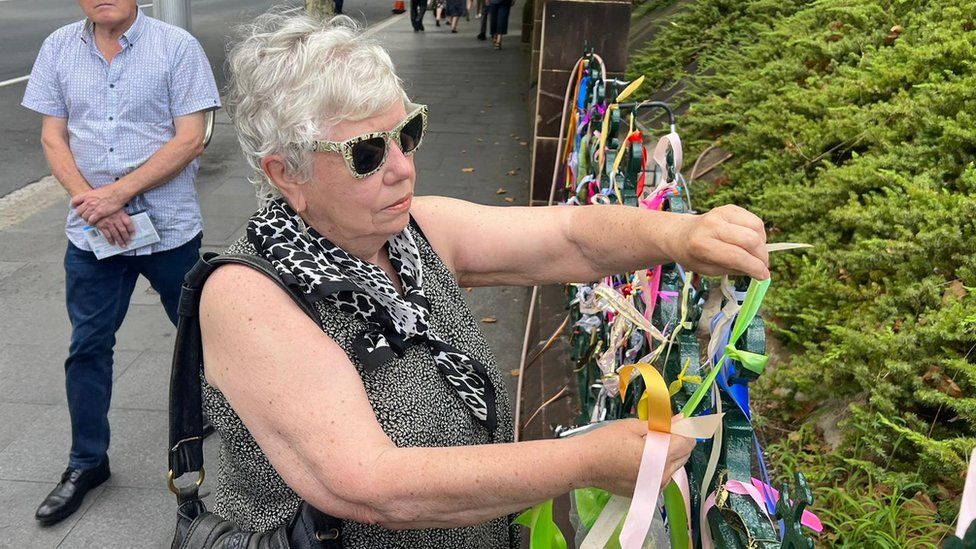
    Some travelled from other states to tie ribbons to the church fence – a gesture seen in Australia as a tribute to victims of the Church abuse crisis. Most were cut down overnight on Wednesday by supporters of Cardinal Pell.

    A landmark inquiry into Australian child sexual abuse found Cardinal Pell had personally known of abuse by priests as early as the 1970s and had failed to act. Cardinal Pell disputed the findings, saying they were “not supported by evidence”.

    Maureen, 75, came to leave a ribbon on behalf of a close friend, who was abused by a Catholic teacher.

    “I can’t let today pass without standing for him. He is not well enough to stand for himself,” she told the BBC.

    Maureen tying a ribbon to the fence
    Image caption,Maureen was among those who left hundreds of ribbon tributes for child sexual abuse survivors

    Protesters gathering in parkland opposite the cathedral remembered Cardinal Pell as a “monstrous bigot”.

    “Pell stood for blatant homophobia, misogyny… covering up abuse within the Catholic Church,” organiser Kim Stern told the BBC.

    “We think it’s pretty disgusting he’s getting a send-off like this.”

    Also out in force were police, trying to temper simmering tensions.

    Thursday’s funeral follows weeks of tense debate in Australia about Cardinal Pell’s legacy.

    Mourner Louisa Pastoois personally admired the cardinal, but she told the BBC she has accepted his legacy will be mixed.

    “The legacy he leaves behind in the Church, and the world… is something different,” Louisa said.

    “I think there needed to be someone to take the blame for all that’s happened in the church… there needs to be a face to the sins and unfortunately, it was his.”

  • Thirteen killed as Sudan rebel groups clash

    Thirteen people were killed and 12 others are reported missing following fierce fighting between two rival factions of the rebel Sudanese Liberation Movement-Nur (SLM-Nur) group in Central Darfur state, western Sudan, the UN has said.

    In a statement issued on Thursday, the UN humanitarian agency (OCHA) in Sudan said the clashes started on 19 November in the Umu and Arshin areas of Shamal Jebel Marra locality.

    Six people were abducted and four others wounded, privately-owned Al-Intibaha news site reported.

    The fighting later spread to the villages of Daya, Wara, and Kia, in the same locality, with an estimated 5,600 people reportedly fleeing their homes and moving to displaced people’s camps, OCHA said.

    The situation remains tense as there are reports that both parties are mobilising their forces for fresh attacks, according to the UN.

    In October, similar clashes between the two groups left at least 13 people killed and 15 others wounded.

    SLM-Nur is one of the few rebel groups that did not sign the 2020 Juba peace agreement, which the government signed with former rebel groups in Darfur and southern regions.

    There has been division within SLM-Nur in recent months, as some factions have defected.

    Source: BBC

  • Violent clashes in Chad amid protests against junta

    Violent clashes have erupted in Chad between police and protestors in the capital N’Djamena.

    Reports say there have been a number of fatalities, and that dozens of people have been injured.

    The demonstrations are against Chad’s transitional military government, with protestors calling for a return to civilian rule.

    Police used gunfire and tear gas to disperse the protestors and some parts of the city have been cordoned off.

    Angry protesters attacked the party headquarters of the recently appointed Prime Minister Saleh Kebzabo in the capital, pro-government news website Alwihda reported.

    It said the protesters set fire to the main entrance of the premises.

    Source: BBC

  • Reports: Deadly clash between rival Libyan government forces

    Five people have been killed and 13 others hurt in clashes between two opposing forces that support the UN-backed government of Libya on Sunday, according to AFP, which cited medical sources.

    The gun battle in Zaouia, some 40km (25 miles) west of the capital Tripoli, was between fighters linked to the defense ministry and those with ties to the interior ministry, local media reported.

    The victims included a 10-year-old girl, the report said.

    The fighting broke out over a dispute about fuel smuggling which is common in the country, a security source told AFP.

    The clashes come amid a political crisis between backers of rival Libyan Prime Ministers Abdulhamid Dbeibah and Fathi Bashagha, whose forces are vying for control of the oil-rich nation.

    Mr Dbeibah’s government was installed last year as part of a United Nations-led peace process, while Mr Bashagha was appointed by Libya’s eastern-based parliament in February.

  • Putin calls for peace after deadly border clashes

    Russian president, Vladimir Putin, has called for a de-escalation of a deadly border conflict between Kyrgyzstan and Tajikistan and has urged all sides to settle the issue amicably.

    The Kremlin leader made his peace request as his troops carried on their gruesome assault after invading Ukraine.

    Even Mr. Putin made a mediation offer.

    The action took place while a tenuous ceasefire between the two Central Asian countries continued for a second day and as Kyrgyzstan and Tajikistan reported that 71 people had died in recent combat.

    The former Soviet republics have both accused each other of using tanks, mortars, rocket artillery, and assault drones to attack outposts and nearby settlements.

    Central Asian border issues largely stem from the Soviet era when Moscow tried to divide the region between groups whose settlements were often located amid those of other ethnicities.

    Kyrgyzstan has reported 36 deaths from the earlier clashes and has also said it evacuated about 137,000 people from the conflict area.

    Tajikistan reported 35 of its people had been killed.

    Mr Putin spoke by telephone to Kyrgyz president Sadyr Japarov and Tajik leader Emomali Rakhmon on Sunday, the Kremlin said.

    He urged the sides to prevent further escalation and to take measures to resolve the situation “exclusively by peaceful, political and diplomatic means as soon as possible”, offering assistance, his office said in a statement.