Tag: Climate summit

  • Deep rifts prior to important UN climate negotiations

    Deep rifts prior to important UN climate negotiations

    There are already signs that big disagreements might cause problems at the UN’s important COP28 climate summit.

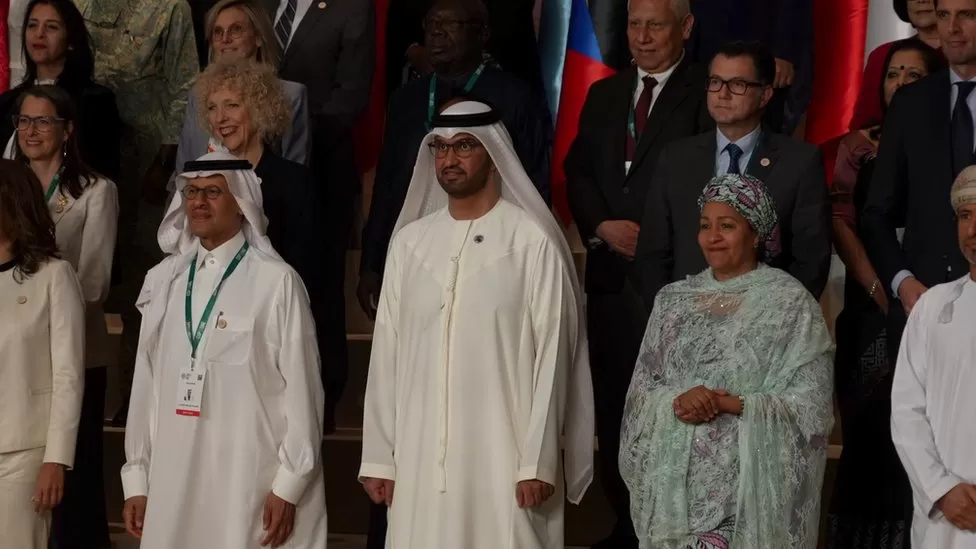
    Over 70 environment ministers and over 100 national groups have been gathering in Abu Dhabi before discussions start in Dubai on November 30.

    Many people are unsure if a summit hosted by a country that heavily relies on oil like the United Arab Emirates can lead the world towards a future with less carbon emissions.

    This year is expected to be the hottest ever recorded worldwide.
    The leader of the COP28 conference, Sultan Al Jaber, recognized the difficult problems he has to deal with.

    He encouraged everyone to work together, agree on things, and solve any disagreements.

    However, Mr Al Jaber is a person who creates a lot of disagreement and conflict among people.

    He is also the leader of Adnoc, which is the state oil company of UAE and one of the biggest producers of oil in the world.

    According to OPEC, Adnoc produced around 2. 7 million barrels of oil per day in 2021.

    Greta Thunberg said that his appointment was very silly and made her doubt the whole UN climate process.
    She said at a recent rally in London that the COP conferences are not meant to cause a significant decrease in CO2 emissions. “If they were different, they wouldn’t choose an oil company leader to be the president. ”

    Mr Al Jaber has a very different opinion, which is not surprising.

    He believes that we can only address climate change by including oil and gas in the conversation. He says that his experience in the industry makes him the best person to advocate for taking action.

    Mr Al Jaber wanted to make it very clear in Abu Dhabi this week that he has big goals for the main discussions, and he made an effort to eliminate any uncertainties or concerns about it.

    He said again that the main goal would be to keep the world on course to limit the increase in temperature to 1. 5 degrees Celsius above levels before industries started. Scientists say that if we do this, it will help us avoid the worst effects of climate change.

    And Mr Al Jaber agreed that in order to achieve that, it will be necessary to significantly reduce emissions.

    “He said we must find effective ways to reduce emissions by 43% by 2030, as supported by scientific evidence. ”

    However, many people in the audience did not believe in Mr. Al Jaber’s commitment, especially because his oil company has ambitious plans to grow during the same time.

    The company wants to increase how much oil it can produce each day by 600,000 barrels by the year 2030. They are also spending $150 billion to make this happen.
    Mr Al Jaber said that despite emissions reducing, the world will still require some oil and gas. The IPCC has also recognized this.

    He suggests that when it comes to choosing oil and gas, the UAE’s products should be considered first, as they have very low carbon emissions during production. However, when burned, they still release the same amount of CO2 as other fuels.

    Arguments like this help to explain why countries like the UAE, Saudi Arabia, Russia, and the US believe it is better to reduce fossil fuel production gradually instead of stopping it completely. This is because the carbon dioxide (CO2) they produce is a major cause of greenhouse gas emissions.

    The European Union is a member of a group of around 80 countries that have a stricter approach. Some people believe we can’t make any compromises when it comes to eliminating fossil fuels.

    Wopke Hoestra, EU Commissioner for Climate Action, wants to quickly stop using fossil fuels and use words that represent this goal well.

    Mr Al Jaber acknowledges that it will be difficult to find agreement between countries with different opinions on this important matter. He encourages the delegates in Abu Dhabi to try their hardest to find shared ideas or solutions.

    But there is also a deadlock on other problems.

    A major accomplishment of the recent UN climate conference was reaching a global agreement to create a fund called “loss and damage. ” This fund will assist poorer countries in paying for the negative impacts caused by climate change.

    But initial discussions about how to create the fund and who might be in charge of it have already failed and there are concerns that major polluting countries like the US might not participate in the discussions at all.

    Mr Al Jaber is working very hard to restart the negotiations, and recently he said that the UAE will hold another meeting for the committee in charge.

    It may be difficult to reach an agreement at COP28, even when there is a general agreement on certain issues.

    One of the UAE’s main goals for COP28 is to increase the amount of renewable energy available worldwide to three times the current capacity, reaching 11,000GW by 2030.

    Most big countries already agree with that aim.

    The G20, which is made up of countries like China, the United States, and India, that have strong economies, agreed to greatly increase the use of renewable energy sources at a meeting in September.

    But, some European countries and states that are affected by climate change have stated that they will only agree to use clean energy if there is also an agreement to gradually stop using fossil fuels.

    These significant disagreements on fundamental matters indicate that making progress during the COP28 conference starting on November 30 will be very challenging.

    This is very different from how people felt when they signed the Paris Agreement eight years ago. It shows that the talks have changed a lot.

    The aim of the Paris agreement was to convince countries that they should join forces to combat climate change.

    Now these talks are focused on making countries actually do something – which is more difficult to achieve.

    The meeting in Abu Dhabi this week showed that when the main talks start, they will mostly be influenced by international competitions, local politics, and disagreements over money, rather than a genuine concern for saving the planet from global warming.
  • Graça Machel issues climate change warning to men in suits

    Graça Machel issues climate change warning to men in suits

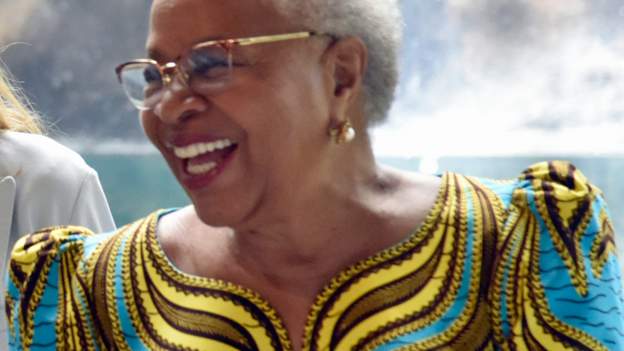
    Graça Machel, who is well-known for advocating for rights, and was married to Nelson Mandela, said that there should have been more women participating in discussions at the very first climate summit in Africa, according to the BBC.

    During a recent meeting in Kenya, African leaders made a joint decision for the continent before the upcoming COP28 summit in November. This decision includes a suggestion for a worldwide system for taxing carbon emissions.

    Ms Machel, who is second in command of The Elders – a group of older and experienced leaders established by Mr. Mandela in 2007 to address serious global issues, expressed her joy for this significant progress.

    She praised the creative ways of addressing climate change that were presented in Nairobi, stating that Africa does not need assistance, but rather wants to contribute towards solutions. Africa is ready to provide investment opportunities and solutions.

    But the 77-year-old Mozambican campaigner said that women need to be the main focus of the conversation in the future. He said, “We need to put an end to the idea of women only being able to speak from a distance. ”

    She said that even though women yelled from a window, the people making decisions didn’t listen to them.

    Women need to be the most important part of the decision-making process. As women and women’s groups, we need to take hold of that opportunity. We won’t get it.

    Women should be the main focus when making decisions. So, us women and women’s groups should try to take that opportunity. We won’t get it.

    This message means that leaders need to realize that the old way of making decisions, where only a few people made all the choices, is no longer effective.

    Leaders need to realize that things have changed and it’s not just one type of suit making decisions anymore.

  • Kenya wants to be part of the solution rather than seeking help – William Ruto says

    The President of Kenya stated on Thursday that he had come to the Paris climate summit “not to ask for help” from the wealthy nations, but rather to see that developing nations could “take part in the solution” if the global financial system was changed.

    “The current financial architecture is unfair, punitive and inequitable”, said William Ruto.

    “The countries of the South pay up to eight times more interest than developed countries because they are considered risky”, said the Kenyan president, who wants to attract private investment rather than development aid.

    “We are tired of this narrative” that portrays Africans as “victims of climate change”, “looking for favors” and “lamenting”, explains Mr. Ruto: “We are not asking for help, we want to be part of the solution”.

  • On Truss advice,King Charles will not attend climate summit

    Buckingham Palace says, King Charles will not go to the COP27 climate change meeting, which will take place in Egypt next month.

    It was in response to a Sunday Times article that claimed Liz Truss, the prime minister, had “directed” the King not to attend.

    The Palace said advice had been sought by the King and given by Ms Truss.

    “With mutual friendship and respect there was agreement that the King would not attend,” the Palace stated.

    Before his ascension to the throne last month, the King – then the Prince of Wales – had indicated he would attend the annual conference.

    Royal correspondent Jonny Dymond said the BBC had put it to the Palace that the King must be personally disappointed given his long decades of passionate environmental campaigning.

    But the Palace responded that the idea the King was uncomfortable was not the case, and he was ever mindful of the sovereign’s role to act on the government’s advice.

    Last November – Prince Charles – the King travelled to Egypt with the then-government’s blessing to urge the Egyptian administration on its efforts, meeting President Abdel Fattah Al-Sisi during a planned visit.

    In the past, the King has demonstrated his deep commitment to environmental issues and, as Prince of Wales, had a long history of campaigning to reduce the effects of climate change.

    Only last year he made a speech at the COP26 opening ceremony in Glasgow, when the summit was hosted by the UK. The late Queen also gave a speech at the event, via video link.

    Senior Conservative MP Tobias Ellwood said he hoped “common sense would prevail” and the King would be allowed to go to Egypt.

    He said in a tweet that King Charles was a “globally-respected voice” on the environment whose attendance would add “serious authority” to the British delegation.

    At last year’s COP26 conference, King Charles – or Prince Charles as he was then – was one of the star turns, delivering a passionate call for world leaders to adopt a “war-like footing” over climate change.

    This year he’ll have to keep his powder dry, after what’s presented, on the surface at least, as a dispute-free agreement that he shouldn’t go.

    Although it’s worth noting this is about not attending “in person”, which might leave the door ajar for other virtual contributions.

    There will inevitably be speculation that, below all the constitutional smoothing, this will have really disappointed the King. He has campaigned devotedly for decades, heart on sleeve, on such environmental issues.

    And it could also raise the prospect of early tensions between a new King and a new PM.

    But it’s a case of different roles, and different rules and the King has always known that as sovereign he would have to act within a different set of politically-neutral constraints.

    The Egyptian authorities say they hope to use their presidency of COP27 to urge the international community to act on pledges of support for developing countries to cope with the devastating impacts of climate change.

    However, there has been criticism ahead of the summit. Human Rights Watch has said Egypt has severely curtailed the work of environmental groups. Officials in Cairo said the report was “misleading”.

    COP27, a United Nations event, is being held in the coastal city of Sharm el-Sheikh from 8 to16 November.

    Next week, King Charles will attend his first public engagements since the royal period of mourning came to an end, including a reception in Edinburgh for South Asian communities from across the UK and a visit to Dunfermline Abbey in Fife.

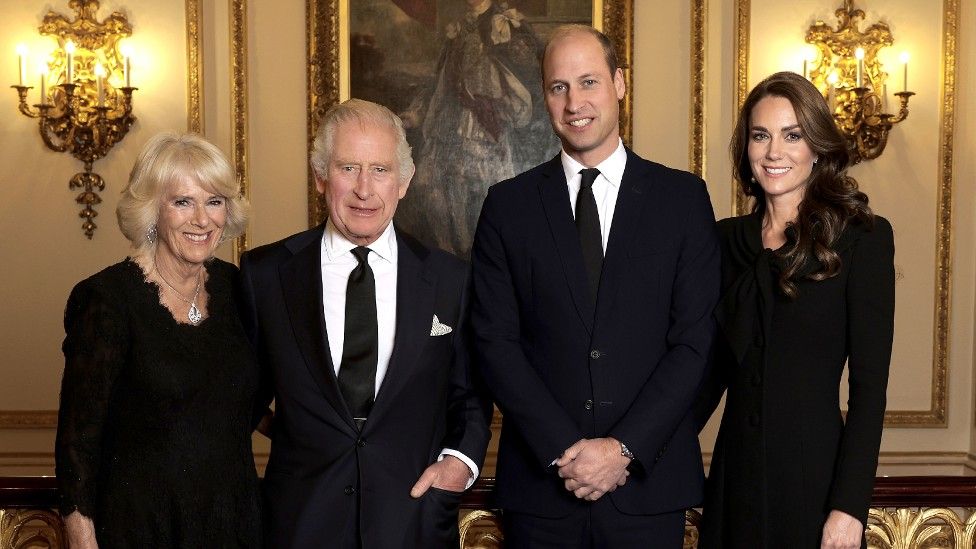
    The Queen Consort, the King, the Prince of Wales, the Princess of Wales
    IMAGE SOURCE, BUCKINGHAM PALACE/GETTY IMAGES/PA Image caption, A new picture of the King with the Queen Consort, Prince, and Princess of Wales was released on Saturday