A Ghanaian man, Bukari Yakubu, has allegedly been arrested by the Ghana Police Service for possessing 92 slabs of a substance suspected to be Indian hemp.
He was arrested during an intelligence-led operation in Akatsi, Volta Region Saturday, May 10.
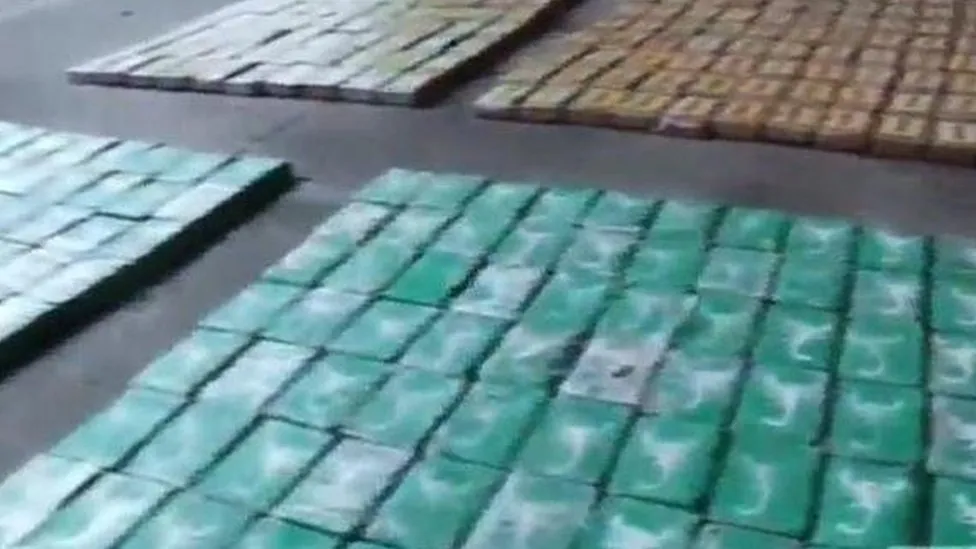
92 compressed slabs of the suspected substance, each wrapped in yellowish material were discovered at Yakubu’s residence.
The Police in a post on Facebook noted that per its preliminary investigations, the accused for sometime been in the business of distributing narcotics within his vicinity and its environs.
“Investigation conducted so far indicates that Bukari Yakubu has been dealing in narcotics within Akatsi and its surrounding areas,” the statement read.
Meanwhile, Yakubu is said to have admitted owning the suspected Indian Hemp. The Police has the suspect in its custody, assisting with ongoing investigations.
Ghana has been battling with llegal drug trade and organised crime, particularly in the Volta Region and across the country for a while now.
In response, the Ghana Police Service and other security agencies have joined forces to end the canker.
Four persons were recently granted GH¢13 million bail with four sureties for attempting to transport suspected cocaine at Kotoka International Airport (KIA)’s Swissport cargo terminal.
The suspects, Gariba Soli, Josiah Biney, Emmanuel Minta, and Kwabena Ampofo Anti have been charged with conspiracy to commit a crime and illegal possession of narcotic drugs.
They have therefore, been barred from leaving the jurisdiction without its approval.
Member of Parliament for Sekondi, Blay Nyameke Armah, has rejected allegations that connect him to a $350 million cocaine bust.
The lawyer, who is also an MP, firmly denied any involvement in drug trafficking activities.
In an interview on Oyerepa TV on April 8, 2025, he expressed disbelief at the claims, and called the accusations both false and damaging to his reputation.
He has however threathened a lawsuit stating that he has never seen cocaine in his entire life.
“For me, Lawyer Blay Armah, all the allegations being peddled against me, I have no hand in them. The next thing is that they will hear from my lawyers,” he said.
He added, “It’s on Twitter and all-over social media. But as I’m saying, in my entire life, I have never seen cocaine before. And the amount of money they’re mentioning, if I had that kind of money, would I still be here? I would have bought an island somewhere.”
Armah’s response comes after Rev. John Ntim Fordjour, the Member of Parliament for Assin South and Ranking Member on the Defence and Interior Committee, claimed that a Parliamentary Candidate from the opposition National Democratic Congress (NDC) is linked to the recent drug bust, valued at around $350 million.
Some have accused Armah of being the person involved.
Speaking during an interview on Channel One Newsroom, Rev Fordjour stated, “It was an NDC parliamentary candidate who owns that $150 million portion of the cocaine.
So, when we bring these exposés, it is expected that the NDC will feel frustrated and come at me personally. But I am not perturbed.”
The controversy began after a major drug bust by the National Intelligence Bureau (NIB) in March 2025. Authorities intercepted 3,319.66 kilograms (3.3 tonnes) of substances believed to be cocaine, with an estimated street value of $350 million.
The drugs were cleverly hidden in sacks and bags, buried under heaps of sand in a tipper truck, likely to avoid detection.
Armah has promised to take legal action against those spreading what he calls false and harmful rumors.
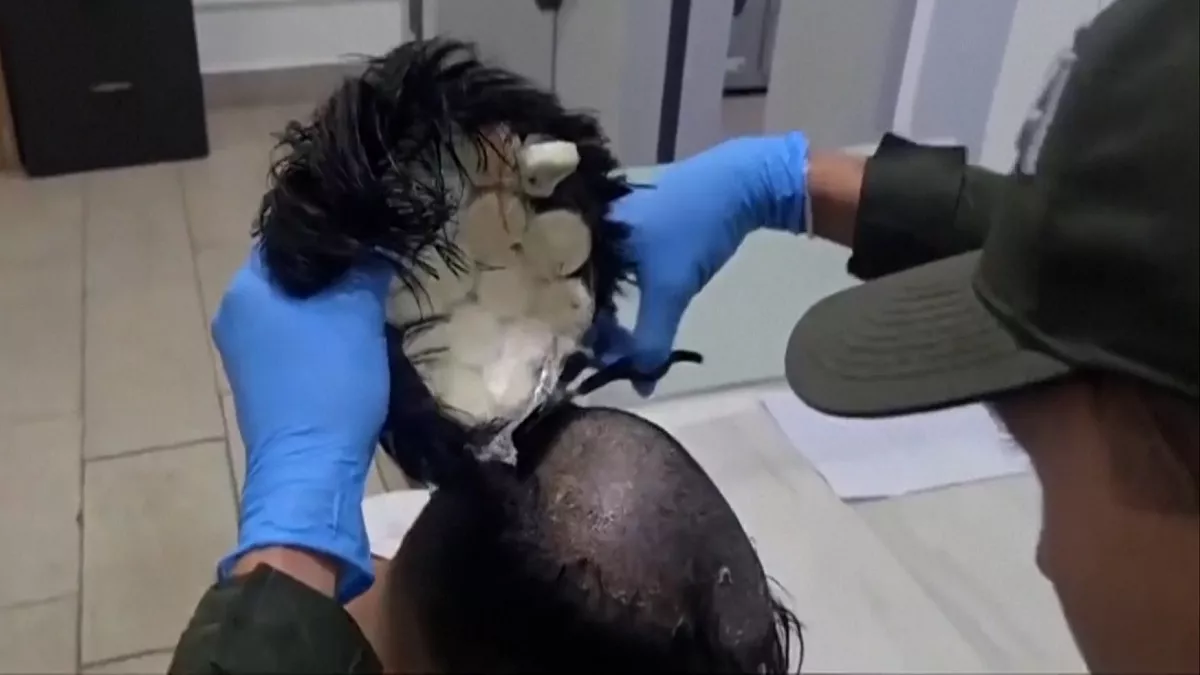
Authorities at Cartagena’s international airport apprehended a 40-year-old man attempting to transport 220 grams of cocaine under his toupee while preparing to board a flight to Amsterdam.
The concealed drugs, worth €10,000, were detected during a security scan, leading to his arrest. Officials disclosed that he had a history of drug trafficking offenses.
Since 2013, Colombia has experienced a continuous rise in cocaine production, with coca cultivation increasing by 10% and potential cocaine output soaring by 53% in 2023.
Despite the 2016 peace accord between the government and FARC rebels, smaller armed groups have taken advantage of the power void, exacerbating the drug trade.
Sierra Leone’s ambassador to Guinea, Alimamy Bangura, has been recalled following the discovery of seven suitcases containing suspected cocaine in a vehicle belonging to the Sierra Leonean embassy.
Guinean authorities detained the vehicle’s occupants on Monday after discovering “substances suspected to be cocaine,” according to Sierra Leone’s Foreign Minister, Alhaji Musa Timothy Kabba.
The minister confirmed that the ambassador was not in the vehicle at the time and is not under arrest, but he has been called back to Freetown to provide a detailed explanation of the incident.
“In light of this serious development, the government has urgently recalled Sierra Leone’s ambassador to Guinea…to provide a full account of the incident,” Kabba stated, adding, “It has not been proven that the ambassador is involved in this trafficking.”
Guinean officials also reportedly found $2,000 in cash alongside the suspected drugs, though the exact quantity of the substances remains undisclosed. Kabba emphasized that Sierra Leone is fully cooperating with Guinea in an extensive investigation, vowing accountability for anyone implicated.
“Anyone found guilty of breaking Sierra Leonean and international drug trafficking laws will face the full force of the law,” he pledged.
This incident sheds light on West Africa’s persistent role as a transit hub for cocaine trafficking from Latin America to Europe. While most of the drugs are destined for international markets, local consumption has been on the rise.
Sierra Leone has been grappling with a growing drug crisis, with President Julius Maada Bio declaring drug abuse a national emergency in April. The rise of “Kush,” a dangerous mix of addictive substances, has plagued local communities, prompting calls for government intervention to address both trafficking and the social impact of drug abuse.
The Ghana Airports Company Limited (GACL) has reinstated staff members implicated in a cocaine smuggling incident at Kotoka International Airport (KIA).
The smuggling case involved 8.5 kilograms of cocaine, which was allegedly transported aboard a Royal Air Maroc flight on March 23, 2024, with assistance from a GACL employee.
The drugs were intercepted at Brussels Airport in Belgium, leading to the immediate interdiction of the implicated staff.
During a recent session with the Government Assurances Committee in Parliament, Transport Minister Kwaku Ofori Asiamah revealed that the staff have been cleared of wrongdoing.
Mr Asiamah told the committee “No they are not on interdiction. They have been cleared. Maybe per our code of conduct, per our standards maybe they were not culpable…We did so the report came, and we said that they were not culpable and the fact that they were not culpable does not mean that they slept on their job.”
When asked if any employees at KIA were responsible for facilitating the drug smuggling, Asiamah refrained from providing a definitive answer.
In April, GACL had suspended all staff connected to the smuggling case following the arrest of Proeger Delgey Bianca, a Dutch national, who was caught with the cocaine at Brussels Airport. Reports indicate that she was able to transport the drugs through KIA on the date in question.
In an official statement issued on April 10, GACL announced that investigations were ongoing and reiterated warnings to employees against assisting passengers in smuggling activities. The management emphasized that violations could lead to serious consequences, including dismissal and prosecution.
GACL remains committed to maintaining safety and security at the airport, collaborating with relevant stakeholders to uphold operational integrity.
A Ghanaian man has opened up about his dramatic fall from wealth and affluence into the abyss of poverty and drug addiction.
Preferring to remain anonymous, the man recounted his story during a recent radio interview, detailing how his life spiralled downward after an encounter with a drug dealer, he regarded as a friend.
The man, who once enjoyed a luxurious lifestyle complete with expensive cars and a high-profile marriage to a white woman, described how his fortunes took a severe downturn after relocating abroad.
His descent began in Ghana but worsened after he met a dealer he referred to as a “friend” in London.
This individual introduced him to a dangerous combination of cocaine and marijuana, which he was initially led to believe was just a potent form of marijuana.
“A friend in London laced my ‘weed’ with cocaine,” he revealed, explaining how the mix led him into a state of debilitating addiction.
Unable to go a day without the substance, he found himself increasingly dependent on the deadly drugs.
As his addiction deepened, the man lost everything he had worked for, including his wealth and status. Despite his academic achievements and previous success, he has become a mere shadow of his former self, struggling with poverty and substance abuse.
He notes that withdrawing from drugs has not been easy owing to the toll it has on one’s body and the mental health.
Sharks off the coast of Brazil have testedpositive for cocaine, according to scientists.
Marine biologists examined 13 Brazilian sharpnose sharks near Rio de Janeiro and discovered high levels of cocaine in their muscles and livers.
The detected concentrations were up to 100 times higher than those previously reported in other aquatic species. Conducted by the Oswaldo Cruz Foundation, this study is the first to identify cocaine presence in sharks.
Experts suggest that cocaine might be entering the waters through illegal drug manufacturing labs or the excrement of drug users.
Although less likely, lost or discarded cocaine packages by traffickers could also contribute.
Sara Novais, a marine eco-toxicologist at the Marine and Environmental Sciences Centre of the Polytechnic University of Leiria, told Science magazine that the findings are “very important and potentially worrying.”
All female sharks in the study were pregnant, but the effects of cocaine exposure on their fetuses remain unknown.
Further research is needed to determine if cocaine is altering the sharks’ behavior. Previous studies have indicated that drugs can have similar effects on animals as they do on humans.
Last year, seawater samples off the south coast of England also revealed chemical compounds, including benzoylecgonine, which is produced by the liver after cocaine use.
Bipolar disorder patient, Abena Korkor Addo has revealed that the effect of her current mental drug is worse than cocaine.
Speaking on the KSM show she indicated that anytime she takes the medicine, Lithium carbonate, makes her act unusual unlike her previous drugs.
She recalled an incident in a hospital where she destroyed air conditioners, broke louvers and cut herself as a result of the drug.
According to her, it took the intervention of TV3 to clear the damages she caused at the hospital.
“ Even with my medication now I am on Lithium carbonate, it is worse than cocaine. When I was in Abokobi, Dr Nfordjour brain and mind clinic, I destroyed ACs, I used my hands to break louvers, I was cutting myself. TV3 paid over 60,000 cedis. I don’t know if they have finished paying. When I am aware when I am creating damages. It’s nice,” she added.
In 2021, Abena Korkor was removed from her position as a host of the TV3 program, Ladies Circle show.
The decision came after she posted a semi-nude video of herself on the multimedia messaging app Snapchat, which quickly went viral.
Taking to social media, Abena Korkor announced the termination of her contract herself.
She stated that her employers had contacted her to inform her of their decision to remove her from the show, which she co-hosts with Anita Akuffo and other women.
According to Abena Korkor, the Media General group, which owns TV3, cited a recent video of her appearing nude, wearing only lingerie, as the reason for her termination.
She revealed that the show’s sponsors deemed the video to be negative publicity, and as a result, they did not want their brands associated with it, prompting her employers to take action.
As part of her announcement that she no longer works with TV3, Abena Korkor shared a snippet of the video on her Instagram reel.
Captioned that: “May I loose it all but not myself. I am no longer a TV presenter, in fact, I don’t fit the script and I don’t think I ever will.No one should tag any organization here.”
The Herald has reported on a cocaine-related crime at Kotoka International Airport (KIA), resulting in the suspension of several Ghana Airports Company Limited (GACL) officers, including senior officer Eric Nartey Yeboah, also known as “Chairman Dollar.”
The scandal came to light after a significant quantity of illegal drugs was seized at Brussels Airport in Belgium. Reports suggest that the cocaine was smuggled through KIA on March 23, 2024, aboard the Moroccan national carrier, Royal Air Maroc, with the alleged assistance of a GACL staff member.
A Dutch national named Proeger Delgey Bianca was apprehended at Brussels Airport with 8.5 kilograms of suspected cocaine, believed to have been transported through KIA.
Following the arrest, the Narcotic Control Commission (NACOC) initiated an investigation into the drug smuggling incident. Belgian authorities reached out to Ghanaian counterparts seeking clarification.
Eric Nartey Yeboah, recently appointed as Cargo Security Manager, was implicated in the scandal. Referred to as “Chairman Dollar,” he was reportedly present at KIA during the drug movement. His suspicious behavior, observed at the airport around 3 am on the day of the incident, raised concerns.
As part of the investigation, NACOC requested the release of Aviation Security Personnel who were on duty at the Central Screening area on the preceding day.
In response, the GACL Board approved a thorough investigation, and a committee was established within KIA management to probe the matter and submit a report by the end of April.
Yeboah, a prominent figure in the New Patriotic Party (NPP), holds positions at both regional and constituency levels. He previously served in the General Aviation department of GACL and has faced disciplinary actions in the past.
Additionally, reports have surfaced regarding two suspicious aircraft spotted at the Airforce Base in Accra, one of which was reportedly linked to Yeboah’s jurisdiction. The aircraft, traced to Saint Vincent de Grenadine, had been reported missing, raising further concerns about illicit activities within Ghana’s aviation sector.
The ‘St Vincent Times’, a popular news portal in the South American Island, on December 25, reported the development as follows:
“The aircraft departed from Canouan on Friday 22nd December 2023 at 2:27 p.m. for a sightseeing expedition. However, just 7 minutes into the flight, it disappeared from radar.”
According to credible sources, the N337LR aircraft was initially believed to have a flight crew of three passengers and one pilot.
However, upon further investigation, it was determined that the flight crew consisted of two individuals and one passenger. While specific identities were not disclosed by the St Vincent Times, it was confirmed that at least two individuals aboard were of Mexican nationality. This revelation contradicted previous claims and suggested a deliberate action rather than an accidental disappearance.
The investigation also revealed that N337LR was not detected by radar in neighboring islands, leading to concerns that its transponder may have been deactivated during the flight.
Unlike larger aircraft, N337LR lacks ACARS, which would have facilitated communication with Air Traffic Control (ATC) radar stations. This, combined with the aircraft’s undisclosed flight path, raised suspicions about its intentions.
An aviation expert cited by the St Vincent Times noted that the Gulfstream would take only 6 minutes to travel from CIW to the mainland, despite having fuel for over 4 hours. This discrepancy in flight duration led to questions about the aircraft’s true destination.
Another source suggested that the flight plan, indicating a four-hour fuel supply for sightseeing purposes, was illogical for a Gulfstream of that model. It is believed that N337LR may have landed on a private airstrip in South America, potentially in Venezuela, due to its proximity to the Grenadines.
The Drug Enforcement Administration (DEA) has been monitoring N337LR for some time, as Gulfstream aircraft are increasingly used for cocaine transportation from South America. These planes have the capacity to transport large quantities of drugs across vast distances, making them attractive for smuggling operations.
The aircraft’s involvement in a flight or reactor test departing from Manzanillo in Mexico on January 22, 2023, which was subsequently aborted, raised further suspicions.
Additionally, Whatsup News confirmed that N337LR is currently available for purchase on AVBUYER. The aircraft’s ownership history, revealed through Flightaware data, indicates multiple changes of hands, adding complexity to the investigation surrounding its disappearance.
A notable personality in Ghana has been apprehended by law enforcement authorities on suspicion of involvement in cocaine trafficking.
Per reports the individual, whose identity remains undisclosed, has been under police custody for three consecutive days as investigations into the matter progress.
The news of the high-profile personality’s arrest has sent shockwaves throughout the country, as speculation mounts about the identity of the individual involved.
According to a social media user, “Apparently there is one high profile personality here in Ghana who has been in the hands of Ghana police for 3days now for coc*aine trafficking.He’s very well known Infact obiaaa nim no. Hmmmmm things dey happen for this Ghana hmmmmmm let me pause…….. 🤐🤐🤐”.
Five businessmen arrested at Kotoka International Airport in 2019 for the importation of 2,200 grams of cocaine have been slapped with a total of 60 years in prison.
The verdict was delivered by the High Court in Accra, presided over by Justice Lydia Osei Marfo.
The convicted individuals are Frank Asante (First Accused), Kweku Antwi (2nd Accused, currently at large), Alhassan Iddrisu (3rd Accused), Clifford Boakye (4th Accused), and Isaac Kwakye (5th Accused). The court found them guilty on three counts: Conspiracy to commit a crime, namely possession of a narcotic; importation of narcotic drugs; and possession of narcotic drugs.
Justice Osei Marfo imposed the minimum punishment of 10 years each on all the convicts under the old Narcotics Control Law PNDC Law 236, which has since been amended by Act 1019.
“I have listened to Counsel on both sides and I have looked at the old (PNDC Law 236) and the new law (Act 1019). And I am satisfied that, (under) the old law, the punishment for the offenses for which they have been charged is lesser in severity than the new law in the same offense,” Justice Marfo stated.
The court considered mitigation factors and the conduct of the convicts during the trial. All five individuals were sentenced to 10 years each for Conspiracy to commit a crime, possession of a narcotic, and possession of narcotic.
For the charge of importation of narcotic drugs, Asante and Antwi were separately sentenced to an additional 10 years each. The four present in court will serve their sentences concurrently, while Antwi, who jumped bail, will serve his punishment consecutively upon arrest.
Justice Marfo addressed the constitutional provisions under Article 19(6) of the Constitution, stating, “I cannot impose punishment stipulated under the new law.”
The case originated from intelligence gathered by the Narcotic Control Board (NACOB), indicating that Frank Asante and his accomplices had been importing and dealing in narcotic substances from Brazil and other countries.
The intelligence team observed Asante’s activities, leading to the arrest of the accused persons at Kotoka International Airport in July 2019, with 2,200 grams of cocaine discovered in their possession.
The Ghana Standards Authority (GSA) confirmed the purity and weight of the substances. The court’s decision reflects a strong stance against drug trafficking and reinforces the legal consequences for those involved in such illicit activities.
In 2019, five businessmen were arrested at Kotoka International Airport for attempting to bring in 2,200 grams of cocaine. Recently, they were found guilty and collectively received a total sentence of 60 years in prison.
The individuals convicted include Frank Asante (First Accused), Kweku Antwi (2nd Accused, who managed to escape after jumping bail), Alhassan Iddrisu (3rd Accused), Clifford Boakye (4th Accused), and Isaac Kwakye (5th Accused).
Their convictions were based on three charges: conspiracy to commit a crime, specifically possession of narcotics; importation of narcotic drugs; and possession of narcotic drugs. The High Court in Accra, presided over by Justice Lydia Osei Marfo, delivered the verdict after a thorough trial.
Justice Osei Marfo then imposeda minimum sentence of 10 years each on all the convicts under the old Narcotics Control Law PNDC Law 236, which has since been updated by Act 1019.
“I have listened to Counsel on both sides and I have looked at the old (PNDC Law 236) and the new law Act 1019). And I am satisfied that, (under) the old law, the punishment of the offenses for which they have been charged is lesser in severity than the new law in the same offense,” Justice Marfo said.
She explained that, “anybody that is convicted for the offences of possession and importation of Narcotics drug is sentenced to a minimum of 10 years in prison.”
While, “the new law, however, in respect of the same offence comes with same minimum of 10 years (jail term) and some heavy fines and the two go together.”
Justice Marfo also mentioned that the Court is mindful of the constitutional provisions outlined in Article 19(6) of the Constitution. She stated, “I cannot impose punishment stipulated under the new law.”
Before pronouncing the sentence, the Court also considered the factors presented by the defense lawyers in mitigation and evaluated the behavior of the convicts.
“I have considered the conduct of the accused persons except (A2) during their bail and attendance in court during the trial although some were coming from Kumasi, always were present and where they could genuinely not be present in Court, they asked permission from the court,” the Court said.
Considering the information above, the court has sentenced all five individuals to a minimum of 10 years in prison for charges related to conspiracy to commit a crime, specifically possession of narcotics.
Among them, Asante (First Accused) and Kweku Antwi (2nd Accused, who is currently on the run after jumping bail) received separate 10-year sentences for the importation of narcotic drugs.
The court specified that the four individuals present in court—Frank Asante (First Accused), Alhassan Iddrisu (3rd Accused), Clifford Boakye (4th Accused), and Isaac Kwakye (5th Accused) – will serve their sentences concurrently. However, Kweku Antwi (2nd Accused), who escaped bail, will serve his punishment consecutively upon being apprehended.
As per EIB Network Legal Affairs Correspondent, Murtala Inusah, the four individuals will each serve a 10-year sentence, while Antwi will face a 20-year sentence for evading bail.
Brief facts
Information gathered by the Intelligence Unit of the Narcotic Control Board (NACOB) revealed that Frank Asante, the 1st Accused, along with his associates, had been importing and dealing in narcotics from Brazil and other countries.
The intelligence team conducted surveillance on Frank Asante and his accomplices, monitoring their travels and activities. In March 2019, they observed Frank Asante arriving from Brazil at Kotoka International Airport, where he was picked up by the 3rd accused, Alhassan Iddrisu.
In May 2019, the team noted Frank Asante’s arrival from Brazil, where he was met by Alhassan Iddrisu, Clifford Aboagye, and Isaac Kiakye at the airport. They drove to a location in Achimota Mile 7, where Frank Asante handed over a backpack from his travel bag to Alhassan Iddrisu.
On July 13, 2019, Frank Asante and the 2nd accused, Kweku Antwi, arrived on an Ethiopian Airline from Brazil to Ghana. The 2nd accused was hired by the 1st accused to transport narcotics, and both had bags with suspected narcotic drugs.
During arrival formalities, two black backpacks with suspected narcotics were found in the 2nd accused’s bags. The 3rd accused was seen pushing a trolley with the luggage of the 1st accused after disembarkation.
The 1st, 2nd, and 3rd accused, along with the 4th and 5th accused, were arrested at Kotoka International Airport before leaving and taken to NACOB headquarters for further investigations.
“The two black backpacks retrieved from the travelling bags of the 2nd accused was cut open in the presence of all the accused persons.
“Whitish substances wrapped in foil was discovered in a false compartment of each of the backpacks.
“The substances which were field tested proved positive for cocaine. A subsequent search at the residences of the 3rd accused person at Race Course and New Fadama, Accra, disclosed 4 similar backpacks, 2 of which had their bottoms ripped off, weighing scales suspected to be used to weigh the narcotic substances, a test tube, different passports and gallons containing liquid substances.
“A similar gallon also containing liquid substance was retrieved from the vehicle of the 3rd accused person at the time of arrest.
“The whitish substances and the gallons containing the liquid substances were forwarded to the Ghana Standards Authority (GSA) for analytical examination.
“The report from the GSA indicated that the substances from the 2 backpacks retrieved from the travelling bags of the 2nd accused tested positive for cocaine with an 82.5 percentage purity and a net weight of 2,200.0 grams.
“Two of the gallons containing the liguid substances were identified as alcohol and a 3rd gallon tested positive for an organophosphorus pesticide,” it stated.
A video featuring CEO Of Grace Gift Herbal Clinic, Dr Grace Boadu, has popped up.
Reports surfaced on January 29, 2024, of the untimely death of Dr. Grace Boadu.
The circumstances surrounding her demise remain unclear, but an old video has emerged, featuring Dr Grace confessing to a harrowing experience involving suspected cocaine poisoning that spanned three years.
The video, recorded during a church testimony, captures Dr. Grace detailing a traumatic incident during an international trip.
According to her account, upon arrival, she was detained by officials at the airport due to suspicions that she carried cocaine.
Subsequently, she was rushed to the hospital, where she received the unsettling diagnosis that she had been unknowingly poisoned with cocaine over the course of three years. Shockingly, she was allegedly given a grim prognosis, stating that she had only three days to live.
In an unexpected turn of events, Dr. Grace Boadu defied the ominous deadline and survived the purported poisoning.
The video shows her expressing gratitude to God for her survival during a church ceremony. However, the circumstances leading to her recent death remain uncertain, leaving many questions unanswered.
Authorities are yet to release an official statement on the cause of Dr. Grace Boadu’s death, and speculation abounds about whether the alleged cocaine poisoning played a role.
Meanwhile, friends, family, and the public are grappling with the demise of Dr Grace Boadu.
The Colombian Navy stopped a semi-submersible boat that had almost 800kg of cocaine on it. Some of the cocaine was marked with a scorpion symbol.
A 50-foot-long “narco-sub” was found in Colombian waters. It is the first one to be discovered this year.
The navy thinks the stuff they found is worth $27m (£21m) and thinks the submarine was on its way to the US or Europe.
Three individuals who were inside the vehicle have been taken into custody.
The navy stopped the underwater boat that was moving through the Pacific Ocean on Sunday.
On the ship, there were packages of cocaine with a scorpion image or labeled “Winnie” and “Carnal”.
The navy said the drugs and the people suspected of smuggling them were taken to Buenaventura, a port city in Colombia. More information about the suspects has not been given yet.
The Colombian Navy stopped drug trafficking organizations from getting almost $27 million by seizing the drugs. This prevented about two million doses from being sold on the streets around the world. The Colombian Navy shared a picture of the drug submarine.
Drug smuggling boats called narco-subs are a common way to secretly transport drugs. They can avoid being noticed and can be sunk in the water after delivering the drugs. They are usually made at home, using fibreglass and plywood.
Colombia makes the most cocaine in the world.
In 2023, the Colombian Navy found and stopped 30 tonnes of drugs and over five tonnes of marijuana.
In May of last year, the biggest drug-smuggling submarine ever found in Colombia was stopped with three tons of cocaine inside, as reported by CBS News, a partner of the BBC in the US. It was around 100 feet long and 10 feet wide.
The UN said that in 2022, Colombia made a lot of cocaine. They used a lot of coca leaves and spread them over a very big area.
Belgian officials found a lot of cocaine at the port of Antwerp last year. The port is now the main way drugs from South America enter Europe.
Rising violence is happening in Belgium because gangs are competing for control of the profitable illegal cocaine trade.
“Mr Van Peteghem said that these amounts are very dangerous for the safety of our ports, cities, customs and dock workers, and our families. ”
When you drive around the big port in Antwerp, you can see why the cocaine gangs want to use it as their main place for bringing drugs into the country. It’s a big problem for the authorities to stop them.
There are 160km (100 miles) of space along the water where lots of stuff from ships gets taken off and sent to different parts of the continent.
It’s a fast-moving belt that carries goods that can go bad quickly and gives a big chance for the people who sell cocaine. Hiding drugs in fresh fruit crates, especially banana containers, is still a popular strategy.
Last year, the BBC looked into how Antwerp became Europe’s biggest place to bring drugs into the country. Customs officials found out that gangs expected some of their drug shipments to be found and planned for it.
However, the money made is very large.
The Belgian authorities caught over 100 tonnes of drugs at the port for the first time in 2022.
Belgium’s neighbor to the north, the Netherlands, has also found a lot more cocaine, 59. 1 tons in 2023. This makes it even more of a place where cocaine is sent to other parts of Europe, like the UK.
In the Netherlands, most of the cocaine seized came from Ecuador, about 27 tons.
Panama and Colombia are important places where things come from, mostly to Belgium, the Netherlands and Spain.
Police in Europe are teaming up to fight criminal gangs. They mention recent achievements, such as when they were able to break into a secure platform called EncroChat that is used by trafficking networks.
On Tuesday night, the police arrested 22 people for drugs in Belgium. Among them were three police officers.
Many searches were done in Brussels and Antwerp. The police found cash, expensive cars, and a weapon.
Antwerp has had a lot of fighting and violence in the past few years, with gangs fighting each other on the city’s streets.
Several attacks have hit the wrong places, and in January 2023, an 11-year-old girl was killed in a criminal attack.
Lately, there has been more fights and crimes related to drugs moving into the southern part of Brussels from the port.
Gangs shoot at their enemy’s homes to try and get the police to come and stop drug deals happening there. They don’t always want to hurt anyone, just to get attention.
Top European officials say that organized crime is just as bad as terrorism because it causes a lot of violence and trouble.
Former Belgian Minister of Justice Vincent Van Quickenborne had to go to a secret place because the police found out that some criminals from the Netherlands were planning to kidnap him.
The Dutch acting Prime Minister, Mark Rutte, has been given extra protection because the police are worried that a drug gang might try to harm him.
Belgium is having a big trial with over 120 people on trial for doing drugs.
In a joint operation involving the National Security Council (NSC) and the Narcotics Control Commission (NARCOC), new details have emerged regarding the discovery of $10 million worth of cocaine at the Tema port, as reported by the private newspaper Ghanaian Chronicle.
According to the publication, Global Cargo and Commodities Ltd, with support from NSC and NARCOC, oversaw the clearance of a consignment containing 50 containers of sugar from the Meridian Ports Services (MPS)-operated Terminal Three at the Tema Port.
This shipment was part of a larger consignment of 300 containers of sugar originating from Brazil and destined for a consignee in Ghana.
The journey of the narcotics-laden containers began on August 6, 2020, when the Mediterranean Shipping Company Ltd (MSC) vessel MV MSC Monterey departed Santos, Brazil, carrying multiple boxes, including the 50 containers shipped by Brazil-based Usina Santa Isabel and consigned to Trade Pass Gh Ltd in Ghana.
Upon docking at Terminal 3 of the Tema Port on September 13, 2020, and the initiation of the clearance process by Global Cargo and Commodities Ltd, NSC officials were alerted about a tagged container, prompting surveillance.
Upon closer examination of documentation, NSC and NARCOC officials, alongside the clearing agent, discovered the tagged container (number MSCU6889036 with security seal FJ08881031) during the discharge of sugar from various containers on September 11 and 12.
An analysis of six bags of sugar from the identified container revealed pellets suspected to be narcotics. Throughout the investigation, Global Cargo and Commodities Ltd cooperated fully with security agencies to trace the source of the illicit substances.
The seller of the 300 containers of sugar was identified as Sucden Middle East in Dubai, United Arab Emirates.
The Bill of Lading, with the number MEDUST209567, listed Global Cargo and Commodities Ltd as the ‘Notify Party’ responsible for informing the buyer of the vessel’s arrival.
The investigations further revealed that Tradepass Gh Ltd, chosen by the seller as the consignee, encountered issues with the Customs warehousing code.
Consequently, they turned to Global Cargo and Commodities Ltd to clear the fifty containers of sugar, as detailed in the Chronicle’s investigations.
On Sunday (December 24), the Senegalese navy revealed the seizure of 690kg of cocaine en route to Europe.
The drugs were confiscated from an ultra-fast go-fast boat, and all five Spaniards on board were arrested, as announced by the army in a statement.
The interception occurred 220 km off the coast of Senegal, where an ocean-going patrol boat had to issue verbal warnings and fire shots to halt the boat.
The cargo had already been released by the time of the intervention, but the authorities managed to recover the 690 kg of cocaine.
This incident follows two other sea seizures announced by the Senegalese army on November 28 and December 16, involving nearly three tonnes of cocaine each time. In January of the same year, the Senegalese navy confiscated over 800 kg of cocaine from a ship off Dakar.
While West and Central Africa have historically been transit areas for drugs traveling from Latin America to Europe, the region is now facing increasing drug consumption, according to the United Nations Office on Drugs and Crime (UNODC).
In June 2019, Senegalese customs seized 1.3 tons of cocaine from two Italian-flagged ships at the Autonomous Port of Dakar, marking the second-largest cocaine haul in Senegal since 2007.
ENACT research also reveals another significant seizure of nearly one ton from a vessel destined for Dakar on the high seas in early November.
A person who commits crimes for a living from London was sentenced to 21 years in prison for smuggling 10 kilograms of cocaine and a large amount of money throughout Europe.
Paul O’Brien planned a big operation to move drugs worth £1 million from the Netherlands to Ireland, going through the UK.
The 56-year-old person also made plans to move £780,000 in cash from Ireland to the Netherlands.
He arranged the agreements and talked with illegal messengers using a secure messaging system called EncroChat.
O’Brien’s plan didn’t work because the police and the NCA stopped him. They discovered that he was working with Thomas Maher, who is now a convicted criminal.
Maher, a rich boss who transported goods by road from Warrington, Cheshire, was sent to prison for about 15 years in 2020 for being involved in transporting drugs and illegal money across Europe.
The person who is 42 years old was discovered during an investigation into the deaths of 39 Vietnamese migrants in a truck in Purfleet in October 2019. They were also found to be using EncroChat to operate a transportation system.
Newest updates about what’s happening in London.
The police arrested a person named O’Brien at his house in Uxbridge, which is in south London. They arrested him in May 2020 because they discovered that he was the person using the username ‘ONEDIAMONDGEE’ on EcncroChat. This person was involved in organizing smuggling activities with another person named Maher.
According to the NCA, on April 4, 2020, a car and a HGV met near a village called Uddel in the Netherlands and exchanged cocaine. The cocaine could have been worth up to £1 million if it was sold in the UK.
Maher told O’Brien that their delivery people were able to bring the drugs into the UK on that same day. They made plans for the drugs to be picked up in Ireland.
On April 10, Maher helped collect £260,000 that belonged to O’Brien and took it from Louth in Ireland to the Netherlands in a car. A month later, on May 11th, Maher arranged for another pick-up of £520,000 for O’Brien. This time, the money would be transported from Ireland to the Netherlands by couriers.
The money was being exchanged at a bus station in Drogheda when police officers who were watching intercepted the money and arrested the people carrying it, Jason Reed, who is 42 years old, Thomas Rooney, who is 53 years old, and Catherine Dawson, who is 46 years old.
O’Brien’s EncroChat device was taken when he was caught, and later on, NCA investigators arrested him for being involved in a scheme to traffic cocaine and cash.
He later admitted to three charges of planning to commit a crime in another country, and a judge at Isleworth Crown Court gave him a 21-year prison sentence on Friday. Martin Clarke, who works for the National Crime Agency, said: ‘O’Brien is a well-known criminal who is able to team up with big-time drug dealer Thomas Maher’.
‘They worked together to transport cocaine and large amounts of money around Europe. ’
The important evidence from his EncroChat phone showed O’Brien’s illegal operation, which made him have to admit guilt.
The NCA is determined to catch the leaders of global organized crime, who believe they can separate themselves from their illegal actions and avoid punishment.
‘Maher and O’Brien discovered that we are very determined to go after people who think they’re big criminals and hold them responsible. ‘ A truck that was part of the Vietnamese migrant deaths incident was previously owned by Maher. Even though Maher sold it, it was still registered in his wife’s name.
His transportation network spread across Europe, and it was discovered in another investigation by the NCA. This network was used to transport illegal goods for organized criminals.
In May 2023, Maher had to give back over £630,000 that he made illegally after a money investigation.
On Friday, a police employee was sent to prison for illegally looking at private information and using it to warn a criminal friend. The information was about a top-secret investigation into serious crimes happening globally, which was being done through a communication platform called EncroChat.
Last month, the Metropolitan Police announced that in the past three years, they have put more than 420 individuals in prison as they were involved in illegal activities such as arranging drug transactions, cleaning dirty money, and planning violent acts using EncroChat.
In court were Jamie Harbron, 31 years old, of South Avenue, Billingham, Stockton-on-Tees, England and Vitaliy Lapa, 60 years old, of no fixed residence but originally from Ukraine.
Gardaí said the arrest was the largest in the history of the Irish state.
Both men were charged with conspiracy to import drugs. Neither responded when charged. They have been remanded in custody and will appear before Wexford District Court on Monday, via video link.
Two men have been arrested after being taken to safety from a fishing vessel off the Wexford coast after the vessel ran aground on a sandbar on Sunday evening.
They appeared in court following a major ongoing investigation into illegal drug trafficking, which this week focused on the activities of the cargo ship MV Matthew.
The Panama-registered bulk carrier, which left South America last month, was intercepted and escorted to Cork port on Tuesday by a joint Irish task force, comprising gardai, navy, military forestry, tax and customs officers. It is suspected that the ship intended to join the fishing trawler stranded off the Wexford coast.
Five other men also arrested in the operation remain in custody
A highly skilled group of soldiers from Ireland attacked a large ship from Panama that was believed to be transporting a lot of drugs. This happened on Tuesday and was a big operation.
The big boat was supposedly trying to escape when the Navy caught up to it near the coast of Co Cork.
Two men, one from the UK and the other from eastern Europe, have been arrested using the country’s law against organized crime.
A group of Irish soldiers raid a ship they believe is transporting illegal drugs. At a meeting with reporters in Dublin on Wednesday, a spokesperson for the Irish police service An Garda Siochana announced that they had discovered the biggest amount of drugs ever found in the country.
Mr Kelly, who works for the Organised and Serious Crime Unit, said: ‘This demonstrates our unwavering commitment to stopping and breaking apart groups that want to bring drugs into our country.
These groups are groups that operate across different countries. They are working everywhere and, because of that, we need to work with our partners from other countries.
Commander Tony Geraghty, who is in charge of fleet operations in the Irish Naval Service, stated that a very complicated operation took place involving multiple units such as the Naval Service, the Air Corps, the Army Ranger Wing, and Defense Force headquarters.
‘And then things became even more complicated because of factors in our surroundings that we had no power over. ‘ The weather was really bad.
We were also trying to guess what crime gangs would do and how it would affect us. ‘The Defense Force thought it was a big success because it showed that we can work together well. ‘
Gunshots were fired at the cargo ship before people got on board.
He said, “The trader ship didn’t listen to our ship’s orders. ”
This was before the Army Ranger Wing was added.
‘The ship’s captain used more force to make the boat follow their instructions. ‘
He said that the Army Ranger Wing and helicopter pilot showed a lot of skill during strong winds.
When asked if any cocaine had been taken off the ship, Assistant Commissioner Justin Kelly couldn’t say because three people were in custody.
Assistant Commissioner Justin Kelly said that when they took the drugs, they calculated their worth at 157 million euros. However, if the drugs had been sold in other European countries, their value could have gone up even more.
The Revenue Commissioner and the head of customs, Gerry Harrahill, said the amount of money could become three times greater than what the crime group had planned to make in the future.
Mr Harrahill stated that it was too soon to provide a specific number for the quality of the cocaine.
Mr Kelly said that there has never been a shortage of Irish assets when there is a plan or operation to be carried out in Irish waters.
When asked about how big the operation was, Commander Tony Geraghty from the Irish Naval Service said: ‘Yesterday was very different because it was the first time the Army Ranger Wing was used in that specific situation. ‘
‘The only reason we couldn’t start our onboarding team was because of the weather. If the weather had been good, we would have been able to begin. ‘
Assistant Commissioner Justin Kelly explained that the Joint Task Force was created to address the suspected transportation of cocaine on September 22nd. He said a fishing boat that got stuck on the shore near Co Wexford was definitely a deliberate choice for an attack ever since then.
The boat is still out at sea. It is being watched and we want to get it back. “We will investigate the crime scene thoroughly once it has been cleaned up. ”
Mr Kelly said: “No one has been on the ship yet, so we are still unsure about it. ”
He said the boat would be carefully searched and examined for evidence. The top police officer said that someone from the fishing boat needed to go to the hospital and was taken there. After that, the person was arrested.
Mr Kelly said that it was believed that some of the drugs were not meant to be sold in Ireland.
South Korean police have caught two people and questioned around a dozen American soldiers for the suspicion of smuggling and selling fake cannabis. They raided two US army bases to investigate this matter.
The police in Pyeongtaek reported in a news release on Wednesday that they conducted raids in May.
The police conducted searches and took away things at Camp Humphreys and Camp Casey as they received information from the US Army Criminal Investigation Division. Camp Humphreys is a big US military base close to Seoul, and Camp Casey is located to the north of the capital.
Police recorded videos of the raids reveal officers going into people’s homes and putting handcuffs on multiple individuals, including both males and females.
Two individuals, one from South Korea and one from the Philippines, were taken into custody for allegedly selling drugs. Police told CNN that after they were arrested, they were moved to the prosecutors to be formally charged.
Another 20 people, including 17 US soldiers, were taken in for questioning but not arrested. They were sent to the prosecution to be looked into further by the authorities.
Using cannabis for fun is against the law in South Korea, where drugs are seen as a very bad thing in society and users are punished severely. You can be punished with five years in prison or pay up to 50 million Korean won (about $37,600) for using or having cannabis in the country.
The police said that from May to August this year, a 24-year-old American soldier illegally brought 350 milliliters [11. 8 oz] of liquid synthetic cannabis from the US mainland using military mail. He then gave it to other American soldiers at Camp Humphries and Camp Casey to use and sell.
According to the report,one of the soldiers being questioned sold drugs to a Filipino dealer, who in turn sold it to a South Korean dealer and some other American soldiers.
The police took away 80 milliliters of fake cannabis, 27 electronic cigarettes, and about $13,000 in cash that was supposedly made from selling drugs.
The police shared videos showing the things they took,like lots of $50 and $100 bills, many cell phones, and colorful tube-like objects that look like vape pens.
The police are working together with the US Army Criminal Investigation Division to look into the American soldiers and the person who allegedly sent drugs from the US,along with the route used for smuggling.
Bloomberg Economics predicts that cocaine is on track to surpass oil as Colombia’s primary export.
The Colombian government has adopted a more lenient drug policy, leading to an expansion in drug production. In 2022, cocaine exports were estimated to be worth $18.2 billion.
During the first half of this year, oil exports saw a 30% decline. Bloomberg economist Felipe Hernandez anticipates that by the end of 2023, cocaine could become Colombia’s top export.
The production of cocaine in South American countries like Peru and Bolivia has also seen a significant increase, especially during the economic crisis triggered by the 2020 coronavirus pandemic.
According to the United Nations drug agency UNODC, Colombia’s estimated potential coca production surged by 24% to 1,738 metric tons between 2021 and 2022. Coca serves as the primary ingredient for cocaine.
The amount of land used to grow coca bushes increased by 13%. The areas close to Colombia’s borders had the largest increase.
Around 66% of the coca crops are located in the provinces of Nariño and Putumayo, which are next to Ecuador, and in Norte de Santander, which is close to the Venezuelan border.
The amount of coca plants grown in Putumayo has increased by 77%. Putumayo is located near Peru and Ecuador.
Candice Welsch, who works for the UN, said it’s concerning that more coca plants are being grown in the country every year. Growing Coca plants in Colombia. Please explain the text I am about to provide using simpler language. This refers to the amount of land in Colombia that is used to grow coca plants, measured in hectares. Colombia’s Justice Minister, Néstor Osuna, stated that his country was successfully reducing the number of new cases and that the rate of increase was much lower than last year.
But, Leonardo Correa from the UNODC said that the amount of coca being grown has increased a lot in 2022.
The plants that were small last year are now fully grown and producing a lot of crops. Put simply, the amount of land being added each year is decreasing. “But he said that the production of cocaine is increasing at a faster rate. ”
The amount of land in Colombia being used to grow coca plants and the amount of cocaine that could be produced from it are currently the highest they have been since the UN started keeping track in 2001.
Colombia grows the most coca plants, which are used to make cocaine. They produce 60% of all the cocaine in the world. Peru and Bolivia also grow a lot of coca plants.
President Gustavo Petro asked his colleagues, who are leaders of other regions, to change their approach in dealing with drug use. He suggested that they should focus on treating drug use as a health problem rather than using military tactics.
He said at a conference on drugs in Cali that it is time to build hope and not continue the violent and fierce wars. He also said that drugs should be seen as a health issue, not a military problem for society. His Mexican partner, Andrés Manuel López Obrador said the most important thing is to fight against poverty and inequality, and to provide jobs and fair pay.
He said farmers should be persuaded to stop growing marijuana, poppies, and coca and start growing beans, corn, cocoa, and fruit trees instead.
Mexico is where some really strong drug gangs are based. They control the paths that drugs take from South America to the United States and Europe.
It also makes a lot of drugs like heroin, cannabis, methamphetamine, and synthetic opioids like fentanyl.
A woman who was under the influence of drugs attempted to remove her wisdom teeth and died.
In July of last year, Kiera Kent, 29, passed away at her house in St. Ive, close to Liskeard.
At a recent inquest, it was revealed that Ms. Kent, a mother of five, had long struggled with tooth problems before the tragic night she took the medicine.
DC provides proof According to Lindsay Cork, Ms. Kent’s mouth had scrapes and abrasions consistent with her pulling at her own flesh, according to the post-mortem report.
The injuries, which were deemed severe, also demonstrated that she had put her hand in her mouth while attempting to take her teeth out.
Liam Crabtree, Ms. Kent’s partner, had called the police because he was worried about her “bizarre and erratic” attitude, according to DC Cork.
Acute behaviour disturbance following cocaine use was listed as the official cause of death for Ms. Kent. This could have worsened a chemical imbalance already present in her body, which could have had fatal consequences.
According to a police report read aloud during the inquest, Ms. Kent and Mr. Crabtree hosted friends for a cookout the day before she passed away.
Ms. Kent took the medication and then walked upstairs. When she failed to return, Mr. Crabtree became worried. He went looking for her and found her laying on the bed covered in blood.
When Mr. Crabtree phoned the police, they came and asked for an ambulance, which they claimed took a long time to come.
Following that, officers handcuffed Ms. Kent in an effort to prevent her from hurting herself any more.
Prior to paramedics showing up and announcing her dead, the police gave her CPR for around 30 minutes after she stopped breathing.
During the hearing, assistant coroner for Cornwall Guy Davies remarked, “[The police] found Kiera in an extremely disturbed state, covered in blood, with injuries to the red raw skin on her hands from being put into her mouth. To attempt and preserve her life, [they] bravely struggled.
Kiera was a loving mother of five beautiful children, according to a fundraising campaign created by the family. Everybody here will sadly miss her.
The centre of our family’s existence was Kiera. One who was so nice to everyone she knew.
The substance was found in a work area during a routine inspection conducted by the US Secret Service.
Fire and law enforcement sources, as reported by the Washington Post, confirmed the preliminary positive test.
It’s worth noting that President Joe Biden and his family were not present at the White House during the incident, as they were residing at the Camp David residence at the time.
The White House complex was closed as a precaution around 20:45 local time (01:45 BST) on Sunday after Secret Service officers found the white powder “inside a work area” of the West Wing, Secret Service spokesperson Anthony Guglielmi told the BBC in a statement.
Mr Guglielmi said the fire department was quickly called and found the substance to be “non-hazardous”.
He did not confirm the preliminary test results, saying the item has been sent for additional testing and that an investigation is ongoing, including on how the substance entered the White House.
The BBC’s US partner, CBS News, reported a senior law enforcement source as saying the substance was found in a storage facility in a cupboard routinely used by White House staff and guests to store mobile phones.
CBS reported that two law enforcement officials and a recording of a radio dispatch from Sunday confirmed the substance tested positive for cocaine soon after it was found.
Cocaine is a Schedule II drug under the Controlled Substances Act, meaning it has a high potential for abuse, according to the US Drug Enforcement Administration.
The West Wing is a large, multi-level part of the White House that contains the offices of the president of the United States, including the Oval Office and the Situation Room.
It also houses the offices of the vice-president, the White House chief of staff, the press secretary, and hundreds of other staff who have access.
100 bricks of cocaine were discovered by police in the northern part of Greece among bundles of bananas.
The containers were part of a shipment from South America that was making its way through the port of Piraeus.
Officers brought the suspicious crates to Thessaloniki where they discovered 161kg of narcotics hidden within.
The estimated market value of the cocaine discovered yesterday is €3,200,000, or £2.75 million.
It is believed that the drugs would have been distributed around Greece and wider Europe if they had not been intercepted.
For several weeks, Greece has been carrying out a joint investigation with North Macedonian authorities and the US Drug Enforcement Administration.
Last month, they found around 100kg of cocaine at a warehouse in Thessaloniki, also hidden in containers of bananas.
There have been 14 arrests made relating to that discovery, including several people believed to belong to an international organised crime ring.
In that case, the fruit shipment was ordered and paid for by a company based in the North Macedonian capital of Skopje.
While the size of Saturday’s discovery was significant, it’s fairly tiny compared to a consignment found in Portugal at the beginning of May.
Yet again smuggled via a container of bananas, the cocaine seized at the port of Setubal, south of Lisbon, weighed 4.2 tonnes and was worth around €100 million.
In the past few years, the drug has also been found creatively hidden in shipments of oranges, sweet potatoes, soy flour and Covid masks.
From a ship flying the flag ofSierra Leone, authorities in Guinea have seized 1.5 tonnes of cocaine. According to the AFP news agency, the crew was made up of four Sierra Leoneans, three Ghanaians, and three Guineans.
Guinean television claims that they have all now been detained.
According to the Reuters news agency, authorities discovered more than 60 bags, each of which contained 25kg (3.9 stone) of cocaine.
In a recent report, the United Nations Office on Drugs and Crime (UNODC ) has revealed that cocaine production has surged to unprecedented levels, largely due to a rise in demand following the Covid-19 pandemic.
The report indicates that coca cultivation increased by 35% between 2021 and 2022 to reach record levels, with new trafficking hubs emerging in West and Central Africa.
International postal services are now being used more frequently by drug traffickers to deliver drugs to consumers, according to the report.
While Europe and North America remain the largest markets for cocaine, followed by South and Central America and the Caribbean, the report suggests that new markets are emerging in Africa and Asia, which could pose a dangerous threat.
The Global Report on Cocaine attributes the production increase to an expansion in the cultivation of coca bushes, as well as improvements in converting coca into powdered cocaine.
The report also indicates that seizure data suggest the role of Africa, particularly West and Central Africa, as a transit zone for cocaine on its way to European markets has increased significantly since 2019. The quantity of cocaine seized in Africa and the number of large seizures appear to have reached record levels during 2021.
The Covid-19 pandemic had a disruptive impact on drug markets as international travel was severely restricted, leading to a drop in demand for cocaine.
However, the latest data indicates that this slump had little impact on longer-term trends. As a result, the global supply of cocaine has now reached a record high.
In the UK, the report highlights a significant increase in the number of seizures of cocaine in the “fast parcel and postal modes.” While law enforcement interceptions have been on the rise, they have not kept pace with production, according to the report.
Key findings include:
Ghanaian law enforcement perceived that cocaine trafficking through Ghana had resulted in the establishment of a domestic market. As of 2017, cocaine accounted for 26 per cent of drug treatment provision in Ghana
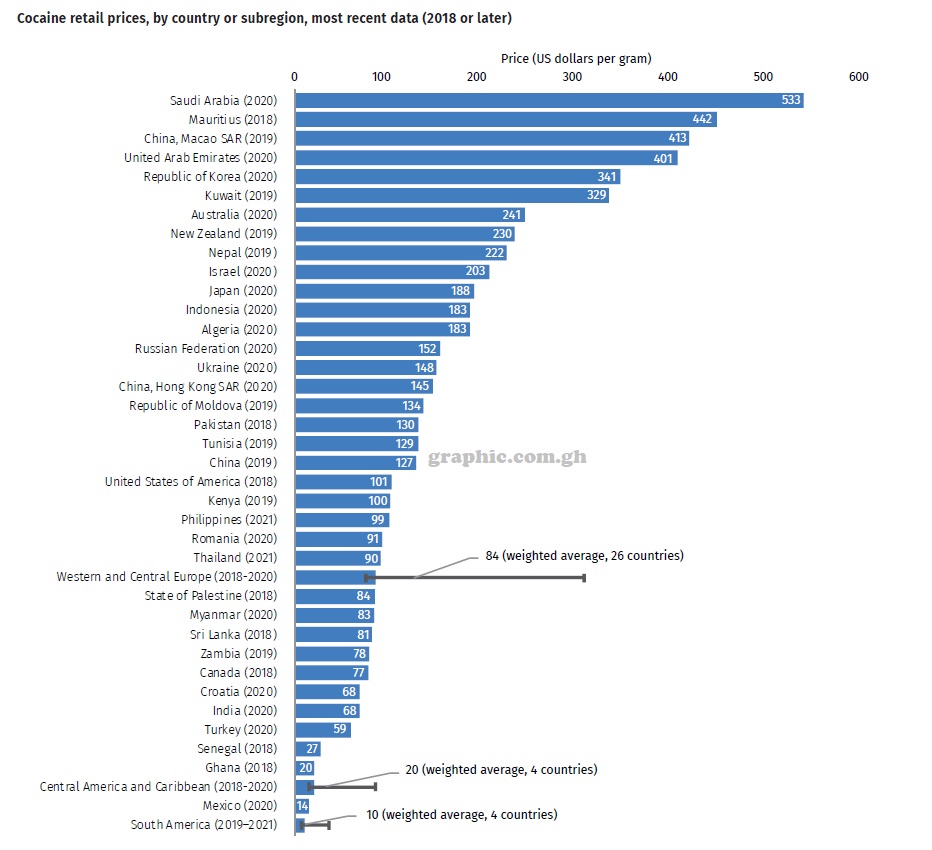
Saudi Arabia has the highest retail cocaine prices of $533 while the illicit drug costs $20 in Ghana
While comprehensive comparable data for 2021 were not available it appears that trafficking from Brazil to West and Central Africa rebounded during 2021, as at least 3 cocaine consignments in excess of 500 kg each, amounting to 2.9 tons, were seized in Brazil with destination Ghana, in addition to smaller consignments meant for Nigeria and Sierra Leone.
Since 2013 the UNODC Drugs Monitoring Platform has recorded only one seizure of 100 kg or more in Ghana, specifically in September 2020 at Tema port.
Colombia still dominates trafficking routes although paths to Europe have evolved
Consumption in Australia peaked in the middle of 2020, dropped by 50% the following year and picked up “moderately” in the last few months of 2021
Mexican and Balkan criminal groups have moved closer to the centre of production to gain access to supplies
The use of crack cocaine is on the upward trend in several western European countries including the UK, Belgium, France and Spain
In Ukraine, the market had been expanding, but since Russia’s invasion last February the demand has been disrupted drastically
On 1 February, the group was discovered clinging to an esky cool box off the coast of Western Australia.
They allegedly told police that their boat capsized while they were out fishing.
However, they now claim that the men were involved in a drug shipment from abroad and are pleading with them to come forward.
When the trio was first saved near Eclipse Island, 17 km south of Albany in Western Australia, authorities applauded them and said in a press release that their case “highlighted the importance of wearing a lifejacket and carrying an emergency beacon.”
But WA police soon found inconsistencies in the trio’s story and contacted the Australian Federal Police (AFP), who started an investigation.
Six days after the men were rescued, a black plastic-wrapped package containing parcels of cocaine was found on a beach 54km (33 miles) west of Albany.
And the next day an overturned cabin cruiser was discovered with eight similarly wrapped packages, each containing about 40kg of cocaine.
Police believe the drugs were collected from the ocean and ferried to shore in the boat. How the drugs were initially left in the ocean is not known.
Detectives have now asked the public to help locate Mate Stipinovich, 49, and Karl Whitburn, 45, from Perth, and 36-year-old Aristides Avlontis, who is thought to be in the Northern Territory.
AFP Acting Commander Graeme Marshall said the seizure of the drugs would deal a “significant blow” to a “well-resourced syndicate”.
“The AFP estimates this seizure has saved the community more than $235 million in drug-related harm, including associated crime, healthcare costs, and loss of productivity,” he said.
The cache, which weighs 3.2 tonnes (3,200 kg) in total and is worth $500 million NZD (£263 million; $316 million), was discovered drifting hundreds of kilometers northwest of New Zealand.
Police were of the opinion that it was going to Australia, where it would have been sufficient to supply that market for a year.
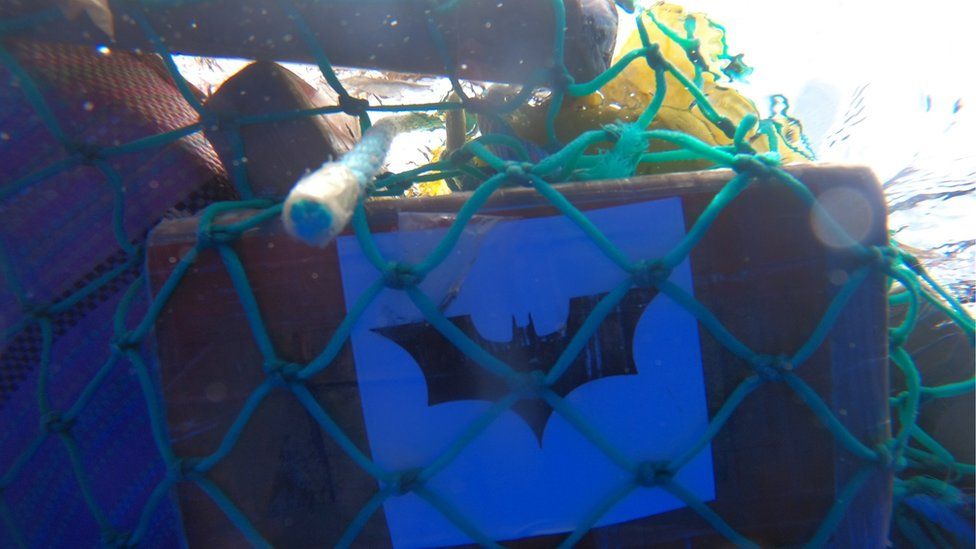
Some of the packages’ labels featured a Batman symbol and were buoyantly strung together.
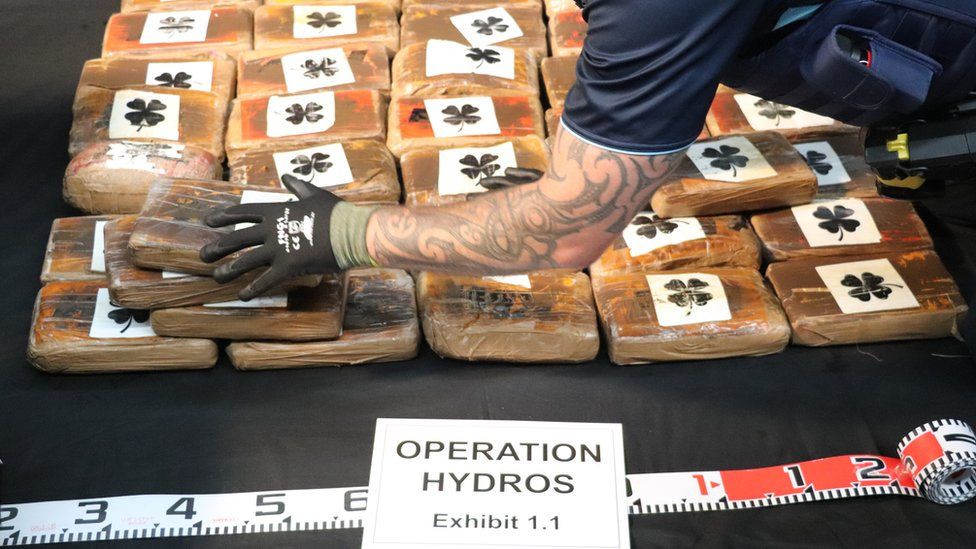
Coke packets labeled with a clover leaf symbol were also visible in images released by New Zealand police and defense officials.
“This is the largest find of illicit drugs by New Zealand agencies, by some margin,” said New Zealand’s police commissioner Andrew Coster on Wednesday.
“It is more than New Zealand would use in 30 years,” he added.
Image caption,Some bales had a Batman symbol on them…Image caption,and others were wrapped in brown paper with a clover leaf symbol
New Zealand’s navy deployed a vessel to retrieve the massive shipment last week, which comprised 81 bales of cocaine.
They were brought to Auckland in New Zealand’s North Island on Tuesday and taken to a security facility to be documented and destroyed, officials said.
“We believe we have dealt a significant blow to an international criminal syndicate’s operation,” Mr Coster said.
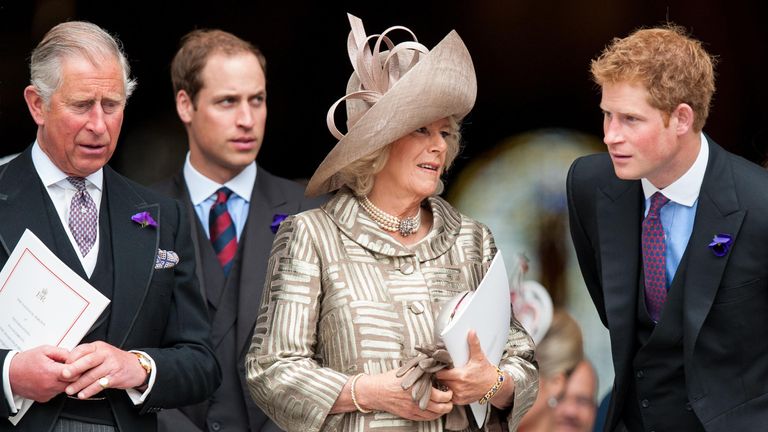
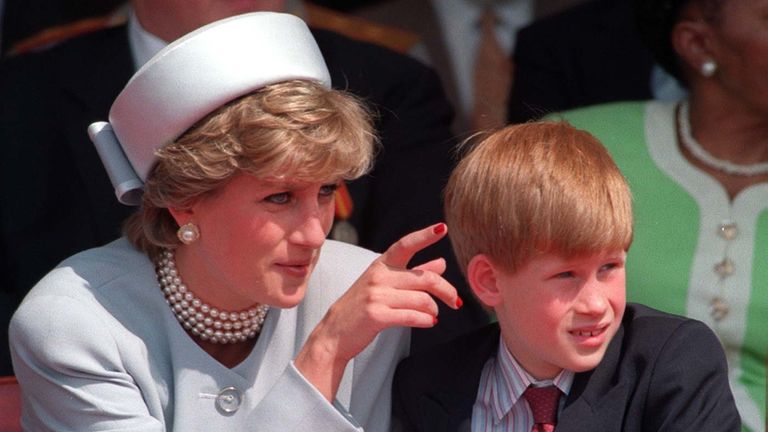
Prince Harry has written about the moment he learned his mother, Princess Diana, had been killed in a car accident.
Spare, details a series of revelations in which Harry admits to using cocaine and discusses how he lost his virginity.
When his mother died, he was woken up by his father, who “sat on the edge of the bed and put his hand on my knee,” he wrote.
“My dear son, mum has had a car accident,” he says Charles said.
“There have been complications. Mum has been seriously injured and has been taken to hospital, my dear son.”
The book added: “He would always call me ‘dear son’, but he was repeating it a lot.
“He spoke quietly. It gave me the impression he was in shock.”
Diana died in 1997 following a car crash in Paris.
The book Spare was mistakenly put on shelves in Spain, five days ahead of the official release date – but Sky News has obtained a copy.
Image:From left: The then Prince Charles, William, the then Duchess of Cornwall and Harry
‘Don’t remarry’
Prince Harry also says in his new book that he asked his father not to marry Camilla.
The Duke of Sussex also talks about the moment he was told his mother had a car accident, amongst a number of other revelations.
Speaking about his father marrying Camilla, the prince writes: “That’s why when the question came, Willy and I promised our father that we would welcome Camilla to the family. The only thing we asked for in return was that he didn’t marry her. ‘You don’t need to get married again’ we asked him.”
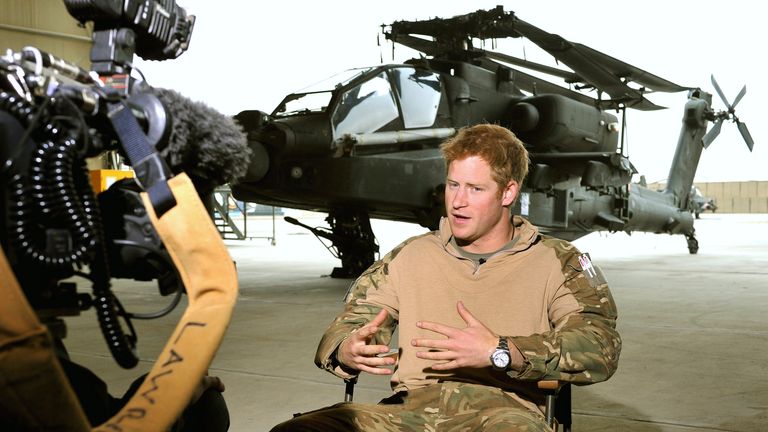
Image:Harry in Afghanistan in 2012
Harry killed 25 people in Afghanistan
In Spare, the duke also said that he killed 25 people while serving inAfghanistan.
Writing about his two tours of duty, the Prince, who spent 10 years in the Army, said: “So my number: twenty-five. It was not something that filled me with satisfaction, but I was not ashamed either. Naturally, I would have preferred not to have that figure on my military resume, or in my head, but I would also have preferred to live in a world without the Taliban, a world without war.”
Prince claims he was dissuaded from asking for Diana investigation
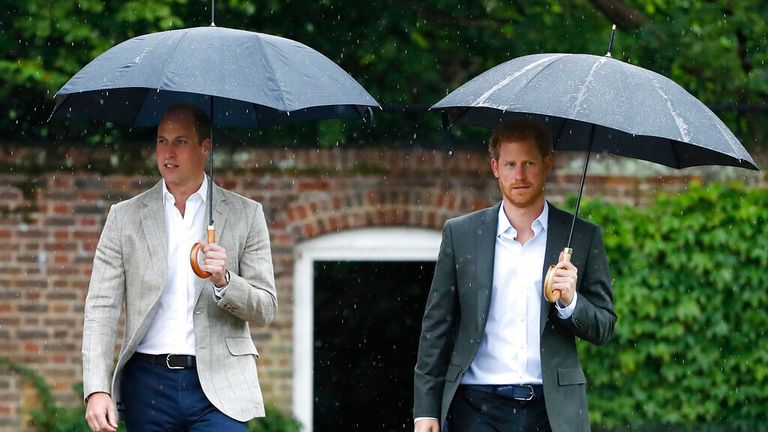
Harry also claims in his memoir that he and his brother William were dissuaded from jointly asking for an investigation into their mother’s death.
He wrote: “Especially the summary conclusion, that our mother’s driver was drunk and, as a result, that was the only cause of the accident. It was simplistic and absurd. Even if the man had been drinking, even if he had been drunk, he wouldn’t have had any problem driving through such a short tunnel.
“Unless paparazzi were following him and dazzled him. Why had those paparazzi got off lightly? Why weren’t they in prison? Who had sent them? And why weren’t those people in jail either? What other reason could there be apart from corruption and cover-ups being the order of the day? We agreed on all those questions, and also what we should do next. We would issue a statement, asking jointly for the investigation to be reopened. We might call a press conference. Those who decided dissuaded us.”
Harry admits he took cocaine
In the book, he also admitted that he took cocaine, spoke about how he lost his virginity and claimed his brother physically attacked him during a row over his marriage to Meghan Markle.
Speaking about using cocaine,Prince Harry said “it wasn’t very fun, and it didn’t make me feel especially happy”.
Harry described losing his virginity as “a humiliating episode with an older lady”.
He said it was “with an older lady, who loved horses very much and treated me like a young stallion”.
The excerpt read: “‘I mounted her quickly, after which she spanked my ass and held me back… one of my mistakes was letting it happen in a field, just behind a busy pub. No doubt someone had seen us’.”
In an operation off the coast of Sierra Leone, a Brazilian vesselcarrying more than 4.6 tonnes of cocaine worth over $157.4 million was seized.
According to Europol, the ship was seized by a French Navy helicopter carrier on November 30, 2022, about 400 miles off the coast of Sierra Leone.
The NCA, US Drug Enforcement Agency, and Brazilian Federal Police collaborated to uncover and battle criminal networks involved in cocaine trafficking between Brazil, Africa, and Europe. This collaboration resulted in the operation.
According to EUROPOL, the 21-metre-long Brazilian ship where the drugs were found was sailing toward Europe when it was intercepted.
“An investigation is underway to identify the criminal groups involved on either side of the Atlantic Ocean,” Europol said in a statement.
The National Crime Agency reported that the crew, who were all citizens of Brazil, were detained and the cocaine was destroyed. Drug smugglers and sellers have recently traveled often along Sierra Leone’s coast.
At Freetown’s Queen Elizabeth II Port in July of this year, the Sierra Leone Police allegedly found a 40-foot container with cocaine inside. According to reports, the container was sent from the UK to Sierra Leone.
When a ship using the flag of Sierra Leonewas stopped in Guinean waters carrying almost three tons of cocaine, authorities there held the ship. Recently, many ships were stopped in the waters off Sierra Leone for engaging in unlawful activities.
A woman was arrested at John F. Kennedy International Airport this month after U.S. Customs and Border Protection officers discovered what they later said was $450,000 of cocaine inside the wheels of a wheelchair.
Per a report from the Associated Press, Emelinda Paulino De Riva was arrested following a flight from Punta Cana, Dominican Republic on Nov. 10. Initially, CBP officers claim to have identified an “anomaly” in the woman’s wheelchair, the wheels of which were allegedly not turning as they normally would.
Further investigation, including an x-ray, resulted in the discovery of a powder officers claim tested positive for cocaine. De Rivas was ultimately arrested and charged with importation of a controlled substance in connection with the alleged 28-pound cocaine haul. A press release from the U.S. Customs and Border Protection regarding the incident, cringe-inducingly, begins with a reference to a popular children’s song.
As cocaine news enthusiasts will recall, this isn’t the first such instance of this variety to spur headlines. In July, for example, a man was arrested and charged with felony trafficking at Charlotte Douglas International Airport after allegedly being found with 23 pounds of cocaine hidden in the seat cushions of a wheelchair.
Of course, as drug law revision advocates have long argued, all the time and money funneled toward self-reverential busts of this kind could be put to better use with a stand-down on the so-called “war on drugs.” Back in 2020, notably, CBP was revealed to have settled a federal lawsuit focused on the agency’s “pattern of abusive seizures and investigations.”
The canine unit was on patrol at the airport checking arriving passengers and their luggage from the flight from the Dominican Republic, a commonly used drug smuggling route.
When the dog drew the officers’ attention to the wheelchair, police checked the luggage but found nothing.
They then cut open the upholstery of the wheelchair and found cocaine.
Police said when the discovery was made, the user, a Spaniard, got up from the wheelchair and walked unaided.
In total, 11 packets of cocaine, weighing 13.25kg (25.21bs) was seized, and it could have made 27,000 individual doses, police said.
The street value of the bust values to round €1.4m (£1.2m).
Nigerian drug enforcementagency says it appears to have made the largest cocaine seizure in the nation’s history.
1.8 tonnes of cocaine, estimated to be valued at over $278 million (£243 million), were found in a warehouse in the Ikorodu neighborhood, northeast of Lagos’ commercial center.
The drugs were stored in 10 travel bags and 13 drums, said the National Drug Law Enforcement Agency (NDLEA).
Four Nigerian men aged 69, 65, and two 53-year-olds were arrested in different parts of Lagos.
A foreign national was also detailed, in what the agency said was a “well coordinated and intelligence-led operation” conducted over two days.
NDLEA says the men were planning to sell the drugs to buyers in Europe, Asia, and other parts of the world.
“The bust is a historical blow to the drug cartels and a strong warning that they’ll all go down if they fail to realize that the game has changed,” a statement from the agency quoted him as saying.
Founder and Leader of Onyame Kese Krom with the central tenet and brand name MEKRA known as Osofo Kojo Bentil has revealed that eating rice is more harmful to the human bodythan cocaine.
To him, rice is more dangerous than cocaine because it contains twenty-five (25) cubes of unnatural sugar that causes great damage to the human system.
The man who describes himself as a person with the heart and mission to serve people in this generation argued that due to society misconceptions, the populace have been made to believe that rice is healthier than cocaine.
Osofo Kojo Bentil said since cocaine is easy to resist and therefore nobody worries much when they don’t take it in their system, it is not dangerous as compared to rice.
“Do you know that rice is more dangerous than cocaine? It’s a fact because every bowl of rice contains 25 cubes of sugar, that’s unnatural sugar and do you know what those unnatural sugars do in our body. It causes harm” he said on Okay FM’s ‘Best Entertainment Show’ hosted by Halifax Ansah-Addo.
Source: Ghanaweb
DISCLAIMER: Independentghana.com will not be liable for any inaccuracies contained in this article. The views expressed in the article are solely those of the author’s, and do not reflect those of The Independent Ghana
The West African country of Nigeria’s narcotics enforcement agency claimed to have carried out what appears to be the greatest cocaine seizure in its history, according to the BBC.
Near the commercial district of Lagos, in the Ikorodu neighborhood, 1.8 tons of cocaine were discovered in a warehouse. This quantity is thought to be worth approximately $278 million (£243 million).
The drugs were stashed in 13 drums and 10 travel bags, according to the National Drug Law Enforcement Agency (NDLEA).
In different parts of Lagos, four Nigerian men—ages 69, 65, and two 53—were seized.
A foreign individual was also apprehended in what the agency characterized as a “well structured and intelligence led operation” extended over two days.
The individuals wanted to sell the medicines to customers in Europe, Asia,and other continents, according to NDLEA.
The Nigerian drug enforcement agency says it has made what appears to be the biggest seizure of cocaine in the country’s history.
Some 1.8 tons of cocaine estimated to be worth more than $278m (£243m) were discovered in a warehouse in the Ikorodu area, north-east of the commercial hub, Lagos.
The drugs were stored in 10 travel bags and 13 drums, said the National Drug Law Enforcement Agency (NDLEA).
Four Nigerian men aged 69, 65, and two 53-year-olds were arrested in different parts of Lagos.
A foreign national was also detailed, in what the agency said was a “well coordinated and intelligence led operation” conducted over two days.
NDLEA says the men were planning to sell the drugs to buyers in Europe, Asia and other parts of the world.
The agency’s head, Brig Gen Mohamed Buba Marwa (Retd), praised his officers, who worked with their US counterparts in the operation.
“The bust is a historical blow to the drug cartels and a strong warning that they’ll all go down if they fail to realise that the game has changed,” a statement from the agency quoted him as saying.
An Accra High Court has sentenced a Liberian national to ten years imprisonment for attempting to smuggle cocaine a narcotic drug through the Kotoka International Airport (KIA) to Bangkok, Thailand.
The court presided over by her Ladyship Justice Mary Ekua Yanzuh on August 31, 2022, after the conviction of Ms. Wolo Maikplay Margaret, also fined her ten thousand penalty units.
In default, Ms Maikplay would serve three years additional term.
The accused pleaded guilty to two counts of attempted exportation and possession of a narcotic drug without a Minister of Health license, which violates sections 36 and 37 of the Narcotics Control Commission Act, 2020 (Act 1019), respectively.
The presiding judge found her guilty on her own plea on each count to run concurrently.
Ms. Wolo Maikplay Margaret was apprehended by Narcotics Control Commission (NACOC) officers on the 14th of May, 2022, while transiting throughKotoka International Airport (KIA) from Monrovia to Bangkok-Thailand onboard Qatar Airways.
A total of thirty (30) pellets containing cocaine weighing 277.2101grams were retrieved from beneath her breast and vagina when commission officials conducted a physical search on her.
Francis Opoku Amoah, Acting Director of Public Affairs and International Relations Department of the Narcotics Control Commission, in a statement, said officials of the Commission received a tip-off from a sister security agency at Kotoka International Airport (KIA), which led to the retrieval of the pellets of cocaine.
The Commission emphasised that “the possession and attempted transportation of narcotic drugs is still illegal and punishable under domestic law.â€
It also assured the public of its continuous commitment to reducing to the barest minimum, the influx and smuggling of all types of narcotic drugs through collaboration with the relevant stakeholders.
A Liberian national has been given a ten (10) year prison sentence by the Accra High Court for attempting to transport cocaine through the Kotoka International Airport (KIA) to Bangkok, Thailand.
Following Ms. Wolo Maikplay Margaret’s conviction, the court presided over by Her Ladyship Justice Mary Ekua Yanzuh further penalized her 10,000 penalty units in default and ordered her to serve an extra three years in prison on Wednesday, August 31, 2022.
In accordance with sections 36 and 37 of the Narcotics Control Commission Act, 2020 (Act 1019), the accused admitted guilt to two charges of attempted exporting and possession of a controlled substance without a Minister of Health license.
The presiding judge found her guilty on her own plea on each count to run concurrently.
Ms. Wolo Maikplay Margaret was apprehended by Narcotics Control Commission(NACOC) officers on the 14th of May, 2022, while transiting through Kotoka International Airport(KIA) from Monrovia to Bangkok-Thailand onboard Qatar Airways.
A total of thirty (30) pellets containing cocaine weighing 277.2101grams were retrieved from beneath her breast and Vagina when commission officials conducted a physical search on her after receiving a tip off from a sister security agency at Kotoka International Airport (KIA).
A statement issued by the Narcotic Control Commission on Tuesday, “emphasised that the possession and attempted transportation of narcotic drugs is still illegal and punishable under domestic law.â€
It also assured citizens of “its ongoing commitment to keeping the influx and smuggling of all types of narcotic drugs to a bare minimum through collaboration with the relevant stakeholders.â€
The department received 45 boxes of donated bananas from Ports of America in Freeport near the Gulf of Mexico. But it turns out the donation was a greater gift than either organization could have imagined, containing an additional 540 packages of cocaine, valued at nearly $18 million.
“Sometimes, life gives you lemons. Sometimes, it gives you bananas,” the TDCJ post joked.
According to the post, the discovery was made by two of its sergeants after they noticed “something not quite right” with the boxes after they were unloaded. Once they started pulling apart these suspicious boxes, they discovered a white powdery substance and notified port authorities.
Sure enough, when life handed them bananas, it was actually a shit ton ofcocaine.
Not many other details are known about this bizarre turn of events. But the TDCJ assured its followers that the Drug Enforcement Administration, U.S. Customs, and Border Protection were now investigating into the matter.
I guess we’ll have to wait for the Season 6 of Breaking Bad that’s never happening to fully understand the plot twist of sending a massive cache of illegal drugs to a literal prison.
Investigators have brought one of the most wanted Mafia bosses in Italy back to the country, almost 20 years after his escape from prison.
The head of the Sicilian Mafia, Stidda, landed at Rome’s Fiumicino airport on Friday. He was immediately taken to a high-security prison, according to the anti-Mafia police DIA.
Spanish authorities arrested the man in December in Madrid, where he had been hiding for years under a false name. He was identified in an image taken from Google Maps in the Spanish town of Galapagar at a fruit and vegetable stand.
The Mafia boss from the Agrigento area was jailed for a murder in 1989, but escaped in 2002 during filming work at Rome’s Rebibbia prison.
Management of Global Cargo and Commodities Limited, have through their lawyers at Blay and Associates, denied being the consignee of the alleged 152kg of cocaine intercepted at the Tema.
Global Cargo and Commodities Limited, freight forwarders and clearing agents with headquarters situate in Tema, have been with the allegation that they are the brain behind the cocaine importation.
It would be recalled that a few days ago, the Narcotics Control Commission in collaboration with National Security and Bureau of National Investigations (BNI) operatives at the Tema Port intercepted a substance suspected to be illegal drugs.
The container is said to be part of 50 other containers consigned to a Company called TradePass, which consignment Global Cargo and Commodities Limited was contracted as Freight Forwarders and Clearing Agents to clear and warehouse from the Tema Harbour.
The Narcotics Control Commission (NACOC), Bureau of National Investigations (BNI), and the National Security Secretariat (NSCS), have since issued a joint statement.
The statement indicated that the three organizations have together undertaken a joint operation, which led to the discovery of some substances believed to be cocaine in some containers of sugar imported into the country.
In the release, Global Cargo and Commodities Limited was categorically mentioned as consignee of the quantities of the imported sugar supplied by a Company registered in the United Arab Emirates, Sucden, and that the imported bags of sugar were meant to be delivered to Tradepass, another Company in Ghana.
But Global Cargo and Commodities Limited’s lawyer, Nana Yaa Owusu-Aduome, in reaction to the security agencies joint statement, said, “Our Clients name Global Cargo and Commodities Limited was categorically mentioned in the said Statement as consignee of the quantities of the imported sugar supplied by a Company registered in the United Arab Emirates, Sucden, and that the imported bags of sugar were meant to be delivered to TRADEPASS, another Company in Ghana.”
It said, “the impression that Global Cargo and Commodities Limited was the consignee for the sugar is totally erroneous and incorrect.”
The statement indicated that “We are under instructions to correct this wrong impression created by that Joint release. We are to emphasize for the benefit of the General Public and particularly for the (3) three reputable institutions that Global Cargo and Commodities Limited WAS NOT the CONSIGNEE, but as a matter of fact, a notified Party, as Freight Forwarders and Clearing Agents. This is the normal practice with importation of goods both at the harbor and Airport.”
It stated that “all relevant and verifiable documents covering the transaction are available for those who care to find out or investigate.”
“The wrong impression is causing a lot of havoc to the business and reputation of Management and Directorate of our Clients, Global Cargo and Commodities Limited.
It is our conviction that at the end of the day the investigation would conclude and the air soon cleared over the matter,” according to the statement.
“Meanwhile, we are to entreat all and sundry to be mindful of any wrongful and damaging impression that could be created to the public”, it said.
The Narcotics Control Commission (NACOC) in conjunction with the Bureau of National Investigations (BNI) and the National Security Council Secretariat (NSCS) has intercepted 152 kilogrammes of cocaine at Tema in the Greater Accra Region.
A statement issued by NACOC said the cocaine was concealed in a shipment from Brazil.
The NACOC said a number of persons have been arrested and are assisting in investigations.
It said preliminary investigations have revealed the consignment was delivered to Tradepass Gh Limited.
The statement said that the consignment with bill of lading number MEDUST209567 was shipped from Brazil by Usina Santa Isabel S/A Fazenda Tres, a Brazilian company on behalf of Sucden Middle East, based in Dubai.
The shipment consists of 27,000 bags of Brazilian crystal white sugar, with a gross weight of 1,350mt.
NACOC said Global Cargo and Commodities Limited, Tema, was the consignee of the shipment.
The statement said the seizure was based on intelligence received that, a consignment of 50 containers of sugar destined for Ghana from Brazil is suspected to be narcotics.
It said that NACOC, BNI and NSCS mounted surveillance on the shipment until the narcotics substances were retrieved from the consignment on September 12, 2020.
After the interception, the statement said that the Customs Division of the Ghana Revenue Authority (GRA) commenced physical search on the bags of sugar on September 10 and on September 12, eight bags of sugar were identified to contain the suspected narcotics.
The statement said the narcotics were tested and the result proved positive for cocaine.
Following that, NACOC took custody of the exhibits and subsequently forwarded same to the Ghana Standard Authority for analytical examination and report which also confirmed the substances to be cocaine.
In what could become the latest tale of missing narcotics in the custody of the state, 100.1 grams of a whitish substance suspected to be cocaine cannot be accounted for by the Customs Division of the Ghana Revenue Authority (GRA).
According to the Narcotics Control Commission (NACOC), the incident occurred on Sunday, June 7, 2020, at Aflao in the Volta Region.
Director-General of NACOC, Francis Torkornoo said his officers after impounding a vehicle that had concealed the substances under its fuel tank on Friday, June 2020, took inventory of all the packages, which included $200,000 and wanted to send it to Accra for investigations but Customs officers refused.
“When they dropped the fuel tank, there was this false compartment under the vehicle containing various parcels and an amount of $200,000. After the inventory, as expected, NACOC wanted to the bring the vehicle to Accra for investigations to start, but the Customs officers refused, saying that they need to hear from their superiors from Accra,†he said.
He added that, “The team had a meeting and another inventory was taken [on Sunday] and this time, one whitish substance weighing 100.1 gram was missing from all that they saw on Friday. So my officers insisted that if the narration of the inventory does not change, they were not going to sign,†he said.
In a later interview on Eyewitness News, Francis Torkornoo said although NACOC maintains a friendly relationship with the Customs Division of the GRA, NACOC has not been enthused about some incidents that have happened in the recent past.
He cited an incident where NACOC seized some suspected banned substance and due to some actions by customs including announcing in the media that it was them who seized the items and that it was cocaine, NACOC was unable to arrest some suspects who were behind the transportation of the banned substance.
He said his outfit has since written to the Commissioner of Customs to request the transfer of the vehicle to NACOC to allow them to conduct investigations.
“As at now, we have not received any of the parcels to perform a close test to know that really the content has narcotic substances and also if the items are handed to us, we will start our investigations… Nothing has been given to us so we have formally written to the Commission of Customers to transfer the vehicle and all the contents to Narcotics Control Commission. Hitherto, it was something we said they should keep, but they arrogated it to themselves to say that they need clearance before they will take it to their Headquarters before giving to us and it is something that is bizarre.â€
A whitish wrapped substance believed to be cocaine, impounded by customs has vanished, the Narcotics Control Board (NACOB) has said.
The Head of Communications, Media Relations and Protocol of NACOB, Mr Francis Opoku Amoah, explained that the substance was confiscated on Friday, June 5, by a NACOB official at Aflao close to the border between Ghana and Togo.
Together with the whitish substance, a sum of $200,000 in bundles of $100 and $50 bills was also retrieved from the vehicle of the suspect.
Customs officials took custody of the consignment. However, by Sunday, the whitish substance had gone missing.
“When customs took custody of the vehicle, they brought it to their yard, and even as we are talking because of these delays from Friday till now, we are learning that one of the packages that is suspected to be a whitish substance that is suspected to be cocaine, is missing.†Mr Amoah told Joy FM on Monday, June 8.
In the interview monitored by theghanareport.com, NACOB had been observing a particular person who drove a Toyota Prado.
The NACOB official said they had observed that Customs cleared the vehicle at a checkpoint.
But NACOB officials decided to inspect the car based on intelligence. NACOB conducted a scan of the vehicle which indicated illegal substances may be part of the goods in the vehicle.
Suspecting an arrest, “the driver and the vehicle sped off, and this NACOB officer had to, on his own, chase this Prado until a point where the driver cooled down and ran into the bushâ€.
“That was when NACOB was able to secure the vehicle,†Mr Amoah noted.
The NACOB officer made a call to request for reinforcement but before his commander could arrive a group of Customs officials came to the scene.
Customs took the car and drove off to to their yard at Aflao.
Unhappy that Customs kept the vehicle, Mr Amoah said that the “items could have been protected†if it had been sent to the office of NACOB and investigations would have commenced right away.
Bulgarian police on Wednesday seized more than $43 million worth of cocaine from an apartment in the capital Sofia, occupied by a man who was detained a day earlier after police found 40 kg of the drug in his car, prosecutors said in a statement.
A total of 327 packages, weighing about 1 kg each and marked with car logos and playing cards, were found, they said.
Police said that the high-purity cocaine with an estimated street value of more than 40 million euros ($44 million) had been mainly destined for Western Europe and Asia.
“Only a small part was to be sold in Bulgaria,†senior police commissioner Georgi Hadzhiev said. “Considering the upcoming summer season, about 35-40 kg were for the Bulgarian market.â€
Bulgaria, a Balkan country with a population of fewer than 7 million, has long served as a key route for smugglers moving goods between Europe and southwest Asia.
A report by the International Narcotics Control Board (INCB) in 2008 revealed that there were small scale manufactures of cocaine and heroin in Ghana despite efforts by security agencies to clamp down on Illicit drug trafficking and its use.
The report also indicated that, availability of illicit drugs precursor chemicals in the country contributed to the production of hard drugs including cocaine, heroin, and amphetamine-type stimulants.
“These chemicals come into the country mainly from South Africa and they come through customs checkpoints all the time but the officers are not able to detect them,” Dr Joseph Bediako Asare, a member of the International Narcotics Control Board indicated.
Meanwhile, most African countries have become a transit point for cocaine. Several operations by Narcotics Control Board including Ghana have led to huge drug seizures over the years.
Contrary to the assertion that Ghana was just a transit point for illicit drugs and not a production country, Dr Joseph Bediako Asare, a member of the International Narcotics Control Board (INCB), on Wednesday told the Ghana News Agency that the Board suspects there is small scale manufacture of cocaine and heroin in the country.
He said there was overwhelming evidence of the availability of the chemicals used in producing illicit drugs like cocaine, heroin and amphetamine type stimulants in Ghana. These chemicals are used to refine the coca and opium, which are imported into the country.
“These chemicals come into the country mainly from South Africa and they come through customs check points all the time but the officers are not able to detect them,” he said.
Dr Asare was speaking to the GNA after the launch of the 2007 INCB Report, which focuses on Proportionality and Drug Related Offences. He noted that even though the security agencies were aware of the availability of the illicit drugs precursor chemicals in the country, they remained somewhat aloof about it because they thought Ghanaians were innocent about their availability and use.
“We tend to think that our youth are innocent but they are gradually getting into the business of drug production and very soon if we do not stem the influx of the chemicals we will have a big drug problem on hand,” he warned.
Dr. Asare gave the GNA a list of precursor chemicals used in producing cocaine, heroine and amphetamine type stimulants, which, he said, were currently available in the country.
He called on the government and its agencies responsible for the import of certain chemicals for legitimate purposes to do proper estimates before importing them to ensure that the exact quantities were imported to prevent excess chemicals from getting into the hands of the bad nuts.
The report itself confirmed that drug traffickers were using Africa as a transshipment area for precursors such as ephedrine and pseudoephedrine used for making amphetamine type stimulants.
“Weak legislation against trafficking in precursor chemicals in most Africa makes it easy to obtain chemicals for illicit drug manufacture.”
It said Interpol estimated that 200-300 tons of cocaine made their way from Latin America into Europe through West Africa, where it was stockpiled and repackaged for transport.
The report said West African countries, mainly Ghana, Nigeria and Cote d’Ivoire lacked the economic means, legislative and institutional structures to counter the drug challenge effectively.
As a result Africa currently accounted for 7.6 per cent of all cocaine abusers in the world and the production and abuse of cannabis was also on the rise on the continent, the report said.
“Another problem in Africa is the misuse of pharmaceutical preparations containing narcotic drugs and psychotropic substance, which are sold by street vendors and healthcare providers without a prescription,” it said.
The report therefore called on African governments to address the problem, which had severe consequences on the health of their population and social fabric.
Dr Asare noted that in focusing on the principle of proportionality in drug related offences, the report sought to propose measures that were proportional to the gravity of the drug menace in dealing with drug related offences.
In that regard, he said, the report recommended the setting up of special courts for dealing with drug-related cases, saying that currently 50 per cent of prisoners in Ghana were in jail for drug related offences.
“We also need acceptable treatment facilities to deal with persons engaged in drug related offences to ensure better rehabilitation because our current social welfare system that takes care of such persons is not effective.”
Dr Asare said there was need to be serious about going after suspected drug barons, investigate, prosecute and jail them where necessary to deter people from getting into the drug trade.
Fifty-one-year-old Oppong Kwaku Owusu, is facing prosecution after he allegedly expelled 100 pellets of some powdery substance suspected to be cocaine.
This follows his apprehension by officials of the Narcotics Control Board (NACOB)on Tuesday, February 18, at the Kotoka International Airport.
A statement issued by NACOB, and copied to the Ghana News Agency, in Accra, said three parcels of powdery substances suspected to be cocaine were also found concealed in his carryon luggage.
Owusu was remanded into prison custody when he appeared before the Court on Thursday, February 20, and ordered to reappear on Monday, March 2.
Explaining the circumstances leading to his arrest, the NACOB statement said Owusu was identified as at the departure hall of KIA on suspicion of having ingested some foreign substance.
The happened on Tuesday, February 18, at about 1940 hours,
the statement, signed by Mr Francis Opoku Amoah, the Head, Communications Media Relations & Protocol Unit, said.
“His carry-on luggage was searched in his presence and three parcels of powdery substances suspected to be cocaine, a narcotic drug were found concealed in itâ€.
Upon interrogation, he denied knowledge and ownership of the substance in the bag, but claimed ownership of the clothing in it, and confessed to having ingested similar substance, the statement said.
“Owusu was put under observation and as of 1200 hours of February 19, 2020, he had expelled 100 pellets of the powdery substance suspected to be cocaineâ€.
“In his investigative cautioned statement, the suspect stated that, he was contracted by one Alhaji, a Ghanaian resident in Amsterdam to acquire and transport some drugs for a fee of €1500.00â€.
However, he declined to give full details of all his contacts, the statement said.
It gave the assurance that the exhibits – the three parcels and 100 pellets of whitish powdery substances – would be forwarded to the Ghana Standards Authority for analytical examination and report.
Owusu, the statement said, carried a Ghanaian passport with the Number G2563315, issued in Accra on August 22, 2019, which was expected to expire on August 21, 2029.
Additionally, he possessed the Kingdom of The Netherlands passport with the number NYDK14RP7, issued on December 15, 2015 and expected to expire on December 15, 2025.
The Narcotics Control Board, the statement said, would continue to collaborate and partner with other stakeholders and international partners to make Ghana, and in particular the Kotoka International Airport, unattractive for drug traffickers.