Tag: cocoa

  • Ghana would have incurred billions of debt in the absence of Cocoa price reduction – President Mahama

    Ghana would have incurred billions of debt in the absence of Cocoa price reduction – President Mahama

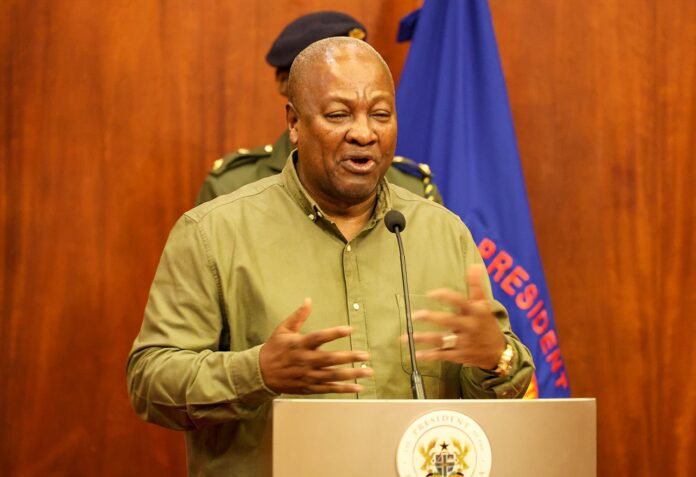
    President John Dramani Mahama has defended the recent upward revision of cocoa prices, describing it as a critical measure to shield the country from sliding into fresh debt running into billions of dollars.

    Delivering the 2026 State of the Nation Address (SONA) in Parliament on Friday, the President said the decision formed part of difficult but necessary steps aimed at stabilising the economy and preventing a return to recent fiscal turmoil.

    “We revised the prices of cocoa to achieve competitive pricing. Failure to do this would have meant borrowing billions in borrowed funds. This unplanned expenditure would have taken us right back to the very devasting economic problem we have only recently began to escape,”

    He further assured cocoa farmers that these adjustments are not merely fiscal corrections but the foundation of a structural overhaul, the benefits of which will be realised in the long term.

    “I can firmly assure farmers that the reforms announced by the government will see the total transformation of the sector and ensure they achieve more from the cocoa… These are difficult decisions, but, Mr Speaker, I had to take them,” he said.

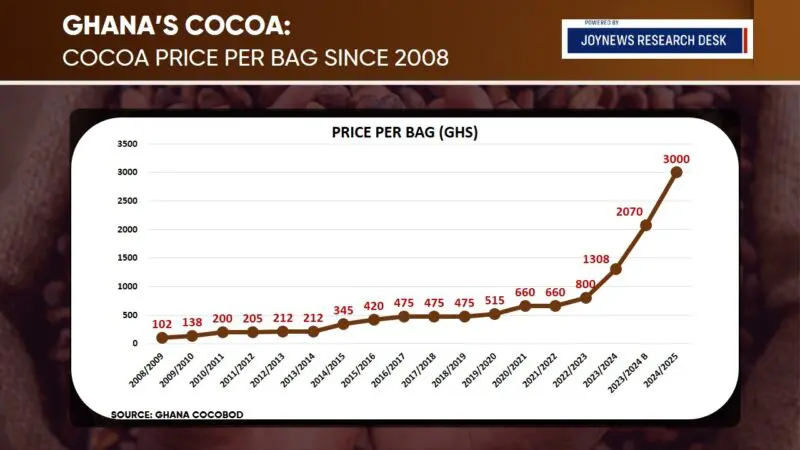
    The Majority Caucus in Parliament held a press briefing today, Thursday, February 19, to address concerns surrounding the recently announced cocoa prices. The farmgate price of cocoa was reduced from GH¢3,625 to GH¢2,587 per bag to align with movements on the international market.

    The reduction is part of the government’s reforms to revive the Ghana Cocoa Board (COCOBOD), which faces several challenges, triggering the Ghanaian cocoa fraternity and cocoa farmers repeatedly call on the government to settle months of unpaid arrears.

    Ghana, the world’s second-largest cocoa producer after Côte d’Ivoire, depends heavily on cocoa as a major source of foreign exchange and livelihoods for more than 800,000 farming households. The sector also supports millions of people through transportation, processing, and other related economic activities.

    The cocoa industry has recently experienced major global price swings. Prices rose to record highs of over $10,000 per tonne in 2024 before declining following improved production forecasts and market adjustments. These changes have created uncertainty for both farmers and policymakers.

    President Mahama stressed that decisions on cocoa pricing and reforms must take into account the conditions farmers face, since their earnings depend largely on producer prices announced annually by the Ghana Cocoa Board.

    He noted that policies affecting cocoa farmers directly influence rural incomes, access to education, and household welfare, adding that reforms must focus on sustainability, fairness, and long-term sector growth.

    The summit, organised with support from the Ghana Tree Crops Authority, seeks to attract investment into major tree crops such as cocoa, cashew, rubber, coconut, and oil palm as part of efforts to diversify Ghana’s agricultural sector and increase value addition.

    President Mahama reaffirmed government’s commitment to improving the cocoa industry through better pricing systems, increased productivity, and measures aimed at ensuring farmers receive fair compensation for their produce.

    He added that aligning policies with the lived experiences of farmers will be key to protecting the future of Ghana’s cocoa sector and maintaining its competitiveness on the global market.

    The President has unveiled major reforms that will have Ghana buying its cocoa with local currency and ending the export of unprocessed mineral ores by 2030, signaling a bold move toward greater economic independence.

    At the conclusion of his high-level side event, “Accra Reset’s Addis Reckoning,” held alongside the 39th African Union Assembly of Heads of State, President Mahama outlined urgent measures aimed at freeing Ghana’s cocoa industry from long-standing reliance on restrictive foreign financing.

    “One of the key decisions we’ve made is to stop accepting foreign funding for the purchase of our cocoa. We are going to raise domestic bonds. We have enough Cedis in Ghana to pay for our cocoa,” President Mahama declared, outlining a radical departure from decades-old practices.

    The President explained that Ghana’s cocoa crisis highlighted long-standing problems in the system. When the government set the cocoa price while international cocoa was $7,200 per ton and the Ghana Cedi was 11.5 to the dollar, changes in the market caused big losses as prices dropped to $4,200 and the Cedi strengthened to 10.7 per dollar.

    President Mahama also pointed out that relying on foreign funding has limited Ghana’s ability to add value to its cocoa.

    “You know what the collateral for the funding is? Our own cocoa beans. You collateralise the beans with the financier, buy them, ship them, and they pay you the international market price,” he explained.

    “You know the interesting part? We have the capacity to process 400,000 tons of those beans in Ghana, but because they are collateralised, we cannot even allocate them to local processors. We must ship all the beans outside.”

    Under the new arrangement, Ghana will raise domestic bonds in Ghana Cedis to purchase cocoa directly from farmers, eliminating the need to pledge the beans as collateral. This will immediately unlock 400,000 tons of cocoa beans for local processors, creating thousands of jobs and retaining significantly more value within Ghana’s economy.

    President Mahama went further, setting an ambitious yet firm deadline to end the export of unprocessed minerals from Ghana.

    “I say by 2030, there won’t be any raw mineral ores leaving Ghana. You’re not going to ship raw manganese ore out of Ghana. You’re not going to ship raw bauxite ore out of Ghana. You’re not going to ship raw iron ore out of Ghana. You must process all that locally,” he stated emphatically.

    The announcement represents what President Mahama says is a comprehensive application of the Accra Reset philosophy, his continental initiative aimed at scaling up development across Africa by asserting sovereignty over natural resources and building domestic processing capacity.

    The President framed his bold moves in the context of mounting pressure from Africa’s youthful population, which is increasingly desperate for economic opportunities.

    “That is the only way we can provide opportunities for our young people. Our young people are less patient than our generation. They want to see that progress and prosperity today,” he said.

    He connected the urgency of implementation directly to the migration crisis: “That is why Accra Reset needs that urgency to stop our young people from braving the dangers of the Sahara and the Mediterranean as they try to reach Europe in search of opportunity.”

    Acknowledging that continental transformation requires immediate action rather than endless planning, President Mahama endorsed a proposal for rapid implementation through willing partners.

    “We come with the decisions. We agree. We do the frameworks. What is missing is urgency and implementation. We take time. And we behave like time is waiting for us,” he said, channelling concerns raised during the discussion.

    “That is why Accra Reset is a good idea. But let’s implement urgently. If parts of the continent are not ready, let’s form a coalition of the willing to move this as quickly as possible. And let all the others follow and join.”

    The Accra Reset initiative, introduced by President Mahama, aims to reshape Africa’s economic ties with the rest of the world, focusing on processing resources locally, building industries, and taking control of the continent’s natural wealth to boost prosperity for Africa’s 1.4 billion people.

    Ghana’s statements in Addis Ababa show that the country plans to set an example, putting real actions in place that other African nations can follow as part of a wider movement across the continent.

    “From Addis, we must stop talking and start implementing,” President Mahama concluded, crystallising the theme of the gathering he dubbed “the Addis reckoning.”
  • COCOBOD needs GHS30bn to keep running – Majority

    COCOBOD needs GHS30bn to keep running – Majority

    The Ghana Cocoa Board (COCOBOD) requires GH¢30 billion in working capital to remain operational, according to Isaac Adongo, Chairman of Parliament’s Finance Committee and Member of Parliament for Bolgatanga Central.

    Isaac Adongo disclosed on Thursday, February 19, during a press briefing to address concerns surrounding the recently announced cocoa prices.

    “COCOBOD requires over GH¢30 billion in working capital for it to survive, not the GH¢60 billion left behind. If you look at the accounts, you realise that there is a big hole in there,” he stated.

    The farmgate price of cocoa was reduced from GH¢3,625 to GH¢2,587 per bag to align with movements on the international market.


    The reduction is part of the government’s reforms to revive the Ghana Cocoa Board, which faces several challenges, triggering the Ghanaian cocoa fraternity and cocoa farmers repeatedly call on the government to settle months of unpaid arrears.


    Ghana, the world’s second-largest cocoa producer after Côte d’Ivoire, depends heavily on cocoa as a major source of foreign exchange and livelihoods for more than 800,000 farming households.

    The sector also supports millions of people through transportation, processing, and other related economic activities.


    The cocoa industry has recently experienced major global price swings. Prices rose to record highs of over $10,000 per tonne in 2024 before declining following improved production forecasts and market adjustments. These changes have created uncertainty for both farmers and policymakers.


    President Mahama stressed that decisions on cocoa pricing and reforms must take into account the conditions farmers face, since their earnings depend largely on producer prices announced annually by the Ghana Cocoa Board.

    He noted that policies affecting cocoa farmers directly influence rural incomes, access to education, and household welfare, adding that reforms must focus on sustainability, fairness, and long-term sector growth.


    The summit, organised with support from the Ghana Tree Crops Authority, seeks to attract investment into major tree crops such as cocoa, cashew, rubber, coconut, and oil palm as part of efforts to diversify Ghana’s agricultural sector and increase value addition.


    President Mahama reaffirmed the government’s commitment to improving the cocoa industry through better pricing systems, increased productivity, and measures aimed at ensuring farmers receive fair compensation for their produce.


    He added that aligning policies with the lived experiences of farmers will be key to protecting the future of Ghana’s cocoa sector and maintaining its competitiveness on the global market.


    President John Mahama has unveiled major reforms that will have Ghana buying its cocoa with local currency and ending the export of unprocessed mineral ores by 2030, signaling a bold move toward greater economic independence.

    At the conclusion of his high-level side event, “Accra Reset’s Addis Reckoning,” held alongside the 39th African Union Assembly of Heads of State, President Mahama outlined urgent measures aimed at freeing Ghana’s cocoa industry from long-standing reliance on restrictive foreign financing.


    “One of the key decisions we’ve made is to stop accepting foreign funding for the purchase of our cocoa. We are going to raise domestic bonds. We have enough Cedis in Ghana to pay for our cocoa,” President Mahama declared, outlining a radical departure from decades-old practices.


    The President explained that Ghana’s cocoa crisis highlighted long-standing problems in the system. When the government set the cocoa price while international cocoa was $7,200 per ton and the Ghana Cedi was 11.5 to the dollar, changes in the market caused big losses as prices dropped to $4,200 and the Cedi strengthened to 10.7 per dollar.


    President Mahama also pointed out that relying on foreign funding has limited Ghana’s ability to add value to its cocoa.


    “You know what the collateral for the funding is? Our own cocoa beans. You collateralise the beans with the financier, buy them, ship them, and they pay you the international market price,” he explained.


    “You know the interesting part? We have the capacity to process 400,000 tons of those beans in Ghana, but because they are collateralised, we cannot even allocate them to local processors. We must ship all the beans outside.”


    Under the new arrangement, Ghana will raise domestic bonds in Ghana Cedis to purchase cocoa directly from farmers, eliminating the need to pledge the beans as collateral.

    This will immediately unlock 400,000 tons of cocoa beans for local processors, creating thousands of jobs and retaining significantly more value within Ghana’s economy.


    President Mahama went further, setting an ambitious yet firm deadline to end the export of unprocessed minerals from Ghana.
    “I say by 2030, there won’t be any raw mineral ores leaving Ghana. You’re not going to ship raw manganese ore out of Ghana. You’re not going to ship raw bauxite ore out of Ghana. You’re not going to ship raw iron ore out of Ghana. You must process all that locally,” he stated emphatically.

    The announcement represents what President Mahama says is a comprehensive application of the Accra Reset philosophy, his continental initiative aimed at scaling up development across Africa by asserting sovereignty over natural resources and building domestic processing capacity.


    The President framed his bold moves in the context of mounting pressure from Africa’s youthful population, which is increasingly desperate for economic opportunities.


    “That is the only way we can provide opportunities for our young people. Our young people are less patient than our generation. They want to see that progress and prosperity today,” he said.


    He connected the urgency of implementation directly to the migration crisis: “That is why Accra Reset needs that urgency to stop our young people from braving the dangers of the Sahara and the Mediterranean as they try to reach Europe in search of opportunity.”


    Acknowledging that continental transformation requires immediate action rather than endless planning, President Mahama endorsed a proposal for rapid implementation through willing partners.


    “We come with the decisions. We agree. We do the frameworks. What is missing is urgency and implementation. We take time. And we behave like time is waiting for us,” he said, channelling concerns raised during the discussion.


    “That is why Accra Reset is a good idea. But let’s implement urgently. If parts of the continent are not ready, let’s form a coalition of the willing to move this as quickly as possible. And let all the others follow and join.”


    The Accra Reset initiative, introduced by President Mahama, aims to reshape Africa’s economic ties with the rest of the world, focusing on processing resources locally, building industries, and taking control of the continent’s natural wealth to boost prosperity for Africa’s 1.4 billion people.


    Ghana’s statements in Addis Ababa show that the country plans to set an example, putting real actions in place that other African nations can follow as part of a wider movement across the continent.


    “From Addis, we must stop talking and start implementing,” President Mahama concluded, crystallising the theme of the gathering he dubbed “the Addis reckoning.”

  • Playback: Majority Caucus addresses cocoa price situation

    Playback: Majority Caucus addresses cocoa price situation

    The Majority Caucus in Parliament held a press briefing today, Thursday, February 19, to address concerns surrounding the recently announced cocoa prices. The farmgate price of cocoa was reduced from GH¢3,625 to GH¢2,587 per bag to align with movements on the international market.

    The reduction is part of the government’s reforms to revive the Ghana Cocoa Board (COCOBOD), which faces several challenges, triggering the Ghanaian cocoa fraternity and cocoa farmers repeatedly call on the government to settle months of unpaid arrears.

    Watch playback here:

    Ghana, the world’s second-largest cocoa producer after Côte d’Ivoire, depends heavily on cocoa as a major source of foreign exchange and livelihoods for more than 800,000 farming households. The sector also supports millions of people through transportation, processing, and other related economic activities.

    The cocoa industry has recently experienced major global price swings. Prices rose to record highs of over $10,000 per tonne in 2024 before declining following improved production forecasts and market adjustments. These changes have created uncertainty for both farmers and policymakers.

    President Mahama stressed that decisions on cocoa pricing and reforms must take into account the conditions farmers face, since their earnings depend largely on producer prices announced annually by the Ghana Cocoa Board.

    He noted that policies affecting cocoa farmers directly influence rural incomes, access to education, and household welfare, adding that reforms must focus on sustainability, fairness, and long-term sector growth.

    The summit, organised with support from the Ghana Tree Crops Authority, seeks to attract investment into major tree crops such as cocoa, cashew, rubber, coconut, and oil palm as part of efforts to diversify Ghana’s agricultural sector and increase value addition.

    President Mahama reaffirmed government’s commitment to improving the cocoa industry through better pricing systems, increased productivity, and measures aimed at ensuring farmers receive fair compensation for their produce.

    He added that aligning policies with the lived experiences of farmers will be key to protecting the future of Ghana’s cocoa sector and maintaining its competitiveness on the global market.

    President John Mahama has unveiled major reforms that will have Ghana buying its cocoa with local currency and ending the export of unprocessed mineral ores by 2030, signaling a bold move toward greater economic independence.

    At the conclusion of his high-level side event, “Accra Reset’s Addis Reckoning,” held alongside the 39th African Union Assembly of Heads of State, President Mahama outlined urgent measures aimed at freeing Ghana’s cocoa industry from long-standing reliance on restrictive foreign financing.

    “One of the key decisions we’ve made is to stop accepting foreign funding for the purchase of our cocoa. We are going to raise domestic bonds. We have enough Cedis in Ghana to pay for our cocoa,” President Mahama declared, outlining a radical departure from decades-old practices.

    The President explained that Ghana’s cocoa crisis highlighted long-standing problems in the system. When the government set the cocoa price while international cocoa was $7,200 per ton and the Ghana Cedi was 11.5 to the dollar, changes in the market caused big losses as prices dropped to $4,200 and the Cedi strengthened to 10.7 per dollar.

    President Mahama also pointed out that relying on foreign funding has limited Ghana’s ability to add value to its cocoa.

    “You know what the collateral for the funding is? Our own cocoa beans. You collateralise the beans with the financier, buy them, ship them, and they pay you the international market price,” he explained.

    “You know the interesting part? We have the capacity to process 400,000 tons of those beans in Ghana, but because they are collateralised, we cannot even allocate them to local processors. We must ship all the beans outside.”

    Under the new arrangement, Ghana will raise domestic bonds in Ghana Cedis to purchase cocoa directly from farmers, eliminating the need to pledge the beans as collateral. This will immediately unlock 400,000 tons of cocoa beans for local processors, creating thousands of jobs and retaining significantly more value within Ghana’s economy.

    President Mahama went further, setting an ambitious yet firm deadline to end the export of unprocessed minerals from Ghana.

    “I say by 2030, there won’t be any raw mineral ores leaving Ghana. You’re not going to ship raw manganese ore out of Ghana. You’re not going to ship raw bauxite ore out of Ghana. You’re not going to ship raw iron ore out of Ghana. You must process all that locally,” he stated emphatically.

    The announcement represents what President Mahama says is a comprehensive application of the Accra Reset philosophy, his continental initiative aimed at scaling up development across Africa by asserting sovereignty over natural resources and building domestic processing capacity.

    The President framed his bold moves in the context of mounting pressure from Africa’s youthful population, which is increasingly desperate for economic opportunities.

    “That is the only way we can provide opportunities for our young people. Our young people are less patient than our generation. They want to see that progress and prosperity today,” he said.

    He connected the urgency of implementation directly to the migration crisis: “That is why Accra Reset needs that urgency to stop our young people from braving the dangers of the Sahara and the Mediterranean as they try to reach Europe in search of opportunity.”

    Acknowledging that continental transformation requires immediate action rather than endless planning, President Mahama endorsed a proposal for rapid implementation through willing partners.

    “We come with the decisions. We agree. We do the frameworks. What is missing is urgency and implementation. We take time. And we behave like time is waiting for us,” he said, channelling concerns raised during the discussion.

    “That is why Accra Reset is a good idea. But let’s implement urgently. If parts of the continent are not ready, let’s form a coalition of the willing to move this as quickly as possible. And let all the others follow and join.”

    The Accra Reset initiative, introduced by President Mahama, aims to reshape Africa’s economic ties with the rest of the world, focusing on processing resources locally, building industries, and taking control of the continent’s natural wealth to boost prosperity for Africa’s 1.4 billion people.

    Ghana’s statements in Addis Ababa show that the country plans to set an example, putting real actions in place that other African nations can follow as part of a wider movement across the continent.

    “From Addis, we must stop talking and start implementing,” President Mahama concluded, crystallising the theme of the gathering he dubbed “the Addis reckoning.”
  • COCOBOD reviews over 10k employee records

    COCOBOD reviews over 10k employee records

    An internal audit of staff at the Ghana Cocoa Board (COCOBOD) will be conducted in the coming days as part of reforms to revive the struggling cocoa sector.

    The exercise is expected to improve operational efficiency and ensure prudent use of resources within the organisation. The Head of Public Affairs at COCOBOD, Jerome Sam disclosed this while addressing the media on Thursday, February 19.

    “It is not even about the numbers. If we unearth that the over 10,000 staff are each productive and efficient in what they are doing, that is fine.

    “But if, upon a forensic or Human Resource audit, it is revealed that we can operate effectively with 5,000, 1,000 or even 500 people, and that will ensure the sustenance of the industry, then so be it,” Jerome Sam added.

    He noted that, “The HR audit will ascertain whether we indeed have over 10,000 permanent staff, as the Chief Executive was presented with. Beyond that, it will determine whether all these staff members warrant the portfolios they currently occupy. This is important, and it will be done”.

    A new producer price for cocoa has been announced by the government to stabilise the sector and support farmers. Finance Minister Dr. Cassiel Ato Forson, while addressing the Press on Thursday, February 12, explained that the decision was influenced by prevailing circumstances within the international cocoa trade.

    “As a result of that, the PPRC thereby announces that effective today, Thursday 12th February 2026, the new producer price for the remainder of the 2025–2026 crop season will now be 41,392 Ghana Cedis per ton and 2,587 Ghana Cedis per bag,” he said.

    The new price approved by the Producer Price Review Committee (PPRC) will take effect from Today Thursday, February 12, with the revised price translating to GH¢2,587 per bag.

    This development comes in the aftermath of an emergency Cabinet meeting convened by President John Dramani Mahama On Wednesday, February 11, 2026 to address thousands of cocoa farmers across the country who have been left unpaid for months, with some struggling to afford even basic meals.

    Meanwhile, the Government has directed the Ghana Cocoa Board to commence immediate payment to all affected cocoa farmers who are owed money.

    The Finance Minister revealed that the Cabinet has approved comprehensive reforms to guarantee fair prices to cocoa farmers, secure the financial viability of the cocoa sector, and ensure the long-term sustainability of the industry.

    “To bring relief to unpaid cocoa farmers, Cabinet has accordingly directed the Ghana Cocoa Board to commence immediate payment of all affected cocoa farmers,” he added.

    The Ghana Cocoa Board is dealing with about 50,000 metric tonnes of cocoa that remain unsold at the ports, while Licensed Buying Companies (LBCs) are owed roughly GH¢2.04 billion ($185 million) by the regulator.

    Several farmers have gone without payment since November 2025, compelling many to cut down on meals, pull their children out of school, and neglect routine farm upkeep. The situation has further escalated, with reports indicating that some farmers have held purchasing clerks over unpaid cocoa transactions.

    The delays in payment have been attributed to several issues, including the loss of international financial support, a disparity between Ghana’s farmgate pricing and the sharp drop in global cocoa prices, as well as inherited forward sales agreements signed when prices were significantly lower.

    Under the planned reforms, the government intends to submit a new Cocoa Board bill to Parliament aimed at introducing an automatic system for adjusting producer prices.

    The draft legislation seeks to synchronise cocoa producer prices with global market price trends, currency exchange fluctuations, and other essential indicators.

    Importantly, the proposed bill will ensure that cocoa farmers receive no less than 70% of the gross FOB (Free on Board) price.

    “Cabinet has therefore decided on the following reforms to guarantee a fair price to the cocoa farmer, secure the financial viability of the cocoa sector, and ensure the long-term sustainability of the cocoa industry,” Dr Ato Forson stated.

    In May 2025, COCOBOD CEO Dr. Randy Abbey expressed deep concern over the limited results achieved from a major cocoa rehabilitation initiative, despite the significant financial investment it received.

    He revealed that although $263 million was borrowed to restore 156,000 hectares of cocoa farms damaged by disease, only 40,000 hectares had been rehabilitated when he took over leadership.

    “If we had successfully done this 156,000 hectares, it would have contributed up to 200,000 tonnes to our production; we took all this money, and all we have to show is just 40,000 hectares completed,” he said, speaking to farmers in Nkawie in the Ashanti Region.

    The rehabilitation program was introduced after nearly 40 percent of cocoa farms were found to be infected, prompting urgent intervention by COCOBOD’s previous administration—a move Dr. Abbey said was well-intentioned.

    However, he added that the project later received an additional GHS700 million, and he questioned how the funds were applied, given the modest progress achieved. He disclosed that the matter is now under scrutiny by the relevant investigative institutions.

    “There are agencies responsible for the investigation of these things. I am saddened by what has happened because it was the golden opportunity to turn things around in the sector,” he noted.

    To reverse the trend and bolster production, Dr. Abbey said COCOBOD was focused on rehabilitating 21,000 hectares of abandoned cocoa farms at the time.

    He affirmed his personal commitment to seeing it through, stating, “We have left some in the bush, and that is what I am trying to go and work on them and be able to hand them over so we can add them to the productive stock of farms we have.”He also mentioned that the new management inherited road contracts worth GHS21 billion and debt of GHS4.4 billion, posing additional challenges to the sector’s recovery.

  • Cocoa farmers receive GHS237m payment from COCOBOD

    Cocoa farmers receive GHS237m payment from COCOBOD

    An amount of GHC237 million has been paid to cocoa farmers for 50,000 metric tonnes of cocoa by the Ghana Cocoa Board (COCOBOD).

    In a Facebook post on Wednesday, February 18, head of Public Affairs at the Ghana Cocoa Board (COCOBOD), Jerome Kwaku Sam wrote, “I’m happy to report COCOBOD has started payment of the 50,000 metric tonnes. An amount of GHC237 million has been paid.”


    Last week, the Ghana Cocoa Board’s commenced payments to Licensed Buying Companies to clear outstanding arrears owed Ghanaian cocoa farmers who sold and delivered their cocoa beans without receiving payment.


    This followed several calls by cocoa farmers demanding payment for months of prolonged arrears from the government. On the floor of Parliament on Thursday, February 5, the Minority caucus raised concerns about the sustainability of the cocoa sector if the demands of cocoa farmers are not addressed.


    Although LBCs have paid over GH¢620 million to cocoa farmers, a significant amount remains. Speaking to the media, Head of Corporate Communications at COCOBOD, Jerome Kwaku Sam “In November, we paid over GH¢6 billion, in December more than GH¢5 billion, and in January another GH¢6 billion.


    “This month alone, we have paid over GH¢620 million, and we are continuing to pay the LBCs so they can clear outstanding payments to farmers”.


    The President of the Ghana National Association of Cocoa Farmers (GNACOF), Stevenson Anane Boateng, has lamented the government’s hesitation to pay them for the cocoa sold out to them.


    He said, the situation has rendered a number of cocoa farmers broke since November last year and are calling for intervention“The government is buying our cocoa but has refused to pay us. Since November, we have not been paid. They accept the cocoa, but they don’t pay us,” he lamented during an interview on Frontline on Rainbow Radio 87.5FM.


    When asked what might have caused the delay, he responded: “We don’t know. We are not part of the government, so please, you need to ask them why they have refused to pay cocoa farmers. This is troubling, and we want the government to address our concerns.”


    Meanwhile, the Ghana National Cocoa Farmers Association (GNACOFA) has cautioned the government that failure to introduce a pension scheme, improve health insurance, and ensure access to quality healthcare will leave farmers with no option but to take action themselves.


    GNACOFA has made a formal call for swift reforms aimed at improving the welfare and security of cocoa farmers across the country, noting that they currently do not have sufficient social protection.


    The Association urged the government to establish a pension scheme for cocoa farmers, broaden and enhance their health insurance benefits, and guarantee access to quality healthcare services.


    Anane Boateng called on the government to respond without delay, warning that inaction would force farmers to mobilise for a nationwide protest to push their demands.


    Meanwhile, in August 2025 Finance Minister, Dr. Ato Forson announced at a press conference after a meeting with the Producer Price Review Committee that Cocoa farmers in the country will soon receive free fertiliser and other inputs from the government starting from the 2025/2026 crop season.


    According to Mr Forson, the government’s decision to reintroduce free fertilisers is aimed at supporting farmers to increase production.


    “In preparation for the new season, COCOBOD has made available jute sacks and related logistics for the smooth take-off of the 2025/2026 crop Season. Ladies and Gentlemen, and to the cocoa farmer, I am pleased to announce that President John Mahama’s administration has reintroduced the free cocoa fertiliser programme as an additional support to the Ghanaian cocoa farmer, beginning the 2025/2026 crop year.”


    Dr. Forson added that every single farmer will benefit from this initiative.


    “Beginning this crop year, President Mahama’s administration will supply free cocoa fertilisers (both liquid and granular), free insecticides, free spraying machines, free fungicides, and free flower inducers to farmers.”


    Farmers were therefore cautioned against smuggling. “Government strongly advises cocoa farmers to apply these inputs solely for the purpose of improving cocoa yield and their income. Please do not smuggle them,” he said.


    Minister for Foreign Affairs, Honourable Samuel Okudzeto Ablakwa, and the Ambassador of the Kingdom of Morocco, Her Excellency Imane Ouaadil, on July 28, handed over two thousand (2,000) tons of fertilizer, equivalent to 40,000 bags of fertilizer, to the Ministry of Food and Agriculture.


    According to the Foreign Ministry, the fertilizer was donated to the West African country by the Kingdom of Morocco during Mr. Okudzeto Ablakwa’s official visit to Morocco last month, as part of the two countries’ commitment to sustainable agriculture to enhance food security.


    Deputy Minister for Food and Agriculture, John Setor Dumelo, received the donated fertilizers on behalf of the Minister for Food and Agriculture, Eric Opoku. He expressed gratitude to the Moroccan government for the donation. He assured that farmers will receive the fertilizers to aid crop production.


    “Yesterday, 40,000 bags of fertilizer was donated to Ghana by the Kingdom of Morocco through the Ministry of Foreign Affairs. On behalf of my boss Hon Eric Opoku, I want to say a big thank you to Hon Ablakwa and Her Excellency Ouaadil for this kind gesture. We at the Ministry of Agriculture will ensure the fertilizers get straight to the deserving farmers as soon as possible,” he wrote in a post on the X platform on July 29.


    Agricultural stakeholders have long raised concerns over Ghana not having a single chemical fertiliser plant.


    According to the Institute for Fiscal Studies, this gap is affecting crop yields and weakening the sector’s overall contribution to the economy, with agriculture’s share of GDP falling from 26.9% in 2010 to 22.7% in 2023.

  • President Mahama declares end to foreign cocoa financing, eyes local bonds

    President Mahama declares end to foreign cocoa financing, eyes local bonds

    President John Mahama has unveiled major reforms that will have Ghana buying its cocoa with local currency and ending the export of unprocessed mineral ores by 2030, signaling a bold move toward greater economic independence.

    At the conclusion of his high-level side event, “Accra Reset’s Addis Reckoning,” held alongside the 39th African Union Assembly of Heads of State, President Mahama outlined urgent measures aimed at freeing Ghana’s cocoa industry from long-standing reliance on restrictive foreign financing.

    “One of the key decisions we’ve made is to stop accepting foreign funding for the purchase of our cocoa. We are going to raise domestic bonds. We have enough Cedis in Ghana to pay for our cocoa,” President Mahama declared, outlining a radical departure from decades-old practices.

    The President explained that Ghana’s cocoa crisis highlighted long-standing problems in the system. When the government set the cocoa price while international cocoa was $7,200 per ton and the Ghana Cedi was 11.5 to the dollar, changes in the market caused big losses as prices dropped to $4,200 and the Cedi strengthened to 10.7 per dollar.

    President Mahama also pointed out that relying on foreign funding has limited Ghana’s ability to add value to its cocoa.

    “You know what the collateral for the funding is? Our own cocoa beans. You collateralise the beans with the financier, buy them, ship them, and they pay you the international market price,” he explained.

    “You know the interesting part? We have the capacity to process 400,000 tons of those beans in Ghana, but because they are collateralised, we cannot even allocate them to local processors. We must ship all the beans outside.”

    Under the new arrangement, Ghana will raise domestic bonds in Ghana Cedis to purchase cocoa directly from farmers, eliminating the need to pledge the beans as collateral. This will immediately unlock 400,000 tons of cocoa beans for local processors, creating thousands of jobs and retaining significantly more value within Ghana’s economy.

    President Mahama went further, setting an ambitious yet firm deadline to end the export of unprocessed minerals from Ghana.

    “I say by 2030, there won’t be any raw mineral ores leaving Ghana. You’re not going to ship raw manganese ore out of Ghana. You’re not going to ship raw bauxite ore out of Ghana. You’re not going to ship raw iron ore out of Ghana. You must process all that locally,” he stated emphatically.

    The announcement represents what President Mahama says is a comprehensive application of the Accra Reset philosophy, his continental initiative aimed at scaling up development across Africa by asserting sovereignty over natural resources and building domestic processing capacity.

    The President framed his bold moves in the context of mounting pressure from Africa’s youthful population, which is increasingly desperate for economic opportunities.

    “That is the only way we can provide opportunities for our young people. Our young people are less patient than our generation. They want to see that progress and prosperity today,” he said.

    He connected the urgency of implementation directly to the migration crisis: “That is why Accra Reset needs that urgency to stop our young people from braving the dangers of the Sahara and the Mediterranean as they try to reach Europe in search of opportunity.”

    Acknowledging that continental transformation requires immediate action rather than endless planning, President Mahama endorsed a proposal for rapid implementation through willing partners.

    “We come with the decisions. We agree. We do the frameworks. What is missing is urgency and implementation. We take time. And we behave like time is waiting for us,” he said, channelling concerns raised during the discussion.

    “That is why Accra Reset is a good idea. But let’s implement urgently. If parts of the continent are not ready, let’s form a coalition of the willing to move this as quickly as possible. And let all the others follow and join.”

    The Accra Reset initiative, introduced by President Mahama, aims to reshape Africa’s economic ties with the rest of the world, focusing on processing resources locally, building industries, and taking control of the continent’s natural wealth to boost prosperity for Africa’s 1.4 billion people.

    Ghana’s statements in Addis Ababa show that the country plans to set an example, putting real actions in place that other African nations can follow as part of a wider movement across the continent.

    “From Addis, we must stop talking and start implementing,” President Mahama concluded, crystallising the theme of the gathering he dubbed “the Addis reckoning.”
  • PLAYBACK: Ato Forson outlines cocoa sector reforms agenda

    PLAYBACK: Ato Forson outlines cocoa sector reforms agenda

    The Minister for Finance, Dr. Ato Forson, addressed the nation today, Thursday, February 12, over the government’s reforms in saving Ghana’s cocoa sector. The Ghana Cocoa Board (COCOBOD) faces several challenges, with the Ghanaian cocoa fraternity and cocoa farmers repeatedly calling on the government to settle months of unpaid arrears.

    According to the Finance Minister, Dr. Cassiel Ato Forson, the GH¢32 billion in arrears the sector is experiencing is the result of indiscriminate contract awards by the previous administration.

    These contracts were awarded during the tenure of the New Patriotic Party (NPP) without proper checks or budget allocations to fund them. He disclosed that despite these challenges, COCOBOD’s financial pressures have not eased, as its weakened balance sheet prevents it from meeting its obligations.

    “When COCOBOD awards a contract, they have to pay the contractors, not the Finance Ministry. The previous government awarded contracts anyhow, without any sources to pay for these contracts. The COCOBOD CEO inherited GH¢32 billion worth of arrears. He cannot pay it in one year because he doesn’t have the resources. COCOBOD cannot go out and borrow because of its balance sheet, so how is it supposed to pay that?,” he added.Explore powerful AI tools designed for modern traders wertbundor login.

    Watch the livestream below:

    https://www.youtube.com/watch?v=n4ThGAoXtyE

    In May 2025, COCOBOD CEO Dr. Randy Abbey expressed deep concern over the limited results achieved from a major cocoa rehabilitation initiative, despite the significant financial investment it received.

    He revealed that although $263 million was borrowed to restore 156,000 hectares of cocoa farms damaged by disease, only 40,000 hectares had been rehabilitated when he took over leadership.

    “If we had successfully done this 156,000 hectares, it would have contributed up to 200,000 tonnes to our production; we took all this money, and all we have to show is just 40,000 hectares completed,” he said, speaking to farmers in Nkawie in the Ashanti Region.

    The rehabilitation program was introduced after nearly 40 percent of cocoa farms were found to be infected, prompting urgent intervention by COCOBOD’s previous administration—a move Dr. Abbey said was well-intentioned.

    However, he added that the project later received an additional GHS700 million, and he questioned how the funds were applied, given the modest progress achieved. He disclosed that the matter is now under scrutiny by the relevant investigative institutions.

    “There are agencies responsible for the investigation of these things. I am saddened by what has happened because it was the golden opportunity to turn things around in the sector,” he noted.

    To reverse the trend and bolster production, Dr. Abbey said COCOBOD is currently focused on rehabilitating 21,000 hectares of abandoned cocoa farms.

    He affirmed his personal commitment to seeing it through, stating, “We have left some in the bush, and that is what I am trying to go and work on them and be able to hand them over so we can add them to the productive stock of farms we have.”He also mentioned that the new management inherited road contracts worth GHS21 billion and debt of GHS4.4 billion, posing additional challenges to the sector’s recovery.

    Meanwhile, cocoa farmers will earn an extra GH₵400 per 64kg bag following a new price announced by the government for the 2025/2026 crop season.

    The new price, which is now GH₵3,625 per bag, equivalent to GH₵58,000 per tonne, represents a 12.27 per cent increase over the GH₵3,228.75 per bag price announced in August.

    This was revealed by the Minister for Finance, Cassiel Ato Forson, while speaking at an emergency meeting of the Producer Price Review Committee (PPRC) on cocoa in Accra on Thursday, October 2.

    The upward adjustment is believed to be an effort to match local prices with gains in the global cocoa market. Meanwhile, Ghana Cocoa Board (COCOBOD) has expressed its commitment to ensuring that cocoa farmers receive a meaningful and fair boost in their income, despite the hike in the dollar.

    Recently, the government disclosed its intention to reintroduce free fertilisers, aimed at supporting farmers to increase production.Finance Minister, Dr. Ato Forson, noted, “In preparation for the new season, COCOBOD has made available jute sacks and related logistics for the smooth take-off of the 2025/2026 crop Season.

    “Ladies and Gentlemen, and to the cocoa farmer, I am pleased to announce that President John Mahama’s administration has reintroduced the free cocoa fertiliser programme as an additional support to the Ghanaian cocoa farmer, beginning the 2025/2026 crop year.”

    Dr. Forson added that every single farmer will benefit from this initiative.“Beginning this crop year, President Mahama’s administration will supply free cocoa fertilisers (both liquid and granular), free insecticides, free spraying machines, free fungicides, and free flower inducers to farmers,” he added.

    Farmers were therefore cautioned against smuggling.“Government strongly advises cocoa farmers to apply these inputs solely for the purpose of improving cocoa yield and their income. Please do not smuggle them,” he said.

    Minister for Foreign Affairs, Honourable Samuel Okudzeto Ablakwa, and the Ambassador of the Kingdom of Morocco, Her Excellency Imane Ouaadil, on July 28, handed over two thousand (2,000) tons of fertilizer, equivalent to 40,000 bags of fertilizer, to the Ministry of Food and Agriculture.

    According to the Foreign Ministry, the fertilizer was donated to the West African country by the Kingdom of Morocco during the official visit of Mr Okudzeto Ablakwa to Morocco last month as part of the two countries’ commitment to sustainable agriculture to enhance food security.

    Deputy Minister for Food and Agriculture, John Setor Dumelo, received the donated fertilizers on behalf of the Minister for Food and Agriculture, Eric Opoku. He expressed gratitude to the Moroccan government for the donation. He assured that farmers will receive the fertilizers to aid crop production.

    “Yesterday, 40,000 bags of fertilizer were donated to Ghana by the Kingdom of Morocco through the Ministry of Foreign Affairs. On behalf of my boss, Hon Eric Opoku, I want to say a big thank you to Hon Ablakwa and Her Excellency Ouaadil for this kind gesture. We at the Ministry of Agriculture will ensure the fertilizers get straight to the deserving farmers as soon as possible,” he wrote in a post on the X platform on July 29.

    Stakeholders in the agricultural sector have bemoaned the absence of a single chemical fertiliser plant in the country. The Institute for Fiscal Studies noted that the absence of such a plant is having an adverse impact on crop production and the contribution of the agricultural sector to the country’s economy, i.e., the Gross Domestic Product (GDP). The sector’s contribution to the country’s GDP declined from 26.9% in 2010 to 22.7% in 2023.

    In March 2025, Senior Research Fellow at the Institute for Fiscal Studies, Dr. Said Boakye, said, “We need to establish several fertiliser manufacturing plants to ensure that adequate and affordable fertiliser is available to farmers, which will help boost agricultural productivity.”

    “The sad reality is that Ghana lacks a single chemical fertiliser plant. In our rice studies, we have been comparing with Vietnam, where they have more than 7,000 plants. Vietnam’s success in achieving high agricultural productivity is largely due to fertilisers being readily available to farmers at no cost, along with incentivized prices,” he added.

    The Institute for Fiscal Studies has entreated the government to allocate significant funding to establish a fertiliser manufacturing plant.COCOBOD has noted that it would not secure any syndicated loan to finance cocoa purchases for the 2025/26 crop season. According to them, the shortage of cocoa beans on the global level has informed such a decision.

    “We’re not doing syndication…this year [2025], we’re not doing syndication. What has necessitated us not to do syndication is that we’re experiencing a global shortage of the cocoa bean.”

    He made these revelations during an interview with Accra-based radio station, Citi FM, on Monday, August 4. The Head of Public Affairs at COCOBOD, Jerome Kwaku Sam, stated explicitly stated, that the Board had not sought syndicated financing for the 2024/2025 season and had no intention of doing so this year.

    “…To be very honest, last year [2024], we didn’t do syndication, and this year [2025], we’re not doing syndication.

    Mr Sam further noted that the move also reflects a strategic effort to reduce costs under prevailing market conditions.“We’re not doing syndication whereby we’re going to incur additional expenses and what have you. That is out of the system or table for now,” he emphasized.

  • President Mahama meets with cabinet over cocoa sector crisis

    President Mahama meets with cabinet over cocoa sector crisis

    The worsening crisis at the Ghana Cocoa Board (COCOBOD) has prompted President John Dramani Mahama to convene an emergency Cabinet meeting today, Wednesday, February 11, to address the challenges facing the sector.

    The Minister of State in charge of Government Communications, Felix Kwakye Ofosu, disclosed this development in a Facebook post on Tuesday, February 10.

    The meeting is expected to find a lasting solution to to the challenges facing Ghana’s cocoa sector, including low production, pricing issues, and the welfare of cocoa farmers.

    The Ghana Cocoa Board (COCOBOD) faces several challenges, with the Ghanaian cocoa fraternity and cocoa farmers repeatedly calling on the government to settle months of unpaid arrears.

    According to the Finance Minister, Dr. Cassiel Ato Forson, the GH¢32 billion in arrears the sector is experiencing is the result of indiscriminate contract awards by the previous administration.


    These contracts were awarded during the tenure of the New Patriotic Party (NPP) without proper checks or budget allocations to fund them. He disclosed that despite these challenges, COCOBOD’s financial pressures have not eased, as its weakened balance sheet prevents it from meeting its obligations.


    “When COCOBOD awards a contract, they have to pay the contractors, not the Finance Ministry. The previous government awarded contracts anyhow, without any sources to pay for these contracts. The COCOBOD CEO inherited GH¢32 billion worth of arrears. He cannot pay it in one year because he doesn’t have the resources. COCOBOD cannot go out and borrow because of its balance sheet, so how is it supposed to pay that?,” he added.


    In May 2025, COCOBOD CEO Dr. Randy Abbey expressed deep concern over the limited results achieved from a major cocoa rehabilitation initiative, despite the significant financial investment it received.


    He revealed that although $263 million was borrowed to restore 156,000 hectares of cocoa farms damaged by disease, only 40,000 hectares had been rehabilitated when he took over leadership.


    “If we had successfully done this 156,000 hectares, it would have contributed up to 200,000 tonnes to our production; we took all this money, and all we have to show is just 40,000 hectares completed,” he said, speaking to farmers in Nkawie in the Ashanti Region.


    The rehabilitation program was introduced after nearly 40 percent of cocoa farms were found to be infected, prompting urgent intervention by COCOBOD’s previous administration—a move Dr. Abbey said was well-intentioned.


    However, he added that the project later received an additional GHS700 million, and he questioned how the funds were applied, given the modest progress achieved. He disclosed that the matter is now under scrutiny by the relevant investigative institutions.


    “There are agencies responsible for the investigation of these things. I am saddened by what has happened because it was the golden opportunity to turn things around in the sector,” he noted.


    To reverse the trend and bolster production, Dr. Abbey said COCOBOD is currently focused on rehabilitating 21,000 hectares of abandoned cocoa farms.


    He affirmed his personal commitment to seeing it through, stating, “We have left some in the bush, and that is what I am trying to go and work on them and be able to hand them over so we can add them to the productive stock of farms we have.”
    He also mentioned that the new management inherited road contracts worth GHS21 billion and debt of GHS4.4 billion, posing additional challenges to the sector’s recovery.


    Meanwhile, cocoa farmers will earn an extra GH₵400 per 64kg bag following a new price announced by the government for the 2025/2026 crop season.


    The new price, which is now GH₵3,625 per bag, equivalent to GH₵58,000 per tonne, represents a 12.27 per cent increase over the GH₵3,228.75 per bag price announced in August.


    This was revealed by the Minister for Finance, Cassiel Ato Forson, while speaking at an emergency meeting of the Producer Price Review Committee (PPRC) on cocoa in Accra on Thursday, October 2.


    The upward adjustment is believed to be an effort to match local prices with gains in the global cocoa market. Meanwhile, Ghana Cocoa Board (COCOBOD) has expressed its commitment to ensuring that cocoa farmers receive a meaningful and fair boost in their income, despite the hike in the dollar.


    Recently, the government disclosed its intention to reintroduce free fertilisers, aimed at supporting farmers to increase production.
    Finance Minister, Dr. Ato Forson, noted, “In preparation for the new season, COCOBOD has made available jute sacks and related logistics for the smooth take-off of the 2025/2026 crop Season.


    “Ladies and Gentlemen, and to the cocoa farmer, I am pleased to announce that President John Mahama’s administration has reintroduced the free cocoa fertiliser programme as an additional support to the Ghanaian cocoa farmer, beginning the 2025/2026 crop year.”


    Dr. Forson added that every single farmer will benefit from this initiative.“Beginning this crop year, President Mahama’s administration will supply free cocoa fertilisers (both liquid and granular), free insecticides, free spraying machines, free fungicides, and free flower inducers to farmers,” he added.


    Farmers were therefore cautioned against smuggling.“Government strongly advises cocoa farmers to apply these inputs solely for the purpose of improving cocoa yield and their income. Please do not smuggle them,” he said.


    Minister for Foreign Affairs, Honourable Samuel Okudzeto Ablakwa, and the Ambassador of the Kingdom of Morocco, Her Excellency Imane Ouaadil, on July 28, handed over two thousand (2,000) tons of fertilizer, equivalent to 40,000 bags of fertilizer, to the Ministry of Food and Agriculture.


    According to the Foreign Ministry, the fertilizer was donated to the West African country by the Kingdom of Morocco during the official visit of Mr Okudzeto Ablakwa to Morocco last month as part of the two countries’ commitment to sustainable agriculture to enhance food security.


    Deputy Minister for Food and Agriculture, John Setor Dumelo, received the donated fertilizers on behalf of the Minister for Food and Agriculture, Eric Opoku. He expressed gratitude to the Moroccan government for the donation. He assured that farmers will receive the fertilizers to aid crop production.


    “Yesterday, 40,000 bags of fertilizer were donated to Ghana by the Kingdom of Morocco through the Ministry of Foreign Affairs. On behalf of my boss, Hon Eric Opoku, I want to say a big thank you to Hon Ablakwa and Her Excellency Ouaadil for this kind gesture. We at the Ministry of Agriculture will ensure the fertilizers get straight to the deserving farmers as soon as possible,” he wrote in a post on the X platform on July 29.


    Stakeholders in the agricultural sector have bemoaned the absence of a single chemical fertiliser plant in the country. The Institute for Fiscal Studies noted that the absence of such a plant is having an adverse impact on crop production and the contribution of the agricultural sector to the country’s economy, i.e., the Gross Domestic Product (GDP). The sector’s contribution to the country’s GDP declined from 26.9% in 2010 to 22.7% in 2023.


    In March 2025, Senior Research Fellow at the Institute for Fiscal Studies, Dr. Said Boakye, said, “We need to establish several fertiliser manufacturing plants to ensure that adequate and affordable fertiliser is available to farmers, which will help boost agricultural productivity.”


    “The sad reality is that Ghana lacks a single chemical fertiliser plant. In our rice studies, we have been comparing with Vietnam, where they have more than 7,000 plants. Vietnam’s success in achieving high agricultural productivity is largely due to fertilisers being readily available to farmers at no cost, along with incentivized prices,” he added.


    The Institute for Fiscal Studies has entreated the government to allocate significant funding to establish a fertiliser manufacturing plant.
    COCOBOD has noted that it would not secure any syndicated loan to finance cocoa purchases for the 2025/26 crop season. According to them, the shortage of cocoa beans on the global level has informed such a decision.


    “We’re not doing syndication…this year [2025], we’re not doing syndication. What has necessitated us not to do syndication is that we’re experiencing a global shortage of the cocoa bean.”


    He made these revelations during an interview with Accra-based radio station, Citi FM, on Monday, August 4. The Head of Public Affairs at COCOBOD, Jerome Kwaku Sam, stated explicitly stated, that the Board had not sought syndicated financing for the 2024/2025 season and had no intention of doing so this year.


    “…To be very honest, last year [2024], we didn’t do syndication, and this year [2025], we’re not doing syndication.


    Mr Sam further noted that the move also reflects a strategic effort to reduce costs under prevailing market conditions.
    “We’re not doing syndication whereby we’re going to incur additional expenses and what have you. That is out of the system or table for now,” he emphasized.,

  • COCOBOD begins disbursing funds to LBCs to settle cocoa farmers’ outstanding arrears

    COCOBOD begins disbursing funds to LBCs to settle cocoa farmers’ outstanding arrears

    Ghanaian cocoa farmers who sold and delivered their cocoa beans without receiving payment are set to receive relief in the coming days following the Ghana Cocoa Board’s decision to commence payments to Licensed Buying Companies to clear outstanding arrears.


    This update follows several calls by cocoa farmers demanding payment for months of prolonged arrears from the government. On the floor of Parliament on Thursday, February 5, the Minority caucus raised concerns about the sustainability of the cocoa sector if the demands of cocoa farmers are not addressed.

    Although LBCs have paid over GH¢620 million to cocoa farmers, a significant amount remains. Speaking to the media, Head of Corporate Communications at COCOBOD, Jerome Kwaku Sam “In November, we paid over GH¢6 billion, in December more than GH¢5 billion, and in January another GH¢6 billion.


    “This month alone, we have paid over GH¢620 million, and we are continuing to pay the LBCs so they can clear outstanding payments to farmers”.


    The President of the Ghana National Association of Cocoa Farmers (GNACOF), Stevenson Anane Boateng, has lamented the government’s hesitation to pay them for the cocoa sold out to them.


    He said, the situation has rendered a number of cocoa farmers broke since November last year and are calling for intervention
    “The government is buying our cocoa but has refused to pay us. Since November, we have not been paid. They accept the cocoa, but they don’t pay us,” he lamented during an interview on Frontline on Rainbow Radio 87.5FM.


    When asked what might have caused the delay, he responded: “We don’t know. We are not part of the government, so please, you need to ask them why they have refused to pay cocoa farmers. This is troubling, and we want the government to address our concerns.”


    Meanwhile, the Ghana National Cocoa Farmers Association (GNACOFA) has cautioned the government that failure to introduce a pension scheme, improve health insurance, and ensure access to quality healthcare will leave farmers with no option but to take action themselves.


    GNACOFA has made a formal call for swift reforms aimed at improving the welfare and security of cocoa farmers across the country, noting that they currently do not have sufficient social protection.


    The Association urged the government to put in place a pension scheme for cocoa farmers, broaden and enhance their health insurance benefits, and guarantee access to quality healthcare services.


    Anane Boateng called on the government to respond without delay, warning that inaction would force farmers to mobilise for a nationwide protest to push their demands.


    Meanwhile, in August 2025 Finance Minister, Dr. Ato Forson announced at a press conference after a meeting with the Producer Price Review Committee that Cocoa farmers in the country will soon receive free fertiliser and other inputs from the government starting from the 2025/2026 crop season.


    According to Mr Forson, the government’s decision to reintroduce free fertilisers is aimed at supporting farmers to increase production.


    “In preparation for the new season, COCOBOD has made available jute sacks and related logistics for the smooth take-off of the 2025/2026 crop Season. Ladies and Gentlemen, and to the cocoa farmer, I am pleased to announce that President John Mahama’s administration has reintroduced the free cocoa fertiliser programme as an additional support to the Ghanaian cocoa farmer, beginning the 2025/2026 crop year.”


    Dr. Forson added that every single farmer will benefit from this initiative.


    “Beginning this crop year, President Mahama’s administration will supply free cocoa fertilisers (both liquid and granular), free insecticides, free spraying machines, free fungicides, and free flower inducers to farmers.”


    Farmers were therefore cautioned against smuggling. “Government strongly advises cocoa farmers to apply these inputs solely for the purpose of improving cocoa yield and their income. Please do not smuggle them,” he said.


    Minister for Foreign Affairs, Honourable Samuel Okudzeto Ablakwa, and the Ambassador of the Kingdom of Morocco, Her Excellency Imane Ouaadil, on July 28, handed over two thousand (2,000) tons of fertilizer, equivalent to 40,000 bags of fertilizer, to the Ministry of Food and Agriculture.


    According to the Foreign Ministry, the fertilizer was donated to the West African country by the Kingdom of Morocco during the official visit of Mr Okudzeto Ablakwa to Morocco last month as part of the two countries’ commitment to sustainable agriculture to enhance food security.


    Deputy Minister for Food and Agriculture, John Setor Dumelo, received the donated fertilizers on behalf of the Minister for Food and Agriculture, Eric Opoku. He expressed gratitude to the Moroccan government for the donation. He assured that farmers will receive the fertilizers to aid crop production.


    “Yesterday, 40,000 bags of fertilizer was donated to Ghana by the Kingdom of Morocco through the Ministry of Foreign Affairs. On behalf of my boss Hon Eric Opoku, I want to say a big thank you to Hon Ablakwa and Her Excellency Ouaadil for this kind gesture. We at the Ministry of Agriculture will ensure the fertilizers get straight to the deserving farmers as soon as possible,” he wrote in a post on the X platform on July 29.


    Agricultural stakeholders have long raised concerns over Ghana not having a single chemical fertiliser plant.


    According to the Institute for Fiscal Studies, this gap is affecting crop yields and weakening the sector’s overall contribution to the economy, with agriculture’s share of GDP falling from 26.9% in 2010 to 22.7% in 2023.

  • Gold aggregation and exports reach over US$5.4 billion in Q3 of 2025 –  GoldBod

    Gold aggregation and exports reach over US$5.4 billion in Q3 of 2025 – GoldBod

    The Ghana Gold Board has made big strides in its work during the third quarter of 2025, especially in collecting and exporting gold, building reserves, and keeping miners in line with the rules.

    It’s latest report shows that small-scale miners handed over 26,153.98 kilograms of gold, valued at roughly US$2.76 billion.

    According to the Chief Executive Officer of the Board, Sammy Gyamfi, “The Ghana Gold Board continued to demonstrate strong institutional performance and sectoral leadership during the third quarter of its operational year (July–September 2025). The period was marked by steady progress in regulatory enforcement, gold aggregation and export, licensing and compliance, and inter-agency collaboration aimed at formalizing Ghana’s gold value chain.” .

    “The GoldBod’s operational and financial performance reflects its growing institutional maturity and alignment with the objectives of the Ghana Gold Board Act, 2025 (Act 1140), which mandates it to regulate, promote, and ensure transparency in the purchase, assay, and export of gold and other precious minerals,” Sammy Gyamfi stated.

    This growth, according to the institution, is a demonstration that more small-scale miners are working officially and under better supervision.

    GoldBod also bought 119.78 kilograms of gold from large mining companies to add to the Bank of Ghana’s reserves, worth about US$11.82 million. This is all part of the government’s plan to strengthen Ghana’s gold reserves and support the economy.

    The Ghana Gold Board (GoldBod) reported strong export numbers for both small-scale and large-scale miners. Small-scale miners exported 25,780.60 kilograms of gold, valued at about US$2.71 billion, while large-scale miners exported 24,911.21 kilograms, worth US$2.43 billion.

    The board said these exports show that mining continues to play an important role in generating revenue and bringing foreign money into the country.

    The report also highlighted progress under the new tiered licensing system, which aims to make operations more organised and ensure compliance.

    During the period, 577 licences were processed, including 432 Tier 2 licences, 123 Tier 1 licences, and 22 self-financed aggregator licences. Two licences were suspended, and several others were revoked for non-compliance, showing GoldBod’s commitment to cleaning up the sector.

    Additionally, two suspensions were recorded, while several licenses were revoked due to non-compliance, reinforcing GoldBod’s commitment to sanitizing the sector.

    A month ago, the Ghana GoldBoard (GoldBod) reported a significant revenue accrued from small-scale gold export between January and October 15.

    The sector earned US$8 billion in foreign exchange within ten months, according to data from the Ghana Gold Board (GoldBod) and the Precious Minerals Marketing Company (PMMC).

    The data reports that small-scale miners exported 81,719.23 kilograms of gold during the period, valued at US$8.06 billion. This marks a sharp increase from US$4.61 billion recorded in 2024 and nearly quadruples the US$2.19 billion achieved in 2023.

    Also, the data showed that gold export increased by 29% between 2024 and 2025, thus from 63,647 kilograms to 81,719 kilograms. When compared to 2023, GoldBod’s earnings have grown more than threefold.

    The data highlighted a consistent upward trend in both gold volume and export value over the three years, reflecting improved regulation, transparency, and compliance within Ghana’s small-scale mining sector.

    The data also showed a robust month-on-month growth in the second quarter of the year, with a revenue of US$1.17 billion recorded in May, US$957.9 million in June, and US$897.6 million in April.

    The country’s official gold buying and distribution authority has linked its significant gains to its partnership with PMMC and strengthened oversight of small-scale gold exports and other related gold-purchasing and regulations. The GoldBod-PMMC collaboration has proved efficient since mid-April 2025, when the former began operations, absorbing the functions of the latter.

    The collaboration has been instrumental in curbing illicit trade and ensuring that proceeds from gold sales are properly repatriated into the Ghanaian economy.

    Meanwhile, GoldBod has been quite instrumental in dealing with leakages in Ghana’s gold trading by regulating the affairs of licensed traders.

    It functions under the oversight and supervision of the Ministry of Finance of the Republic of Ghana.

    GoldBod announced the suspension of the licence of a Tier 2 licensed gold buying company in Tarkwa over breach of several gold laws.

    In a statement dated Wednesday, September 16, the governing body overseeing all gold trading and export activities in Ghana informed the public that the company’s license has been suspended and all its shops closed.

    “The Ghana Gold Board (“GoldBod”) wishes to inform the general public that it has suspended the license and closed all trading shops of NK Benak Enterprise, a licensed gold buyer (Tier 2), with immediate effect,” the statement stated.

    The suspension comes on the heels of the company’s breach of several gold trading laws, leading to the arrest of its CEO, who is currently facing prosecution.

    “This action has been taken on grounds of NK Benak Enterprise’s complicity in several gold-related offences, which have led to the arrest of the sole proprietor, Bernard Nkrumah, and his prosecution before the High Court,” GoldBod added.

    Consequently, Bernak has lost the right to trade with all other licensed gold trading companies. GoldBod emphasised in the statement, highlighting the commitment to ensuring the appropriate enforcement of all gold trading laws to ensure transparency.

    “Notice is hereby given to all licensed traders, miners, and the general public to desist from trading and/or engaging in any form of gold transaction with NK Benak Enterprise forthwith. GoldBod remains committed to enforcing the laws and regulations that govern the gold trading sector in the spirit of accountability and transparency,” it added.


  • Cocoa smuggling drains almost $1bn from Ghana’s coffers – COCOBOD

    Cocoa smuggling drains almost $1bn from Ghana’s coffers – COCOBOD

    Cocoa smuggling to neighbouring Togo and Côte d’Ivoire between 2022 and 2025 has cost Ghana a total of US$1.1 billion, according to the Director of Special Services at COCOBOD, Jake Kudjo Samahar.

    During an interaction with stakeholders in the cocoa sector in the Oti and Volta regions,he disclosed that a total of 7,128.13 tonnes of cocoa were lost to smuggling between the 2020 and 2025 crop years in the Volta and Oti regions.

    Speaking to the media, he noted that the tonnage keeps decreasing each year, adding that the recorded losses have consistently dropped from the 2020/21 crop year to the 2024/25 crop year.

    “The tonnage recorded for 2020/21 crop year was 7,215.19, which reduced to 5,656.25 in 2021/22, further downward to 874.31 in the 2022/23 crop year, while 2023/24 recorded 468.75 tonnes with 2024/25 crop year recording 87.06 tonnes. We are losing a lot of revenue because if you look at within three years from 2022-2025, Ghana has lost almost $1.1 billion through cocoa smuggling into neighbouring Togo and Côte d’Ivoire,” he stated.

    Meanwhile, Finance Minister, Dr. Cassiel Ato Forson has linked the debt crisis facing the Ghana Cocoa Board (COCOBOD)to certain financial decisions taken by past officials.

    In an interview on Friday, November 14, Dr. Cassiel Ato Forson noted that the GH¢32 billion in arrears the sector is experiencing is the result of indiscriminate contract awards by the previous administration.

    According to him, these contracts were awarded during the tenure of the New Patriotic Party (NPP) without proper checks or budget allocations to fund them. He disclosed that despite these challenges, COCOBOD’s financial pressures have not eased, as its weakened balance sheet prevents it from meeting its obligations.

    “When COCOBOD awards a contract, they have to pay the contractors, not the Finance Ministry. The previous government awarded contracts anyhow, without any sources to pay for these contracts. The COCOBOD CEO inherited GH¢32 billion worth of arrears. He cannot pay it in one year because he doesn’t have the resources. COCOBOD cannot go out and borrow because of its balance sheet, so how is it supposed to pay that?”

    As part of efforts by the Board to combat the smuggling of cocoa from the country, informants who assist the Ghana Cocoa Board (COCOBOD) in its anti-smuggling operations will receive one-third of the value of any confiscated cocoa. According to the Board, these rewards will be paid without undue delay.

    In a statement, it wrote, “Under this arrangement, informants and anti-smuggling agents will receive one-third (1/3) of the assessed value of confiscated cocoa as their reward. This reviewed scheme is designed to ensure the sustainability of the anti-smuggling campaign while maintaining strong public participation in the collective effort to curb cocoa smuggling”.

    Individuals have been urged to contact the Special Anti-Smuggling Task Force through the hotline on 0308-040-107. The Board has assured that it will treat with strict confidentiality any information received from informants.Ghana continues to grapple with cocoa smuggling, a practice that undermines the country’s revenue.

    Meannwhile, Minister for Foreign Affairs, Honourable Samuel Okudzeto Ablakwa, and the Ambassador of the Kingdom of Morocco, Her Excellency Imane Ouaadil, on July 28, handed over two thousand (2,000) tons of fertilizer, equivalent to 40,000 bags of fertilizer, to the Ministry of Food and Agriculture.

    According to the Foreign Ministry, the fertilizer was donated to the West African country by the Kingdom of Morocco during the official visit of Mr Okudzeto Ablakwa to Morocco last month as part of the two countries’ commitment to sustainable agriculture to enhance food security.

    Deputy Minister for Food and Agriculture, John Setor Dumelo, received the donated fertilizers on behalf of the Minister for Food and Agriculture, Eric Opoku. He expressed gratitude to the Morrocan government for the donation. He assured that farmers will receive the fertilizers to aid crop production.

    “Yesterday, 40,000 bags of fertilizer was donated to Ghana by the Kingdom of Morocco through the Ministry of Foreign Affairs. On behalf of my boss Hon Eric Opoku, I want to say a big thank you to Hon Ablakwa and Her Excellency Ouaadil for this kind gesture. We at the Ministry of Agriculture will ensure the fertilizers get straight to the deserving farmers as soon as possible,” he wrote in a post on the X platform on July 29.

    Stakeholders in the agricultural sector have bemoaned the absence of a single chemical fertiliser plant in the country. The Institute for Fiscal Studies noted that the absence of such a plant is having an adverse impact on crop production and the contribution of the agricultural sector to the country’s economy i.e. the Gross Domestic Product (GDP). The sector’s contribution to the country’s GDP declined from 26.9% in 2010 to 22.7% in 2023.

    In March this year, Senior Research Fellow at the Institute for Fiscal Studies, Dr. Said Boakye said, “We need to establish several fertiliser manufacturing plants to ensure that adequate and affordable fertiliser is available to farmers, which will help boost agricultural productivity.”

    “The sad reality is that Ghana lacks a single chemical fertiliser plant. In our rice studies, we have been comparing with Vietnam, where they have more than 7,000 plants. Vietnam’s success in achieving high agricultural productivity is largely due to fertilisers being readily available to farmers at no cost, along with incentivized prices,” he added.

    The Institute for Fiscal Studies has entreated the government to allocate significant funding to establish a fertiliser manufacturing plant.

    COCOBOD has noted that it would not secure any syndicated loan to finance cocoa purchases for the 2025/26 crop season. According to them, the shortage of cocoa beans on the global level has informed such a decision.

    “We’re not doing syndication…this year [2025], we’re not doing syndication. What has necessitated us not to do syndication is that we’re experiencing a global shortage of the cocoa bean.”

    He made these revelations during an interview with Accra-based radio station, Citi FM, on Monday, August 4. The Head of Public Affairs at COCOBOD, Jerome Kwaku Sam, stated explicitly stated, that the Board had not sought syndicated financing for the 2024/2025 season and had no intention of doing so this year.

    “…To be very honest, last year [2024], we didn’t do syndication, and this year [2025], we’re not doing syndication.

    Mr Sam further noted that the move also reflects a strategic effort to reduce costs under prevailing market conditions.

    “We’re not doing syndication whereby we’re going to incur additional expenses and what have you. That is out of the system or table for now,” he emphasized.

  • Cocoa Producer Price increased from $3,100 to $5,040 per tonne for 2025/2026 season

    Cocoa Producer Price increased from $3,100 to $5,040 per tonne for 2025/2026 season

    The producer price of cocoa for the 2025/2026 season has been increased to $5,040 from $3,100, representing a 62.58% increase in dollar terms.

    This information was made available by the Finance Minister, Dr Cassiel Ato Forson on Monday, August 4. He explained that the decision was met following an engagement with the The Producer Price Review Committee (PPRC) on cocoa.

    According to the Minister, the adjustment is to fulfill the National Democratic Congress (NDC) government’s pledge of setting the fee on the board (FOB) of 70% of the price.


    “The Producer Price Review Committee, the PPRC on cocoa, under my chairmanship, met and agreed on the producer price for cocoa for the 2025/2026 season, which opens on Thursday, 7th August 2025. Subsequently, government is pleased to announce an increase in the producer price of cocoa from $3,100 per tonne to $5,040 per tonne.

    “Let me repeat, subsequent to this meeting, the Bank of Ghana is pleased to announce an increase in the producer price of cocoa from $3,100 per tonne to $5,040 per tonne. It is instructive to know that the government has, by this decision, increased the producer price significantly by 62.58% in U.S. dollar terms.

    “This increase in the producer price represents 70% of the gross Fee from the Board of $7,200 dollars per tonne and aligns with the NDC’s manifesto and President Mahama’s promise to pay the cocoa farmer 70% of the FOB price.It is significant to note that for the 2024/2025 crop season the previous administration set an FOB value of $4,850 per tonne of cocoa and the producer price at $3,100 per tonne, representing 63.9% of the FOP,” the minister added.

    The season, which officially begins on Thursday, August 7, is expected to boost the cocoa industry.

    In June, the Chief Executive Officer (CEO) of COCOBOD, Dr. Randy Abbey, hinted at ongoing engagement with authorities to ensure that farmers receive a fair producer price that reflects current global market trends.

    Although he bemoaned how the appreciation of the local currency could derail farmers’ earnings, he remained optimistic that their income and livelihoods would be protected following the conclusion of the ongoing discussions.

    “The truth is that we are convinced and it is going to happen. On the dollar side, we will see in its impact. Based on the strength of the cedi, in cedi terms, you may not see anything significant. What we are seeing now is a situation where global prices are high, and that would normally translate into higher incomes for our farmers. But with the cedi appreciating sharply, the gains could be reduced when translated into Ghana cedis.

    “We must strike a balance. Farmers deserve to benefit from the favorable market conditions, and we are working with stakeholders to ensure the final producer price reflects both global trends and domestic realities,” he added.

    From April 14 to June 2 this year, the interbank interest rate remained relatively stable, moving slightly from 27.01% to 27.02%.

    The Bank of Ghana (BoG) has stated that no bank currently offers loans to individuals at interest rates below 20%. According to BoG data, the cedi appreciated by 19% in April and May alone.

    In a statement at the Bank’s 124th Monetary Policy Committee meeting on May 21, BoG Governor Dr. Johnson Asiamah said the central bank is committed to maintaining fiscal and monetary policies that support the cedi’s stability.

    Dr. Asiamah noted that the Bank will continue implementing reforms to monitor the forex market and prevent illegal practices that threaten the currency’s strength.

    The cedi, he said, had gained “significant value — almost 19% — between April and May,” attributing the appreciation to “a combination of factors, including prudent monetary policy, improved market sentiment, and external sector gains.”

    Meanwhile, Forbes has reported an 8% depreciation of the US dollar in 2025, while gold prices have increased by 23%, as investors seek safe-haven assets — a trend that has also strengthened the Ghanaian cedi.

    The average interbank rates as of Wednesday, June 4, show the US dollar buying at GH₵10.22 and selling at GH₵10.23. The British pound is buying at GH₵13.86 and selling at GH₵13.88. The euro is currently being bought at GH₵11.68 and sold at GH₵11.69.

    “What we are seeing now is a situation where global prices are high, and that would normally translate into higher incomes for our farmers.

    “But with the cedi appreciating sharply, the gains could be reduced when translated into Ghana cedi,” Dr. Abbey explained.

    Ghana Cocoa Board (COCOBOD) has expressed its commitment to ensuring that cocoa farmers receive a meaningful and fair boost in their income, despite the hike in the dollar.

    A significant increase in Ghana’s cocoa producer price, valued in dollars, is anticipated ahead of the next crop season. The upward adjustment is believed to be an effort to match local prices with gains in the global cocoa market.

    The current cocoa producer price in Ghana is GH¢3,100 per 64kg bag, which translates to GH¢49,600 per tonne. This price was after it saw a rise on November 8 last year, when the Ghana Cocoa Board announced an increase from GH¢48,000 per tonne to GH¢49,600.

    However, cocoa farmers nationwide are hopeful of a significant hike in the price of their produce, following President John Dramani Mahama’s assurance of new prices in August.

    “And to cocoa farmers, the CEO of COCOBOD has informed me that by August, they will announce the new cocoa producer price. And I can assure you, the price is going to be very good.”

    With his confidence in the satisfaction the price review would give farmers, he entreated all individuals contemplating venturing into the cocoa farming business to do so. “To those of you who don’t have cocoa farms, go and start looking for land and start planting cocoa,” he said.

    The Board in April revealed that the absence of a functional Board of Directors and Producer Price Review Committee makes it impossible for a producer price to be adjusted.

  • New producer price for cocoa to be unveiled today

    New producer price for cocoa to be unveiled today

    The new producer price for the 2025/2026 crop season is expected to be unveiled today, Monday, August 4.

    This comes after the government’s successful deliberations with all relevant stakeholders.

    In June, the Chief Executive Officer (CEO) of COCOBOD, Dr. Randy Abbey, hinted at ongoing engagement with authorities to ensure that farmers receive a fair producer price that reflects current global market trends.

    Although he bemoaned how the appreciation of the local currency could derail farmers’ earnings, he remained optimistic that their income and livelihoods would be protected following the conclusion of the ongoing discussions.

    “The truth is that we are convinced and it is going to happen. On the dollar side, we will see in its impact. Based on the strength of the cedi, in cedi terms, you may not see anything significant. What we are seeing now is a situation where global prices are high, and that would normally translate into higher incomes for our farmers. But with the cedi appreciating sharply, the gains could be reduced when translated into Ghana cedis.

    “We must strike a balance. Farmers deserve to benefit from the favorable market conditions, and we are working with stakeholders to ensure the final producer price reflects both global trends and domestic realities,” he added.

    From April 14 to June 2 this year, the interbank interest rate remained relatively stable, moving slightly from 27.01% to 27.02%.

    The Bank of Ghana (BoG) has stated that no bank currently offers loans to individuals at interest rates below 20%. According to BoG data, the cedi appreciated by 19% in April and May alone.

    In a statement at the Bank’s 124th Monetary Policy Committee meeting on May 21, BoG Governor Dr. Johnson Asiamah said the central bank is committed to maintaining fiscal and monetary policies that support the cedi’s stability.

    Dr. Asiamah noted that the Bank will continue implementing reforms to monitor the forex market and prevent illegal practices that threaten the currency’s strength.

    The cedi, he said, had gained “significant value — almost 19% — between April and May,” attributing the appreciation to “a combination of factors, including prudent monetary policy, improved market sentiment, and external sector gains.”

    Meanwhile, Forbes has reported an 8% depreciation of the US dollar in 2025, while gold prices have increased by 23%, as investors seek safe-haven assets — a trend that has also strengthened the Ghanaian cedi.

    The average interbank rates as of Wednesday, June 4, show the US dollar buying at GH₵10.22 and selling at GH₵10.23. The British pound is buying at GH₵13.86 and selling at GH₵13.88. The euro is currently being bought at GH₵11.68 and sold at GH₵11.69.

    “What we are seeing now is a situation where global prices are high, and that would normally translate into higher incomes for our farmers.

    “But with the cedi appreciating sharply, the gains could be reduced when translated into Ghana cedi,” Dr. Abbey explained.

    Ghana Cocoa Board (COCOBOD) has expressed its commitment to ensuring that cocoa farmers receive a meaningful and fair boost in their income, despite the hike in the dollar.


    A significant increase in Ghana’s cocoa producer price, valued in dollars, is anticipated ahead of the next crop season. The upward adjustment is believed to be an effort to match local prices with gains in the global cocoa market.


    The current cocoa producer price in Ghana is GH¢3,100 per 64kg bag, which translates to GH¢49,600 per tonne. This price was after it saw a rise on November 8 last year, when the Ghana Cocoa Board announced an increase from GH¢48,000 per tonne to GH¢49,600.


    However, cocoa farmers nationwide are hopeful of a significant hike in the price of their produce, following President John Dramani Mahama’s assurance of new prices in August.

    “And to cocoa farmers, the CEO of COCOBOD has informed me that by August, they will announce the new cocoa producer price. And I can assure you, the price is going to be very good.”


    With his confidence in the satisfaction the price review would give farmers, he entreated all individuals contemplating venturing into the cocoa farming business to do so. “To those of you who don’t have cocoa farms, go and start looking for land and start planting cocoa,” he said.


    The Board in April revealed that the absence of a functional Board of Directors and Producer Price Review Committee makes it impossible for a producer price to be adjusted.

  • New US import duty threatens Ghana’s processed cocoa gains

    New US import duty threatens Ghana’s processed cocoa gains

    Ghanaian exporters are facing fresh uncertainty as a new 10% import tariff imposed by the United States threatens to disrupt the country’s non-traditional exports.

    The tariff, unveiled by US President Donald Trump, has triggered anxiety among local producers and exporters who are worried about losing market share, struggling to maintain competitive pricing, and seeing reduced revenue from trade with the US.

    According to the Ministry of Trade, Agribusiness and Industry, the tariff will hit several vital export sectors. These include cocoa derivatives, garments and textiles, cashew, shea butter, and a range of agricultural products.

    As one of the top cocoa-producing nations, Ghana has been working to expand exports of processed cocoa products. Officials fear the new US policy could undermine those efforts.

    Garments and textiles are also expected to be affected. The Ministry notes that despite growth under initiatives like the African Growth and Opportunity Act (AGOA), which allows duty-free access to the US market, the tariff could weaken the cost advantage enjoyed by Ghanaian manufacturers, making it harder for them to compete with low-cost producers worldwide.

    The agricultural sector is no exception. Products such as cashew, shea butter, fruits, vegetables, and yam—among Ghana’s most successful non-traditional exports—are now subject to the new import tax.

    Exporters worry the additional costs may reduce interest from US buyers or force them to take financial losses just to stay in business.

    Analysts have raised concerns about the broader implications, warning that the tariff could hurt Ghana’s export-led economic strategy and foreign exchange income, particularly as the country works to move beyond raw material exports.

    Others suggest this could be an opportunity for the government to strengthen its participation in the African Continental Free Trade Area and explore new markets.

    In response to the development, Ghana’s sector Ministers for Foreign Affairs and Trade, Agribusiness and Industry have initiated diplomatic discussions with US Ambassador to Ghana, Virginia Palmer. The engagements, which took place behind closed doors on April 7, are aimed at finding ways to ease the potential impact of the new tariff.

  • Gov’t to engage private sector over cocoa output, exports – Agric Minister

    Gov’t to engage private sector over cocoa output, exports – Agric Minister

    A major collaboration between the government and private investors is set to drive a large-scale expansion in cocoa farming, with more than 10,000 hectares earmarked for cultivation.

    The initiative is part of broader efforts to stimulate economic activity and increase Ghana’s competitiveness in the global cocoa industry.

    Minister for Food and Agriculture, Dr. Eric Opoku, shared details of the plan at a press briefing ahead of the Feed Ghana Project’s official launch on April 11.

    He stressed that government would play a key oversight role to ensure the program leads to real benefits such as jobs, export growth, and value-added production.

    “We are even bringing in some investors, they’re partnering Ghanaians to go into 10,000 hectares of cocoa production and they have assured that they will establish processing plant to add value before they export. So we are in touch with the private sector in the production as well as the marketing,” he said.

    The announcement comes amid a troubling decline in Ghana’s cocoa sector. In the last quarter of 2024, the industry shrank by 21.4%, continuing a six-quarter trend of negative growth. Earlier in the year, output also fell sharply by 26% in both the second and third quarters.

    To address broader challenges in agriculture, Dr. Opoku highlighted additional steps being taken, including new partnerships to improve market access for tomato farmers.

    “In the short term what we have done is that we have had discussions with some tomato factories in Tema to connect to the farmers and provide ready market for them by deploying mini processing plants to the farmers in the hinterland,” he added.

    These actions form part of a wider strategy to revitalize agribusiness and attract more private investment into Ghana’s food production value chain.

  • Cocoa production has dropped by 50 percent in the last 3 years – Finance Minister

    Cocoa production has dropped by 50 percent in the last 3 years – Finance Minister

    Ghana’s cocoa industry has experienced a sharp decline, with production dropping by 50% over the past three years, raising concerns about the country’s economic stability and export commitments.

    Finance Minister Dr. Cassiel Ato Forson made this revelation while presenting the 2025 Budget Statement to Parliament on March 11. He highlighted the challenges facing the sector, particularly its inability to meet international supply demands.

    Dr. Forson disclosed that during the 2023/2024 crop season, the Ghana Cocoa Board (COCOBOD) was unable to deliver 330,000 tonnes of cocoa required to fulfill contractual agreements.

    “This under-supply has been rolled over for subsequent supply by the new administration,” he stated, emphasizing the impact of the production shortfall on Ghana’s export commitments.

    He further stressed the need for urgent policy interventions to revive the sector, noting that cocoa remains a pillar of Ghana’s economy.

    “Cocoa production has dropped by nearly 50% over the past three years,” he told Parliament, acknowledging the mounting concerns of industry stakeholders.

    To address the crisis, Dr. Forson assured lawmakers that the government is committed to implementing strategies aimed at boosting productivity and ensuring the stability of cocoa exports.

  • Ghana rakes in billions from gold, cocoa, and petroleum exports in 2024

    Ghana rakes in billions from gold, cocoa, and petroleum exports in 2024

    Ghana’s export sector experienced significant growth in 2024, with total exports amounting to GH₵294.9 billion. This exceeded the country’s import bill of GH₵250.2 billion, resulting in a trade surplus of GH₵44.7 billion, as highlighted in the latest Trade Report from the Ghana Statistical Service (GSS).

    Gold, petroleum, and cocoa remained Ghana’s dominant export commodities, collectively accounting for 78.2% of total export revenue. Gold bullion led the way, generating GH₵162.99 billion and representing 55.3% of total exports.

    Crude petroleum oils followed with earnings of GH₵52.58 billion, contributing 17.8% to the country’s export revenue. Cocoa products, including beans and paste, brought in GH₵21.55 billion, making up 8.4% of total export earnings.

    Beyond these top three exports, other notable contributors included manganese ores, natural cocoa butter, cashew nuts, processed tuna, iron/steel, and shea oil.

    The trade surplus of GH₵44.7 billion signals the strength of Ghana’s export-driven economy. Analysts remain optimistic about the sector’s continued expansion, fueled by stable global demand for gold, crude oil, and cocoa.

    RankExport ItemValue (GH₵ Billion)Percentage Share (%)
    1Gold bullion162.9955.3
    2Crude petroleum oils52.5817.8
    3Cocoa beans (superior quality raw beans)14.955.1
    4Cocoa paste (not defatted)6.602.2
    5Manganese ores and concentrates3.431.2
    6Natural cocoa butter3.181.1
    7Cashew nuts (in shell)2.650.9
    8Tuna, skipjack, and Atlantic bonito (prepared/preserved, not minced)2.230.8
    9Iron/Steel (h/r, irregular coils, not further forged)1.930.7
    10Shea (karite) oil and fractions, crude1.930.7
  • Ghana’s cocoa to undergo heavy metal screening by EU, Japan in September

    Ghana’s cocoa to undergo heavy metal screening by EU, Japan in September

    Beginning September, the European Union (EU) and Japan will conduct heavy metal tests on cocoa exports from Ghana, citing contamination risks associated with illegal mining.

    This development could have a significant impact on Ghana’s cocoa trade, particularly in key international markets.

    At a conference on responsible small-scale mining, acting COCOBOD CEO Dr. Randy Abbey stressed the urgent need to address illegal mining, warning that it poses a serious threat to Ghana’s reputation as a top cocoa producer.

    “The European Union and Japan have indicated that from September this year, they will begin testing for heavy metals, especially nickel, in our cocoa. The premium status of our cocoa, which gives us extra money, is under serious threat because they are starting with nickel. North America and most parts of Asia will follow shortly,” he cautioned.

    Dr. Abbey also noted that COCOBOD will face increased financial pressure due to this new requirement.

    “As a result of this, COCOBOD will have to spend significant amounts of money to set up state-of-the-art laboratories at the Quality Control Center in Tema to meet the standards and test for these heavy metals. The testing is no longer just for moisture and other known factors.

    “Now, they want to test for heavy metals because of the stories and the reality of the impact of illegal mining in cocoa-growing areas,” he explained.

    As global buyers impose stricter rules, Ghana is under growing pressure to mitigate the environmental harm from illegal mining to safeguard its cocoa exports.

  • Better crop, smuggling crackdown see cocoa arrivals surge to 70% – Report

    Better crop, smuggling crackdown see cocoa arrivals surge to 70% – Report

    Cocoa deliveries to Ghana’s warehouses have seen a remarkable surge, with arrivals up by approximately 70% compared to the previous season.

    This increase has been credited to a combination of improved yields and a successful clampdown on smuggling.

    According to Bloomberg, an estimated 560,250 tons of cocoa beans have been received by the industry regulator’s warehouses since the start of the 2024-25 season on February 13, 2025. This figure marks a sharp rise from the 330,000 tons recorded during the same period last year.

    The turnaround in cocoa production comes at a crucial time, as the global market remains focused on West African supplies following a challenging previous season. Poor harvests had led to a significant global cocoa shortage, pushing prices to record highs.

    In 2024, Ghana’s cocoa export earnings dropped sharply from US$2.152 billion in December 2023 to US$1.696 billion, largely due to extreme weather conditions and the impact of illegal mining activities (galamsey) on farmlands.

    With production bouncing back, industry stakeholders are closely monitoring Ghana’s ability to sustain this momentum and stabilize global cocoa supply chains.

  • Prices of cocoa have not increased – COCOBOD

    Prices of cocoa have not increased – COCOBOD

    The Ghana Cocoa Board (COCOBOD) has addressed a viral flyer circulating on social media, claiming an increase in cocoa prices.

    The board firmly rejected these claims, clarifying that no such price hike has been declared.

    COCOBOD confirmed that the current cocoa prices remain unchanged, and no official announcements regarding price adjustments have been made.

    In a statement shared on its Facebook page on February 17, 2025, COCOBOD called on the public and stakeholders to ignore the misleading flyer and urged caution against the spread of misinformation.

    The board reassured everyone that any updates about cocoa prices would be shared through its official channels.

    The flyer falsely suggested that the Minister of Food and Agriculture, Eric Opoku, had declared that cocoa farmers would receive 70% of the global market price.

    COCOBOD has denied this assertion, clarifying that no such announcement was ever made.

    “Our attention has been drawn to a false flyer circulating on social media, claiming that the Minister for Food and Agriculture has announced an increase in cocoa prices. This information is completely untrue. We urge our cherished stakeholders and the public to disregard this fake news and rely only on official communication from COCOBOD and the ministry,” the statement read.

  • Ghana, Brazil sign cocoa pact to enhance global industry collaboration

    Ghana, Brazil sign cocoa pact to enhance global industry collaboration

    The Ghana Cocoa Board (COCOBOD) has entered into a strategic partnership with Apex Brasil and the Brazilian Ministry of Agriculture and Livestock to foster greater collaboration in the cocoa industry.

    This agreement was formalized during a key meeting at Cocoa House in Accra, which was part of a Brazilian Presidential Mission to Africa.

    Leading the Brazilian delegation, Her Excellency Marirana Madeira, Brazil’s Ambassador to Ghana, alongside officials from Apex Brasil and the Ministry of Agriculture, held discussions with COCOBOD’s Acting Chief Executive and his team. The talks focused on enhancing technical and economic collaboration between both countries in the cocoa sector.

    The agenda centered on utilizing Brazil’s technological advancements to boost cocoa productivity, exchanging methods for managing cocoa diseases, and facilitating joint research efforts between Brazil’s cocoa industry and Ghana’s Cocoa Research Institute (CRIG).

    One of the key issues raised during the meeting was the state of the global cocoa market and price fluctuations. The importance of collaboration between the world’s top cocoa producers—Ghana, Côte d’Ivoire, Brazil, Nigeria, and Ecuador—was also emphasized in order to increase cocoa farmers’ incomes and support sustainable practices within the cocoa sector.

    The discussions also delved into potential scientific partnerships, particularly in areas such as cocoa flavor research and disease management, including efforts to combat Witches’ Broom in Brazil and Cocoa Swollen Shoot Virus Disease (CSSVD) in Ghana.

    Additionally, the delegation showed interest in Ghana and Côte d’Ivoire’s $400 per tonne Living Income Differential (LID), a model designed to raise cocoa farmers’ earnings.

    At the conclusion of the meeting, COCOBOD, Apex Brasil, and Brazil’s Ministry of Agriculture and Livestock officially signed the Declaration of Intent, marking a significant step in strengthening ties between Ghana and Brazil while promoting sustainable cocoa farming practices and research cooperation.

  • Ghana’s total exports surged by 21.06% to $20.22bn in December 2024 – BoG

    Ghana’s total exports surged by 21.06% to $20.22bn in December 2024 – BoG

    Ghana’s total exports saw a remarkable increase of 21.06% in December 2024, reaching $20.22 billion, a significant boost driven by a sharp rise in gold exports, according to data from the Bank of Ghana.

    Gold exports surged by an impressive 53.15%, accounting for $11.64 billion of the total export value by the end of December. However, the gains in gold were offset by declines in other major export commodities, such as crude oil and cocoa.

    Crude oil exports fell slightly by 0.7% to $3.68 billion, while cocoa exports dropped to $1.696 billion from $2.152 billion in December 2023. The decline in cocoa was attributed to the adverse effects of extreme weather conditions and illegal mining activities (galamsey), which have strained production.

    The trade balance also showed notable improvement, recording a provisional surplus of $4.98 billion in December 2024—almost double the $2.694 billion surplus recorded in the same period of the previous year. The robust trade performance was primarily bolstered by the increased export earnings from gold.

    On the import side, Ghana’s total import bill rose to $15.24 billion in December 2024, compared to $14.008 billion in December 2023. This growth in imports, coupled with the strong export performance, contributed to a healthier external sector position for the country.

    The Bank of Ghana highlighted the overall improvement in the external sector in its November 2024 Monetary Policy Committee (MPC) report, noting that the progress was supported by a higher current account surplus and reduced net financial outflows, which led to a substantial buildup of gross international reserves.

    Ghana’s gross international reserves climbed by $1.101 billion in December 2024 to $8.982 billion, equivalent to 4.0 months of import cover. This was a considerable increase from the $6.31 billion recorded in January 2024, demonstrating a consistent upward trend throughout the year.

  • Ghana delays 370,000 tons of cocoa delivery due to poor harvest – Eric Opoku

    Ghana delays 370,000 tons of cocoa delivery due to poor harvest – Eric Opoku

    Food and agribusiness minister-designate, Eric Opoku, has told a parliamentary committee that Ghana postponed the delivery of 370,000 metric tons of cocoa for the 2023/24 season due to lower-than-expected production

    This is an increase from the 350,000 tons that were previously reported by Reuters.

    This delay, which shifts the delivery from the 2023/24 season to the ongoing season, is a result of a significant drop in cocoa production to its lowest level in two decades, Opoku explained during his vetting session in parliament.

    Earlier in June, Reuters had reported that Ghana, the second-largest cocoa producer globally, was considering delaying the delivery of up to 350,000 tons of cocoa beans to the next season due to poor crop yields.

    Cocoa production in Ghana reached its peak in 2021 with over 1 million tons, but the figure has steadily declined since then, hitting its lowest point last season.

    Experts attribute the decline to climate change and tree diseases, while many farmers also point to the government’s failure to address illegal gold mining, which has devastated large areas of the country’s cocoa-producing regions.

    Opoku noted that production in the 2023/24 season fell to “the lowest in two decades,” with figures from the cocoa marketing board (COCOBOD) showing production levels below 550,000 tons.

    The reduced cocoa output also caused Cocobod to default on the repayment of an $800 million loan taken from international lenders to finance cocoa purchases for the season.

    COCOBOD was unavailable for comment at the time of writing.

  • I don’t set cocoa prices, but farmers will get a fair price –  Ato Forson

    I don’t set cocoa prices, but farmers will get a fair price – Ato Forson

    Finance Minister-designate Dr. Cassiel Ato Forson has assured cocoa farmers that while he does not have the authority to set cocoa prices, he will advocate for fair pricing to ensure their welfare.

    During his vetting before Parliament’s Appointments Committee, Forson emphasized his long-standing commitment to improving the livelihoods of cocoa farmers.

    “I am the biggest advocate for cocoa farmers. I have done that in the last 8 years, and I have fought for the cocoa farmer year in, year out. I will work to improve the lot of the cocoa farmer, recognising their contribution to the economy,” he stated.

    Acknowledging challenges in the cocoa sector, he warned that the industry is in decline and requires urgent intervention. “The sector is collapsing and dwindling at a very fast rate. We need to do something, including the farm gate price and revamping the sector,” he stressed.

    Clarifying his mandate, Forson pointed out that cocoa pricing falls outside the jurisdiction of the Finance Ministry. “The Ghana Cocoa Board is under the Ministry of Agriculture. It is not under the Ministry of Finance. I don’t have the sole power, prerogative to announce cocoa price today, but as a minister, I’ll be the champion for cocoa farmers and I’ll make sure they get the fair price,” he assured.

    His remarks come after then-President Nana Akufo-Addo increased the producer price of cocoa from GH₵3,000 to GH₵3,100 per 64kg bag for the 2024/2025 crop season. This 3.3% increment, announced ahead of the season, raised the price to GH₵49,600 per tonne, aiming to better reflect market conditions and offer enhanced support to cocoa producers.

  • Global restricted supply projected to surge cocoa prices in 2025

    Global restricted supply projected to surge cocoa prices in 2025

    Cocoa prices are expected to surge in 2025, with projections indicating a potential rise to as high as US$9,600 per metric tonne (pmt) due to tight global supply conditions.

    According to Databank’s 2025 projections, “The European Union Deforestation Regulation (EUDR), effective in early 2025, will further restrict supply availability; likely keeping prices elevated amid strong global demand for chocolate.”

    This forecast follows a remarkable price increase in 2024, when cocoa prices nearly doubled by mid-November, reaching US$8,523 from an initial US$4,916. The 73.4 percent rise was driven by supply shortages in Ghana and Côte d’Ivoire, exacerbated by the impact of El Niño on yields, as well as growing global demand for chocolate.

    By December 2024, global cocoa prices hit US$10.32 per kilogram, marking a 30.73 percent increase from November and a staggering 145.2 percent rise from December 2023.

    However, the domestic cocoa industry in Ghana has faced significant challenges, particularly in securing funding. Inefficiency on the part of the industry regulator, Ghana Cocoa Board (COCOBOD), has been cited as a major factor. Last year, COCOBOD struggled to raise its annual syndicated loan from its usual partners, preventing local farmers from fully benefiting from the price increase.

    In response, COCOBOD announced a significant cocoa price increase for the 2024-2025 season, setting the price at GH¢48,000 per tonne, equivalent to GH¢3,000 per 64-kilogramme bag. This marked a 129.36 percent increase from the previous season. However, civil society groups argued that this price, approximately US$185 at the time, was still insufficient for the farmers.

    As the industry prepares for the EU’s new deforestation regulation, the local cocoa sector faces significant challenges. The EUDR mandates that cocoa commodities entering the EU market must be traceable and proven to be deforestation-free post-December 2020. While the regulation aims to reduce environmental degradation, it imposes additional burdens on cocoa producers.

    In response to these new challenges, the government has launched a National Cocoa Management System (NCMS), which includes a Cocoa Traceability System to help meet EUDR requirements. 

    The system will map cocoa farms and ensure compliance with deforestation-free standards. However, the implementation of this system remains resource-intensive, posing further obstacles for local producers.

  • Weak cocoa harvests impacting COCOBOD’s ability to fulfill financial obligations – IMF

    Weak cocoa harvests impacting COCOBOD’s ability to fulfill financial obligations – IMF

    The International Monetary Fund (IMF) has projected a challenging financial outlook for the Ghana Cocoa Board (COCOBOD) in 2024, despite some positive results in 2023.

    Although global cocoa prices reached record levels, COCOBOD has faced significant obstacles due to lower-than-expected production during the 2023/2024 cocoa season.

    This production shortfall has impaired the board’s ability to meet its obligations under existing forward sales contracts.

    According to the Ghana Statistical Service, the cocoa industry continues to experience severe setbacks, with a 26% reduction in output in the third quarter of 2024, marking the fifth consecutive quarter of contraction.

    These figures highlight the difficulties faced by the sector in sustaining production levels that would allow it to take full advantage of favorable global market conditions.

    The IMF further noted that Ghana’s forward sales agreements have hindered the country’s capacity to capitalize on rising international cocoa prices.

    This missed opportunity has contributed to the sector’s ongoing struggles.

    In response, the government has taken steps to address these challenges by increasing the farmgate price for cocoa by 50% for the 2024/2025 season.

    This move is intended to reduce the illegal export of cocoa and prevent the conversion of cocoa farms into illegal mining sites.

    The IMF’s latest report also acknowledged the government’s ongoing efforts to stabilize the cocoa sector, including the establishment of a dedicated cocoa desk within the Ministry of Finance.

    This initiative is part of a broader strategy aimed at restoring COCOBOD’s financial sustainability and ensuring the long-term viability of the cocoa industry in Ghana.

  • Cashew farmers ‘fight’ for increased producer price after 3.33% surge in cocoa price

    Cashew farmers ‘fight’ for increased producer price after 3.33% surge in cocoa price

    Cashew farmers in Wenchi, a town in the Bono Region, are urging President Nana Akufo-Addo to instruct the Tree Crop Development Authority (TCDA) to set and announce a minimum producer price for raw cashew nuts (RCNs) ahead of the December 7 general election.

    Their appeal follows a recent 3.3% increase in cocoa prices, which has sparked hope for similar consideration for cashew producers. As of March 25, 2024, the price for raw cashew nuts stands at GH₵8.21 per kilogram.

    According to the farmers, announcing a fixed minimum price for the 2024-2025 cashew season before the election would allow stakeholders in the cashew value chain to operate with greater confidence and stability. Led by the National Chairman of the Cashew Farmers Association, Nana Adu Boamponsem V, the farmers voiced their concerns during an interaction with journalists in Wenchi over the weekend.

    Nana Boamponsem stated, “If the minimum producer price for cashew is fixed before the election on December 7, it will be binding for the next government irrespective of the political party that will form the government.”

    He suggested that factors such as the current cedi-to-dollar exchange rate and the international market price for RCNs should be considered when setting the price.

    “Currently, the cost of producing cashews has multiplied, and if the TCDA does not consider all the necessary indicators before fixing the price, it will adversely affect us, the farmers,” Nana Boamponsem added.

    The farmers also expressed disappointment that, aside from establishing the TCDA, the government has yet to fulfill other promises made to cashew growers.

    “We have heard that other tree crop farmers have received some support from the government, but those of us cultivating cashews have not had anything,” Boamponsem noted, urging the TCDA and government to support cashew farmers in reaching a production target of 400,000 metric tons of RCNs within four years.

    The government, he added, should honor its pledge to elevate the cashew sector, similar to how cocoa has become one of Ghana’s top foreign exchange earners.

    Secretary of the farmers, Yahaya Bellu, also called on the government to permit foreign buyers to purchase directly from farms or cooperatives if local buyers fail to pay the established minimum price. He emphasized that cashew farmers would consider their options in the upcoming election if their demands are unmet.

    The demands from cashew farmers come shortly after cocoa farmers celebrated a price increase, with President Akufo-Addo recently raising the cocoa producer price from GH₵3,000 to GH₵3,100 per 64kg bag for the 2024/2025 crop season.

    This adjustment, equivalent to GH₵49,600 per tonne, was designed to better reflect market conditions and offer additional support to cocoa producers.

    A section of the general public believes this adjustment is to sway electorates to vote for the ruling party in the upcoming elections.

  • Cocoa producer price increases from GHS3k to GHS3.1k for 2024/2025 season

    Cocoa producer price increases from GHS3k to GHS3.1k for 2024/2025 season

    In a move to support cocoa farmers, President Nana Addo Dankwa Akufo-Addo announced a marginal increase in the producer price of cocoa, raising it from GH₵3,000 to GH₵3,100 per 64kg bag for the 2024/2025 crop season.

    This 3.33% rise follows a review of market conditions and was recommended by the producer price review committee.

    At the National Farmers’ Day awards held in Accra on Friday, November 8, the president explained,“On the advice of the producer price review committee, I am pleased to announce an increase in the producer price of cocoa from GH₵48,000 to GH₵49,600 per tonne, raising the price from GH₵3,000 to GH₵3,100 per bag.”

    He further emphasized that the government remains committed to supporting farmers by ensuring periodic price reviews, helping improve their incomes despite ongoing challenges.

    The National Farmers’ Day also saw the recognition of Nana Owusu Achiaw Brempong from the Sekyere Central district of the Ashanti Region, who was named the National Best Farmer.

    With 50 years of experience in farming, Nana Owusu operates North American farms, which employ 168 workers in the cultivation of crops such as cocoa and cashew. As part of his recognition, he was awarded one million Ghana cedis.

    During his acceptance speech, Nana Owusu called for greater efforts to improve food security, a theme echoed throughout the event.

    The National Farmers’ Day celebrations, held across the country, highlighted the contributions of farmers to Ghana’s economy, with President Akufo-Addo and other dignitaries present to honor their hard work and dedication.

  • Producer price of 64kg bag of cocoa increases by GHC100

    Producer price of 64kg bag of cocoa increases by GHC100

    The producer price of a 64kg bag of cocoa has been raised by GH₵100, increasing from GH₵3,000 to GH₵3,100 for the 2024/2025 crop season, President Nana Addo Dankwa Akufo-Addo announced.

    This adjustment, which represents a 3.33% rise from the previous rate set in September, is intended to bring cocoa prices in line with current market conditions. Speaking at the National Farmers’ Day awards in Accra on Friday, November 8, President Akufo-Addo said, “On the advice of the producer price review committee, I am pleased to announce an increase in the producer price of cocoa from GH₵48,000 to GH₵49,600 per tonne, raising the price from GH₵3,000 to GH₵3,100 per bag.”

    The president noted that this increase follows his directive for periodic reviews aimed at supporting farmers’ incomes amid economic challenges.

    Meanwhile, Nana Owusu Achiaw Brempong, a 70-year-old farmer from the Sekyere Central district in the Ashanti Region, was awarded the National Best Farmer title. With 50 years in agriculture, Nana Owusu manages North American Farms, employing 168 workers across a range of crops, including cocoa and cashew. He was awarded one million Ghana cedis as part of his prize and, in his acceptance speech, urged for greater measures to boost food security.

    The Farmers Day celebrations were held nationwide, recognizing the contributions and dedication of farmers to Ghana’s economy.

  • Price hike anticipation spurs cocoa bean hoarding in Ghana

    Price hike anticipation spurs cocoa bean hoarding in Ghana

    Sources in the Cocoa industry have reported to Reuters that Cocoa farmers in Ghana are stashing beans in hopes of securing better prices in the near future.

    Their action stems from NPP Flagbearer Mahamudu Bawumia’s promise to supporters of the ruling New Patriotic Party four weeks ago that the government would raise prices for cocoa farmers.

    It is not fully known how widespread the practice of storing cocoa beans in rural areas is, however, about twelve farmers, buyers, and officials from COCOBOD have acknowledged that the practice is ongoing.

    In discussing the practice, one farmer who wished to remain anonymous, confirmed, “I have more than 300 bags, but I won’t sell,” said a cocoa farmer in south-central Ghana, who asked not to be named. “I will only sell after Christmas. We want to see if they will increase the price as they said.”

    Ghana lost more than a third of its 2023/24 cocoa output to smuggling, according to Cocobod officials, adding to woes that brought production to a more than two-decade low and helped send global cocoa prices to record highs.

    In a bid to boost farmer incomes and deter smuggling, Ghana raised the fixed farmgate price by nearly 45% to 48,000 cedis, or just under $3,000, per metric ton for the 2024/25 season, which opened in September.

    However, Ivory Coast – Ghana’s neighbour and the world’s biggest cocoa grower – raised its price to 1,800 CFA francs ($3.00) per kilogramme, just slightly above Ghana’s.

    Dr Bawumia, who is running for the presidency in Dec. 7 elections, was speaking in Sefwi Wiaso in southwestern Ghana, one of the country’s biggest cocoa growing towns.

    He has since said his comments had been misunderstood.

  • 74,813 rehabilitated farms boost cocoa yields to 1,408 kg/ha in 2024 – COCOBOD CEO

    74,813 rehabilitated farms boost cocoa yields to 1,408 kg/ha in 2024 – COCOBOD CEO

    The Chief Executive Officer of the Ghana Cocoa Board (COCOBOD), Mr. Joseph Boahen Aidoo, has announced an improvement in cocoa yields, attributing the success to the rehabilitation of 74,813 farms, covering 67,385 hectares.

    This initiative has led to an increase in cocoa productivity from 450 kg per hectare in 2016 to 1,408 kg per hectare in 2024. Speaking at a press briefing to highlight the achievements of the cocoa sector since 2017, Mr. Aidoo outlined the extensive measures implemented to boost yields and support farmers.

    He noted that COCOBOD had registered 792,954 cocoa farmers, alongside mapping 1.24 million hectares of cocoa farms. This effort has allowed for better resource allocation and streamlined payment processes, ensuring that farmers receive timely and transparent payments for their produce.

    To address ongoing challenges in cocoa production, COCOBOD has intensified the Cocoa Rehabilitation Programme, which involves replanting diseased and unproductive farms. So far, 44,480 farms covering 40,150.40 hectares have been successfully rehabilitated and are ready to be handed over to their owners. These rehabilitated farms are expected to significantly contribute to the revival of Ghana’s cocoa sector in the coming years.

    In addition to rehabilitation efforts, COCOBOD has distributed millions of cocoa seedlings and introduced mechanization initiatives such as motorized pruners, which have helped to enhance farm efficiency and improve tree health.

    In August this year, Mr. Aidoo acknowledged that COCOBOD had to revise its cocoa production forecast for the 2023/2024 season, reducing it from 810,000 metric tonnes to 650,000 metric tonnes. He attributed this shortfall to unfavourable weather conditions in the southwestern part of the country, which impacted production negatively.

    Meanwhile, the COCOBOD has highlighted the introduction of the Living Income Differential (LID) in 2019, a government initiative aimed at improving the earnings of cocoa farmers. The LID requires buyers to pay an additional US$400 per ton of cocoa on top of the floor price.

    This measure has generated over USD 1.2 billion in additional income for farmers, significantly enhancing their financial stability.

  • 120,000 metric tons of cocoa smuggled out of Ghana in the last 2 years – COCOBOD

    120,000 metric tons of cocoa smuggled out of Ghana in the last 2 years – COCOBOD

    Ghana’s cocoa industry is facing a severe challenge, with over 120,000 metric tons of cocoa beans smuggled out of the country between 2022 and 2023, according to Joseph Boahene Aidoo, CEO of the Ghana Cocoa Board (COCOBOD).

    The alarming figure highlights the growing issue of cross-border smuggling, which threatens both the livelihoods of cocoa farmers and the nation’s economy.

    Speaking at a press briefing in Accra on Monday, October 14, Mr. Aidoo disclosed that the increasing trend of smuggling is driven by higher cocoa prices in neighboring countries, making it more lucrative for smugglers to divert Ghanaian cocoa beans for better profits.

    “The current international market pricing system is creating an imbalance. Smugglers are exploiting this by moving cocoa out of Ghana to countries where the price is more attractive,” Mr. Aidoo explained. “Between last year and this year, Ghana has lost between 100,000 and 120,000 metric tons of cocoa through illegal channels.”

    He warned that the situation is undermining efforts to boost Ghana’s cocoa production and export earnings. Despite interventions by COCOBOD and government agencies, the fight against smuggling has been less effective than anticipated. The CEO emphasized that the illegal trade not only reduces Ghana’s cocoa export figures but also deprives farmers of their hard-earned income.

    “This illicit activity is detrimental to the nation. Cocoa farmers are losing out, and the country is missing valuable revenue that could support critical sectors of the economy,” Aidoo said. He pointed out that the 2022-2023 cocoa season has been particularly affected by the smuggling activities.

    The CEO called for urgent regional cooperation between Ghana and its neighboring countries to close the gaps that smugglers are exploiting. He also stressed the need for enhanced border security and the deployment of advanced monitoring systems to track the movement of cocoa across borders.

    While COCOBOD is working to address the issue, Mr. Aidoo admitted that without a coordinated response across the region, Ghana’s cocoa industry could continue to suffer significant losses. “Stronger partnerships and stricter controls at the borders are crucial if we are to stop this damaging trend,” he concluded.

  • Cocoa smuggling taskforce nabs 100 bags in Old Akrade operation

    Cocoa smuggling taskforce nabs 100 bags in Old Akrade operation

    Anti-Cocoa Smuggling Taskforce of the Ghana Cocoa Board (COCOBOD), in collaboration with national security, has apprehended a driver and a mate at old Akrade in the Asuogyaman district for attempting to smuggle cocoa beans.

    The taskforce received a tip-off around midnight about individuals transporting cocoa beans to Togo.

    Through surveillance, the taskforce uncovered a staggering 100 bags of cocoa beans concealed under a load of chippings in a tipper truck with the registration number GN-1773-24.

    The source described the operation as decisive one against growing cocoa smuggling in the country and that it underscored the commitment of authorities to safeguard Ghana’s cocoa industry and combat illegal trading activities aimed at exporting cocoa beans across the border to neighbouring Togo.

    “Because of the heavy security officials of the military and immigration at the two tollbooths on the Adomi Bridge, we suspected them to have used a ferry to cross the lake at Senchi so that they would go through Juapong to their preferred location,” the security official said.

    Recently, Ghana’s cocoa sector has been facing significant challenges due to widespread smuggling, climate change, disease, and illegal mining activities.

    Cocoa is also more profitable in the Ivory Coast and Togo than in Ghana because of a more stable CFA franc currency and a less regulated sector, according to experts.

    By the end of June, Ghana had produced 429,323 metric tonnes of cocoa, which is less than 55 percent of the average production at the same point in previous seasons.

    According to the anti-smuggling task force, cocoa losses due to smuggling have more than tripled in 2023/24. It is conservatively estimated that the country lost 160,000 tonnes.

    However, efforts by the task force have yielded some marginal results as it was able to intercept about 250 tons, up from 17 tons in 2022/23.

  • Ivory Coast’s cocoa price hike heightens smuggling threat for Ghana

    Ivory Coast’s cocoa price hike heightens smuggling threat for Ghana

    Ghana faces an increased risk of cocoa smuggling after Ivory Coast’s recent decision to raise its farmgate cocoa price, overtaking Ghana’s rate. As the world’s top cocoa producer, Ivory Coast aims to curb illegal bean exports, but this move could significantly affect Ghana’s cocoa industry.

    Ivory Coast’s Agriculture Minister, Kobenan Kouassi Adjoumani, announced in Abidjan that the farmgate price will rise by 20%, from 1,500 CFA francs (around GH₵40) to 1,800 CFA francs (approximately GH₵48) per kilogram, starting on October 1, 2024.

    This increase means a 64 kg bag of cocoa will now cost about GHS 3,072, slightly higher than Ghana’s current price of GH₵3,000 per bag. The price adjustment is intended to deter cocoa smuggling into Ghana, though it may not entirely prevent illegal exports to other neighboring countries like Liberia and Guinea, where buyers offer prices closer to the global market rate.

    During the 2023/2024 season, Ivory Coast reportedly lost between 150,000 to 200,000 tons of cocoa to smuggling, according to Bloomberg.

    Implications for Ghana

    Ghana, the second-largest cocoa producer globally, has faced similar challenges. According to Reuters, low domestic prices and delayed payments have pushed some farmers to sell their cocoa to well-organized smuggling networks. In the 2023/2024 season, the country lost around 160,000 metric tons to smuggling, up from 150,000 tons the prior season.

    Ghana’s lower cocoa prices, compared to neighboring countries like Côte d’Ivoire—where the price per bag was approximately GHS 2,560 in the 2023/2024 season, GHS 490 higher than Ghana’s rate—led to increased smuggling.

    In response, the Ghana Cocoa Board (Cocobod) raised the farmgate price by 45% for the 2024/2025 season, from GHS 2,070 to GHS 3,000 per 64 kg bag.

    Ghana’s effort to curb smuggling by raising farmgate prices may fall short, as Ivory Coast’s recent price hike could undermine these measures. Their rates still present a more attractive opportunity for smugglers.

    Ghana’s Production Dynamics

    Low yields in Ghana and Ivory Coast have led to a four-year global cocoa supply shortage, pushing up cocoa and chocolate prices. However, Ghana has been unable to capitalize on these higher international prices due to widespread smuggling.

    By June 2023, Ghana’s cocoa output had fallen to 429,323 metric tons, representing less than 55% of the average production for the same period in earlier seasons, marking the steepest decline in over 20 years.

  • Côte d’Ivoire increases cocoa prices, surpasses Ghana

    Côte d’Ivoire increases cocoa prices, surpasses Ghana

    Ivory Coast, the top cocoa producer globally, has raised the price it offers farmers for cocoa, now outpacing Ghana, despite both countries’ growers still receiving considerably lower payments than international market rates.

    The Ivorian government announced a 20% increase in the farmgate price to 1,800 CFA francs (approximately $3.06) per kilogramme, effective from the harvest starting on October 1, as stated by Agriculture Minister Kobenan Kouassi Adjoumani in Abidjan.

    This updated price translates to $3,060 per tonne, slightly higher than Ghana’s rate of $3,039 per tonne for its farmers this cocoa season.

    The increase may discourage the smuggling of cocoa from Ivory Coast to Ghana, which is the second-largest producer in the world.

    However, it might not entirely address the issue of illegal cocoa exports to neighbouring countries such as Liberia and Guinea, where prices are closer to global market values.

    During the previous cocoa season, West Africa’s production was significantly hindered by unfavorable weather conditions, pest outbreaks, and insufficient agricultural resources.

    This led to a sharp increase in cocoa futures, which surpassed $11,000 per tonne earlier this year. However, prices have since dropped, with futures trading at approximately $7,700 per tonne in New York as of Monday.

    Despite this rise in global prices, the pricing structures enforced by both the Ivorian and Ghanaian governments have prevented farmers from fully capitalising on the market upturn.

    This situation has deterred investment in cocoa farming and has also encouraged smuggling to neighbouring nations, where market regulations are less stringent and prices tend to be higher.

    According to a Bloomberg report from September 19, Côte d’Ivoire is estimated to have lost between 150,000 and 200,000 tonnes of cocoa due to smuggling during the crop year ending Monday.

    To tackle these issues, Côte d’Ivoire plans to align its output control, pricing, and marketing systems with Ghana starting from the 2024-25 season as part of a “strategic cooperation” initiative between the two nations, as announced by Adjoumani.

  • Trucks carrying illicit cocoa beans intercepted by NIB in Dambai

    Trucks carrying illicit cocoa beans intercepted by NIB in Dambai

    A large consignment of dried cocoa beans, intended for smuggling, has been intercepted by the National Intelligence Bureau (NIB) in Dambai, located in the Krachi East Municipality of the Oti Region.

    The consignment, consisting of three trucks disguised as crates of minerals, reportedly originated from the Ashanti Region, passed through the Eastern Region, and crossed the Volta River from Afram Plains into Oti before NIB officials intercepted it.

    According to Ghana News Agency (GNA), the drivers and their assistants are currently in police custody, assisting with investigations.

    This incident has occurred amidst growing concerns about cross-border smuggling and other illegal activities in the Oti Region. Reports indicate a rise in cocoa smuggling activities in areas such as Guan, Kadjebi, Nkwanta North, and Nkwanta South.

    Cocoa smugglers are said to be using northern routes in the Oti Region to illegally transport cocoa beans to Togo. Officials from the cocoa industry, whose names were withheld, have expressed alarm over this increasing trend, which is allegedly being supported by organized networks and individuals.

    They believe the higher prices offered by Togolese buyers, where the cocoa market is unregulated, are fueling the smuggling activities. The officials have urged the public to report any instances of cocoa smuggling to the authorities, encouraging the provision of rewards for information that leads to arrests and prosecutions.

    “We call on all Ghanaians to help fight against cocoa smuggling. Your information can safeguard Ghana’s cocoa industry and economy,” the officials stressed.

    The GNA also uncovered a new strategy used by smugglers, where they hide cocoa beans among crates of assorted drinks to bypass police checkpoints unnoticed.

    Residents have voiced concerns about how cocoa smuggling undermines the nation’s economy and threatens the livelihoods of farmers. Shadrach Badekebo James, a Dambai resident, called on the government to prioritize resources for the NIB and to reward the Oti Regional Command of the Bureau for their commitment to protecting the country.

  • Ghana’s cocoa exports plummet 26.9% in Q2 2024

    Ghana’s cocoa exports plummet 26.9% in Q2 2024

    Ghana’s cocoa bean exports have suffered a notable decrease, with a staggering 26.9% drop recorded in the second quarter of 2024, as reported by the Ghana Statistical Service.

    The value decreased from GH₵1.57 billion in Q2 2023 to GH₵1.15 billion in 2024, marking the fifth consecutive quarterly decline.

    This reduction is part of an ongoing downward trajectory, following a 24.7% fall in Q1 2024 compared to the same period in the previous year. The export value further dropped by 80% between the first and second quarters of 2024, resulting in a GH₵4 billion loss.

    Ghana’s cocoa sector is facing a difficult production season, with output by June 2024 reaching just 429,323 metric tonnes—less than 55% of the usual average. This could lead to the country’s lowest cocoa production in more than 20 years.

    Globally, the cocoa market is contending with a four-year supply deficit due to poor harvests in Ghana and Ivory Coast, pushing prices higher. However, Ghana has not capitalized on the price surge due to widespread smuggling. Frustrated by low domestic prices and delayed payments, many farmers have turned to smuggling operations, leading to a loss of over a third of the 2023/24 cocoa harvest—around 160,000 metric tonnes.

    In response, Ghana’s Cocobod has increased the farm gate price by 45% for the 2024/25 season, raising it from GH₵2,070 to GH₵3,000 per 64-kilogram bag. Previously, Ghana’s prices were GH₵490 lower than those in neighboring Côte d’Ivoire, fueling the smuggling problem.

    With the new adjustment, Ghana now offers GH₵440 more per bag compared to Côte d’Ivoire, though the latter has not yet released its pricing for the 2024/25 season.

  • Ghana records 160,000-tonne loss to cocoa smuggling in 2023/24 season – Report

    Ghana records 160,000-tonne loss to cocoa smuggling in 2023/24 season – Report

    Ghana COCOBOD has revealed that approximately 160,000 tonnes of cocoa were lost to smuggling during the 2023/2024 crop season, according to a report from Reuters.

    Charles Amenyaglo, the Director of Special Services at the cocoa authority, highlighted the severe impact of smuggling, stating that the country’s cocoa production loss was more than three times the total output for the 2023/2024 season.

    “Conservatively, I will say we lost 160,000 tonnes,” he informed Reuters, noting that a joint task force intercepted around 250 tonnes of smuggled cocoa beans, a significant increase from the 17 tonnes seized during the 2022/2023 season.

    Amenyaglo also mentioned that COCOBOD is collaborating with the Ghana Armed Forces to address the rising cases of cocoa smuggling to neighboring nations.

    Ivory Coast and Ghana produce about 60% of the world’s cocoa beans, but smuggling activities have affected output, pushing up market prices and contributing to the surge in chocolate costs this year.

    COCOBOD’s data indicated that Ghana harvested 429,323 metric tonnes of cocoa by the end of June, starting from the season’s onset in September, which accounted for less than 55% of the typical yield.

    Reuters also reported that the 2023/2024 season marked the steepest decline in cocoa production in the last two decades.

    In response, Ghana’s COCOBOD has set the farmgate price for cocoa farmers at GH¢48,000 per tonne, or GH¢3,000 per 64-kilogram bag, for the upcoming 2024/2025 crop season.

    This new rate reflects a 45% increase from April 2024 and a 129% rise compared to September 2023.

    The price hike follows COCOBOD’s discussions with the government aimed at boosting the producer price to discourage smuggling and enhance the livelihoods of cocoa farmers as the new season gets underway.

  • Cocoa producer price surges by over 120% for 2024/2025

    Cocoa producer price surges by over 120% for 2024/2025

    Minister of Food and Agriculture, Dr. Bryan Acheampong, has announced a dramatic 129.36% increase in the producer price of cocoa for the upcoming 2024/2025 season, effective Wednesday, September 11, 2024.

    The adjustment raises the price from GH¢20,928 per tonne at the beginning of the 2023/2024 season to GH¢48,000 per tonne. Correspondingly, the price per 64kg bag will increase from GH¢1,308 to GH¢3,000.

    “The Producer Price Review Committee (PPRC) on cocoa agreed on Tuesday on the Producer Price of cocoa and other rates and fees for the 2024/2025 crop season.”

    “We are pleased to announce that the producer price of cocoa for the 2024/25 season is GH¢48,000 per tonne or GH¢3,000 per 64kg bag. On an inter-season basis, it has been increased from GH¢20,928.00 per tonne or GH¢1,308.00 per 64kg bag at the opening of the 2023/24 season to GH¢48,000.00 per tonne or GH¢3,000.00 per 64kg bag.”

    “This is an unprecedented increase of 129.36%,” he stated.

  • COCOBOD reduces 2024/25 cocoa season output by 19.8% to 650,000 metric tonnes

    COCOBOD reduces 2024/25 cocoa season output by 19.8% to 650,000 metric tonnes

    The Ghana Cocoa Board (COCOBOD) has announced a reduction in its cocoa production target for the upcoming 2024/2025 season.

    The new season, set to begin on September 10, 2024, will open with a revised self-financing plan aimed at sustaining the sector amid challenging weather conditions.

    COCOBOD’s Chief Executive, Joseph Boahen Aidoo, disclosed that the initial production target of 810,000 metric tonnes has been reviewed downward by 19.8% to 650,000 metric tonnes. This significant reduction is attributed to the unprecedented dry spell that has affected cocoa-growing regions in Ghana, particularly the Bono and Western North areas.

    Speaking on the difficulties faced by farmers, Mr. Aidoo noted, “This is occasioned by what is happening in West Africa. There is a dry spell. Very unusual. It’s cloudy but it’s not raining.” The harsh weather conditions have made it difficult for farmers to maintain a successful planting season, contributing to the lower-than-expected output.

    In response to the challenges, COCOBOD has outlined measures to boost production over the next six years. Mr. Aidoo revealed that the organization is working towards producing an additional 200,000 metric tonnes of cocoa beans by replacing old, unproductive trees and supporting farmers with essential resources such as fertilizers and extension officers.

    “We have put in place an elaborate measure to support the farmers with fertilizers and extension officers. For the first time in many years, COCOBOD has helped the farmers with pruning,” he said.

    The Chief Executive expressed optimism about the long-term benefits of these interventions, highlighting the importance of cocoa as a key economic asset. “Cocoa trees are economic trees that bring in foreign earnings. It is the reason why COCOBOD has made it a point to always support farmers to keep the plants alive and flowery,” he added.

    Meanwhile, Ghana’s Finance Minister, Dr. Mohammed Amin Adam, has indicated that the government will seek external funding to further support the cocoa sector, reinforcing the significance of cocoa to the nation’s economy.

  • COCOBOD faces loan repayment crisis as cocoa smuggling soars

    COCOBOD faces loan repayment crisis as cocoa smuggling soars

    COCOBOD is facing the risk of defaulting on loans taken to support cocoa farming as smuggling activities continue to rise, according to Joseph Boahen Aidoo, CEO of Ghana COCOBOD.

    Addressing the media in Kumasi, Mr. Aidoo raised concerns about the impact of increasing cocoa smuggling on the repayment of loans that fund various interventions for farmers.

     These loans have been used to purchase essential inputs like fertilisers, pesticides, and cocoa seedlings.

    “This year, we supplied more than enough fertilisers, such as liquid fertiliser, insecticides, and fungicides. Cocobod also funded the pruning of cocoa farms,” he explained.

    However, with cocoa being smuggled out of the country, he questioned how COCOBOD would manage to repay these loans.

    Mr. Aidoo revealed that smugglers are employing new methods, including using fuel tankers to transport cocoa out of Ghana. 

    “Given the severity of the issue, military involvement is now deemed crucial,” he added, explaining that COCOBOD has requested the assistance of the Ministry of Defence to tackle the problem.

    The CEO emphasised that cocoa is vital to Ghana’s economy, providing the foreign exchange necessary to support the nation’s balance of payments. 

    “We cannot afford to lose our cocoa exports, especially since we heavily support local farmers,” he stressed.

    The Anti-Cocoa Smuggling Program, funded by COCOBOD, will be led by the armed forces to clamp down on illegal activities. 

    Mr. Aidoo expressed optimism that these efforts, along with other initiatives to boost cocoa production, will yield positive results in the coming year, benefiting both the industry and farmers.

  • Cocoa farmgate price in Ghana expected to rise by 45% – Report

    Cocoa farmgate price in Ghana expected to rise by 45% – Report

    Ghana is set to raise the state-guaranteed price paid to cocoa farmers by nearly 45% for the 2024/25 crop season, according to two sources familiar with the price review process.

    This increase aims to improve farmers’ incomes and curb the smuggling of cocoa beans out of the country.

    Earlier this year, Ghana, the world’s second-largest cocoa producer, raised the farmgate price by over 58% to 33,120 cedis ($2,123.08) per metric ton, or 2,070 cedis per 64 kilograms, for the remainder of the 2023/24 season.

    This mid-season adjustment followed a similar move by Ivory Coast, the top cocoa producer, which increased its farmgate price to 1,500 CFA francs (around 40 cedis) per kilogram for the April-to-September period.

    One source revealed that Ghana’s cocoa producer price review committee has set the new price at 48,000 cedis per ton, which equates to 3,000 cedis per 64 kilograms for the upcoming 2024/25 season, expected to begin later in September. This represents an increase of just under 45%.

    The proposal is awaiting approval from the cabinet, although the source indicated it is unlikely the cabinet will alter the committee’s decision. The source also mentioned that raising the price beyond 48,000 cedis per ton could push COCOBOD, Ghana’s cocoa marketing board, into a deficit.

    Ghana’s new pricing will also need to align with Ivory Coast’s farmgate price for the 2024/25 season, which has yet to be announced. The two leading cocoa-producing nations have coordinated their farmgate prices and cocoa supplies in recent years to stabilize the sector and enhance farmers’ incomes.

    Cocoa prices have been strong this year due to disease and adverse weather in Ghana and Ivory Coast, which together account for more than 60% of the world’s cocoa supply. The market is now facing a third consecutive deficit.

    On Thursday, the International Cocoa Organisation increased its global cocoa deficit forecast for the 2023/24 season to 462,000 tons, up from 439,000 tons, marking the lowest stocks-to-grindings ratio in 45 years.

  • Health safety at risk as farmers feed crops with water from polluted Pra River

    Health safety at risk as farmers feed crops with water from polluted Pra River

    The pollution of the Pra River due to illegal mining activities is causing severe repercussions that extend beyond the immediate destruction of the water source and the lack of potable water for nearby communities.

    Recent developments reveal that the contaminated river water is now being used to irrigate crops, putting public health at significant risk.

    A cocoa farmer from Twifo Praso in the Central Region disclosed this concerning practice during an interview with TV3’s Berla Mundi. He explained that the scarcity of clean water has compelled farmers to use the polluted Pra River as their only water source for both domestic and commercial purposes.

    The harmful chemicals from mining operations, which have seeped into the river, will now contaminate crops. These crops, which are to be used for domestic consumption and export, are being tainted with toxic substances such as mercury, arsenic, and lead—elements used in mineral processing that are dangerous to both aquatic life and humans.

    A video shared by Berla Mundi on August 31, 2024, highlighted the severity of the pollution. The footage shows the Pra River’s water appearing deep brown, indicating high levels of contamination. The video also depicted numerous chamfan machines—used for processing ore—lined up along the river, confirming their use by illegal miners.

    The impact on local water supply is dire. The management of Ghana Water Company Limited in the Central Region has reported a significant disruption in water services to Cape Coast, Elmina, and surrounding areas.

    Residents in these communities are facing severe shortages, with taps running dry for days and forcing them to endure increasingly challenging conditions due to the disruption of their once-reliable water supply.

    Presently, there is pressure on the government to relieve local authorities within this area of their duties as part of the government’s commitment to combat illegal mining.

    This comes after Asantehene Otumfuo Osei Tutu II destooled Sabronum Gyaasehene Nana Awua Gyau Atuomi, Akyeamehene, and Baamuhene for their involvement in illegal mining. Stakeholders want the president to emulate the Asantehene and sanction guilty government officials.

  • Ghana-Switzerland trade hits $3bn

    Ghana-Switzerland trade hits $3bn

    Switzerland has emerged as Ghana’s top export destination in 2023, with exports to Switzerland reaching a remarkable $3 billion.

    This represents a significant increase from the $1.5 billion in bilateral trade recorded in 2019.

    Speaking at a reception commemorating Switzerland’s 733rd anniversary, Ambassador Simone Giger highlighted that Ghana maintained its position as Switzerland’s second-largest trading partner in Sub-Saharan Africa, trailing only South Africa.

    The National Day celebration in Switzerland honors the country’s democratic institutions, established since the adoption of its constitution in 1848.

    The grand reception in Ghana was attended by high-ranking officials, ambassadors, government representatives, business executives, and members of the Swiss community.

    Ambassador Giger emphasized the strong economic and trade ties between Ghana and Switzerland, underscored by ongoing development cooperation.

    She outlined Switzerland’s new cooperation framework with Ghana for 2025 to 2028, which will focus on strengthening strategic value chains, investing in youth skills development, promoting effective decentralization, and expanding renewable energy solutions, in collaboration with the private sector.

    Representing the Ghanaian government, Minister for Roads and Highways, Francis Asenso-Boakye, lauded Ghana’s reputation as a safe and welcoming environment for foreign investors.

    He pointed out that over 55 Swiss companies, including Nestlé Ghana, Accra Brewery, and Barry Callebaut, have invested in Ghana, attracted by the country’s political stability, security, and favorable investment conditions.

    Asenso-Boakye noted that the $3 billion trade volume in 2023 reflected Switzerland’s significant trade balance in favor of Ghana.

    He also highlighted the opportunities presented by the African Continental Free Trade Area (AfCFTA), inviting more Swiss businesses to partner with Ghanaian companies to strengthen the private sector and create jobs for the youth.

    The Minister expressed gratitude to Switzerland for its longstanding financial and technical support, particularly in peace and human security cooperation. He also acknowledged Switzerland’s role as a major sponsor of the Kofi Annan International Peacekeeping Training Centre (KAIPTC) in Accra.

  • Price of cocoa futures continues to fall over predictions of rain in West Africa

    Price of cocoa futures continues to fall over predictions of rain in West Africa

    Cocoa futures declined for the third consecutive day amid forecasts of rain in West Africa, reversing a weeklong rally driven by worries about dry conditions in major producers Ivory Coast and Ghana.

    Maxar weather reports indicated that Western Ivory Coast experienced moderate to heavy rainfall on Wednesday, with light, scattered showers occurring in other areas.

    “Ivory Coast growers expect harvest to begin next month, and the amount of rain the crop receives will determine the amount and duration of the harvest,” said Mark Bowman, senior global market analyst at ADM Investor Services.

    “Producers would like to see more rainfall in the south, but that may take another week, which could leave southern regions stressed,” he cautioned.

    The most actively traded cocoa contract dropped by up to 2.4% in New York and is on track for a 2.7% decrease for the week.

    Despite this, cocoa futures have risen by more than 80% this year, largely due to concerns about dry weather, disease, and insufficient fertilizers affecting production in major growing areas. Recently, Ghana’s industry regulator reduced the country’s 2024-25 crop harvest target by 20% due to weather-related issues.

  • Pay us GHC6k for a bag of cocoa – Cocoa farmers to gov’t

    Pay us GHC6k for a bag of cocoa – Cocoa farmers to gov’t

    The Ghana National Cocoa Farmers Association is urgently calling for a significant increase in the price of cocoa for the upcoming planting season.

    The farmers are insisting on a minimum price of GH¢6,000 per tonne.

    According to the Association, anything less than this will have dire consequences for the industry, which is already struggling due to low cocoa prices in the country.

    In an interview with the media, National President of the Ghana National Cocoa Farmers Association, Stephenson Anane Boateng, emphasized that Ghana currently offers the lowest cocoa prices in the sub-region, making it increasingly difficult for farmers to thrive.

    “The various hurdles we face in cocoa production have made life very challenging for us. These concerns are not politically motivated—they are in the best interest of the farmers and the nation as a whole,” Boateng stressed. He added that the cocoa sector is facing numerous difficulties, from a lack of labor to other operational obstacles that are hampering production.

    Speaking at a farmers’ rally and press conference in Tarkwa, Boateng warned that if the government does not take swift action to support cocoa farmers, the entire sector could collapse.

    He urged the authorities to prioritize policies that would attract and retain cocoa farmers, thereby preventing a potential disaster for Ghana’s cocoa industry.

    Echoing these sentiments, Nana Thomas Boakye, who was named the Best Cocoa Farmer in the Huni Valley District, painted a bleak picture of the current state of cocoa farming.

    Farmers who once had thriving estates are now reduced to beggars due to the lack of attention from successive governments,” he lamented. Boakye implored the government to intervene before the cocoa industry deteriorates any further.

    The Association’s demands for a price increase come at a critical time as the cocoa sector grapples with low profitability and high production costs. Farmers are hopeful that the government will heed their call and implement the necessary changes to secure the future of cocoa farming in Ghana.

  • COCOBOD to self-finance 2024/2025 cocoa season; ends 32-year loan cycle

    COCOBOD to self-finance 2024/2025 cocoa season; ends 32-year loan cycle

    The Ghana Cocoa Board (COCOBOD) has announced its decision to self-finance the upcoming 2024/2025 cocoa season, ending its reliance on an annual syndicated loan from foreign banks for the first time in 32 years.

    Speaking at a press conference in Accra, COCOBOD’s Chief Executive Officer, Joseph Boahen Aidoo, explained the rationale behind the bold decision.

    “For the first time in COCOBOD’s history, we want to wean ourselves from the offshore syndication. Since 1992, COCOBOD has always relied on external borrowing from a consortium of banks, but after 32 years, it is time we learned our lessons and took control of our finances,” Mr. Aidoo said.

    The decision so self-finance, he revealed, had been under consideration since last year, and with recent developments, COCOBOD determined that the time was ripe to move away from the syndicated loan model.

    “We were assessing the whole situation, and we concluded that we have to take a bold measure,” Mr. Aidoo stated.

    This ends the longstanding practice of securing offshore loans to purchase cocoa beans for export.

    Mr. Aidoo noted that by not accessing the offshore loan this year, the board could save around $150 million in interest payments and other costs associated with receiving a loan facility.

    While COCOBOD’s move to self-finance is expected to bring significant savings, it also raises concerns about Ghana’s foreign exchange reserves and the stability of the cedi.

    The syndicated loan which usually ranges from $1.2 billion to $1.8 billion has traditionally been a major source of foreign currency inflows for the country, and its absence could exert pressure on the Cedi’s exchange rate.

    Amid this concern, COCOBOD has revised its production target for the upcoming season, lowering it from 810,000 tonnes to 650,000 tonnes. This adjustment is due to adverse weather conditions in key cocoa-growing regions, particularly in Brong Ahafo and Western North, where unusual dryness has affected cocoa trees.

    Despite the challenges, Mr Aidoo reassured Ghanaians that the cocoa sector remains sustainable. He dismissed concerns that the industry could collapse within five years, stating that COCOBOD is implementing various initiatives to address issues like climate change, pests, diseases, and illegal mining.

  • Ghana’s cocoa sector to go extinct by 2029 – Association of Cocoa Farmers

    Ghana’s cocoa sector to go extinct by 2029 – Association of Cocoa Farmers

    The National Association of Cocoa Farmers has issued a warning that the cocoa sector could collapse within five to ten years if current challenges are not addressed by authorities.

    Stephenson Anane Boateng, President of the Association, highlighted the severe impact of illegal mining, known as galamsey, in cocoa-growing regions. He noted that this has led to significant issues such as water pollution, competition for land with illegal miners, and a decline in cocoa production.

    Boateng expressed concern that cocoa farmers are struggling to manage aging cocoa trees, weeds, pests, diseases, and falling yields, all of which have negatively affected their income and livelihoods.

    According to data from the 2022/23 season released by COCOBOD, approximately 150,000 metric tonnes of cocoa were lost due to smuggling and illegal gold mining activities. Additionally, the cocoa-swollen shoot virus devastated around 500,000 hectares of cocoa farmland.

    He criticized national leaders for failing to implement effective initiatives to tackle these challenges, questioning why cocoa farmers are not being empowered to help resolve the crisis.

    Although the government claims to have introduced measures to address production issues, such as a farm rehabilitation program and collaborations with security agencies to combat smuggling, the Association insists that successive governments have not adequately addressed their concerns.

    “All the various sectors get the needed support and resources to enhance their work. However, the cocoa sector has been ignored. The situation has made cocoa farming unattractive, and our young people are not interested in the sector. They accuse us of selling our lands to illegal miners, but that is false.

    “The cocoa sector is no longer thriving. My prediction is that in the next five years, we will have no cocoa sector to boast of. If we are lucky, it will last for the next ten years.

    “The youth of today have all joined galamsey activities. When we raise these issues, the CEO of COCOBOD, Joseph Boahen Aidoo, will rubbish them. We have a crisis at hand, and it is our collective duty as Ghanaians to talk and have the issues addressed.”

    On the investment of Ghc942 million on farms, he shot it down, stressing that “COCOBOD keeps making losses. Read the Auditor General’s report and let me know if, indeed, they have made any investments in farms, as he claimed.”

    He told host Kwabena Agyapong on Frontline on Rainbow Radio 87.5FM that “”Ghana is now controlled by politicians, and when important issues are raised, they are not addressed.”

    “They come in to make money, and when they leave, they and their families enjoy themselves and create problems for us. But as Ghanaians, we have to rise and speak up and have them resolve these challenges.”

  • COCOBOD expects 800,000 metric tons of cocoa in 2024/25 season after GHC943m investment

    COCOBOD expects 800,000 metric tons of cocoa in 2024/25 season after GHC943m investment

    The Ghana Cocoa Board (COCOBOD) is projecting a significant boost in cocoa production for the 2024/25 season, anticipating over 800,000 metric tons, following a substantial GHC943 million investment aimed at rehabilitating aged and disease-ridden cocoa farms.

    This effort is part of a broader strategy to revive the cocoa sector and support the livelihoods of farmers.

    COCOBOD’s Chief Executive Officer, Joseph Boahen Aidoo, revealed that the nearly billion-cedi investment made last year was crucial to restoring cocoa farms affected by the devastating swollen shoot virus disease (CSSVD) and aging trees.

    These initiatives, he explained, are essential to sustaining the country’s cocoa output and ensuring the welfare of farmers.

    In an interview, Mr. Aidoo and his Deputy CEO in charge of Finance and Administration, Ray Ankrah, addressed concerns raised in the media regarding COCOBOD’s rising administrative expenses, which reportedly hit GH¢3.4 billion last year.

    The CEO clarified that this figure includes the substantial funds allocated to rehabilitate cocoa farms, countering claims that the money was solely spent on administrative overhead.

    “The money was used to fund the cutting down of diseased and aged farms, nurse, and plant seedlings as well as maintain the rehabilitated farms before handing them over to farmers across the country,” Mr. Aidoo stated. He stressed that these strategic investments were necessary and justified the increase in administrative costs.

    Mr. Ankrah further elaborated that a significant portion of the administrative costs was related to the GHC943 million expenditure on productivity enhancement programs (PEPs).

    He noted that this expenditure, which was supported by a loan from the African Development Bank (AfDB), was a one-time cost that played a pivotal role in sustaining the livelihoods of affected farmers and boosting future cocoa production.

    The Deputy CEO dismissed claims that the administrative expenses were excessive, stating, “The GH¢943 million was actually used to rehabilitate diseased and moribund farms to sustain the livelihood of the affected farmers and increase cocoa production, starting with the 2024/25 season.”

    He added that, excluding this one-off expenditure, COCOBOD’s administrative costs had actually decreased in 2023.

    Addressing the broader impact of the swollen shoot virus disease, Mr. Aidoo emphasized that the rehabilitation of cocoa farms is critical for maintaining the sector’s viability. The disease, which significantly reduces cocoa yields before killing the trees, has been a major factor in the recent decline in national cocoa production.

    COCOBOD’s efforts, he said, are vital to preventing further loss of productive land and ensuring the continued benefits derived from cocoa farming.

    Mr. Aidoo also highlighted the board’s commitment to supporting farmers with adequate and timely inputs for the upcoming season, including hand pollination, pruning, and irrigation initiatives.

    These efforts are not only aimed at increasing production but also at making cocoa farming more appealing to the younger generation, encouraging more youth to enter the sector.

    On the financial front, Mr. Ankrah pointed to COCOBOD’s successful turnaround in 2023, where the board recorded a profit of GH¢2.3 billion, a significant recovery from the GH¢4.2 billion loss in 2022.

    He attributed this to prudent financial management and ongoing efforts to enhance cocoa production and profitability, despite the challenges posed by the COVID-19 pandemic.

    In conclusion, Mr. Aidoo assured farmers of COCOBOD’s continued commitment to implementing better policies and programs in the upcoming season, in line with the government’s goals of improving farmer livelihoods and sustaining the country’s cocoa production.

  • Liabilities in cocoa and energy sectors could affect Ghana’s “modest recovery” – World Bank

    Liabilities in cocoa and energy sectors could affect Ghana’s “modest recovery” – World Bank

    The World Bank’s latest Ghana Economic Update indicates that while the country has made “steady progress” towards economic stabilization, significant liabilities in the cocoa and energy sectors could pose risks to Ghana’s “modest recovery.”

    Released on Monday, July 22, the eighth edition of the report attributes the recent economic improvement to a firm monetary policy stance, comprehensive debt restructuring, and a series of structural reforms aimed at supporting long-term growth.

    Despite this, the report points out that challenges such as financial sector stress and contingent liabilities in critical sectors like cocoa and energy could impact the economy’s stability.

    Mr. Stefano Curto, Lead Economist for Ghana, Liberia, and Sierra Leone at the World Bank, noted that the macroeconomic situation has seen considerable improvement over the past year.

    “Growth in 2023 was more resilient than projected, reaching 2.9 percent. Ghana has made commendable strides on fiscal consolidation,” Curto stated.

    However, he emphasized that the sustainability of these efforts is contingent on enhancing the country’s tax revenue while minimizing the impact on growth and the vulnerable populations.

    The report stresses the need for robust measures to enhance tax revenue mobilization and the full implementation of policies related to the ongoing $3 billion International Monetary Fund (IMF) loan-support program.

    Mr. Curto recommended streamlining the complexities associated with personal income tax, Value Added Tax (VAT), excise duty, and corporate income tax, as well as rationalizing tax exemptions.

    Economist Mr. Kwabena Gyan Kwakye projected a 3.1 percent growth for Ghana by the end of 2024, with the potential for economic growth to reach 5 percent by 2025 if stabilization efforts are fully implemented. He also called for continued efforts in expenditure management to sustain economic progress.

    Dr. Alex Ampaabeng, Deputy Finance Minister, acknowledged the challenges in the country’s tax administration system but assured that reforms were underway to enhance domestic revenue mobilization.

    He highlighted the National Revenue Policy and a medium-term revenue strategy designed to adapt to the evolving business landscape.

    Dr. Ampaabeng mentioned that the Ministry of Finance is collaborating with the Ghana Revenue Authority (GRA) on data cleansing to better identify and engage taxpayers. Currently, Ghana’s database includes approximately 7.4 million taxpayers, with 1.9 million active and 5.4 million inactive.