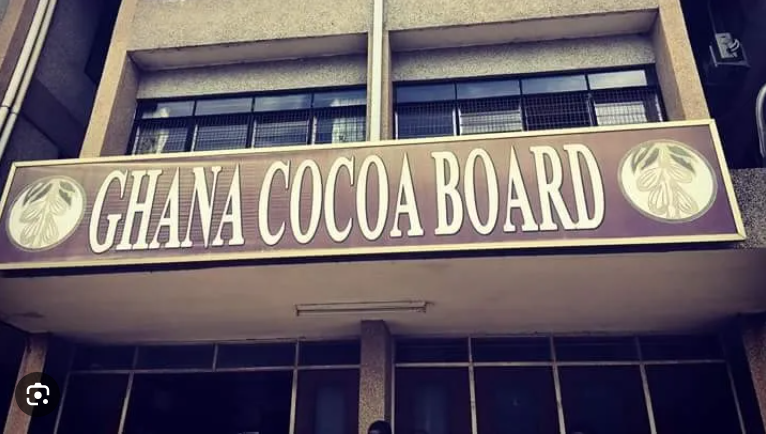
Tag: cocoa

  • Ghana’s cocoa delivery delay puts trading houses at risk of $1bn loss

    Ghana’s cocoa delivery delay puts trading houses at risk of $1bn loss

    Major trading firms face potential losses of approximately $1 billion due to Ghana’s failure to deliver cocoa beans this year.

    According to sources from Citi Business News, this issue has prompted traders to close out short positions as cocoa prices rise.

    Ghana is expected to postpone the delivery of up to 350,000 metric tons of cocoa beans this season, which is nearly half of the previous amount sold.

    This delay could result in around $1 billion in total losses for cocoa traders and processors, as reported by Citi Business News sources.

    Large trading companies such as Cargill, Olam, and Barry Callebaut use futures markets to secure cocoa prices before the beans are sold.

    They purchase beans months ahead of time, aiming to resell at a profit. To guard against potential price drops, they also make bets on falling prices in the futures market.

    This strategy is ineffective if there is a delay in cocoa delivery during a market uptrend.

    Sources from Citi Business News indicate that traders had to repurchase their price-fall bets at significantly higher prices, resulting in substantial losses.

    Traders still anticipate receiving their cocoa and have entered new short positions for delivery in May 2025 at approximately $7,000 per ton.

    Nevertheless, they are expected to incur losses of around $4,000 per ton if they receive the cocoa at $3,000 per ton.

    The cocoa market, already facing its third consecutive year of deficit, has experienced a doubling in prices this year.

    Traders might increase prices for chocolate manufacturers to recoup some losses, but these companies may struggle to pass these costs onto consumers who are already buying less chocolate.

    Market liquidity has also diminished, as exchanges require more cash collateral for hedges, leading to greater price volatility.

    This situation has significantly slowed down cocoa trading, impacting both the industry and consumers.

  • Ghana’s cocoa production at 50% of average as harvest nears end

    Ghana’s cocoa production at 50% of average as harvest nears end

    At the end of June, Ghana’s cocoa production reached 429,323 metric tons, representing under 55% of the expected seasonal yield, as reported by the marketing board, COCOBOD.

    Global cocoa prices have surged since the beginning of the year due to poor harvests in Ghana and Ivory Coast, the latter being the largest producer. These two countries together supply approximately 60% of the world’s cocoa.

    Ghana’s primary cocoa harvest is generally completed by the end of June, and the COCOBOD figures provide an approximate reflection of this season’s main crop yield for the world’s second-largest producer.

    Both major cocoa producers have faced challenges from adverse weather and tree diseases, while Ghana’s production has also been affected by informal mining and smuggling activities.

    The data from COCOBOD, as reported by Reuters, does not account for any cocoa production that may have been illegally exported.

    On June 21, COCOBOD announced the commencement of Ghana’s light crop season, which typically contributes less than 10% of the annual cocoa yield.

    Over the past five seasons, Ghana’s average annual cocoa production has been 800,000 tons, with a peak of over 1 million tons in 2020/21. However, the COCOBOD data indicates a decline over the past three seasons.

    The marketing board did not provide equivalent production figures for the two previous seasons up to June. Nonetheless, full season outputs were 683,269 tons in 2021/22 and 656,140 tons the following season.

    The decline in production has been most significant in Ghana’s top cocoa-growing regions: Ashanti and Western South. According to the data, Ashanti produced 103,976 tons by the end of June, compared to 160,855 tons for the full season last year, while Western South yielded 96,810 tons by June, down from 152,277 tons last season.

    Nana Kwesi Barning, coordinator of the Ghana Civil Society Cocoa Platform, attributed the production decline in the two regions primarily to swollen shoot disease (CSSVD) and artisanal gold mining, locally known as galamsey.

    “Galamsey and CSSVD are massive in there, especially the galamsey, per our analysis,” he told Reuters.

    Nana Johnson Mensah Kagya, a major farmer in the Western South region with around 80 hectares of plantations, said over half of his cocoa had to be cut down and replanted due to swollen shoot.

    And illegal gold mining, he said, is drawing young men away from cocoa farming.

    “If galamsey continues to exist, cocoa has no future. Because of the galamsey, you will not get anybody to work on the cocoa farm,” Kagya said.

    The Western North and Western South regions, situated near the border with Ivory Coast, along with the eastern Volta/Oti region adjacent to Togo, have experienced a decline in production due to their susceptibility to smuggling over the past three seasons.

    Ghana and Ivory Coast both sell their cocoa harvests in advance, but the significant shortfall in production this year has left Ghana’s Cocobod unable to meet its delivery commitments to exporters and traders.

    Last month, Reuters reported that Ghana was considering postponing the delivery of up to 350,000 tons of cocoa beans to the next season; however, COCOBOD disputed the extent of these contract deferrals.

    The CEO of Cocobod has predicted that cocoa production will recover to over 800,000 tons in the upcoming season starting in October, but industry experts and analysts have expressed skepticism about the feasibility of this target.

  • Ghana’s cocoa production declines, 429,323 metric tons recorded in June – Report

    Ghana’s cocoa production declines, 429,323 metric tons recorded in June – Report

    Ghana’s cocoa production for the season ending in June has been reported at 429,323 metric tons, marking a significant decline from its average seasonal output, according to data released by the Ghana Cocoa Board (Cocobod) and reported by Reuters.

    This figure underscores the challenges faced by the world’s second-largest cocoa producer due to adverse weather conditions, prevalent tree diseases, and illicit activities.

    The latest cocoa harvests from Ghana and Ivory Coast, the top global producers, have contributed to rising cocoa prices worldwide since the beginning of the year. Together, these nations typically supply about 60% of the global cocoa market. The reduced production from Ghana highlights a critical issue affecting global cocoa supply chains.

    Ghana’s cocoa sector has been adversely affected by adverse weather patterns and diseases such as Swollen Shoot Disease (CSSVD). Moreover, illegal artisanal gold mining, known locally as galamsey, has posed significant challenges by damaging cocoa farms and diverting labor away from agricultural activities. These factors have particularly impacted regions like Ashanti and Western South, traditionally key contributors to Ghana’s cocoa output.

    By the end of June, the Ashanti region produced 103,976 metric tons of cocoa beans, a notable decrease from the previous season’s 160,855 tons.

    Similarly, the Western South region recorded 96,810 tons, down from 152,277 tons in the preceding season. The Western North and Western South regions, as well as the Volta/Oti region bordering Togo, remain vulnerable to smuggling activities that further hinder cocoa production.

    The production shortfall has also affected Ghana’s ability to meet its contractual obligations with international traders and exporters. Cocobod reportedly faces difficulties in fulfilling its forward sales contracts, potentially necessitating delays in delivering up to 350,000 tons of cocoa beans to the next season.

    While Cocobod remains optimistic about a rebound in cocoa output to over 800,000 tons for the upcoming season starting in October, industry analysts caution that achieving this target may prove challenging amid ongoing production constraints.

  • World Bank supports COCOBOD’s cocoa rehabilitation with $100m

    World Bank supports COCOBOD’s cocoa rehabilitation with $100m

    The Ghana Cocoa Board (COCOBOD) has successfully obtained a US$100 million financing facility from the World Bank, aimed at rehabilitating aged cocoa farms across six key cocoa-growing districts in the country.

    The project will cover Assin Fosu, New Edubiase, Nkawkaw, and Juaso districts.

    This four-year initiative focuses on rejuvenating cocoa farms by cutting down trees that have lived for over 20 years, preparing the land, and providing necessary planting materials such as seedlings and plantain suckers.

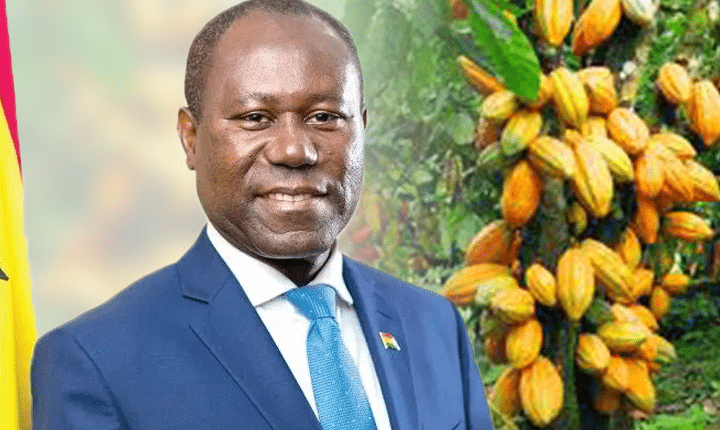
    The Chief Executive Officer of COCOBOD, Mr. Joseph Boahen Aidoo, shared these details during a media interaction on July 4, 2024, as part of a field visit to farms in Assin Fosu in the Central Region.

    During the visit, aimed at evaluating the efforts of extension officers and government interventions, Mr. Boahen Aidoo explained that while the trees to be cut down are not diseased, they have outlived their productive lifespan, with some exceeding 30 years and becoming unproductive.

    “Once cocoa hits 20 years and above, it has spent its life span, and from that stage, you realise that it bears no fruits, no pods, and the flowers don’t come, yet the farmer would be maintaining such a farm, and this is not productive,” he noted.

    The rehabilitation project is expected to rejuvenate these farms, thereby boosting cocoa production. COCOBOD will support farmers with plantain suckers and labor for planting, along with providing extension officers to educate and assist farmers in managing their farms for optimal yields.

    Mr. Boahen Aidoo emphasized the necessity of comprehensive support, noting that simply providing seedlings would not be sufficient for the farmers to achieve the desired outcomes.

    Highlighting the scale of the project, he mentioned an example where farmers were working on a 30-hectare farm.

    “If you cut the trees from this 30-hectare land, and you want the farmer to provide plantain suckers within one year, they cannot. That’s why we’re supporting them,” he explained. He also referenced a similar project executed with support from the African Development Bank (AfDB), which aimed to combat the Cocoa Swollen Shoot Virus Disease (CSSVD).

    During the visit, farmers urged the government to expedite the construction of roads in cocoa-growing areas to facilitate the transport of produce and reduce post-harvest losses.

    They also called for more extension officers, acknowledging the significant help provided by these officers in their farming activities.

    Nana Kweku Appotoi IV, Aboabohene of Assin Nyankomase, lamented the poor road conditions in cocoa-growing communities and urged COCOBOD to lead efforts in improving the infrastructure.

    Responding to these concerns, Mr. Boahen Aidoo assured farmers that the government would allocate funds to improve roads in cocoa-growing areas following recent increases in cocoa prices.

    He advised farmers on best practices, such as avoiding cocoa cultivation in sandy and clay soils, not burning weeds, and using tree branches as mulch rather than selling them as firewood.

    He also cautioned against the use of harmful weedicides and materials like poultry manure, which can damage soil health and reduce crop yields.

    Mr. Boahen Aidoo highlighted COCOBOD’s efforts to equip farmers with modern tools, noting that since 2020, they had procured about 100,000 motorized slashers and pruners to help clear cocoa farms and increase production. He encouraged farmers to access these tools from various district offices.

    Additionally, he pointed out that COCOBOD had improved the extension officer-to-farmer ratio from one officer per 3,000 farmers to one officer per 600 farmers, nearly meeting the Food and Agriculture Organization’s (FAO) standard of one officer per 500 farmers.

  • Cocoa output to surpass supply by 303,000 metric tons from October – Marex Group

    Cocoa output to surpass supply by 303,000 metric tons from October – Marex Group

    A commodities broker, Marex Group, predicts that a recovery in cocoa production among the world’s largest growers will bring an end to the massive bean shortage that drove prices to record highs this year.

    The upcoming 2024-25 season, starting in October, is anticipated to see cocoa output surpass supplies by 303,000 metric tons, marking the first surplus year after three consecutive seasons of deficits, according to Marex.

    Over the past year, cocoa futures in New York have more than doubled due to severe supply shortages depleting global stockpiles.

    This surge has attracted attention from Pierre Andurand, a renowned energy trader who shifted his focus to cocoa while maintaining a bullish outlook.

    Andurand Capital Management forecasts that cocoa stockpiles on both New York and London futures exchanges will be depleted by year-end, projecting a production deficit of 650,000 to 700,000 tons for this season.

    This estimate surpasses the International Cocoa Organization’s forecast of a 439,000-ton shortage, influenced by adverse weather and disease affecting crops in Ivory Coast and Ghana. Marex estimates this season’s deficit at 475,000 tons.

    Looking ahead to the next season, Marex anticipates a rebound in output driven by improved weather conditions in West Africa, the world’s primary cocoa-growing region.

    “The development of new the crop is looking strong,” said Jonathan Parkman, head of agricultural sales at Marex.

    Improved rainfall patterns in West Africa have already contributed to a decline in cocoa prices from their record highs earlier this year. Futures in New York have retreated by over 30% from their peak in April, yet prices remain up nearly 85% in 2024.

    Marex anticipates weak cocoa demand going forward. Despite an anticipated recovery in bean supply next season, the cocoa grindings, which denote the amount of beans processed by the industry, are expected to grow only moderately after a downturn this year.

    “The main effect of extreme higher cocoa prices will manifest in lower demand over the next six months,” Parkman said.

  • Ghana rolls out new strategy for sustainable cocoa cultivation

    Ghana rolls out new strategy for sustainable cocoa cultivation

    Ghana has launched a new initiative in partnership with the United Nations Development Programme (UNDP), the Forestry Commission, and the Ghana Cocoa Board (COCOBOD), supported by funding from the Swiss State Secretariat for Economic Affairs (SECO).

    This collaboration marks Ghana’s participation in the third phase of the Green Commodities Programme (III), which builds on progress made since 2010 toward sustainable agricultural production. The initiative, titled Effective Collaborative Action for Sustainable Commodity Production and Trade, aims to drive meaningful change and promote environmentally friendly practices within Ghana’s agricultural sector.

    Specifically, the project seeks to enhance governance within Hotspot Intervention Areas (HIA) and strengthen stakeholder effectiveness to address issues like deforestation, forest degradation, farm resilience, cocoa farmers’ incomes, and poverty reduction.

    This initiative is aligned with the Ghana Cocoa Forest REDD+ Programme (GCFRP) HIA structure, facilitating dialogue and collaborative action among cocoa sector stakeholders through a multi-stakeholder platform. Originally launched in 2015 focusing on Peru and Indonesia, the Green Commodities Programme now extends to Brazil, Malaysia, and Ghana (cocoa).

    In Ghana, GCP III targets the vital cocoa production landscape, crucial for the country’s economy and environmental sustainability. Ayirebi Frimpong, Forest Specialist at UNDP Ghana, expressed enthusiasm for the initiative, emphasizing its role in enhancing sustainable cocoa production through strengthened coordination mechanisms at sub-national levels.

    The initiative responds to the 2021 Glasgow World Leaders Declaration on Forests and Land Use, aiming to halt deforestation by 2030. GCP Phase III emphasizes multi-stakeholder collaboration to enhance national, social, and environmental performance in agricultural commodity sectors.

    This strategic partnership aims to promote sustainable agriculture practices, support smallholder farmers, and assist Ghana in achieving its 2030 Agenda climate goals while maintaining its status as a leading cocoa producer.

    Melissa Salazar, Programme Specialist at UNDP Food and Agricultural Commodity Systems, highlighted the critical need to address agricultural growth challenges, advocating for policies and practices that ensure a sustainable future during the national inception workshop.

    This initiative represents a significant step in Ghana’s commitment to sustainable cocoa production. Leveraging the Green Commodities Programme, Ghana aims to create a collaborative environment supporting smallholder farmers and enhancing agricultural practices.

    The outcomes of this partnership are expected to contribute significantly to Ghana’s economic and environmental objectives, serving as a model for sustainable agriculture globally.

  • Ghana records over $500m decline in cocoa revenue due to galamsey, others

    Ghana records over $500m decline in cocoa revenue due to galamsey, others

    Ghana’s cocoa industry has suffered a significant financial setback in the first quarter of 2024, with revenue dropping by over $500 million.

    This alarming decline has been attributed to a combination of illegal mining activities, adverse weather conditions, the Cocoa Swollen Shoot Virus Disease (CSSVD), and rampant smuggling.

    Fiifi Boafo, Head of Public Affairs at COCOBOD, detailed the key factors contributing to this downturn during an interview on JoyNews Desk. Boafo highlighted the severe impact of illegal mining activities on cocoa production.

    “Illegal mining activities are cutting off farmers from their farms,” he stated, emphasizing how these illicit activities disrupt cocoa harvesting.

    The environmental consequences of illegal mining have also been detrimental. Polluted water bodies, essential for irrigating cocoa farms, have compounded the challenges faced by farmers. “Illegal mining activities are polluting water bodies needed to irrigate cocoa farms,” Boafo noted.

    Adverse weather conditions have further exacerbated the situation. The El Niño phenomenon, which caused warmer and drier conditions, has led to lower cocoa yields. “The El Niño phenomenon caused warmer and drier conditions, leading to lower yields,” Boafo explained.

    Public Affairs Manager of Cocobod

    Adding to these woes is the Cocoa Swollen Shoot Virus Disease (CSSVD), which has decimated over 500,000 hectares of cocoa farms. Boafo underscored the scale of this problem, noting, “Over $200 million was spent to rehabilitate farms affected by Cocoa Swollen Shoot Virus Disease.”

    In response to these challenges, COCOBOD has implemented several measures. Legal actions against smugglers and illegal miners are underway, with “five individuals already jailed and several cases pending in court,” Boafo disclosed. COCOBOD is also providing financial support to cocoa farmers by offering higher payments for their produce. “We are motivating cocoa farmers by paying them more for their produce,” Boafo stated.

    Additionally, COCOBOD’s legal team is assisting farmers in prosecuting miners who interfere with their farms. “Our legal team is helping farmers who seek to prosecute miners who interfere with the usage of their farms,” Boafo said.

    Despite the production shortfall, Boafo remains optimistic about COCOBOD’s ability to secure necessary funding. “Our production shortfall would not affect our chances of accessing the cocoa syndicated loan,” he assured, indicating COCOBOD’s confidence in maintaining financial stability.

    The cocoa industry’s challenges highlight the urgent need for sustainable solutions to protect and support Ghana’s cocoa farmers. With continued efforts and strategic interventions, COCOBOD aims to mitigate these issues and restore the industry’s economic health.

  • Decline in Ghana’s cocoa export earnings draws deep concern

    Decline in Ghana’s cocoa export earnings draws deep concern

    The latest trade bulleting from the Ghana Statistical Service (GSS) paints a concerning picture of the country’s cocoa export earnings.

    In the first quarter (Q1) of this year, cocoa product export values saw a significant decline, plummeting to just US$592.2 million compared to the same period in 2023. This represents a substantial reduction in export revenue compared to the three-year average.

    The decline is particularly alarming given that Q1 usually marks a peak in cocoa product exports.

    A significant drop in cocoa bean exports during the past two years’ Q3 periods has been identified as a major contributing factor to this trend.

    The Graphic Business expresses deep concern over this situation, as cocoa plays a crucial role as the country’s primary source of foreign exchange earnings.

    Various factors, including illegal mining (galamsey) and diseases like swollen shoot disease, have been cited as reasons for the decline in cocoa production.

    The government’s failure to address the galamsey issue in cocoa-growing regions is perplexing and raises alarming questions about the country’s future.

    Presently, the Ghana Cocoa Board (COCOBOD) faces significant debt due to inadequate cocoa production to offset syndicated funds for crop purchase.

    The situation is dire, and urgent action is needed to address the galamsey issue and protect Ghana’s cocoa industry.

  • Cocobod had no money when I took over as CEO – Joseph Boahen

    Cocobod had no money when I took over as CEO – Joseph Boahen

    The CEO of the Ghana Cocoa Board, Joseph Boahen Aidoo, has revealed the substantial financial hurdles he confronted upon assuming office in January 2017.

    During an interview on Joy FM’s Super Morning Show, Mr. Aidoo disclosed that despite the previous administration securing $1.8 billion in 2016, there were no remaining funds when he assumed leadership of Cocobod.

    He explained that the funds had been utilized for purchasing cocoa and covering operational expenses.

    “They bought about 600,000 metric tonnes before we came in. With cocoa, the peak harvest period is October, November, December, and January. So within the first quarter of the season, from October to December 2016, the previous administration bought over 600,000 metric tonnes.

    “When we assumed office, there was no money, meanwhile, we had to buy cocoa till the end of the season from January to September,” he said.

    Upon taking office, Mr. Aidoo observed that Cocobod was confronted with the formidable challenge of continuing cocoa purchases without any funds.

    He indicated that the most viable solution was for Cocobod to seek help from the Bank of Ghana.

    “We were forced to go to the Bank of Ghana to borrow. Within that period, we bought over 300,000 metric tonnes and we had to pay the farmers, we had to pay for haulage, the buyer’s margin, and operational costs.

    “We sought help from the Bank of Ghana who became an intermediary between the Board and the consolidated banks and we got over GH₵2 billion,”he explained.

    Ghana’s cocoa industry has grappled with adverse weather conditions, bean diseases, and illegal gold mining, which often displaces cocoa farms.

    Additionally, Ghanaian farmers have been smuggling more beans to neighboring countries to capitalize on higher prices, further depleting the available crop for domestic delivery.

    Reports indicate that Ghana, the world’s second-largest cocoa producer, is contemplating delaying the delivery of up to 350,000 tons of beans to the next season due to poor crops.

    Consequently, chocolate makers worldwide are increasing prices for consumers in response to cocoa prices doubling this year, driven by a third consecutive year of poor harvests in Ghana and Ivory Coast, which together account for 60% of global production.

  • Local processing companies likely to shut down as shortage of cocoa products looms

    Local processing companies likely to shut down as shortage of cocoa products looms

    The cocoa processing industry in Ghana is grappling with significant operational challenges due to a decreased supply of cocoa beans, resulting from recent low cocoa production and escalating cocoa prices on the international market.

    This situation has strained many local cocoa processing firms, forcing them to alter their business operations to minimize expenses amid squeezed profit margins, according to reports from Citi Business News.

    The industry is facing a looming crisis as local cocoa processing companies are hit hard by the low yields of cocoa beans, leading to a substantial reduction in production levels.

    The limited availability of cocoa beans has compelled numerous firms to cut back on production, resulting in the underutilization of machinery, inefficiencies, and higher per-unit costs. The disruption in processing schedules is also causing operational instability.

    Confectionery items such as chocolates, spreads, and pebbles produced by these companies have experienced a significant decline of 30 percent due to their inability to increase the processing of cocoa beans. Processed cocoa beans production has fallen by 50 percent, with the production of cocoa liquor, butter, and powder dropping from 3,000 to 1,400 metric tonnes.

    The decline in production is occurring at a time when the Cocoa Processing Company has already recorded a US$ 6 million loss in the first quarter of 2024. The downturn in cocoa production has been attributed to the detrimental effects of illegal mining, adverse weather conditions, and the swollen shoot disease. Additionally, some farmers are exchanging large acres of cocoa farms for as low as GHS 50,000, and the smuggling of cocoa to neighboring countries remains a significant challenge.

    Ghana’s cocoa output for the 2023/24 season is projected to be nearly 40% below the target of 820,000 metric tonnes, with global cocoa prices reaching US$ 10,000 per tonne this year. In the first four months of 2024, Ghana’s trade balance narrowed as cocoa exports dropped, with a year-on-year comparison showing cocoa output falling by about 50%.

    The repercussions of this situation are being felt by consumers, with chocolate lovers in Ghana experiencing a sharp increase in prices. For instance, the price of a 100g bar of Kingsbite chocolate has risen to over GHS 20, up from GHS 14 a few months ago. The upward price adjustments are seen as an attempt by the Cocoa Processing Company to raise revenue and mitigate financial losses. However, consumers are shifting to cheaper alternatives, impacting the sales volumes of other businesses which may not be able to meet the demand.

    Other cocoa processing companies, including Niche, Chocomac, and Cargill, are facing varying degrees of operational bottlenecks due to the scarcity of cocoa beans. Should this situation persist, it could lead to massive job losses and the potential shutdown of some cocoa processing companies.

    The decline in cocoa production has not only affected the processing industry but also Ghana’s overall economic outlook, given the importance of cocoa as a major export commodity. Efforts to address the challenges within the sector are crucial to ensuring the sustainability and growth of the cocoa processing industry in Ghana.

  • Bawumia announces rollout of cocoa farmers’ pension scheme when he becomes president

    Bawumia announces rollout of cocoa farmers’ pension scheme when he becomes president

    Dr. Mahamudu Bawumia, the presidential candidate of the New Patriotic Party (NPP), has declared that the pension scheme for cocoa farmers will be launched this year.

    During his visit to Kumasi as part of a three-day tour of the Ashanti region, Dr. Bawumia conveyed to the farmers that the database of cocoa farmers has been compiled, and the Ghana Cocoa Board (COCBOD) has confirmed the commencement of the scheme within the current year.

    The objective of the pension scheme is to furnish cocoa farmers with retirement benefits, ensuring financial stability during their later years.

    Dr. Bawumia also addressed the necessity for the government to reassess the cocoa spraying program to optimize its benefits for the farmers and enhance the distribution of agricultural inputs.

    Furthermore, he highlighted that the government has been guaranteeing that farmers receive 78 percent of the global cocoa price, underscoring the administration’s dedication to enabling farmers to reap the rewards of their labor.

    At the gathering, several cocoa farmers advocated for further increases in cocoa prices and urged the government to escalate its efforts against illegal mining (galamsey) activities, which are causing harm to their farms.

  • Cocoa farmers battle against illegal mining operations in Ellembelle

    Cocoa farmers battle against illegal mining operations in Ellembelle

    On Saturday, June 1, a group called Concerned Cocoa Farmers (CCF) from the Ellembelle District in the Western Region took to the streets to protest against the rampant environmental destruction caused by illegal mining activities (galamsey) in their district.

    The farmers marched to one of the illegal mining sites in Sendu to voice their dissatisfaction and condemnation of the illegal miners’ actions.

    They argued that the damage being done to their cocoa farms and water bodies by these illicit activities is incalculable.

    Benjamin Azachie, the leader of Concerned Cocoa Farmers, handed their petition to Emmanuel Armah-Kofi Buah, the Member of Parliament for the Ellembelle constituency.

    He urged the MP to leverage his position and the Parliament to halt the aggressive takeover of cocoa farms by illegal miners (galamsey operators) in the region.

    Azachie highlighted that illegal mining continues to devastate their investments and pollute the clean water bodies in the affected areas of the District.

    In an interview with journalists, Grace Amihere, one of the affected residents, expressed her frustration over the severe pollution in the area.

    “I’m demonstrating because of the pollution of our water bodies and destruction of cocoa farms. How are we going to feed our children with the destruction of our farms? The operators suddenly came without prior notice to us,” she lamented.

    “They tried to pay off my brother to mine in his cocoa farm, but because he refused to accept their money, they have destroyed half of the farm. Why are they doing this to us? This is what worries us. President Akufo-Addo must address this concern. Right now, farmers are not getting water to drink,” she added.

    Another affected resident, Ama Amihere, also claimed, “They have destroyed rubber farms and also cheated the farmers after forcefully taking their farms. So, we are pleading with the government that what is happening is not lawful.”

    Following the invasion of “galamsey” activities in the Nyamebekyere-Sendu section of the Ellembelle District, the once-clean River Fia has become contaminated.

    Nicholas Kofi Mawuli, the Assembly Member for the Nyamebekyere Electoral Area, stated his reservations regarding the employment of Chinese in the front line and expressed his great concern about the detrimental development.

    “They are fronting in engaging in the illegalities in this area,” he said.

    After over an hour of protesting at the Sendu galamsey site, the Concerned Cocoa Farmers handed their petition to Emmanuel Armah-Kofi Buah, the MP for Ellembelle.

    Armah-Kofi Buah assured the farmers that he would take their concerns to the Parliament of Ghana for resolution.

    However, he encouraged the affected residents to speak out loudly against illegal mining activities in the area.

    He emphasized that combating illegal mining is a collective responsibility, and everyone must work together to address the issue.

  • Ghana’s cocoa exports dropped sharply in the first quarter of 2024 – GSS report

    Ghana’s cocoa exports dropped sharply in the first quarter of 2024 – GSS report

    Cocoa exports saw a significant decline in the first quarter of 2024, dampening the growth of the country’s trade surplus, according to new data.

    Although the surplus is expanding nominally, this growth is primarily driven by rising prices rather than increased export volumes or economic growth.

    Data from the Ghana Statistical Service (GSS) indicate that the export value of cocoa products in Q1 2024 dropped to US$592.2 million, a sharp fall from the average of US$825.8 million during the same period last year and the previous two opening quarters.

    This represents the lowest quarterly cocoa export value for Ghana, the second-largest producer, since 2021.

    Cocoa Board (Cocobod) announced on March 25 that the 2023/24 cocoa harvest in Ghana would be only 422,500 to 425,000 metric tonnes (MT), half the country’s initial forecast and a 22-year low, due to extreme weather and disease affecting the cocoa crop.

    Concerns about the West African mid-crop, the smaller of the two annual harvests, are also causing tightness in global cocoa supplies. Projections for Ghana’s mid-crop, starting in July, have been reduced to 25,000 MT from an earlier estimate of 150,000 MT.

    Despite the slump in cocoa exports, Ghana posted a Q1 2024 trade surplus of GH¢11.5 billion (US$1.35 billion), more than double the GH¢4.5 billion surplus a year earlier.

    However, GSS officials warned that the positive trade figures mask an underlying lack of real trade growth when price increases are taken into account.

    “In real terms, our trade value in Q1 2024 was just GH¢47billion after discounting price effects – less than half the nominal GH¢107.6billion figure,” Professor Samuel Kobina Annim, Government Statistician, said at the data release.

    “About GH¢59billion of our nominal trade value was from price changes alone,” he added.

    The diverging real and nominal trade trajectories reflect a new import and export price index launched by GSS.

    It shows general export prices surged 20.4 percent between Q1 2023 and Q1 2024, while import prices jumped 11.5 percent.

    Prices for key commodities like gold, cocoa and fuel have uptrended in the past year amid supply shocks and currency fluctuations.

    After adjusting for those price swings, real trade volumes increased just 0.6 times from Q1 2021 to Q1 2024 – paling in comparison to the 2.4-fold nominal spike, data showed.

    Trade officials acknowledged the trend of price-driven, not output-driven, trade growth is concerning.

    “If our exports are mainly driven by price changes, it means in real terms our trade volumes aren’t really growing – and that’s not what we want. We want real output and diversification improving our trade, not just prices,” Prof. Annim remarked.

    Overall nominal 2023 trade surplus stood at GH¢5.3billion, rebounding from a GH¢4.8billion deficit in 2022 when mineral fuels and oils were a top import.

    But again, real trade output barely budged – notching a 0.3 percent year-over-year decline even as nominal trade grew 30.2 percent.

    Anchoring the Q1 2024 real trade report is the sharp 35 percent year-over-year cocoa export drop, extending a downtrend that saw quarterly cocoa shipments fall from around US$895million in the past three years’ opening periods to just US$585million this year.

    Cocoa’s declining share of exports, dipping from over 20 percent to 12.1 percent year-on-year, comes as gold consolidates its dominance – its export contribution surging from 40 percent to 50 percent of the total. Officials pledged to “minimise the vulnerabilities” leading to cocoa’s deterioration to safeguard a key income source.

  • Ghana may loose it position as 2nd largest cocoa producer  – GAWU warns

    Ghana may loose it position as 2nd largest cocoa producer – GAWU warns

    The General Agricultural Workers Union (GAWU) has issued a warning, highlighting that Ghana risks losing its esteemed position as the world’s second-largest cocoa producer unless stringent measures are implemented to safeguard cocoa farms from illegal mining activities.

    This caution follows revelations by Joseph Boahen Aidoo, Chief Executive Officer of the Ghana Cocoa Board, who disclosed that the organization has returned $250 million obtained from the African Development Bank for irrigation purposes in cocoa farms due to water body contamination in farming regions.

    Presently, Ghana holds the esteemed position of being the world’s second-largest cocoa producer, trailing only behind Ivory Coast. Additionally, Ghana produces premium cocoa beans globally, rendering its cocoa highly preferred.

    Edward Kareweh, General Secretary of GAWU, highlighted that other nations are intensifying efforts to surpass Ghana in cocoa production by promoting sustainable environmental practices.

    He further noted that escalating water pollution levels in farming areas are prompting more farmers to abandon their farms.

    “It’s no more lucrative to be in cocoa production. There are many factors which are real. Even the cocoa farmers who are patriotic and insist that they will not sell their farms and stay with their farms are forced to sell them out”.

    He revealed that while the government remains indifferent, illegal miners are forcibly encroaching on cocoa farms without consequences for mining activities.

    Mr. Kareweh emphasized that contaminated water bodies are being diverted to cocoa farms, resulting in the destruction of the plants.

    “The illegal miners will flood your farms with all the dirty water and will take your farm by force. You cannot even enter the farm again. It is so pathetic and heartbreaking that we can sit down and allow such a monumental criminal act to continue. This crime is against generations to come”.

    Expressing distress, Mr. Kareweh voiced concern that Ghana is on the verge of losing its production capacity and longstanding reputation as the producer of premium cocoa beans.

  • Ghana’s position as second leading producer of cocoa at risk – GAWU reveals why

    Ghana’s position as second leading producer of cocoa at risk – GAWU reveals why

    The General Agricultural Workers Union (GAWU) has issued a warning that Ghana risks losing its status as the world’s second-largest cocoa producer if urgent action is not taken to protect cocoa farms from illegal mining activities.

    This caution follows Ghana Cocoa Board CEO Joseph Boahen Aidoo’s revelation that the organization had to refund $250 million acquired from the African Development Bank for irrigation purposes in cocoa farms due to water contamination in farming areas.

    Ghana, renowned for producing premium cocoa beans, currently holds the position as the world’s second-largest cocoa producer after Ivory Coast. However, GAWU’s General Secretary, Edward Kareweh, highlighted that other countries are aggressively developing sustainable environmental practices to surpass Ghana in cocoa production.

    Kareweh further noted that increasing levels of water pollution in farming areas are leading more farmers to abandon their farms, posing a significant threat to Ghana’s cocoa production.

    “It’s no more lucrative to be in cocoa production. There are many factors which are real. Even the cocoa farmers who are patriotic and insist that they will not sell their farms and stay with their farms are forced to sell them out”.

    He revealed that illegal miners are forcibly taking over cocoa farms for mining activities while the government appears unconcerned.

    Mr. Kareweh stated that contaminated water bodies are being diverted to cocoa farms, leading to the destruction of the plants.

    “The illegal miners will flood your farms with all the dirty water and will take your farm by force. You cannot even enter the farm again. It is so pathetic and heartbreaking that we can sit down and allow such a monumental criminal act to continue. This crime is against generations to come”.

    Expressing distress, Mr. Kareweh emphasized that it is only a matter of time before Ghana loses its production capacity and longstanding reputation as the producer of premium cocoa beans.

  • Cocoa in crisis: The bitter truth behind Ghana’s declining cocoa story

    Cocoa in crisis: The bitter truth behind Ghana’s declining cocoa story

    In the heart of Ghana’s economic landscape lies the cocoa industry, a cornerstone of the nation’s agricultural heritage and a vital source of livelihood for thousands of farmers. However, recent revelations and happenings in the cocoa subsector have cast a pale shadow over the sector, sparking market rigidities and increased smuggling to neighboring markets. Once celebrated as the land of rich, flavorful chocolate, Ghana now faces a bitter truth—it’s a cocoa industry in crisis.

    In the intricate world of cocoa trade, where global demand intersects with local livelihoods, Ghana’s cocoa industry stands as a pivotal player. However, the recent revelations have thrown the operations of the Ghana Cocoa Board (COCOBOD) into sharp relief, sparking debates on pricing policies, managerial competence, and, most importantly, the welfare of cocoa farmers.

    Despite global cocoa prices soaring to unprecedented heights, reaching over $3,280 per metric ton (MT) in 2023, Ghanaian cocoa farmers find themselves grappling with stagnant or declining incomes. What lies behind this alarming trend? At the heart of the crisis lies the diminishing share of profits reaching cocoa farmers, making farmers less efficient with low productivity levels and heavily demotivated to continue the production of cocoa. Historically, Ghana’s cocoa pricing policy aimed to ensure farmers received a minimum of 70% of the Free On Board (FOB) price—the price at which cocoa is exported. However, under the current NPP government, this percentage has plummeted severely, as reported by reputable sources like the World Bank for the 2022/2023 cocoa season. Farmers received a meager 25% of the FOB price, marking a historical low. Government claims of farmers receiving around 76% of the FOB price are not just misleading but insultingly deceptive, undermining the toil of those laboring in the cocoa value chain.

    At this juncture, let’s take a journey through what the government earns from the toil of the farmers. According to the International Cocoa Organization and the International Food Policy Research Institute, as of March 26, prices on the May 2024 cocoa futures contract on the ICE exchange were over $9,600 per metric ton (MT), while the international spot price of cocoa stood at $6,650.25/MT, or 158.49%, since the beginning of 2024.

    It is noteworthy that the average international FOB price of $6,650.25 excludes the Living Income Differential (LID) of $400 per tonne that is paid by the market to Ghana for the direct benefit of the cocoa farmer. Meanwhile, the average international FOB price of $6,650.25 excludes the premium of $497 per metric tonne that Ghana got in June 2023 for every tonne of cocoa.

    At the current interbank (dollar to cedi) rate of $1 to GHC 14.05 and given that the cocoa price had remained stagnant since April, the government should be making an average gross FOB price of GHC 93,432.5 per tonne of cocoa, excluding the LID of $400 per tonne and the premium of $497 per tonne. When you factor the LID of $400 per tonne and the premium of $497 per tonne into the pricing formula, the price per bag of cocoa comes to about GHS 105,332.35, making the average price of a 64kg bag GHC 6,583.27. It is therefore heavily insensitive and rather unconscionable for the government to be offering the already burdened cocoa farmers a paltry GHS2,070 per bag as farm-gate price, which currently only constitutes 31.44% of the gross FOB price (including premium and LID) that the government will be getting from spot sales.

    As a ship pile of insults is being added to injury, COCOBOD continues to report substantial financial losses year after year, despite the buoyant cocoa prices and the exploitation of farmers. On the other hand, it is currently producing about 492,000 metric tons of cocoa beans in the 2023/2024 crop season, about 27.9% less than the 683,000 metric tons of cocoa beans recorded in the 2022/2023 season. Where did we go wrong? Already, the lack of transparency regarding COCOBOD expenditure, budgetary allocations, cocoa debts, and financial mismanagement is fueling public suspicion and eroding trust in the cocoa governance structure.

    At the center of the storm is the revelation that COCOBOD, Ghana’s cocoa regulatory body, engages mostly in forward sales of cocoa. This fact, confirmed by COCOBOD CEO Joseph Boahen Aidoo, has ignited a firestorm of controversy, particularly regarding the pricing mechanisms and their implications for cocoa farmers. While it is an undeniable fact that Ghana over the years has been combining various pricing strategies, including spot sales and forward sales, it has been guided by the principle of maximizing income for farmers through proper market forecasting. The objective has been to identify the highest price points on the futures market to secure the best price for our cocoa and maximize farmers’ income. Therefore, the quantity of cocoa sold through forward sales for various futures positions is carefully managed, leaving reasonable portions for possible spot sales and other lucrative forward deals when the market price rises.

    The government and its assigns have posited that the “giveaway” forward deals were because of the large levels of light crop beans being produced, which beans do not perform better on the international market. This is grossly misleading considering the fact that we have had to import light-crop beans from Nigeria to support the local manufacturing industry in the past few years, and the fact that Ghana’s light-crop beans form only a small portion of the total production volume of the country. This argument only qualifies as a smoke screen for the reckless dissipation of Ghana’s cocoa at cheap prices. More importantly,  it has been amply clear from every available piece of data since last year that the international market price was going to significantly increase on account of the huge global supply deficit of cocoa.

    It is instructive to note that notwithstanding 46-year record high selling price of over $9,600 per metric ton (MT) at forward sales and at $6,650.25/MT at spot sales of cocoa, the highest since 1977, the Akuffo Addo/Bawumia government still touts forward sale at a gross FOB price of $2,600 as a success. Nothing is further from truth, this a total rip-off, woefully inappropriate, and can only be a product of gross incompetence, obscene corruption, and willful negligence.

    Moreover, the NPP government’s approach to the cocoa sector is characterized by a glaring lack of innovation. While neighboring countries like Cote d’Ivoire embrace new technologies and partnerships to enhance efficiency and sustainability, Ghana remains mired in stagnation. Minimal funding for research and development stifles the exploration of high-yielding cocoa varieties resistant to pests and diseases. Shockingly, estimates from the International Cocoa Organization indicate that over two-thirds of Ghana’s cocoa trees are over 30 years old, diminishing productivity and increasing vulnerability to pests and diseases. A 2021 study by the International Institute of Tropical Agriculture (IITA) underscores this, highlighting the inadequate knowledge and skills among Ghanaian cocoa farmers for optimal farm management and disease control. Without forward-thinking leadership, Ghana risks lagging behind in the global cocoa market.

    Ghana’s cocoa sector stands at a critical juncture. To navigate this crisis and ensure the industry’s long-term sustainability, a holistic approach is imperative. Transparency within COCOBOD must be enhanced, with a focus on fairer pricing for farmers and a thorough audit of reported financial losses. Investment in research and development is paramount to promoting disease-resistant cocoa varieties and replacing aging trees. Crucially, empowering farmers through education and training in modern cocoa cultivation techniques is essential for a brighter future.

    To Ghana, cocoa represents more than just a commodity; it is a national treasure intertwined with the country’s economic and cultural identity. The current crisis not only threatens the economic stability of Ghana but also carries profound socio-cultural implications. With the livelihoods of approximately 1.6 million people at stake, the government bears a moral and economic responsibility to take decisive action. The evidence of the past seven years overwhelmingly demonstrates that the NPP government is woefully incapable of meeting this challenge.

    Authored by:

    Dr. Peter Boamah Boamah Otokunor, Ch.FE, F.ChE

    (The author is an Agricultural Economist, a Chartered Financial Economist, a Fellow of the Association of Chartered Economists, a Lecturer at the University of Professional Studies, and a Politician)

    Issued on Tuesday, 14th May, 2024

  • We have returned $250m loan procured from ADB for cocoa farm irrigation – COCOBOD

    We have returned $250m loan procured from ADB for cocoa farm irrigation – COCOBOD

    The Chief Executive Officer (CEO) of the Ghana Cocoa Board (COCOBOD), Joseph Boahen Aidoo, has revealed that the organization has reimbursed $250 million obtained from the African Development Bank earmarked for irrigation initiatives in cocoa farms.

    Mr Aidoo explained that the Ghana Irrigation Authority, serving as consultants for the project’s execution, advised against its feasibility due to the contamination of rivers by illegal mining activities, posing a threat to cocoa trees.

    “When Cocoa Board went to the African Development Bank to secure some US$600 million, then we had to return $250 million. Part of that money was intended for irrigation.

    “We commissioned the Ghana Irrigation Development Authority to do a pre-appraisal for our assessment, and the report we brought was that almost all the rivers were contaminated.”

    He stressed that without addressing illegal mining activities, the cocoa industry remains at risk.

    Mr Aidoo highlighted that most rivers in cocoa-growing regions are polluted, rendering the water unfit for cocoa cultivation.

    This predicament, he noted, has compelled farmers to incur additional expenses by transporting water from their homes to their farms.

    “Previously, the farmer gets to the nearest stream around the farm, and then he fetches the water to do the mass spraying and all that. But now, you cannot, because the leaves have process, which we call the stomata.

    “And once you spray this muddy water onto it, the mud is going to block, this stomata and within a short time, you find all the leaves coming down. The trees will die. You cannot also use it for irrigation because it means that you have to be changing your filters almost every day,” he said.

  • Price of cocoa in New York falls by 2.5%, reaching $8,482 per ton

    Price of cocoa in New York falls by 2.5%, reaching $8,482 per ton

    Cocoa prices in New York dipped as promising rains were anticipated for West African agricultural regions, while Rabobank suggested that the extraordinary surge in prices has likely reached its peak for this year.

    Futures tumbled by up to 2.5% to $8,482 per ton. Despite lingering volatility, recent trading activity has shown a relative calm compared to the significant fluctuations witnessed in recent weeks.

    Cocoa reached an all-time high above $11,000 in mid-April due to severe shortages before experiencing a partial retracement.

    Although a swift return to pre-surge price levels is improbable, Rabobank analyst Paul Joules indicated in a report that the zenith of the rally has likely passed, with prices expected to trend downwards.

    Joules explained, “A blend of diminishing global demand and increased production, particularly from regions lacking fixed farmgate pricing, is anticipated to ease the substantial uncertainty embedded in current futures valuations.”

    Nevertheless, he added, “Elevated cocoa prices are anticipated to persist for the foreseeable future.”

    Market participants are closely monitoring crop conditions in West Africa, the primary cocoa-producing region, following poor harvests that resulted in a third consecutive annual deficit.

    Forecaster Maxar Technologies Inc. predicts some precipitation for West African countries such as Ivory Coast and Ghana within the next five days.

    Maxar Technologies Inc. noted, “The potential rainfall could support crop growth and marginally enhance soil moisture in certain areas.”

  • Cocoa industry faces unprecedented challenges over tight supply, price surge – SBM Intelligence

    Cocoa industry faces unprecedented challenges over tight supply, price surge – SBM Intelligence

    The global cocoa industry is grappling with unprecedented challenges as cocoa supplies tighten and prices surge, impacting chocolate manufacturers and consumers worldwide.

    A report by SBM Intelligence highlights the significant setbacks faced by cocoa production, particularly in Ghana and Côte d’Ivoire, the world’s largest cocoa producers.

    The report notes that adverse weather conditions and the rapid spread of swollen shoot disease have led to a substantial decline in cocoa bean production projections for the 2023/24 crop season in both countries.

    This, coupled with illegal mining activities and political influences, has caused a severe shortage of cocoa beans, resulting in skyrocketing cocoa prices and impacting retail prices globally.

    Efforts by the COCOBOD and the Côte d’Ivoire Coffee and Cocoa Council (CCC) to address the crisis include importing cocoa beans and urging cooperatives to sell stocks promptly to prevent hoarding.

    However, major cocoa processing plants in both countries have either ceased operations or reduced processing due to the inability to afford beans at current prices.

    The breakdown of regulated markets has further complicated the situation, with local dealers paying premiums above regulated prices to secure beans, leading to financial constraints for processors. Geopolitical events such as increased freight rates and export disruptions have also contributed to the rise in cocoa prices.

    To address these challenges, the report suggests prioritizing measures to increase cocoa output and ensuring fair prices for farmers. It also recommends a more open market approach to enable Ghanaian cocoa companies to expand regionally and internationally. However, addressing these challenges will require political will, cooperation, and investment in research, infrastructure, and transportation networks.

    Overall, the report underscores the need for proactive measures and innovation to overcome the current cocoa crisis and build a more resilient cocoa industry in Ghana and Côte d’Ivoire.

  • COCOBOD intercepts 634 bags of cocoa being smuggled out of Ghana

    COCOBOD intercepts 634 bags of cocoa being smuggled out of Ghana

    The National Anti-Cocoa Smuggling Task Force under the Ghana Cocoa Board (COCOBOD) has effectively intercepted 634 bags of cocoa beans destined for smuggling out of Ghana, within the Eastern Region.

    This accomplishment follows a month-long operation fueled by intelligence-driven strategies.

    On April 15, authorities seized a truck transporting 504 bags of cocoa beans concealed within poultry feed products.

    Subsequently, on May 7, another 130 bags of cocoa beans, hidden beneath gravel in a tipper truck, were confiscated in Mpraeso, Kwahu South Municipality.

    The suspects, Kwasi Edem (55) and Dennis Hodo (28), a tipper truck driver, were apprehended during an attempt to cross the Afram River by ferry from Suhum to Kwahu Adawso, as they sought to exit the Volta Region towards Togo.

    They are currently in police custody at the Mpraeso Central Police Station, cooperating with ongoing investigations.

    Simultaneously, the police have wrapped up inquiries into the initial arrest and are set to arraign the suspect on Wednesday, May 8.

    Emmanuel Atta Ofori-Snr, the Municipal Chief Executive for Kwahu South, confirmed to Agoo FM that National Security had identified the Kwahu area as a significant transit point for smugglers since last year.

    Consequently, the District Security Council remains on heightened alert to combat such illicit activities.

  • 130 bags of smuggled cocoa seized by COCOBOD in Mpraeso

    130 bags of smuggled cocoa seized by COCOBOD in Mpraeso


    The division of the Ghana Cocoa Board (COCOBOD) responsible for combating cocoa smuggling, known as the National Anti-Cocoa Smuggling Task Force, has successfully intercepted smuggled cocoa beans in Mpraeso, situated in the Kwahu South Municipality of the Eastern Region.

    This interception occurred following a tip-off received during routine surveillance operations within the Kwahu area. The task force, composed of National Security Personnel, promptly moved to arrest the perpetrators involved in the illicit activity.

    The intercepted cocoa, totaling 130 bags, had been smuggled through Suhum to Mpraeso. The smugglers had intended to transport it further through the Afram Plains River in the Kwahu Afram Plains South, with the ultimate destination being the Volta Region and then Togo.

    As of now, the suspects identified as Kwasi Edem, aged 55, and Dennis Hodo, aged 28, who were responsible for the transportation using a tipper truck, are under police custody at the Mpraeso Central Police Station. They are currently assisting with ongoing investigations.

    The smuggling operation was executed using a new modus operandi where the cocoa bags were concealed beneath chippings within the tipper truck. This innovative tactic was aimed at evading security checkpoints along the transportation route.

    Emmanuel Atta Ofori, the Municipal Chief Executive (MCE) for Kwahu South, briefed the media regarding the arrest. He emphasized the significance of the operation, which has been ongoing for two years, resulting in the apprehension of numerous smugglers attempting to transport goods to Togo through Ghanaian territory.

    Mr. Ofori urged his counterparts, the District and Municipal Chief Executives (DCEs and MCEs), to remain vigilant and intensify security measures. He pledged to continue the crackdown on cocoa smuggling activities in the region.

    “All the barriers that the Government has deployed security men to, let’s be on the lookout. It is not only in our waters that such activities happen. But I say emphatically, that no smuggled goods will bypass our supervision here.”

    “So, I’m stating this, and also charging my fellow MMDCEs, whoever is positioned at an entry point should be vigilant. Security agencies should also be vigilant. Inhabitants of this town should also be vigilant; we are the ones carrying out this act,” he said.

  • Cocoa prices plummet 10% as traders exiting market intensify price fluctuations

    Cocoa prices plummet 10% as traders exiting market intensify price fluctuations

    Cocoa futures experienced a 10% decline in both New York and London, driven by increased margin calls and uncertainty surrounding a historic market crunch.

    Traders withdrew from the market, resulting in significant price fluctuations.

    The most-active contract in New York dropped by as much as 10% to $9,510 a ton, marking the largest intraday decrease since 2008 and extending declines from the previous week.

    The market entered a correction phase, with futures falling approximately 18% from the record high set on April 19.

    This decline coincides with a reduction in the number of outstanding contracts, nearing the lowest level in over a decade based on data compiled by Bloomberg.

    Increases in margin requirements for trading and a large reduction in the number of outstanding contracts “opens up more space for trend reversals, with fewer players being able to drive more abrupt movements,” said StoneX analyst Leonardo Rossetti.

    Bean supplies could see a slight improvement due to rainfall in West African growing regions, potentially benefiting the upcoming mid-crop harvest. However, this rainfall does not fully address the severe shortage that has led markets into a third consecutive year of deficits. Additionally, the wetter weather contributes to a lack of new bullish events, as money managers persist in reducing their net-long positions.

    “The shortage is not over,” said consultant Paulo Torres, a London-based trading and agricultural consultant. “The elephant in the room is the fact that Ivory Coast and Ghana do not have cocoa, so there is no way prices can fall significantly.”


  • Opuni joined COCOBOD after test on lithovit was completed – CRIG scientist reveals

    Opuni joined COCOBOD after test on lithovit was completed – CRIG scientist reveals

    The prosecution’s claim that former COCOBOD Chief Executive, Dr. Stephen Opuni instructed CRIG scientists to hasten the testing of fertilizers, particularly lithovit, has been rebutted by a new defense witness, a soil scientist from CRIG.

    Court proceedings have unveiled that even prior to Dr. Opuni’s assumption of office, CRIG had completed its evaluation of lithovit foliar fertilizer supplied by Agricult Ghana Limited and had compiled the scientific report on the product.

    Jerome Agbesi Dogbatse, who contributed to the preliminary report on lithovit foliar fertilizer, testified before the Accra High Court on April 25, 2024, stating that CRIG concluded its examination of lithovit well before November 2013.

    Joining the Cocoa Research Institute of Ghana (CRIG) on November 4, 2013, Dogbatse asserted, “I informed the police that the product (lithovit) was tested and finalized before I became part of CRIG.”

    Despite Dr. Opuni’s appointment in December 2013, he officially assumed his role as the Chief Executive of the Ghana Cocoa Board in January 2014.

    “What I told the police was that they showed me a report and asked me that have I seen this report before, and I said yes, I have seen the report before, and then they mentioned that this is the final report on the work on lithovit. then I told them if that is the final report, nobody showed it to me, but what I worked on was the draft report,” the witness said.

    “Did you tell the police anything about making comments on any report?” lawyer Benson Nutsukpui, counsel for Seidu Agongo, asked Mr Dogbatse.

    The witness replied, “Yes, my Lord, I told them that I made some comments for the attention of the lead author. That is what I meant by review.”

    The initial prosecution witness, Dr. Franklin Manu Amoah, alleged during his testimony in July 2018 that Dr. Opuni directed scientists to expedite the testing of fertilizers, including lithovit, upon assuming office.

    However, Dr. Francis Baah, who purportedly attended a meeting where this directive was issued, vehemently denied any such occurrence during proceedings on April 17, 2024.

    Additionally, Mr. James Kofi Kutsoatsi, also claimed to be present at the alleged meeting, did not join COCOBOD until April 2014, rendering his attendance impossible during the specified timeframe.

    Jerome Agbesi Dogbatse further discredited Dr. Amoah’s claim, stating that he did not meet the testing requirements for lithovit fertilizer.

    “The difference between them are that the treated seedlings are doing better than the untreated seedlings,” he recalled.

    Dogbatse’s testimony aligned with his previous statements to investigative bodies, affirming that the testing had concluded before his tenure at CRIG began.

    “It is clear and obvious that there was a calculated attempt to dirty Dr Stephen Opuni with false claims. This is just to besmirch a man with reputable credibility,” a journalist who doesn’t want to be named pointed out.

    The defense posits that Dr. Opuni’s alleged involvement seems improbable given the timeline and the presence of a substantive COCOBOD chief executive at the time.

  • COCOBOD CEO must be dismissed immediately – CSO tells govt

    COCOBOD CEO must be dismissed immediately – CSO tells govt

    A civil society organization, United Voices for Change (UVC), has demanded the immediate dismissal of Dr. Joseph Aidoo, the CEO of the Ghana Cocoa Board (COCOBOD), citing mismanagement and significant financial losses during his tenure.

    The convener for the group, Slyvestine Ronald, expressed serious concern over Dr. Aidoo’s continuous leadership at COCOBOD despite overseeing substantial financial losses within the institution.

    “We call for the dismissal of Dr. Joseph Aidoo, the CEO of COCOBOD with immediate effect. He has presided over financial decline and recklessness and has failed to fulfill his mandate of generating profit and revenue,” he added.

    Highlighting alarming financial losses incurred by COCOBOD in recent years, Ronald pointed to figures indicating losses of GH¢161.3 million in 2017, GH¢78.22 million in 2018, GH¢320.57 million in 2019, GH¢32 million in 2020, and a staggering GH¢2.44 billion in losses in 2021.

    “These losses, which began in 2016, are ballooning by the years, reaching GH¢2.44 billion in 2021,” he stated.

    The organization also held President Akufo-Addo responsible for the consistent losses incurred by State-Owned Enterprises (SOEs), including COCOBOD.

    United Voices for Change called for urgent measures to be taken to rescue the declining state institution, emphasizing its importance as a significant source of employment in Ghana.

    “To make the SOEs function again, the CSO says all CEOs who are sleeping on the job should be sacked,” he added.

  • CGCI calls for fair pricing and equity in cocoa Industry

    CGCI calls for fair pricing and equity in cocoa Industry


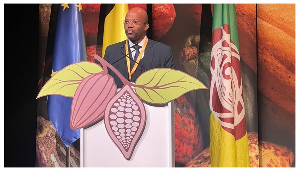
    Executive Secretary of the Cote d’Ivoire Ghana Cocoa Initiative (CGCI), Mr. Alex Asanvo, has confronted major cocoa marketing corporations on their reluctance to offer fair prices to farmers and producers.

    Speaking during a panel discussion at the ongoing World Cocoa Conference in Brussels, Mr. Asanvo questioned why purchasers of cocoa have consistently failed to honor prevailing market prices often reported by global news outlets.

    According to the Executive Secretary of the CGCI, global cocoa buyers have habitually exploited the market for their own gain, leaving farmers and producing nations at a disadvantage within an unjust trading system.

    Amidst the rising cocoa prices on the global market, farmers and civil society organizations in producing nations are advocating for buyers to adopt a base price of $10,000 as a reflection of current market trends.

    Mr. Asanvo believes that this demand is exerting pressure on governments in terms of domestic pricing but is not being reflected in the market.

    “Today, all the global news cables are quoting $10,000 Dollars as price for cocoa on the international markets; this has put pressure on governments of producing countries as farmers and civil society groups push for local prices to be set at prevailing figures on the international markets but let’s ask ourselves if buyers are willing to pay same” Mr. Asanvo observed as he joined panelists on Monday to discuss the topic “The quest for the living income of smallholder farmers: why are we stuck and how can we fix it?”

    Mr. Asanvo highlighted that there is an imbalance between the demands imposed on producing countries by buyers and the actions taken by market players themselves. He emphasized the lack of trust, consistency, and stability across all aspects of arrangements among the key stakeholders in the global cocoa value chain. This lack of cohesion has hindered the effective implementation of policies and programs, including the Living Income Differentials (LID), designed to benefit farmers.

    While acknowledging significant progress in advocating for a living income for farmers, with the introduction of the LID being a notable achievement in the past five years, the Executive Director of CGCI emphasized that more efforts are needed to ensure farmers receive fair compensation for their labor and dedication.

    “We all know, that from whatever position we’re seeing it from, we owe farmers a living income. We cannot shun our responsibilities and capabilities – because we know we can make it. So yes, things have changed tremendously, hence my nuance on “why we are stuck”. We are not stuck. We are in a dynamic process. The peripherical idea of a living income for farmers – has come to the center of the conversation. And this panel is illustrative of that” he emphasized.

    On the question of whether the LID has failed its intended purpose or not, Mr. Asanvo likened the policy to pointing to a moon and actually reaching it, arguing on the affirmative that despite the criticisms, “the circumvention and the weaknesses encountered as a results of origin differential downsides, the policy has still survived and continues to target a floor price to enable farmers get a living income”


    Mr. Asanvo suggests that to foster trust, all stakeholders must prioritize accountability and transparency. He points out that producing countries have already taken steps in this direction by regularly publishing the average achieved forward sale price and implementing traceability systems to track not only volumes but also prices.

    He argues that companies, like producing countries, should also embrace greater accountability and transparency.

    “This, they can do Disclosing how much they source at country level every year; how many farmers are in their sustainability programmes and how much they’re earning. We need some data to get to the moon. What cannot be measured cannot be fixed”. he said.


    The Executive Director of the CGCI further emphasized the importance of consistency regarding sustainability, highlighting that the concept of a living income should be integrated into the sustainability standards of both exporting and importing countries.

    He suggested that voluntary sustainability programs should incentivize farmers with a living income or a price equivalent to a living income. According to him, achieving sustainable cocoa production is impossible without ensuring that farmers receive a living income.

    Mr. Asanvo advocated for a stable and predictable market forces to help shape expectations towards an ambitious plan that guarantees a living income for farmers, asserting that “producing need a predictable floor price, with a dedicated mechanism to deliver it irrespective of terminal market prices since history shows that commodity markets are prone to price falls as sudden as price rises – and sadly for farmers, falls are way longer than rises.”

  • Police arrest two in Bekwai over smuggling of 253 bags of cocoa beans

    Police arrest two in Bekwai over smuggling of 253 bags of cocoa beans

    Bekwai Police in the Ashanti Region have apprehended two individuals for their involvement in an attempted smuggling operation of 253 bags of cocoa beans, according to a report by Mynewsgh.com.

    The police seized a Kia truck, registered under GT 2826-Z, which was utilized in transporting the cocoa beans.

    Authorities received intelligence on Saturday, April 20, 2024, indicating that the truck was transporting suspected cocoa beans from the Fomena area towards Bekwai.

    Upon receiving this information, law enforcement officials mobilised to the area.

    initially unable to locate the specified truck, patrols in the Asanso region, moving towards Aputuogya, resulted in the interception of the truck.

    The vehicle was occupied by Davis Inkoom and Eric Osom.

    A thorough search of the truck uncovered 253 bags of cocoa beans, confirmed by officials from the Cocoa Quality Control Unit in Bekwai, affirming that the goods were indeed being smuggled.

    Subsequently, Eric Osom and Davis Inkoom were arrested and are currently in the custody of the Bekwai police, assisting with ongoing investigations.

    The truck remains impounded as part of the investigation process.

  • Akufo-Addo urges Ghana, Ivory Coast to brace themselves for the new cocoa prices

    Akufo-Addo urges Ghana, Ivory Coast to brace themselves for the new cocoa prices

    President Nana Akufo-Addo has called on regulators of the cocoa sector in Ghana and neighbouring Ivory Coast to “devise new strategies” to cope with volatile global prices.

    Cocoa prices have seen a major rally this year to all-time highs on supply concerns.

    Due to limited supplies, global cocoa grinders are paying up in the cash market to secure cocoa supplies this year, with concerns that West African cocoa suppliers may default on supply contracts, according to Barchart.

    Speaking at the inauguration of the permanent headquarters for the Côte d’Ivoire-Ghana Cocoa Initiative (CIGCI) in Accra, President Akufo-Addo said the current peak in cocoa futures “necessitates a revision of the initial approach to sustain or prevent a decline in prices.”

    “This underscores the importance of this organisation for the two countries to devise new strategies to address the evolving market dynamics,” the president stated.

    The two West African nations, which produce about 65 percent of the world’s cocoa beans, established the CIGCI in 2019 to exert more control over pricing and supply chains long dominated by international traders and processors.

    A key early move was the introduction of a Living Income Differential (LID) premium of US$400 per metric tonne paid to local farmers on top of the market price starting in the 2020–2021 crop season. “What was thought of as impossible only two years ago is happening now,” Akufo-Addo said of the LID, which guarantees higher incomes for impoverished cocoa growers.

    However, he warned that, with cocoa futures trading at record highs, revisions may be needed “to sustain or prevent a decline in prices.”

    Last Thursday, cocoa prices surged once again, fueled by resilient global demand and mounting concerns over potential delivery defaults by West African suppliers grappling with a supply shortage.

    According to Bloomberg, the Ghana Cocoa Board is in talks to delay the shipment of 150,000 to 250,000 metric tonnes to the next season due to a scarcity of beans. This supply crunch stems from a production decline in Ivory Coast, the top cocoa grower, where the 2023–2024 harvest is forecast to be 21.5 percent lower than the previous year, hitting an eight-year low of just 1.75 million metric tonnes.

    Cocoa prices have experienced a significant rally since the start of the year, driven by the most severe supply shortfall in 40 years. The reduced production in Ivory Coast continues to exert upward pressure on prices.

    The cocoa initiative between Ghana and Ivory Coast emerged from the leaders’ strategic partnership launched in 2017, aiming to enhance sustainability and efficiency within the industry.

    In his speech, President Akufo-Addo recalled signing that initial deal with his Ivorian counterpart “when I came into office” and hailed the CIGCI headquarters as representing the countries’ “shared aspiration for a prosperous cocoa economy.”

    The President said the new building symbolises “what regional unity and cooperation can achieve” and represents “the beginning of a new chapter in the history of the African cocoa industry.”

    He expressed confidence that the joint body will “pioneer the way forward” by addressing pricing instability, farmer incomes and supply chain control.

    President Akufo-Addo highlighted the need for the CIGCI to establish “unified positions,” especially regarding new European Union regulations governing sustainability and supplies of cocoa entering the crucial export market. “Collaborative efforts between Ghana and Côte d’Ivoire are essential to safeguarding the interests of our farmers,” he stated, adding that “it is imperative for this collaboration to proactively address these challenges, reinforcing the need for cohesive action.”

    Ghana, in particular, is seeing the economic impacts of its cocoa policy reforms, the president said.

    Its installed processing capacity has risen above 50 percent of national output, while the total value of exported secondary products now averages above US$800 million per year.

    “We will continue to work with the government of Côte d’Ivoire, united in our quest for sustainable and prosperous cocoa sectors in our two countries,” Mr. Akufo-Addo concluded.

  • Galamsey will cost Ghana its premium position in international cocoa market – COCOBOD

    Galamsey will cost Ghana its premium position in international cocoa market – COCOBOD

    The Ghana Cocoa Board (COCOBOD) has raised concerns about the potential loss of Ghana’s premium position in the international cocoa market due to illegal mining activities.

    In an interview on The Point of View with Bernard Avle, Prof. Michael Kwarteng, Director of the Anti-Corruption Galamsey Unit of COCOBOD, highlighted the detrimental impact of illegal mining, or “galamsey,” on cocoa production.

    These remarks follow a warning by the former Chief Executive Officer of the Environmental Protection Agency (EPA), Henry Kokofu, regarding a potential embargo on Ghana’s cocoa bean exports due to the escalating activities of illegal miners.

    “Per what we’re seeing, if nothing is done to stop this act [illegal mining], we may lose even our position as the number one premium cocoa. In terms of quality, we all know that, in the whole world, Ghana’s cocoa is the best. If we continue to this, then we’re going to lose that, the quality of our cocoa beans is going to be affected seriously.”

    “I know our Cocoa Research Institute is researching that, and I’m sure they will come out with their findings. But per what we’re all seeing, we stand the risk of losing, so he’s right.”

    In response to the EU’s report suggesting a potential ban on Ghana over cocoa cultivated on deforested land, he advocated for an evaluation of cocoa’s benefits to the citizens of Ghana.

    “I think we have not realized the benefits we’re getting from cocoa production as a nation. COCOBOD is doing so much, cocoa production is offering us employment, even road construction. Our cocoa farmers rely on cocoa for their livelihoods. I think that as a nation, we should begin to assess the importance of cocoa production,” he opined.

    Prof. Kwarteng expressed concern about the challenges cocoa farmers face in accessing water for irrigation on their farms due to pollution of most water bodies.

    “There’s no way we can put cocoa aside and concentrate on the minerals. All our water bodies are going, now for farmers to get water to nurse their crops is even difficult, some buy sachet water and take it to the farms.”

    Ghana has experienced the lowest cocoa production in the past 10 years.

  • Clement Apaak fumes over govt’s silence on MIGOP’s alleged takeover of cocoa farms

    Clement Apaak fumes over govt’s silence on MIGOP’s alleged takeover of cocoa farms

    Member of Parliament for Builsa South, Dr. Clement Apaak, has strongly criticized the government in light of reports alleging that a foreign company, MIGOP Mining Limited, has encroached upon 100 hectares of rehabilitated cocoa farms in Nkawie, Ashanti region.

    Expressing his dismay, Dr. Apaak questioned the government’s silence regarding this issue. MIGOP Mining Limited is reportedly engaging in mining exploration and development activities across five cocoa communities in the Atwima Nwabiagya South Municipality.

    These farms, rehabilitated by the Ghana Cocoa Board following an outbreak of Cocoa Swollen Shoot Virus Disease, are now allegedly under the control of the company without proper authorization.

    Dr. Apaak condemned the government’s lack of action, suggesting that their silence raises concerns about potential complicity in the matter.

    In a tweet on X, he wrote “What kind of government allows a foreign-owned mining firm to hijack over 100ha of rehabilitated cocoa farms? Gov’t has been mute since this came to light. Doesn’t this suggest gov’t complicity? A sensible and sensitive gov’t should be protecting our farmers and our environment, not the opposite”.

  • 58% increase in cocoa farmgate price falls below expectations – Concerned Farmers Association

    58% increase in cocoa farmgate price falls below expectations – Concerned Farmers Association

    President of the Concerned Farmers Association of Ghana, Nana Oboadie Boateng Bonsu, has voiced dissatisfaction with the government’s recent adjustment of cocoa farmgate prices for the 2023/24 season.

    He deems the increase as significantly insufficient, given the strenuous efforts farmers invest in cultivating cocoa, Ghana’s primary foreign exchange earner.

    Despite the government’s announcement of a 58.26% increment in cocoa producer prices, which has elicited jubilation among farmers, Nana Oboadie Boateng Bonsu contended that the raise, from GH¢ 20,928 to GH¢ 33,120.00 per metric tonne, falls short of adequately compensating farmers.

    The adjustment, effective April 5, 2024, also includes an elevation of the buyers’ margin to GH¢ 2,980.00 per tonne for the same cocoa season.

    In a statement issued by the Cocoa Board (COCOBOD), the price adjustment is justified as a means to enhance cocoa farmers’ income, aligning with the NPP government’s vision and addressing the escalating cocoa prices in the international market.

    However, in an interview with Daakyehene Ofosu Agyemang on New York-based Adinkra Radio, Nana Oboadie Boateng Bonsu criticized the increment, urging the government to truly reward cocoa farmers with a more substantial increase in the producer price.

    He disparaged some farmers who lauded the government for the adjustment, labeling them as politically motivated individuals who lack firsthand experience of farming realities.

    Moreover, Nana Oboadie Boateng Bonsu highlighted the threat of cocoa smuggling to neighboring countries due to the persistently low pricing of cocoa.

    “Some farmers say they have accepted the price because you will get some political farmers like the award winners who are political because they themselves don’t till the land to now how it feels, they have hired people to work for them and so as soon as there is price increase, they put on their cloth and go to the Presidency and thank the President for the increment. But those who are on the field who actually work are not happy with the increment. it is painful, but because we are in an election year, even if you say the truth others will think you are doing politics.

    “When cocoa farms were being cut down for illegal mining activities in towns at Atiwa West, what did the COCOBOD do to stop the development. it is we the Concerned Farmers Association that stood up and fought the destruction of cocoa farms. The Dunkwa Chief bears us witness that we met the youth and advised the to go into farming which they did instead of going into galamsey.”

    He emphasized the importance of addressing this issue to prevent further economic losses and safeguard the interests of Ghanaian cocoa farmers.

  • 100 hectares rehabilitated cocoa farm in Ashanti Region allegedly stolen by foreign mining firm

    100 hectares rehabilitated cocoa farm in Ashanti Region allegedly stolen by foreign mining firm

    A foreign-owned mining company, MIGOP Mining Limited, has reportedly taken over 100 hectares of rehabilitated cocoa farms at Nkawie in the Ashanti Region without authorization.

    This action has denied farmers access to their farmlands.

    The company is conducting mining exploration and development activities in five cocoa communities in the Atwima Nwabiagya South Municipality. These farms were part of the newly rehabilitated cocoa fields following an epidemic of Cocoa Swollen Shot Virus Disease in the communities.

    Head of COCOBOD’s anti-illegal mining units, Professor Michael Kwarteng, has expressed concern about the effects and dangers posed by the mining company’s operations on the local communities’ ability to produce cocoa.

    “Yesterday, I received a call from the executive director of the cocoa health and extension division that there is this mining company, MIGOP Mining Limited.

    “They’ve come to this our cocoa district. To them, they’ve been given license to do prospecting and they’ve destroyed a lot of our cocoa farms,” said Mr. Kwarteng.

    He added, “Farmers have been preventing them but they are using security personnel to intimidate them and then going ahead with their activities. So when I received this I said no, I can’t sit down for even a day.”

    “Looking at what is happening, the evidence is there. They’ve destroyed some of the cocoa farms. COCOBOD we are not aware of what is going on. I always say whenever you are securing any concession, you have to contact the regulator of that production, being cocoa, or whatever.

    “Meanwhile when you go to the minerals commission, the Mining Acts 703 sections 18(1)(2), it tells you that mining companies are supposed to contact bodies that regulate that farm. So they are violating that aspect of their own law. So, mining companies are taking advantage of this and are destroying our farms everywhere,” he stated.

    Meanwhile, several farmers interviewed by TV3’s Ashanti Regional Correspondent Ibrahim Abubakar lamented the detrimental effects the decision would have on their livelihoods and the country as a whole.

    “The miners gave me cash in exchange for my cocoa farm but I didn’t allow it. We need your help,” a farmer said.

    Another farmer remarked, “The miners claimed they have acquired a permit from the government. They will negotiate a price for your cocoa farm behind you,” adding that such an arrangement poses a “great challenge to our children and country.”

    The mining operations will impact cocoa communities such as Apuoyem, Brahebebome, Brosanko, Ouagadougou, and Nkotonmire. According to Ghana’s COCOBOD, the monetary value of cocoa produced by these communities is over GH¢316,000.

  • Supply constraints drive cocoa prices higher for fifth consecutive day

    Supply constraints drive cocoa prices higher for fifth consecutive day


    Cocoa futures surged for a fifth consecutive day, driven by anticipated tightening supplies in the upcoming months, propelling prices to near record highs.

    The primary contract in New York experienced a significant uptick of up to 2.9%, mirroring a similar upward trend in London.

    Concerns over dry weather conditions in West Africa pose a threat to the ongoing mid-crop harvest, as highlighted by The Hightower Report.

    A global cocoa shortage has propelled futures to surpass $10,000 per ton, more than doubling since the beginning of the year, and reaching a historic peak earlier this month.

    The substantial surge is starting to exert pressure on certain traders, albeit encouraging growers to re-enter the market.

    Ghana, a leading cocoa producer, has initiated discussions with traders to defer deliveries due to bean shortages, as informed by sources familiar with the negotiations.

    Challenges in meeting contractual obligations have plagued Ghana in recent seasons due to diminished output, necessitating the rollover of deliveries and exacerbating strains on the global market.

    Similarly, Ivory Coast has appealed to buyers to postpone purchases until the mid-crop period to alleviate the scarcity pressure.

    You

  • Mining exploration in Atwima Nwabiagya threatens safety of 400 acres of cocoa farms

    Mining exploration in Atwima Nwabiagya threatens safety of 400 acres of cocoa farms


    In the Atwima Nwabiagya South Municipality of the Ashanti Region, the livelihoods of cocoa farmers are under imminent threat as a foreign-owned gold mining firm, MIGOP Mining Limited, conducts exploration activities.

    This poses a significant risk to over 400 acres of cocoa farms, spanning five cocoa-growing communities in the area.

    These farms, which have recently undergone rehabilitation by the Ghana Cocoa Board to combat the Cocoa Swollen Shot Virus Disease outbreak, are now facing destruction due to the encroachment of the mining firm.

    The affected communities, including Apuoyem, Brahebebome, Brosanko, Ouagadougou, and Nkotonmire, stand to suffer considerable economic losses.

    According to Ghana COCOBOD, the monetary value of cocoa produced by these communities exceeds GH¢316,000, highlighting the significant impact of the mining activities on the local economy.

    Expressing concern over the situation, Head of the anti-illegal mining Units at COCOBOD, Professor Michael Kwarteng, condemned the actions of MIGOP Mining Limited.

    “Yesterday I received a call from the executive director of the cocoa health and extension division that there is this mining company, MIGOP Mining Limited. They’ve come to this our cocoa district. To them, they’ve been given license to do prospecting and they’ve destroyed a lot of our cocoa farms. Farmers have been preventing them but they are using security personnel to intimidate them and then going ahead with their activities. So when I received this I said no, I can’t sit down for even a day.

    “Looking at what is happening, the evidence is there. They’ve destroyed some of the cocoa farms. COCOBOD we are not aware of what is going on. I always say whenever you are securing any concession, you have to contact the regulator of that production, being cocoa, or whatever.

    “Meanwhile when you go to the minerals commission, the Mining Acts 703 sections 18(1)(2), it tells you that mining companies are supposed to contact bodies that regulate that farm. So they are violating that aspect of their own law. So, mining companies are taking advantage of this and are destroying our farms everywhere,” he stated.

    He pointed out instances of cocoa farm destruction and intimidation of farmers by security personnel deployed by the mining company.

    In response, MIGOP Mining Limited claims to have obtained permits from the Minerals Commission to conduct exploration in the area.

    However, they acknowledge the inadvertent destruction of some cocoa farms during the exploration process.

    The Community Relations Officer for MIGOP Mining Limited, Richard Gyasi, assured that affected farmers are being compensated for their losses. He emphasizes that the company is currently in the exploration phase and refutes claims of widespread crop destruction.

    Despite these assurances, concerns persist regarding the long-term implications of mining activities on cocoa production and the livelihoods of affected communities.

    The clash between mining interests and agricultural sustainability underscores the delicate balance between economic development and environmental conservation.

    “We are only doing exploration so we are not destroying any crop. Even though at least one or two crops have been affected we are using the government rate to pay them. For now, we are in the exploration stage, we will now move to the development stage before we start the mining. So, we are not destroying crops as it has been portrayed,” he stated.

  • 58% hike in cocoa farmgate price a rip-off – Asunafo South MP criticizes govt

    58% hike in cocoa farmgate price a rip-off – Asunafo South MP criticizes govt

    Member of Parliament representing the Asunafo South constituency, Eric Opoku, has strongly criticized the government’s decision to implement a 58 percent increase in the producer price for cocoa beans, labeling it as a blatant exploitation.

    Expressing his bewilderment, Opoku questioned the rationale behind the government’s strategy of dividing the world market price into four parts, retaining three for itself and allocating only one portion to the cocoa farmers, who are the primary producers of this vital commodity.

    During an appearance on Citi TV’s Point of View program, Opoku emphasized that no previous administration in Ghana’s history had ever allocated less than 40 percent of the world market price to cocoa farmers prior to the decision made by the Akufo-Addo-led government.

    “The argument we are canvassing is that, in the history of cocoa in Ghana, no government has ever given cocoa farmers less than 40% of the world market price, it has never happened. Because COCOBOD is not the producer of the cocoa, it’s just the regulator of the sector,” the MP for Asunafo South said.

    He added that, “The producers are there. Why should the government divide the world market price into four, take three and then give one to the cocoa farmers? What’s the rationale behind it? It’s a complete rip-off and it has never happened in the history of cocoa.”

    The price of cocoa beans saw a significant hike, climbing from GH¢20,928 per tonne to GH¢33,120.00 for the remainder of the 2023/2024 cocoa season.

    COCOBOD stated that the increase aimed to bolster the income of cocoa farmers while simultaneously discouraging the illicit smuggling of cocoa beans to neighboring countries.

    This adjustment in pricing came into force on Friday, April 5, 2024.

  • Cocoa prices spike due to shortage in Ivory Coast – Report

    Cocoa prices spike due to shortage in Ivory Coast – Report

    Cocoa prices surged in New York amid ongoing concerns regarding shortages that have disrupted the market and propelled prices to unprecedented levels.

    Futures experienced a significant spike of up to 4.1%, before moderating some gains as the week commenced with volatile trading.

    The recent surge in prices saw them surpassing $10,000 per tonne, fueled by poor harvests in West Africa, which has put the global market on track for a third consecutive annual deficit.

    Illustrating the severity of supply constraints in Ivory Coast, one of the leading cocoa producers, the country’s regulatory body has urged buyers to await the mid-crop harvest to receive delivery of approximately 130,000 tonnes of beans, as reported by Bloomberg on Friday.

    With contracts being shifted to the recently initiated harvest, the nation’s unmet export demands, combined with the volume already allocated to local processors, are now dependent on the smaller of the two annual crops, culminating in September.

  • Cocoa farmers reject COCOBOD’s 58% increase in cocoa farmgate price

    Cocoa farmers reject COCOBOD’s 58% increase in cocoa farmgate price

    Some cocoa farmers in Ghana are disappointed with the government over the recent increase in the cocoa farmgate or producer price for the 2023/24 season.

    The announcement of a 58.26% increase from GH¢20,928 per tonne to GH¢33,120.00 per tonne for the remainder of the season has left some farmers feeling shortchanged.

    According to members of the Ghana National Cocoa Farmers Association, they deserve more, especially considering the current global surge in cocoa prices.

    The association’s President, Stephenson Anane Boateng, expressed this sentiment in a media interview, describing the increment as inadequate and an insult to the hard work of cocoa farmers.

    Boateng urged the government to reconsider and provide a more equitable price for cocoa farmers. He also criticized COCOBOD, accusing them of withholding farmers’ money without valid reasons.

    “Cocoa has been raised globally to $10,000 per metric ton. So if you compare and you convert to our currency, it is running over GH¢9,000. We totally disagree with them. We pay our labor, we buy inputs for the farm, and then we also pay ourselves.

    “So in a nutshell, we get only GH¢600 for that while COCOBOD also gets GH¢7,000. So what work did COCOBOD do that they give us that money. It’s an insult!”

    The Ghana Cocoa Board (COCOBOD) recently announced a substantial 58.26 percent increase in cocoa prices, setting the rate at GH¢33,120 cedis per ton for the 2023/2024 crop season. This adjustment took effect on April 5, 2024.

    COCOBOD explained that the decision was made to ensure that cocoa farmers benefit from the high global cocoa prices and to discourage the smuggling of cocoa beans.

    Despite COCOBOD’s rationale, the Minority in Parliament has criticized the new price, arguing that it is insufficient and fails to adequately compensate cocoa farmers.

  • Ghana boosts Cocoa farmgate price by 58.26% for 2023/2024 Season

    Ghana boosts Cocoa farmgate price by 58.26% for 2023/2024 Season

    Ghana has announced a significant increase in the farmgate price paid to cocoa farmers, raising it by 58.26% to GH¢33,120 per tonne for the 2023/2024 crop season.

    The new price will come into effect from April 5, 2024.

    Sources indicate that this adjustment aims to distribute profits from the surging global cocoa prices and discourage farmers from engaging in bean smuggling.

    Over the past year, cocoa prices have surged dramatically, more than tripling, due to disease outbreaks and adverse weather conditions in Ghana and neighboring Côte d’Ivoire, leading to a third consecutive deficit in the global market.

    Presently, Ghana’s state-guaranteed cocoa price stands at GH¢20,943 cedi ($1,574.66) per tonne or approximately GH¢21 per kilogram.

    Following suit, Côte d’Ivoire also raised its farmgate price to 1,500 CFA francs ($2.47, or about GH¢33) per kilogram for the April-to-September mid-crop of the 2023/24 season, up from 1,000 CFA francs last season.

  • Poor weather conditions adversely impacting cocoa production – COCOBOD

    Poor weather conditions adversely impacting cocoa production – COCOBOD

    The Public Affairs Manager of the Ghana Cocoa Board (COCOBOD), Fiifi Boafo, has attributed the decrease in cocoa production to adverse weather conditions.

    Boafo highlights the substantial impact of weather patterns on cocoa cultivation, particularly emphasizing heavy rainfall at the commencement of the cocoa season as a significant concern.

    While recognizing the necessity of rainfall for cocoa production, he underscores that excessive precipitation this season impeded the fruiting process, leading to a diminished harvest.

    Additionally, Mr Boafo points out the adverse effects of severe harmattan conditions on cocoa pods, exacerbating the situation further.

    Mr Boafo made these observations during a discussion on Ghana’s struggling cocoa industry on JoyNews’ PM Express on Wednesday, March 27.

    He indicated, “The major contributory factor for low cocoa production is the weather situation we’ve experienced this cocoa season. It started with a heavy rainfall. Then it got to a time where you expected the pods you had to develop for you to harvest then we experienced severe harmattan.

    “So this El Niño challenge is largely a contributory factor to the low production we experienced this year,” he told host Evans Mensah.

    Furthermore, Boafo draws attention to the prevalence of swollen shoot disease, which has affected approximately 590,000 hectares of cocoa farms in Ghana.

    He explains that these affected farms are currently under rehabilitation and not yielding cocoa beans.

    He noted, “At the moment, about 590,000 hectares of cocoa farms in Ghana have been affected by swollen shoot and so it is affecting production. Indeed, we are rehabilitating some of these affected farms. And since the only known solution is cutting the affected trees, all the affected farms are not fruiting at the moment“.

    Ghana, renowned as one of the world’s leading cocoa producers, has been contending with dwindling cocoa production in recent years.

    Challenges stemming from unpredictable weather patterns, illegal mining, and smuggling, among other factors, exacerbate the existing pressures on the industry, impacting both local and global markets.

    Currently, there is a global shortage of cocoa beans, leading to a significant surge in cocoa prices, with one tonne fetching an unprecedented $10,000.

    However, despite the price hike, Ghana may not reap substantial benefits due to the notable decline in cocoa production this year, as indicated by research.

  • Cocoa bean trading above $10,000 amidst climate challenges in Europe

    Cocoa bean trading above $10,000 amidst climate challenges in Europe

    The cocoa market experiences a surge in prices, reaching unprecedented heights due to the combined impact of climate change and adverse weather conditions.

    With the latest price escalation, cocoa beans now trade above $10,000 per tonne on global commodity markets, marking a $2,000 increase from the previous week.

    Ivory Coast and Ghana, the world’s largest cocoa exporters, grapple with diminished harvests caused by droughts in February following heavy rains in December.

    These climatic challenges exacerbate an already strained market, particularly affecting Europe, where consumers face soaring Easter chocolate prices.

    As a result, popular Easter egg brands are expected to cost 50% more than last year, prompting companies to pivot towards promoting alternative Easter treats like biscuit bunnies to mitigate the impact on consumers.

  • Shrewd COCOBOD operators backing out of forward deals to leverage hike in cocoa prices – Bright Simons

    Shrewd COCOBOD operators backing out of forward deals to leverage hike in cocoa prices – Bright Simons

    Vice President of IMANI Africa, Bright Simons, has alleged that Ghana to sell a portion of its future cocoa production in exchange for securing loans.

    Taking to the X platform, he highlighted that the surge in cocoa prices, rising fourfold, has prompted some individuals within Ghana’s cocoa regulator, COCOBOD, to either cancel or renegotiate the existing forward contracts.

    According to Mr. Simons, these individuals seek to exploit the lucrative spot market prices, where cocoa can be sold immediately.

     He expressed concerns about the potential repercussions of such actions on Ghana’s future relationships with banks.

    Renegotiating contracts, he warned, could undermine trust and credibility with financial institutions, potentially affecting Ghana’s ability to obtain favorable loan terms in the future.

    “Ghana sells fwd some of its cocoa to collateralise loans. The price of cocoa has quadrupled, so some shrewd operators at Cocobod are looking to back out of various forward deals & squeeze the most out of the spot market. Shrewd, but what about future relationships with the banks?,” he added.

    Ghana, the world’s second-largest cocoa producer, sealed an $800 million loan deal towards the end of last year with a consortium of eight banks, led by Cooperatieve Rabobank UA.

    According to Bloomberg, sources familiar with the matter, who requested anonymity due to the sensitive nature of the issue, revealed that Cocobod lacks sufficient cocoa beans to support the final $200 million drawdown from the commodity-backed facility.

    A spokesperson for Cocobod, Fiifi Boafo, stated that it would not be “prudent” to pursue the additional drawdown. “Management has decided to avoid an overstretch in the repayment,” he added.

    Ghana’s funding woes coincide with an anticipated shortfall in the cocoa harvest for the 2023/24 season, projected to reach only about 422,500 to 425,000 tons—half of the initial forecast.

    Without timely payments from Cocobod, farmers risk being unable to afford essential resources like seedlings, chemicals, and fertilizers necessary for cultivating healthy crops.

    Traditionally, Cocobod conducts an investor roadshow between June and July each year, culminating in the signing of a syndicated facility agreement in September, just before the commencement of the new harvest season in October.

    However, complications arose last year due to Ghana’s debt restructuring, delaying negotiations until December.

    Consequently, Cocobod secured the loan at an unprecedented interest rate of 8%, much higher than previous rates. Originally slated for disbursement in January, the final tranche remains inaccessible.

    Among the participating banks in the syndicated loan were Standard Chartered Plc and Societe Generale SA, further complicating Cocobod’s financial predicament.

  • Ghana using cocoa as collateral for loans – Bright Simons alleges

    Ghana using cocoa as collateral for loans – Bright Simons alleges

    Vice President of IMANI Africa, Bright Simons, has alleged that Ghana to sell a portion of its future cocoa production in exchange for securing loans.

    Taking to the X platform, he highlighted that the surge in cocoa prices, rising fourfold, has prompted some individuals within Ghana’s cocoa regulator, COCOBOD, to either cancel or renegotiate the existing forward contracts.

    According to Mr. Simons, these individuals seek to exploit the lucrative spot market prices, where cocoa can be sold immediately.

     He expressed concerns about the potential repercussions of such actions on Ghana’s future relationships with banks.

    Renegotiating contracts, he warned, could undermine trust and credibility with financial institutions, potentially affecting Ghana’s ability to obtain favorable loan terms in the future.

    “Ghana sells fwd some of its cocoa to collateralise loans. The price of cocoa has quadrupled, so some shrewd operators at Cocobod are looking to back out of various forward deals & squeeze the most out of the spot market. Shrewd, but what about future relationships with the banks?,” he added.

    Ghana, the world’s second-largest cocoa producer, sealed an $800 million loan deal towards the end of last year with a consortium of eight banks, led by Cooperatieve Rabobank UA.

    According to Bloomberg, sources familiar with the matter, who requested anonymity due to the sensitive nature of the issue, revealed that Cocobod lacks sufficient cocoa beans to support the final $200 million drawdown from the commodity-backed facility.

    A spokesperson for Cocobod, Fiifi Boafo, stated that it would not be “prudent” to pursue the additional drawdown. “Management has decided to avoid an overstretch in the repayment,” he added.

    Ghana’s funding woes coincide with an anticipated shortfall in the cocoa harvest for the 2023/24 season, projected to reach only about 422,500 to 425,000 tons—half of the initial forecast.

    Without timely payments from Cocobod, farmers risk being unable to afford essential resources like seedlings, chemicals, and fertilizers necessary for cultivating healthy crops.

    Traditionally, Cocobod conducts an investor roadshow between June and July each year, culminating in the signing of a syndicated facility agreement in September, just before the commencement of the new harvest season in October.

    However, complications arose last year due to Ghana’s debt restructuring, delaying negotiations until December.

    Consequently, Cocobod secured the loan at an unprecedented interest rate of 8%, much higher than previous rates. Originally slated for disbursement in January, the final tranche remains inaccessible.

    Among the participating banks in the syndicated loan were Standard Chartered Plc and Societe Generale SA, further complicating Cocobod’s financial predicament.


  • Chocolate prices set to rise as cocoa surpasses the $10,000 milestone

    Chocolate prices set to rise as cocoa surpasses the $10,000 milestone

    Cocoa futures have surged beyond an unprecedented threshold of US$10,000 per ton, marking an extension of a historic rally that has already seen prices double this year.

    This surge is significantly impacting the cost of chocolate production.

    The market turbulence is primarily driven by poor crop yields in key West African cocoa-producing regions, setting the stage for a third consecutive year of supply deficits worldwide.

    The cocoa industry is contending with the enduring repercussions of low returns paid to cocoa farmers, while concerns mount regarding the ability to procure sufficient cocoa beans.

    In addition to worries surrounding limited physical supplies, financial markets are experiencing mounting pressures. Some traders have resorted to selling futures contracts to hedge against physical holdings.

    However, as these contracts approach maturity, traders find themselves in need of cash to meet margin calls stemming from losses on derivatives. In a market that continues to ascend, traders may be compelled to close out short positions, further fueling the ongoing rally.

    On Tuesday, futures spiked by as much as 4.5 percent to reach $10,080 in New York—a level that was scarcely conceivable just a few months ago. Despite a technical gauge of prices indicating overbought conditions for a significant portion of the past several months, cocoa prices have persisted in their upward trajectory.

    “When we’re at this price, it’s hard to tell whether these prices are justified,” said Paul Joules, an analyst at Rabobank in London. “Whenever we have a dip in the market, it seems to shoot straight back up, which is more to do with the commercials, they’ve been net buyers.”

    Cocoa’s advance is bad news for consumers if chocolatiers keep passing on costs or sell bars that are smaller or have less chocolate in them. The looming Easter holiday is a peak period for chocolate consumption, and the lag between commodity and retail markets mean the brunt of the impact for shoppers still lies ahead.

    There’s a risk the supply situation may worsen. Incoming European Union rules — aimed at stopping products that destroy forests from being sold in shops — may make it even harder for the bloc’s chocolate makers to secure supplies.

    New harvest

    Focus is now turning to West Africa’s upcoming mid-crop, the smaller of two annual harvests. Top grower Ivory Coast’s regulator expects that to shrink this season, Bloomberg has reported.

    “The West African supply situation remains extremely tight going into the start of the mid-crop harvest next week, and that continues to underpin cocoa prices,” The Hightower Report said in a note.

    While other cocoa growers, such as Brazil and Ecuador, are endeavoring to increase production, the process of planting new cocoa trees and waiting for them to yield beans typically spans a few years. Consequently, any relief to the strained global cocoa supplies is expected to be delayed.

    The International Cocoa Organization has forecasted that the ratio of stockpiles to grindings will decline to its lowest level in over four decades this season, underscoring the market’s precarious situation.

    On Tuesday, cocoa prices in New York surged by 3.5 percent to reach $9,991. In other softs markets, raw sugar saw a one percent increase, while arabica coffee experienced a slight uptick.

    Similarly, in London, cocoa futures for the most active contracts have also more than doubled in value this year.

  • Ghana’s cocoa crisis: Trade surplus takes a hit in 2024, cedi at risk

    Ghana’s cocoa crisis: Trade surplus takes a hit in 2024, cedi at risk

    Ghana’s trade surplus has been significantly impacted by a decrease in cocoa exports, leading to concerns about the stability of the country’s currency, the cedi.

    According to the Bank of Ghana, the trade surplus for January and February fell by 54% compared to the same period last year, amounting to $392.8 million. Revenue from cocoa exports also experienced a sharp decline of nearly one-third, reaching $508.4 million during this time frame.

    This decline comes despite a considerable increase in New York cocoa futures prices, which have more than doubled this year to $8,939 a ton. The surge in prices has been driven by reduced production in West Africa due to adverse weather conditions, diseases, and a shortage of fertilizers, setting the stage for a third consecutive year of cocoa bean shortages in the global market.

    Ghana’s cocoa harvest for the 2023-2024 season, projected to range between 650,000 tons to 700,000 tons, falls short of the initial forecast of 850,000 tons, as reported by the Ghana Cocoa Board.

    The revenue shortfall from cocoa, a key export commodity for Ghana and the world’s second-largest producer after Ivory Coast, exacerbates the challenges faced by the cedi.

    Already experiencing an 8.3% depreciation against the dollar since the beginning of the year, the cedi ranks as the third-worst performing currency among 24 African currencies tracked by Bloomberg. On Friday, the cedi weakened further by 0.2% to 13.045 per dollar.

    Additional economic and financial indicators highlighted in the Bank of Ghana report include:

    • Total exports in the first two months of 2024 rose by 1.6% to $2.9 billion year-on-year (y/y), while imports surged by 26% to $2.5 billion.
    • Gold exports increased by 16.6% to $1.3 billion, and oil shipments grew by 12.4% to $620 million.
    • Gross international reserves expanded by 4.6% to $6.2 billion, covering 2.8 months of imports, unchanged from the previous year.
    • The budget deficit for 2023 narrowed to 3.3% of gross domestic product (GDP) from 8.3%.
    • Public debt, excluding state-owned enterprise loans, rose to 610 billion cedis ($46.76 billion) in 2023 from 446.3 billion.
    • The debt-to-GDP ratio decreased to 72.5% compared to 73.1% y/y.
    • Total loans by banks increased to 74.8 billion cedis by the end of February, up from 73.5 billion a year earlier.
    • Annual loan growth slowed to 1.8% from 30.7% y/y.
    • The capital adequacy ratio rose to 13.6% from 12.6%.
    • Non-performing loans increased to 24.6% from 16.6%.
    • Monthly mobile money transactions surged to 195.8 billion cedis in February from 134 billion cedis a year earlier.
  • Double increase in Cocoa prices as 2024 Easter nears

    Double increase in Cocoa prices as 2024 Easter nears

    In less than three months, cocoa prices on global markets have surged, doubling in value and causing significant cost increases for consumers.

    This surge has led chocolate manufacturers to seek out additional supply sources.

    The most active contract in New York reached a record high of $8,493 per metric ton, marking a 5.9% increase.

    In West Africa, the primary cocoa-growing region, crops have been adversely affected by diseases and various extreme weather events. Consequently, the world is heading towards its third consecutive supply deficit.

    Processing plants in West Africa are already experiencing shutdowns, while impending environmental regulations for European importers are further complicating the sourcing of beans.

    “There is still no visibility on the next crop, and the challenge for Ivory Coast and Ghana is no one knows how they can address their production issues,” said Fuad Mohammed Abubakar, head of Ghana Cocoa Marketing Company UK.

    “There is no supply rescue in the next few months,” he said.

    The surge in cocoa prices is gaining momentum just before Easter, a significant chocolate-consuming holiday in Europe and the US.

    Although manufacturers typically purchase cocoa beans months in advance, the rapid increase in prices is starting to have an impact. Some chocolate bars are becoming more expensive, smaller in size, or incorporating additional flavors to mitigate the cost increase.

    “There are lots of players who have already announced price increases. We are also part of that group,” Martin Hug, chief financial officer at chocolate maker Lindt & Spruengli, said on an earnings call earlier this month.

    “It is very difficult to predict at the moment what will happen with the cocoa market. But I think we have controlled it as well as we can,” he said.

    Historically, cocoa prices have been upheld due to constraints on expanding acreage for cocoa tree cultivation, particularly in light of EU regulations prohibiting the trade of products associated with deforestation.

    In reaction to the surge in global prices, other countries such as Ecuador and Brazil are increasing cocoa production. However, it takes a minimum of three years for trees to yield pods. Despite recent price increases, demand for chocolate products has remained resilient.

  • Ghana, Ivory Coast scaling down cocoa production over high cost of beans – Reports

    Ghana, Ivory Coast scaling down cocoa production over high cost of beans – Reports

    Cote d’Ivoire and Ghana, the world’s largest cocoa producers, have either halted or reduced processing in major plants due to soaring bean costs, leading to a global increase in chocolate prices, Reuters has reported.

    The two West African nations, which together produce nearly 60% of the world’s cocoa, have been grappling with extreme weather changes and cocoa pod diseases for several months, according to a report by the African Export-Import Bank (Afreximbank) published on Tuesday.

    Cocoa supplies from Cote d’Ivoire between October 2023 and February 2024 dropped by approximately 39% compared to the previous year, totaling 1.04 million metric tons, Afreximbank reported. Meanwhile, Ghana’s exports decreased by about 35% to 341,000 metric tons between September 2023 and January 2024.

    Benchmark cocoa futures for March delivery on the Intercontinental Exchange (ICE) in New York surpassed $6,000 per metric ton last Friday before easing to around $5,880 per ton, still surpassing the previous record high of $5,379 set in 1977.

    Industry analysts have warned that bean prices could continue to rise due to the global supply threat posed by the weather phenomenon El Nino, which caused droughts in West Africa in the third quarter of 2023 and is expected to persist until April.

    “We need massive demand destruction to catch up with the supply destruction,” Reuters quoted Steve Wateridge, director of Tropical Research Services, as saying.

    Transcao, a state-owned cocoa processor and one of Ivory Coast’s nine plants, has stated that it cannot afford to purchase beans at current prices and is relying on existing stock. Global trader Cargill has also faced challenges in sourcing beans for its major processing plant in Ivory Coast, leading to a shutdown of operations for about a week last month, according to anonymous sources cited by Reuters.

    In Ghana, the world’s second-largest cocoa grower, the majority of its eight plants, including the state-owned Cocoa Processing Company (CPC), have repeatedly suspended operations for weeks since last October, as reported by the news agency. CPC has indicated that it is operating at only about 20% capacity due to the shortage.

    Last week, Michele Buck, CEO of American candy giant Hershey and one of the world’s largest chocolate manufacturers, forecasted that “historic cocoa prices” would restrict earnings growth in 2024, potentially resulting in product price increases.

  • Extreme weather likely to affect cocoa production – COCOBOD

    Extreme weather likely to affect cocoa production – COCOBOD

    Chief Executive Officer of the Ghana Cocoa Board (COCOBOD), Joseph Boahene Aidoo, has noted that the extreme weather conditions is likely to have an adverse effect on the country’s cocoa production.

    Mr Aidoo stated that the downpours and excessive dryness will worsen the impact of the cocoa swollen shoot disease on cocoa produce.

    “Our cocoa farms have been affected by the extreme weather conditions caused by excessive rains and then excessive dryness. It is definitely going to affect production.

    “But it is only coming to exacerbate an existing systemic problem. Systemic problems had to do with cocoa swollen shoot disease. That is the main driver of the decrease in production of cocoa in Ghana.”

    He stressed the urgent need for proactive measures to tackle the dual threats of climate change and cocoa diseases.

    His remarks underscore the critical importance of safeguarding the future of Ghana’s cocoa sector through strategic interventions and adaptation strategies.

  • Vote NPP out of office for collapsing cocoa sector – Economist to farmers

    Vote NPP out of office for collapsing cocoa sector – Economist to farmers

    A Chartered Economist and member of the National Democratic Congress (NDC), Bernard Oduro Takyi (BOT), has urged farmers to oppose the New Patriotic Party (NPP) government in the upcoming 2024 elections, attributing the decline of the agriculture sector to their policies.

    BOT highlighted that government budget statements and data from the Ghana Statistical Service indicate a contraction in the agricultural sector since President Akufo-Addo assumed power.

    According to him, figures from the budget reveal that the agricultural sector experienced growth during the Mahama era but started to decline under Akufo-Addo‘s administration.

    Specifically pointing to the cocoa sector, BOT noted a significant downturn under Akufo-Addo, attributing it to the discontinuation of free fertilizers for cocoa farmers by the current government, emphasizing the negative impact on the sector.

    BOT also criticized the suspension of the Cocoa road projects initiated by the Mahama administration to rehabilitate feeder roads in Cocoa-growing areas, claiming that Akufo-Addo halted these projects to tarnish the image of the former COCOBOD boss, Dr. Opuni.

    He alleged that the government spent substantial amounts on an audit by Kroll and Associates yet failed to publish the report confirming the project as a clean contract.

    Encouraging cocoa farmers affected by the Akufo-Addo government’s policies to protest, BOT declared, “The cocoa sector has collapsed under President Akufo-Addo. Farmers should vote the NPP government out on December 7 as their way of expressing protest.”

    Additionally, BOT assured farmers that the cocoa road projects would resume under the next NDC/John Mahama government.

    The Chartered Economist made these remarks during an interview on Accra-based Power FM.

  • International Cocoa Organisation warns Ghana over Cocoa Sector challenges

    International Cocoa Organisation warns Ghana over Cocoa Sector challenges

    The International Cocoa Organisation (ICCO) has issued a stark warning to Ghana, urging immediate action to address significant “structural issues” within its cocoa sector. 

    The organisation’s alert comes amidst a deepening supply crisis, with a notable 35 percent year-on-year drop in graded and sealed cocoa purchases recorded in January 2024.

    According to the ICCO, Ghana’s cocoa industry faces a multitude of challenges, including aged trees, diseases, inadequate farm gate prices, and climatic difficulties. 

    Of particular concern is the looming enforcement of the European Union’s deforestation regulation, which could further restrict cocoa production if farms fail to comply.

    “There is a general view that the ongoing supply tightness originated from structural issues,” stated the ICCO in its January cocoa market report. “With the leading producer taking strategic steps, major players must reconsider the structural challenges faced by the cocoa sector.”

    Reports from COCOBOD, Ghana’s cocoa sector regulator, indicate a significant shortfall in cocoa output for the 2023/24 season, with a projected 40 percent deficit from the targeted 820,000 metric tonnes. Factors contributing to this decline include adverse weather conditions, smuggling, illegal gold mining, and the widespread prevalence of swollen shoot disease.

    Efforts to address these production challenges are underway, including farm rehabilitation programmes and collaborative initiatives with security agencies to combat smuggling. However, the decline in cocoa production has propelled global cocoa prices to historic highs, with traders grappling with heightened demand and pricing fluctuations.

    The ripple effect of the cocoa industry’s downturn is evident, with major players like the state-owned Produce Buying Company Limited (PBC) and the Cocoa Processing Company (CPC) facing financial difficulties. PBC’s creditors, owed a total of GH¢495.4million, have been authorised by the court to sell off the company’s assets to recover their loans. Similarly, the CPC is struggling with stalled expected inflows, leaving the company on the brink.

    Policy analyst Bright Simons has called for urgent reforms within the CPC, citing its low share of processed cocoa exports and a low plant utilisation rate as evidence of operational inefficiencies. Despite recent efforts to enhance efficiency, Simons deems them inadequate and underscores the need for comprehensive reforms to salvage the company from its accumulated losses and financial woes.

  • Video: Cocoa farmer seeks divine intervention; attach pastor’s sticker on cocoa tree for more yield

    Video: Cocoa farmer seeks divine intervention; attach pastor’s sticker on cocoa tree for more yield

    A viral video circulating on social media reveals a peculiar scene on an unidentified Cocoa farm in Ghana, adorned with a pastor’s sticker.

    In the footage, an undisclosed young man passionately invokes a spiritual intervention, expressing his hope for the cocoa plant and farm to yield significant benefits.

    Speaking in the Ghanaian language Twi, the local farmer can be heard saying, “Whoever placed this sticker on the cocoa plant, may it yield massive results by God’s will.”

    The video has ignited a social media storm, with opinions divided between those finding humor in the situation and others asserting the potential effectiveness of spiritual interventions in agricultural endeavors.

    It is, however, worth noting that the Chief Executive of the Ghana Cocoa Board (COCOBOD), Joseph Boahen Aidoo, revealed that over 500,000 hectares of cocoa farms in Ghana have been lost to the Cocoa Swollen Shoot Viral Disease (CSSVD), posing a major threat to the country’s cocoa production.

    Watch video below:

  • Ghana’s cocoa production for 2023/24 season to fall by 40% – Report

    Ghana’s cocoa production for 2023/24 season to fall by 40% – Report

    Ghana’s cocoa sector is facing a significant setback in the 2023/24 season, with an expected 40% drop in cocoa output compared to the target of 820,000 metric tons.

    The decline is attributed to adverse weather conditions, smuggling, illegal gold mining, and the prevalence of the cocoa swollen shoot disease.

    A source from Ghana’s cocoa regulator, COCOBOD, according to JoyNews, informed Reuters that strong seasonal winds and inadequate rainfall have worsened the situation, with the projected output for the season now around 500,000 tons. The source expressed concern, stating that immediate human intervention cannot remedy the decline.

    In the previous season (2022/23), COCOBOD reported a loss of approximately 150,000 tons due to smuggling and illegal gold mining. The cocoa swollen shoot virus also devastated about 500,000 hectares of cocoa farmlands.

    Efforts are underway to address these challenges, including farm rehabilitation projects, the onset of the rainy season, and collaboration with security agencies to curb smuggling.

    Despite the current challenges, there is optimism about Ghana’s potential for production recovery. However, COCOBOD was not available for comment.

    The decline in cocoa production from both Ghana and Cote d’Ivoire has led to global cocoa prices reaching record highs. Traders are experiencing increased demand and pricing volatility, with London cocoa futures exceeding £5,000 and New York cocoa surpassing $6,000.

    The rise in cocoa prices is starting to impact retail markets, with chocolate manufacturers like Hershey expecting a slowdown in consumer demand due to higher costs.

    Samuel Adimado, president of Ghana’s cocoa buyers group, described the production forecast as ‘shattering,’ noting that member firms are adjusting their operations to cope with the challenges.

    Highlighting the alarming trend, the source emphasized that the higher global cocoa prices have incentivized smuggling, potentially leading to even greater losses in the current season.