Tag: cocoa

  • Cocoa trial: EOCO document goes missing

    Cocoa trial: EOCO document goes missing

    Paul Agyei Gyang, a senior officer at the Operations Directorate of the Economic and Organised Crime Office (EOCO), expressed shock over alleged claims by the police that they did not receive a Ghana Standard Authority (GSA) test report on lithovit.

    Mr. Gyang stated that the test report in question was part of the documents on cocoa investigations that EOCO handed over to the Police Criminal Investigation Department (CID) in 2018.

    This specific test report, which indicated that lithovit was a fertilizer with major active ingredients present, could not be found on the docket, according to Chief Inspector Thomas Mensah Mercer’s claims.

    Mr. Gyang is confident that the report was indeed on the docket.

    Testifying as a subpoenaed witness for businessman Seidu Agongo and Agricult Ghana Limited at the Lands Division of the Accra High Court, Mr. Gyang stated that EOCO had received the second test report from the GSA by July 4, 2017.

    When asked by Benson Nutsukpui, counsel for Seidu Agongo, if the new investigation team from the CID, led by C/Inp Mercer, had ever invited him, Mr. Gyang replied in the negative.

    He informed the court that once the report was received, the complainant, Dr. Yaw AduAmpomah, who was the Deputy Chief Executive in charge of Agronomy and Quality Control (A&QC) at the time, was notified, as per EOCO’s standard practice.

    Mr. Gyang stated that he was unaware that a committee, headed by Dr. Adu Ampomah, was formed regarding the work he had done.

    Upon reviewing the committee’s report, Mr. Gyang noted that there was no reference to the second GSA report that certified lithovit as a fertilizer.

    Previously, Dr. Adu Ampomah’s claim was based on the first test result of the lithovit product from the GSA Drug Forensic and Cosmetic Unit, as well as the Chemistry Department of the University of Ghana, using samples supplied by Dr. Ampomah.

    The second report was a result of the first one being rejected by the second accused (A2), Seidu Agongo, on the grounds that an earlier sample was likely not one of the products he supplied to the Ghana Cocoa Board (COCOBOD).

    According to Mr. Gyang, farmers who were invited to give statements regarding the investigation into the case were also provided by Dr. Adu Ampomah, a prosecution witness.

    The witness’ evidence led by Counsel Benson

    Q. Who was the complainant of the matter that was brought before EOCO?
    A. If my memory serves me right the Deputy Chief Executive in charge of A&QC, in the person of Dr Adu Ampomah.

    Q. When you said your Executive Director had discussions with the Deputy Chief Executive A&QC, who is that person of the Deputy Chief Executive Agronomy and Qualify Control then?

    A. My lord it is Dr Adu Ampomah
    Q. Now you also told this court that after you received the second report the Directorate brought the scientists together, is that correct?
    A. That is correct.

    Q. Who else was involved in this discussion with the scientists?
    A. My lord, the head of Chemistry Department, University of Ghana.
    Q. Any other person?

    A. That is all I can remember for now.
    Q. Now sir did your directorate have the occasion to communicate this second test to the interested parties?

    A. My lord if anything of that happened it should be at the management level and of which I may not be privy to.
    Q. Please tell the court if you know. Was the complainant informed about the result of the second test?

    A. Yes my Lord, as I told the court about the people, he himself was equally informed.
    Q. Please was he invited to EOCO office for …
    A. As an interested party it was only reasonable that management invited him to let him know what the result was.

    Q. Now sir cast your mind back, this invitation to Dr AduAmpomah was it on or before your meeting with the scientists?
    A. I think initially, the scientists were first invited, for which reason they had two different results. Thereafter some few days or so he was also invited.
    Q. Now can you recall around what date the scientists were invited?

    A. It is unfortunate I can’t recall.
    Q. Please look at Exhibit H. Please look at page 3 of H just at the top, the Executive summary. It said that a committee was constituted in October that is correct?

    A. Yes it is there my lord
    Q. Please what date was that committee constituted?
    A. 4th October 2017.
    Q. As at 4th October 2017, this matter was under investigation by EOCO?

    A. That is correct.
    Q. Tell this court by that date 4th October 2017, did you receive the report of the second testing at EOCO.

    A. Yes my lord, 26th July 2017.
    Q. So as at the 4th of October 2017, EOCO has received this report and discussed it with the Scientists as at the 4th of October 2017?

    A. Yes my lord.
    [Q. From the nature of operations of EOCO, how long after the 26th of July, 2017 would have informed the interested parties about this other test result?

    A. By our operations as soon as a result is out we have to inform parties.
    Q. So tell this court by the 4th of October 2017, was Dr.AduAmpomah informed of the second result?

    A. I believe so.
    Q. Now you have Exhibit H. Look on the date on Exhibit 7th November, 2017.
    A. That is correct.

    Q. You see the two reports in Exhibit H from Standard Authority and University of Ghana which concluded that the lithovit they examined did not have the necessary ingredients are in the reports, is that true?
    A. Yea my lord, that is true.

    Q. Now take some few minutes of the court time if the report Exhibit 133/A2A3 is also captured in Exhibit H?
    A. After having a cursory look at it, it is not there. I only found the first report of Ghana Standard Authority, which was forwarded to EOCO on 4th July 2017, and another covering letter from the University of Ghana, Chemistry Department.

    Q. After your cursory look at that Exhibit you have found that Exhibit 133 is not included?
    A. Yes my lord exactly so.
    Q. And look page 3 of Exhibit H and tell this court who is the chairman who produced Exhibit H?

    A. My lord Dr AduAmpomah, Deputy Chief A&QC was the chairman.
    Q. Now at all times that EOCO was doing investigation into this matter, who were they reporting to at COCOBOD?

    A. My lord, Dr AduAmpomah
    Q. Now please tell this honourable court if back in 2017, you personally or the investigation team knew about the existence of this committee?
    A. My lord I’m for the first time hearing of the committee I cannot tell whether management was informed.

    Q. EOCO handed over the docket to the police in June 2018, is that correct?
    A. The docket was handed to police but I can’t be specific whether it was June or July.
    Q. Do you remember the year?
    A. Somewhere in 2018 and 2017 there about I cannot be very sure.

    Q. Yesterday we talked about the investigator’s statement you wrote, is that correct?
    A. Yes my lord.
    Q. Was handing over the docket earlier before the investigator’s statement?
    A. The statement was together with the docket

    Q. So if I told you your statement was written on the 15th of June 2018, when you would have handed over the docket?
    A. 2018 my lord.

    Q. Now by the time you were handing over the report to the Police, did EOCO receive Exhibit H on the file?
    A. My lord, the investigation team did not receive anything, but I can’t tell management had been given a copy.

    Q. By your mode of operations in EOCO if management received a copy would it be minuted down to the investigation team?
    A. Exactly so my lord.
    Q. What documents were handed over to the police from EOCO?

    A. We had directive to hand all dockets involving COCOBOD of which this case was part. Statements taken from complainants, witnesses and suspects and all relevant documents we gathered including the test reports ie the test reports we received from the scientists.

    Q. So EOCO will consider Exhibit 133 relevant and on the docket?
    A. Yes my lord you’re right

    Q. On the 15th of March 2021, under cross examination, Mr Thomas Mensah Mercer told the court that the docket that the police received had only two test reports, the ones that have only negative results. Would that be correct?

    A. My lord, I would be surprised.
    Q. I know you would be surprised if EOCO did not give Exhibit 133?
    A. The report was inclusive.

    Q. Now Mr Thomas Mensah Mercer indeed admitted reading your investigator’s statement. Tell this honourable court, did he or anybody on the police investigation team contact you to find out about the Exhibit 133, which you wrote about in your statement?
    A. No my lord nobody contacted me.

    Q. Now from June 2018 till today you have remained in the employment of EOCO is that correct?

    A. That is correct.
    Q. Has your office sent you any signal or request for explanationwhy Exhibit 133 is not on the police docket?

    A. Nobody has contacted me.
    Q. An investigator’s statement, which you wrote will be the beginning of the person taking over. That is true?

    A. Yes my lord you’re right
    Q. And in normal investigative work, if you wrote about another test result and if it cannot be found you will be contacted. That is also true?
    A. Yes my lord.

    Q. Now can you explain how come you were never contacted in respect of the investigation you did and Exhibit 133?
    A. My lord it will be very difficult for me to explain.

    Q. Now tell this court what is your impression of this development in relation to Exhibit 133 that I have taken you through this morning?
    A. As I have told this court I’m only surprised, but I can’t explain.
    Q. Now sir, EOCO took statements from a lot of people. That is correct?

    A. That is correct.
    Q. Sir, cast your mind back, you took statements from a lot of people including farmers?
    A. Yes my lord.

    Q. Will the name Obeng Emmanuel or Emmanuel Obeng of Tafo come to mind?
    A. The name I might have forgotten because we interacted with a lot of famers.
    Q. But you cannot remember the number of famers you took statements from?

    A. That’s correct. The farmers we took statements from, we had them through Dr AduAmpomah. So Dr AduAmpomah directed.
    Q. When you said say you had them through Dr AduAmpomah, what exactly do you mean?
    A. I mean, my lord, he mentioned the people we could contact.

    Q. Now did the investigation team make any request to A2 & A3 to bring you farmers who used the product?
    A. I did not.

    Q. Apart from Dr AduAmpomah’s farmers’ witnesses, did the investigation team find other farmers of your own to question them about the product?
    A. I think we did.

    Q. Can you remember how many you got?
    A. About two or three
    Q. Did you take statements from them?
    A. Some said they were scared to give statements and they did not give statements. About two of them gave statements.

    Q. Can you remember, which of the farmers you had the statements from, were they ones you got from Dr AduAmpomah?
    A. I can’t remember.

    Q. As an investigation team, try and see if you can remember how often your meetings with Dr AduAmpomah were?
    A. As Deputy Chief Executive in charge of A&QC, most of the time he was dealing directly with the Executive Director of EOCO. We will go there when there is a need.

    Q. Please try and see if you can remember how many times you have directives or you went there to meet Dr AduAmpomah during the course of this investigation
    A. I don’t want to guess…we were not dealing with this case only, we were dealing with about 8 different dockets involving COCOBOD. So when we have directives to meet him on any of those dockets we did. Not only on this docket.

    Q. I know investigators shy away from this. How often during the course of the investigation wereyou meeting Dr AduAmpomah?
    A. I can’t remember.
    Q. Of the 8 cases that you were investigating, how many are being prosecuted?

    A. I can’t be very sure.
    Q. But this is the only one you know being persecuted?
    A. This is the only one I know.
    Q. Now, so you know whether DSO Akresi gave a statement to the police?

    A. My lord, he was invited to assist the new team who took over from us, so I wouldn’t be surprised he gave a statement.
    Q. If he did whose custody will it be?
    A. It will be in the custody of the police.

    Q. Would EOCO have a copy?
    A. I can’t tell my lord.
    Q. Now you said Akresi was invited to assist the new team or the police. Would Akresi report back to EOCO his involvement with new team?

    A. Yes, he had to report back to EOCO.
    Q. And you as the team lead be brief on it?
    A. It is through the briefing I got to know he was invited to assist the police.

    Q. Now on the 8th of February 2021, C/Ins Prempeh told the court that they had a petition to investigate this matter and that the petition was signed by the Senior Minister, Hon. Yaw OsafoMaafo. Did EOCO also receive a petition to deal with this matter?
    A. No my lord.
    Q. Now after you gave a statement and handed over the docket, were you ever engaged in this matter the investigation of lithovit?

    A. No my lord.
    Q. Was EOCO, your institution, involved in the investigation of this matter?
    A. No my lord, EOCO was not involved in the matter.

    Q. Is there anything else you know about this investigation that I have not asked you about?

    A. No my lord.
    Counsel that will be all for this witness
    By Court: End of examination in chief of DW1. Cross examination by counsel for A1

  • COCOBOD reports loss of 150,000 metric tonnes of Cocoa to smuggling in 2023

    COCOBOD reports loss of 150,000 metric tonnes of Cocoa to smuggling in 2023

    The Ghana Cocoa Board informed Parliament’s Public Accounts Committee that the company suffered a loss of over 150,000 metric tonnes of cocoa beans due to smuggling in 2023.

    Joseph Boahen Aidoo, the CEO of COCOBOD, disclosed this during his appearance before the committee on Tuesday morning.

    Aidoo further stated that cocoa production has declined as a result of illegal mining activities (galamsey) and disease outbreaks. To tackle these challenges, COCOBOD is working in collaboration with national security and other stakeholders, as well as implementing farm rehabilitation programs.

    However, minority members of the Public Accounts Committee are calling for the immediate resignation of Joseph Boahen Aidoo, citing his alleged inability to address the current challenges facing the institution.

    Ibrahim Murtala Muhammed, Member of Parliament for Tamale Central, questions why officials, including President Akufo-Addo and the CEO of COCOBOD, continue to hold their positions.

    “As the country that produced the highest quality of cocoa, even at a point in time we were producing more cocoa than the Ivory Coast. And it got to a stage that Ivory Coast overtook us, this is what happens, it’s always like a twin relationship, sometimes we overtake them, sometimes they overtake us. One thing that they have never overtaken us is the quality of the cocoa that we produce. Why is it that we are no longer producing the highest quality of cocoa?”

    When told that officialdom attribute the decline in fortunes to galamsey, Murtala sharply disagreed.

    “What galamsey? The issue of galamsey didn’t start today, and I remember as a member of COCOBOD, issues came up and that was the reason why, frontally, under the leadership of Dr. Opuni and President Mahama it was fought frontally. I will not say we didn’t have galamsey, but the level of havoc that galamsey was causing to our cocoa is not as it is today.

    “This President, indeed told everybody, that galamsey should be used as the only standard to determine whether he should continuously be in office or not, and he said that he was putting his presidency on the line. Today, every independent institution, including state institutions have admitted that galamsey is worse off. So this man should not be in office, he is unfit for remaining in office,” he said of President Akufo-Addo.

    “If you have a chief executive of an institution such as the Cocoa board who admitted on national television that he has failed, why should he continuously be in office? Because if you say that, yes, smuggling has been a problem. It was so much last year and this year it has escalated, what then is your responsibility? Your responsibility is to find solutions and everything he said today is about blaming others for the problems.”

  • Decline in global cocoa price caused loss of GHS2bn in 2021 – COCOBOD

    Decline in global cocoa price caused loss of GHS2bn in 2021 – COCOBOD

    The Chief Executive of the Ghana Cocoa Board (COCOBOD), Joseph Boahen Aidoo, has attributed the organization’s GH¢2 billion loss in 2021 to the decline in the international market price of cocoa.

    He highlighted that the global cocoa price had witnessed a substantial decrease of over 30% in recent years, contributing significantly to the incurred losses.

    During his appearance before the Public Accounts Committee (PAC) in Accra on Tuesday, Mr. Aidoo discussed the measures being explored to recover from these losses and restore profitability.

    He reassured the committee that comprehensive plans are in progress to address the challenges arising from the declining cocoa prices, with strategies being implemented to mitigate further financial setbacks.

    Mr. Aidoo emphasized the impact of the international market price on COCOBOD’s financial situation, stating, “Chairman we are on the path of a turnaround. COCOBOD’s financial situation is dictated by the international market Price, that’s the world cocoa price, and we all know that from 2017 to the date in question, the price of cocoa in the world market has collapsed by 30%. And in 2020 that is also when we had our highest production.

    “So when prices collapsed at the time when we had increased yield. That is the direct cost and inventory go up whereas the revenue generated goes down.

    “That is what explains the huge deficit for the particular year. Essentially yes we had record production, the prices at the international market did not favour us,” he stated.

  • COCOBOD to rebuild disease-infested cocoa farms with parts of  $200m loan World Bank loan – Management

    COCOBOD to rebuild disease-infested cocoa farms with parts of $200m loan World Bank loan – Management

    The Ghana Cocoa Board (COCOBOD) plans to utilize a portion of a $200 million World Bank loan to revitalize cocoa farms affected by disease in the country.

    Last year, Ghana’s cocoa production experienced a significant drop to 600,000 metric tons from 1.048 million tons in the 2020/21 season.

    The decline is attributed to various factors, including the widespread cocoa swollen shoot virus, aging plantations, and illegal mining and smuggling activities in the sector.

    The cocoa swollen shoot virus has affected not only Ghana but also other cocoa-producing regions globally, leading to the loss of approximately 500,000 hectares of farmland and reducing cocoa output in the world’s second-largest cocoa producer.

    “The board will take over disease-infested farms, cut and replace sick cocoa trees, aiding growth to a fruiting stage before handing them back to farmers.”

    Deputy CEO of COCOBOD, Dr Emmanuel Opoku, mentioned that the World Bank loan would be used to rehabilitate plantations impacted by the cocoa swollen shoot virus.

    The initiative involves taking over disease-infested farms, replacing sick cocoa trees, and nurturing them to a fruiting stage before returning them to farmers. The rehabilitation process is anticipated to span six years, with a minimum of five years to start economic production.

    Last year, the government secured $132.8 million of the loan, and the counterpart funding will support COCOBOD’s farm rehabilitation efforts and contribute to advancing knowledge about the virus strains. COCOBOD’s Emmanuel Opoku emphasized that the rehabilitation process is a long-term endeavor, requiring patience as it takes a minimum of five years to achieve economic production.

  • Government should be blamed for loss of 500,000 hectares cocoa farms – Minority

    Government should be blamed for loss of 500,000 hectares cocoa farms – Minority

    Eric Opoku, the spokesperson for agriculture from the National Democratic Congress (NDC) has raised concerns about the significant loss of over 500,000 hectares of cocoa farms in Ghana attributed to the Cocoa Swollen Shoot Viral Disease (CSSVD).

    The Member of Parliament for Asunafo South, sees this loss as a failure on the part of the government to effectively execute the Cocoa Rehabilitation Project (CRP).

    The CRP, an initiative by the Government of Ghana under the Economic Recovery Program (ERP) supervised by the World Bank (WB) and the International Monetary Fund (IMF), aimed to eradicate diseased and unproductive cocoa trees. The plan was to replace them with hybrid cocoa seedlings to enhance yields.

    However, Mr. Opoku, speaking on Eyewitness News on Citi FM, expressed dissatisfaction with the program’s execution, stating that the allocated funds were not efficiently utilized.

    Mr Opoku continued, emphasizing that the program had not been effectively implemented, and he called for a critical examination of the issues surrounding the Cocoa Rehabilitation Project.

    “I have difficulty appreciating the 500,000 hectares that the Chief Executive is talking about because around 2018, specifically in October 2020 when the President launched the cocoa rehabilitation program in Sehwi Wiawso, he indicated that a survey had been conducted by COCOBOD and the period from 2006 to 2017, and the survey indicated that the cocoa swollen shoot disease had covered 17% of all the total farmlands under cocoa production. And the total farmland under cocoa production was estimated at 1.9 million hectares. And so we are talking about 17%… It was something alarming, and we needed immediate action, and that was why Ghana had to go and borrow $600 million for cocoa replanting. So I am surprised that today the disease is consuming as much as 500,000, over 25%.”

    “…The program has not been properly implemented… We must interrogate the issues critically,” he stated.

  • Cocoa Rehabilitation Programme by govt must be investigated – Eric Opoku

    Cocoa Rehabilitation Programme by govt must be investigated – Eric Opoku

    Ranking Member of the Food, Agriculture, and Cocoa Affairs Committee, Eric Opoku, is calling for a thorough investigation into the Cocoa Rehabilitation Programme initiated in 2018.

    This programme aimed to identify diseased cocoa farms, remove affected trees, and replace them with disease-resistant cocoa varieties, among other interventions.

    Mr Opoku contends that the programme has failed to achieve its objectives, citing the loss of approximately 500,000 hectares of cocoa farms to Swollen Shoot disease as evidence.

    In an interview with Umaru Sanda Amadu on Eyewitness News on Citi FM, Mr Opoku emphasized the need for an inquiry into the rollout of the programme to ascertain the reasons behind this significant loss.

    Furthermore, Mr Opoku alleged that the funds allocated for the programme have been fully expended, leaving cocoa farmers in a precarious situation.

    “I am reliably informed that we have exhausted the amount earmarked for the rehabilitation, and COCOBOD will soon hand over the farms to the farmers, even though some farms have just been cut down and not even planted and provided with plantain suckers. Once we have exhausted the resources, they intend to hand over the farms, so if, at the time of handing over, the programme is escalating to this extent, then something is wrong somewhere, and we need to interrogate that,” he said.

    Mr. Opoku expressed skepticism regarding the assurances provided by the Chief Executive Officer of COCOBOD regarding the continuity of the Cocoa Rehabilitation Programme.

    “The picture being created is very alarming, and I don’t believe in the assurances that the CEO is offering because we are in the field, and we know what is happening there,” he added.

  • Ghana imports cocoa to help chocolate production companies – COCOBOD

    Ghana imports cocoa to help chocolate production companies – COCOBOD

    Ghana Cocoa Board (COCOBOD) has justified the approval of requests by companies to import Cocoa beans from Ghana’s neighboring countries. 

    In a statement, COCOBOD clarified that this has been a practice since 2001, thus the reports making rounds on social media are a misrepresentation of matters. 

    “Management of Ghana Cocoa Board has noted the widespread circulation of an official letter from the regulator to Afrotropic Cocoa Processing Company Limited. 

    “This letter, in response to the company’s request to import cocoa beans to process in Ghana has been a subject of misinterpretation on social media leading to misinformation,” COCOBOD said.

    In their explanation, COCOBOD indicated that it authorizes the import of Cocoa products from other countries to help chocolate producing companies to cut down on their cost and also help the companies meet their desired recipes for chocolate production and other uses.

    “Ghana’s cocoa is a premium cocoa and as part of cost management and operational strategy, companies often blend premium Ghana Cocoa with less  premium cocoa beans from other producing countries.

    “It is an industry practice that has existed for over 20 years to allow factories to import from other countries including, Côte d’Ivoire, Togo, Nigeria and Ecuador. The public is therefore urged to disregard the false claim deduced from the leaked letter,” COCOBOD further said.

  • Ghana importing cocoa beans from Nigeria, Ivory Coast amid destruction of farms by galamsey

    Ghana importing cocoa beans from Nigeria, Ivory Coast amid destruction of farms by galamsey

    A document shared by Member of Parliament for South Dayi, Nelson-Rockson Dafeamekpor, reveals that Ghana, known to be one of the major producers of cocoa, is now importing cocoa beans from Ivory Coast and Nigeria.

    The MP shared a letter by Ghana Cocoa Board (COCOBOD) to Afrotropic Cocoa Processing Plant approving the importation of 2,500 tonnes of cocoa beans from Ivory Coast and 1,000 tonnes of cocoa beans from Nigeria.

    The cocoa beans are only to arrive in Ghana through the Tema port, the letter signed by Chief Executive of COCOBOD, Joseph Boahen Aidoo on January 25, 2024, communicated.

    “Your letter dated 22nd January, 2024 on the above subject refers. We write to inform you that Management has approved your request to import 2,500 tonnes of cocoa beans from Cote d’Ivoire and 1,000 tonnes from Nigeria. This should, however, be done only by sea through the Tema Port.

    “You are, therefore, requested to provide detailed information on the following:
    i. Name of Vessel
    ii. Shipment schedule
    iii. Quantity of beans to be imported i.e. whether the importation would be in one
    bulk otherwise, state quantity per shipment
    iv. Expected date/time of arrival

    “In connection with this approval, you are required to obtain all necessary authorizations from the relevant state institutions including Customs Division of the Ghana Revenue Authority before commencing the importation,” the statement indicated.

    This startling information has left Mr Dafeamekpor peeved as government in previous years indicated that Ghana had increased its cocoa production.

    “Yet, we were told by this Govt in 2022 led by Dr. Afriyie Akoto, that they’ve doubled our cocoa production,” he wrote.

    Cocoa is one of the key exports for Ghana. But the exportation of cocoa now hangs in the balance due to the activities of illegal miners, which government has failed to nip in the bud.

    A research by the Ghana Cocoa Board (COCOBOD) has revealed a widespread loss of cocoa farms to illegal small-scale mining activities, popularly known as galamsey.

    80 percent of selected cocoa farms in the Western, Ashanti and Eastern Regions were found to have been devastated by illegal mining.

    Per the latest statistics, over 19,000 acres out of the over 20,000 cocoa-farm acreage selected in these regions were ravaged by the galamsey menace between 2019 and 2020.

    It is believed that due to the extensive damage caused by galamsey, government has now resorted to importing cocoa beans.

  • Farmers to receive rehabilitated farms from COCOBOD

    Farmers to receive rehabilitated farms from COCOBOD

    The Ghana Cocoa Board (COCOBOD) is set to officially transfer rehabilitated farms across cocoa regions to farmers next month, aiming to boost cocoa production and increase annual cocoa stocks for higher farmer incomes.

    At the launch of the 2024 National Chocolate Week Celebration in Accra, Emmanuel Ray Ankrah, Deputy CEO of COCOBOD, spoke about the importance of productivity enhancement programs like pruning and mass-spraying to ensure cocoa production growth.

    Despite challenges such as illegal mining and climate change contributing to cocoa bean shortages, Mr. Ankrah highlighted COCOBOD’s success in productivity initiatives over the past seven years.

    He emphasized the commitment to promoting local cocoa consumption and supporting small-scale processors for innovation and diversification.

    The focus on the youth as a potential market, initiatives like Chocolate City, and nationwide campaigns aim to raise awareness about cocoa’s nutritional benefits and cultural significance.

    COCOBOD’s efforts since 2017 have increased local cocoa processing, with a goal to raise per capita consumption from 0.45kg to at least 1kg within a 5–7-year period.

    Mr. Ankrah stressed the need to consolidate gains and cited Europe and the Americas as benchmarks for further growth in Ghana’s cocoa industry.

  • The youth must be encouraged to explore opportunities in cocoa industry – CRIG boss

    The youth must be encouraged to explore opportunities in cocoa industry – CRIG boss

    Executive Director of the Cocoa Research Institute of Ghana (CRIG), Dr. Francis Padi, has urged cocoa industry stakeholders to promote careers in the cocoa sector among the younger generation.

    Emphasizing the potential of agribusinesses that manufacture cocoa products, he believes this initiative will not only boost cocoa consumption in Ghana but also globally.

    Dr. Padi made these remarks during the official inauguration of the Cocoa Club of Ghana at CRIG’s Akyem Tafo premises.

    The newly formed Cocoa Club, comprising CRIG workers, aims to contribute to the development of the cocoa industry.

    Dr. Padi stressed that with support from industry stakeholders, the club could engage with the youth, fostering interest in cocoa cultivation and agribusiness related to cocoa processing.

    Ghana has the capacity to process cocoa beans into a variety of products, including alcoholic and non-alcoholic beverages, various types of soap, and chocolate.

    Deputy Director and Head of the Social Science and Statistics Unit of CRIG, Michael Owusu-Manu, explained that the club operates as a fun-based educational outreach program.

    It seeks to empower basic school pupils with knowledge about cocoa production, providing firsthand information about the cocoa industry, from beans to finished products.

    Owusu-Manu, who also serves as the club’s patron, highlighted the success of last year’s program, where 260 pupils from CRIG M/A JHS delved into the historical background of cocoa.

    They visited experimental cocoa farms to learn about the fermentation of fresh cocoa beans and even got to taste the flavor of chocolate in the laboratory.

    The Abuakwa North Municipal Education Director, Abena Gyamerah, expressed her delight with the formation of the cocoa club.

    She sees it as an opportunity for basic school pupils to gain comprehensive information about cocoa, spanning from 1815 to the present, aligning with the theme “Cocoa through the Wheel of Time and the Sustainable Development Goals linked with Cocoa.” Gyamerah encouraged other schools to introduce practical aspects of cocoa cultivation and processing to stimulate interest among the younger generation.

  • Cocoa farmers grateful to govt for cocoa producer price, promise a “show up”

    Cocoa farmers grateful to govt for cocoa producer price, promise a “show up”

    Cocoa farmers in the country have praised President Akufo-Addo for the significant increase in the cocoa producer price for the 2023/2024 season and other government interventions.

    They feel the support and recognition are unprecedented and have saved their farms from collapsing, positioning the country to potentially become the largest cocoa producer globally.

    The President of the Best Cocoa Farmers Association, Charles Gyemfi, expressed this appreciation during a visit to President Akufo-Addo at the Jubilee House in Accra on January 13, 2024.

    Mr Gyemfi, who was the 2018 National Best Cocoa Farmer and 2019 National Best Farmer, said they were initially skeptical when they heard of the 2023/2024 prices because no such increases had occurred before.

    Hence “If it goes on like that, we will not give you show down, but show up,” he said.

    What were the government’s interventions?

    Before 2017, the cocoa industry was facing a serious problem called swollen shoot virus disease (CSSVD). Mr. Gyemfi explained that President Akufo-Addo stepped in to help by cutting down the affected trees, compensating farmers, and planting new ones at no cost to the farmers.

    This action not only got rid of the disease but also resulted in more food crops being grown alongside cocoa.

    This, in turn, increased income for the farmers and made sure they had enough food, providing food security.

    “We recognised the efforts of the government in uplifting the industry with initiatives such as the provision of mechanisation and irrigation, pruning, hand pollination, strategic early mass spraying and value addition,” he added.

    Additionally, Mr. Gyemfi urged the President to make sure that enough money was available to pay farmers as soon as they sold their cocoa at the start of the season in order to prevent smuggling.

    Meanwhile, around 50 farmers, including the best cocoa farmers, young farmers, and the best female cocoa farmer, were part of the group.

    Clad in while the farmers happily danced with President Akufo-Addo to say thank you.

    Leading the group were Joseph Boahen Aidoo, the Chief Executive of COCOBOD, and Mr. Peter Mac Manu, the Chairman of COCOBOD’s Board. Dr. Bryan Acheampong, the Minister of Food and Agriculture, was also there at the event.

  • Report indicates cocoa’s largest surge since 2008 spells trouble for chocolate consumers

    Report indicates cocoa’s largest surge since 2008 spells trouble for chocolate consumers

    Cocoa’s most substantial annual gain in 15 years poses a challenge for chocolate consumers worldwide. The surge in cocoa prices is expected to have a more pronounced impact on shoppers in the coming year as chocolate manufacturers deplete stocks acquired at lower prices and face the full force of the rally.

    White sugar futures have marked a fifth consecutive annual gain, contributing to inflation in the sweets aisle. Adverse weather conditions, including relentless rain and the onset of the annual harmattan, have hampered cocoa crops in West Africa, the world’s top-growing region.

    The most active cocoa contract in London has surged by 70% this year, reaching £3,506 per ton—the largest annual gain since 2008.

    The rally stands out, especially considering the downturn observed across other staple crops; the Bloomberg Agriculture Spot Index has experienced a 14% decline, the most significant in a decade.

    https://www.youtube.com/watch?v=J9Y4qC42UFc

    Cocoa’s supply concentration, with Ivory Coast and Ghana contributing 60% of the output, leaves little room for alternative growers to bridge the gap. While some countries, like Brazil and Ecuador, aim to expand their production, the process of producing new tree-bearing pods takes several years.

    Despite the potential impact of seasonal dusty winds on fieldwork progress, the weather pattern El Nino poses a risk of exacerbating the dry spell. While lower demand may temporarily alleviate prices, Rabobank anticipates London futures to remain above £3,000 per tonne until the second half of next year—a historically high level.

    Furthermore, buyers in the European Union are preparing for new deforestation regulations that could increase costs throughout the cocoa supply chain. Cocoa futures in New York have risen by over 60% this year, heading for the most significant gain since 2001.

  • Cocoa growing areas to receive processing factories from me – Mahama

    Cocoa growing areas to receive processing factories from me – Mahama

    The Flagbearer of the National Democratic Congress (NDC), John Dramani Mahama, has announced plans for his next government to establish cocoa processing factories in cocoa-growing regions across the country.

    This initiative is part of a broader policy aimed at revitalizing what he describes as an ‘ailing’ cocoa industry.

    Mr. Mahama envisions that the processing of cocoa beans within these regions will significantly enhance earnings derived from cocoa cultivation.

    Emphasizing the potential benefits, he noted, “We want to build factories in cocoa-growing areas. The white man is able to earn more than five times our earnings after processing the cocoa.”

    The announcement was made during the final town hall meeting held in the Bia East District of the Western North Region. Throughout these meetings, concerns raised by cocoa farmers in the cocoa-growing areas have been a focal point of discussion.

    Cocoa farming, a critical contributor to both employment and the national economy, has faced challenges, including the government’s struggle to secure a syndicated loan of $800 million for the industry.

    Mr. Mahama expressed particular worry about the deteriorating performance of the Produce Buying Company (PBC) under the current government.

    Reflecting on the historical significance of PBC, Mr. Mahama stated, “From the days of Dr. Kwame Nkrumah, Produce Buying Company has been working. In my time as President, the company did well. They were making profit. Now, workers have not been paid for six months. It should tell you that the company has collapsed. Others are buying the cocoa beans as I speak but PBC isn’t able to buy”.

    “When we were in power, PBC was buying it’s own trucks but today the trucks are not working. We will revive the industry” he added.

    The proposed policies and initiatives discussed during the tour are expected to be detailed in the NDC’s manifesto for the upcoming 2024 elections.

  • Ghana risks losing best cocoa exporter position – Fair Trade Ghana Network

    Ghana risks losing best cocoa exporter position – Fair Trade Ghana Network

    Ghana’s status as one of the leading cocoa exporters may be jeopardized by encroachment issues if immediate actions are not taken, warns a recent report from the Fair Trade Ghana Network.

    The report highlights the threat posed by real estate developers encroaching on cocoa-growing areas, potentially leading to a loss of Ghana’s prominent position in cocoa exports to neighboring countries.

    The President of the Fair Trade Ghana Network, Florence Blankson, expressed concern about the existing challenges such as deforestation and illegal mining activities that already affect cocoa farmers.

    She emphasized the need for the government to escalate efforts in addressing the issues plaguing the cocoa sector.

    Speaking at the 6th Annual General Meeting of the Fair Trade Ghana Network, Blankson criticized the perceived lack of proactive measures by the government and called for more effective engagement with stakeholders in the sector to ensure sustainability.

    “The “galamsey” is an issue, felling down of trees are also issues and some real estate developers are taking over cocoa farmlands and if we don’t take care, very soon we may lose our position as one of the exporters of cocoa globally”.

    “When we went around the water bodies they were all like tea and I wonder where we are going with this”, she said.

    According to Statista, the export value of cocoa beans and cocoa products from Ghana in 2022 was approximately $2.3 billion, reflecting a 19.0% decrease from the previous year. The highest export value within the observed period occurred in 2021, reaching around $2.84 billion. Cocoa beans and cocoa products play a pivotal role in Ghana’s economy, constituting a significant percentage of the country’s total exports.

    The Fair Trade Ghana Network is an organization dedicated to promoting sustainable agriculture and handicraft production in the fair trade environment in Ghana. It operates as a national network encompassing fair trade certified farmers, handicraft producers, and hired labor organizations.

  • Capital flight cost Ghana’s gold, cocoa sectors $50b for the past 50years

    Capital flight cost Ghana’s gold, cocoa sectors $50b for the past 50years

    A report by Professor Léonce Ndikuma from the University of Massachusetts Amherst reveals that Ghana suffered a massive $50 billion loss over the past five decades due to capital flight.

    This research focused on several African countries rich in natural resources, including Ghana, Cameroon, and Zambia.

    The $50 billion loss primarily stems from companies in the gold mining and cocoa industries misreporting trade values.

    In the case of gold, Ghana’s reported export values didn’t match the actual value received by the destination country, exemplified by a $15 billion discrepancy in 2020-2021 when exporting gold to South Africa.

    Concerning cocoa, losses were relatively low due to the government’s significant involvement in the trade. Nonetheless, Ghana only controls 4% of the cocoa value chain, while the processing and distribution sector holds a substantial 79%.

    The report also revealed a combined private wealth of approximately $56 billion, with 110 wealthy Ghanaians possessing over $10 million each. As a solution, the report recommended that Ghanaian business owners invest in developing these sectors’ value chains.

    Overall, the report sheds light on a staggering total capital flight of $2 trillion from Africa between 1971 and 2018. The report, titled “Capital Flight from Africa and Perverse Global Connections: Analysis and Possible Solutions,” underscores the need for action on this critical issue.

  • Global cocoa price reaches record high in 44 years

    Global cocoa price reaches record high in 44 years

    Cocoa prices have reached a 44-year peak due to global supply shortages, resulting in increased expenses for chocolate manufacturers.

    In New York, futures trading experienced a surge of up to 2.5%, marking the highest level for a most-active contract since 1979.

    These price hikes are attributed to the anticipation of subpar harvests in leading cocoa producers Ivory Coast and Ghana, coinciding with an uptick in demand.

    “The supply and demand situation remains bullish,” Jack Scoville, a vice president for Price Futures Group in Chicago, said in a report.

    Cocoa for December delivery surged to $3,786 a metric ton in New York, the highest since January 1979. The price exceeded an earlier peak reached in March 2011, when civil war in Ivory Coast resulted in a cocoa export ban.

    Bean deliveries to ports in Ivory Coast are about 16% behind this season, according to a person familiar with government data. Analysts are expecting a third consecutive deficit for the key chocolate ingredient.

    All of that is happening as a strong El Niño threatens to bring dryness to West Africa, further hurting crops. Demand is also improving, with bean processing
    in Europe turning out better than expected. Ivory Coast and Brazil are also boosting grindings.

    Previously, supply shortages drove up cocoa prices back in the 1970s, with the commodity reaching a peak of $5,379 a ton in July 1977, according to data compiled by Bloomberg.

  • Chocolate prices risk hike if cocoa harvest in Africa becomes a challenge

    Chocolate prices could continue to rise if the new cocoa harvest in West Africa disappoints.

    Cocoa prices have surged by approximately 47% in the past year due to concerns about adverse weather conditions and crop diseases affecting production in Cote d’Ivoire and Ghana, which together account for two-thirds of the world’s cocoa supply.

    The potential impact of an El Nino weather phenomenon adds to these concerns, and analysts anticipate a third consecutive global shortage in the new season that has just begun.

    This could result in continued inflation in the chocolate market, even as food prices overall stabilise.

    Leading chocolate manufacturers like Hershey Co. and Lindt & Spruengli AG have already cautioned about the possibility of further price increases, and there are indications that higher prices are affecting demand in both Europe and the important growth market of Asia.

    “The current situation is looking relatively dire unless there is a dramatic improvement in the outlook,” said Darren Stetzel, vice president of soft commodities for Asia at broker StoneX. “Further price increases could weigh on consumption.”


    In mid-September, New York cocoa futures reached a 12-year peak, coming remarkably close to a price last observed in 1979, although they have slightly receded since then.

    This surge in prices was primarily attributed to excessive rainfall and outbreaks of pests and diseases that afflicted cocoa crops in West Africa.

    A crucial concern at the moment revolves around the size of the larger of the two annual cocoa harvests. This harvest has recently commenced in Ghana and is initiating in Cote d’Ivoire.

    In light of adhering to cocoa traceability regulations imposed by the European Union, which imports 68% of Cote d’Ivoire’s cocoa beans, the sector will face ongoing challenges.

    These challenges encompass issues such as the smuggling of produce and the impact of climate change. Yves Kone, the managing director of industry regulator Le Conseil Cafe-Cacao, underscored these challenges as areas of concern for the cocoa industry’s future.

    “Climate change dangers threaten our cocoa,” Kone said at a ceremony in the capital, Abidjan, to usher in the new season. “The task will not be easy because we have the responsibility to maintain the cocoa in good production condition,” he said, without giving an outlook on production.

    https://www.youtube.com/watch?v=1wQ-WXm1L2c

    Cote d’Ivoire in July forecast output from the main crop season that runs from Oct. 1 through March to shrink by almost a fifth from last year, people familiar with the matter said at the time.

    The amount could still change after some farmers held back supplies from the smaller mid-crop in anticipation of higher prices in the new season.

    The country raised the price farmers will get starting Sunday by 11% to 1,000 CFA francs ($1.61) per kilogramme, falling short of growers’ hopes of a 44% increase.

    Analysts at Rabobank and Marex expect West African output to drop in the 2023–24 season.

    Marex forecasts the global deficit at 279,000 tonnes, more than the previous two shortfalls combined.

    The tight market is being reflected along the supply chain. Cocoa factories around the world have slowed the processing of beans into products used in confectionery.

    Trader Cargill Inc. recently said high prices are starting to dent demand increases in Asia, and Swiss grinder Barry Callebaut AG in July reported lower sales.

    African harvests have also been stifled because farmers have faced higher costs or shortages of inputs like fertilisers and pesticides. Many live below the poverty line and their pay is set by authorities, meaning they don’t immediately benefit from higher futures prices.

    That’s making it harder to boost or treat ravaged trees. Swollen-shoot disease is the most underestimated threat to output in top grower Cote d’Ivoire, affecting about a fifth of the nation’s crop, said Steve Wateridge, head of research at Tropical Research Services.

    For the new season in Cote d’Ivoire, farmers in the Daloa region expect to collect a smaller crop due to a lack of pods.

    Those in San Pedro say the harvest will be delayed after rains flood plantations, though some Ivorian growers will reap bigger crops due to young trees that are more resistant to disease.

    Roughly a 10th of last season’s harvest was lost in Ghana’s Kwarbeng, north of Accra, mainly due to black-pod disease and a lack of chemicals, said Michael Acheampong, who supervises more than 1,500 growers.

    There’s a risk that ageing trees mean Ghana’s output is now on a downward trend, Wateridge said.

    Farmer pay

    Ghanaian cocoa growers have received a boost with the country initiating its new season three weeks ahead of schedule to mitigate disruptions in sales.

    As part of this effort, the government has increased pay for cocoa growers by over 60% to discourage cocoa smuggling into neighbouring Cote d’Ivoire and to incentivize investment in cocoa cultivation.

    This increase in pay could potentially lead to higher cocoa production in the future, according to Acheampong.

    However, any potential increase in cocoa output may not immediately translate into lower prices, and concerns persist regarding the impact of the El Nino weather pattern, which could bring dry conditions later in the season and pose a threat to cocoa crops.

    Furthermore, there are apprehensions that new European regulations aimed at curbing deforestation could result in higher costs for the chocolate industry and, subsequently, consumers.

    For the time being, the performance of West Africa’s cocoa harvest remains the primary determinant of cocoa prices.

    “Chocolate is a luxury good so it does not always follow an elastic price-against-demand correlation,” StoneX’s Stetzel said. “But higher prices will ultimately mean lesser consumers.”

  • Agona West farmers express preference for GHS2,000 as new cocoa price

    Agona West farmers express preference for GHS2,000 as new cocoa price

    Cocoa farmers in the Agona West Municipality of the Central Region have expressed their dissatisfaction with the cocoa season price for 2023–2024, as recently announced by the government. They argue that the price for a bag of cocoa for the season should have been GH¢2000 Ghana Cedis, as opposed to the GH¢1308 announced by President Akufo-Addo.

    Initially, the farmers commended the government for the increase and acknowledged its positive aspect. However, they firmly believed that the increment could have been more substantial.

    President Nana Addo Dankwa Akufo-Addo declared a 63.6% upward adjustment of the farm gate price of cocoa beans, raising it from GH₵800 to GH₵1,308 per bag for the new cocoa season. He emphasized that this increment represents the highest in West Africa over the past 15 years.

    The president made this significant announcement at Tepa in the Ashanti Region during the launch of the 2023–2024 cocoa season. The farmers in the Agona West Municipality reiterated their appreciation for the government’s efforts in increasing the cocoa price.

    “However, we would have been happy if he announced that the new price has moved to GHC 2,000. The price announced by the president could have been better than what was announced. We first appreciate the increment, but it is not enough. Like Oliver Twist, we are demanding more,” one of the farmers said.

    Another said, “We will first appreciate the government for the new price. But we would have preferred that the increase get to GHC 2,000”.

    “The new price announced is woefully inadequate. Some prefer to smuggle their cocoa to neighbouring countries just because the price compared to even the previous one is not up to their level. So we would have preferred GHC 2,000,” a different farmer added.

  • Create a ministry for cocoa –  Nana Yaa Jantuah tells Govt

    Create a ministry for cocoa – Nana Yaa Jantuah tells Govt


    General Secretary of the Convention People’s Party, Nana Yaa Jantuah, has urged the government to establish a dedicated Ministry of Cocoa to oversee all aspects of the cocoa industry.

    She believes that having the cocoa sector under the Agricultural Ministry limits its economic potential, even though cocoa is one of Ghana’s top-earning exports, generating around $2 billion in foreign currency and providing employment to approximately 800,000 households nationwide.

    “We believe that there should be a ministry for Cocoa, instead of putting it under the ministry of Agriculture. Cocoa has a big market, we have the ministry for Land and Natural Resources, why didn’t we put it under the ministry of environment

    In an interview with www.247newsgh.com-monitored TV3 New Day, Nana Yaa Jantuah emphasized the importance of the government taking its obligations towards cocoa farmers seriously and ensuring fair treatment.

    She begged with the government to put more effort into enhancing the lives of cocoa farmers rather than politicizing cocoa bean farm gate prices, ending the hullabaloo, and senseless fighting.

    “So why is it always a funfair when there is an increment in Cocoa prices? There shouldn’t be, it’s government’s responsibility, if you pay your Childs’s school fees, do you always go round with the receipt?

  • Cocoa farmers express disappointment over new GHS1,380 price issued by govt

    Cocoa farmers express disappointment over new GHS1,380 price issued by govt

    While President Nana Addo Dankwa Akufo-Addo’s announcement of a revised cocoa bag producer price was greeted with enthusiastic celebrations during an event in Tepa on Saturday, a certain faction of farmers has voiced concerns about the government’s decision to set the new price at GH¢1,308.

    Johnson Asante, the Secretary of the National Cocoa Farmers Association, expressed in an interview with Oyerepa FM that farmers were anticipating a minimum of GH¢3,000 as the new price.

    “We have heard about it but we don’t want to believe in rumours that the cocoa price has been increased to GH¢1,308.

    “For myself and my members, we are not happy about it because if cocoa price on the world market is $12.99 per pod, its unfathomable for us to be given that amount. We cultivated the crop on our own lands… If I had my way the price should be increased to GH¢3,000 per bag.”

    Speaking at a gathering on September 9, 2023, President Akufo-Addo noted that until recently, cocoa prices on the international market had remained extremely low and had been made worse by COVID-19. He continued by saying that despite this, COCOBOD and the government had been making the extremely difficult decision to raise the producer price of cocoa.

    “Cocoa prices have increased from seven thousand, six hundred cedis (GH¢7,600) per tonne in 2016, to twelve thousand, eight hundred cedis (GH¢12,800) per tonne in 2022, a significant increase of sixty-eight percent (68%).

    “This has had an adverse impact on COCOBOD’s financial performance,” he said.

    Acknowledging that the sustainability of the entire cocoa industry hinges on a well remunerated producer, who is willing to invest in business only with the certainty that Government will pay the appropriate price, the President stated that Government, in keeping with its promise to cocoa farmers has increased the producer price.

    According to President Akufo-Addo, Government has “increased cocoa prices from twelve thousand, eight hundred cedis (GH¢12,800) per ton, to twenty thousand, nine hundred and forty-three cedis (GH¢20,943) per ton, or one thousand, three hundred and eight cedis (GH¢1,308) per bag. That price is seventy-point-five percent (70.5%) of the Gross FoB price, and is equivalent to one thousand, eight hundred and twenty-one dollars ($1,821) per ton.”

    The president noted that the new price “is the highest price to be paid to cocoa farmers across West Africa in some fifty (50) years. With the predicted stable prices above two thousand, six hundred United States dollars (US$2,600) threshold, Government will continue to honour our famers with good prices in the years ahead. Indeed, better days are ahead.”

    But according to Johnson Asante, farmers have been dealt raw deal by the government and thus bemoaned that contribution of the state in making cocoa farming unattractive to the youth.

    He emphasized that the GH¢3000 cedis his group was proposing “will be helpful to farmers. These are some of the reasons why farming is no longer attractive to the youth who would prefer to engage in galamsey instead of cocoa farming,” he said.

  • A bag of cocoa increased from GHS800 to GHS1,308 by Govt

    A bag of cocoa increased from GHS800 to GHS1,308 by Govt

    President Akufo-Addo has announced an increase in the farm gate price of cocoa beans, raising it from GH¢800 to GH¢1308 per bag for the upcoming cocoa season. 

    The announcement was made during the opening of the 2023/2024 cocoa season in Tepa, located in the Ashanti region.

     President Akufo-Addo noted that this adjustment marks the highest increase in West Africa within the past 15 years and responds to the persistent pleas from cocoa farmers who have voiced concerns about smuggling activities and the illegal occupation of their lands by miners.

     The President expressed optimism about the impact of these new policies on the cocoa sector, foreseeing improvements in the industry.

    According to the Ghana COCOBOD, a staggering one hundred and fifty thousand metric tonnes of cocoa have been smuggled out of Ghana this year alone. They are implementing stringent measures to curb this phenomenon.

    Bryan Acheampong, Minister of Agriculture, has also affirmed that he is committed to combating cocoa smuggling.

    “Mr. President, this big announcement is part of the COCOBOD turn around you order. I assure the nation that now COCOBOD has recovered and we will deliver the mandate to cocoa farmers and surely make Ghana proud.

    “Clearly, we are at the drafting of the turnaround strategy as directed by the President and the effect that we are seeing today gives great promise to cocoa farmers and the cocoa industry,” Mr. Acheampong stated.

  • Peg farm-gate pricing at GHS1,380 – Cocoa farmers tell govt

    Peg farm-gate pricing at GHS1,380 – Cocoa farmers tell govt

    A 62.5kg bag of cocoa beans should cost GH1,380 at the farm gate, a 72.5 percent increase over the present price of GH800, according to cocoa growers.

    A group called the Ghana Civil Society Cocoa Platform (GCCP) argued at a press conference in Accra that the 72.5 increase will help stop the problem of cocoa smuggling along the country’s western and eastern borders and protect farmers from rising cost of living and inflation as COCOBOD gets ready to announce new prices for the upcoming 2023/2024 cocoa season.

    “We realised that just as the international cocoa market price started appreciating, our neighbours that use the liberalised cocoa marketing approach increased their farm-gate prices. At some point this year, a bag of cocoa was selling in Togo at GH¢1,500 (twice what Ghanaians were being paid), which fuelled the nefarious activity of cocoa smuggling – as some farmers were offered over 30-40 percent beyond the prevailing market price in Ghana to sell their cocoa to these smugglers,” said GCCP, which represents cocoa farmers’ interest.

    Leticia Yankey, the founder of Cocoa Mmaa and a cocoa farmer, took the podium at the press conference and urgently urged COCOBOD, the regulator of the cocoa industry, to heed the group’s demands.

    She elaborated that, according to the assumptions of the Producer Price Review Committee (PPRC), the Ghanaian Cocoa Coalition for Progress (GCCP) firmly maintains that Ghanaian farmers should be entitled to a minimum of GH¢22,080 per tonne. This translates to GH¢1,380 per bag (62.5kg) of cocoa beans.

    The PPRC’s objective is to ensure that the farm-gate price constitutes at least 70 percent of the net free on board (FoB) price of cocoa beans.

    Ms. Yankey clarified that this calculation was derived from the lowest projected values, which included the agreed-upon living income differential (LID) of US$400 per tonne and the current International Cocoa Organisation (ICCO) world cocoa market price, standing at US$3,647 per tonne of cocoa beans.

    The calculation also factored in the substantial decrease in the origin differential/country premium, which has plummeted from over US$400 to its current level of US$25.

    “Assuming COCOBOD gives all the US$400 LID to the farmer that brings the farm-gate price to US$2,162 per tonne (US$135 per bag) for the 2023/2024 cocoa season – and using the year-on-year Bank of Ghana (BoG) exchange rate of US$1:GH¢10.2 – cocoa farmers are expected to receive not less than GH¢22,080 per tonne of cocoa beans; which should translate into a minimum of GH¢1,380 per bag of cocoa beans,” she stated.

    “These are very conservative estimates, and we expect COCOBOD will be able to meet them with ease,” she added.

    COCOBOD’s announcement

    In the previous year, the government did not make any announcements regarding a new cocoa farm-gate price for the 2022/2023 crop season, which commenced on October 1, 2022.

    The most recent adjustment to the cocoa farm-gate price by the government occurred in 2020 when it was increased by 21 percent, rising from GH¢660 to GH¢800 per bag. This increase was closely tied to the implementation of the living income differential, a pricing mechanism designed to alleviate poverty among cocoa farmers.

    As a result of ongoing developments in the international cocoa market, Ms. Yankey highlighted that cocoa farmers are eagerly anticipating the announcement scheduled for Saturday, September 9, 2023, by COCOBOD, and their expectations are running very high.

  • More than 90% of Cocoa Bills submitted for exchange program

    More than 90% of Cocoa Bills submitted for exchange program

    In the new Government of Ghana exchange initiative, an impressive figure of over 90% of Cocoa Bills holders have participated in the exchange program.

    This noteworthy accomplishment has been lauded by Dr. Mohammed Amin Adams, the Minister of State at the Ministry of Finance, who views it as a significant triumph for the state.

    The government anticipates using the generated proceeds to support further cocoa acquisitions.

    Dr. Adams shared this information during the Chartered Institute of Taxation’s International Taxation Conference. The event served as a platform for him to highlight the achievement and its implications.

    The government’s announcement of exchanging nearly ¢8.0 billion to facilitate the refinancing of cocoa purchases for the upcoming season coincides with COCOBOD’s efforts to secure additional funds.

    This move has been deemed a success by the Minister of State at the Finance Ministry, signifying positive signals for recoveries within the domestic market.

    “We have been able to make payments for bondholders in the new exchange and at the same time we have been extremely successful with the current tendering of more than 90% of cocoa bills of ¢7.9 billion and a dollar exchange of $809 million and detailed announcement will follow through when the settlements are done”, he disclosed.

    Professor Charles Ackah, an economist at the Institute of Statistical, Social, and Economic Research, called on the government to focus on export-oriented goods in order to increase foreign exchange earnings in his speech on the nation’s effort to mobilize income.

    This year’s tax conference theme; “Taxation and economic development; a review of Ghana’s tax policies” was chosen to reflect the current state of the country’s tax collection which has been very low as compared to other countries.

  • Cocoa farmers oppose halting of cocoa roads project

    Cocoa farmers oppose halting of cocoa roads project

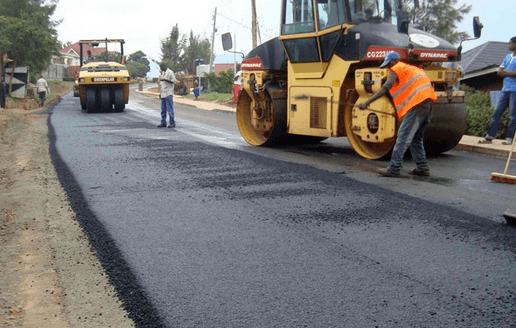
    A group of cocoa farmers has expressed its opposition to the plans by the Ghana Cocoa Board (COCOBOD) to halt the construction of cocoa roads in key growing areas.

    The cocoa sector regulator recently announced that it would discontinue the construction of the roads under its programme once the ongoing projects were completed.

    The President of the Concerned Farmers Association of Ghana, Mr Oboadie Boateng Bonsu, said the move would further compound the woes of cocoa production.

    He explained that the lack of access roads would affect the transportation of foodstuffs, especially to cocoa growing areas.

    “If care is not taken, the country will collapse. A lot of foodstuffs come from Dwaboso, Besem, and the rest. So, if they are stopping the road construction, how can the people from Boso-Nkwanta and the rest, which are the cocoa growing areas, bring their foodstuffs to the various communities or to the neighbouring cities and districts for people to enjoy? Their roads have been deprived of tarring, and they are very dangerous,” he was quoted by citinewsroom.com.

    Mr Bonsu also lamented that COCOBOD did not care about the real farmers on the ground, who were working hard to ensure that the cocoa sector was well established.

    https://www.youtube.com/watch?v=sV42zZDDa_c

    “I think COCOBOD has people that they engage, but I am talking about the real farmers on the ground, the concerned farmers, cocoa farmers, and even those of us who are helping to ensure that the cocoa is well established. Nobody touches the cocoa trees in this country, and they don’t even care about us. Even when we give them our reports, they don’t even respond,” he added.

    Meanwhile, COCOBOD has explained that the decision was part of a turnaround strategy by the government to ensure that the entity remained viable and focused on its core mandate.

  • Trade between Ghana and US increased to $3.7 billion in 2022

    Trade between Ghana and US increased to $3.7 billion in 2022

    Trade interactions between Ghana and the United States (US) reached a remarkable sum of $3.7 billion in the year 2022, as highlighted in data divulged by the US Embassy situated in Ghana. This notable achievement solidified the US’s position as Ghana’s fourth most significant export destination, further affirming the substantial economic ties between the two nations.

    Ghana’s exports to the US in 2022 amounted to $2.7 billion and the main exports from Ghana include crude oil, cocoa (bean, paste, and butter), apparel, rubber, and cassava.

    Ghana’s imports from the US in 2022 amounted to $1 billion, and the major imports include cars, machinery, paper products, plastics, medical devices, fertilizers, and agricultural goods.

    Ghana’s trade surplus with the US in 2022 was $1.8 billion, while trade in services is also growing strongly, the information said.

    It also indicated that in that same year, US bilateral assistance to Ghana was over $150 million; and that went into financing health, economic growth, agriculture, education, human rights, governance, and security.

    The US government in 2022 provided over $32 million in agricultural assistance to Ghana.

    It stated that more recently, the US Development Finance Corporation announced new support for $25 million in financing for micro, small, and medium sized enterprises in the agricultural sector in Northern Ghana.

    “Supporting digital economic development, the United States recently announced a $300 million investment in data centers in Africa, including Ghana,” it added.
    Ghana registered a total of $421 million in foreign direct investment (FDI) from the US in 2021.

  • Operation ‘catch and share’: Government devises new strategy to combat cocoa smuggling

    Operation ‘catch and share’: Government devises new strategy to combat cocoa smuggling

    Ghana’s Minister for Food and Agriculture, Bryan Acheampong, has announced intentions by the Ghanaian government to enact stringent measures aimed at effectively addressing the issue of cocoa bean smuggling to neighboring nations.

    As per the minister’s statement, the enhanced Planting for Food and Jobs strategy encompasses measures that involve distributing confiscated smuggled cocoa beans evenly between the government and individuals who provide information about such activities.

    “If anyone feels they still need to smuggle to Cote D’Ivoire we are going to launch an operation called ‘Catch and Share.’ With that, when we arrest the cocoa, anyone who will play a role in the arrest will receive a 50% share. We will share it with you 50/50. Not just the police or immigration officers, every single Ghanaian who will aid in the arrest of smuggled goods.”

    The minister said the government as part of the measures has also ensured a significant increase in cocoa prices on the local market as another disincentive to smugglers.

    As one of the two leading cocoa producers in the world, Ghana has over the years faced challenges in cocoa foreign exchange as compared to output due to smuggling.

    The situation has largely been attributed to the low price on the local market as compared to neighbouring countries.

  • Rains in Ivory Coast strengthens cocoa crops – Farmers say

    Rains in Ivory Coast strengthens cocoa crops – Farmers say

    Farmers stated on Monday that the main crop, which grows from October to March, was strengthened by above-average rain that fell in most of the key cocoa-growing districts of Ivory Coast last week. They also noted that there were a lot of cherelle-shaped pods on trees.

    The top cocoa producer in the world is currently in its rainy season, which is defined as April to mid-November.

    Farmers predicted that the main crop’s harvest would begin gradually in September, pick up steam in October, and then wind down in January. However, they added that September’s heavy rainfall might cause cocoa sickness.

    “Everything’s fine with the trees at the moment. If we get enough sunshine over the coming weeks, many cherelles will survive to produce a lot of harvest,” said Raymond Dasse, who farms near the western region of Soubre, where 39.7 millimetres (mm) fell last week, 28 mm above the five-year average.

    In the southern areas of Agboville and Divo, as well as the eastern region of Abengourou, where rainfall exceeded typical levels, farmers reported favorable cocoa pod development on trees. They anticipated that the primary cocoa harvest would be concentrated between November and January.

    Conversely, in the center-western region of Daloa and the central areas of Bongouanou and Yamoussoukro, where rain was below average, farmers indicated positive growing conditions due to sufficient soil moisture content. They projected that substantial quantities of cocoa beans would be harvested from September.

    “There are already a lot of large, almost ripe pods on the trees in some areas. But there will be a lot of picking from next month onwards,” said Marc Allangba, who farms near Daloa, where 15.9 mm fell last week, 4.1 mm below the average.

    The average temperature in Ivory Coast last week ranged from 24.1 to 26.4 degrees Celsius.

  • 2023 Mid-Year Budget Review identifies energy, cocoa sectors as areas committed to transform

    2023 Mid-Year Budget Review identifies energy, cocoa sectors as areas committed to transform

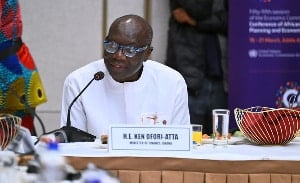
    Today, Monday, July 31, 2023, Minister for Finance, Ken Ofori-Atta, is scheduled to present the Mid-year budget to Parliament. This highly anticipated review will primarily focus on outlining a comprehensive set of growth strategies, all geared towards promoting greater stability and prosperity for Ghana’s economy.

    Ghana, like many other nations, has encountered significant economic challenges due to the impact of COVID-19 and the ongoing conflict in Ukraine. These external factors have significantly influenced the nation’s economic trajectory.

    Nevertheless, the government aims to address these issues and capitalize on growth opportunities through the Mid-year budget. By implementing effective strategies and policies, the government seeks to steer the country’s economy towards a positive trajectory.

    In particular, there are speculations that the energy and cocoa sectors will be given priority for transformation in the Mid-year budget, given their crucial roles in Ghana’s economic landscape.

    Sources from the Ministry of Finance indicate that the reform agenda for the energy and cocoa sectors is part of a broader Transformation and Growth Agenda. This initiative aims to tackle immediate policy and financing challenges while propelling the nation towards greater stability and prosperity.

    It is believed that the “Ghana Mutual Prosperity Dialogue Framework” will serve as a cornerstone of these reforms, promoting shared growth anchored on job creation, exports, and import substitution.

    The upcoming energy sector reforms are poised to concentrate on ensuring a reliable and efficient energy supply, which is crucial for promoting industrial growth and overall economic development.

    Addressing weaknesses within the energy sector is expected to attract investments, stimulate economic activities, and ultimately lead to job creation.

    Likewise, the cocoa sector, being a significant agricultural export for Ghana, is slated for substantial modernization to enhance production, improve value addition, and increase export earnings. These advancements will directly benefit cocoa farmers and communities reliant on cocoa cultivation.

    Revitalizing the cocoa sector can play a pivotal role in driving inclusive growth and reducing poverty in the country.

    By focusing on these pivotal sectors and implementing strategic reform measures, the government aims to establish a favorable environment for private sector-led investments, further boosting economic growth.

    Moreover, the emphasis on sustainable economic growth and development aligns with long-term objectives to enhance the overall standard of living and quality of life for the people of Ghana.

  • Cocoa Abrabopa Association compensates cocoa producers $9.2 million

    Cocoa Abrabopa Association compensates cocoa producers $9.2 million

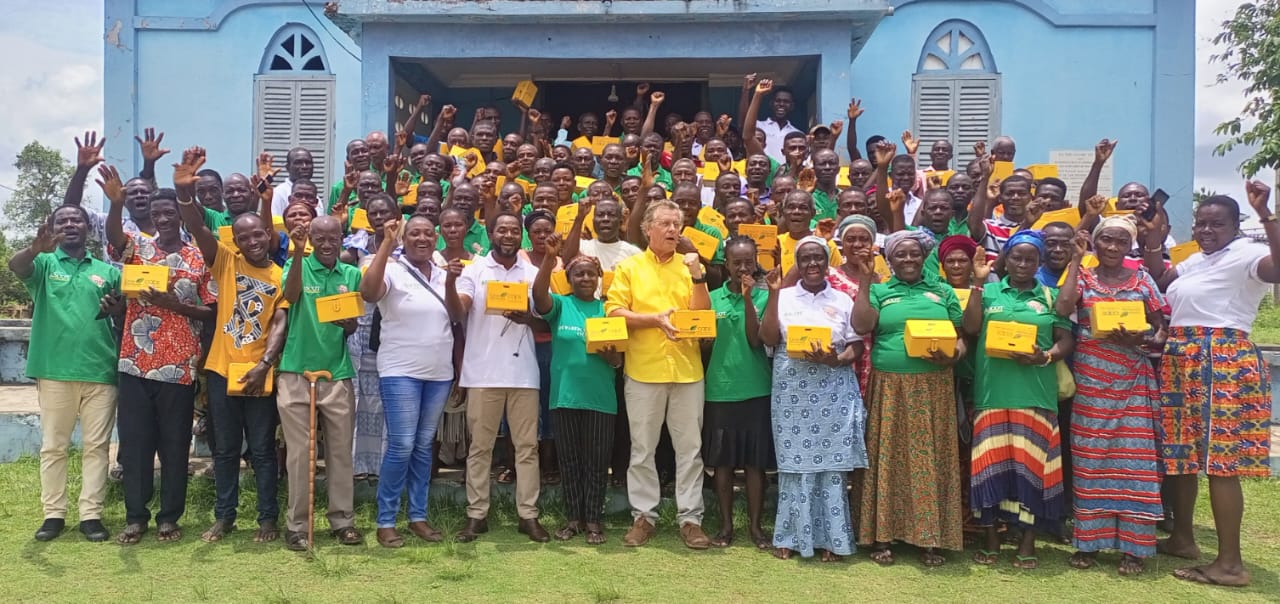
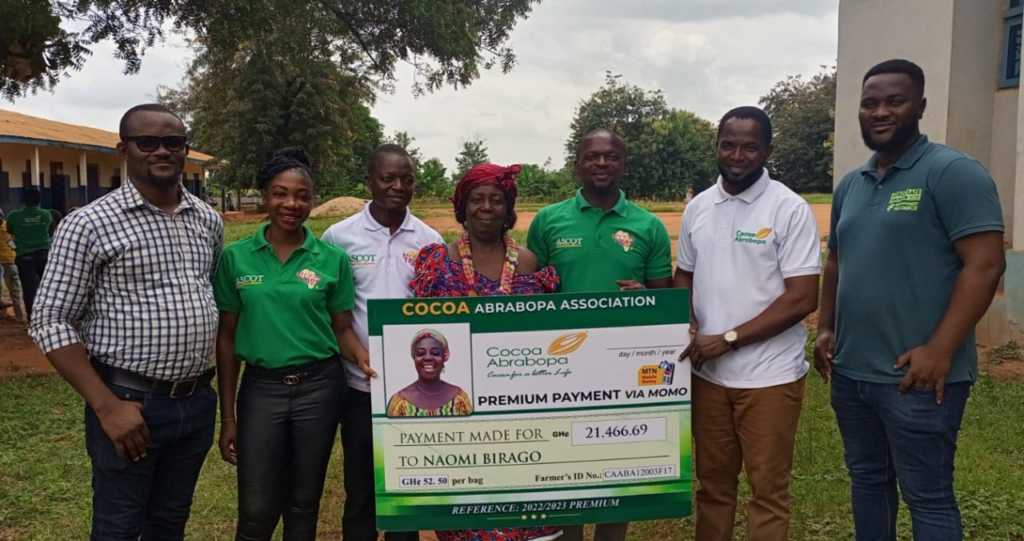
    A farmer-based organization called Cocoa Abrabopa Association (CAA) has paid a total of $9.2 million in premiums to its farmers in Ghana’s several cocoa-growing districts.

    The Rainforest Alliance Certification Programme’s operations included the monetary premium, sometimes known as the Sustainability Differential.

    The Sustainability Differential is an additional, required payment that farmers must get on their produce for the 2022–2023 growing season in order to encourage them to use sustainable agricultural methods and to better their living circumstances.

    Overall, the program benefited around 8,000 cocoa growers across their 39 operating cocoa areas. For each bag of certified cocoa sold to CAA, a farmer received an additional payment of $52.50.

    Mode of payment

    All of the recipients of payments received their payments via mobile money, saving them the trip to the association office in Kumasi.

    Abrabopa implemented a number of initiatives as part of its corporate social responsibility to the sector to assist farmers in increasing their yields, promoting environmental sustainability, eradicating child labor and other harmful farming practices, and promoting sustainable agriculture in all of its operational areas.

    Success

    The Regional Manager for CAA, Ebenezer Agbozo, said the sustainability program has supported numerous development projects in the areas of education, water, and sanitation in the 39 cocoa operational areas across the cocoa regions of the country since its inception. He was speaking to a durbar of stakeholders at Anyinam in the Eastern Region.

    “We at Abrabopa have also embarked on other sustainability programmes such as afforestation, accessible soil and Sustainable Environment Projects, Child Labour Monitoring Projects and Living Income Projects.”

    The Sustainability Differential is an extra compulsory cash amount earned on the produce for the 2022/23 crop season. It is designed to motivate and enhance the living conditions of approximately 8,000 cocoa farmers in their 39 cocoa operational areas.

    “Women participation in our programmes in the Eastern Region has also grown to about 30 per cent in the last three years, an increase we see as encouraging,” he said.

    Chairman of the CAA Council, Ismaila Pomasi, stated that Abrabopa and its partners contributed millions of cedis to the sustainability program by way of infrastructure facilities and financial premiums.

    He said the regional durbars for 2023 were special since they were set up in the operational regions so that many farmers could participate.

    “The significance of the durbar is to provide a platform for farmers, the council and management to fraternize and share ideas on the strategic policies and programs outlined to propel the association’s growth and development.

    “I believe that sustainable agriculture and a targeted set of alternative livelihood innovations, like the additional livelihood initiative we have introduced will help the farmers produce better cocoa, adapt to climate change, and increase their productivity,” he said.

    The Acting Executive Secretary and Chief Finance and Operations Manager for CAA, Patrick John Van Brakel said this year’s durbars also served as an opportunity for members to verify the total volumes of certified beans delivered to the association and to sign their premium letters thereof.

    “The signing of premium letters helps the management to pay premiums to farmers electronically and on time.

    “We need good quality cocoa beans this year and our target is 16,000 tonnes for the 2023/24 crop season. Every one of you must work hard for us to achieve this together and also remember to record every delivery in your passbook” he said.

    Motivation

    For his part, the Operations Manager for CAA, Roland Obosu asked the farmers to let the increase in premium payment motivate them to produce quality cocoa that would meet the standards, help increase local sourcing and contribute to the local economy.

    “The increase in premium payment for you our farmers, is part of the Association’s commitment towards developing thriving and resilient communities within our 39 operational areas” he said.

    Appreciation

    The farmers were grateful to Abrabopa for the massive improvements it has made in their lives and their work and assured them of their commitment to the association.

    they appealed to the association to engage Ghana Coaoa Board (COCOBOD) to find a solution to the menage of the illegal mining popularly known ‘galamsey’, which they said was posing a threat to their livelihood.

    “As farmers, our livelihoods depend on the land and we are urging you to discuss with COCOBOD immediately about how galamsay is destroying our future”, Joseph K. Bosompem who owns about 15 acres of cocoa farm said.

     “My fear is that some farmers may accept such juicy offers and this will not bode well for the industry,” he pleaded.

  • Cocoa prices surge in New York after 12 years

    Cocoa prices surge in New York after 12 years

    The cost of cocoa, a crucial raw material for chocolate production, surged to its highest level in over 12 years in New York on Tuesday, July 18.

    This rise in prices comes shortly after cocoa reached its highest point in 46 years in London. The situation has put traders and chocolate manufacturers in a challenging position due to limited supplies.

    During the trading session, the benchmark cocoa contract at the Intercontinental Exchange in New York reached $3,429 per metric tonne, the highest level since March 2011. It closed at $3,407, representing a 1.4% increase.

    Cocoa has become one of the most sought-after agricultural commodities, primarily because of an unusual decline in production in the western part of Africa. This region is a major supplier of raw cocoa to chocolate makers worldwide.

    Moreover, the prospect of potentially adverse weather conditions in the future is also impacting the market.

    Analysts have expressed concerns about the areas of Ghana, Ivory Coast, Nigeria, and Cameroon, where drier-than-normal weather is anticipated for the coming months due to the developing El Nino pattern. These factors have combined to drive cocoa prices to their current soaring levels.

    “Cocoa production is usually weaker in an El Nino year. We don’t know how strong this current El Nino will be, but forecasters say it will probably be strong,” said Rabobank cocoa analyst Paul Joules.

    “The 2023/24 mid crop could be affected, as well as the 2024/25 main crop,” he added, referring to the two annual cocoa crops African countries harvest.

    On Monday, exporters estimated that the volume of cocoa arriving at ports in Ivory Coast, the world’s leading cocoa producer, has decreased by 4% compared to the previous year, indicating a smaller production for the season.

    In London, cocoa futures settled with an increase of 18 pounds, equivalent to 0.7%, reaching 2,532 pounds per metric tonne.

    As for other commodities, raw sugar settled up by 0.3% at 23.86 cents per pound, remaining within a recent narrow range and below the 11-year peak above 27 cents reached in late April.

    Arabica coffee experienced a rise of 0.3%, settling at $1.563 per pound, while robusta coffee, on the other hand, settled down by $20, or 0.8%, at $2,532 per metric tonne.

  • Prices of cocoa, gold up but crude oil drops on international market – BoG

    Prices of cocoa, gold up but crude oil drops on international market – BoG

    The Bank of Ghana has reported a mixed reaction to the prices of Ghana’s major export commodities on the international market in the first half of the year.

    The commodities are cocoa, gold and crude oil.

    According to the Monetary Policy Committee Press Release dated 24th July, 2023.

    Cocoa prices surged to record highs last seen over a decade ago, triggered by tight supplies from West Africa coupled with expectations of a global deficit in the 2022/2023 crop season.

    On a year-to-date basis, cocoa beans gained 25.5 percent to settle at US$3,185.29 per tonne in June 2022.

    International benchmark crude oil prices lost 7.8 percent in the year to close at US$74.98 per barrel due to concerns that sluggish global growth could reduce energy demand, the report noted.

    However, decisions by OPEC+ to deepen production cuts moderated the losses somewhat.

    With regards to gold, the price of the commodity went up by 8.1 percent year-to date to settle at US$1,942.07 per fine ounce.

    This was as a result of increased fears over global recession and possible slower interest rate hikes in the United States loom.

    Also, increased demand for the metal from China is said to be another factor for the price hike.

    Source: The Independent Ghana

  • Ghana recorded trade surplus of $1.77bn in first half of 2023 – BoG

    Ghana recorded trade surplus of $1.77bn in first half of 2023 – BoG

    In the first half of 2023, Ghana experienced a trade surplus of $1.77 billion, which accounts for approximately 2.4% of its Gross Domestic Product (GDP), per a report from the Central Bank.

    This figure is higher than the $1.47 billion trade surplus (2.0% of GDP) recorded during the same period in the previous year.

    According to the July 2023 Summary of Economic and Financial Data from the Bank of Ghana, total exports as of June 2023 were estimated at $8.17 billion, while total imports amounted to $6.40 billion.

    Gold remained the dominant export, generating $3.45 billion in June 2023, an increase from $3.03 billion in the corresponding period the previous year.

    Crude oil exports ranked second, contributing $1.66 billion in June 2023, compared to $2.83 billion during the same month in the previous year.

    Cocoa proceeds for the first six months of 2023 stood at $1.48 billion, up from $1.41 billion in the previous year.

    Total imports for the first six months of 2023 amounted to $6.40 billion, a decrease from $7.40 billion in the same period last year.

    Despite the improvement in trade surplus, the country’s Balance of Payment at the end of June 2023 still showed a deficit of $107.8 million, approximately 0.1% of GDP. However, this deficit is significantly lower than the $2.49 billion recorded during the same period in 2022.

    The Capital and Financial Account Balance had a deficit of $897.3 million in June 2023, primarily due to a net portfolio of investments outflow. On the other hand, the current account balance stood at $849.2 million, approximately 1.1% of GDP in April 2023.

    Gross International Reserves in June 2023 stood at $5.34 billion, providing approximately 2.5 months of import cover. This figure is lower than the $7.68 billion recorded in June 2022.

  • Rot-causing disease affects Cocoa output, hiking prices

    Rot-causing disease affects Cocoa output, hiking prices

    Cocoa prices have surged to a 13-year high due to heavy rainfall across West Africa, which has accelerated the spread of a rot-causing disease, posing a threat to cocoa output in major producing countries.

    Farmers in Ivory Coast, Ghana, and Nigeria have reported the presence of blackpod disease, causing cocoa pods to blacken and rot. This disease can have a significant impact on the quality and quantity of cocoa beans, potentially disrupting the supply chain. According to Fuad Mohammed Abubakar, the head of Ghana Cocoa Marketing Co., the disease can be devastating for cocoa production.

    Farmers in Ivory Coast are concerned about the mid-crop’s output and quality, expecting it to be disappointing compared to the previous year. This raises worries that the smaller harvest may not be sufficient to offset any shortfall from the main crop.

    Cocoa is harvested twice a year, with the main crop harvested mostly from October to March and the mid-crop from May to August.

    London cocoa futures have experienced a remarkable surge of over 20% this year. On Monday, the most active futures reached £2,544 per ton, marking the highest level since mid-2010.

    In Nigeria, farmer Sola Ogunsola reported significant damage to cocoa farms in coastal areas, resulting in the loss of developing pods. Additionally, heavy rainfall has made roads impassable, hindering the application of chemical treatments in plantations and the transportation of cocoa to ports.

    Ivory Coast farmers have sent 2.24 million tons of cocoa to ports during the current season, slightly below the estimated 2.29 million tons from the previous year.

    Furthermore, the return of El Niño conditions is adding support to cocoa prices, as the weather phenomenon typically brings hot and dry conditions to West Africa, increasing the risk of a potential 10% drop in output, according to Bloomberg Intelligence estimates.

  • Deplorable roads in 14 communities fixed by Jomoro MP

    Deplorable roads in 14 communities fixed by Jomoro MP

    The Member of Parliament for Jomoro Constituency, Dorcas Affo-Toffey has improved some deplorable roads in 14 communities in the area.

    The move, according to the MP, is to make the four-kilometer road accessible for commuters.

    All these communities are farming areas but due to their deplorable roads, their farm produce always go waste.

    The communities are Asempanaye, New Kabenlasuazo, Nawule , Bonyere, Ezinlibo, Ndumsuazo and Takinta.

    The rest are Old Kabenlasuazo, Egbazo, Edobo, Atwebanso, Adusuazo, Ekpu, Half Assini, among others.

    These communities are also the food baskets of that part of the region and also the nation as whole.

    They produce cocoa and other food crops.

    Pregnant women and the sick usually struggle plying the road to seek medical care.

    It has been like this for decades but constant calls on successive MPs and governments to reshape the road have proved futile.

    “This was the nature of the road and even these tricycles and bicycles cannot commute on the road due to the deplorable nature” a resident lamented.

    Some of the inhabitants were stunned by the reshaping exercise by the MP since the roads have been there for decades.

    They explained that in just her first term in office, the MP has been able to make their roads motorable and therefore called on the constituents to vote for her.

  • How prices of cocoa, crude oil and gold fared in first four months of 2023

    How prices of cocoa, crude oil and gold fared in first four months of 2023

    The Bank of Ghana has provided an update on the current status of three key commodities that Ghana trades in, namely cocoa, crude oil, and gold.

    In its May 2023 Monetary Sector Report, the Central Bank noted that in the first four months of 2023, cocoa prices were generally positive.

    This was driven by lower production volumes, higher grinding in top-grower Ivory Coast and increased global demand.

    Per the report, prices began the year at US$2,539.86 per tonne in December 2022, and rose to US$2,924.37 per tonne in April this year. This represents 15.2 percent year-to-date increase and 13.0 percent on year-on-year terms.

    With regard to crude oil, prices have broadly trended downwards since June 2022.

    From US$117.2 per barrel in June 2022, prices plunged to US$81.3 per barrel in December 2022, before moving slightly up to US$82.7 per barrel in April 2023.

    Prices were pressured by concerns over the health of the global economy and prospects of oil demand, despite the announced production cut by OPEC+, the Central Bank noted.

    Meanwhile, the BoG says gold has remained strong so far this year.

    Spot gold started the year at US$1,796.2 per fine ounce and surged to an all-time high US$2,000.7 per fine ounce in April 2023, representing a 3.4 percent year-on-year
    growth.

    This was prompted by economic uncertainty amid fears of recession, expectation of lower rate hikes as inflation eases, and the banking crisis in the U.S. and Europe.

    “The weighted average price of the three major commodities exported by Ghana (cocoa, gold and crude oil) increased by 3.9 percent in April 2023.

    The increase in the overall index was on the back of increases in all the three commodities, with the cocoa sub-index increasing by 4.9 percent, the crude oil sub-index by 3.9 percent, and the gold sub-index by 3.7 percent,” the report added.

    Source: The Independent Ghana

  • El Nino’s threat to production and supply issues in Ivory Coast cause spike in cocoa prices

    El Nino’s threat to production and supply issues in Ivory Coast cause spike in cocoa prices

    Due to mounting worries about how an El Nino weather phenomenon would affect the world’s chocolate output, cocoa prices increased last week.

    Last Friday, cocoa prices reached their highest level in a month for nearest-futures contracts, building on the gains observed on Thursday due to worries about the El Nino weather event. It is worth noting that cocoa prices soared to a 12-year high in 2016 when a previous El Nino event caused a drought that severely affected global cocoa production.

    This is particularly significant as the Ivory Coast, the world’s leading cocoa producer, is already facing a decline in supply.

    The U.S. Climate Prediction Centre announced last Thursday that sea surface temperatures in the equatorial Pacific Ocean were 0.5 degrees celsius higher than usual, and wind patterns indicated the presence of El Nino conditions. In the previous month, the Climate Centre raised the likelihood of an El Nino weather pattern occurring between August and October to 94 percent, up from 74 percent in April.

    Reduced supply from the Ivory Coast is another factor supporting cocoa prices, as reported by Barchart – a platform that monitors the Cocoa Futures Market. In the first two weeks of May, the Ivory Coast government disclosed that farmers had delivered a total of 2.09 million metric tonnes (MMT) of cocoa to the country’s ports during the 2022/23 marketing year, representing a 3.0 percent year-on-year decline.

    According to a statement from the Ivory Coast agriculture minister on March 31, the mid-crop – which is the smaller of the country’s two annual harvests and began on April 1 – is expected to decrease by 25 percent compared to the previous year, reaching 450,000 metric tonnes (MT).

    Quality concerns about the Ivory Coast mid-crop led to a rally in cocoa prices last month, with prices reaching their highest level in 6-3/4 years. Barchart commented that farmers had reported poor cocoa quality, with an average bean count of 120 per 100 grammes. Exporters generally prefer a count ranging from 80 to 100 per 100 grammes, with lower bean counts indicating better cocoa quality.

    The decrease in cocoa supplies from Nigeria has also contributed to the price hikes. The Cocoa Association of Nigeria reported on May 24 that the country’s cocoa exports in April declined by 46 percent compared to the previous month – and 20.6 percent compared to the previous year, amounting to 9,924 metric tonnes (MT). Nigeria ranks as the world’s fifth-largest cocoa bean producer.

    Cocoa prices have received additional support from projections made by the International Cocoa Organisation (ICCO) last month. The ICCO predicted that global cocoa stockpiles for the 2022/23 period would decrease by 3.5 percent year-on-year to 1.653 MMT. The organisation also highlighted the impact of weather variations, particularly in West Africa, which have compounded the expectation of a supply deficit. On the other hand, the ICCO forecasted that global cocoa production for 2022/23 would increase by 4.1 percent year-on-year to 5.017 MMT, while global cocoa grindings would decline by 0.6 percent year-on-year to 5.027 MMT.

    The quarterly report released by the ICCO on December 1 provided a bullish outlook for cocoa prices. The report indicated that global cocoa production for the 2021/22 period had declined by 8.0 percent year-on-year to 4.823 MMT due to unfavourable weather conditions and diseases affecting cocoa yields.

    Furthermore, the ICCO revised its previous estimate for global cocoa production downward by 419,000mt since September. The organisation also raised the projected global cocoa deficit for the 2021/22 period to 306,000mt, up from the September forecast of 230,000mt. In the previous season, global cocoa production reached a record high of 5.242 MMT, resulting in a surplus of 209,000mt in the global cocoa market.

    Nevertheless, an increase in cocoa inventories is negatively impacting prices. Monitored cocoa inventories held in U.S. port warehouses reached an 8-year-3/4 month high of 5,730,012 bags on May 22. Similarly, cocoa inventories held in European port warehouses reached an 8-3/4 month high of 147,440mt on May 15, according to ICE monitoring data.

    Stronger global cocoa demand

    Growing global cocoa demand is driving bullish price trends in the market. According to recent reports, there are positive indicators supporting this upward trajectory. The National Confectioners Association disclosed on April 21 that cocoa grindings in North America during Q1 rose by 2.4 percent compared to the previous month, although there was a year-on-year decline of 4.4 percent totalling 109,666 metric tonnes (MT). Similarly, the Cocoa Association of Asia reported on April 20 that Q1 cocoa grindings in Asia increased by 4.09 percent year-on-year, reaching 222,028mt.

    The European Cocoa Association shared its findings on April 13, revealing that cocoa grindings in Europe during Q1 experienced a 0.5 percent year-on-year growth, amounting to 375,375mt. This figure represents the highest Q1 grindings since 1999. Additionally, a cocoa exporter group, consisting of six major cocoa grinders, reported on April 19 that its Q1 cocoa processing surged by 22 percent year-on-year, totaling 189,405mt.

    Weather condition

    The Pacific Ocean usually experiences normal conditions when trade winds blow westward along the equator, carrying warm water from South America to Asia. As a result, cold water rises from the depths through a process known as upwelling, replenishing the water cycle. However, this natural pattern can be disrupted by two opposing climate phenomena called El Niño and La Niña, collectively known as the El Niño-Southern Oscillation (ENSO) cycle.

    These events have significant global implications, affecting weather patterns, wildfires, ecosystems and economies. Typically, El Niño and La Niña episodes persist for around nine to 12 months; but there are instances when they can persist for several years. Although El Niño and La Niña events occur on average every two to seven years, there is no set schedule for their frequency. Generally, El Niño events tend to occur more frequently than La Niña events.

  • IMF seeks to reduce financial losses of Ghana’s cocoa sector

    IMF seeks to reduce financial losses of Ghana’s cocoa sector

    As part of an IMF-sponsored economic reform program, the second-largest cocoa producer will have to cut its losses from the industry regulator.

    Ghana received approval this week for a three-year, $3 billion IMF bailout, with the first disbursement of about $600 million expected this week.

    Further payments will require the Ghanaian government to meet specific objectives aimed at restoring economic stability and reducing the country’s debt burden ahead of periodical IMF reviews.

  • Another reversal seen in cocoa farmgate pricing

    Another reversal seen in cocoa farmgate pricing

    The March 2023 Cocoa Market Report by the International Cocoa Organisation states that due to global changes, the cocoa industry has seen its second reversal in farmgate prices over the previous five mid-seasons.

    The report shows that the farm-gate prices in US$ nominal terms have been higher in Ghana than in neighbouring Côte d’Ivoire over the past five mid-seasons. However, the situation was reversed during the mid-crops for 2021/22 and 2022/23 seasons – mainly due to substantial depreciation of the cedi (GH¢) vis-à-vis the US dollar.

    For the 2022/23 mid-crop, the Ivorian and Ghanaian regulators have left unchanged the fixed farmgate price at 900 XOF per kg (US$1,507 per tonne) and GH¢12,800 per tonne (US$1,206 US per tonne) respectively.

    The report further indicates that the reversal of farm-gate prices in Ghana’s cocoa industry is largely attributed to the global economic challenges which have affected Ghana’s currency. The depreciation of GH¢ vis-à-vis US$ is a result of several factors – including the COVID-19 pandemic, low commodity prices and the country’s debt burden.

    Cedi’s worst run

    The cedi wobbled after a wave of sovereign downgrades and speculations. The GH¢ endured a torrid 2022, ending the year as the fourth worst-performing currency globally and trading at a mid-rate of GH¢11.60 /US$ (YTD loss of 44.05%). The local unit suffered from a raft of sovereign downgrades that dimmed investor confidence. Fitch and Moody’s ratings downgraded Ghana into negative outlook territory at the start of 2022, leading to a loss of access to the international capital market (ICM). The loss of access to the ICM posed some risks to international reserves and the country’s ability to meet external financing obligations.

    The cedi endured its worst run of form yet, as it depreciated 33.22 percent from Sep-22 to Nov-22 to emerge as the worst-performing currency globally. During this period, the GH¢ was quoted at 15/US$1 on the forex market as speculative attacks severely weakened the local unit. However, the local unit gained 27.16 percent to end Dec-22; primarily due to positive sentiments from an IMF staff-level agreement, reduced speculative attacks and softened stance of the US Fed.

    Despite the challenges faced by Ghana’s cocoa industry, the country has made significant strides in boosting its cocoa production over recent years. Several initiatives have been implemented to support the industry, including the Cocoa Farmers Pension Scheme, the Cocoa Rehabilitation Programme, and the Cocoa Disease and Pest Control Programme.

    Ghana surpasses Ivory Coast in cocoa production

    Ghana has surpassed Ivory Coast in cocoa production over the half-year 2022/23 crop season, according to the ICCO report.  As of 31 March 2023, cumulative arrivals of cocoa beans in Ivory Coast were lagging behind previous season levels, while the volumes of graded and sealed cocoa beans purchased in Ghana since start of the 2022/23 season was reported at 566,846 tonnes; representing an 18 percent increase from the previous year.

    Despite an increase in the country’s cocoa production, total supply of cocoa beans from the top-two world cocoa producers for the first half of 2022/23 is estimated at 2,345,846 tonnes, slightly down by 0.2 percent compared to the previous season.

    The ICCO report states that the year-on-year reduction of 89,000 tonnes in Ivory Coast’s cumulative ports’ arrival of cocoa beans over the first half of the 2022/23 cocoa year, combined with the increase of 85,360 tonnes over the same period in Ghanaian purchases of graded and sealed cocoa beans, results in a slightly negative net effect.

    The report also stated that the current state of play is subject to change as the mid-crop progresses. However, the current situation shows that Ghana has overtaken Ivory Coast in cocoa production; a significant development in the global cocoa market.

    The domestic cocoa industry is facing significant challenges due to global developments, including depreciation of the GH¢ vis-à-vis the US$. However, the Regulator remains committed to supporting its cocoa farmers and improving the industry’s performance through various initiatives.

    The reversal of farmgate prices in the past five mid-seasons is a concern, but Ghana’s cocoa industry is expected to bounce back with the right support.

  • Ghana overtakes Ivory Coast in domestic cocoa production, says ICCO

    The International Cocoa Organization (ICCO) has released its Cocoa Market Report for March 2023, which shows that Ghana has produced more cocoa than Ivory Coast for the first half of the 2022/23 crop season.

    According to the report, Ghana’s purchases of graded and sealed cocoa beans reached 566,846 tonnes by 9 March 2023, an 18 percent increase from the same period of the previous season. In contrast, Ivory Coast’s cumulative arrivals of cocoa beans at ports were 1.779 million tonnes by 31 March 2023, a 4.8 percent decrease from the previous season.

    The report states that the difference of 89,000 tonnes in Ivory Coast‘s ports arrivals and the increase of 85,360 tonnes in Ghana’s purchases resulted in a slightly negative net effect on the total supply of cocoa beans from the world’s top-two cocoa producers. The total supply for the first half of 2022/23 was estimated at 2,345,846 tonnes, slightly down by 0.2 percent compared to the previous season.

    The report also notes that the current situation may change as the mid-crop progresses. However, it indicates that Ghana has overtaken Ivory Coast in cocoa production, a remarkable development in the global cocoa market.

    Cocoa industry analysts have commented that this is a significant achievement for Ghana, which has been implementing various initiatives to boost its cocoa production and quality. Some of these initiatives include modern farming techniques, better access to credit and markets, increased investment in infrastructure, free seedlings, subsidised fertilisers and pesticides, training for farmers, elimination of child labour, and guaranteed minimum price for cocoa beans.

    However, the report also highlights some challenges facing the cocoa industry, such as climate change and disease outbreaks, which have affected cocoa production in recent years. The report urges more investment in research and development to address these challenges.

    The report also shows that cocoa bean stocks held in Intercontinental Exchange (ICE) Futures licensed warehouses in Europe and the United States are high compared to the previous season. However, they have declined compared to the levels seen at the start of the 2022/23 season.

    Regarding futures price developments, the report shows that prices of the front-month cocoa futures contract were higher year-on-year on both the London and New York markets in March 2023. The average price in London was US$2,553 per tonne, up by 12 percent compared to March 2022. The average price in New York was US$2,778 per tonne, up by 8 percent compared to March 2022.

    Source: The Independent Ghana

  • New cocoa fertilizer launched

    New cocoa fertilizer launched

    Leading agricultural inputs provider Demeter Ghana Limited has introduced a new fertiliser to increase the country’s cocoa production.

    Known as Polysulphate (Asaase Hene), it is a multi-nutrient sulphate cocoa fertiliser that provides over 70 per cent increase in cocoa yields according to trials by the Cocoa Research Institute of Ghana (CRIG).

    The fertiliser contains 48 per cent sulphate (SO3), 14 per cent sulphate of potash (K2O), six per cent magnesium sulphate(MgO) and 17 per cent calcium sulphate (CaO).

    ‘Asaase Hene’ is globally approved for organic agriculture by multiple bodies including ECOCERT.

    Compared with a wide range of equivalent fertilisers, it has the lowest carbon footprint at 0.034 kilogrammes, CO2e/kg – less than 3 per cent of Urea.

    Event

    Speaking at the launch in Kumasi, the Head of Agronomy at Demeter Ghana, Benjamin Adevu, said the product was suitable for all kinds of soils entirely natural and has a prolonged nutrient release rate with a low salinity (amount of salt) index, making it ideal for cocoa production.

    “Polysulphate (Asaase Hene) fertiliser provides both macro and micronutrients needed for good cocoa yields,” he stressed.

    Mr Adevu explained that it could take as long as fifty days to release nutrients, which makes it excellent for cocoa trees to produce higher yields.

    For his part, the Deputy Director in Charge of Agronomy at the Cocoa Health and Extension Division (CHED), Samuel Ankamah, who chaired the event, encouraged farmers to accept the product to maximise their yields, and that it has been tested and approved by the Ghana Cocoa Board.

    He lauded Demeter Ghana for introducing the fertiliser which offered great benefits to cocoa farmers.

    A Senior Research Scientist of CRIG, Dr A. Arthur, said: “CRIG trials showed increased cocoa yields using Polysulphate (Asaase Hene) versus NPK fertilisers during the trials”.

    “Our test results have shown that Polysulphate (Asaase Hene) organic fertiliser is effective for increased and healthy cocoa yields,” he stressed.

    The Country Manager for Demeter Ghana, William Hunt, said the fertiliser would help farmers become more productive and profitable whilst also paying attention to the environment.

    Testimony

    Some farmers who used the product, during the ceremony, shared their testimonies on how impactful the product had been on their farms.

    The General Manager of Ewurade Naye Bioh Farm Limited, Bioh Daniel Bossman, said, “I used to harvest 10 bags of cocoa but since I started using Polysulphate fertilisers, I now harvest 30 bags of cocoa per acre of land”.

  • PBC’s crisis cannot be blamed on management – Deputy CEO

    PBC’s crisis cannot be blamed on management – Deputy CEO

    Vivian Boadi, the Produce Buying Company‘s (PBC) deputy CEO and finance director, has stated that the company’s current state should not be blamed on management.

    “The losses didn’t start in 2020 or 2021. The losses of PBC started way back in 2013. And that is where I would want everybody to know that it’s not as it’s being portrayed that the current management is the cause of the company’s downward trend of the market share,” Madam Boadi stated in an interview on JoyNews.

    JoyNews’ investigations have since revealed that the country’s biggest indigenous cocoa-buying company, PBC, risks a possible collapse following its steep decline in market share from 30.88 per cent to 8 per cent over the last five years.

    In January last year, the management of the company hinted at downsizing its staff because it was unable to meet financial and operational obligations to its workers.

    In August 2022, management issued a memo it was unable to pay salaries to staff. It’s now a tale of huge debts, fallen revenue, tonnes of cocoa beans stuck in the farms and produce clerks engaged in double trading to survive.

    To this end, Madam Boadi said although the firm was on the verge of collapse, she maintained that management made efforts to sustain the company in the face of bankruptcy.

    She disclosed that the decision made by the PBC in 2022 to lay off some of its staff was in an attempt to cut down expenditures.

    The PBC Deputy CEO explained that at a point in 2021, there was 1200 staff enlisted on the payroll of the PBC, but there has been a reduction to 748 staff members.

    However, she further claimed that management has come to the realisation that the business could still be able to operate effectively if the number of 748 staff is further reduced.

    Subsequently, Madam Boadi stated that because they cut down on expenses, the Company was able to gain a major profit of ¢1.5 million, which made it possible for the company to thrive despite encountering financial challenges.

    Also, she stressed that “If you check from 2021, we paid staff salary the whole twelve months. We didn’t have any problem with cash flow. In 2022, we had issues. Even at that time, the company was even able to go to CBG to borrow some money to be able to do the pre-seasonal purchases before the COCOBOD seed fund came.”

    However, the Public Affairs Manager of COCOBOD, Fiifi Boafo has also expressed his concern about the fall of PBC.

    He explained that the PBC, despite its challenges remained a trusted license-buying company, and that “COCOBOD has been working in ensuring that we are able to help them with capital for their business.”

  • COCOBOD urges EU to ensure favorable cocoa pricing legislation

    COCOBOD urges EU to ensure favorable cocoa pricing legislation

    Ghana Cocoa Board (COCOBOD) has drawn the attention of the European Union to its unfavorable cocoa pricing legislation.

    Chief Executive Officer of the Board, Mr  Boahen Aidoo, while engaging a four-member delegation from the European Union in Accra this week, stated that the right price must be paid for Africa’s cocoa.

    For him, a revision is imperative since “cocoa is the only crop which has preserved Ghana’s forest and supported global effort.”

    Ghana is the second largest supplier of cocoa in the world. The Anglophone country is ranked after Côte d’Ivoire.

    A review of the cocoa pricing legislation by the EU is key since it is the largest importer of cocoa, accounting for 60% of world imports.

    The National Buffer Stock Company in 2022 revealed that of the $130 billion global chocolate industry, cocoa exported from Africa rakes in only a small slice.

    On his part, Head of Cooperation, EU delegation to Ghana, Massimo Nina, who led the delegation, admitted that the present current pricing framework does not ensure the wellbeing of cocoa farmers as they are not able to rake in enough profit.

    He gave the assurance that the European Union would take the necessary steps to improve the livelihoods of farmers it receives cocoa from.

    In November 2022, the EU contributed €25 million to enhance the economic, social and environmental sustainability of cocoa production in Côte d’Ivoire, Ghana and Cameroon.

    With regards to pricing, COCOBOD has introduced the Living Income Differential (LID) policy to mitigate poverty among cocoa farmers in Côte d’Ivoire and Ghana.

    Again, the Board has put in place the Cocoa Management System (CMS) to ensure cocoa traceability and sustainability, an initiative that has received commendation from the European Union.

     “I must say your processes towards ensuring sustainability, traceability and elimination of child labour within the sector are on a good track,” Massimo Nina said.

    Meanwhile, COCOBOD has assured its commitment to maintaining its status as the best producer of premium quality cocoa in the world, while ensuring that cocoa cultivation is devoid of deforestation and use of services of children in cocoa farms.

    Source: The Independent Ghana

  • Oppong Nkrumah calls for increased cocoa production and consumption

    Oppong Nkrumah calls for increased cocoa production and consumption

    Minister for Information, Kojo Oppong Nkrumah, has entreated Ghanaians to consume and process more cocoa.

    Delivering the keynote address at the launch of this year’s National Chocolate Week Celebrations in Accra on Tuesday, February 7, 2023, Mr Nkrumah said while continuing with efforts to boost domestic production of cocoa, it is important to take advantage of this year’s celebration to step up efforts to increase processing of cocoa locally.

    “One of the ways to do this is to guarantee the light crop for the local producers so that they do not have to buy the main crop for domestic processing. As we know, the main crop is comparatively more expensive. If we are serious about boosting local production then we must move quickly to ensure that local processors are able to fully meet their bean needs from the light crop,” he said.

    Mr. Nkrumah charged COCOBOD to use policy instruments to ensure that financing support is provided for domestic processors.

    “The financial sector should be incentivized to provide financing for the domestic processors using the cocoa beans as security and escrowing into an account of the off-takers. The challenge of financing domestic processors will be lightened via this channel,” he added.

    He said although the incentives offered by the Ghana Free Zones Authority are endearing enough to attract more domestic processors, they aren’t well known. These incentives should be better highlighted by the Free Zones Authority and COCOBOD to attract more processors to set up in the freezones area and then process.

    On the matter of stimulating domestic consumption of cocoa products, Mr. Nkrumah suggested the following:

    “We need to promote more chocolatiers to join the value chain. The more domestic chocolatiers and nuanced products there are on the local market, the better our chances of deepening the local taste and demand. The red carpet of incentives as we would give a foreign direct investor should be rolled out for local chocolatiers as well.”

    “Secondly, the thirty-five percent (35%) tax on butter and liquor (raw materials for chocolatiers) should be re-considered. This will make it less expensive to finance operations. It will also make the final products more affordable on the market.”

    “And finally, we should support initiatives across Africa to stimulate consumption among school children. Sectors of our economy making super profits can be encouraged to finance such initiatives which will serve as an investment for the growth of a future market in Africa for our cocoa.”

    The core purpose of the Chocolate Week Celebration is to promote local consumption of chocolate and other cocoa-based products among others.

    The Information Minister who is also the MP for Ofoase Ayirebi praised stakeholders on the cocoa value chain for their respective roles in working to build a robust cocoa economy.

    The National Chocolate Day Celebration was instituted in 2005 to coincide with Valentine’s Day which falls on 14th February every year to boost the domestic consumption of Ghana chocolate and other cocoa-based products among others. What used to be a day celebration, was transformed into a week-long celebration in 2022 due to the numerous benefits the country stands to gain if the cocoa industry is nationally promoted.

    Source: Ghanaweb

  • The real account of the blacksmith who transported the first cocoa seeds to Ghana in 1879

    The real account of the blacksmith who transported the first cocoa seeds to Ghana in 1879

    The most common legends about Tetteh Quarshie, the man who brought the first cocoa seedlings to Ghana, are that the plants originated in Fernando Po (now Equatorial Guinea) and that he was only able to sneak the seeds by eating them.

    While only one of those two stories is accurate, did you also know that a blacksmith was the man credited with developing Ghana’s renowned cocoa-producing skills?

    A blacksmith who gifted Ghana its most profitable cash crop, that’s the true story of the man Tetteh Quarshie.

    The 1879 story that has been told without number has somehow also missed the very fine and interesting detail that Ghana’s Tetteh Quarshie was not even the greatest farmer the country has ever had.

    This historical-correction was shared with GhanaWeb’s Wonder Ami Hagan when she visited the Tetteh Quarshie’s Cocoa Farm at Mampong Akuapem, in the Easter Region, in 2020.

    Now, this is the true story.

    Tetteh Quarshie was in Fernando Po on a missionary journey, and on his return, just like all others on such pilgrimages, there was the need for him to pass through a checkpoint.

    This was to allow for all such travellers to be checked to ensure that, while on return from their respective countries at the time, they were not carrying any foreign items.

    Tetteh Quarshie may not have known the effect the decision he was making at the time would have on his home country, Ghana, but he made a smart move.

    Being a blacksmith, he kept all his working tools in a toolbox. This box was the last place anyone would have checked for any foreign items or goods, and so that was exactly where he kept them.

    But all he could keep in there were six cocoa pods; a plant he had discovered in that country on the west coast of Africa.

    It became a well-cooked plan, and over the six-week journey Tetteh Quarshie undertook on the sea in 1879, to the coast of the Gold Coast, his pods remained intact.

    In the words of Thomas Awuku, who has been working at the Tetteh Quarshie Farm for years, a job handed down to him by his father, who also took over the management of the farm from Tetteh Quarshie:

    “That’s the history we also learnt about him, but when I got to this stage, I realised they were telling us a lot of lies about Tetteh Quarshie. Tetteh Quarshie didn’t swallow cocoa beans before he brought them to Ghana because in the 1870s travelling was difficult. There were no aeroplanes for travelling so we travel by the sea – either with ship or canoe. Tetteh Quarshie went with the ship, and it took him six weeks from Ghana to Fernando Po, which is currently known as Equatorial Guinea.

    “Assuming he swallowed the cocoa beans and for six weeks on the ship, are they trying to tell us that the whole six weeks on the sea, he couldn’t visit the washroom? And if he did, it means everything went back straight into the sea so we never got back the beans and returned back to Ghana,” he told GhanaWeb’s Wonder Ami Hagan on People and Places.

    Explaining further the story, Thomas said that even on his return to the Gold Coast, Tetteh Quarshie made an unsuccessful attempt at planting the first seed in Accra, as the soil type – mostly sandy and clayey, did not allow the crop to grow.

    It was only when another missionary work came and took him to Mampong Akuapem that he found good soil.

  • Localising conversations on Living Income Differential: Where is the Local Cocoa Farmer?

    In 1879, Ghana planted our first cocoa tree. In the 2018–19 and 2019–20 cocoa seasons, respectively, Ghana produced 812,000 and 850,000 metric tonnes of cocoa.

    The entire global cocoa value chain is estimated at $100 billion. Ghana and Ivory Coast produce about 70% of the world’s cocoa beans and earn 3% of the industry’s $100 billion in revenue (this is not promised though). For months, the Ghana Cocoa Board has been waiting for a lending facility (syndicated loan anyway) to purchase cocoa beans from farmers.

    How many years has the Ghana Cocoa Board been syndicating loans to purchase cocoa from farmers and export same in raw state? Countries are built by brains, not natural resources. Growing up in a cocoa community, elders of the community told me that some of the wealthiest people in our society a century ago farmed cocoa. Contrarily, cocoa farmers are now among Ghana’s poorest people.

    The decadently high taxes that Cocoa Board levies on cocoa farmers through the producer price are used to lavishly compensate themselves at the expense of these hardworking farmers. Even though it has no cocoa trees or farms, Switzerland commands over $4.5 billion value-added cocoa industries (mostly chocolate and related products).

    Additionally, recent interactions with government agencies, businesses, non-profits, civil society groups, farmers, and farmer groups led to the impression that farmer representation is proportional to farmer capacity. This includes having the knowledge, data, and ability to have fruitful conversations on living wages with key actors in the sector.

    Sadly, this is lacking among our cocoa growers, which means they have little say in market decisions. We need a paradigm shift with the cocoa farmers at the centre of these conversations. For instance, Rikolto has designed a global cocoa and coffee programme around fair living income differential as a principle. To do this, they focus on farmer professionalisation, which helps farmers and farmer-based organisations to negotiate better prices and form more fruitful business partnerships with the corporate sector.

    A big part of their work with farmers is helping them to access relevant information and data that can help them negotiate with other parties. Thus, empowering farmers to have meaningful input in discussions about ensuring a global minimum income that allows them to thrive is key.

    The cocoa/chocolate industry has been hunkered down for the past two years by the COVID-19 pandemic, thus last month marked the first major partnership meeting in over three years. Here I synthesised few ideas on the issue.

    Brussels was supposed to host 350 policymakers, businesses, academics, farmers, and civil society representatives for the World Cocoa Foundation Partnership Meeting, but just a handful stakeholders showed up. The two major producing countries boycotted the meeting in protest against the industry’s knock-back to pay fair price for the commodity. Although I agree that the protest is necessary, I also think it’s only half of the actions required to highlight the unfair practices in the sector.

    One of the Ghanaian civil society advocates who participated in the said meeting disclosed; ‘we absolutely support our government’s action, and we also need our government to be significantly clearer about what they are doing themselves with the cocoa profits’. Here, we cannot pin the blame on just one stakeholder.

    Is recent producer price adjustment adequate to cushion cocoa farmers against rising inflation?
    During the week, cocoa stakeholders talked more freely about ways to increase cocoa farmers’ income. The question is “what do we do to pay the farmers more?”

    This question is being asked by programme administrators, not company CEOs. Some serious doubts have been raised as to whether a tool available on the global commodity market is the best strategy to increase farm gate pricing. There are also significant unknowns about the structure of the global cocoa market. However, many of such discussions with local businesses were on how they source their products rather than how farmers could improve their living income.

    How public policy may resolve Child Labour through a systems approach was highlighted using an Indonesian success case is an excellent illustration of what can be accomplished in West Africa with an effective public-private partnership to reduce risks of child labour. A study by the International Labour Organisation and UNICEF estimate that an additional 8.5 million children are in forced labour. The main causes of child labour are poverty, vulnerability, and inadequate social programmes. Our cocoa farmers need the backing of the cocoa industry stakeholders to tackle such social menace.

    A careful attention to the debate about how much cocoa growers need to make over the years leave us with several propositions: from higher prices and diversification to larger farm sizes and direct cash transfers, many excellent thoughts and proposals have been presented on the subject. In most of these debates, however, farmers are not given a voice.

    On the rare occasions when farmers were able to take part in these conversations, it was typically the “Abidjan or Accra farmers” who spoke up, even though their opinions did not reflect those of real cocoa farmers. ‘If you try to help me out, but leave me out of it, you’re actually working against me’, as Mahatma Gandhi once put it. Consequently, we face the risk of failing to reach our goal unless actual cocoa farmers are involved in these discussions.

    Ghana and Côte D’Ivoire implemented the Living Income Differential (LID) in 2019 to increase the income of cocoa farmers; the LID is a price of premium cocoa on the global market. The US$400 LID is built into the price for all cocoa farmers. For instance, the price of a bag of NPK fertiliser has just increased to between 240 and 450 GHS. Price increases in inputs and farm machinery, commodity prices, and the cost of living have eventually neutralised the recent adjustment in the producer price as announced by government.

    Our cocoa farmers put in long hours of labour and should be compensated more than the suite-attired Ghanaian regulator. In 2021–2022 harvest season, the Ghana Cocoa Board introduced a pension programme for cocoa farmers. The pension scheme was designed to help farmers in the long run by encouraging young people to enter the cocoa industry.

    Key stakeholders in the sector must closely police the implementation of this policy so we do not have another case of the Cocoa Board Scholarship. Last year, a non-negotiable electronic scale was installed for weighing cocoa beans. This action was taken as a part of a bigger campaign to ensure the protection of cocoa farmers. Since cocoa buyers are not permitted to tamper with the scales, the Ghana Standards Authority calibrated the scales for use.

    For cocoa farmers to make a decent living, they need to have a firm grasp of the intricacies of the market system governing cocoa prices. Increasing the price of cocoa without increasing social support services will not guarantee a living income for cocoa farmers. Businesses in the cocoa and chocolate industries are dedicated to resolving the difficulties plaguing the cocoa industry through innovations and newer approaches. Traceability will be key in the evolving environment of cocoa business.

    At Africa Farmnet Limited, we have piloted our AI/GIS-powered traceability system on both grain and tree crops in Ghana. You can reach out to us to explore the scale-up of this home-grown agritech solution as part of your cocoa business.

    How can regulations be recalibrated to advance fairness in the sector?

    The European Union has been a vocal proponent of human and environmental rights legislation for some time now, and were well-represented in last month’s WCFP meeting. The hint about changing regulation in the US offers optimism about an evolving discussion to stir a change in global cocoa trade. However, the main point is that we should not place all the blame for poverty on farmers by ignoring the underlying system of poor governance and consumer behaviour. Besides, this time the message will need to stick. Farmers are still struggling to make ends meet, children are working dangerous jobs, forests and cocoa farms are being degraded in Ghana through galamsey. In that instance, there is still a great deal of effort required.

    The Ghanaian government has mandated that a 64-kg bag of cocoa beans cost GH800. The price of a bag of cocoa was GHS 475 six years ago. That was $122. Today, GHS 800 of a bag of cocoa is equivalent to $53.33. That’s less than a third of what cocoa sells for on the international market. Thus, cocoa farmers rarely receive this price for their cocoa beans. The first problem is that the government is frequently slow to release funds for the purchase of cocoa beans.

    Second, farmers still have to sell their cocoa beans regardless of whether or not the government buys them. Third, intermediaries (“cocoa krakye”) profit from the situation by offering to purchase cocoa beans at prices lower than the government-set minimum. Cocoa beans have a “farm weight” of between 65 and 66 kg per bag rather than the standard 64 kg. The weight of a bag of cocoa purchased from farmers is actually 70kg, but some buyers wittingly change their scales to reflect a lower weight.

    The shortage of farm inputs like weedicides and fertilisers only make their situation worse. The Ghanaian cocoa farmer is being taken advantage of no matter how you slice it. So, when they’re selling their cocoa farms to galamseyers is of surprise to many of us.
    Politicians and their friends have gained control of the Cocoa Board Scholarship Scheme. Areas, where cocoa is grown, have some of the country’s worst roads, including some that have been linked to organ dysfunction, respiratory ailments, and general road squalor. Among most of our society’s extreme poorest are cocoa farmers. Milo and chocolate are seen as expensive treats reserved for the upper class. As a matter of fact, many of them have NEVER tasted their own hard-earned results. In the Western and Western-North regions, where cocoa is grown extensively, almost 400 large households lack access to modern electricity. Yes, these are the realities on grounds!

    The government of Ghana owes it to these indispensable members of our society to demonstrate its gratitude for all they do. Establish a solid foundation, and ensure all of the district and regional outposts are up and running. Their children should get priority when scholarship opportunities become available. Myself and my siblings were denied the Cocoa Board Scholarship even though our parents were cocoa farmers. A mate of mine whose father was a cocoa purchasing clerk rather got the scholarship with ease. We struggled to fund our education hence most of my siblings dropped out of school after Junior High School. The least we can do is give cocoa farmers what they deserve.

    Increasing cocoa processing in Ghana and Cote D’Ivoire

    In 1965, the Tema neighbourhood welcomed the Cocoa Processing Company Limited (CPC). A limited liability company registered on November 30, 1981. The company began trading on the Ghana Stock Exchange on February 14, 2003. Two cocoa factories and a confectionery factory make up the business. The company’s cocoa liquor, butter, natural/alkalised cake or powder are intermediate products, while the Confectionery Factory produces golden tree chocolate bars, couverture, chocolate coated peanut (pebbles), VITACO and all-time drinking chocolate powder, choco delight (chocolate spread), choco bake and royale natural cocoa powder. The CPC plants are unique in that they process just the highest quality premium cocoa beans from Ghana without adding any other beans. The CPC’s dedication to research and development has resulted in products that not only adhere to global quality standards but also consistently receive positive feedback from consumers. The company processes 65,000 metric tonnes of premium cocoa beans from Ghana annually. Can the CPC be assisted through a PPP-model under the IDIF to upgrade their facilities and expand processing to meet growing demand? There are several artisanal chocolate producers across the country. Can these stakeholders join forces together, share resources and expand their processing capacities to meet growing demand?

    Construction of a cocoa-processing factory costing $108 million has begun in the Ivorian city of San Pedro, by the Ivorian multinational Atlantic Group. Launched by the Prime Minister, Patrick Achi, the 9-hectare project will enable Côte d’Ivoire to process a major chunk of its cocoa produce when the factory is completed in 24 months. The government estimates that the Atlantic Cocoa factory can handle 64,000 tonnes per year, with potential for expansion to 100,000 tonnes in subsequent years. The target is to process all of the cocoa grown in the country by 2030. About 46 % of the world’s annual 4.8 million metric tonnes of cocoa beans come from Côte d’Ivoire. Due to the factory, it will be able to seize a larger share of the commodity’s value chain. To date, Europe has been responsible for processing 40% of the world’s cocoa output. The government estimates that 1,700 people will be employed at the plant in some capacity.

  • Ghana’s cocoa production for 2022 falls by 34.7%

    Cocoa production for Ghana in the 2021/2022 did not yield the expected results, as production fell by 34.7 percent.

    According to the Ministry of Finance in the 2023 budget statement presented to Parliament, cocoa production fell from 920,761.22 tonnes to 683,564.38.

    The decline in cocoa production this season has been attributed to the harsh weather conditions experienced between November 2021 and January 2022.

    Also, the Cocoa Swollen Shoot Virus Disease (CSSVD) that hit the Western North and South regions, as well as illegal mining, timber logging in some parts of the country led to the loss of cocoa trees.

    The Finance Ministry, however, failed to reveal how the decline in production has affected the revenue generated to the country.

    However, it is reported that since the 2017/2018 season cocoa producer countries have not been raking in much revenue due to the low international price of cocoa.

    The Ministry noted that “this has not improved much.”

    Meanwhile, government has put in some measures to ensure it sees a rise in cocoa production in the next season.

    With a favorable weather outlook expected, government has pledged to effectively implement Productivity Enhancement Programmes (PEPs), as well as look at the application of fertilizers and flower inducers.

    The rehabilitation components of the PEPs,is expected to curb the spread of the Cocoa Swollen Shoot Virus Disease (CSSVD). 

    The government will also replace old and unproductive cocoa trees with cocoa varieties produced by the Cocoa Research Institute of Ghana (CRIG) that are “improved, high yielding, disease-tolerant.”

    “This is expected to increase yield per hectare from the current average of 450kg/ha to the target average of 1,200kg/ha and improve the livelihoods of cocoa farmers,” the Ministry noted.

    Effective crop protection methods would also be looked at. The nitty gritty of the crop protection methods were not provided.

    In view of these measures, the Finance Ministry is expecting an increase in cocoa production to 850,000 tonnes for 2022/2023, representing a 24.34 percent growth.

    Although cocoa revenue has not seen the needed growth in four years, government increased the producer price of cocoa by 28% from GH¢8,250.00 per tonne to GH¢10,560.00 per tonne in the 2019/2020 season.

    “This was part of government’s effort to protect our cocoa farmers from market price volatility and income uncertainties,” the Ministry revealed.

    The producer price of the 2019/2020 season has however been maintained up till date despite the continued low price of cocoa on the international market.


    Source: The Independent Ghana

  • Over 70% of cocoa lands in Ghana will not be suitable again by 2050 if… – UK’s Harriet Thompson

    The United Kingdom High (UK) Commissioner to Ghana, Harriet Thompson has indicated that by 2050, over 70 per cent of the lands in Ghana used to grow cocoa will no longer be suitable for that purpose.

    She says this will happen if temperatures continue to rise as they are doing currently in the country.

    Madam Thompson said this in a tweet on Tuesday November 29 after she paid a courtesy call on the Minister of Food and Agriculture Dr Owusu Akoto Afriyie.

    The courtesy call was to enable the two of them deliberate on issues of relevance in the agriculture sector especially on the United Kingdom Support Climate Smart Agriculture in Ghana.

    Madam Thompson said “Over 70% of land currently used to grow cocoa in Ghana will not be suitable for that crop by 2050 if temperatures continue to rise as they are doing currently.

    “Now is the time to adapt – and the potential to do so is great.”

    Over 70% of land currently used to grow cocoa in 🇬🇭 will not be suitable for that crop by 2050 if temperatures continue to rise as they are doing currently. Now is the time to adapt – and the potential to do so is great. https://t.co/FLNuE9NZhe

    — Harriet Thompson (@HCThompson001) November 29, 2022

  • Herbal medicine can rake in GH¢30 billion – Traditional medicine practitioners

    Traditional medicine practitioners have indicated that government should refocus its attention on their operations because it can earn the country billions of cedis to deal with the current economic crisis.

    According to them, the herbal medicine sector can fetch Ghana more than 30 billion cedis in revenue if government refocuses its attention on the area.

    Prof. Samuel Ato Duncan, the newly elected president of the association describes the initiative as the ‘green gold agenda’.

    At a recent ceremony to swear in new members of the Ghana federation of traditional medicine practitioners, Prof. Duncan urged the government to pay critical attention to the sector to reap the benefits.

    ‘We will pursue the green gold agenda. If gold and cocoa have failed in turning the economic fortunes of the country, then we must turn to green gold. When I say green gold, what I mean is, we have traditional medicine that we can package properly and sell for deprived exchange to benefit our country,” he said on November 23.

    “I will help find solutions to the challenges confronting the country. This is practical, not just talking. We are ready to help redeem the crisis, Ghana is facing,” Prof. Samuel Ato Duncan added.

    The President of the Ghana federation of traditional medicine practitioners noted that herbal medicines in Ghana are being rebranded to ensure packaging and quality of the products meet global standards.


  • Domestic Violence: Woman, 37, escapes husband’s lynching

    A 37-year-old mother of four, Donkor Margeret, is battling for her life at the Tamale Teaching Hospital after her husband inflicted machete wounds on all parts of her body for demanding her share of proceeds from the sale of their cocoa farm.

    According to the victim, her husband sold their cocoa farm to relocate to Tatale with the family.

    Before the sale of the farm, the husband reached an agreement with her to give her GH¢10,000 from the sale of the farm to start a business.

    “He told me one day we needed to relocate to the village and that he was putting our farm out for sale and will give me GH¢10,000 as my share of the sale to start a business which I agreed.”

    She said after 10 months of relocating to Tatale, and upon several demands for her share of the money, the husband failed to honor his side of the agreement and became abusive.

    She narrates how her husband attacked her with a machete.

    “I realized he has been making some secret calls after the money was paid to him and when I enquired, he got angry and locked me up in the room and started inflicting cutlass wounds on my body, saying he wanted to kill me so I don’t enjoy the money.”

    She was rushed to the Tatale Polyclinic unconscious with blood oozing from all parts of her body.

    Health officials at the Tatale Polyclinic who could not handle the situation immediately referred her to the Tamale Teaching Hospital, where she is currently receiving treatment.

    She has since undergone surgery at the Tamale Teaching Hospital and responding well to treatment.

    The incident, which was reported to the Tatale police, has since been referred to the Yendi Divisional Command for further investigation.

    Meanwhile, efforts to get the Yendi Divisional Command to respond to the issue has since yielded no positive result.

    According to the Domestic Violence and Victims Support Unit (DOVVSU), as of August 2020, 31.9% of Ghanaian women have faced at least one form of domestic violence – physical, economic, psychological, social or sexual.

    In February 2007, Ghana’s Parliament voted to enact the Domestic Violence Act (Act 732).

    The efforts against domestic violence reflected the global momentum in pushing for women’s rights to be recognised.

    This has prompted advocacy from Civil society organisations (CSOs), women’s rights organisations and international bodies.

    These actions resulted in the Government of Ghana enacting a number of national laws to protect women’s rights and outlaw violence against women and girls.


  • Kwaebiberem: Low cocoa proceeds pushing us to offer farmlands for galamsey – Farmers

    Farmers in the Kwaebiberem Municipality in the Eastern Region have attributed the low monetary returns from their farms as the reason they exchange their farmlands for illegal mining also known as galamsey.

    The farmers, who are mostly cocoa farmers, want the producer price of cocoa increased to cushion them taking into consideration the current economic mishaps.

    Already, cocoa farms in Kwaebiberem have been left with large pits by illegal small-scale miners.

    But these farmers say the government’s investment in the sector will help end the menace.

    “If the government wants the cocoa sector to thrive, it has to increase the price at which cocoa is sold. Some farmers hand over their lands to illegal miners because they are offered good sums of money. Transportation alone takes so much of our proceeds. How do we survive and cater for our children’s education? Something must be done, otherwise we will import cocoa other than export”, one of them lamented.

    The youth in the area are said to be engaged in illegal acts because most of the town’s cocoa farmlands have been sold by family members for illegal mining (galamsey) use.

    A visit by Citi News to the area revealed cocoa farms have been left with large pits by illegal small-scale miners.

    Residents said unknown persons came from outside the community to prospect and eventually destroy the land with their illegal mining activities.

    Some of the pits in the area had been left for up to eight years.

    Despite the government’s rhetoric in the fight against illegal mining, illegal miners were still at work in this particular district.

    A resident who spoke to Citi News noted that the situation has become dire.

    “This is the most dangerous aspect. People have their cocoa farms, they sell them and after taking the money, that’s all. Some invest the money in other businesses, but that is not favourable for everyone.”