Tag: Coffee

  • What happens to you when you drink coffee everyday

    What happens to you when you drink coffee everyday

    Drinking coffee every day can have both positive and negative effects on your body, depending on the quantity and individual sensitivity. Here’s what typically happens when you consume coffee daily:

    Positive Effects:

    1. Increased Alertness: Caffeine, a natural stimulant found in coffee, can improve mental alertness and help you feel more awake.
    2. Enhanced Physical Performance: Caffeine can stimulate the release of adrenaline, which may improve physical performance.
    3. Antioxidant Properties: Coffee is a significant source of antioxidants, which can help protect your cells from damage.
    4. Lowered Risk of Some Diseases: Regular coffee consumption has been linked to a reduced risk of certain diseases, including Parkinson’s disease, Alzheimer’s disease, type 2 diabetes, and certain types of cancer.
    5. Improved Mood: Caffeine may increase the release of mood-enhancing neurotransmitters like dopamine and serotonin.

    Negative Effects:

    1. Insomnia: Consuming coffee, especially in the afternoon or evening, can interfere with your sleep and cause insomnia.
    2. Digestive Issues: Coffee is acidic and can lead to stomach discomfort, acid reflux, and gastritis in some individuals.
    3. Dependency: Regular coffee consumption can lead to caffeine dependency, and sudden cessation can cause withdrawal symptoms like headaches and irritability.
    4. Increased Heart Rate and Blood Pressure: Caffeine can temporarily elevate heart rate and blood pressure, which may be problematic for those with heart conditions.
    5. Anxiety and Jitters: Some people may experience increased anxiety, nervousness, and jitteriness as a result of caffeine intake.
    6. Bone Health: Excessive coffee consumption may interfere with calcium absorption, potentially impacting bone health.
    7. Staining of Teeth: Coffee is known to stain teeth over time.

    It’s important to moderate your coffee intake, as individual tolerance varies. The recommended daily caffeine intake for most adults is up to 400 milligrams, which is roughly the amount in four 8-ounce cups of brewed coffee. Be mindful of your caffeine sensitivity, and consider the potential impact of other sources of caffeine, such as tea and soft drinks.

    If you have any underlying health conditions or concerns about how coffee may affect you, it’s advisable to consult with a healthcare professional or a registered dietitian for personalized guidance.

  • These are the 4 drinks that can make you dehydrated

    These are the 4 drinks that can make you dehydrated

    You can choose from a wide variety of beverages to stay hydrated all day long.

    Although plain, old water is an obvious choice, some people also turn to sports drinks and coconut water to keep their body hydrated.

    Other drinks that many of us tend to consume on a daily basis, such as coffee and various types of alcohol.

    These drinks tend to get us dehydrated rather than getting us hydrated. Here are 4 drinks are actually dehydrating your body:

    • Beer, wine, and cocktails​

    Consuming alcohol will leave you dehydrated, leading to symptoms like pounding headache, dry mouth, and low energy. In case of wine, the average person produces 350 ml of urine for every large (250 ml) glass drunk. This results in a net loss of a third of a liter for every bottle drunk.

    So if you are planning to drink alcohol, make sure you hydrate yourself with water before, during and after drinking the alcohol. Added sugar in cocktails will make them more dehydrating.

    • High-protein smoothies​

    High protein content in your healthy smoothies, along with any added sugar in the form of sweeteners, flavored yogurts, or juices, will produce dehydrating effects. Dark-colored urine and unexplained fatigue are signs of dehydration to watch out for.

    • Coffee

    Coffee is one of the most dehydrating drinks due to its caffeine content. However, one or two cups of copy will not leave you completely dehydrated. As per reports, you would need to drink nearly five cups of coffee per day to experience serious hydration impacts.

    • Soda

    A study found that enjoying chilled carbonated beverages increased consumer perception of hydration. However, these refreshers actually dehydrate the consumer due to their diuretic effects because of the sugar and caffeine content.

  • Bus driver fired for leaving passengers on board to get himself some coffee

    Bus driver fired for leaving passengers on board to get himself some coffee

    After leaving a bus full of people at the side of the road to have a coffee and use the restroom at a local café, a London bus driver was fired.

    An employment tribunal heard that Ian Brown, who was already under caution for low attendance, missed the bus as a result of the incident.

    When the controller called him to enquire as to why the bus was running late, Mr. Brown claimed that he was a victim of bullying, refused to continue operating the bus, and left it at a nearby stop.

    CCTV footage also showed Mr Brown running a red light after becoming distracted by reading a letter inviting him to a disciplinary hearing.

    The new iconic buses in the streets of London, the red double decker Routemaster buses. They were introduced in 1956. Nowadays the buses are moving with hybrid electric diesel engines. The red bus become one of the landmarks of London and symbol for Great Britain. (Photo by Nicolas Economou/NurPhoto via Getty Images)
    Ian Brown tried to claim his controller was bullying him and stormed out of the vehicle when asked why he was late.

    Mr Brown could be heard accusing his boss of bullying him, and that he was entitled to pay while suspended.

    He said: ‘Controllers’ constant bullying and harassment while on duty goes unnoticed. Are you saying I have no rights to a toilet break or to be paid while off sick…. This is not a self-suspension but stress under duress.’

    Latest London news

    Both the footage and Mr Brown’s attendance records were later reviewed at a misconduct hearing, which led to the driver being sacked on August 11, 2020.

    However, his appeal on the grounds of unfair dismissal by Arriva London North also failed, the tribunal held on February 22 and 23, 2023, revealed.

    A judgement report on the tribunal by Judge Tuck KC was posted online this month, which read: ‘On 13 March 2020 the claimant was driving a double decker bus on route 243.

    ‘Ms Bishop’s statement says he arrived late to take over the bus – at around 14.17 hrs, then left it unsecured at a bus stand, with the engine running and passengers on board, while he went to the café to use the toilet and collect a hot drink, not leaving the stand until 14.21hrs. 

    ‘I understand this was agreed by the claimant who also confirmed his work was due to commence at 14.14hrs. 

    ‘CCTV from a camera in the bus cab from 14.22 to 14.23 shows the claimant opening a sealed envelope while the bus appears to be stationary, then with the bus in motion, shows the claimant taking pages which had been in the envelope, opening them from folded to A4 size, and flicking through the pages. 

    ‘The CCTV shows that the claimant left his indicator flashing when it should have been turned off as he was opening out the folded papers, and a second CCTV view of the same minute (some 10 seconds later) shows that the claimant was breaking as he approached a traffic light, shows the light turning from amber to red at least 3 seconds before the claimant reached the stop line, and the claimant proceeding across the junction. 

    ‘It is not in dispute that the letter which was in the claimant’s hand and shown during this CCTV footage was the letter dated 12 March inviting him to a disciplinary hearing.’

    According to the judgement, the controller told Mr Brown that a refusal to continue to drive would be a ‘self suspension’, to which the driver replied: ‘I’m not suspending myself, you are bullying me and I’m not fit to drive. You can collect the bus from Seven Sisters’. 

    Mr Brown then left the bus at the Seven Sisters station, where it stayed until it was collected by another driver, the judgement said.

    Mr Tuck concluded that ‘I am satisfied that dismissal was within the range of reasonable responses. Furthermore, I would have found that the claimant contributed to his dismissal by 100 per cent.’

  • Costa cappuccino has five times more caffeine than Starbucks’

    Costa cappuccino has five times more caffeine than Starbucks’


    For many of us coffee offers a much needed boost, but we may be getting much more – or less – caffeine than we bargained for at popular High Street coffee shops.

    Consumer group Which? measured the caffeine in drinks at five big chains and says it found “huge differences”.

    A medium cappuccino at Costa Coffee for example has 325mg of caffeine – five times more than Starbucks’.

    Meanwhile Pret was found to have the strongest espresso and filter coffee.

    Which? said consumers should be alert to caffeine levels.

    “Our research shows you may be consuming significantly more, or less, caffeine than you bargained for,” said its nutritionist Shefalee Loth.

    “Most of the time this shouldn’t be an issue but if you drink a lot of coffee or need to limit your caffeine intake you might want to consider what you’re ordering and where from.”

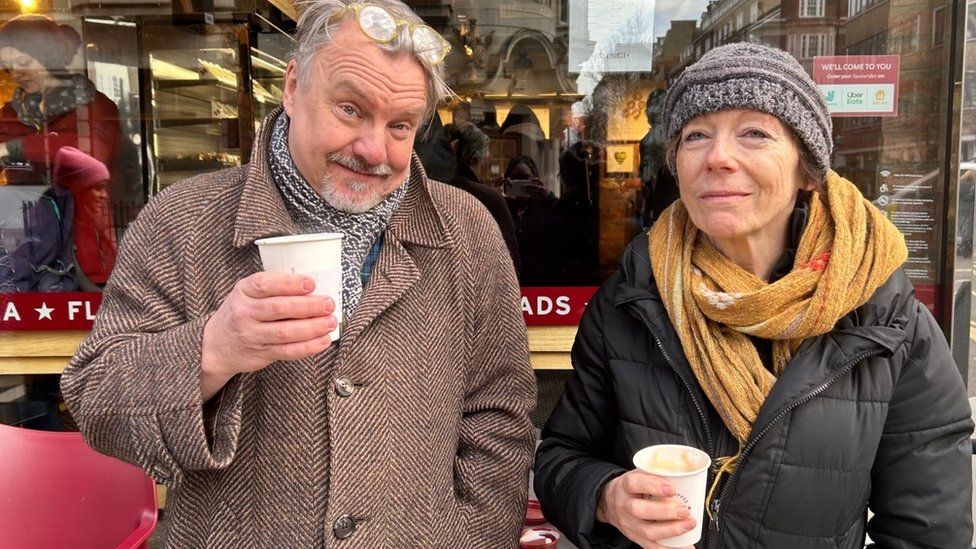
    Simon and Sarah
    Image caption, Simon and Sarah

    Simon, 64, told the BBC he normally preferred small, independent coffee shops but did sometimes go to Costa and Pret.

    “I’m not really strongly affected by caffeine, I can drink coffee in the evening and it doesn’t really affect me that much,” he said.

    Guppy Bahtoye, 37, from Wolverhampton told the BBC: “I like my coffee – in fact, I travel that extra bit just go to Costa because I like the way they make their lattes.

    “I was a bit surprised by this survey – by the extent of the variation of caffeine content. I had a latte once from McDonalds that gave me this huge caffeine kick…and then I crashed. I had to take a nap afterwards.”

    McDonald’s declined to comment.

    Caffeine is a natural stimulant that can make you more alert. However, some people are sensitive to it or need to avoid it for health reasons, such as being pregnant.

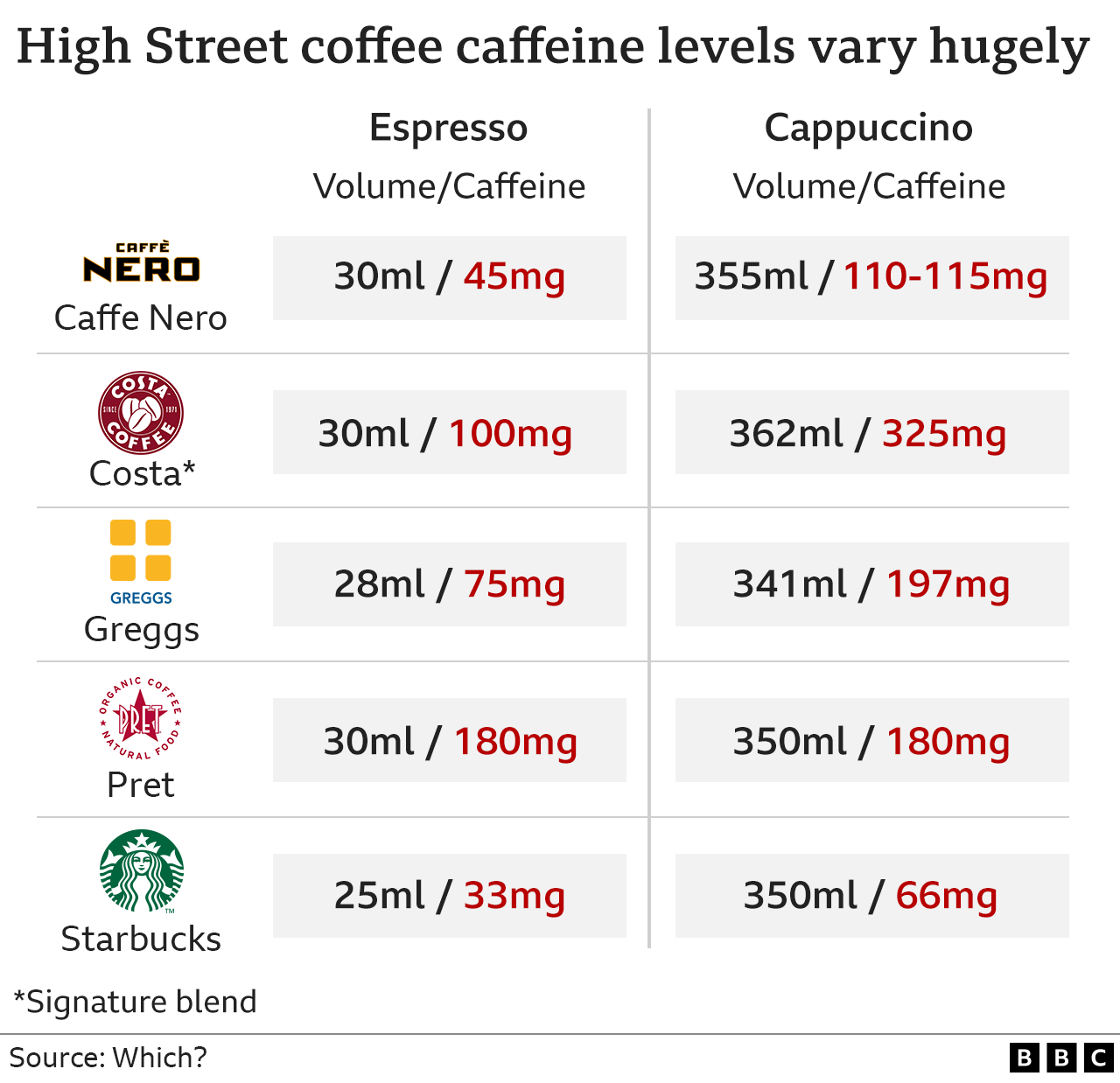
    Which? measured the caffeine levels in drinks like cappuccino and espresso at Caffè Nero, Costa, Greggs, Pret a Manger and Starbucks, and found big differences.

    : Table showing different levels of caffeine in High Street coffee according to Which? with an espresso from Caffe Nero containing 45mg, Costa 100mg, Greggs, 75mg, Pret 180mg and Starbucks 33mg, while for a cappuccino the figures are Caffe Nero 110-115mg, Costa 325mg, Greggs 197mg, Pret 180mg and Starbucks 66mg

    For example, Costa’s cappuccino was strongest, with caffeine equivalent to four cups of tea, while Starbucks’ contained the least at 66mg – less than a single cup of tea.

    One factor that can impact caffeine content of drinks is the type of coffee bean. Of the two main types used, Arabica beans contain around half the caffeine of Robusta beans, and there are also variations in taste between the two.

    Costa Coffee said the amount of caffeine in its drinks varied depending on size of a drink and the type of coffee used.

    “We would encourage customers to be aware of the caffeine content in their favourite Costa coffee to ensure it is right for their dietary requirements or lifestyle choice,” a spokeswoman said.

    Pret declined to comment, while the BBC has contacted Caffè Nero, Greggs and Starbucks for comment.

    Source: BBC

  • How climate change threatens African coffee farmers

    Some savour the taste, others drink it to stay awake. Whatever the reason, the world has a seemingly insatiable taste for coffee.

    Some 169 million bags of coffee were produced in the 2019/2020 coffee year, according to the International Coffee Organisation.

    But the future of coffee is gloomy. About 60% of wild coffee strains worldwide are in danger of extinction, according to a study by the US journal Science Advances.

    This includes Arabica, a coffee species that accounts for over half of worldwide coffee production.

    Climate change is coffee’s biggest enemy

    Coffee farmers like Mercy Njambi in Kenya have long felt this worrying trend.

    “We used to produce a lot of coffee,” she told DW pointing to the red coffee cherries dotting the plants on her farm in Muranga County in central Kenya. “What we are harvesting now is nothing compared to 10, 20 or so years ago.”

    The coffee plant used to thrive in the moderate temperatures and high altitudes of this Muranga County. Now, due to rising temperatures and erratic rainfall caused by climate change, the coffee plants are suffering.

    Neighbouring coffee farmer Maina Thuku is also worried.

    The droughts last longer, and there are more pests causing damage, the father of two said.

    “People drink coffee all over the world. We ask them to help us because the environment is changing, and soon you might not get to enjoy that cup of coffee,” he added.

    Coffee vital to East African economies

    Not only is coffee indigenous to Africa, it is also the region with the most coffee-producing countries.

    About 10 million farmers plant coffee across 25 African nations. Ethiopia, where the habit of drinking coffee first developed, along with Uganda, Tanzania and Kenya produce 80% of Africa’s total coffee exports, according to the UN Conference on Trade and Development.

    From an agricultural standpoint, East Africa is one of the world’s best regions for coffee farming. The highlands have moderate temperatures but enough rainfall to keep the soil fertile.

    Future could see coffee-growing land halved

    Climate change is threatening this delicate balance. “Without appropriate measures, experts assume that climate change will reduce coffee growing areas by about 50 per cent worldwide by 2050,” finds a new study by the World Resources Institute.

    This would have serious consequences for Africa, says Hauke Engel from the McKinsey consulting group.

    “This number actually hides a much bigger problem. While some other areas may become suitable for coffee farming due to climate change, growers cannot simply get up and move away,” he told DW.

    To keep small-scale farmers going, coffee buyers should invest in training their coffee suppliers, Engel said.

    Will coffee still be around in 30 years?

    One such buyer is Muthoni Schneidewind, the founder of the online shop Chania Coffee, which sells fair-trade coffee from Kenya.

    Schneidewind grew up in a family of coffee growers in the heart of Kenya and her father is one of her suppliers.

    “I can’t promise my customers that they’ll be able to buy coffee from me in the 30 years time,” she told DW.

    At the moment, she’s focusing on ways to help coffee growers stay in business.

    “My whole village relies on coffee, it is our heritage and we have to preserve it,” Schneidewind said, adding that her business has begun training farmers to get the most out of their plants.

    “We started supplying these coffee farmers with new coffee plants, we were able to test the soil and decide to see where coffee was better suited to grow,” she explained.

    Additionally, her company encourages farmers to grow a diverse range of crops such as bananas, macadamias and others alongside coffee to provide additional sources of income.

    Coffee farmers can learn from cocoa

    Coffee farmers could learn from cocoa farming in a bid to save itself from climate change, said senior researcher and cocoa expert Friedel Hütz-Adams at the Südwind Institute for Economy in Bonn, Germany.

    “Cocoa and coffee are relatively sensitive to changes in climate and finding strains of coffee resistant to climate change and farming them would help,” Hütz told DW.

    Without support from governments and companies, coffee farming in its present form can’t be saved, Hütz-Adams believes.

    “Investments are necessary because it takes years for coffee or cocoa plants to bear fruit, and it costs thousands of dollars,” he said.

    For small-scale coffee farmers, who often earn just enough to keep their families fed, these sums of money are impossibly large.

    “If we want to develop a sustainable coffee growing system, we have to pay prices that allow farmers to make the necessary investments,” Hütz-Adams said.

    Without this, coffee production in Kenya, Uganda and Ethiopia could cease in just a few decades.

    Farmer’s like Muthoni Schneidewind’s father face losing their way of life but also their coffee-growing heritage.

    Source: dw.com

  • ‘Akuapem area to be a coffee enclave’

    The Akuapem North Municipal Chief Executive, Mr Dennis Aboagye has called on the members of the Akuapem Coffee Growers Association(ACGA)to cooperate with Asili Coffee Purveyors Limited, a coffee processing company and the Assembly to make the place the largest coffee growing hub.

    He urged more farmers to invest in the growing of coffee as Asili Coffee Purveyors Limited and COCOBOD were prepared to buy all their produce.

    Mr Aboagye was speaking at the maiden meeting of ACGA at Akropong-Akuapem in the Eastern Region.

    Read: COCOBOD distributes coffee seedlings to farmers

    Mr Aboagye expressed appreciation to the plan of Asili Coffee Purveyors Limited to support farmers to develop 5,000 acres of coffee farms in the Konkon area and explained that, if the project would provide employment for three persons per acre, then the project would generate direct employment for about 15, 000 people in the area.

    The Municipal Chief Executive explained that it was in support of the idea that last year,the Assembly supported the project with the development of a nursery of 60,000 coffee seedlings.

    Mr Owusu Manu, Director of COCOBOD in-charge of coffee assured the farmers of their support to develop coffee in the area.

    He said COCOBOD had a responsibility to develop coffee production in the country to the level of cocoa and they would collaborate with the Akuapem North Municipal Assembly to train agriculture extension officers to support its production.

    Read: Government commits GH¢50 million to coffee production

    Mr John Nana Addo Francois, Chief Executive Officer(CEO) of Asili Coffee Purveyors Limited , promoters of coffee production in the area said, his company was determined to provide the needed support to enable them to produce high quality coffee to attract high price on the international market.

    He explained that the quality of coffee depended on the post-harvest management of the coffee seeds hence his company was to start investing in infrastructure for a good post-harvest processing.

    Mr Francois urged the members of the ACGA to vote for leaders who would be committed to ensure that coffee farmers in the area benefited from their sweat.


    Source: ghananewsagency.org