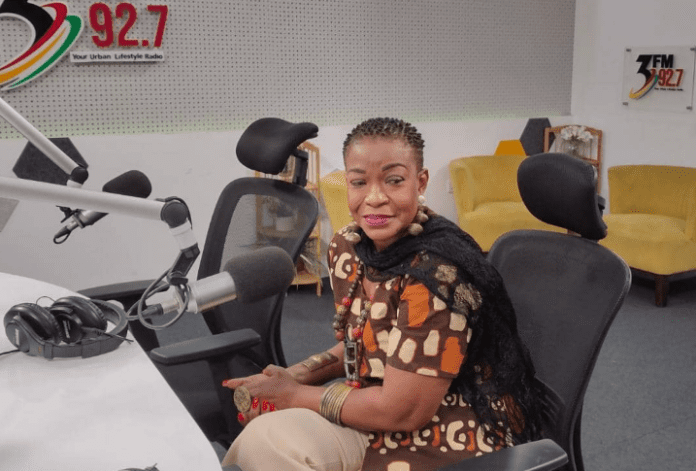
Veteran actress, Akofa Edjeani has highlighted the significant impact of film in decolonizing the African mentality.
According to her, film possesses the power to effectively challenge the persistent influences of slavery and colonialism.
“…and again, if the colonial masters used film as part of their weapons in colonizing us, I think that the honor is on us to do the same, by using film to decolonize ourselves, the mental slavery is still there… we are not independent, we are still begging for things and so many things.”
During an interview with the media on July 1, 2023, Akofa Edjeani emphasized the historical use of film by colonial powers to maintain control over their colonies.
She called upon African governments to prioritize and support their local film industries in response.
Edjeani expressed her belief that film has the power to bring about significant positive change and create numerous opportunities if it receives the necessary attention and investment.
She questioned the disparity in financial support between sports and the film industry, highlighting the potential for job creation and revenue generation in the latter.
According to Edjeani, the film industry possesses immense potential and could surpass the benefits derived from sports.
“Look at how much money we pump into sports and most times we go and, we don’t really win, …so if we can pump all that money into sports, the bonuses that they get…but the film can even do better so they should pay equal attention to film as well.
“Sports yes, but how many jobs can it create and how much money is it bringing compared to if you give the necessary push to film, so, there are so many reasons.
“The job creation and the fact that it is education as well. You know it is that medium that you can use to showcase your heritage… film is that powerful tool to create that identity, we use film to change policies, we use film to change perceptions.
“Film is a tool that can attract tourists, so when you are talking about tourism, the best tool is to showcase your tourist attraction, and your heritage in film, and that will make people flood to your country just to see those places,” she added.
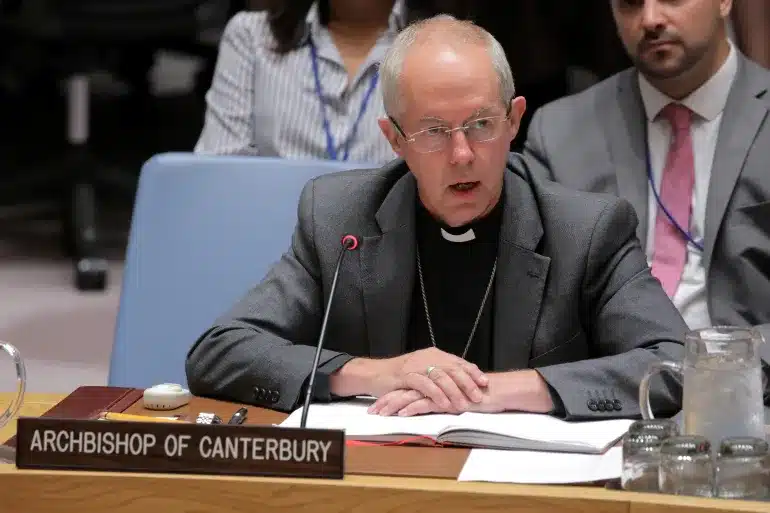
The most recent division within the Anglican Church arises following remarks made by the Archbishop of Canterbury regarding Uganda’s recently passed legislation.
On Wednesday, the chairperson of a conservative Anglican organization leveled allegations against the global leader of the Anglican Church, asserting that his critique of Uganda’s recently enacted anti-LGBTQ legislation perpetuated colonialism.
The new legislation imposes the death penalty for certain same-sex acts and a 20-year prison sentence for “promoting” homosexuality.
“It seems the history of colonisation and patronising behaviour of some provinces in the northern hemisphere towards the South, and Africa in particular, is not yet at an end,” said Bishop Laurent Mbanda, chair of the Global Anglican Future Conference (GAFCON) and head of Rwanda’s Anglican Church.
He was referring to Justin Welby, head of the Church of England and leader of the worldwide Anglican Communion’s 85 million members, who said last week that he had written to Ugandan Archbishop Stephen Kaziimba.
The letter expressed “grief and dismay” at Kaziimba’s support for the law.
Welby had said last week that he was aware of the history of British rule in Uganda and his statement was not about imposing Western values, but a reminder of the commitment “to treat every person with the care and respect they deserve as children of God”.
In response, Archbishop Kaziimba said last week that Welby “has every right to form his opinions about matters around the world that he knows little about first-hand”.
Mbanda’s statement mentioned but did not explicitly offer support for the Ugandan law.
The law has triggered widespread Western criticism including threats by United States President Joe Biden and others to cut aid to Uganda and impose other sanctions.
Issues of lesbian, gay, bisexual, transgender and queer (LGBTQ) rights have sharply divided Anglicans, with the church’s GAFCON coalition of conservative adherents among the most critical.
Anglicans created GAFCON in 2008 in response to what the group says was Western churches’ abandonment of Bible-based doctrines. GAFCON claims to represent the majority of all Anglicans worldwide.
In February, another splinter group, the Global South Fellowship of Anglican Churches, said it no longer recognised Welby’s leadership of the Anglican Communion after the Church of England announced it would allow priests to bless same-sex couples.
The Church of Uganda says 36 percent of Uganda’s population of around 45 million are Anglicans.
For many who witnessed the colonial era, events from this period may have left an indelible stamp on their memories. Many years after these incidents, some probably have not forgotten the dehumanising nature of colonialism.
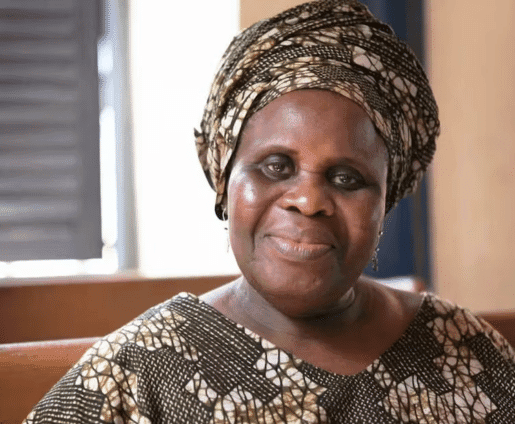
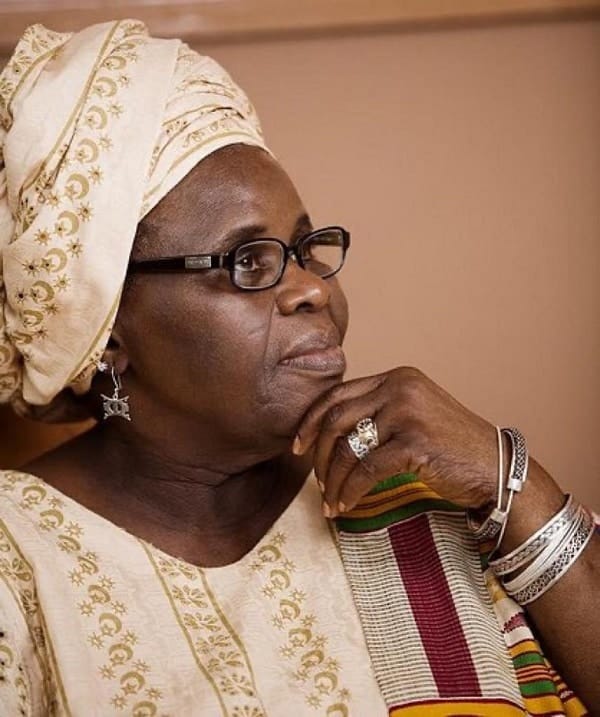
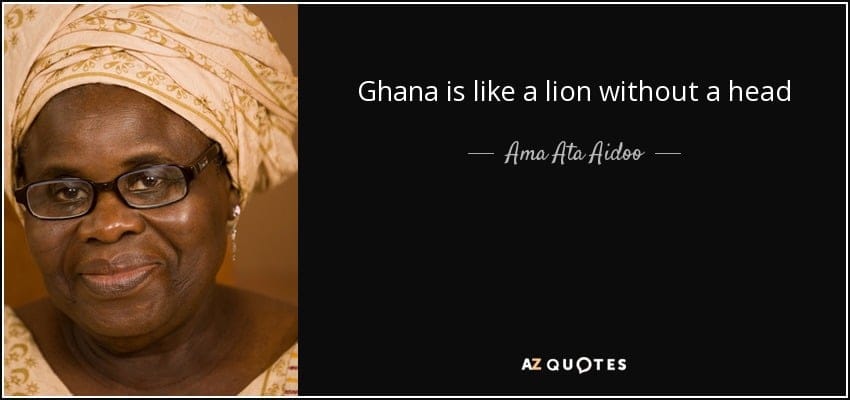
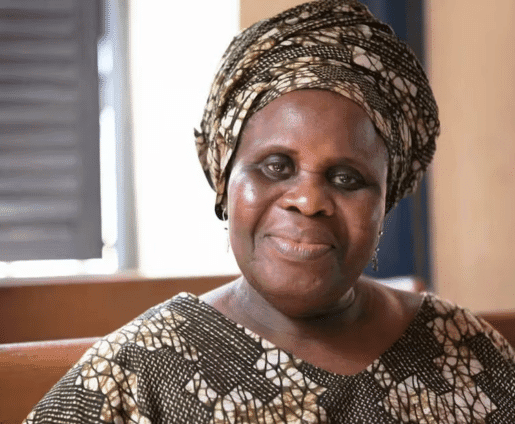
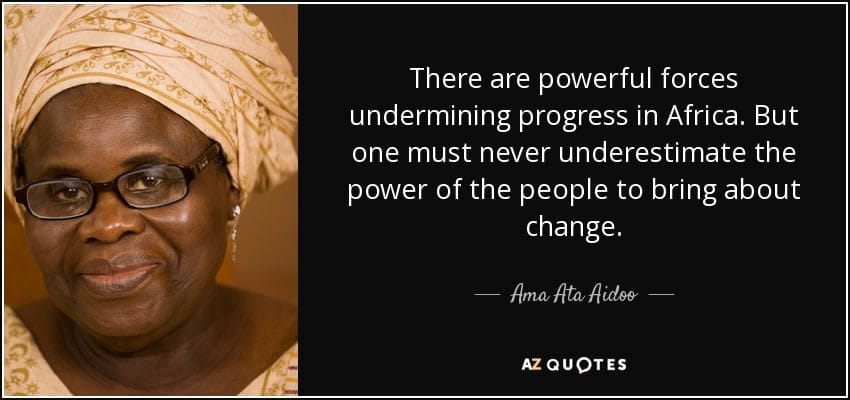
Ghanaian author, Ama Ata Aidoo was among the lot who may have never lost touch with the reality of some ghastly events that came along with colonisation and neocolonialism.
The prolific African writer died on May 31, 2023
In an interview, which has resurfaced after her demise, the prolific writer recounted a profound event which occurred during the colonial era that had significantly changed her life and formed the basis of her afrocentric legacy.
“When people like me talk about Colonisation and neocolonialism, it’s not because one is just being intellectually smart. We have personal touches with it, you know, and I cannot forget it,” she said.
Ama Ata Aidoo – Quotes
As the colonial powers exerted greater control over the Gold Coast, Ama Ata Aidoo lost her grandfather as a result of the brutal treatment given to some nationals who opposed them.
“I think that for me and members of my family, Elmina Castle has got a very special significance because they tortured my father’s father – my real grandfather – to death. [He was tortured] by the colonial government.
She probably lived with this unforgettable memory until her demise on 31 May 2023.
The chilling incident, however, altered the course of Ama Ata Aidoo’s life and also laid the foundation for her afrocentric legacy since it formed the basis on which her father enrolled her in school.
Ama Ata-Aidoo
Aggrieved by the murder of his beloved father by neocolonialists, Ama’s father realised the importance of educating the children and families of the village on the history and events of the era. As a result, he opened up the first school in their village and influenced Aidoo to attend Wesley Girls High School where she first decided she wanted to be a writer.
From an early age, Ama Ata Aidoo was exposed to the harsh realities of colonialism. She saw her fellow Ghanaians suffer under the weight of discrimination, economic exploitation, and cultural erasure. The colonial powers had painted a distorted image of Africa, portraying its rich history and vibrant cultures as primitive and inferior.
As Ama Ata Aidoo grew older, her determination to challenge these narratives grew stronger. She embarked on a journey of self-discovery, immersing herself in the works of African intellectuals and writers who sought to reclaim their heritage and celebrate their Afrocentric identities.
Inspired by the resilience of her people, Ama Ata Aidoo began to articulate her experiences through powerful storytelling. Her words carried the weight of history, as she fearlessly confronted the colonial horrors that had shaped her nation. Through her writings, she sought to reclaim the narrative of Africa, amplifying the voices of those who had been silenced for far too long.
As the years passed, Ama Ata Aidoo’s voice resonated far beyond the borders of Ghana. Her words ignited a fire in the hearts of Africans across the continent, encouraging them to reclaim their history and shape their own narratives.
Today, Ama Ata Aidoo’s legacy endures; her writings serve as a powerful reminder of the colonial horrors that once gripped Africa. Her afrocentric perspective continues to inspire generations, urging them to embrace their cultural identity, celebrate their heritage, and fight against the injustices that persist.
Africans, according to Vice President, Dr. Mahamudu Bawumia, have long been stuck in an aura of impossibility.
This, he said, was probably the result of the experience of years of slavery and colonialism.
“We don’t believe in ourselves. However, for us to realize our full potential and set ourselves apart, we need to break the shackles of impossibility mindset and embrace the mindset of possibility.
“African countries can do what the Advanced countries have done and more. It is possible,” he said on Saturday April 15 while speaking as the guest speaker at a gathering of students, academics and the business community at Harvard university during the African Development Conference at the Harvard Law School on the theme “reimagining Africa’s growth on our terms.”
He indicated that at the heart of this vision is the transformative power of technology.
“In my view, the greatest bane to the development of Africa is our inability to solve the basic problems of the absence of unique identity for our population, functioning property address systems, financial inclusion, payment systems, efficient public service delivery, etc. that underpin our economic activities.
“For many years after independence we have been trying to transform our economies without data and transparent systems. Without data and systems African countries cannot participate in the fourth Industrial Revolution,” he said.
The Natural History Museum in London and Cambridge University have stated their willingness to work with Zimbabwe to return human remains taken during the colonial era.
The new statements come after a Zimbabwean delegation met with officials from both institutions.
Zimbabweans are looking for the skulls of late-nineteenth-century anti-colonial heroes, which they believe are in the United Kingdom.
But these have not yet been found.
The authorities in Zimbabwe have long suspected that the remains of some of the leaders of an uprising against British rule in the 1890s – known as the First Chimurenga – were taken to the UK as trophies.
The most significant among them was a woman who became known as Mbuya Nehanda. She was executed in what is now the capital, Harare, and is revered as a national heroine.
In doing a search of its archive, the Natural History Museum did uncover 11 remains “that appear to be originally from Zimbabwe” – but its records do not connect them with Nehanda. These include three skulls taken in 1893, thought to be from Zimbabwe’s second city, Bulawayo, as well as remains uncovered in mineshafts and archaeological digs and later donated.
Cambridge University’s Duckworth Laboratory has not been so specific, simply saying it has “a small number of human remains from Zimbabwe”, but in a statement sent to the BBC, it said it had not identified any of these as belonging to First Chimurenga figures.
The Natural History Museum, with 25,000 human remains, and the Duckworth Laboratory, with 18,000, have some of the largest such archives in the world.
These have come from a variety of sources including archaeological excavations of ancient sites, but for many, the exact origins have been obscured by time.
During the colonial era, body parts were sometimes removed from battlefields or dug up from graves either as trophies or for research into a now-discredited scientific field.
In the 19th Century, phrenology, which investigated the idea that human characteristics could be determined by the shape of the skull, was very popular in the UK and other parts of Europe. Phrenological societies would collect skulls to help develop the theory, which for some extended to racial classification.
Some of the archives that now exist in the UK are amalgamations of what had been amassed by defunct phrenological societies as well as private collectors.
Zimbabwe’s government believes that somehow the skulls of the country’s heroes ended up in the archives of a British museum.
Chief among them were spiritual leaders, including Charwe Nyakasikana, who became known as Mbuya (Grandmother) Nehanda as she was the medium of the revered ancestral spirit Nehanda. She was arrested after being accused of murdering a British official.
Nehanda was then hanged and her body decapitated, it is believed. What happened next is not clear, but in recent years, Zimbabwean officials have made several public statements saying it ended up in the Natural History Museum.
With a death cry of “my bones will surely rise”, Nehanda became an increasingly potent symbol for those fighting against white-minority rule in what was then known as Rhodesia in the late 1960s.
Zimbabwe gained independence in 1980.
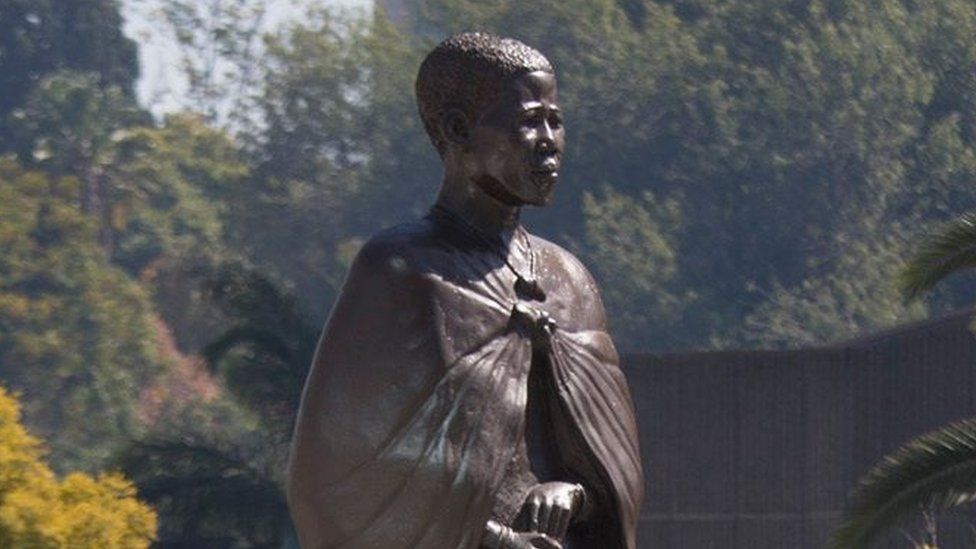
IMAGE SOURCE, SHUTTERSTOCK Image caption, The Mbuya Nehanda statue in Harare was put up in 2021
A three-meter statue of Nehanda now stands over a major road in the centre of Harare. At its unveiling in 2021, President Emmerson Mnangagwapledged to continue to call for the return of her skull and others from the Natural History Museum.
For Zimbabweans, the removal of the head “means that you have literally punished the person beyond the grave”, Godfrey Mahachi, who led the delegation to the UK, told the BBC in 2020 when the visit was being planned.
“If the head is separated, that means that the spirit of that person will forever linger and never settle.”
Despite not finding what the Zimbabwean delegation was looking for, both the Natural History Museum and Cambridge University say they are committed to working with the Zimbabwean government to repatriate what was found.
As part of its policy of repatriation, earlier this year, the Natural History Museum returned ancestral Moriori and Maori remains.
In a press statement following a recent cabinet meeting, Zimbabwe’s government said that the delegation that went to the UK was satisfied that “there are indeed human remains of Zimbabwean origin in the UK”.
“Government will spare no effort to ensure the repatriation of our ancestors,” it added.
The Zimbabwean delegation also held talks with the British Museum, Oxford University’s Pitt Rivers Museum, the University of Manchester Museum, and the UK’s National Archives. But no details are given about what was discussed.
The death of Queen Elizabeth II has prompted an outpouring of reflection and reaction online. But not all was grief – some young Africans instead are sharing images and stories of their own elders, who endured a brutal period of British colonial history during the Queen’s long reign.
“I cannot mourn,” one wrote on Twitter, posting an image of what she said was her grandmother’s “movement pass” – a colonial document which prevented free travel for Kenyans under British rule in the east African country.
Another wrote that her grandmother “used to narrate to us how they were beaten & how their husbands were taken away from them & left to look after their kids,” during colonial times. “May we never forget them. They are our heroes,” she added.
Their refusal to mourn highlights the complexity of the legacy of the Queen, who despite widespread popularity was also seen as a symbol of oppression in parts of the world where the British Empire once extended.
Kenya, which had been under British rule since 1895, was named an official colony in 1920 and remained that way until it won independence in 1963. Among the worst atrocities under British rule occurred during the Mau Mau uprising, which started in 1952 – the year Queen Elizabeth took the throne.
The colonial administration at the time carried out extreme acts of torture, including castration and sexual assault, in detainment camps where as many as 150,000 Kenyans were held. Elderly Kenyans who sued for compensation in 2011 were ultimately awarded £19.9 million by a British court, to be split between more than 5,000 claimants.
The UK Foreign Secretary at the time, William Hague, said: “The British Government recognises that Kenyans were subject to torture and other forms of ill treatment at the hands of the colonial administration. The British government sincerely regrets that these abuses took place, and that they marred Kenya’s progress towards independence.”
Africa’s memory of the Queen cannot be separated from that colonial past, professor of communication Farooq Kperogi at Kennesaw State University told CNN.
“The Queen’s legacy started in colonialism and is still wrapped in it. It used to be said that the sun did not set over the British empire. No amount of compassion or sympathy that her death has generated can wipe that away,” he told CNN.
While many African leaders have mourned her passing – including Nigeria’s President Muhammadu Buhari, who described her reign as “unique and wonderful” – other prominent voices in regional politics have not.
In South Africa, one opposition party, the Economic Freedom Fighters (EFF), was unequivocal. “We do not mourn the death of Elizabeth, because to us her death is a reminder of a very tragic period in this country and Africa’s history,” the EFF said in a statement.
“Our interaction with Britain has been one of pain, … death and dispossession, and of the dehumanisation of the African people,” it added.
Others recalled Britain’s role in the Nigerian civil war, where arms were secretly supplied to the government for use against Biafrans who wanted to form a breakaway republic. Between 1 million and 3 million people died in that war. British musician John Lennon returned his MBE, an honorary title, to the Queen in protest over Britain’s role in the war.
Still, many on the continent remember the Queen as a stabilizing force who brought about positive change during her reign.
Ayodele Modupe Obayelu from Nigeria told CNN: “Her reign saw the end of the British Empire and the African countries … became a Republic. She doesn’t really deserve any award or standing ovation for it, but it was a step in the right direction.”
And Ovation magazine publisher Dele Momodu was full of praise, recounting meeting her in 2003 in Abuja while covering her visit to Nigeria. He added that he had fled Nigeria for the UK in 1995, during the dictator Sani Abacha’s regime.
“I told her I was a refugee and now the publisher of a magazine. She told me ‘congratulations,’ and moved on to the other people on the line. I salute her. She worked to the very end and was never tired of working for her country. She did her best for her country and that is a lesson in leadership,” he told CNN.
Momodu believes that the Queen did try to “atone” for the brutality of the British Empire. “She came to Nigeria during our independence and some of the artifacts were returned under her reign. That is why the Commonwealth continues to thrive. I feel very sad that the world has lost a great human being.”
Adekunbi Rowland, also from Nigeria, said: “The Queen’s passing represents the end of an era. As a woman, I’m intrigued by her story. This young woman had an unprecedented accession to the throne, and with much grace and dignity did everything in her power to protect the country and Commonwealth she loved no matter what it took.”
The Queen once declared, “I think I have seen more of Africa than almost anybody.”
She made her first official overseas visit to South Africa in 1947, as a princess and would go on to visit more than 120 countries during her reign, many of them on the continent.
It was while visiting Kenya in 1952 that she learned that she had become Queen. Her father George passed away while she was there with Prince Phillip and she immediately ascended the throne.
As colonialism later crumbled and gave way to independence and self-rule in what had been British overseas territories, the former colonies became part of a Commonwealth group of nations with the Queen at its head and she worked tirelessly to keep the group together over the years.
She forged strong bonds with African leaders, including Nelson Mandela, whom she visited twice in South Africa, and Kwame Nkrumah, with whom she was famously pictured dancing during her visit to Ghana in 1961.
However, there is now a growing clamor for independence and accountability over Britain’s past crimes such as slavery. In November 2021, Barbados removed the Queen as its head of state, 55 years after it declared independence from Britain, and other Caribbean countries, such as Jamaica, have indicated they intend to do the same.
Prince William and his wife, Catherine, Duchess of Cambridge, visited Jamaica in March but they faced protests and calls for reparations during the trip. There were also calls for a formal apology for the royal family’s links to slavery.
“During her 70 years on the throne, your grandmother has done nothing to redress and atone for the suffering of our ancestors that took place during her reign and/or during the entire period of British trafficking of Africans, enslavement, indentureship and colonization,” wrote members of a protest group, the Advocates Network Jamaica.
In June, Prince Charles became the first UK royal to visit Rwanda, where he was representing the Queen at the Commonwealth Heads of Government Meeting.
Following his mother’s death, he now heads the Commonwealth, and will embark on a new relationship with its members, about a third of which are in Africa.
Some are asking whether he will be as effective in building the organization as his mother, and above all, how relevant it still is, given its roots in Empire.
The death and funeral of Britain’s Queen Elizabeth II have rightly provided many occasions for exploring the often ignored, brutal history of British colonialism – the story of the country’s murderous subjugation and plunder of populations across the world and the royal family’s role in it.
It was gratifying to see so many people refuse to be railroaded into mourning the passing of perhaps the most visible symbol of that history. However, I couldn’t help but notice a significant divide.
While their subjects seemed keen to highlight past British crimes, the present-day rulers of former UK colonies were less enthusiastic. In fact, almost unanimously, they joined in memorializing Elizabeth II, flying flags at half mast, extolling her virtues as a symbol of dedication to duty, and even flying to London by the dozen to attend the funeral.
It is interesting that amid all the exhumations of the past, there was so little discussion on how that history is playing out in the present. Here’s the truth: Even as we condemn the British and European exploitation of what they considered their colonial possessions, many of us continue to live our lives surrounded by reminders of their time here, decades after “independence”.
A week before the queen’s death, Kenya’s Supreme Court had begun hearing challenges to the declared result of the August 9 presidential election, which had delivered victory to William Ruto. The robes and wigs that the lawyers and judges bedecked themselves in as well as the archaic manner of address – My Lords and My Ladies – are all traditions borrowed from Mother England.
For many former colonies, political independence did not really mean decolonisation. As a political scientist and anthropologist Partha Chatterjee put it in an interview published in Nermeen Shaikh’s book, The Present as History: Critical Perspectives on Global Power, “many of the postcolonial state forms … replicated quite consciously the forms of the modern state in the West”.
Of course, there have been exceptions such as Thomas Sankara in Burkina Faso who understood decolonization as a revolutionary, experimental process centred on the intellectual liberation of ordinary people, who would be responsible for their own empowerment.
Still, scholars like Mahmood Mamdani have argued that post-independence leaders, especially in Africa, focused on deracialisation – undoing white domination through Africanisation and nationalisation – rather than decolonisation. “Everywhere, decolonisation began with deracialisation,” he once noted.
Sadly, once local elites secured for themselves the privileges, resources, and opportunities formerly reserved for white people, they never sought deeper decolonisation. Deracialisation without decolonisation in turn left so-called independent national governments vulnerable to influence and pressure from foreign interests because their umbilical cords to colonial-era systems and practices had never been snapped.
In fact, many liberators did end up like the pigs in George Orwell’s Animal Farm – retaining or recreating the very same colonial structures they had once railed against. In Kenya, for example, as related by former Attorney General Githu Muigai in a 1992 paper, the attempt to impose a liberal constitution on the authoritarian colonial administrative structure at independence failed, with the former adapting to the latter rather than the other way around.
More recently, Ruto and his former boss and predecessor as president, Uhuru Kenyatta, have since 2013 been tasked with imposing a new constitution, promulgated in 2010, on the existing authoritarian colonial state, but to a large extent have backtracked on that.
In a throwback to what his father, the first post-independence president, Jomo Kenyatta, did to the new constitution at the time of independence, Uhuru in his second and final term even attempted to introduce amendments meant to weaken constraints on corruption. These amendments, eventually blocked by the country’s top court, focused on enabling power-sharing governing arrangements by multiplying the number of available state positions – president, deputy presidents, prime minister, deputy prime ministers, and the official leader of the opposition – that could be distributed among partners. Of course, this would have revived the associated opportunities to loot the exchequer that had existed prior to 2010.
The evidence is therefore clear: Even this latest generation of rulers, which has inherited colonial states relatively intact, sees former European masters as its political kin.
The passing of Elizabeth II provides an opportunity to do much more than debate the past. It should also provoke a long overdue self-examination that acknowledges our own role in preserving the colonial heritage we inherited from Europe, and rebooting the project of decolonisation that was aborted at independence.
The idea behind such a conversation is not to recreate the pre-colonial past. As Chatterjee noted, it is a dialogue “about whether a different modernity is possible”. It is a debate that would benefit even Western nations that seem to have trouble defining themselves outside frameworks created by imperialism that had placed them at the top of the pile.
Of course, we wouldn’t be starting from scratch. Many thinkers and writers working outside Western frameworks, from Frantz Fanon to Ngugi wa Thiong’o, have laid the groundwork for the monumental project of cleaning up the political, social, economic, and cultural mess left behind bythe likes of Elizabeth II.
However, to do this, we must not only remember the past, but must also confront its presence in the present. And that means dealing with our own post-independence failure to birth “a different modernity”.
DISCLAIMER: Independentghana.com will not be liable for any inaccuracies contained in this article. The views expressed in the article are solely those of the author’s, and do not reflect those of The Independent Ghana