“We were getting ready to go to sleep,” he said, when the glass started shaking.
Mr Smith said that he and his girlfriend, along with some other people, were standing near the hotel entrance when a second earthquake happened.
“He said we really looked hard for people who could speak English, but we could only find a few who spoke English poorly. ”
We waited to see if the building would stay strong, and then hurried to get our medicine and bedding because we thought we might have to sleep in the parking lot for the night.
The center of the earthquake was in a faraway mountain area southwest of Marrakesh. People said that entire villages in that area were completely destroyed.
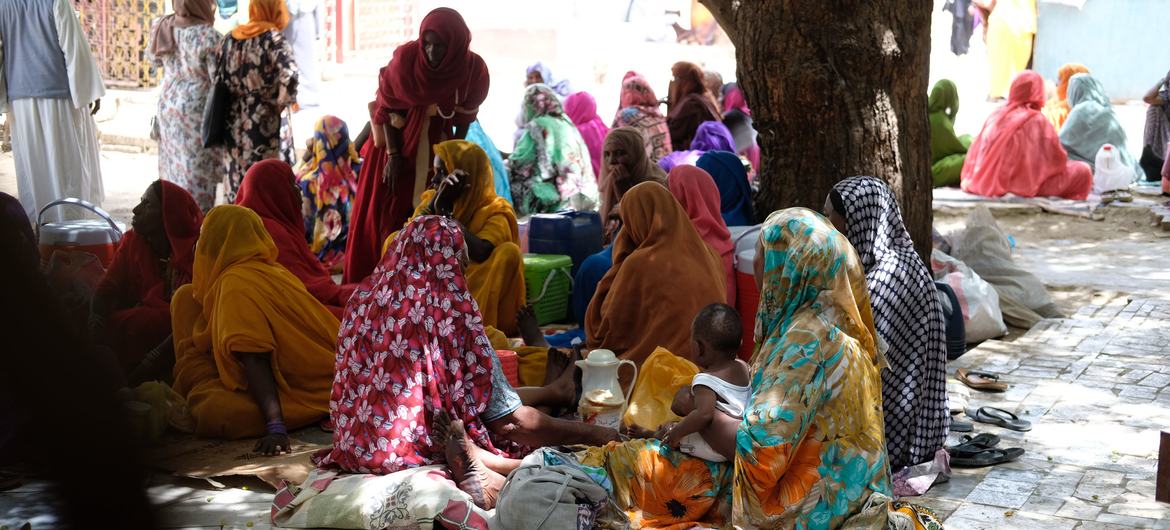
The UN Food and Agriculture Organization (FAO) has issued a serious warning about the escalating food crisis in Sudan, which is being exacerbated by ongoing conflict and economic decline.
According to FAO, a staggering 20.3 million individuals in Sudan are facing severe hunger, a figure that has nearly doubled since the previous year.
Approximately 42 percent of the population is enduring high levels of acute food insecurity, as disruptions in the market and soaring food prices hinder access to essential goods and services.
The latest Integrated Food Security Phases analysis, which employs common standards for classifying food severity, reveals a critical situation, with 14 million people facing a “crisis” level of food insecurity.
Furthermore, more than six million people, approximately 13 percent of the population, are now just one step away from famine.
The regions most severely impacted by the food crisis include Khartoum, South and West Kordofan, as well as Central, East, South, and West Darfur.
Abdulhakim Elwaer, FAO’s Assistant Director-General and Regional Representative for the Near East and North Africa, highlighted the devastating consequences of the conflict on the food and nutrition security and overall well-being of millions of people.
Families are enduring unimaginable suffering due to the crisis.
The displacement of over four million people as a result of ongoing fighting has further damaged critical infrastructure, aggravating food insecurity and malnutrition.
FAO expressed concern about the insufficient resources hindering humanitarian efforts to address the situation.
They urgently appealed for an additional $65 million in funding to assist over six million people and support farmers in preparing for the upcoming planting season.
The UN food agency is particularly worried about projections for the period from October 2023 to February 2024, with around 15 million people likely to face a food crisis during that time.
To address this pressing situation, FAO aims to support more than one million farmers in producing enough food for the Sudanese people this season.
The conflict between Sudan’s armed forces and the paramilitary Rapid Support Forces (RSF) since mid-April has resulted in displacement, death, injury, and an unfolding humanitarian crisis.
“It is vital that FAO is stepping in to support more than one million farmers this season to produce enough food for Sudanese people,” said Mr. Elwaer.
As of now, over four million people have been displaced due to the conflict, with the majority displaced within Sudan itself.
The UN Office for the Coordination of Humanitarian Affairs (OCHA) has warned that hunger and displacement due to the war are spiraling out of control, emphasizing the urgency of the situation.
Communications to coastal areas have been cut off by one of the worst cyclones to ever hit Myanmar, and relief organisations have issued a warning that the damage may be “extensive” based on preliminary findings.
On Sunday, Cyclone Mocha ploughed through homes and downed power lines as it struck the northwest coast of Myanmar, off the Bay of Bengal. Wind gusts reached over 200 kph (195 mph).
Strong wind gusts were seen on video bringing down trees in the war-torn Rakhine state.
People can be seen huddling in temporary shelters, though the full impact of the storm is not yet known due to difficulties contacting people in the region.
“The ongoing wild weather in Rakhine and telecommunications interruptions mean it has not yet been possible to assess the full magnitude of the disaster,” said the United Nations Office for the Coordination of Humanitarian Affairs (OCHA).
“But early reports suggest the damage is extensive and needs among already vulnerable communities, particularly displaced people, will be high.
Before the storm, aid agencies in Myanmar, as well as neighboring Bangladesh, launched a massive emergency plan in a bid to minimize the risk of injury and destruction.
They had feared that Mocha would hit Cox’s Bazar in Bangladesh, where about 1 million members of the stateless Rohingya community live.
But the tropical cyclone made landfall further south, just north of Sittwe, Myanmar, around 1:30 p.m. Sunday local time (3:00 a.m. ET), according to the Joint Typhoon Warning Center.
Hasina Rahman, Country Director for Bangladesh, International Rescue Committee, told CNN Monday it had been a “close call” for those living in the refugee camps in Cox’s Bazar, adding there are no reports of casualties.
However, torrential rain battered Rakhine state in western Myanmar, bringing threats of flooding and landslides.
The last storm to make landfall with a similar strength was Tropical Cyclone Giri back in October 2010. It made landfall as a high-end Category 4 equivalent storm with maximum winds of 250 kph (155 mph).
Giri caused over 150 fatalities and roughly 70% of the city of Kyaukphyu was destroyed. According to the United Nations, roughly 15,000 homes were destroyed in Rakhine state during the storm.