Tag: COPEC

  • Petrol to sell at GHS12.79p, diesel at GHS14.95p from today

    Petrol to sell at GHS12.79p, diesel at GHS14.95p from today

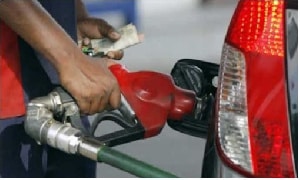
    Effective today, Wednesday, July 1, petroleum products at the pumps will see a decrease in prices, the Chamber of Petroleum Consumers (COPEC) has announced.

    Consumers are expected to pay GH¢12.79 per litre for petrol, representing 6.21% of the current mean price of Ghc14.24/L, diesel will be sold at Ghc14.10/L representing 13.28% of the current mean price of Ghc16.26/L and LPG to sell between GH¢9.54 and GH¢10.55 per kilogram during the pricing window.

    The downward revision by the National Petroleum Authority has resulted in reduced fuel prices for consumers.

    Petrol price floor in June was pegged at GH¢15.20 per litre, representing an increase of GH¢0.60 from the GH¢14.60 per litre recorded in the second pricing window of May.

    The price floor of LPG is expected to rise to GH¢13.48 per kilogram from GH¢13.16 per kilogram in the previous window, marking an increase of GH¢0.32, with diesel selling at GH¢15.49 per litre.

    According to the NPA, the international market and other prevailing market conditions were taken into consideration in the pricing adjustment.

    Currently, two Oil Marketing Companies (OMCs), GOIL and Star Oil, have lowered their pump prices. The two companies are now selling petrol at GH¢13.27 per litre, while diesel is going for GH¢16.10 per litre.

    Diesel prices, on the other hand, have seen a steep dip, falling by 44 pesewas to GH¢15.66 per litre from GH¢16.10 previously.Star Oil has also revised its pump prices. Petrol is now selling at GH¢13.25 per litre, reflecting a 2 pesewas reduction from GH¢13.27 in the previous pricing window.

    Diesel has declined by 55 pesewas to GH¢15.55 per litre, down from GH¢16.10. Its RON 95 product remains unchanged at GH¢14.67 per litre.

    The adjustments broadly align with projections of modest price moderation for the May pricing window. The reductions in petrol and diesel prices are attributed to lower global benchmarks and the continued impact of a joint government–industry intervention aimed at cushioning consumers.

    President John Dramani Mahama said the decision is aimed at cushioning Ghanaians from rising fuel prices, which have been driven by global supply disruptions linked to tensions involving Iran, Israel, and the United States.

    The ongoing tension has led to the closure of the Strait of Hormuz, a critical global oil shipping route. The ongoing tensions between Iran, the U.S., and Israel have been linked to the death of Iran’s Supreme Leader, Ayatollah Ali Khamenei.

    Ayatollah Ali Khamenei was reportedly killed in strikes by the United States (U.S.) and Israel. This development is significantly impacting travelers from Ghana to Asia, Europe, and North America, as Dubai is a major transit hub connecting travelers through the United Arab Emirates.

    Before petrol and diesel were selling at GH¢13.30 and GH¢17.10 per litre, respectively, at the pumps. In a social media post on Tuesday, March 31, GOIL announced that it had increased petrol to GH¢13.30 per litre from GH¢12.24 and diesel from GH¢15.69 to GH¢17.10 per litre.

    Star Oil also increased from GH¢12.19 to GH¢13.49 per litre. It has also increased the price of Diesel from GH¢14.25 to GH¢17.97. The adjustment follows a new price floor announced by the National Petroleum Authority (NPA) on March 30, directing Oil Marketing Companies (OMCs) to implement the changes from Wednesday, April 1.

    Meanwhile, the Chamber of Petroleum Consumers (COPEC) has called for an additional one-month extension of fuel tax relief to shield consumers from rising fuel prices. The call comes ahead of the second pricing window of May.

    Speaking on the matter, the Executive Secretary of the Chamber of Petroleum Consumers, Duncan Amoah, noted that the call has become necessary, given that the conditions that necessitated the government’s intervention are still in force.

    He noted, “The underlying factors for which the intervention became necessary are still rife. International benchmarks are high, premiums are still high, and local pump prices are high. Given the circumstances, it would only be reasonable for us to ask the government to extend the intervention by another month. The fear of fuel prices going up is that when it does, it drags a lot of things with it. Transportation, food costs, and non-food inflationary pressures would also go up”.

    He added, “For us, it might cost the government something, but I think the government will still be better off extending the intervention than at this point saying we are removing the GH¢2 we gave on diesel and then the 36 pesewas on petrol. We think that given the circumstances, the government should not only consider an extension but go ahead to extend for the ordinary Ghanaian consumer, because the factors that necessitated this intervention are still very rife as of today”.

  • Govt extends fuel intervention, absorbs GH¢1.07 per litre of diesel amid Middle East tensions

    Govt extends fuel intervention, absorbs GH¢1.07 per litre of diesel amid Middle East tensions

    The Government of Ghana has announced an extension of its intervention at the fuel pumps. On April 16, the government introduced a temporary relief measure, absorbing GH¢2.00 per litre on diesel and GH¢0.36 per litre on petrol, which was scheduled to end on May 15.

    The intervention became necessary after prices surged due to geopolitical tensions in the Middle East and disruptions at the Strait of Hormuz, which raised international crude oil benchmarks and premiums.

    After the intervention expired on Thursday, the Chamber of Petroleum Consumers (COPEC) petitioned the government to extend the measure, arguing that the conditions which prompted it persist.

    Consequently, the government, in a statement issued by the Ministry of Energy and Green Transition and dated May 15 under the signature of the Ministry’s Spokesperson and Head of Communication, Richmond Rockson Esq., said that following a Cabinet meeting chaired by President John Dramani Mahama, which reviewed developments on the international oil market and the impact of global price volatility on domestic fuel costs, it had heeded COPEC’s call by extending the intervention, although with some adjustments.

    Under the April intervention, the government absorbed GH¢2.00 per litre on diesel and GH¢0.36 per litre on petrol.

    However, under the latest review announced in a formal notice yesterday, the government will now absorb GH¢1.07 per litre on diesel effective May 16, stating that the move is aimed at cushioning consumers against rising prices on the international market.

    “Following the latest review, the Government has decided to intervene in the price of diesel by absorbing GH¢1.07 per litre effective May 16, 2026. This decision is necessary to ensure the sustainable distribution of petroleum products across the country while continuing to provide relief to consumers,” parts of the statement read.

    The statement added that the intervention would remain in place for two pricing windows and would be subject to review after June 15 by Cabinet and the National Petroleum Authority (NPA), depending on global oil market trends and fiscal space.

    “This intervention is expected to last for a period of two pricing windows, subject to review,” the statement added.

    About the Middle East tensions and their effect on the global market

    The ongoing tensions reportedly led to the closure of the Strait of Hormuz, a critical global oil shipping route. The tensions between Iran, the United States and Israel have also been linked to reports about the death of Iran’s Supreme Leader, Ali Khamenei.

    Ayatollah Ali Khamenei was reportedly killed in strikes allegedly carried out by the United States and Israel. The development is said to be significantly affecting travellers from Ghana to Asia, Europe and North America, as Dubai serves as a major transit hub through the United Arab Emirates.

    Before the intervention, petrol and diesel were selling at GH¢13.30 and GH¢17.10 per litre respectively at the pumps. In a social media post on Tuesday, March 31, GOIL announced that it had increased petrol prices to GH¢13.30 per litre from GH¢12.24 and diesel prices to GH¢17.10 from GH¢15.69.

    Star Oil also increased petrol prices from GH¢12.19 to GH¢13.49 per litre, while diesel prices rose from GH¢14.25 to GH¢17.97. The adjustment followed a new price floor announced by the National Petroleum Authority on March 30, directing Oil Marketing Companies (OMCs) to implement the changes from Wednesday, April 1.

    On Monday, March 16, petroleum product prices at the pumps also increased following an adjustment by the NPA for the second pricing window of the month.

    As a result, petrol, previously priced at GH¢10.46 per litre, rose to GH¢11.57. The price floor for diesel increased from GH¢11.42 to GH¢14.35 per litre, while LPG rose from GH¢9.38 to GH¢10.67 per kilogramme.

    Meanwhile, Ghana’s petroleum sector recorded a decline in the second half of 2025.

    Data from the Bank of Ghana (BoG), contained in the Central Bank’s Semi-Annual Report on the Petroleum Holding Fund (PHF) released on Tuesday, February 3, showed total receipts of US$399.65 million, significantly lower than returns recorded during the same period in 2024.

    The report explained that the amount represented combined inflows from crude oil liftings and petroleum-related taxes. However, it fell below the US$369.25 million realised from crude oil liftings alone in the second half of 2024, pointing to weaker overall sector performance.

    “The total amount received into the PHF account for H2 2025 was US$399.65 million (crude oil lifting total of US$198.25 million and other total income of US$201.40 million),” the report stated.

    The report further indicated that revenue between July 1 and December 31, 2025, came from two main sources. Crude oil liftings from the Jubilee and Sankofa Gye Nyame (SGN) fields generated US$198.25 million following the lifting of two Jubilee cargoes and one SGN cargo by the Ghana Group, represented by the Ghana National Petroleum Corporation (GNPC).

    Ghana also earned US$201.40 million from petroleum-related taxes and interest during the period. The bulk of this amount, US$198.09 million, came from corporate income taxes, while US$3.31 million was earned as interest on the Petroleum Holding Fund.

    The BoG further explained that revenue from the 25th cargo from the TEN field, valued at US$60.79 million, was not included in the report because the funds had not been received by the end of 2025, although they were expected in November.

    Although Ghana received less new revenue from oil during the period, it still spent and distributed a total of US$493.40 million. The shortfall was cushioned by savings accumulated by the government from previous years.

    According to the report, the government used about 57.8% of the total US$493.40 million, amounting to US$285.06 million, to fund projects and programmes through the national budget.

    About 23.5%, representing US$115.99 million, was saved to stabilise the economy during difficult periods, while US$49.71 million was reserved for future generations. Another US$42.63 million was allocated to the Ghana National Petroleum Corporation to support its operational and investment costs.

  • COPEC calls for additional one-month extension of fuel tax relief

    COPEC calls for additional one-month extension of fuel tax relief

    The Chamber of Petroleum Consumers (COPEC) has called for an additional one-month extension of fuel tax relief to shield consumers from rising fuel prices. The call comes ahead of the second pricing window of May.

    Speaking on the matter, the Executive Secretary of the Chamber of Petroleum Consumers, Duncan Amoah, noted that the call has become necessary, given that the conditions that necessitated the government’s intervention are still in force.

    He noted, “The underlying factors for which the intervention became necessary are still rife. International benchmarks are high, premiums are still high, and local pump prices are high. Given the circumstances, it would only be reasonable for us to ask the government to extend the intervention by another month. The fear of fuel prices going up is that when it does, it drags a lot of things with it. Transportation, food costs, and non-food inflationary pressures would also go up”.


    He added, “For us, it might cost the government something, but I think the government will still be better off extending the intervention than at this point saying we are removing the GH¢2 we gave on diesel and then the 36 pesewas on petrol. We think that given the circumstances, the government should not only consider an extension but go ahead to extend for the ordinary Ghanaian consumer, because the factors that necessitated this intervention are still very rife as of today”.


    During an emergency Cabinet meeting held on Thursday, April 9, President Mahama instructed the Minister for Finance, Dr Cassiel Ato Forson, and the Minister for Energy to immediately begin the process of reviewing and removing the affected taxes.


    In view of that, the government began absorbing GH¢2.00 per litre of diesel and GH¢0.36 per litre of petrol under the pricing window that commenced on Thursday, April 16.


    Currently, two Oil Marketing Companies (OMCs), GOIL and Star Oil, have lowered their pump prices. The two companies are now selling petrol at GH¢13.27 per litre, while diesel is going for GH¢16.10 per litre.


    President John Dramani Mahama said the decision is aimed at cushioning Ghanaians from rising fuel prices, which have been driven by global supply disruptions linked to tensions involving Iran, Israel, and the United States.


    The ongoing tension has led to the closure of the Strait of Hormuz, a critical global oil shipping route. The ongoing tensions between Iran, the U.S., and Israel have been linked to the death of Iran’s Supreme Leader, Ayatollah Ali Khamenei.


    Ayatollah Ali Khamenei was reportedly killed in strikes by the United States (U.S.) and Israel. This development is significantly impacting travelers from Ghana to Asia, Europe, and North America, as Dubai is a major transit hub connecting travelers through the United Arab Emirates.


    Before petrol and diesel were selling at GH¢13.30 and GH¢17.10 per litre, respectively, at the pumps. In a social media post on Tuesday, March 31, GOIL announced that it had increased petrol to GH¢13.30 per litre from GH¢12.24 and diesel from GH¢15.69 to GH¢17.10 per litre.

    Star Oil also increased from GH¢12.19 to GH¢13.49 per litre. It has also increased the price of Diesel from GH¢14.25 to GH¢17.97. The adjustment follows a new price floor announced by the National Petroleum Authority (NPA) on March 30, directing Oil Marketing Companies (OMCs) to implement the changes from Wednesday, April 1.


    On Monday, March 16, petroleum products at the pumps saw an increase following an adjustment by the NPA for the second pricing window for the month.


    As a result, petrol priced at GHȼ10.46 per litre will now be sold at GHȼ11.57. The price floor for diesel has jumped from GH¢11.42 to GH¢14.35 per litre, and LPG has risen from GH¢9.38 to GH¢10.67 per kilogramme. Meanwhile, Ghana’s petroleum sector recorded a decline in the second half of 2025.


    The data from the Bank of Ghana (BoG), contained in the Central Bank’s Semi-Annual Report on the Petroleum Holding Fund (PHF) and shared on Tuesday, February 3, shows total receipts of US$399.65 million, significantly lower than returns recorded during the same period in 2024.


    The report explains that the amount represents combined inflows from crude oil liftings and petroleum-related taxes. However, it fell below the US$369.25 million realised from crude oil liftings alone in the second half of 2024, pointing to weaker overall performance in the sector.


    “The total amount received into the PHF account for H2 2025 was US$399.65 million (crude oil lifting total of US$198.25 million and other total income of US$201.40 million),” the report indicated.

    The report further indicates that revenue between July 1 and December 31, 2025, was drawn from two main sources. Crude oil liftings from the Jubilee and Sankofa Gye Nyame (SGN) fields generated US$198.25 million, following the lifting of two Jubilee cargoes and one SGN cargo by the Ghana Group, represented by the Ghana National Petroleum Corporation (GNPC).


    Ghana earned US$201.40 million from petroleum-related taxes and interest during the period. The bulk of this amount, US$198.09 million, came from corporate income taxes, while US$3.31 million was earned as interest on the Petroleum Holding Fund.


    The BoG also explained that revenue from the 25th cargo from the TEN field, valued at US$60.79 million, was not included in the report because the funds had not been received by the end of 2025, even though they were expected in November.


    Even though Ghana received less new money from oil during the period, it still spent and distributed a total of US$493.40 million. The spending was cushioned by savings accumulated by the government from previous years to cover the shortfall.


    According to the report, the government used about 57.8% of the total US$493.40 million, amounting to US$285.06 million, to fund its projects and programmes through the national budget.

    About 23.5%, representing US$115.99 million, was saved to stabilise the economy during difficult times, while US$49.71 million was saved for future generations. Another US$42.63 million was given to the Ghana National Petroleum Corporation to help cover its operational and investment costs.


    The report further showed positive investment performance for Ghana’s petroleum savings. The Ghana Petroleum Funds recorded a net realised income of US$28.11 million, with returns of 2.28 per cent for the Heritage Fund and 2.51 per cent for the Stabilisation Fund.


    As of December 31, 2025, total petroleum reserves stood at US$1.55 billion, with the Heritage Fund accounting for US$1.38 billion. Looking ahead, the Bank of Ghana adopted a cautious outlook for 2026, noting that Brent crude prices declined from US$66.61 to US$60.81 per barrel by the end of 2025.


    While the International Monetary Fund projects global growth of 3.3 per cent, the report warned that Ghana’s petroleum revenues remain exposed to geopolitical developments in the Middle East and OPEC+ production decisions, with oil prices expected to average about US$62.13 per barrel in 2026.


    Meanwhile, in a related development, motorists have started the New Year on a good note, with less pressure on their pockets, as several Oil Marketing Companies (OMCs) have effected a reduction in fuel prices at their respective pumps across the country in the January pricing window.


    The price cuts, which took effect in the early hours of the New Year, signify a continued downward trend in petroleum costs, offering much-needed breathing room for both commercial and private transport users.

    Among the first OMCs to effect the reduction was market leader Star Oil. It set the pace and a benchmark for other OMCs as it adjusted its digital displays, reflecting a marginal dip from previous prices. Petrol is now selling at GH¢10.86 per litre, diesel is priced at GH¢11.96 per litre, and RON 95 is selling at GH¢13.56 per litre.


    According to Star Oil management, the reduction in oil prices is a result of a “favourable domestic and external cost environment,” citing the cedi’s appreciation and a dip in international refined product prices.


    It said the current reductions may only be the tip of the iceberg for January. The Chamber of Oil Marketing Companies (COMAC) projected a robust outlook for the month, suggesting that competitive pressures will force more OMCs to follow suit in the coming days.


    In its January pricing outlook, COMAC provided a breakdown of the expected percentage declines. It was projected that petrol would fall by up to 4.80 per cent, while diesel was also estimated to drop by approximately 3.77 per cent. LPG, on the other hand, was expected to see a reduction of roughly 2.19 per cent.


    Industry analysts believe that if the cedi maintains its current trajectory and international crude prices remain below US$80 per barrel, Ghanaians could see even more substantial relief by the second pricing window in mid-January.


    While fuel prices are dropping, Ghanaians have had to brace themselves for an increase in utility tariffs, which took effect on January 1, 2026. Following the announcement, there was widespread disapproval, particularly from stakeholders and the general public.


    On December 2, 2025, the Public Utilities Regulatory Commission (PURC) announced an imminent increase in tariffs, with the new rates set to take effect from January 1, 2026.

    The Commission said the increases—9.86 per cent for electricity and 15.92 per cent for water—had become necessary to meet utility investment needs, respond to macroeconomic pressures, and ensure the long-term stability of the sector.
  • Fuel prices to hit GHS18 per litre in April – COPEC

    Fuel prices to hit GHS18 per litre in April – COPEC

    The Chamber of Petroleum Consumers (COPEC) has projected that fuel prices will rise in the first pricing window of April.

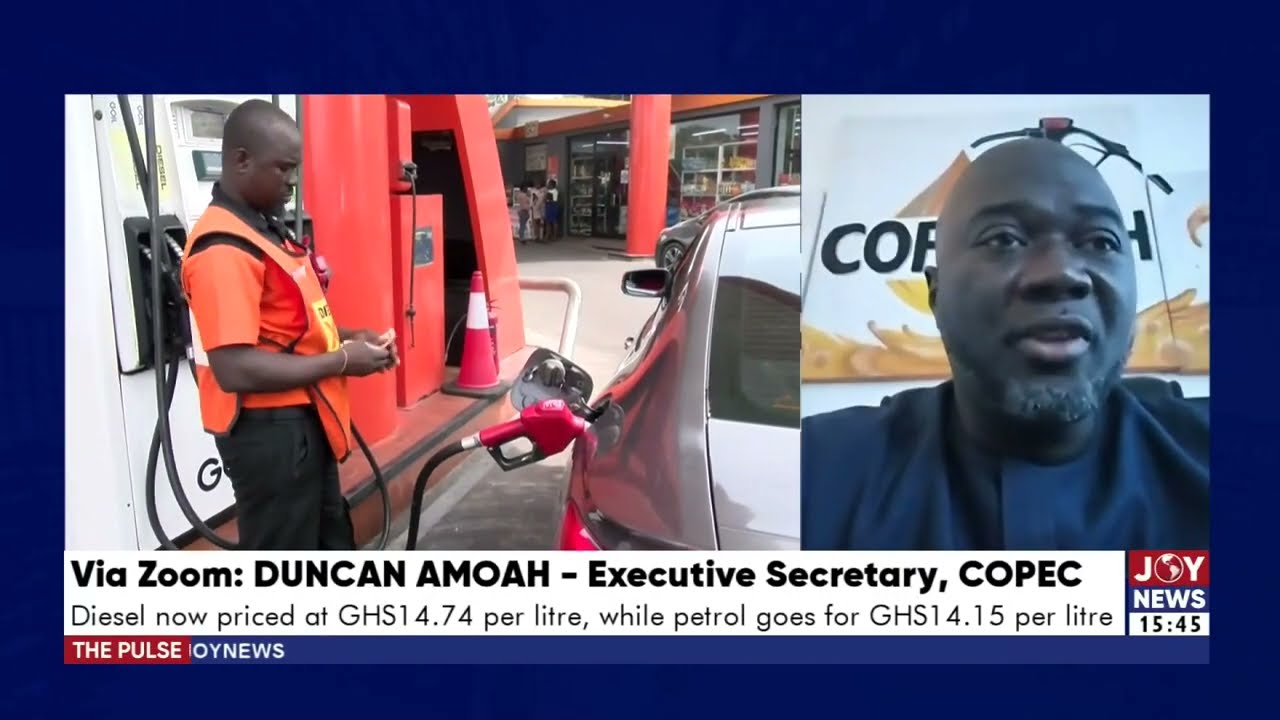
    According to the Executive Secretary of COPEC, Duncan Amoah,  COPEC, fuel prices could rise to between GH¢17 and GH¢18 per litre if BOST Energies, a Ghanaian state agency under the Ministry of Energy and Petroleum, fails to store adequate fuel reserves.

    “April will be very okay, because there is enough in-country. Prices may differ, but you may not be so lucky a month after, because clearly, the global supply situation is grinding slowly. What you have now that has even sustained us is because the G7 and America itself have decided to put out reserve stock.They will not have that stock forever. They will not be able to put out that stock, I mean, in perpetuity. So it calls for us as a country to start looking for strategic stock immediately.

    “I have said, and I would repeat, it will be better to sustain the Ghanaian petroleum prices at the GHȼ15, GHȼ14, GHȼ13 region than to wait for it to get to GHȼ17, GHȼ18, which is probably what you are going to see in the next window, or wait for it to get even worse before you plan. So whatever can be done, if the finance minister can find some contingency funds and help BOST to get some product to store, it is high time we do so now.

    “We are around GHȼ15, GHȼ16 almost. It is potentially likely you could be doing about GHȼ17, GHȼ18 by the first window in April. That should not be the only worry. The supply disruptions that is happening within the Gulf could also bite so badly if it persists to such a time that cargoes are no longer coming in as planned,” he added.

    His comments come amid ongoing tensions in the Middle East. The tensions have been linked to the death of Iran’s Supreme Leader, Ayatollah Ali Khamenei.

    Ayatollah Ali Khamenei was reportedly killed in strikes by the United States (U.S.) and Israel. This development is significantly impacting travelers from Ghana to Asia, Europe, and North America, as Dubai is a major transit hub connecting travelers through the United Arab Emirates.

    Ghana, being one of the dependents of the global oil supply, stakeholders began to express concerns about a possible shortage of fuel across the country. However, the Corporate Affairs Officer of the Tema Oil Refinery (TOR), Godwin Mahama Ayaba, during an appearance on March 11, indicated that Ghana is unlikely to experience fuel shortages despite rising tensions in the Middle East, citing the country’s diversified sources of petroleum imports and growing local refining capacity.

    According to him, the NPA recently issued a statement indicating that the situation in the Middle East will not lead to shortages of petroleum products in the country.

    “The National Petroleum Authority, which is the regulator, some three to four hours ago issued an official statement assuring all of us that as for shortage, there is no way the Iran–Israel conflict is going to affect us,” he said.

    Mr Ayaba explained that Ghana’s fuel import structure significantly reduces the risk of supply disruption because the country imports most of its finished petroleum products from Europe.

    “Ghana largely imports from two different areas: Europe and the Arabian region. Where we import most is Europe,” he noted.

    “We import about 80 per cent of our finished petroleum products from Europe and about 20 per cent from the Arabian region, where this conflict may have an impact.”

    While acknowledging that the Middle East tensions could affect that 20 per cent supply, he said Ghana’s domestic refining capacity is expected to fill the gap.

    “So we are likely to lose that 20 per cent, but with TOR coming on stream, we will be able to block that gap,” he said.

    Mr Ayaba revealed that the refinery is currently producing about 28,000 barrels and expects output to increase significantly after ongoing upgrades.

    “Currently, we are producing about 28,000 barrels. After the tie-in, we will move to about 45,000 and further move to 60,000,” he explained.

    He added that increased output from other refineries in the country will also contribute to stabilising supply.

    “Sentuo is doing around 36,000 to 40,000 barrels a day, Akwaaba is doing somewhere less than 10,000, and Platon is around a little below 3,000,” he stated.

    “Together, all these companies will be able to block that 20 per cent that would have come from the Arabian region.”

    Mr Ayaba emphasised that Ghana will still maintain the bulk of its imports from Europe, further ensuring supply stability.

    “We will still have the 80 per cent from Europe coming in,” he said.

    He therefore urged the public not to panic, reiterating the assurances provided by the National Petroleum Authority.

    “I will add my voice to the official communiqué from the NPA that we should rest assured that we are not going to record fuel shortages,” he stated.

    Meanwhile, in a separate interview about 3 days ago, Mr Ayaba revealed that TOR is eyeing a sixty-one (61%) percent increase in its production capacity as part of renewed efforts to strengthen operations and improve output at the facility.

    Currently, the refinery seeks to expand its crude distillation capability from 28,000 barrels per stream day to 45,000 barrels per stream day.

    Speaking during an interview on Citi FM’s Eyewitness News on Monday, March 9, he stated that,

    “The refinery is currently undertaking technical processes aimed at expanding its processing capability from 28,000 barrels per stream day to 45,000 barrels per stream day. This represents a sixty-one percent increase in capacity, and it forms part of our broader plans to revitalise operations and enhance TOR’s contribution to Ghana’s petroleum sector.”

    He continued that, the planned increase will be achieved through the integration of an additional processing unit, known as the F61 unit, which will operate alongside the existing F1 unit.

    Both units will be connected to the refinery’s crude distillation system to improve overall efficiency and output.

    Mr Mahama also noted that engineers are currently carrying out some temporary technical steps to connect a new unit to the refinery’s main processing system, which is expected to increase the refinery’s output from the current level.

    The refinery is presently operating under a tolling arrangement, a system in which private companies supply crude oil to the facility for processing.

    Under this arrangement, the refinery refines the crude and charges a processing fee, while the refined petroleum products are returned to the companies that provided the crude.He explained that under the tolling system, the refinery does not control the marketing or distribution of the finished products, as those decisions are taken by the crude oil suppliers.

    Mr Ayaba added that while the refinery’s current nameplate capacity stands at 28,000 barrels per stream day, the introduction of the F61 unit will push output to 45,000 barrels per stream day.

    He further indicated that management is also considering plans to expand capacity to about 60,000 barrels per stream day in the medium term.

    After several years of inactivity, the management of Tema Oil Refinery announced the resumption of operations. The resumption was possible following the completion of extensive Turnaround Maintenance (TAM) works on the refinery’s Crude Distillation Unit (CDU). Maintenance works began on August 1 and on October 30 in 2025. This information was contained in a press statement released by the management on Saturday, December 27.

    TOR’s resumption was expected to boost energy security, industrial growth and national development, potentially saving Ghana up to $10.2 billion in oil import bills annually.

  • COPEC, GPRTU insist on timetable for new GHS1 fuel levy

    COPEC, GPRTU insist on timetable for new GHS1 fuel levy

    The Ghana Private Road Transport Union (GPRTU) has demanded clarity on the government’s yet-to-be-implemented GH¢1 fuel levy.

    Speaking to the media, the Industrial Relations Officer of GPRTU, Abass Imoro, indicated that the government must present a clear roadmap indicating whether the GH¢1 fuel levy is a temporary measure or a permanent policy.

    He noted that the levy must be fully accounted for, with transparent reporting on how the funds will be used, to ensure public trust and prevent misuse.

    “We will still say it is a little better than where we were so let’s move forward and see. We are working and we will want to make sure we are making profit out of what we are doing. So when we get to a stage where we see no profit why not, we will start to make sure we also gain something out of what we are doing.

    “We also plead with those in authority to also make sure they come out with a timeline that we are taking this [fuel levy] for 6 months or for 1 year or whichever date they think it will sustain as up to,” Abass Imoro said.

    The Chamber of Oil Marketing Companies has also shared the same sentiments.

    The Chamber’s CEO, Dr. Riverson Oppong, believes that the impact of the levy on fuel prices is premature, as both global and local market conditions remain unstable.

    “It will be too early to say whether fuel prices will go up or down. The same position we took from the day this new levy came into being,” he mentioned.

    Meanwhile, the implementation of the new GHS1 Energy Sector Shortfall and Debt Repayment Levy on petroleum products is scheduled to commence on Wednesday, July 16, according to the Ghana Revenue Authority (GRA).

    All petroleum sector stakeholders have been directed by the GRA to comply strictly with the new rates.

    This move comes under the Energy Sector Levies (Amendment) Act, 2025 (Act 1141), which was assented to by President John Dramani Mahama on June 5 to settle energy sector shortfalls, reduce legacy debts, and stabilize power supply across the country, following parliamentary approval.

    GRA had announced earlier implementation of the levy; however, it was postponed after strong opposition from oil marketing companies.

    Initially set to take effect on Monday, June 9, it was rescheduled to start on Monday, June 16. It was then rescheduled again due to the tensions between Iran and Israel.

    According to Tariff Interpretation Order (TIO) No. 2025/003, issued by the GRA, the new levy affects several key fuel products.

    The levy on petrol (motor spirit, super) and diesel (gas oil) will rise from GHS0.95 and GHS0.93 respectively, to GHS1.95 and GHS1.93 per litre.

    Marine gas oil (local) will increase from 0.3 to 0.23, Marine gas oil(foreign) from 0.93 to 1.93, and heavy fuel oil 0.04.

    Petroleum products lifted before June 9, 2025, will be charged the old levy rates.

    However, all cash-and-carry transactions where products are lifted on or after the effective date will attract the revised levies.

    The government insists the levy is crucial for the financial recovery of Ghana’s energy sector. President John Mahama, while speaking at the presentation of the final report of the National Economic Dialogue 2025 on June 4, announced the government’s decision to clear the accumulated legacy debts in the power sector with part of the revenue generated by the yet-to-be-implemented levy.

    He stated that “initially much of this revenue will go to the purchasing of fuel to ensure stable power of electricity.”

    The government will also reduce the use of liquid fuel in the energy mix as it expects more gas from the ENI, Sankofa, Jubilee and TEN fields, as well as the West African Gas Pipeline.

    “At that stage, the resources generated by this increased levy will be channeled to pay accumulated legacy debts in the power sector,” he added.

    He assured Ghanaians that funds generated from the newly approved GHC1 fuel levy will undergo regular audits. He explained the move is to ensure accountability and transparency.

    “Funds from this levy will not be subject to the hazards of the Consolidated Fund. The fund will be regularly audited and audit reports made public to ensure its transparent use.”

    Energy and Green Transition Minister, John Abdulai Jinapor, has defended government’s move despite opposition from some stakeholders in the energy sector.

    He noted that the timing of the introduction of the levy is apt as the cedi continues to appreciate against major trading currencies.

    The minister projects to generate revenue ranging between GH¢5 billion and GH¢6 billion to support the procurement of liquid fuel.

    “Fuel was around GH¢16.00, and a sensitive government will not slap a tax when fuel is GH¢16.00. You couldn’t have imposed that tax around that time when fuel was still very high, and so you needed to work to bring fuel down to this level and share the gain with Ghanaians. At that time, if we had increased it, you can imagine the impact on Ghanaians, but today, the net effect is that you are still having a reduction of GH¢3.00 on a litre of fuel,” he explained.

    “It is better to do it today than to (have done) it yesterday, when it would have eroded your income; today, your purchasing power has increased because of the reduction of the value of the dollar,” he said while speaking on JoyFM.

    Some stakeholders in the energy sector have expressed their displeasure over the approval of the Energy Sector Levy (Amendment) Bill, 2025, by Parliament and its pending implementation.

    On the matter, Chief Executive Officer of the Association of Oil Marketing Companies (AOMCs), Dr Riverson Oppong Peprah, warned that the implementation of the levy could drive fuel prices higher, adding further strain on consumers and the downstream sector.

    “When fuel prices began to fall, it wasn’t because the cedi gained stability; rather, it was due to a drop in plant prices caused by the decline in West Texas Intermediate (WTI) crude oil prices. Only after that did the cedi stabilise and support the downward trend.”

    “As we speak today, plant prices are already rising again. So, I urge the government to reconsider this levy since there are other options,” he counselled.

    Also, Executive Director of the Centre for Environment and Sustainable Energy Benjamin Nsiah has raised similar concerns, calling the introduction of the levy “unfair.”

    “This approach is not only tired but unfair,” Nsiah said. “We’ve seen this playbook before. The Energy Sector Levies Act (ESLA), and the Energy Sector Recovery Levy have provided a lasting solution to the underlying issues. It’s not about collecting more. It’s about managing what’s already collected.”

  • COPEC urges govt to address third consecutive fuel price hike

    COPEC urges govt to address third consecutive fuel price hike

    The Chamber of Petroleum Consumers (COPEC) is urging the Ghanaian government to act swiftly to halt the continuous surge in fuel prices, which has now risen for the third time this year.

    Consumers are experiencing significant price hikes, with the first pricing window of February reflecting the same upward trajectory seen in January.

    Shell has adjusted its petrol price from GH₵15.59 per litre to GH₵16.23, while diesel has climbed from GH₵15.79 to GH₵16.20. Star Oil, however, has kept its petrol price at GH₵14.99 but increased diesel from GH₵14.99 to GH₵15.37.

    These price surges are primarily attributed to fluctuations in the global crude oil market and the depreciation of the local currency, both of which have escalated the cost of fuel imports.

    COPEC’s Executive Secretary, Duncan Amoah, has warned that the continuous rise in fuel costs could worsen economic difficulties for businesses and consumers alike.

    Mr. Amoah emphasized the importance of implementing a structured approach to bring stability to fuel prices.

    “Clearly, we are not out of the woods, and something has to give. A strategy must be in place to cushion all of us. You can’t continue to have your refinery down. You can’t continue to import everything.

    “You can’t continue not to have a strategic reserve at this point. You can’t continue to be a price taker and expect that your people will get fuel at the price you want. Something needs to be done,” he told Citi Business News.

    COPEC’s strong appeal highlights growing fears over the impact of rising fuel costs on both economic stability and the general cost of living, calling for immediate government measures to address the issue.

  • Fuel prices up again

    Fuel prices up again

    Some Oil Marketing Companies (OMCs) have begun slightly raising fuel prices as the first pricing window for December starts. Shell has already adjusted its prices, increasing both petrol and diesel rates.

    Petrol, which was selling at GH₵14.82 per litre in late November, now costs GH₵14.99 per litre. Diesel has also seen a small rise, going from GH₵15.66 to GH₵15.72 per litre.

    This price hike follows a period in November when petrol prices dropped slightly and diesel remained stable, contrary to earlier predictions of a general decrease for both fuel types.

    The Chamber of Petroleum Consumers (COPEC) had earlier predicted a decrease in fuel prices at the start of the second pricing window on November 16.

    This projection was based on trends in the international market and the relatively favourable performance of the cedi during the period.

    According to data from the energy think tank, petrol prices on the international market dropped from $723.03 per metric tonne to $676.64 per metric tonne.

    The latest increment by Shell, however, signals a potential trend in fuel price adjustments four days into the commencement of the first pricing window in December.

  • COPEC predicts small decline in fuel prices for November’s second pricing window

    COPEC predicts small decline in fuel prices for November’s second pricing window

    Chamber of Petroleum Consumers (COPEC) has predicted a slight decrease in fuel prices as the second pricing window for November begins on Saturday, November 16.

    COPEC forecasts a 5.06% drop in the retail price of petrol, which is expected to fall from the current average price of GHȼ14.30 per litre to a range of GHȼ12.90 to GHȼ14.26 per litre.

    Diesel prices are also anticipated to decrease by 3.88%, dropping from the current average of GHȼ15.16 per litre to a range of GHȼ13.85 to GHȼ15.31 per litre.

    This forecast comes after several months of substantial increases in the prices of refined petroleum products.

    For example, state-owned GOIL raised the price of diesel from GHȼ14.90 per litre in October’s second pricing window to GHȼ15.45 per litre in the first window of November.

    COPEC’s projection brings some relief to consumers who have been struggling with the rising fuel costs. The price adjustments are attributed to fluctuations in global oil prices and changes in exchange rates.

  • Fuel prices set to decrease from November 16, 2024 – COPEC

    Fuel prices set to decrease from November 16, 2024 – COPEC

    The Chamber of Petroleum Consumers (COPEC) forecasts a reduction of approximately 5.06% in petrol prices and 3.88% in diesel prices.

    Additionally, the price of Liquefied Petroleum Gas (LPG) is expected to fall by around 1.14%.

    COPEC attributes this price drop to a 0.72% decrease in global crude oil prices, which have dropped from $74.63 per barrel to $74.09 per barrel. However, they note that the cedi continues to depreciate against the dollar.

    Under the new pricing, petrol will cost GH¢13.582 per litre, while diesel will be priced at GH¢14.578 per litre.

    The cost of a 14.5-kilogram LPG cylinder is predicted to be GH¢263.35 in the upcoming pricing window.

    COPEC also urges the government to take proactive measures to reduce taxes on LPG or subsidize its price, in order to make it more accessible and promote its use across the country. They believe that this will contribute to environmental conservation by reducing reliance on firewood.

    Currently, taxes and levies make up about 22.12% of the retail price of petrol and diesel.

    In addition, COPEC is calling for a reduction in tax rates or the removal of certain taxes to alleviate the financial burden on consumers.

    Alternatively, they suggest implementing a formula to adjust the total levies in line with fluctuations in the dollar/cedi exchange rate.

  • Fuel prices likely to spike amid Israel-Hamas war – COPEC

    Fuel prices likely to spike amid Israel-Hamas war – COPEC

    The Chamber of Petroleum Consumers (COPEC) has warned that Ghana may face significantly higher fuel prices by the end of 2024 if tensions in the Middle East escalate and the cedi continues to weaken.

    This forecast follows recent upward adjustments in fuel prices by some Oil Marketing Companies (OMCs) during the first pricing window of October, after four consecutive weeks of decline.

    For instance, Shell has increased the price of its petrol, previously sold at GH¢13.49 per litre in late September, to GH¢13.79. Similarly, the price of diesel, which was GH¢13.99 per litre, has risen to GH¢14.35.

    These increases have raised concerns among consumers who are already dealing with a high cost of living.

    Duncan Amoah, the Executive Secretary of COPEC, stated in an interview with Citi Business News on Wednesday, October 2, that the ongoing geopolitical tensions involving Israel, Hamas, and Hezbollah in Lebanon could have a significant impact on Ghana, leading to consumers needing to spend more to fill their tanks.

    He also pointed out that the gold-for-oil policy is unlikely to alleviate the anticipated price hikes.

    “You could end up paying more than you currently are paying because the Cedi is still depreciating. Israel, Hezbollah, Hamas…the triangle, whatever tensions if they escalate, will simply mean the supply side will be hampered and then demand at this time of the year is likely to surge.

    “So if demand should go up due to manufacturing and aviation systems connecting, then the expectation will be that global prices or international market prices will go up.

    “Unfortunately for us in Ghana, we don’t have any safety nets to cushion us if they do. From where we sit, there is the possibility that Ghanaians may end the year paying a little more for fuel.”

  • Fuel prices anticipated to decrease for fourth consecutive time

    Fuel prices anticipated to decrease for fourth consecutive time

    The Chamber of Petroleum Consumers (COPEC) expects fuel prices to drop in the upcoming pricing window beginning Monday, September 16, 2024.

    COPEC predicts an average reduction of approximately 4% for petrol, diesel, and LPG, providing consumers with some relief amidst the continued global volatility in petroleum prices.

    “Unless there are unforeseen significant changes in global Petroleum FOB prices, the downstream petroleum market indicates that the pump retail prices of Petrol, Diesel, and LPG will decrease, benefiting consumers in the next pricing window beginning September 16, 2024,” COPEC’s Executive Secretary, Duncan Amoah stated.

    COPEC’s forecast indicates that the average retail price of petrol is expected to fall to GH¢12.956 per liter. Diesel and LPG prices are projected to decrease to GH¢13.642 per liter and GH¢15.345 per kilogram, respectively.

    These anticipated reductions are due to a drop in international petroleum product prices, with crude oil reaching its lowest level this year.

    COPEC has also called on the government to take significant steps to lower taxes on fuel products, particularly LPG, to improve affordability and encourage its use.

    This move could help address deforestation issues linked to the use of firewood.

    Furthermore, COPEC suggested reviving the Tema Oil Refinery (TOR) to reduce reliance on imported refined fuels and to avoid problems such as fuel contamination.

  • Fuel prices to record 4% reduction – COPEC projects

    Fuel prices to record 4% reduction – COPEC projects

    The Chamber of Petroleum Consumers (COPEC) has projected a reduction in fuel prices starting Monday, 16 September 2024, in the upcoming pricing window.

    The anticipated decrease, estimated to be around 4% across petrol, diesel, and LPG, comes as a welcome relief to consumers amid ongoing global volatility in petroleum prices.

    In a statement signed by Duncan Amoah, the Executive Secretary of COPEC, the organization pointed out that, barring any significant changes in global Free on Board (FOB) petroleum prices, the downward trend in retail prices should benefit consumers.

    “Indications across the downstream petroleum market are that the pump retail prices of Petrol, Diesel, and LPG are to go down to the benefit of consumers come the next window beginning 16 September 2024,” the statement read.

    COPEC’s forecast suggests that the mean retail price of petrol is expected to drop to GH¢12.956 per litre, while diesel prices are likely to fall to GH¢13.642 per litre. Liquefied Petroleum Gas (LPG) is also projected to decrease to GH¢15.345 per kilogram. These changes are attributed to a dip in international petroleum product prices, with crude oil reaching its lowest levels this year.

    In addition to projecting price cuts, COPEC called for government intervention to further reduce taxes on fuel products, particularly LPG. The organization emphasized that lowering the cost of LPG would enhance its accessibility, promote its usage, and reduce deforestation caused by firewood use. COPEC also urged the government to revive the Tema Oil Refinery (TOR) to reduce the country’s dependence on imported refined fuel products and avoid issues like fuel contamination.

    The projected reductions offer some optimism for consumers facing the challenges of fluctuating fuel prices and broader economic concerns.

  • Quality of fuel top-most priority for Ghanaian consumers – COPEC

    Quality of fuel top-most priority for Ghanaian consumers – COPEC

    The Chamber of Petroleum Consumers (COPEC) Ghana has revealed that the quality of petroleum products remains the top priority for consumers in the Ghanaian market.

    This preference for high-quality fuel surpasses other considerations such as pricing and quantity, underscoring the importance consumers place on fuel that ensures the longevity and performance of their vehicles.

    The recent surge in market performance by the indigenous oil marketing company, Star Oil, highlights this trend. Star Oil has risen to become the second-largest seller of petroleum products by volume, surpassing industry giants like TotalEnergies and Shell, with only GOIL maintaining a higher market share.

    Star Oil’s success has been largely attributed to its competitive pricing, but COPEC’s Executive Secretary, Duncan Amoah, emphasized that quality is the primary factor driving consumer choice.

    “The number one concern as far as the consumer preference is concerned is always about the right quality. When you move from the right quality parameter, they will now look at the right price, and the third most essential is the right quantity,” Amoah explained during an interview with Joy Business. He further noted that even when other oil marketing companies (OMCs) offer lower prices, many consumers prefer brands like Star Oil and GOIL due to the assurance of quality, which protects their engines from potential damage.

    Amoah described Star Oil’s rise as a positive development for the industry, as it fosters competition that ultimately benefits consumers. He also advised OMCs to prioritize fuel quality to maintain and strengthen their market positions.

  • Bawumia’s gold-for-oil policy keeping dollar below GHC 20 – COPEC reveals

    Bawumia’s gold-for-oil policy keeping dollar below GHC 20 – COPEC reveals

    The seeming stability of the cedi against the dollar is due to the government’s Gold for Oil (G4O) policy, according to Paul Eric Ofori, the Head of Research at the Chamber of Petroleum Consumers (COPEC). 

    Speaking on Wednesday, August 28, 2024, Ofori explained that without this policy, the cedi could have reached between 20 and 25 cedis to a dollar.

    The G4O policy, introduced in 2022, allows Ghana to pay for imported oil using gold instead of foreign currency. 

    This strategy was aimed at stabilising fuel prices and reducing the strain on the country’s foreign exchange reserves.

    “For the avoidance of doubt, I have said it here: yes, it’s done two things for Ghana—one, some form of stability to the cedi because I have said on this platform that if not for that policy, the cedi should be hovering around 20-25 cedis to a dollar,” Ofori stated.

    He added that the policy has also reduced the cost of premiums associated with free on board (FOB) pricing, marking it as a significant benefit for the economy.

    Vice President Dr Mahamudu Bawumia, believed to be the architect of the G4O policy, expressed his satisfaction with its impact during a media engagement on August 25, 2024.

    However, he voiced regret over the delayed implementation of the policy.

    “I wish, for example, we had started the gold purchase much earlier. If we had started it earlier during our first term, for example, the buffer in terms of gold would have been much bigger.

    A few years ago, we had 8.7 tonnes of gold, and so far, they have bought about 72 tonnes or so.

    It is something that I wish for when I sit back and look. I wish we had been able to buy a bit more and start Gold for Oil and reserve much earlier,” Bawumia revealed.

  • Fuel prices to increase by 2.17% from July 1 – COPEC

    Fuel prices to increase by 2.17% from July 1 – COPEC

    Chamber for Petroleum Consumers (COPEC) has projected an increase in fuel prices for the first pricing window of July 2024, citing factors such as a recent drop in the Dollar to Cedi exchange rate from an average of $1¢14.4788 to $1¢15.2779 (-1.89%).

    The organization forecasts that petrol’s retail price will rise by approximately 2.17%, from the current mean pump price of GH¢14.17 per litre to GH¢15.20 per litre.

    Similarly, diesel is expected to climb to GH¢15.21 per litre, while LPG prices are anticipated to range between GH¢13.24 and GH¢14.64 per kg.

    COPEC highlighted the importance of government actions to reduce taxes on LPG or introduce subsidies to enhance its accessibility and promote nationwide usage, thereby aiding environmental preservation by reducing reliance on firewood.

    Additionally, COPEC urged the government to prioritize efforts to revive the Tema Oil Refinery (TOR) to reduce or eliminate the need for importing finished petroleum products, which often results in fuel contamination issues.

  • Fuel prices to surge by over 2% in July – COPEC

    Fuel prices to surge by over 2% in July – COPEC

    The Chamber for Petroleum Consumers (COPEC) has forecasted an increase in fuel prices for the first pricing window of July 2024.

    According to COPEC, consumers should anticipate higher costs at the pumps for petrol, diesel, and liquefied petroleum gas (LPG) across the nation.

    This projected price hike is attributed to the depreciation of the Ghanaian cedi against the US dollar, with the exchange rate dropping from an average of $1:GH¢14.4788 to $1:GH¢15.2779, representing a 1.89% decrease.

    COPEC’s analysis suggests that the retail price of petrol is likely to rise by 2.17%, pushing the current average pump price from GH¢14.17 per litre to approximately GH¢15.20 per litre.

    Similarly, diesel prices are expected to increase to GH¢15.21 per litre. For LPG, consumers can expect prices to range between GH¢13.24 per kilogram and GH¢14.64 per kilogram.

    In response to these anticipated increases, COPEC has called on the government to consider reducing taxes on LPG or implementing subsidies to make it more affordable and accessible. This measure, they argue, would encourage broader usage of LPG, helping to protect the environment by reducing reliance on firewood.

    Additionally, COPEC has urged the government to expedite efforts to bring the Tema Oil Refinery (TOR) back into full operation. This move is seen as critical to minimizing the importation of finished petroleum products, which are often associated with issues of fuel contamination.

    These recommendations underscore COPEC’s broader appeal to the government to take proactive steps to stabilize fuel prices and ensure the sustainable development of the country’s energy sector.

  • COPEC attributes fuel price hikes to modified UPPF margin

    COPEC attributes fuel price hikes to modified UPPF margin

    The Chamber of Petroleum Consumers Ghana (COPEC) has expressed disappointment with the National Petroleum Authority (NPA) for raising the Unified Petroleum Price Fund (UPPF) margin.

    The chamber stated that this decision has triggered a ripple effect on fuel prices at the pumps, increasing the burden on the public.

    In a circular, the NPA instructed industry players to increase the margin by GH₵0.05 per litre of fuel in the Price Build Up for petroleum products starting June 1, 2024. Petrol and diesel prices at some service stations rose to GH₵14.84 per litre on Tuesday, June 4, 2024.

    In response to this development, the Executive Secretary of COPEC, Duncan Amoah, remarked that consumers are already heavily burdened by the high prices of petroleum products at the pumps, largely due to the depreciation of the cedi.

    “These things simply continue to add onto the pressure that fuel prices continue to face in the country. It is quite unfortunate that we continue to add on at a time that we should be thinking of reducing prices for our people. Prices simply would end up going up because we have done an increase in some of the margins just a few days ago, not good enough”, he said.

    Mr. Amoah highlighted that fuel prices should have decreased given the substantial drop in crude oil prices on the global market recently.

    He contended that the decision to raise the margin is detrimental, as it negates the benefits that consumers should have experienced.

    “Indeed fuel prices should have declined in the last window and this window. The cedi’s performance has been largely blamed for the prices still being where they are and very high. UPPF used to be around 45 pesewas a litre but unfortunately we’ve had to increase it and increase it. Currently we’ve also adjusted it to now 90 pesewas a litre”, he lamented.

    In his criticism of the government, Dr. Amoah stated that policymakers should not transfer costs to consumers, thereby saddling the public with rises in fuel prices.

    Prices go up

    Several oil marketing companies have initiated price hikes for petroleum products at fuel stations.

    Shell is currently retailing petrol and diesel at GH₵14.84 per litre.

    However, the market leader GOIL is offering petrol at GH₵14.60 per litre, up slightly from its previous price of GH₵14.55, while diesel is priced at GH₵14.75, an increase from the former GH₵14.70. GOIL’s prices are lower compared to those of Shell.

    Sources close to GOIL have informed JOYBUSINESS that this adjustment is attributed to the GH₵0.05 rise in the Unified Petroleum Price Fund (UPPF) margin. The National Petroleum Authority mandated industry participants to raise the margin effective from June 1, 2024.

    Some oil marketing companies have clarified that pump prices would have remained stable if the UPPF margin had not increased.

    3.5

  • COPEC warns of fuel shortage amid tanker drivers union’s strike

    COPEC warns of fuel shortage amid tanker drivers union’s strike

    The Chamber of Petroleum Consumers (COPEC) has warned of an impending fuel shortage if the concerns of the striking Ghana National Petroleum Tanker Drivers Union are not urgently addressed.

    COPEC contends that failure by the relevant authorities to resolve the drivers’ issues will result in dire consequences.

    Members of the Ghana National Petroleum Tanker Drivers Union declared an indefinite sit-down strike on Tuesday, May 21, demanding improved conditions of service.

    Commenting on the strike, the Executive Secretary of COPEC, Duncan Amoah, stated that if the strike lasts for 72 hours, petroleum consumers may soon have to queue at fuel pumps for the product.

    “The oil marketing companies cannot get you the products without those tanker drivers and what that adds to the woes of the Ghanaian is that if that strike is not called off within the next 48 to 72 hours, we may soon have to queue to get fuel because the supply at the various fuel stations is likely to run out.”

  • Cedi depreciation to increase cost of petroleum products – COPEC

    Cedi depreciation to increase cost of petroleum products – COPEC

    The Chamber of Petroleum Consumers (COPEC) has alerted the public to anticipate higher fuel prices at the pumps in the coming weeks due to the depreciation of the cedi.

    This warning follows increases in fuel prices by some oil marketing companies, despite earlier projections that prices would decline from mid-May. The companies have attributed the price hikes to uncertainties in the exchange rate market.

    As of Tuesday, May 21, 2024, one US dollar was selling for GH¢15.20 at Forex Bureaus.

    The Executive Secretary of COPEC, Duncan Amoah, stated that oil marketing companies are struggling due to exchange rate volatilities.

    Mr. Amoah revealed that although some oil marketing companies are exploring innovative ways to minimize the impact of the cedi’s depreciation on their operations, the instability is making it difficult to plan.

    “Once you have a currency that you can’t predict its performance in the next two to three months, then you are forcing the importers to determine what values to set their pricing”, he said.

    He argued that business owners will always react to market expectations and make their forecasts based on the performance of the currency.

    “If the importer is done selling his fuel, he has to pay the suppliers. He needs more cedi than he did when he was setting the price. A certain overrun may have occurred”, he said.

    Mr. Amoah stated that importers are burdened with higher costs because they now need more cedis to purchase the same amount of dollars initially used to import the product.

    “So clearly, something must be done and government has a duty to ensure stability of the cedi”, he said.

    He further indicated that the performance of the cedi and the international market prices of various finished petroleum products have been major factors in determining fuel prices at the pumps.

    However, most oil marketing companies decided to leave the prices unchanged since last Thursday due to the cedi’s depreciation.

    Another major player in the industry, Allied Oil, informed Joy Business that while they will also review their prices upwards, they intend to keep them below the 14 cedi mark.

  • You need to fix the cedi! – COPEC urges govt amid fuel price hike

    You need to fix the cedi! – COPEC urges govt amid fuel price hike

    Executive Secretary of the Chamber of Petroleum Consumers (COPEC) has called on the government to prioritise strengthening the Cedi to facilitate a decrease in the prices of petroleum products.

    In recent weeks, petroleum product prices have experienced a significant decline, exacerbated by the reinstatement of the Price Stabilization and Recovery Levy.

    Duncan Amoah, Executive Secretary of COPEC, highlighted on The Big Issue on Citi FM and Citi TV that the surge in prices can be attributed to the depreciation of the currency.

    He emphasised the importance of governmental strategies aimed at bolstering the Cedi’s value.

    “What we can do as a country at this point is really to strategize on your currency and do whatever magic that has been done because before August 2022, prices of petroleum products did hike and at a point, diesel and petrol were crossing GH¢21 and for some reasons, we were able to cool those two off.

    “The Cedi had also depreciated to almost GH¢17 exchange to a dollar, and the Bank of Ghana for whatever magic, was able to reverse the depreciation back to GH¢12 and so if you have any of those things down your sleeve, there could be no better time to apply that kind of solution than at this point when prices are simply going up daily.

    “At this point, taxes cannot be taken, give or take; we cannot influence Israel on Iran; we cannot influence Ukraine from bombing Russian refineries. What we can do at this point is ensure that your Cedi is not doing too badly, as we have seen in the past few weeks.

    “Once that happens, you are simply hanging yourself in the face of global market price trends and throwing your hands in despair.”

  • Transport sector is deregulated; you have no power to control fares – COPEC tells Transport Ministry

    Transport sector is deregulated; you have no power to control fares – COPEC tells Transport Ministry

    The Chamber of Petroleum Consumers (COPEC) has criticized the Transport Ministry for its recent directive to the Ghana Police Service regarding the enforcement of new transport fares.

    COPEC argues that the Ministry lacks the authority to regulate transport fares in a deregulated market.

    In response to drivers’ concerns about the need to increase fares due to rising fuel prices, the Ministry issued a directive on Monday, April 15, instructing the Ghana Police Service to monitor and apprehend commercial drivers who charge fares exceeding the approved rates.

    The Ministry stated that negotiations for new public transport fares are currently ongoing with Road Transport Operators.

    Ghana’s Transport Minister. Kwaku Ofori Asiamah

    COPEC’s Executive Secretary, Duncan Amoah, however, disputes the Ministry’s authority in this matter, insisting that it cannot compel transport unions to adhere to its directive.

    Mr Amoah contends that the Ministry’s directive is ineffective and inappropriate as it has failed to address the underlying factors contributing to the alleged fare increases.

    “The Transport Ministry has no basis in law to determine transport fares, especially in a deregulated market like we have, where the cost of fare is passed on and not regulated by government. The cost of insurance is simply added on year in, and year out.

    “The cost of fuel goes up at will. As and when the dollar goes up, as and when international markets go up, as and when taxes go up, your fuel prices are rising.”

    “Why is the Transport Ministry in all of these discussions? And so we think that the Transport Ministry should not arrogate onto itself constitutional powers that it does not have at present to even call for the arrest of a driver or drivers simply because they are trying to recover costs of their operation.

    “I am not suggesting the drivers should just go ahead and charge too much, but if there is a need for them to go up in transport fare, so be it.”

    Meanwhile, the Association of Passengers Ghana has expressed dissatisfaction with the lack of transparent communication from transport operators concerning proposed increases in transport fares nationwide.

    The association voiced concerns that the ambiguity surrounding approved fares might escalate tensions between passengers and transport operators.

  • Fuel prices set to soar in coming days – COPEC warns

    Fuel prices set to soar in coming days – COPEC warns

    The Chamber of Petroleum Consumers (COPEC) has forecasted a steep increase in fuel prices shortly.

    The Executive Secretary, Duncan Amoah, speaking on Asempa FM’s Ekosii Sen program, cited global market trends and the Cedi’s performance as contributing factors.

    “The reversal of the petroleum levy has also contributed to this, and the market is squeezing itself; if not, the rise would have been more significant.

    “We are widely exposed, and the signals as far as international market price movement and the CEDIA’s performance are concerned don’t look too good, and fuel prices will continue to increase,” he explained.

    Ghanaian consumers are already bracing themselves for the impending price hikes, exacerbated by the reinstatement of the Price Stabilization and Recovery Levy by the National Petroleum Authority (NPA).

    Following this directive, the NPA instructed stakeholders in the oil marketing and distribution sector to apply additional charges: 16 pesewas per litre for petrol, 14 pesewas per litre for diesel, and 14 pesewas for every kilogram of liquefied Petroleum Gas (LPG).

    This latest surge marks the most significant increase since February 2023, when fuel prices stood at GH¢15.40 per litre and diesel at GH¢15.50.

    Amoah suggested that reducing taxes could ease consumer strain, but he acknowledged that current IMF negotiations limit the government’s ability to act.

    “We will be deluding ourselves if we expect the government to do anything at the moment because their hands are tied. The onus now lies with the Bank of Ghana to perform the magic they did in 2022 to appreciate the Cedi,” he noted.

  • Fuel price to soon exceed GHC 17 – COPEC announces

    Fuel price to soon exceed GHC 17 – COPEC announces

    Executive Secretary of the Chamber of Petroleum Consumers (COPEC), Duncan Amoah, has forecasted that fuel prices will soon surpass either GH¢16 or GH¢17.

    This prediction comes after Nana Amoasi VII, the Executive Director of the Institute for Energy Security (IES), also anticipated a significant increase in fuel prices in the upcoming weeks during an interview on the Citi Breakfast Show (CBS) on Citi FM.

    This recent surge in fuel prices marks the largest increase since February 2023, when a litre of fuel was priced at GH¢15.40 and diesel at GH¢15.50.

    During a conversation with Selorm Adonoo on Eyewitness News on Citi FM on Friday, Mr. Amoah indicated that the trends in the international market price and the performance of the Cedi suggest an imminent increment in fuel prices.

    “We are widely exposed, and the signals as far as international market price movement and the cedi’s performance is concerned don’t look too good and sooner than later fuel will cross [GH¢]16, [GH¢]17 in no time,” he stated.

    Fuel consumers in Ghana are preparing for higher prices following the National Petroleum Authority’s (NPA) decision to reverse the suspension of the Price Stabilisation and Recovery Levy on petroleum products.

    On April 3, 2024, the NPA issued a directive to stakeholders in the oil marketing and distribution sector, instructing them to apply additional charges: 16 pesewas per litre for Petrol, 14 pesewas per litre for Diesel, and 14 pesewas for every kilogram of Liquefied Petroleum Gas (LPG).

    Consequently, GOIL, the state-owned Oil Marketing Company, has adjusted its prices. As of April 4, 2024, petrol and diesel are now priced at GH¢14.15 per litre and GH¢14.74 per litre, respectively.

  • COPEC projects unchanged fuel prices in April’s first window

    COPEC projects unchanged fuel prices in April’s first window

    The Chamber of Petroleum Consumers (COPEC) has indicated that fuel prices are expected to remain unchanged during April’s initial pricing period.

    COPEC’s projections for the first pricing window of April suggest that the cost of a liter of petrol will hover around GH¢13.41. This implies that fuel rates across the country will likely hold steady throughout the first pricing window of April 2024.

    “Baring any universal changes in petroleum prices of $874.09/MT for petrol and $835.64/MT for diesel and LPG $627.30/MT, with a corresponding dollar-cedi rate of 1:13.0555, a litre of diesel will also be sold at GH¢13.91, with LPG selling at GH¢14.20 per kilogram,” they stated.

    COPEC has, however, forecasted a potential increase in petrol prices during the second pricing window, while diesel and Liquefied Petroleum Gas (LPG) are expected to remain unaffected.

  • Your comments against Naana Jane was rude – COPEC’s Research Head to Afenyo-Markin

    Your comments against Naana Jane was rude – COPEC’s Research Head to Afenyo-Markin

    The Head of Research at the Chamber of Petroleum Consumers (COPEC), Paul Eric Ofori, has characterized Majority leader, Alexander Afenyo-Markin’s remarks against the National Democratic Congress (NDC) running mate, Professor Naana Jane Opoku-Agyemang as regrettable and short-sighted.

    The Majority Leader, speaking in Parliament on Monday, March 11, criticized the NDC’s choice of Professor Naana Jane Opoku-Agyemang, a woman in her 70s, as running mate, suggesting a lack of succession plan and visionary leadership within the NDC. This sparked anger among the Minority Caucus, leading Afenyo-Markin to retract his comments.

    Appearing on the Breakfast Daily program on Citi TV, Eric Opoku argued that Professor Naana Jane Opoku-Agyemang’s extensive experience, including serving as vice chancellor of a university and as the Education Minister, speaks for itself.

    He deemed Afenyo-Markin’s comments unnecessary and urged a focus on what the running mate can bring to the table.

    “I was hoping that we would look at what she can do rather than her age. If we consider that part, then it will mean that we are not giving a voice to the women who want to come into politics. For a no less a person than the Majority Leader in Parliament to make such a statement is most unfortunate and myopic on his part to attempt to think that Professor Naana Jane Opoku-Agyemang comes in with nothing,” he added.

    Ofori expressed disappointment in the Majority Leader’s statement, considering it unfortunate and myopic to undermine the selection choice made by John Dramani Mahama.

    He emphasized the need to evaluate Professor Naana Jane Opoku-Agyemang’s capabilities rather than fixating on her age, asserting that such statements discourage women from entering politics.

    “Prior to even being the running mate, she had been the vice chancellor for a whole university, then also became the Education Minister so in terms of experience, she comes in with a lot of experience and I do not think that it is in the place of Alexander Afenyo-Markin to sort of denigrate the image of the selection choice of John Dramani Mahama.

    “I was hoping that we would look at what she can do rather than her age. If we consider that part, then it will mean that we are not giving a voice to the women who want to come into politics. For a no less a person than the Majority Leader in Parliament to make such a statement is most unfortunate and myopic on his part to attempt to think that Professor Naana Jane Opoku-Agyemang comes in with nothing.”

  • Sanctions made against Sentuo Oil Refinery must be publicized – COPEC, IES to NPA

    Sanctions made against Sentuo Oil Refinery must be publicized – COPEC, IES to NPA

    The Institute for Energy Security (IES) and the Chamber of Petroleum Consumers (COPEC) have urged the National Petroleum Authority (NPA) to publicly disclose the sanctions imposed on the Chinese-owned Sentuo Oil Refinery (SORL).

    On February 21, 2024, IES and COPEC expressed concerns about SORL operating without the required permit from the NPA and allegedly supplying substandard fuel. The organizations threatened legal action to compel the refinery to comply with regulations and urged the Office of the Special Prosecutor to investigate its activities.

    In a joint statement on February 25, COPEC and IES called for the NPA to release the comprehensive list of sanctions against SORL, emphasizing that the products released into the Ghanaian market were believed to be off specification.

    Furthermore, the organizations demanded a compensation package for individuals adversely affected by the poor-quality oil products supplied by Sentuo.

    They emphasized that any sanctions imposed on the Chinese refinery should include appropriate compensations for both the Association of Oil Marketing Companies and its members, as well as consumers facing challenges with their engines due to the substandard fuel.

    “To make public the full stream of sanctions imposed on SORL since it released the unwholesome products onto the Ghanaian market, as the said products are believed to be off specification.”

    “The NPA must be made aware of the fact that any such sanctions on the Chinese refinery must factor due and appropriate compensations to both Association Of Oil Marketing Companies and its members affected by the bad fuel and its attendant challenges on their facilities as well as the consumers who patronised these products and are currently grappling with one issue or the other on their engines.”

    Below is the full joint press release.

    IES-COPEC JOINT PRESS RELEASE
    25th February 2024, Accra
    IS THE NPA BEING ARM TWISTED TO DEFEND THE APPARENT WRONGS BY THE CHINESE RUN REFINERY SENTUO

    MAKE PUBLIC THE SACTIONS IMPOSED ON SENTUO IF ANY AND INSTEAD WORK OPENLY TO PROTECT YOUR HARD-WON REPUTATION.

    The Institute for Energy Security (IES) and the Chamber for Petroleum Consumers (COPEC) have sighted a faceless, unsigned public statement purported to be issued by the National Petroleum Authority (NPA) and which attempts to reject the earlier position of IES and COPEC that it is playing soft with the Sentuo Oil Refinery Limited (SORL) to the detriment of consumers of petroleum products and the state.

    The IES and COPEC maintain this earlier position and believes same to be true until the NPA applies all the necessary rules pertinent to the industry as it does with all other Ghanaian petroleum service providers (PSPs) strictly, without fear or favour to engender public trust as well as maintain the integrity of the downstream petroleum sector in order to protect the NPAs own hard-won reputation over the years.

    To buttress the claim of Sentuo products causing damage to vehicles and complaints, as had earlier been asserted, the IES and COPEC refers to the bold statement released by the Association of Oil Marketing Companies (AOMCs) on 21st February 2024 bringing to the attention of the NPA chief executive the growing concerns of several of its members in relation to the said quality parametres and viscosity of Sentuo’s petroleum products its members were supplied with.

    According to the release by the AOMC, their complaints situates the inability of some of their petroleum service station dispensers or pumps to efficiently dispense Sentuo products as well as other quality issues resulting in a significant number of customer complaints effective 1st February 2024.

    In the purported statement by the NPA, it contradicts its own initial claims of no wrong doing to bizzarely conclude that beyond the remedial actions taken on Sentuo out-of-specification products, it is also imposing additional sanctions on Sentuo Oil Refinery Limited (SORL).

    One wonders, if indeed the Sentuo refinery products on the market is not a source of worry why the additional sanctions by the NPA?

    To proceed, the IES and COPEC is requesting of the NPA to make public the full stream of sanctions imposed on SORL since it released the unwholesome products onto the Ghanaian market as the said products are believed to be off specification.

    Further, the NPA in insisting Sentuo Refinery has acquired all due licenses to enable it put products onto the Ghanaian market is also entreated to publish both the Commercial licenses so granted and the Quality Assurance Certificate on the petroleum consignment in question, for the sake transparency and dispelling industry and consumer fears that the refinery is in a hurry to side step some regulatory protocols meant to ensure no rules of safety are bent using apparent arm twisting as we currently seeing.

    Finally, the NPA must be made aware of the fact that any such sanctions on the Chinese refinery must factor due and appropriate compensations to both Association Of Oil Marketing Companies and its members affected by the bad fuel and its attendant challenges on their facilities as well as the consumers who patronised these products and are currently grappling with one issue or the other on their engines.

    Anything short of ensuring the payment of these compensations will sure result in a legal suit on the refinery and our regulators in the coming days.

    Signed:
    Nana Amoasi VII (Executive Director, IES)
    Mr. Duncan Amoah (Executive Secretary, COPEC)

  • IES, COPEC demand transparency amidst fuel quality concerns

    IES, COPEC demand transparency amidst fuel quality concerns

    The Institute for Energy Security (IES) and the Chamber of Petroleum Consumers (COPEC) have raised questions about the National Petroleum Authority’s (NPA) decision to impose additional sanctions on Chinese-owned Sentuo Oil Refinery, given concerns about the quality of its products.

    In a joint release seen by GhanaWeb Business, the two organizations called on the NPA to disclose the full extent of the sanctions imposed on Sentuo Oil Refinery Limited (SORL) following the release of allegedly substandard products onto the Ghanaian market.

    “One wonders, if indeed the Sentuo refinery products on the market are not a source of worry why the additional sanctions by the NPA?” the statement from IES and COPEC queried. They urged the NPA to provide transparency by making public the complete list of sanctions imposed on SORL since the release of the controversial products.

    Moreover, the organizations emphasized the need for appropriate compensations to be made to affected stakeholders, including the Association of Oil Marketing Companies and consumers who experienced issues with their engines due to the alleged substandard fuel.

    “The NPA must be made aware of the fact that any such sanctions on the Chinese refinery must factor due and appropriate compensations to both the Association Of Oil Marketing Companies and its members affected by the bad fuel and its attendant challenges on their facilities as well as the consumers who patronised these products and are currently grappling with one issue or the other on their engines,” the release stated.

    This latest development follows earlier concerns raised by IES and COPEC regarding Sentuo Oil Refinery’s operations and the quality of its fuel products. The organizations accused the refinery of supplying substandard fuel and operating without the appropriate permits from the NPA.

    In response, the NPA refuted these claims, asserting that it has enforced industry regulations fairly and equitably, and has not shown favoritism towards Sentuo Oil Refinery. However, IES and COPEC remain steadfast in their demand for transparency and accountability regarding the enforcement of sanctions against SORL.

  • NPA sanctions SORL amid criticisms from COPEC and IES criticism

    NPA sanctions SORL amid criticisms from COPEC and IES criticism


    In the aftermath of quality test failures on a consignment of petrol produced by Sentuo Oil Refinery Limited (SORL), the National Petroleum Authority (NPA) of Ghana has imposed sanctions on the company.

    In a statement dated February 22, the NPA confirmed that it has instructed SORL to cease sales and evacuation of the defective product. This action was taken after it was discovered that the petrol’s vapour pressure exceeded national standards.

    In addition to the remedial actions taken, the National Petroleum Authority (NPA) has imposed further sanctions on Sentuo Oil Refinery Limited (SORL).

    These sanctions follow criticism from Ghana’s Institute of Energy Security (IES) and Chamber for Petroleum Consumers (COPEC), who had accused the regulator of being too lenient with the new refinery.

    “During NPA’s monitoring and verification exercise on the 16th of February 2024, the petrol consignment in question was noted to exhibit vapour pressure above the maximum requirement per the Ghana Standard for Petrol, GS 140:2022,” the statement reads in part.

    In addition to the remedial actions taken, the National Petroleum Authority (NPA) has imposed further sanctions on Sentuo Oil Refinery Limited (SORL).

    These sanctions follow criticism from Ghana’s Institute of Energy Security (IES) and Chamber for Petroleum Consumers (COPEC), who had accused the regulator of being too lenient with the new refinery.

    “It is incorrect and alarmist for the IES and COPEC to allege that the NPA is ‘playing soft’ with SORL ‘to the detriment of consumers and the state’,” the NPA statement shoots back.

    Given that the refinery only obtained authorization for a test run in October 2023, concerns concerning quality control are raised by SORL’s failure to meet national standards.

  • Fuel prices will keep rising for the next 2 to 3 months – COPEC

    Fuel prices will keep rising for the next 2 to 3 months – COPEC

    Executive Secretary of the Chamber of Petroleum Consumers (COPEC), Duncan Amoah, has suggested that prices of petroleum products may continue to rise over the next two to three months.

    Oil Marketing Companies (OMCs) gradually increased the prices of fuel at the pumps by between 3% to 8%. Analysts attribute this increase to the rise in crude prices on the international market, the fall of the cedi against the dollar in recent weeks, and adjustments in levies and margins by the National Petroleum Authority (NPA).

    Mr Amoah cautioned that projections indicate the upward trend is likely to continue.

    “Projections out there as far as international market pricing is concerned doesn’t look as though prices are going to cool off anytime soon. So, we may be here for about two, three months before any cooling would happen,” he said on Starr Today, on Friday, February 16, 2024.

    Duncan Amoah has called on the Bank of Ghana (BoG) to address the depreciation of the cedi in order to help stabilize fuel prices.

    “That is why I’ve indicated that the bank of Ghana would need to sit and position, so that the local current does not suffer any ceded battery. If you were stable, whatever the international market pricing throws at us will be something minimal. But if the city also gets wobbly and dances a very bad dance, then we could be in for some additional increments by March, by April, by May.”

    “But that again would depend on whether the Bank of Ghana goes to sleep or it wakes up to his fiduciary responsibility of ensuring that the currency is stable”, he warned.

    Duncan Amoah has raised concerns about the National Petroleum Authority’s (NPA) decision to increase the BOST margin.

    While he acknowledged that some other levy adjustments may be justifiable, Amoah questioned the rationale behind adding 3 pesewas to the margin of a profitable company like BOST, describing it as perplexing.

    “The only challenge we’ve had with what the recent move has been simply has to do with the BOST margin that has gone up. We are asking if indeed BOST as a profit-making entity that has declared profit the past three years, will still need to collect more from the public? That we continue to disagree with,” he added.

  • Prices of petrol, diesel to surge by over 6% from tomorrow – COPEC

    Prices of petrol, diesel to surge by over 6% from tomorrow – COPEC

    The Chamber of Petroleum Consumers (COPEC) has projected an increase in fuel prices starting from tomorrow, February 16, 2024. According to COPEC, the price of petrol may rise by 6.63%, while diesel will increase by 8.18%.

    As a result, petrol is expected to be sold between GH¢12.02 and GH¢13.29 per litre, up from the previous GH¢11.87 per litre. Diesel is projected to be sold between GH¢13.21 and GH¢14.60 per litre, up from GH¢12.85 per litre.

    The projected retail price of Liquified Petroleum Gas (LPG) is expected to average at GH¢13.24 per kilogramme, within a ±5% margin of error.

    These increases are attributed to the depreciation of the cedi and the rising price of finished petroleum products on the international market.

    “The imminent increases are largely due to increases in price of petrol on the international market by about 1.75% whilst diesel goes up by 6.02% with crude price increasing by 1.39% from the mean price of $81.30/barrel to $82.43/barrel. The forex or dollar exchange rate has also increased by 2.16% from a previous average of GH¢12.01603 to GH¢12.4230 per $1”.

    In addition to the international price changes, the National Petroleum Authority (NPA) has increased local taxes on petrol and diesel. The UPPF, Primary Distribution Margin (PDM), and BOST margin have been increased by 20 pesewas on a litre of petrol and diesel.

    COPEC maintained that the government should desist from the practice of increasing taxes and margins on all petroleum products as it is currently doing, adding, “this practice of sneaking in tax increases on the price build up only further increases the economic pressure on Ghanaians”.

  • COPEC predicts fall in fuel prices by over 2.5% effective Jan. 17

    COPEC predicts fall in fuel prices by over 2.5% effective Jan. 17

    Fuel consumers can anticipate relief at the pumps with a decrease in diesel and Liquefied Petroleum Gas (LPG) prices, marking the second consecutive drop in January.

    The decline expected to take effect on Wednesday, January 17, has been projected by the Chamber of Petroleum Consumers (COPEC).

    While the exact adjustments are pending, COPEC anticipates a reduction in diesel and LPG prices due to a global decline in finished product prices, despite a slight depreciation of the Ghanaian cedi.

    Petrol prices are expected to remain relatively stable, with a possible minor upward adjustment of around 1%, reflecting current international market trends.

    COPEC Executive Secretary Duncan Amoah pointed to current international market trends as reason for the decline.

    “Diesel prices dipped by roughly 2.8% per metric ton on the global market, while petrol experienced a slight increase of 3.6%. The cedi has remained relatively stable overall, although we’ve seen a 0.47-point dip in exchange rates,” Amoah said.

    He added, “Overall, what our expectation is that prices of petrol are likely to remain stable with a 1 percent upward adjustment.

    “Diesel is likely to see some reduction while LGP is also likely to see some reduction effective Wednesday which is the second window for January.”

  • COPEC projects no change in petrol prices in October first pricing window

    The prices of petroleum products are expected to stay steady throughout the month of October. Projections from the Chamber of Petroleum Consumers (COPEC) indicate a possible one percent increase at the pumps.

    However, oil marketing companies are unlikely to pass this cost on to consumers, primarily due to the competitive nature of the market.

    The Executive Secretary of COPEC, Duncan Amoah, credited this price stability to the consistent performance of the cedi and the steady global oil prices.

    “There have been some price variations as far as the international market pricing is concerned and again, there has been some relative stability with the local currency over the last two weeks period.”

    “The pump price could have reflected some 1% upward adjustment but having spoken to a good number of oil marketing companies, we are confident that prices will remain at the current level so it is not likely you will get an increase, it is unlikely there will be a reduction, the OMCs are likely to maintain pump prices at the level that they currently sell for the first pricing window in the month of October.”

  • COPEC forecasts increase in petrol, diesel prices within 48hrs

    COPEC forecasts increase in petrol, diesel prices within 48hrs

    The Chamber of Petroleum Consumers (COPEC) has forecasted a potential 5.7% increase in fuel prices during the upcoming second pricing window of August 2023, which is set to commence within the next 48 hours.

    The current selling price of the product at fuel stations averages around GHC12.45 per liter.

    According to COPEC, there will be an anticipated 11.9% rise in the price of LPG during the same timeframe.

    The Chamber indicated that the projected retail prices for the various petroleum products will take effect on Wednesday, August 16, with petrol to be sold at GHC12.97 per liter, diesel GHC13.43 and the mean price for petrol and diesel GHC13.20 per liter while LPG will go for GHC12.30 kilogram.

    The Executive Secretary of COPEC, Duncan Amoah in a statement said: “The Second pricing window of the month of August, 2023 is set to commence by the next 48 hours. Indications are that pump prices of Petrol and Diesel are likely to increase averagely by about 5.7% over the current mean price of GH¢12.45/L across the country whilst LPG prices increase by about 11.9%.”

    “The following basic information forms the basis of projections for the coming window, that; prices of finished products on the international market have shot up averagely around 11% for both petrol and diesel whiles Crude price has been increased by 6.79% from the mean price of $80.67/barrel to $86.15/barrel, even though the forex or Dollar exchance rate has relatively decreased from a previous average of GHS11.7185 to GHS11.4538 (-2.26%) per $1”.

    Read below the full statement by COPEC

    CHAMBER OF PETROLEUM CONSUMERS – (COPEC)
    ACCRA
    14 August 2023

    FUEL PRICES SET TO GO UP BY ABOUT 5.7% FOR THE SECOND WINDOW OF AUGUST 2023.

    The Second pricing window of the Month of August, 2023 is set to commence by the next 48 hours.

    Indications are that pump prices of Petrol and Diesel are likely to increase averagely by about 5.7% over the current mean price of GHS12.45/L across the country whilst LPG prices increase by about 11.9%.

    The following basic information forms the basis of projections for the coming window, that; prices of finished products on the international market has shot up averagely around 11% for both petrol and diesel whiles Crude price has been increased by 6.79% from the mean price of $80.67/barrel to $86.15/barrel, even though the forex or Dollar exchance rate has relatively decreased from a previous average of GHS11.7185 to GHS11.4538 (-2.26%) per $1.

    The following shall likely be the projected retail figures for Petroleum products starting from Wednesday the 16th of August 2023.

    Petrol .. GHS12.97/L
    Diesel .. GHS13.43/L
    The Mean Price for Petrol and Diesel..GHS13.20/L

    LPG.. GHS12.30/kg

    Thus for a 14.5 kg LPG cylinder, is expected to be selling at GHS178.36 within the window.

    All Pump Prices are expected to be within (±5%) error margin of COPEC’s prediction.

    Find below the details of the projections for the window.

    Petrol
    With the international price increasing from $898.55/MT to $965.58/MT (7.46%), the retail price works up to GHS12.97/L

    Thus, Petrol is expected to increase by 4.37% of the current mean Pump retail price of GHS12.40/L, to close selling between GHS12.32/L and GHS13.62/L within ±5% of COPEC’s prediction.

    Diesel
    With the International benchmark prices increasing from $786.73/MT to $902.15/MT (14.67%), the expected mean retail pump price for the next window shall be GHS13.43/L

    Thus, Diesel is expected to increase by about 7.0% of the current Mean Pump retail price of GHS12.49/L to be selling between GHS12.76/L and GHS14.10/L within ±5% of COPEC’s projection.

    Mean Price of Petrol and Diesel
    The Mean price of Petrol and Diesel for the coming window per the numbers shall be 13.20/L with mean pump retail price range of GHS12.54/L and GHS13.86/L, within ±5% of COPEC’s prediction.

    LPG
    With the international benchmark price increasing from $423.75/MT to $547.79/MT (29.27%) the projected retail price of LPG is expected to be selling averagely at GHS12.30/kg.

    Thus, within ±5% error, LPG is expected to be sold between GHS11.69/kg and GHS12.92/kg

    Remarks:
    1. Government is still encouraged to do all it can to reduce taxes on LPG or to subsidise the price of LPG to promote or encourage its nationwide accessibility and usage which will eventually help save the environment.

    2. In addition, currently, the total taxes and levies is about 25% of the retail prices of Petrol and Diesel.

    COPEC is by this advocating for reduction or to take off some of the fuel taxes to lessen the burden on consumers.

    Signed.

    Duncan Amoah.
    Executive Secretary.

  • Foreign exchange policy needed to address petroleum price hikes – COPEC to BoG

    Foreign exchange policy needed to address petroleum price hikes – COPEC to BoG

    The Chamber of Petroleum Consumers (COPEC) has called on the Bank of Ghana (BoG) to develop a comprehensive foreign exchange policy to tackle the persistent surge in petroleum prices in the country.

    COPEC’s appeal follows a recent increase in petroleum prices at fuel stations during the second pricing window, which began on August 1, 2023.

    Presently, some major Oil Marketing Companies are selling diesel XP and Super XP at GH¢12.95 each, compared to the previous price of GH¢12.45.

    The Executive Secretary of COPEC, Mr. Duncan Amoah, explained in an interview with the Ghana News Agency in Accra that the price hikes were attributed to rising petroleum prices in the global market.

    To maintain stability in the country’s pricing, he emphasized the need for the central bank to devise a clear foreign exchange policy to bolster the value of the Cedi.

    With the expectation of a possible increase in oil prices during the second half of the year, COPEC urged the Bank of Ghana to be proactive in managing currency fluctuations effectively.

    On Tuesday, oil prices showed little change, hovering close to a three-month high reached on Monday. This was driven by indications of a tightening global supply due to output cuts by oil producers and robust demand in the United States, the world’s largest fuel consumer.

    As of 0402 GMT, Brent crude futures for October were trading at $85.25 per barrel, showing a slight decline of 18 cents or 0.2 per cent from the previous close.

    In June, OPEC had agreed on a broad deal to limit oil supply until 2024, with Saudi Arabia committing to an additional voluntary cut of one million barrels per day for July. On July 3, Saudi Arabia announced that this cut would also apply to August and could potentially be extended further.

    Mr. Amoah also issued a warning that if the combination of increasing oil prices in the global market and currency instability persisted during the second half of the year, petroleum prices at the pumps could witness significant hikes.

  • COPEC to increase increase fuel prices in first pricing window of August

    COPEC to increase increase fuel prices in first pricing window of August

    In the current pricing window, the Chamber of Petroleum Consumers (COPEC) has projected a slight increase in fuel prices.

    According to the Executive Secretary of COPEC, Duncan Amoah, petrol and diesel prices are anticipated to rise by approximately 9% compared to the current pump prices.

    Furthermore, the price of liquefied petroleum gas (LPG) is expected to see a 20 percent increase.

    The primary reason behind the increase in petroleum products is the surge in international market prices for fuel.

    Duncan Amoah pointed out that crude oil also witnessed a rise of 10.53 percent, with the mean price escalating from $75.85 per barrel to $83.84 per barrel.

    As a result, petrol is projected to be sold at GH¢13.27 per litre at pumps, while diesel is expected to be priced at GH¢13.93 per litre.

    Previously, petrol was being sold at GH¢12.45 per litre, and diesel was priced at GH¢12.55 per litre.

  • COPEC forecasts marginal rise in petroleum prices for August 2023

    COPEC forecasts marginal rise in petroleum prices for August 2023

    The Chamber of Petroleum Consumers (COPEC) has foreseen a slight upswing in petroleum prices during the first pricing window of August 2023.

    It is anticipated that both petrol and diesel pump prices may increase by approximately 9 percent from the current nationwide average price of GHS 11.90 per litre.

    Furthermore, the price of liquefied petroleum gas (LPG) is expected to undergo a significant increase of 20 percent.

    These projected price hikes by COPEC are attributed to the rise in international market prices for petroleum products, with crude oil registering a 10.53 percent increase, moving from the mean price of $75.85 per barrel to $83.84 per barrel.

    Based on these factors, COPEC has provided the following estimated retail figures for petroleum products in the upcoming pricing window:

    Petrol: GH¢13.27 per litre
    Diesel: GH¢13.93 per litre
    Mean price for Petrol and Diesel: GH¢13.33 per litre
    LPG: GH¢11.79 per kilogram

  • ‘If you dare us, we will dare you’ – COPEC warns govt over new taxes

    ‘If you dare us, we will dare you’ – COPEC warns govt over new taxes

    Ahead of the 2023 Mid Year Budget Review expected to be delivered by the Finance Minister on July 25, 2023, the Chamber of Petroleum Consumers (COPEC) has cautioned the government to refrain from introducing new taxes on petroleum products.

    Executive Secretary of COPEC, Duncan Amoah, in an engagement with the press disclosed that his outfit has received hints of the government’s intention to slap new taxes on petroleum products. 

    In view of this, he has warned that his outfit will not hesitate to bare its teeth to the government if any new tax measure on petroleum products is introduced, and the innocent Ghanaians will be the ones to bear the brunt.  

    “What I am even picking up from the budget to be read soon is that if Ghanaians are not lucky, there will be newer taxes… But we will issue a warning here. If the government dares us, we will dare them this time. I mean, it’s already crazy. We are trying. When it comes to austerity, what governments across the world will try to do is to provide support and reliefs.”

    “But when you are in austerity, and you are taxing even more, you are simply shuttering people’s livelihoods. This is going to be crazy for people. But beyond this, if you are getting new attempts to slap taxes on petrol, which is already high, then the insensitivity, the misalignment. He is probably not diagnosing the problem properly to be able to proffer solutions properly,” he stated.

    Meanwhile, the Finance Minister Ken Ofori-Atta is expected to deliver the Mid-Year Review of the Government’s Budget Statement and Economic Policy for the 2023 Financial Year to Parliament tomorrow, Tuesday, 25 July 2023.

    This was announced by Deputy Majority Whip Lydia Seyram Alhassan on the Floor of Parliament, on Friday, in Accra, when she presented the Business Statement for the Seventh Week Ending Friday, 21 July 2023.

    Mr Ofori-Atta’s presentation will be in accordance with the provisions of the Public Financial Management Act, 2016 (Act 921).

    Ghana’s Public Financial Management Act of 2016, also known as Act 921, is a legislation that governs the management of public finances in the country. This act establishes the legal framework and procedures for budgeting, accounting, and financial management practices in various government institutions and entities. It aims to promote transparency, accountability, and efficiency in the management of public funds.

    During her presentation, Deputy Majority Whip Lydia Seyram Alhassan, who is also a Member of Parliament (MP) representing Ayawaso West Wuogon Constituency, urged her fellow MPs to mark the date and make themselves available for the presentation.

    She informed her fellow MPs that Speaker Alban Bagbin had instructed the Business Committee to schedule the Finance, Education, and Food and Agriculture Ministers to provide an update on the issues faced by the National Food Company. In accordance with this directive, the Committee had arranged for the Ministers to appear before the House on Tuesday, 18 July 2023, to brief the MPs on this matter.

    “Mr Speaker, a joint Caucus meeting is proposed to be held on Wednesday 19 July 2023, after adjournment to discuss pertinent matters. In this regard, all Members of Parliament are encouraged to avail themselves at the meeting,” she said.

    The Mid-Year Budget Review was initially scheduled for 27 July, as announced by the Majority Leader; however, due to concerns raised by the Speaker, the budget review was rescheduled to 25 July 2023.

  • COPEC cautions govt against introduction of new fuel taxes in mid-year budget review

    COPEC cautions govt against introduction of new fuel taxes in mid-year budget review

    The Chamber of Petroleum Consumers (COPEC) has issued a stern warning to the government, urging them to abandon their plans of introducing additional taxes on petroleum products during the mid-year budget review.

    Finance Minister Ken Ofori-Atta is scheduled to present the mid-year budget review to Parliament on July 25, 2023.

    COPEC says it has obtained information suggesting that the government intends to impose further taxes on fuel, which is already causing significant burden for consumers. The organization emphasizes that such a move would be insensitive and only exacerbate the already difficult situation faced by Ghanaians.

    During an appearance on the Breakfast Daily show on Citi TV, Executive Secretary of COPEC, Duncan Amoah, expressed his concern over the potential repercussions of such actions, highlighting the negative impact it would have on the well-being of the Ghanaian population.

    COPEC firmly believes that implementing additional taxes on petroleum products would further worsen the plight of citizens.

    “What I am even picking up from the budget to be read soon is that if Ghanaians are not lucky, there will be newer taxes… But we will issue a warning here. If government dares us, we will dare them this time. I mean, it’s already crazy. We are trying. When it comes to austerity, what governments across the world will try to do is to provide support and reliefs.”

    “But when you are in austerity, and you are taxing even more, you are simply shuttering people’s livelihoods. This is going to be crazy for people. But beyond this, if you are getting new attempts to slap taxes on petrol, which is already high, then the insensitivity, the misalignment. He is probably not diagnosing the problem properly to be able to proffer solutions properly,” he stated.

  • Fuel prices to slightly increase starting from July 3– COPEC

    Fuel prices to slightly increase starting from July 3– COPEC

    In the current pricing window [July], the Chamber of Petroleum Consumers (COPEC) has anticipated a slight increase in fuel prices.

    The Executive Secretary of COPEC, Duncan Amoah, has stated that petrol prices are projected to increase by approximately 2.6%, while diesel prices are expected to rise by approximately 2.4% at different fuel stations.

    He however noted that the price of Liquified Petroleum Gas (LPG) remains unchanged.

    “The numbers we have in front of us for July are pointing to some 2.6% increase in petrol and 2.4% for diesel with LPG likely to be stable. As to whether they would factor what they could have done in the current window into the coming window, July will tell. But clearly, it is likely you will pay a little more for petrol and diesel next week,” Mr. Amoah told StarrNews.

    He stated that the increase in petroleum products was due to the depreciation of the local currency – Cedi – against the major trading currency – dollar.

    But the Institute for Energy Security (IES) has projected otherwise as the policy think-tank stated that the prices of diesel and Liquefied Petroleum Gas are expected to fall marginally in the first two weeks of July.

    The IES attributed the marginal decrease to the various changes in the price of the commodities on the international fuel market which will reflect positively in the local market.

  • Ghana’s energy sector needs an audit to determine its debt levels – COPEC

    Ghana’s energy sector needs an audit to determine its debt levels – COPEC

    The Chamber of Petroleum Consumers Ghana (COPEC) has urged the initiation of a comprehensive audit to determine the current level of debt in Ghana’s power and energy sector.

    This comes at a time when the Public Utility Regulatory Commission (PURC) has increased electricity tariff by 18.3 per cent and has since indicated of a further increment any time soon to help defray outstanding debts of the Electricity Company of Ghana.

    In an interview with Citi Business News, the Executive Secretary of the Chamber of Petroleum Consumers Ghana (COPEC), Duncan Amoah, questioned the back lock of debts recorded in the power sector.

    “One wonders where the monies we all pay through the ECG to be used to pay the services the IPPs have rendered go. Is it really being given to them or they collect the monies then people decide to do whatever they want to do with the money, accumulate back log of debt and then go to call about a certain debt restructuring?,” he quizzed.

    “Whatever we are doing as country with the power and energy sector, we would need to probably have a thorough audit because it clearly baffles as there is a conversation of even increasing ECG charges again within a very short period of time”.

    Meanwhile, the Independent Power Producers (IPPs) have stated that government’s failure to pay them their arrears will not boost investor confidence.

    This comes as the IPPS have declined government’s proposal to restructure about $1.58 billion in arrears owed them by the state.

    According to the IMF Staff Report on Ghana, there will be a renegotiation of contracts with the IPPs that are expected to further reduce costs.

    The IMF has blamed shortfalls in Ghana’s energy sector on factors including low tariffs and excess capacity amid take-or-pay contracts, which  it said had cost the central government some 2% of GDP per year since 2019.

  • COPEC predicts drop in fuel prices

    COPEC predicts drop in fuel prices

    In the second pricing window of this month, May 2023, the Chamber of Petroleum Consumers Ghana (COPEC) forecast a decrease in fuel prices.

    In a press release signed by the Executive Secretary of COPEC, Duncan Amoah, and sighted by GhanaWeb Business, petrol is expected to drop by 4.94 percent to sell at GH¢11.67 per litre.

    Conversely, diesel will sell at 11.51 per litre after witnessing a 6.53 percent decrease.

    Duncan Amoah attributed the reduction in fuel prices to the drop in prices of crude on the international market.

    “Crude price has seen a decline from the main price of $85.29/barrel to $76.64/barrel (-10.14%),” he said.

    LPG is expected to be sold between GH¢10.10/kg and GH¢11.16/kg

    He however called on government to either reduce the taxes on LPG or subsidize the prices to promote its usage by many.

    Below is COPEC’s full statement:

    CHAMBER OF PETROLEUM CONSUMERS
    14 May 2023

    REVIEW OF FUEL PRICES FOR THE SECOND WINDOW OF MAY 2023.

    The second pricing window of the month of May 2023 is set to commence in a few hours from now, indications are that pump prices are likely to decline for fuel products across the country.

    The following basic information forms the basis of projections for the coming window, that; Crude price has seen a decline from the main price of $85.29/barrel to $76.64/barrel (-10.14%) whiles the forex or Dollar exchange rate has slightly decreased from a previous average of GHS12.0060 to GHS11.9963 (0.08%) per $1, the following shall be the predicted retail figures for Petroleum products.

    Petrol .. GHS11.67/L
    Diesel .. GHS11.51/L
    Current Price for Petrol and Diesel*..GHS11.59/L

    LPG.. GHS10.63/kg

    Thus for a 14.5 kg LPG cylinder, is expected to be selling at GHS154.10 for the window.

    All Predictions are within (±5%) error margin.

    Below are the details of the projections for the window.

    Petrol
    With the international price declining from $868.14/MT to $795.31/MT (-8.39%), the retail price works up to GHS11.67/L

    Thus, Petrol is expected to decline by 4.94%* of the current Mean Market price of GHS12.28/L, to close selling between GHS11.09/L and GHS12.26/L within ±5% of this prediction.

    Diesel
    With the International benchmark prices declining from $747.93/MT to $673.25/MT (-9.98%), the expected mean retail price for the next window shall be GHS11.51/L

    Thus, Diesel is expected to also decline by some 6.53%* of the current Mean Market price of GHS12.31/L to be selling between GHS10.93/L and GHS12.08/L within ±5% of projection.

    The Mean price of Petrol and Diesel for the coming window per the numbers shall be 11.59/L ± 5%

    LPG
    With the international benchmark prices declining from $522.77/MT to $452.75/MT (-13.39%) the projected retail price of LPG is expected to see a reduction by about 1.02% from the current average of 11.64/kg to GHS10.63/kg.

    Thus, within ±5% error, LPG is expected to be sold between GHS10.10/kg and GHS11.16/kg

    Government is however encouraged to do all it can to reduce taxes on LPG or to subsidise the price of LPG to promote or encourage its nationwide accessibility and usage which will eventually help save the environment.

  • COPEC predicts 4% price increase in LPG

    COPEC predicts 4% price increase in LPG

    Liquefied Petroleum Gas (LPG) prices are set to increase by approximately 4.36%, from their current average of GHS 13.86 per kilogramme to GHS 14.46 per kilogramme, according to a statement issued by the Executive Secretary of the Chamber of Petroleum Consumers (COPEC).

    The price increase is due to a rise in the commodity’s price on the international market. 

    The statement explains that “with the international price increasing from US$699.45/MT to US$702.50/MT (4.94%), the projected retail price of LPG is expected to increase by about 4.36% from the current average of 13.86/kg to GHC14.46/kg.”

    The statement also notes that LPG consumption has decreased due to the country’s recent high retail prices. 

    “The current high retail prices of LPG have contributed to consumption generally dropping by 12% year over year in 2022,” it adds. 

    Last year, the price of LPG was increased more than three times, which was attributed to the fall of the cedi and the rapid increase in price hikes on the international market.

    In other news, the COPEC predicts that fuel prices will decrease by an average of four cents per litre, beginning Wednesday, March 1, 2023. 

    The Chamber indicates that the expected drop in fuel prices would not be influenced by the government’s “gold for oil” programme.

  • Gold-for-oil initiative is dead on arrival due to the increase in fuel prices – COPEC

    Gold-for-oil initiative is dead on arrival due to the increase in fuel prices – COPEC

    According to Mr. Duncan Amoah, Executive Director of COPEC, Ghana’s gold-for-oil initiative is “obviously dead on arrival.”

    In his opinion, the program is having the opposite effect of what it was intended to have, driving up fuel prices at the pumps.

    Following a 15% price hike, gasoline now costs GS15.4 and diesel GHS15.99.

    Mr. Amoah stated on Class91.3FM’s lunchtime news 12 Live that the Bank of Ghana should have maintained the gains it gained in regards to slowing down the depreciation of the cedi relative to the dollar, which, in his opinion, positively influenced fuel costs.

    “We felt the Bank of Ghana should have worked to sustain the gains made by the cedi”, he said, adding: “Unfortunately, we’ve lost focus and are now banking hopes on a certain opaque programme that we titled gold-for-oil “.

    “At the very time that the gold-for-oil programme has commenced, for which last week, BOST did put on the market some 41,000 metric tonnes of oil, the reverse is what is rather happening with Ghanaian pump prices, so, clearly, there was a solution we found in November, December to control the cedi depreciation that sort of worked, and for which we had prices drop in November, December and early January”, he explained.

    “Unfortunately, we are now banking hopes on a policy or programme whose benefits we are unlikely to derive and that can be attributed to the fact that what was brought in last week made no impact whatsoever in bringing down prices. To the contrary, the prices at the pumps, as of this morning, have gone up by as much as 15 per cent”, he noted.

  • COPEC predicts drop in fuel prices this week

    COPEC predicts drop in fuel prices this week

    The price of petroleum products may decrease if the government-secured oil is made available this week, according to Duncan Amoah, Executive Director of the Chamber of Petroleum Consumers, Ghana (COPEC).

    Ghana on January 15, 2023, took delivery of 40,000 metric tons of the first consignment under the policy from the United Arab Emirates.

    Executive Director for COPEC is optimistic price of the commodity might see a drop if the distribution of the commodity is done soon.

    “The numbers pertaining to this gold-for-oil policy are very crucial. If it doesn’t solve the escalating fuel price situation, and it doesn’t solve the cedi depreciating, then we should stop the politicians from meddling in fuel or trading completely.

    “Because that will not be the situation Ghanaians are clamouring for. The numbers they will put up for the coming week will determine whether we are able to stimulate the market downwards or we are able to sustain prices where they are. Or there are some benefits to be derived as a people. If there are no benefits, then it will be difficult to go to the Bank of Ghana (BoG) to ask for money to trade in oil, we will be burnt on all sides,” Mr. Amoah said.

    Following several weeks of fall, the price of fuel spiked on Saturday, January 21, 2023, for the second pricing window.

    The instability of the local currency relative to the dollar was blamed by several stakeholders for this issue. To remedy this situation, the government began the “Gold for oil policy”.

  • Transport fares must come down – COPEC

    Duncan Amoah, the Executive Secretary of the Chamber of Petroleum Consumers (COPEC), has pleaded with commercial transportation companies to lower transportation costs in response to the recent drop in fuel prices.

    When the first window opens on December 16, 2022, Mr. Amoah predicted that fuel prices would drop to GH15.00.

    Owners of commercial transportation, he claimed, should show some good faith, since this would greatly ease Ghanaians’ current suffering.

    Speaking on CitiTV, Mr. Amoah indicated that, “we would use your medium equally to join the millions of Ghanaians who are clearly waiting for our commercial transport operators to show a sign of good faith with them in these times.

    “The last time commercial transport fares were adjusted, you were looking at fuel prices hovering around GH¢13.00. Then they did the 19% [hike in transport fares], then we jumped to GH¢16.00, diesel went up to about GH¢23.00, and then they [transport operators] came back to add another 20%, which escalated transport fares completely”.

    The COPEC Executive Secretary claimed that if commercial transport providers fail to lower transportation costs, Ghanaians will be thoroughly let down.

    “At this point, diesel is not doing too badly, there has been some GH¢5 reduction, if you add what we are expecting on Friday, it will come to about GH¢15. From GH¢23 to GH¢15, GH¢8 is such a jump. We will be utterly disappointed if any of the commercial transport operators from Friday continue to make excuses that they have made losses in recent times that, so they are not going to reduce transport fares,” Mr. Amoah pointed out.

    He promised that COPEC will speak with transport companies about the need to lower their excessive transportation fares.

    COPEC Executive Secretary said, “this will not be just a radio conversation, we will take steps equally to approach them to explain to them the need to drop the very high transport fares that Ghanaians are currently being charged.

    “Because if your fuel has done almost 30% to 40% drop, in the line of good faith and proper public interest arguments for any of the transport operators including the VVIP to reduce transport fares forthwith. It will be our expectation that the kind of reliefs cedi is throwing to the economy currently, the kind of international benchmarks are throwing at fuel consumers. The commercial ‘trotro’ operators will not go to sleep on this and make excuses, because there will be no justification for them to continue to charge high prices”.

  • Petrol & diesel prices likely to decline, LPG to go up – COPEC

    A brief and marginal relief may soon be on the way as the Chamber of Petroleum Consumers (COPEC) in its latest checks ahead of the second oil pricing window in November is stating that petrol and diesel are projected to see a price decline while the price of Liquefied Petroleum Gas (LPG) is expected to be adjusted upwards.

    Ahead of the second pricing window which is expected on Wednesday, November 16, COPEC in a statement signed by its General Secretary, Duncan Amoah said: “international benchmark for LPG has seen an increase of about $32 from $598.27 to $630.56,” which he said, “could be expected to lead to an increase in retail price on current retail averages of 12.10/kg to a likely retail price of 13.51/kg.”

    To this end, what it literally means is, the price of petroleum is likely to move downwards to GH¢16.07 per litre from the current average of GH¢17.42 per litre.

    Same goes for diesel, as the expected retail price could decline from the current average of GH¢23.43 per litre to an average of GH¢20.25 per litre.

    The biggest gainer and scare will however be liquefied petroleum gas, which is expected to rise from GH¢12.10 per kilogram to a likely retail price of GH¢13.51 per kilogram.

    COPEC said the expected decline in the prices of petroleum and diesel is largely due to a “stronger intervention by the Bank Of Ghana with specific emphasis on petroleum import and space through targeted forex auctions.”

    The Chamber, once again, reiterated the need to revamp the Tema Oil Refinery to complement the country’s energy demands.

    “We entreat the Bank of Ghana to not make this intervention in the forex supply a nine-day wonder but to step up efforts to guarantee the needed forex to particularly the petroleum importation market while reminding our leaders on the urgent need to fix and operationalise the currently idle Tema Oil Refinery to contribute its quota to the much-needed fuel security and stability of the cedi whiles encouraging a rethink of the strategic role originally assigned the Bulk Oil Storage and Transportation (BOST).”


  • Fuel prices not coming down anytime soon – COPEC

    Executive Director of the Chamber of Petroleum Consumers (COPEC), Duncan Amoah, has said there is no indication that the prices of fuel will reduce on the international market.

    According to him, the prices are rather likely to increase despite hopes for a reduction.

    “it’s not coming down anytime soon,” he noted in an interview with NEAT FM’s morning show, ‘Ghana Montie’.

    Mr Amoah also stated that the upsurge in the prices of petroleum products will continue if the government does not up its game in solving the cedi depreciation.

    He predicted that petrol may sell as high as GH¢18 by December if the situation is not curbed as soon as possible.

    Source: Ghanaweb 

  • Fuel prices to be reduced next week – COPEC

    The Chamber of Petroleum Consumers (COPEC) has announced that fuel prices are likely to be reduced by Monday, November 14, 2022.

    There has been a recent hike in fuel prices, including diesel and petrol. Diesel is currently selling for more than GH¢23, while the price of petrol is hovering around GH¢18.

    But speaking to Roselyn Felli on Prime Morning, on Wednesday, the Executive Secretary of the Chamber, Duncan Amoah, indicated that measures are being put in place to help subsidise the rising prices.

    “We will be expecting diesel to drop from GH¢23 to somewhere around GH¢21.19, and the petrol will also drop from GH¢17.99 to somewhere GH¢17.10 or GH¢17.00.

    “All things being equal, diesel could go down by GH¢2.00 a litre and petrol could go close to a cedi per litre based on the forex numbers that we have picked over the past one week,” he said.

    Mr. Amoah stated that the rise is due to the increase in taxes on petrol to around 422% within the year.

    He noted that the National Petroleum Authority (NPA) should not be blamed for the increase in prices; instead, he believes it is due to mismanagement by the government.

    He, therefore, wants the government to minimise the increase in petroleum taxes, saying it may lead to loss of jobs in the petroleum sector.

    Meanwhile, the Public Relations Officer of the National Petroleum Authority (NPA), Mohammed Abdul-Kudus, is of the opinion that the increment in prices should be blamed on the cedi depreciation and not taxes.

    According to him, deregulation of the fuel prices distorts the communication between the Authority and Oil Marketing Companies (OMCs) when some companies’ prices are different.

    “Another thing that has not helped us to a large extent has been the instability of our currency. We all know the dynamics in the management of forex around the francophone countries that normally guarantee them a certain stability on their currency,” he explained.

    Mr. Abdul-Kudus believes there would not be changes in prices even when the government subsidises the prices of products.

    Source: Myjoyonline

  • GUTA predicts shortage of goods during Christmas

    The Ghana Union of Traders Association (GUTA) is predicting a shortage of goods this festive season.

    GUTA recently led some traders in Accra to lock up shops in protest of the depreciating cedi and general economic difficulties.

    President of the Union, Joseph Obeng in an interview with Citi News said, the drop in value of the cedi against the dollar has eroded the capital of traders and has made them unable to import goods.

    “The capital of most businesses has eroded by about 50 per cent. So it looks like we will not be able to bring in the goods as we have done in the previous years. The prices may not also be as they used to be. I can foresee that happening because benchmark values have been reduced by over 60 per cent. So the consumers should not be looking at the traders, but rather the policymakers.”

    Dr Obeng tells Citi News that GUTA is in agreement with the President’s suggestions of industrialization and limited importations, but believes this must be done in areas where Ghana has a competitive advantage.

    “If we want to sustain our forex and ensure that the country is progressing, we are all for it, but if we want to industrialize and consume what is our own, we should be able to identify the areas we have the comparative advantage in Ghana. Importation has become so difficult these days, but how are the local manufacturers taking advantage? They are unable to take advantage because there is a thin line between the manufacturing here because the companies also import about 90 per cent of the production inputs.”

    Already, the Chamber of Petroleum Consumers (COPEC) has warned that should the prevailing conditions in the petroleum sector fester, there will be a shortage of petroleum products in the country ahead of the Christmas festivities.

    “If you look at the economic activities that occasion the last quarter of the year, we are not looking at the cedi doing any better, importations are going to double because of the festivities and the currency may still take a battering and once that happens you are expecting prices to go up further”, Executive Secretary of the COPEC, Duncan Amoah.

    Source: Citi News


  • COPEC now cheerleader for OMCs instead of fighting for fuel users – Wereko-Brobby

    The Chief Policy Analyst at the Ghana Institute of Public Policy Options Dr. Charles Wereko-Brobby has lashed out at the Chamber of Petroleum Consumers (COPEC) for doing little or nothing in fighting for petroleum users in the wake of consistent rise in fuel prices.

    Dr. Wereko-Brobby accusedof currently being the chief cheerleader for Oil Marketing Companies (OMCs) in announcing annoying increases in the prices of petroleum products.

    An incensed Dr. Wereko -Brobby in an interview on Eyewitness News wondered why COPEC has refused to fight for the interest of consumers, who are bearing the brunt of price increases and taxes slapped on the products.

    The former Chief Executive Officer of the Volta River Authority (VRA) said COPEC is now singing National Petroleum Authority’s songs instead of fighting to ensure that fuel prices are brought down.

    Consumers were slapped with fuel prices again on Tuesday, November 1, 2022, with petrol leapfrogging to GH¢17.99 per litre, Kerosene GH¢14.70, while diesel now sells at GH¢23.49 per litre at various pumps.

    Speaking in an interview with Umaru Sanda Amadu on Eyewitness News, the former VRA boss asserted, “NPA has reneged on its duty and given it to COPEC which ironically is supposed to be representing the interest of the consumer… COPEC is now the chief cheerleader for oil marketing companies who keep announcing prices willy-willy. That is not the way deregulation was set up to go, it just keeps piling the pressure on [consumers]”.

    He blasted the Akufo-Addo-led government for always being seen jolly-joying in 60 strong SUVs to with his entourage around the country when hardships stare in the faces of Ghanaians.

    He said the government’s sloganeering of feeling the pains of the ordinary Ghanaians cannot be accepted.

    “…So prices are adjusted to reflect the current global prices but the windfall profits nobody wants to talk about it and then somebody says I feel your pain, you cannot feel the pain of Ghanaians when you ride 60 strong SUVs to travel round the country,” Mr Wereko-Brobby fumed.

    Source: Citi News