Tag: coronavirus in Africa

  • Coronavirus: Black African deaths three times higher than white Britons – study

    Coronavirus patients from black African backgrounds in England and Wales are dying at more than triple the rate of white Britons, a study suggests.

    The Institute for Fiscal Studies (IFS) said a higher proportion of people from ethnic minority backgrounds live in areas hit harder by Covid-19.

    However, they tend to be younger on average, so should be less vulnerable.

    But the report found various black, Asian and minority ethnic groups were experiencing higher per capita deaths.

    And after accounting for differences in age, sex and geography, the study estimated that the death rate for people of black African heritage was 3.5 times higher than for white Britons.

    It added that for people of black Caribbean heritage, per capita deaths were 1.7 times higher, rising to 2.7 times higher for those with Pakistani heritage.

    The IFS study said given demographic and geographic profiles, most minority ethnic groups are dying in “excess” numbers in hospitals.

    A government review into the issue is currently under way, led by Prof Kevin Fenton, regional director for London at Public Health England.

    Ross Warwick, a research economist at IFS, said there was “no single explanation and different factors may be more important for different groups”.

    “Black Africans are particularly likely to be employed in key worker roles which might put them at risk,” he said, “while older Bangladeshis appear vulnerable on the basis of underlying health conditions.”

    Two-thirds of Bangladeshi men over the age of 60 have a long-term health condition that would put them at risk from infection.

    More than 20% of black African women are employed in health and social care roles while Pakistani men are 90% more likely to work in healthcare roles than their white British counterparts.

    Similarly, while Indian people make up just 3% of the working population in England and Wales, they account for 14% of doctors, according to the research.

    Prof Tim Cook, honorary professor in anaesthesia at the University of Bristol, said the high number of ethnic minority healthcare workers dying from Covid-19 was “striking”.

    BBC News analysis of 135 healthcare workers whose deaths have been publicly announced found 84 were from ethnic minority backgrounds.

    Within this, 29 are reportedly from black communities; 26 from South Asian backgrounds; 23 from East Asian backgrounds, of which 17 are Filipino; and four from Arabic backgrounds.

    In a letter to local trusts and GPs sent this week, the head of NHS England advised staff from black, Asian and ethnic minority groups should be “risk-assessed” as a precaution based on the growing data.

    ‘Economically vulnerable’ Prof Lucinda Platt, from the London School of Economics, said there were also noticeable differences in economic vulnerability between ethnic groups as a result of the lockdown.

    “Bangladeshi men are four times as likely as white British men to have jobs in shutdown industries, with Pakistani men nearly three times as likely,” she said.

    This is partly because of their heavy concentration in the restaurant and taxi sector, she suggested.

    “Household savings are lower than average among black Africans, black Caribbeans and Bangladeshis,” she added.

    “By contrast, Indians and the largely foreign-born other white group do not seem to be facing disproportionate economic risks.”

    Source: bbc.com

  • Rwanda announces plan to lift lockdown

    Rwanda’s government has announced plans to partially ease strict measures imposed six weeks ago to stop the spread of coronavirus.

    A highly awaited government announcement said the restrictions will be lifted from 4 May even though some measures will be maintained.

    A curfew will be enforced from 20:00 local time (18:00GMT) to 05:00.

    All schools will remain closed until September and border crossings will remain closed except for cargo and returning Rwandan citizens and legal residents.

    Markets will reopen at half capacity, while hotels and restaurants will close by 19:00 local time. Sports facilities, gyms, bars, places of worship will remain closed, but individual sporting activities are allowed in open spaces.

    Commuters will have to adhere to social distancing in public transport, but travel across provinces is not permitted.

    Rwanda has so far confirmed 243 coronavirus cases, 84 of which were reported in the last seven days.

    The ministry of health says the spike in cases is due to cargo truck drivers who were allowed in from Kenya and Tanzania.

    Rwanda was the first sub-Sahara African country to enforce total lockdown measures in efforts to halt the spread of coronavirus.

    Source: bbc.com

  • Coronavirus cases confirmed in DR Congo prison

    The Democratic Republic of Congo has confirmed its first cases of COVID-19 in a prison.

    At least four inmates have tested positive and many more are quarantined in Ndolo prison in the capital city, Kinshasa.

    The overcrowded prison is hosting inmates at nearly four times its capacity.

    Human rights organisations are concerned the virus could easily spread among prisoners and to the relatives who visit them.

    Rights groups are asking for the release of prisoners accused or convicted of petty crimes to ease overcrowding.

    Health officials have dispatched a team to the prison to investigate the outbreak.

    DR Congo has confirmed cases of the new coronavirus in at least seven provinces, but the majority of the cases have been concentrated in Kinshasa.

    The eastern part of the country, which has no active cases at the moment, has today reopened travel between cities in those provinces.

    Source: bbc.com

  • Mozambique forces ‘push back militant attack’

    The Mozambican defence and security forces have pushed back an attack by Islamist militants against the village of Nacoba, in Metuge district, in the northern province of Cabo Delgado, reports Carta de Moçambique.

    The newspaper says that the raiders burnt down a tourist camp used by the Quirimbas National Park on Tuesday, which included 20 huts and 15 cows and goats.

    The newspaper’s sources are quoted as saying that there were no human casualties, due to the prompt response of the Mozambican forces.

    The villagers had received advance notice that there might be an attack and so most of them had left the village before the fighting began.

    This clash follows an attack a week ago at a funeral in Imbada village, also in Meluco.

    Friends and relatives were preparing to bury the deceased when a gang of men armed with machetes and firearms invaded the cemetery.

    The militants caught and beheaded four people, while others attending the funeral fled in panic.

    They returned hours later to complete the ceremony, and collect the bodies of the four victims.

    Source: bbc.com

  • Coronavirus lockdown: Sierra Leone ‘role model’ minister carries baby and holds Zoom meeting

    At first it looks like a cute Twitter picture to cheer us up in these uncertain times.

    But as the man sharing the image of his 10-month-old daughter tied to his back during an online meeting was Sierra Leone’s education minister, the conversation turned to gender roles.

    David Moinina Sengeh said he wanted to set an example for other men.

    He told the BBC that it was very rare to see a child on a father’s back in his country.

    Of course, a picture of a woman with a baby on her back would have barely raised an eyebrow, something which the 33-year-old acknowledges.

    Zoom multi-tasking

    “Many women do this daily, but it is so normalised that we don’t talk about it at all. If it was my wife who did it then this would not have been a viral tweet,” he told the BBC’s Newsday programme from Sierra Leone’s capital, Freetown, where there is a partial lockdown to help prevent the spread of coronavirus.

    The education minister was in the kitchen at home feeding Peynina when he started taking part in a Zoom meeting. He noticed that she looked sleepy, so decided to tie her on his back in order to carry on with the meeting.

    This image “forces men to think about themselves, it shows them that it is possible to take care of their child”, Dr Sengeh said.

    “I have friends who have never ever changed a diaper and they have several children, and they don’t even understand how that is possible,” he added.

    Some men responded to his tweet with pictures of their own childcare efforts.

    Role model

    He has also been applauded by some activists.

    “He is a role model to other men in Sierra Leone and in Africa,” Sierra Leonean women’s rights campaigner Nemata Majeks-Walker told the BBC.

    “He is somebody who does not believe that it is only a woman who should take care of her children.”

    The education minister also wanted to encourage leaders, particularly his male counterparts, to share their family lives. He thinks that it has helped him better understand and empathise with other parents and should lead to better policy making.

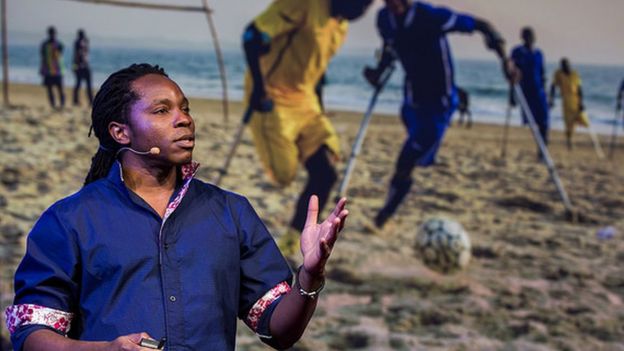
    David Sengey
    Before becoming education minister Dr Sengeh helped develop prosthetic limbs| TED

    The UN’s population fund says that “gender inequality and denial of women’s rights are still prevalent at all levels in Sierra Leonean society”. An assessment that Dr Sengeh agreed with.

    He said that more girls than boys drop out of education before the end of high school and he was developing policies, which he described as “radical inclusion”, that should boost the number of girls who stay at school.

    A month ago, he was instrumental in overturning the country’s ban on pregnant girls going to school.

    Sierra Leone has 124 confirmed cases of coronavirus and has recorded seven deaths from the disease.

    Source: bbc.com

  • Sierra Leone jail set ablaze after coronavirus riot

    There has been an attempted prison break in Sierra Leone after a recently arrived inmate developed symptoms of coronavirus.

    A warden was killed and several others injured in the riot at Pademba Road prison in the capital, Freetown. The jail was set ablaze.

    Pademba Road prison has capacity for about 300 prisoners but currently houses more than 1,000.

    Criminal courts have been suspended for a month in an effort to stem the spread of Covid-19 in jails.

    There have been 104 confirmed coronavirus cases in Sierra Leone and four deaths.

    Source: BBC

  • Retired Kenyan bishop dies in Italy from COVID-19

    A retired Kenyan Catholic Bishop has died in the Italian city of Turin from Covid-19 while undergoing treatment in hospital.

    Silas Njiru, who had served as bishop of Meru in central Kenya from 1976 until 2004, died at Rivoli Hospital on Tuesday. He was 92 years old.

    His successor in Meru, Bishop Salesius Mugambi, told the Daily Nation newspaper

    that the retired cleric had been living in a house where two other elderly priests had also contracted the virus.

    Kenya’s Deputy President William Ruto has paid tribute to the bishop

    , calling him a “tender-hearted and gracious man with steadfast religious credence, which he instilled to many”.

    Italy has been one of countries worst-affected by coronavirus with more than 200,000 cases and over 27,00 deaths.

    Source: bbc.com

  • Hundreds of Moroccan inmates test positive for virus

    Some 313 coronavirus cases have been reported in Moroccan jails following mass testing for Covid-19.

    The authorities say Ouarzazate prison in central Morocco recorded 303 cases, while 10 other cases were in Oudaya prison in Marrakesh and Ksar Kebir prison in the north-west.

    Most of the cases involved prisoners, but a small number of prison warders were also diagnosed.

    The mass testing started after one person in Ouarzazate prison tested positive last week.

    The authorities say they have isolated all positive cases and all warders have been issued with protective gear.

    There are nearly 80,000 inmates in Moroccan prisons. In early April, more than 5,654 inmates were pardoned by the king to reduce the risk of spreading the virus in notoriously overcrowded prisons.

    Morocco has 4,252 confirmed cases of coronavirus, including 165 deaths.

    Source: bbc.com

  • Kenyan research centre ‘running out of test kits’

    The Kenya Medical Research Institute (Kemri) has depleted its supplies of coronavirus screening and testing kits, the Star newspaper says, quoting a report tabled on Tuesday by a Senate committee .

    The institute needs at least 790m Kenyan shillings ($7.3m; £5.9m) to restock reagents and other materials used for testing for coronavirus, the institute’s director Yeri Kombe as saying.

    Kemri is co-ordinating the country’s screening and testing of coronavirus cases, as well as conducting research on a possible vaccine for the pandemic.

    The East African nation has to date confirmed 373 cases and 14 deaths.

    Source: bbc.com

  • Anger over Tanzania’s failure to give virus updates

    Tanzania’s Prime Minister Kassim Majaliwa says the country now has 480 cases of coronavirus, following criticism on social media about the failure to give daily updates about the situation.

    When the government last released figures a week ago there were 306 cases.

    The lack of updates has led to speculation that the authorities were concealing the true number of cases.

    President John Magufuli has urged people to engage in mass worship as a way of preventing the spread of Covid-19, the respiratory illness caused by coronavirus.

    He said the virus was satanic and therefore could not thrive in churches.

    Source: bbc.com

  • COVID-19: Ghana has 6th highest cases in Africa but fewer deaths

    Cases of Coronavirus in Africa have surged past 34,000 with Ghana having the sixth-highest number of confirmed COVID-19 (Coronavirus) infections.

    According to the World Health Organization (WHO) data, Ghana’s 1,671 cases announced yesterday places the country behind Egypt (5,042), South Africa (4,996), Morocco (4,246), Algeria (3,649) and Cameroon (1,705).


    Deaths

    Of the countries that have recorded more than 1,500 confirmed cases, the WHO data shows that Ghana has recorded the lowest number of fatalities with 16 while Algeria has the most fatalities with 437.

    South Africa has recorded 93 deaths, Egypt has 359 deaths, Cameroon has 58 deaths and Morocco has 163 fatalities.

    African recoveries

    Out of a total of 34,928 confirmed cases recorded in Africa, the continent has 22,068 active cases and 11,336 recoveries.

    Global picture

    Globally, more than 215,000 people have died from COVID-19, the disease caused by the novel coronavirus, while some three million infections have been confirmed in at least 185 countries and territories. More than 920,000 people have recovered to date.


    Source: Graphic.com.gh 

  • Nigerian lawyers sue China for $200 billion over coronavirus damage

    A group of Nigerian lawyers is suing China for the adverse effects of the coronavirus outbreak on the country and its citizens.

    Recent reports said that the lawyers demand $200 billion in damages for the “loss of lives, economic strangulation, trauma, hardship, social disorientation, mental torture and disruption of the normal, daily existence of people in Nigeria,” according to a statement by the lead counsel, professor Epiphany Azinge (SAN), whose firm, Azinge and Azinge, is championing the action.

    The lawyers established a two-phase action plan, as they will first go to the federal high court of Nigeria and, second, to persuade the government of the Federal Republic of Nigeria to institute a state action against the People’s Republic of China at the International Court of Justice (ICJ) at the Hague.

    “The legal experts will be claiming damages to the tune of $200 billion and the Chinese government will be served through its Embassy in Nigeria,” Azinge said.

    A child with his mother, from Makoko Slum, carries their food parcel distributed by the Nigerian Red Cross, provided for those under coronavirus-related movement restrictions, in Lagos, Nigeria, April 25, 2020. (AP Photo)

    Previously, an Egyptian lawyer has pressed charges against Chinese President Xi Jinping, calling on his country to pay $10 trillion in damages caused by the novel coronavirus in Egypt.

    Also, last week, the U.S. state of Missouri filed a lawsuit against the Chinese government over the coronavirus, alleging that the nation’s officials are to blame for the global pandemic.

    Source: dailysabah.com

  • Coronavirus: Nigeria to ease Abuja and Lagos lockdowns on 4 May

    Nigeria will begin a “gradual easing” of coronavirus-related lockdowns for millions of people in its largest city Lagos and the capital, Abuja.

    President Muhammadu Buhari said the lockdowns, which had been due to end on Monday, needed to continue until 4 May.

    He also ordered new nationwide measures against Covid-19, including a night-time curfew and mandatory face masks.

    The moves would ensure the economy functioned “while still maintaining our aggressive response”, Mr Buhari said.

    The easing will apply to Abuja, Lagos and neighbouring Ogun state, where collectively more than 25 million people have been under lockdown since 30 March. Other states have introduced their own measures.

    Before the announcement, workers at a construction site in Lagos rioted in protest at the lockdown.

    A police spokesman said the workers at the Lekki Free Trade zone – including those at the oil refinery of billionaire Aliko Dangote – injured several officers in the area. Fifty-one people were arrested, he added.

    There are reports that the protesters were angry that some foreign nationals were allowed to go to work at the site.

    Nigeria, Africa’s most-populous nation and largest economy, has reported 1,273 confirmed cases of Covid-19 and 40 deaths.

    In a televised address on Monday night, Mr Buhari acknowledged that the lockdowns in Abuja, Lagos and Ogun had “come at a very heavy economic cost” since they began on 30 March.

    “Many of our citizens have lost their means of livelihood. Many businesses have shut down,” he said.

    He added: “No country can afford the full impact of a sustained lockdown while awaiting the development of vaccines.”

    The president said there would therefore be a “phased and gradual easing” of these lockdowns next Monday to allow some economic activities to resume.

    But to limit the spread of Covid-19, he announced that the government would impose a curfew across the country between 20:00 and 06:00, require everyone to wear face masks in public, and stop “non-essential inter-state passenger travel”.

    Bans on social and religious gatherings will also remain in place.

    Mr Buhari also expressed deep concern over the unexplained deaths of a number of people in the northern state of Kano.

    He said a lockdown would be imposed there for two weeks with immediate effect and that he was sending a government team to investigate.

    Source: bbc.com

  • What is behind Nigeria’s unexplained deaths in Kano?

    The Nigerian president has expressed deep concern over a high number of unexplained deaths in the northern state of Kano, amid fears they could be caused by Covid-19.

    President Muhammadu Buhari said a lockdown would be imposed in Kano for an additional two weeks, and that he was sending a government team to investigate.

    Nigeria’s Health Minister Dr Osagie Ehanire says the situation is being “monitored closely”.

    But following preliminary investigations the state authorities have dismissed a connection with coronavirus.

    Hundreds of people are rumoured to have died in the community but no official death records are kept.

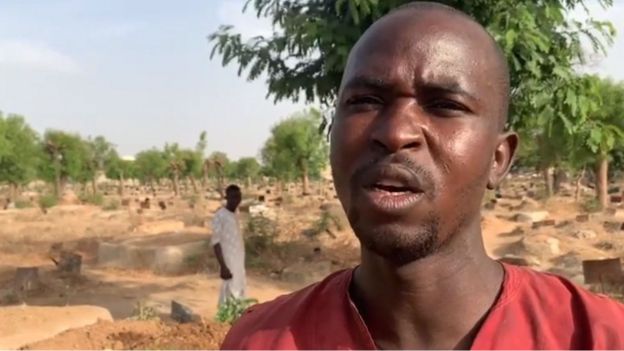
    Grave diggers initially raised concerns that they were burying a higher than usual number of bodies.

    Ali, a grave digger at the Abattoir Graveyard, told the BBC: “We have never seen this, since the major cholera outbreak that our parents tell us about. That was about 60 years ago.”

    grave digger
    Image caption Grave digger Ali says he is burying more bodies

    This week, the state governor issued a statement saying the “mysterious deaths” were unrelated to coronavirus.

    But after ordering a “thorough investigation into the immediate and remote causes of the deaths”, announced that their preliminary findings “indicated that the deaths are not connected to the Covid-19 pandemic”.

    The state government said “reports from the state ministry of health has shown that most of the deaths were caused by complications arising from hypertension, diabetes, meningitis and acute malaria”.

    “Governor Abdullahi Umar Ganduje is earnestly waiting for the final report from the state ministry of health so as to take the necessary action.”

    The commercial and industrial centre of the north, Kano has become the epicentre of coronavirus in northern Nigeria. Its highly dense population is still in lockdown in an effort to contain the spread of the virus.

    Don’t tests show the cause of death?

    State officials started testing for Covid-19 two weeks ago and one lab has had to close due to contamination. Samples are being sent to the capital, Abuja, which authorities say is causing a delay in announcing how many positive cases have been detected in the state.

    Dr Sani Aliyu, who is the national co-ordinator for the presidential task force on Covid-19, says a team of five medical experts were deployed to Kano to facilitate in reopening the testing centre this week after it was fumigated.

    Officials also plan to open a second lab, at Bayero University, for testing for Covid-19 from next week.

    How many people have died?

    It is unclear how many people have died, as the deaths causing concern are happening in the community. Deaths in many parts of Nigeria are not registered, and so for those who died outside of hospital, no records are kept.

    This makes it difficult to understand how many people have died in recent weeks.

    Sabitu Shaibu, the deputy head of the state task force on Covid-19, is hoping to release preliminary findings of the investigation by next week but believes that most of the rumoured 640 deaths are from natural causes and says the figure is below the average death rate for Kano.

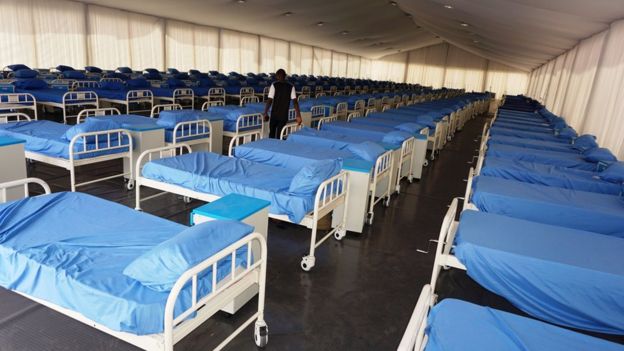
    A COVID-19 coronavirus isolation centre at the Sani Abacha stadium in Kano, Nigeria, on April 7, 2020.
    Getty Images| Health workers prepared beds for a coronavirus isolation centre in Abuja at the beginning of April

    Hospital records which provide the only death register available are thought to provide lower numbers than the real picture across the state.

    Those on the investigating taskforce say they will conduct “verbal autopsies” with family members to help establish why people are dying.

    If not coronavirus, what else could be going on?

    Private hospitals which provide for a significant part of health provision in the region have been closed due to coronavirus fears. This could mean a lack of support for those with existing conditions who may have died as a result.

    Dr Nagoma Sadiq who works at the Aminu Kano Hospital, thinks this could be behind the additional deaths, but he is also not ruling out coronavirus.

    “It’s shocking to most of us that the count of the dead is alarming. But it’s likely due to the reduction in the number of health institutions available in the state.

    “Because there are a lot of hypertensive patients, diabetic patients, asthmatic patients, cancer patients, and they don’t have much access to the hospitals. The lockdown is affecting everybody.

    “Our poor majority don’t even have a vehicle to take them to the hospitals.”

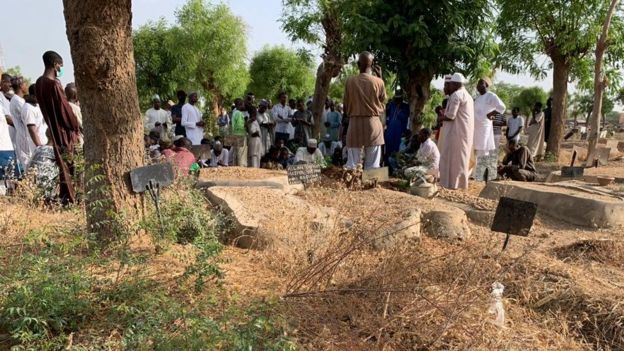
    People at grave
    More funerals are happening

    Grave digger Ali agrees, adding “some say the current situation is due to the epidemic, others say it’s difficulties of life. People have so many problems in their lives and a lack of peace of mind.”

    However Covid-19 is known to be more dangerous for those with underlying health conditions, so it could be that the deaths are related to coronavirus. The only way to know for sure is to test for coronavirus.

    Dr Sadiq also said that there was still a concern about an ongoing Lassa fever infection amongst communities. The state has had five confirmed cases and one death, according to the most recent report from the Nigerian Centre For Disease Control.

    Kano currently has 77 positive cases of coronavirus with three deaths.

    Authorities are urging the public not to panic.

    What else did the president announce?

    President Buhari announced a gradual easing of lockdown restrictions in Abuja, Lagos and neighbouring Ogun state from next Monday.

    But he also said that the government would impose a curfew across the country between 20:00 and 06:00, require everyone to wear face masks in public, and stop “non-essential inter-state passenger travel”.

    Bans on social and religious gatherings will also remain in place.

    You may also be interested in:

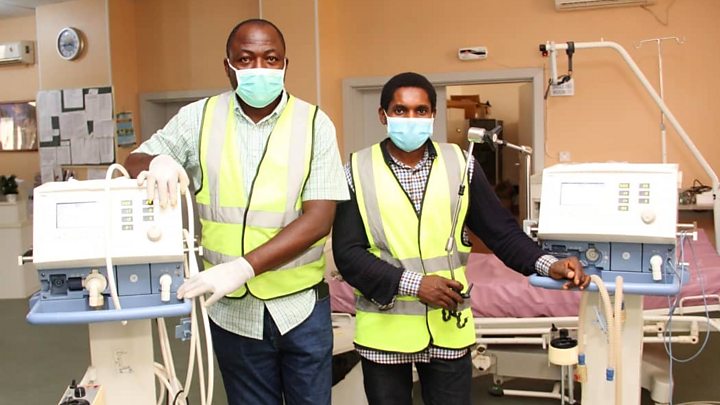
    Two Nigerian software engineers have been fixing ventilators for free at a hospital in northern Nigeria.

    William Gyang and Nura Jubril, who have experience doing electrical repairs, discovered that there were 40 faulty machines at the University of Jos teaching hospital.

    Coronavirus in Nigeria: The engineers fixing ventilators for free

    Source: bbc.com

  • Uganda denies sending back Covid-19 positive truck drivers

    Uganda’s health minister has denied that the country repatriated 14 truck drivers who tested positive for coronavirus.

    The minister, Jane Aceng, said only one driver was repatriated and that 13 others left on their own.

    On Monday, director general of health services Dr Henry Mwebesa announced that 14 drivers returned to their countries.

    The announcement triggered reactions from Kenyans and Tanzanians online prompting the minister to clarify that 13 of the drivers left Uganda of their own accord:

    Uganda has so far reported 79 confirmed cases of coronavirus.

    Several truck drivers who arrived in Uganda through its borders with neighbouring Kenya and Tanzania have tested positive.

    The Kenyan government has since begun mandatory testing of long-distance drivers before they are allowed to leave the country.

    The testing has caused a tailback on the Kenyan side of the border with Uganda with business people decrying losses caused by the delay.

    Source: bbc.com

  • Cameroonian bishop denies finding cure for virus

    The Archbishop of Cameroon’s commercial capital, Douala, has denied reports that he has found a cure for Covid-19 but said he has been “studying plants for a long time”.

    Local media reported last week that Samuel Kleda had been offering a free treatment “based on plants he says he knows”.

    Archbishop Kleda told Cameroon’s Equinox TV that “taking into account the symptoms of people who are presented as infected with coronavirus, I apply recipes made from plants. I apply this treatment to them. They respond positively, that is, they feel better”.

    He however warned that he did not say he “found a cure for coronavirus. That I did not say”.

    The World Health Organization says it does not recommend “self-medication with any medicines… as a prevention or cure for Covid-19” and there is no proof that these can work.

    International trials are under way to find an effective treatment, it adds.

    After South Africa, Cameroon has the highest number of coronavirus cases in sub-Saharan Africa. Some 1,705 people have tested positive, 58 of whom have died.

    Source: bbc.com

  • Botswana extends nationwide coronavirus lockdown

    Botswana’s President Mokgweetsi Masisi has announced a one-week extension of the nationwide lockdown that was due to end on 30 April after one month.

    President Masisi said the extension was agreed after advice from health experts following an increase in local transmissions.

    The extension will end on 7 May followed by two weeks of “sequentially easing” the restrictions.

    During the extension, the government will decide on a strategy to ease restrictions depending on how citizens follow guidelines designed to reduce the spread of coronavirus.

    Botswana has confirmed 22 cases of the virus and one death.

    Source: bbc.com

  • Gabon eases coronavirus lockdown in capital Libreville

    Gabon’s Prime Minister Julien Nkoghe Bekalé has eased lockdown restrictions in the capital, Libreville, and three neighbouring municipalities.

    The government has instead imposed a dusk-to-dawn curfew and allowed shops to reopen. Schools and places of worship will remain closed.

    Movement out of the capital has also been restricted to avoid the possible spread of coronavirus to other provinces.

    The prime minister said the decision was intended to avoid “social destabilisation” if people were unable to earn a living, according to AFP news agency.

    “We are approaching the peak of the epidemic, which could come between the end of May and mid-June,” he was quoted by AFP as saying.

    Gabon has so far confirmed 211 cases of coronavirus including three deaths.

    Source: bbc.com

  • Tanzanian rapper ‘discharged from hospital’ after virus

    Tanzanian rapper Mwana FA, real name Khamis Mwinjuma, has been discharged from hospital after treatment for Covid-19, the Citizen newspaper has reported

    The rapper spent 28 days in hospital and is quoted as saying he was tested eight times during the period. He said he was released after testing negative twice.

    Mwana FA said Tanzania’s President John Magufuli called to check on him while he was hospitalised.

    The rapper was among the first people in Tanzania to test positive for coronavirus. He went public about his status on 19 March in a video, but never said when he was hospitalised:

    Source: bbc.com

  • Nigerian state apologises to ‘runaway’ Covid-19 patient

    The authorities in Nigeria’s north-eastern Borno state have apologised to a coronavirus patient after it was wrongly announced that she had escaped from an isolation centre in the city of Maiduguri.

    The woman was one of two patients authorities said had fled from a treatment centre. The other patient, a man, was traced to his house in Maiduguri where he was found in a “critical” condition. He is undergoing treatment in hospital.

    The authorities apologised to the woman when she turned herself in at the hospital.

    In a statement, Borno state government said it emerged that the woman was not informed that she had tested positive for the virus and needed to be in isolation.

    Health officials are now tracing those who might have had contact with these two people.

    Borno state has confirmed 30 cases of coronavirus so far. It is considered vulnerable to the spread of coronavirus because of the ongoing, decade-long Boko Haram insurgency that has displaced more than two million people in the state.

    Source: bbc.com

  • Kenyan bouquets for UK attract criticism

    What must have seemed like a good idea to remind people of Kenya’s flower industry has come in for some criticism from the country’s notorious Twitter community.

    On Saturday, the Standard newspaper reported that Kenya would be sending 300 bouquets of flowers

    to the UK to be given to British health workers involved in treating coronavirus patients.

    The UK is one o the largest markets for Kenyan flowers, but the country’s horticulture sector has come to a standstill because of a worldwide drop in demand.

    The Kenya Flower Council called the bouquets “flowers of hope”, The Standard reports.

    But many tweeters in Kenya want more focus on the situation at home.

    Otieno Omollo wants the authorities to address the dire conditions that some live in, rather than sending flowers abroad.

    Chilufya Mateyo tweeted that “mental slavery is real” and another tweeter accused the president of “behaving like a village chief”.

    Source: bbc.com

  • Coronavirus: Rwandair cuts salaries by up to 65%

    Rwanda’s national carrier, Rwandair, has announced it will cut the net salaries of its employees by between 8% to 65% as it seeks to deal with the effects of coronavirus pandemic.

    In a memo to its staff, Rwandair said the decision was made to “avoid laying-off staff”.

    It has also extended the suspension of contracts for pilots and non-essential staff until further notice.

    “This was an extremely tough decision, however, the choice we made is the best option at this time,” the memo stated.

    An air hostess, who spoke on condition of anonymity, told the BBC Great Lakes that the pay cuts was not a surprise.

    “It is very sad, we are always expecting the worst this time around. This is the hardest time I am going through in my four years with Rwandair,” she said.

    The carrier that flies to 26 international destinations in Africa, Asia and Europe stopped flights on 19 March after Rwanda announced restrictive measures to halt the spread of the virus.

    The country reported eight new cases of coronavirus on Sunday taking the total tally to 191 with 92 recoveries and no fatalities.

    Source: bbc.com

  • Cuban doctors land in South Africa to help with COVID-19 treatment

    A team of Cuban medics has arrived in South Africa to help the country limit the spread of coronavirus, South Africa’s department of health has tweeted.

    The Cuban doctors are to be deployed to different provinces by South Africa’s Department of Health, Cuba’s ambassador Rodolfo Benítez Verson has said.

    The two countries have close ties as Cuba was instrumental in the fight against white-minority rule in South Africa, which did not end until 1994 when anti-apartheid leader Nelson Mandela was elected president.

    South Africa, with more than 4,500 Covid-19 cases, is one of the worst-hit African countries, but it appears to have been successful in slowing the spread of the virus.

    Source: bbc.com

  • Coronavirus: Testing creates long tailbacks at Kenya-Uganda border

    There have been long tailbacks on the Kenyan side of the border with Uganda after the government began mandatory testing of long-distance lorry drivers to prevent the spread of coronavirus.

    The government announced that all drivers will be tested before crossing the border after Uganda confirmed that eight Kenyan drivers had tested positive for the virus.

    Kenya’s NTV channel shared a video of the tailback at the border.

    Citizen TV has also shared pictures and said that the tailback was 30km (19 miles) long:

    Last week, Uganda’s President Yoweri Museveni said the authorities in both countries were discussing ways to reduce cross-border coronavirus cases.

    As well as mandatory testing, they also proposed relay driving, where drivers hand over vehicles to their Ugandan counterparts at the border.

    Source: bbc.com

  • Liberia’s justice minister tests positive for coronavirus

    The health authorities in Liberia have announced that Justice Minister Frank Musa Dean has tested positive for Covid-19 and was receiving treatment in a hospital outside the capital, Monrovia.

    Mr Dean is quoted in the independent FrontPage Africa newspaper as saying late Sunday night he had been informed by Dr Musoko Fallah, head of the National Public Health Institute (NPHIL), that his Covid-19 test results came back positive

    “I am hopeful,” Mr Dean is quoted as saying by the FrontPage Africa newspaper.

    “The doctors at the 14 Military Hospital are very professional and doing their best. Remember, the virus is posing a challenge to even developed countries with far more sophisticated health systems.

    “At the moment no-one knows everything about the virus. We must continue to observe the health protocols, especially as it relates to social distancing.”

    Mr Dean tested positive two days after the virus had reportedly killed a government official who had attended meetings with the justice minister.

    Source: bbc.com/

  • Coronavirus: Kenya reopens restaurants with strict guidelines

    Kenya’s health minister has allowed restaurants to reopen and issued guidelines that must be adhered to when offering services.

    Mutahi Kagwe has said all restaurant workers will be tested before the premises are reopened.

    He told restaurant owners not to offer buffets – to avoid people walking up and down the premises. Sitting arrangements should also ensure patrons are 1.5 metres apart.

    Operating time will be between 05:00 local time (03:00 GMT) to 16:00 to allow workers reach home before the start of the 19:00 curfew time.

    Mr Kagwe said all bars in the country would remain closed.

    The Daily Nation newspaper tweeted a video of the minister announcing the guidelines:

    Restaurants in Kenya were previously only allowed to serve take-away food to customers, but most of them closed altogether citing reduced number of customers.

    The government last week singled out restaurants among businesses that are struggling during the coronavirus pandemic.

    Mr Kagwe on Monday announced eight new cases of coronavirus bringing the total to 363.

    Source: bbc.com

  • Lagos makes wearing face masks compulsory

    The authorities in Nigeria’s commercial capital, Lagos, have made the wearing of face masks mandatory in a bid to halt the spread of coronavirus.

    The number of confirmed cases in the city stands at 731, more than half of the total confirmed cases in Nigeria.

    The government said that anyone who fails to use a face mask in a public place in the city will be penalised.

    Lagos State Governor Babajide Sanwo-Olu said the government will distribute face masks to residents.

    The state has a population of about 20 million people and many of them live in cramped housing conditions.

    Lagos state and neighbouring Ogun state as well as the capital, Abuja, have been in lockdown for a month.

    President Muhammadu Buhari is expected to decide later today on whether the lockdown will be extended.

    Some 40 people have died of the virus in Nigeria as the number of total confirmed cases surged to 1273 as at Sunday night.

    Source: bbc.com

  • Discussions underway on recovered Guinean coronavirus patients

    The government, through the Ministry of the Interior, has initiated discussions with the Guinean Embassy to decide whether or not to repatriate the Guineans, who recovered from COVID-19 in Tamale.

    Alhaji Alhassan Issahaku, Northern Regional Coordinating Director, who briefed the GNA in Tamale on Friday, said telephone discussions were held today, after which the Guinean Embassy officials, by telephone, also spoke with their compatriots at the quarantine facility in Tamale.

    Four out of the eight Guineans, who tested positive for the COVID-19 in Tamale on March 29, have recovered from the disease, and want to leave the quarantine facility.

    However, they want to leave the quarantine facility together with their remaining three compatriots, who are yet to recover from the disease, a situation, which made the authorities in Tamale not to heed to their demands to leave as they could spread the disease.

    Another concern is the issue of the closure of the country’s borders, which means that even if they leave the quarantine facility, they would not be able leave the country.

    This angered them (Guineans) and they threatened mayhem including; threats of causing destruction to property.

    There are also fears that those that had recovered from the disease could get infected again as they continue to stay in the same facility with those that were yet to recover.

    Alhaji Issahaku, however, said they were strongly advised to observe the social distancing protocol to avoid getting infected again.

    He expressed the hope that the national level discussions ongoing between the government and the Guinean Embassy would soon yield positive results in terms on how best to handle the situation.

    Source: GNA

  • Algeria lifts lockdown on coronavirus epicentre

    Algeria has ended a full lockdown on the northern Blida province, the epicentre of the coronavirus pandemic in the country, and replaced it with a curfew during the holy month of Ramadhan.

    Prime Minister Abdelaziz Djerad said the curfew will begin at 14:00 local time (13:00GMT) and end at 07:00 the next day.

    It is unclear if the full lockdown on Blida province, which was to end in a week, will be re-introduced after Ramadhan.

    Other nine provinces, including the capital Algiers, that had a curfew starting from 15:00 local time will now have a relaxed curfew starting from 17:00.

    Algerian President Abdelmadjid Tebboune said there had been improvement since the lockdown and curfew were imposed and soon “normal life” would resume, according to Xinhua news agency.

    Source: BBC
  • Emmanuel Adebayor respond to critics on donation claims

    Togo striker Emmanuel Sheyi Adebayor claims he does not donate after being criticized for not being generous to aid the underprivileged amid the Coronavirus pandemic.

    Many footballers have made donations to the vulnerable people and families in their various countries in order to help them survive the prevailing situation in the World at the moment.

    But the former Arsenal FC, Manchester City and Tottenham Hotspur forward thinks otherwise.

    The former Togo captain through videos circulating on social networks responded to his critics and said he didn’t bring the deadly disease to the country.

    “For those who say that I do not donate, let me be very clear, I do not donate. Very simple,” he said

    The former Real Madrid player almost snubs the idea of making donations to the people.

    “I do what I want to do, I eat what I want to eat and this is the most important . Afterwards, there will be people who will criticize me for the fact that I did not make a foundation in Lomé.”

    “But it seems that it was me who brought the coronavirus virus to Lomé. It is very unfortunate, but it is like that and it is the country that is like that.”

    “You can compare me to Didier Drogba, you can compare me to Samuel Eto’o, but unfortunately I am not Didier Drogba, I am not Samuel Eto’o. I am Emmanuel Sheyi Adebayor and I will always do what I want to do.”he added.

    Source: GHANAsoccernet.com

  • South African minister pleads guilty to breaking lockdown

    South Africa’s Communication Minister Stella Ndabeni has admitted to failing to follow the lockdown rules and has paid a 1,000 rand ($53;£42) fine as ordered by the senior magistrate in the Tshwane district court.

    The National Prosecuting Authority’s Phindi Mjonondwane said the minister’s court case proves that all citizens are equal and no-one should break the law.

    The minister was pictured at a former colleague’s house having lunch during an ongoing lockdown aimed at reducing the spread of coronavirus.

    The minister was summoned by President Cyril Ramaphosa and was placed on two months special leave.

    She later apologised publicly for undermining lockdown rules.

    Source: bbc.com

  • Kenyans clap for health workers

    Kenyan journalists at NTV on Tuesday led people in an appreciation clap for health care workers on the front line of coronavirus pandemic.

    The journalists were filmed asking Kenyans to join them at 12:00 local time (10:00 GMT) in clapping for all health care workers.

    During the noon bulletin, the news presenter started by leading the applause with videos of Kenyans in the streets of the capital Nairobi and the coastal city of Mombasa clapping along.

    Kenyan health care workers have received government recognition for the efforts during the coronavirus pandemic.

    The minister of health on Monday said discussions on their allowances were ongoing.

    The government opened an isolation centre specially made for health workers as mass testing begun.

    Source: bbc.com

  • Ugandan journalist arrested

    A Ugandan journalist was arrested on Monday night shorty after leaving work.

    The NBS television news presenter Samson Kasumba was detained at a police station overnight.

    He has so far not commented on the arrest.

    Ugandan police spokesperson Fred Enanga on Tuesday said the journalist’s arrest had nothing to with his work and would share more details later.

    He said police were interrogating him and had sealed off his house where a search was being conducted.

    NBS television tweeted;

    Uganda’s Daily Monitor tweeted:

    Source: bbc.com

  • Ugandan court ‘suspends $2.6m Covid-19 fund for MPs’

    A Ugandan court has suspended the allocation of 10 billion Ugandan shillings ($2.6m; £2.1m) to members of parliament to fight the spread of coronavirus in their constituencies, the Daily Monitor newspaper reports.

    Each MP was due to receive about $5,300 to, among other things, fuel ambulances and pay allowances for the drivers involved in the Covid-19 taskforces at district level, the newspaper reports quoting sources in parliament.

    The proposal sparked a public outcry and an online petition. The petition said the money should go to the Covid-19 Task Force instead of MPs. It said that many of the MPs were not in their constituencies because of lock down.

    Two opposition MPs on Tuesday succeeded in getting a court order suspending the allocation.

    The Daily Monitor has tweeted about the development:

    Source: bbc.com

  • Ramaphosa condemns theft of food meant for the poor

    South African President Cyril Ramaphosa has condemned the alleged theft of food packages meant to cushion the poor from hunger during the coronavirus pandemic.

    The president said the reports were “disturbing and disgusting” adding that the individuals involved in the hoarding, selling or diverting of food aid would be dealt with “harshly”.

    “Over the past three weeks, we have been confronted with distressing images of desperate people clamouring for food parcels at distribution centres and of community protests against food shortages,” the president wrote in his weekly bulletin.

    President Ramaphosa also said the government would increase welfare provision to the poor who live “below the poverty line” but did not specify how that would be done.

    Economists and labour unions in the country have been in the past quoted by local media asking for increased social grants.

    Source: bbc.com

  • Kagame warns of dire consequences for African economies

    Rwanda’s President Paul Kagame has warned that it could take “a generation or more” for Africa to recover from the shock of the Covid-19 pandemic.

    He told the UK Financial Times that the continent would need at least $100bn (£80bn) in foreign support.

    The World Bank has already warned that Africa will slip into recession, its first in 25 years, as global trade shrinks and commodity prices continue to fall.

    Mr Kagame said he was confident progress could be made following what he called “good engagement” from “partners such as France, Germany, China and the US”.

    Nations belonging to the G20 group of leading economies last week agreed to suspend debt payments owed to them by some of the world’s poorest countries, including many in Africa.

    Africa has confirmed more than 21,000 Covid-19 cases so far. Last week the World Health Organization warned the continent could become the next epicentre of the coronavirus outbreak.

    UN officials say it is likely the pandemic will kill at least 300,000 people in Africa and push nearly 30 million into poverty.

    Source: bbc.com

  • Coronavirus: Ugandan MP ‘arrested’ for distributing food

    A Ugandan opposition MP is being held by police for distributing food to his constituents over weekend in Mityana district, about 70km (45 miles) from the capital, Kampala, the Daily Monitor newspaper reports.

    Francis Zaake, an independent MP, was arrested in his Mityana Municipality constituency for contravening a presidential directive on food distribution during the ongoing lockdown, Wamala region police spokesperson Rachel Kawala is quoted as saying

    President Yoweri Museveni last week extended a nationwide coronavirus lockdown until 5 May. Restrictive measures imposed include closure of national borders, including Entebbe International Airport, to passenger travel, a dusk-to-dawn curfew and a ban on public transport.

    The MP tweeted photos purporting to show security officers “breaking into his home”.

    He had also tweeted a photos of the food rations he had been distributing to his constituents.

    Source: bbc.com

  • Buhari condemns attacks in home state

    Nigeria’s President Muhammadu Buhari has condemned a series of weekend attacks by gunmen in his home state of Katsina in the north west which left at least 47 people dead.

    Armed bandits riding dozens of motorbikes attacked areas of Safana, Dutsinma and Danmusa – shooting people dead and burning down homes in several villages.

    The attacks follow months of relative peace in the region.

    Mr Buhari suggested that criminals are taking advantage of the lockdown measures imposed to contain the spread of Covid-19 to carry out attacks.

    He urged Nigerians not to despair in the face of the killings.

    In recent years, states in the north-western part of the country have been badly affected by armed gangs who attack residents and travellers.

    They kill and kidnap people for ransom.

    Source: bbc.com

  • Coronavirus: Jack Ma announces more donation to Africa

    Jack Ma, the founder of Alibaba Group, on Monday announced the donation of more medical equipment to Africa in the fight against the COVID-19 pandemic.

    The Chinese billionaire made the announcement on his verified Twitter handle.

    Ma twitted: “Our 3rd donation to Africa will immediately be made to @_africanunion and @AfricaCDC.

    “This includes 4.6 million masks, 500,000 swabs and test kits, 300 ventilators, 200,000 clothing sets, 200,000 face shields, 2,000 thermal guns, 100 body temperature scanners and 500,000 pairs of gloves.”

    Recall that Ma, through his foundation, had earlier made his first set of donation to the 54 African countries. He donated 20,000 test kits, 100,000 masks and 1,000 medical use protective suits and face shields.

    Ma also announced his second set of donation to the continent on April 6 which included 500 ventilators, 200 thousand suits and face shields, two thousand thermometers.

    Others are one million swabs and extraction kits and 500,000 gloves.

  • South African man arrested ‘smuggling girlfriend’ in car boot

    Police in South Africa have arrested a man “smuggling his girlfriend,” in the back of a car amidst a nationwide lockdown to curb the spread of Covid-19, according to an official from the province of Guateng.

    Faith Mazibuko tweeted that the woman was found in the car boot during a security check at a roadblock in the province on Friday.

    She added that the driver, who did not have a permit, was heading to the eastern Mpumalanga province.

    She tweeted that the woman was arrested for “consenting to be smuggled.”

    The couple have not commented on the allegations.

    South Africa imposed a lockdown on 24 March for three weeks but the authorities extended it until the end of April.

    Travel across the country is restricted to only those listed as providing essential services.

    The country has more than 3,000 confirmed cases of Covid-19, the highest in Africa.

    Source: bbc.com

  • Coronavirus: The fear of being sentenced to a Kenyan quarantine centre

    Like people around the world, Rachel Gachuna is extremely worried about catching coronavirus. But she is just as fearful about being locked up in a Kenyan quarantine centre.

    If the single mother of one-year-old twins is to believe those already held at some of these government-assigned facilities, living conditions are not much better than at a prison.

    “The toilets are just messy, dirty… even the cleaners who clean the toilets once a day complain about how messy the toilets,” one woman in quarantine told the BBC.

    “It’s because there is no water, so people are touching the same taps when you want to wash your hands, if there is even water… it’s just a mess.”

    People who arrived in Kenya from countries affected by the virus before it closed its borders and those found to have been in contact with a coronavirus patient have been sent to these centres for 14 days.

    However, the quarantine period has been extended twice for everyone at centres where someone has shown symptoms of the virus – and they have had to keep paying the bills.

    There have been also complaints that social distancing is impossible at some centres because of overcrowding.

    “You pray to God that it never happens because I honestly do not know what I would do,” Ms Gachuna told the BBC.

    She is now on leave after first choosing to work from her home in the capital, Nairobi – even though the city’s residents are able to go out during the day.

    Escape attempt
    To protect her family from infection, she only goes out to the shops when essential – and would rather not go out at all.

    Kenyans may now have to wear face masks in public and buses are carrying fewer passengers, but social distancing can be difficult.

    “I try to be careful. When I get into the house, I have to take a shower before I touch my kids. You can’t guarantee what your clothes have picked from outside,” she said.

    She has also let go of one her nannies, who came in to help look after the twins during the week, because she was worried that her use of public transport would leave the family vulnerable to infection.

    And her fears were heightened last week after dozens of people attempted to storm out of an isolation centre at Kenyatta University in Nairobi, citing unbearable conditions.

    “First on our inability to pay and secondly because it does not make any scientific sense for our continued stay at the centre,” Simon Mugambi, one of the would-be escapees, said.

    Others spoke of their psychological and mental anguish after the government extended their stay beyond 14 days.

    But the group was forced to return. In the words of another quarantine complainant: “It’s like you are condemned… it’s like you are at the mercy of the government.”

    Source: bbc.com

  • Fake mourners arrested for flouting Kenyan travel ban

    Police in Kenya implementing coronavirus restrictions have arrested four people who disguised themselves as mourners taking a body for burial.

    They had left the capital, Nairobi, and travelled 370km (about 230 miles) west with an empty coffin in the vehicle before being intercepted, the health minister said on Saturday.

    Nearly two weeks ago, travel in and out of Nairobi was restricted, along with another three regions considered to be coronavirus hot spots.

    The group of fake mourners had managed to pass through several checkpoints before suspicious officers in Homa Bay County opened the coffin, Health Minister Mutahi Kagwe said.

    The driver later tested positive for Covid-19, the respiratory illness caused by the virus. His three passengers have now been put into quarantine.

    The minister said officials were investigating various schemes allegedly being used to circumvent the travel ban, including reports that people had been bribing police at roadblocks.

    The East African nation has recorded 262 cases of Covid-19, including 12 deaths.

    Source: bbc.com

  • Zimbabwe extends coronavirus lockdown by 14 days

    Zimbabwe’s President Emmerson Mnangagwa has announced that the lockdown to contain the spread of the coronavirus pandemic will be extended by two weeks.

    But mining and manufacturing operations will be exempted – to keep the economy running.

    The lockdown was due to expire midnight on Sunday.

    In a live broadcast, the president said the conditions for lifting the restrictions had not been met.

    He described the extension as a hard decision made reluctantly, but one that was necessary and unavoidable.

    Zimbabwe has recorded 25 coronavirus cases and three deaths ,amid warning by the World Health Organization (WHO) that Africa must prepare for an increase in infections.

    The country is still battling to increase mass testing and the number of treatment centres.

    The WHO has warned of difficult times ahead but cautioned countries against lifting restrictions prematurely.

    Source: bbc.com

  • 17-yr-old Achimota student uses animation to educate Ghanaians about coronavirus

    With the increasing number of Coronavirus cases in the country, there has been a joint force by all, in educating Ghanaians on why they have to adhere to all the preventive measures put in place by the government.

    Impressive is an understatement when students in Ghana’s Senior High Schools put their creativity to test by coming up with brilliant ideas to help in the fight against COVID-19.

    First, was a group of students from the Obuasi Secondary Technical School who designed a hands-free Veronica bucket. The artifact is designed in a way that, once you place your hand beneath the tap, the water automatically flows.

    The invention ensures that people are able to wash their hands using water from the Veronica bucket without touching its tap.

    Next is a 17-year-old Okyere Louis Arko, a second-year gold track student of the Achimota Senior High School.

    The young man created an animation video to educate Ghanaians on the implications as well as dos and don’ts of Coronavirus.

    Speaking to GhanaWeb in an exclusive interview, Louis, disclosed the purpose is to reach out to the masses especially the Ghanaian populace who love animation and cartoons, by using what they love to educate them on why they need to adhere to preventive measures.

    Not using, any special tools like a laptop, Louis told GhanaWeb, he uses his Samsung phone to create the animations.

    Though a science student, his love for IT compelled him to develop the passion by reading and watching a lot of videos on YouTube. He reiterated that he has not taken any professional studies on that.

    Hence, he practices what he learns on the web by using his phone.

    “I use my phone for all my animations. I used only one hour to create the COVID-19 sensitization video” he told GhanaWeb.

    Louis told GhanaWeb, that his family and teachers have been supportive of the new skills he has acquired.

    Source: www.ghanaweb.com

  • Open letter from African intellectuals to leaders over coronavirus

    Dozens of prominent intellectuals, writers and academics from across Africa have co-signed an open letter addressed to the continent’s leaders, asking them to use the crisis caused by the coronavirus pandemic as an opportunity to spur “radical change” in direction.

    “In the call, we urge African leaders to also think beyond the current crisis as a symptom of deep structural problems Africa has to confront if it is to become one day sovereign and an actor that contributes to the new global order,” Amy Niang, one of the academics behind the initiative, told Al Jazeera. “We are calling for a second independence.”

    Read the open letter below:

    THE TIME TO ACT IS NOW:
    Letter Addressed to African Leaders Concerning the COVID-19 Crisis

    The threats that are hanging over the African continent with regards to the spread of COVID-19 demand our individual and collective attention. The situation is critical. Yet this is not about mitigating another ‘African’ humanitarian crisis but to diffuse the potentially damaging effects of a virus that has shaken the global order and put under question the bases of our living-together.

    The coronavirus pandemic lays bare that which well-to-do middle classes in African cities have thus far refused to confront. In the past 10 years, various media, intellectuals, politicians and international financial institutions have clung to an idea of an Africa on the move, of Africa as the new frontier of capitalist expansion; an Africa on the path to ’emerging’ with growth rates that are the envy of northern countries. Such a representation, repeated at will to the point of becoming a received truth, has been torn apart by a crisis that has not entirely revealed the extent of its destructive potential.

    At the same time, any prospect of an inclusive multilateralism – ostensibly kept alive by years of treaty-making – is forbidding. The global order is disintegrating before our very eyes, giving way to a vicious geopolitical tussle. The new context of economic war of all against all leaves out countries of the Global South so to speak stranded. Once again we are reminded of their perennial status in the world order in-the-making: that of docile spectators.

    Like a tectonic storm, the COVID-19 pandemic threatens to shatter the foundations of states and institutions whose profound failings have been ignored for too long.

    It is impossible to list these, suffice it to mention chronic under-investment in public health and fundamental research, limited achievements in food self-sufficiency, the mismanagement of public finances, the prioritization of road and airport infrastructures at the expense of human well-being.

    All of this has in fact been the object of an abundant specialized research, except that it seems to have escaped attention in spheres of governance on the continent. The management of the ongoing crisis constitutes a most glaring evidence of this gap.

    On the necessity to govern with compassion

    Adopting the all-securitarian model of ‘containment’ of northern countries – often without much care to specific contexts – many African countries have imposed a brutal lockdown upon their populations; here and there, violation of curfew measures has been met with police violence.

    If such containment measures have met the agreement of middle classes shielded from crowded living conditions with some having the possibility to work from home, they have proved punitive and disruptive for those whose survival depends on informal activities.

    Let’s be clear: we are not advocating an impossible choice between economic security vs. health security but we wish to insist on the necessity for African governments to take into account the chronic precarity that characterizes the majority of their populations. Yet, as a continent that is familiar with pandemic outbreaks, Africa has a head start in the management of large-scale health crises. However, it should gird itself against complacency.

    Here and here, civil society organizations have shown tremendous solidarity and creativity. Despite however the great dynamism of individual actors, these initiatives could in no way make up for the chronic unpreparedness and the structural deficiencies that states themselves will have to mitigate. Rather than sit idle and wait for better fortune, we must endeavour to rethink the basis of our common destiny from our own specific historical and social context and the resources we have.

    Our belief is that ’emergency’ cannot, and should not constitute a mode of governance. We must instead be seized by the real urgency, which is to reform public policy, to make them work in favour of African populations and according to African priorities. In short, it is imperative to put forth the value of every human being regardless of status, over and beyond any logic of profit-making, domination or power capture.

    Beyond the state of emergency

    African leaders can and should propose to their societies a new political idea of Africa. For this is a question of survival, fundamentally, and not a matter of rhetorical flourish. Serious reflections are needed on the functioning of state institutions, on the function of a state and the place of juridical norms in the distribution and the balancing of power.

    This is best achieved on the basis of ideas adapted to realities across the continent. The realization of the second wave of our political independence will depend on political creativity as well as our capacity to take charge of our common destiny. Once again, various isolated efforts are already bearing fruit. They deserve to be heeded, debated and amply encouraged.

    Furthermore, Pan-Africanism also needs a new lease of life. It has to be reconciled with its original inspiration following decades of shortcomings. If progress on continental integration has been slow, the reason has much to do with an orientation informed by the orthodoxy of market liberalism. In consequence, the coronavirus pandemic reveals the deficit of a collective continental response, both in the health and other sectors.

    More than ever, we call upon leaders to ponder the necessity to adopt a concerted approach to governance sectors related to public health, fundamental research in all disciplines and to public policy.

    In the same vein, health has to be conceived as essential public good, the status of health workers needs to be enhanced, hospital infrastructure need to be upgraded to a level that allows everybody, including leaders themselves, to receive adequate treatment in Africa. Failure to implement these reforms would be cataclysmic.

    This letter is a small reminder, a reiteration of the obvious: that the African continent must take its destiny back into its own hands. For it is in the most trying moments that new/innovative orientations must be explored and lasting solutions adopted.

    The present letter is addressed to leaders of all walks of life; to the people of Africa and to all those that are committed to re/thinking the continent. We invite them to seize the opportunity of the coronavirus crisis to joint efforts in rethinking an African state in the service of the well-being of its people, to break with a model of development based on the vicious cycle of indebtedness, to break with the orthodox vision of growth for the sake of growth, and of profit for the sake of profit.

    The challenge for Africa is no less than the restoration of its intellectual freedom and a capacity to create – without which no sovereignty is conceivable. It is to break with the outsourcing of our sovereign prerogatives, to reconnect with local configurations, to break with sterile imitation, to adapt science, technology and research to our context, to elaborate institutions on the basis of our specificities and our resources, to adopt an inclusive governance framework and endogenous development, to create value in Africa in order to reduce our systemic dependence.

    More crucially, it is essential to remember that Africa has sufficient material and human resources to build a shared prosperity on an egalitarian basis and in respect of the dignity of each and everyone. The dearth of political will and the extractive practices of external actors can no longer be used as excuse for inaction. We no longer have a choice: we need a radical change in direction. Now is the time!

    Have signed:

    Wole Soyinka (Nobel Prize in Literature 1986)
    Makhily Gassama (Essayist)
    Cornel West (Princeton University)
    Kwame Anthony Appiah (New York University)
    Henry Louis Gates Jr (Harvard University)
    Cheikh Hamidou Kane (Writer)
    Odile Tobner (Librairie des Peuples Noirs, Cameroon)
    Iva Cabral (daughter of Amilcar Cabral, University of Mindelo)
    Olivette Otele (Bristol University)
    Boubacar Boris Diop (American University of Nigeria)
    Siba N’Zatioula Grovogui (Cornell University)
    Véronique Tajdo (Writer)
    Francis Nyamnjoh (University of Cape Town)
    Ibrahim Abdullah (Fourah Bay College)
    Sean Jacobs (The New School)
    Oumar Ba (Morehouse College)
    Maria Paula Meneses (Coimbra University)
    Amadou Elimane Kane (PanAfrican Institute of Culture and Research)
    Inocencia Mata (University of Lisbon)
    Anthony Obeng (The African Institute for Economic Development and Planning)
    Aisha Ibrahim (Fouray Bay College)
    Makhtar Diouf (Cheikh Anta Diop University of Dakar)
    Koulsy Lamko (Writer)
    Mahamadou Lamine Sagna (American University of Nigeria)
    Carlos Nuno Castel-Branco (Economist, Mozambique)
    Touriya Fili-Tullon (University of Lyon 2)
    Kako Nubupko (University of Lome)
    Rosania da Silva (University Foundation for the Development of Education)
    Amar Mohand-Amer (CRASC, Oran)
    Mame Penda Ba (Gaston Berger University of St Louis)
    Medhi Alioua (International University of Rabat)
    Rama Salla Dieng (University of Edinburgh)
    Yoporeka Somet (Philosopher, Egyptologist, Burkina Faso)
    Gazibo Mamoudou (University of Montreal)
    Fatou Kine Camara (Cheikh Anta Diop University of Dakar)
    Jonathan Klaaren (University of the Witwatersrand)
    Rosa Cruz e Silva (Agostinho Neto University)
    Ismail Rashid (Vassar College)
    Abdellahi Hajjat (Free University of Brussels)
    Maria das Neves Baptista de Sousa (Lusiada University of Sao Tome e Príncipe)
    Lazare Ki-Zerbo (Philosopher, Guyana)
    Lina Benabdallah (Wake Forest University)
    Iolanda Evora (University of Lisbon)
    Kokou Edem Christian Agbobli (The Universite du Quebec a Montreal)
    Opeyemi Rabiat Akande (Harvard University)
    Lourenço do Rosario (Mozambique Polytechnic University)
    Issa Ndiaye (University of Bamako)
    Yolande Bouka (Queen’s University)
    Adama Samake (Felix Houphouet Boigny University)
    Bruno Sena Martins (Coimbra University)
    Charles Ukeje (University of Ile Ife)
    Isaie Dougnon (Fordham University)
    Cláudio Alves Furtado (Federal University of Bahia, University of Cap-Verde)
    Ebrima Ceesay (University of Birmingham)
    Rita Chaves (University of Sao Paulo)
    Benaouda Lebdai (Le Mans University)
    Guillaume Johnson (CNRS, Paris-Dauphine)
    Ayano Mekonnen (University of Missouri)
    Thierno Diop (Cheikh Anta Diop University of Dakar)
    Mbemba Jabbi (University of Texas)
    Abdoulaye Kane (University of Florida)
    Muhammadu M.O. Kah (American University of Nigeria & University of the Gambia)
    Alpha Amadou Barry Bano (University of Sonfonia)
    Yacouba Banhoro (University of Ouaga 1 Joseph Ki-Zerbo)
    Dialo Diop (Cheikh Anta Diop University of Dakar)
    Rahmane Idrissa (African Studies Center, Leiden)
    El Hadji Samba Ndiaye (Cheikh Anta Diop University of Dakar)
    Benabbou Senouci (University of Oran)
    José Luís Cabaco (Universidade Tecnica de Mocambique)
    Mouhamadou Ngouda Mboup (Cheikh Anta Diop University of Dakar)
    Hassan Remanoun (University of Oran)
    Salif Diop (Universite Cheikh Anta Diop de Dakar)
    Narciso Matos (Mozambique Polytechnic University)
    Mame Thierno Cisse (Cheikh Anta Diop University of Dakar)
    Demba Moussa Dembele (ARCADE, Senegal)
    Many Camara (University of Angers)
    Ibrahima Wane (Cheikh Anta Diop University of Dakar)
    Thomas Tieku (King’s University College, Western University) Jibrin Ibrahim (Center for Democracy and Development)
    El Hadji Samba Ndiaye (Cheikh Anta Diop University of Dakar)
    Jose Luis Cabaco (Technical University of Mozambique)
    Firoze Manji (Daraja Press)
    Mansour Kedidir (CRASC, Oran)
    Abdoul Aziz Diouf (Cheikh Anta Diop University of Dakar)
    Mohamed Nachi (University of Liege)
    Alain Kaly (Federal Rural University of Rio de Janeiro)
    Last Dumi Moyo (American University of Nigeria)
    Hafsi Bedhioufi (University of Manouba)
    Abdoulaye Niang (Gaston Berger University of Saint-Louis)
    Robtel Neajai Pailey (University of Oxford)
    Slaheddine Ben Frej (Faculty of Humanities and Social Sciencees of Tunis)
    Victor Topanou (Universite d’Abomey-Calavi, Bénin)
    Paul Ugor (Illinois State University)
    Djibril Tamsir Niane (Writer)
    Laroussi Amri (University of Tunis)
    Karine Ndjoko Ioset (University of Wuerzburg and University of Lubumbashi)
    Magueye Kassa (Cheikh Anta Diop University of Dakar)
    Lionel Zevounou (Paris Nanterre University)
    Amy Niang (University of Witwatersrand)
    Ndongo Samba Sylla (Economist, Senegal)

    Source: aljazeera.com
  • Sonnie Badu blasts WHO over Africa becoming epicentre

    Renowned American Gospel artiste Sonnie Badu has ruled out any possibility of Africa becoming the epicentre of the novel Coronavirus.

    This follows the World Health Organization (WHO) statement that Africa could become the next epicentre of the coronavirus outbreak.

    UN officials also say it is likely the pandemic will kill at least 300,000 people in Africa and push nearly 30 million into poverty.

    WHO estimates about 10 million people in Africa to contract the virus in the next 6 months if the infection continues at the current rate.

    But Sonnie Badu who became a UN Ambassador of Sacred Music stated, “Africa will not see 3.3 million deaths and 1.2 billion infections. Your predictions and prophecy shall not come pass.”

    The author, singer and preacher who traces his family to Ghana is among a number of leaders to speak out against the perceived vulnerability of Africa to survive the deadly bug.

    “Words are spirit and we have to speak against negative words when they are spoken. God is not a man.” He stated.

    The “Baba let your rainfall on me” musician has however cautioned African citizens on the need to be obedient to safety measures outline by their leaders to stem the spread. “Stay home and adhere to the measures by your government!”

    Meanwhile some European and American countries including the UK and the US have started evacuating their citizens from the continent with 13,000 of them evacuated from Ghana.

    Source: modernghana.com

  • Nigeria tests 6,649 samples for coronavirus in 24 hours

    The Federal Republic of Nigeria on Thursday, April 16, tested some 6,649 blood samples for coronavirus.

    The National Centre for Disease Control (NCDC) made this known in a tweet on Friday, April 17.

    In the tweet seen by DGN Online, NCDC says there were no new cases recorded on April 16.

    It says the total number of States affected in Nigeria remains 20 (19 States + FCT).

    Some of the states include Lagos, Ondo, Oyo, Ogun, Edo, Ekiti, Benue, Anambra, Kano, Osun, Katsina, Enugu, Niger.

    Source: dailyguidenetwork.com

  • Three Liberian soldiers investigated for lockdown brutality

    Three Liberian soldiers have been recalled after a woman was stabbed in the arm.

    They were enforcing a two-week lockdown put in place to limit the spread of coronavirus in the capital, Monrovia.

    Gen Prince Johnson (not the 1990s rebel leader and current senator of the same name) told the BBC the soldiers under investigation include an area commander leading a community patrol.

    He said that the current army was “a force for good – we will not compromise when it comes to discipline”.

    President George Weah declared a state of emergency on 10 April which included restrictions on movement.

    Since the restrictions came into force, social media has been awash with reports of brutality by security forces.

    Source: bbc.com

  • Coronavirus lockdown halted in Malawi

    Plans for a lockdown in Malawi have been scuppered at the last minute, after a court injuction ordered it be delayed by at least seven days, lawyers say.

    It was due to begin on Saturday.

    The news will come as a relief to traders who have fiercely opposed a lockdown because of the serious threat they say it poses to their livelihoods.

    The court challenge was brought against the government by the Human Rights Defenders Coalition, whose lawyer has told the BBC that both sides will present their cases at the High Court next Friday.

    Until then the lockdown is on hold.

    Source: bbc.com

  • Lockdown: Nigerian Imam arrested for conducting Jumaat congregational prayer

    An Imam of a Friday (Jumaat) mosque, Gwammaja Mosque in Kano State who defied total lockdown the order to conduct the Friday congregational prayers have been arrested in the state.

    Recall that Governor Abdullahi Umar Ganduje of Kano State has declared a total lockdown on the state with effect from 10 pm Thursday to curtail the spread of the increasing cases of coronavirus in the state.

    The Special Adviser to the Governor on Media, Salihu Yakasai who confirmed the development said the Imam despite lockdown order conducted the Friday prayer.

    Yakasai in a tweet said, “The Imam of Gwammaja Mosque that performed Friday Prayers today in Kano despite the lockdown order has been arrested.”

    “The lockdown was with the full blessings of all the Imams in the state from the different Islamic sects.

    “The only way to enforce social distancing is a lockdown,” the Special Adviser however stated.

    Source: vanguardngr.com