The Kenya National Nurses Association has demanded that protective equipment for health workers dealing with coronavirus patients is fixed before it is distributed.
The Kenya National Nurses Association Chair Alfred Obengo visited a factory where protective gear is being made and tweeted that he saw “some gaps” that he ordered be rectified by Friday.
Kenyan nurses have been asking for more pay and protective gear for those handling coronavirus patients.
Some county governors promised special allowances for the health workers.
Personal protective equipment for people working within 2m (6ft) of a coronavirus patient has become a concern for health workers all over the world who are demanding eye protection, surgical masks, aprons and gloves.
Today morning, I was part of the delegation from MOH to assess the quality of PPEs from EPZ.
However we observed some gaps which we ordered be rectified before Friday. We’re committed ensure our frontline warriors have the right regalia and artillery. https://t.co/JwvWUa4Udn
Uganda’s President Yoweri Museveni has extended the nationwide coronavirus controls for 21 days.
In his address to the nation at the end of an initial 14-day lockdown, the president said that all control guidelines previously announced will remain in place.
The measures include closure of national borders, including Entebbe International Airport, to passenger travel, a dusk-to-dawn curfew, and a ban on public transport.
Mr Museveni said that the extension will help health workers study the situation, and monitor about 18,000 people said to have come into the country between 7-22 March.
Air and road cargo transport are still permitted.
Inter-state long-distance truck drivers, whether transiting through or destined for Uganda, will be tested at the border points.
So far, over 5,600 samples have been tested and 54 cases confirmed in the country, eight of whom have recovered.
The European Union has donated €50m ($55m; £44m) to Nigeria to boost the fight against coronavirus.
According to a statement from the Nigerian presidency, the funding will greatly help Nigeria in containing the virus and revitalising its healthcare system.
Nigerian President Muhammadu Buhari told an EU delegation he was touched and grateful that the EU had the foresight to help its allies around the world despite the fact that its member countries were also struggling with the coronavirus pandemic.
He said such support from the EU will save millions of lives in many countries.
EU Ambassador to Nigeria Ketil Karlsen told Mr Buhari the donation to Nigeria was the largest support the EU was providing anywhere outside Europe to fight the pandemic so far.
Nigeria has nearly 350 confirmed cases of the coronavirus with 10 fatalities.
Experts have warned that a widespread outbreak of the virus in African countries with weak healthcare systems and extreme poverty could have devastating consequences.
The EU support to Nigeria comes as the International Monetary Fund approved debt service relief for 19 African countries.
The relief is for an initial period of six months to enable them to channel financial resources towards dealing with the coronavirus pandemic.
As COVID-19 takes hold of African economies, African business leaders are challenged with new risks and uncertainty. Africa.com has partnered with faculty of Harvard Business to lead a four week webinar series, “Crisis Management for African Business Leaders.”
The webinar series will feature panel discussions led by the faculty, in conversation with African business leaders including:
Welela Dawit, CFO, GE Africa
Kuseni Dlamini, Chair, Massmart
Kunle Elebute, Chairman, KPMG Africa
Foluso Philips, Chair, Philips Consulting
Funke Opeke, Founder and CEO, MainOne
Jay Ireland, Former President and CEO, GE Africa
Admassu Tadesse, Chief Executive, Trade and Development Bank
Fred Swaniker, Founder & CEO, African Leadership Group
Sim Tshabalala, Chief Executive, Standard Bank Group
Rob Shuter, President/CEO, MTN Group Ltd.
The four webinars are as follows:
April 15 Leadership in Times of Crisis, led by Linda Hill, Ph.D., Harvard Business School Professor of Business Administration, Faculty Chair, Leadership Initiative
April 22 Liquidity – Managing Cash Flow When Revenue & Funding Dry Up, led by Kunle Elebute, Chair of KPMG Africa
April 29: This Isn’t the West – How Africa’s Informal Sector Reacts to COVID-19, led by Hakeem Belo-Osagie, Harvard Business School Senior Lecturer of Business Administration
May 6: Strategic Planning in the Face of Uncertainty, led by Andy Zelleke, Ph.D., Harvard Business School Senior Lecturer of Business Administration
All webinars take place on Wednesdays, for 1.5 hours, commencing at:
9:00 EDT (New York) | 14:00 WAT (Nigeria/UK) | 15:00 CAT (South Africa) | 16:00 EAT (Kenya)
Teresa Clarke, Chair and Executive Editor of Africa.com, said “We are moved beyond words with the generosity shown by African business leaders and Harvard faculty to set aside their own tremendous challenges today, in order to share their best thinking with other African business leaders on how they are taking companies forward and protecting the communities they serve.”
That would have added an extra 11% to the official UK figures, based solely on deaths in hospitals, that were being reported at that time.
Of those extra deaths, 217 took place in care homes, 33 in hospices, 136 in private homes, three in other communal establishments and 17 elsewhere.
Northern Ireland’s chief medical officer has said details about the number of coronavirus-related deaths in care homes remain unclear, but it was reported last week that there were cases of Covid-19 in 20 care homes across the nation.
They have also called for a daily update on deaths in the care system.
It comes after the government confirmed there had been coronavirus outbreaks at more than 2,000 care homes in England – although they did not specify the number of deaths that had occurred.
The figures prompted the charity Age UK to claim coronavirus is “running wild” in care homes for elderly people.
“The current figures are airbrushing older people out like they don’t matter,” Caroline Abrahams, the charity’s director, said.
Meanwhile, Britain’s largest care home operator said coronavirus was present in two-thirds – 232 – of the group’s care homes.
Its director, Sir David Behan, told BBC Radio 4’s Today programme that coronavirus deaths represented about one-third of all deaths at HC-One’s care homes over the last three weeks. HC-One has 329 care homes throughout England, Scotland and Wales.
About 410,000 people live in care homes in the UK, living in 11,300 care homes for older people supplied by 5,500 different providers.
Addressing why deaths in care homes are not being included in the government’s data, Ms Coffey told BBC Radio 4’s Today programme that the figures published weekly by the ONS is a “fair” way of establishing the “unfortunate picture” of where deaths are occurring.
England’s care home regulator, the Care Quality Commission, has said it will begin recording deaths in adult social care from this week – asking care providers to give daily updates on the number of confirmed and suspected cases.
Labour’s shadow social care minister Liz Kendall said daily figures were essential to dealing with the “emerging crisis” in care homes and called for the government to offer social care “whatever resources it needs”.
Conservative peer and former work and pensions minister Baroness Altmann told Today that “one or two” people in care homes had said to her they felt as though older people are being treated “like lambs to the slaughter”.
“They [care homes] are left without protective equipment, they are left without testing,” she said.
She added that “the mark of a civilised society” was “how it treats it most vulnerable and oldest citizens”.
It comes after Ms Abrahams said care homes were “underprepared” for the outbreak, adding that the lack of personal protective equipment (PPE) and testing was leading to the spread of coronavirus across the care home sector.
However, Ms Coffey told the Today programme that the care sector was not being left behind, adding that PPE was being delivered “to over 26,000 care settings across the country including care homes, home care providers and also hospices”.
Image copyrightPA MEDIA
On Monday, the UK’s chief medical adviser Prof Chris Whitty told the daily Downing Street coronavirus briefing that 92 homes in the UK reported outbreaks in one day.
The Department of Health and Social Care later confirmed 2,099 care homes in England have so far had cases of the virus.
Care England has estimated there have been nearly 1,000 deaths from coronavirus in care homes, leaving social care as “the neglected front line”.
The Labour Party has called on the government to publish daily figures of deaths in care homes to highlight the “true scale” of the spread of the virus, which causes the Covid-19 disease.
The issue has regularly been raised by journalists at the daily Downing Street briefing and the government response has been that the number announced each day is based on hospital figures as this can be quickly gathered and analysed – whereas deaths in the wider community take much longer to be collated after death certificates are issued by doctors.
The government says it is following the international standard by quoting the hospital figures each day – and that the fuller ONS figures can lag many days behind.
The Department of Health’s official death number of deaths of people in hospital with coronavirus rose to 11,329 on Monday – up by 717 in a day.
Lockdown review
The BBC’s science editor David Shukman said the Scientific Advisory Group for Emergencies (Sage) meeting later in the day will evaluate various ways coronavirus is unfolding in the UK.
It will look at hospital admissions, the approach to testing, data on intensive care capacity and deaths, the effectiveness of lockdown tactics, and whether or not the public should be advised to wear face masks outdoors.
Meanwhile, the government has defended itself after reports it missed three chances to bulk-buy PPE for healthcare workers treating virus patients.
Health workers in 25 EU countries are set to receive deliveries of kit worth £1.3bn in the coming days, according to the Guardian.
The Department of Health said it would “consider participating in future EU joint procurement schemes on the basis of public health requirements at the time”.
“We will continue to work with European countries and others in order to make sure that we can increase the capacity within the NHS,” they said.
Co-op chief executive Steve Murrells has said he is donating a fifth of his wages over the next three months to launch a fund for food banks and other community causes during the pandemic
Retail giant Next will begin selling online again on Tuesday after pausing operations for two weeks while measures were introduced to keep warehouse staff safe; measures include that workers will wear tabards displaying the message “stay 2m apart”
More than 1,000 rough sleepers in London are now self-isolating in hotel rooms and other safe locations, London Mayor Sadiq Khan said. He said one hotel in east London has been turned into a specialist care facility for homeless people who have developed coronavirus symptoms
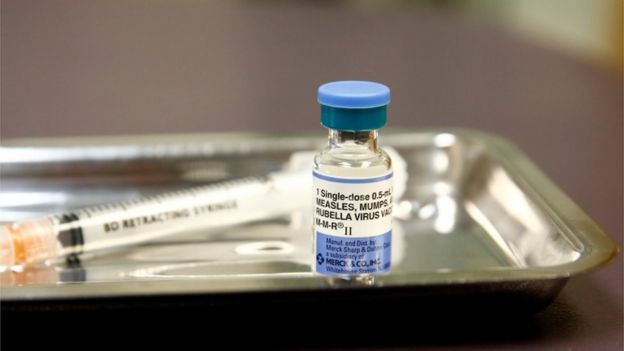
The disease, which causes coughing, rashes and fever, can be prevented by two doses of the mumps, measles and rubella (MMR) vaccine, available free to all young children in the UK.
Here, 95% of five-year-olds have had the first jab – the World Health Organization (WHO) target – but only 87.4% have had the second.
And as measles is highly infectious, even small declines in uptake can have an impact.
Image copyrightREUTERSImage captionMeasles is easily preventable through vaccination
The WHO says countries with no active outbreak of measles can temporarily pause their immunisation campaigns.
And 24 countries, including several already dealing with large measles outbreaks, have decided to delay because of the coronavirus pandemic: • Bangladesh • Brazil • Bolivia • Cambodia • Chad • Chile • Colombia • Djibouti • the Dominican Republic • the Democratic Republic of Congo • Ethiopia • Honduras • Kazakhstan • Kyrgyzstan • Lebanon • Maldives • Mexico • Nepal • Nigeria • Paraguay • Somalia • South Sudan • Ukraine • Uzbekistan
But Unicef says even more may face disruptions.
“If the difficult choice to pause vaccination is made due to the spread of coronavirus, we urge leaders to intensify efforts to track unvaccinated children so that the most vulnerable populations can be provided with measles vaccines as soon as it becomes possible to do so,” it said
Spokeswoman Joanna Rea added: “Disruptions to routine vaccine services will increase the risk of children contracting deadly diseases, compound the current pressures on the national health services and risks a second pandemic of infectious diseases.”
Britain’s independent tax and spending watchdog has warned the coronavirus pandemic could see the UK economy shrink by a record 35% by June.
The Office for Budget Responsibility (OBR) said that this was based on an assumption that the current lockdown would last for three months.
Once restrictions were lifted, the OBR said it expected no lasting damage.
Separately, the International Monetary Fund warned the virus would push the UK into its deepest slump for a century.
The IMF expects the UK economy will shrink by 6.5% in 2020, while the global economy will contract by 3%.
It said the pandemic had plunged the world into a “crisis like no other”.
The OBR’s forecast – which is just focused on the virus’s impact on the UK economy and public finances – is more severe.
It said a three-month lockdown followed by three months of partial restrictions would push up the UK’s borrowing bill to an estimated £273bn this financial year, or 14% of gross domestic product (GDP).
This would represent the largest deficit as a share of GDP since World War Two.
While borrowing is expected to jump, the OBR said the government’s unprecedented financial help for workers and businesses would help to limit any long-term damage.
It expects half of the sharp drop in economic growth in the second quarter to be reversed in the three months to September.
While the UK economy is expected to contract by 13% for the year as a whole, the UK is expected to get back to its pre-crisis growth trend by the end of 2020.
The OBR expects a more lasting impact on unemployment, which is estimated to rise by 2.1 million to 3.4 million by the end of June.
Under this scenario, unemployment would hit 10%, from its current 3.9% rate, before easing to around 7.3% at the end of the year.
The jobless rate is expected to remain elevated until 2023, when it is expected to drop back to 4%, in line with the OBR’s March forecast.
Lasting impact on public finances
The OBR expects UK debt to remain elevated for years to come, with extra borrowing expected to push Britain’s debt share to above 100% of GDP this financial year.
While this will drop sharply as the UK economy recovers, public debt is expected to remain at 84.9% of GDP in four years time, much higher than the 75.3% forecast in the March Budget.
However, the OBR said extra spending by the Treasury to support the economy was crucial to limit the economic damage.
“The government’s policy response will have substantial direct budgetary costs, but the measures should help limit the long-term damage to the economy and public finances – the costs of inaction would certainly have been higher.”
It added that while the lockdown was the main constraint on economic activity, relaxing these measures too soon would cause greater damage.
“The reason why most of the short-term economic impact comes from these measures is that they are successful in limiting the spread of the disease.
“If the measures were not stringent enough to control the disease, then the economic impact from illness would be that much greater.”
An influential member of the governing New Patriotic Party (NPP) Gabby Asare Otchere-Darko has explained even though the government of Ghana has secured a facility of $1 billion from the International Monetary Fund (IMF) to support its fight against the novel coronavirus pandemic, it does not mean the country is back in an IMF programme.
Following the announcement that the IMF had successfully approved a credit facility of $1 billion to help Ghana confront the virus, many called out the governing NPP for demonizing the erstwhile National Democratic Congress (NDC) for borrowing from the IMF while the NDC was in power.
But in a sharp rebuttal, Mr Asare explained that the money made available by the IMF to help countries fight the virus is not similar to the Extended Credit Facility program that the NDC government entered into with the IMF in 2015.
Instead, he praised the current administration for being able to double the amount the IMF had made available to the country by making a strong case.
“Ghana pushed for $1bn IMF support to fight Covid-19. Yes, IMF has approved $1bn for Ghana. No, this does not mean we are back in an IMF program. The Fund says it has a $1 trillion war chest to fight Covid-19. Ghana made a strong case for double what IMF had on the table for us,†he wrote.
Ghana is among developing countries that have had to turn to the IMF for support to fight the pandemic due to resource constraints.
New Zealand has managed to do something that many countries wish they could achieve: for four straight days, it has reported a decline in new coronavirus cases.
On Thursday, the country reported 29 new confirmed and probable cases, bringing New Zealand’s total to 1,239 — including only one death. Of those cases, only 14 are in hospital — and 317 have recovered.
New Zealand, a small island country with a population of just under 5 million, is halfway through a month-long lockdown aimed at not only containing the virus, but eliminating it.
And so far, the approach appears to be successful.
“We are turning a corner,” Prime Minister Jacinda Ardern said in a speech Thursday. “And your commitment means our plan is working.”
For other countries, those positive signs might be a reason to lift restrictions. Denmark, which has at least 5,597 cases and 218 deaths, announced it will begin to lift its lockdown next week if cases remain stable.
Instead, Ardern said Thursday she was tightening border restrictions, meaning all those who arrive in the country will be required to spend two weeks quarantined in an approved facility, rather than self-isolating at home. The rule only applies to New Zealanders — foreign nationals have been banned from entering the country since March 20.
“At the halfway mark, I have no hesitation in saying that what New Zealanders have done over the last two weeks is huge,” Ardern said at a press conference Thursday that many Kiwis listened to live. “You made the decision that together, we could protect one other. And you have. You have saved lives.”
“But as I’ve said, this is going to be a marathon.”
New Zealand’s head-start
In the fight against coronavirus, New Zealand had two key advantages: geography and time.
On February 28, New Zealand confirmed its first case of coronavirus, well over a month after the United States confirmed its first case. And on March 29, the country confirmed its first — and so far, only — death.
“I think we had a little bit more time to think about it, and we could learn from the experience of China,” said Professor Michael Baker, from Otago University’s Public Health Department, who helped advise the government on its response.
New Zealand also had the advantage of being an island far from most other countries, with fewer flights than many other places, said Auckland University microbiologist Siouxsie Wiles.
That’s something Ardern has pointed out. On Thursday, she noted that being an island was a “distinct advantage in our ability to eliminate the virus.”
But the real lesson from New Zealand has been the combination of good science and leadership, said Baker. That’s meant widespread testing. To date, New Zealand has carried out 51,165 tests. Earlier this week, the United Kingdom — a country with around 13 times more people than New Zealand — said it had tested 208,837 people.
Baker said he had been “really disappointed” that countries like the US and the UK which had some of the world’s top science resources had not fared better than countries like New Zealand which have comparatively limited resources. “We have the same access to the same knowledge as you do — the whole world has seen this coming, it’s like a slow-moving tsunami, it hasn’t changed its characteristics at all, and the virus is very stable.”
While UK Prime Minister Boris Johnson warned citizens that they should prepare to lose loved ones before their time, Ardern was clear that she would value people not just the economy, and responded to the threat fast, said Wiles.
When Ardern announced on March 14 that anyone entering the country would need to self isolate for two weeks, it was among the toughest border restrictions in the world. At the time, the country had six cases.
When, on March 19, Ardern banned foreigners from entering the country, there were 28 confirmed cases. And on March 23, when Ardern announced that the country was going into lockdown, there were 102 confirmed cases — and no deaths.
“Here in New Zealand, we don’t have a lot of intensive care beds compared to some other countries. That’s why (Ardern) acted really fast,” Wiles said.
Why New Zealand only has one death
Another thing New Zealand has that is working to its advantage is the relative youth of those who have been infected with coronavirus.
People aged 20 to 29 make up just under 25% of New Zealand’s confirmed and probable cases, while those aged 30 to 39 make up 15%.
By comparison, a report issued by the US Centers for Disease Control and Prevention that analyzed the cases of 2,500 patients in the US whose ages were known, found that 29% were aged 20 to 44.
Countries around the world have consistently seen a much higher Covid-19 mortality rate among elderly patients than younger patients.
The reason why young Kiwis may have a higher rate of coronavirus is travel. Just over 40% of New Zealand’s cases are still connected with overseas travel. Many young people hurried back to New Zealand after Ardern announced border restrictions.
Baker said that was the “healthy traveler effect.”
“People who go traveling are generally in better health than most people. We know that the mortality risk is so much higher in older populations and people with chronic conditions and they tend to travel less,” he said. “The very good outcomes so far in New Zealand is because the cases have been in younger age groups and they have been relatively healthy.”
Can New Zealand succeed in stamping out the coronavirus?
There’s certainly reason to be cautiously optimistic that New Zealand’s plan is working — but both Wiles and Baker agree that it is too early to celebrate.
Ardern has said she has no plans to lift the month-long lockdown early, and may need to extend it still.
“If we move too early, we will go backwards,” she said Thursday.
While plan A remains “stamping” the coronavirus out, there is a plan B, Baker said. That involves preparing the health system for large numbers of severely ill people, he said.
And even if plan A works, New Zealand will still have to remain an island, so to speak, for some time yet.
“We’ll be in the same boat as most countries that are doing the suppression approach — we’ll be waiting for good vaccines and good anti-virals,” said Baker. “Much of Europe is saying we will be locked down for months, so we’re all in the same boat.”
Africa has passed the grim milestone of 10,000 reported cases of coronavirus, along with more than 500 deaths, according to the Africa Centres for Disease Control and Prevention (ACDC).
As the daily number of new infections appears to be falling in parts of the world, some fear the epicentre of the virus could move to the continent.
Despite efforts to lock down cities and countries, despite donations of protective equipment, testing kits and ventilators from China, one thing is clear: Africa has not yet flattened the curve and the room for manoeuvre is getting smaller.
‘Delay in action’
“What we are seeing is that this opportunity is no longer there or almost not there for some countries,” says Dr Michel Yao, who runs the emergency response programme for the World Health Organization (WHO) in Africa.
“The worry is also now that [countries] cannot adequately manage this phase, they are moving to [in country transmission]. But we are seeing there is some delay in addressing [this]… to mobilise more people, train more people, think about capacity.”
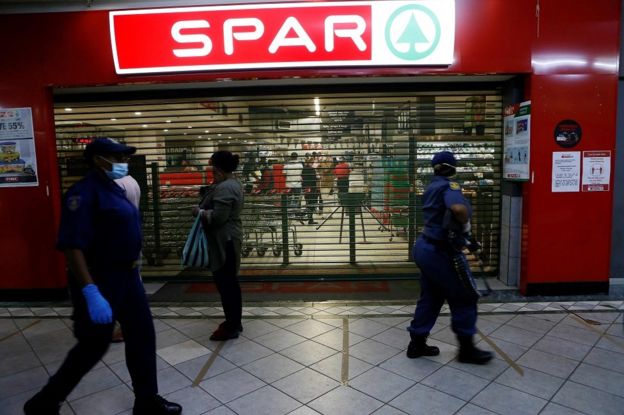
Image copyrightAFPImage captionThe lockdown in South Africa means that the number of shoppers in supermarkets are restricted
It is difficult to compare regions with different cultures, economies, travel links and infrastructure, but some comparisons paint an urgent picture.
In studying the daily increases in the number of those who have tested positive for coronavirus around the world, Africa appears to be controlling the spread better than in the US and Europe so far.
But the comparison with Asia, where some countries appeared to reduce the daily increase in the number of new cases relatively quickly, does not fare so well.
Spreading in communities
Perhaps a better comparison could be with the Middle East. There, cases have steadily risen, along with deaths, and the region has now recorded more than 78,000 cases in total, according to the WHO.
Nearly every African country has reported cases, and while most began with patients bringing the virus in through international travel, it is now spreading within communities.
Different variables make predictions difficult, but the worst-case scenarios are still jarring. “Cases can easily pick up,” Dr Yao says, “even triple, maybe multiply by seven to 10 from what we have right now”
In South Africa, the last two weeks of March saw a 20-fold increase in the number of confirmed cases. In response to the growing numbers, President Cyril Ramaphosa declared a country-wide three-week lockdown that began on 27 March.
He has since extended that to the end of April as the number of daily new cases has dropped – though it is too early to say conclusively if the lockdown the reason.
What is significant is the rise in testing capabilities in South Africa.
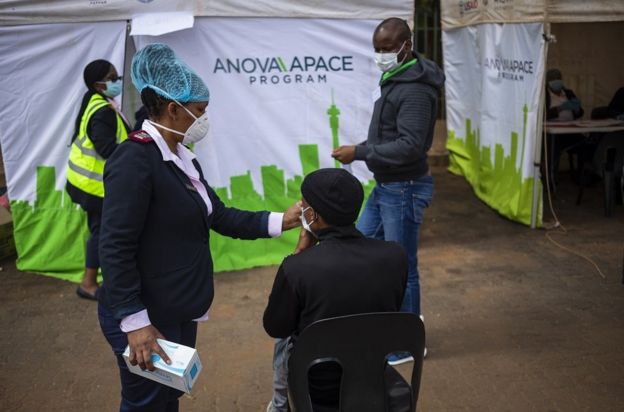
Image copyrightEPAImage captionSouth Africa has mobile testing units to try and test as many people as possible
The country has so far conducted around 60,000 tests for Covid-19, the disease caused by the virus, and is now testing at a rate of nearly 5,000 a day, according to Health Minister Zweli Mkhize.
But compared to other countries in the grip of the virus, that amount is still woefully inadequate. Italy – one the hardest hit countries in the world – has a similar population to South Africa and has conducted more than 700,000 tests.
Testing numbers are even more worrying across the rest of Africa.
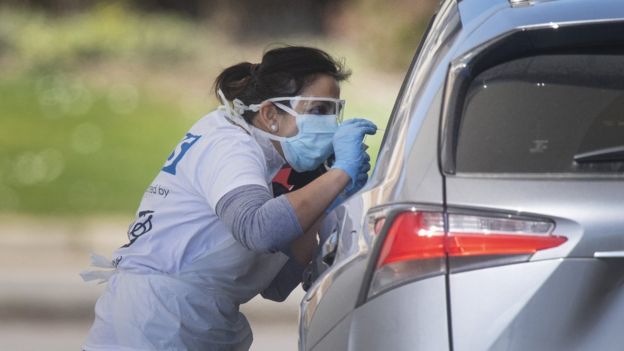
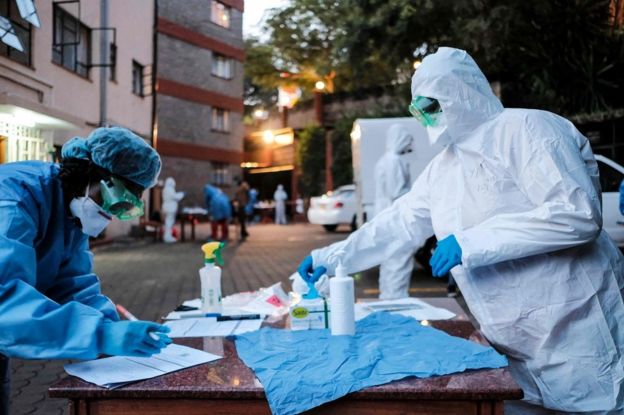
Image copyrightAFPImage captionIn Kenya, health workers have been testing people who have been put in quarantine
Nigeria and Kenya have each conducted around 5,000 tests. Compare that with 600,000 in South Korea, who many see as having waged the strongest campaign against the virus.
“We are seeing an increase in the number of tests but I think we could do much more,” argues Dr Abdhallah Ziraba, a research scientist and epidemiologist at the African Population and Health Research Center.
Testing bottlenecks
African countries have been fighting hard to raise their testing capacity.
Health ministries have worked to convert private laboratories into Covid-19 testing centres and major laboratories like the Pasteur Institute in Dakar have – through the ACDC-organised Covid-19 training seminars for laboratories around the region.
Still it has not been enough.
Bottlenecks in the supplies of reagents necessary for testing have limited capacity.
Chinese billionaire Jack Ma recently announced donations of more than one million sample extraction kits to African countries. It is unclear whether the full testing package will be included, but if so, the donation could prove critical to boosting tests continent-wide.
“We know there are challenges around the development of the tests, the cost of the test and the logistics involved but we can’t be complacent and just think that people are not going to die,” says Dr Ziraba.
According to a study written by epidemiologists in London and Johannesburg, a single reported death could mean a country already has hundreds or even thousands of cases.
The more tests that can be conducted, the more confident the continent can be in its data and the systems it has in place to fight the rising tide.
One of the major problems Africa will face in the coming weeks is exactly how to fight the virus.
So far South Africa’s lockdown strategy has shown signs of promise. Other countries have followed suit.
Africa’s most-populous country, Nigeria, has locked down Lagos, restricting movement to essential activities.
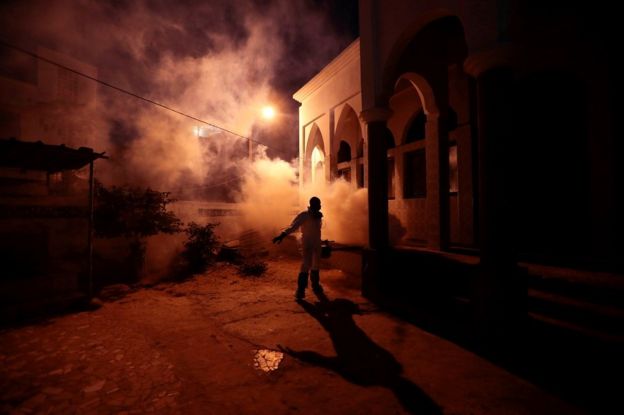
Image copyrightREUTERSImage captionSanitation workers have sprayed disinfectant into mosques in Senegal’s capital, Dakar, to help prevent the spread of coronavirus
One suburb of the capital of the Democratic Republic of Congo, Kinshasa, has followed suit.
Dakar in Senegal and Nairobi in Kenya have imposed curfews, allowing people to continue working but preventing social activity and travelling at night.
The spectre of a total lockdown however risks a complete halt of economic activity across the continent.
More than a third of the population of the continent lives below the poverty line. While most of those live in rural areas and potentially have access to subsistence farming, around 20% live in urban areas, relying on casual labour to feed themselves and their family.
Risk of malnutrition
If it proves necessary to completely cut them off from jobs and markets, the potential death toll is unknown.
“Economic recession and deteriorating livelihoods mean impoverishment, malnutrition, worsened access to routine health services, and that in turn all means lives lost as well,” says Dr Francesco Checci, a professor of epidemiology at the London School of Hygiene and Tropical Medicine.
“Lives lost not just among the old but also among children and younger people. So there is a really difficult equation there.”
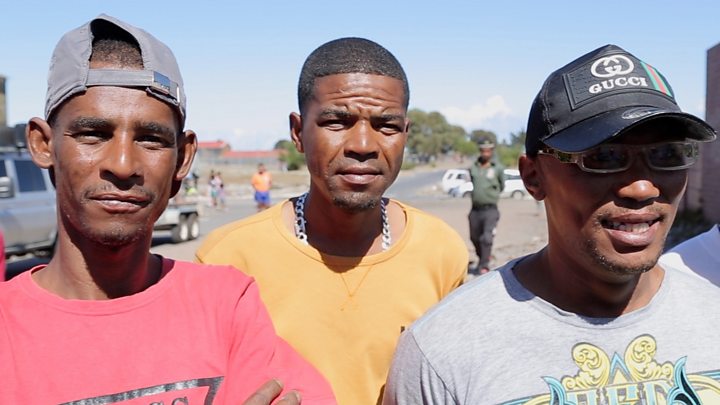
Countries like Rwanda have started to distribute food and resources in anticipation of those consequences. In Cape Town, in South Africa, even notorious street gangs have begun to help distribute food.
Media captionHow coronavirus inspired a gangland truce in South Africa
In other countries, the plan is less clear.
In Kenya, civil society groups have started collecting funds and food for lower income families. Ethiopia has declared a state of emergency, despite Prime Minister Abiy Ahmed recently saying that “we can’t impose a lockdown like more developed nations, as there are many citizens who don’t have homes”.
African nations have limited resources to replace the incomes of their citizens. Those difficulties again highlight the importance of testing.
“If we can test and have a more localised strategic approach to restricting movement that would really help resources,” says Dr Ngozi Erondu, an infectious disease epidemiologist at the Chatham House think-tank.
“I think we can be more creative about which villages can go to markets on which days doing rotations so that there are less densely populated areas.”
Image copyrightBADRU KATUMBAImage captionMarket traders in Uganda have been told to sleep by their stalls to prevent the spread of coronavirus
Ultimately, it will be the efforts and resources deployed by African countries themselves that determine the course of the outbreak
“Governments need to invest in this, you can’t tell people to stay away from work and make sure you stay hygienic when you don’t give them a way to do so,” says Dr Erondu.
“We really will start seeing if these lockdown measures, these quarantine measures – if they’re actually working towards the end of April.”
A Ghanaian nurse based in the United States of America (USA) and her family have defeated the Coronavirus disease (COVID-19) using the traditional method of the use of herbs.
Narrating her ordeal, the health worker, whose name was only given as Akua, recounted how she contracted the virus unknowingly after having contacts with some patients at her facility who later were diagnosed as COVID 19 patients.
According to the 38-year-old mother of two, she started showing symptoms of the disease and isolated herself from her husband and two children aged 8 and 4.
As an asthmatic patient, Akua indicated she sensed how dangerous it was to contract the virus and therefore made much efforts to be free from it.
Speaking in a telephone interview on Peace FM’s ‘Kokrokoo’ program Friday, April 10, 2020, she revealed how she resorted to the use of concoction produced by herself.
“I soaked garlic, ginger and grains of selim in water for 24hrs and I started taking it. Apart from the taking of the concoction orally, I also used another traditional healing method where for 20 minutes each morning, I sat by a bucket full of hot water and covered myself with a blanket so as for the body to absorb all the heat from the hot water”, she told host, Kwame Sefa Kayi as monitored by Ghanaguardian.com.
According to the US-based nurse, her husband and their two children who also showed symptoms and later tested positive, equally relied on the same methods to get healed.
She recounted how scared she was to have been diagnosed with COVID-19 but now happy she and her family are free from the virus that has taken many lives.
The President, Major General Muhammadu Buhari (retd.), on Friday, met with the members of the Presidential Task Force on COVID-19, led by the Secretary to the Government of the Federation, Boss Mustapha.
Buhari said this in a tweet on Friday.
He said the meeting held at the State House with members of the task force was on the national response to COVID-19.
The SGF had earlier said the task force would meet with Buhari to review the lockdown order in Lagos, Ogun and the Federal Capital Territory, The PUNCH reports.
The President, who had, on March 29, ordered the lockdown for an initial period of 14 days, did not provide any indication on whether or not the lockdown would be extended.
Those at the meeting included Mustapha, who is also the Chairman of the PTF; the Minister of Health, Dr. Osagie Ehanire; the Director-General of the Nigeria Centre for Disease Control, Dr. Chikwe Ihekweazu; and the National Coordinator in the fight against COVID-19, Dr. Sani Aliyu.
Buhari said, “The Presidential Task Force on Control of COVID-19 briefed me today. I remain very grateful for the hard work that they are putting into this national assignment. I have no doubt that with all these efforts, Nigeria will triumph over this pandemic.â€
Desperately needed aid for millions of people across sub-Saharan Africa is under threat as the deadly Coronavirus pandemic sweeps a continent already facing a volley of crises.
In some cases social distancing measures and border closures are preventing workers from distributing aid.
In others, funding is under threat as agencies scramble to pool resources to fight the fast-ballooning COVID-19 outbreak on the continent.
Cameroon’s polio vaccination campaign has been suspended, while in Chad a measles vaccination programme has been postponed.
In Niger and Burkina Faso, where hundreds of thousands of people have been displaced by jihadist violence, flights bringing in humanitarian aid have been put on hold.
In the Central African Republic, where most of the territory is under the sway of armed groups, supplies of chlorine, needed to provide safe drinking water, are running low.
“Some programmes have slowed down or been temporarily suspended, but most humanitarian operations are continuing,” said Julie Belanger, head of the UN’s Office for the Coordination of Humanitarian Affairs for West and Central Africa.
“We are focusing on activities that are vital for survival, but we are also adapting our way of working,” Belanger told AFP.
The United Nations says about 76 million people in sub-Saharan Africa need aid to survive and protect their health.
The coronavirus pandemic could further threaten populations on the continent, which so far has at least 12,700 recorded cases and more than 650 deaths, according to an AFP tally Friday.
Organisations are quickly learning to change how they work to prevent the virus from spreading further.
In Niger, for instance, food handouts are being distributed in small groups in order to keep social distancing, said Jean-Noel Gentile with the UN’s World Food Programme.
“To reduce the frequency of food distribution, we are handing out two or three months of rations each time,” he said.
‘Humanitarian corridors’
One fear that NGOs and governments have is that aid workers travelling to isolated areas could bring the coronavirus with them.
In eastern Democratic Republic of Congo (DRC), the first case of the virus registered in Goma was that of a Nigerian aid worker.
Masks, gloves and protective clothing are required by some organisations — but the crucial gear is hard to find in many countries.
“This is already difficult enough in France — you can imagine how it is in the furthest reaches of the Central African Republic,” said Isabelle Robin of the French charity Action Against Hunger (ACF).
The closure of borders and restrictions on movement inside countries are additional obstacles to delivering aid.
As a result, NGOs everywhere are attempting to negotiate with authorities in Africa to allow “humanitarian corridors” or exemptions for their personnel.
Money worry
But of all the problems for humanitarian work right now, “the biggest is financial”, said a UNICEF official in the DRC, pointing to the fact that donor attention lies elsewhere at the moment.
The United Nations has launched a $2 billion (1.83 billion euro) “global humanitarian response plan” on coronavirus, much of it earmarked for Africa.
Though Africa has not been hit as badly as most of the rest of the world, the pandemic is a growing threat, given the continent’s weak healthcare systems, entrenched poverty, poor sanitation and crowded slums.
There are concerns that funds received to deal with problems existing before the outset of the pandemic may now have to be rerouted.
That could be a harmful approach.
“It’s important that we don’t forget other needs,” said Maaike Hersevoort, head of the Doctors Without Borders mission in the Central African Republic, pointing to an outbreak of measles there.
‘Extreme distress’
In western and central Africa, the number of people needing aid has increased — even before the coronavirus hit the continent.
There are 44 million people in need this year, six million more than in 2019, according to UN projections.
In the Sahel region, food insecurity levels are rising and there are fears for the next harvest following a poor rainy season.
“We are especially concerned for the children, who become more vulnerable to illness when they are malnourished,” said Robin from ACF.
More generally, wellbeing in Africa could be hit by tough measures to stem the spread of COVID-19 — lockdowns mean that millions of people are unable to work, and thus likelier to sink further into poverty.
“We must not lose sight of the mid- and long-term impact of this crisis,” said Bruce Biber of the International Committee of the Red Cross in the Central African Republic.
“People have already been under great pressure for years, so it takes very little to push them into a state of extreme distress.â€
The Minister of Interior, Rauf Aregbesola has announced that the Federal Government has granted amnesty to 2,600 inmates.
A statement on social media revealed that the “amnesty will not apply to inmates sentenced for violent extreme offences”.
This is parts of efforts by the Federal Government to decongest the custodial centres and discourage the spread of COVID-19 in Nigeria.
The affected inmates includes: 1. Inmates that are 60years & above 2. Those suffering from ill-health likely to terminate in death 3. Convicts serving 3yrs & above & have less than 6mnths to serve 4. Inmate with mental issues 5. Inmates with option of fine not exceeding N50,000
The statement issued by the Ministry of Interior reads: “In a symbolic gesture of the amnesty given to the 2,600 inmates across Nigeria, 41 Federal inmates and 29 FCT inmates making a total of 70 inmates who met the above criteria will be released today from the Kuje Custodial Centre in Abuja.
“This amnesty will not apply to inmates sentenced for violent extreme offences such as terrorism, kidnapping, armed banditry, rape, human trafficking, culpable homicide and so on.
“The Governors of the 36 states under whose jurisdiction most of the inmates were incarcerated will complete the exercise in line with the federal principle”.
As the Coronavirus pandemic continues to spiral across the globe, Vice President Dr. Mahamudu Bawumia has urged African countries to get ready for a radical change in global economic outlook.
Dr. Bawumia took to his Twitter to anticipate the impact of COVID-19 on economies and therefore raised concerns on the need for countries in Africa to get ready.
“The post COVID-19 global economic architecture is going to be a radically different one”.
He also predicted that many countries will even be more self-reliant in the production of goods and services after the eradication of the virus.
“It will usher in more self-reliance in the production of goods and services. We in Africa have to get ready for this new future.” he said.
Ken Ofori- Atta calls on China to help Africa
China must do more to help ease the debt burden of African countries facing economic calamity due to the coronavirus pandemic, Ghana’s finance minister has said.
Africa accounts for just a fraction of global cases of the disease, but its countries are already feeling the impact, with the continent’s economies expected to contract, putting about 20 million jobs at risk.
“My feeling is that China has to come on stronger,” Ken Ofori-Atta said during a conversation on Monday with Masood Ahmed, president of the Washington-based Center for Global Development (CGD) that was posted on the think tank’s website.
“African debt to China is $145bn or so, over $8bn of payments is required this year … So that needs to be looked at.”
African governments are calling for $100bn in assistance, including support for a moratorium on all external debt and eventually, some debt write-offs.
Several MPs in Botswana have been caught breaking their self-isolation instructions and have now been placed in supervised quarantine.
On Thursday, all parliamentarians and President Mokgweetsi Masisi were asked to quarantine for 14 days after a health worker who had been screening them for the coronavirus herself tested positive.
However a government statement said some of the MPs had regrettably been seen shopping in supermarkets.
They have been moved from their homes to a supervised government facility.
The statement did not say how many lawmakers had broken the rules.
Botswana has reported 13 coronavirus cases and one death.
Zimbabwe’s embattled national airline is to send some of its staff on indefinite unpaid leave later this month following a drop in revenue caused by global travel restrictions.
Air Zimbabwe, which has just one aeroplane, was already $300m (£237m) in debt before the coronavirus pandemic struck. At the end of March it grounded its flights altogether.
“This decision has been made after evaluating all the available and possible options,” Air Zimbabwe said in a message to staff, according to Bloomberg News
Air Zimbabwe is quoted by Reuters news agency as saying it will keep a skeleton staff for the time being
, and that all empoyees will still receive their April salaries.
Alhaji Aliko Dangote, Chairman Dangote Industries Limited has assured Nigerians and Africans of victory over the coronavirus pandemic.
The assurance was detailed in a goodwill message on the occasion of his 63rd birthday issued by the Chief Corporate Communications Officer, Dangote Group, Mr Anthony Chiejina on Friday in Lagos.
The foremost entrepreneur commended the efforts of the organized private sector, which through the Coalition Against COVID-19 (CACOVID) initiative had raised over N21 billion to support government efforts to tackle the pandemic in Nigeria.
Dangote also lauded the efforts of the government at all levels and those on the frontline of the fight against COVID-19, which currently was ravaging the economic, health and social sectors of the country.
“All hands must be on deck to help fight the coronavirus pandemic, and every gesture of support from other stakeholders outside government and the business community in Nigeria and Africa, would go a long way to help tackle this global dimension issue, with its impact felt all over the world.
“If we all work together to combat this virus, then there is light at the end of the tunnel,†he said.
The News Agency of Nigeria (NAN) reports that Dangote, through his philanthropic organization, Aliko Dangote Foundation (ADF) has donated N2 billion in cash and other materials to the CACOVID Fund.
He also donated four ambulances to the Lagos State Government to support its efforts.
Under his leadership, CACOVID is building isolation centres in some states inclusive of 500-bed temporary medical facility in Kano, 1,000-bed facility in Lagos, 210-bed isolation centre in Rivers, 200-bed facility in Abuja,200-bed facility in Enugu and another 200-bed facility in Borno states respectively.
The Economic Community of West African States, ECOWAS in the light of the spread of the deadly coronavirus disease, has reaffirmed its solidarity with member states and continues to support them in the fight against the pandemic.
In a statement signed by the president of the ECOWAS Commission, H.E. Jean-Claude Kassi Brou, he said that the community in a bid to assist its member states in monitoring and preventing the spread of the coronavirus has made some financial support available from its funds, in addition, to support from other international partners, for the procurement of medical supplies and equipment needed for the fight against the pandemic.
He says the West African Health Organization, WAHO has also purchased and dispatched to the 15 Member States, some 30, 500 diagnostic test kits, 10, 000 Personal Protective Equipment (PPE) comprising overalls, aprons, gowns, gloves, goggles, boots and 740, 000 prescription tablets (Chloroquine and Azithromycin).
He also revealed that orders have been placed to acquire for the Member States, some 240,000 diagnostic kits, 240,000 extraction kits, 250,000 viral sample transport equipment, 285,100 Personal Protective Equipment (PPE), 268,1000 masks for medical personnel (facemasks, surgical masks, full facemasks), 120 ventilators, several thousand litres of alcohol gel and disinfectants.
WAHO says it is also working in close collaboration with the specialised services in Member states, to deploy personnel and epidemiological surveillance and data collection tools, strengthen the capacity of reference laboratories and train technical personnel.
He assured continued support to all member states in the fight against the deadly viral disease.
President Uhuru Kenyatta has directed the Ministry of Sports, Culture and Heritage to set aside Ksh.100 million ($944,356) to cushion local artistes from the effects of the coronavirus pandemic.
Addressing the Nation on the state of the COVID-19 outbreak in the country, Kenyatta said the Ksh.100 million fund will allow artistes, actors and musicians to continue entertaining the public through TV, radio and the internet.
“I direct the Ministry of Sports, Culture and Heritage to avail Ksh.100M from the Sports Fund to our artistes, actors and musicians during the period of the covid-19 pandemic so they may continue to entertain their fellow brothers and sisters through TV, radio and the internet,†said Kenyatta.
At the same time, the Head of State has announced that effective this week, all local artistes will be earning a total of Ksh.200 million per month which translates to an annual payment of over Ksh.2 billion.
“Starting this month, all our local artistes will be earning a total of Ksh.200 million per month that will be paid to musicians through the system and other platforms that we have developed.â€
“This shall translate this year to over Ksh.2 billion going into the pockets of our young artistes and young Kenyans. These payments will begin this week,†Kenyatta said.
He noted that the new payment of Ksh.2 billion is the pledge the government made in January this year to increase monies paid out to artistes after they received an underwhelming annual pay of Ksh.200 million last year.
The World Bank Group has announced the sum of $82 million funding support for Nigeria’s ongoing fight against the dreaded COVID-10 pandemic.
The Breton Woods institution stated it would be providing direct and long-term financial support to the country over the next 15 months while also extending similar supports to other African countries in mitigating the impact of the COVID-19 pandemic.
It stated: “In Nigeria, the World Bank has already made $82 million available for immediate support in strengthening the public health response through the Regional Disease Surveillance Systems Enhancement Project (REDISSE).
“The World Bank has been asked to provide a multi-pronged package of support over the next six months to strengthen the country’s preparedness for the immediate health crisis and provide the Federal Government with budget support for a pro-poor stimulus package and the long-term recovery.”
“Efforts to protect livelihoods and support local economic activity over the next 18-24 months will be critical in mitigating the economic and human impact of the COVID-19 pandemic,” the multilateral financial institution added.
This is even as the bank hinted that it had commenced discussions with the states and relevant federal agencies on how to best protect livelihoods of poor and vulnerable families, and support Micro, Small and Medium Enterprises (MSME) to enable recovery.”
It clarified: “Through the REDISSE project, about $10.6 million has already been committed to support the Nigeria Center for Disease Control in strengthening states’ emergency operation center; building, renovating and providing equipment for treatment centers across 8 states; and bringing in essential medical supplies and drugs, testing kits, personal protective equipment for frontline health workers.”
Some residents of Lagos, the industrial capital of Nigeria has raided the local government office to bring out food that has hoarded as the lockdown intensifies.
This incident happened at Abule Egba a suburb of the Lagos State where relief items meant for hungry lockdown residents was been kept.
The residents who could not continue to starve whiles the food meant for them were hoarded decided to take the law into their own hands and go for the food.
A Facebook user, who shared a video from the scene wrote, â€Oke Odo LCDA, Opposite Jubilee bridge Abule Egba, Lagos State.
“Citizens of the area broke into the office of the LG Chairman and made away with COVID-19 relief materials.â€
King Mohammed VI on Sunday pardoned more than 5,000 inmates to prevent the new coronavirus from contaminating Moroccan prisons, the Justice Ministry announced.
The monarch “granted a pardon to 5,654 inmates and ordered to take all necessary measures to strengthen the protection of inmates in prisons,†the ministry said in a statement.
The pardoned detainees were selected according to “their age, state of health, length of detention and good conduct,†according to the text.
Their release will take place “in stagesâ€, taking into account “the exceptional circumstances associated with the state of health emergency and the precautions requiredâ€.
The ministry does not specify whether detainees of the “Hirakâ€, a protest movement that has agitated Morocco in 2016-2017, are among those pardoned.
Morocco, which on Sunday recorded 960 cases of contamination with 66 deaths and 69 recoveries, took drastic measures by closing its borders and declaring a state of health emergency in mid-March to limit the spread of the Covid-19 pandemic.
In this country of 35 million inhabitants known for its overcrowded prisons (an incarceration rate of 232 per 100,000 inhabitants), human rights defenders recently called for the release of “political prisoners†as well as other priority categories of detainees (on remand, vulnerable or at the end of their sentences).
For its part, the prison administration has taken protective measures for its staff, reinforced health measures, reduced visiting rights and suspended all activities involving outside actors.
The UN High Commissioner for Human Rights Michelle Bachelet called on 25 March for the urgent release of detainees around the world to prevent the pandemic from “wreaking havoc†in these closed, often overcrowded places. Her appeal was followed by several countries.
Senegalese President Macky Sall has extended for 30 days the state of emergency introduced throughout the country in response to the new coronavirus, the state media reported.
The state of emergency first announced by the head of state on 23 March is accompanied by a curfew from 8 p.m. to 6 a.m. (same hours GMT).
The public TV news presenter read out the extension decree, dated 3 April, on Saturday evening.
The state of emergency allows the authorities to regulate or prohibit the movement of goods and people and gatherings, temporarily close public places and meeting places, ban the movement of planes and boats, decide on entry and exit points, or place people under house arrest.
The authorities did indeed impose many of these measures, in some cases before the state of emergency was declared. They prohibited gatherings and collective prayers, banned inter-city traffic and suspended almost all air traffic. Senegal has so far refrained from establishing containment. It would represent a considerable challenge in this poor country where a large part of the population lives from day to day.
The Ministry of Health announced on Sunday three new cases of contamination, bringing the total to 222 since March 2. Two people died, 82 are cured according to the official count.
17 Burkinabes have been arrested by security personnel at the Babile inland checkpoint in the Upper West Region for attempting to sneak into Ghana.
Their arrest was effected around 1830GMT on Saturday [April 4, 2020].
The 17 persons were on board a bus with registration number AAS 5603-C en route to Wa when the security officials took action to arrest them.
The Burkinabes subsequently moved to hide in a nearby bush but there were arrested by the officers.
According to the Lawra Municipal Commander of the Ghana Immigration Service, ASI Kingsford Agyakumhene, steps are being taken to repatriate them back to Burkina Faso on Sunday.
Those arrested include six women and 11 men.
They are aged between 20 and 40 years.
Ghana has closed its land, sea and air borders and is not allowing the movement of public buses except it is transporting goods and cargo.
The move is part of efforts to stop the spread of Coronavirus in the country.
The two-week border closure took effect on 22nd March, 2020 and was to expire on 5th April, 2020 but President Nana Akufo-Addo has by an executive instrument extended it by an additional two weeks effective 5th April.
Coronavirus cases in Ghana
As at 1800GMT on Saturday, April 4, 2020, there have been 205 confirmed cases of Coronavirus in Ghana.
Five of the patients have succumbed to the disease while two others have recovered.
Majority of the cases were confirmed in the Greater Accra region. There is one active case in the Upper West Region.
Coronavirus cases in Burkina Faso
As at 1800GMT on Saturday, April 4, 2020, Burkina Faso had confirmed 302 cases with 16 deaths and 48 recoveries.
There are now more than over 6,700 confirmed cases of coronavirus across the continent, with a number of African countries imposing a range of prevention and containment measures against the spread of the pandemic.
According to the latest data by the Africa Center for Disease Control on COVID-19 in Africa, the breakdown remains fluid as countries confirm cases as and when. The whole of Africa has rising cases with a handful of countries holding out.
We shall keep updating this list which will be put in sub-continental blocs: East, West, Central, Southern and North Africa. All statistics are sourced from Africa CDC updates, from the John Hopkins University and from official government data.
The classifications are based on where the countries are located especially in the case of countries that belong to two different blocs, like Tanzania in East Africa, despite belonging to EAC and SADC.
Major stats as at April 3
Confirmed cases = 7, 933
Number of deaths = 334
Recoveries = 702
Infected countries = 50
Virus-free countries = 4
Countries in alphabetical order
Algeria 1,171
Angola 8
Benin 16
Botswana 4
Burkina Faso 302
Burundi 3
Cameroon 509
Cape Verde 6
Central African Republic 8
Chad 8
Congo-Brazzaville 41
DR Congo 148
Djibouti 49
Egypt 985
Equatorial Guinea 16
Eritrea 22
Ethiopia 35
Eswatini 9
Gabon 21
(The) Gambia 4
Ghana 205
Guinea 73
Guinea-Bissau 15
Ivory Coast 218
Kenya 122
Liberia 7
Libya 17
Madagascar 70
Malawi 3
Mali 39
Mauritania 6
Mauritius 186
Morocco 791
Mozambique 10
Namibia 14
Niger 120
Nigeria- 210
Rwanda 89
Senegal 207
Seychelles 10
Sierra Leone 2
Somalia 7
South Africa 1,505
Sudan 10
Tanzania 20
Togo 40
Tunisia 495
Uganda 48
Zambia 39
Zimbabwe 9
Virus-free = Sao Tome and Principe, Comoros, Lesotho, South Sudan
Suggesting Africans test a “repurposed” tuberculosis vaccine to help find a COVID-19 vaccine has triggered outrage. A French anti-racism group slammed the idea floated by two French doctors, one of whom has apologized.
Paris intensive care doctor Jean-Paul Mira apologized Friday for suggesting the testing in Africa of a “repurposed” tuberculosis vaccine as a COVID-19 beater during an expert chat with a colleague on television.
“Africa isn’t a testing lab,” replied retired Ivory Coast football star Didier Drogba, and a Moroccan lawyers’ collective had said it would sue Mira for racial defamation.
French group SOS Racisme said Africans aren’t guinea pigs and France’s CSA broadcast ethics watchdog said it had received a complaint.
Paris’ clinic network, including Mira as head of intensive care at its Cochin hospital, on Friday quoted him as saying: “I want to present all my apologies to those who were hurt, shocked and felt insulted by the remarks I clumsily expressed.”
On Wednesday, in a broadcast on the channel LCI, Mira discussed the rush to find anti-coronavirus vaccines with Camille Locht, research head at France’s National Institute of Health and Medical Research (INSERM), based in Lille.
Coronavirus crisis: How is life changing around the world?
Their focus was BCG, a vaccine against tuberculosis used for decades to help shield health workers and reputed to reduce suffering from respiratory illnesses among children as well as mitigating asthma and autoimmune diseases.
Mira posed the question: “… shouldn’t we be doing this study in Africa, where there are no masks, no treatment, no intensive care, rather as was done with certain studies on AIDS, where things are tested on prostitutes because it’s known that they are highly exposed (to HIV)?”
Locht replied: “You’re right, we are thinking in parallel by the way about a study in Africa with the same kind of approach, (but) it doesn’t prevent us from being able to think about a study in Europe and Australia at the same time.”
She was referring to a BCG vaccine trial in Australia among some 4,000 health workers.
Spanish, French, German and Dutch research entities, including INSERM, are also preparing trials using genetically-modified vaccines.
Radboud University in the Netherlands said the BCG vaccine did not directly protect against the coronavirus but could boost immune systems among patients and health workers and ease infections by the new Sars-CoV-2 virus.
A Pan Africanist, Abdul Aziz, has indicated that the coronavirus pandemic presents an opportunity for Africans to unite to build their own economy in order to reduce the over-reliance on the developed countries for goods and services.
He noted that Africans have for a very long time depended on external support for basic goods and services which could have been produced on the continent with the right institutional frameworks in place.
Therefore, he sees this pandemic as an opportunity to rethink into the decisions to seek external support to solve problems among Africans.
“This COVID-19 presents an opportunity for black people to unite and build our own economy. We have relied on the foreigners for a very long time and that is bad,†he told Richard Appiah Sarpong, a journalist in an interview on Friday, April 3.
He added: “Very soon a vaccine will emerge from the continent. We all remember a black man from Ghana first developed a vaccine for Ebola before the whites brought theirs and so I believe that a vaccine will soon come out from our continent.â€
He also believed the outbreak which emerged from China is biological warfare between the world superpowers including America, Chain and other European countries.
“A critical assessment of this whole issue reveals to me that this is biological warfare between the superpowers especially China and America,†he said.
August polls were seen as a key test of the reformist agenda of Prime Minister Abiy Ahmed.
Ethiopia has postponed parliamentary and presidential elections scheduled for August due to the coronavirus outbreak, the electoral commission has announced.
The August polls had been seen as a key test of the reformist agenda of Prime Minister Abiy Ahmed in what was once one of the continent’s most repressive nations.
“Because of issues related to the coronavirus, the board has decided it can’t conduct the election as planned… so it has decided to void that calendar and suspend all activities,” the poll body said in a statement on Tuesday.
It said a new date would be given “when the pandemic is over”.
Jawar Mohammed, a leading opposition politician, told AFP news agency that a new calendar “cannot be done by the ruling party alone”.
Ethiopia has recorded 25 cases of COVID-19 and federal and regional officials have introduced a range of measures intended to curb its spread, including banning large gatherings and restricting travel.
These measures would have prevented the timely completion of activities like voter registration and the recruitment and training of observers, the election commission said.
Ethiopia is Africa’s second-most populous nation. When Abiy took power in 2018, he promised to liberalise the state-run economy and introduced reforms that saw thousands of political prisoners released.
He had promised to hold free and fair elections in August when his party would have faced a stiff challenge from many ethnically-based parties newly emboldened by his reforms.
Nigeria has discharged 11 people who were being treated for the coronavirus in hospital.
Meanwhile, the Nigeria Centre for Disease Control has confirmed 10 new cases of the virus, bringing the total number of recorded cases to 184.
The authorities say they have increased their testing capacity and can now test 1,500 people a day.
Health Minister Osagie Ehanire confirmed that the country was seeing “early signs of community transmissionâ€, and he expected an increase in the numbers of people contracting the virus.
This is because the authorities had stepped up efforts to find those who had been in contact with Covid-19 patients.
Former Republic of Congo president Jacques Joaquim Yhombi Opango died in France on Monday of the new coronavirus (Covid-19), his family told AFP. He was 81.
Yhombi Opango, who led Congo-Brazzaville from 1977 until he was toppled in 1979, died at a Paris hospital, his son Jean-Jacques said.
Yhombi Opango had been ill before he contracted the virus, his son added.
ARMY OFFICER
Born in 1939 in Congo’s northern Cuvette region, Yhombi Opango was an army officer who rose to power after the assassination of president Marien Ngouabi.
The troubled oil-rich former French colony was aligned with the Soviet Union during Ngouabi’s 1968-1977 rule.
Yhombi Opango was ousted by long-time ruler Denis Sassou Nguesso.
JAILED
Accused of taking part in a coup plot against Sassou Nguesso, Yhombi Opango was jailed from 1987 to 1990. He was released a few months before a 1991 national conference that introduced multi-party politics in the central African country.
He founded the Rally for Democracy and Development party but lost in a 1992 presidential election.
Yhombi Opango later allied with elected president Pascal Lissouba, becoming his prime minister between 1994 and 1996.
When civil war broke out in Congo in 1997, Yhombi Opango fled into exile in France.
He was finally able to return home in 2007, but then divided his time between France and Congo because of his health problems.
A young woman, who was Kenya’s first reported case of Covid-19, has said she has fully recovered after 23 days of treatment.
Identified only as Brenda, she told reporters she had been visiting the US since last December, but suspected that she contracted the coronavirus on her flight back to Kenya from London in early March.
“I had a cough three days into landing in the country,” Benda said.
She then went to the government isolation centre in the capital, Nairobi, to begin her treatment, adding that the staff there “treated her well”.
“[Covid-19] is something that can be managed and it is treatable,” Brenda said about her message to Kenyans.
Brian, the other recovered patient, who said he contracted the virus after interacting with Brenda, said he was also feeling much better.
He said that his experience had made his relatives believe that the disease “is real and treatable”.
Brenda and Bran spoke to President Uhuru Kenyatta via video link during the press briefing.
Kenya has confirmed 59 Covid-19 cases since it announced the first one on 13 March.
Ghanaian triple jumper, Nadia Eke has urged Ghanaians to fully respect health guidelines and directives concerning Coronavirus in order to stop the spread of the disease.
The Coronavirus pandemic has affected the globe and several major sporting activities have been postponed.
The European Championships and Olympic Games slated for this year will be held in 2021 due to the disease.
Eke, who will represent Ghana in the Olympics Games, spoke to Citi Sports via a video on Tuesday and asked Ghanaians to do all they could to fight the pandemic.
“My team mates and I, who were looking forward to going to Japan this year for the Olympic Games are disappointed that the Games have been postponed. That being said, I think that, as a community, we need to stand by each other and take care of each other and ourselves.
What this means is that you have to do your part and follow the precautions to make sure that you are a being a team player in the fight against this virus. The virus will not fight itself and we have to do our part and stand by each other.
As people can see (from the video), I am staying home and hopefully, we can all get back to our lives as we envisioned very soon.â€
Eke and Joseph Paul Amoah had booked places in the Games and they were set to represent Ghana in the triple jump and 100m and 200m events respectively.
A communique issued and signed by the President of the AU, President Cyril Ramaphosa, a copy of which has been made available to the Daily Graphic, said a continental coordinated response was more important now than ever before in order to arrest the rapid spread of the COVID-19 pandemic.
It said the spread of the COVID-19 had stretched public health systems beyond limits and caused an enormous global economic, social and humanitarian meltdown.
Coordinating efforts
The AU Centre of Disease Control (CDC) had recommended the setting up of the Anti-COVID-19 Fund following what it described as an anticipated shortage of medicines and vaccines as factories were closing down in many countries on the continent and others were retaining supplies for their own consumption.
The CDC, headed by Dr John Nkengasong, the communique said, had told the Bureau of Heads of State that the rapid spread of the COVID-19 was an unprecedented public health disaster.
The bureau, thus, underscored the vital importance of coordinating efforts to increase global production and improve the availability of medical products and equipment.
The Chairperson of the AU Commission, Mr Moussa Faki Mahamat, and Dr Nkengasong, also participated in the meeting.
President Ramaphosa, in the communique, underscored the fact that poverty, poor sanitation, an existing disease burden, overstretched health systems and extreme urban population density on the continent meant that the pandemic could explode in an even more catastrophic way than had been seen thus far in Africa, hence the need for urgent action in order to stem the tide.
“The AU, Regional Economic Communities (RECs) and all health institutions should direct their efforts at stopping the spread of the virus,†President Ramaphosa stressed.
Mobilisation
The CDC, the communique noted, was severely under-funded, and thus called on African Union member states, the international community and philanthropic entities to contribute to the fund.
“In this regard, member states of the bureau agreed to contribute an amount of $4.5 million towards boosting the capacity of the CDC,†the communique highlighted.
It emphasised that given the limited health infrastructure in Africa and the reality that most of the pharmaceuticals and medical supplies consumed on the continent were imported, the bureau called on the international community to encourage open trade corridors, especially for pharmaceuticals and other health supplies.
Debt waivers
The bureau urged the G20 to immediately provide African countries with medical equipment, test kits and protective gear to combat the COVID-19 pandemic.
Additionally, the bureau, the communique pointed out, was urging the G20 countries to provide an effective economic stimulus package that included relief and deferred payments.
The bureau has also called for the waiver of all interest payments on bilateral and multilateral debt, and the possible extension of the waiver to the medium term in order to provide immediate fiscal space and liquidity to governments.
It also urged the World Bank, International Monetary Fund (IMF), African Development Bank (AfDB) and other regional institutions to use all the instruments available in their arsenal to help mitigate against the scourge and provide relief to vital sectors of African economies and communities.
While commending the efforts of the Committee of African Health Ministers in rallying support to curb further spread, the bureau paid tribute to the courageous efforts of all medical and healthcare officials on the continent engaged in combating the COVID-19 pandemic.
“The bureau urges all citizens of Africa to abide by national measures implemented to curb the spread of the COVID-19 virus,†the communique emphasised.
His tragic death came just days after he tested positive for the dreaded virus, with the Somalia football federation taking time to pay an impassioned tribute to the 59-year-old.
“Somalia lost football legend Abdulkadir Mohamed Farah to Coronavirus. The legend died at a hospital in London where he was admitted last week,”Somalia FA said in a tweet.
“The SFF sends condolence to his family, relatives and the entire Somali football family,” the federation added.
Goal.com reports, until his death, Mohamed Farah was acting as an advisor to the ministry of youth and sports in Somalia.
Born in Beledweyne on February 15, 1961, in Hiiraan province, Farah began his football career while still in school before turning pro.
He went on to represent Batroolka FC in the Horn of Africa region.
Farah becomes the first African footballer to succumb to coronavirus currently ravaging the world.
Earlier, YEN.com.gh reported that Patrick Mboma, former Cameroon international, said his uncle Achille Essome Moukouri lost his life while battling the rampaging coronavirus in the early hours of Monday, March 23.
The 49-year-old is now a consultant at French sports TV channel Canal+ Afrique.
According to Patrick Mboma, the sad news was sent to him by his mother.
“Awful news! A call from my mother this morning to tell me that I just lost my uncle Achille Essome Moukouri at 5:00 am Thank you #Covid -19,” Mboma tweeted.
The African footballer of the year 2000 is currently trapped in France as the scourge continues to cripple all forms of activities across Europe.
Patrick Mboma further wrote to his followers that coronavirus is real and everyone should take precautions.
Somalia lost football legend Abdulkadir Mohamed Farah to Coronavirus. The legend died at a hospital in London where he was admitted last week. The SFF sends condolence to his family, relatives and the entire Somali football family.
President Sahle-Work Zewde has called upon the public to follow the advice given by the government to halt the spread of coronavirus (COVID-19).
The government has been taking more measures to curtail the spread of the virus, she said.
“It is our responsibility to take and practice the advice given by the government as well as fight the virus without negligence,†she said.
Stating the transmission of the virus is not yet known at a national level, the President called for coordinated efforts.
In order to reduce prison overcrowding and prevent the spread of COVID19, the President granted pardon to 4011 prisoners yesterday.
Ethiopia has now 12 confirmed cases of COVID-19.
The country closed schools and universities as well as ordered federal employees, except selected workers, to work from home, to control the spread of the virus.
According to data collected by Johns Hopkins University, over 472,000 people around the world have been diagnosed with COVID-19.
More than 114,000 have recovered, while more than 21,000 people have died.
The German authorities have said they do not have to pay for the six million face masks the government ordered but that went missing from an airport in Kenya.
The shipment was due in Germany on March 20 but never arrived after disappearing at the end of last week, Germany’s Der Spiegel magazine reported.
The German embassy in Kenya tweeted on Thursday that they had agreed to pay upon delivery so they would not be paying.
The statement embedded in the tweet added that the supplier had not given them a reason why they had not delivered.
Statement of th
e German Embassy concerning the alleged loss of a German army shipment of face masks in Kenya pic.twitter.com/v5uP3QQj7b
— GermanEmbassyNairobi (@GermanyinKenya) March 25, 2020
Calls have intensified for developed nations to consider suspending debt repayments by African nations in order to help them tackle the coronavirus pandemic.
Earlier this week, Ethiopian Prime Minister Abiy Ahmed issued a memorandum to leaders of the G20 – a group of countries with the largest economies – asking them to consider writing off interests in loans owed by African nations.
As the leaders hold their virtual emergency summit on Thursday, British charity Oxfam has written to them asking for a debt moratorium.
Oxfam says African countries are already using scarce resources to try and stop the spread of coronavirus.
Speaking ahead of the virtual summit, Oxfam Pan Africa Director Peter Kamalingin said:
“This is the moment that Africa needs to use all its existing resources to cope with the emergency.
It makes no sense for African countries to transfer much-needed resources to foreign banks, developed nations with capacity to cope with the pandemic, or international institutions.â€
Intense bombardment shook Tripoli on Wednesday as new battles erupted around the capital hours after Libya reported its first case of coronavirus and despite United Nations calls for ceasefires around the world during the epidemic.
Residents of the Libyan capital, the seat of the internationally recognised Government of National Accord (GNA), said the shelling was the worst in weeks, shaking windows in the city centre kilometres from the front line in the southern suburbs.
“We are done in this country. There is a war and we hear clashes all day, fearing a missile will fall near us. Now there is coronavirus. If it spreads in Libya, I think we can only pray,” said Issa, 30, a shop owner in Tripoli.
The Libyan National Army (LNA) of renegade eastern commander Khalifa Haftar has been trying to capture Tripoli for almost a year, backed by the United Arab Emirates, Egypt and Russia. The GNA is supported by Turkey and allied Syrian fighters.
An LNA shelling attack last week drew UN condemnation after it killed four girls and young women. On Tuesday, shells hit a prison in an area held by the GNA, also drawing UN anger.
Pro-GNA forces launched attacks on several fronts on Wednesday against the LNA, including at al-Watiya airbase, 125km (78 miles) west of Tripoli, the closest such facility to the capital in LNA hands.
“In response to the heaviest bombardments Tripoli has seen, we launched a series of counterattacks against Haftar,” said Mohamed Geblawi, spokesman for the Libyan foreign affairs ministry, in a statement.
Geblawi cited what he called “indiscriminate shelling” by the LNA after both sides agreed to a ceasefire to tackle the coronavirus.
A pro-GNA military operations group said its forces had captured LNA fighters, including some foreigners.
LNA spokesman Ahmed Mismari said it repulsed the attack and the GNA fielded Turkish and Syrian fighters. “The truce was not put into effect” by the pro-GNA forces, he added.
Brutal conflict
The escalation in the fighting could spell disaster for Libya’s already fragmented and badly stretched health system in handling the coronavirus, after authorities confirmed the first case of the disease late on Tuesday.
“Libyans have suffered for years under this brutal conflict, and now they face yet another threat to their health and wellbeing,” said Elizabeth Hoff, the World Health Organization representative in Libya.
UN Secretary-General Antonio Guterres has called for a complete ceasefire in conflicts around the world as governments and local authorities struggle with a pandemic that has spread to most countries.
“We sit at home hearing the clashes, which are a daily routine since 2011. But now we are scared of coronavirus. I am scared for my family. Libya doesn’t have a good healthcare system,” said Akram, a 28-year-old barista in Tripoli with three children.
For not wanting to comply with government instructions, the behavior of the Right Honorable Cavaye Yeguie Djibril exposed the lives of 167 deputies and their relatives.
Concerned about his perch, Cavaye Yeguie Djibril had confused parliamentary immunity with sanitary immunity by rushing to the national assembly. He had been re-elected for the umpteenth time, president of the august chamber; as expected.
Cavaye Yeguie Djibril attended at least 2 plenary sessions in the Cameroonian National Assembly. Are we moving towards the quarantine of the 167 deputies currently in the lower house of our parliament? The measure is more than necessary if the news of the status of the Right Honorable is confirmed.
And if the 167 deputies are quarantined. How will we proceed to catch up with all the people with whom they have been in contact between Tuesday and today to put them in quarantine too? Question at zero francs.
Africa has seen its coronavirus cases pass the 1,000 mark this weekend. There are currently 1,198 confirmed cases of Covid-19, the continent’s Centre for Disease Control has announced.
Uganda reported its first case last night after testing a passenger who had returned home from Dubai.
The confirmation came hours after President Yoweri Museveni had announced several crowd control measures including banning of all flight operations starting midnight on Sunday.
In neighbouring Rwanda, the government has announced that it may extend its 14-day lockdown which was imposed last week on Thursday.
Rwanda has so far recorded 17 cases of Covid-19, the most in the East Africa region.
In the Democratic Republic of Congo recorded its first Covid-19 related death after a doctor who had returned from France succumbed to the disease.
The Africa CDC has also announced 108 patients have recovered after contracting the virus:
Countries (41) and territories (2) with positive cases (1,198): Algeria(102), Angola(2), Benin(2), Burkina Faso (75), Cameroon(27), Cape Verde (1), Central African Republic(3), Chad(1), Congo(2), Côte d’Ivoire(17), Djibouti (1), DRC (18), Egypt (294), Equatorial Guinea (4), (…)