Minister of Information, Kojo Oppong Nkrumah has debunked claims that donations made to Ghana by some philanthropic entities and other foreign nationals to assist health workers and the country might have been deliberately compromised to cause harm.
Founder of Alibaba, Jack Ma through his Foundation made available thousands of Personal Protective Equipment (PPEs) to Ghana.
The United States and Chinese government have also donated test kits to help Ghana combat the spread of the disease.
But there are a few skeptics who have raised issues about the donations with some believing in conspiracy theories.
Addressing the issue in an interview with host Kwami Sefa Kayi on Peace FM’s ”Kokrokoo”, the Information Minister cleared the air stating emphatically that none of the items received by the government poses a threat to life.
According to him, the Food and Drugs Authority checks every donation before the government utilizes them and so allayed fears of them being tampered with.
”There is nothing that we got and distributed to the hospitals without necessary checks. We ensure the FDA and Ghana Standards Authority tests everything we acquire to make sure we are comfortable with it before we make them available for our system to utilize”, he assured.
International human rights groups have told the BBC that reports of “forced quarantine” of African nationals in the Chinese city of Guangzhou amounts to “arbitrary detention”.
For weeks, Africans in the southern Chinese city say they have faced discrimination over fears that coronavirus is spreading among African communities.
The BBC has been told that Africans nationals have faced extended quarantine in hotels, hospitals wards and university campuses, despite testing negative for the virus on multiple occasions.
“Singling out Africans and forcibly quarantining them in hotels despite having been tested negative for coronavirus, not having travelled outside of China recently or not having been in contact with people who are known to be infected, amounts to arbitrary detention,†said Yaqiu Wang from Human Rights Watch.
The Chinese government has denied allegations of discrimination. But it says health authorities have tested every African in the city.
“In this instance, if people are being put into quarantine with no reference to specific and relevant medical indications, but rather simply because of the colour of their skin or their country of origin, we would consider that to be a form of arbitrary detention and a violation of international law,†says Joshua Rosenzweig from Amnesty international.
Community leaders say that hundreds of Africans were evicted from their hotels and apartments and “forced” into quarantine.
Weeks on, many say they are still being turned away from hotels and being stopped from returning to their apartments.
In an effort to ensure social distancing protocol to prevent the spread and contract of the deadly Coronavirus pandemic, the Ellembelle District Assembly in the Western Region has directed all drivers of commercial vehicles to reduce their passengers.
This directive was taken by the Ellembelle District Public Health Emergency Committee in conjunction with the Transport Unions in the area.
In an interview with GhanaWeb’s Western Regional Correspondent Daniel Kaku over the weekend, the District Chief Executive (DCE) for the area, Mr. Kwasi Bonzoh disclosed that the Committee sat down and realized that passengers who always use commercial vehicles are not safe and can be exposed to the virus since the existing criteria allows passengers to get closer to each other.
The DCE said with the new criteria, drivers who use taxi cars would reduce their passengers to two at back seat instead of three and maintain the front seat of one passenger.
“The Public Health Emergency Committee and the Transport Unions agreed that, taxis and trotro cars that take three passengers on a row shall more than two (2) passengers on a row with one (1) passenger in front with immediate effect”, he explained.
He continued that, “Other commercial vehicles taking four (4) of five (5) passengers on a row shall not take more than three passengers on a row with one (1) passenger in front with immediate effect”.
He emphasized that this directive would not affect the transport fares until Government decides otherwise.
“… And that, till ant official directive from the national level, the transport fares will remain as being charged presently”.
Mr. Kwasi Bonzoh emphasized that, “Other commercial vehicles taking four (4) of five (5) passengers on a row shall not take more than three (3) passengers on a row with one (1) passenger in front with immediate effect”.
He, therefore, seized the opportunity to urge passengers to as much as possible minimize conversation in commercial vehicles.
“Passengers are to as much as possible reduce the rate of talking while in commercial vehicle, wash their hands with running water and soap or use hand sanitizer before boarding and after alighting”, he said.
He advised passengers to report to authorities or insist on the aforementioned directive in case a driver or driver’s mate decides otherwise for immediate sanction.
He also promised to continue to visit public places to educate residents about the deadly Coronavirus.
Ghana has so far, recorded 1,550 confirmed cases with 11 deaths and 155 recoveries.
A Ugandan policeman who gave permission to a businessman to hold a party and then attended it himself has been arrested and charged with the disobedience of lawful orders and committing negligent acts likely to cause the spread of diseases, a police spokesman told the BBC.
Samson Lubega, a police commander in Agago, northern Uganda, was detained on Sunday after being at the party organised by someone who had visited the UK and travelled back through Dubai, reports the Daily Monitor newspaper.
President Yoweri Museveni banned social gatherings in Uganda to prevent the spread of coronavirus.
Agago DPC Samson Lubega is accused of authorising and attending a party with more than 30 people. The party was reportedly organised by a businessman who returned from the UK through Dubai but refused to be quarantined https://t.co/LfZvTfuzto#MonitorUpdates#COVID19
The Northern Regional Health Director, Dr. John B. Eleeza, has disclosed that the two Burkinabes who tested positive for Covid-19 at the Tamale Teaching Hospital have been treated and discharged from the health facility.
The Burkinabes tested positive when they came to the Tamale Teaching Hospital for dialysis.
“The Burkinabes were patients in our hospital and once we finished treating them, we let them go.â€
Eight Guineans and two Burkinabes tested positive for Covid-19 in the Northern region.
The patients travelled from Burkina Faso and Togo respectively through unapproved routes into Ghana.
They then lodged at a hotel in Tamale for a couple of days before two of them were picked following a tip-off by residents.
The Northern Regional Minister, Salifu Saeed has said samples of the patients were sent to the Komfo Anokye Teaching Hospital (KATH) and the results came back positive.
The use of face masks has been described by Health experts as a necessary arsenal in the fight against COVID-19, therefore, medical masks (surgical masks), non-medical masks (cloth masks), or the N95 mask have been highly recommended especially in areas where social distancing is difficult to practice.
On Saturday, April 25, 2020, the Ghana Health Service in a statement announced that the wearing of face masks has been made compulsory by the Health Ministry.
But how does one wear the mask properly to avoid contamination, infection, and transmission of the virus? The Ghana Health Service has grouped this under three steps; procedures for wearing and removing a mask, changing and disposing of mask and sizes and standards of the mask.
Under Procedures for wearing and removing a mask, the following are recommended:
Clean your hands with soap and water or an alcohol-based sanitizer before putting on a mask.
Ensure that your mask fully covers your mouth and nose with no gaps between your face and the mask.
Avoid touching the mask after you have worn it.
Remove the mask by passing a finger through the loop of the mask behind one ear and lift off without touching the front of the mask NEVER TOUCH THE FRONT OF THE MASK
Under changing and disposing of masks; the Ghana Health Service advises the following;
Do not use the mask for more than 12 hours at a time.
Replace the mask immediately it is damp or soiled.
When using a reusable mask, prepare a soapy or bleach lathered water and drop the mask directly into it on removing. Leave in the water for five (5) minutes before washing. Rinse, dry, and iron before reuse.
Do not re-use single-use surgical masks more than twice or N95 masks more than three times.
Dispose all used masks in a closed bin or burn it in a safe place. Wash hands immediately with soap and water, where available, apply alcohol-based sanitizer after disposal.
Sizes and standards of masks; here, the Health Service advises that it is important all masks used meet the minimum standards of safety. The Ministry of Health recommends that the Food and Drugs Authority approved masks are used. Where these are not available, homemade masks made of the following materials or specifications may be used;
JAVA or WAX cloths are sown triple-layered and stringed with side loops to be worn as hooks to the ear.
Calico inlaid with fabric stiffens and inner covered with side loops to be worn as hooks to the ear.
Homemade masks with strings to be tied behind the neck or head ARE NOT ENCOURAGED
Adult masks must not be worn by children child-appropriate length masks must be worn by children.
Six persons out of 32 arrested within the Adentan Municipality for failing to comply with the restrictions on movement order during the partial lockdown have tested positive for COVID-19.
The test results were released after the Adentan Circuit Court, where they were standing trial, granted them bail which has since been executed.
Those who have tested positive include three men and three women.
Three of them have been contacted by the COVID-19 Response Team, while one of them, the police indicated, had travelled to the Oti Region.
In reaction to the confirmed cases, the Adentan Divisional Police Station has been disinfected while samples of some officers and inmates on remand at the station have been taken for testing.
Screening and tracing
Updating the Daily Graphic on the status of the 32 accused persons, the Public Relations Officer of the Accra Regional Police Command, Deputy Superintendent of Police (DSP) Mrs Effia Tenge, said on April 25, 2020, the Adentan COVID-19 Response Team informed the police that six of the accused persons who were put before court and screened on the orders of the court for COVID-19, had tested positive.
However, she said the police had on April 20, 2020, executed the bail order by the court and released 27 of the accused persons, including those who had tested positive. They were to reappear before the court on May 9, 10 and 12, 2020.So far, Mrs Effia Tenge said, the three persons had reported to the COVID-19 Response Team and they were currently being managed.
She also said that information available to the police indicated that one of the accused persons and a minor who was with the accused at the time of arrest, had travelled to the Oti Region and the Adentan COVID-19 Response Team had subsequently alerted the Oti Region Health Team for contact tracing and isolation.
The team, she indicated, had also screened and taken samples from 15 inmates already in the cells who came into contact with the affected persons.
Convict rejected
One of the accused persons, Mohammed Gariba, who was convicted and sentenced by the court, was rejected by the prison authorities when he was taken to the Nsawam Medium Prisons on April 20, 2020 to commence his four-year sentence.
Mrs Tenge said the prison authorities had indicated that the prisons no longer admitted new convicts and that they were to be detained in police custody for further directives.
A team from the Police Hospital, therefore, visited the Adentan Police Station for assessment and after interacting with the Adentan COVID-19 Response Team, they took custody of Gariba and a remand prisoner who was also in the custody of the police for isolation.
Police personnel tested
Also, 20 personnel of the Adentan Divisional Police have been tested to ascertain their status.
They are awaiting the results of the test and the situation has caused some anxiety among the personnel.
A source close to the divisional command told the Daily Graphic when it visited the station last Saturday that the officers were also at post and had not been asked to stay home.
The source said in dealing with the suspects, the police had worn their nose masks but did not use gloves or other personnel protective equipment (PPE) as required.
“Immediately the results of the test on the samples were confirmed as positive, some of the officers became worried, but in collaboration with the COVID-19 Response Team, samples of 20 officers who had come into contact with the suspects were taken and we are awaiting results.
“Though we had our masks on, the suspects arrested and brought to the station did not have masks on, thus there was a risk of officers being exposed to the virus, causing some apprehension.
“ Of course, they are human beings, so naturally they will be worried about the situation, particularly, as they wait for the results. However, they are being counselled and we are awaiting the outcome of the test to know the next line of action,†the source said.
Personnel safety
The source also reminded all police personnel to be mindful of the detailed briefing on the COVID-19 operations and safety measures which have become part of the daily briefing of operational activities to ensure their safety in the discharge of their duties.
“Ahead of Ghana recording its first case of COVID-19, the Ghana Police Service held workshops for personnel and it included all the safety precautions and divisional and district commands are required to get their personnel to go by the details of the briefings.
“Additionally, some basic PPE have been provided for all stations and personnel to ensure the adherence to the safety precautions.
“Personnel are thus encouraged to ensure their safety at all levels by having their nose masks and hand gloves on in all operations; they should not take it for granted,†the source advised.
A well-developed plant medicine sector in Africa could be a viable alternative in finding a cure for COVID-19.
This cure could serve not only the African continent, but the entire global community in a period, when there is a tough struggle world-wide to find a cure for the pandemic.
Dr Benjamin Anyagre, Executive Director of the Kwame Nkrumah Ideological Institute (KNII), said plant medicine had proved efficient in the past, “so we should not narrow our minds to orthodox medicine alone.â€
He said the most important thing, was to come up with scientific proof of potency of these traditional medicines.
Dr Anyagre noted that whilst a number of pandemics had struck the world in the past such as the Spanish flu of 1918, they did not wipe out the African population, which means, the continent had an indigenous medical response then.
“The efficacy of plant medicine, had our grandparents, using certain plants to cure diagnosed patients, with positive outcomes of good health and long life,†he said.
Dr. Anyagre appealed to government and the private sector in Ghana to support the Mampong Center for Plant Medicine, and also encourage such initiatives throughout the country.
He said there was the need to establish Afrocentric Plant Medical Research Centers all over Africa, towards improving health care, the quality of life in Africa and the world at large.
“Plant medicine in Africa need to be rejuvenated through scientific research,†Dr. Anyagre noted.
The New Patriotic Party (NPP) parliamentary candidate for Ketu South, Mr David Tiahno Quarshie, has donated assorted items to the aged and other vulnerable people in the constituency.
The items included bags of maize, sachet water, mosquito repelling insecticide, boxes of bar soap and matches – all costing about GH¢40,000.
It was distributed to residents in border communities who are hardest hit by restrictions introduced to contain the spread of the novel coronavirus, COVID 19.
Beneficiaries
A total of 1,170 elderly people in the 39 electoral areas of the constituency, alongside 120 head porters at the Aflao border, benefited from the generosity of Mr Quarshie.
One of the beneficiaries, Ms Awleshie Gemegah, 80, expressed her gratitude to Mr Quarshie for the gesture and said it would keep her going for some time.
The assembly member for Adafienu, Mr David Anani Eglu, also applauded Mr Quarshie for the support at such a critical time, when COVID-19 had turned the world upside down.
He gave an assurance that the local assembly would do its bit to assist those in real need.
Mr Justice Tamekloe, a Unit Committee Member in Denu, said the donation to the elderly could not have come at a better time.
Demands
In an interview with the Ghana News Agency, Mr Quarshie said he was moved by the challenges confronting the people, hence his decision to support the aged and vulnerable.
He said it was important he assisted the people because he hoped to represent them in Parliament after the 2020 elections.
“This is my personal contribution to the people. It is not enough and I will appeal to the government to still help because in Ketu South, we are indirectly locked down as a result of the border closure,†he said.
That, he said, was making life really difficult for residents who lived from hand to mouth and often required crossing the border daily to feed themselves and their families.†–
President Nana Addo Dankwa Akufo-Addo announced that his government is working on a comprehensive plan to soon lift the restrictions imposed to curtail the spread of coronavirus in Ghana.
The President imposed a lockdown down on Greater Accra and Greater Kumasi and contiguous districts were lifted last week.
However, a ban on public gathering has remained in force for more than one month.
In his 8th address to the nation on the measure taken to prevent the spread of COVID-19, Sunday night, President Akufo Addo stated that the nation has made modest gains in the fight against the virus, which makes it necessary to ease the restriction.
“I should be outlining shortly the path for bringing the restrictive measures systematically to an end and defining the basket of measures for the revival and growth of our national economy. We have to own our future.â€
Meanwhile, the President has extended the ban on public gatherings by two weeks.
The deadly coronavirus has caused a drastic cut in road accident fatalities even though it is synonymous with deaths and hospitalisation of its victims.
The restriction of movement placed in Accra, Kumasi, Kasoa and Tema, areas that were considered epicentres, resulted in less vehicular population and road users on the streets, according to the Motor Traffic and Transport Department (MTTD).
The Head of Education, Research and Training at the MTTD, Superintendent Alex Obeng, told theghanareport.com in an exclusive interview: “While last year by now 115 Ghanaians have been killed, this year, though one death is one too many when you look at the figures, it is obvious that there has been a significant massive reduction in terms of deaths to 69â€.
Comparing statistics from the MTTD for the same period, vehicles involved in crashes reduced from 1,346 to 759, a dip of a significant 44 percent.
Road accidents during lockdown, Source: theghanareport.com with data from MTTD
Motor riders were banned from picking a pillion riders in order to observe social distancing protocols and resulted in a slash of motorcycle accidents from 278 to 216. There were fewer vehicles on the roads due to the temporary closure of many businesses with some personnel working from home. Only essential workers were permitted to continue normal duties. As a result, private vehicles involved in carnage declined from 606 to 280 and commercial vehicles from 462 to 263.
Motor accidents during lockdown compared to the same period in 2019
The total number of crashes reported also recorded a downward trend from 785 to 472, approximately 40% reduction.
Pedestrian knockdown which was 173 in the previous with 36 deaths, also fell to 128 with 26 being killed.
Head of Education, Research and Training at the MTTD, Superintendent Alex Obeng
Superintendent Obeng observed, “The less vehicle and road users there are on any road space, there is a high propensity of minimal conflict leading to minimal preventable crash incidentsâ€.
Meanwhile, the country has recorded 1,279 total cases, with 134 recoveries and 10 deaths, as of March 24.
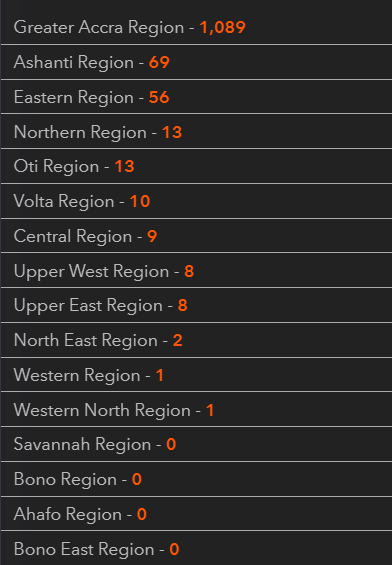
The Greater Accra Region has recorded the highest number of cases with 1,089 followed by the Ashanti Region with a wide gap recording 69.
The President has announced plans by the government to invest heavily in healthcare infrastructure, across the country, to ensure that every Ghanaian has access to quality healthcare.
President Nana Addo Dankwa, who announced this said, this year, it will begin the construction of 88 hospitals in the districts without hospitals.
The beneficiary districts in Ashanti-10; Volta-nine; Central-nine; Eastern-eight; Greater Accra-seven and Upper East-seven.
The rest are: Northern-five; Oti-five; Upper West-five; Bono-five; Western North-five; Western Region-four; Ahafo-three; Savannah-three; Bono East-three and North East-two.
Each of the health facilities would be a quality and standard-design 100-bed capacity, with accommodation for medical doctors, nurses and other health workers, and expected to be completed within a year.
President Nana Addo Dankwa Akufo-Addo announced these in his eighth national broadcast on Sunday night to update citizens on the enhanced measures being implemented to curb the spread of COVID-19.
The President said additionally, the Government would construct six new hospitals in the six new regions, and rehabilitate the Effia Nkwanta Regional Hospital in Sekondi.
“We will beef up our existing laboratories and establish new ones across every region for testing.
“We will also establish three infectious disease control centres for each of the three zones, that is, Coastal, Middle Belt and Northern”.
President Akufo-Addo stated that the recent tragic outbreak of CSM, with 40 deaths, had reaffirmed the need for infectious disease control centres across the country.
He explained: “The virus has exposed the unequal distribution of our health facilities. We have, over the years, focused our health facilities in Accra and other one or two big cities.
“However, epidemics and pandemics when emerged, could spread to any part of the country.
“It is my hope and expectation that this expanded and empowered public health system will be the most enduring legacy of the pandemic.
“Universal health coverage in Ghana will, then, become real and meaningful, for every Ghanaian deserves good health and good Healthcare”.
He encouraged Ghanaians to continue observing the safety and hygiene protocols, including covering the mouth when coughing and sneezing, frequently washing hands with soap under running water, using alcohol-based hand sanitizers and avoiding touching the mouth, nose and eyes with unclean hands.
They should also wear face masks in public places as well as observe the two metre social distancing.
The President underlined the importance of also investing in the preventive and promotive aspects of healthcare in addition to care for the sick.
“Whilst maternal, new-born, adolescent health and nutrition remain our top priorities, we must pay increased attention to chronic, noncommunicable diseases such as heart diseases, diabetes and asthma, which have proved to be the common risk factors for the 11 deaths we have recorded from the virus,” he said.
Ghana’s confirmed cases for COVID-19 stands at 1,550, with 155 recoveries and 11 deaths, as of Sunday, April 26, after the receipt of 100,622 after sample test results by the Ghana Health Service from the various testing centres.
President Nana Akufo-Addo has called on market women to follow the stringent measures put in place by supermarkets in the fight against the deadly novel coronavirus.
According to him, the enforcement of social distancing, wearing of face masks, frequent handwashing with soap under running water and the use of alcohol-based sanitizers must be adhered by market women. They must also insist their clients do same.
While lauding trotro drivers and other businesses during his eighth address to the nation, the president professed that “I am encouraged that so many of our trotros, taxis, and buses are operating with a minimal number of passengers, and our businesses and supermarkets are enforcing the need for social distancing, the use of hand sanitizers and the wearing of masks for all patrons and staff. I want to single out supermarkets such as Melcom, Palace and Shoprite, in particular, for the excellent discipline they are maintaining in their enterprises across the country, and call upon all other enterprises, especially our market women, to emulate themâ€.
Meanwhile, he praised market women in the Sekondi-Takoradi Metropolis for adhering to the social distancing directive.
“I am fully aware of the sacrifices in reduced revenues that all businesses and enterprises are suffering. But, I believe we have no option but to sacrifice to defeat this virus. This is the time for sacrifice, so that we do not have to bear a greater cost in the future,” he stated.
President Nana Addo Dankwa Akufo-Addo has enabled significant domestic production and supply of protective equipment (PPEs) to health workers as they wage war on COVID-19.
According to him, these PPEs are for the protection of health workers who are sacrificing and showing a high sense of patriotism in their contribution to the fight against the novel Coronavirus.
He stated during his eighth address to the nation on Sunday [April 9, 2020] that, “Government has enabled domestic production and supply of protective equipment to our health workers to increase significantly they have received, in recent days, 905,031 nose masks, 31,630 medical scrubs, 31,472 gowns, 46,870 headcovers, and 83,500 N-95 face masks.”
Akufo-Addo also called for the continuous protection of health workers by all Ghanaians by observing social distancing and hygienic measures. He also requested for prayers for the health workers.
“The health workers, who are working day and night to care for the stricken, must continually be in our prayers. Their efforts will be in vain if we, at home, do not support them,” he said.
The Volta Regional Environmental Health Office has said it would close down “Lizz Dee” shopping mall in Ho for allegedly refusing to comply with preventive measures to curb the spread of the coronavirus disease.
Management of the facility was said to have driven away a team from the Office led by Mrs Sybil Boison, Regional Environmental Health Officer, to inspect the mall and sensitize staff and management on the disease.
Mr Peter Pariki Regional Community-Led Total Sanitation (CLTS) Focal Person who was also on the tour told the Ghana News Agency (GNA) that the mall had refused to adopt the nationwide COVID-19 preventive regulations, making its environment a high-risk area.
He said the facility had no notices on the pandemic, no markings to guide social distancing, and had customers sharing multiple use napkins at its handwash station.
Mr Pariki said the team arrived at about 0800 hours for the exercise but was asked to leave, halfway into the meeting by a man said to be the owner of the Mall.
The CLTS Focal Person said they were told their presence was affecting business activities.
Mr Pariki said the office had earlier in the week been met with similar resistance, and was told that management of the Mall was yet to permit access to the facility, and later agreed on the Saturday date, which again was foiled.
He told GNA that management of the facility would be sanctioned, and hinted of closing the Mall down until proper adjustments were made.
When the GNA contacted the Mall, a Supervisor, who gave his name only as Elorm, said it was not true that the team from the Regional Environmental Office was turned away.
The Regional Environmental Health Officer and her team earlier visited some other retail outlets including Melcom and Stadium Gate Shopping Mall, insisting on the constant disinfection of surfaces and shared spaces.
The Regional Environmental Health Officer told the GNA that her office would work to ensure that the compliance checklist was followed to the latter.
The Greater Accra Regional Information Office of the Ministry of Information has distributed flyers and posters to some media houses to help sensitise their clients on the COVID-19 pandemic.
Among them were Homebase TV, TV3, and the Ghana Broadcasting Corporation (GBC).
Ms Shalomina Awuku-Bekoe, the Greater Accra Regional Information Officer, said the move was to empower the organisations with information on the COVID-19 to enable them to educate their clients.
She took the staff of the media houses through the symptoms of the virus, precautionary measures and management protocols and urged them to adhere to them to avoid contracting the disease.
“Everyone has a part to play in the fight against the novel coronavirus pandemic as government alone cannot win the war if we sit back uncooperative,†she said.
Ms Awuku-Bekoe said the Regional Directorate had deployed information vans with trained commentators to carry out education on the disease.
She urged the media to display the posters and flyers at vantage points for their clients and other potential beneficiaries to read and that the Office would continue to distribute more to enhance sensitisation.
Vice President Dr Mahamudu Bawumia has joined the COVID-19 Youth Campaign, initiated by the National Youth Authority (NYA), to sensitise the youth to observe the hygiene and safety protocols towards curbing the spread of the pandemic.
In a video message posted on his Twitter page, Dr Bawumia entreated the youth to adhere strictly to the hygiene and safety protocols such as frequently washing their hands with soap under running water, use of alcohol-based sanitizers, observing two-metre social distancing, and avoiding handshakes.
He made reference to the mode of transmission of the virus such as human-to-human, which could be done through droplets from an infected person.
“The young people should not have false sense of security that they are almost immortal, and the virus cannot attack them,†he said.
“The virus is an equal opportunity attacker, it attacks everybody whether old or young, rich or poor.”
Making reference to the demographic spread of the virus in Ghana, the Vice President said the majority of the people affected were those below 44 years and, thus, advised the youth to exercise caution to avoid contracting the pathogen, adding; “Ghana needs you for the future”.
Ghana’s confirmed case count is now 1,550 with 155 recoveries and 11 deaths as of Sunday, April 26.
The Food and Drugs Authority (FDA) on Sunday listed 10 registered and approved face masks and shield for public use to help contain the COVID-19 pandemic.
They are Heritage Face Mask, Joeritz Face shield, Lily of the Valley Face Mask, Notill Face Mask, Otech Biotech Face Mask, Pacific Face Mask, Sixteen 47 Face Shield, Sixteen 47 Face Mask, Studio AK Face Mask, and Swift Face Mask (Re-Usable).
The FDA has urged the public to go by the recommended three-layered face masks to effectively help in curbing the spread of the global pandemic.
In an interview with the Ghana News Agency, Mr Joseph Yaw-Bernie Bernnie, the FDA Head of Medical Devices, said most of the locally produced facemasks posed health risks to citizens rather than protecting them.
He said most of the local ones were either single or double layered cloth and sewn with treated materials, which in itself may pose danger to the user.
The FDA, therefore, appealed to the public to desist from using un-recommended face masks, stressing that in an attempt to contain the spread of the disease, many were producing it locally, the efficacy of which could not be ascertained.
Mr Bernie said face masks generally must be able to filter out particles and still be easy to breathe through.
He said in the absence of propylene, which is the common material used for medical-grade face masks, 100 per cent cotton or cotton blends possessed good material characteristics for homemade face masks.
He said recent studies and evaluations undertaken by the FDA on viable materials for face masks production established that Calico-Stiff (Hard/Medium)-Calico (three layers) combination was ideal for a reusable homemade COVID-19 face mask.
Mr Bernnie said there must be no chemicals in the materials used for producing masks as they may have health implications.
He said the FDA was carrying out market surveillance to rescue the system, educating both producers and users to stop producing and using face masks there were not recommended.
He said face masks were for protecting the wearer from others or vice versa but wearing those not recommended would rather expose the wearer to danger because of the false sense of security.
The University of Health and Allied Sciences (UHAS) laboratory in Ho is to begin testing for COVID-19 from tomorrow, Monday, April 27, 2020.
This is to expand the country’s testing capacity to contain the spread of the Coronavirus disease.
Dr. Senanu Kwasi Dzokoto, Deputy Volta Regional Director of Health in charge of Public Health who confirmed this to the Ghana News Agency said, “This new addition will further strengthen the enhanced surveillance and contact tracing, which is in full operation.”
He asked all District Rapid Response Teams in the Volta and Oti Regions to “purposefully utilise” the services of the laboratory to improve the ability to detect, isolate and manage all COVID-19 cases.
Dr. Dzokoto said all samples could be sent to the UHAS laboratory located at the main Sokode campus of the University and asked that “all existing guidelines for sample packaging and transportation should strictly be applied.”
He commended all staff of the Health Service and other stakeholders for the dedication and resilience and called for more support to contain the pandemic.
The Volta region has ten confirmed cases of COVID-19 with the national case count at 1550, eleven deaths and 155 recoveries as at Sunday, April 26, 2020.
A well-developed plant medicine sector in Africa could be a viable alternative in finding a cure for COVID-19.
This cure could serve not only the African continent, but the entire global community in a period, when there is a tough struggle worldwide to find a cure for the pandemic.
Dr. Benjamin Anyagre, Executive Director of the Kwame Nkrumah Ideological Institute (KNII), told the Ghana News Agency in an interview, that plant medicine had proved efficient in the past, “so we should not narrow our minds to orthodox medicine alone.”
He said the most important thing, was to come up with scientific proof of potency of these traditional medicines.
Dr. Anyagre noted that whilst a number of pandemics had struck the world in the past such as the Spanish flu of 1918, they did not wipe out the African population, which means, the continent had an indigenous medical response then.
“The efficacy of plant medicine, had our grandparents, using certain plants to cure diagnosed patients, with positive outcomes of good health and long life,” he said.
Dr. Anyagre appealed to government and the private sector in Ghana to support the Mampong Center for Plant Medicine, and also encourage such initiatives throughout the country.
He said there was the need to establish Afrocentric Plant Medical Research Centers all over Africa, towards improving health care, the quality of life in Africa and the world at large.
“Plant medicine in Africa need to be rejuvenated through scientific research,” Dr. Anyagre noted.
The Police Command in the Oti Region has begun a manhunt for 6 Nigeriens who escaped from a mandatory quarantine centre in Kadjebi.
The Nigeriens were part of 37 commuters who were arrested last week.
The arrested persons are said to be returning from Nkawkaw in the Eastern Region where they said the Covid-19 has affected business in the area.
District Chief Executive (DCE) of Kadjebi, Maxwell Asiedu blamed poor security for the ability for the 6 persons to escape.
“There was only one guard, this four-bedroom is a guest house…the police on duty said he also went out to buy credit card before he came they were not there.”
He said the District Security Council have agreed to search for them.
“The following day DISEC met and deliberated on it, we have agreed that we are going to look for them. The way it looks it seems they are still around because all their belongings are still there, their chargers, slippers and other things. It means that they are still around only that maybe somebody has camped them in their room so we searching seriously for them.”
The Upper West Police Commander DCOP Francis Aboagye Nyarko this month also narrated how a Nigerian COVID-19 escapee was arrested.
The 46-year-old Nigerian, Simon Okafor Chukudi, tested positive for coronavirus on Monday, April 13, 2020, but disappeared from his residence at Wapaani, a suburb of the regional capital, Wa after health authorities informed him about his status.
He was arrested at Wa and has so far been transferred to the regional isolation centre.
DCOP Aboagye Nyarko has explained how he was arrested on April 16, 2020.
“An informant assisted us to arrest him at a hideout at Wa Polytechnic area, he had left his home and was with some friends in a different residence. We went to the residence around 10:00 pm and we found him there. We have been informed that he had already had contact with some persons, 7 in all, 5 men and 2 women and we have taken those people into quarantine too. I don’t know his intentions for running away but what he did was bad, the community folks are now happy we have arrested him”.
Former President John Dramani Mahama has supported projections that millions of people could be infected by Coronavirus in the country.
Speaking via a digital conversation Thursday evening on Ghana’s COVID-19 situation, former President Mahama noted that in view of the current number of cases recorded in the nation, there is the possibility that about 3 million Ghanaians may contract the virus and a significant number of the infected persons may die.
“The model government is working with, the projection is that up to 3 million Ghanaians may be infected by the virus and a significant number may require hospitalization or may even die from the virus,” he emphasized.
The former President was worried this prediction might come to pass due to President Akufo-Addo’s lifting of restrictions on movement and his decisions in fighting against the pandemic.
“In his last address to the country, President Nana Akufo-Addo lifted the partial lockdown imposed on Greater Accra, Greater Kumasi and their environs and Kasoa. At the time the country was recording increasingly higher infections, it was therefore not surprising that many Ghanaians including public health experts were puzzled about the considerations underlying the President’s decision. The number of infections are not only rising steeply but there is also clearly a horizontal community spread of the virus. The majority of the Regions in our country have reported cases and the bulk of the positive cases we’re seeing are of people who have no history of foreign travel.”
Mr. Mahama wondered whether the President considered the “huge backlog of tests that have not yet been cleared and the many possible cases roaming in our communities that have not yet been tested due to a lack of mass testing” before arriving at his decision.
Ghana has recorded an additional 271 cases of the novel coronavirus, taking the country’s total positive cases to 1550.
One more person has also died according to the latest update from the Ghana Health Service (GHS) on Sunday, April 26, 2020.
The death toll now stands at 11 with 155 persons recovering from the disease.
The recoveries represent approximately 10 percent of Ghana’s total case count as of April 26.
The Ghana Health Service data analysis also reveal that 62 percent of infected persons in Ghana are male while 38 percent are female.
The data also reveals that only 16 percent of infected persons have a travel history with a staggering 84 percent having no clear history of travel.
Ghana lifts lockdown
Exactly a week ago, President Nana Akufo-Addo lifted a three-week lockdown in two cities, citing improved coronavirus testing and the “severe” impact of the restrictions on the poor and vulnerable in the country.
In a televised address , Akufo-Addo said the decision did not mean the government was letting its guard down, saying existing bans on public gatherings and school closure were still in place.
He urged Ghanaians to wear masks when going outside and to continue adhering to social distancing measures in public places.
The negative impact of Coronavirus Pandemic on families, students, and migrants with no permanent residency in countries where they live is huge and easy to miss.
This has been recognized by the Ghana Association of Western Australia where an effort is being made to assist students and families who currently have no reliable sources of income or support.
A message sent out to members of the association said “The Ghana Association of Western Australia is creating a platform for Ghanaians, especially those who may be challenged economically by the COVID-19 pandemic to receive some assistance”
Those in need were encouraged to contact the association for some help.
Dr. Albert Amankwaa, President of the Ghana Association of Western Australia says the Australian government has extended significant help to citizens and permanent residents, but many Ghanaians who are temporary residents or students have not benefited. Having heard of the plight of many, the association decided to organised some assistance.
As of the time of filing this report, the number of people infected by COVID-19 in Western Australia is less than 600 with a significant daily decrease in new cases.
However, social and economic activities are still on hold with no guaranteed income for some families, temporary residents, and students.
Full economic recovery appears to be nowhere near the horizon, but Ghanaians in this community who have benefited from the modest assistance offered by the Ghana Association of Western Australia are grateful that some help could be so close.
This AfricanPod Business Forum report was produced while keeping the necessary social distancing rules being observed worldwide to combat the Coronavirus pandemic.
The Deputy Director at the Centre for Plant Medicine Research, Dr Alfred Ampomah Appiah, revealed that in addition to the 33 samples received from the health ministry, it has continued to receive more herbal medicines for testing.
Dr Appiah explained that the centre was testing the drugs to verify if they had antiviral properties to help fight the COVID-19.
“What is being done globally is to test certain medicines that have already been selected to have certain antiviral properties and the prospects of those drugs are being monitored to test its effectiveness to the novel virus,†he added.
There were earlier claims that COA FS, a locally produced dietary supplement could cure COVID-19. But authorities at the Noguchi Memorial Institute for Medical Research (NMIMR) observed that it had neither been independently tested nor verified COA FS as a treatment for COVID-19.
In other news, a laboratory test conducted on COA FS drug by the Cape Coast Teaching hospital has confirmed that the product does not contain E-Coli and is not yeast or mould contaminated as claimed by the Ghana Food and Drugs Authority.
It will be recalled that a press release dated April 17, 2020, and signed by Mrs Delese A.A Darko, the Chief executive officer of the FDA, indicated that COA FS drug contained E-Coli that makes individuals prone to kidney failure. Among other claims, it was said that the supplement made people with weak immune systems get critically sick upon taking COA FS.
The Ministry of Health (MoH) has issued a directive on the production and use of homemade face masks.
The MoH recommended the use of the Food and Drugs Authority (FDA) approved masks, stating that in cases where they are not available, homemade masks can be used.
It, however, gave specific guidelines for its production including the use of JAVA or WAX cloths sown triple-layered and stringed with side loops to be worn as hooks to the ear.
It also stated that calico inlaid with fabric stiffens and inner covered with side loops to be worn as hooks to the ear can be used.
“Homemade masks with strings to be tied behind the neck or head are not encouraged.â€
Adult masks must not be worn by children —CHILD appropriate length masks must be worn by children.
It is important that all masks used to meet the minimum standards of safety, †the directive signed by Director-General of the Ghana Health Service (GHS) Dr. Patrick Kumah Aboagye, stressed.
Procedures For Wearing And Removing A Mask
The health authority also gave a step by step tutorial on how to wear, remove and dispose of or clean a face mask.
“Clean your hands with soap and water or an alcohol-based sanitizer before putting on a mask.
Ensure that your mask fully covers your mouth and nose with no gaps between your face and the mask.
Avoid touching the mask after you have won it, †it said.
Is also urged the public to remove their face masks by passing a finger through the loop of the mask behind one ear and lifting off without touching the front of the mask.
The MOH again cautioned against the use the masks for more than 12 hours at a time.
“Do not re-use single-use surgical masks more than twice or N95 masks more than three times.
Replace the mask immediately it is damp or soiled, †it added.
It further noted that when using a re-usable mask, it must be put into a soapy or bleach lathered water immediately it is removed.
The MoH said the reusable mask must be left in the water for five (5) minutes before washing.
“Rinse, dry and iron before reuse, †it explained.
It said all masks must be disposed into a closed bin or burn in a safe place after which the individual must
immediately wash his/her hands with soap and water and where unavailable, must apply alcohol-based sanitizer.
Mandatory Use Of Masks
Food vendors and sellers at markets commercial vehicle drivers and attendants, commuters on public transports, persons in public and commercial centers, facilities and buildings are required at all times to wear masks, according to the Moh.
It said commercial centers included but not limited to offices, bars, workshops, restaurants, sports arenas and spas, salons, shopping malls, churches, clinics and hospitals and all other facilities accessible to the public whether privately or publicly owned.
It said the directive is to help prevent the contamination, infection or transmission of the virus among the public.
A report by Marie Stopes Ghana has warned that about 26,600 women in Ghana risk losing access to contraceptives and post-abortion pills due to the outbreak of the novel coronavirus in the country.
The report revealed that the inability to have access to the pills during this pandemic could lead to 9,768 unintended pregnancies, about 16,740 unsafe abortions, and 92 pregnancy-related deaths.
And the first-hand effect was witnessed in Accra and Kumasi during the lockdown where women found it difficult to seek contraception and post-abortion care services.
Country Director of Marie Stopes Ghana, Anne Coolen in the statement explained that “Delays to access caused by social distancing, healthcare shutdowns and travel restrictions will have a profound impact, meaning thousands of women and girls will face unintended pregnancies and possible unsafe abortions.â€
The organisation, therefore, wants government to include the reproductive healthcare women need in the list of essential services by allowing them access contraception and post-abortion care services remotely via telemedicine, allowing pharmacies to provide services and removing unnecessary waiting times and the need for multiple doctor sign-offs.
They also added that “Women and girls will pay the price if the government does not act now to safeguard access to essential healthcare, including contraception and post-abortion care.â€
“But if the government is willing to work with providers there are simple, effective, and proven steps that could save thousands of lives and Marie Stopes Ghana would be very happy to support those efforts,†they continued.
As part of efforts to help prevent the spread of the coronavirus disease in the country, the University of Ghana School of Pharmacy has ventured into the business of producing alcohol-based hand sanitizers.
The sanitizers, which are labelled Pharmol Sanitizers, are in 200ml and 1L units and have been vetted, approved and registered by the Food and Drugs Authority (FDA).
According to the The Pharmol sanitizer also known as UG Sanitizer, appears in two forms hand gel and spray Sanitizers.
The COVID-19 pandemic has caused the high demand of face masks and hand sanitizers as these are the widely accepted commodities that aid in the combat of the coronavirus pandemic.
The outbreak of the disease in the country has seen some of the tertiary institutions in the country coming up with efforts to help in the fight which has since claimed 10 lives.
Already, the Kwame Nkrumah University of Science and Technology is producing hand sanitizers for sale.
B. Foster Bakery, bakers of B. Foster bread-based in Koforidua in the Eastern Region, has presented a cheque of Gh¢5,000.00 to the Eastern Regional office of the National Commission for Civic Education (NCCE) to enable them to fuel their vehicles to continue with their public education on the coronavirus.
The support was to encourage the institution to sensitize as many citizens as possible about the COVID 19 pandemic and what they have to do to reduce the spread of the disease.
Presenting the cheque at a donation ceremony where other members of the Eastern, Volta and Oti Regional branch of the Association of Ghana Industries(AGI) made presentations to the Eastern Regional Coordinating Council to support the efforts of Eastern Region to control the spread of COVID 19 in the region, Felix Berbiye, Chief Executive Officer (CEO) of B. Foster Bakery underscored the importance of the NCCE in the fight against the coronavirus, hence the decision of the company to support the organization.
He said the NCCE has a mandate and with the needed push, he was hopeful that they would embark on a series of awareness creation in the districts across the region.
The CEO indicated that his organization would also support some communities in the New Juaben South and North Municipalities with hand sanitizers, veronica buckets and tissue papers to help in the control of the spread of the coronavirus in the society.
Eric Kwakye-Darfour, Eastern Regional Minister who received the cheque on behalf of NCCE immediately handed over the cheque to the Eastern Regional Director of the NCCE.
He commended B. Foster for the generous support to the NCCE at this crucial time.
The Eastern Regional Director of NCCE, Alex Sackey after receiving the cheque thanked the company for the gesture extended to them as an institution to undertake sensitization and awareness programmes in the region.
He indicated that the support will go a long way to help the work of the NCCE in the region in the fight against the spread of the coronavirus.
Mr Sackey said, since the start of efforts to contain the spread of the coronavirus in the country, it is the Church of Pentecost that had offered their evangelism van to the NCCE to embark on sensitization exercise across the region but for some time now, they had been stacked due to fuel constraints.
He said with the support, they will go back to the communities to ensure that they reach out to those communities that were left out in their earlier campaign against the spread of the virus.
Present at the ceremony were officials of the ERCC and the Regional Chairman of the AGI Eastern, Volta, and Oti Regions, Dela Gadzanku.
A Crop Physiology and Crop Improvement Scientist Dr. Michael O. Adu, a Senior Lecturer at the Crop Science Department, University of Cape Coast and Dr. Ebenezer Gyamera, a Lecturer and the Acting Farm Manager of the same university have said that coronavirus has affected every aspect of human life including Agriculture.
They were both speaking on GBC Radio Central’s Central Morning Show on Friday 24th April, 2020 on the topic “COVID-19: effects on Agriculture” hosted by D. C. Kwame Kwakye.
Dr. Gyamera who has a speciality in Animal Husbandry & Nutrition asserted that there is a common medicine called iron dextran which is given to piglets three days after they are born which is now very scarce. The shortage is likely to lead to high mortality of piglets on pig farms as a result of anaemia due to the unavailability of the medication on the market. He attributed the shortage of the drug and other veterinary supplies to panic buying by well-to-do farmers.
The expert said the border closure has affected the importation of day-old chicks into our country. “About 95 per cent of all day-old chicks raised in Ghana are imported”. The lockdown and the border closure would affect the importation and farmers cannot get birds to keep”.
“Eggs become abundant during September-October of every year but I can assure you that, egg production would dwindle and the price of eggs would go up making it expensive”.
He averred that he saw something on social media where a dairy farmer in the USA was throwing 54,000 litres of fresh milk away. The reason being that the cheese manufacturing company that would have purchased the milk for further processing is out of production because of coronavirus. “The farmer cannot drink all the fresh milk and has no facility to store and this becomes a huge cost to the farmer” he added.
He explained further that, broilers that were raised to be sold at Easter were not sold during the Easter due to the lockdown in some parts of the country and observance of social distancing protocols. The effect is that most of such birds are still being fed by farmers hence increasing their cost of feeding. “One sad aspect is that when broilers become heavy up to a certain weight they can collapse and die” resulting in huge financial losses to the farmer.
Dr. Gyamera speaking about Lockdown areas, said, in Abokobi, a suburb in Accra, farmers couldn’t farm due to the partial lockdown and that is one area where people farm a lot in the capital city. “When this happens, farmers lose out and it affects the food chain as well”.
The Acting Farm Manager said in the wisdom of the government some economic activities were allowed to go on even during the partial lockdown because in his view, for instance, if someone has gone to buy tomatoes and is unable to sell within about 4 days all those goods would get rotten. “That decision by the government was in the right direction and that cushioned farmers a bit”.
In responding to what can be done going forward, he implored government to consider assisting farmers and in his view, the 600 million Ghana Cedis government has earmarked for SME’s, farmers should be considered because most of the SME’s get their inputs from farmers. “Not supporting farmers would make the support by government incomplete” Dr. Gyamera added.
“Everything that needs to be done can be done because where there is a will there is a way” Dr Gyamera said. He was responding to how farmers can be supported within our peculiar unstructured society. He further added that “Agric Extension Officers can help out in identifying farmers who would need help and same can be supported but was quick to add that not all farmers need government support post COVID-19“.
Reacting to a caller’s question as to how government can support farmers by taking an active part in farming activities, Dr. Gyamera said there are two main paths or approach to this. There is Socialism where we all farm for government and capitalism where farms belong to individuals and not the state. He further said, “Ghana is a capitalist country and if a farmer needs help then he must go and register under the government’s policy of Planting for Food and Jobs (PFJ). Under this programme, all you need to do is to go to the District Agric Office and register and get all the necessary government support.
Dr. Adu, on the other hand, responding to the same question admonished that, Ghana is very lucky because there wasn’t total lockdown and as such farmers could go and plant their crops. He was quick to add that all farmers should be careful and observe all protocols as prescribed by the Ghana Health Service especially social distancing. He argued that there are good lessons to be learnt from the COVID-19 situation. Efforts should be made in building resilient systems for future occurrences. This should include enhancing local capacity and manufacturing of agro-inputs and in processing agricultural products.
The crop Physiology and Improvement Scientist, Dr. Adu explained further that, the agricultural value chain is complex and long, involving producers, marketers, transporters, processors and consumers. In total lockdowns, farmers cannot farm and farm produce cannot be transported. Agro inputs will not also move. These would be very dire for a country like Ghana whose farming is mostly small-scale subsistence and the arable lands are poor in quality. Farmers would have reduced yields and that would affect them economically. Particularly for perishable goods such as vegetables and fruits, lockdowns could lead to massive deterioration. This would effectively alter supply and demand dynamics, and impact prices, ultimately affecting consumers.
When asked about how COVID-19 can affect our farming situation in Ghana, he said our situation is better since we never experienced total lockdown. He recounted his experiences when buying fruits for his son he had to think twice because he was somehow scared not knowing where the fruits had come from and how it had been handled. He was reluctant to buy fruits such as bananas which are eaten raw. Such consumer behaviours, he said, could impact farmers adversely.
In concluding the discussion, Dr. Gyamera said “I have been very happy with the kind of love shown by Ghanaians towards fighting COVID-19 but same help should be extended to either an old man or old lady who is a farmer in your community. You can look for any farmer in your area and ask him or her what can be done to help and provide either seedlings or seeds or any other input to assist such a farmer”.
Members of the Ghana Registered Nurses and Midwives Association (GRNMA) in the Nandom Municipality of the Upper West region have threatened to embark on a sit-down strike on Monday, April 27, 2020.
The action is to protest the alleged neglect of three of their members who were exposed to a confirmed COVID-19 case.
The Nandom Municipal Chairman of the Association, Yendornaa Kafunla John, in an interview with Citi News complained that three nurses and a doctor were exposed to the case but authorities in the municipality only quarantined the doctor.
“I have reported everything to the region and it has given me the go-ahead that if nothing will be done and if all nurses at the OPD will not be quarantined starting from Monday there will a total sit-down strike and nothing is done we will extend it furtherâ€, he said.
COVID-19 cases in Upper West region
The first case in the region was announced by the Minister on March 27, 2020.
According to the Minister, the patient is a 42-year-old Ghanaian who visited the UK, Spain and returned to Ghana through Egypt.
Currently, the region has 8 confirmed cases.
Nurses & Midwives Association wants reassigned U/W GHS director investigated
This call comes after the association “intercepted a letter dated, 20th April 2020 signed by the Director-General of the GHS, Dr Parick Kuma-Aboagye re-assigning Dr O.K Afreh to the headquarters of the GHS.â€
While applauding the Director-General for the action, the association called for an expedite handover.
The association further called for an audit of “all financial handlings within his [Dr. Osei Kuffour Afreh] tenure as Regional Director, especially in his last week in office. The recent quota/financial clearance for the recruitment of staff into the service in the region. The over 40 CSM deaths in the region and all donations received through the Health Directorate in respect of the fight against COVID19 and CSM in the Upper West Regionâ€.
The Western Regional Health Directorate has disclosed that the region has recorded 437 suspected cases of Coronavirus so far.
Out of the 437 suspected cases, one has been tested positive and it was recorded in Sekondi-Takoradi.
In totality as of Friday, April 24, 2020, the Region is having 322 pending cases.
Giving the daily situation report as of today, Friday, April 24, 2020, Dr. Jacob Mahama, the Western Regional Health Director stated that the Regional Health Directorate has collected 437 samples from the various Districts within the region for test.
He added that out of the 437 samples collected, 115 results have been received.
According to him, 114 samples have tested negative with one positive case.
Giving the breakdown of the report, he said Sekondi-Takoradi has recorded 138 suspected cases with 26 tested negative, with 1 positive case.
He said 111 suspected cases are being pending.
He continued that Shama District has recorded 83 cases where 2 negative cases have been recorded with 81 cases pending.
In Ahanta West, 50 suspected cases have been recorded and out of the figure, 7 cases have been tested negative awaiting for 43 results.
Tarkwa-Nsuaem Municipality has so far recorded 39 suspected cases with 31 negative cases and 8 pending.
Effia Kwesimintsim has also 37 suspected cases, 10 being negative and 27 pending.
23 suspected cases have been recorded in Mphoor District of which 10 cases have been tested negative with 13 cases pending.
Amenfi West has recorded 21 suspected cases, 9 out of the number have been tested negative awaiting 12 suspected cases.
Prestea Huni-Valley, on the other hand, has recorded suspected 18 cases, 9 people have been tested negative and 9 cases are yet to be released.
Nzema East has 10 as suspected cases with 3 negative cases and 7 suspected cases are yet to be released.
Ellembelle District has also recorded 9 suspected cases of which 3 suspected cases have been tested negative and the 6 suspected cases are being pending.
Amenfi East has recorded 6 suspected cases, 3 suspected cases have been tested negative and 3 being pending.
Jomoro being the last District has recorded 3 suspected cases with 1 negative case and the two suspected cases are being pending.
Logistics Management
The Western Regional Health Directorate as of April 9, 2020, has received quantity of logistics from individuals, private companies and other benevolent organizations and these logistics have been distributed since April 16, 2020.
These were items; 400 examination gloves, 400 nose masks, 100 coveralls, 100 N95, 100 goggles-reusable, 40 infrared thermometers and 400 shoe covers.
The rest were; 200 2litres of hand sanitizers, 49 4.5litres of hand sanitizers, 200mls of hand sanitizers, 25 beds with mattresses, 25 bedside Lockers, 99 boxes of Cocoa Powder Natural, 20,000 A2 Posters (COVID-19) and 2,500 Bumper stickers (COVID-19).
Public Advice
The Health Director has advised residents in the region to stay home and report any suspected case to them on 0208149141 for prompt action.
He added, “Do not hide any relative or friends returning from any affected areas to prevent the spread of the disease”.
He, therefore, called on them to practice regular handwashing with soap under running water or use hand sanitizer when necessary.
He also urged them to practice social and physical distancing protocols.
Dr. Mahama kicked against the stigmatization with the disease. “Do not stigmatise people with the disease or people living in an area with a confirmed case”.
He pledged the Health Directorate together with the NCCE would continue with their Public Sensitization on COVID-19 Preventive Measures.
Treatment Centres in Western Region
So far, the Region has thirteen (13) treatment centres and they include; Takoradi Hospital, Kwesimintsim Hospital, Tarkwa Municipal Hospital, Apinto Hospital, Axim Government Hospital, Half Assini Government Hospital.
The rest are; Wassa Akropong District Hospital, Prestea Government Hospital, Nana Hima Dekyi Hospital, Ahmadiyya Mission Hospital, Fr. Thomas Allan Rooney Memor Hospital at Asankragua and St. Martin de Pores Hospital in Ellembelle District.
Ghana has so far, recorded 1,279 confirmed cases with 10 deaths and 137 recoveries.
The Pharmaceutical Society of Ghana (PSGH) has asked Pharmacists to ensure that no staff, client or member of the public is allowed into the pharmacy without a properly worn nose mask.
A statement signed by Benjamin K. Botwe, President PSGH, said where it is imperative to attend to a client or a community member who does not have a nose mask, the interaction should be done outside the pharmacy, with the staff member appropriately protected.
“All pharmacy staff should put on nose masks, preferably fluid resistant nose masks at all times when on duty. Sick staff members should be allowed to stay home until they get well or call the emergency numbers if need be,†it said.
The statement further called for the display of Infection Prevention and Control (IPC) protocols relating to COVID-19 in pharmacies for the information of staff and the public.
Also, there must be regular cleaning and disinfection of Pharmacy premises, floors and counters and the use of methylated spirit or any appropriate virucidal disinfectant hourly to clean surfaces that are often touched or held.
The statement also called for a barrier or clearly marked out area to be put in place at a distance of at least two metres between clients and pharmacy staff.
Social distancing protocols should also be enforced among clients who enter the pharmacy, it said.
Veronica bucket, soap and alcohol-based hand sanitizers should be provided at the entrance of all pharmacies for the use of everyone entering the pharmacy.
As much as possible, staff strength should be reduced to the barest minimum and measures put in place to reduce contact time and working hours of staff.
For clients who show signs or symptoms of COVID-19, the District Management Health Team in the locality should be immediately notified for further guidance.
Pharmacists and pharmacy staff should continuously appraise themselves of current information and regular updates on COVID-19.
The PSGH leadership has taken note of the shortage of appropriate personal protective equipment (PPE) on the market and is in discussion with various stakeholders to ensure the availability of PPEs for pharmacists.
“The PSGH appreciates all pharmacists for continuing to hold the line and playing their part on the frontline in these difficult times.
The PSGH appealed to the public to adhere to all the measures and interventions put in place to contain the spread of COVID-19.
“If you must go out, please wear a mask, keep the right social distance when interacting with people. Wash and sanitize your hands as often as possible and if going out is not too essential, please stay at home.†Statement added.
Editor-in-Chief of the Insight newspaper, Kwesi Pratt Jnr has called for a collective effort from all Ghanaians to fight against the spread of COVID-19 in the country.
Kwesi Pratt Jnr was worried about the attitude of some citizens who might have relaxed on their efforts in addressing the pandemic and preventing mass transmission of the virus.
Although disagreeing with President Akufo-Addo for lifting restrictions on movement, he called on every individual in the country to be a responsible citizen and adhere to all the safety protocols to fight the disease.
Mr. Pratt believed should the nation unite irrespective of religion, political affiliations and other differences, the disease will be overcome and therefore there will little to no spread of the virus.
“We have to unite to fight this disease. It is not about religion, political affiliation or anything. We will win if we come together to fight the disease,” he said on Peace FM’s ‘Kokrokoo’ program Friday.
Ghana has recorded 1,279 cases of COVID-19 with 134 recoveries.
Minister for Communications, Ursula Owusu says Ghana led the way with the Covid-19 application virtual concert and the World Health Organisation (WHO) also followed suit.
The virtual concert which was held on Easter Monday to launched the Covid-19 application came under heavy criticism.
Critics of the concert believe the virtual event was a waste of money and time. They said the energy put into the event could have been channelled into more profitable things that will help prevent the spread of the virus.
They also argue that the Ministry of Information press briefings could have been used for the said purpose.
The app was aimed at helping health authorities track Covid-19 cases in the country.
Responding to the critics on Asempa FM’s Ekosiisen, Ursula Owusu said a lot of thinking went into the decision to hold a virtual concert.
According to her, the Ministry was looking at innovative ways of doing things during the Covid-19 pandemic and they came up with the virtual concert.
The same idea was being put together by the Ministry of Tourism, therefore, the two ministries collaborated for the event.
She explained that the same event being criticised by some people was what WHO also did for fundraising on Thursday.
With this, Ursula Owusu said Ghana led the way for others to also learn from.
She bemoaned the posture of Ghanaians about the virtual concert, arguing that if the same was done in other jurisdictions the critics would have applauded them.
The Communications Minister said the idea of the concert was to try and utilise the talent of the musicians during this time and if Ghanaians continue this way we may end up killing creativity in the country.
Sharing his views about how important the exercise was, she said music plays a big role in the ability of people to remember things because it helps imprints concepts in our memory as normally done when we were kids.
The Oti Region has recorded 13 cases of COVID-19 at a go, the Ghana Health Service has announced.
Meanwhile, the number of confirmed cases in Ghana has jumped from 1,154 to 1,279.
Regional breakdown
Greater Accra 1,089, Ashanti Region 69, Eastern Region 56, Northern Region 13, Central Region 9, Volta Region 10, Upper West Region 8, North-East Region 2, Western North Region 1 and Western Region 1.
Only four out of the 16 regions are still COVID-19-free.
They include Savannah Region, Bono Region, Ahafo Region and Bono East Region.
Also, the number of patients who have recovered has jumped from 120 to 134.
Additionally, the death toll has increased by one from nine to 10 as of Friday, 24 April 2020.
President Akufo-Addo has thrown a challenge to members of the media, to ensure true and accurate reportage on all things Covid-19.
The president said this when he addressed the leadership of the Ghana Journalists Association (GJA), Ghana Independent Broadcasters Association (GIBA), Private Newspaper Publishers Association of Ghana (PRIMPAG) and the National Media Commission (NMC), at the Jubilee House at his invitation as part of efforts of his government to consult all identifiable groups in the country on the way forward with regard to the fight against the Covid-19 pandemic.
The President first observed that the media has been for government, “an invaluable allyâ€. “An invaluable ally on two fronts,†the President said.
Firstly, “in helping to get the information and education out there to the citizenry of our country about this new menace to the progress on the human race†and secondly and equally important “is your roles as the vehicle of accountability. I am a strong believer that in all circumstances, even in the conduct of war, governments and public officials should be held accountable for what they do and you are the vehicles for accountability in our society and that is how it should be†President Akufo-Addo posited.
“One thing that is important though is that there should be accuracy in what you convey, that is critical. Different perspectives, different views, different conclusions, on certain facts are inevitable, it is but of the whole process of being human, we cannot all have the sale head, God did not make it that way but we can agree on facts and as much as possible when it comes to public discourse, the truth, the accuracy of what is pervade is very critical, especially in an emergency of this nature where the slightest misinformation, slightest inaccuracy, misinterpretation can lead to a lot of grieve, and difficulty†President Akufo-Addo added.
Chairman of the National Media Commission, Yaw Boadu-Ayeboafoh, addressing the President on behalf of the media delegation noted that the media fraternity is deeply in the debt of the President for his invitation extended to them to meet with him. He accepted the admonishing of the President to the media to ensure accurate reporting on the Covid-19 pandemic in the country.
“Our assurance to the government is that we will do whatever we need to do to support the government in making sure that the people of this country come out of this pandemic stronger they were before†the NMC Chairman, Yaw Boadu-Ayeboafoh said.
Twelve out of Ghana’s sixteen regions have recorded confirmed cases of the Coronavirus.
The Oti and the Western North Regions were the latest to record confirmed cases of COVID-19 in an update provided by the Ghana Health Service on Friday, April 24, 2020, which has seen the national case count shoot up to 1,279.
The Western North Region has recorded one confirmed case while the Oti Region has 13 confirmed cases.
The data published on the Ghana Health Service COVID-19 website indicates that the Greater Accra region has the highest number of confirmed cases in the country with 1,089.
The Ashanti region follows with 69 confirmed cases while the Eastern Region has recorded 56 cases.
The Northern region has recorded 13 cases, with the Volta region having 10 cases, Central region recording nine positive cases and the Upper West Region as well as the Upper East Region having eight cases each.
The North East Region has two cases, while the Western Region has a case.
The Savannah, Bono, Ahafo and Bono East Regions have not recorded any cases.
Traders at the Nima market have stormed the headquarters of the Ayawaso East Municipal Assembly demanding the reopening of the market.
The traders who were in their hundreds are appealing to the assembly to reopen the market for them to able to make sales and feed their families.
The assembly closed the market on Wednesday after traders were seen flouting the Covid-19 safety protocols.
The decision was taken after Ayawaso East Municipal Assembly Security Council meeting.
Some of the traders who spoke to Citi FM said they should be allowed to go back to the market.
“I bought a lot of things, garden eggs about GHC900 and Okro GHC800, and they are all going bad. But they are asking us to stay home again but we are not selling marijuana.”
“At least they should consider us to let us unsell our goods then we can comply with the law but now we are dying because almost three weeks no work,” another trader added.
The assembly said they will only reopen the market after meeting with the stakeholders in the market.
Municipal Coordinating Director Nii Armah Ashitey explained that the conclusion of their meeting with the traders’ associations in the market will inform the next line of action.
“Traders have refused to abide by the COVID-19 safety protocols, we will meet the stakeholders because what we foresee is that base on this they will come and see us. We will have a discussion with them, so at the moment I can say when it will be, but based on the discussion that we have here and what conclusions the will come after.”
The Northern Region has recorded some two new cases of the novel Coronavirus disease (COVID-19) bringing the total number of cases in the region to 13.
Northern Regional Director of the Ghana Health Service (GHS), Dr. John B Eleeza, who confirmed this said their cases were confirmed when they visited health facilities voluntarily in the metropolis for screening.
The two patients; a male and female, both residents of Tamale who have no travel history had their samples taken to the Kumasi Center for Collaborative Research (KCCR) and tested positive.
They both have since been receiving treatment at the COVID-19 Treatment Center at the Tamale Teaching Hospital.
According to Dr. Eleeza, contact tracing has begun to identify all persons who may have come into contact with the patients.
“The samples were taken and tested and it came out positive, they are currently undergoing treatment at the treatment center at the Tamale Teaching Hospital. We have so far begun contact tracing to identify persons who might have come into contact with the patients. They showed us their homes and workplaces and we started the contact tracing today,†he stated.
Meanwhile, all samples of suspected cases in the region so far are transported to KCCR for testing owing to the absence of a testing facility in the region.
Dr. Eleeza however urged residents of the region to remain calm and adhere to all the safety measures and directives being advocated to keep safe, while his outfit does their best to contain the situation.
After the outbreak of the COVID-19 pandemic, safety protocols have been prescribed by the World Health Organisation, WHO.
These protocols are believed to help break the chain of transmission.
President Akufo-Addo on Sunday lifted the three weeks lockdown of Accra, Kasoa, Kumasi, and Tema but directed that all other protocols including wearing of a mask, hand washing and social distancing should be adhered to.
Markets and offices are also entreated to adhere to these protocols, some markets who flouted the directive have been closed down.
But how is the aviation industry coping and how will it affect their profit.
Samuel Takyi Marketing and Sales Manager for PassionAir in a radio interview said they are enforcing the wearing of face mask throughout their flights.
He also stated that they are putting in place measures to go by the social distancing protocols during their various flights.
“Before you board the flight you are expected to have your face mask which is to be throughout the whole flight and also we will be ensuring some kind of social distancing during the flight…”
The protocols are expected to affect the profit margin of the various domestic airlines.
Stock markets suffer worst quarter since 1987
Stock markets around the world suffered historic losses in the first three months of the year amid a massive sell-off tied to the coronavirus.
The Dow Jones Industrial Average and London’s FTSE 100 saw their biggest quarterly drops since 1987, plunging 23% and 25% respectively.
The S&P 500 lost 20% during the quarter, its worst since 2008.
The drops come as authorities order a halt to most activity in an effort to slow the spread of the virus.
Economists have warned the hit to the global economy is likely to be worse than the financial crisis, with forecasters for IHS Markit, for example, predicting growth will shrink 2.8% this year, compared to a 1.7% drop in 2009.
No country has been left untouched. The data firm expects China’s growth to sputter to 2%, while the UK could see growth drop 4.5%. The outlook for countries such as Italy and less developed economies is even worse.
“We remain very concerned about the negative outlook for global growth in 2020 and in particular about the strain a downturn would have on emerging markets and low income countries,” the president of the International Monetary Fund, Kristalina Georgieva, said on Tuesday.
In the US, one central bank analysis suggested the unemployment rate could rise to more than 32% over the next three months, as more than 47 million people lose their jobs.
Globally, many indexes remain more than 20% lower than they were at the start of the year. A steep slide in oil prices, due to a drop in demand and a price war between producers, has compounded the problems on financial markets.
The two, a man and his wife were picked up by a joint team from the Food and Drugs Authority (FDA) and the Achimota Divisional Police Command based on a tip-off.
Head of Drug Market Surveillance Department at the FDA, Edward Prah Ashong, confirming the arrest on Thursday, explained that “it is true we have arrested some Chinese like that and investigations are ongoing.â€
He added, “we had information that Chinese in Kisseman were packaging nose masks and hand sanitizers and were sending them to the market so we stormed there with the police around 3:30 pm yesterday [Wednesday].â€
Mr. Prah Ashong also added that the production of the materials was done in large quantities.
“They do them on a large scale. We saw thermometers, hand sanitizers, and nose masks so we asked how they got those items and they said they run an NGO that donates items to communities, hospitals, organizations, among others. So we requested for their documents but they could not produce them readily, so we are waiting for these documents.â€
“We also saw an almost 20-footer container parked with some PPEs and they said they were taking them to Burkina Faso but they are not locally made,†he explained.
“The nose masks were imported but as to whether it has been registered is the issue, and also how it got into the country is what we are investigating because some of the nose masks had expired.â€
He noted that samples of the PPEs have been sent to the lab for testing because there are standards for the production of PPEs.
“If we establish any criminalities, we will let the police prosecute them because we picked the samples of the nose masks to the lab for testing and if it falls below the standard, we shall prosecute them,†he explained.
Mr. Ashong also added that three Ghanaian workers were spotted in the house during the operation.
“There were three Ghanaian workers; a driver, house help, and security but later, two Ghanaians also came and said they were the owners of the items in the truck.â€
Mr. Ashong said the Chinese, who were in their 60s, told them they have been in Ghana for the past 20 years.
“The lady is called Wendy and they claim they have been here for 20 years. They also claim the property they are living in at Kisseman belongs to them because they acquired it three years ago.â€
The two have since been granted bail pending further investigations.
The Greater Accra Region has so far recorded 901 confirmed COVID-19 (Coronavirus) cases out of the 1,154 cases nationwide.
According to the Ghana Health Service, 318 positive cases of the lot were recorded under routine surveillance while 583 cases were recorded through enhanced contact tracing.
Below is the district-by-district distribution of the cases in the Greater Accra Region:
The acting Director of the Family Health Division of the Ghana Health Service, Dr Isabella Sagoe-Moses, has called on parents to continue taking their young children to the Child Welfare Clinics, popularly known as “weighingâ€, on their scheduled dates for service.
She said the clinics were still in full operation to ensure the health of children was not compromised due to the COVID-19 pandemic.
Speaking to the Daily Graphic, she said: “Essential services such as immunisation, Vitamin A supplementation and growth promotion are still being delivered.â€
Get children immunised
Dr Sagoe-Moses said this was the time parents had to get their children immunised because if they did not, the children stood the risk of contracting any of the diseases they were normally immunised against.
Such children, she added, could die from vaccine-preventable diseases or end up with disabilities like blindness, deafness or lameness.
“Routine Child Welfare Services are very important for optimal child growth and development. Children still need to be immunised, they need their Vitamin ‘A’ supplements which will boost their immunity and without which they will be at a higher risk of infections, including COVID-19,” she stated.
Prevention measures
Dr Sagoe-Moses indicated that the GHS had put in place various measures at the clinics to prevent the possibility of parents or their children getting infected with COVID-19 when they visit.
These, she said, included handwashing facilities for clients and health workers, preventing overcrowding and attending to the children as quickly as possible so that they could go home early.
She encouraged parents to be an example to their children by practising frequent hand washing with soap under running water and also reminding their children to wash their hands frequently.
She also emphasised the need to stay at home and prevent outsiders from visiting their homes.
“Children love to hold and touch people and surfaces. It is, therefore, important for parents to remind them not to do these things. They should be given practical examples of social distancing. Additionally, they should be taught to cough into their elbows or into a tissue which should then be discarded safely.
“We need to keep on reminding them. The good thing is that when children get the message from trusted people and they understand, they tend to spread it to other children and adults, serving as checks on everyone,” she added.
The Managing Director of the State Transport Company (STC) Nana Akomea says there will be some difficulty in paying their staff after almost a month of being out of business.
This was down to the partial lockdown of Accra and Kumasi which lasted for three weeks.
This saw no movement in and out of Accra and Kumasi thereby compelling the STC to halt its business for that period.
President Akufo-Addo last week lifted the lockdown and the STC have begun work again but Nana Akomea says they will struggle a bit to pay their staff because no revenue was generated during the lockdown period.
“During the lockdown, we were not operating at all, there is going to be some difficulty in paying salaries as a result of losing almost a month of operations”.
Nana Akomea also announced some measures the STC has put in place to curb the spread of the novel Coronavirus now that they are back in business.
Aside practising social distancing by loading their buses to just 60% full, the STC also checks the temperature of all passengers boarding their buses.
“We test the temperature of every passenger and also check for the wearing of the face mask which is key”
He also said they are doing everything possible to ensure that all passengers follow safety measures which in the long run ensure the rate of infection does not shoot up.
As of April 19, Ghana had recorded 1,154 COVID-19 cases with 120 recoveries and 9 deaths.
The Bono Regional Coordinating Council (RCC) has lifted the ban on the use of tricycle (pragyia) by fare paying passengers, and cautioned riders to adhere to safety measures.
The RCC has also directed owners of the tricycles to stop minors from using the machines and ensure that riders picked two instead of three passengers at a time.
Barely a month ago, the RCC imposed a ban on the use of the tricycles as a means to stem the spread of the COVID-19 in the region.
Critics described the ban, which received serious public outcry as unnecessary as it created huge unemployment among the youth in the region.
But the Deputy Bono Regional Minister, Stevens Siaka said the RCC had directed the Regional Executives of the Motor Cycle Owners and Tricycle Riders Association to ensure riders acquired license.
He said the RCC intended to present quantities of nose masks to the Association to be distributed among the riders to protect themselves and passengers who used their machines.
Mr. Siaka who is the Member of Parliament for Jaman North said concerted and decisive efforts were required to successfully stem the spread of the virus and advised the public to comply with government directives on health and safety protocols.
Former President John Dramani Mahama has sought to question the logic in President Nana Akufo-Addo’s lifting of the partial lockdown in the Greater Accra, Greater Kumasi, Kasoa and its environs.
President Akufo-Addo, in his 7th address to the nation on the COVID-19 pandemic, told Ghanaians that upon the indepth knowledge that his administration and Health Professionals have acquired about the behaviour and mutations of the virus as well as adequate data on the epidemic, it was prudent to lift the lockdown but however cautioned Ghanaians to adhere to all safety protocols to guard against the spread of the COVID-19.
The President explained that “so far it has been established that the virus was imported into our midst from foreign shores, and is being spread through person to person contact. The majority of persons infected in Ghana have mild to no symptoms at all, whilst a very small number have required hospital treatment, out of which nine (9) persons, with underlying ailments, have died”.
“…we are introducing rapid results testing to augment our surveillance and enhanced contact tracing efforts, so that we can quickly isolate and treat confirmed cases. From the sixty-eight thousand, five hundred and ninety-one (68,591) samples tested, we have been able to understand better the dynamism of the virus, map out its geographic footprint, and establish current and potential hotspots. We have also been able to isolate and educate asymptomatic carriers, and, thereby, help minimise the spread of the virus…lifting these restrictions does not mean we are letting our guard down. All other measures are still firmly in place”, the President expounded.
But according to Ex-President John Mahama, President Akufo-Addo seems to have jumped the gun in adopting a strategy called ”herd immunity” to fight the pandemic.
Herd immunity is the idea that if the coronavirus keeps spreading, more people will be infected and eventually somehow the infected persons will become immune leading to the end of the pandemic as the virus finds it difficult to find a susceptible host.
This strategy was suggested by Chief Science Adviser to the UK government, Patrick Vallance who believed the UK needed to “build up some kind of herd immunity so more people are immune to this disease and we reduce the transmission”, and as a result the pandemic will fizzle out on its own.
Addressing the nation via a digital conversation on Thursday, April 23, 2020, Ex-President Mahama opined that the President might be putting many lives at risk by his decision-making.
”One gets the sense that perhaps because of the current low mortality and the cases we have confirmed, the President might be seeking to rely on what is called herd immunity as a strategy to fight COVID-19 but I dare say this is dangerous. We must remember that there are reports of re-infection occuring in some cases elsewhere and also prolonged immunity to the virus has not yet been proven at this stage”, he stressed.
He called for better interventions to be made by the Akufo-Addo administration in fighting the pandemic because ”the burden of the coronavirus disease could potentially be very heavy. COVID-19 has overwhelmed the health systems of most advanced countries and can do the same in Ghana. The toll on our healthcare workers could be devastating. You can buy ventilators and other medical items on the market but you cannot go to the market and buy skilled doctors and nurses, and other medical staff”.
Residents in the Western Region have expressed fear over the recent announcement made by President Nana Akufo-Addo lifting the partial lockdown that was imposed on Accra, Tema, Kasoa and Kumasi due to the number of COVID-19 cases recorded there.
The residents, especially those in the three entry districts of Shama, Sekondi-Takoradi Metro and the Effia-Kwesimintim Municipality stressed the need to ensure that no one smuggles’Â COVID-19Â into the region to add to the already one recorded case.
They noted that during the partial lockdown of some areas in the country, many people were not able to travel from the affected areas to their villages and now that it has been lifted, people with the disease might travel to the region with it.
The residents gave their grievances in an interview with the Ghana News Agency when it took to town to ascertain whether people were observing the preventive protocols and what they could do to prevent infection should there be a case in the Metropolis.
According to them, the region has recorded its first case and was making contact tracing and coupled with the highly populated nature of the region, there was the need for swift and intensive action in its preparedness to tackle the movement or influx of people in the region.
They lamented that should there be more importation of the disease in the region the implications for its health system, economy and issues of women and children would be dire and urged the authorities to intensify monitoring in the districts and implement stringent measures to mitigate the threat in the region.
Mr. Kwaw Someakwah, a trader at the Takoradi Market Circle argued that contrary to a directive by the city authority directing all traders to maintain social distancing to avoid a possible spread, they have utterly “thrown it to the dogs”.
Mr Someakwah called on the Regional Health Directorate to be apt in its preparedness to manage the situation and make room for adequate surveillance, logistics and resources to prevent the spread of the disease in the region.
He challenged the COVID-19 Team in the region to explore and operationalize all strategies to curtail further spread of the virus into the Metropolis from the infected cities following the announcement by the President.
He urged the COVID-19 Task Force and other agencies intensify their patrols and monitoring in the communities, especially markets places and implored parents and guardians to get their children off the streets, markets as well as other public places.
Sixteen public and private companies Thursday contributed a total of GHc1,394,400 to the Covid-19 National Trust Fund to support government’s efforts at combatting the socio-economic effects of the pandemic.
At separate ceremonies at the Secretariat of the Trust Fund at the Jubilee House, Societe Generale Ghana gave a cheque for GHC500,000, whilst the CFAO Group donated two Mitsubishi L200 Pick-Up Tracks, worth GHs300,000, to the Fund.
The Pharmaceutical Society of Ghana donated GHc 100,000 and Ghana Consulting Engineers Association also presented a cheque for GHC5,000 to the Fund.
Chemico Limited gave the Fund GHc100,000, and the Azar Group also donated GHC100,000.
The Ghana Union of Traders Association presented a cheque for GHc50,000, and the Chartered Institute of Bankers, Ghana, presented a cheque for GHc30,000.
The Energy Commission and the Minerals Commission presented GHc50,000 and GHc100,000 respectively to the Fund, whilst the Free SHS One Hot Meal Food Vendors — Vendir Association – presented a cheque for GHs13,000.
ADK Consortium, an engineering and architectural consulting firm, made a cheque donation for GHc100,000, and the Securities and Exchange Commission Ghana presented a cheque for GHc50,000, 200 packs of bottled water, 40 gallons of hand sanitizers and 20 veronica buckets to the Fund.
Promasidor Ghana Limited and Cowbell Products also donated GHc70,000 and GHc60,000 respectively to the Fund.
Believers Love World Incorporated gave GHc60,000, and the New Apostolic Church also presented a cheque for GHc121,400 to the Fund.
Justice Sophia Akuffo, the Chairperson of the Fund’s Board of Trustees, who received the donations, thanked the companies for contributing to the Fund and expressed the appreciation of President Nana Addo Akufo-Addo for the gestures.
She gave the assurance that the contributions would be used judiciously in the fight against the COVID-19 pandemic.
John Mahama has asked the government to ensure that the process of acquiring data on the COVID-19 outbreak is transparent in order to build trust.
In a Facebook presentation on Thursday, April 23, he said: “Issues have been raised about the discrepancies in data on COVID-19 put out by the government. Some of these discussions have been led by the renowned Ghanaian pathologist and former Director of the Ghana Health Service Prof Agyeman Badu Akosa.
“I urge the government to explain the sources and nature of the data and the discrepancies in the data because we need to build trust, transparency, and confidence in the process in the fight against the virus.â€
He also called on Ghanaians to demand transparency and accountability in the disbursement of the COVID-19 trust fund created by the government to help finance activities relating to the fight against the pandemic.
Mr Mahama said the funds were contributed by the tax payer, hence due accountability must be rendered by the government.
In a Facebook live presentation on Thursday April 23, Mr Mahama also urged the government to disburse the funds immediately to the health institutions to enable them discharge their duties.
He said : “If you have nothing urgent to do outside please continue to stay at home avoid shaking hands or joining large gatherings.
“Let us regularly wash our hands with soap under running water, resort to the use of alcohol-based hand sanitizers when possible.â€
He added: “Let us all join hands in demanding accountability and transparency from the government in the management of the COVID-19 funds, after all these are public funds contributed by tax payers.
“I am passionately appealing to the government to ensure a timely release of these funds to the institutions, health and non-heath, so that they can discharge their duties appropriately and according to plan.â€