Ghanaian international and Fortuna Düsseldorf defender Kassim Nuhu Adams has added his voice to a chorus of messages urging people to practice safe habits in the wake of the deadly Corona Virus Pandemic.
The Novel Coronavirus has taken the entire world aback with the death rate now above 10,000. Ghana has so far recorded 16 cases of Covid-19 in the last 9 days with contact tracing exceeding 300.
The rate at which the virus keeps spreading across has led to almost all sporting events being postponed until situations improve.
To stay safe and ensure the rate of infection is significantly beat down, the WHO and other well meaning agencies have embarked on campaigns to sensitize people on several safe practices.
It is in this light that the Ghana Football Association has initiated the “KickitOut” Campaign to fight Covid-19.
In a video, Kassim Adams preaches how one can stay safe in this period and concludes by wishing Ghanaians and all well.
Blue Cross Blue Shield said they are expanding coverage for telehealth services, which includes waiving cost-sharing for all telehealth services for fully-insured members.
Scott Serota, president and CEO of the association noted in an emailed statement that the decision was made in the midst of the coronavirus epidemic: “The safety and security of our members and of all Americans remains our paramount priority during these unprecedented times.â€Â All 36 of the BCBS health plans and the BCBS Federal Employee Program are included in the announcement. —Christina Farr
California estimates that more than half of the state — 25.5 million people — will get the new coronavirus over the next eight weeks, according to a letter sent by Gov. Gavin Newsom to U.S. President Donald Trump.
“In the last 24 hours, we had 126 new COVID-19 cases, a 21 percent increase. In some parts of our state, our case rate is doubling every four days,†Newsom wrote in a letter dated Wednesday. Newsom asked Trump to dispatch the USNS Mercy Hospital Ship to the Port of Los Angeles through Sept. 1 to help with the influx of expected cases.
The state reported nearly 699 confirmed cases as of 9 p.m. ET Wednesday night, according to the California health department. Newsom said the virus is spreading in the community in 23 counties across the state. It is the third hardest-hit state in the U.S., behind Washington state which has 1,376 cases as of 6 p.m. EDT Thursday and New York which has at least 5,000 cases.
The World Health Organisation (WHO) has exposed the falseness in popular beliefs held by some people about the dreaded coronavirus disease.
Below are some of the 14 common myths about the disease which has claimed the lives of more than 10,000 people around the globe as at Thursday, March 19, and the facts presented by the WHO to discount them.
COVID-19 virus can be transmitted in areas with hot and humid climates
From the evidence so far, the COVID-19 virus can be transmitted in ALL AREAS, including areas with hot and humid weather.
Regardless of climate, adopt protective measures if you live in, or travel to an area reporting COVID-19.
The best way to protect yourself against COVID-19 is by frequently cleaning your hands.
By doing this you eliminate viruses that may be on your hands and avoid infection that could occur by then touching your eyes, mouth, and nose.
cold weather and snow CANNOT kill the new coronavirus.
There is no reason to believe that cold weather can kill the new coronavirus or other diseases.
The normal human body temperature remains around 36.5°C to 37°C, regardless of the external temperature or weather.
The most effective way to protect yourself against the new coronavirus is by frequently cleaning your hands with alcohol-based hand rub or washing them with soap and water.
Taking a hot bath does not prevent the new coronavirus disease
Taking a hot bath will not prevent you from catching COVID-19. Your normal body temperature remains around 36.5°C to 37°C, regardless of the temperature of your bath or shower.
Actually, taking a hot bath with extremely hot water can be harmful, as it can burn you. The best way to protect yourself against COVID-19 is by frequently cleaning your hands.
By doing this you eliminate viruses that may be on your hands and avoid infection that coud occur by then touching your eyes, mouth, and nose.
ody temperature remains around 36.5°C to 37°C, regardless of the temperature of your bath or shower.
Actually, taking a hot bath with extremely hot water can be harmful, as it can burn you. The best way to protect yourself against COVID-19 is by frequently cleaning your hands.
By doing this you eliminate viruses that may be on your hands and avoid infection that coud occur by then touching your eyes, mouth, and nose.
The new coronavirus CANNOT be transmitted through mosquito bites.
To date there has been no information nor evidence to suggest that the new coronavirus could be transmitted by mosquitoes.
The new coronavirus is a respiratory virus which spreads primarily through droplets generated when an infected person coughs or sneezes, or through droplets of saliva or discharge from the nose.
To protect yourself, clean your hands frequently with an alcohol-based hand rub or wash them with soap and water. Also, avoid close contact with anyone who is coughing and sneezing.
Are hand dryers effective in killing the new coronavirus?
No. Hand dryers are not effective in killing the 2019-nCoV.
To protect yourself against the new coronavirus, you should frequently clean your hands with an alcohol-based hand rub or wash them with soap and water.
Once your hands are cleaned, you should dry them thoroughly by using paper towels or a warm air dryer.
Can an ultraviolet disinfection lamp kill the new coronavirus?
UV lamps should not be used to sterilize hands or other areas of skin as UV radiation can cause skin irritation.
How effective are thermal scanners in detecting people infected with the new coronavirus?
Thermal scanners are effective in detecting people who have developed a fever (i.e. have a higher than normal body temperature) because of infection with the new coronavirus.
However, they cannot detect people who are infected but are not yet sick with fever.
This is because it takes between 2 and 10 days before people who are infected become sick and develop a fever.
Can spraying alcohol or chlorine all over your body kill the new coronavirus?
No. Spraying alcohol or chlorine all over your body will not kill viruses that have already entered your body.
Spraying such substances can be harmful to clothes or mucous membranes (i.e. eyes, mouth).
Be aware that both alcohol and chlorine can be useful to disinfect surfaces, but they need to be used under appropriate recommendations.
Do vaccines against pneumonia protect you against the new coronavirus?
No. Vaccines against pneumonia, such as pneumococcal vaccine and Haemophilus influenza type B (Hib) vaccine, do not provide protection against the new coronavirus.
The virus is so new and different that it needs its own vaccine. Researchers are trying to develop a vaccine against 2019-nCoV, and WHO is supporting their efforts.
Although these vaccines are not effective against 2019-nCoV, vaccination against respiratory illnesses is highly recommended to protect your health.
Can regularly rinsing your nose with saline help prevent infection with the new coronavirus?
No. There is no evidence that regularly rinsing the nose with saline has protected people from infection with the new coronavirus.
There is some limited evidence that regularly rinsing nose with saline can help people recover more quickly from the common cold.
However, regularly rinsing the nose has not been shown to prevent respiratory infections.
Can eating garlic help prevent infection with the new coronavirus?
Garlic is a healthy food that may have some antimicrobial properties.
However, there is no evidence from the current outbreak that eating garlic has protected people from the new coronavirus.
Does the new coronavirus affect older people, or are younger people also susceptible?
People of all ages can be infected by the new coronavirus (2019-nCoV). Older people, and people with pre-existing medical conditions (such as asthma, diabetes, heart disease) appear to be more vulnerable to becoming severely ill with the virus.
WHO advises people of all ages to take steps to protect themselves from the virus, for example by following good hand hygiene and good respiratory hygiene.
Are antibiotics effective in preventing and treating the new coronavirus?
No, antibiotics do not work against viruses, only bacteria.
The new coronavirus (2019-nCoV) is a virus and, therefore, antibiotics should not be used as a means of prevention or treatment.
However, if you are hospitalized for the 2019-nCoV, you may receive antibiotics because bacterial co-infection is possible.
Are there any specific medicines to prevent or treat the new coronavirus?
To date, there is no specific medicine recommended to prevent or treat the new coronavirus (2019-nCoV).
However, those infected with the virus should receive appropriate care to relieve and treat symptoms, and those with severe illness should receive optimized supportive care.
Some specific treatments are under investigation, and will be tested through clinical trials. WHO is helping to accelerate research and development efforts with a range or partners.
Passing through airports in Hong Kong and Tokyo this week highlighted the differences in the approaches of the two Asian hubs in dealing with the novel coronavirus pandemic.
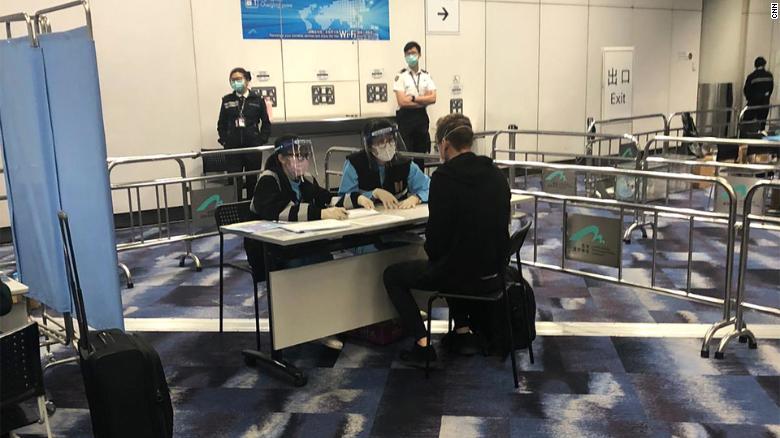
Upon arrival at Hong Kong International Airport on Sunday, after disembarking directly onto the tarmac we were taken to a quarantine area on the lower level of the airport.
There we underwent multiple health and security checks. My temperature was taken, I filled out a detailed questionnaire indicating I had not traveled to China, Italy, South Korea, or other coronavirus hotspots.
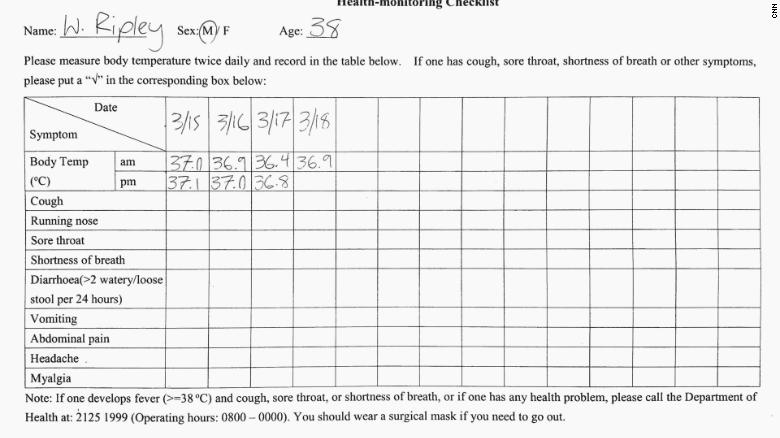
Two quarantine officers gave me a checklist of instructions for after I left the airport, including that I take my temperature twice daily and immediately report any abnormal symptoms to the Department of Health.
If I was to land in Hong Kong today, it would be even stricter.
The local government announced this week that anyone arriving from a foreign country is required to self-quarantine for two weeks, and will likely be issued an electronic monitoring bracelet that will alert the authorities if they leave their home or hotel.
Quarantine officers interview Will Ripley on arrival at Hong Kong International Airport on March 15
So far, Hong Kong’s intense measures appear to be containing the spread of the virus.
Despite Hong Kong sharing a border with mainland China, the number of cases in the densely populated city remains at 167– although the city has seen a spike in cases this week, mostly imported by international travelers arriving from countries struggling to deal with the virus.
Beyond the airport, it’s hard to spot someone in Hong Kong not wearing a mask. The city clearly learned painful lessons from the SARS outbreak of 2003, when some 300 Hong Kong citizens died.
The health-monitoring checklist issued by Hong Kong Quarantine officers on Sunday March 15, advising to do a temperature twice daily and report any symptoms to the Department of Health
Hong Kong acted early closing schools, public libraries and museums, and urging people to work from home, way back in February when it had relatively few cases. While the government didn’t go so far as to close bars and restaurants, when the virus arrived in Hong Kong many people took it upon themselves to stay home and avoid crowds.
Nobody is taking any chances. In Tokyo it’s very different.
Japan contrast
When I arrived at Narita airport in Japan this week our plane pulled up to the gate as usual.
I walked freely through the airport, more than 500 meters to the quarantine office where about 10 quarantine officers hastily tried to process everybody who came from my flight.
Nobody took my temperature, although I did walk past a thermal camera scanning for elevated body temperatures. But it was a cold evening and many passengers were bundled up in coats that could have hindered the camera’s ability to get an accurate reading.
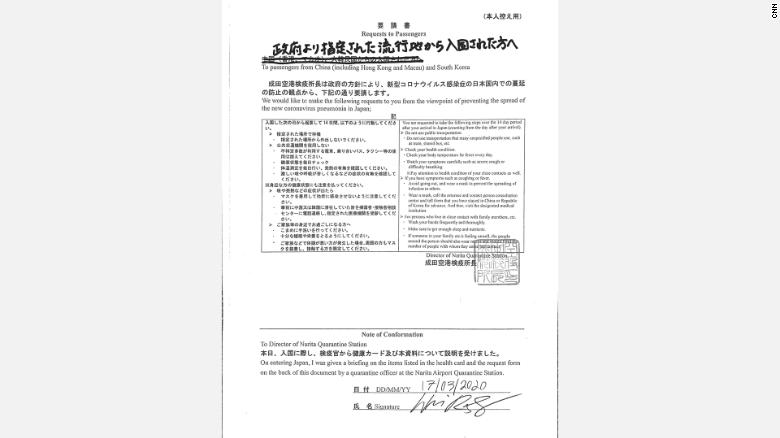
My quarantine officer gave me forms to sign in English requesting that I remain in my home for 14 days, check my temperature daily, and avoid public transportation.
These were simply requests, and are not being enforced. I am following the suggested protocol, but there is nothing to stop me from going anywhere I please.
The document issued at Tokyo’s Narita Airport on March 17 requesting arrivals to avoid public transportation and monitor their symptoms for 14 days
Other countries have declared a state of emergency and gone into lockdown, but Prime Minister Shinzo Abe has said the situation in Japan does not yet warrant his use of emergency powers.
In Tokyo, while many schools are closed, some large gatherings are canceled, and an unprecedented number of people are working from home, most bars and restaurants are open, lots of people are using crowded public transport, and parents still take their children outside to play, usually without masks. There is plenty of toilet paper on supermarket shelves.
In explaining why Japan is not on lockdown, Abe points to Japan’s relatively small number of confirmed cases, compared to other countries.
It’s true the island nation of 125 million people has 873 confirmed cases, compared to 31,506 in Italy, 16,169 in Iran and 8,413 in South Korea.
But there is a key difference between Japan and other nations with a skyrocketing infection count: Japan is testing a tiny fraction of people compared to many other countries.
By March 17, Japan tested just 14,525 people, according to the Ministry of Health, although some of those people had been tested multiple times. By contrast, South Korea — a country that has managed to stabilize a huge outbreak — can test about 15,000 people a day.
Japanese officials have said the country will ramp up its testing capacity to 8,000 people per day by the end of the month.
For an ageing society, a significant and rapid spread of coronavirus could have a devastating impact.
Widespread testing is the only way to know for sure if the calm in Tokyo is a true picture of the coronavirus situation in Japan — or if it is actually the calm before the storm.
Chief Justice Kwasi Anin Yeboah has issued new directives to all judges and magistrates in the country to grant long adjournments in court cases not requiring immediate resolution as coronavirus cases in Ghana surge in the last 24 hours.
Consequent to that, lawyers with cases in court have been asked to go to court on their due dates without their clients, and request for the case to be adjourned to specific dates in May, June and July.
“Alternatively, lawyers on both sides of a case may agree together to adjourn the matter to a specific date to be communicated to the Registrar in writing, thus avoiding the need to travel to the Court for that purpose,†a statement issued by the chief justice advised.
Judges and magistrates have further been directed to ensure that in cases currently being heard, “only lawyers, parties and their witnesses are allowed in Courtâ€.
The new directives according to the CJ, has become necessary “to ensure that the Courts are sufficiently decongested†in accordance with the social distancing directives issued by President Nana Akufo-Addo on March 15 as part of measures to stem the spread of the covid-19 in Ghana.
“We are operating in very unusual times with no precedents to guide us,†he said, but said it is key ensure that the needs of the citizenry for justice are adequately satisfied.
From the first two confirmed cases on March 12, and a daily steady rise, Ghana has within eight days recorded a total of 16 cases of the global pandemic but no fatalities so far.
Figures from the World Health Organisation (WHO) show more than 209,000 people have now been infected by the coronavirus worldwide and killed at least 8,000 people globally. The pandemic has caused health crisis in some nations.
At least 86,000 have recovered from COVID-19, data from Johns Hopkins University in the US has also revealed.
The five new cases confirmed in Ghana involved three localized infections as authorities say they have no travel history.
Ghana Health Service officials at the forefront of the disease are unable to tell how two of the localized cases were contracted because they have neither travelled outside Ghana nor had known contact with an infected person.
In the case of the 53-year-old Ghanaian male in Tema, officials say “no history of travel, no evidence of close contact with confirmed caseâ€.
For the 29-year-old Ghanaian lady of Accra, officials did not say how she got the disease except to say her “sample confirmed positive in the laboratoryâ€.
However, for a 34-year-old Ghanaian lady resident of Accra, she was said to have contacted an infected person her place of work.
A statement issued moments ago by the Ghana Health Service said all the five new cases were reported from Greater Accra Region and involved Ghanaians.
The fourth case is a 41-year-old Ghanaian male who arrived in Ghana by KLM on the 15 March 2020.
“[He] indicated exposure with family members in Amsterdam exhibiting respiratory symptoms and also on the flight with some passengers sneezing and coughing; sample confirmed positive in the laboratory,†the Ghana Health Service stated.
A 36-year-old Ghanaian male resident in Paris, France although arrived in Ghana with an unconfirmed case, he later tested positive.
Officials said there is “no evidence of contact with infected personâ€.
Though no death has been recorded in the country since the first two confirmed cases were recorded on March 12, there are fears the situation could get worse as Ghana appears to be moving from steady rise to a surge with localized cases being recorded.
Ghana has since March 15 taken a series of measures including a ban on social gatherings for the next four weeks, closure of schools and a ban on non-citizens from countries worst hit by the global pandemic from entering Ghana.
The pound has fallen to its lowest level against the dollar since 1985, as the spread of the coronavirus pandemic spooks investors.
It is currently trading at $1.15, a fall of almost 5% in just one day.
It comes as financial markets tumbled again after major stimulus plans failed to quell fears about the economic impact of the virus.
The Dow ended down 6.3%, while the S&P 500 fell 5.1% and the Nasdaq dropped 4.7%.
Earlier the Dow and S&P 500 had plunged more than 7%, triggering an automatic temporary halt to trade, but shares recovered some ground as Congress appeared set to approve a relief bill.
The pound’s weakness could partly stem from questions over how the UK government plans to pay for the emergency economic measures it has introduced, says Neil Wilson, chief analyst for Markets.com.
“This is the worst sustained period of sterling selling that I can recall,” he says. “The government’s massive fiscal package undoubtedly means more borrowing for the UK economy – how do we pay for all this?”
Meanwhile, the FTSE 100 index of top UK firms closed down 4%, with aerospace and travel firms among the hardest hit.
‘Economic fight’
UK Chancellor Rishi Sunak revealed a £350bn stimulus package for UK firms on Tuesday, including £330bn of business loan guarantees.
It included aid to cover a business rates holiday and grants for retailers and pubs, while help for airlines is also being considered.
Despite this, investors are still flocking to the comparatively safer dollar, says Ranko Berich, head of Market Analysis at Monex Europe.
“The UK’s response to the incoming coronavirus shock has been about as aggressive as possible in terms of monetary and fiscal policy, but this has done nothing to help sterling.
“Idiosyncratic factors such as the UK’s monetary and fiscal response or Brexit are beside the point: this is about the US dollar, which is proving unstoppable as global financial markets stare into the abyss of crisis-like conditions,” he said.
Investors say rescue measures can only blunt the pain, as countries close borders and order mass closures, bringing most economic activity to a halt.
The US on Tuesday outlined a $1tn (£830bn) proposal to support the world’s biggest economy, which is expected to include direct payments to families, small business assistance and bailouts for airlines and other industries.
In the US, large companies have already announced more than 3,600 job cuts or furloughs, according to research firm Challenger, Gray & Christmas. The firm said some nine million other jobs at local bars and restaurants could also be at risk.
Car factories in the UK and elsewhere have halted production, while the slowdown has pushed other firms such as Laura Ashley and Flybe into administration.
Concerns about the damage have spurred a widespread sell-off. France’s CAC 40 fell more than 6% while Germany’s Dax dropped more than 5%.
Oil prices also plunged to levels not seen since the early 2000s, as demand contracts sharply, but exporters boost supply. The declines have even hit gold and government debt, which are typically considered less risky assets.
Asian markets have fared better than the US and Europe in recent days, but were also lower. Japan’s benchmark Nikkei 225 ended Wednesday 1.7% lower, the Hang Seng in Hong Kong fell by 3.3%, and China’s Shanghai Composite lost 1.8%.
Sterling’s fall to a 35-year low against the dollar is clearly troubling.
It is down 12% since the beginning of last week, and 5% today alone. This is partly down to the strengthening dollar, due to its status as a “safe haven,” the inevitable result of global volatility in financial markets amid the Coronavirus pandemic.
But those aren’t the only reasons for sterling’s weakness. The pound has sunk to to just over €1.06 against the euro- its lowest level since the depth of the financial crisis 11 years ago.
The pound is likely to be at a record low on measures of its global value, to be calculated tomorrow.
At the same time, UK government borrowing costs are creeping up, with the presumption these would stay “lower for longer” now being tested in global debt markets.
Traders have raised a range of reasons for why the UK is being particularly singled out for attention.
There is growing expectation of ever bigger fiscal injections to combat the economic impact of the pandemic and the UK is still very dependent on foreign flows of capital.
Its strategy for dealing with the pandemic was seen, say traders, as an outlier amongst the world’s major economies.
Then there is Brexit. The UK has the extra economic challenge of dealing with a fundamental change to trading arrangements with the EU, perhaps on WTO tariffs, in the middle of this pandemic.
It is a very rough market out there, with some markets a little dysfunctional as traders are isolated away from their trading floors. But the UK is being singled out for especially tough treatment.
The novel coronavirus can infect anyone, but it’s older adults — ages 60 and up — who are more likely to get seriously sick from it.
Some tips are applicable to every generation, but there are specific precautions older adults should take to protect their health.
We spoke to two geriatricians and pulled guidance from the Centers for Disease Control and Prevention to assemble what people 60 and up need to know about the novel coronavirus.
Recommendations for Covid-19 may change as officials learn more, so monitor your local health department and the CDC for updates.
What’s your risk level
The CDC says “older adults” and people with severe chronic illness are more likely to become severely ill from Covid-19.
Infectious disease experts define “older adults” as anyone age 60 and up, so people in that age group should be cautious.
It’s possible to contract the virus at a younger age — it’s just more dangerous in older adults because the immune system weakens with age, said Dr Samir Sinha, director of Geriatrics for the Sinai Health System and the University Health Network in Toronto.
People over the age of 80 may want to exercise even more caution.
A report published in the medical journal JAMA that examined more than 72,000 Chinese coronavirus patients found that the overall fatality rate was 2.3%. But in adults over 80, the fatality rate rose to 15%.If you live in a community where there’s an outbreak, you’re at a higher risk of infection, too.
Follow the advice below.
What precautions you should take now
Cancel all non-essential doctor’s appointments, said Dr. Carla Perissinotto, an associate professor in the Geriatrics Division of the University of California-San Francisco’s Department of Medicine.
Whether it’s a standard check-up, a follow-up appointment for a stable condition or an elective procedure, if it can wait, then it should.
If you have an important appointment coming up, consider doing it in a video call or from your smartphone. Telehealth tech lets physicians confer with patients who may not be able to leave their homes.
Tell a friend, a loved one, a co-worker or a neighbour if you’re concerned about the illness. Appoint one of them as an emergency contact who you can call with concerns or requests for help.
Otherwise, do what you’d do during flu season: Wash your hands frequently, the right way (get ready to read that a lot). Use hand sanitizer when soap and water aren’t available, though washing your hands is preferred.
What you should stock up on
The CDC recommends keeping enough groceries and toiletries on hand to last you a “prolonged period of time.” There’s no timeline for the Covid-19 outbreak, though, so think basic.
tock up on toothpaste, detergent, water filters, etc.
Make meals and freeze them if you’re concerned about food.
But stocking up on medication ahead of time isn’t always plausible, Perissinotto said. You may be able to switch to a 90-day supply for your prescription. If this isn’t possible, the CDC suggests mail ordering medications.
How you should alter daily activities
Older adults living in communities where the virus has spread should take extra precautions.
Avoid public places where crowds may gather or poorly ventilated buildings where the risk of transmission is higher, the CDC said.
You don’t need to shut yourself off from public life — just be vigilant when you enter it.
Older adults should still exercise and eat right, just as they would at any other time of the year, Sinha said.
And again, constant — and proper — handwashing before, during and after a trip into the public is necessary.
How you should handle travel
The CDC advises against non-essential plane travel for older adults. Several US airlines have already slashed their flight schedules for the next few months.It’s wise to stay off cruise ships for now, too. Cruise passengers are at an increased risk of person-to-person transmission with all the tight quarters, the CDC said, so if you’re already made cruise plans, it’s best to cancel them.
What you need to know about self-isolation
The CDC recommends that high-risk groups in communities with outbreaks stay home as much as possible and that people who believe they’re sick isolate themselves.
But long-term isolation can be damaging. Perissinotto studies the effects of social isolation in older adults, and she said that loneliness and depression are “huge risks for mortality.”
“I don’t think the solution of totally being devoid of social contact is the answer,” she said. “Yes, there is some prudence we need to have in social distancing, but we also have to be careful to not isolate more — it can be very detrimental.”
So if you need to isolate yourself:
Don’t cut off contact with family or friends.
Keep in touch to update them on your condition and curb boredom.
If groups you’re a member of are still meeting and none of the other members are sick, Perissinotto said it should be OK to go.
Just exercise caution. It’s an individual choice, so if skipping out would reduce some anxiety, that’s fine, too.
And if you do go, be sure to wash your hands with soap.
What your family can do
To help you, your family should think ahead.
Perissinotto recommends that family, friends and neighbors of older adults do some inventory in case the older adult needs to isolate at home.
Does this person have what they need to spend an extended period of time inside? If not, help them prepare supplies.
If their caregiver calls in sick, is there someone who can step in to take care of them? Have a plan in place to make sure they’ll get care if they need it.
If they have a telemedicine appointment coming up, will they know how to access it? Set up the tech and show them how to use it to speak with their physician.
Getting prepared and keeping in touch can help keep families connected if an older member needs to isolate, Perissinotto said.And, of course, sick family members should not visit — stick to a phone or video call. And if a younger, healthy family member has potentially come into contact with a Covid-19 patient, they should self-isolate and avoid seeing older, susceptible family members.
What you should consider about nursing homes
It’s natural to be fearful for the family in nursing homes and long-term care facilities, Sinha said: Older people and people with chronic illnesses, both high-risk groups, are living together in tight quarters.
The good news: Most nursing homes and long-term care facilities are prepared for pandemics, Perissonotto said.
The CDC provides training for long-term care facilities on how to operate during pandemics. If you’re concerned about the safety of your family member or want to learn about the protocol their facility is following, contact staff at the facility.
What you should do when visiting loved ones at nursing homes
This depends on whether the nursing home is accepting visitors.
The CDC doesn’t recommend a blanket-ban on visitors — just those who show respiratory symptoms, like coughing and sneezing. The Society for Post-Acute and Long-Term Care Medicine recommends that facilities screen visitors before entering in outbreak areas.
Some long-term care facilities have stopped allowing visitors to protect their patients. Call your facility ahead of time to find out its current policy and set up an alternative mode of communication between residents and family.
And it goes without saying, but if you’re sick, don’t visit.
What to do if you’re sick
If you think you have the novel coronavirus:Â Stay home and call your physician. If they think you should come in for a test, limit your interaction with other people and don’t use public transportation. They may provide a face mask for you to wear while in their office.
If your doctor is not immediately available:Â Consider calling a local coronavirus hotline. Some city, county and state health departments have numbers you can call to discuss your symptoms and learn more about the virus’s impact on the community. Keep in mind that these hotlines are meant as informational resources, and it’s impossible to diagnose Covid-19 without a test.
If you’re diagnosed with the novel coronavirus and your illness is mild: Your physician may advise that you stay home until you recover. If your symptoms are more severe, you may be hospitalized so physicians can monitor your condition.
Deaths from Covid-19 in Spain hit 1,002 on Friday, an increase of 235 in the past day, according to a Spanish health ministry official.
There have now been 19,980 total cases recorded, said Fernando Simón, director of the Spanish Coordinating Centre for Health Alerts and Emergencies, at a daily briefing.
The 16.5% increase in cases recorded (up 2,833) was slower than in previous days, but Simón warned that many factors affect the number of cases confirmed.
Some 1,141 of the recorded cases have been put into intensive care, Simón said. Some of the first people taken into intensive care are now being released, he added, though those numbers remain low.
Some 10,542 of the total recorded cases have been hospitalized, which is 52% of the total, Simón said.
On Thursday there had been 17,147 cases with 767 deaths.
UK stocks tumbled on Wednesday as major UK and US stimulus plans failed to quell worries about the economic impact of the coronavirus pandemic.
The FTSE 100 index of top UK firms dived more than 5%, with aerospace firms, travel companies and housing firms leading the declines.
The pound meanwhile hit a six-month low against the dollar to trade at $1.1966.
It came despite the US on Tuesday outlining a $1tn (£830bn) package to support the world’s biggest economy.
UK chancellor Rishi Sunak also revealed a £350bn stimulus package for UK firms, including £330bn of business loan guarantees.
It also included aid to cover a business rates holiday and grants for retailers and pubs. Help for airlines is also being considered.
Mr Sunak told a news conference: “Never in peacetime have we faced an economic fight like this one.”
US stock market futures were also indicating a weaker open for Wall Street on Wednesday, despite the main indexes rebounding more than 5% on Tuesday.
The stimulus measures taken globally also failed to buoy Asian stocks. Japan’s benchmark Nikkei 225 ended Wednesday 1.7% lower, the Hang Seng in Hong Kong fell by 3.3%, and China’s Shanghai Composite lost 1.8%.
On Tuesday, US Treasury Secretary Steven Mnuchin said he supports sending money directly to Americans as part of a $1tn stimulus plan aimed at averting an economic crisis caused by the virus.
The overall aid package would be larger than the US response to the 2008 financial crisis, amounting to nearly a quarter of what the US federal government spent last year.
In Japan Prime Minister Shinzo Abe is reportedly forming a panel of key economic ministers and Bank of Japan Governor Haruhiko Kuroda to discuss measures to prop up the economy.
The move, which would bring Japan in line with other nations, is designed at averting an economic crisis in the country, which some fear could tip into recession.
Big shifts in the stock market are often in the news, whether they are booms or falls owing to coronavirus or the financial crisis.
As companies grow, they issue shares. The largest companies in the UK have shares which are bought and sold on the London Stock Exchange.
Their collective performance is often quoted amid a blizzard of numbers that may feel confusing and irrelevant. Rarely does anyone mention during a coffee with friends that the FTSE 100 has dropped well below 7,000 points.
But there are good reasons why this performance affects your life and finances.
Many people’s initial reaction to “the markets” is that they are not directly affected, because they do not invest money.
Yet there are millions of people with a pension – either private or through work – who will see their savings (in what is known as a defined contribution pension) invested by pension schemes. The value of their savings pot is influenced by the performance of these investments.
Amazon is temporarily refusing to stock certain items in its warehouses, to cope with overwhelming demand for household essentials due to the coronavirus pandemic.
It means third-party sellers of non-essential items could find it difficult to ship orders to customers.
The move will last until 5 April and cover warehouses in the US and Europe.
Amazon told the BBC: “We are temporarily prioritizing household staples, medical supplies, and other high-demand products coming into our fulfillment centres so we can more quickly receive, restock, and deliver these products to customers.
“We understand this is a change for our selling partners and appreciate their understanding.”
The number of people dying from coronavirus in Italy has risen by 475 in one day to nearly 3,000 – the biggest increase since the outbreak.
There are a total of 35,713 confirmed cases in the country, with more than 4,000 having successfully recovered.
Lombardy, the worst-hit region, recorded 319 deaths in one day.
Italy is the world’s worst-affected country after China, where the virus originated last year. At least 8,758 people have died, most in China.
The vast majority of the more than 200,000 confirmed cases – 80% – have occurred in Europe and the Western Pacific region, which includes much of Asia, the World Health Organization (WHO) says.
Many countries have taken drastic measures, including social distancing and cancelling major events to help slow transmission and reduce pressure on the health systems.
“But to suppress and control epidemics, countries must isolate, test, treat and trace,” the WHO chief Tedros Ghebreyesus said on Wednesday.
Italy has been on lockdown for almost two weeks as authorities try to halt the progress of the virus.
People have been asked to stay indoors – but the number of deaths has continued to spiral.
The WHO’s emergencies director, Mike Ryan, said this was probably due to the “astonishing” number of cases within the health systems, as well as the high number of elderly people in the population at large.
Dr Tedros hailed the beginning of the first vaccine trial so soon after the emergence of the virus as “an incredible achievement”.
In his bid to help keep the hopes of people alive and help prevent further spread of the ruthless coronavirus, dancehall king, Shatta Wale has shared first 1000 hand sanitizers to fans across Ghana.
With Ghana recording it 11th coronavirus case, Shatta Wale is doing everything possible to keep down the virus. He took to twitter to thank God for the first 1000 sanitizers sent out successfully and explained that he did it for the love of his fans because they made him who he is today. The second batch may follow soon.
Check his tweet below:
Thank God ðŸ™ðŸ½ First 1000 hand sanitizers out ðŸ™ðŸ½ðŸ™ðŸ½
So far as I know, these fans made me get here and in times like this I have to be there for them too !!!#SMFaithconcert#Staysafe
The Queen has left Buckingham Palace for Windsor Castle in the wake of the coronavirus outbreak, according to BBC royal correspondent Jonny Dymond.
Her Easter visit to Windsor has been brought forward by a week and she is likely to stay there beyond the Easter period, Buckingham Palace has said.
It comes after the palace announced that the state visit of the emperor and empress of Japan to the UK had been postponed. It was planned for the spring but will be rescheduled to a later date.
The National Media Commission (NMC) is warning the Ghanaian media against making jokes about the new coronavirus disease that is ravaging the world.
“While humour may have its place in reducing anxieties in moments of national stress, it also carries the risk of minimising the sense of urgency and possibly leading to complacency in public response,†the Commission noted.
Latest figures indicate 244,973 persons have contracted the viral disease which has killed 10,033 in three months, with 87,408 having recovered from it.
Ghana has recorded 11 cases as at Thursday, March 19, 2020 with zero deaths so far. Health officials say those infected are responding positively to the treatment.
The Ghanaian media have generally been praised for demonstrating commendable support for the national cause.
However, the Commission in an advisory on the coverage of the coronavirus pandemic observed that, in the legitimate attempt to reduce public anxiety and provide hope in this moment of disquiet, some media houses have resorted to making jokes about the disease.
It, therefore, called on media practitioners to ensure that “balance still remains our greatest professional virtue†in such a situation.
The Commission further advised media practitioners to rely on official sources for accurate information about the deadly disease.
Africa must “wake up” to the coronavirus threat and prepare for the worst, the head of the World Health Organization (WHO) has said.
The continent should learn from how the spread of virus has sped up elsewhere, Tedros Adhanom Ghebreyesus said.
He warned that while Africa’s confirmed cases were currently low – around 640 – there was no reason for complacency.
“Africa should wake up, my continent should wake up,” said the Ethiopian, the WHO’s first African head.
Health experts warn that strained public health systems in Africa could become quickly overwhelmed if the virus takes hold, especially in overcrowded urban areas.
“WHO’s recommendation is actually mass gatherings should be avoided and we should do all we can to cut it from the bud, expecting that the worst could happen,” Mr Tedros told a news conference in Geneva, where the WHO is based.
In Africa, 16 people have died from Covid-19, the respiratory illness caused by coronavirus: six in Egypt, six in Algeria, two in Morocco, one in Sudan and one in Burkina Faso.
In South Africa, which has 116 cases, President Cyril Ramaphosa has declared a state of disaster, restricting travel, closing schools, banning mass gatherings and ordering bars to close or limit numbers to 50.
The country has also banned all cruise ships from its ports. This comes despite tests coming back negative for six people on board a cruise ship, which had been put under quarantine. All 1,700 people are now free to leave the ship and return home.
Anyone breaking South Africa’s coronavirus measures will be subject to a fine, or even imprisonment.
Authorities in Italy have arrested a couple for breaching coronavirus quarantine rules after they were caught having sex inside a car.
The couple, a 23-year-old Egyptian man and a 40-year-old Tunisian woman were caught in the act by a police officer on the outskirts of Milan on Monday.
Police say the roadside fling happened on a road in Mecenate near Milan which has been heavily hit by the coronavirus outbreak.
According to news agency ANSA, the pair were accused of ignoring a quarantine rule which bans two people from being in the front or back of a vehicle together.
It wasn’t revealed if the couple will face further action, but Italian authorities are keeping an eye on all road vehicles in order to enforce a ban on travel.
Italy currently has 31,506 cases of coronavirus with 2,503 deaths.
The World Health Organization (WHO) has announced that Africa has recorded 17 coronavirus deaths since the virus was confirmed in the continent.
In the last 24 hours, Gambia, Mauritius and Zambia announced their first cases of coronavirus. The deaths recorded in the continent were in Algeria, Burkina Faso, Egypt, Morocco and Sudan.
A tweet by the World Health Organization, Africa region reads;
633 CONFIRMED #COVID19 CASES IN #AFRICA IN 33 COUNTRIES AND 17 DEATHS. IN PAST 24 HRS, THE GAMBIA, MAURITIUS & ZAMBIA HAVE ANNOUNCED FIRST CASES. @WHO  IS SUPPORTING COUNTRIES WITH SURVEILLANCE, DIAGNOSTICS & TREATMENT.
If you are staying home and almost bored because of the social distancing advisory then Shatta Wale is bringing a concert to your room.
The dancehall act is following the likes of John Legend and other global acts who are entertaining their fans with a free online show as the world is on lock down out of the social distancing advisory, forcing people to stay home as the world fights to contain the coronavirus pandemic.
The dancehall act made his intention known via a social medial post in which he stated that his show, dubbed “Faith Concertâ€, will be streamed live online for his fans . “A concert to my fans around the globe Live on YOUTUBE to KEEP THE FAITH in these challenging times as humanity is faced with its extinction,†Shatta wrote.
The “Gringo” singer continued that “Believing that God will take us through this trying phase and knowing that we all count and can make an effort to stay safe as these daunting hours pass by, “FAITH CONCERT†will be transmitted live through all our social media handles. Dates will be announced soonâ€
Religious leaders in Kenya have suspended worship in some churches and mosques after the country confirmed seven coronavirus cases.
The Presbyterian Church of East Africa, All Saints’ Cathedral of Anglican Church, Christ is the Answer Ministries, Kenya Assemblies of God and the Nairobi Chapel have suspended congregational worship.
All the five churches said they would live stream Sunday services on social media platforms.
The Presbyterian Church and Anglican Church urged congregants to cancel upcoming weddings or opt for short ceremonies with less people in attendance.
Church-related meetings have also been stopped in line with President Uhuru Kenyatta’s directive that banned all public gatherings as a precaution to prevent the spread of coronavirus.
The Jamia Mosque in the capital, Nairobi, announced that it was stopping all congregational prayers.
Most at times we hear ‘you are what you eat’ and eating healthy has the tendency to boost your immune system to maintain defenses against infection through the cooperation of many body’s tissues.
The digestive tract is lined with membranes that resist penetration by invading microbes and other unwanted substances just as the skin presents a physical barrier.
These linings are highly sensitive to vitamins and other nutritional deficiencies hence, the need to ensure your diet comes with adequate, balance, moderate and calorie-controlled nutrients amidst variety of food choices.
For your immune system to rush and defend the body against harm in cases of penetration of foreign invader, your white blood cell that depends on a steady flow of nutrients to build defense mechanism must have been served with nutritious meals to be able to act as scavengers and release antibodies to fight infections.
For your healthy eating, you need to be abreast of your daily caloric need. A recommended calorie intake is required daily for healthy living and your height, weight, age, gender and physical activity level is a determinant of your daily needs.
For a healthy individual: determining your daily caloric need:
There is Basal metabolic rate when at rest and you can determine that by using this calculation:
Basal Metabolic rate:
Adult male: 66 + (6.3 X weight in pounds) + (12.9 X height in inches) – (6.8 X age in years)
Adult Female: 665 + (4.3 X weight in pounds) + (4.7 X height in Inches) – (4.7 X age in years)
To determine your total daily calorie needs, multiply your BMR by the appropriate activity factor, as follows:
• If you are sedentary (little or no exercise) : Calorie-Calculation = BMR x 1.2
• If you are lightly active (light exercise/sports 1-3 days/week) : Calorie-Calculation = BMR x 1.375
• If you are moderately active (moderate exercise/sports 3-5 days/week) : Calorie-Calculation = BMR x 1.55
• If you are very active (hard exercise/sports 6-7 days a week) : Calorie-Calculation = BMR x 1.725
• If you are extra active (very hard exercise/sports & physical job or 2x training) : Calorie-Calculation = BMR x 1.9
It is with the knowledge of this that the saying ‘eat well’ comes into reality. If you have any problem doing such, contact a registered dietitian for a guide.
Prevention is the golden standard! Therefore, eat based on your daily caloric needs.
The great news is that, every food item you choose has the tendency to offer you good health especially when eaten in moderation.
General Guidelines
Aside your regular choice of local staples, you can add garlic, ginger, hot chillies to increase body’s heat energy in the outbreak of COVID-19 Regular intake of warm water can help protect you against the pandemic.
Take ginger soup or drink and exercise at least 30 minutes in a day.
Take less of refined sugars, sweets and oily foods: pastries, soft drinks.
It is necessary to drink water regularly but not too much ice water.
To those with an already impaired immune system ensure that, foods are thoroughly cooked.
Use salt water to soak your fruits and later wash under hygienic running water.
Choose cooked vegetables over raw vegetables and great garnishes.
Ensure your meat, egg, and fish are thoroughly cooked
Personal and food hygiene are key to healthy eating.
CEO 2Hype Gang Worldwide, Showboy in a social media post shared his thoughts about how Coronavirus came about.
He stated that Coronavirus was created by scientists and funded by politicians adding that the virus was mainly targeted to be used as a tool to reduce world population.
Here is what he wrote;
“Conspiracy theories !!! Corona virus was created by scientists n supported by politicians to help control population !! A lot laundering money in the name of corona virus ..government getting paid for free… The virus helping the government to get rich.â€
One commodity that has seen an increase in its price in Ghana is Hand Sanitizers. This is after the country reported some cases of the deadly Coronavirus in Ghana.
Well, most celebrities are doing their best to educate Ghanaians on how to stay safe and popular media personality, Andrea Owusu who is widely known as Efia Odo is doing the same thing.
Efia Odo in a recent social media post showed her followers and other social media users how to make cheap home-made hand sanitizers.
Premier League clubs will attempt to hammer out a plan to complete their suspended season when they meet via a conference call on Thursday.
English football is in lockdown as part of the worldwide bid to slow the spread of the coronavirus.
Top-flight fixtures have been suspended until April 4 at the earliest and while it seems certain that the lay-off will be extended, the postponement of the Euro 2020 finals has created room for manoeuvre.
It is understood the focus at the meeting will be on concluding the 2019/20 campaign at some point rather than on what might happen should they be unable to restart.
There are signs that clubs are split on the way forward.
Brighton and Hove Albion chief executive Paul Barber said if the season were to be “frozen” it would be unjust on Liverpool, who are on the brink of their first top-flight title for 30 years.
But West Ham vice-chairman Karren Brady said if the fixtures could not be completed, the only fair solution would be to declare the season “null and void”.
Some clubs lower down the English football pyramid fear they could be forced out of business if football does not return until after the summer.
The English Football League (EFL) has already announced a £50 million ($58 million) short-term relief package to help out struggling lower league clubs.
Underlining the parlous state of some clubs, Scottish Premiership side Hearts announced that it had asked staff to take a 50 percent pay cut.
In a statement on the club’s official website, Hearts owner Anne Budge said: “In order to try to prevent a staff redundancy programme and to protect as many jobs as possible, I am proposing to implement a club-wide salary reduction programme.
“We have asked all full-time employees, managers, coaches, players and player back-room staff, with effect from the beginning of April, to accept a 50 percent cut in their monthly salary.”
She said she did not know how long the measure would be in place for.
The International Olympic Committee says it has held “constructive” talks with athlete representatives about the coronavirus crisis.
President Thomas Bach admitted he was “confronted with many questions” over qualification and restrictions.
But he also insisted that “everybody realised that we still have more than four months to go” until Tokyo 2020.
The summer showpiece is still scheduled to begin on 24 July despite the cancellation of other sports events.
There has been mounting criticism from athletes, with the IOC accused of putting them “in danger” by insisting it remains fully committed to the Games.
Olympic champion Katerina Stefanidi said the IOC was “risking our health”, while Britain’s Katarina Johnson-Thompson said training had become “impossible”.
Speaking in an in-house IOC interview, Bach said: “We have just had a really great call with 220 athlete representatives from all around the world, it was very constructive and gave us a lot of insight.
“We aimed to continue being very realistic in our analysis. We will keep acting in a responsible way that is in the interest of the athletes whilst always respecting our two principles – the safeguarding and health of the athletes and contributing to the containment of the virus, and secondly to protect the interest of the athletes and Olympic sport.”
British four-time Olympic rowing gold medallist Matthew Pinsent criticised Bach’s comments on Twitter, accusing him of not properly listening to athletes’ concerns and stating that postponing the Olympics is the best option for all concerned.
“I’m sorry Mr Bach but this is tone deaf. The instinct to keep safe is not compatible with athlete training, travel and focus that a looming Olympics demands of athletes, spectators and organisers,” Pinsent wrote.
“Keep them safe. Call it off.”
Earlier, in a statement, the IOC had warned “no solution will be ideal” in preparing for Tokyo 2020.
“This is an exceptional situation which requires exceptional solutions,” it said.
“The IOC is committed to finding a solution with the least negative impact for the athletes, while protecting the integrity of the competition and the athletes’ health.
“No solution will be ideal in this situation, and this is why we are counting on the responsibility and solidarity of the athletes.”
Italy on Wednesday reported 475 more deaths from the coronavirus, a new record high that brings the total number of victims in the country to 2,978.
Latest figures provided by the Italian Civil Protection Department show that COVID-19 cases in the country have now reached 28,710, a 10% rise from Tuesday.
The Italian government is mulling over whether to further strengthen its already strict containment measures, which have brought the country to a near-total lockdown.
The hotbed of the outbreak in Italy remains the northern Lombardy region, which accounts for 1,959 of the total fatalities in the country.
Attilio Fontana, the governor of Lombardy, issued a desperate appeal to citizens on Wednesday, urging them to stay remain at home or face more stringent lockdown measures.
“Unfortunately, the number of infections is not decreasing. They continue to rise, and soon we will not be able to heal those who are falling ill,†he said.
Italy is the worst-hit country in Europe and has the highest number of COVID-19 cases and deaths in the world after China.
The World Health Organization (WHO) has declared Europe as the new epicenter of the coronavirus, which first emerged in Wuhan, China last December.
According to WHO data, the virus has now spread to 164 countries and territories, and there were over 194,000 cases and nearly 7,900 fatalities around the world by Wednesday evening.
The central Chinese city of Wuhan, the epicentre of the country’s coronavirus outbreak, reported no new infections for the first time, while imported cases surged by a record, led by new infections in the capital of Beijing.
The new imported infections also accounted for all of the new confirmed cases in mainland China, placing more pressure on authorities to screen travellers at key travel hubs.
Mainland China had 34 new confirmed cases on Wednesday, the country’s National Health Commission said, more than doubling from 13 cases a day earlier.
Of the 34 imported infections, Beijing accounted for 21 cases, a daily record for the city.
That brings the total number of confirmed cases in mainland China so far to 80,928, the health authority said in a statement on Thursday.
The death toll from the outbreak in mainland China had reached 3,245 as of the end of Wednesday, up by eight from the previous day.
In the central province of Hubei, there were eight new deaths, with the provincial capital of Wuhan accounting for six of the fatalities.
An activist with India’s ruling party has been arrested after a volunteer fell ill from drinking cow urine at a party to combat the novel coronavirus, police said Wednesday, as interest grows in home remedies amid the pandemic.
Narayan Chatterjee, a Bharatiya Janata Party activist, was arrested by West Bengal state police late Tuesday for “organising the cow urine consumption event and compelling a civic volunteer to drink cow urine”, Kolkata police chief Anuj Sharma told AFP.
“The civic volunteer fell sick on Tuesday and lodged a complaint with the police. The BJP activist was arrested on Tuesday night.”
The president of BJP’s West Bengal branch told AFP Chatterjee’s arrest was “unfortunate”.
“India is a democratic country. Everyone has the right to express his opinion,” Dilip Ghosh said.
“It’s unfortunate that Chatterjee was arrested for expressing his opinion organising the event. We don’t know if the civic volunteer was forced to drink cow urine.”
Many in the Hindu-majority nation of 1.3 billion consider cows sacred and believe drinking cow urine is a panacea for all manner of ailments, from arthritis and asthma to cancer and diabetes.
Last week, dozens of Hindu activists held a cow urine party in the capital New Delhi where they staged fire rituals and drank urine from earthen cups in order to fight the COVID-19.
Critics have rejected the urine claims as quackery.
A milk trader in the same state was arrested Tuesday for selling cow urine and dung and claiming they “would keep the novel coronavirus at bay”, senior police officer from Hooghly district Humayan Kabir told AFP.
Kabir said the trader, Sheikh Masud, was selling cow urine at 500 Indian rupees ($6.69) a litre and cow dung at 400 rupees a kilogramme (2.2 pounds).
Masud, who hung a poster at his shop with the words “Drink cow urine to ward off coronavirus” told police he was inspired to sell the excrement after hearing about the Delhi party.
AFP has sought comment from the Ministry of Health on whether cow dung and cow urine are effective in curing COVID-19.
The World Health Organisation in India has also been contacted for comment over the urine and dung claims.
The government said Wednesday there have been 151 positive cases and three deaths from the virus in India, the world’s second-most populous country with 1.3 billion people.
Most schools, entertainment facilities including cinemas, and even the iconic Taj Mahal have already been closed in India to try and stop the spread of the outbreak.
A massive coronavirus prayer session with tens of thousands of devotees sparked an outcry in Bangladesh Wednesday as the South Asian nation reported its first death from the global pandemic.
Local police chief Tota Miah said some 10,000 Muslims gathered in an open field in Raipur town in southern Bangladesh to pray “healing verses” from the Koran to rid the country of the deadly virus.
“They held the Khatme Shifa prayers after dawn to free the country from the coronavirus,” Miah told AFP.
Organisers claimed the number of worshippers was 25,000.
He said organisers did not get permission from authorities to hold the session.
Photos of the gathering was widely shared on social media, with commenters slamming the massive rally.
Authorities have already shut schools and asked locals to avoid large gatherings in an effort to halt the spread of the disease.
“Unbelievable how they even have done it without notifying the police? They will be held responsible if anything happens to the people in the region,” Abdur Rahman wrote on Facebook.
Despite the appeal from authorities to avoid crowded public areas, many took the opportunity to head to tourism sites.
Police said they had to close two beaches, including one at Cox’s Bazar, the main resort district of the country, and which is home to nearly one million Rohingya refugees from Myanmar.
A senior leader from the ruling Awami League, Obaidul Quader, said a lockdown might be required to contain the virus.
“If necessary, Bangladesh will be shut down. It’ll be enforced where necessary. People must be saved first. We’ll do everything for that,” he told reporters.
The number of positive cases in the country of 168 million people stands at 14, although some medical experts fear not enough tests were being conducted.
Multiple award winning actress, Gloria Sarfo has taken to social media to share hand sanitizers to everyone who is need to help prevent further spread of the deadly coronavirus in Ghana.
The actress, who recently won an award for “Best Supporting Actress†at the just ended African Magic Viewers Choice Award, shared a post on her Instagram page, directing fans and followers to send a dm to receive a free hand sanitizer.
This is a good course and a step in the right direction to curb down the virus since the number of infection seems to increase. Ghana has recorded it 9th coronavirus case and the use of the sanitizer and other preventive materials will go a long way to prevent further spread.
Controversial Nigerian actress Tonto Dike has posed an interesting question to her fans as she expresses her shock.
Following the outbreak of the COVID-19, many people from the Western world who have been hit by the disease sort to panic shopping.
A video of two Australian women popped up on social media where they were captured fighting each other over tissue paper. This got everyone talking. Most people asked why these women were fighting over tissue paper instead of food.
Tonto Dike has also quizzed why tissue paper in abroad is scarce. She asked if the Coronavirus makes people poop.
U.S. President Donald Trump said Wednesday he is activating a war-time law that allows him to more directly mandate the production of the private sector as the U.S. seeks to combat the spread of the new coronavirus.
Trump said he will “be invoking” the Defense Production Act, a 1950 war powers act originally signed into effect at the onset of the Korean War, “in case we need it.”
It gives the president broad authorities to direct private firms to produce certain goods needed for the national defense in an effort to increase the necessity of producing goods that are urgently needed.
The U.S. is currently facing a shortage of badly-needed medical equipment, including ventilators, respirators and hospital masks, as it seeks to stymy the spread of COVID-19.
The president said he would be signing the act shortly after he briefed reporters during a press conference, saying it is “prepared to go.” But the White House has yet to officially say he has taken the action.
The U.S. and Canada earlier Wednesday announced the closure of their mutual border, which 200,000 people cross daily, to “non-essential travel.” The transit of commercial goods, however, has not been impeded as the global economy grapples with the economic shocks being caused by the ongoing pandemic.
Trump declared a national emergency last Friday under the Stafford Act to allow the federal government to more easily share resources with state and local governments amid the coronavirus pandemic.
The president’s newest effort comes as the number of coronavirus infections worldwide has surpassed 212,000, including over 8,000 deaths, according to a tally compiled by Johns Hopkins University in Baltimore, Maryland.
That includes over 7,300 cases in the U.S. where 115 deaths have been counted.
The Eastern Regional Hospital has denied reports that it has recorded a confirmed case of COVID-19.
A statement signed by Dr Cardinal Newton, the Ag. Medical Director said: “Our attention has been drawn to news making the rounds on social media that the Eastern Regional Hospital, Koforidua has confirmed two cases of coronavirus. We wish to inform all and sundry that the news is false and should not be taken seriously.â€
The Hospital says it has put in place all the measures to ensure that its numerous patrons and care givers are protected.
Ghana has recorded seven cases of coronavirus.
The government has, therefore, placed a ban on all social gatherings as part of moves to reduce the spread of the virus.
The outbreak was first identified in Wuhan, Hubei, China, in December 2019 and recognised as a pandemic by the World Health Organization (WHO) on 11 March 2020.
As of Wednesday, 18 March 2020, more than 219,000 cases of COVID-19 had been reported in over 150 countries and territories, resulting in more than 8,900 deaths and 85,000 recoveries.
Regions affected by major outbreaks include mainland China, Europe, Iran, South Korea and the United States.
On 13 March, the WHO announced that Europe had become the new epicentre of the pandemic.
The virus is primarily spread between people in a manner similar to influenza, via respiratory droplets from coughing and sneezing.
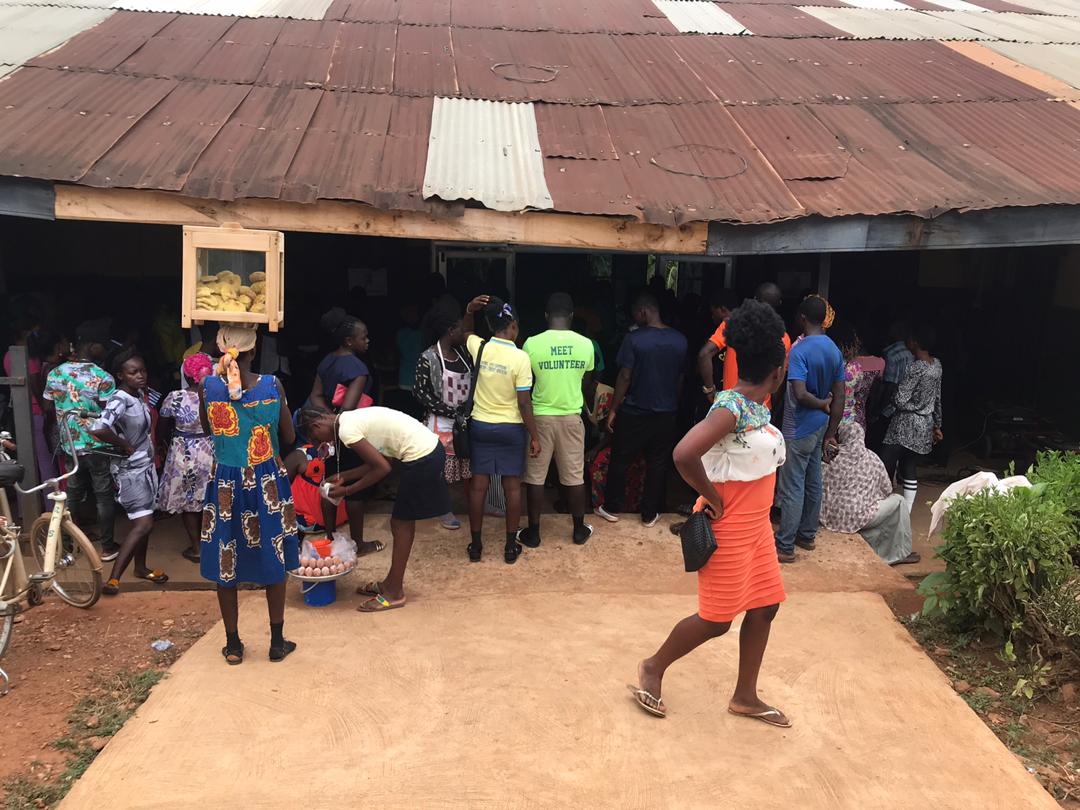
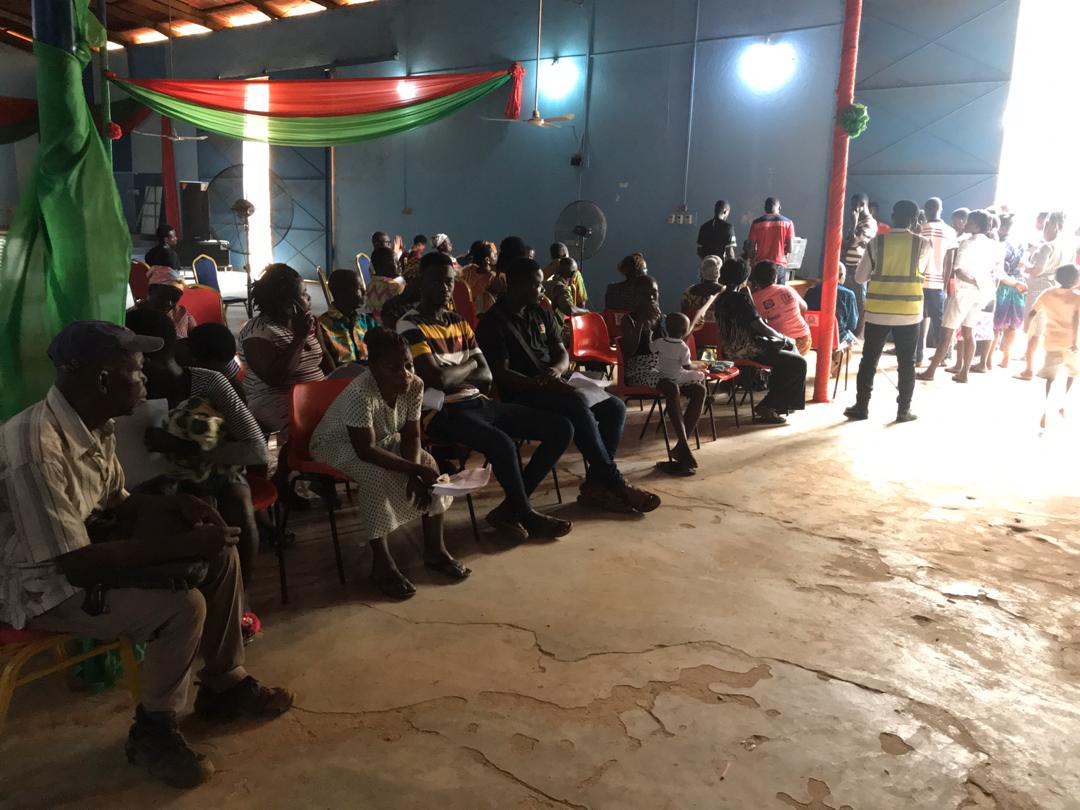
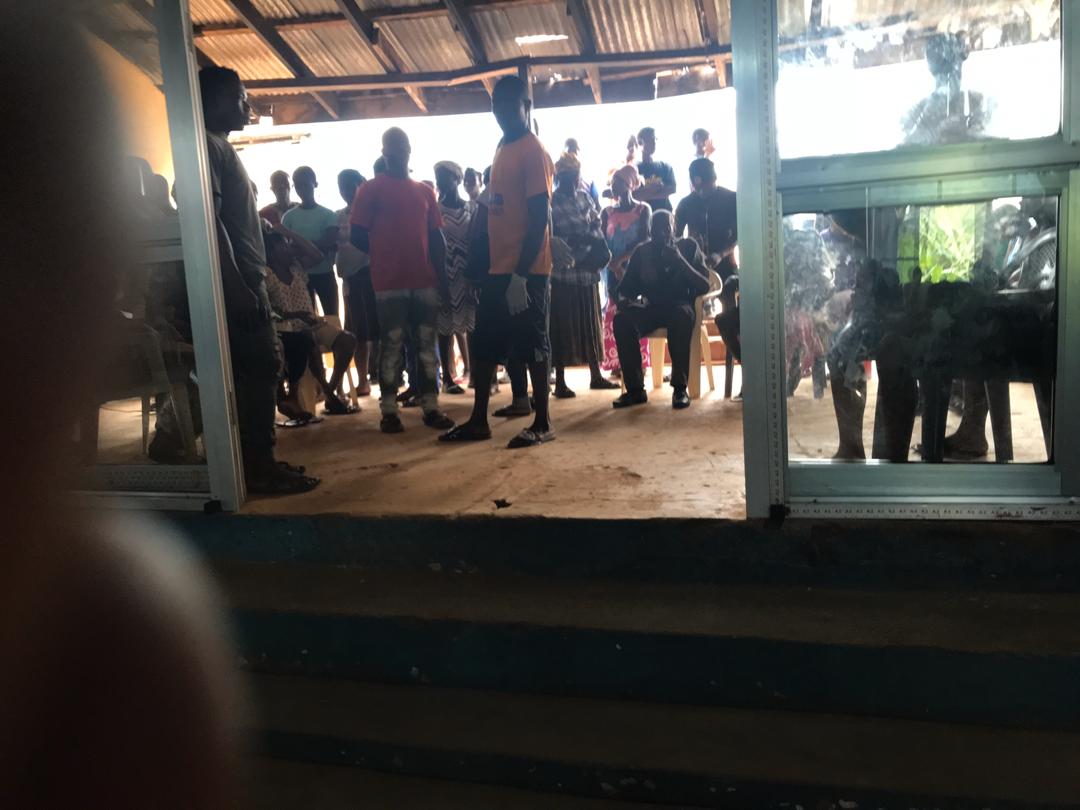
It has emerged that workers of the National Identification Authority (NIA) who are registering Ghanaians in the ongoing mass registration for Ghana Card in the Eastern Region are doing so without any of the prescribed protective gears meant to fight the spread of the Coronavirus disease (Covid-19.)
Graphic Online on Monday observed that it was only workers of Identity Management Systems Limited, the NIA’s private partner in the Public-Private Partnership (PPP) joint venture for delivering the National Identification System project were working with protective gears.
NIA staff were rather not seen wearing protective gears.
“It will amaze you that IMS which happens to be the private firm that NIA is collaboratively working with, in this project made provisions for all its workers for about 2 weeks ago but for the past two weeks when you walk into even the Head Office, you will be seeing two groups of workers, those with the protective mask and gloves and those without. Those with it are workers of IMS those without are for NIA,” a staff told Graphic Online.
The source noted that presently the registration exercise was ongoing in Nkawkaw and Akwatia in the Eastern region without the necessary protective measures to help curb the spread of the virus.
Graphic Online also observed a similar situation at Aburi on Monday.
Zimbabwe’s President Emmerson Mnangagwa has declared a national disaster over coronavirus even as the country is yet to confirm any case.
Mr Mnangagwa has also postponed independence day celebrations scheduled for 18 April and banned all public gatherings of more than 100 people.
The Zimbabwe International Trade Fair (ZITF) that was to take place in the south-western city of Bulawayo from 21-25 April has also been postponed.
The ban will affect church gatherings, weddings and sporting events for 60 days.
The president told a press briefing at his office in the capital, Harare, there would be no travel ban, but discouraged travellers from countries that had confirmed coronavirus cases from visiting Zimbabwe.
He also advised Zimbabweans against travel abroad until the pandemic was under control.
The new coronavirus, declared a pandemic on March 11 by the World Health Organisation (WHO) because of its global spread, and with more than 170,000 confirmed cases, according to the World Health Organization (WHO), and more than 7,000 deaths. The WHO Director-General Dr Tedros Adhanom Ghebreyesus yesterday referred to it as “the defining global health crisis of our time” .
The vast majority of the world’s population is not immune to this new virus. No cure has been found yet. Thus, all the measures that accumulate are, for the time being, preventive, and drastic and unprecedented at the least. The objective is to avoid the rapid spread of the virus through total containment measures.
The African continent is not being spared. The South African government declared a State of National Disaster and closed its borders, as well as all its schools. All gatherings of more than 100 people are prohibited in South Africa, while Ghana banned “cluster gatherings” of all kinds. In Senegal, the fourth most affected African country after Egypt, South Africa and Algeria, all public events are banned for 30 days. Ethiopia’s government closed all the schools for 15 days.
Italy and Spain are the two most affected European countries. And now France announced accelerated measures. The European Union has also announced the closure of its borders.
One of WHO’s urgent aims was to prevent the virus from reaching countries with the weakest health systems. A challenge which is compromised given the number of African countries that are currently affected (27 to date).
The race to the vaccine
Though preventive measures are effectively put in place over the days, laboratories around the world are working to find treatments as well as a vaccine.
In fact, a certain number of treatments have proven efficient in the laboratory. They now need to be tested on human beings who have contracted the new coronavirus. It would take one to three months to provide the treatments once their efficacy is proven. In the United States, Vice President Mike Pence announced that treatment may be available “by summer or early fall”. As for the vaccine, the time frame is longer; between 12 and 18 months, according to scientists.
Institut Pasteur in France is working on a vaccine to be derived from the one for measles. The German biotechnology group BioNTech has announced plans to start testing patients as from end of April.
Mologic Ltd in the UK also announced that it has been awarded about £1 million as part of the British government’s £46 million international coronavirus (COVID-19) prevention and research funding package. The funding will be used by Mologic and global partners, to develop a point-of-need diagnostic test for the virus, and build on their experience with the rapid test kit for Ebola.
This will allow health officials to test for the virus at home or in the community, providing results in 10 minutes, without the need for electricity or a laboratory. And with their work on diagnostics, UK aid is also supporting Mologic in the development of a COVID-19 vaccine.
The company is working in close partnership with the Institut Pasteur de Dakar to validate and manufacture the COVID-19 test at a new manufacturing site, DiaTropix, in Senegal.
The Canadian bio-pharmaceutical company Medicago has announced significant progress in the development of a vaccine. The company is partly owned by Philip Morris International, which aims to diversify its business activities according to the framework of its new vision based on science, technology and innovation. Philip Morris International (PMI) purchased shares in Medicago in 2013 and currently holds approximately 30% of the company’s shares. The majority of the company’s remaining shares are held by Mitsubishi Tanade Pharma.
Medicago’s research works are based on tobacco plants unlike most research which is based on egg-based vaccines. The antibody is still at the research and development phase, and Medicago said it hopes to be able to make tests on patients by summer 2020.
As for international biopharmaceutical companies, such as Sanofi and Janssen, they are collaborating with the American Advanced Biomedical Research and Development Authority (BARDA) in order to develop vaccines at the preclinical stage. The German company BioNTech, which currently works on the development of a number of vaccines for cancer and flu, also partnered with the American pharmaceutical giant, Pfizer, in order to develop a vaccine.
Charitable associations also joined the race to the vaccine. The British organization, The Wellcome Trust, the Bill and Melinda Gates Foundation, and Mastercard launched a €110 million offer to accelerate the marketing of COVID-19 treatments which currently are in the preclinical stage.
It is true that the biotechnology industry around the world plays an essential role in the fight against COVID-19 in terms of research and development of the vaccine, as well as in the discovery of therapeutic drugs. However, all the vaccines developed so far are currently under pre-clinical testing and will not be available for several months at least.
The European Union sealed off its borders Wednesday to try to put the brakes on the ferocious spread of the coronavirus pandemic, as the number of deaths on the continent soared past the toll in Asia.
Millions of people are on strict lockdown in Europe, now the epicentre of COVID-19 with more than 3,400 deaths now recorded, according to an AFP tally.
The United States and Britain led a multi-billion-dollar global fightback against the economic havoc unleashed by COVID-19 but financial markets were unimpressed, with Asian and European stocks plunging further.
Governments across the world have imposed draconian measures to try to slow the pace of infections, confining people to their homes, closing shops, restaurants and schools, dramatically changing life as we know it.
The coronavirus outbreak, which first emerged in China late last year, has quickly marched across the globe, infecting nearly 200,000 people and killing almost 7,900.
Europe has now recorded 3,421 deaths — including 2,503 in Italy — leapfrogging Asia with 3,384, according to an AFP tally at 1100 GMT.
As the spectre of a deep global recession looms large, London and Washington Tuesday announced massive economic stimulus packages after coming under fire over their response to the crisis.
US President Donald Trump said the White House was discussing a “substantial” spending bill with Congress that would include immediate cash payments to Americans.
Officials did not give hard numbers but The Washington Post reported the amount could reach $850 billion, with a chunk destined for airlines fearing ruin.
“We’re going big,” Trump told reporters.
British finance minister Rishi Sunak unveiled an “unprecedented package” of government-backed loans worth 330 billion pounds ($400 billion) for businesses struggling in the sudden economic paralysis caused by mass self-quarantine.
Similar measures have been introduced by France and Germany, the two leading members of the 27-member European Union.
EU leaders decided Tuesday to impose an entry ban on travellers from outside the bloc for 30 days, the most significant emergency measure from Brussels, which has struggled to develop a unified response.
EU Commission chief Ursula von der Leyen told Germany’s Bild newspaper that politicians had initially underestimated the virus threat.
“But now it is clear that this is a virus that will keep us busy for a long time yet,” she said. “We understand that measures that seemed drastic two or three weeks ago, need to be taken now.”
The World Health Organization has called for every suspected coronavirus case to be tested and says Europe needs to take the “boldest actions” against the disease.
Drugmakers are scrambling for a breakthrough, and it could still take more than a year before a safe vaccine is ready to market. US officials have said the first human trial for a possible vaccine has begun.
In the United States, restrictions continued to build, with Maryland becoming the latest state to delay presidential election primaries and New York City considering curfews.
Australia’s government urged citizens to not travel abroad and banned gatherings of more than 100 people as cases topped 500.
Asian hotspots China and South Korea have seen new infections and deaths level out in recent weeks — China reported just one new domestic case for the second consecutive day on Wednesday.
Africa, with its fragile healthcare systems, has also recorded more than 500 cases, and Burkina Faso reported the first confirmed death in sub-Saharan Africa.
Latin America has more than 1,100 recorded infections, with the continent’s most populated country Brazil announcing its first fatality.
– ‘Invisible enemy’ –
Trump, who for weeks has been accused of playing down the crisis, appeared determined to take control of his messaging, declaring he would do everything to fight an “invisible enemy”.
“We have to win this war,” he said at the White House, where staff and journalists now have to undergo regular temperature checks.
Battered US stocks — which Trump considers a key metric of his success ahead of the November presidential election — closed higher after the stimulus announcement.
But markets slumped again in Asia and Europe on Wednesday.
Trump had acknowledged on Monday that the economy might be sliding into recession.
In France, President Emmanuel Macron also likened the outbreak to war and ordered almost the entire population to stay at home for at least two weeks.
Britain stepped up its measures following scientific advice that infections and deaths would spiral without drastic action.
Usually joyful — and alcohol-fuelled — Saint Patrick’s Day celebrations were cancelled in Dublin, New York and Boston.
Anthony Whyte, 49, looked out onto the cobbled streets of Dublin from a bar and likened the scene to “a ghost town”.
“It’s like armageddon,” he said.
G7 leaders have vowed to “do whatever it takes” to prevent a financial meltdown.
However, every sector from tourism to food to aviation is affected as the global economy effectively goes into shutdown.
Major world airlines have axed almost all flights temporarily, triggering pleas to help carriers survive.
The outbreak has also shredded the global sporting and cultural calendar.
In football, The European and Copa America championships have been postponed until next year, and the French Open tennis tournament has been delayed to the autumn.
The International Olympic Committee acknowledged there was no “ideal” solution, after some top athletes said they were being forced to take health risks should the summer extravaganza go ahead.
And the organisers of the annual Glastonbury music festival in England have cancelled this year’s 50th anniversary event.
Glastonbury’s famous Pyramid Stage will remain dark in June, as the festival becomes the latest event to be canceled due to coronavirus.
Taylor Swift, Sir Paul McCartney and Kendrick Lamar were due to appear, alongside Diana Ross and Dua Lipa.
“We’re so sorry that this decision has been made,” a statement said. “It was not through choice.”
Just six days ago, organizer Emily Eavis said she had “fingers firmly crossed” the event would go ahead.
But after the government advised people to avoid mass gatherings on Monday, cancellation became increasingly likely.
Organizers took the decision before 1 April, when festival-goers were expected to pay the remaining balance of their £270 tickets.
Fans who had already paid the £50 deposit will be allowed to roll over that sum to next year, guaranteeing “the opportunity to buy a ticket for Glastonbury 2021”, organisers said. Refunds will also be available for those who want them.
More than 200,000 people, including 135,000 ticket-holders, would have descended on Worthy Farm in Somerset if the festival had gone ahead from 24 to 28 June.
Other acts on the line-up included Noel Gallagher, Lana Del Rey, Herbie Hancock, the Pet Shop Boys, AJ Tracey and Haim.
“We very much hope that the situation in the UK will have improved enormously by the end of June,” said Michael and Emily Eavis in a statement.
“But even if it has, we are no longer able to spend the next three months with thousands of crew here on the farm, helping us with the enormous job of building the infrastructure and attractions.”
Saying 2020 would now be an “enforced fallow year” for the festival, they apologised for letting fans down.
“We were so looking forward to welcoming you all for our 50th anniversary with a line-up full of fantastic artists and performers that we were incredibly proud to have booked.”
They added: “We look forward to welcoming you back to these fields next year and until then, we send our love and support to all of you.”
BBC Radio 2 DJ Jo Whiley echoed many fans’ sentiments when she wrote on Twitter: “This is so devastatingly disappointing for so many people on so many levels.
“Next year Glastonbury is going to be off the scale,” she added. “But for now much love to Emily Eavis and the Glasto family.”
Musician Billy Bragg, who is an annual fixture at the festival, also expressed his disappointment.
Meanwhile, pop culture journalist Natalie Jamieson issued an open call for the BBC to raid its archive of Glastonbury footage to broadcast an “ultimate Glastonbury line-up” on the last weekend of June.
“Am still gonna need a live-music fix & it could bring *such* joy,” she wrote.
Glastonbury’s cancellation comes after BBC Radio 1 cancelled plans to host its Big Weekend festival in Dundee in May.
Chelsea will provide free accommodation to staff of Britain’s National Health Service in a hotel at the club’s Stamford Bridge stadium during the coronavirus pandemic.
The Premier League club’s owner, Roman Abramovich, will fund the service that will allow medical professionals in London a chance to rest if they are unable to travel home or face long commutes.
The scheme will be put in place for two months, but could be extended if needed.
There have been 1,950 confirmed cases of coronavirus and 71 deaths in Britain.
“It was decided the best way Chelsea can assist the NHS is to provide accommodation for NHS staff. Mr Abramovich will be covering the costs of providing the accommodation,” Chelsea said in a statement.
“Many of the medical staff will be working long shifts and may not be able to travel home or would otherwise have to make long commutes. Local accommodation helps maintain the health and well-being of these crucial personnel at this critical time.”
Chelsea do not know when they will next return to the pitch, with the Premier League suspended until at least April 4, although that date is set to be pushed back at a meeting of Premier League clubs on Thursday.
But in the absence of football, the Blues are the latest club to make an offer of community support at a time of crisis.
Liverpool players contributed to a £40,000 ($48,000) donation from the club to help keep local foodbanks running.
Aston Villa and Brighton were among the clubs to donate food prepared for last weekend’s matches to homeless charities.
Fourth-tier club Stevenage are preparing a community careline that will help isolated local residents over 70 with day-to-day needs such as delivery of food and prescriptions.
Many Asian nations are facing an increasing battle to stem the spread of coronavirus, amid a World Health Organization warning that some needed to take “aggressive measures”.
Malaysia, Sri Lanka and the Philippines are among nations imposing strict border controls.
Cases in the South Asian subcontinent are still below 500 but there are fears a spike could overwhelm health systems.
There are 185,000 cases globally, with 7,500 confirmed deaths.
Some nations and territories that had seen success in controlling the virus or slowing its arrival, including South Korea, Hong Kong, and Taiwan, have seen new spikes, amid fears, people returning from abroad are importing the virus.
Asian stocks have continued to fall as worries about the coronavirus pandemic eclipsed hopes that major stimulus plans would ease the impact of the outbreak.
What was the WHO warning?
It was issued for the organisation’s South East Asia region, although this contains 11 nations spread widely, including Indonesia, Sri Lanka, Thailand, Bangladesh and North Korea.
Poonam Khetrapal Singh, regional director of the WHO South East Asia region, said on Tuesday that “more clusters of virus transmission are being confirmed”.
“We need to immediately scale up all efforts to prevent the virus from infecting more people,” Dr Khetrapal Singh said. “We clearly need to do more, and urgently.”
The WHO said the numbers in its South East Asia region showed that “some countries are clearly heading towards community transmission of Covid-19”.
It called for continued efforts to “detect, test, treat, isolate and trace contacts”.
Dr Khetrapal Singh said “practising social distancing [could] not be emphasised enough… this alone has the potential to substantially reduce transmission”.
“We need to act now,” she said.
Many regional countries inside and outside the WHO’s definition of South East Asia have had a slow response to the outbreak, only taking drastic measures in recent weeks or days as the number of cases continue to grow.
Where are the infections increasing? Almost all nations are seeing increases, although the rates vary widely.
China still has the highest number of confirmed cases, with more than 80,000, but its new infections are almost exclusively from people arriving from abroad and are very low.
South Korea has also been praised for its attempts to control the virus and its 8,413 cases have seen it fall below Germany to sixth in the running list of cases compiled by Johns Hopkins University.
It has been ahead of other nations by testing thousands of people and had seen a downward trend in new infections.
But there are now small clusters breaking out across the country, with 93 more cases in the past 24 hours. Dozens of sick and elderly patients in a hospital in Daegu were infected.
Taiwan announced its largest single-day increase in new cases – 23 – bringing the total to 100.
The trend was mirrored in Hong Kong – 14 cases in a single day is the highest in the territory, all but one brought in from abroad.
Indonesia on Wednesday also announced its biggest daily rise, 55 more cases taking the total to 227, with 19 deaths.
Pakistan’s cases have now risen to 245, with the total of reported cases for the South Asian subcontinent reaching 482.
Thailand reported 35 new cases on Wednesday, taking its total infections to 212, officials said. Four of the cases were linked to an entertainment venue and 13 to a boxing bout, both in Bangkok.
Malaysia has warned of a fresh spike in cases, saying there is only a “slim chance” of breaking the chain of infections.
A mass Muslim gathering last month is linked to nearly two-thirds of its infections and thousands of attendees are yet to be tested.
Myanmar and Laos have both not reported any cases – though experts have seriously doubted the credibility of this.
A spokesperson for Myanmar’s government claimed that people’s “lifestyle and diet” had protected them from the virus. But it has imposed restrictions on arrivals and the UK government is now advising against all but essential travel there.
There are also no reported cases of the virus in Timor-Leste.
What are the nations doing?
From Wednesday, Malaysia is preventing citizens from traveling overseas and visitors from entering until 31 March at least.
Many Malaysians who commute to work in Singapore had to queue to cross the border before the midnight deadline, and will have to stay there.
Streets in the Malaysian capital Kuala Lumpur were largely empty and supermarket chains are enforcing limits on purchases of staples.
Thailand has closed schools, bars, cinemas and other entertainment centres.
The Philippines, which has 202 cases and 17 deaths, has imposed some of the toughest movement controls, effectively quarantining about half of its 107 million population.
But it reversed a decision to ban all international flights, and foreign nationals may now fly out, although arrivals will face strict quarantine protocols.
Taiwan will on Thursday ban foreigners from entering, apart from in some exceptional cases. Everyone arriving, including Taiwanese, will have to go into quarantine for 14 days.
Japanese media report that visas issued to European travellers will be invalidated and people arriving from 38 nations will have to self-quarantine.
South Africa has recorded 23 new cases of coronavirus in one day, the highest increase of any 24-hour period since the country confirmed its first case.
Of the new cases, four are children aged under five years.
The country now has 85 confirmed cases of coronavirus – the highest in sub-Saharan Africa.
South Africa’s health ministry said eight of the new cases involved local transmissions, the first confirmation of internal transmissions after erroneously reporting a case on 12 March.
Health Minister Zweli Mkhize admitted there had been a “debate with clinicians, epidemiologists, virologists on when we, as government must release results to the public.” Local media speculate that this debate was why the announcement wasn’t made until Tuesday evening.
In the same statement, Mr Mkhize also confirmed all 100 South Africans who were repatriated from Wuhan in China have been tested and declared virus-free.
The group will, however, remain in quarantine at a hotel in Limpopo province.
South Africa confirmed its first case on 5 March, a man who arrived from Italy with his wife who later tested positive as well on 8 March.
The country has been reporting additional cases since then, but the highest spike seen so far was reported on Tuesday night.
President Cyril Ramaphosa last week declared a national disaster and announced a ban on travel from the countries worst hit by the virus.
Management of the Komfo Anokye Teaching Hospital (KATH) has announced the suspension of all “elective surgeries except Caesarean section.â€
This follows the outbreak of COVID-19 in the country which has forced government to close down schools and ban all public gatherings.
Ghana has so far recorded seven cases of the disease.
The Chief Executive of the KATH Dr Oheneba Owusu-Danso, in a statement on Tuesday, 17 March 2020 to emphasise additional measures put in place by management of the hospital to forestall the potential spread of the deadly COVID-19 indicated that “all elective surgeries have been suspended except Caesarean sections, all out-patient(OPD) clinics have been closed down until further notice, all clinical meetings and seminars have been suspended and all clinical rotations and attachments by all categories of students have been suspended.â€
However, the measures do not affect the provision of “emergency services at all the emergency operational areas of the hospital. Consequently, the Accident and Emergency Centre, Family Medicine Directorate (Polyclinic) and the Paediatric Emergency Unit shall continue to offer emergency services. The Labour Wards and Baby Unit (MBU) shall continue to offer normal services.”
KATH, however, advised the public to “stop using Komfo Anokye Teaching Hospital as a thoroughfare in their own interest.â€
Nigeria has placed a travel ban on people coming from 13 countries worst affected by the coronavirus outbreak as five new cases were recorded in Africa’s most-populous nation.
That brings the country’s total number of patients with Covid-19 to eight.
Health Minister Osagie Ehanire said contact tracing for the new cases was ongoing. All the five had travelled to the UK and/or the US.
The Nigeria Centre for Disease Control (NCDC) tweeted about the cases, urging Nigerians to remain calm:
@Fmohnigeria has announced 5 new cases of #COVID19 in Nigeria bringing the total number confirmed cases in Nigeria to 8
All 5 cases had a travel history to the UK/USA
We urge Nigerians to remain calm as public health response activities are intensified across the country pic.twitter.com/yoKLHXoxhq
Travellers from China, Italy, Iran, South Korea, Spain, Japan, France, Germany, the US, Norway, the UK, the Netherlands and Switzerland will not be able to come to the West African from Saturday 21 March.
Nigerians have also been advised to cancel or postpone all non-essential travel to these countries, which all have reported more than 1,000 cases.
The BBC’s Chris Ewokor in the capital, Abuja, says Nigerians returning to the country must now self-isolate for 14 days.
On Tuesday, the government also placed an indefinite ban on all public officials from embarking on foreign trips, he says.
Hong Kong, Singapore, and Osaka have just been ranked as the world’s most expensive cities to live in.
But this may not be the case after the full impact of the coronavirus pandemic takes its toll.
Cities that get a large part of their income from tourism could become cheaper as their economies shrink and prices are driven down.
This is one of the predictions made by the Economist Intelligence Unit (EIU), which tracks living costs globally.
Its Worldwide Cost of Living Survey for 2020 was compiled in November 2019, before the coronavirus became a pandemic. Its the next survey could look very different.
“Cities that rely on tourism should see some downward pressure on prices. So Singapore and Hong Kong might not hold the top spot going forward. We could see a different city on top,” said Simon Baptist, the EIU’s chief economist.
The impact of the coronavirus has shaken the world economy, with the travel and tourism industries among the hardest hit. Hong Kong and Singapore are two of the cities that could see a big drop in revenue as demand for leisure activities, restaurants and accommodation plummets. This weaker demand could drive down prices, making these cities cheaper for their inhabitants.
The EIU report saw Osaka knock Paris out of its top three most expensive cities as a stronger yen made Japan’s third-biggest city more costly to live in. The researchers looked at more than 400 prices across 160 products and services. These included cars and electronic goods, which have seen major supply disruptions in China.
While the car industry was badly impacted by China’s factory shutdowns during January and February, production is gradually recovering to pre-coronavirus levels. This could result in cheaper cars as manufacturers and dealers have surplus stock.
“Once demand starts to return, we would generally expect vehicle prices to be lower, rather than higher, as carmakers and dealers try to earn back some lost revenues. In some countries or regions where the auto is an important industry, subsidies will further help to lower prices,” Ana Nicholls, industry director at the EIU said.
Consumers may switch car brands moving to those that have stronger supply chains and less disruption, she added.
The EIU also predicted that the cost of living in some cities may rise as measures to slow the spread of the virus increases businesses overheads.
A 103-year-old woman in Iran has recovered after being infected with the new coronavirus, state media reported, despite overwhelming evidence the elderly are most at risk from the disease.
The unnamed woman had been hospitalised in the central city of Semnan for about a week, IRNA news agency said.
But she was “discharged after making a complete recovery”, Semnan University of Medical Sciences head Navid Danayi was quoted as saying by IRNA late Tuesday.
The woman was the second elderly patient in Iran to have survived the disease.
The other was a 91-year-old man from Kerman, in the southeast of Iran, the news agency said.
After being sick for three days, he recovered on Monday despite having pre-existing medical conditions including high blood pressure and asthma, it added.
The report did not say how the pair were treated.
Since Iran announced its first deaths on February 19, the novel coronavirus has spread to all of the country’s 31 provinces and killed nearly 1,000 people.
The elderly are the most vulnerable to the disease, which first emerged in China late last year.
The World Health Organization this month estimated the novel coronavirus kills 3.4 percent of all those infected.
But for people aged over 80 the fatality rate was 21.9 percent, according to a report the WHO carried out with the Chinese authorities.
Kenya has confirmed three more cases of coronavirus, bringing the total to seven.
Health Minister Mutahi Kagwe said all the cases the patients had arrived from abroad.
The latest cases involve a couple who had travelled from Spain’s capital, Madrid, through Dubai, arriving on 5 March.
The other involved a Burundian national, who arrived from Dubai on 17 March and was isolated after being found to have a high temperature at Kenya’s main airport in the capital, Nairobi.
Mr Kagwe said the authorities were tracing all the people who came into contact with the three latest cases.
Last week, Kenya blocked entry to all travellers coming from countries with reported cases, but Kenyan citizens, diplomats and foreigners with valid residence permits are allowed in.
The Sahel state of Burkina Faso on Wednesday announced its first death from coronavirus, which is also the first known fatality in sub-Saharan Africa.
“We recorded the death overnight of a female patient aged 62, who suffered from diabetes and was in intensive care,” Burkina’s national coordinator for responding to the virus, Professor Martial Ouedraogo, told the press.
With the addition of seven new cases, “the number of patients (in Burkina Faso) stands at 27, comprising 15 women and 12 men”, Ouedraogo said.
The tally includes a case in the town of Bobo Dioulasso, the first outside the capital Ouagadougou.
Africa has lagged behind the global curve for coronavirus infections and deaths, although the reasons for this are unclear.
As of Wednesday, a tally of reported cases, compiled by AFP, stood at 576 for all of Africa.
Of these, 15 cases have been fatal: six in Egypt, five in Algeria, two in Morocco, one in Sudan and one in Burkina Faso.
Experts have sounded loud warnings about the vulnerability of sub-Saharan countries to the highly contagious respiratory virus.
Many countries are at high risk, given weak health systems, poverty, urban slums, porous borders and poor sanitation.
A 2016 analysis by the Rand Corporation, a US thinktank, found that of the 25 countries in the world that were most vulnerable to infectious outbreaks, 22 were in Africa — the others were Afghanistan, Yemen and Haiti.
The report put the finger on a “disease hot spot belt” extending on a line of countries, running across the southern rim of the Sahara through the Sahel to the Horn of Africa, many of which are struggling with conflicts.
“Were a communicable disease to emerge within this chain of countries, it could easily spread across borders in all directions, abetted by high overall vulnerability and a string of weak national health systems along the way,” the report warned.
On Saturday, Burkina Faso ordered the closure of all schools and a ban on all public and private gatherings until the end of April.
A pastor has been busted at North Suntreso in Kumasi for contravening the ban on social gatherings imposed in the wake of the Coronavirus outbreak COVID-19) in Ghana.
Apostle Kofi Nkrumah Sarkodie is said to have organised members of his church for his service on Wednesday morning (March 18, 2020).
Police officers stormed the premises and arrested the pastor amidst a resistance from his congregants Graphic Online understands.
Apostle Kofi Nkrumah Sarkodie organised a church service despite the ban on public gatherings including church services.
Samson K. Nyamekye of Hello FM in Kumasi reported on Accra based Peace FM monitored by Graphic Online that the church members initially resisted attempts by the police to pick up Apostle Sarkodie and started chanting prayers and singing.
The church is located at North Suntreso in the Ashanti Region.
Background
The government of Ghana suspended all public gatherings in the country following the outbreak of Coronavirus diseases (COVID-19) in Ghana as of Saturday, March 14, 2020.
President Nana Addo Dankwa Akufo-Addo made this known in a televised national address Sunday night [March 15, 2020].
He said the new directives follows an earlier meeting of Inter-Ministerial Committee on Coronavirus response which he chaired and it deliberated on the issues.
“I have decided, in the interest of public safety and protection of our population, to review the public gathering advisories earlier announced.”
He said among the gatherings suspended are church services, weddings, funerals, other social gatherings.