Tag: Coronavirus

  • Coronavirus: Ghana records revenue shortfall of GH¢13.6 billion

    Ghana has recorded revenue shortfall of GH¢13.6 billion and an unanticipated “but necessary” expenditures of approximately GH¢11.7 billion due to COVID-19, Mr Ken Ofori-Atta, the Minister of Finance, has said on Thursday.

    “…This will result in a projected fiscal deficit of 11.4 per cent of GDP…This is above the five per cent limit as stated in the Fiscal Responsibility Act, 2018,” the Minister said.

    He attributed the situation to the slowdown in economic activities, shortfalls in domestic direct and indirect taxes, as well as custom taxes, estimated at GH¢5,089 million, representing 1.3 per cent of GDP.

    There is also a reduction in petroleum revenue mainly due to decline in crude oil prices (from US$62.6 per barrel used in the 2020 budget to US$39.1 per barrel) due to the pandemic, estimated at GH¢5,257 million-1.4 per cent of GDP and increase in expenditures to contain the spread of the virus.

    He said sectors such as the hotel and hospitality industry, foreign direct investment, trade and industry, agriculture, health, transportation, manufacturing, real estates, financial and education were heavily impacted.

    The Minister said, households and businesses had equally been hit with significant job losses and reduced incomes.

    “Collectively, 1,531 job losses were recorded between April to June, 2020 from eight companies within the Ceramics, Timber, Food and Agro-processing industries in the manufacturing sub-sector,” he said.

    He said the disruptions in the global supply chain, reduction in demand, low productivity, high recurrent expenditure, and low revenue turnover combined to impact the operations within the manufacturing sub-sector.

    The Finance Minister said as a result, in some institutions the entire workforce was either asked to stay home or downsized to accommodate social distancing protocols, while in other instances, salary cuts were instituted to enable factories to survive.

    Mr Ofori-Atta said the economic shock of the pandemic had also manifested through external trade disruptions and decline in commodity prices, particularly, oil whose prices had fallen by more than half, and tightening of global financial markets.

    “The Ghana cedi, after appreciating strongly against the three major currencies in the first quarter 2020, came under pressure, depreciating against the US dollar in April and May,” he noted.

    The Minister stated that the cedi further depreciated by 2.4 per cent against the dollar and the Euro in June 2020.

    Mr Ofori-Atta said inflation also inched up by 2.8 percentage points to 10.6 per cent in April and further to 11.3 per cent in May and moderated to 11.2 percent in June.

    He said a projected real Growth Domestic Product for 2020 had been revised considerably downwards from 6.8 percent to 0.9 percent.

    “It is only the solid foundation established by the Government and the resilient buffers built by the Bank of Ghana that has saved the economy from contracting, as have happened in many countries,” the Finance Minster said.

    Mr Ofori-Atta said COVID-19 had also led to disruption in corporate and general business confidence, with threats to projected revenues, profitability, liquidity and corporate growth.

    He said 19 out of the 28 State-owned Enterprises were projecting losses up to GH¢1.55 billion for 2020.

    Source: GNA
  • Fake coronavirus testing kits seized from 77 countries in international crackdown

    Some 17,000 fake COVID-19 testing kits discovered in raids against illicit food and drink products across dozens of countries, have been siezed by the International Police (Interpol).

    407 people linked to the seized $40 million (34.5 million euros) worth of fake or substandard products from 77 countries, have been arrested in raids carried out from December 2019 to June 2020.

    Interpol said on Wednesday July 22, that some of the products include contaminated dairy products; meat from illegally slaughtered animals and food products falsely labelled as medicinal cures, disinfectants and even a shipment of seafood in South Africa originating from Asia, cosmetics, footwear, clothing, handbags, car parts, electronics, tobacco and medicines.

    The agency’s secretary general Jurgen Stock said in a statement: “As countries around the world continue their efforts to contain COVID-19, the criminal networks distributing these potentially dangerous products show only their determination to make a profit.”

    AFP reported that this is the agency’s ninth year of coordinated Ops on raids against counterfeit or substandard food and drink, which regularly seize thousands of tons of fake and potentially harmful products.

    Source: AFP

  • ‘Real effect of coronavirus will be felt in September’ Joe Jackson

    The Chief Operation Officer of Dalex Finance, Mr Joe Jackson, has noted that the real economic impact of the coronavirus pandemic will be felt in September this year.

    The pandemic was first confirmed in Ghana in March this year.

    Since then, all sectors of the economy have been touched negatively, a situation that forced the government to announce a stimulus package to assist small- and medium-scale enterprises (SMEs).

    Jobs have also been lost, especially in the aviation and hospitality sectors of the economy.

    Speaking on the Executive Breakfast Show on Class91.3FM on Thursday, 23 July 2020s, Mr Jackson said: “From September, you will start to see the real effect of the job losses, these value chains that have disappeared.”

    He noted also that in spite of the impact of the virus, the informal sector remains vibrant.

    “The key positive is that there is still a remarkable amount of resilience in the informal sector and that should be harnessed,” he said.

    Source: Class FM

  • Convent outside Detroit lost 13 nuns to coronavirus with 12 dying in one month

    Coronavirus spread so quickly through a convent in Michigan that it claimed the lives of 12 nuns in one month, beginning on Good Friday.

    They were all members of the Felician Sisters convent in Livonia, outside of Detroit, ranging in ages from 69 to 99, the executive director for mission advancement, Suzanne English, confirmed to CNN on Tuesday. A 13th sister initially survived the virus but passed away from its effects in June.

    The women were long-time members of the convent and leave behind a legacy of service, according to their obituaries supplied by English. They all served others through different roles, from teaching to helping at-risk children to playing music to publishing a 586-page book about the history of the convent.

    One sister won a commercial script-writing contest for Campbell’s Soup with her second-grade class. Another was assigned to the Felician Generalate in Rome twice and worked as secretary in the English section of the Vatican Secretariat of State.

    “We grieve for each of our sisters who has passed during the time of the pandemic throughout the province, and we greatly appreciate all of those who are holding us in prayer and supporting us in a number of ways,” said Sister Mary Christopher Moore, provincial minister of Our Lady of Hope Province.

    The women all lived and worked on the 360-acre campus that was once home to 800 sisters, according to the Global Sisters Report, an independent, non-profit Catholic news publisher. Now, only around 50 reside there, according to English.

    English said the Livonia convent is one of 60 convents in the US and Canada, plus a mission in Haiti, where the 469 Felician Sisters of North America reside.

    The Global Sisters Report said the death of the 13 nuns in Livonia may be the worst loss of life to a community of religious women in the US since the 1918 influenza pandemic.

    Sister Mary Danatha Suchyta, 98, was the most recent sister the convent lost. She died on June 27.

    At the beginning of the pandemic in March, the convent, like other long-term housing residences, implemented a no-visitors rule and placed restrictions on group activities to help curb the spread of the virus, according to Global Sisters Report.

    ‘It kind of shattered our faith life a little bit’
    But the virus spread through the convent and on Good Friday, April 10, came the first death: Sister Mary Luiza Wawrzyniak, 99.

    Her death was followed by Sister Celine Marie Lesinski, 92, and Sister Mary Estelle Printz, 95, who both died on Easter Sunday, April 12.
    By May 10, a total of 12 sisters died, according to English. They include; Sister Thomas Marie Wadowski, 73, Sister Mary Patricia Pyszynski, 93, Sister Mary Clarence (Adeline) Borkoski, 83, Sister Rose Mary Wolak, 86, Sister Mary Janice (Margaret) Zolkowski, 86, Sister Mary Alice Ann (Fernanda) Gradowski, 73, Sister Victoria Marie Indyk, 69, Sister Mary Martinez (Virginia) Rozek, 87, and Sister Mary Madeleine (Frances) Dolan, 82.
    The convent grappled with how they were able to care for each other and only 10 people could attend each funeral, according to Global Sisters Report.

    “The faith we share with sisters as they are dying, the prayers we share with sisters as they are dying: We missed all that. It kind of shattered our faith life a little bit.” Sister Joyce Marie Van de Vyver told the publication.

    At the end of June, the convent lost Sister Mary Danatha (Lottie) Suchyta, 98, to COVID. In total, at least 30 sisters in Livonia were infected with the virus and 17 recovered, English said, citing Sister Noel Marie Gabriel, director of clinical health services for Our Lady of Hope Province.

    “Some of our sisters who have had COVID-19 are struggling to recover from a variety of effects, including continuing weakness, respiratory issues and more,” a statement released by Felician Sisters in early July read.

    Sister Mary Ramona Borkowski died on April 18 at a convent in New Jersey.
    In the United States, nearly 142,000 have died from the coronavirus, according to Johns Hopkins University’s tally of cases on Tuesday. More than 3.89 million people have been infected with the virus in the US.

    The Livonia convent is not the only religious order that has seen the devastating effects of the virus. Sister Mary Ramona (Florence) Borkowski, 93, died of Covid on April 18 at a convent located in Lodi, New Jersey. In 1971, Borkowski founded and became the director of the Felician School for Exceptional Children in Lodi, a position she held until 2018, according to her obituary.

    Between April and May, six sisters of different religious orders that lived at Our Lady of the Angels Convent in Greenfield, Wisconsin, died from COVID-19.

    Source: cnn.com

  • Banking clean up will benefit economy post Coronavirus – EIU

    The Economist Intelligence Unit (EIU) has hailed government’s industrialisation drive under its flagship One District One Factory intiative, as well as the banking sector clean up.

    In the EIU’s latest country report on Ghana in which it partly analysed the impact of the Coronavirus pandemic on the Ghanaian economy and the way forward, the EIU said the industrialisation drive by the Akufo-Addo government and the banking sector clean up the government boldly undertook, will contribute immensely to the strengthening of the Ghanaian economy, which has been hit by the effects of the pandemic, just as other countries in the world.

    “With key revenue targets plummeting, including a sharp drop in oil revenue, the EIU noted that the industrialisation drive and the banking clean up will help in non oil growth.

    “The government’s industrialisation push and moves to strengthen the banking sector will benefit non-oil economic growth, although the cost of capital will remain a constraint,” the report noted.

    The EIU further observed that progress in the government’s quest for massive industrialisation has been significantly stalled by the effects of the Coronavirus, adding however, that should the Akufo-Addo be re-elected, which the EIU has predicted, then it expects the government to breath more life into its industrialisation drive as a catalyst for the strengthening of the economy.

    “The NPP’s plans for more rapid industrialisation have been temporarily overshadowed by the coronavirus,” said the EIU report.

    “In particular, progress on the NPP’s flagship One District, One Factory (1D1F) initiative has been patchy, with results generally falling behind targets. If, as we expect, the NPP is re—elected, we believe that there will be an attempt to breathe fresh life into the initiative.”

    On the general outlook of the Ghanaian economy post Coronavirus, the EIU made a positive, predicting a positive real GDP growth in 2021, a slower pace of depreciation, lower inflation among other positive forecast.

    Coronavirus impact on global economy

    As it analysed the impact of the Coronavirus pandemic on the Ghanaian economy, EIU also looked at the impact of the Coronavirus on global economy and its verdict is predictably dire.

    “We forecast that global output will contract by 4.8% year on year in 2020 and that global trade will decline by 22.6%. Global GDP will not recover to pre-coronavirus levels before at least 2022; 2020 and 2021 will be lost years for growth.”

    “Real GDP will contract in all regions of the world, but the drop in output will be especially severe in OECD countries. All G7 countries and almost all G20 countries will experience a full-year recession in 2020. We expect China’s real GDP growth to slow sharply to 1.4% this year and forecast a full-year recession in the US, with a contraction of 4.8%. We assume that oil prices will decline by more than 37% this year, to average US$40/barrel.”

    “Most countries have responded with huge fiscal expansion to support businesses and households, raising the risk of sovereign debt crises in the medium term. Central banks have cut interest rates and, more importantly, have stepped up as buyers of last resort for government and corporate debt. Europe is heading towards a historic recession this year.”

    Source: www.ghanaweb.com

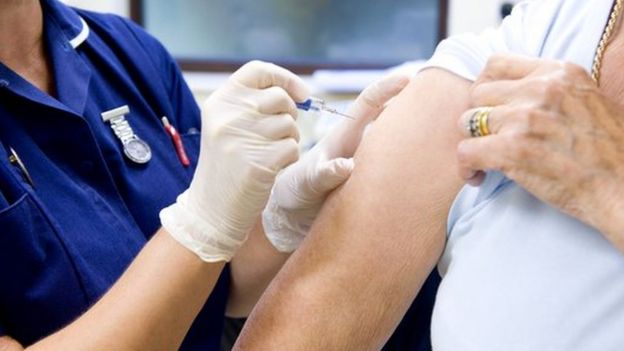
  • Coronavirus vaccine: Might it have side-effects?

    There was promising news in the search for an effective vaccine against coronavirus this week when a team at Oxford University announced its first results. It is one of around two dozen vaccines being tested on people in clinical trials – and there are around 140 others in development around the world.

    The BBC’s online health editor Michelle Roberts answers some of your questions about coronavirus vaccines.

    Would a vaccine be 100% safe – I am worried that a vaccine may be rushed out and there may be unwanted side-effects?

    From Tim Pryke, Woodlesford, Leeds

    New vaccines undergo rigorous safety checks before they can be recommended for widespread use. Although research into a coronavirus vaccine is happening at a very rapid pace, these checks are still happening in clinical trials.

    Any treatment can have some side-effects and vaccines are no different. The most common side-effects of vaccines are typically mild and can include swelling or redness to the skin where the jab was given.

    Is there any proof that the flu vaccine in 2019 and 2020 have been checked for Covid-19?

    From Antonia Saluto, Bedford, England

    The seasonal flu vaccine will not protect against coronavirus. Flu (influenza) and coronavirus are completely different diseases caused by different viruses.

    Having a flu jab is a good idea, particularly during the coronavirus pandemic, to help protect your health.

    Flu can cause severe illness in some people, and those at high risk – which includes the over-65s and people with long-term health conditions – can get a free flu jab on the NHS.

    Getting a flu vaccine
    Are people who have transplants able to have the vaccine?

    From Anne Lindo, Reading, England

    Scientists are testing lots of different potential coronavirus vaccines. It is not yet clear which ones may be most effective, if any. Different versions may be more suitable for some people than others.

    Tests are happening in volunteers but it will take time to get results and to know who might benefit from vaccination.

    If you have received a transplant and are taking immunosuppressant drugs to prevent rejection, some vaccines, such as “live” vaccines containing weakened bacteria or viruses, may not be appropriate for you.

    Would this vaccine still be effective if the virus mutates?

    From Alan Ng, Dingley, Canada

    The coronavirus vaccines being developed at the moment are based on the viral strain currently circulating.

    Viruses can mutate, but this will not necessarily make the corresponding vaccine less effective. It depends how significant the mutations are and whether they affect the part of the virus the vaccines are designed to safely mimic.

    Many of the experimental coronavirus jabs currently being tested contain the genetic instructions for the surface spike protein that coronavirus uses to attach to and infect human cells. Reassuringly, scientists have not seen any substantial mutations to this part of the virus yet that would render these vaccines useless.

    Coronavirus up close

    Face covering questions

    From 24 July, face coverings in shops in England will be compulsory.

    Here are some of your questions on the subject.

    • Face masks and coverings to be compulsory in England’s shops
    • What are the rules for face masks or face coverings?

    Questions and answers

    Latest questions

    Your questions

    Skip Latest questions

    • Does this include people with hidden disabilities? I have asthma and cannot wear a mask.from Gail Denney

    • How will stores know about people who are exempt from wearing face masks? Will there be a card?from Ann Muff in Plymouth

    • As a customer I am expected to wear a face covering, why aren’t those who work in a shop expected to do the same?from Christine

    • Can you wear a clear face visor in shops, or does it have to be a mask?from Lynne Merry-West in Christchurch

    • With face covering becoming mandatory for shops and supermarkets, what about restaurants and cafes?from Scott Rollo in Falmouth

    • Can shop workers wear a mask for eight-hour shifts?from Sam in Milton Keynes

    • The initial advice was masks are not useful. Has the virus, or the mask theory changed?from Hilal Misgar in County Durham

  • Coronavirus: The great contact-tracing apps mystery

    Germany and Ireland have both trumpeted their success in rolling out contact-tracing apps.

    But is there any evidence that they are doing what they are designed to do – warning people they could be infected with the virus?

    Not yet – and the privacy-conscious way in which they are designed could mean we will never know how effective they have been.

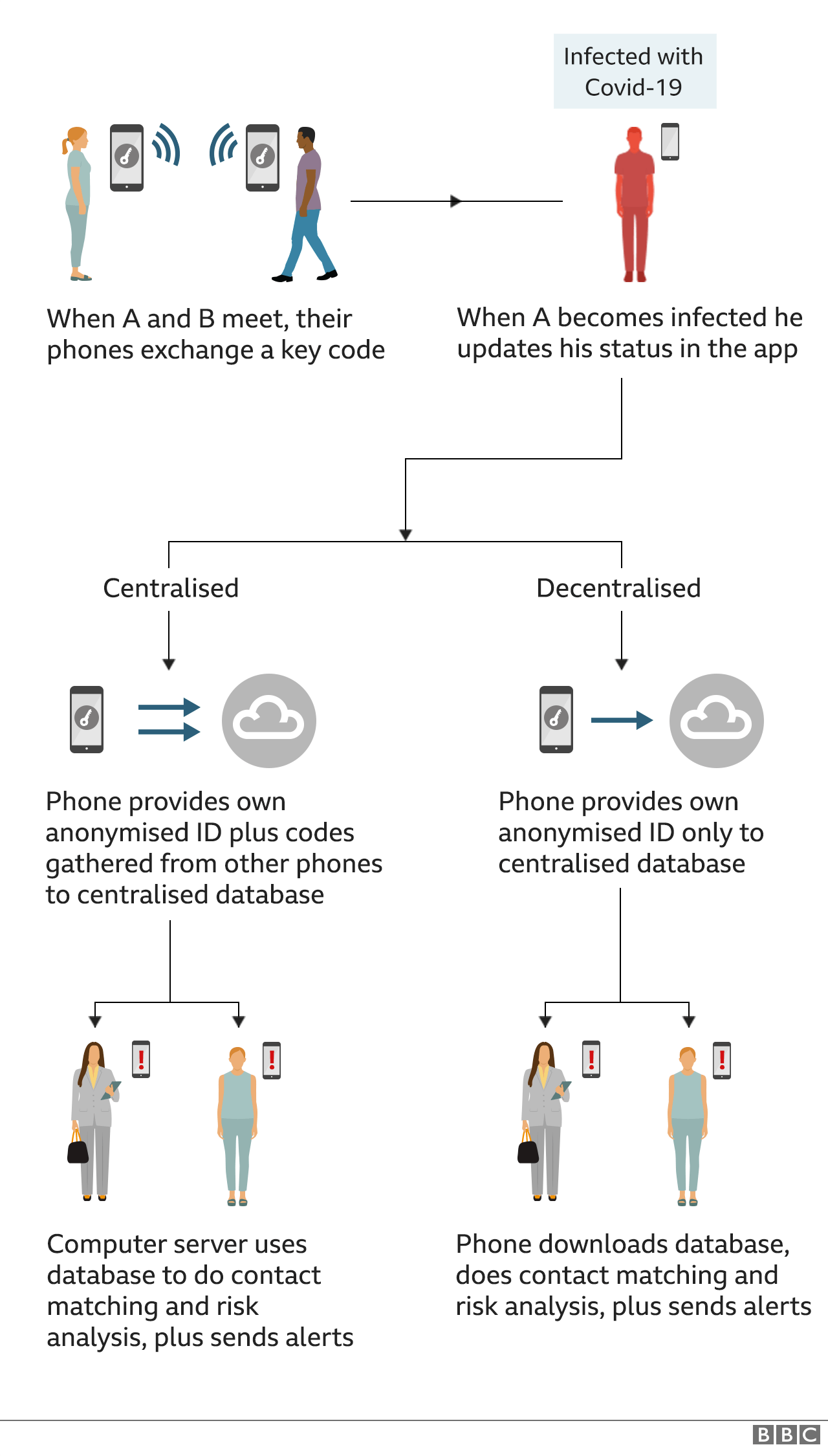
    Last month, the UK government announced that it was abandoning a centralised NHS contact-tracing app for England and switching to a decentralised version, based on the Apple-Google toolkit. This model has been favoured by privacy campaigners because the matching process takes place on users’ smartphones rather on a central computer, providing a greater degree of anonymity.

    But the government stressed that the new version would not arrive in a hurry, and Boris Johnson told the House of Commons that no country in the world had a functioning contact-tracing app.

    The Leader of the Opposition, Labour’s Keir Starmer, immediately pointed to Germany, as did many others who disputed the prime minister’s claim.

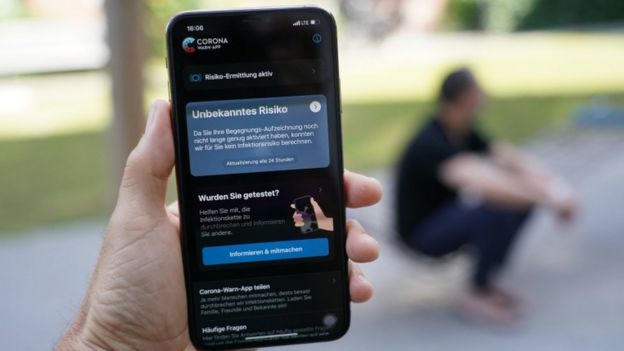
    Corona-Warn-App

    Germany’s Corona-Warn-App was rolled out nationwide in June. A few days ago, the Robert Koch Institute provided an update on its progress, celebrating the fact that it had now been installed by around 16 million people.

    “A successful start that speaks for great interest and acceptance among the population,” a statement from the app’s developer said.

    Bear in mind, however, that there are 83 million Germans, and it is thought more than half of the population need to have an app before it is truly effective.

    “The app works” added the institute’s president Prof Lothar Wieler. He went on to say that about 500 app users had tested positive for the virus and “had the opportunity to warn others via the app”.

    But he then said: “We cannot say exactly how many people were warned, because of the decentralised approach of the app.”

    In other words, we do not know whether the software is performing its key function.

    Graphic explaining difference between centralised and decentralised apps

    To know how well your app is performing, it is also vital to understand whether it is producing a lot of false negatives or false positives – in bald terms, whether the software is failing to alert people who have been in close contact with an infected user, and sending warnings to those who haven’t.

    That’s important to know, because studies have indicated that Bluetooth is an unreliable way to determine the distance between two people in some common situations.

    The Robert Koch Institute (RKI) told us it too didn’t know because, once again, the log history it would need to tap into “remains with the users, encrypted on their smartphones”.

    We wondered as a workaround whether Germany’s manual contact tracers might provide RKI with a record of people who had come to their attention after being alerted by the app.

    No, came the answer. Local municipalities run manual contact tracing and do not share this information.

    RKI added that it hoped scientific tests would eventually assess the app’s impact in the “medium to long term”, but had yet to work out how this would be achieved.

    Switzerland faces the same issue.

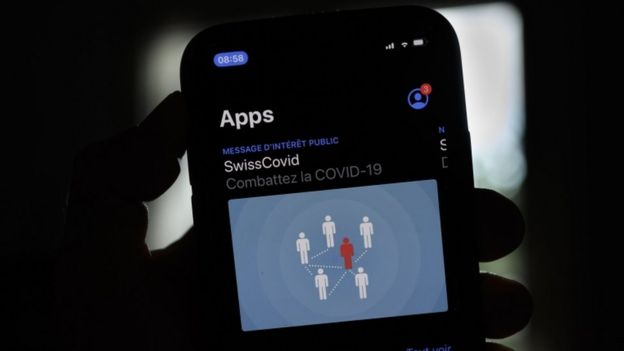
    SwissCovid app

    Its health department also pointed the finger at SwissCovid’s use of Apple and Google’s model.

    “We hence have the same limitations in terms of statistics. We don’t know – and have no way of finding out – the number of people warned by the app or any false positives/false negatives,” a spokesman told the BBC.

    ‘Looking positive’

    No such caution from Cian Ó Maidín, whose firm Nearform is behind Ireland’s app.

    Covid Tracker app was launched two weeks ago and has rapidly attracted 1.3 million users, about a third of Ireland’s smartphone users.

    Nearform is also developing a very similar app for Northern Ireland, which decided to go it alone after the NHS project hit trouble. And Mr Ó Maidín suggested that other parts of the UK and major American states could also be customers soon.

    “This is a solved problem,” he told the BBC.

    “We have a solution that works well, it’s been tested, it’s been verified. We can get a government up and running from the point at which we kick off to launch in a month.”

    Later he diluted this to “it may not be perfectly solved at this time” but continued to brush off concerns about effectiveness.

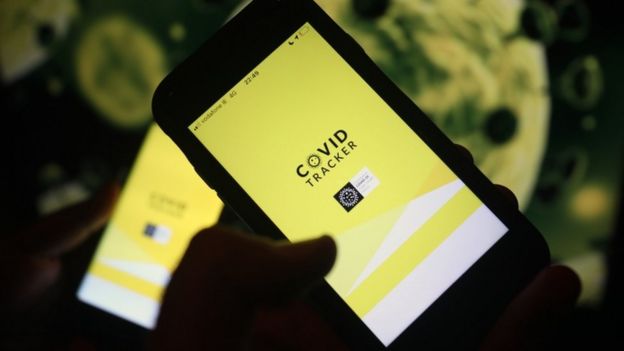
    Covid Tracker app

    “We don’t have a full data set yet but the early data looks really positive,” he said, directing us to Ireland’s health service HSE for a more detailed response.

    We have actually been chasing them on this point for days, and will provide an update if we hear back.

    • Ireland’s Covid Tracker app is out – where’s England’s?
    • What went wrong with the England’s contact tracing app?
    • England’s virus-tracing app switches to Apple-Google model

    As the Irish app is based on the same model as Germany and Switzerland’s, it is not clear why it should generate more data.

    Although there is one potential caveat: during the installation process, users are asked to agree to the collection of “anonymous metrics” about the “effectiveness of contact-tracing processes”.

    In any case, Mr Ó Maidín says we should not be overly concerned about missed or bad matches.

    “The perfect should not be the enemy of the good,” he says.

    The problem is that with so little data exposed, can we even distinguish good from bad?

    Problems abound

    There have also been problems with contact-tracing apps in other countries:

    • Downloads of Japan’s Contact-Confirming Application (Cocoa) have slowed, totalling 7.7 million on Monday – the country’s population is over 126 million. A bug in the software had prevented users from being able to register testing positive for the virus, but this was fixed in an update released on 13 July. But the Japan Times reports that since then only 27 positive cases have been registered via the app.
    • Italy’s Immuni has been downloaded by about 4.2 million Italians, falling far short of the government’s target – the country’s population is about 60 million. Local authorities suggest there has been limited interest because the spread of the virus is perceived to be under control, but expect this to change if a second wave begins.
    • Australia’s CovidSafe has yet to identify anyone that had not already been flagged by other contact-tracing efforts. Zdnet reports that it also continues to be bedevilled by a series of flaws that have caused matches to be missed and iPhones to try to connect to unrelated devices. One ex-medical official told local news the cost involved in developing and promoting the app had been 70 million Australian dollars ($49m; £38m).
    • On Monday, France’s data watchdog wrote to the country’s government requesting changes be made to its StopCovid app, to make it compliant with privacy laws. The last official update says it has been downloaded 2.3 million times.

    Source: bbc.com

  • Trump concedes pandemic to ‘get worse before it gets better’

    President Donald Trump has warned the US pandemic may “get worse before it gets better”, as he revived his virus briefings with a more scripted tone.

    Mr Trump also asked all Americans to wear face coverings, saying “they’ll have an effect” and show “patriotism”.

    The president, who was not wearing a mask at the briefing, has previously disparaged them as unsanitary.

    His aides have reportedly pressed him to adopt a more measured approach as virus caseloads spike across the US.

    The daily White House news conferences ended soon after Mr Trump suggested in April during freewheeling remarks from the podium that the virus might be treated by injecting disinfectant into people.

    In his first White House coronavirus briefing for months on Tuesday, a less off-the-cuff president echoed what public health officials on his pandemic task force have been saying as he warned: “It will probably unfortunately get worse before it gets better.

    “Something I don’t like saying about things, but that’s the way it is.”

    He added: “We’re asking everybody that when you are not able to socially distance, wear a mask, get a mask.

    “Whether you like the mask or not, they have an impact, they’ll have an effect and we need everything we can get.”

    Mr Trump – who more than once referred to Covid-19 as the “China virus” – took a mask from his pocket in the briefing room, but did not put it on.

    The president is facing an uphill climb to re-election in November against Democratic challenger, Joe Biden, according to opinion polls.

    Mr Biden on Tuesday accused Mr Trump of having failed Americans in his handling of the pandemic. “He’s quit on you, he’s quit on this country,” the former US vice-president said.

    Mr Trump appeared without the medical experts who used to address the briefings. He kept his remarks brief and focused, avoiding sparring with reporters who asked a few questions.

    He continued: “We’re asking Americans to use masks, socially distance and employ vigorous hygiene – wash your hands every chance you get, while sheltering high risk populations.

    “We are imploring young Americans to avoid packed bars and other crowded indoor gatherings. Be safe and be smart.”

    Mr Trump has been reluctant to wear a mask himself in front of the media, claiming that some people only wore such face coverings as a political statement against him. The press pictured him recently wearing a mask for the first time as he visited a military hospital.

    When asked on Tuesday about his shifting support for masks, the president pointed out that even health experts had changed their minds.

    Back in March, both Dr Anthony Fauci, one of the leading members of the president’s coronavirus task force, and US Surgeon General Jerome Adams said there was no reason people in the US should wear a mask.

    Since at least April, the US Centers for Disease Control has recommended Americans wear face coverings in public.

    Dr Fauci now argues US authorities should be more “forceful” in compelling mask wearing, though Mr Trump has rejected calls for the White House to issue a national order on the issue.

    During the briefing, the president continued to assert the virus would one day “disappear”.

    He also wrongly claimed the US has a lower coronavirus death rate than “almost everywhere else in the world”.

    According to Johns Hopkins University, the US mortality rate is ranked 10th out of the 20 worst-hit countries.

    The United States has recorded nearly 3.9 million Covid-19 cases and over 141,000 deaths – the highest by volume in the world.

    Mr Trump was also asked by a reporter about the case of Ghislaine Maxwell, the British socialite who was charged this month by US authorities with sex-trafficking children for her ex-boyfriend, the late convicted sex offender Jeffrey Epstein.

    The president said: “I haven’t really been following it too much. I just wish her well, frankly. I’ve met her numerous times over the years, especially since I lived in Palm Beach [Florida], and I guess they lived in Palm Beach.”

    “I don’t know the situation with Prince Andrew,” added Mr Trump, mentioning the British royal who denies claims he had sex with a teenage girl who says she was trafficked by Epstein.

    Source: BBC

  • Ofori-Atta cant explain how coronavirus funds were utilized; rather Auditor General

    The floor of Parliament is not the appropriate place for the Finance Minister Mr Ken Ofori-Atta to render an account of how the COVID-19 funds were utilised, Dr Mark Assibey-Yeboah, Chair of the Finance Committee of Parliament, has said.

    He said it is not even the duty of the Finance Minister to report to parliament how the funds were utilized, rather the auditor general.

    The Finance Minister, he explained, will submit his report to the office of the Auditor General for further auditing and assessment by the Auditor General.

    After auditing the expenditure, the Auditor General will then submit his report which captures how the COVID-19 funds were utilized, to parliament.

    There have been calls to the Finance Minister to explain how the funds have been disbursed. The Government set up a National Covid-19 Trust Fund which has so far received millions of Ghana cedis as donations from Ghanaians to fight the virus.

    Dr Assibey-Yeboah told journalists in Accra on Tuesday July 21 that it is not in the hands of the Finance Minister to render an account to parliament on the COVID-19 funds especially as he prepares to present the mid-year budget review statement to the House on Thursday July 23.

    He said: “So I hear people say the Minister should come and account for the coronavirus money. This is not the place for that things.

    “In this country all our expenditures at the end of the year, we submit it to the Auditor General, he vets it, he audits it and then he submits an account back to parliament on how we have expended.

    “So how can the minister who has been given money himself come and say I am accounting for this?

    “It is for the auditor general to vet the accounts and come and submit a report to parliament so this is not the place for that.”

    Source: Laud Business

  • Government shifts focus away from backlogs to coronavirus symptomatic cases

    Ghana is shifting its focus from waiting for weeks to clear backlogs of Coronavirus samples tests to deal with symptomatic cases.

    Director-General of the Ghana Health Service (GHS), Dr. Patrick Kuma-Aboagye, made this known to the media on Tuesday, July 21, during the coronavirus press briefing in Accra.

    According to him, the move is to avoid perpetuating further backlogs.

    He said backlogs currently stand at 23,000.

    However, he noted that a test result that is released two weeks after the sample is taken has very little public health and clinical relevance.

    He stated that until results come, suspected persons are managed.

    He said the symptomatic cases are those who come in sick.

    He added that the government is going to prioritize contacts of those who test positive.

    Also, he announced that health workers who are exposed to the virus are going to be given priority in the testing project.

    Furthermore, he said Ghanaian returnees will be given priority in the testing process.

    He said the country is isolating all positive cases, noting that the government was not taking chances and that everyone who is taken to the isolation centers is being managed as though they are sick even before their test results come out.

    Source: Daily Guide Network

  • Coronavirus: No Ghanaian has an excuse to disobey the protocols – Egyapa Mercer

    NPP Member of Parliament (MP) for Sekondi, Andrew Kofi Egyapa Mercer has called on security authorities to be strict in enforcing the mandatory wearing of nose masks and other health protocols against the spread of coronavirus in the country.

    Hon. Egyapa Mercer, speaking on Peace FM’s ‘Kokrokoo’, was disgusted by the reluctant behaviour of some Ghanaians to abide by the protocols, particularly regarding the wearing of nose or face masks.

    He wondered why some Ghanaians are so recalcitrant that they cannot see how life-threatening the coronavirus is and the need for them to protect themselves and others.

    He stressed that ‘”… this government is leading. It’s doing things to protect you and me; to protect all Ghanaians” but emphasized it will take the collective effort of all Ghanaians to win the war against the disease.”

    “We can’t allow any individual to sacrifice his/her disobedience and put the collective totality of Ghanaians at risk. So, it’s about time that the enforcement is done to the letter. No excuse! Because the science tells us that the more we prevent ourselves from inhaling droplets and the air that is contaminated by wearing nose masks all the time when stepping out of your house, that’s the only way we can prevent and stop the spread of the disease,” he stated.

    Watch his full submissions below:

    Source: Peace FM

  • No new deaths in Scotland and Wales

    Scotland has recorded seven new cases of coronavirus, the first fall in the daily infection numbers for five days.

    It comes after positive tests for 23 people were reported on Sunday, the highest increase for almost a month. The nation also saw an outbreak at a contact tracing centre in North Lanarkshire, which serves the NHS in England.

    With no new deaths reported, leaving the toll at 2,941, First Minister Nicola Sturgeon said all the latest cases would still be closely examined and contact tracing carried out where necessary.

    In Wales, the toll remains at 1,547 after Public Health Wales said no additional deaths were recorded in the last 24 hours. There were 15 more cases confirmed by testing.

    Source: bbc.com

  • Outbreak closes contact tracing centre in Scotland

    A contact tracing centre in Scotland has become the centre of a coronavirus outbreak after six workers tested positive.

    Sitel, which operates the call centre for NHS England to help prevent the spread of Covid-19 south of the border, said it was aware of a “local outbreak” at its site in Motherwell.

    Deputy First Minister John Swinney told BBC Radio’s Good Morning Scotland that the site had been closed.

    He said “extensive contact tracing” was now under way attempting to find who the contact tracers have been in contact with.

    Source: bbc.com

  • How close is a vaccine?

    Later today, we’re expecting to see the early-stage trial data on one of the most advanced coronavirus vaccines in development, from AstraZeneca and Oxford University.

    The UK has already invested in 100m doses in the hope that it might stop the Covid-19 pandemic, as well as signing deals for 90m doses of other promising vaccines.

    But why is a vaccine so important and how close are we to getting one? You can find out in this guide to the vaccine race.

    Source: bbc.com

  • Coronavirus spike continues amid Catalonia restrictions

    Spain’s north-eastern Catalonia region has again recorded a daily Covid-19 infection figure of more than 1,000, as residents endure new restrictions.

    Health authorities are trying to halt this week’s surge, which has led to four million people around Barcelona being asked to stay home for 15 days.

    Catalonia’s is the worst of 150 Spanish outbreaks and neighbouring France says closing borders should be discussed.

    Spain has recorded 260,000 cases and there have been 28,400 deaths.

    What’s the latest in Catalonia?

    The latest 24-hour figures from the region’s department of health on Saturday record another 1,226 cases, 894 of them in the Barcelona metropolitan area, adding to a surge over the past week.

    The surge led to tough new measures being announced on Friday.

    Although they did not amount to a full lockdown, they have caused considerable concern in a region that was hoping to see an easing of restrictions.

    The measures, for an initial period of 15 days for ??Barcelona, ??La Noguera and El Segrià, include:

    – No meetings of more than 10 people in public or private
    – No visits to nursing homes
    – Only leave the house for essential activities
    – Closure of nightclubs and gyms, restrictions on bars and restaurants, suspension of cultural activities and recreational sport

    Barcelona bar owner Maria Quintana told AFP: “We’d just started to see things coming back to life with the arrival of a few foreign tourists, so this is a step backwards.”

    Spain only ended its tough national lockdown about four weeks ago and was hoping to kick-start the economy, particularly with tourism numbers.

    The streets of Barcelona were reported emptier on Saturday, although some residents may have defied orders and headed off in cars for second homes.

    Source: bbc.com

  • China coronavirus: ‘Wartime state’ declared for Urumqi in Xinjiang

    A “wartime state” has been declared in Urumqi, the capital of China’s western Xinjiang region, after a spike in cases of coronavirus.

    Officials on Saturday said 17 new cases had been recorded and strict measures on movement had been imposed.

    Although the figure appears low, China has recorded very few significant outbreaks since Covid-19 emerged in the city of Wuhan late last year.

    China is now not in the top 20 in terms of either infections or deaths.

    It has recorded just over 85,000 infections and 4,600 fatalities, according to Johns Hopkins university research.

    What is happening in Urumqi?

    The capital of the Xinjiang Autonomous Region has a population of about 3.5 million.

    The latest infections began to be detected on Wednesday, the first in the region for months, prompting the cancellation of almost all flights in and out of the city. Subway services were also suspended.

    On Saturday, officials said the total of cases was 17. One official told a state briefing: “The whole city has entered a ‘wartime state’, and will suspend all kinds of group activities.”

    The latest lockdown measures include:

    – Mass screening in buildings where new cases have been detected, later expanding to the whole of Urumqi – Visits to other households are restricted, as are large gatherings – Residents urged not to leave the city unless absolutely necessary and must be tested if they do

    Rui Baoling, the director of the disease control and prevention, said the main cluster had been detected in the Tianshan district of Urumqi but although the “epidemic has developed rapidly”, she added that the “situation is generally controllable”.

    Xinjiang has this week reported another 23 cases listed as “asymptomatic”, with 269 people under “medical observation”.

    Source: bbc.com

  • Northern regional health directorate hit with 6 coronavirus cases

    Information gathered by DGN Online indicates that six staff of the Northern regional health directorate have contracted the COVID-19 virus.

    A source at the directorate revealed that a total of 22 staff who have been infected by the virus.

    A total of 32 health workers have contracted the Covid-19 virus at the Tamale Teaching Hospital.

    The 32 health workers involved 19 doctors, 12 nurses and one orderly.

    The Northern Regional Health Director, Dr. John B. Eleeza, who confirmed the six cases said the patients are receiving treatment.

    “Some of the people in my office have tested positive and they are about 6. I talk to them everyday and they are doing fine .”

    The Northern Region has confirmed 271 covid-19 cases so far.

    Source: Daily  Guide Network

  • Coronavirus fund spends GH¢32m

    Details are emerging about the utilization of donations received by the COVID-19 Board of Trustees from the Trust Fund.

    The Board of Trustees which is chaired by the immediate past Chief Justice, Sophia A.B. Akuffo, was established by President Akufo-Addo to receive and manage donations to help contain the spread of the pandemic.

    At a ceremony to present some items including personal protective equipment (PPE) to some medical facilities in the capital yesterday, the board chair revealed that so far an amount of GH¢53,911,294.87 had been realized from the various donations.

    Out of that amount, she revealed that the Trust Fund had spent about GH¢32,581,233.90.

    She, however, had cause to urge beneficiary institutions to put the items which included infrared thermometer guns, scrub suits, head covers, all sizes of coveralls, heavy duty aprons, disposable aprons, utility gloves, examination gloves, sterile gloves, gynaecological gloves, N95 face masks, surgical face masks, goggles and many more to put them to judicious use.

    The items formed part of a consignment worth GH¢10 million to be distributed to institutions and individuals who are directly engaged in the combat of COVID-19 across the length and breadth of the country.

    Madam Sophia Akuffo urged the health institutions not to use internal bureaucratic processes to frustrate the distribution of the PPE to frontline health workers who are taking the risk of leading the fight against the spread of COVID-19.

    Besides, she appealed to public spirited Ghanaians, including individuals and companies, to keep their donations coming to enable the Trust Fund to deliver on its mandate as captured in Act 1012, which is essentially to support the needy and vulnerable in the country who may be affected by COVID-19.

    The beneficiary institutions included the Greater Accra Regional Hospital, Ridge, the Tema General Hospital, Korle Bu Teaching Hospital, University of Ghana Medical Centre, Military Hospital, the Ga East Municipal Hospital and the Police Hospital, all of which constitute the Greater Accra delegation.

    From the Eastern Region, the Regional Hospital in Koforidua received PPE for its operations.

    The Hohoe Municipal Hospital, the Ho Teaching Hospital and Nkwanta District Hospital in the Oti Region also received some of the PPE.

    Source: Daily Guide Network

  • Coronavirus: Recovered Education Minister leads anti-stigma campaign

    Minister of Education, Dr. Matthew Opoku Prempeh, has launched a campaign for an end to the stigmatisation of people who have recovered from COVID-19.

    In a Facebook post featuring images of some of his staff who contracted the disease and have since recovered, the Minister called for a fight not only against the disease but the negative stereotypes around it.

    “Those who survive it have a story to tell, and it is not a pretty one. We must not make it worse for them by stigmatizing and then ostracizing them,” he declared.

    Posing alongside his recovered team members in customised polo T-shirts with the inscription “I HAVE BEEN ATTACKED BY COVID-19. I HAVE SURVIVED IT AND FULLY RECOVERED”, Dr Prempeh said he was proud of them, and declared, “Thank God we beat it. Today, we say No to Stigmatisation.”

    It will be recalled that in recent times, Dr. Prempeh has granted interviews to various media houses during which he spoke extensively about his experiences whilst on admission in hospital for the disease, describing it as something he would never wish on his worst enemy.

    He also emphasized the importance of abiding by the hygiene and social distancing protocols, stressing that he did abide by them religiously and yet caught it.

    It is expected that the bold decision by the Minister to stand up publicly to fight stigmatisation along with his team will further bolster the efforts of the government even further.

    Deputy Public Relations Officer of the Ministry, Kwasi Obeng-Fosu, confirmed that the Education Minister is leading a campaign against stigmatising people who have been infected with the novel coronavirus.

    Mr Obeng-Fosu also contracted the virus but has now recovered.

    He extended this call to friends and family of the SHS students who have also recovered from the disease to extend affection towards them.

    He also cautioned against the publication of pictures of the recovered students on social media and other means.

    Source: www.ghanaweb.com

  • 695 new coronavirus cases send Ghana’s cumulative figure to 26,125

    Barely hours after the Ghana Health Service (GHS) announced the confirmation of 178 cases of Coronavirus which sent the tally to 25,430, the outfit has announced that the cumulative cases are now 26,125.

    This is because 695 new cases have been confirmed.

    According to information available on the website of GHS, “A total of 695 new cases were reported on July 13, 2020. These are samples that were taken from the period 10 June to 12 July 2020 but reported from the lab on July 13.”

    The number of recoveries/discharges has also increased from 21,511 to 22,270. The death toll stands at 139 leaving the country with 3716 active cases.

    In the previous update, Ghana had 3780 active cases, indicating that although the number of confirmed cases has increased significantly, active cases have not increased.

    GHS reports that 8 persons are in critical condition, 4 on ventilator while 25 are severe cases.

    Out of the 695 new cases, 405 came from the Greater Accra region, 207 from Ashanti region while 16 came from the Western region. Eastern region recorded 36 new cases while Volta region confirmed 16 new cases.

    Below is the Regional Breakdown of the confirmed cases:

    Greater Accra Region – 14,391

    Ashanti Region – 5,482

    Western Region – 2,206

    Central Region – 1,131

    Eastern Region – 998

    Volta Region – 457

    Upper East Region – 282

    Northern Region – 271

    Western North Region – 216

    Bono East Region – 206

    Oti Region – 138

    Bono Region – 107

    Ahafo Region – 103

    Upper West Region – 71

    Savannah Region – 57

    North East Region – 9

    Source: www.ghanweb.com

  • Dr Osei advocates counselling for all SHS students amid coronavirus fears

    The Chief Executive Officer of the Mental Health Authority, Dr Akwasi Osei, has asked the government and the Ghana Education Service (GES) to provide counselling for students following the spread of the Coronavirus in some senior high schools.

    He said told Alfred Ocansey on the Sunrise morning show on 3FM on Thursday that COVID-19 has brought mental stress to a lot of people, a situation that requires the assistance of metal health practitioners to help deal calm nerves of the students and Ghanaians, in general.

    Dr Osei was contributing to a discussion on the rising cases of Covid-19 among SHS students and the possible psychological effect it has on the entire student body.

    He further noted that many are Ghanaians are stressed following exaggeration of the pandemic in their minds.

    “We are in a situation where we are all going through stress in one way or the other. We are going through psychological distress in various categories.

    “We are confronted with an illness, this very illness we have not seen it before and the sense of it is still developing.

    “So far what many people know of is the fact that it is easy to contract, it is easy to die from it, and there is no treatment.

    “These are all true to some extent but it goes to a certain exaggeration in our minds and it is the exaggeration that is causing the fear and panic.

    “That fear and panic is also affecting many other conditions. We may realize that somebody has a disease which might not be Covid-19 but how do you know that it is not Covid?”

    He added: “How do we calm our verves down? This is where we need to recognize the crucial need of our mental healthcare.

    “We need to get a lot more of mental health practitioners so that we send them to various places. I expect that all the healthcare practitioners attached to the schools should have basic knowledge in counseling, which they can give to the students. Every school should have the opportunity to have a counsellor.”

    Source: 3 News

  • Ahafo region: 10 SHS students test positive for coronavirus

    The Ahafo Regional Director of Health Services, Dr. Boakye Boateng has revealed that over 10 senior high school students have tested positive for COVID-19.

    Dr. Boateng has also disclosed that Twenty-four (24) health workers are also battling with the virus.

    Speaking in an interview with Citi News, Dr Boateng said “In Ahafo Region, we have 24 of our staff who are confirmed COVID-19 cases. All of them are in isolation, one of them has recovered and for the students too, we have ten of our students, eight of them are in self-isolation. One has been discharged.

    “Currently, contact tracing is ongoing to ensure that we get all of them for testing. Gradually, people are getting used to COVID-19. They seem to have relaxed some of the instructions we have given them. We have to work in terms of risk communication and social mobilisation. We have to let them know COVID-19 is real and since there is no vaccine for it, they have to abide by the safety protocols.”

    Meanwhile, the government has indicated that closing down schools due to the increasing number of COVID-19 cases in the various SHSs is not the best option.

    “Closure of schools from the health point is not the best option, it is best we keep them in schools because if we decide to let them go home then we might as well close down the whole country…from what we have been told they are asymptomatic, so they are able to go about their studies.”

    Prof. Opoku Amankwah added that “we are hoping that when they get to the exam time because we have two or three weeks before they write exams, all issues will subside…but sending them home will be disastrous,” Director-General of the Ghana Education Service, Professor Kwasi Opoku-Amankwa said on Tuesday.

    Starr FM

  • World can win war against coronavirus if leaders do their part – WHO

    The coronavirus pandemic is worsening, due largely to failures outside of Europe and parts of Asia. But World Health Organization director Dr. Tedros Adhanom Ghebreyesus says it’s not too late to get in the fight.

    Without calling out anyone or any place by name, Ghebreyesus said some countries were responsible in their handling of the outbreak and are getting back to business safely. He also said several countries are going in the wrong direction. There are different scenarios playing out worldwide, the WHO director said at a press conference in London.

    “The first situation is countries that were alert and aware,” Ghebreyesus said. “They prepared and responded rapidly and effectively to the first cases.”

    He said the Mekong region, the Pacific, the Caribbean and parts of Africa fell into that category. The doctor also credited much of Europe, where “strong leadership” following an initial outbreak helped manage a situation that could have been worse.

    Then there were the other two categories.

    Another situation playing out is in countries that initially reacted to the outbreak then began pushing to reopen too soon.

    A final situation is “those countries that are in the intense transmission phase of their outbreak,” he said. “We’re seeing those across the Americas, South Asia and several countries in Africa.”

    He called the Americas the “epicenter of the virus,” noting that more than half of the world’s cases have been discovered. According to Ghebreyesus, the Western Hemisphere should look east for guidance.

    “We know from the first two situations that it is never too late to bring the virus under control, even if there has been explosive transmission,” he said.

    WHO believes that even in places where numbers are spiking, putting reopening restrictions back in place will help combat the deadly virus. Ghebreyesus made clear that WHO is “committed to working with all countries” to end the global scourge that has infected nearly 13 million people worldwide, according to Johns Hopkins University.

    “Let me be blunt,” Ghebreyesus said, after again emphasizing the importance of steady leadership. “Too many countries are headed in the wrong direction. The virus remains public enemy number one, but the actions of many governments and people do not reflect this.”

    He blamed “mixed messages” from some world leaders for undermining the efforts of the global community and”It does not have to be this way,” Ghebreyesus said, calling on “every single leader, every single government and every single person” to do their part.

    The U.S. notified the United Nations last week of the Trump administration’s intention to leave the WHO. The U.S. owed WHO nearly 200 million dollars in unpaid membership dues going into July, according to NPR.

    President Donald Trump has accused WHO of being slow to react as well as showing favoritism to China, where coronavirus is believed to have begun. Trump, too, has been targeted for his handling of the pandemic, by critics at home and abroad.

    An ABC News poll published last week shows 67 per cent of Americans disapprove of the president’s response to the pandemic.

    Source: GNA

  • Coronavirus: Rwanda extends lockdown in new areas

    Rwanda’s interior ministry has ordered selected areas in the south-west of the country back into lockdown from Wednesday after a rise in coronavirus cases.

    Movement restrictions for two weeks have been put in place in Nyamasheke and Nyamagabe districts – including in a refugee camp which hosts thousands of Congolese.

    Authorities said the measure, which is being enforced by security forces, was taken “after assessment of the pandemic in those districts”.

    Last week, the authorities extended a two-week lockdown in some parts of the capital Kigali as cases were said to be rising.

    Movement has been restricted to essential workers, those going to seek medical care, and to shop for food.

    In the past 10 days, Rwanda has recorded 324 cases and one death, taking the total tally to 1,416 cases.

    Source: bbc.com

  • Coronavirus: Emirates set to cut 9,000 jobs

    The president of Emirates said the Middle Eastern airline is set to cut as many as 9,000 jobs because of the coronavirus pandemic.

    It is the first time the world’s biggest long-haul carrier has disclosed how many jobs will be lost.

    Prior to the crisis, Emirates had 60,000 staff.

    Sir Tim Clark said the airline had already cut a tenth of its staff but said: “We will probably have to let go of a few more, probably up to 15%.”

    The global airline industry has been severely impacted by coronavirus, with activity all but grinding to a halt.

    In an interview with the BBC, Sir Tim said Emirates was “not as badly off as others”.

    But its current situation marks a steep turnaround in the fortunes of the airline, which he said before the pandemic was “heading for one of our best years ever”.

    The job cuts sweeping the wider aviation industry are fuelling concern amongst Emirates staff that things might get worse.

    The BBC understands there is growing frustration at what they see as poor communications and transparency from the airline.

    At least 700 of the airline’s 4,500 pilots were given redundancy notices this week, which means at least 1,200 have been told their jobs are going since the coronavirus crisis started.

    The cuts have been focused on those who fly Airbus planes, rather than Boeing aircraft.

    Emirates flies superjumbo Airbus A380s which hold around 500 passengers. Whereas the Boeing 777s it flies hold fewer passengers and are therefore easier to fill during this period of decreased airline travel.

    00Thousands of cabin crew have also been told they are no longer needed.
    Further cuts

    The International Air Transport Association, which represents 290 airlines, is forecasting that the world’s airlines will lose more than $84bn and one million jobs this year.

    This week United Airlines, one of the big three in the US, warned its staff that it may have to cut 36,000 staff because of the huge fall in demand for air travel.

    Helane Becker, managing director and senior research analyst at investment firm Cowen said given “the continuing issues surrounding the pandemic” she expects US airlines to cull up to 200,000 of their 750,000 staff this year.

    US aviation unions are pushing the federal government to add to the $25bn bailout package it has provided so far.

    As part of the conditions for receiving state help, airlines have to protect jobs until the end of September.

    But IATA says there are wider benefits in doing so.

    A spokesman said the scale of job cuts in the aviation sector “shows the severe economic crisis facing the industry and all who depend on air connectivity”.

    Adding that its perfectly understandable that governments have put restrictions in place to try and keep people safe from coronavirus “but this should be done in the full knowledge of the economic and social consequences”.

    Source: bbc.com

  • Coronavirus: South Africa bans alcohol sales again to combat Covid-19

    South Africa has introduced new restrictions, including another ban on alcohol sales, to help contain the spread of coronavirus.

    A night-time curfew has been imposed, and the wearing of masks outdoors is now compulsory.

    President Cyril Ramaphosa said the alcohol ban – South Africa’s second this year – would take pressure off the national healthcare system.

    It comes as total infections exceed a quarter of a million.

    Deaths resulting from coronavirus have also risen to more than 4,000, and government projections estimate this could rise to 50,000 by the end of the year.

    How fast is coronavirus spreading in Africa?

    South Africa remains the hardest-hit country on the continent, and earlier this week recorded its highest-ever single-day increase in cases. Nearly half of them were in Gauteng, a province that’s become the outbreak epicentre.

    In a public address, Mr Ramaphosa acknowledged “most” people had taken action to help prevent the spread, but he said there were still some who acted “without any responsibility to respect and protect each other”.

    “There are a number of people who have taken to organising parties, who have drinking sprees, and some who walk around crowded spaces without wearing masks,” said the president.

    Mr Ramaphosa said the new measures were being introduced to help the country to weather the storm of coronavirus, and a state of emergency would be extended until 15 August. The night-time ban would be in place from 21:00 to 04:00.

    The government has also made 28,000 hospital beds available for Covid-19 patients. But President Ramaphosa said the country still faced a “serious” shortage of more than 12,000 healthcare workers, including nurses, doctors and physiotherapists.

    The alcohol ban comes just weeks after another three-month ban was lifted in an effort to prevent drunken fighting, cut domestic violence and eliminate weekend binge-drinking prevalent across South Africa.

    Doctors and police say the previous ban contributed to a sharp drop in emergency admissions to hospital. But the country’s brewers and wine makers complained they were being driven out of business.

    Source: bbc.com

  • Gold rate rises amid coronavirus

    Gold and silver edged higher in the morning trade on Monday as worried by rising coronavirus cases in India and other parts of the world, investors rushed away from risky assets and towards a safe haven.

    India has reported 8.8 lakh cases of coronavirus till now, the third-highest in the world, with over 23,100 deaths. Due to this many states have increased restrictions on businesses and movement, threatening economic recovery.

    Gold futures were up 0.36 per cent or Rs 177 at Rs 49,040 per 10 grams. Silver futures gained 1.20 per cent or Rs 618 to Rs 51,980 per kg.

    Gold prices in the national capital rose marginally to Rs 49,959 per 10 gram on Friday, according to HDFC Securities. Silver declined by Rs 352 to Rs 52,364 per kg. Globally, gold prices rose holding ground above the key $1,800/oz level, as a weaker dollar and worries over surging COVID-19 cases around the globe kept the safe-haven metal underpinned.

    Spot gold was up 0.3 per cent at $1,803.80 per ounce by 0303 GMT. US gold futures rose 0.4 per cent to $1,809.10.

    The dollar index fell 0.2 per cent against its rivals, making gold less expensive for holders of other currencies.

    Gold is used as a safe investment during times of political and financial uncertainty.

    Indicative of investor sentiment, speculators increased their bullish positions in COMEX gold and silver contracts in the week to July 7, the US Commodity Futures Trading Commission said on Friday.

    Elsewhere, palladium gained 0.9 per cent to $1,987.77 per ounce, platinum rose 2.4 per cent to $834.05 and silver climbed 1 per cent to $18.86.

    Source: The Economics Times

  • Coronavirus: Implement policies to alleviate solvency strains World Bank

    The World Bank has said as far as the impact of the COVID-19 on the global economy is concerned, the immediate need is to implement a comprehensive set of policies to alleviate solvency strains, and, where necessary, prevent bankruptcies of firms that will be viable in the longer run without infringing on the integrity of private ownership.

    The global financial institution said where possible, support can be employed to invest in digital infrastructure to ensure uninterrupted provision of critical services to a broad set of households, including those in the informal sector, while facilitating wider adoption of these technologies.

    In the medium term, a renewed emphasis on structural reforms and inclusive and environmentally sustainable post-disaster investments, as well as the development of sound fiscal policy frameworks, institutions, and business environments, can help establish a robust and resilient recovery.

    Structural reforms need to be carefully calibrated to unique country circumstances, as productivity gains will heavily depend—among other factors—on their timing, mix and sustainability.

    Such reforms include policies to promote investment in physical and human capital, including green infrastructure; reallocation toward more productive sectors; and greater rates of technology adoption.

    Reforms to reduce excessive regulations and litigiousness could also be pursued. In the case of oil exporters, persistently lower world oil prices reinforce the need for economic diversification, subject to market forces.

    This would increase long-term growth and enhance resilience to external shocks. Lastly, policymakers can develop new insurance frameworks that enhance the quality and transparency of risk sharing during systemic economic disruptions.

    Global coordination and cooperation

    The pandemic underscores the crucial value of global coordination and cooperation in public health as well as in economic policy. Cooperation across governments, and between governments, non-governmental organizations, and the private sector is necessary to help build domestic capacity to detect and respond to health crises, as well as develop and disseminate global public goods such as vaccines.

    Global coordination is vital for transferring health supplies and expertise where they are most needed in the near term, and to develop a coordinated exit strategy from restrictions on the free movement of people in the medium term.

    Moreover, the unprecedented common economic shock adds to the growing evidence of the gains from coordinating monetary and fiscal actions across countries. In late March, the G7 pledged to “do whatever is necessary to restore confidence and economic growth and to protect jobs, businesses, and the resilience of the financial system” Department of the Treasury 2020).

    Many fiscally constrained Emerging market and developing economies (EMDEs) will benefit from the coordinated support of G20 countries and multilateral organizations. International financial institutions can adopt a two-phase approach to their policy response.

    In the first phase, rapid policy support can be deployed to help provide the fiscal resources necessary to protect the most vulnerable, keeping firms and jobs in place.

    For example, bilateral creditors might suspend debt payments from low-income countries that request forbearance. In the second phase, policy should focus on ensuring a strong and sustainable economic recovery, seizing the opportunity to increase investment in infrastructure, human capital, and growth-enhancing institutions—each of which has an important public health dimension.

    Source: laudbusiness.com

  • Coronavirus: Oil producers expected to increase crude output

    The world’s leading oil producers are expected to announce an increase in output this week amid signs that demand is rising.

    Oil cartel Opec is due to hold a meeting on Tuesday and Wednesday to discuss its next move.

    Analysts predict major producers will agree to ease supply cuts that were imposed in April to prop up prices.

    Opec and its allies, known as Opec+, cut daily oil output by 9.7m barrels as the pandemic saw demand collapse.

    That agreement was made to help ease the effects of an oil glut caused by the lockdowns and to stabilise prices.

    Brent crude, which is the global benchmark for oil, is down around 30% this year, while US-traded West Texas Intermediate (WTI) fell below zero at one point in April.

    Expectations are growing that from next month those curbs will be reduced to 7.7m a day, meaning that output will increase by 2m barrels a day.

    The more optimistic outlook comes after the International Energy Agency (IEA) last week suggested that the worst of the impact caused by coronavirus lockdowns may now be over.

    In its monthly global energy report the IEA predicted a slight improvement in global demand for crude oil this year.

    However, it also cautioned that much still depends on how the pandemic develops.

    The report also noted that the resurgence of cases in some parts of the world, including the US and Latin America, was “casting a shadow” over the outlook and threatened to derail a recovery in demand.

    “The recent increase in COVID-19 cases and the introduction of partial lockdowns introduces more uncertainty to the forecast,” it said.

    Singapore-based oil expert Vandana Hari cautioned about a swift recovery for the commodity. “Global oil demand is currently expected to come close to pre-coronavirus levels only in the second half of 2021.

    It may not reach the exact levels until much later, as international air travel and jet fuel demand is not seen normalizing for the next 2-3 years,” she said.

    In the US, Florida has registered a state record of 15,299 new coronavirus cases in 24 hours – around a quarter of all of the United States’ daily infections.

    The US as a whole has been exceeding new daily totals of 60,000 cases for the past few days. Other states including Arizona, California and Texas continue to see a rising cases.

    Source: bbc.com

  • Coronavirus presents opportunity for innovation – GEPA

    The Ghana Export Promotion Authority (GEPA) has said the emergence of the novel coronavirus pandemic has presented an opportunity for stakeholders in the Non-Traditional Exports value chain to be creative and innovative, to increase demand.

    GEPA advised industry players to undertake a careful study of dynamics of the market as well as new ideas that would improve the quality of their products and strengthen their business capacities, to penetrate both local and international markets, especially after the pandemic.

    Albert Kassim Diwura, the Deputy Chief Executive Officer in charge of Human Resource and Administration, GEPA, made the call when GEPA presented Personal Protective Equipment and hygiene materials to the Upper East Regional Arts and Craft Village in Bolgatanga.

    The preventive items which include four Veronica buckets” together with stands, water basins and dustbins, liquid soap, tissue paper, 150 alcohol-based hand sanitizer as well as 150 pieces of nose masks, are to help members curb the spread of the novel coronavirus disease.

    The Deputy CEO stated that the leadership of GEPA shared in the pain of producers and exporters of the Non-Traditional Exports especially dealers in the straw basket sector in the era of COVID-19 as most of their markets were foreign.

    He said the government was committed to realizing its vision of industrializing the economy through various key policies and GEPA was working hard to support various sectors to contribute to achieving that agenda.

    He said GEPA had already introduced and implemented various interventions in the Cashew, pineapple, coconut, and vegetable production chain, including effectively collaborating with the Ministry of Trade and Industry to enable vegetable farmers to export their produce.

    The Deputy CEO noted that GEPA would continue to play its promotional and collaborative role and added that it had put together most of the exporters and presented a letter to the National Board for Small Scale Industries to ensure that the exporters benefitted from the government stimulus package.
    He, therefore, encouraged actors in the art and craft sector to think of creative ways and ideas that would be implemented after the pandemic, to attract and sustain markets.

    Coleman Atubilla, the Secretary, Bolgatanga Baskets Producers, and Exporters Association, on behalf of his colleagues, expressed gratitude to GEPA for the kind gesture and working to ensure that their businesses survived.

    The Secretary stated that since the outbreak of COVID-19 their businesses had stalled as their orders which usually came from foreign countries were cancelled and the situation had put a huge burden on the lives and livelihoods of the rural women engaged in the weaving process.

    Mr. Atubilla stated that all the exporters in the region had applied for the stimulus package and appealed to the leadership of GEPA to assist them to acquire the support to revive their businesses.

    Source: GNA

  • Airborne coronavirus spread: Five things to know

    More than seven months after the new coronavirus was first detected, scientists and health experts are still trying to get a better understanding of how it spreads and how to curb the COVID-19 respiratory disease it causes.

    The coronavirus is transmitted from person to person through “droplet transmission”, including direct contact with someone who has been infected, indirect contact with contaminated surfaces, droplets of saliva from coughing or discharge from the nose when sneezing, according to the World Health Organization (WHO).

    Airborne transmission is also possible, but its effects and risks have recently sparked a scientific debate.

    What is airborne transmission?

    The WHO has long said the new coronavirus spreads mainly through small droplets released from the mouth and nose that fall from the air in a short period.

    But some scientists and researchers are increasingly pointing out to evidence that the virus can also be transmitted by even smaller droplets called aerosols. Usually generated when people are shouting and singing, these remain suspended in the air for longer and can travel farther.

    How is it different from droplet transmission?

    The respiratory droplets sneezed or coughed out are larger in size – a diameter of five to 10 micrometres – and the range of exposure is one to two metres (three to six feet).

    Aerosols, however, are less than five micrometres in diameter and travel beyond two metres from the infected individual.

    “The new coronavirus can survive in both droplets and aerosol for up to three hours under experimental conditions, although this depends on temperature and humidity, ultraviolet light and even the presence of other types of particles in the air,” Stephanie Dancer, a consultant medical microbiologist in the UK, told Al Jazeera.

    “Microscopic aerosols can project at least six metres in indoor environments, and possibly even further if dynamic air currents are operating. The distance depends upon how large the aerosol is.”

    How is COVID-19 spreading through the air?

    As in droplet transmission, aerosols can be released in several ways including, breathing, talking, laughing, sneezing, coughing, singing and shouting.

    “Breathing would not offer much projectile force, but shouting, singing, coughing and sneezing project aerosol through the air with a range of different velocities,” said Dancer.

    “Even if one individual particle does not contain enough virus to cause infection, if you carry on breathing in these particles over time, you will acquire enough in your mouth, nose and respiratory tract to initiate infection.”

    Airborne transmission can also occur in certain medical procedures that involve the patient generating aerosols, putting healthcare workers particularly at risk.

    “Coronavirus can be spread by aerosol under special circumstances if using nebulisers, bronchoscopy, intubation, dental and other oral procedures using suction and lavage,” said Naheed Usmani, president of the Association of Physicians of Pakistani Descent of North America (APPNA).

    “This is particularly dangerous for healthcare workers who should only attempt these procedures wearing proper personal protective equipment (PPE), including N95 masks,” she told Al Jazeera.

    Is airborne COVID-19 less contagious?

    The extent to which the coronavirus can be spread by the aerosol route – as opposed to by larger droplets – remains disputed.

    While the WHO has long maintained that the primary source of infection is through droplet transmission, it has acknowledged there was “emerging evidence” of airborne transmission.

    “The possibility of airborne transmission in public settings – especially in very specific conditions, crowded, closed, poorly ventilated settings that have been described, cannot be ruled out,” Benedetta Allegranzi, the WHO’s technical lead for infection prevention and control, said in a news briefing this week.

    This came after a group of 239 scientists from 32 countries and a variety of fields made the case in an open letter that there was a “real risk” of airborne transmission, especially in indoor, enclosed and crowded environments without proper ventilation.

    Dancer, who was one of the signatories of the letter, said there is a lower risk of catching the virus the further you are from the source.

    Jose-Luis Jimenez, a chemist at the University of Colorado, also told Al Jazeera the “virus loses infectivity over a period of an hour or so indoors”.

    How can you protect yourself?

    Wearing face masks properly and maintaining physical distancing are recommended at all times.

    Experts also recommend avoiding crowded places, especially public transport and public buildings.

    In closed spaces at schools, offices and hospitals, increasing proper ventilation with outdoor air by opening windows can also mitigate the risk of infection, Jimenez said.

    “For spaces where ventilation cannot be increased, we recommend portable high-efficiency particulate air (HEPA) filter air cleaners or possibly ultraviolet (UV) germicidal lights at the high end of need. We do not recommend other types of air cleaners.”


    Source: aljazeera.com

  • Director-General of Ghana Education Service tests positive for coronavirus

    MyNewsGh.com has confirmed that the Director-General of the Ghana Education Service (GES) Professor Kwasi Opoku-Amankwa has tested positive for the novel coronavirus.

    Professor Opoku-Amankwa who is a member of an 11-member committee chaired by Senior Minister Yaw Osafo-Maafo to fashion out modalities aimed at reopening schools is one of five members to have tested positive for the virus.

    The Educationist has since been quarantined at a health facility and undergoing treatment.

    Sources reveal that members of the committee were exposed to an infected person for which reason they contracted the virus while the rest who have not tested positive have since gone into self-isolation.

    Earlier this week, it was announced that the Senior Minister, Yaw Osafo Maafo had tested positive for COVID-19.

    “Senior Minister Osafo-Maafo has been informed that his sample taken has returned positive for COVID-19,” Information Minister Kojo Oppong Nkrumah said.

    The Minister adds up to a number of top government officials who have tested positive for the deadly virus.

    Last week the country lost an astute politician to the deadly disease after he was admitted at the Korle Bu teaching hospital for being infected by the disease.

    In all two top government officials have died as a result of the disease since its outbreak in the country.

    The Likes of Mathew Opoku Prempeh, Dan Botwe, Carlos Ahenkorah, and Peter Mac Manu have all been isolated in the past for being infected by the deadly disease.

    Source: My News GH

  • COVID-19: Airborne transmission cannot be ruled out – WHO

    The World Health Organization (WHO) has acknowledged there is emerging evidence that the coronavirus can be spread by tiny particles suspended in the air.

    The airborne transmission could not be ruled out in crowded, closed or poorly ventilated settings, an official said.

    If the evidence is confirmed, it may affect guidelines for indoor spaces.

    An open letter from more than 200 scientists had accused the WHO of underestimating the possibility of airborne transmission.

    The WHO has so far said that the virus is transmitted through droplets when people cough or sneeze.

    “We wanted them to acknowledge the evidence,” Jose Jimenez, a chemist at the University of Colorado who signed the paper, told the Reuters news agency.

    “This is definitely not an attack on the WHO. It’s a scientific debate, but we felt we needed to go public because they were refusing to hear the evidence after many conversations with them,” he said.

    Another signatory – Professor Benjamin Cowling of Hong Kong University – told the BBC the finding had “important implications”.

    “In healthcare settings, if aerosol transmission poses a risk then we understand healthcare workers should really be wearing the best possible preventive equipment… and actually the World Health Organization said that one of the reasons they were not keen to talk about aerosol transmission of Covid-19 is because there’s not a sufficient number of these kind of specialised masks for many parts of the world,” he said.

    “And in the community, if we’re thinking about aerosol transmission being a particular risk, then we need to think about how to prevent larger super spreading events, larger outbreaks and those occur in indoor environments with poor ventilation, with crowding and with prolonged close contact.”

    WHO officials have cautioned the evidence is preliminary and requires further assessment.

    Benedetta Allegranzi, the WHO’s technical lead for infection prevention and control, said that evidence emerging of airborne transmission of the coronavirus in “crowded, closed, poorly ventilated settings that have been described, cannot be ruled out”.

    A shifting position?
    Imogen Foulkes, BBC News in Geneva

    For months, the WHO has insisted that Covid-19 is transmitted via droplets emitted when people cough or sneeze. Droplets that do not linger in the air, but fall onto surfaces – that’s why handwashing has been identified as a key prevention measure.

    But 239 scientists from 32 countries don’t agree: they say there is strong evidence to suggest the virus can also spread in the air: through much tinier particles that float around for hours after people talk, or breathe out.

    Today the WHO admitted there was evidence to suggest this was possible in specific settings, such as enclosed and crowded spaces.

    That evidence will have to be thoroughly evaluated, but if it is confirmed, the advice on how to prevent the virus spreading may have to change, and could lead to more widespread use of masks, and more rigorous distancing, especially in bars, restaurants, and on public transport.


    Source: BBC 

  • Coronavirus: Majority testing positive have no symptoms

    Only 22% of people testing positive for coronavirus reported having symptoms on the day of their test, according to the Office for National Statistics.

    This hammers home the role of people who aren’t aware they’re carrying the virus in spreading it onwards.

    Health and social care staff appeared to be more likely to test positive.

    This comes as deaths from all causes in the UK fell to below the average for the second week in a row.

    Between the end of March and June, there were 59,000 more deaths than the five-year average.

    Meanwhile, the UK government’s daily figures released on Tuesday showed another 155 people have died after testing positive for the virus. This takes the total number of deaths to 44,391.

    It comes after 16 new deaths were reported on Monday, but there are often reporting lags over the weekend.

    ONS survey

    While the ONS survey includes relatively small numbers of positive swab tests (120 infections in all) making it hard to make any strong conclusions about who is most likely to be infected, there are some patterns coming through in the data:

    Those in people-facing health or social care roles, and working outside their homes in general, were more likely to have a positive test.

    People from ethnic minority backgrounds were more likely to have a positive antibody test, suggesting a past infection. White people were the least likely proportionally to test positive for antibodies.

    There was also some evidence that people living in larger households were more likely to test positive than those in smaller households.

    Although men are more likely to die from coronavirus than women, this study did not find a difference in how likely they were to contract the infection

    Asymptomatic spread

    On Monday, the prime minister talked about how asymptomatic spread may have contributed to coronavirus cases in care homes.

    His comments provoked anger in the care home sector when he suggested, “too many care homes didn’t really follow the procedures”.

    Later his Business Secretary Alok Sharma said he’d meant that “nobody at the time knew what the correct procedures were”, because of a lack of understanding of levels of asymptomatic transmission at the start of the outbreak.

    Asymptomatic transmission was warned of by the World Health Organization and the government’s scientific advisors, but they weren’t able to quantify how great a risk it was.

    Source: bbc.com

  • Coronavirus: Italian beach nudists fined as police crack down

    Six people who dared to go bare on the shores of an Italian lake have been given big fines for outraging public decency.

    The naturists were spotted by police patrolling the beaches of Abbadia Lariana in an attempt to enforce social distancing measures.

    The six, all men aged 43 to 68, were each given fines of €3,333 (£3,000; $3,750).

    Local police combed beaches in Lake Como by foot and with patrol boats.

    Italian media said the men were spotted from a carabinieri police boat on Sunday.

    Authorities in the northern region of Lombardy have been struggling to stop people converging on local beaches in the summer weather.

    Some 70 people were spotted on the beaches, mainly visitors from South American and Eastern Europe as well as neighbouring provinces.

    Lombardy has been hit harder by Covid-19 than any other Italian region. Although the lockdown is gradually being lifted it is compulsory to wear a mask, even outdoors.

    The Corriere website noted that it was not just masks that the six nudists had failed to wear.

    Source: bbc.com

  • ‘Coronavirus burial at Awudome Cemetery poses no health risk – Health Expert

    The burial of persons who die of infectious diseases including COVID-19 at Awudome Cemetery in Accra does not pose any public health risk to inhabitants nearby, Mr Benson Owusu, a public health specialist has said.

    Mr Owusu, who is also a lecturer at the School of Medicine and Health Sciences, Central University said once environmental health officers in charge of the internment strictly follow World Health Organisation (WHO) protocol, there should not be any cause for alarm.

    “Whether the [Infectious disease burial site] is outside of the main town or not, the most important thing is to adhere to standard protocol”, he said in an interview with The Ghanaian Times yesterday.

    The interview was on the back of concerns that part of the Awudome Cemetery, which is located between Kwame Nkrumah Circle and Kaneshie, shared boundaries with some companies was being used as infectious disease burial site.

    The cemetery was designated about five years ago for burial of persons who died of cholera and tuberculosis after the pervious cemetery at mile 11 was encroached on by developers.

    But according to Mr Owusu, the deceased persons could be buried at the outskirt of the town but could still create a public health concern if they were not properly laid to rest.

    “But if the site is within the town in a confined area with adherence to protocols we are good to go”, he said.

    Some of the WHO protocols, he said, included the classification of the bodies based on the severity of infection, use of special disinfection and specification of distance between the burial site and residents.

    Mr Owusu said the fears of inhabitant could have been prevented if city authorities had educated on such issues and thus called on the government to initiate steps to create awareness and allay fears.

    According to the public health specialist, citizenry should rather be concerned about how they handled the bodies of relatives who died at home because it would be an avenue to spread the virus if the person had it.

    He also called on the COVID-19 case management team to ensure that all persons who died of the virus were buried in the same manner irrespective of their reputation in society.

    The Head of the Public Health Directorate of the Accra Metropolitan Assembly (AMA) Mrs Florence Kuukyi in an interview with the Ghanaian Times last week said the infectious disease site was 300 metres away from residents and would not cause any health problem.

    As of that time, she said, about 30 persons had been buried with more families registering their deceased relatives for burial. As of yesterday, the country had recorded 122 deaths out of 20,085 cases.

    Source: ghanaiantimes.com.gh

  • Coronavirus offers best opportunity to refine economy; GAWU advocates import restrictions

    COVID-19 presents the best opportunity to refine the Ghanaian economy by making it less reliant on imports and boosting the opportunities for local entrepreneurs to sustain future growth, two major advocacy groups have noted.

    Senyo Kwasi Hosi, Chief Executive Officer of the Ghana Chamber of Bulk Oil Distributors (CBOD) and Edward Kawereh, General Secretary of the General Agriculture Workers Union, believe that there would be no better opportunity in the foreseeable future for Ghana and Africa to transform their economies if the COVID-19 season expires.

    The two believe that the energy and agriculture sectors would play a huge part in economic transformation due to the critical role they play in determining inflation and ensuring good micro and macroeconomic indicators.

    Mr. Kawereh is of the view that one of the frustrations that has come in the wake of the COVID-19 pandemic is that of international trade laws. For him, many countries have and are breaking international trade conventions to ensure that they keep citizens safe and maintain a strong economy while the virus is impacting negatively on socio-economic conditions and lifestyle.

    He wants deliberate policies to restrict the importation of goods and services that the country has capacity to offer. “COVID-19 present opportunities and disadvantages. An opportunity in the sense that, less import could come into the country and we can deliberately reduce our imports into this country for the purpose of allowing domestic production to take over, using the COVID-19 as an excuse.

    This is a dream we have always had but with a liberal economy like ours, and also the fact that Ghana has signed onto many World Trade Organization (WTO) protocols, you could not do much. But COVID-19 has given us that leverage, we need to take advantage of it to reduce our imports,” Mr. Kawereh told the B&FT in an interview.

    He added that specific policies should be put in place to nudge importers to purchase the same goods they import from local producers while at the same time measures are put in place to sustain local production. “That balance is what we in GAWU would like to see implemented surgically, in a targeted form and also in a manner that delivers the desired result.”

    On his part, Mr. Hosi stressed that inward-looking has become the trump card and trade decisions of countries like Thailand and China should give a clue as to how to salvage and grow an economy during a pandemic.

    “Thailand and China cut the export of rice. People are thinking about themselves and it is time for Africa to think about our own self. We have a future to protect, we have resources to utilize now, so that we can build an economy that can sustain our people for the future,” Mr. Hosi said.

    Speaking as part of a webinar on COVID-19 and Fossil Fuels in Africa organized by the United Nations University Institute for Natural Resources in Africa (UNUINRA), he is of the conviction that for the energy sector COVID-19 is one thing that has fast tracked the transition and re-orientation into what would be the fourth industrial revolution.

    “Our dependence on hydro carbon will need a proper rethink and our attitude to it would also need a major rethink. COVID-19 is presenting us with the perfect opportunity for a major paradigm shift in our approach to running our economy and managing our resources. Our resources are key to our ability to transition from our current economic goals. We would need our oil and our gas to really power the energy to deliver the future we need.”

    He noted that the slump in oil prices points to a bleak future for crude and governments must start to look at ways to preserve some of these resources for future generations and another part should be optimized now.

    “It is time for us to get out as much fossil fuels that we can get out as soon as possible. The only good thing and clean thing we are going to find is just gas. So, number one, policy must change and we have to ramp up production as quickly as possible. We are not major players as a continent on the OPEC field so we need to now look within like you have seen other countries like China, Thailand and the Vietnam do during COVID-19.”

    Source: B&FT Online

  • Coronavirus: Survey suggests business confidence at record low

    Business confidence in many areas of the economy is at a record low, a new survey has indicated.

    The Scottish Chambers of Commerce (SCC) survey suggests retail and construction have been among the worst hit sectors during the Covid-19 crisis.

    But 95% of tourism firms also reported a fall in business confidence.

    The SCC said the UK and Scottish governments need to accelerate investment plans in order to prevent a “tsunami of jobs” being lost.

    The survey, conducted between April and June, found cash flow has sunk to a record low in many industries, with a high number of companies applying for credit to see themselves through lockdown.

    Tim Allan, president of the SCC, said: “In many instances, these results are among the worst over the 30-year history of the survey.

    “It is critical that governments in Holyrood and Westminster continue to provide business support for companies during and beyond the easing of lockdown restrictions.

    “A sudden end to these vital financial support measures would not be welcome by anyone and a tsunami of jobs would disappear overnight.”

    Mr Allan warned local economies “may be lost forever if action is not taken now”.

    The quarterly SCC survey covered 525 firms operating in Scotland and it shows a 70% decrease in confidence in the construction sector.

    Elsewhere, around half of manufacturing firms in the survey reported falls in orders and sales revenue trends in retail “have massively fallen”.

    Prof Graeme Roy, director at the University of Strathclyde’s Fraser of Allander Institute, said that the latest survey painted a sombre picture of the scale of the challenge now facing the Scottish economy.

    He added: “What is particularly worrying is the employment outlook. The survey shows a clear warning of what is to come, with a sharp rise in unemployment now inevitable as businesses adjust to a new normal.

    “The immediate priority for many businesses is survival.”

    ‘Swept into poverty’

    Meanwhile, Citizens Advice Scotland (CAS) has warned the response to the coronavirus crisis will be “vital for defining the next decade”.

    The charity has reported a surge in the number of people seeking advice on redundancy.

    CAS social justice spokeswoman Mhoraig Green said: “This is a stark increase in demand for advice around redundancy, it’s clear that the economic impact of Covid-19 is being felt now.

    “We need an approach that protects jobs and creates new ones, as well as strengthening the social security safety net to prevent people being swept into poverty by an economic storm.”

    Source: bbc.com

  • US firms create record 4.8 million jobs in June

    The US economy created jobs at a record pace in June as firms took on more staff after the coronavirus downturn.

    Payrolls surged 4.8 million, the most since the Labor Department began keeping records in 1939, helped by the reopening of factories and restaurants.

    It follows May’s jobs rebound, when 2.5 million joined the labour market, and comes after consumer spending data saw a jump in activity.

    But a recent spike in Covid-19 cases has raised fears for continued growth.

    June’s rise is far higher than the three million jobs that many economists forecast would be created last month.

    However, separate Labor Department data also showed that in the week ending 27 June, initial claims for unemployment fell only slightly, to 1.43 million, on the previous week.

    Oxford Economics called it a “worryingly small decline”.

    Companies, including in populous states such as California, Florida and Texas, plan to scale back or delay reopening because of the fresh coronavirus outbreaks, which would hold back hiring.

    This week, Federal Reserve chairman Jerome Powell acknowledged the rebound in activity, saying the economy had “entered an important new phase”. But he warned that continuing growth would depend on “our success in containing the virus”.

    And despite two months in a row of jobs growth, employment is still about 15 million below its pre-pandemic level, with the jobless rate just above 11%.

    Source: bbc.com

  • Business community calls for intensive fight against coronavirus

    Experts in business, education, health and international relations have called on countries to cooperate in the fight against the COVID-19 pandemic.

    They said to confront the ravages of COVID-19, countries needed to tackle the virus strategically en masse and forge synergies in the collective fight against the global pandemic.

    This was in a statement issued at the end of a week-long International Digital Summit with representation from Europe, Asia, Africa, North and South America, copied to the Ghana News Agency (GNA) on Wednesday.

    It said discussions focused on what countries were experiencing as a result of the pandemic and the need to protect citizens in the current situation and future outbreaks.

    The virtual summit laid out recommendations to shape the new norm as it had brought unplanned and unpredictable change in global economic, political and social spheres.

    It underscored the need for constructive international cooperation as the best way out of the crisis.

    The statement said the pandemic had exposed the contradictions of the modern world and that cooperation was the best way forward to help in achieving balance through information sharing, best practices, and cooperation.

    Touching on sustainable development, the statement called on countries to actively promote energy efficiency and conservation by adopting a multi-pronged approach to development, including the adoption of new technologies and innovations.

    Source: GNA

  • New Covid-19 symptoms have been discovered

    Coronavirus disease is an illness caused by coronavirus called severe acute respiratory syndrome coronavirus 2 sars-cov2.

    It was first identified in wuhan city, hubei Province China.

    It was first reported to the world health organisation in december 31, 2019.

    In January 30, 2020, the world health organisation declared the Covid -19 outbreak a global health emergency.

    In march 11, 2020, the WHO declared coronavirus-19 a global pandemic.

    coronavirus is still a new disease that scientists are still studying and learning therefore established facts about the virus are subject to change and updates

    But scientist do know that coronavirus is zoonotic meaning that in begun from animals and was transferred the human beings

    More to what scientists know is how the virus is spread, through droplets when you sneeze and cough and by touching your eyes, nose and mouth after contact with infected surface

    Scientists further know the symptoms of coronavirus, they are:

    Fever

    Coughing

    Body aches

    Loss of smell

    Headache

    Muscle aches

    Sore throat

    Loss of taste

    But new symptoms about the virus have been discovered by the CDC, and they are:

    Runny nose

    Nose congestion

    Nausea

    Diarrhoea.

    Over 10 million people have tested positive around the world for coronavirus and over 6 million people have recovered and there are over 4 million active cases of Coronavirus around the world.

    In Africa there are around 419, 035 positive cases of coronavirus and around 198,182 recoveries

    In south Africa there are over 1 million conducted test and 159, 333 positive cases and around 76,025 recoveries

    Thank you for reading,

    Source: opera.com
  • Testing for coronavirus still ongoing – GHS

    The Ghana Health Service says testings for coronavirus has not stopped in the country.

    According to GHS, contrary to claims that testings have stopped, the country continue to tests for coronavirus.

    Director General of the Ghana Health Service, Dr. Patrick Kuma Aboagye, says testings were still going on at the Noguchi Memorial Institute for Medical Research, Korle Bu, KCCR and CSIR among others.

    He admitted that there was reduced capacity, especially at Noguchi, for testing of coronavirus in Ghana.

    He says Noguchi testing capacity has reduced due to shortage of certain supplies it needs.


    Source: Daily Guide Network

  • World Bank chief says coronavirus pandemic widening inequality gap

    World Bank President David Malpass said on Wednesday that the coronavirus pandemic was exacerbating inequality throughout the world by hitting hardest those without a social safety net in developing countries while central bank asset purchases in advanced countries benefit the richest.

    Malpass told a webcast event hosted by the Council of the Americas the coronavirus pandemic was a “catastrophe” for the developing world that would bring long-term damage and global economic output would not recover to its pre-pandemic level for years.

    Source: reuters.com

  • Business community calls for intensive fight against coronavirus

    Experts in business, education, health and international relations have called on countries to cooperate in the fight against the COVID-19 pandemic.

    They said to confront the ravages of COVID-19, countries needed to tackle the virus strategically en masse and forge synergies in the collective fight against the global pandemic.

    This was in a statement issued at the end of a week-long International Digital Summit with representation from Europe, Asia, Africa, North and South America, copied to the Ghana News Agency (GNA) on Wednesday.

    It said discussions focused on what countries were experiencing as a result of the pandemic and the need to protect citizens in the current situation and future outbreaks.

    The virtual summit laid out recommendations to shape the new norm as it had brought unplanned and unpredictable change in global economic, political and social spheres.

    It underscored the need for constructive international cooperation as the best way out of the crisis.

    The statement said the pandemic had exposed the contradictions of the modern world and that cooperation was the best way forward to help in achieving balance through information sharing, best practices, and cooperation.

    Touching on sustainable development, the statement called on countries to actively promote energy efficiency and conservation by adopting a multi-pronged approach to development, including the adoption of new technologies and innovations.

    Source: GNA

  • Coronavirus: Three-quarters of Nigerians at risk of non-communicable diseases – Report

    A new study has shown that three-quarters of the 200 million Nigerians are at risk of Non-Communicable Diseases, NCDs, amidst coronavirus pandemic.

    The study also found that men are more at risk than women.

    The year-long study which commenced in 2019, by WellNewMe in collaboration with Novartis was aimed at determining Nigerians risks for developing chronic diseases as part of the disease activities for World Hypertension Day.

    According to the World Health Organisation (WHO), people with noncommunicable diseases (NCDs), such as hypertension, cardiovascular diseases, diabetes, or cancer are at higher risk of complications of COVID-19.

    The result of the study released weekend revealed that a total of 1,900 people were enrolled for the pilot, and 1,269 of them completed the assessment as part of the pilot.

    The participants were drawn from different parts of Nigeria including the Federal Capital Territory, Abuja, which majority of them coming from Lagos 30 percent, Oyo 8 percent, Abuja FCT 8 percent, Ogun 7 percent, and Rivers 5 percent.

    Three-quarters of those who completed the assessment were found to have an increased risk of developing a chronic disease.

    It was also found that risk increases as the age increases, while all of those aged 50 and above have an increased risk.

    The results also showed that 43 percent of women seem more at risk than 36 percent of men for developing hypertension, while the risk increases as the age of the pilot enrolee increased.

    With diabetes, it was found that almost three-quarters of those assessed had an increased risk of having diabetes with 10 percent having a high risk while men were more at risk than women. The diabetes risk also increases as the age of the pilot enrolee increases.

    Some of the other interesting anecdotes from the pilot revealed that men were four times more likely to be at risk for developing the cardiac disease, and in Rivers, 85 percent of the adults assessed had an increased risk for developing chronic disease.

    Commenting on the study, Co-founder of WellNewMe and author of the pilot report, Dr Obi Igbokwe, said: “report of the pilot, while not extensive does lends importance to considerations by the Nigerian health authorities when designing the country’s response to the COVID-19 pandemic, that they need factor in NCDs as well.”

    Igbokwe further explained that “As patients with chronic diseases are at greater risk of the coronavirus, that in itself presents an extra burden on our already struggling health services across the country. It is also of great importance, that even when the pandemic has passed, we will still have to deal with the burden of tackling these chronic diseases which by all accounts are here to stay.”

    Meanwhile, WellNewMe has designed an algorithm-based health risk assessment platform that encompasses psychological, physical, and social domains that are known to influence NCD risk and prognosis in cases of established disease.

    Being a global leader in the cardiovascular healthcare space, Novartis is mobilizing the setup of these cardiovascular risk assessment stations at various pharmacies across the country with the aim of reaching a thousand patients.

    The platform incorporates the ability for healthcare providers (HCPs) to standardize their approach to cardiovascular disease management by using an algorithmic process and harnessing relevant data to ensure a set of potential outputs that result in better outcomes for the patient.

    WHO Regional Director for Europe, Dr Hans Henri P. Kluge had also said that the prevention and control of NCDs have a crucial role in the COVID-19 response and if not adapted to encompass prevention and management of NCD risks, countries will fail many people at a time when their vulnerability is heightened.

    Source: allfrica.com

  • Italian study shows 40% of cases in town showed no symptoms

    A total of 40% of people infected with coronavirus in the quarantined north Italian town of Vo experienced no symptoms, according to a new study.

    The study, led by a scientist at Italy’s Padua University and Imperial College London, also provided evidence that mass testing and localised lockdowns can help slow the spread of the virus.

    Vo, which has a population of nearly 3,200, was put on lockdown for two weeks following the country’s first coronavirus death on 21 February. Almost the whole town was then tested.

    Results showed that at the beginning of quarantine, 2.6% of the town – or 73 people – were positive. After two weeks, just 29 tested positive. Both times, around 40% of positive cases were asymptomatic.

    However, the virus was controlled as those who tested positive – including those who had no symptoms – were quarantined straight away.

    “Despite ‘silent’ and widespread transmission, the disease can be controlled,” said Andrea Crisanti, a professor at Padua and Imperial who co-led the work.

    “Testing of all citizens, whether or not they have symptoms, provides a way to … prevent outbreaks getting out of hand.”

    Source: bbc.com

  • Coronavirus: EU to allow in visitors from 15 ‘safe’ countries

    The EU has decided that from Wednesday EU borders will be reopened to citizens from 15 non-EU countries, including Canada, Morocco and Australia, but not the US, Brazil and Russia.

    China is on the list, but subject to a reciprocal agreement, still pending.

    The unanimous decision by the European Council is not legally binding, so states can choose not to open up to all those countries.

    Diplomats spent five days debating the list, amid varying pandemic concerns.

    The so-called “safe travel destinations” are, besides China: Algeria, Australia, Canada, Georgia, Japan, Montenegro, Morocco, New Zealand, Rwanda, Serbia, South Korea, Thailand, Tunisia and Uruguay.

    The UK and four other non-EU states – Switzerland, Iceland, Liechtenstein and Norway – are automatically included as “safe”.

    The BBC’s Gavin Lee in Brussels says there was intense lobbying by representatives of the US, Russia and Turkey to get included on the list.

    EU officials say the decision was based on a number of scientific factors:

    -Ensuring that the Covid-19 infection rate in the country was low enough (where nations had fewer than 16 in every 100,000 infected)

    -That there was a downward trend of cases

    -That social distancing measures were at “a sufficient level”

    One diplomat from a north European member state told the BBC that a “certain amount of geopolitics influenced the decision too” and that “Balkan and Eastern European states had recommended” that Georgia, a former Soviet state, be included.

    The Hungarian government is understood to have lobbied for Serbia’s inclusion. Spanish officials say they requested that Morocco be on the list, provided there was an agreement of reciprocity.

    Denmark and Austria were among several member states arguing for the number of countries to be fewer than 15.

    But in the end, it was adopted unanimously by member states.

    Each state will have to announce when it intends to start readmitting citizens from some or all of those countries.

    French officials say they expect to implement the decision in the “coming days”.

    The Czech Republic has published a list of eight countries that it considers safe for travel.

    The EU list will be updated every two weeks.

    UK covered by Brexit transition phase

    Many border controls have been lifted for EU citizens travelling inside the bloc. Future rules for UK travellers are part of the current Brexit negotiations.

    But UK nationals are still to be treated in the same way as EU citizens until the end of the Brexit transition period on 31 December, the EU Commission says.

    So during this period UK nationals and their family members are exempt from the EU’s temporary travel restriction.

    EU nations in the 26-member Schengen zone normally allow passport-free border crossings for EU citizens, but national authorities have reimposed restrictions in this crisis.

    The UK is currently negotiating temporary “air bridges” with several EU member states, so that the coronavirus pandemic does not totally block summer holidays – the busiest season in Europe for tourism, which employs millions of people.

    In the EU discussions there were splits between those such as Spain – wanting the boost of tourism, but preferring to play safe because they have been hit so hard by Covid-19 – and others like Greece and Portugal, which depend on tourism but are less scarred by the virus.

    Source: bbc.com

  • Plane-maker Airbus to cut 15,000 jobs amid coronavirus fallout

    Aerospace giant Airbus says it plans to cut 15,000 jobs as it deals with the effects of the coronavirus crisis.

    It will cut 1,700 jobs in the UK, along with thousands more in Germany, Spain and elsewhere.

    The move is subject to talks with unions which have opposed compulsory redundancies.

    The Unite union said the Airbus announcement was “another act of industrial vandalism” against the UK aerospace sector.

    Some 134,000 people work for Airbus worldwide, with around a tenth of them in the UK.

    The firm said the UK cuts would fall only on the commercial aircraft division at its two sites at Broughton in Flintshire and Filton, Bristol.

    More details of the job losses and how they will break down between the two giant factories will come at the end of the week after talks with unions.

    However, Unite said it expected 1,116 manufacturing jobs and 611 office-based jobs to go, shrinking Airbus’s UK workforce by 15%.

    The firm expects to make the cuts by summer 2021, but hopes the majority of redundancies will be voluntary or through early retirement of staff.

    The company warned in April that it was “bleeding cash at an unprecedented speed” as it struggled with the impact of the coronavirus crisis.

    Source: bbc.com

  • Coronavirus: US officials warn ‘this is just the beginning’

    Health officials across the US have expressed growing concern about the nation’s ability and willingness to slow or end the coronavirus pandemic.

    A Centers for Disease Control and Prevention expert said on Monday the US has “way too much virus” to control.

    It comes as top US disease expert Anthony Fauci, who is due to testify to Congress, says an “alarmingly large” number of Americans are “anti-science”.

    Many US states have paused reopenings as their infection caseloads balloon.

    On Tuesday, cases rose by more than 40,000 in one day for the fourth time in the past five days.

    The surge – which is occurring particularly strongly in southern and western states – has forced at least 16 states to pause or reverse their reopening plans, according to CNN.

    For some the new measures come over a month after they first began to reopen their economies.

    Dr Anne Schuchat, principal deputy director of the Centers for Disease Control and Prevention (CDC), warned that the US is not responding like other countries who have shown success in containing the coronavirus, and has allowed the virus to spread much more widely and rapidly.

    “We’re not in the situation of New Zealand or Singapore or Korea where a new case is rapidly identified and all the contacts are traced and people are isolated who are sick and people who are exposed are quarantined and they can keep things under control,” Dr Schuchat said in an interview with The Journal of the American Medical Association on Monday.

    “We have way too much virus across the country for that right now, so it’s very discouraging.”

    New Zealand declared the country infection-free on 8 June, and since then has had to contain several cases that came from international travellers. South Korea has aggressively employed contact tracers, and since 1 April has recorded fewer than 100 cases per day. Singapore’s outbreak peaked in mid-April when 1,400 new cases were reported in one day.

    The US has recorded 2,682,897 confirmed cases of coronavirus as of Tuesday, according to Johns Hopkins University, and has a total of 129,544 deaths.

    “This is really the beginning,” Dr Schuchat added.

    “I think there was a lot of wishful thinking around the country that, ‘hey it’s summer’. Everything’s going to be fine. We’re over this and we are not even beginning to be over this. There are a lot of worrisome factors about the last week or so.”

    On Tuesday, Dr Anthony Fauci, the director of the National Institute of Allergy and Infectious Diseases – along with CDC Director Robert Redfield – are testifying to the Senate on the subject of “getting back to work and school”.

    Dr Fauci warned on Monday that the US is “unlikely” to develop herd immunity to the coronavirus even once a vaccine is available, which he earlier predicted could be available by early 2021.

    He said this was due to the combination of a vaccine that is potentially only partially effective, and the large number of Americans who might refuse to get it.

    “There is a general anti-science, anti-authority, anti-vaccine feeling among some people in this country – an alarmingly large percentage of people, relatively speaking,” he said, calling for more education to promote confidence in vaccines.

    Dr Fauci added that he would gladly “settle” for a vaccine that is only 70% to 75% effective at first.

    According to the CDC website, herd immunity is reached when “a sufficient proportion of a population is immune to an infectious disease (through vaccination and/or prior illness) to make its spread from person to person unlikely”.

    Source: bbc.com

  • More than 690,000 young people to benefit from coronavirus recovery programme

    Over 692,000 young people are set to benefit from the COVID-19 Recovery and Resilience Programme (CoRe)launched by the Springboard Road Show in partnership with the MasterCard Foundation and Solidaridad.

    The programme, which seeks to support young people in the country in the wake of the COVID-19 pandemic, is designed to provide support through e-mentoring, e-counselling and e-coaching to equip them with relevant skills.

    It will enable them to survive and thrive during and after the disruptions of the COVID-19 pandemic.

    Participants were expected to be drawn from both the formal and informal sectors.

    The CoRe programme, which will run from June to November, 2020, will provide support to the beneficiaries in areas such as; building resilience; health awareness; wellness and safety; building relevant workplace skills and job readiness in a post-pandemic era.

    It will also involve weekly radio and online mentoring sessions in English and various Ghanaian languages and counseling for the beneficiaries.

    Mrs Comfort Ocran, the Executive Director of the Springboard Road Show speaking at the virtual launch of the programme, said the programme was an extension of the work the Springboard Road Show Foundation was doing with young people through the Springboard Road Show and the Virtual University in the past 14 years.

    She said the COVID-19 pandemic had made it imperative to have an intervention of this nature.

    “The COVID-19 pandemic is probably the biggest disruption to our way of life in living history,” she said.

    The Executive Director said the negative impact of the pandemic cut across social, cultural, psychological, economic, financial and every other aspect of human life, hence the need to introduce such a programme to support the young ones.

    Ms Nathalie Akon Gabala, the Regional Director, West, Central and Northern Africa for MasterCard Foundation, said the Foundation was working on the continent for over a decade to increase access to education and financial services and in the wake of COVID-19, it was clear that it needed to step up its game on the continent to address the pandemic.

    “Our aim is to create dignified work for young people and we have an objective of creating 30 million jobs for young women and young Africans over the next 10 years,” she said.

    Mr Bossman Owusu, the Acting Country Director of Solidaridad, said the programme sought to provide counselling for young people to cope with the stress and anxiety brought by COVID-19.

    “It gets to that point where we need to provide that counselling to help them to cope with the stress and anxiety brought by COVID-19. The programme, therefore, has the back of young people who have put in efforts to support agriculture”.

    Source: GNA