Tag: Corpse

  • One dead as Ghana’s Mpox cases hit 565

    One dead as Ghana’s Mpox cases hit 565

    Another person who contracted the Monkeypox (Mpox) disease has been confirmed dead, the Ghana Health Service (GHS) has reported. This raises the total number of Mpox-related deaths to two.


    The first death was recorded in July this year. The total confirmed cases of monkeypox in Ghana now stand at five hundred and sixty-five (565). The current update by the Ghana Health Service (GHS) follows the confirmation of 10 new cases recorded as of Thursday, September 18.

    This reflects a surge from 519 confirmed cases reported on Thursday, September 11. On August 28, 21 new cases brought the total to 467, while on August 25, the Service reported 22 cases, which pushed the cumulative figure at the time to 446.


    On August 20, 15 new cases were recorded, making the number at the time 424. Currently, there’s no patient on admission. As of August 14, four hundred and nine (409) total cases were confirmed after thirty-seven (37) new cases were recorded.


    According to previous reports, twenty-six (26) new cases of infection were confirmed on August 11, increasing the total to 372, compared to 346 cases reported on August 7. However, the national death toll remains at one.


    Unfortunately, all 16 regions have recorded cases of the disease so far in the country. The increasing number of cases in the country continues to raise concerns. In the meantime, the country can breathe a sigh of relief as 33,600 vaccines have been secured by the Health Ministry to strengthen Ghana’s fight against the monkeypox (Mpox) virus.


    “This is another milestone in safeguarding the health and well being of our citizens,” the ministry said in a Facebook post.Months ago, the Ministry of Health received a significant boost in its fight against the ongoing Mpox outbreak following the donation of essential medical supplies and public health materials from the World Health Organization (WHO).


    During a brief ceremony held at the Ministry, the WHO Regional Director for Africa, Professor Mohamed Yakub Janabi, reaffirmed the organization’s commitment to supporting Ghana’s public health response and acknowledged the country’s commendable leadership in managing the outbreak.


    The donation, valued at USD 36,700, includes personal protective equipment (PPE) for frontline health workers, 780 GeneXpert cartridges to improve diagnostic capacity, and 9,000 risk communication posters along with 40 pull-up banners to support community sensitization efforts.


    The PPE will help enhance infection prevention and control, while the GeneXpert cartridges are expected to facilitate rapid and accurate testing, particularly at decentralized levels.


    The risk communication materials are aimed at promoting public awareness and behavioural change. The Minister for Health, Honourable Kwabena Mintah Akandoh, who received the items on behalf of the government, thanked the WHO for its continued support.


    He indicated that Ghana is keen to adopt vaccines as part of its response strategy and called on the WHO to expedite assistance in that regard. He also encouraged the public to maintain good hygiene practices and to seek prompt medical attention if they experience symptoms such as fever, cough, headache, or skin rashes.


    He noted that the Ministry remains committed to strengthening public health systems and working closely with partners to contain the outbreak and protect the health of all Ghanaians.


    Health officials explained that the Mpox disease primarily spreads through direct contact with an infected individual. Common signs include fever, skin rashes, and swollen lymph nodes.


    The Ghana Health Service is urging the public to avoid close interactions with symptomatic persons, maintain regular handwashing with soap and water, refrain from frequently touching the face, and use masks when caring for patients.


    The Service added that it is closely monitoring the outbreak, conducting contact tracing, and strengthening public education with the support of regional health directorates.


    Following the detection of twenty (20) new infections as of Wednesday, July 30, the Ghana Health Service (GHS) on Monday, July 27, reported the unfortunate demise of one of the individuals who had contracted the disease.


    Since Ghana recorded its first Mpox case in June 2022, with five cases, this is the first time any of the infected persons has succumbed to the disease. In its regular updates, the Ghana Health Service noted that as of July 22, twenty-three (23) new cases were recorded, pushing the total confirmed cases to 257 at the time.


    Ghana’s confirmed Mpox cases rose to 234 following the detection of sixteen (16) new cases as of July 18.The number of cases stood at 218 after twenty-one (21) new infections were detected as of July 14.
    The Ghana Health Service reported 197 confirmed cases following the detection of eleven (11) new infections as of July 11.

    The Service, while revealing this information, described the trend as a gradual yet manageable increase and called for sustained public vigilance.


    The country has seen a slight uptick in infections. Health officials, however, maintain that the overall situation remains under control. Although many cases are mild, early medical care is crucial to avoid complications.


    In light of the growing Mpox cases, the GHS is boosting nationwide information campaigns to ensure citizens remain aware and cautious.
    Preventive actions such as avoiding direct contact with sick individuals, practicing proper hygiene, and promptly seeking care when symptoms show are being emphasized.


    Officials stress the importance of swift case detection and notification, with field teams and community health workers diligently monitoring developments.


    The public is being encouraged to stay watchful, adhere to health precautions, and contribute to collective efforts to stop the virus from spreading.


    The government is engaging international organizations for assistance in procuring vaccines to help curb the rising number of cases being reported.


    The World Health Organization (WHO) in Ghana has provided laboratory PCR reagents to enhance the country’s diagnostic capacity. The donation was officially handed over to the Ghana Health Service (GHS) at the National Public Health Reference Laboratory.


    Receiving the supplies on behalf of the GHS, Acting Deputy Director General Dr. Caroline Reindorf Amissah expressed gratitude for WHO’s ongoing logistical and technical support. “We promise from our end to do our bit, collaborate, go out there, and look for the cases to make sure that this is really brought under control,” she stated.


    WHO Country Representative Dr. Fiona Braka emphasized that the organization hopes the reagents will enable rapid diagnosis and prompt public health responses. The supplies are capable of testing 3,400 suspected Mpox samples, and additional kits provided will allow clade determination for 625 confirmed positive cases.


    Global Data


    The monkeypox virus was first discovered in Denmark in 1958 in monkeys kept for research, according to the World Health Organization (WHO). A nine-month-old boy from the Democratic Republic of Congo in 1970 was the first person to contract the virus.


    According to the World Health Organization, following the eradication of smallpox in 1980 and the end of smallpox vaccination worldwide, Mpox steadily emerged in central, east, and west Africa.


    “Since then, mpox has been reported sporadically in central and east Africa (clade I) and west Africa (clade II). In 2003, an outbreak in the United States of America was linked to imported wild animals (clade II).


    Since 2005, thousands of cases have been reported in the Democratic Republic of the Congo every year. In 2017, mpox re-emerged in Nigeria and continues to spread between people across the country and in travellers to other destinations,” the WHO reports.


    In May 2022, an outbreak of Mpox appeared suddenly and rapidly spread across Europe, the Americas, and then all six WHO regions. Since 2022, there has also been an upsurge in Mpox cases and deaths in the Democratic Republic of the Congo.


    In some areas of the country, a new offshoot of clade I, called clade Ib, has been spreading person-to-person. As of mid-2024, the clade has also been reported in other countries.


    Over 120 countries have reported Mpox between January 2022 and August 2024, with over 100,000 laboratory-confirmed cases and more than 220 deaths among confirmed cases.


    Following the meeting of the International Health Regulations (2005) Emergency Committee regarding the upsurge of Mpox in 2024, held on June 5, 2025, the World Health Organization stated that “Over the past 12 months, the majority of mpox cases have continued to be reported from the African continent, largely driven by outbreaks of MPXV clade Ib in East African countries, including the DRC, where clade Ia is co-circulating.


    Sierra Leone, however, is experiencing a rapidly evolving outbreak, which, based on available genomic sequencing results, appears to be driven by MPXV clade IIb.


    “Outside of the African region, there continues to be a steady report of monthly cases (between about 500 – 1000 monthly), from all regions, mostly reflecting ongoing circulation of MPXV clade IIb among men who have sex with men (MSM),” the WHO added.


    WHO Director-General Dr. Tedros Adhanom Ghebreyesus has declared Mpox a Public Health Emergency of International Concern (PHEIC) twice. The first was in May 2022, and the second time was in August 2024.


    The World Health Organization continues to work with member states and partners to prevent and respond to outbreaks of Mpox.
    This includes coordinating research on vaccines and treatments, strengthening country health systems, and working to facilitate equitable access to vaccines, therapeutics, diagnostics, and other tools.

  • N/R: Pregnant woman shot amid DCE nomination controversy in Zabzugu

    N/R: Pregnant woman shot amid DCE nomination controversy in Zabzugu

    Violent protests by some youth in Zabzugu, located in the Northern Region, have resulted in one fatality and two serious injuries.

    The unrest was triggered by opposition to President Akufo-Addo’s nomination of Municipal and District Chief Executives.

    The youth specifically protested the appointment of Daniel Lakob Tanei, blocking roads and threatening to destroy party properties and government buildings in the process.

    Despite swift intervention from security forces, the situation escalated as the youth regrouped on the outskirts of the town. There, they began firing gunshots and harassing people passing by.

    Amid the chaos, a man on a motorbike, accompanied by two women — one of whom was seven to eight months pregnant — was stopped by the protesters. When the man refused to comply with their demands, they opened fire, killing the pregnant woman and injuring both the rider and the other woman.

    The body of the deceased has been transported to the Yendi Hospital morgue, while the injured are being treated at the Zabzugu Hospital.

    Tensions remain high in the area, with security forces on heightened alert to prevent further violence or retaliation.

  • A/R: Father fined GHC1K, to perform ritual for ‘mishandling’ son’s corpse at Asante Akyem Akutuase

    A/R: Father fined GHC1K, to perform ritual for ‘mishandling’ son’s corpse at Asante Akyem Akutuase

    The Traditional Council of Asante Akyem Akutuase in the Ashanti region has summoned and fined the father of a young man whose mishandled corpse appeared in a viral video on social media.

    Nana Kofi Bediako, the area’s chief, announced that the father must present a sheep and GH₵500 for bringing the body to Akutuase instead of his wife’s hometown, as reported by Adomonline.com.

    He explained that since the deceased’s mother was not from Akutuase, customs dictated that he should not have been buried there.

    Furthermore, the father is required to purify the stone of the gods, known as Brosambour, with a sheep, a bottle of schnapps, and GH₵1,000 during the ‘Awukude3’ on July 17, 2024.

    Though the incident occurred over five years ago, the individual who recorded and shared the video, identified as Nana Kofi, has also been fined GH₵500. He must purify Brosambour with a sheep, two bottles of schnapps, and GH₵1,000.

    The chief stressed that these rituals are essential to prevent severe consequences for the community and to cleanse the town, thereby averting any potential disaster.

    Consequently, Kofi is also required to provide two sheep, GH₵5,000, and four bottles of schnapps for all the rituals.

    In a tragic revelation, Nana Kofi Bediako disclosed that three of the individuals who carried the corpse have since passed away.

    4o

  • Stop mishandling the dead during burial – MoWAG to Ghanaians

    Stop mishandling the dead during burial – MoWAG to Ghanaians

    The Mortuary Workers Association of Ghana (MoWAG) has issued a stern warning regarding the serious implications of mishandling deceased individuals during burial ceremonies.

    MoWAG emphasized that such actions carry significant legal and health risks.

    Richard Kofi Jordan, General Secretary of MoWAG, expressed concern following reports of improper handling of a corpse by young individuals in Asante Akyem, Ashanti Region.

    He condemned this behavior as highly disrespectful to the deceased and stressed the importance of showing proper respect.

    Mr. Jordan elaborated on these concerns during an interview on the Ghana Yensom Morning Show on Accra 100.5 FM, hosted by Otafrigya Kaayire Kwesi Apea-Apreku on Monday, July 1, 2024.

    He highlighted that mishandling the deceased not only raises legal issues but also poses health risks to the community and mourners.

    He noted instances where the World Health Organization (WHO) struggles to ascertain the cause of death due to mishandling.

    Mr. Jordan detailed that the youth involved dressed the corpse in casual clothing, which he deemed highly disrespectful.

    As a Board Member of the Mortuaries and Funeral Facilities Agency, Mr. Jordan warned that legal action could be pursued by the family against those responsible in Asante Akyem.

    He emphasized that if the family decides to pursue legal action and files a complaint with the police, the law will take its course.

  • Lifeless body of 22-year-old driver’s mate found in gutter at Atimatim

    Lifeless body of 22-year-old driver’s mate found in gutter at Atimatim

    A 22-year-old driver’s mate known as Tupac, Owusu Michael, was tragically discovered deceased in a gutter at Edwenease near Atimatim in the Afigya Kwabere South District of the Ashanti Region.

    The incident occurred on June 19, 2024.

    Local residents suspect that he was hit by a car and left in the gutter to die.

    Mr. Mustapha Seidu, who worked alongside the deceased, recounted being informed by residents who found the body when Owusu Michael did not show up for work.

    “I normally work with him, but he failed to show up for work today, so I had to find another driver’s mate. Only for me to be told that he has been killed,” Mr. Seidu said.

    “I rushed to the scene and discovered that, indeed, my boy was gone. It’s very difficult now to understand what or who must have killed him, but I will leave that to the police.”

    Upon arriving at the scene, he confirmed the loss and expressed bewilderment over the circumstances of his colleague’s death.

    The Assembly Member for the area, Hon. Somiye Dai, believes foul play was involved, suggesting the deceased may have been assaulted before being left in the gutter.

    “After the police came over to do their preliminary investigations, I saw some marks and cuts around the body. I may not be a policeman, but I suspect he was beaten to death by some unknown assailants,” he said.

    “Meanwhile, I would encourage residents and family to leave the investigations to the police in order to get the right information.”

  • Ritualist allegedly ‘chops’ hand of corpse at Kwabere East

    Residents of Dumanfo, near Mamponteng in the Kwabere East Municipality of the Ashanti Region, are in fear after a suspected ritualist amputated the hand of a corpse awaiting burial.

    The funeral for the deceased, 38-year-old Clement Osei Kofi, was abruptly halted when his family discovered the missing hand in the early hours of Thursday, May 30, 2024.

    The sister of the deceased, Yaa Pomaa, told OTEC News reporter Jacob Agyenim Boateng that her brother had both hands intact when they brought him home for the funeral.

    “The corpse was arranged and laid on the bed for sympathizers to pay their last respects to him, as custom demands.”

    “We fell asleep while watching the corpse only to wake in the morning and discover the bed on which we had laid our brother had been tampered with; after a thorough check of the body, we saw his left hand had been cut off,” she told the reporter.

  • Corpse goes missing at Trinity Hospital Mortuary; family threatens to take facility on

    Corpse goes missing at Trinity Hospital Mortuary; family threatens to take facility on

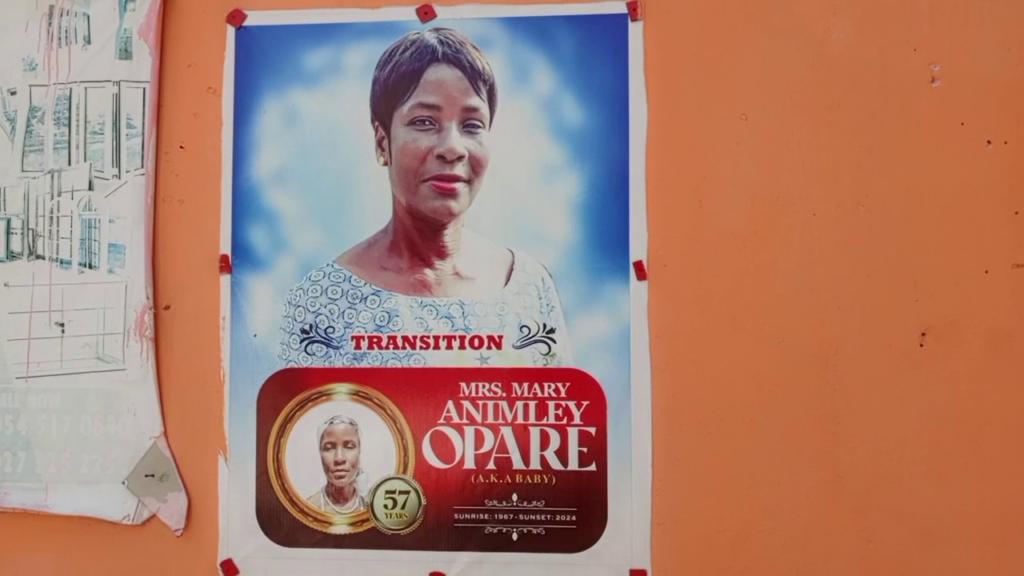
    The Animley family in Osuwem, Shai-Osudoku district, is threatening legal action against Trinity Hospital Mortuary in Lebanon-Ashaiman, Ashaiman Municipality, for the distress caused to them.

    The family was prepared for the funeral of their late 57-year-old Mary Animley Opare in Kakasunanka No.1, Kpone-Katamanso Municipality, scheduled for April 19 to 20.

    However, they had to cancel the funeral at the last minute due to the sudden disappearance of the corpse from the Trinity Hospital morgue.

    Pastor Michael Tetteh, one of the deceased’s children, expressed the family’s determination to pursue the matter until the morgue produces the body.

    “We mobilised all relatives across the country for this but here we are with no information on the body’s whereabouts.”

    We need the body of our mother to bury. We say this with all seriousness. The facility must produce our mother at all costs and are pleading with all and sundry to help.”

    “You will not believe that we spent GH¢70,000 only to experience this mishap,” he shared.

    Theophilus Animley, speaking on behalf of the family, expressed that they are overwhelmed by both the loss of their loved one and the additional burden of dealing with the missing corpse.

    “Our efforts of constantly visiting the mortuary in the last three months after her passing have gone to waste. As a royal family, the pain is on another level. You occasionally hear some of these unusual stories elsewhere but this has really hit us hard.”

    “Family made sure we visited the mortuary weekly. Having encountered financial constraints in preparing for her funeral, we unfortunately had to cancel the funeral,” he explained.

    Theophilus Animley, speaking on behalf of the family, expressed that they are overwhelmed by both the loss of their loved one and the additional burden of dealing with the missing corpse.

  • Video: Mortuary man narrates how some pastors buy dead bodies to ‘build their altars’

    Video: Mortuary man narrates how some pastors buy dead bodies to ‘build their altars’

    A mortuary worker, Yaw Mateng has come forward with claims that some pastors allegedly purchase dead bodies to use in building their altars. 

    In an interview, he stated that he has witnessed instances where pastors, seeking specific body parts for their rituals or spiritual practices, approach mortuary workers with financial offers to acquire the deceased. 

    The motive behind these alleged transactions is suggested to be the belief that incorporating certain body parts into their altars would enhance the efficacy of their spiritual endeavors.

    He claimed that these transactions often occur discreetly, with pastors making financial arrangements to acquire bodies under the guise of performing spiritual rituals.

  • Oti Region: Farmer shot dead at Nkwanta

    A tragic incident unfolded at Brewankor, a farming community in the Nkwanta South Municipality of the Oti Region, where one person was fatally shot on a farm, and another in critical condition.

    The victim, 25-year-old Kwabena Boame, lost his life while participating in cassava harvesting alongside three others.

    Currently, the injured individual is undergoing treatment at Nkwanta St. Joseph Catholic Hospital.

    The motive behind the shooting remains unclear, raising questions about its potential connection to the ongoing conflict in the area.

    Despite assurances from local chiefs in Adele, Akyode, and Challa pledging to foster peace after recent clashes, residents continue to grapple with fear.

    In response to the tragic incident resulting in the farmer’s death, authorities have taken two individuals into custody.

  • Lifeless body of a contractor found in toilet pit at Oti Region

    Lifeless body of a contractor found in toilet pit at Oti Region

    The lifeless body of a 35-year-old contractor, Mr. Bijadom Daniel has been discovered in a toilet pit at his residence in Nkwanta, located in the Oti Region.

    Family members made the grim discovery at around 6:00 p.m. on Sunday, October 15.

    According to Mr. Kwame Raphael, the deceased’s father, Mr. Daniel had gone missing approximately two weeks prior.

    The family became concerned about his whereabouts, eventually reporting his disappearance to the Nkwanta Police Station.

    Mr. Raphael expressed shock over the incident and harbored suspicions that his son had been murdered. He urged the police to conduct a thorough investigation and bring the responsible individuals to justice.

    In the interim, as of 4:00 p.m. on Monday, October 16, 2023, the deceased’s body remained in the pit, as per the Ghana News Agency’s investigation.

    Assistant Superintendent of Police (ASP) Mr. Lawrence Wiafe, the Nkwanta South Crime Officer, confirmed the incident, noting that preliminary investigations were leaning towards the possibility of foul play.

  • Coffin in front of Chief’s palace exhumed

    Coffin in front of Chief’s palace exhumed

    A family that buried their dead relative in a grave in front of the palace of the chief of Amamoley has exhumed the body following a court order. 

    This was after the Asofan District Court ordered that the police, together with the Ga-North District Assembly, exhume the remains of one Quainnor. 

    “It is hereby ordered that the police and the Ga-North District Assembly are to exhume the human remains of Quainnor Tetteh, and bury same in a place slated by the District Assembly for burial,” the court order stated. 

    The order from the court also said that all costs that pertain to this exercise should be borne by the accused persons in the case, the family of Quainnor Tetteh. 

    “Cost of exhumation to be borne by the accused persons,” the order, signed by the John Krampah Otoo, the court registrar, said. 

    Background:

    The Chief of the Amamoley Traditional Area, Nii Commey Odaanu II, said in an interview, that there had been claims that he was the one who killed the deceased, Quainnor Tetteh. 

    He added that the people also insisted that since that was the case, they had every right to have him buried right in front of his house. 

    “Early March, I was in my room when I heard some noise, with people shouting, I knew there were funerals in town, so I suspected it would be a funeral. So, I was just looking through my window and I saw a group of people in front of my house, digging a trench. 

    “I asked myself, what was going on, and from the look of things, the way they were holding weapons in their hands, it seemed like they were prepared to stand against whoever confronts them against what they were doing. 

    “Before a human being will be buried, they need to take burial permit before that is done, even at the burial ground. So, I decided to go to the Environmental Protection Agency and ask them if they were the people who gave them the permission to bury the body at the point they were burying it. 

    “One Nii Ashietey and Ishmael Addo, and I know a lot of them by name and by faces, I could not question them, but I called the police so they could ask them why they were doing that. So, when the Environmental Protection Agency intervened, then they told them that I was the one who killed the deceased, so, that is their right to bury the person in front of my house,” he explained. 

    The police, however, tried to stop the people from going ahead, but they also refused to comply. 

    The chief eventually asked that the men are arrested because there is a designated cemetery in the community, and he did not understand why they had to come and bury a body at a point that serves as a playground for children. 

    The police then advised that he takes the case to court. 

  • Rapid poultry death and corpse decay over South Africa’s power cut

    Rapid poultry death and corpse decay over South Africa’s power cut

    Power outages in South Africa has resulted in accidents involving vehicles, opportunistic criminals, rancid food, decaying corpses, failed enterprises, and water shortages.

    Last week the grim extent of the outages was laid bare when South Africans were advised to bury dead loved ones within four days.

    In a public statement, the South African Funeral Practitioners Association warned that bodies in mortuaries were rapidly decomposing because of the unrelenting electricity outages, putting huge pressure on funeral parlors struggling to process corpses.

    The situation is so bad that the country’s President Cyril Ramaphosa is considering declaring a national disaster, similar to one in 2020 at the height of the Covid pandemic, which had a devastating effect on the country’s economy.

    Last week scores of supporters from the Democratic Alliance opposition party marched under heavy security through the streets of Johannesburg and Cape Town to voice their frustrations over the persistent blackouts.

    Known locally as loadshedding, widespread electricity blackouts are carried out multiple times a day by state-owned energy utility Eskom to avoid the total collapse of the grid.

    Shortages on the electricity system unbalance the network, and Eskom has stated that controlled outages are necessary to ensure reserve margins are maintained, and the system remains stable.

    While the country has been experiencing on-off power outages for years, since September 2022 scheduled blackouts have become routine, affecting every part of South African society.

    For some people, not having access to reliable power can be the difference between life and death.

    Before she died in October 2022, Lis Van Os needed oxygen for 17 hours a day. Her stationary oxygen machine required mains power, making periods of loadshedding extremely stressful, particularly when power did not return as scheduled, her family said.

    Her daughter Karin McDonald was forced to explore backup options such as inverters and a back up oxygen mobile tank, which only lasted short periods.

    “Towards the end (of her life) power outages created a lot of anxiety for everyone,” she said.

    South Africans experienced more than twice as many power cuts in 2022 than in any other year. And things are set to get worse in 2023.

    Even simple daily tasks need to be arranged around loadshedding schedules, including meal planning, travel times, work that requires internet connectivity.

    From preparing baby formula to keeping fans running during the summer heat, not having access to mains power is makes daily life challenging for South Africans.

    Maneo Motsamai, a domestic worker in Johannesburg, says the outages prevents her from simple tasks such as cooking.

    “I boil water to cook mealie meal (maize porridge) and the power goes. I can’t eat, it’s a waste. I can’t cope like that,” Motsamai told CNN.

    Pump stations can’t provide water and many small businesses without access to backup power are having to close shop and lay off employees, according to people CNN spoke to.

    Thando Makhubu runs Soweto Creamery, an ice cream shop in Jabulani, Soweto, on the outskirts of Johannesburg. His family pooled small welfare grants they received during the Covid-19 pandemic to set up the business, but are now feeling the pressure from power outages.

    In early January, the shop was without power for 72 hours, when electricity did not return as scheduled. Thando was forced to shell out money for diesel to power their generator and prevent all his stock melting. He says the outages are costly and destroying their hopes of expanding.

    Bongi Monjanaga, who runs a startup cleaning services company operating across Johannesburg, says the outages affect every part of her fledgling business, such as operating electric cleaning equipment, entering and leaving premises when security gates aren’t functioning, and having internet to invoice clients and complete online tax compliance documents.

    “I find myself in this pool of misery when I’m just trying to start up. I’m just trying to grow,” she says.

    The escalation of power outages is also deeply worrying for South Africa’s food security, driving up prices, and placing an even greater strain on stretched household budgets.

    With modern farming practices ever more reliant on electricity for crop irrigation, processing, and storage, loadshedding is having a huge impact on agricultural output.

    Gys Olivier, a farmer from Hertzogville in Free State province, in east-central South Africa, says he and other farmers in the area have been forced to throw away hundreds of thousands of dollars worth of seed potatoes due to disruptions to the ‘cold chain’ – (the process of keeping produce refrigerated throughout the supply chain.)

    There is also less demand from growers due to water shortages, with pump stations reliant on electricity to operate.

    “We have done everything we can to make sure there is food on the table for a very good price, but it’s become so capital-intensive to farm,” Olivier says.

    Meanwhile livestock and poultry are dying before they even get to the slaughterhouse.

    A gruesome video circulating on social media shows workers removing 50,000 dead broiler chickens from a farm in North West province, the birds suffocated when power outages caused ventilation systems to stop. The financial damage to the farmer was around ZAR1.6m ($93,300) according to local media reports.

    South Africa is notorious for high crime rates, and loadshedding is making it worse as home security systems fail when the power goes out, giving criminals a field day inside unsecured properties.
    Policing also becomes harder, with officers unable to reach crime scenes fast enough due to congestion when traffic lights are off.

    Tumelo Mogodiseng, General Secretary of the South African Policing Union (SAPU), describes the load-shedding as “a pandemic.”

    He says his members’ lives are now more at risk, with officers unable to see potentially dangerous situations in the darkness, and police stations, many of which don’t have backup power systems, at risk of attack from criminals during blackouts.

    “Police are dying every day in this country. If this is happening in the daylight, what happens when there is no light for them to see at night?”

    Mogodiseng also worries that crimes are going unreported, with citizens fearful of leaving their houses during outages and traveling in the darkness. “Communities won’t travel to police stations to open cases because they are afraid,” he told CNN.

    Gareth Newham, who runs the Justice and Violence Prevention Programme at the Institute for Security Studies (ISS) in Pretoria, says that it’s hard to get solid data on the impact outages are having on crime. While anecdotal evidence suggests criminals are exploiting outages, the recent escalation of loadshedding has coincided with the Christmas holidays, when crime rates typically spike.

    His biggest concern is that continued loadshedding or a temporary grid collapse could lead to a repeat of the coordinated civil unrest, rioting, and looting in parts of South Africa’s KwaZulu-Natal and Gauteng provinces 18 months ago.

    “A complete breakdown in the grid could be the trigger for local level gangs getting more power, and we could see a similar kind of violence to that we saw in July 2021.”

    Under the ruling African National Congress (ANC), in charge since 1994, Eskom has become synonymous with corruption, crime, and mismanagement.

    Last year a judge-led inquiry into graft under the former president, Jacob Zuma, found that there were grounds to prosecute several former Eskom executives.

    The government has failed to build new power stations to keep up with increased demand, and warnings from energy experts on looming supply shortages across the past two decades have gone ignored.

    A 2019 report by the South African Institution of Civil Engineering shows skilled engineers have been leaving the country in droves.

    Despite spending billions of USD on two huge coal power stations, neither works properly.

    Older plants are dilapidated due to a lack of maintenance, and organized crime steals vital coal supplies and cable from the rail lines going from mines to power stations.

    Renewable energy companies say they are desperate to supply to the grid, but the government has been slow to cut red tape and streamline regulatory processes that would reduce the time frame for environmental authorisations, registration of new projects and grid connection approvals.

    Legal challenges against the government and Eskom are stacking up. Several political parties and trade unions say they will take the government and state utility to court for not upholding their duty to provide electricity.

    With no end in sight to the outages, South Africans are desperate for alternative energy sources, but even they are out of the reach of many citizens.

    Thando Makhubu says he was shocked by the cost to power his ice cream business off-grid. “We were quoted R100,000 ($5,945) and that excluded the solar panels.”

    Karin McDonald, who runs a swimming school, similarly found the upfront costs of solar prohibitive. “We received quotes for solar for the business and house and were not looking at anything less than half a million rand ($29,500) which is a major life decision to make,” she said.

    There is also a long wait for solar. “I know a solar provider that had 40 requests just last week, all for big solar projects, ” said Angus Williamson, a cattle farmer from KwaZulu-Natal province.

    As they come to terms with their new reality, many South Africans are finding it hard to stay optimistic.

    “The light at the end of the tunnel is a train heading in our direction,” said Williamson.

    Source: CNN

  • South Africa launches a grave robbery investigation after a  corpse was stolen

    South Africa launches a grave robbery investigation after a corpse was stolen

    Police in South Africa have launched an investigation and appealed for witnesses following the theft of a corpse from a grave in the northern province of Limpopo.

    A relative made the discovery on Sunday when she went to the cemetery to clean the area in preparation of the upcoming unveiling of the tombstone.

    To her shock she found a gapping hole by the grave and the body of Modike Philemon Masedi missing.

    The suspects accessed the graveyard by cutting the fence then dug a hole next to the grave to gain access to the coffin and stole the corpse, the police said.

    Mr Masedi reportedly died on 15 January and was buried seven days later.

    “The motive for this incident is unknown at this stage,” Brigadier Motlafela Mojapelo, a police spokesperson, said.

    Provincial police boss Thembi Hadebe has urged people in the area to “desist from pointing fingers” to avoid any form of vigilantism.

    Source: BBC

  • Family lives with corpse for over a year, thinking it’s only in a coma

    The family of a 35-year-old man who died in April of last year due to Covid-19 have been living with his body ever since, thinking he was only in a coma and would eventually wake up.

    Vimlesh Sonkar, a young Income Tax Officer in Ahmedabad was admitted to Moti hospital on 19th April 2021 and pronounced dead only three days later after becoming infected with the coronavirus. A death certificate was handed to the man’s family, but they refused to believe he had passed away and instead of giving him the last rights took his dead body home and cared for it as if he would eventually wake up. The man’s mummified remains were discovered a few days ago, when a team from his workplace was sent to investigate his long-term absence.

    “The person had died on April 22, 2021 during the second wave of Covid. He had bilateral pneumonia,” the Chief Medical Officer (CMO) of Kanpur, Alok Ranjan, told The Sunday Express. “After he died, he was taken to a local nursing home where he was declared dead. A death certificate was also issued where the cause of death was mentioned as ‘bilateral pneumonia’”.

    It’s unclear why Vimlesh’s family didn’t want to accept the fact that he had passed away. The Times of India reports that they took his body to another hospital for a second opinion, and even when doctors there confirmed his death, they still took his corpse back home and treated it like that of a coma patient that might wake up one day. According to the Free Press Journal, the family was ready to give the man his last rites, but first they put an oximeter on one of his fingers, and after it showed a pulse and the oxygen level in his blood, they decided he was still alive and canceled the funeral.

    One thing is for sure, though – Vimlesh Sonkar’s family lived with his dead body in the same house for a year and a half, genuinely thinking that he was in a coma and would one day wake up. His wife, his parents, his brothers and their families, all of whom lived in the same house, took care of him, cleaning his body with Dettol disinfectant three times a day, changing his clothes daily and leaving the air conditioning on for 24 hours a day.

    “Whenever his office asked the family about his whereabouts, they said Vimlesh was ill,” a senior police officer told The Indian Express. “The family also brought in oxygen cylinders and told locals that he was in a coma and was being treated at home. They were convinced that he was alive and will get better.”

    The shocking discovery of Vimlesh Sonkar’s body was made by a team sent by his office to check why he had been absent from work for so long. Despite the care provided by members of his family, the 35-year-old man’s body had deteriorated severely since his death, with one eye-witness describing it as a mummy with the flesh dried up on the bones. That didn’t seem to give the family any clues, though.

    Police was notified about the situation, and Vimlesh’s body was once again taken to a hospital where his death was once again confirmed. After this, his family finally agreed to have his body cremated.

    “As no crime was committed here, we will not be taking any action against anyone. The family was still convinced that he was alive till his body was taken away on Friday by officials,” CMO Alok Ranjan said. “On Friday night, the remains of the body were cremated in the presence of police, other officials and Vimlesh’s family. The family members had to be convinced for the cremation.”

    Source: Oddity Central