Tag: Côte d’Ivoire

  • 5-day 2025 African Development Bank Group Annual Meetings begins today

    5-day 2025 African Development Bank Group Annual Meetings begins today

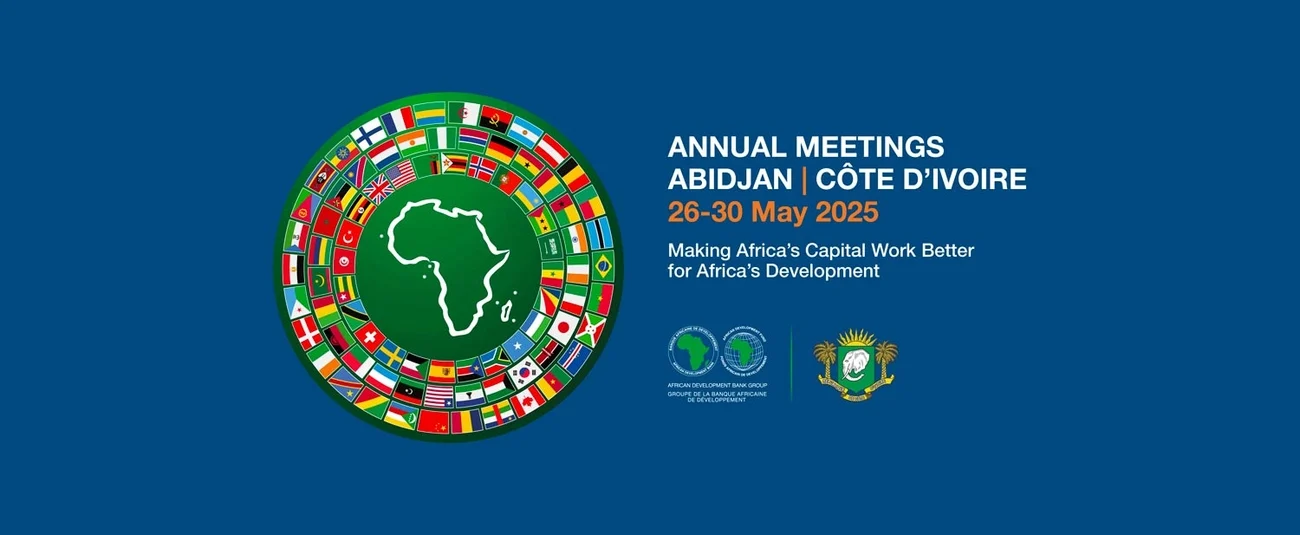
    The 2025 Annual Meetings of the African Development Bank Group will take place from May 26 to 30 in Abidjan, Côte d’Ivoire, with the election of the institution’s new president as the key highlight.

    The governors of the African Development Bank will elect a successor to the current Group President, Dr. Akinwumi A. Adesina, whose second five-year term is ending.

    More than 6,000 delegates, including African heads of state and government, finance ministers, central bank governors, development partners, private sector representatives, civil society leaders, academics, think tanks and opinion leaders, NGOs, and other stakeholders, are expected to take part in the event.

    The Meetings will be held at the Sofitel Abidjan Hotel Ivoire in Abidjan under the theme: “Making Africa’s Capital Work Better for Africa’s Development.”

    This strategic theme focuses on identifying and harnessing Africa’s diverse capital resources – human, natural, financial, and commercial – to drive the continent’s structural transformation.

    The aim is to promote the transition to more inclusive, green, and resilient economies, while mobilizing complementary external financing through diversified partnerships.

    The Meetings will also feature discussions addressing cross-cutting factors such as digital transformation, institutional strengthening, and good governance. This holistic approach aligns with the achievement of the Sustainable Development Goals, the Paris Climate Agreement, the African Union’s Agenda 2063, and the Bank Group’s High 5s.

    The Annual Meetings are the institution’s most important event. This year’s edition includes the 60th Meeting of the Board of Governors of the African Development Bank and the 51st Meeting of the Board of Governors of the African Development Fund, the institution’s concessional window.

    The Annual Meetings enable the Bank Group – consisting of the African Development Bank, the African Development Fund, and the Nigeria Special Fund – to take stock, together with shareholders, of progress made over the past year. They provide a unique forum for exchange by government representatives and other participants, including the media on key issues concerning Africa’s development.

    In addition to the statutory meetings of the governors of the Bank and the Fund, the 2025 Meetings will feature knowledge events organized by the Bank and the host country, Cote d’Ivoire.

    Journalists wishing to participate in the 60th Annual Meetings of the African Development Bank are invited to send a request to media@afdb.org(link sends e-mail) with their press card and a letter from their employer. They will subsequently receive a code that will allow them to register online.

    The Bank does not cover the participation costs of journalists attending its Annual Meetings.

    Important information is available on the Annual Meetings website: host country health regulations, travel insurance for the duration of the stay (baggage, emergency medical expenses, medical evacuation/repatriation), Annual Meetings program, and much more.

    Hotels in Abidjan offer preferential rates to participants of the Annual Meetings. Reservations can be made via the following dedicated platform: https://assembleesannuellesbad-ci2025.org.

    Source: African Development Bank Group
  • Ghana, Cote d’Ivoire in talks to sign advanced energy cooperation deal

    Ghana, Cote d’Ivoire in talks to sign advanced energy cooperation deal

    Negotiations are underway to finalize and sign, at a later date, a cooperation agreement between the Ministry of Energy of Ghana and the Ministry of Energy of Cote d’Ivoire, focusing on the development of energy resources.

    This was revealed when, as part of the bilateral cooperation between the two nations, Ghana’s President, H.E. Nana Addo Dankwa Akufo-Addo, was invited by H.E. Alassane Ouattara, President of Cote d’Ivoire, to attend the inaugural summit of the Strategic Partnership Agreement between Ghana and Cote d’Ivoire, held in Abidjan from 8th to 11th October, 2024.

    The discussions also covered other areas of collaboration, including animal, fisheries, and aquaculture resources, cross-border land and maritime cooperation, mining and energy, environmental concerns, the economy, trade and industry, transport, road infrastructure, and maintenance.

    On October 10, 2024, the Minister for Foreign Affairs and Regional Integration, Shirley Ayorkor Botchwey, and her Ivorian counterpart, Léon Kacou ADOM, co-chaired a Joint Implementation and Monitoring Committee Meeting.

    This meeting followed a Joint Technical Committee Meeting, co-chaired by the Coordinating Director of Political and Economic Affairs at Ghana’s Ministry of Foreign Affairs and Regional Integration, Ambassador Jennifer Lartey, and her Ivorian counterpart, which took place from 8th to 9th October, 2024.

  • Four Ghanaian officials start VAR course in Ivory Coast

    Four Ghanaian officials start VAR course in Ivory Coast

    Four Ghanaian officials are currently attending a groundbreaking Video Assistant Referee (VAR) course organised by the Confederation of African Football (CAF) in Abidjan, Côte d’Ivoire.

    This course marks a significant milestone as it is CAF’s first-ever VAR training session specifically designed for regional zones, with the WAFU B zone taking the lead.

    The Ghanaian participants in this training include Rita Ama Nkansah Boateng, Julian Nii Akwa Nunoo, Emmanuella Aglago, and Alex Kotey.

    The course aims to enhance the quality of refereeing in the region by equipping these officials with the latest VAR techniques and practices.

    This initiative reflects the Ghana Football Association’s (GFA) commitment to improving the standards of football officiating in the country and underscores Ghana’s active role in shaping the future of African football.

    As WAFU B pioneers this essential training, it sets a precedent for other zones to follow, ensuring a more consistent and reliable officiating framework across CAF competitions.

  • Over 200 Ghanaians stranded in Côte d’Ivoire – Ghana Immigration Service

    Over 200 Ghanaians stranded in Côte d’Ivoire – Ghana Immigration Service

    More than 200 Ghanaians find themselves stranded in Cote d’Ivoire, as announced by Assistant Superintendent of Immigration (ASI) Rickey Nana Yaw Boakye, an officer at the Sampa Command of the Ghana Immigration Service (GIS) in the Bono Region.

    These individuals appear to be among the unfortunate victims of “Q-Net,” a notorious fraudulent online scheme known for deceiving people into parting with substantial sums of money under the false promise of securing lucrative job opportunities abroad.

    ASI Boakye noted that the Sampa Command is actively collaborating with its counterparts in La Cote d’Ivoire to rescue and repatriate the stranded Ghanaian migrants, including women and girls, back to their homeland.

    Last year, the Command, with support from other security agencies, successfully rescued and brought approximately 200 victims back home through the Ghana-Cote d’Ivoire border in the Jaman North District of the region.

    ASI Boakye shared these updates during a stakeholder’s meeting organized by ActionAid Ghana (AAG), a non-governmental organization, held at Abesim, near Sunyani, to validate a project it implemented in the region.

    The implementation of the three-year Norwegian Agency for Development Cooperation (NORAD)-funded multi-country project concluded in December 2023.

    ASI Boakye expressed disgust about the forms of human rights abuses the victims went through, saying, “Now as we speak, about 200 of the victims are locked up in a room in Ivory Coast and they are not allowed to go out.”

    ASI Boakye highlighted the challenges in locating the victims, noting that they often took routes through unapproved areas along the border communities, often with the assistance of local motorbike and ‘pragyia’ riders.

    He cautioned aspiring youth travellers to seek the Ghana Immigration Service for proper documentation, emphasising that those resorting to the illicit services of “Q-Net” were exposing themselves to unnecessary risks.

    Kwame Afram Denkyira, the Bono Regional Programme Manager for AAG, stated that the project’s results significantly contributed to the advancement of people-centered national regulatory frameworks and policies, particularly in ensuring decent work within the agricultural value chain.

  • Ask the coach not me – Cote d’Ivoire’s Ahmed Musa snubs the question of what went wrong for Nigeria

    Ask the coach not me – Cote d’Ivoire’s Ahmed Musa snubs the question of what went wrong for Nigeria

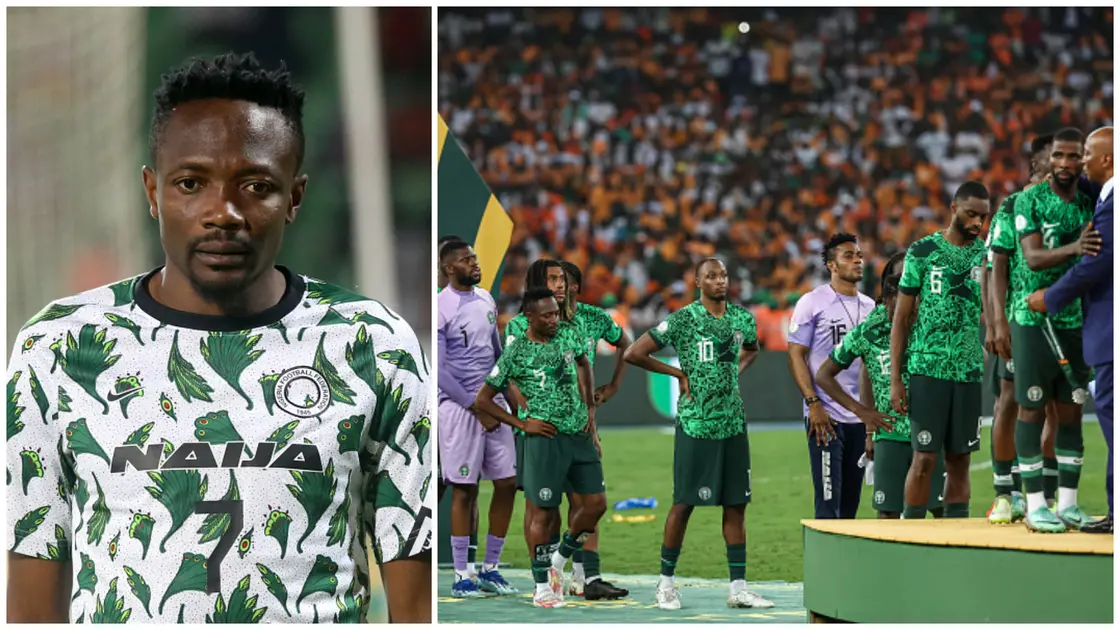
    The loss in the Africa Cup of Nations (AFCON) 2023 final was a tough blow for Ahmed Musa and the Nigerian team to endure.

    Despite taking an early lead, they were unable to maintain their advantage as Ivory Coast executed a remarkable comeback, securing the title with a late winning goal from Sebastien Haller at the Alassane Ouattara Stadium on February 11.

    Visibly distraught after the match, Musa acknowledged both personal and collective disappointment. However, he also expressed pride in the Super Eagles’ journey to the final.

    “That is football; someone wants to win, someone has to win, simple. We have to be proud of ourselves,” he stated.
    The Sivasspor man deflected questions about what went wrong for Nigeria, suggesting those inquiries were better directed at the coach, Jose Peseiro.

    “I don’t know, I’m not the coach. I think the coach should have the right answers to this.”
    The Nigerian team, previously viewed as the favourites to clinch the AFCON 2023 title, experienced a bitter defeat in a match filled with drama and tension.


    Haller’s late goal for Cote d’Ivoire shattered the Super Eagles’ hopes as the hosts staged a remarkable comeback to secure their third continental championship.

    Despite captain William Troost-Ekong’s late first-half goal, Nigeria could not maintain their lead, ultimately succumbing to Franck Kessie’s equaliser and Haller’s decisive strike in the 81st minute.

  • “Somebody please, I need oxygen” – Singer Teni bitterly cries after Nigeria’s AFCON loss

    “Somebody please, I need oxygen” – Singer Teni bitterly cries after Nigeria’s AFCON loss

    Nigeria’s loss to host country Cote d’Ivoire in the just-ended African Cup of Nations (AFCON) has garnered widespread reactions.

    Some Nigerian celebrities, including Afrobeat sensation Teniola Apata, popularly known as Teni, appeared to be devastated as her country’s hopes of winning the AFCON trophy were shattered by Ivory Coast.

    In a video posted by an X (formerly Twitter) user @GhanaTrends.com and sighted by TIGpost, the musician was drenched in tears as she pleaded for oxygen.

    “You think you can embarrass me? Somebody please. Somebody please. I need oxygen. Ivory Coast, Ivory Coast (as she went on sobbing).Eno be don say we don cool for you.I’m feeling decampapu like I can’t. You want to embarrass me? yeeeee. My shirts, my intestines… Aya ya yaaaa! Isakabalalalaaaa, Isakaba,” Teni cried while she expressed her emotions.

    The 34th edition of the prestigious African Cup of Nations (AFCON) saw the Elephants of La Côte d’Ivoire clinch victory over the Super Eagles of Nigeria in a thrilling final showdown.


    Despite Nigeria seizing the lead in the 38th minute, Ivory Coast managed to equalise in the 62nd minute and eventually secure the winning goal in the 81st minute of regular play.

    William Troost-Ekong netted Nigeria’s goal, while Ivory Coast found the back of the net through strikes from Franck Kessie and Sebastian Haller.


    In a captivating match witnessed by their home supporters, the Ivorians dashed Nigeria’s hopes of claiming their fourth AFCON title, ultimately emerging triumphant with a 2-1 victory.

    This decisive encounter on Sunday, February 11, 2024, marked the conclusion of the 2023 AFCON tournament, which commenced on January 10, 2024.

  • AFCON 23 Finals: Moment woman collapsed on the pitch after Nigeria’s loss to Côte d’Ivoire

    AFCON 23 Finals: Moment woman collapsed on the pitch after Nigeria’s loss to Côte d’Ivoire

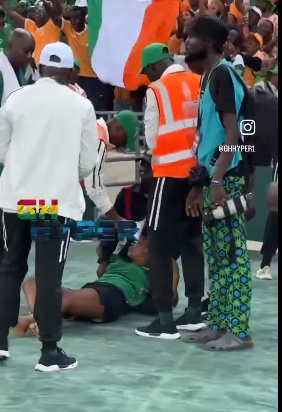
    In a dramatic turn of events following Nigeria’s heartbreaking loss to Côte d’Ivoire in the 2023 AFCON finals, a harrowing scene unfolded on the pitch as a woman collapsed.

    A video circulating on social media captured the distressing moment when the woman fell to the ground, seemingly overcome by emotion or perhaps a medical condition exacerbated by the intense match.

    As she lay unconscious on the field, a team of health experts rushed to her aid, swiftly attending to her. With concern etched on their faces, they worked diligently to assess her condition and provide immediate medical assistance.

    In a bid to aid her breathing and ensure proper ventilation, the woman was carefully fanned as part of the emergency response measures.

    Ivory Coast made history by becoming the first host nation since Egypt in 2006 to clinch the Africa Cup of Nations (AFCON) title, following their thrilling victory over Nigeria on Sunday night.

    Sebastien Haller emerged as the hero once again for the Elephants, orchestrating a remarkable comeback to secure a 2-1 win.

    This triumph marked a remarkable turnaround for the Ivorians, who overcame adversity, including the departure of coach Jean-Louis Gasset after two defeats in the group stage, to claim their third continental title. Building on their previous Nations Cup victories in 1992 and 2015, Ivory Coast cemented their status as champions and became the first host nation to lift the trophy since Egypt in 2006.

  • AFCON host Ivory Coast beat Nigeria to win

    AFCON host Ivory Coast beat Nigeria to win

    The 34th edition of the prestigious African Cup of Nations (AFCON) saw the Elephants of La Côte d’Ivoire clinch victory over the Super Eagles of Nigeria in a thrilling final showdown.

    Despite Nigeria seizing the lead in the 38th minute, Ivory Coast managed to equalise in the 62nd minute and eventually secure the winning goal in the 81st minute of regular play.

    William Troost-Ekong netted Nigeria’s goal, while Ivory Coast found the back of the net through strikes from Franck Kessie and Sebastian Haller.

    In a captivating match witnessed by their home supporters, the Ivorians dashed Nigeria’s hopes of claiming their fourth AFCON title, ultimately emerging triumphant with a 2-1 victory.

    This decisive encounter on Sunday, February 11, 2024, marked the conclusion of the 2023 AFCON tournament, which commenced on January 10, 2024.

  • Air Côte d’Ivoire announces direct flights to Morocco as part of its decade-long success story

    Air Côte d’Ivoire announces direct flights to Morocco as part of its decade-long success story

    Air Côte d’Ivoire announced plans to start direct flights to Morocco, marking a key milestone in the airline’s incredible history, which includes an astounding turnover of 992 billion CFA francs during the previous 11 years.

    During a media briefing on Thursday, January 25, in Abidjan, Laurent Loukou, the Managing Director of Air Côte d’Ivoire, shared the airline’s achievements over the past decade and outlined its future prospects.

    Established in May 2012, the airline, envisioned by President Alassane Ouattara, has not only played a pivotal role in the nation’s economic recovery but has also secured a dominant market share, surpassing 50%.

    “Having transported 6.7 million passengers, the airline has created 586 direct jobs and 3,000 indirect jobs from 2013 to 2023,” Loukou proudly stated.

    He also highlighted the airline’s punctuality rate, noting, “In 2023, Air Côte d’Ivoire achieved a 67% punctuality rate, compared to the world average of 77%, with the long-term objective set at 85%.”

    Joined by Chairman of the Board of Directors, General Abdoulaye Coulibaly, and Airbus Vice-President Hadi Akoum, Loukou emphasised Air Côte d’Ivoire’s profitability and growth trajectory.

    Following the successful launch of the Johannesburg route in July 2022 and with Cape Verde on the horizon, the airline anticipates commencing direct flights to Casablanca, Morocco, from April 15, 2024, operating four flights per week.

    General Abdoulaye Coulibaly, the President of the board of directors, encouraged the staff to maintain excellent customer service standards that prioritise passenger safety.

    This strategic move aligns with Air Côte d’Ivoire’s commitment to expanding its international reach and solidifying its position as a key player in Africa’s aviation landscape.

  • MTN sends 163 Ghanaian fans to Cote d’Ivoire for 2023 AFCON

    MTN sends 163 Ghanaian fans to Cote d’Ivoire for 2023 AFCON

    The telecommunications giant, MTN, has demonstrated significant corporate social responsibility by generously sponsoring 163 passionate Ghanaian football fans for an exciting journey to Cote d’Ivoire in support of the Black Stars during the Africa Cup of Nations (AFCON) matches.

    Embarking on a 10-day, all-expense-paid adventure, these enthusiastic fans, departing from Accra last Saturday, are beneficiaries of MTN’s comprehensive sponsorship package, covering Emirates flights to Abidjan, match tickets, internal travel arrangements, and stipends for their well-being.

    This laudable initiative aligns with the Black Stars’ quest to end their 42-year trophy drought in the prestigious AFCON tournament.

    MTN’s support not only underscores a commitment to fostering sportsmanship but also strengthens the bond between corporate entities and their communities.

    Anticipated to infuse a vibrant and supportive atmosphere for the national team, these fans will add an extra layer of excitement to the tournament.

    As Ghana pursues glory on the football field, MTN’s sponsorship is poised to significantly boost the morale and motivation of the Black Stars.

    MTN’s generous sponsorship has ignited excitement among the 163 Ghanaian fans, fulfilling the dreams of many who are experiencing AFCON in person for the first time.

    This unique opportunity enables these fans to witness and cheer for the gallant Black Stars in all three of their group-stage matches.

    For most of these individuals, this once-in-a-lifetime experience transcends a mere sporting event; it is a dream come true.

    Being physically present at the tournament and supporting the Black Stars on the grand stage is a memorable occasion, promising vibrant atmospheres, energetic crowds, and thrilling matches that will undoubtedly create lasting memories.

  • What separates Ghana from Cote d’Ivoire

    What separates Ghana from Cote d’Ivoire

    Borders are a fundamental aspect of any nation’s geography. They signify the point where one country’s expanse concludes and another’s begins.

    These borders range from distinct lines to more ambiguous boundaries that might not be immediately evident.

    Recently, Ghana and Cote d’Ivoire engaged in a legal process to define their maritime boundary, a case that saw Ghana emerging victorious.

    Despite this legal tussle, the two nations have maintained a generally positive relationship over time.

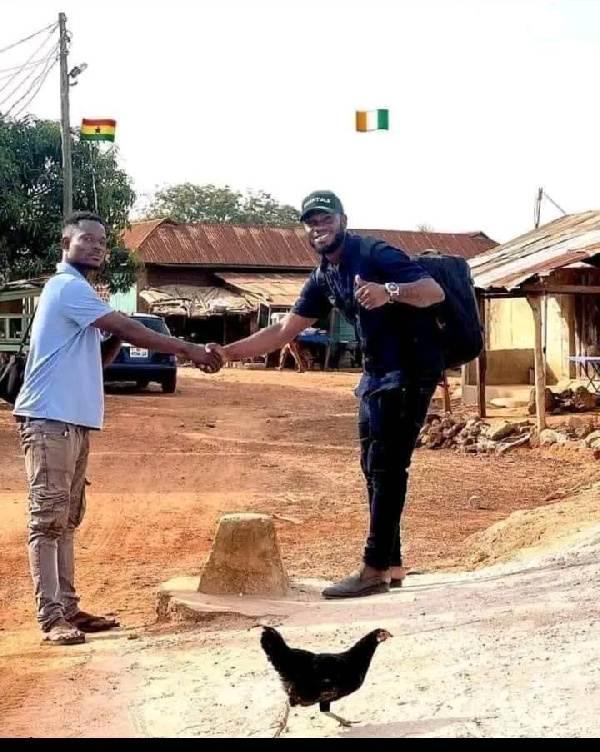
    Interestingly, some of these borders are not distant frontiers but mere steps away from each other. An intriguing image circulating online captures this proximity, prompting numerous individuals to share it.

    The photograph depicts two men stand on opposing sides of a modest concrete pillar, its height merely a few meters above the ground. In a symbolic gesture, they extend their hands to meet in a handshake, effectively highlighting the border’s demarcation.

    This snapshot is gaining traction due to its portrayal of the boundary between these two countries. Notably, this is not the first instance where a simple act, like a short stroll or a few meters, serves as a delineation between Ghana and its neighboring nations.

    Borders hold a unique significance in defining nations, and this image encapsulates the intriguing blend of geographical lines and diplomatic relations in an evolving global landscape.

  • Ghana, Nigeria, others to unlock $26 billion on lower trade finance cost

    According to a new research from the International Credit Corporation (IFC) and the World Trade Organization, Nigeria, Cote d’Ivoire, Ghana, and Senegal may make up to $26 billion by reducing costs and expanding access to trade finance (WTO).

    The primary obstacles to trade finance in the four largest economies in the region were examined in the research, Trade Finance in West Africa.

    Even though the four nations have had increased trade flows over time, particularly during the COVID-19 pandemic, they still experience a trade finance shortage of up to $14 billion annually.

    The authors of the report predict that there are opportunities awaiting member countries of the Economic Communication of West Africa States (ECOWAS) once they can remove the barriers to trade and are able to trade with other African countries, and with developing countries outside the continent.

    “Global trade finance gaps increased during the pandemic. Supply chain pressures, inflation, and the war in Ukraine have only exacerbated the problem,” said Makhtar Diop, managing director, IFC. “This study couldn’t be timelier. There is enormous potential for an economic boost in West Africa by harnessing intra-Africa trade, but we will need coordinated action from the government. The private sector, and the multilateral to build the capacity of local lenders and improve access to SMEs,” the report said.

    While banks have and continue to provide financial support for consumer goods sectors such as agriculture and infrastructure are lagging behind. Trade finance in the four countries studied by the report has also not lived up to expectations.

    According to the report, trade finance in these countries only supports 25 percent of merchandise trade. This is low considering that, trade finance support 40 percent of Africa’s imports and exports, and up to 80 percent globally.

    The low coverage is being driven by expensive offerings and high rejection rates from banks, which fail disproportionately on small and medium-sized enterprises, particularly those owned by women. Traditional banks are not helping matters as they see many loan seekers are high-risk and lacking collateral.

    The financial institutions are also bogged down by difficulties in meeting the requirements of foreign correspondent banks and shortages of low-cost funding.

    Nigeria and the three countries can unlock the opportunities by expanding the range of firms that can access trade finance through efforts like IFC’s Africa Trade Recovery Initiative.

    There is also a need to build the capacity of local lenders and local firms, integrating trade finance into the implementation of the African Continental Free Trade Area (AfCFTA); strengthen foreign correspondent banking relationships; and support decision-making through better data and analytics.

    “Trade finance is the indispensable oil for trade and the WTO is proud to be part of an effort to provide evidence-based solutions to help close the trade finance gap,” said WTO Director-General Ngozi Okonjo-Iweala. “At the WTO, we are happy to act as a conduit for a dialogue on trade finance, bringing together governments, banks, SMEs, and professional organizations. We look forward to partnering with financial institutions to transfer this knowledge locally.”

  • British soldiers expected in Ghana after withdrawal from Mali – Report

    With the withdrawal of some 300 British peacekeepers from Mali in the wake of frosty relations with Bamako over the involvement of Russian mercenaries in the fight against terrorist groups in the Sahel, some special forces are expected to arrive in Ghana.

    In a report by UK-based ‘The Telegraph’ and sighted by GhanaWeb, British ministers are also expected to be in Accra to hammer out a new security agreement which will position Ghana and by extension Burkina Faso as the new frontline against terrorism.

    It is unclear if the move is a face-saving operation in the wake of the mission in Mali being shut down or something more significant as British forces already train troops in Ghana.

    Ghana, Togo, Benin and Cote d’Ivoire all signed up for the Accra Initiative in 2017. This is a coalition which aims at stopping insecurity spilling over their borders from the Sahel.

    It was reported on Monday, November 14, that the UK will be withdrawing all of its troops from Mali, which until only a few months ago, Whitehall officials were describing as “the new frontline of the war on terror”.

    Former Africa Minister Rory Stewart, who championed the so-called “pivot to the Sahel” under Prime Minister Theresa May, was scathing about the real purpose of the Ghana trip, suggesting it was no more than a face-saving operation.

    “We struggled to maintain 300 troops in Mali, partly because it cost perhaps as much as a hundred million pounds from tightly stretched budgets,” he told The Telegraph. “I fear that the ‘pivot to Ghana and Burkina Faso’ is largely a way of excusing our retreat from the Sahel and will ultimately add up to less than people pretend.”

    “We have been worrying about Burkina Faso for some time. But without an embassy there or any significant investment, there is a real limit to what the UK can do,” Stewart added.

  • Gov’t will continue to collaborate with security agencies to combat threat of illegal mining – Duker

    The Ghana Armed Forces Command and Staff College (GAFCSC) on Thursday, November 10, 2022, held a seminar for its Senior Command and Staff Course on illegal mining and its implications on security.

    Forty-four officers drawn from Ghana, Benin, Botswana, Cote d’Ivoire, Gambia, Liberia, Malawi, Namibia, Nigeria, South Africa, Tanzania and Togo participated in the academic and capacity building exercise.

    In a presentation, themed “Illegal Mining (Galamsey) and the Socio-economic Impact on Communities, Optimising Gains and Mitigating the Wider Security Implications “, the Deputy Minister responsible for Mines, George Mireku Duker who spoke on behalf of the sector Minister focused on the Small-Scale mining in Ghana, its socio-economic impact on communities, interventions made so far by government, optimising gains, and mitigating security implications.

    On the economic impact of small-scale mining, he said the sector contributes significantly to poverty reduction and stimulates economic growth in the local communities whiles serving as a precursor to the large scale exploration Companies.

    Mr Duker detailed that the small-scale mining sector has provided direct and indirect employment to thousands of Ghanaians.

    Notwithstanding these enormous benefits, the Deputy Minister lamented the challenges stifling the growth of the sector and threatening sustainability of the mining economy as well as the country’s security.

    Whiles admitting the challenges confronting the country, he espoused certain measures rolled out by government to tackle the challenges.

    He noted that these policies among others include the introduction of the Community Mining Scheme, purchasing of mercury-free mining equipment, strengthening the inspectorate department of the Minerals Commission, training of river guards and procurement of speedboats are already yielding positive results with the turbidity levels of polluted water bodies reducing now.

    He emphasized that these measures will not only end illegal mining activities but also provide employment opportunities which will reduce possible security threats.

    He assured that government will not relent on its effort and will continue to roll out interventions that will end galamsey.

    He said government will continue to sensitize the public with the Nationwide Community Sensitisation program.

    He said the authorisation of traditional rulers will now be sought before licenses are granted.

    Present at the seminar were Col. Battor Bannah Director in charge of operations at the National Security who represented his sector Minister, Dr. Ken Ashigbey the Covener of Media Coalition against Galamsey, the Advisor on Mines to the Minister at the Ministry of Lands and Natural Resources and other service Chiefs.


  • We’ve built more schools, interchanges, roads than any gov’t in the 4th Republic – Bawumia

    Vice President Dr Mahamudu Bawumaia has indicated that the Akufo-Addo administration has over the past six years in office built more schools, roads, airports, interchanges than any other government in the Fourth Republic.

    He has appealed to Ghanaians to recollect these achievements of the government in the midst of the economic turmoil they are saddled with currently.

    Dr Bawumia indicated that the hardships are being felt globally, not only in Ghana.

    In a remark at the Hogbestosto Festival at Anlo in the Volta Region on Saturday November 5, he said “we all know we are facing global economic crisis which Togbe Sri III referred to. This is a crisis that is being felt all over the world and the cost of living accelerated across the globe.

    “If you look at the cost of living as measured by the rate of inflation, between 2019 and now, the rate of inflation has increased by five-fold in Ghana, it has increased  by sixteen-fold  in Togo,  it has increased by eleven-fold in Senegal, it has increased by seven-fold in Cote D’Ivoire and eight-fold in the United Kingdom.

    “The increase in the cost of living has caused hardships not only in Ghana but many countries. In fact, the BBC noted about two weeks ago that so far, this year, in 93 countries we have had public protests against the increased cost of living. It is important to know however that amidst all of this turmoil  we should put things in perspectives.

    He added “The government of Nana Akufo-Addo has over the last six years  taken many steps  to reposition  and transform the economy . So whiles we have hardships  today which we are working very hard to alleviate, and Insah Allah, we will deal with it, let us not forget what  we have been able to do in  the last six years.

    “Let me recall that our government in the last six years  has created more jobs than  any other government  in the Fourth Republic, let me recall  that we have constructed more roads than any other government in the Fourth Republic, Let me recall that we have built more interchanges than any other government in the Fourth Republic, we have built more airports than any other government in the Fourth Republic, more railways than any other government , we have built more classrooms than any other government  in the Fourth Republic.”

    Source: 3news

  • WCFP meeting: We support government’s decision to boycott – Ghana, Ivorian CSOs cocoa platform

    The Ghana Civil-society Cocoa Platform and the cocoa Platforme Ivoirienne pour le cacao durable are two platforms for civil society organizations (CSOs) that have praised the governments of Ghana and the Ivory Coast for their decision to skip the upcoming World Cocoa Foundation Partners meeting.

    The Plateforme Ivoirienne pour le cacao durable and the Ghana Civil-society, which are made up of farmers, farmer-based organizations, cooperatives, small-scale processors, the media, and CSOs working in the cocoa sector, applauded the two governments for their decision to skip the meeting that was scheduled to take place from Wednesday, October 26, to Thursday, October 27, 2022, in Brussels.

    “We may not always agree with COCOBOD and CCC’s judgments, but we fully support this move and the grounds offered for the decision,” the CSOs said in a statement on Monday, October 24, 2022.

    The statement noted that: “Côte d’Ivoire and Ghana account for 65 per cent of global cocoa production, but farmers in these two countries earn less than 6 per cent of the chocolate industry’s total revenue valued at about US$130 billion per annum.”

    While “new studies have shown that the share of cocoa growers in the overall chocolate industry has drastically reduced over the years as traders, brands and retailers have accumulated super profits.

    “For example, according to Fairtrade, when cocoa prices were high in the 1970s, cocoa growers were earning up to 50 per cent of the value of a chocolate bar.

    “This fell to 16 per cent in the 1980s and today, farmers receive around 6 per cent of the value. This has led to high levels of poverty and hardship for cocoa growers in two of the largest cocoa producing countries in the world.”

    Both platforms indicated that: “Today, producers are not living, they are only surviving.”

    They continued that: “By boycotting this flagship gathering of the private sector in Brussels, the governments of Côte d’Ivoire and Ghana are sending a strong signal, but it is also a cry from the heart. The issue of cocoa pricing must be put at the center of the discussion on cocoa sustainability.”

    They added: “We fully support this position and hope that the world will take notice and denounce the private sector for their nefarious and unfair cocoa pricing practices.”

  • GRIDCo secures $60m loan from ECOWAS Bank to improve transmission

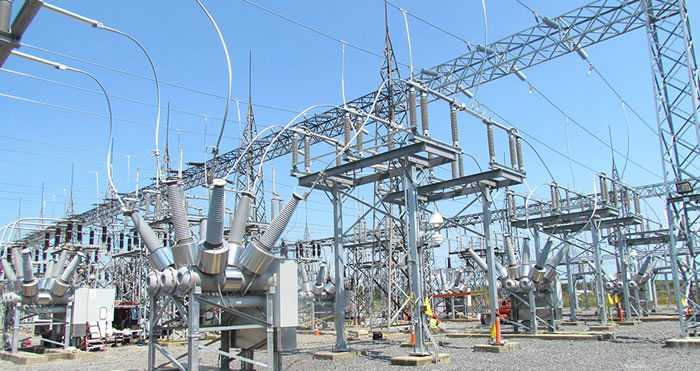
    The ECOWAS Bank for Investment and Development (EBID) has signed a loan agreement extending a facility of USD 60 Million to the Ghana Grid Company Limited (GRIDco).

    The purpose of the facility is to finance the installation and upgrading of transmission lines in the Republic of Ghana.

    The signing ceremony took place on 18th October 2022 at the head office of the Bank in Lome, Togo.

    The President and Chairman of the Board of Directors of the ECOWAS Bank for Investment and Development (EBID), Dr. George Agyekum Donkor, signed on behalf of the Bank while the Chief Executive Officer of GRIDco, Ing. Ebenezer Kofi Essienyi, signed on behalf of GRIDco.

    In his short remarks, Dr. Donkor observed that as ECOWAS Member States work towards post-COVID-19 economic recovery, it will be necessary that regional electricity connectivity also expands in order to accommodate growth.

    In this regard, he emphasised the need for the expansion of electricity infrastructure in the sub-region as a key sector that must be given the necessary attention.

    Dr. Donkor disclosed that the Bank’s total commitment to Ghana stood at USD 250 Million as of October 12, 2022.

    He reiterated the Bank’s commitment to continue to finance infrastructure projects across all sectors of the economies of ECOWAS Member States to accelerate recovery and development for the Sub-region.

    The President of EBID observed that the project was in line with the Bank’s strategic objectives and aligned perfectly with Ghana’s Agenda for Jobs II.

    Taking his turn, the Chairman of the Board of Directors of GRIDCo, Ambassador Kabral Blay-Amihere, indicated that the projects to be undertaken with EBID’s facility were part of a broader plan of GRIDCo to upgrade and install infrastructure to continue to improve efficiency and increase the transmission of power within Ghana and other West African Counties such as Togo, Benin, Burkina Faso, Mali, and Cote D’Ivoire.

    While appreciating the confidence reposed in GRIDCo by EBID, he stated that the completion of the project would lead to the strengthening and expansion of the transmission network, reducing technical losses and enhancing businesses and livelihoods in Ghana and the ECOWAS subregion.

    Ambassador Blay-Ahimere commended the President of EBID and his team for their dedication and professionalism that saw the expeditious completion of the credit process and the consummation of the transaction.

    Present at the ceremony was Ghana’s Ambassador to Togo, His Excellency Kofi Dementia, Executives from C-Nergy Ghana, and the Managing Director of Cal Bank PLC., Mr. Philip Owiredu.


  • Ghana’s cocoa not banned – EU Ambassador

    European Union Ambassador, Mr Irchad Razaarly, says there is no ban on Ghana’s cocoa into the European market as speculated in the media space.

    “We want more cocoa, and we are supporting Ghana and Cote d’Ivoire to produce cocoa and other commodities in a socially and environmentally sustainable manner,” he said.

    The Ambassador said this on Monday at the second edition of the Orange Cocoa Day on the theme: ” Exploring How Improved Access to Land and Tree Tenure Promote Sustainability in the Cocoa Value Chain.”

    The event was organised by the Embassy of the Netherlands together with the European Union Delegation to Ghana in partnership with the European Forest Institute, Solidaridad West Africa, Meridia, and others.

    Mr Razaarly said the call for sustainable cocoa production was growing globally and particularly in Europe, stressing that EU citizens were increasingly demanding measures to ensure that cocoa and other commodities were produced in an environmentally sustainable way.

    He said the EU had proposed a regulation, which was aimed at reducing the impact of products placed on the Union’s market for six commodities – palm oil, soya, wood, cattle, cocoa, and coffee.

    The purpose of the regulation, the Ambassador said, was to minimise the EU’s contribution to global deforestation and to promote the consumption of products from deforestation-free supply chains.

    Touching on EU ongoing support, Mr Razaarly said the Union had supported COCOBOD to roll-out the Cocoa Management System through a sensitisation campaign, training of extension staff to verify the data collected and the provision of equipment.

    “We work with COCOBOD and the Forestry Commission on the mapping and deforestation risk assessment. Ghana has good experience in Forest Law Enforcement, Governance and Trade, which could be replicated in the cocoa sector”

    He re-iterated the EU’s commitment to the dialogue on sustainable cocoa and support to the sector and stated that Ghana’s efforts towards sustainability were aligned with the Union’s priorities.

    “Providing a decent living income for cocoa farmers and ensuring the sustainability of the value chain, both in terms of labour rights and environmental protection, are key priorities for the EU,” he said.

    Ms Katja Lasseur, the Deputy Dutch Ambassador to Ghana, said the theme was timely because investment in the cocoa sector thrived when the lands were secured free of any litigation.

    “As part of our global strategy, the Netherlands will continue to support efforts to promote the sustainability of the cocoa sector and improve land and tree tenure arrangements that mostly affect cocoa farmers across Ghana’s cocoa growing areas,” she said.

    Nana Kwaw Asante Bediatu II, the Sefwi Divisional Chief of Asempaneye, called for better remuneration of farmers to motivate other prospective farmers to venture into cocoa farming.

    He called for more investment in the documentation of farmlands to ensure the sustainability of cocoa production for socio-economic development.

    The participants called for a dialogue to address challenges in the sector, saying, farming and production of cocoa beans were largely poorly regulated in the country.

    Source: GNA

  • There is no ban on Ghana’s cocoa – EU Ambassador to Ghana

    Irchad Razaarly, the ambassador of the European Union to Ghana, has refuted accusations that Ghana may soon be unable to export cocoa and coffee to some foreign markets because of new European legislation.

    She claims that the EU has not prohibited Ghana’s cocoa from reaching the European market.

    Irchad Razaarly said, “The EU’s legislation on afforestation and forest degradation must not be considered as a danger to Ghana’s cocoa business,” during the second Orange Cocoa Day 2022 in Accra.

    She said the EU was in support of Ghana and Côte d’Ivoire among all of the producers who meet the export requirements.

    “The call for more sustainable cocoa production is growing globally. And our citizens in Europe are increasingly demanding measures for ensuring that cocoa and other commodities are produced in a socially environmental sustainable way. This explains EU’s legislation on afforestation and forest degradation and must not be seen as a threat to Ghana’s cocoa,” Irchad Razaarly stated.

    “There is no ban on Ghana’s cocoa. On the contrary, we want more of Ghana’s cocoa, and we are in support of Ghana and Côte d’Ivoire amongst all of the producers who meet these requirements,” the European Union Ambassador to Ghana stated.

    Her comment comes on the back of a report by Information Minister, Kojo Oppong-Nkrumah warning that Ghana might soon be unable to export cocoa and coffee to some international markets.

    According to Oppong-Nkrumah, the ban might happen because of a new legislation in Europe.

    In a post shared on Facebook, the minister indicated that the government was warned of this move by the Ghana Embassy in Belgium, which has started working to ensure that the ban does not come into force.

  • Cote d’Ivoire wants to capture greater share of cocoa value chain

    The transformation of Cote d’Ivoire’s cocoa industry was the focus of the 8th edition of the National Cocoa and Chocolate Day which took place in Abidjan this weekend under the theme, ‘Local cocoa processing: opportunities for chocolate artisans’.

    With more than 2 million tonnes produced per year, Ivoirian cocoa beans are estimated to account for 45 per cent of world production, generating 40 per cent of the country’s export earnings, and accounting for 15 per cent of national GDP.

    Adding value

    But while it is a global leader in milling, Cote d’Ivoire wants to capture more of the added value added and jobs associated with the sector so that farmers can earn more.

    ‘We are at about 600,000 tonnes in the first phase of cocoa processing, what we call grinding or milling, but we must manage to make finished products that are consumable by the population,’ says Sonore Konan Kouassi, president of the fair’s organising committee.

    This was one of the main themes of panel discussions at the event, and the conclusion was that the consumer market does exist.

    Chocolate maker, Sonore Yenou Olga, from the brand Tafissa, says increasing the added value to cocoa beans is essential.

    ‘Our short-term project is to increase the processing capacity. Today, we are up to 500 tonnes of products that we can put on the market, but after that we intend to multiply by 4 or 10,’ she says.

    Increase in earnings for farmers

    There was some good for planters at the fair with the announcement of a guaranteed increase in remuneration for their beans for the 2022 to 2023 season, from last year’s $1.24 to $1.35.

    ‘Thanks to the state which has made efforts, but we still tell them to continue because we need to be more autonomous,’ says cocoa farmer Sawadogo Moussa.

    While this year’s harvest has been good, a recent World Bank report found that while cocoa plays a central role in the lives of many Ivorian families, more than half of producers live below the poverty line.

    Certified origin

    While cocoa is a pillar of the local economy, it is subject to the rules of the world market, and is facing increasing pressure to be able to certify the origin of its beans and that the cocoa is produced under ethical conditions.

    And the industry is making efforts in this direction, with the development of a multifunctional producer’s card, with a QR code that generates information about the farmer and their land, which includes a visa bank chip that allows them to carry out their commercial operations.

    ‘Want to trace the product, we want to know exactly which cocoa comes from which plantation in which region. The objective is to know who produces what, and who it passes through before being exported, so that we can reassure the final consumer that our cocoa is produced under ethical conditions,’ says Jérémie Kouassi, Director of Agricultural Development at the Coffee and Cocoa Council.

    With the importance of cocoa to the Ivorian economy and society at large, the stakes are high for the industry to make sure it reaches its full potential as an engine of economic development.

    Source: Africanews

  • Farmers surrender cocoa farms for galamsey

    According to the Ghana Civil-society Cocoa Platform (GCCP), uncompetitive cocoa prices on the global market are encouraging cocoa farmers in gold-producing regions to surrender farmlands for illicit mining activities.

    Given that cocoa has historically been the primary cash crop and the foundation of the economy, the situation is pretty alarming.
    Ghana currently ranks second to Cote d’Ivoire in terms of cocoa production.

    According to GCCP, Ghana’s common cocoa farmers are feeling the effects of the uncompetitive cocoa prices on the global market.
    As a result, landowners and cocoa farmers are selling their land to miners for cash.

    “They do not feel that their efforts and toil are being properly and fairly compensated, hence they cash-in and move out of the cocoa space,” the group stated.

    The emerging development, the group said, remains a threat to long-term survivability of the cocoa industry.

    Given this, the civil society group asserted that increasing the farm gate-price to levels that are commensurate with the work farmers put into producing cocoa beans is the surest solution to making the cocoa industry competitive.

    In a statement issued by the independent campaign and advocacy platform for civil society actors in the cocoa sector, they argued that based on the working assumption of the Producer Price Review Committee (PPRC) of COCOBOD, cocoa farmers should receive a minimum of GH₵838 (US$98) per bag (62.5kg) of cocoa beans.

    This figure was arrived at using the lowest projected values available including a LID of US$400 per tonne as agreed, according to the GCCP.

    “As we always do, we have also looked at the numbers; and based on our very modest and somewhat conservative estimates, have arrived at a minimum 15-20 percent increment in the farm-gate price of cocoa for this season,” the statement captured.

    Furthermore, they said this expectation was reached while taking note of all the challenges posed by the unstable Ghanaian cedi, threats posed by mining and the need for farmers to be paid adequate and commensurate prices for their efforts.

    The current International Cocoa Organisation (ICCO) world cocoa market price – which averages Europe, New York and London futures stands at US$2,248 per tonne of cocoa beans.

    “We also acknowledge the fact that Ghana is ‘forced’ to sell cocoa on the terminal market at a discounted price. Again, there has been a drastic drop in the origin differential/country premium – from over US$400 to a current US$65.

    “In effect, the expectation is that the net country cocoa selling price (producer price) will be not less than US$2,103. Based on the 2020/2021 parameters for calculating the net FoB for cocoa beans, GCCP observed that the net FoB for the 2022/2023 cocoa season to be not less than 80 percent of the prevailing producer price, which should be around US$1,682.

    “By applying the PPRC working assumption of a minimum of 70 percent of net FoB going to farmers, this translates into US$1,178 per tonne for the farmer. This figure is less than the US$400 LID that was instituted and charged by COCOBOD on all futures for the 2020/2021 cocoa season.

    “Assuming COCOBOD gives all the US$400 LID to the farmers, it brings the farm-gate price to US$1,578 per tonne for the 2022/2023 cocoa season. Using the year-on-year Bank of Ghana (BoG) exchange rate of US$1 to GH₵8.5, cocoa farmers are expected to receive not less than GH₵13,413 per tonne of cocoa beans – which should translate into a minimum GH₵838 per bag of cocoa beans.”

    It further reiterated that these estimations are based on the minimum projected figures, and the assumption that farmers will receive a minimum 100 percent of LID.

  • Expert suggests ways of balancing trade with security in West Africa

    Ziad Hamoui, a trade practitioner, advocate, and commentator, has highlighted the challenge of striking a balance between security and commercial facilitation.

    However, he has asked state authorities and stakeholders in West African countries’ trade sectors to step up initiatives like risk profiling and cross-national, cross-sector cooperation that will be able to appropriately remove trade barriers while assisting governments in maintaining good security.

    The National President of the business-led trade advocacy group Borderless Alliance, Ziad Hamoui, expressed his opinions on Eye on Port.

    He made these remarks while analysing the state of trade facilitation across the West African Borders, and identifying associated challenges.

    Mr. Hamoui chronicled the shutdown and reopening of borders where he maintained that the disuniform reopening of borders demonstrated by African countries has had its negative effect on cross border trade.

    He said while many countries had for a long period opened their borders to commercial vehicles, travel restrictions for people have impeded the flow of cross border trade.

    “For example if you go to Cote D’Ivoire, the borders are closed. You can leave Elubo but you will get stuck at their side.”

    Mr. Hamoui stated that, “even if the corridors are open for the movement of commercial vehicles, there is still that difficulty in the movement of people and until we get to a time where we have the normalization of free movement of people, trade will be stagnant because trade moves where people move. This has created uncertainty within the business space, so people have been unable to adequately plan and anticipate.”

    These restrictions according to him, go beyond safety measures against the spread of COVID 19, but also a deliberate effort by nations in the wake of political unrests and widespread insecurities in certain areas of the continent.

    According to the National President of Borderless Alliance, if strategic collaborative approaches are not taken, trade facilitation will suffer at the expense of excessive nationalism.

    “At the end of the day, countries have to look at the risk element and enhance risk profiling and based on that, you address the core roots of the problem so we can reduce the risks,” he said.

    This approach, Mr. Hamoui said, is better than the outright, ad-hoc closure of borders, which do not serve Africa’s trade liberalization objectives.

    According to the trade advocate, aside the restrictions that have emerged out of nations’ desire to mitigate the wave of health and security threats, cross border trading in West Africa is becoming increasingly expensive, creating extra barriers to trade.

    “We know that some traders are compliant but some others are not. On the other hand, we know some agencies are not facilitating trade at the level they are supposed to even when traders are compliant. Sometimes money exchanges are made, and with these activities, economic losses are incurred,” he elaborated.

    The National President of Borderless Alliance did not fail to mention the numerous security checkpoints and barriers along the various West African corridors, where he recalled that the number of such along Ghana’s corridor was approximately 75, last time he checked.

    He acknowledged that while security reasons are reasonable, the numerous checkpoints open the corridor up to corruption and uncompetitiveness.

    He made a strong appeal to authorities to simplify and make affordable, trade processes in order to encourage increased trade activities especially for the informal, small scale trade sector, which represent the large chunk of businesses within the region.

    Ziad Hamoui, reiterated that for success to be seen in regional protocols and interventions intended to improve trade facilitation, political will is of utmost importance.

  • Abla Pokou: The 1700s Asante female royal who sacrificed her son to save her people

    She was a courageous, outspoken member of the royal family in Asanteman in the 1700s until her outspoken nature got her ousted from her people in the territory which later became known as Gold Coast and subsequently Ghana.

    While little is known about her heroism in Ghana, the people of what is now known as Cote d’Ivoire celebrate and honour the memory of Abla Pokou, also because she was a daring woman.

    Narrating the story of how Abla Pokou came to settle in Cote d’Ivoire and became the mother of the Baoule kingdom, Francis Tagro explained that she had a dispute over a succession during her time in the territory that is today known as Ghana but this escalated into a bitter rivalry, forcing her to flee the land to the neighbouring country.

    Speaking in a BBC documentary, the curator stated that this conflict happened under the reign of the Asantehene, Osei Tutu I.

    “All the Akan people living in Cote d’Ivoire are originally Asante. There was a conflict over the succession at the time of King Osei Tutu I, in what is today Ghana. During that migration, it was the last wave that was the most important, the one that led to the Baoule kingdom, and had at its head the Queen Abla Pokou,” he narrated.

    Continuing the narration, Francis Tagro said that Abla Pokou and her people got to a very trying point in their journey that required an unusual sacrifice to a river god.

    He explained that after several attempts, the royal had to succumb and give up her son as the perfect sacrifice – a move that saved them from damnation.

    “She left with her family and during the migration, they came to a river, the Komoe River but the Akans were not strong enough swimmers. So, they asked the river god to advise them on how best to cross the river. A priest in her entourage told her that the spirit of the river was demanding a sacrifice. It had to be something valuable.

    “So, they all removed their bracelets, finery, rings, every possession they had with them and offered them to the river, but the spirit refused these and insisted on them giving something that was even more valuable to them.

    “The priest told them that the river demanded that Abla Pokou sacrifice the baby son she was carrying. Once they reached the other side, the people who had been in pursuit of them stopped chasing them when they saw the river and were unable to cross it. The queen them said to her people, ‘The child is dead,’ informing them that she had sacrificed her child to gain their safe passage,” he said.

    Francis Tagro further explained that while this is a sad story, it has since informed the line of succession for the Baoule kingdom of Cote d’Ivoire, which was eventually set up by Abla Pokou.

    “It is really sad, that is why in the Asante Kingdom in Cote d’Ivoire, the method of choosing a successor in the royal family is matrilineal because it was the mother, Abla Pokou, who gave her son so that her people could be saved. Queen Abla Pokou is a charismatic character for the Akan people. She is highly revered. She epitomizes energy and determination,” he added.

    In further details shared by dw.com, Abla Pokou was the niece of King Osei Tutu and was born at the beginning of the 18th century.

    She is said to have fled the country after the death of her uncle with some loyal people to Dakon, her second brother.

    According to a curator at the Museum of Civilisation in Cote d’Ivoire, Tagro Gnoleba Francis, the story of this brave Asante queen, Abla Pokou, is one that is etched in the history of the people so much so that even after many centuries, her singular sacrifice of her son is still upheld.

    Source: Ghanaweb

  • The Ghanaian black Jews who found their ancestry through a vision

    Until 1976, the only identity the black Jews residing in the West African nation of Ghana had was that they were a special breed of people who migrated to their present settlement about 300 years ago.

    The Tirefeth Israel community in Ghana’s farming settlement of Sefwi Wiaso believe they descended from one of the lost tribes of Israel.

    Though the black Jew community is unable to back with documentary proof which of the 12 tribes of Israel they belong to, oral tradition handed over from generation to generation had transmitted knowledge of the observation of Jewish customs with regard to the observance of Shabbat, circumcision of their newborns, refraining from eating pork and abiding by the rituals of purity.

    Many lost tribes of Israel settling in isolated communities like the Tirefeth settlement have been linked to the destruction of Israel by the Assyrian empire in 722 BCE.

    The disclosure of the true identity of the Tirefeth Israel community was revealed to one of their members in 1976 and that’s how the community came to the realization of the Judaism customs they have been practicing for centuries, according to the Canadian Jewish News.

    The community in their pilgrimage to their present location settled in the Sahara desert, moved to Niger, Mail, Côte d’Ivoire and finally Ghana.

    Some scholars are of the view that this tribe descended from Jews who were pushed out from the Iberian Peninsula in 1492 and settled in Morroco. As part of their activity in the trans-Sahara trading, they migrated to other parts of Africa over time.

    Archaeological excavations at Jewish cemeteries and synagogues in countries like the Mail and Gambia have confirmed the existence of black Jews and their trading activities.

    The Tirefeth Israel community enjoys religious freedom and practices its customs in rural settings. The community leaders believe they are the only tribe that draws inspiration from the Torah.

    It is the hope of the community to have some of their members go on a pilgrimage to Israel to learn more about their identity and their religious customs.

    Corine Forward, a researcher who authored a paper for Georgetown University in the United States on Jewish civilization and African American studies, said when many think of Jews, they assume they are all whites until she visited the Jewish community in Ghana.

    She said when the Tirefeth Israel found their identity in 1976, they reached out to the Israel Embassy in Ghana which assisted them. Forward said in her research, which was mainly fieldwork, she observed the community identified themselves as Jews.

    According to her, they believe they were descendants of Abraham and that legitimizes their association with Judaism. She said presently the community is learning Hebrew, they light candles, observe the sabbath and celebrate Jewish holidays.

    Her worry is that even though many have confirmed the existence of the Tirefeth Israel community, little efforts have been made into researching them extensively.

    Source:face2faceafrica.com

  • Bayelsa Queens beat Ghana’s Ampem Darkoa Ladies to win WAFU B title

    Ghanaian side Ampem Darkoa Ladies lost 3-0 to Bayelsa Queens as the Nigerian club clinched the WAFU B title of the zonal qualifiers for TotalEnergies CAF Women’s Champions League on Saturday.

    Bayelsa Queens won the trophy thanks to three first-half goals at the Yamoussoukro Stadium in Cote d’Ivoire to secure the rights to represent Wafu B at the top-flight women’s continental club competition to be played later this year

    Goals by Miracle Joseph, Flourish Sabatine Choma and Chinyere Igbomalu before the break sealed the emphatic victory and secure their place at the tournament in Morocco.

    Bayelsa Queens succeed Ghanaian side Hasaacas Ladies who won the title last year by defeating Rivers Angels of Nigeria 3 -1 in the final of the zonal competition.

    The Nigerian side will be seeking to improve on the performance of their predecessors Hasaacas Ladies who reached the final of the previous edition of CAF Women’s Champions League but lost 2-0 in final against Mamelodi Sundowns of South Africa.