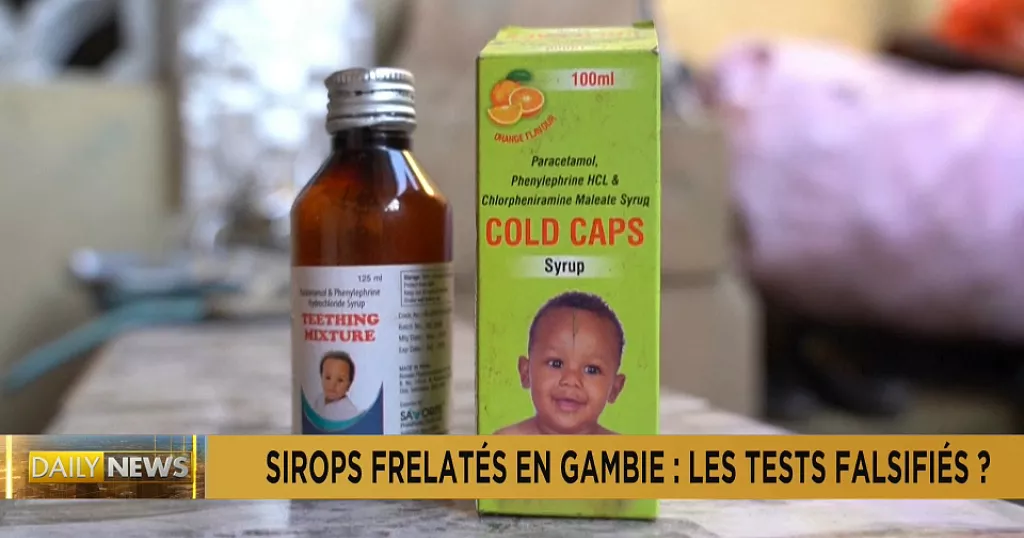
A pharmaceutical company, Maiden Pharmaceuticals, whose cough syrups have been associated with the deaths of children in Gambia, has refuted allegations of tampering with test samples or bribing officials to do so.
The denial from India’s Maiden Pharmaceuticals comes in response to an accusation made against it in a complaint currently under investigation by local health officials in India.
Authorities in the state of Haryana’s Food and Drug Administration announced on Friday that they were close to completing a probe into whether a state drug regulator was bribed to switch samples tested by the Indian government.
These samples contradicted the World Health Organization (WHO)’s findings of toxic substances in the cough syrups.
Maiden founder Naresh Kumar Goyal has vehemently denied the allegation. Goyal, as reported by Reuters, stated that a competitor was behind the complaint but did not disclose their identity.
The WHO has linked syrups made by Maiden to the deaths of 70 children in Gambia.
These deaths in the Gambia, attributed to kidney-related problems between July and October last year after consuming the cough syrup, were not isolated incidents. Dozens of other children also died in Cameroon and Uzbekistan.
The boss and three other high-ranking officials of an Indonesian company responsible for a cough syrup associated with the deaths of over 200 children have been sentenced to prison.
They received two-year prison terms and fines of 1 billion Indonesian rupiah ($63,056; £51,786).
The company in question, Afi Farma, was accused of manufacturing cough syrups containing excessive amounts of harmful substances. Afi Farma’s legal representative stated that they denied any negligence, and the company was contemplating whether to lodge an appeal.
The prosecutors had originally sought a prison sentence of up to nine years for Afi Farma’s CEO, Arief Prasetya Harahap, and seven years for each of the other defendants.
According to the Public Prosecutor, between October 2021 and February 2022, the company received two batches of propylene glycol, typically used in cough syrup production.
However, these batches contained 96% to 99% ethylene glycol, a toxic substance. Both propylene glycol and ethylene glycol can serve as additives in solvents, but while propylene glycol is non-toxic and widely employed in medicines, cosmetics, and food, ethylene glycol is toxic and used in products like paint, pens, and brake fluid.
The company did not conduct tests on the ingredients used in the cough syrup and instead relied on quality and safety certificates from its supplier, as asserted by the prosecutors.
Afi Farma’s lawyer, Samsul Hidayat, informed the BBC that Indonesia’s drug regulatory authorities did not mandate thorough ingredient testing for drug manufacturers.
The judge presiding over the case at the Kediri District Court in East Java found the four defendants guilty of intentionally producing pharmaceutical products that failed to meet safety standards.
This case coincides with the global drive to enhance oversight of drug supply chains in the wake of these tragic poisonings.
Since 2022, more than 200 Indonesian children, predominantly under the age of five, have lost their lives due to acute kidney injury linked to contaminated cough syrup. Similar incidents, with about 100 deaths reported, have occurred in The Gambia and Uzbekistan.
The World Health Organization (WHO) has issued warnings regarding six cough syrups originating from India and Indonesia.
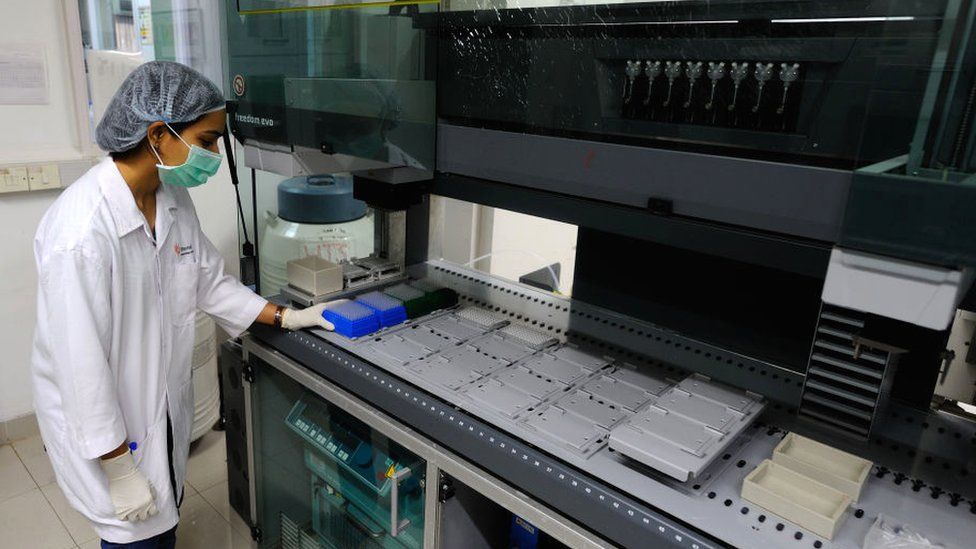
The Indian government has made it compulsory for cough syrup makers to get samples tested before exporting their products.
Manufacturers of cough syrup in India are required to submit samples for testing before exportation according to the Indian government.
Starting 1 June, these companies will have to get a certificate of analysis from a government-approved laboratory.
The rule change comes after some Indian-made cough syrups were linked to deaths in The Gambia and Uzbekistan.
The controversies had cast a pall over India’s pharmaceutical industry, which makes a third of the world’s medicines.
The announcement was made by the Director General of Foreign Trade, which said in a notification that cough syrups would be permitted to be exported “subject to the export sample being tested”.
It also mentioned a list of central and state government laboratories across the country where samples could be tested.
Last week, Reuters had reported that India was considering a policy change after domestic cough syrups were linked to child deaths abroad.
Many Indian pharma companies have come under scrutiny for the quality of their drugs, with experts raising concerns over their manufacturing practices.
In March, India’s drug regulator cancelled the manufacturing licence of Marion Biotech, whose cough syrups were linked to 18 child deaths in Uzbekistan.
The World Health Organization also issued an alert in October linking four Indian-made cough syrups to child deaths in The Gambia.
India later said that the medicines complied with specifications when tested at home, but the WHO responded that it stood by “the action taken”.
Since last year, 200 children have died in Indonesia from acute kidney injury, and The Gambia and Uzbekistan have both reported numerous cases of acute kidney injury linked to cough syrup.
In an Indonesian court that has begun hearing their class-action lawsuit against governmental organizations and pharmaceutical companies, the families of Indonesian children who died after ingesting tainted cough syrup have demanded compensation.
Authorities in Indonesia reported that two hazardous ingredients, ethylene glycol and diethylene glycol, which are present in some syrup-based paracetamol medications, have been linked to 200 pediatric acute kidney injury deaths since last year.
In response to the deaths and injuries of the children, 25 families have filed lawsuits against the Indonesian health and finance ministries, the nation’s drugs regulator, and at least eight pharmaceutical firms.
Al Jazeera’s Jessica Washington, reporting from Jakarta, said the 25 families are suing 11 parties, including Indonesia’s ministry of health, the country’s food and drug agency, as well as pharmaceutical manufacturing companies and suppliers.
“Today they are calling for accountability for what happened to their children,” Washington said, adding that the families are seeking compensation for the children who died and those left with debilitating injuries.
“A very difficult day for these families as they have to reflect on what happened to their children after they consumed cough syrup that was contaminated with ethylene glycol and diethylene glycol, substances typically found in a manufacturing capacity in paints and dyes that can only be consumed safely in very small doses,” Washington said.
The two ingredients are used in antifreeze, brake fluids and other industrial applications, but also as a cheaper alternative in some pharmaceutical products to glycerine, a solvent or thickening agent in many cough syrups. The substances can also be toxic and can lead to acute kidney injury.
Solihah, 36, who was at the court in the Indonesian capital Jakarta on Tuesday, said her 3-year-old daughter was diagnosed with an acute kidney injury after consuming a syrup medication and died a few days later. She said she wanted the government to be held accountable.
“If my daughter had not consumed the drug, maybe she would still be here,” she said, her voice breaking with emotion.
“I hope all parties involved are held responsible for the conditions of the children who died and are still sick.”
Representatives of the finance ministry and five pharmaceutical companies named in the lawsuit did not respond to requests for comment. Another three companies could not be reached. The country’s drugs regulator said it would respect the ongoing legal process, while the health ministry declined to comment.
Authorities in Indonesia have banned a number of cough syrups and mounted legal action against several pharmaceutical companies whose products allegedly contained the dangerous ingredients.
In October, the World Health Organization said the deaths of dozens of children in The Gambia from kidney injuries may be linked to contaminated cough and cold syrups made by an Indian drug manufacturer.
Indian health authorities said later that they had halted all production of New Delhi-based Maiden Pharmaceuticals after a WHO report that its cough and cold syrups exported to The Gambia may be linked to the deaths of children.
In December, India again launched an investigation into the death of 18 children in Uzbekistan after they consumed an Indian-manufactured cough syrup. India’s health ministry said the Central Drugs Standard Control Organisation (CDSCO)– – the country’s drug regulatory authority – was communicating with its counterpart in Uzbekistan over the incident.
A parliamentary committee in The Gambia has recommended legal action against the Indian company that makes cough syrups, which is thought to be responsible for at least 70 child fatalities there.
For exporting what it called tainted drugs, it claimed Maiden Pharmaceuticals should be held liable.
In October, the WHO issued a warning urging authorities to halt the sale of the syrups.
Government labs in India said their tests on the syrups found that they were “complying with specifications”. An Indian official said last week that the WHO was “presumptuous” in blaming the syrups.
But the global health body told the BBC it was only following its mandate and “stands by the action taken”.
After weeks of investigation, the Gambian parliamentary committee has now recommended that authorities should take tough measures, including banning all Maiden Pharmaceuticals products in the country and taking legal action against the firm.
The committee said it “is convinced that Maiden Pharmaceuticals [is] culpable and should be held accountable for exporting the contaminated medicines”.
“The findings remain the same with the previous reports which indicates that Promethazine Oral Solution, Kofexmalin Baby Cough Syrup, Makoff Baby Cough Syrup and Magrip N Cold Syrup were contaminated with diethylene glycol and ethylene glycol,” the parliamentary committee said in its report.
Diethylene glycol and ethylene glycol are toxic to humans and could be fatal if consumed. But the panel added that the exact scientific cause of the children’s deaths was still under investigation.
The committee also wanted the country’s Medicine Control Agency to ensure all medicines imported into the country are properly registered and background checks conducted on manufacturers – including visiting their facilities.
The report also revealed inadequacies in the country’s healthcare system urging the government to strengthen it and provide better equipment and medicines to the country’s hospitals.
What happened?
In late July, The Gambia detected an increase in cases of acute kidney injury among children under the age of five. The government later said around 69 children had died from these injuries.
The WHO then identified four of the Maiden Pharmaceuticals’ medicines as potentially linked to the deaths of the Gambian children and issued a global alert.
After the news broke in October, India said that it was investigating the products and ordered Maiden Pharmaceuticals to stop production at its main factory in the northern state of Haryana.
On 13 December, Dr VG Somani, India’s drugs controller general, wrote a letter to the WHO saying that the samples it tested at a government laboratory “were found not to have been contaminated” with the compounds.
“As per the test reports received from [the] government laboratory, all the control samples of the four products have been found to be complying with specifications,” he added.
The test results are being further examined by a panel of Indian experts.
A senior adviser to India’s information and broadcasting ministry told the BBC last week that the WHO had been “presumptuous” in blaming the cough syrups for the deaths of the children.
“Subsequent inspections, tests and studies by Government of India’s notified bodies and technical team have shown that WHO’s presumptuous statement was untrue and incorrect,” said Kanchan Gupta, adding that the health body had “[jumped] the gun without valid scientific reasons”.
India produces a third of the world’s medicines, mostly in the form of generic drugs.
Home to some of the fastest growing pharmaceutical companies, the country is known as the “world’s pharmacy” and meets much of the medical needs of African nations.
Gambia has not yet confirmed that toxic cough syrup was the cause of the deaths of 70 children from acute kidney injury, a representative of the country’s Medicines Control Agency said this Monday.
The small West African state has been investigating a mysterious slew of child deaths in recent months, which police said in a preliminary investigation was linked to four cough syrups made in India.
World Health Organisation investigators have found “unacceptable” levels of diethylene glycol and ethylene glycol in the products, which were made by New Delhi-based Maiden Pharmaceuticals Ltd.
But Gambia’s MedicinesControl Agency, a national regulatory body, has not yet pinpointed the exact cause of the deaths, said Tijan Jallow, an officer at the agency.
“We haven’t concluded yet it is the medicine that caused it. A good number of kids died without taking any medications,” Jallow told a news conference.
“Other kids died, the medication that they took, we have tested them and they are good,” he added.
The agency is trying to establish exactly which medications if any, each child took.
The Gambian parliament will hold an extraordinary session on Wednesday to discuss the deaths of nearly 70 children linked to cough syrups made in India.
The children were found to have severe kidney problems.
The session in parliament on Wednesday will be the country’s first since the tragedy earlier this month.
Gambian health authorities said there were no more new cases, but there are 82 existing cases and 12 recoveries.
Most of the existing cases involve children aged one and two years.
Civil society organisations in the country are mounting pressure on the authorities to take action against those responsible for importing the drugs.
Health officials and the Red Cross have started a second phase of recalling the cough syrups.
Police investigations have established that the Medicine Control Agencywas established without a laboratory to test the safety of the drugs.
President Adama Barrow has set up a commission of inquiry to investigate the deaths.
Indian health officials have ordered a maker of cough syrups to halt production after they were linked to the deaths of children in The Gambia.
Maiden Pharmaceuticals broke rules “across its manufacturing and testing activities,” Indian regulators found.
The World Health Organization (WHO) issued a global alert over four of Maiden’s cough syrups linked to the deaths of almost 70 children.
Investigations are currently under way in India and The Gambia.
Regulators said that they had suspended all manufacturing activities at the New Delhi-based firm after finding it had broken a number of safety rules.
This was “in view of the seriousness of the contraventions observed during the investigation and its potential risk to the quality, safety and efficacy of the drug being produced,” they added.
Maiden did not immediately respond to a request for comment from the BBC.
Last week, the company said it was “shocked to hear media reports regarding the deaths and deeply saddened by this incident”.
This came after the WHO issued a global alert over four of Maiden’s cough syrups, warning that they could be linked to acute kidney injuries and the children’s deaths in July, August and September.
The global health organisation also warned the products “may have been distributed, through informal markets, to other countries and regions” besides The Gambia.
The medicines were identified as Promethazine Oral Solution, Kofexmalin Baby Cough Syrup, Makoff Baby Cough Syrup and Magrip N Cold Syrup.
Police in The Gambia are investigating the deaths of the children, as Gambians demand justice.
In a preliminary report released on Tuesday, police in The Gambia said the cough syrups were imported to the West African country by a US-based company.
The report also said that the majority of the 50,000 bottles of the contaminated syrups that were imported into the country had now been seized.
Investigations into the nearly 70 child deaths in The Gambia linked to Indian-made cough syrups are being conducted amid worries about the effectiveness of regulations governing the production and distribution of pharmaceuticals.
What went wrong in The Gambia?
Last week, the World Health Organization (WHO) issued a global alert over four brands of cough syrups, saying they could be linked to acute kidney damage, following reports from The Gambia of children diagnosed with serious kidney problems.
Laboratory analysis of the syrups “confirms that they contain unacceptable amounts of diethylene glycol and ethylene glycol as contaminants”, according to the WHO.
The Indian authorities and the cough syrup manufacturer, Maiden Pharmaceuticals, say these syrups have been exported to The Gambia only.
What is known about the manufacturer?
Maiden Pharmaceuticals says it adheres to internationally recognized quality-control standards.
But some of its products have failed to meet national or state-level quality-control standards in India.
Official records there show the company:
was blacklisted by Bihar state, in 2011, for selling syrup failing to meet local standards
was subject to legal proceedings by India’s drug regulator, in 2018, for quality-control violations
failed a quality-control test in Jammu and Kashmir state, in 2020
has failed quality-control tests in Kerala state four times in 2022
It is also among nearly 40 Indian pharmaceutical companies blacklisted by Vietnam for exporting sub-standard products.
The company, based in Haryana state, has said it is “shocked” by the deaths in The Gambia and had “been diligently following the protocols of the health authorities, including [the] drugs controller general [of India] and the state drugs controllers, Haryana”.
We’re not selling anything in domestic market. We’ve been obtaining raw materials from certified & reputed companies. CDSCO officials have taken samples & we are awaiting the results: Maiden Pharmaceuticals Ltd on deaths of 66 children in Gambia allegedly due to their cough syrup pic.twitter.com/HFEJbx1POx
It would not comment further while drugs regulators were still testing, it added.
Haryana Health Minister Anil Vij told BBC News samples had been sent for testing and if something wrong was detected, action would be taken.
How effective is India’s quality control?
India produces a third of the world’s medicines, mostly in the form of generic drugs.
It is a major supplier to countries in Africa, Latin America, and other parts of Asia.
IMAGE SOURCE, GETTY IMAGES Image caption, India is a major global pharmaceutical manufacturer
Its manufacturing plants are required to adhere to stringent quality-control standards and production practices.
But Indian companies have faced criticism and even bans by overseas regulators such as the US Food and Drug Administration (FDA) for quality-control problems at some plants.
One analysis of India’s pharmaceutical industry points to underfunding of oversight bodies and a lax interpretation of regulations as key issues, with a lack of interest in ensuring purity standards are adhered to.
Public-health activist Dinesh Thakur also highlights the relatively light punishment in India for flouting quality standards – a fine of $242 (£220) and a possible prison sentence of up to two years.
“Unless one can causally establish a direct link between a sub-standard drug and a fatality, this is the norm of punishment meted out,” he says.
Also, India is not included in the WHO standards for national bodies that regulate medicines, although it is for vaccines.
“This may result in inconsistent regulatory control over pharmaceutical manufacturing activities,” Leena Menghaney, head of Médecins Sans Frontières (MSF) Access Campaign South Asia, says.
Should The Gambia have tested?
The Health Ministry in Delhi has launched an investigation but says it is “usual practice that the importing country tests these imported products… and satisfies itself as to the quality”.
But The Gambia’s Medicine Control Agency executive director Markieu Janneh Kaira says it prioritises checks on anti-malarial drugs, antibiotics, and painkillers, rather than cough syrup.
BBC News contacted the agency for clarification but had no response.
The Gambia’s President, Adama Barrow, has said he “would get to the bottom” of the causes of the tragedy and announced the creation of “a quality-control national laboratory for drugs and food safety”.
The Gambia would “establish safeguards to eliminate the importation of sub-standard drugs”, he added.
MSF wants countries with the sufficient testing capacity to help low-income countries such as The Gambia.
“This is not about the importing countries’ responsibility only,” Ms Menghaney says.
In Nigeria, the National Agency for Food and Drug Administration and Control is now asking for all imported shipments of pharmaceuticals to be cleared by approved agents prior to leaving India.
Police in The Gambia have started an investigation into the deaths of 66 children, which have been linked to four brands of imported cough syrup.
Senior officials from the Medicine Control Agency and the importers have been called for questioning, the president’s office said.
President Adama Barrow said that the authorities would “leave no stone unturned” in the investigation.
Gambians, angry about what happened, are wondering who is to blame.
On Wednesday, the World Health Organization (WHO) issued a global alert over the four cough syrups – warning they could be linked to acute kidney injuries and the children’s deaths in July, August and September.
Bereaved parents have told the BBC how their children stopped being able to pass urine after being given the syrups. As their condition worsened, efforts to save their lives were fruitless.
The products – Promethazine Oral Solution, Kofexmalin Baby Cough Syrup, Makoff Baby Cough Syrup and Magrip N Cold Syrup – were manufactured by an Indian company, Maiden Pharmaceuticals, which had failed to provide guarantees about their safety, the WHO said.
The Indian government is also investigating the situation. The firm has not responded to a BBC request for comment.
Gambian health officials and Red Cross workers are now going door-to-door, as well as to pharmacies and markets, searching for the syrups as well as other medicines.
More than 16,000 products have been located so far and have been taken away for destruction, a Red Cross official told the BBC.
On Friday, President Barrow addressed the nation, expressing his regret for the loss of life saying that “the source of the contaminated drugs” would be investigated.
He announced plans to open a laboratory capable of testing whether medicines are safe and a review of relevant laws and guidelines for imported drugs.
He also said that “the child mortality figure of 66 is not at much variance with the recorded data for similar periods in the past”, which left some wondering whether the authorities thought that these deaths were unusual.
The president followed this up on Saturday evening with a more robust statement, suspending the licence of the suspected importer and announcing the police investigation.
Some of the parents who lost their children have told the BBC that they are considering taking legal action of their own against the authorities.
Three things to know about cough syrup and deaths in The Gambia.
Police in The Gambiahave started an investigation into the deaths of 66 children, which have been linked to four brands of imported cough syrup.
Senior officials from the Medicine Control Agency and the importers have been called for questioning, the president’s office said.
President Adama Barrow said that the authorities would “leave no stone unturned” in the investigation.
Gambians, angry about what happened, are wondering who is to blame.
On Wednesday, the World Health Organization (WHO) issued a global alert over the four cough syrups – warning they could be linked to acute kidney injuries and the children’s deaths in July, August and September.
Bereaved parents have told the BBC how their children stopped being able to pass urine after being given the syrups. As their condition worsened, efforts to save their lives were fruitless.
The products – Promethazine Oral Solution, Kofexmalin Baby Cough Syrup, Makoff Baby Cough Syrup and Magrip N Cold Syrup – were manufactured by an Indian company, Maiden Pharmaceuticals, which had failed to provide guarantees about their safety, the WHO said.
The Indian government is also investigating the situation. The firm has not responded to a BBC request for comment.
Gambian health officials and Red Cross workers are now going door-to-door, as well as to pharmacies and markets, searching for the syrups as well as other medicines.
More than 16,000 products have been located so far and have been taken away for destruction, a Red Cross official told the BBC.
On Friday, President Barrow addressed the nation, expressing his regret for the loss of life saying that “the source of the contaminated drugs” would be investigated.
He announced plans to open a laboratory capable of testing whether medicines are safe and a review of relevant laws and guidelines for imported drugs.
He also said that “the child mortality figure of 66 is not at much variance with the recorded data for similar periods in the past”, which left some wondering whether the authorities thought that these deaths were unusual.
The president followed this up on Saturday evening with a more robust statement, suspending the licence of the suspected importer and announcing the police investigation.
Some of the parents who lost their children have told the BBC that they are considering taking legal action of their own against the authorities.
A global alert has been issued over four cough syrups after the World Health Organization (WHO) warned they could be linked to the deaths of 66 children in The Gambia.
The syrups have been “potentially linked with acute kidney injuries and 66 deaths among children”, it said.
The products were manufactured by an Indian company, Maiden Pharmaceuticals, which had failed to provide guarantees about their safety, the WHO added.
The firm has not yet commented.
The BBC has contacted Maiden Pharmaceuticals for comment.
Indian officials say they have asked the WHO to share evidence of the link between the syrups and the deaths.
The WHO identified the medicines as Promethazine Oral Solution, Kofexmalin Baby Cough Syrup, Makoff Baby Cough Syrup and Magrip N Cold Syrup.
The four products had been identified in The Gambia, but “may have been distributed, through informal markets, to other countries or regions”, the WHO added, in the alert published on its website.
It warned that their use may result in serious injury or death, especially among children.
The WHO’s intervention came after medical authorities in The Gambia – a popular tourist destination – detected an increase in cases of acute kidney injury among children under the age of five in late July.
The Gambia’s government has since suspended the use of all paracetamol syrups and has urged people to use tablets instead.
The number of deaths has declined since the ban but two more have been recorded in the past two weeks, Gambia health services director Mustapha Bittay told the BBC’s Focus on Africa programme.
He said that The Gambia did not currently have a laboratory capable of testing whether medicines were safe and so they had to be sent abroad for checking. Mr Bittay added that The Gambia was in discussions with the World Bank to get funding for a quality-control laboratory.
The WHO said that laboratory analysis of samples of the products “confirms that they contain unacceptable amounts of diethylene glycol and ethylene glycol as contaminants”.
The substances were toxic, and their effects “can include abdominal pain, vomiting, diarrhoea, inability to pass urine, headache, altered mental state and acute kidney injury which may lead to death,” it added.
Mr Bittay also said that traces had also been found of E.Coli, a bacteria which can cause diarrhoea and vomiting.
The Gambia’s health officials said last month that dozens of children had died, without giving an exact number.
Speaking in Geneva on Wednesday, WHO chief Tedros Ghebreyesus said: “The loss of these young lives is beyond heart-breaking for their families.”
The WHO said that India’s Central Drugs Standard Control Organisation indicated that the manufacturer may have only supplied the contaminated medications to The Gambia, AFP news agency reports, quoting an email from the UN health agency.
But the WHO said that “global exposure” was possible as the “manufacturer may have used the same contaminated material in other products and distributed them locally or exported” them, the agency reports.