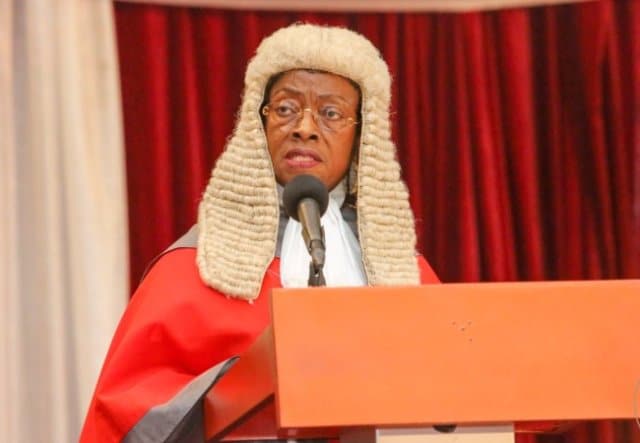
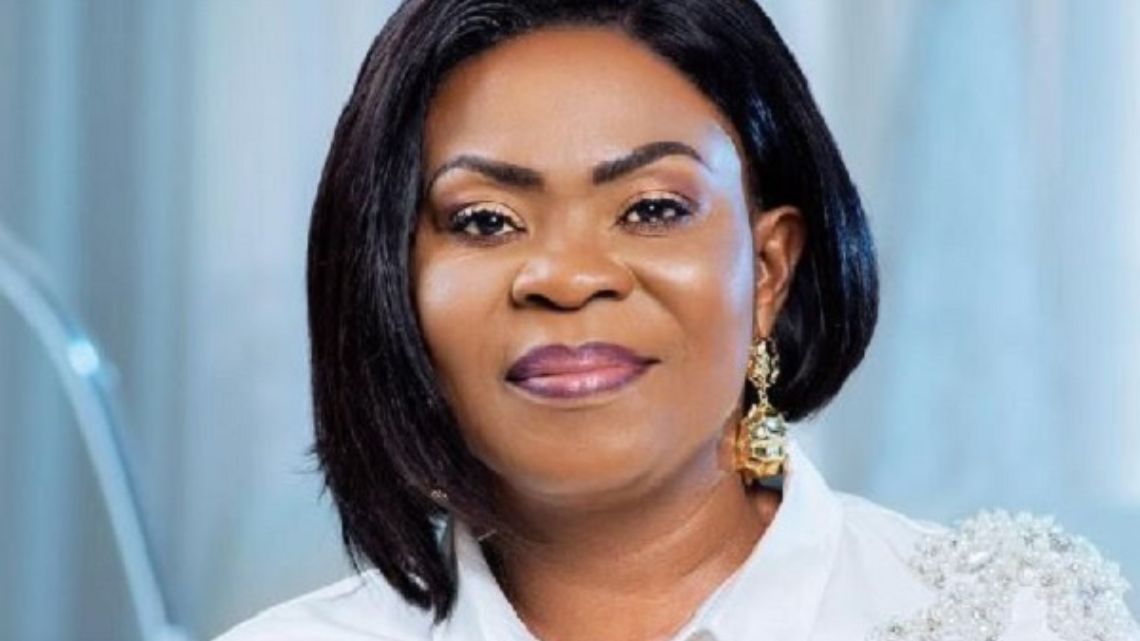
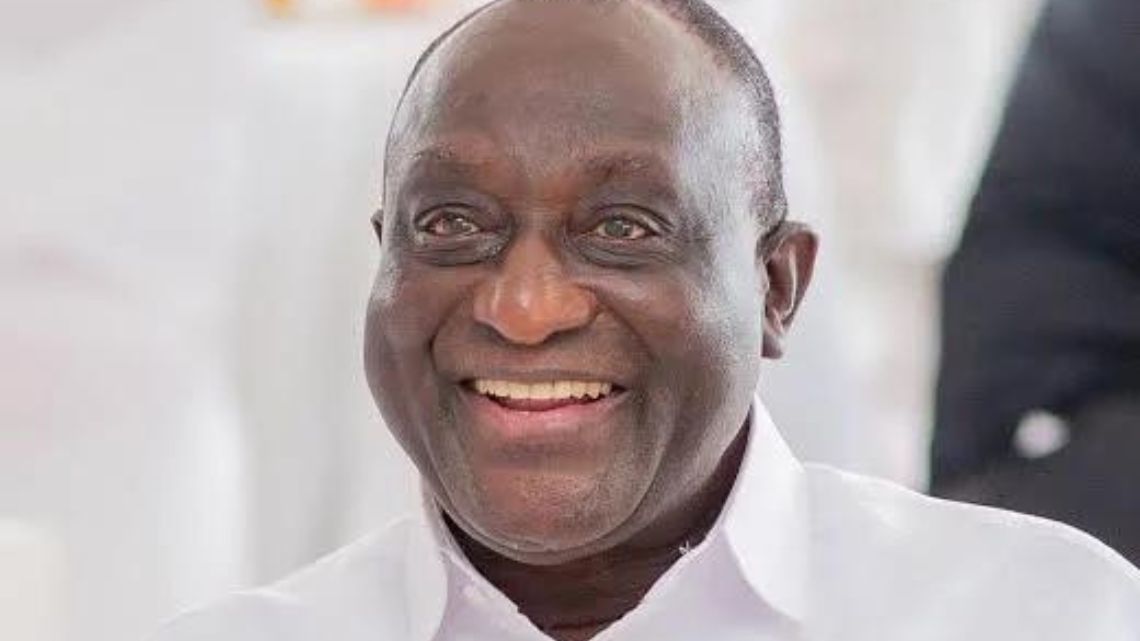
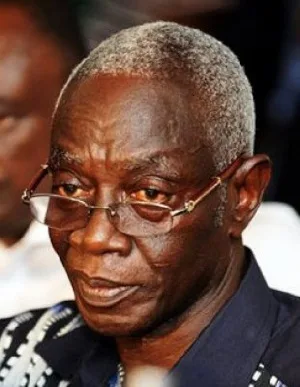
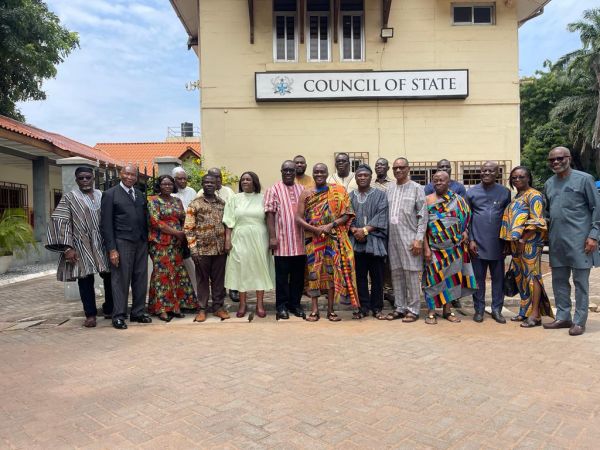
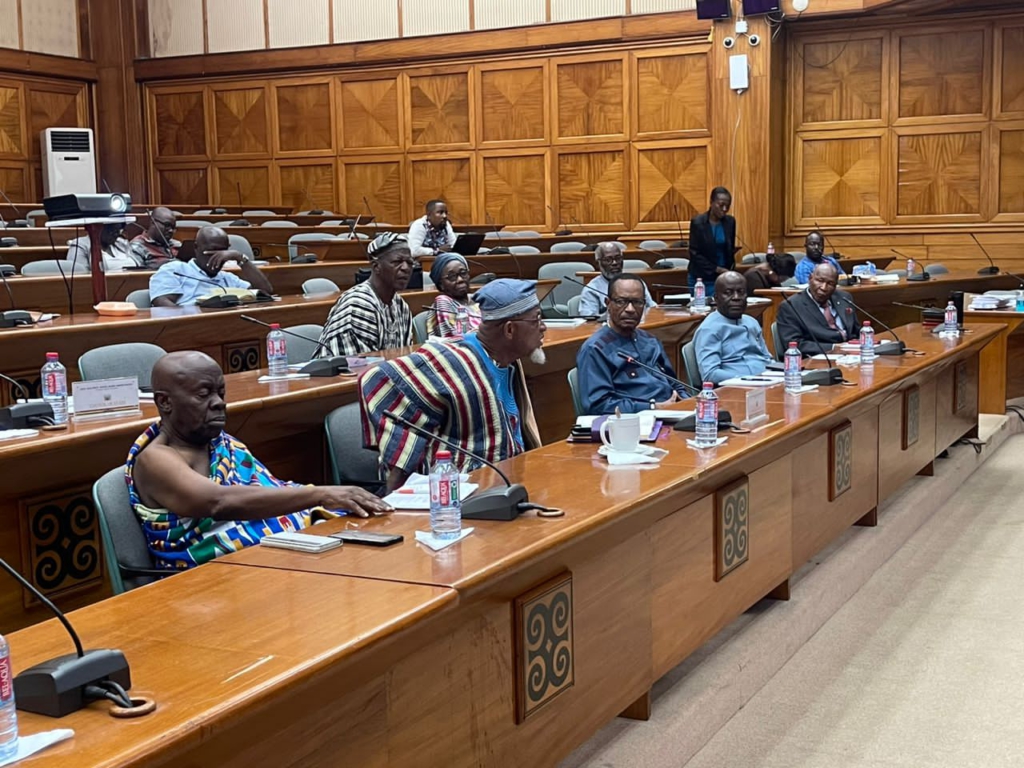
A report from Accra-based media house, Citi News, indicates that Former Chief Justice Sophia Akuffo has resigned from Ghana’s Council of State.
According to the report, Justice Akuffo stopped attending Council of State meetings, and when voting was held on whether a prima facie case had been established against then Chief Justice Gertrude Torkornoo.
Out of the 31-member Council, only Sophia Akufo abstained from voting, and she did not publicly explain the reasons behind her decision.
Later in 2025, she reportedly submitted her resignation.
Although the circumstances surrounding her resignation remain unclear, sources indicate that the former Chief Justice stopped attending Council meetings following the decision relating to the removal process involving former Chief Justice Gertrude Torkornoo.
Justice Akuffo served as Chief Justice of Ghana from 2017 to 2020.
The Council of State is a constitutional advisory body that provides counsel to the President on national governance and policy matters. Its membership comprises elected and appointed representatives drawn from across the country.
Her reported resignation has not yet been officially confirmed by the Council of State or the Office of the President.
Swearing-in ceremony
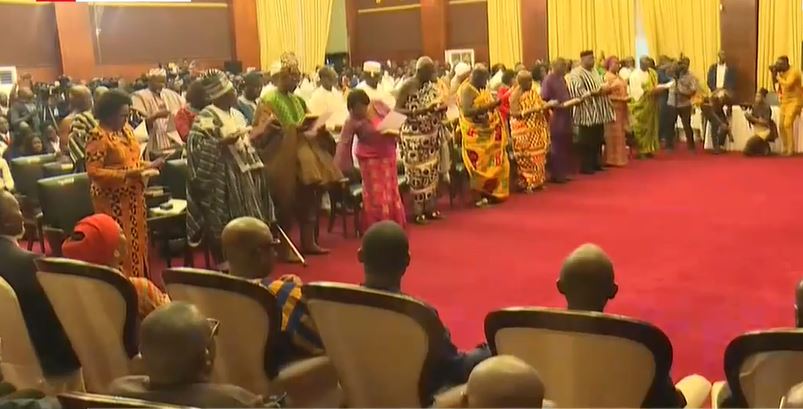
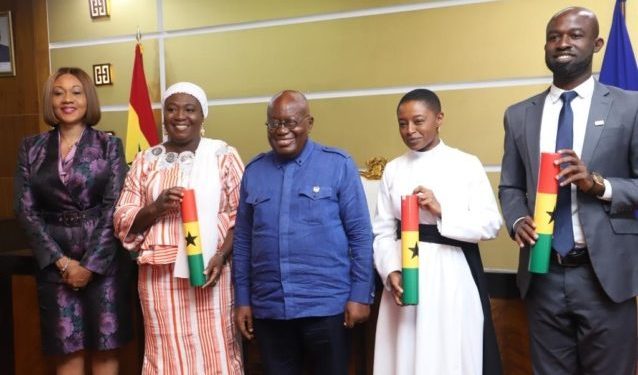
Former Chief Justice Sophia Akuffo was sworn in alongside 30 distinguished individuals as members of Ghana’s Council of State on February 18, 2025.
The inauguration ceremony, presided over by President John Dramani Mahama, took place at the Jubilee House in Accra on Tuesday, February 18, 2025.
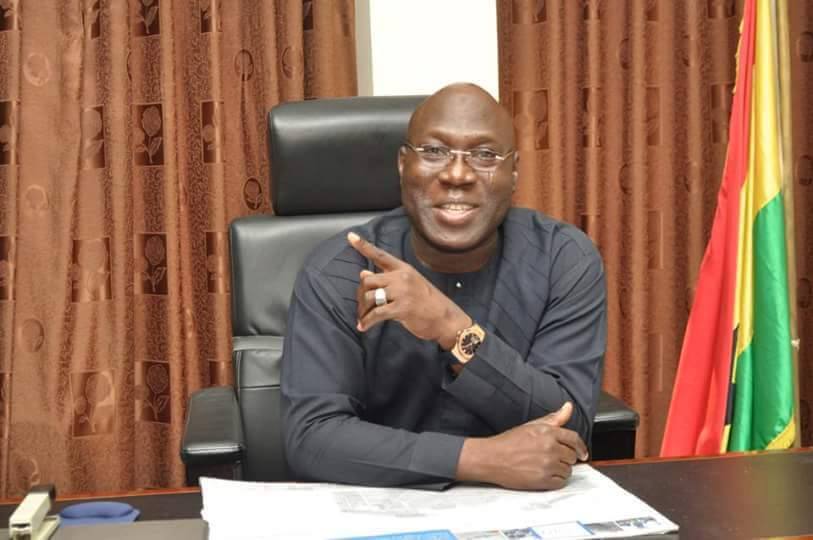
Leading the Council as its chairman is Edward Doe Adjaho, former Speaker of Parliament, who was tasked to play a guiding role in deliberations as the advisory body supports the President in national governance.
President Mahama, addressing the newly inducted members, urged them to actively demonstrate their significance in national decision-making. He emphasised the need for the Council to address growing public scepticism regarding its role and relevance in Ghana’s governance structure.
The 31-member Council comprises experts from diverse fields, including law, business, academia, and civil society, bringing a wealth of knowledge and experience to the advisory body. Their primary responsibility is to offer informed counsel to the President on crucial national matters.
Dignitaries from various sectors, including government officials, members of the diplomatic corps, and representatives from civil society, attended the swearing-in ceremony, underscoring the importance of the Council’s mandate in shaping the nation’s governance framework.
The Ghana Police Service has seven individuals in their grip over a highway robbery incident that took place last year on the Tamale–Buipe highway, during which a member of the Council of State was assaulted.
The suspects, identified as Rashida Yussif, Aaron Abaana, Wilson Abasong, Muntaru Iddrisu, Aminu Zibrilla, Innusa Sumaila and Haruna Safianu, were arrested on January 11, 2026, after weeks of sustained investigations.
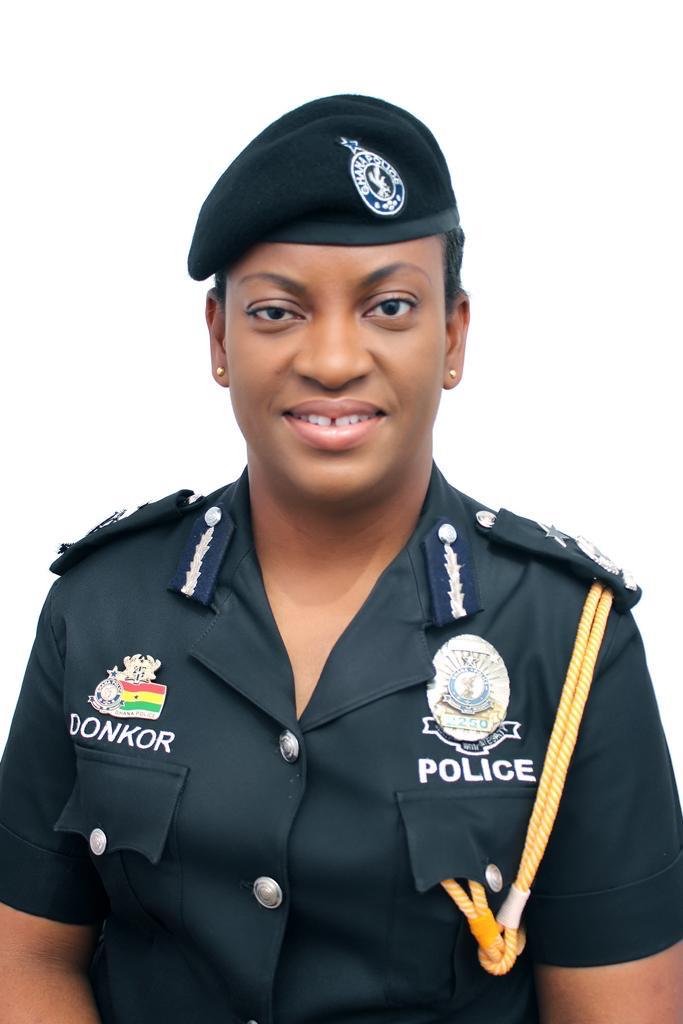
Addressing the media at the Police Headquarters in Accra on Thursday, January 29, the Director-General of the Criminal Investigations Department (CID), COP Lydia Yaako Donkor, disclosed that inquiries into the case are still ongoing.
She recounted that the incident occurred on July 21, 2025, when the victim was travelling on the Tamale–Buipe highway and was attacked by six armed men who fled with several personal items, including mobile phones, cash, wristwatches, reading glasses, laptops and other valuables.
“The arrests form part of intelligence-led operations aimed at dismantling highway robbery networks across the country,” COP Donkor said.
She also revealed that a separate police operation led to the arrest of five suspects linked to another robbery incident at Nkasei in the Ahafo Region.
According to her, the suspects — Muta Kofi, Mahamadu Sajoe, alias Salifu, Shaibu Issah, Abdul Suleman and Bukari Sule, alias Taylor — were picked up on different dates following investigations into a robbery that occurred on December 2, 2025.
She explained that the suspects, together with other accomplices, allegedly mounted a blockade on the Goaso–Tepa road while armed and launched attacks on unsuspecting motorists.
COP Donkor added that investigations into both robbery cases are still underway as police efforts continue to recover stolen property and track down additional suspects.
She further appealed to the public to stay alert, place a premium on personal safety when travelling, and refrain from sharing sensitive information with strangers, as police intensify nationwide operations to combat criminal activity.
Last year, the government intensified security efforts along the Walewale-Bolgatanga Highway by deploying military personnel and drones to curb rising attacks on passenger buses.
Minister for the Interior, Mr. Muntaka Mohammed-Mubarak, made this known in Parliament on Tuesday, March 18, 2025, while responding to concerns raised by the Member of Parliament for Walewale regarding escalating robberies and vehicle burnings in the North East Region.
According to Mr. Muntaka Mubarak, although Walewale has seen a steady decline in armed robbery cases—from 30 incidents in 2022 to 18 in 2024—the attacks targeting passenger buses remain a pressing concern.
He linked the recent surge in highway violence to the ongoing Bawku chieftaincy conflict, explaining that the unrest was spilling over into surrounding areas and contributing to insecurity along the route.
To address the situation, the government imposed a curfew on Walewale and its environs on February 15, 2025, while also reinforcing security operations in the area.
In addition to the military deployment, extra police officers have been dispatched from Tamale to support the Walewale District Command. The government has also increased logistical support, including the provision of more patrol vehicles.
Furthermore, three police bases have been established in Walewale, Janga, and Gombiliga, each manned by 30 officers to enhance security patrols. To protect traders, police escorts have been introduced for market women traveling to and from Walewale’s markets.
Despite these interventions, Mr. Muntaka Mubarak acknowledged that no arrests were made in connection with this year’s robbery incidents. He noted that tracking suspects had been challenging due to the widespread use of motorbikes in the area but remained optimistic about the impact of the new surveillance measures.
“I will continue engaging the police, and with drone surveillance now in place, I believe we will see improvements. But as of now, I have no information on arrests,” he said.
Authorities remain hopeful that these enhanced security measures will restore safety along the highway and deter further attacks.
The Ghana Police Service announced its readiness to face any criminal network and criminal activities with rigour after the boost that comes with the government handing over forty armoured vehicles.
President Mahama handed over the vehicles yesterday, Thursday, December 4, in a handing-over ceremony held at the Ghana Police Headquarters in Accra, and in response to this, the IGP, Christian Tetteh Yohunu, in an acceptance speech, sent a word of caution to all who seek to disrupt national security and peace that his outfit will relentlessly pursue and apprehend anyone involved in criminal activities.
“Let me use this opportunity to send a strong word of caution to persons who have decided to threaten the security of this country: we are coming for you. You can run all you want and hide wherever you wish, but we will surely get you,” taunting the police service’s achievements so far under his leadership.
“We have made several breakthroughs. In addition to numerous robbery attempts that have been foiled through sustained intelligence operations, we have successfully arrested suspects who operated under the illusion that they could get away with crime. These include the suspect behind the rural bank robberies, the robbery of the Radiance Filling Station, the robbery at Enfasatia, attacks on mobile vendors, the Wire and Bullet serial murders, vehicle theft syndicates, and perpetrators behind fake online food-delivery platforms,” he mentioned.
The Presidency has announced that President John Dramani Mahama has submitted the name of His Lordship Justice Paul Baffoe-Bonnie to the Council of State for consideration as Chief Justice.
In a statement issued on Tuesday, September 23, by the Spokesperson to the President, Minister of Government Communications and Member of Parliament (MP) for Abura-Asebu-Kwamankese, Felix Kwakye Fosu, he revealed that “President John Dramani Mahama has, in accordance with Article 144(1) of the 1992 Constitution, forwarded the name of His Lordship Justice Paul Baffoe-Bonnie to the Council of State for consideration as Chief Justice of the Republic of Ghana.”
Article 144(1) of the 1992 Constitution of Ghana outlines the process for appointing the Chief Justice, which states that, “The Chief Justice shall be appointed by the President acting in consultation with the Council of State and with the approval of Parliament.”
Accordingly, Justice Baffoe-Bonnie, who since April this year has been serving as Acting Chief Justice, is now being considered to take the role permanently. The Presidency cited virtues such as diligence and integrity as qualities that make him the best fit for the position, adding that “he has made invaluable contributions to the development of Ghanaian jurisprudence.”
“Justice Baffoe-Bonnie has, throughout his distinguished judicial career, served with diligence and integrity at the High Court, the Court of Appeal, and currently, the Supreme Court. He has earned the esteem of the Bench, the Bar, and the wider legal fraternity for his intellect, impartiality, and unwavering commitment to justice. His wealth of experience and long service on the Bench render him eminently qualified for the high office of Chief Justice. His Lordship has been serving as Acting Chief Justice since 22nd April 2025,” parts of the statement added.
This development comes after President John Dramani Mahama relieved the embattled Chief Justice, Gertrude Tokornoo, of her duties with immediate effect in a formal statement dated September 1. The statement, issued by the Presidency and signed by the Spokesperson to the President, Felix Kwakye Ofosu, indicated that her dismissal was in accordance with Article 146(9) of the 1992 Constitution. President Mahama had earlier suspended the Chief Justice on Tuesday, April 22, after a prima facie case was established following separate petitions calling for her removal.
The new development follows President Mahama’s receipt of recommendations from the committee probing petitions seeking the removal of Chief Justice Gertrude Araba Esaaba Sackey Torkornoo on Monday, September 1. The Presidency justified its decision to dismiss her, citing findings from the Article 146 Committee of Inquiry.
According to the statement, the Committee found that the grounds of stated misbehaviour under Article 146(1) had been established and recommended her removal from office. “President John Dramani Mahama has, in accordance with Article 146(9) of the 1992 Constitution, removed the Chief Justice, Her Ladyship Justice Gertrude Araba Esaaba Sackey Torkonoo, from office with immediate effect. This follows receipt of the report of the Committee constituted under Article 146(6) to inquire into a petition submitted by a Ghanaian citizen, Mr Daniel Ofori. After considering the petition and the evidence, the Committee found that the grounds of stated misbehaviour under Article 146(1) had been established and recommended her removal from office. Under Article 146(9), the President is required to act in accordance with the committee’s recommendation,” parts of the statement read.
The committee, chaired by Supreme Court Justice Gabriel Scott Pwamang, included Justice Samuel Kwame Adibu Asiedu, former Auditor-General Daniel Yaw Domelevo, Major Flora Bazwaanura Dalugo of the Ghana Armed Forces, and Professor James Sefah Dzisah of the University of Ghana.
In July, an application for review regarding an “abuse of court processes” by the embattled Chief Justice was dismissed by the Human Rights Division of the Accra High Court. The court, presided over by Justice Amoako on Thursday, July 31, noted that several claims, such as illegal composition of the committee and wrongful conduct of adversarial proceedings, were already before the Supreme Court. Justice Amoako argued that relitigating these issues would result in duplication of litigation and abuse of court processes. Consequently, the claims were dismissed.
The judge also dismissed reliefs such as an order of certiorari to quash the committee’s proceedings and nullify its sittings because the Chief Justice did not receive a fair hearing, citing jurisdictional limits.
The judicial review application, filed on June 9 this year, sought nine reliefs, including a series of declarations that the Article 146 committee probing her removal had acted unlawfully. She asked the court to prevent the committee from proceeding without providing her with authenticated copies of the petitions seeking her removal and the subsequent responses.
The Chief Justice argued that the President’s purported prima facie determination contained no reasons or justification and was entirely devoid of the elements of judicial or quasi-judicial reasoning expected under the Constitution. However, as the proceedings of the Article 146 committee are to be held in-camera in accordance with Article 146(8) of the Constitution, the court noted that it could not inquire into matters raised by the suspended Chief Justice.
In response, Justice Gertrude Torkornoo proceeded to the ECOWAS Community Court in Abuja, Nigeria, seeking $10 million in compensation over her suspension from office by President John Dramani Mahama. This formed part of the 10 reliefs she requested. Her latest suit followed several unsuccessful cases at the Supreme Court earlier this year after her suspension.
The suspended Chief Justice wanted the court to ensure she continues to enjoy the paraphernalia and entitlements of her office pending the determination of the case. Among the measures requested are: “That the Republic of Ghana suspend the disciplinary/removal from office as Chief Justice process against the Applicant, pending the hearing and determination of the complaint on the merits. That Ghana refrains from taking any other measures that may harm the rights claimed by the Applicant and/or aggravate or extend the dispute submitted to the Court, or compromise the implementation of any decision that the Court may render. Given the urgency of the situation, the Applicant respectfully requests the Court to hold a hearing on this request as soon as possible, and that the President of the Court ask Ghana to act to allow any order that the Court may issue on the Request for Assignment of Precautionary Measures to have its appropriate effect.”
Other reliefs sought include declarations that the panel constituted by the Government of Ghana to investigate and determine the allegations of misconduct was not independent and impartial, thereby violating her human right to a fair hearing under Article 7 of the African Charter on Human and Peoples’ Rights. She also argued that her suspension constituted a violation of her rights to fair working conditions, dignity, and professional standing, exposing her to immeasurable public ridicule. Additionally, she requested an order for the Government of Ghana to prescribe clear procedures for investigating misconduct allegations against a Chief Justice, as well as an order to restore her to office until the conclusion of constitutional proceedings. Finally, she sought $10 million in compensation for moral and reputational damages.
Meanwhile, the government’s spokesperson, Felix Kwakye Ofosu, has refuted Justice Torkornoo’s claims, maintaining that her suspension aligns with the Constitution. On Thursday, August 14, the Bar Council of England and Wales and the Commonwealth Lawyers Association called for the immediate reinstatement of Ghana’s Chief Justice by President Mahama and the Executive arm of government.
“Immediately and without delay, reinstate the Chief Justice of Ghana to her Office, consistent with both the hitherto strong attachment to the rule of law demonstrated by Ghana and also the constitutional duties incumbent upon it. And afford the Chief Justice due and fair process in the investigation and determination of the disciplinary matters brought against her, including but not limited to full and transparent access to that process by her legal representatives,” the group demanded in a joint statement issued on August 14.
The groups also urged the government to ensure impartial investigations of the disciplinary charges, with her lawyers granted full and transparent access to the proceedings. They further demanded the establishment of clear procedural rules to guide the disciplinary process, including a definite timeframe for the committee to complete its work and communicate its decision.
In response, Attorney General Dr Dominic Ayine emphasised that his office can only intervene after the committee concludes its work and submits a report to President Mahama. “The suspension will, therefore, remain in effect until the inquiry committee completes its work and submits its report, to which His Excellency, the President will adhere,” he said.
President John Mahama has urged the newly appointed 31-member Council of State to prove their importance and address public doubts about their role.
During their swearing-in ceremony at the Jubilee House on Tuesday, he acknowledged concerns about the Council’s impact and emphasized the need for them to play a significant role in national governance.
“In recent times, the Council of State has come under criticism from an expectant public who perceive its work as unsatisfactory and merely a rubber stamp for executive decisions. Some have even questioned its very relevance and called for its abolition,” the President said.
“I hold out hope that your tenure will convince doubters of your importance and put to rest any such perceptions. I am confident that with your collective wisdom, we will continue to build a nation that upholds justice, progress, freedom, and unity.”
The call for action comes as the public demands greater transparency and efficiency from advisory bodies.
Former Speaker of Parliament, Edward Doe Adjaho, was chosen as the chairman of the Council, which includes notable members like former Chief Justice Sophia Akufo, former Attorney General Betty Mould Iddrisu, and ex-Zebilla MP Cletus Avoka.
In his speech, Mr. Adjaho promised that the Council would meet expectations.
“It is true many have questioned the relevance of the Council of State, and as you rightly pointed out, some have even called for its abolition,” he noted.
“But I want to assure you that this will be a council of difference. Fortunately, many members are distinguished individuals I’ve encountered in my public life, including many accomplished women. We are committed to justifying the council’s role through diligent service.”
The Electoral Commission (EC) has scheduled a rerun of the Council of State elections in the North East and Ashanti Regions for Monday, February 17, following disruptions that prevented the completion of the process.
In the North East Region, the rerun has been necessitated by a tie between the top two candidates, both of whom secured six votes each, making it impossible to declare a winner.
Meanwhile, in the Ashanti Region, electoral proceedings were abruptly halted after a violent disturbance. A group of individuals stormed the voting center, overturning tables, destroying ballot boxes, and scattering election materials. The chaos forced Electoral Commission officials to suspend the process.
The disruption is believed to have been sparked by the unexpected loss of Yaw Owusu Obimpeh, the National Democratic Congress (NDC) candidate, who was widely considered the frontrunner. His agitated supporters allegedly instigated the unrest, demanding a reassessment of the results.
Despite a strong police presence, security personnel struggled to restore order, prompting the Commission to call for additional reinforcements. In response, the Commission has formally requested the Ghana Police Service and the National Election Security Taskforce to strengthen security measures at the rerun venues.
In the wake of the disturbances, Ashanti Regional Police Commander, DCOP Frank Abrokwa, has been relieved of his duties.
Former Minister for Lands and Natural Resources, Inusah Fuseini, has criticised the declining influence of the Council of State, blaming excessive political interference for weakening its role in national governance.
According to him, while the Council was originally established to provide independent counsel to the president and serve as a valuable check on the executive, it has been eroded by partisan interests that compromise its effectiveness.
“Potentially, it is a very important institution, but it has been rendered weak by the unnecessary politicisation of that institution and the overbearing influence of the executive,” he remarked during an interview on Joy FM’s Super Morning Show on Wednesday, February 12.
Fuseini maintained that the Council still holds promise as a “potentially useful institution” but stressed that political interference has diminished its authority.
His comments come in the wake of controversy surrounding the recent elections for regional representatives to the Council of State. The exercise, held on Tuesday, was marred by violence and allegations of electoral malpractices in several regions.
In the Ashanti Region, a chaotic scene unfolded as thugs stormed the election centre, destroying voting materials and reportedly assaulting journalists covering the event. The Electoral Commission (EC) was forced to suspend the election, with no new date yet announced.
The Greater Accra Region also witnessed heated confrontations between supporters of rival candidates, while in the Volta Region, allegations of vote-buying overshadowed the process.
Despite these setbacks, some regions successfully conducted their elections, electing young representatives to the Council of State.
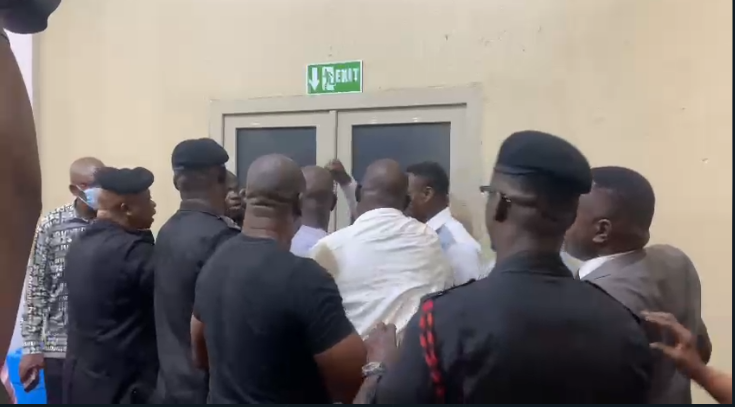
The Greater Accra Council of State election on Tuesday, February 11, was briefly thrown into turmoil after a confrontation involving aspirant Musah Ziyad and police officers at the polling station.
Ziyad, who arrived with a group of individuals, was prevented from entering the polling room, leading to a heated exchange. The commotion disrupted proceedings momentarily, forcing the Greater Accra Regional Minister, Linda Ocloo, to exit the venue through an alternative door. Order was eventually restored, and voting resumed.
The election, conducted by the Electoral Commission (EC), is being overseen by the Greater Accra Regional Director of the EC, Mrs. Gladys Pinkrah, who confirmed that despite the disruption, the process continued smoothly. A total of 58 delegates are casting their votes to select the region’s representative to the Council of State.
Thirteen candidates initially entered the race, including Afotey-Agbo Joseph Nii Laryea, Summertime Kwabillna Ampong, Sampson Seyram Kwadzo Agbemabiese, Horvey Charles Yaw, Redeemer Worwui, Joseph Tetten Sottie, Annan Helbert Nii Aryee, Musah Ziyad, Samuel Duah, Albert Borketey Naawu, Nene Drolor Bosso Adamtey (I), Edmund Siaw Akugbey, and Obed Nyarko.
However, three of the candidates—Obed Nyarko, Albert Borketey Naawu, and Musah Ziyad, who was at the center of the controversy—have since withdrawn from the contest, leaving 10 contenders in the race.
Meanwhile, a similar election in the Ashanti Region was suspended after a group of unidentified men reportedly stormed the polling station, vandalized election materials, and assaulted journalists covering the event.
The Council of State, established under Articles 89 to 92 of the 1992 Constitution, serves as an advisory body to the President, offering counsel on governance and policy matters.
The Electoral Commission (EC) is conducting the nationwideCouncil of State electionstoday, February 11, 2025. From the 16 regions, 155 candidates, including 10 women, have stepped forward to contest.
The voting will take place between 7 a.m. and 5 p.m. at the regional coordinating councils in various regional capitals.
The Council of State members are chosen by an Electoral College, which consists of two representatives nominated by each District Assembly. This election is not open to the general public.
A total of 522 people are expected to vote in today’s election. Once the voting ends, the winners will be announced at the voting centers.
The Council of State, consisting of 30 members, acts as an advisory body to the President, Ministers of State,Parliament, and other public agencies, promoting responsible and accountable governance.
A total of 155 candidates from Ghana’s 16 regions have filed their nominations to contest in the Council of State election scheduled for Tuesday, February 11.
According to a list compiled by the Daily Graphic, 145 men and 10 women submitted their nomination forms by the close of nominations last Friday.
The election will be conducted through an Electoral College system, with each District Assembly nominating two representatives to vote for a single regional representative.
Greater Accra
The Greater Accra Regional Director of the Electoral Commission (EC), Gladys Pinkrah, confirmed that 13 candidates are vying for the region’s seat. Among them are a former Member of Parliament (MP) for Kpone-Katamanso, Joseph Nii Laryea Afotey-Agbo, businessman and traditional ruler at Shai Osudoku, Nene Drolor Bosso Adamtey I, and 11 others.
Bono, Bono East, and Ahafo Regions
Biiya Mukusah Ali reports from Sunyani that 27 men and two women have filed nominations across these three regions. The Bono Region has 10 candidates, Bono East has 11, and Ahafo has eight.
In Bono, aspirants include Odeneho Dr. Affram Brempong III, Nana Aful Kyere, and Dominic Adu-Gyimah, among others. Bono East’s candidates feature Pimampim Yaw Kagbrese, Ofori-Danson Yaw, and Michael Kwasi Amponsah. Ahafo’s lineup includes Bukari Zakari Anaba, Abraham Yaw Agyeman, and Ntotrosomanhene, Barima Twireku Ampem.
Northern Region
Abukari Alhassan Baba reports from Tamale that four candidates are competing, including former Kumbungu MP Alhaji Mohammed Mumuni and economist Richard Andani Yakubu. Thirty-two delegates will vote to elect the region’s representative. One candidate was disqualified for possessing an invalid voter ID.
Central Region
Shirley Asiedu Addo from Cape Coast confirms 10 candidates, including one woman, vying for the slot. Notable aspirants include Osagyefo Amanfo Edu VI, Ogyeedom Nana Obranu Kwesi Atta, and Dr. Alexander Fiifi Ghartey. The election will involve 44 electors from 22 assemblies.
Eastern and Western Regions
Yussif Wunpini Haruna reports that 24 candidates—21 men and three women—are contesting in the Eastern Region. Meanwhile, in the Western Region, nine candidates have filed nominations, according to Korbla Dotsey Aklorbortu.
Upper West and Upper East Regions
In Wa, Kwadwo Baffoe Donkor reports that 11 male candidates are contesting in the Upper West Region, with ages ranging from 38 to 68. In the Upper East Region, Gilbert Mawuli Agbey reports that nine men are vying for the position. The youngest candidate is 36, while the oldest is 74.
Volta Region
Alberto Mario Noretti from Ho reports that 13 candidates, including teachers, a lawyer, entrepreneurs, and a researcher, are in the race. The youngest candidate is 29, while the oldest is 71. Three traditional rulers are among the contenders.
Ashanti Region
Emmanuel Baah from Kumasi reports that 12 candidates, including 10 men and two women, have filed nominations. The contenders include traditional rulers, farmers, businessmen, and a journalist, with ages ranging from 27 to 68.
The Council of State election will determine regional representatives who will serve as advisors to the President, ensuring diverse expertise and perspectives in governance.
The Electoral Commission (EC) has announced the start of the nomination process for the upcoming elections of regional representatives to the Council of State.
The submission of forms will begin on Tuesday, January 28, and conclude on Friday, February 3, 2025.
The elections, scheduled for February 11, 2025, will be conducted across all regional capitals in compliance with Article 89 of the 1992 Constitution. The EC has indicated that the exact venues for the polls in each region will be communicated in due course.
In a statement, EC Chairperson Jean Mensa outlined the nomination process, noting that interested candidates must submit their completed forms to the Regional Directors of their respective regions. The forms can be submitted between the hours of 9:00 a.m. and 12:00 p.m., as well as from 2:00 p.m. to 5:00 p.m., within the designated period.
Candidates are also required to provide two copies of a recent bust-sized photograph with a red background, showing their full face and ears, along with their nomination forms. The completed documents must be delivered to the designated locations within the stated timelines.
The EC emphasized the importance of adhering to the submission guidelines and encouraged eligible individuals to actively participate in the process. “We urge all qualified candidates and voters to participate actively to ensure a smooth and transparent electoral process,” the statement concluded.
It is the role of the Council of State to counsel the President in the performance of his functions.
Per the law, the Council of State shall consist of—
(a) the following persons appointed by the President in consultation with Parliament—
(i) one person who has previously held the office of Chief Justice;
(ii) one person who has previously held the office of Chief of Defence Staff of the Armed Forces of Ghana;
(iii) one person who has previously held the office of Inspector- General of Police;
(b) the President of the National House of Chiefs;
(c) one representative from each region of Ghana elected, in accordance with regulations made by the Electoral Commission under article 51 of this Constitution, by an electoral college comprising representatives from each of the districts in the region nominated by the District Assemblies in the region; and
(d) eleven other members appointed by the President.
The law states that the Council of State shall elect a chairman from among its members.
Human rights activist Oliver Barker-Vormawor has renewed calls for sweeping constitutional reforms in Ghana, including the outright abolition of the Council of State, which he argues has outlived its purpose.
Speaking on JoyNews’ Newsfile on Saturday, January 25, Barker-Vormawor asserted that the Council’s role has become irrelevant in modern governance, making its removal inconsequential.
“The abolishment of the Council of State is what we have called for. We believe that if we move forward without it, nobody would even remember it exists,” he stated.
Barker-Vormawor’s remarks form part of a broader advocacy for reforms that aim to promote accountability, transparency, and fairness in Ghana’s governance system. He also underscored the need to remove indemnity provisions from the Constitution, describing them as contradictory to the principles of justice.
“The Constitution cannot preach justice while entrenching impunity. We have also argued that Presidents should not be shielded from prosecution after their tenure,” he added.
In addition, he advocated for restructuring the judicial system and called for measures to ensure that sitting Presidents are subject to taxation like all citizens.
These proposals align with ongoing debates about the need to overhaul Ghana’s legal and governance frameworks to reflect the nation’s current realities and aspirations.
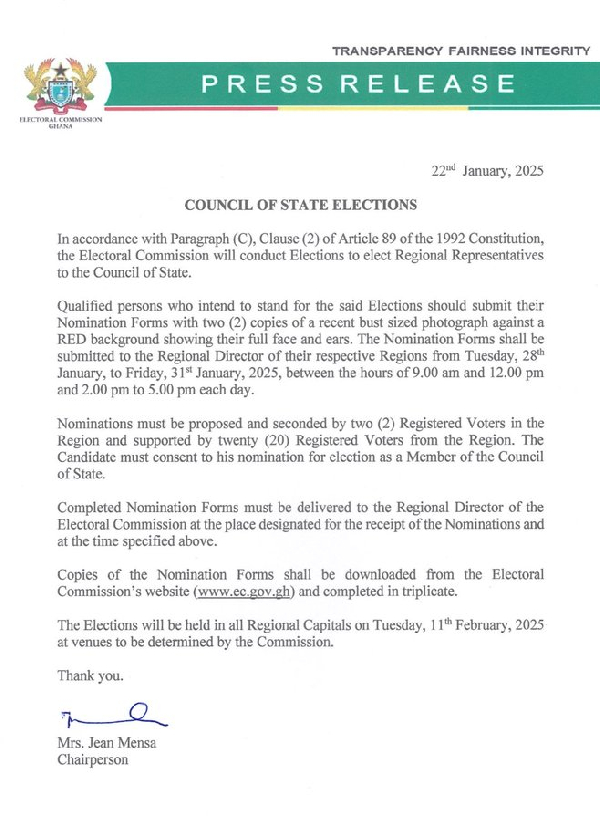
Electoral Commission (EC)has said it will hold elections for regional representatives to the Council of State on February 11, 2025. This follows the rules set in Article 89 of the 1992 Constitution.
The elections will happen in all regional capitals, with the EC deciding the exact locations.
The EC Chairperson, Jean Mensa, shared this information in a statement on Wednesday, January 22, 2025.
“Qualified persons who intend to stand for the said elections should submit their nomination forms with two (2) copies of a recent bust sized photograph against a RED background showing their full face and ears.
The nomination forms shall be submitted to the Regional Director of their respective regions from Tuesday, January 28, to Friday, January 31, 2025, between the hours of 9.00 am and 12.00 pm and 2.00 pm to 5.00 pm each day,” it stated.
The EC further emphasised the importance of adhering to the submission process.
“Completed nomination forms must be delivered to the Regional Director of the Electoral Commission at the place designated for the receipt of the nominations and at the time specified above,” it noted.
TheEC encouraged eligible individuals to take part in the process.
“We urge all qualified candidates and voters to participate actively to ensure a smooth and transparent electoral process,” it added.
The Office of the Speaker of Parliament is preparing to recall Parliament in early November in response to a petition from the New Patriotic Party (NPP) Caucus, which urged the Speaker to reconvene the House to address urgent issues.
Speaker Alban Sumana Kingsford Bagbin informed a five-member delegation from the Council of State, led by Chairman Nana Otuo Siriboe II, that steps are already underway to facilitate Parliament’s recall.
The delegation visited the Speaker to gain insight into recent legislative developments, including the indefinite adjournment of the House.
In a statement copied to the Ghana News Agency, the Parliamentary Service shared that, following extensive discussions, Council members expressed their commitment to assisting the Speaker and House leadership in resolving any ongoing issues to enable Parliament’s prompt resumption.
The Speaker also briefed the delegation on the circumstances in Parliament and elaborated on his recent pronouncements on the floor.
He assured the Council of his dedication to advancing the nation’s democracy. However, he explained his current obligation to lead a Ghanaian delegation to the 67th Conference of the Commonwealth Parliamentary Association (CPA) in Sydney, New South Wales, Australia.
The delegation includes Mr. Osei Kyei-Mensah-Bonsu, former Majority Leader and MP for Suame, along with the two House leaders, Whips, the Clerk to Parliament, and other Parliamentary Service officials.
The CPA Conference is set to take place from November 3 to November 8, during which Speaker Bagbin, as the outgoing CPA International President, is expected to transfer leadership to the newly elected President, the Speaker of the New South Wales Parliament.
However, Speaker Bagbin indicated his intention to return to Ghana earlier than initially planned to fulfill MPs’ request to recall Parliament.
The Council praised Speaker Bagbin for upholding Ghana’s democratic integrity through his legislative leadership and international roles, including his presidency of CPA International, the Conference of Speakers and Presidents of African Legislatures (CoSHAL), and his executive membership with the International Legislative Advisory Council of the National Conference of State Legislatures (NCSL) in the United States. Nana Otuo Siriboe encouraged him to continue these efforts for the benefit of Ghana and its citizens.
The Speaker has recently been re-elected to a second term as President of the Conference of Speakers and Presidents of African Legislatures. On October 22, he indefinitely suspended parliamentary proceedings due to ongoing legal proceedings related to his October 17 declaration of four seats as vacant.
This action led the National Democratic Congress (NDC) to claim majority status, as two of the affected seats belong to NPP members running as independents in the December 7 election, while a third seat is held by an independent candidate allied with the NPP. The fourth seat belongs to an NDC member.
The impacted MPs include Andrew Asiamah Amoako, Second Deputy Speaker and MP for Fomena, who serves as an independent member; Madam Cynthia, the NPP MP for Agona West; Mr. Kwadjo Asante, NPP MP for Suhum; and Peter Yaw Kwakye-Ackah, the NDC MP for Amenfi Central.
Upon adjourning the House, Speaker Bagbin noted that he had received a Supreme Court directive to stay his previous ruling regarding the four vacant seats. Although Parliament had a quorum to conduct business, he stated that the House lacked sufficient numbers to make formal decisions.
“Hon. members, we don’t have at least half of all the Members of Parliament present. Consequently, in view of the current circumstances, the fact that there’s a question on the composition and constitution of Parliament, and having regard to the public interest, and the exigencies of the affairs in Parliament, I will proceed in accordance with standing order 59 adjourn the house indefinitely, that is sine die.
“Hon. members, I have consulted leadership, and I’m exercising my discretion to decide to suspend the meeting of the house indefinitely – the House is accordingly.”
Prior to the declaration of the four seats as vacant, Majority Leader Alexander Afenyo-Markin submitted an application to the Supreme Court, requesting it to prevent the Speaker from ruling on the matter in response to a motion filed by the Minority to declare the seats vacant.
However, on Wednesday, October 30, the Supreme Court declined the Speaker’s request to overturn its prior ruling suspending the Speaker’s declaration of the seats as vacant, given Afenyo-Markin’s application before the court.
The Court has now scheduled November 11 for its final judgment on the main application submitted by Mr. Afenyo-Markin.
Members of the Council of State have extended their condolences to the family of the late Chief Executive Officer of Labianca Company Limited, Eunice Asomah-Hinneh, during a solemn visit to her residence in Sakumono, Tema Metropolis.
Led by Council Chair Daasebre Otuo Serebour, the council members, accompanied by President of the National House of Chiefs Ogyeahoho Yaw Gyebi II, visited to offer sympathy and support to the bereaved family following Madam Asomah-Hinneh’s passing on June 11 after a brief illness.
She was known for her distinguished service as a member of the Council of State, where she notably served on its Legal and Constitution Affairs Committee, providing crucial advice on constitutional matters to President Akufo-Addo and other ministers.
Daasebre Otuo Serebour shared that Madam Asomah-Hinneh had been expected at the council’s monthly meeting but had sent an apology due to her illness.
The council members expressed their respect and admiration for her contributions by signing a book of condolence opened in her honor.
In their tribute, the council acknowledged her legacy and the impact she had made through her work and service. They pledged to work closely with the family to formally inform President Akufo-Addo of her passing.
The family, in consultation with the President, will soon announce funeral arrangements to honor and celebrate the life of Eunice Asomah-Hinneh, reflecting her significant role in both business and public service sectors.
Founder and leader of the Movement for Change (M4C), Alan Kwadwo Kyerematen, has announced his intention to abolish the Council of State if elected president, as part of his party’s manifesto, “The Great Transformational Plan” (GTP).
During the launch of the GTP on Monday, June 24, Alan Kyerematen outlined his vision for significant changes in governance and the economy, proposing the establishment of a new Second Chamber of Parliament to replace the Council of State.
His plan includes representatives from key stakeholder groups such as labour unions, faith-based organisations, traditional authorities, professional bodies, gender-based organisations, the private sector, and people with disabilities.
Mr Kyerematen emphasized the need for a more inclusive and representative government, stating, “Abolish the Council of State and establish a new Second Chamber of Parliament with representation from key stakeholders… That is the truly representative government. That is what we call an all-inclusive government and national unity, and that is going to happen.”
In his address, Mr Kyerematen criticized the New Patriotic Party (NPP) and the National Democratic Congress (NDC), Ghana’s two major political parties, for their governance over the past 32 years.
He argued that they have failed to demonstrate viable plans for the country’s future and urged Ghanaians to consider a new option in the Movement for Change.
The GTP, according to Kyerematen, offers a comprehensive blueprint for Ghana’s economic transformation, focusing on building an enterprise-driven economy and providing equal opportunities for all, especially young people, women, and vulnerable groups.
He highlighted financial mismanagement by the NPP and NDC, citing extensive borrowing to finance manifesto promises as a major issue.
Mr Kyerematen criticized the culture of unrestrained borrowing, which he believes has contributed to Ghana’s current financial challenges.
A former member of the Council of State during John Dramani Mahama’s tenure, along with Jacob Asirifi Senior, Enoch Ofori, and Daniel Mensah, now face accusations of contempt by the Saviour Church of Ghana.
Barima Yaw Kodie Oppong, Esquire, representing the Saviour Church of Ghana, has lodged a motion for contempt of court against these individuals.
The motion requests the court to mandate the respondents to return all removed evidence of the applicant’s property, including signage and symbols.
This legal action follows the Saviour Church of Ghana’s victory in a 24-year-long Supreme Court review case, affirming its ownership rights to the contested properties.
The motion alleges that the respondents impeded court officials from executing a Writ of Possession by assaulting them and church representatives.
It references an audio recording purportedly featuring Abraham Adusei instructing his followers to modify the church’s properties to assert their ownership.
The motion contends that these actions constitute contempt of court and seeks appropriate sanctions to deter future disobedience.
He likened the current state of the Council to an “anorexic institution without power” and stressed that, despite its authority to advise all public institutions in Ghana, its current operations give the impression of powerlessness.
Drawing from his experience at the EC, Dr. Afari-Gyan emphasised the importance of the Council adopting a more transparent approach to demonstrate its impact.
“We will all agree that the Council of State has an imposing name, but the way it has so far gone about its work has made it look like an anorexic institution without power, yet apart from the president, the Council has power to advise every public institution in Ghana,” Dr. Afari-Gyan stated.
He recommended that the Council should regularly publish reports outlining the advice it has provided to different institutions, enabling the public to evaluate its effectiveness.
Dr. Afari-Gyan also underscored the significance of clarifying the distinction between the president’s appointments made in consultation with the Council and those made based on the Council’s advice.
“In the Council’s relationship with the president, there is one thing in particular that requires clarification. The president appoints some people in consultation with the Council and some on the advice of the Council. What is the difference?
“Some lawyers say there is no difference at all and that the president can do as he pleases in both instances. But others say that unlike consultation and the case of advice, the president cannot appoint unless he is so advised,” Dr. Afari-Gyan explained.
Council of State Office building frontage and certain aspects will be demolished and reconstructed at an approximate cost of GH¢6 million, according to the Acting Executive Secretary to the Council, Stephen Blay.
The building, which was completed in 2016 at a cost of GH¢4.6 million, has been deemed unfit for purpose and not constructed according to plan.
It faces challenges such as insufficient space in the meeting room and lacks privacy due to communication system issues.
Additionally, the facility lacks a sewage system and private facilities.
Mr Blay, addressed these concerns during a session with the Public Accounts Committee (PAC) of Parliament in Accra.
“In 2017 when the 7th council took office it was discovered that the building was put up out of plan. The edifice over there doesn’t have a single suitable meeting room. The council is a 31-member council but the meeting room in the building has a capacity for only 15 people.
“Apart from that, the sewage system was never done. Then the communication system, when you are at the top and you talk, when people are on the ground floor, they hear all the things that you are saying. So the council felt it wasn’t appropriate to occupy it at that time,” he said.
Mr. Blay attended the committee session to address queries arising from the 2021 Auditor-General report on Ministries, Departments, and Agencies, which highlighted the unoccupied state of the council building.
In 2017, the Council of State invited the Ghana Institute of Architects to inspect the building, following concerns about its suitability. The inspection concluded that the building required remodeling.
Initially, the remodeling was planned for 2018-2019, but it was postponed due to the ongoing “drop-that-chamber” campaign, which made it impractical to demolish a portion of the building during that period.
In 2021, the Council submitted a proposal to the Ministry of Finance requesting GH¢6 million for the remodeling project, which was approved but the funds were not released.
Last year, the Council revisited the remodeling plan and engaged with the Chief of Staff and the Ministry of Finance, submitting proposals and a budget for their consideration.
Committee Chairman Dr. James Avedzi expressed concern and requested a copy of the assessment report from Mr. Blay.
Member of Parliament Samuel Atta Mills suggested that instead of demolishing part of the building, it could be allocated to the Zongo Development Fund, which sought an office space and was currently paying significant monthly rent. He further proposed constructing a new building for the Council of State, an idea that Mr. Blay agreed to communicate to the council for further consideration.
The Chairman of the Council of State, Nana Otuo Siriboe II, has urged Ghanaians to unite in support of the government’s recovery programme, and see the light ahead in Ghana’s economic trajectory.
During a Council of State meeting attended by Finance Minister, Ken Ofori-Atta, Chairman Otuo Siriboe II said it is time Ghanaians to stick together and rally behind government as the country embarks on a path of renewed growth.
“There is light ahead for Ghana. We must remain optimistic and steadfast in our belief that our country will overcome the challenges it currently faces,” Nana Otuo Siriboe declared.
“The IMF Programme approval marks a turning point, which will energise our path to renewed growth and catalyse further opportunities for economic recovery.”
The Chairman expressed his optimism about the country’s prospects, highlighting the approval of the International Monetary Fund (IMF) Programme as a turning point that would invigorate Ghana’s growth trajectory and open doors to further opportunities for economic recovery.
He stressed the need for unity, resilience, and unwavering belief in Ghana’s potential to overcome the challenges it currently faces.
He said the IMF’s $3 billion bailout presented a unique opportunity for Ghana to reboot its economy, and encouraged Ghanaians to embrace this opportunity and work together to optimise its benefits.
He emphasised that by joining forces, Ghana can achieve remarkable progress and build a prosperous future for all its citizens.
The meeting, which was attended by key government officials including the Finance Minister and members of the Council of State, aimed to educate stakeholders about the details of Ghana’s Growth Agenda and the IMF Programme, while also soliciting input for effective implementation.
On his part, Finance Minister Ken Ofori-Atta, acknowledged the significant strides already made in Ghana’s recovery journey.
“We have come a long way, and we are determined to continue on this path of progress. The IMF Programme will provide the necessary support to restore our economy and set us on a trajectory of sustained growth,” the Minister affirmed.
He took time to outline Ghana’s Post Covid-19 Programme for Economic Growth (PC-PEG).
The economic blueprint encompasses four key objectives. The first objective, he said, focuses on restoring macroeconomic stability, including managing inflation, stabilizing the exchange rate, and creating a favorable business environment.
The second pillar of the PC-PEG addresses Ghana’s fiscal challenges. The Minister highlighted the government’s commitment to bringing fiscal operations and public debt to sustainable levels. Measures such as comprehensive tax administration reforms and prudent fiscal policies will be implemented to ensure a sound economic foundation.
Structural reforms comprise the third objective of the PC-PEG. The Minister emphasized the importance of improving the business environment, attracting private sector investments, and bolstering infrastructure development. The financial sector will also receive support through regulatory forbearances and the operationalization of the Ghana Financial Stability Fund (GFSF).
The final objective of the PC-PEG centers around promoting strong and inclusive growth while safeguarding the poor and vulnerable. The government plans to stimulate economic activity, create job opportunities, and attract investments. Concurrently, social safety nets and targeted support programmes will protect the most vulnerable members of society, ensuring that the benefits of recovery are widely shared.
Nana Otuo Siriboe II expressed his gratitude to the Finance Minister and his team for their dedication and tireless efforts in formulating the growth programme and securing IMF support.
He encouraged the government to continue spreading the message of hope and progress throughout the nation.
The Council of State has been urged to reconsider its recommendation about the appointment of Dr. Peter Appiahene and Hajia Salima Ahmed Tijani to the Electoral Commission (EC) by the leadership of the opposition National Democratic Congress (NDC).
Despite the objections voiced by numerous stakeholders in Ghana’s democracy, President Akufo-Addo nevertheless swore in these two.
Article 70(2) of the 1992 Constitution dictates that such appointments be made in consultation with the Council and the NDC believes the Council has a role to play to get the President reverse the appointments.
In its petition dated Monday, April 17, the NDC argued that these appointments if not reversed will hamper the public confidence in the EC.
“Prior to his appointment to the Electoral Commission, Dr Peter Appiahene had played various roles for the New Patriotic Party in the Bono Region. Indeed, he touts himself in his political profile and personal credentials as a ‘strong NPP man with a lot of experience in election issues in Ghana.’”
“It is our considered view that the appointment of a personality with such overwhelmingly partisan credentials into the Electoral Commission will hamper public confidence in the constitutionally independent body and undermine the conduct of free, fair, and transparent elections in Ghana.”
“On the appointment of Hajia Salima Ahmed Tijani, our background search reveals that she has well-known New Patriotic Party leanings. Aside from the fact that Hajia Salima Ahmed Tijani is herself an activist of the ruling New Patriotic Party, she is married to one Sheikh T.B. Damba, a former Second National Vice Chairman of the NPP, and Ghana’s immediate past ambassador to Saudi Arabia, from 2017 to 2021,” excerpts of the petition said.
The party stated among his political positions in the NPP as follows: • Member of the 2022 Bono Regional Election Committee of the NPP; • Bono Regional IT Director for Election 2020 for the NPP; • Bono Regional D-Day Coordinator for Election 2020 for the NPP; • Member of the National Research and Data Analysis Team for Election 2020 for the NPP; • Regional Collation Officer for NPP Internal Collation for Election 2020; • Member of the Bono Regional Communication Team of the NPP.
Associate Professor of Political Science at the University of Ghana has revived calls for the Council of State to be scrapped.
The discussion on the uselessness of the Council of State became rife especially when calls for the amendment or abolition of the 1992 Constitution became topical.
The Council of State was established by Articles 89 to 92 of the 1992 Constitution of Ghana: “There shall be a Council of State to counsel the President in the performance of his functions.” But the Council’s advice is not binding on the President as he can choose to take or reject.
Meanwhile, huge sums of monies are being used to pay their allowances and ex-gratia without them having any impact on state affairs.
Adding his voice to the conversation Monday, March 20, 2023, Prof. Ransford Gyampo of the University of Ghana said the modus of constitution of the council itself is wrong.
According to him, the President should have no locus in determining who becomes a member of the Council of State.
Likening the institution to that of the chieftaincy in the traditional society, the Professor said chiefs were always born to the existence of a council which gave the latter the power to spite whenever the chief went wrong.
Former President, John Agyekum Kufour, wants the Council of State scrapped.
He believes, the Council has lost its relevance over the years and must be abolished. Instead, he wants it to be turned into a second chamber.
The former President said this at a forum organized by the Institute of Economic Affairs (IEA) in Accra.
“Perhaps the time has come for us to move to a second house. It might cost a bit more, but we want quality to serve the ends of good governance and the people at large more, then I would say, the days of Council of State are over.”
The forum formed part of a series of engagements the Institute undertook to solicit input towards a possible review of Ghana’s 1992 Constitution.
The former President proposed that, instead of the Council of State, the country should set up a second chamber to play the advisory role to the government.
“I have had a chance to express my views on the Council of State, a very honourable distinguished institution, well-meaning. But, I can say I don’t think it is fit for purpose given the state of development of our country and given the fact that the nation is committed to practising democratic governance.”
In recent times, the relevance of the Council of State, has been questioned with some political commentators, academia and civil society organisations suggesting that the body had outlived its usefulness and should be abolished.
Former President Kufuor explained that though the framers of the Constitution thought it wise to set up such a body to advise the President, the Council was no longer useful.
He said: “…We limit the uses of Council of State to advising just the President,” and that often, the President decided whether or not to take the advice.
“So, I have gone through all these periods and I have come to a conclusion, perhaps, what our Constitution should have to temper the extremes of democracy is not a Council of State but a second chamber, a second chamber well composed not on the basis of democracy so much. Democracy should always be implied in there though but not entirely democratically but more on proof and experience, prove in public spiritedness, prudence, maturity, care for the nation, inclusive.”
“If we do that, and allow this second chamber to operate openly, in the full glare of publicity, then the wisdom that would be issued from their deliberations would impact not only the President,” he added
The former President added that the term of the second chamber must not be tied to the tenure of any government to ensure that there was continuity in the provision of development for the people.
On limiting the appointing powers of the President, the former President said the country must practice the checks and balances in its pure form, especially among the lead organs of State.
He called for the amendment of sections of the Constitution that empowered presidents to appoint about 50 percent of Ministers from Parliament.
“The legislature should be apart, people being elected there should be encouraged to professionalize themselves as legislators, so they will play the guard dogs or watchdogs on the executive,” he said.
The former President also urged that political parties were allowed to participate in elections at the local level.
Ghana’s only living former president who has served the full two-term of eight years, John Agyekum Kufuor, has called for the scrapping of the Council of State.
He indicated that the present times and the relevance of the Council of State no longer seem to align and as such, there is the need to relook at the composition of the constitutional body.
Backing the calls for the body to be scrapped, the former president, who has been part of Ghana’s parliamentary structure from the days of a constitutional assembly till the current parliament was constituted in 1992, explained that it is rather time for the country to consider a second chamber.
“So, I believe the framers of the constitution thought of a body like Council of State that necessarily should be composed in a way that would bring individuals of experience… the way the constitutional framers as far back as ’69 when, as I say, I was a member of the constituency assembly, and also then a member of the Majority side – in fact, a deputy foreign minister at that time, we limited the uses of the Council of State to just advising the president.
“And the president would meet this council in camera, given the nature of the members of the Council – very matured, experienced, people who wouldn’t go out of camera, after giving advice to the president, and whether the president accepted or didn’t accept, go and tell the public, ‘No, we advised him to do this or that but he rejected us. Perhaps, he didn’t even hear us.’ They wouldn’t do it by just the way they are, and this continued: ’69, ’79. ’92, and currently and I’ve gone through all these periods and I’ve come to the conclusion that perhaps, what our constitution should have to temper the extremes of democracy, is not Council of State, but a second chamber,” he said.
Speaking at a Seminar on Reviewing Ghana’s 1992 Constitution, organized by the Institute of Economic Affairs (IEA), which featured him, John Agyekum Kufuor stressed that such a second chamber should be composed to focus more on experiences, more than it would on democracy.
He added that while he acknowledges that this might cost the nation a little more, it is necessary if the country determines to progress.
“A second chamber, well-composed, not on basis of democracy so much; democracy should always be implied in there though, but not directly on democracy, but more on proving experience, proving public spiritedness and prudence, maturity, care for the nation inclusively.
“And then the general public, where they are going astray, there would be people – civil society organisations, or the media, would be able to join in and say, ‘No, Mr. President, take time. You’re after all, our first servant. You shouldn’t manage our affairs this way.
“Or, the Members of Parliament: yes, you may have the majority in the House, but the way you are going, you haven’t taken due account of such and such and such a situation to help stabilize the nation and also make for progress. And then the people advice; these days we hear of populism and grassroots actions, protest actions and all that, people must really get insights.
“And so, this is why I thought instead of our continued Council of State, perhaps the time has come and we should move into a second house. It might cost a bit more and so what: we want quality to serve the ends of good governance and the people at large more… then I’d say, perhaps the days of the Council of State should be over,” he explained.
The IEA engagement with the former president, John Kufuor, took place at his residence at Pokuase, and was moderated by the former Speaker of Parliament, Prof. Aaron Mike Oquaye.
Dignitaries in attendance included the former Chief Justice of Ghana, Sophia Akuffo; Sam Okudzeto, a former President of the Ghana Bar Association; the Electoral Commission Chairperson, Jean Mensa; Dr. Abu Sakara, a former presidential candidate on the ticket of the Convention People’s Party (CPP); among others.
A Member of the 8th Council of State representing the Oti Region, Richard K. Atikpo, is pushing for an ‘Operation Feed Yourself’ agenda in the Oti Region.
He was speaking at the inauguration of the Jasikan Municipal Assembly on Wednesday 16th November, 2022 at the Assembly forecourt. The Assembly was inaugurated as a result of coming into force of a Legislative Instrument (L.I) 2437, which elevated the Assembly’s status from a District to a Municipal.
In his observation as the Chairman of the occasion, he bemoaned the need to revisit the ‘Operation Feed Yourself’ initiative by having backyard gardens to produce the basic foodstuffs we need at home. He added that, that’s the only way to ensure food security in the area.
He also appealed to the Assembly to partner and support the locals to venture into agriculture.
He thanked the chiefs and the people for the peace and unity that the District continue to enjoy.
The Jasikan and the Kete-Krachi Districts were part of the Districts that were elevated into Municipality status on Tuesday and Wednesday in the Oti Region.
Also, in attendance were the Oti Regional Minister, MP for Buem Constituency, the MDCEs in Oti Region, Heads of Departments, Chiefs, the Clergy, Assembly Members, students and all stakeholders in the District.
The conference gave the President a forum to speak with economic players about the best ways to ease the burden on businesses and the hardship of everyday Ghanaians.
The GNCCI’s concerns on the state of the economy currently.
The cost of doing business in the country is rising due to the rapid depreciation of the cedi against major foreign currencies, interest rates, high fuel prices, and high inflation policy rates.
More specifically, the outlook for the country’s economy is getting worse due to rising public debt, weak domestic revenue performance, the balance of payments issues and a lack of fiscal restraint, which led to a credit rating downgrade and the loss of external financing.
Facts available to GhanaWeb prove that the Agbogbomefia of the Asogli State, Togbe Afede XIV, attended more meetings as a Member of the Council of State than had been previously reported.
Good Evening Ghana show host, Paul Adom-Otchere, alleged in June this year that Togbe Afede XIV only attended 39 meetings out of the 242 meetings of the Council of State in the four years that he served, that is between 2017 and 2020.
According to him, the 39 meetings that Togbe Afede was present at constituted 16 percent of attendance.
“Of the 48 months, the Council of State held 242 meetings of which Togbe Afede XIV attended 39 [meeting]; it constituted 16 percent,” Adom-Otchere said while doing a touchscreen analysis of Togbe Afede’s letter explaining why he rejected ‘inappropriate’ ex-gratia paid into his account.
Adom-Otchere depended on records ostensibly from the Council of State through a Right To Information, RTI, request put in by Metro TV at the time.
GhanaWeb is, however, in possession of documents from the RTI Commission which give a different account of Afede’s attendance records.
In the new documents, Togbe Afede attended 57 meetings out of a total of 125 meetings, which figure represents 45.6 percent attendance.
A total of 18 meetings that Togbe Afede attended were not included in Paul Adom-Otchere’s narrative.
The breakdown of his attendance record is as follows:
a. 47 out of 114 plenary meetings
b. 10 out of 11 Committee-level meetings
Togbe Afede was head of the ‘Economy and Sustainable Development Initiatives Committee’ (ESDIC) held eleven meetings over the four-year period.
The Ahafo Regional Council of State Representative, Nana Yaw Basoa, has called for unity among Ahafo residents to help promote development.
He explained that the region could develop as expected to improve residents’ standard of living when there is absolute unity, adding that educational background and location should not be a hindrance.
“If we are united as a people, regardless of our numbers, there is nothing we can’t achieve if we put our minds to it,” he said.
Nana Yaw Basoa, Ahafo Regional Council of State Representative
Nana Yaw Basoa made the call at Bechem in the Tano South District during the launch of the “Ahafo Home Coming Festival 2022 “.
The launch was attended by chiefs in the region, the Regional Minister, Municipal and District Chief Executives, and the Clergy, among other dignitaries.
The council of state member Nana Basoa also said the culture where people expect the government to provide all developmental projects should be reviewed.
“The government would do its part of development, but certainly not everything that we require as a region.”
Instead, he wants financially sound residents and those with the best lobbying skills to make good use of them to help bring development to the doorsteps of residents.
Nana Basoa believes that would help to achieve the aim of why the Ahafo Region was created.
He hinted that the introduction of the Ahafo Homecoming Festival scheduled for December 30, 2022, to January 1, 2023, and expected to happen every year, is to help promote development without waiting for the government.
He noted that the idea was muted after a thorough discussion with the chiefs and other opinion leaders in the region and, therefore, urges all citizens of Ahafo, both home and abroad, to play their part to ensure the success of the festival to the benefit of the region.
Ahafo Regional Minister, George Boakye, speaking to the media after the launch, mentioned that the festival would attract investors in and out of Ahafo and Ghana, an indication of the region’s potential for investment to help the region and the investors.
He expressed his delight for the festival, expected to influence the development of the region, and pledged the coordinating council’s support before, during, and after the festival.
He further hoped it would help to develop tourist sites in some areas, including Mim, Yamfo, Tanoso, Sankore, and Kyenkyensibourso in the region.
Nana Ofori, one of the brains behind the Ahafo Homecoming Festival initiative, told Adom News’ reporter Sammy Asare that the initiative is a self-help drive by the indigenes after their role in the creation of the region.
He said some investors and natives outside the region and the country have expressed their interest to be part of the three-day festival to ensure that the region sees a massive development trend.
Chairman of the Council of State, Nana Otuo Siriboe II, has disclosed that President Nana Addo Dankwa Akufo-Addo and members of his cabinet have agreed to a reduction in their emoluments and allowances.
According to him, the move is part of their recognition of the economic difficulties the country is facing and is their contribution towards easing the situation.
Nana Otuo Siriboe II also mentioned that the Council of State members have decided to reduce their monthly allowances by 20 percent until the end of the year in view of the economic challenges.
He made the pronouncements when he held a meeting with the President at the Jubilee House on Tuesday, March 22.
“Mr. President, over the past few weeks, the Council has been deliberating on the current economic conditions of the country and have been collecting views with the view to sharing with you as early as possible.
“As we were going through our routines, you and your cabinet were at a retreat over the same issues. Since yesterday, we have been fed with a snippet of information regarding some of the decisions that you have made.
“We are particularly delighted to read that you and your cabinet have decided to reduce some of your emoluments and your allowances. Mr President, in tandem with your decision we as Council of State had also decided that we will reduce our monthly allowances by 20 percent until the end of this year,â€Â Nana Otuo Siriboe said.
The economy in recent times has witnessed a downward spiral.
Many economists have cited the depreciating cedi, increase in fuel prices and general cost of living as pointers to this claim.
Some analysts have asked the government to seek an IMF bailout programme, even though that idea has been shot down as government banks its revenue generation hopes on the E-Levy.
The President, Nana Addo Dankwa Akufo-Addo, over the weekend held a crunch meeting with key members of his government to decide on ways to mitigate the current economic challenges.
Finance Minister, Ken Ofori-Atta is to address the nation on Thursday on the outcome of the meeting.
The Standing Committee of the Council of State has engaged with the leadership of the majority caucus in Parliament to discuss ways the two sides can work together to prevent scuffles that have characterized the House during recent deliberations.
The meeting with the Majority caucus on February 28 was to pave the way for the members to share from their viewpoint the challenges militating against smooth deliberations in Parliament, Graphic.com reports.
The council led by Chairman of the Council State, Nana Otuo Siriboe II, had earlier met with the Minority Caucus to discuss the same issues.
Addressing the press ahead of the closed-door meeting, Nana Otuo Siriboe II lamented over the fisticuffs in the House since the inauguration of the Eighth Parliament.
“These do not reflect well on the nature of Ghana’s Parliament. This is the Eighth Parliament since the Fourth Republic, and all the seven Parliaments have performed with a lot of credit, and it is not proper that we should see this enviable record which we have had go down the drain,” he said.
Describing Parliament as an awesome institution, he said recent developments in the House were, unfortunately, making Parliament become “awful”.
“And we have to arrest that situation, and to be able to do that, we must be able to interact with you, the actors,” Graphic.com quoted.
This engagement is one of the meetings scheduled to be hosted by the council to encourage good governance and foster peace among the country’s political leadership.
The council intends to have separate meetings with the Speaker of Parliament, Mr Alban Sumana Kingsford Bagbin, and his two deputy speakers today, March 1, 2022.
The Electoral Commission (EC) has announced that, on Friday, 12 February 2021, “elections will be held in all regional capitals at venues to be determined by the Commission†to choose regional representatives to the Council of State.
The move, according to a statement issued by the Commission on Thursday, 21 January 2021, is in accordance with Paragraph (C) of Clause (2) of the Article 89 of the 1992 Constitution.
“All qualified persons who intend to stand for the said elections should submit their nomination forms with two post-card size copies of recent photographs (bust) to the Regional Director of their respective regions from Monday, 1st February to Thursday, 4th February between the hours of 9.00 am and 12.00pm to 5.00 pm each day,†the statement added.
A former Eastern regional representative of the Council of State and Chief of Oyoko in the New Juaben Traditional area, Nana Kodua Kesse II is dead.
He died at the 37 Military Hospital in Accra on Saturday where he was on admission receiving treatment according to close sources available to MyNewsGh.com.
He became Chief in October 1979.
History
Oyoko was one of the Sekyere towns which migrated to present-day New Juaben in Eastern Region under the leadership of King Asafu Agyei, when Nana Kofi Karikari (King of Ashantis) and his Kumasi forces in Ashanti Region attacked Juaben which is also in Ashanti Region and its allies in October 1875. The Sekyere towns which formed part of the allies were Effiduase and Asokore.
Whilst Effiduase and Asokore were led by their chiefs during the sojourn, Nana Adjei Bohyen the Oyokohene (Chief of Oyoko) Oyoko was one of the Sekyere towns which migrated to present-day New Juaben in Eastern Region under the leadership of King Asafu Agyei, when Nana Kofi Karikari (King of Ashantis) and his Kumasi forces in Ashanti Region attacked Juaben which is also in Ashanti Region and its allies in October 1875.
The Sekyere towns which formed part of the allies were Effiduase and Asokore. Whilst Effiduase and Asokore were led by their chiefs during the sojourn, Nana Adjei Bohyen the Oyokohene (Chief of Oyoko) had died during the onslaught. It was his nephew Kwadwo Kesse who led the migrants from Asante Oyoko in Ashanti Region to present-day New Juaben in the Eastern Region and they came with their sacred stool (Kro and Dabo Stool)
Nana Kwadwo Kesse became the first chief of Oyoko, New Juaben in 1878, he died in 1908 and was succeeded by Nana Yaw Sempeh, who ruled for 20 years and died in 1928. He was succeeded by Nana Twum Moro who abdicated the stool after 6 months rule. There was some litigation over the choice of the next occupant of the stool until 1930 when Nana Owusu Akromah was installed Oyokohene (Chief of Oyoko).
He died in 1944 and was succeeded by Nana Kwadwo Kesse II who abdicated in 1948. He was succeeded by Nana Owusu Ansah who also died in 1955 and was succeeded by Nana Sempeh Asare II who ruled until 1976 when he was destooled. Nana Opoku Nkawie II succeeded Nana Sempeh Asare II in 1975 and abdicated in 1979. He was succeeded by Nana Kodua Kesse II in October 1979.
Parliament has passed the Council of State Bill, 2020 into law, to allow for the establishment of a Secretariat to provide professional and administrative support for the Council of State.
The Council of State was established under Article 89 of the 1992 Constitution and its membership comprises a former Chief Justice, a former Chief of Defence Staff, a former Inspector-General of Police, the President of the National House of Chiefs, a representative from each region and eleven members appointed by the President.
The Council has the duty to counsel the President and to consider Bills which have been published in the Gazette or passed by Parliament upon request by the President under Article 90 of the Constitution.
The Bill was passed on Wednesday, October 21, 2020, to enable the establishment of a Secretariat that will provide professional and administrative support for the effective and efficient delivery of the mandate of the Council.
A provision has been made in the Act for the conditions of service of staff of the Council through the promulgation of a legislative instrument by the Minister responsible for Justice on the recommendation of the Council.
Another provision also allows for the appointment of an Executive Secretary and other staff to be responsible for the day-to-day administration of the Secretariat.
The Secretariate will ensure the implementation of the decisions of the Council.
The Overlord of Dagbon Traditional Area, Ya-Naa Abubakari Mahama ll, has proposed the establishment of an upper chamber to replace the Council of State.
He stated that the chamber should be made up of eminent chiefs and distinguished Ghanaians with the power to consider certain bills before they are sent to Parliament.
“It is high time Ghana amended its constitution to replace the present Council of State with Senate or Upper House…composed of prominent chiefs, distinguished Ghanaian men and women with the power to consider certain bills before Parliament,†he suggested.
Ya-Naa Abubakari Mahama was speaking at the grand durbar of chiefs and people of Okyeman on in the Eastern Region Saturday, to climax the 20th-anniversary celebrations of the Okyenhene, Osagyefo Amoatia Ofori Panin.
The Council of State is a small body of prominent citizens, analogous to the Council of Elders in the traditional political system, which advises the President on national issues. The Council of State was established by Articles 89 to 92 of the 1992 Constitution of Ghana.
The members include a former Chief Justice of Ghana, a former Chief of the Defence Staff and a former Inspector-General of Police and the President of the National House of Chiefs. Each region of Ghana also has an elected representative. The President of Ghana also appoints eleven members. Members stay in office until the term of office of the President ends.
But the Dagbon Overlord who was the Special Guest of Honour for the occasion said, the proposed chamber will also see to the appointments of key positions such as Auditor-General, Inspector-General of Police, Chairperson and Members of Electoral Commission, Vice Chancellors of State Universities and Executive Secretary of the National Media Commission.
He noted further that the appointment of the heads of these five vital institutions by the President, “has been a source of great disagreements between every ruling government and the opposition.â€
“If we transfer the power to appoint the heads of these institutions to the [proposed] Senate, it will be good for our democracy. It is time for Ghana to bring to an end, the prevailing politics of the winner-takes-all,†he advised.
Meanwhile, JoyNews correspondent, Maxwell Kudekor reports that the Okyenhene, Osagyefo Amoatia Ofori Panin in his address stressed on the importance of Chiefs in local governance and development and called for effective collaboration between the two institutions.
He also advised appointees of the government to work hard to ensure the vision of the President is achieved, or risk facing the sack, the reporter added.
President Akufo-Addo has charged two newly sworn-in members of the Council of State who have been appointed to replace the two members who have passed away, the late Nana Kofi Obiri Egyir II and the late Alhaji Sahanun Moqtar, to ensure that they make contributions to the work of the constitutional bodies that will help enrich his presidency.
Addressing the new members – Alhaji Abdul Abubakar Rahman (Alhaji Short) and Major General Rtd. Richardson Baiden – after administrating the Oaths of Office and Secrecy to them, he noted that “no matter how smart or well endowed, every Chief or Leader has a group of elders to advise him or herâ€.
“As a distinguished soldier & public servant and a successful businessman & politician, you both have the quality of experience that can enhance the work of the Council. You are joining a Council that has proven so far to be very effective in its deliberations. It is my hope and expectation that you will make sound contributions to the proceedings of the Council and thereby add value to its output and help enrich my Presidency for the benefit of the Ghanaian people†President Akufo-Addo said.
Response of the New COS Members
Major General Rtd. Richardson Baiden, in a response on behalf of himself and his colleague, indicated that the opportunity to serve on the Council is one that has been orchestrated by God and they pledge to give of their best to make Ghana a better nation under the current Akufo-Addo administration.
“We shall not fail you, we are only coming to add to what others have delivered†Major General Rtd. Richardson Baiden stated.
Formation of the Council of State
Articles eighty-nine (89) to ninety-two (92) of the 1992 Constitution of the Republic of Ghana are dedicated to the Council of State. Among others, the constitution states that: 89 (1) “there shall be a Council of State to counsel the President in the performance of his functions.
(2) The Council of State shall consist of (a) the following persons appointed by the President in consultation with Parliament (i) one person who has previously held the office of Chief Justice; (ii) one person who has previously held the office of Chief of Defence Staff of the Armed Forces of Ghana; (iii) one person who has previously held the office of Inspector-General of Police;
(b) the President of the National House of Chiefs; (c) one representative from each region of Ghana elected, in accordance with regulations made by the Electoral Commission under article 51 of this Constitution, by an electoral college comprising two representatives from each of the districts in the region nominated by the District Assemblies in the region; and (d) eleven other members appointed by the Presidentâ€.
89(3) states that the Council of State shall elect a chairman from among its membersâ€. and 89(4) “A member of the Council of State shall, at the first meeting of the Council which he attends, take and subscribe the oath of secrecy and the oath of a member of the Council of State set out in the Second Schedule to this Constitution.