Tag: Coup d'etas

  • West African leaders’ summit opens as coup leaders also form an alliance

    West African leaders’ summit opens as coup leaders also form an alliance

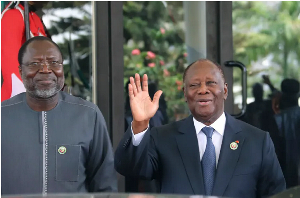
    West African leaders’ summit in Abuja, Nigeria, began following an alliance formed by the military rulers of Burkina Faso, Mali, and Niger, who recently announced their withdrawal from the Economic Community of West African States (ECOWAS).

    Hosted amid calls from several regional leaders for renewed dialogue with the coup-affected Sahel nations, the ECOWAS summit aims to address the implications of the new defence pact signed by Mali, Burkina Faso, and Niger during their recent summit in Niamey, Niger.

    Last September, the three countries established the Alliance of Sahel States, allowing for cooperation in response to internal uprisings or external threats. The withdrawal of these nations from ECOWAS in January came after the bloc took a firm stance against their respective coups.

    According to Al Jazeera’s Ahmed Idris reporting from Abuja, the timing of Saturday’s announcement by the Sahel alliance was intended to demonstrate the autonomy and self-sufficiency of the three countries apart from the regional bloc.

    “But some analysts say Mali and Niger in particular could face difficulties if all member countries of ECOWAS decide to isolate the two landlocked countries,” he said.

    “Right now, the military leaders of Burkina Faso, Mali, and Niger seem to have momentum on their side and they are scouting the global community for support. ECOWAS has a lot of work ahead before it can bring these three countries back into the fold, if at all they agree to do that.”

    Speaking at the summit on Saturday, Niger’s General Abdourahamane Tchiani called the 50-year-old ECOWAS “a threat to our states”, adding that the three countries aim to create an alliance free of foreign influence for their people.

    In February, ECOWAS opted to relax sanctions against Niger in hopes of fostering better relations, but efforts for reconciliation have seen limited success. The sanctions were initially imposed after a coup in July 2023 that brought Tchiani to power.

    Burkina Faso experienced its coup in September 2022, followed by Mali in August 2021.

    Abdulaziz Abdulaziz, a media aide to the Nigerian president, emphasized to Al Jazeera that despite the strained relations between ECOWAS and the Sahel alliance over the past year, there have been some incremental achievements.

    “The handling of the fragile situations in these countries – even though perhaps not ideally what we would want – has helped to de-escalate tensions, but at one point, tensions were really high and things could have gone south,” he said.

    As the Sahel region shifts towards allying with Russia, the United States is set to complete its withdrawal from a key base in Niger on Sunday, which it had built to combat armed groups that pledged allegiance to al-Qaeda and ISIL (ISIS).

    About 1,000 US military personnel were set to withdraw from Niger’s Air Base 101.

    Following the coups in West Africa, the breakaway countries have had increasingly strained relations with the West, condemning influence, particularly by former colonial ruler France. French troops left Mali completely in 2022, and they completed their withdrawal from Niger and Burkina Faso last year.

    Impact on fighting armed groups


    Amid the political and military shifts following the coups, the armed groups continue to pose a considerable danger to the whole region.

    Kabir Adamu, a security consultant, told Al Jazeera that Burkina Faso, Mali and Niger will still need support from the rest of the region.

    “If they decide to operate on their own or try to isolate other ECOWAS countries, or other countries within the Sahel, these [armed] groups will continue to exploit these gaps that will be created and of course, continue to impact a heavy toll on both the security forces and the citizens of the three countries.”

    According to the Armed Conflict Location and Event Data Project (ACLED), which tracks violence in the region, more than 8,000 people were killed in Burkina Faso in 2023, and gains against armed groups largely backslid in Niger.

    In Mali, it said, military forces were working with Russia’s Wagner mercenaries and had been involved in “indiscriminate killing” of civilians.

  • 3 Americans implicated in a coup attempt in Congo go on trial before a military court

    3 Americans implicated in a coup attempt in Congo go on trial before a military court

    Three Americans accused of involvement in last month’s coup attempt, along with dozens of other defendants, appeared before a military court on Friday in Kinshasa, the capital of Congo.

    They were seated on plastic chairs, lined up before the judge as the hearing commenced. The proceedings took place in an open-air setting and were broadcast live on local television.

    The botched coup attempt, led by little-known opposition figure Christian Malanga, occurred last month.

    It targeted the presidential palace and a close ally of President Felix Tshisekedi.

    Tragically, six individuals lost their lives during the incident.

    Malanga, who live-streamed the attack on social media, was fatally shot by the Congolese army for resisting arrest shortly after the incident.

    As the defendants appeared in court, they faced a range of charges, including terrorism, murder, and criminal association, many of which carry the death penalty.

    Initially, there were 53 names on the defendant list.

    However, Malanga and one other individual were removed from the list following the production of death certificates.

  • Breaking: Alleged Coup plot: 6 sentenced to death by hanging

    Breaking: Alleged Coup plot: 6 sentenced to death by hanging

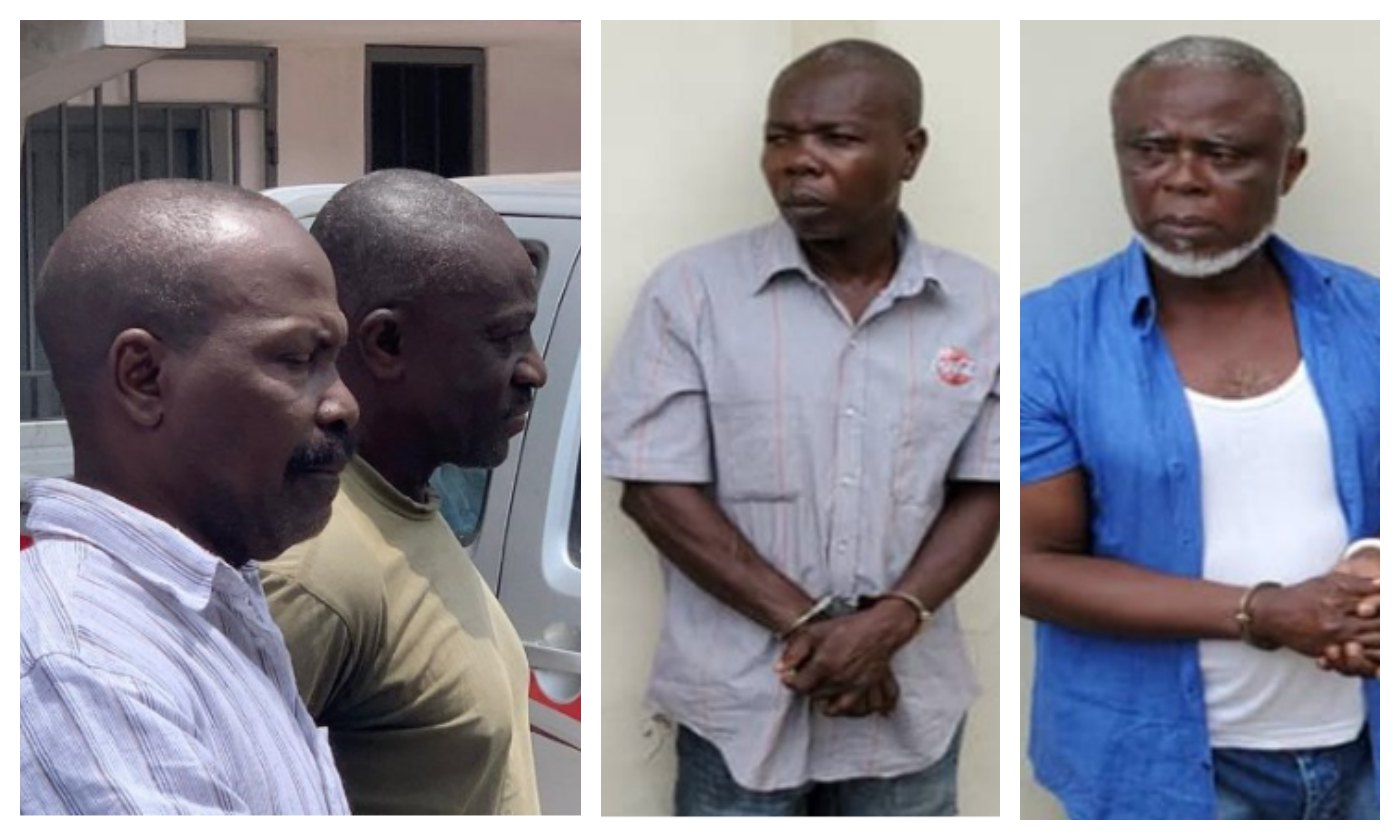
    Six persons in the alleged coup plot against the state have been found guilty and sentenced to death by hanging.

    The six including three soldiers are; Donya Kafui, aka Ezor (a blacksmith) and Bright Alan Debrah Ofosu (a fleet manager), were found guilty of conspiracy to commit treason and treason, while Johannes Zikpi (a civilian employee of the Ghana Armed Forces) was found guilty of conspiracy to commit high treason.

    Three of the accused; ACP Benjamin Agordzor, Colonel Samuel Kodzo Gameli and one other junior military officer, Corporal Seidu Abubakar, however, have been acquitted and discharged.

    The judgment, delivered on Wednesday, concluded a case that began on June 8, 2021, with charges dating back to April 24, 2021. The accused faced various charges, including conspiracy to commit high treason, abatement to high treason, and high treason.

    Among the accused were the late Dr. Frederick Yao Mac-Palm, CEO of Citadel Hospital, ACP Dr. Benjamin Agordzo, and eight others.

    The late Dr. Mac-Palm’s testimony was officially removed from the records following his passing. All ten accused individuals pleaded not guilty and were granted bail during the trial.

    The prosecution, led by Attorney General Godfred Yeboah Dame, included figures from the Attorney General’s Department, such as Yvonne Atakora Obuobisa, Director of Public Prosecution, Hilda Craig, Winifred Sarpong, Lawrencia Adika, and Akosua Agyapomaa Agyemang. The defense team comprised lawyers from Legal Aid and private practitioners, including notable names like Rita Akukunti Ali, Victor Kodjogah Adawudu, and others.

    The three-member panel of judges, sitting as additional High Court judges, consisted of Justice Afia Serwah Asare-Botwe, Justice Hafisata Amaleboba, and Justice Stephen Oppong, with Justice Asare-Botwe serving as the President of the panel.

    Colonel Samuel Kodzo Gameli and ACP Dr. Benjamin Agordzo, charged with abetment, were among the three individuals acquitted. 

    Throughout the trial, State Prosecutors presented 13 witnesses, including seven soldiers. The Prosecution concluded its case on July 12, 2022. The defense had been robustly represented by a team of lawyers, and the verdict, delivered on Wednesday, marks a critical moment in the legal proceedings surrounding the alleged coup plot.

    The convictions and acquittals have sparked discussions about the nature of the evidence presented and the complexities of the case. The legal teams are expected to review the judgment, and the implications of this decision will likely resonate across the legal and political landscape.

    Counsel for the acquitted persons have also declared their intentions to sue the state for what they described as a frivolous case.

  • A strong wind is blowing – Shatta Wale reacts to recent coups in Africa 

    A strong wind is blowing – Shatta Wale reacts to recent coups in Africa 

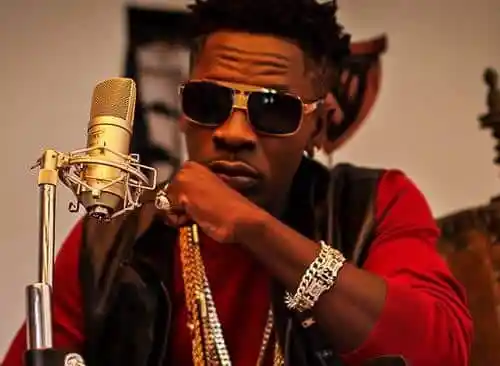
    Dancehall artiste Charles Nii Armah, popularly known as Shatta Wale, has waded into the recent uprising on the African continent, with a strong caution for other countries and their leaders to be vigilant and proactive in addressing the concerns of their citizens to maintain peace and stability.

    “The francophone spring is getting scary !!! A strong wind is blowing oooo Ayooo!!!!! Don’t say I didn’t tell you !! Save this tweet,” he said on August 31, 2023. 

    Africa has experienced seven coups since August 2020, before the one underway on Wednesday in Gabon.

    – Niger –

    On July 26, 2023, the military announced that they had overthrown President Mohamed Bazoum. General Abdourahamane Tiani becomes the new strongman of the country.

    The Economic Community of West African States (ECOWAS) announced on August 10 its intention to deploy a regional force to “restore constitutional order”, while continuing to favor the diplomatic route.

    The military proposes a transition period of “three years” maximum before returning power to civilians.

    – Burkina Faso: two putsches in 8 months –

    On January 24, 2022, President Roch Marc Christian Kaboré was ousted from power by the military, Lieutenant-Colonel Paul-Henri Sandaogo Damiba was inaugurated president in February.

    On September 30, Damiba was in turn dismissed from his position by the military, Captain Ibrahim Traoré was invested as transitional president until a presidential election scheduled for July 2024.

    – Sudan –

    On October 25, 2021, soldiers led by General Abdel Fattah al-Burhane chased out the transitional civilian leaders, who were supposed to lead the country towards democracy after 30 years of dictatorship of Omar al-Bashir, himself deposed in 2019.

    Since April 15, 2023, a war due to a power struggle between General Burhane and his former deputy Mohamed Hamdane Daglo has killed at least 5,000 people in the country.

    – Guinea –

    On September 5, 2021, President Alpha Condé was overthrown by a military coup. On October 1, Colonel Mamady Doumbouya became president.

    The military has promised to return the place to elected civilians by the end of 2024.

    – Mali: two coups in 9 months –

    On August 18, 2020, President Ibrahim Boubacar Keïta was overthrown by the military, a transitional government was formed in October.

    But on May 24, 2021, the military arrested the president and the Prime Minister. Colonel Assimi Goïta was inaugurated in June as transitional president.

    The junta has committed to returning the place to civilians after the elections scheduled for February 2024.

  • EU suspends security cooperation and budgetary aid to Niger following coup

    EU suspends security cooperation and budgetary aid to Niger following coup

    The EU has suspended all security cooperation with Niger after the country’s army took power in a coup.

    It comes shortly after the US declared its “unflagging support” for ousted president Mohamed Bazoum – seen as a key Western ally in the fight against Islamist militants.

    On Friday the head of the presidential guards unit Gen Abdourahmane Tchiani declared himself Niger’s new leader.

    He said insecurity, economic woes and corruption led him to seize power.

    But there are now concerns in the West about which countries the new leader will align with.

    Niger’s neighbours, Burkina Faso and Mali, have both pivoted towards Russia since their own coups.

    EU foreign policy chief Josep Borrell joined the US and France in refusing to recognise the coup leaders and said security cooperation and budgetary aid was being suspended indefinitely.

    Also on Saturday the African Union called on the Niger army to return to base within 15 days.

    Mohamed Bazoum – Niger’s first elected leader to succeed another since independence in 1960 – is currently thought to be in good health, and still held captive by his own guards.

    On Friday evening US Secretary of State Antony Blinken warned those detaining him that “hundreds of millions of dollars of assistance” was at risk.

    However, the leader of Russia’s Wagner mercenary group has reportedly described the coup as a triumph.

    “What happened in Niger is nothing other than the struggle of the people of Niger with their colonisers,” Yevgeny Prigozhin was quoted as saying on a Wagner-affiliated Telegram channel.

    “With colonisers who are trying to foist their rules of life on them and their conditions and keep them in the state that Africa was in hundreds of years ago.”

    He added: “Today this is effectively gaining their independence.”

    The BBC has not been able to verify the authenticity of his reported comments.

    Wagner is believed to have thousands of fighters in countries including the Central African Republic (CAR) and Mali, where it has lucrative business interests but also bolsters Russia’s diplomatic and economic relations.

    Wagner fighters have been accused of widespread human rights abuses in several African countries.

    Gen Tchiani, 62, has been in charge of the presidential guard since 2011 and was promoted to the rank of general in 2018 by former President Issoufou.

    He had also been linked to a 2015 coup attempt against the ex-president, but appeared in court to deny it.

    On Friday Gen Tchiani said his junta took over because of problems in Niger including insecurity, economic woes and corruption.

    He also addressed Niger’s global allies, saying the junta would respect all of the country’s international commitments, as well as human rights.

    But the junta has had strong words for those who oppose them, accusing members of the ousted government who have taken refuge in foreign embassies of plotting against them.

    They said any such attempt would lead to bloodshed, which has so far been avoided.

    Life in the capital Niamey has largely returned to normal with markets and shops open, but civil servants have been told to go home.

    Meanwhile Nigeriens have mixed feelings about the coup, with some saying insecurity in the country wasn’t severe enough to justify a coup. But others have supported the junta.

    Niger’s coup is the latest in a wave of military takeovers that have hit the West African region in recent years, toppling governments in countries including Mali, Guinea and Burkina Faso.

    It also comes as a big blow to the leadership of regional body ECOWAS. Just two weeks ago, the bloc’s chairman, President Bola Tinubu, warned that terrorism and the emerging pattern of coups in West Africa had reached alarming levels and demanded urgent, concerted actions.

    This is the fifth coup in Niger since it gained independence from France in 1960, on top of other unsuccessful takeover attempts.

  • Coup trial: Fourth accused denies ever plotting to overthrow Akufo-Addo

    The fourth accused in the trial over the alleged plot to overthrow the Nana Addo Dankwa Akufo-Addo government, has denied the charges brought against him. Maintaining his innocence, Johannes Zikpi, firmly stated that he never conspired with anyone to remove the president from office.

    According to a report filed by the Chronicle newspaper on June 21, 2023, during the proceedings at the Accra High Court, which featured a panel of three justices including Afia Serwaa Asare-Botwe, Hafisata Amaleboba, and Stephen Oppong; Zikpi addressed the accusations leveled against him, refuting his involvement in the said plot.

    The report further revealed that the accused contended that the prosecution’s claim of his involvement in a conspiracy to overthrow the government was entirely false, emphasizing that he was not acquainted with seven of the accused individuals.

    In his testimony, the accused clarified that his association with the late Dr. Frederick MacPalm stemmed from his relationship with one Col. Samuel Kodzo Gamali, a senior military officer.

    Zikpi further asserted that he had known the colonel since 2015, and it was he who introduced him to Dr. MacPalm in 2018 to assist with the treatment of his high blood pressure.

    According to him, their connection was solely that of a doctor and patient, with no ulterior motives.

    Furthermore, Johannes Zikpi strongly denied the prosecution’s claim that he was tasked with acquiring a communication jamming device to disrupt radio broadcasts.

    He stated unequivocally, “I did not perform any role in terms of planning or providing any support for a coup plot, as alleged by the prosecution. I did not propose the procurement of Gota phones to any of the accused individuals to facilitate covert communication, contrary to their claims,” the newspaper quoted him to have said in court.

    However, Zikpi informed the court that Dr. MacPalm had approached him in the past, seeking assistance with his telephone communication problems at the hospital and as a result, the deceased had asked him if he knew someone who could help him acquire a Gota phone to improve his network reception.

    He explained that in response, he reached out to a colleague named Sergeant Ghartey, asking for assistance in purchasing the phone, however, Sgt. Ghartey clarified that Gota phones were strictly for security services personnel, thus ending the matter.

    The report further revealed that Zikpi denied having sent a message to Dr. MacPalm on March 9, 2019.

    Background

    Dr. Mac-Palm together with two others; Ezor Kafui and Bright Allan Debrah Ofosu, were on Friday, September 20, 2019, picked up by a joint team from the Bureau of National Investigation (BNI) and the Criminal Investigative Department (CID) for plotting a coup against the presidency with the intent to destabilize the country.

    The Minister of Information, Kojo Oppong Nkrumah, in a press release, revealed how state agencies detected and foiled a planned attack on the Jubilee House leading to the retrieval of several arms, explosive devices, and ammunition from Alajo and Bawaleshie in Accra and Dodowa respectfully.

    Following the alleged coup attempt, the three accused persons were arraigned before the Kaneshie District Court and slapped with five charges.

    Some of the charges they’re faced with are conspiracy to commit crimes; to wit manufacturing of arms and ammunition without lawful authority, possessing explosives and firearms without lawful excuse, and manufacture of firearms without lawful authority.

    But reacting to the charges after court proceedings, Dr. Mac-Palm (now deceased) while being escorted by the BNI to his vehicle shouted by pleading innocent to the charges leveled against him.

    According to him, he knows the truth will definitely come out for him to be vindicated so he is not in any way bothered about the whole issue.

    However, the Kaneshie District Court presided over by the magistrate, Rosemond Dodua Agyiri, remanded them into BNI custody and ordered that family members and lawyers be allowed to visit the accused persons at the time.

    Meanwhile, the leading suspect Dr. Frederick Mac-Palm is dead. According to information available concerning his death, he was said to have collapsed in the late hours of Saturday, March 25, 2023, and was later confirmed dead upon arrival at the hospital.