Onion prices are now up in Ghana as a result of the border closure imposed by ECOWAS on Niger following a coup d’état last week.
This has affected the supply of onions from Niger, which accounts for about 70 per cent of Ghana’s imports.
Onion sellers in Ghana are worried about the potential shortage and have appealed to the government to create conditions that enable large-scale onion farming in the country to avert such situations in the future.
Onions are not only a popular and versatile vegetable, but also a nutritious and beneficial one. They are rich in vitamin C, vitamin B6, potassium, manganese, copper, and antioxidants. They may help lower the risk of cancer, heart disease, stroke, diabetes, and Alzheimer’s disease.
A deficiency of onions in one’s diet may lead to reduced immunity, increased inflammation, impaired blood sugar regulation, and decreased bone density. Therefore, it is important to ensure adequate consumption of onions for optimal health.
The onion sellers hope that the political situation in Niger will be resolved peacefully and that the border restrictions will be lifted soon. They also hope that the government will support them to increase their local production and reduce their dependence on imports.
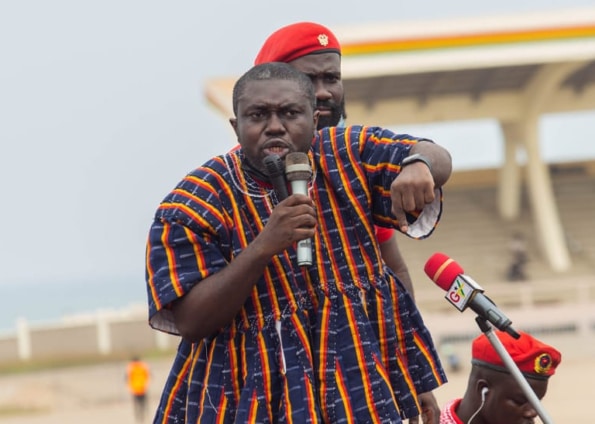
Member of Parliament for Ningo-Prampram, Samuel Nartey George, has asserted that Africa’s misfortune being ridden by the West can only be overturned by a set of new young African leaders.
According to Mr Nartey George, examples of the leaders he talks about began to surface during the recent military takeovers recorded in the West African sub-region.
He cited the new crop of leaders that have emerged from some Francophone countries, such as Burkina Faso, Mali and Guinea, as those he believes have what it takes to make Africa self-reliant.
In an interview on JoyNews on August 8, the MP said: “What is happening in Francophone Africa. People are waking up. We can no longer be taken for stooges.
“It is this awakening in the next generation of Africans that we are capable of managing our own Affairs and that we must unite. We must have a new cadar.
“Look across the landscape of Francophone Africa, with the exception of the Niger (leader), who is a bit elderly— I think about 61 or so. All the other guys – Burkinabe, Guinean, Malian, they are young soldiers,” he said.
According to Mr Sam Nartey George, the set of individuals who must take the helm of affairs are those “who are afrocentric in their thinking and will say to the West and Europe, ‘We will stay, hold our own, trade among ourselves, and we will only trade with you if you are willing to come and negotiate with us as equals.’”
Despite regarding the military juntas as daring and bold, the Ningo-Prampram MP noted that he stands against autocracy. He, however, clarified that he supports the kind of democracy that suits the African way of living and not those of the West.
“I am student of democracy. I believe democracy must strive. I believe Africa must develop its own version of democracy. The western democracy is not suitable for Africa.
“Look at Rwanda. Rwanda is celebrated by the West but what they practice in Rwanda is not the western democracy,” he said.
Military takeover in Burkina Faso, Mali and Guinea
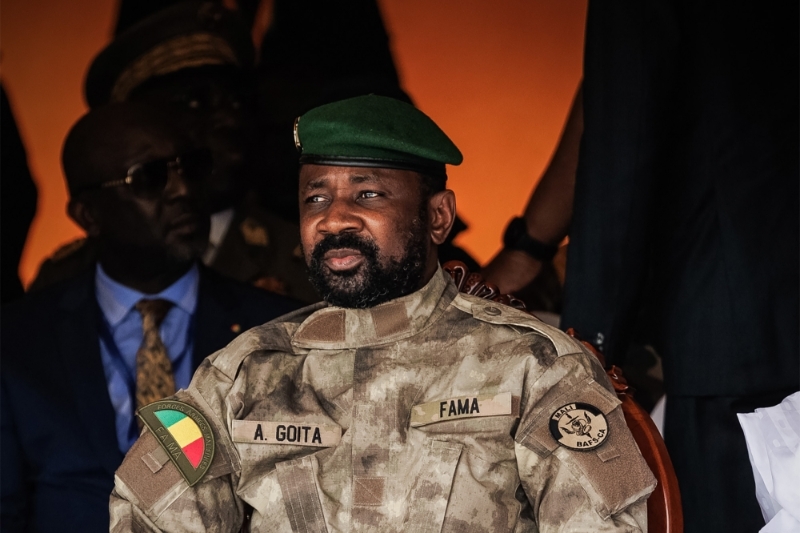
In Mali’s case, President Ibrahim Boubacar Keïta was ousted from power by a military coalition in August. Subsequently, Mali’s former Defense Minister, Bah Ndaw, assumed the presidency of the new transitional government, with Colonel Assimi Goita appointed as vice president. However, they were both removed from power a year later in May by Colonel Assimi Goita, a 42-year-old.
On September 5, 2021, Guinea experienced a coup d’état as the armed forces captured President Alpha Condé, who had extended his stay in power through a constitutional amendment. Colonel Mamady Doumbouya, 43-year-old, was sworn in as transitional leader in October.
In Burkina Faso, President Roch Kabore was ousted from power on January 24, 2022, following a coup led by Colonel Paul-Henri Damiba. However, eight months later, military rule was reestablished, led by Captain Ibrahim Traoré, 35.
Colonel Assimi Goita
In Burkina Faso, President Roch Kabore was ousted from power on January 24, 2022, following a coup led by Colonel Paul-Henri Damiba. However, eight months later, military rule was reestablished, led by Captain Ibrahim Traoré.
Captain Ibrahim Traoré
Actions after takeover
Mali
Mali has embraced a new constitution that marks a departure from its previous status quo. The country has shed its official language, French, which had held that position since 1960.
The fresh constitution, endorsed with an impressive 96.91% of the vote during a referendum on June 18, brings about a change where French is no longer the designated official language.
Instead, French will transition into a working language, while recognition as official languages will be granted to 13 other native languages spoken within the nation.
Burkina Faso
In January of 2023, the junta government of Burkina Faso issued an order for several hundred French troops to depart the West African nation within a month.
This decision by Burkina Faso’s leadership followed France’s withdrawal from Mali in the prior five months, ending a nine-year engagement in combatting Islamic extremists alongside regional military forces.
A significant portion of these troops have since established new bases in Niger and Chad.
In April 2023, the military junta expelled the correspondents from two prominent French daily newspapers, namely Le Monde and Liberation.
This action served as a fresh indication of the decline in both press freedom and diplomatic relations with France in a country that has been deeply affected by jihadist violence.
The expulsions of Sophie Douce from Le Monde and Agnès Faivre from Liberation were executed, with both journalists arriving in Paris. These events followed the suspension of the France 24 television channel five days prior, and Radio France Internationale (RFI) being suspended four months earlier.
The junta in Niger has challenged a Sunday deadline issued by West Africa’s regional coalition, which demanded the reinstatement of deposed President Mohamed Bazoum, warning of the potential for a military intervention.
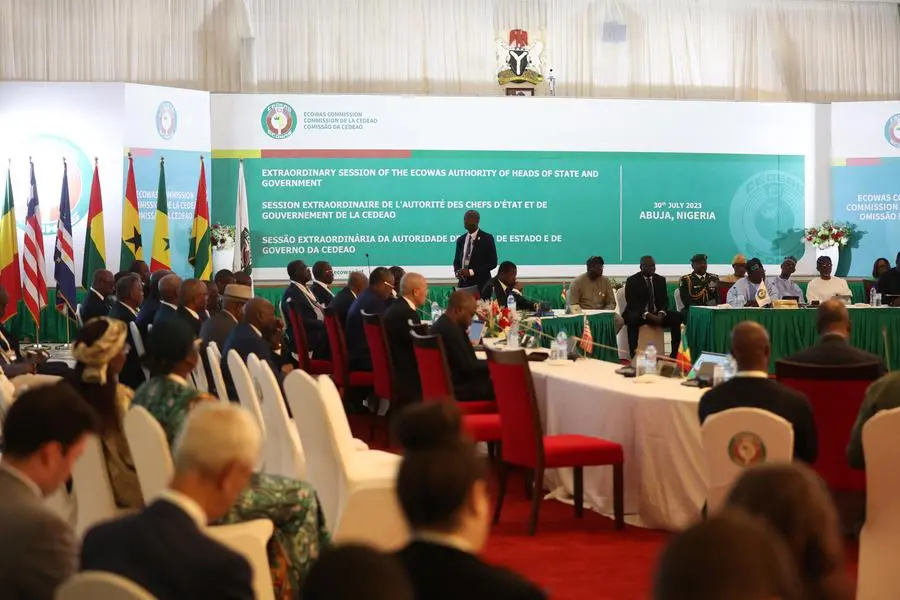
Defence leaders of the Economic Community of West African States (ECOWAS) established a strategy last week, contemplating the possible application of force to reverse the coup that occurred on July 26. This strategy outlines the methods and timing for deploying forces, thus heightening concerns of additional conflicts in a region already grappling with a perilous Islamist insurgency.
The coalition is keeping the details confidential, and any intervention would necessitate approval from the leaders of member nations. Although several options, encompassing both military and alternative approaches, are conceivable, each comes with its own set of risks.
Ground Invasion
ECOWAS has deployed troops to regions of unrest in the past; however, this action is unprecedented in Niger and occurs in a region that is seldom so divided.
According to security analysts, assembling the specifics of a large-scale operation could span several weeks, and the prospect of an invasion carries substantial risks. These risks encompass the potential for being embroiled in a protracted conflict and exacerbating instability both in Niger and throughout the broader region.
Coup leader General Abdourahamane Tiani has experience, having previously served as a battalion commander for ECOWAS peacekeepers in Ivory Coast following a ceasefire between government and rebel forces in 2003. This background gives him insight into the nature of intervention missions.
Nevertheless, for some, the available options might seem quite limited.
“If they don’t go in, it will be a major problem of credibility. They have laid down a red line,” said Djiby Sow, a senior researcher at the Institute for Security Studies in Dakar.
Nigerian President Bola Tinubu has told his government to prepare for options including the deployment of military personnel. Senegal has also said it could send troops.
But coup leaders in Guinea, Burkina Faso and Mali have expressed support for Niger’s junta, and other countries have their own security challenges.
Special Forces Operation
This option would involve a slimmer ground force that would be quicker to assemble. It would likely focus on seizing key security and administrative sites, rescuing Bazoum from house arrest and restoring his government, said Ikemesit Effiong, a senior researcher at SBM Intelligence consultancy in Nigeria. ECOWAS could seek intelligence support from U.S. and French forces inside Niger.
“The timeline would be shorter and the capability already exists in the region. An operation of that nature would be more realistic,” Effiong said.
Risks still abound, though. Foreign troops guarding sites in the centre of the capital Niamey could trigger violence in a city where hundreds have taken to the streets in support of the coup – and against foreign interference.
Aiding a counter coup
Niger is a huge, ethnically diverse country, and Bazoum won the 2021 election with 56% of the vote. It is not yet clear how much support various groups will give the new leaders.
Security analysts and diplomats have also noted apparent divisions among Niger’s armed forces, who may not all be united behind the coup.
Regional powers could exploit that.
“The only operationally feasible scenario I can imagine … would be in the form of more limited support for a ‘counter coup’ by Nigerien forces,” said Peter Pham, a fellow at the Atlantic Council think tank and a former U.S. special envoy to the Sahel region. “I don’t see them coming in without that local element.”
Take stock, maintain sanctions
In comparison to the juntas in Burkina Faso and Mali, which have assumed power within the past three years, ECOWAS has adopted a more assertive stance against Niger.
However, there remains the possibility that ECOWAS might choose to uphold sanctions, refrain from direct military intervention, and instead advocate for a return to civilian governance following elections. The junta has expressed its willingness to engage in discussions about this option, although a specific timeframe has not been provided.
Even this course of action carries inherent regional risks. Imposing sanctions could undermine Niger’s economy, a reality that holds particular weight for one of the world’s most economically disadvantaged nations. Such a situation might inadvertently fuel support for the junta and extremist groups that extend financial support and shelter.
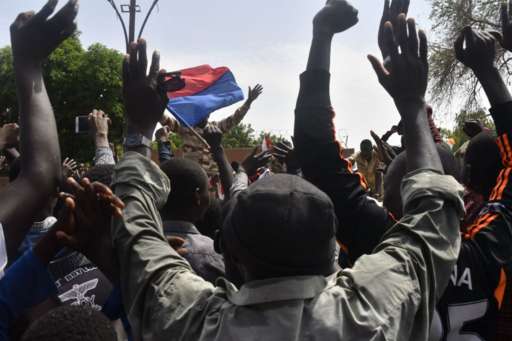
On Sunday August 6 2023, thousands of individuals who endorse the military coup in Niger gathered at a stadium in Niamey. This event coincided with the deadline stipulated by the West African regional coalition ECOWAS, requiring the reinstatement of ousted President Mohamed Bazoum to power.
A delegation from the ruling National Council for the Safeguard of the Homeland (CNSP) made their way to the stadium, which has a seating capacity of 30,000, receiving enthusiastic applause from their supporters. Many attendees proudly waved Russian flags and carried portraits of CNSP leaders.
The stadium, named after Seyni Kountche, the leader behind Niger’s inaugural coup d’état in 1974, was nearly at full capacity, and the atmosphere exuded a festive spirit, as reported by journalists on the scene.
General Mohamed Toumba, one of the CNSP leaders, denounced in a speech those “lurking in the shadows” who were “plotting subversion” against “the forward march of Niger”.
“We are aware of their Machiavellian plan,” he said.
The protest aligns with the ultimatum established by ECOWAS on July 30th, urging the coup leaders to reinstate Bazoum.
However, up to this point, the generals who seized control in Niamey on July 26th have displayed no indications of being open to yielding.
On Friday, ECOWAS military leaders concurred on a potential military intervention plan in response to the crisis. Armed forces from countries such as Senegal and Ivory Coast expressed readiness to partake.
On Saturday, Nigeria’s Senate, situated in the neighboring country, resisted the approach of the ECOWAS regional group. They implored the President of Nigeria, the current head of the bloc, to explore alternatives beyond the use of force.
Although ECOWAS can still progress, as final resolutions are reached through consensus among member nations, the warning issued on the eve of Sunday’s deadline has cast doubts over the intervention’s outcome.
While the coup has garnered widespread condemnation from Western and African nations, Niger’s military received backing from their counterparts in Mali and Burkina Faso—two nations that have experienced military coups seizing power in the last three years.
As the ECOWAS deadline expired, Niger’s military junta declared on Sunday the closure of the country’s airspace.
Niger’s airspace was closed due to “the threat of intervention from a neighboring country,” said the spokesperson for the now-ruling National Council for the Safeguard of the Homeland (CNSP), Colonel Major Amadou Abdramane, in a video statement played on state television.
As per the CNSP’s announcement, the West African regional coalition has finalized its arrangements for a potential incursion into Niger. At least two member states of the organization have initiated the mobilization of their armed forces, heading towards Niger’s border.
Niger’s military leadership has up until now declined to relinquish authority, as stipulated by ECOWAS defense ministers. This group had established a Sunday ultimatum for the reinstatement and return to power of the deposed President Mohamed Bazoum, who had been elected in February 2021.
Convenor for the #FixTheCountry movement, Oliver Barker-Vormawor, has announced his determination to persistently challenge Ghana’s political establishment, even going as far as invoking the notion of a coup d’état.
The activist holds the view that the mere suggestion of a coup unsettles the politicians of Ghana’s 4th Republic, making it a powerful tool to keep them accountable.
He expressed his perspective by saying, “When I talk about taking legal action, they dismiss it as they control the courts. When I talk about organizing protests, they dismiss it as they control the police. When I talk about revolution, they dismiss it as the people are disorganized.
“But when I mention a coup, they arrest me. Why? Now that I see it’s the only thing that makes you anxious, I’ll continue to mock you corrupt individuals with coup references until the people gather their strength and rise up! Or until you develop high blood pressure from constant worry.”
Barker-Vormawor is currently facing accusations of conspiring to overthrow the government and has been formally charged with treason felony. His arrest in February 2022 was prompted by a social media post that law enforcement interpreted as a direct expression of intent to undermine the country’s constitution, potentially through a coup.
In recent times, the West African region has witnessed a series of coup d’état events, raising concerns about the potential expansion of such incidents in neighboring countries.
Nevertheless, Ghana’s Defense Minister, Dominic Nitiwul, has categorically dismissed any concerns regarding a potential military takeover in Ghana. Nitiwul has underscored that unlike other West African nations such as Guinea, Mali, Burkina Faso, and Niger, Ghana’s Armed Forces are unwavering in their commitment to uphold the constitution.
He highlighted that the defense of the constitution takes precedence over any actions that could undermine it, including coup attempts.
Niger has now joined the ranks of West African countries where the military has taken control, following the footsteps of Burkina Faso, Guinea, Mali, and Chad – all of which were former French colonies.
Interestingly, since 1990, a significant 78% of the 27 coups in sub-Saharan Africa have taken place in Francophone nations, prompting some analysts to question whether France, or the lingering effects of French colonialism, bear responsibility for these events.
Many of the coup plotters themselves appear to support this notion. For instance, Colonel Abdoulaye Maiga, who assumed the role of prime minister in Mali under the military junta in September 2022, vehemently criticized France, implying a connection to the country’s political upheaval.
Criticising “neocolonialist, condescending, paternalist and vengeful policies”, Mr Maiga alleged that France had “disowned universal moral values” and stabbed Mali “in the back”.
Anti-French vitriol has also flourished in Burkina Faso, where the military government ended a long-standing accord that allowed French troops to operate in the country in February, giving France one month to remove its forces.
In Niger, which neighbours both countries, allegations that President Mohamed Bazoum was a puppet for French interests were used to legitimise his removal from power, and five military deals with France have since been revoked by the junta led by Gen Abdourahmane Tchiani. Partly as a result, the coup was followed by popular protests and attacks on the French embassy.
The historical record provides some support for these grievances. French colonial rule established political systems designed to extract valuable resources while using repressive strategies to retain control.
So did British colonial rule, but what was distinctive about France’s role in Africa was the extent to which it continued to engage – its critics would say meddle – in the politics and economics of its former territories after independence.
Seven of the nine Francophone states in West Africa still use the CFA franc, which is pegged to the euro and guaranteed by France, as their currency, a legacy of French economic policy towards its colonies.
France also forged defence agreements that saw it regularly intervene militarily on behalf of unpopular pro-French leaders to keep them in power.
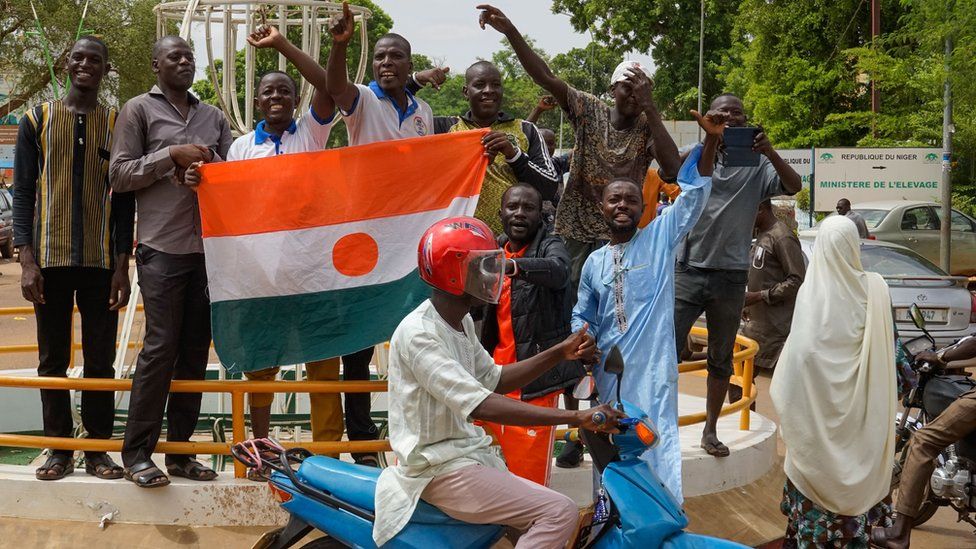
Image caption,Demonstrators in Niger also condemned neighbouring countries that have imposed economic sanctions since the coup
In many cases, this strengthened the hand of corrupt and abusive figures such as Chad’s former President Idriss Déby and former Burkinabe President Blaise Compaoré, creating additional challenges for the struggle for democracy.
Although France did not intervene militarily to reinstate any of the recently deposed heads of state, all were seen as being “pro-French”.
Worse still, the relationship between French political leaders and their allies in Africa was often corrupt, creating a powerful and wealthy elite at the expense of African citizens.
François-Xavier Verschave, a prominent French economist, coined the term Françafrique to refer to a neocolonial relationship hidden by “the secret criminality in the upper echelons of French politics and economy”. These ties, he alleged, resulted in large sums of money being “misappropriated”.
Although recent French governments have sought to distance themselves from Françafrique, there are constant reminders of the problematic relations between France, French business interests and Africa, including a number of embarrassing corruption cases.
It is therefore easy to understand why one Nigerien told the BBC that: “Since childhood, I’ve been opposed to France… They’ve exploited all the riches of my country such as uranium, petrol and gold.”
Such scandals were often swept under the carpet while France’s African political allies were strong, and France’s military support helped to maintain stability.
In recent years, the ability of France and other Western states to ensure order has deteriorated, leaving them increasingly vulnerable to criticism.
Despite considerable funding and troops, the French-led international response to Islamist insurgencies in the Sahel region has failed to enable West African governments to regain control of their territories.
This was particularly significant to the fate of civilian leaders in Burkina Faso and Mali because their inability to protect their own citizens created the impression that French support was more of a liability than a blessing.
In turn, growing popular anger and frustration emboldened military leaders to believe that a coup would be celebrated by citizens.
Yet, for all of the mistakes France has made in its dealings with its former colonies in Africa over the years, the instability Francophone states are currently experiencing cannot be solely laid at its door.
It has hardly been the only former colonial power to prop up authoritarian leaders abroad.
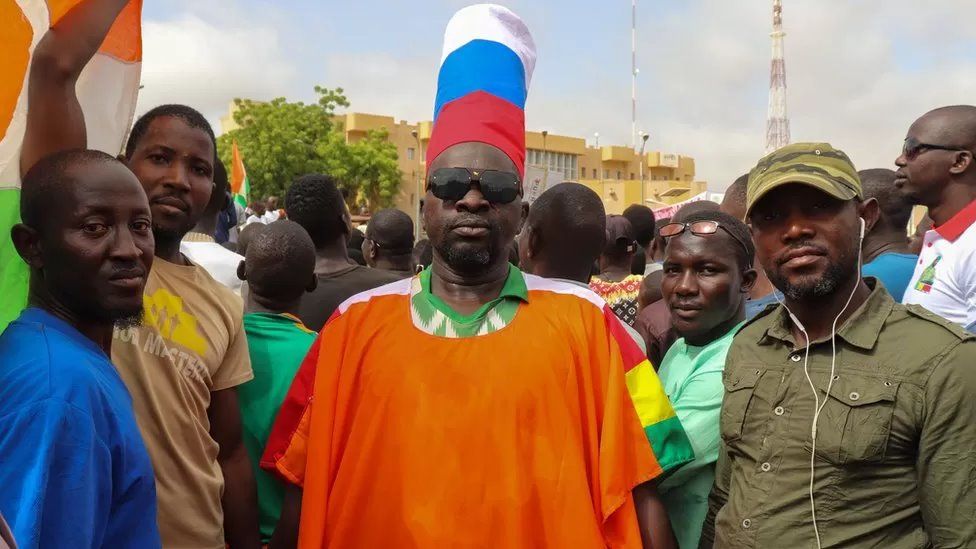
Image caption,Some of those opposed to French involvement in Niger have shown their support for Russia instead
During the dark days of the Cold War, the UK and the United States helped prop up a number of dictators in return for their loyalty, from Daniel arap Moi in Kenya to Mobutu Sese Seko in what was then Zaire, now the Democratic Republic of Congo.
The strong relationship between coups and the former colonial power was also much less prevalent in previous eras. Four of the countries that have seen the highest number of coup attempts since 1952 are Nigeria (8), Ghana (10), Sierra Leone (10), and Sudan (17), which all experienced British rule.
While the recent trend of coups in Francophone states may reflect the legacy of Françafrique coming home to roost, it has also been underpinned by “unprecedented” levels of insecurity in parts of West Africa and the Sahel region, with “armed groups, violent extremists and criminal networks” undermining public confidence in civilian governments, according to the UN.
Each of the coups over the last three years has also been driven by a specific set of domestic factors that demonstrate the agency of African political and military leaders.
In Mali, the background to the coup included an influx of extremist forces following the the collapse of the Libyan state in 2011, allegations the president had manipulated local elections, and mass anti-government protests orchestrated by opposition parties in the capital.
The trigger for the coup in Niger appears to have been President Bazoum’s plans to reform the military high command and remove Gen Tchiani from his position.
This is a strong indication that the coup was not really intended to strengthen Nigerien sovereignty, or to aid the country’s poorest citizens, but rather to protect the privileges of the military elite.
The mixed motives of recent coups are well demonstrated by the speed with which many of the new military governments have sought to replace one problematic relationship with an external ally with another.
At the recent Russia-Africa summit in St. Petersburg, leaders from Burkina Faso and Mali declared their support for President Vladimir Putin and the invasion of Ukraine.
As in the past, the beneficiaries of these global alliances are likely to be the political elite rather than ordinary citizens. There are already reports that in May, troops from the Wagner group, in alliance with Putin’s government at the time, were responsible for the torture and massacre of hundreds of civilians in Mali as part of anti-insurgency operations.
Reducing French influence is therefore unlikely to be a straightforward boon for political stability, and in decades to come we may well see a new generation of military leaders attempting to legitimise further coups on the basis of the need to rid their countries of malign Russian influence.
Leonard Mbulle-Nziege is a research analyst at Africa Risk Consulting (ARC) and Nic Cheeseman is the director of the Centre for Elections, Democracy, Accountability and Representation at the University of Birmingham.
A faculty member holding the position of Associate Professor at the University of Ghana School of Law has expressed the belief that unless corruption-related practices and inadequate governance are addressed, West Africa could witness more instances of coups.
Prof. Kwadwo Appiagyei-Atua underscored that the region must acknowledge that coup d’états signify not merely unconstitutional endeavors to alter the government, but rather the outcomes of unconstitutional shifts initiated by the ruling authority.
He elaborated that African leaders and incumbent administrations must recognize the existing issues within their governance, encompassing concerns such as corruption and deficient governance.
“More coups may come if we don’t sit up and realise that unconstitutional change in government is not just about coming to power through unconstitutional means but trying to stay in power and trying to foment divisional interest in order to maintain power and rely on corrupt governance to stay in power.”
During an appearance on JoyNews’ Newsfile program on Saturday, the professor outlined certain factors that could contribute to the formulation of coup plots. He highlighted that a situation where a government clings to power despite losing an election could also serve as a catalyst for a coup to take place.
“The other is where a government decides to change the constitution in order to stay in power beyond the normal two-term time limit,” he stated.
In light of this, Prof. Appiagyei-Atua emphasized that the prevailing landscape is evolving, underscoring that the assurance of democracy cannot be guaranteed.
He further stated that there is a potential for additional coup d’état instances to arise if West African leaders hastily intervene to depose the junta in Niger and reinstate democracy.
“Now in Niger, the West has come to realise that if we say that we’re just abandoning Niger, then we’re allowing Wagner (group in Niger) to come in and take over.
“US has spent a lot of money in terms of security in Niger and so they want to protect that interest. China is also in Niger and they have their interest to protect so the geopolitics is thickening very fast, especially in West Africa. We need to therefore be very careful about how we tackle this issue and not make a rush decision and say that we are going to Niger to overthrow the government and restore democracy, it is easier said than done,” he said.
He, however, suggested that the West African leaders should adopt a more pragmatic approach that can resolve the coup in Niger and the ones which may come up.
An expert has told the international media that the coup leaders in Niger cited the country’s ongoing insecurity as one of the reasons behind their decision to overthrow President Mohamed Bazoum last week.
However, the expert, Olayinka Ajala from Leeds Beckett University, pointed out that a rift between some in the military and the president had been developing.
He mentioned that there was an ethnic dimension to the power struggle and growing discontent with the presence of foreign troops in the country.
President Bazoum, being from the ethnic Arab minority, was perceived by some as having foreign origins, adding to the complexities of the situation, as highlighted by Dr. Ajala in his analysis.
According to the expert, “this did not sit well within the military circle, which is predominantly composed of the larger ethnic groups.”
In addition to the reasons mentioned earlier, Dr. Ajala also highlighted that the presence of French troops in Niger after their expulsion from Mali last year, along with the establishment of US and French drone bases in the country, added to the growing discontent among certain factions within the Nigerien military.
According to David Kampmann from BBC Monitoring, there were reports suggesting that the leader of the coup, Gen Abdourahmane Tchiani, was on the verge of being replaced by President Bazoum as head of the presidential guard as part of security apparatus reforms.
Gen Tchiani apparently took preemptive action and ousted the president before any such changes could take place.
However, it’s important to note that these reports remain unconfirmed rumors, as emphasized by Mr. Kampmann.
A delegation from West Africa, tasked with mediating in Niger after last week’s coup, has left the country after only a few hours, with no visible signs of progress.
The mediators, appointed by the regional body Ecowas, were unable to meet with the coup leader or the deposed president, Mohamed Bazoum.
In response to the coup, Ecowas has imposed sanctions on Niger and has issued a threat to use force if Mr. Bazoum is not reinstated as president. Mr. Bazoum has called on the international community to assist in restoring constitutional order.
Moreover, Mr. Bazoum has warned that the entire Sahel region may come under Russian influence.
Late on Thursday, the coup leaders in Niger also criticized all military agreements with France. It is worth noting that French troops are present in Niger to combat Islamist extremists.
In the aftermath of last week’s coup in Niger, major cities in the country are experiencing frequent power outages.
The electricity company of Niger, Nigelec, has attributed these blackouts to Nigeria cutting off its power supplies to its northern neighbor.
As a response to the coup, the Economic Community of West African States (ECOWAS) has imposed sanctions on Niger, but it remains unclear if these sanctions include restrictions on electricity supplies.
Amidst the crisis, ECOWAS defense chiefs are holding a meeting in Nigeria to address the situation in Niger.
Furthermore, West African leaders have given the military junta in Niger a one-week ultimatum to relinquish power or face the possibility of military intervention.
In response to the escalating situation, some European countries are currently evacuating their citizens from Niger.
Power supply in the cities of Niamey, Maradi, and Zinder has been disrupted, with residents experiencing one-hour power intervals followed by up to five hours of outage. Such power cuts are unusual in Niger, a country that typically enjoys regular and reliable electricity supply. The reason for these outages lies in Niger’s heavy dependence on its wealthier neighbor, Nigeria, as its primary source of electricity.
The Transmission Company of Nigeria has chosen not to comment on the power cuts in Niger. However, an anonymous source revealed to the BBC that the supply was cut following a presidential directive issued on Tuesday.
The military coup in Niger last week resulted in the overthrow of democratically-elected President Mohamed Bazoum by his own presidential guards. This led to the suspension of the constitution and the installation of Gen Abdourahmane Tchiani, the chief of the presidential guard, as the head of state.
In light of the ongoing situation, the military government has announced the re-opening of Niger’s borders with Algeria, Burkina Faso, Libya, Mali, and Chad. However, its borders with Nigeria remain closed.
A delegation from the Economic Community of West African States (ECOWAS) is currently holding a meeting in Niger as mediation efforts continue following the coup. The delegation is led by Nigeria’s former military head of state, Gen Abdulsalami Abubakar, who played a significant role in Nigeria’s transition from military rule to democracy in 1999. Nigeria’s most senior Muslim leader, the Sultan of Sokoto, Muhammadu Sa’adu Abubakar III, is also reportedly part of the delegation, and he holds substantial influence in Niger due to the historical ties between the two regions.
In response to the political instability, evacuation flights have begun to transport European citizens out of Niger. Recently, 262 French citizens arrived in Paris. However, there have been anti-French sentiments in the country, leading to demonstrations against the former colonial power, with the French embassy being targeted.
Despite the situation, France has no current plans to repatriate around 1,000 French soldiers stationed in Niger as part of their efforts to counter Islamist militants.
Former Executive Vice President of Unilever, Yaw Nsarkoh, has expressed concern that Ghana’s Fourth Republic could face the threat of a coup d’état if the nation does not address the fissures emerging due to poor governance.
During an appearance on PM Express on JoyNews, Nsarkoh emphasized that the persistence of inadequate governance can lead to an environment where populist forces gain traction and seize control, acting in their own interests.
While some may believe that Ghana is immune to such political upheavals due to its history, Nsarkoh argued that the underlying issues that previously led to military interventions in the country are resurfacing within the context of the Fourth Republic.
“So when the people of Ghana say, ‘no, we are not like that, as for us, it will always be okay’, It’s just a collective amnesia of things that have gone wrong in this society before. And let us remember that I was alive at that time.
“In 1979, I was 11. So I still remember these things that happened and we saw them. There are causative factors that created these disruptions. We have been through the First Republic, which the soldiers kicked out, a Second Republic, which again, the soldiers kicked out and a Third Republic, which the soldiers kicked out,” he stated.
Mr. Nsarkoh voiced his disapproval of coups, asserting that it is not within the mandate of the armed forces to govern a nation.
However, he emphasized that in order to safeguard the Fourth Republic from experiencing the same challenges as its predecessors, it is imperative to engage in discussions aimed at addressing the underlying issues that could potentially lead to its downfall.
“We must remember James Baldwin famously said ‘The most dangerous creation of any society is the man with nothing to lose’. And we in our society today have many who have nothing to lose. So, if we think that we can leave so many people out of the fruits of development and national building and somehow keep it stable, we deceive ourselves.”
“We are beginning to see the features of some of the things that went wrong (in earlier republics) and we must start to have the conversation now. We don’t want to go back to those days. If the Fourth Republic will endure and become the last, then we need to change some of the things that we did in the past that created those sorts of disruptions.”
Mr Nsarkoh noted that Ghana has a chance to make things right and learn from the mistakes of the past.
He stated that “I know that if you allow misgovernance, you create spaces for a populist. It is not necessarily even a military populist. You create spaces for a populist to emerge. So we must be as concerned about good governance as we are about condemning military coups and so on and so forth.”
International Relations Analyst, Dr. Vladimir Antwi Danso, has shared the recent coup in Niger comes as no surprise, as he believes all the necessary elements for a coup are present in Africa.
He pointed out that the signs of Niger’s potential coup were evident following the toppling of the Malian leader.
Dr. Antwi Danso had previously expressed his concerns during a meeting discussing Mali, where he predicted that Niger could be susceptible to a coup, but unfortunately, his warning went unheeded.
Regarding the possibility of ECOWAS (Economic Community of West African States) taking military action in Niger, he doubts its effectiveness, stating that such a move could exacerbate the situation.
The analyst emphasized that any democratic system in Africa that doesn’t truly cater to the needs of its people is prone to facing similar repercussions.
Dr. Antwi Danso stressed the importance of tailoring the continent’s democracy to align with its socio-historical and cultural realities as a crucial step towards political stability.
The French foreign ministry has announced its plans to promptly initiate the evacuation of its citizens in Niger following the recent coup.
Amid the deteriorating security situation, the French embassy in Niamey conveyed that preparations for air evacuations were underway and would occur within a very limited timeframe, according to the AFP report.
Last week, Niger President Mohamed Bazoum was overthrown when troops from his presidential guard seized power.
Notably, this is the third Sahelian country, following Burkina Faso and Mali, to experience a coup in less than three years.
These incidents have been accompanied by growing anti-French sentiments, leading these nations to strengthen their ties with Russia.
AFP news agency has reported that, the PNDS party has expressed concerns that Niger might transform into a “dictatorial and totalitarian regime” in the aftermath of the military junta taking control.
The party reported that several prominent figures, including Oil Minister Mahamane Sani Mahamadou, Mining Minister Ousseini Hadizatou, and Fourmakoye Gado, the head of the party’s national executive committee, have been detained. In total, 130 party activists have been held since Sunday.
The coup leaders have made claims, unsupported by evidence, that an attack on the presidential palace to free President Mohamed Bazoum is imminent, alleging that France might be involved in such a plot.
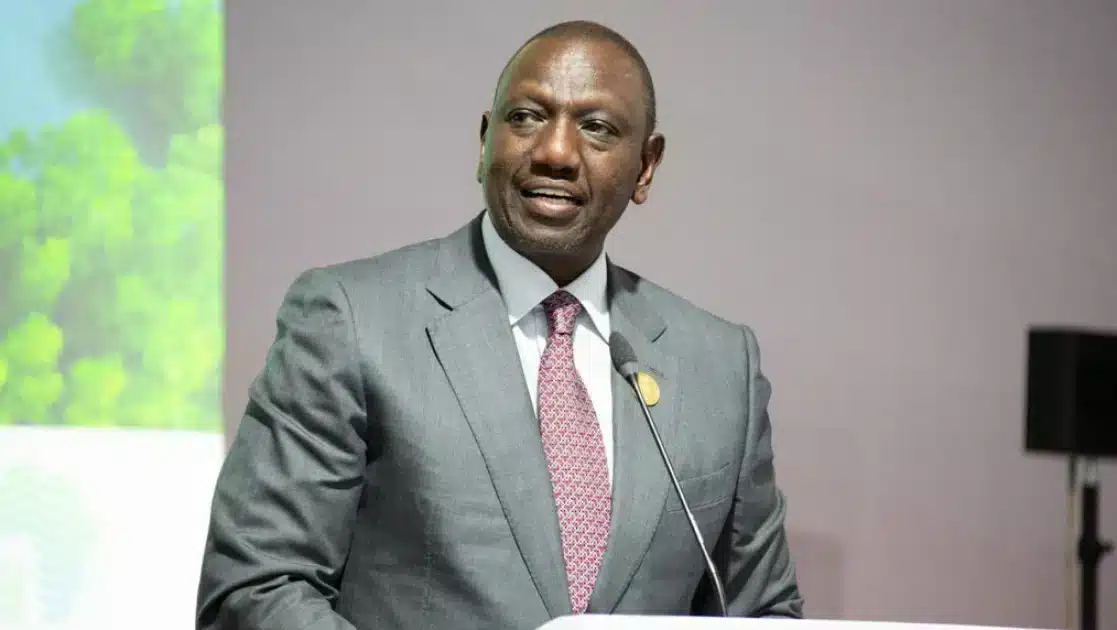
On Friday, President William Ruto of Kenya joined global leaders in condemning the coup orchestrated by the Nigerien presidential guards and called for the immediate release of President Mohamed Bazoum.
Speaking from Mombasa State House in a brief video message, the Kenyan leader expressed disapproval of the actions taken by the West African nation’s guards to overthrow a democratically elected government, undermining the will of the people. Notably, the guards have received support from the country’s army while still holding President Bazoum in detention.
President Ruto extended Kenya’s offer of assistance in resolving the conflict. The elite guard has effectively barricaded access to President Bazoum’s residence and offices in the capital city of Niamey. These actions came after negotiations with representatives from the regional bloc Ecowas failed. Additionally, the guards have imposed closures on the country’s airspace and borders.
“The resurgence of military coups and attempts to subvert the will of the people on our beloved continent demands a united and global response to hold those responsible accountable for their actions,” said President Ruto.
“The Republic of Kenya joins the rest of the world to condemn in the strongest terms this unconstitutional act that subverts democracy through a Coup d’etat and calls for the immediate release of President Mohammed Bazoum who is reportedly seized by members of the presidential guard,” demanded Ruto.
He extended an olive branch to help find lasting peace.
“Kenya is willing to assist in resolving the conflict under the auspices of the AU should it be deemed appropriate. Africa continues to shine as a beckon of hope and progress and we shall never waive in our pursuit of a brighter future for all,” he committed.
The coup in Niger is the latest manifestation of a troubling trend in West Africa. Over the past two years, elected presidents in Mali, Guinea, and Burkina Faso have also been overthrown in separate incidents. In response, the African Union has followed its customary practice of suspending these countries. Sudan has also faced turmoil, with a recent outbreak of war following the overthrow of a transitional civilian government in October 2021. This was followed by a split in security forces regarding the country’s transition.
Kenya’s leader acknowledges that Niger’s incident adds to Africa’s setback in its democratic progress, as the aspirations for democratic governance by its people were undermined by a change of government through unconstitutional means.
Throughout the continent’s history, efforts have been made to uphold democratic principles and align with the African people’s desire for freedom and self-determination, as expressed by Ruto, the Kenyan leader.
The African Union has had a policy since 2007 to denounce unconstitutional changes in government, leading to the immediate suspension of countries where such actions occur, whether by the military or politicians taking control illegally. However, critics argue that the prevalence of coups may also be influenced by external interference from world powers and the failure to establish strong and trustworthy institutions that can safeguard the interests of the people.
As emphasized by Ruto, the African Union’s fundamental norm is enshrined in Article 4 (p) of the Constitutive Act, which unambiguously condemns and rejects any unconstitutional change of government.
In light of these developments, a swift restoration of constitutional rule is called for, prioritizing the protection of the population and the re-establishment of full civilian authority, while also respecting the country’s institutions to the utmost.
France is accused of disobeying laws preventingtravelers from entering or departing the nation, according to the military commander who led the coup that ousted Nigerien President Mohamed Bazoum.
It comes in response to Communiqué Number 3’s directive to close all land and air borders, which was given on July 26.
Colonel-major Amadou Abdramane announced: “It has been noted that the French partner is bypassing this by landing an A401 military aircraft at Niamey international airport [Thursday morning] at 06:30.”
“The CNSP calls once and for all for strict compliance with the provisions of communiqué number 3.”
On Thursday, the army gave its support to the coup leaders who have been holding President Mohamed Bazoum in Niamey.
It comes as supporters of the coup gathered in Niamey to call for the departure of what they called “foreign forces” an military leaders called for calm after incidents during demonstrations by its supporters.
Some protesters waved Russian flags and called for strengthened ties with Mali and Burkina Faso.
One demonstrator, Anas Djibril, said: “The foreign forces that are with us, the foreign bases, the people who are squandering must leave us. Niger alone.
“Our army is an army of reference that made Niger proud in the first Gulf War, that made Niger proud in the first rebellion, the second rebellion and in the sub-region everywhere we are a pride. This army is a source of pride.”
Another protester, Hama Maiga, added: “We want them to improve cooperation ties with Mali and Burkina, with whom we share the same common enemy, to combat the terrorism raging in the Sahel.”
As crowds took to the streets – some people burning French flags – the coup leaders announced “the suspension of political party activities until further notice”.
Earlier, President Bazoum had rejected the coup. “The hard-won gains will be safeguarded. All Nigeriens who love democracy and freedom will see to it,” he declared on Twitter.
In a press release, the Economic Community of West African States (ECOWAS) said it “demands the immediate release of President Mohamed Bazoum, who remains the legitimate and legal President of Niger recognised by ECOWAS.”
In response to coup supporters setting fire to the ousted president‘s party headquarters, Niger’s new ruling junta has issued a ban on all public demonstrations.
During a larger show of support for the coup leaders outside parliament, a small group of arsonists broke away and attacked the PNDS Tarraya party headquarters, leading to the police deploying tear gas to disperse the crowd, as people were also engaged in stoning and burning cars.
The interior ministry released a statement declaring that public demonstrations, regardless of the motive, will remain prohibited until further notice, with a firm commitment to enforcing the law.
“Public demonstrations for any motive whatsoever remain prohibited until further notice. The state will ensure that the law is enforced,” read a statement by the interior ministry.
“These actions, which were perpetrated by lawless individuals, constitute acts of vandalism and wickedness and will not be tolerated,” it added.
The ministry strongly condemned the actions of the lawless individuals, categorizing them as acts of vandalism and wickedness that will not be tolerated.
Additionally, the ministry called upon the security forces to protect the public and their property in the wake of these incidents.
Liberia’s 147th Independence Day celebrations had President Nana Addo Dankwa Akufo-Addo in attendance and he delivered a message urging West Africans to stand against any form of military coups within the jurisdiction of the Economic Community of West African States (ECOWAS).
President Akufo-Addo expressed his belief that Africans should not endorse what he refers to as the unconstitutional means of altering administrations within the sub-region. He emphasized that the eradication of insecurity in West Africa is crucial for fostering development and progress in the region.
“It is incumbent that we all stand together in our generation to defeat the menace of coups and guarantee the peace and stability which are essential to the rapid economic development of our areas which is the surest way to banish poverty in our time and the same vain, we must reiterate our commitment to democratic governance in the ECOWAS space and reject all unconstitutional changes of government.”
The President’s call comes just 24 hours aftercoup attempt in which presidential guards in Niger kidnapped President Mohamed Bazoum and blockaded his home as well as important ministries.
The African Union (AU) has denounced the incident in the meantime.
The soldiers’ behavior was labeled “unacceptable” by the AU.
Late on July 26, soldiers in Niger came on national television to announce the removal of President Mohamed Bazoum.
10 officials made up the group, and judging by their outfits, they were all affiliated with different parts of the security architecture.
The nine others lined up behind the announcer, Col. Major Amadou Abdramane, who was dressed in a blue uniform.
Aside from announcing Bazoum’s removal, the proclamation also disbanded the country’s institutions, suspended the constitution, and shut down its borders.
Developments earlier in the day:
Soldiers were reportedly barricading the presidential palace and various ministries in Niamey, the capital of Niger.
No bullets were fired during the incident, but the reason for the obstruction was not immediately clear, according to sources from the BBC.
While negotiations to resolve the crisis were taking on, the president was reportedly at home with his family.
There were military personnel all around the home.
Unnamed source: The incident was characterized as a “fit of temper” by the military.
The Rapid Support Forces (RSF), a paramilitary group in Sudan, declared on Saturday that they had taken over the presidential palace and the international airport in the nation’s capital, Khartoum.
They also took control of the airports in the northern city of Maru and the southern city of Ubaid.
The army was then urged to support the people’s cause, according to Reuters. However, the army asserts that the paramilitary units’ assertions are untrue, as reported by AFP.
“I urge senior military leaders to stop the fighting,” US Ambassador John Godfrey tweeted. The Russians are also asking for a cease-fire.
In the capital of Sudan and other cities, according to witnesses, there has been heavy shooting since the morning. The current development follows several days of tension between the army and the RSF, which raised fears of a confrontation. The differences between the two sides surfaced on Thursday, when the military said the recent RSF moves were uncoordinated and illegal.
A Reuters reporter said he saw cannons and armored vehicles deployed in the streets of the capital and heard the sound of heavy weapons fire near both the RSF headquarters and the army. The army claims that the RSF tried to attack its troops in several positions. The RSF, on the other hand, claims that its units were attacked by the army.
A prolonged confrontation between the RSF and the Sudanese army could mean a prolongation of the conflict in a country already struggling with economic collapse and tribal violence. Sudan is trying to return to civilian rule after power struggles and military coups.
The RSF is headed by former militia leader General Muhammad Hamdan Dagalo. He spearheaded the planned transition to democracy, alarming his colleagues in the military administration. The RSF, along with the military, overthrew long-ruling autocrat Omar Bashir in 2019, and the RSF leader has been the deputy leader of the ruling Sovereign Council, the country’s highest body, since 2019. It is composed of representatives of the army and leaders of civil society, headed by Burhán.
Samuel Koku Anyidoho, a former deputy general secretary of the National Democratic Congress (NDC), has recounted his distasteful experience with the National Intelligence Bureau (NIB), formerly Criminal Investigations Department (CID), five years ago.
Mr Anyidoho was arrested in 2018 for allegedly plotting a coup against Nana Addo Dankwa Akufo-Addo in 2018.
Marking five years after the event on Wednesday, March 29, 2023, Koku Anyidoho, in a tweet expressed gratitude to God for being released without any charges.
He also thanked members of his party and Ghanaians for their support during his arrest.
“This was how I was arrested and released five years ago. My book is underway and will be an interesting read. God be praised.
“Exactly five years ago today, I was released from BNI cells for supposedly plotting to overthrow the Akufo-Addo Administration. All charges dropped bcos I committed no crime. To God be the glory & thanks to ALL NDC members & Ghanaians who cried for me. Thanks to my dad & family,” parts of the tweets read.
Background:
The Criminal Investigations Department (CID) of the Ghana Police Service picked up Koku Anyidoho, on Tuesday, March 27, 2023, for inciting civilians to launch a coup d’etat against the Akufo-Addo government and was charged with treason.
He was arrested at the Press Centre in Accra, where he and several other opposition leaders belonging to the Progressive Forces, were holding a news conference to condemn the government for signing a security cooperation deal with the United States of America.
Anyidoho’s arrest followed indications by the then Minister of Information, Mustapha Abdul-Hamid, that Ghana’s security agencies must invite the NDC politician over his comment.
The former NDC deputy general secretary, in an interview on Happy FM, on Monday, March 26, said: “Somebody should tell Nana Akufo-Addo that history has a very interesting way of repeating itself.”
“On January 13, 1972 a certain Col. Ignatius Kutu Acheampong led a movement that removed the Progress Party from power. Busia was the Prime Minister and Akufo-Addo’s father was a ceremonial president. Somebody should tell Nana Akufo-Addo that history has a very interesting way of repeating itself.
“There’ll be a civil revolt. There’ll be a people’s movement. During President John Mahama’s tenure didn’t we receive similar threats from the likes of Let My Vote Count and OccupyGhana?”
“There’ll be a civilian coup d’etat; there’ll be a social revolution and the movement is starting on Wednesday. He [Akufo-Addo] will be fed up at the presidency,” Anyidoho said.
He was subsequently released, on March 29, 2018 with no charges.
Alleged coup plotter, Dr Mac-Palm, who was standing trial for treason has reportedly died.
Dr Frederick Mac-Palm, is one of the nine persons standing treason trial.
According to MyJoyOnline.com sources, he died in the late hours of Saturday, March 25, after he collapsed in the house.
His family will in due course issue a statement about the development, MyJoyOnline.com sources added.
About the trial
Dr Fred Mac-Palm, the owner of the Citadel Clinic has been facing trial since 2029.
He together with Donya Kafui, alias Ezor, a blacksmith from Alavanyo, and Bright Allan Debrah Ofosu, were arrested for allegedly plotting to destabilise the country.
The three were charged with conspiracy to commit a crime, namely, manufacturing of arms and ammunition, and the possession of explosives, firearms and ammunition without lawful authority.
The accused persons are said to be part of a group known as Take Action Ghana (TAG).
The group, according to the prosecution, planned to organise a series of demonstrations and also to overthrow the government.
The other accused persons are Col. Samuel Kodzo Gameli, W.O.2 Esther Doku, Lance Corporal Ali Solomon, Lance Corporal Albert Baba Ibrahim, Lance Corporal Sylvester Akapewon, Bright Alan Debrah and Corporal Seidu Abubakar.
Meanwhile, in a related development, the Criminal Division of the High Court in Accra presided over by Justice Mary Maame Ekue Yanzuh, on Tuesday, March 21, sentenced five Western Togoland secessionists to a total of 25 years in prison.
The five were arrested by the police in September 2020 after they blocked the Aveyime road from Accra with sand and attacked the Aveyime and Mepe Police stations in the Volta Region.
The High Court convicted the five accused persons on March 17, after finding them guilty of offences contrary to the Prohibited Organisations Act 1976 (Supreme Military Council Decree/SMCD20).
The first two of the four charges under SMCD20 proffered against the accused were:
Attending meetings of a prohibited organization contrary to Section 2(1)(b) of SMCD20, and Making contributions to the funds of a prohibited organisation contrary to Section 2(1)(g) of SMCD 20.
The third and fourth charges were participating in the campaign of a prohibited organization, contrary to Section 2(1)(d) of SMCD20, and being a member of a prohibited organization, contrary to Section 2(1)(i) of SMCD20.
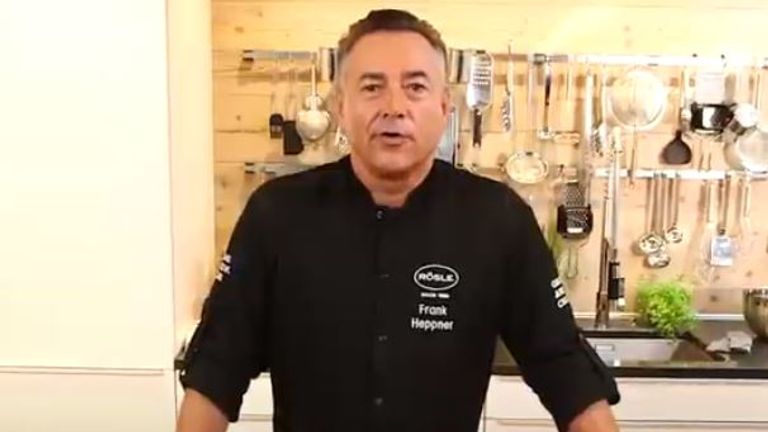
The local press reports that a celebrity chef is one of the individuals detained in connection with an alleged plot by a far-right terrorist organization to topple the German government.
According to reports, 62-year-old Frank Heppner, the father of Real Madrid star David Alaba’s girlfriend, was detained in Kitzbuhel, an Austrian ski resort where he owns a restaurant.
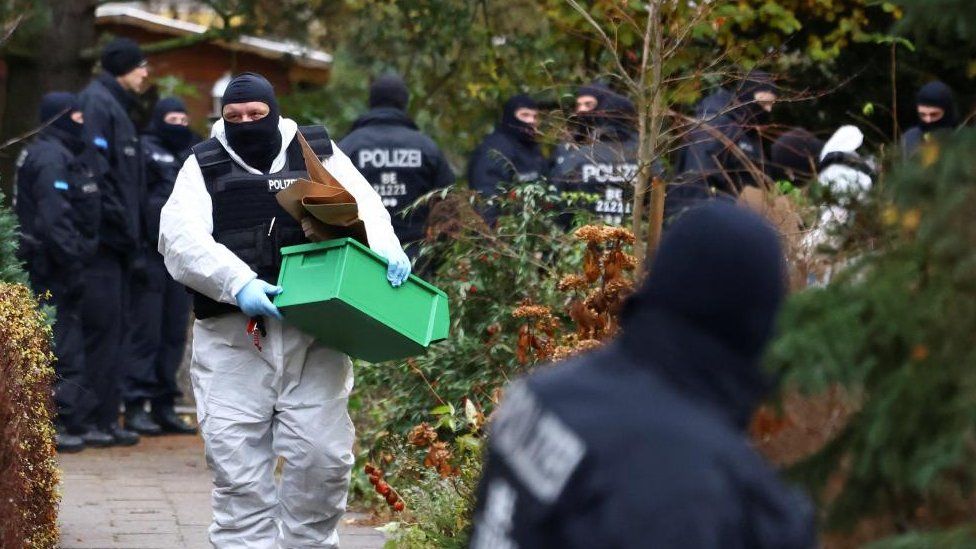
The largest-ever nationwide police operation against right-wing extremism was sparked by the unsuccessful Reichsburger coup attempt, also known as the Reich Citizens movement.
Image: German celebrity chef Frank Heppner. Pic: YouTube
The raids took place in 11 of the country’s 16 states last week, with 3,000 armed police storming up to 100 properties across Baden-Wuerttemberg, Bavaria, Berlin, Hesse, Lower Saxony, and Thuringia, as well as in Kitzbuhel and the Italian city of Perugia.
The plotters allegedly wanted to install Heinrich XIII Prince Reuss, a 71-year-old businessman, as the head of a new government. He was among those arrested.
Heppner’s role, should the alleged coup have been successful, would have been to “take over the canteens of the new German Reich” and supply their troops, according to Austria’s Die Presse.
A specialist in Euro-Asian cuisine, Heppner has previously worked in five-star hotels all over the world.
Image:David Alaba and Shalimar Heppner at FC Bayern Munich Christmas party in 2018
His daughter, Shalimar Heppner, 28, has a son with Real Madrid’s Alaba. Sky News has contacted him for comment.
Twenty-three suspected members and supporters of the group have been arrested according to German authorities.
Prosecutors said 22 German citizens, and one Russian woman were detained during the raids. They said the extradition of two other people detained in Italy and Austria.
The Reichsburger movement brings together several far-right groups whose aim is to get rid of the current government and replace it with their own.
According to the authorities, members of the Reichsburger group have been preparing to “carry out actions based on their ideology” since November 2021.
Following the raids, German interior minister Nancy Faese said the raids showed the country “fighting back against the enemies of democracy”.
The case has put a spotlight once more on the far-right Alternative for Germany party. A female judge – identified by prosecutors as Birgit M-W – who is understood to have links with the party was also detained during the raids.
Known by its German acronym AfD, the party has increasingly come under scrutiny by German security services due to its ties with extremists.
Twenty-five people have been arrested in raids across Germanyon suspicion of plotting to overthrow the government.
The group of far-right and ex-military figures are said to have prepared for a “Day X” to storm the Reichstag parliament building and seize power.
A minor aristocrat named as Prince Heinrich XIII, 71, is alleged to have been central to their plans.
According to federal prosecutors, he is one of two alleged ringleaders among those arrested across 11 German states.
The plotters are said to include members of the extremist Reichsbürger [Citizens of the Reich] movement, which has long been in the sights of German police over violent attacks and racist and antisemitic conspiracy theories. They also refuse to recognise the modern German state.
Other suspects came from the QAnon movement who believe their country is in the hands of a mythical “deep state” involving secret powers pulling the political strings.
Interior Minister Nancy Faeser assured Germans that authorities would respond with the full force of the law “against the enemies of democracy”.
Plotters prepared to kill for their ends
An estimated 50 men and women are alleged to have been part of the group, said to have plotted to overthrow the republic and replace it with a new state modelled on the Germany of 1871 – an empire called the Second Reich.
“We don’t yet have a name for this group,” said a spokeswoman for the federal prosecutor’s office. The interior minister said it was apparently made up of an organisation “council” and a military arm.
Wednesday’s dawn raids are being described as one of the biggest anti-extremism operations in modern German history. Three thousand officers took part in 150 operations in 11 of Germany’s 16 states, with two people arrested in Austria and Italy.
Almost half of arrests took place in southern states of Baden-Württemberg and Bavaria.
Image source, Reuters Image caption, Police carried out raids across 11 of Germany’s 16 states
Justice Minister Marco Buschmann tweeted that a suspected “armed attack on constitutional bodies was planned”. Ms Faeser said later that the investigation would peer into the “abyss of a terrorist threat from the Reichsbürger scene”.
The federal prosecutor’s office said the group had been plotting a violent coup since November 2021 and members of its central “Rat” (council) had since held regular meetings.
They had already established plans to rule Germany with departments covering health, justice and foreign affairs, the prosecutor said. Members understood they could only realise their goals by “military means and violence against state representatives”, which included carrying out killings.
Investigators are thought to have got wind of the group when they uncovered a kidnap plot last April involving a gang who called themselves United Patriots.
They too were part of the Reichsbürger scene and had allegedly planned to abduct Health Minister Karl Lauterbach while also creating “civil war conditions” to bring about an end to Germany’s democracy.
A former far-right AfD member of the lower house of parliament, the Bundestag, is suspected of being part of the plot, and of being lined up as the group’s justice minister. Birgit Malsack-Winkemann, who was among the 25 people arrested, returned to her role as judge last year and a court has since turned down attempts to dislodge her.
Reuters The suspected terrorist group uncovered today is – according to the current status of the inquiry – driven by fantasies of violent overthrow and conspiracy ideologies Nancy Faeser German Interior Minister
A prominent lawyer was pencilled in to handle the group’s foreign affairs, with Prince Heinrich as leader.
Public Prosecutor General Peter Frank said Heinrich was among the suspects whom investigating judges had asked to be held in custody.
Aristocrat ‘fuelled by conspiracy theories’
Heinrich XIII comes from an old noble family known as the House of Reuss, which ruled over parts of the modern eastern state of Thuringia until 1918. All the male members of the family were given the name Heinrich as well as a number.
Descendants still own a few castles and Heinrich himself is said to have a hunting lodge at Bad Lobenstein in Thuringia.
The rest of the family have long distanced themselves from the minor aristocrat, with one spokesman telling local broadcaster MDR during the summer that Heinrich was an “at times confused” man who had fallen for “misconceptions fuelled by conspiracy theories”.
As well as a shadow government, the plotters allegedly had plans for a military arm run by a second ringleader identified as Rüdiger von P.
They were made up of active and former members of the military, officials believe, and included ex-elite soldiers from special units. The aim of the military arm was to eliminate democratic bodies at local level, prosecutors said.
Rüdiger von P is suspected of trying to recruit police officers in northern Germany and of having an eye on army barracks too. Bases in the states of Hesse, Baden-Württemberg and Bavaria were all inspected for possible use after the government was overthrown, officials said.
One of those under investigation had been a member of the Special Commando Forces, and police searched his home and his room at the Graf-Zeppelin military base in Calw, south-west of Stuttgart.
Another suspect has been identified as Vitalia B, a Russian woman who was asked to approach Moscow on Heinrich’s behalf. The Russian embassy in Berlin said in a statement that it did not “maintain contacts with representatives of terrorist groups and other illegal entities”.
Several violent attacks have been linked to Germany’s far-right in recent years. In 2020, a 43-year-old man shot dead nine people of foreign origin in the western town of Hanau, and a Reichsbürger member was jailed for killing a policeman in 2016.
The Reichsbürger movement is estimated to have as many as 21,000 followers, of whom around 5% are considered to belong to the extreme right.
Burkina Faso’s military ruler, Captain Ibrahim Traoré, has appointed a government of 23 ministers.
The new cabinet will run the country until civilian is restored in July 2024.
It will be led by Prime Minister Apollinaire Joachim Kyelem de Tembela, a 64-year-old lawyer who was appointed to the post on Friday.
The new cabinet is composed of five ministers from the former cabinet of Lieutenant Colonel Paul-Henri Sandaogo Damiba – the coup leader overthrown in a subsequent coup in September.
Two military officers occupy the key ministries of defence and security.
The new cabinet includes five women. Olivia Ragnagbnewendé Rouamba remains Foreign Affairs Minister. She had earlier led negotiations with regional bloc, Ecowas, on the timetable and deadline for the transition to civilian rule.
A charter providing for a government of no more than 25 ministers and a 71-member assembly was adopted on 14 October.
It stated that the transitional president’s term will end with the holding of a presidential election in July 2024.
Burkina Faso has a new man at the top after one military leader has ousted another – but just don’t call it a coup, says one local journalist.
“It’s more about internal problems between the military. The same organisation is still ruling the country, the MPSR – so it’s more about a palace revolution than a military coup,” Ouézen Louis Oulon told the BBC’s Africa Daily podcast.
The truth is, he says, many people just want stability and protection from Islamist violence, regardless of who delivers it:
Quote Message: There are some Burkinabès who don’t care who is the president, they just care about the country’s security. They wish and hope that this time they have the right one to help recover the 50% of territory under control of jihadist groups.”
There are some Burkinabès who don’t care who is the president, they just care about the country’s security. They wish and hope that this time they have the right one to help recover the 50% of territory under control of jihadist groups.”
And that explains the “widespread support” Mr Oulon has seen on the streets for Burkina Faso’s for new leader Captn Ibrahim Traoré:
“It was really amazing to see how, especially young people, went out supporting Ibrahim Traoré saying he’s a good leader [and] walking in the street and celebrating his victory.”
A coup attempt appears to be under way in Burkina Faso.
Gunshots have been heard near the presidential palace and access to major buildings, including the national assembly, the national broadcaster and the residence of the prime minister have been blocked by military vehicles.
It was only in January that the current head of state, Lt-Col Paul-Henri Damiba, ousted President Roch Kaboré through a coup.
The democratically elected president was deposed for failing to contain violence by Islamist militants. Now Lt-Col Damiba may be facing a similar fate.
On Thursday hundreds of protesterstook to the streets of the western city of Bobo Dioulasso to demand his resignation, blaming him for the ongoing insecurity in the country.
Eyewitnesses are reporting a heavy military presence around the city.
Schools are closed and residents are staying indoors, waiting for updates on the latest news.
Since 2015, authorities in Burkina Faso has been struggling to contain attacks by insurgent groups.
On Monday, 11 soldiers were killed in a militant attack in the northern Soum province, 50 civilians were reported missing.
After one report from a journalist in the region saying state TV was back on air showing cotton farming, there are now reports it is back off air.
One analyst from risk intelligence company Verisk Maplecroft, Eric Humphery-Smith, says “the closure of the national television station bodes ill”.
A short video shared by the Africa News site shows armed soldiers and military vehicles blocking a road in the mostly empty street of the capital, Ouagadougou.
Des tirs ont été entendus vendredi matin avant l’aube à #Ouagadougou dans le quartier abritant la présidence et le QG des militaires au pouvoir depuis janvier dernier, et le signal de la télévision nationale a été coupé.#BurkinaFasopic.twitter.com/bEBnsoJ2GB
Broadcast has resumed on Burkina Faso national TV after it went blank amid reports of gunfire and soldiers staged at different locations in the capital, Ouagadougou.
A journalist monitoring the coverage says the station is showing a story about cotton farming and no reports of the suspected coup attempt.
Many reports from local media in Burkina Faso and regional experts are pointing to a coup attempt.
Heavy gunfire was reported near the main military camp in the capital Ouagadougou, and the state broadcaster, La Radiodiffusion Télévision du Burkina, has suspended transmission.
There has been confusion amid the gunfire at Baba Sy military barracks and reports of the state broadcaster building being surrounded by soldiers.
Current leader Lt Col Paul-Henri Sandaogo Damiba seized power in a coup in January.
Last week, Lt Col Damiba addressed the 77th session of United Nations General Assembly where he described the military coup as having been “an issue of survival” for the nation.
RTB (national broadcaster) is back online showing a story about cotton farming, nothing about what is happening with the potential coup. This has been an ominous sign in the past. #BurkinaFasopic.twitter.com/joPGooUQ5o
Security Analyst Adib Saani has questioned the demeanour of the government any time public figures say Ghana’s current economic condition can serve as grounds for a coup.Â
He said in a statement sighted by GhanaWeb that rather than arresting people anytime they use the word coup in the media, the government should reflect on its actions and find ways to improve the livelihood of Ghanaians.
He indicated that people saying current challenges are grounds for military overtakes don’t mean they are calling for one.
“Why is this government so jittery when coup is mentioned? What do they have to hide? If you are doing the right thing, why shiver? Since when did coup become a taboo word?
“… human insecurities, seeming war on press freedom, the inconsistent application of the law, which by the way violates Article 23 of the constitution, and the wanton arrest and targeting of critics create the necessary conditions for a coup to occur. It’s incontrovertible,” Adib said.
“This is not a call to coup, but a stark reminder of the disturbing recent realities we have had to contend with as a people,” he added.
Adib Saani’s statement comes after some people made calls for the arrest of the Dean of the University of Ghana Law School, Prof. Raymond Atuguba, for coup comments he made.
Retired Military Officer, Captain Nkrabea Effah Dartey, urged the country’s National Security apparatus to arrest Prof Atuguba for saying, ‘Ghana may be ripe for a coup’ due to the current challenges it is facing.
According to Capt. Effah Dartey, Prof Atuguba must be arrested for inciting the public against the government, mynewsgh.com reported.
“The Professor lacks an intellectual basis for making that statement. He is throwing dust into the eyes of Ghanaians. National Security should investigate him. He should not be allowed to make statements like these… He should be arrested for [the] crime of inciting soldiers and creating insecurity,” he was quoted.
A security expert, Adib Saani has indicated that the national security apparatus of Ghana must be gravely concerned about the frequency of coups in West Africa.
In an interview with GhanaWeb, Adib Saani said it would be a mistake for Ghana to consider the recent military takeovers in Guinea, Mali, Burkina Faso as domestic. According to him, terrorist groups take advantage of the chaos caused by coups to set up camps.
“According to a US Department of State report published in 2002, usually terrorists take advantage of political upheavals in countries to establish foot forward like it happened in Suban in 1990s where Al-Qaeda established it’s base there and of course it happened in Somalia 1990s when Al-Shabab established a foot hold there,†he told GhanaWeb.
Adib Saani said the coups and the chaos associated with them in neighbouring countries would have serious effects on Ghana.
“Coups would have very serious effects (on Ghana); in the midst of all the chaos terrorist groups such as Al-Qaeda, Al-Shabab, ISIS in the Greater Sahara would take advantage of the confusion to reorganise, resupply logistics and of course move around and Ghana is certainly part of the whole area in which there could be movements,†he said.
He added that the porous borders of Ghana even made things worse.
“Terrorists from Burkina Faso can move into the country particularly owing to how porous our borders are, not coming to stage attacks but perhaps to establish sleeper cells for maybe attacks in the future,†Adib added.
Assistant Commissioner of Police (ACP) Dr. Benjamin Agordzo, a top police official being prosecuted for his alleged role in the destabilization plot has once again insisted that he is innocent of the charges proffered against him.
He told the Kaneshie District Court on Tuesday, March 3, 2020, that he is being prosecuted for “speaking his mind†on a Whatsapp group.
ACP Agordzo said he made a candid opinion on the dangers of political vigilantism in the Whatsapp group known as Take Action Ghana (TAG), which was widely shared.
The top police official said he gave the opinion prior to the Awayaso West Wuogon by-election violence.
During the final committal process on Tuesday, Dr. Agordzo told the court that he only acted as a citizen and not a spectator.
He insisted that his comments were situated within the context of happenings in the country.
He told the court that he was surprised that despite the abundance of evidence about his innocence on the TAG WhatsApp platform, the prosecution has charged him with abetment.
Background
ACP Dr. Benjamin Agordzo was on several occasions denied bail by the High Court after his arrest over his alleged involvement and contribution to the Take Action Ghana group which the State claims had devised a detailed plot to destabilize the county.
He was charged with abetment to commit crime namely treason felony and was on remand in police custody.
He was however granted bail on January 23, 2020.
Using junior officers to prosecute me humiliating
ACP Agordzo in court also accused some police officials of wanting to humiliate him.
He said the decision to make officers of a lower rank to investigate and prosecute him is only meant to frustrate him.
According to ACP Agordzo, since the inception of the case, he has raised issues with the treatment but nothing has been done about it.
ACP Agordzo told the court that the attention of the then Director-General of the Criminal Investigations Department (CID), COP Maame Yaa Tiwaa Addo Danquah who had jurisdiction of the case was drawn to the matter by the Inspector General of Police but she refused to make the correction.
The 10 accused persons facing charges of treason felony for allegedly plotting to destabilise the state have been committed to the High Court for trial.
The committal of the accused persons to the High Court means a trial of the case will now begin.
The Magistrate, Eleanor Krakra Burns, in her ruling to commit the accused persons said upon assessing all the evidence put before her, she believes they have questions to answer.
Per the charges levelled against them, which include treason felony, conspiracy to commit treason felony and abetment of treason felony, the accused persons are likely to face a panel of three High Court judges who will hear the case.
The accused civilians in the case are Dr. Frederick Mac-Palm, the main accused person; Donya Kafui, aka Ezor, a local weapon manufacturer from Alavanyo; Bright Allan Debrah Ofosu, aka BB and Johannes Zikpi, a civilian employee of the Ghana Armed Forces.
The military officers arrested over the alleged coup plot, aside from Col. Gameli, are Lance Corporal Ali Solomon, Lance Corporal Sylvester Akapewu, Lance Corporal Seidu Abubakar and one WO II Esther Saan aka Mama Gee of the Military Academy and Training Schools (MATS).
The Attorney General, in presenting the bill of indictment in the case, said 19 witnesses and 110 exhibits will be presented as evidence at the High Court.
The case has been adjourned to April 6, 2020, at the High Court.
The men facing trial for allegedly attempting to overthrow the Akufo-Addo-led government have been accused by the State prosecutors of planning to abduct the President, Vice President, Speaker of Parliament, and the Chief of Defence Staff (CDS) in the process.
The prosecution at the Kaneshie District Court court on Tuesday, 3 March 2020 also accused the alleged coup plotters of discussing whether or not to kill President Nana Akufo-Addo.
The Senior State Attorney, Ms Hilda Craig further accused the embattled men of planning to jam communications signals of the National Communications Authority (NCA).
Ms Craig told the court that the state will call 19 witnesses and also present 113 exhibits as evidence to prove its case.
The 10 persons standing trial are Frederick Yao Mac-Palm, Dornyah “Ezor†Kafui (a local weapon manufacturer), Bright Allan Debrah Ofosu (aka BB or ADC)(freight manager).
Colonel Samuel Kojo Gameli and WO2 Esther Saan, Lance Corporal Ali Solomon, Corporal Seidu Abubakar, Sylvester Akanbiri, a civilian employee of the Armed forces, Johannes Zikpi and Senior Police Officer ACP Agordzo.
Colonel Samuel Kodzo Gameli, one of the 10 accused persons indicted in the alleged coup plot says he is being held over the cracks and challenges the Ghana Armed Forces.
He told the court on Tuesday his involvement in the trial is meant to vilify and gag him as a senior military officer.
Meanwhile, Col. Gershun Akpa, one of the six military personnel in the alleged coup plotters has been discharged.
In court on Thursday, February 13, when Lawyer Victor Kojogah Adawudu moved a third bail application for them, the state said the AG has advised that Col Gershun Akpa be discharged, but the others would be committed for trial.
Hilda Craig, Senior State Attorney, while opposing to the bail application said “their charge statements have been taken and all 10 except one have been indicted and we are likely to do the committals on February 20, at the District Court.
“Gershun Akpa is the only one we have been advised to discharge. So we are waiting for the next court date to discharge him, all the rest have been indicted,†the Senior State Attorney told the court.
Member of Parliament for Kpando constituency in the Volta Region, Della Sowah is demanding for the immediate release of Dr. Frederick Mac-Palm, Chief Executive of Citadel Hospital who was arrested by state security on allegation of plotting with others to overthrow the Akufo Addo led government.
According to her, the arrest and continued detention of Dr Mac-Palm is not only unwarranted but an abuse of his fundamental human right as enshrined in the 1992 constitution.
Dr Mac Palm was arrested together with other three suspects for allegedly plotting to overthrow President Akufo-Addo.
The security later also arrested Assistant Commissioner of Police, ACP Dr Benjamin Agordzo for facilitating the coup in a WhatsApp platform.
Nevertheless, lawyers for Dr Agordzo secured a bail for him after two months battle with state prosecutors in court.
This, Hon Sowah, a Deputy Ranking on Mines and Energy Committee of Parliament in a statement dated February 27, demanded for Dr Mac Palm release from custody.
The lawmaker said the suspect is a responsible family man with lot of dependents under him and would not do anything to frustrate court process.
She added that the people of Kpando felt Dr Mac Palm, their son has been badly treated and has mounted pressure on her their representative in parliament to for his release.
Read the full Statement
RELEASE DR. FREDERICK YAO MAC-PALM
I, Hon. Della Sowah, the MP for Kpando and the elected Representative of Dr Frederick Mac-Palm (also known in Kpando as Fo Yao), I am compelled to release this statement because my office has been inundated with petitions and cries by family members, including his aged mother Madam Adjo Bulla, his friends and the many dependants of the benevolent medical practitioner in Kpando since his arrest and unlawful detention 6 months ago.
The facts are that, on Friday 20th September, 2019, a team of government security operatives carried out an operation in Accra which led to the arrest of Dr Frederick Yao Mac-Palm, Medical Director of the Citadel Hospital and others for allegedly plotting to overthrow the President Akufo Addo government.
The following Sunday, the 22nd of September, I was at the Citadel Hospital. A large contingent of officers with dogs and equipment came to conduct a search on the premises. With the reputation of the security agencies in Ghana one would have thought that they were going to do a quick job.
Sadly after 6 months, according to the security agencies, investigations are still allegedly ongoing and Dr Mac Palm is still being held in police custody very much in contravention of the relevant laws in this country.
It would be recalled that a senior Police Officer ACP Benjamin Agordzo, who was also being held by the police in connection with the same case was recently released on bail, yet Dr Mac-Palm is still being detained.
Unfortunately, the very courts that distilled the law on bail for suspects and accused persons have continued to deny Dr Mac Palm his bail; a clear infringement on his constitutionally guaranteed human rights.
The already protracted delay in investigating the case and the unwillingness of the state to grant some of the accused persons bail is seriously affecting a lot of people.
Under these circumstances therefore, I am through this medium calling on the Attorney General and the Chief Justice to as a matter of urgency grant Dr Frederick Mac-Palm bail. Indeed, Dr Mac-Palm who I am very certain will be exonerated, will continue to make himself available for investigations and for trial in court.
I wish to emphasise that I am not against the decision by the government to prosecute people who fall foul of the laws, however, as per our laws, suspects are presumed innocent until proven guilty by a court of competent jurisdiction. What I am calling for is to curtail the abuse of the Fundamental Right to a bail of Dr Fo Yao Mac-Palm and others.
Let us be guided that, when the 1992 Constitution demands the rule of law, it means the rule of law in all matters and not to some minus others.
A senior state attorney, Hilda Graig, in a case between the state and 10 persons, who have been accused of planning to destabilize the country, has hinted of freeing one of the accused, Colonel Gershon Akpa.
Presenting her affidavit in opposition for a bail application for seven of the accused persons, Hilda Graig said evidence gathered so far does not implicate Colonel Gershon Akpa and the Attorney General has subsequently been advised.
In her argument, she told the court the bail of indictment for nine of the accused persons is ready and the committal process would be initiated in the next sitting for trial to commence.
She argued for the court to refuse the seven accused persons’ bail on the basis that they will interfere with evidence and considering the nature of the case, they will not avail themselves to stand trial.
She refuted the claim of the lawyer of the applicants that no evidence has been presented against the accused persons, adding that they have all been shown the evidence and are aware of what is going to be used against them.
Lawyer for the applicants Victor Kojoga Adawudu, in his application for bail, argued that the accused persons are of the conviction that they are innocent and are ready to prove that to the court so they will not run away from trial.
He told the court in their earlier bail application that the prosecution be asked to furnish the accused persons with the summary of the evidence, failure to do so his side will repeat process.
In her ruling, Justice Ruby Quayson considering the arguments from both sides, refused the applicants bail indicating that it is likely they will not stand trial and also the fact that prosecution will commence trial on Thursday, February 20.
This is the third time the accused persons have been denied bail.
Lawyer for Dr Frederick Yao Mac-Palm, the Chief Executive Officer of Citadel Hospital, at Alajo, Accra, who is charged with conspiracy to commit crime and treason, has appealed to the Kaneshie District to order the police to send his client to the Korle-Bu Teaching Hospital.
Mr Victor Adawudu made the appeal yesterday after it emerged that the Police Hospital did not have a specialist to attend to the health needs of Dr Mac-Palm.
His appeal comes barely a fortnight ago, when the court granted a similar request made by Mr Adawudu, and ordered the Bureau of National Investigation (BNI) to send the medical practitioner for treatment at the Ghana Police Hospital.
Mr Adawudu told the court presided by Mrs Elleanor Kakra Bans to consider the health of his client and refer him to Korle-Bu where he could access quality treatment.
On January 24, 2020, the court gave the order for accused to be taken to the Police Hospital for medical attention, after the court heard that the BNI was against the decision to send Dr Mac-Palm to the Police Hospital.
Mr Adawudu, stated that Dr Mac-Palm had expressed concern over the medication he was given at the BNI Hospital few weeks ago.
Dr Mac-Palm was charged together with Assistant Commissioner of Police (ACP) Dr Benjamin Agordzor and eight others for attempting to destabilise the country and overthrow the government.
Samuel Kojo Gameli, a senior military officer, Gershon Akpa, a civilian employee at the Ghana Armed Forces, Warrant Officer II (WOII) Esther Doku, Lance Corporal Ali Solomon, Lance Corporal Sylvester Akapewu and Corporal Seidu Abubakar and Donyon Kafui, a local weapon manufacturer had been charged with conspiracy to commit crime and treason, while ACP Agordzor was charged with abetment of crime.
The facts according to the prosecutor Assistant Superintendent of Police (ASP) Sylvester Asare are that Dr Mac-Palm and his colleagues belonged to an association called Take Action Ghana (TAG), and had planned to stage demonstrations, ostensibly to topple the government.
ASP Asare said in July this year, accused contacted a blacksmith from Alavanyo, in the Volta Region, to manufacture 22 explosives, six ammunitions and five pistols.
The court heard that the manufacturer charged alleged accomplices GH¢2,300 as the cost of each pistol and GH¢400.00 for each explosive.
Prosecution said on September 19, Dr Mac-Palm and Kafui were arrested after test-firing at Teshie military shooting range.
The court heard that a search conducted on the premises of the Citadel Hospital revealed six unregistered pistols, one registered pistol, 22 explosives, three grenades, 63 rounds of ammunition, two empty AK47 magazines and other machines used in manufacturing weapons.
Lead defence lawyer in the case of the Republic versus Fredrick Mac Palm and nine (9) others, Victor Adawudu, today extended an invitation to police prosecutor, Assistant Superintendent of Police (ASP) Slyvester Asare, for a fight outside the Court if he claims “he is a manâ€.
The invitation of the defence lawyer was made right before the District Court Judge Rosemond Dodua Agyiri, before who, indictment proceedings are being heard.
The police prosecutor, Sylvester Asare, himself a lawyer, in responding to a complaint by Victor Adawudu, that his client was refused a request to be taken to the Police Hospital for treatment instead of the BNI hospital, asked the defence lawyer to be careful what he says about the BNI. This caution by the ASP did not go down well with the defence lawyer. He shouted on top of his voice in court, “What do you mean by that. If you are a man, meet me outside the court and I will show. What do you mean by I should be carefulâ€.
District Court Judge Rosemond Dodua Agyiri, intervened and calmed down tempers in her court. To settle the issue that generated the argument, the District Court judge ordered that the accused person, Frederick Mac Palm, be sent to the Police Hospital at all material times should he require medical attention.
Earlier on before the contention, the District Court dismissed an application by defence lawyers requesting for full disclosure of all the documents, evidence and files the Prosecution intends to rely on to establish their case against the accused persons.
The court indicated that since the case is one to be tried by indictment, the District Court cannot ask the Prosecution to make any disclosures at this time. The court ruled that disclosures will be made at the High Court as soon as Indictment proceedings are completed and the case is set down for trial.
The court adjourned sitting to the 6th of February 2020.
Background
Information about the foiled coup plot first came to light in the country on the 23rd of September 2019, when the government announced that some person had been arrested after several months of investigations.
The accused persons, Dr. Fredrick Mac Palm (1st accused), Donyo Kafui A.K.A Ezor, Bright Alan Debrah Ofosu a.k.a Bright Alan Yeboah, Col. Samuel Kodzo Gameli, Gershong Akpah, W.0.2 Esther Saan Dekuwine, Cpl. Seidu Abubakari, L/Cpl. Ali Solomon, L/Cpl. Sylvester Akanpewon and ACP Benjamin Agordzo, are suspected to have masterminded a fifteen months plot to destabilize the country and possibly take over the government of the Republic.
Rawlings said on Radio Ghana that there was an attempted coup but was crushed after the loyal troops and the rebels fought for a few hours in Accra.
He faced four coup attempts against his ruling Provisional National Defense Council (PNDC).
At age 35, JJ Rawlings seized power in the West African nation twice, that is, in 1979 against a military government and 1981, against a civilian government.
Ghana was on a trajectory of prosperity in Black Africa when it gained independence from Britain in 1957 but alas through such military upheavals and bad governance by civilian administrations, the narrative has changed.
Flt Lt Jerry John Rawlings & Capt. Quashigah after the successive crushing of an attempted coup d’etat, June, 1983. They closed border points & extended curfew hours to snare rebel soldiers who staged the fourth unsuccessful coup attempt against his military government. pic.twitter.com/oQaJl7NDZF
The State is readying itself to present evidence against ACP Benjamin Agordzo and nine others who are standing trial for their involvement in an alleged coup.
The State prosecutor has said the evidence would shake the nation.
Opposing a bail application by lawyers for the nine persons who have been accused of planning to destabilize the country, state prosecutor, Hilda Craig, however, argued that the state needs time to properly investigate the matter.
Lawyers for the nine accused went to the high court to seek bail for their clients arguing the state is unreasonably delaying the case because of lack of evidence.
Lead counsel, for the nine, Kojoga Adawudu, argued his clients have highly respectable individuals in society to stand for surety.
He told the court the Ghana Armed Forces has its own arrangements to handle the military men involved in the case, an arrangement he insisted will check the accused from jumping bail.
He further argued, the state so far has not exhibited good faith in the case and the processes presented to the court show that the state has no evidence against the accused, therefore delaying the case unreasonably.
But state prosecutor, Hilda Craig insisted if the accused are granted bail they will temper with evidence especially the military men who have stated in their application that the charges preferred against on them are trump up, claiming the trial is being instigated by one Sergeant Sule Awal who is also a military officer.
She said if they are granted bail, they will target Sergeant Awal and temper with evidence.
She appealed to the court to dismiss the bail application because the state needs time to do a thorough investigation which also involves a lot of work due to the number of persons involved in the case.
Justice Georgina Mensah-Datsa adjourned ruling for the application to December 20.
The Kaneshie District Court on Wednesday adjourned the treason trial involving ten persons to December 19.
The court presided over by Mrs Eleanor Kakra Barnes-Botchway asked prosecution whether it had filed the Bill of Indictment (BI) of the prosecution led by Assistant Superintendent of Police (ASP) Sylvester Asare answered in the negative.
He told the Court that the BI would be filed only after investigations have been completed and asked for time to enable the prosecution to continue with its investigations.
The accused persons are Dr Frederick Yao Mac-Palm, a medical practitioner and the CEO of the Citadel Hospital, Donyo Kafui alias Ezor, Blacksmith, Bright Alan Debra alias BB or ADC, Freight Manager, Colonel Samuel Kojo Gameli, military officer and Geshon Akpa, a weapon mechanic with the Ghana Armed Forces.
The others are Warrant Officer II Esther Saan, military officer, Corporal Seidu Abubakar, Lance Corporal Ali Solomon, Lance Corporal Sylvester Akankpewu, all military officers and Assistant Commissioner of Police Dr Benjamin Agordzo, a police officer, are facing charges of conspiracy to commit crime, conspiracy to possess ammunition, possession of firearms without lawful excuse and conspiracy to commit treason.
ASP Asare giving the facts said all the ten are members of the “Take Action Ghana,†incorporated by Mac-Palm in 2018 saying that the Group, planned to demonstrate against the government and overtake it.
He said Mac-Palm and Ofosu in July 2018, hired Kafui from Alavanyo in the Volta Region to produce arms for that purpose.
He said in the process, he produced 22 explosives, six pistols, three grenades and five ammunitions.
Prosecution said later, the others were contacted among whom were Akpa who agreed and supplied two AK47 rifles for GH?2,000.00 but could not give more and returned the money after pressure from Mac-Palm.
ASP Asare said they held meetings to facilitate the process and drew a map covering the Flagstaff House, Ghana Broadcasting Corporation, 37 Military Hospital, Burma Camp to facilitate their movements.
He said Colonel Gameli, promised to give his support before, during and after the planned event whilst ACP Agordzo offered them advice and contributed in cash to support them.
He said Mac-Palm provided a quantity of substance which when inhaled would make one sleep for an hour, stating that all these took place between June 2018 and September 2019, adding that they were arrested upon a tip-off.
The embattled former Director of Operations at the Ghana Police Service, ACP Dr Benjamin Agordzo, must be handed to the Inspector General of Police, the Kaneshie Magistrate Court has ordered.
ACP Agordzo together with nine others have been arraigned for their respective role in an alleged case of destabilising the state.
In court on Wednesday when the case was consolidated, ACP Agordzo was charged with abetment of treason felony while the others face conspiracy and treason felony.
All suspects have since been remanded into police custody after the prosecution had prayed then the court for them to be remanded them there.
The court magistrate Eleanor Botwe while remanding the suspects, specifically ordered that ACP Agordzo be handed over to the IGP upon request by his lawyers.
It has emerged that the embattled Senior Police Officer, ACP Dr. Benjamin Agordzo who is facing treason charges once had a problem with the Ghana Police Service in 2007 leading to his removal, Kasapafmonline.com has learnt.
The Outspoken Police Officer was said to have appealed to the Police Council over the punitive measure meted out to him, following which the Council reversed the decision.
Already, senior military officer Colonel Samuel Kojo Gameli and a civilian employee of the Ghana Armed Forces Gershun Akpa, have been charged for their role in what the government describes as an “elaborate plot targeted at the Presidency.â€
ACP Dr. Benjamin Agordzo, who has been charged with Treason by the state over his alleged role in the alleged coup plot is set to face court today, Wednesday November 6.
He will be arranged before the Kaneshie district court.
But his lawyer martin Kpebu says the district court is incapable of granting him bail in such matters.
†The decision to take him to the district is unfair because that court does not have the power to grant him bail in treason matters. So if the BNI does not grant him bail themselves, the district court cannot. What the BNI is doing is unconstitutional and unfortunate,†he told Starr News.
Also revealed his client has refused to eat while in the BNI custody.
†He says he will not eat until he is granted bailâ€.
Mr. Agordzor has been charged with abetment for treason by the state after he was invited for questioning on Monday. He is currently on detention at the BNI.
Also, former executive secretary to the former IGP Peter Tuubo and ACP Kofi Boakye have been interrogated over the alleged attempt to destabilise the country.
Already, senior military officer Colonel Samuel Kojo Gameli and a civilian employee of the Ghana Armed Forces Gershun Akpa, have been charged for their role in what the government describes as an “elaborate plot targeted at the Presidency.â€
Meanwhile, lawyers of the nine persons who have been charged with treason felony have accused the military High Command of invasion of privacy.
According to the lawyers, who have some of their clients with the Ghana Armed Forces remanded at the Military custody, anytime they have conferences with them, persons with the Defence Intelligence Unit sit-in and record their private conversation.
Lawyer Kodjogah Adawudu made this known to the Kaneshie District Court presided over by Her Worship Mrs Eleanor Botwe when the case was called on Monday, October 28.
ASP Sylvester Asare, prosecutor in the matter, on his part said nothing of that sought has come to his attention.
He however assured the court that he would liaise with his colleagues at the GAF to make sure the right thing is done and report back to the court.