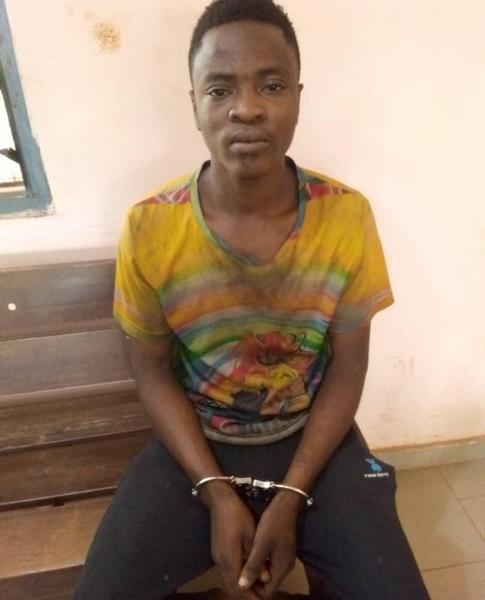
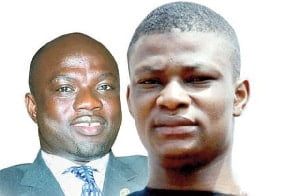
In a case before the Tarkwa circuit court, a 30-year-old banker named Edmond Nashiru is facing charges for allegedly dishonestly appropriating money from a customer’s account at Access Bank.
The accused, who works as a front desk officer at the bank, has pleaded not guilty to the charges and has been remanded into prison custody.
The complainant, Felicity Acquah, a rotational nurse, reported to the police that she received multiple mobile alerts on November 6, 2023, indicating that her savings account at Access Bank had been debited with a total amount of GH¢9,781.00 without her consent.
Upon seeking clarification from Edmond at the bank, he allegedly informed her that fraudsters had stolen her money. Subsequent police investigation, initiated on November 16, 2023, involved obtaining a court order to compel the bank to provide detailed information on the transaction.
The bank’s audit department reportedly found that Edmond was behind the theft, using his cell phone to transfer the money to two different MTN numbers.
Edmond was arrested and, during questioning, admitted to assisting Felicity in installing a banking application on her phone and obtaining her login credentials. He also disclosed that he had enlisted his brother’s help to acquire two Subscriber Identity Module (SIM) cards for the purpose of depositing the stolen money.
After completing the transactions, they reportedly discarded the SIM cards to avoid detection.
The court has adjourned the case to Thursday, December 28, 2023, for further proceedings.
Deborah Seyram Adablah and her former lover, Ernest Kwesi Nimako, the ex-Chief Finance Officer of a bank, are set to appear in court on Tuesday, December 19, 2023, to resolve a custody dispute over a vehicle he purchased for her.
This legal confrontation arises three weeks after the court dismissed Adablah’s previous suit against Mr. Nimako, deeming it as lacking reasonable cause of action.
On May 16, 2023, an Accra High Court directed Deborah Seyram Adablah to surrender the car, a Honda Civic, at the center of the widely publicized lawsuit to the court Registrar. Justice Olivia Obeng Owusu issued this order to ensure the vehicle’s security until the resolution of the case against the banker.
Additionally, the judge mandated Mr. Nimako to submit all documents related to the vehicle to the Registrar.
The legal dispute originated when the former National Service personnel took the banker to court, alleging a breach of an agreement to financially support her while working at the same bank. In her suit filed on January 23, 2023, Adablah claimed that her “sugar daddy” had agreed to purchase a car, cover her accommodation for three years, provide a monthly stipend of GH¢3,000, marry her after divorcing his wife, and offer a lump sum to start a business.
Although the “sugar daddy” acquired the car, he registered it in his name, denying Adablah access to use it after a year of enjoyment. Additionally, he only covered accommodation expenses for one year.
Adablah, whose national service concluded in July 2021, admitted to dating Nimako, believing that rejecting the relationship might jeopardize her work experience. She further accused him of mistreatment, exploitation, sexual harassment, abuse, and damage to her reputation.
Exactly 21 days after the High Court in Accra dismissed her sexual harassment claims against banker Ernest Kwasi Nimako, former National Service Person, Deborah Seyram Adablah is back in Court. #GHOneNewspic.twitter.com/0hV0VLxsSI
Former Chief Operations Officer (COO) of Microfinance and Small Loans Centre (MASLOC), Daniel Axim, who is on trial for allegedly causing financial loss to the State alongside Christine Sedinam Tamakloe Ationu, displayed intense emotions in court.
Daniel Axim, after undergoing a mental examination at the Accra Psychiatric Hospital, has been declared mentally sound and fit to stand trial. His lawyer, Augustines Obour, had requested the court to refer him for a psychiatric examination.
Following the positive outcome of the medical evaluation, the prosecution expressed the intention to continue with the trial after the court had ordered both accused individuals to open their defense.
However, during the court session on Thursday, December 14, 2023, Daniel Axim informed the court that his lawyer, Augustines Obuor, was absent and had indicated to him that he was opting out of the case. When asked about legal fees, Axim stated that he had already paid all legal fees to his lawyer.
“As has been my usual practice, a day before the case, I will call him,” he told the Court.
“He told me that he is opting out of the case. I was very disturbed so I pleaded with him that with my current financial status, I cannot afford another lawyer,” emotionally stricken Daniel Axim said as he broke down in tears while searching for his handkerchief to wipe his tears.
Upon questioning by Justice Asare-Botwe, a Justice of the Court of Appeal presiding over the case as an additional High Court judge, the second accused confirmed that he had indeed paid his legal fees to his lawyer.
“My Lady, I have finished payment of whatever he (Lawyer) charged me,” adding, “I told him I will come and see him to see whatever reasons so I will plead with him so he comes back.”
Justice Asare-Botwe, upon hearing the concerning situation, expressed surprise that a lawyer would abandon his client after receiving full legal fees. The judge emphasized that, according to the rules of the court, counsel for the accused cannot opt out of the case without formal discharge by the court.
“By our ethical rules you (lawyer) cannot collect someone’s (accused) money in full according to you (Daniel Axim)” and decide not to represent his client.
The Court of Appeal judge said, “That’s is unethical and as for me I will not allow this to pass me by.”
“Why according to you (Daniel Axim), you have paid the lawyer in full and the lawyer has not come to the Court to be discharged only to decide to say he is out of the case?” Justice Asare-Botwe wondered.
The judge said, for a lawyer to withdraw his services he ought to have come to the Court with an application for the Court to discharge him upon hearing the reasons.
“I will not be like others… A lot of my colleagues see these things and do nothing about them, as for me, If I see something wrong I say it and report,” Justice Asare-Botwe stated emphatically.
The court indicated that, if the information provided by the accused is accurate, the lawyer would be reported to the Disciplinary Committee of the General Legal Council for appropriate action.
Justice Asare-Botwe, visibly upset, questioned why a case of this nature had been lingering in court for four years.
“How can I see through this as a professional person like (Mr Axim) been on interdiction be in Court for four years?”
“….What is wrong that an accused person who is presumed innocent be in court for four years when he is on half salary? ….Even those on full salary cannot bear this,” she said while acknowledging the tears of the Accused person in Court.
The court indicated that, if the information provided by the accused is accurate, the lawyer would be reported to the Disciplinary Committee of the General Legal Council for appropriate action.
Justice Asare-Botwe, visibly upset, questioned why a case of this nature had been lingering in court for four years.
Daniel Axim, the former Operations Manager of MASLOC, and “absconded” Mrs. Attionu have been charged with eighty counts of stealing, causing financial loss to the state, causing loss to public property, improper payment of public funds, unauthorised commitment resulting in financial obligation for the government, money laundering and contravention of the Public Procurement Act.
They have pleaded not guilty and admitted to bail while the prosecution has closed its case after calling four witnesses.
Mrs Tamakloe Attionu has since last year been declared absconded by the Court after failing to appear in Court.
On February 28 next year, the Supreme Court, led by Chief Justice Gertrude Araba Esaaba Sackey Torkornoo, will deliver judgment in two distinct lawsuits challenging the approved salaries for First and Second Ladies.
The legal actions contest the Parliament-approved recommendations of the Prof Yaa Ntiamoah-Baidu-led Committee on emoluments for Article 71 office holders, enabling the spouses of President Akufo Addo and Vice President Dr. Mahamudu Bawumia to receive monthly salaries equivalent to Cabinet Ministers.
Rockson Dafeamekpor, Member of Parliament for South Dayi, Clement Apaak (MP for Builsa South Constituency), and Nii Tackie Commey jointly filed a lawsuit against the Attorney General to reverse the payment of emoluments for First and Second Ladies.
Additionally, Kwame Baffoe, Bono Regional Chairman of the New Patriotic Party (NPP), filed a similar action against the Attorney General.
During separate hearings on Wednesday, December 13, the panel, chaired by Chief Justice Torkornoo, fixed February 28 for the delivery of judgment after parties presented their cases, and the Attorney General, represented by Deputy Attorney General Diana Asonaba Dapaah, responded.
Arguments presented:
Dafeamekpor’s action: Counsel for the Plaintiffs, George Kodzo Adabadze, emphasized reliance on all filed documents, particularly their statements of case. The contention centered on challenging the extension of allowances of salaries to the wives of the President and Vice President, with an assertion that the Prof Yaa Ntiamoah-Baidu-led Committee exceeded its jurisdiction.
Abronye DC’s action: Lawyer Esinam Kporku, representing lead counsel for Kwame Baffoe, stated reliance on all processes filed, particularly the Plaintiff’s Statement of Case. Kporku, an adept young lawyer, addressed the panel on why her client seeks the intervention of the apex court to reverse the action.
Deputy Attorney General’s responses:
Dafeamekpor’s case: Deputy Attorney General Diana Asonaba Dapaah opposed the case, arguing that no cause of action had been raised. She deemed the action premature and lacking a foundation on recommendations.
Abronye DC’s case: The Deputy AG contended that the AG’s position was that Parliament’s adoption of the Prof Yaa Ntiamoah-Baidu-led Committee recommendation is not unlawful, and it does not create any Article 71 Office Holder.
The panel, comprising: Justice Gabriel Pwamang, Justice Lovelace Johnson, Justice Prof. Henrietta Mensa-Bonsu, Justice Barbara Ackah Yensu, Justice Ernest Gawu, and Justice Samuel Asiedu, decided to deliver judgment on the two separate suits on February 28.
EIB Network’s Legal Affairs Correspondent, Murtala Inusah, reported that the rehearing of the two cases occurred after some members of the previous panel had retired. The two young lawyers representing the Plaintiffs, George Kodzo Adabadze and Essinam Kporku, received commendations from the Chief Justice’s panel for their excellent deliveries.
In Dafeamakpor’s case, the MPs contend that the decision to pay the presidential spouses is inconsistent with the 1992 Constitution of Ghana. They argue that per Article 71 (1) and (2), the positions of the first and second ladies of Ghana do not fall under the category of public officeholders. The suit calls on the Supreme Court to declare the approval of the recommendation by Parliament as “null, void, and unenforceable.” Parliament approved the recommendations, allowing the spouses of the President and Vice President to receive the same monthly salaries as Cabinet Ministers.
Edem, the renowned rapper and musician, appeared before the Kaneshie District Court on December 11, 2023, facing charges related to a fatal accident resulting in the death of an unidentified woman.
The incident reportedly occurred around 2 a.m. last Saturday on the George Walker Bush Highway as Edem was returning from a television program at Abeka Junction, according to a report by graphic.com.gh.
Edem, allegedly driving an unregistered Honda Touring vehicle at the time, faced charges of careless and inconsiderate driving, as well as negligently causing harm.
The tragic accident claimed the life of the unidentified woman.
Presided over by Nana Abena Asor Owusu Amenyo, the court proceedings saw Edem not entering a plea, but he was granted bail in the amount of GH¢50,000 with two sureties.
The court has scheduled his next appearance for February 15, 2024.
The Gbetsile Circuit Court in the Kpone Katamanso Municipality has imposed a fine of GH₵6,000.00 on a welder, Emmanuel Baffour, for stealing two half steel plates, one wheelbarrow, and an angle bar from the property of Lawrence Odoi in Mataheko.
Baffour pleaded guilty, explaining that he sold the items to buy food.
The court, presided over by Mrs. Eleanor Kakra Banes Botchway, gave Baffour the option to pay the fine or face two years in jail.
The prosecutor, Inspector Gloria Karikari, provided details about the complainant, Odoi, and the accused, Baffour, who resides in Mataheko.
“Efforts are underway to arrest the dishonest receiver to assist in the investigations,” the prosecutor said.
“The value of the stolen two-half steel plates is GH₵4,800.00, while that of the wheelbarrow and angle bar are GH₵700.00.”
Former Deputy Information Minister, Felix Kwakye Ofosu, recently provided insight into the factors contributing to the UK court’s dismissal of Ghana’s appeal against a US$140 million judgment debt.
Kwakye Ofosu highlighted that the absence of the Attorney General during the court proceedings, attributed to Ghana’s elections and the COVID-19 pandemic, significantly influenced the court’s decision.
During his appearance on the “Good Morning Ghana” show, Kwakye Ofosu expressed his concerns about the situation, emphasizing the importance of the Attorney General’s presence during such critical legal proceedings.
“The Attorney General has made us lose $140 million due to petty political issues. It sounds funny but it is not. $140 million, especially for a country facing the economic challenges that we are, is a significant amount. We are currently seeking the next tranche of IMF extended rate facility, which is around $600 million. Yet, we have to allocate an additional $140 million in this already strained economy to pay off an entirely avoidable debt.”
Kwakye Ofosu further criticized the Attorney General’s decision not to appear in the UK court, stating, “The Attorney General, while the UK courts were in session for the hearing, was in Ghana claiming that there was an election. Did the Attorney General’s office close down due to an election? What role was the Attorney General playing in an election? It was as though he was even contesting for a parliamentary seat. Even if he was, he had an obligation to defend the state.”
He continued, “They cited elections and COVID as excuses, as if there was no COVID in the UK. The UK courts did not entertain these excuses and dismissed the case. Now, we are on the verge of losing some of our assets in the United Kingdom because Trafigura has attached those assets to offset the debts we owe them.”
This recent development follows a judgment debt claim made by GPGC, a subsidiary of the global commodities firm Trafigura, against the Ghanaian government. The company filed a lawsuit against the Ghanaian government regarding the termination of two power agreements and ultimately secured a US$140 million judgment debt issued by a UK court.
The dispute centered on the method of delivering legal proceedings related to the judgment debt claim to the government. Ghana argued that, based on existing laws, the government should have been served through diplomatic channels, as opposed to the alternative methods used.
The UK High Court ruled against Ghana, determining that the provisions of the State Immunity Act, which Ghana had cited, did not provide a valid basis for preventing Trafigura from serving the judgment debt documents via postal and email services.
Consequently, Ghana now faces the possibility of having its state assets in London confiscated by a Trafigura subsidiary to satisfy the US$140 million judgment debt.
The High Court in Accra has instructed banker Ernest Kwasi Nimako to submit his written arguments for his application to dismiss the sexual harassment case filed by former National Service Personnel Deborah Sayram Adablah within seven days.
In May 2023, Mr. Nimako filed a motion seeking to have the court dismiss the case brought by Ms. Adablah, which alleges sexual harassment among other claims.
Ms. Adablah had taken Mr. Nimako, who was then the Chief Finance Officer (CFO) of First Atlantic Bank, to court in January of the same year.
However, on July 21, 2023, the bank was cleared of any wrongdoing and removed from the lawsuit by the court, following a counter application by the bank’s lawyers. This left Mr. Nimako as the sole defendant in the case.
The court awarded costs of GHc6,000 against Ms. Adablah, who is the plaintiff, and a vehicle that was part of the dispute was surrendered as per the court’s order.
During the court session on Monday, October 16, 2023, lawyers representing Kwasi Nimako requested that the application seeking to have the lawsuit dismissed be given priority.
Counsel for Deborah Sayram Adablah, who is the respondent in this application and the plaintiff in the main case, agreed with the submission by the banker’s legal team.
Justice John Bosco Nabarese, who now presides over the case following the transfer of the previous judge, Justice Olivia Obeng Owusu, set timelines for the parties.
The court ordered Mr. Nimako to submit his written arguments by October 23, while Ms. Adablah’s legal team was given seven days to respond upon being served with the submissions.
Justice Nabarese emphasized that there would be no allowances for delays in adhering to the set timeframes.
The case has been adjourned to October 31 for the court to schedule a date for ruling. Both Ernest Nimako and Deborah Sayram Adablah were present.
Two other pending applications in the case include a Contempt application filed on June 6 and another filed by the plaintiff challenging the court’s orders to have the disputed vehicle surrendered, which was filed on June 16.
The plaintiff contends that despite the assurances from Mr. Nimako that he would leave the bank and not accept a contract, he made representations and assurances to her that he would provide her with the following:
“Lump sum working capital to start a business, pay for her accommodation/Rent for 3 years, buy her a car, Pay her GHc3,000.00 a month, buy plaintiff a ring and pay her medical and other bills including paying for her to undergo a family planning treatment so that she will not give birth in the short term.”
Additionally, she claimed that Mr. Nimako vowed to marry her after divorcing his wife, citing the irreconcilable differences in his relationship with his wife and the breakdown of their marriage as the reasons. This commitment was made during their intimate relationship that began in the living room.
The Plaintiff per her claims is seeking the following reliefs;
a) An order that the 1s defendant transfers the title of car No. GC -7899-21 into the name of the plaintiff and or an order directed at DVLA to Register Car No.GC-7899-21 into the name of the Plaintiff as the owner.
b) A refund of the cost of repairs of Ghc10,000.00 which 1s Defendant promised to refund to the plaintiff but failed.
c) An order that the Defendants pay to the Plaintiff the following: (i) 1st Defendant pays lump sum money to the plaintiff to enable the plaintiff to start a business to take care of herself as agreed by the plaintiff and the 1st Defendant.
(ii) 1st Defendant pays the remaining two (2) years rent for Plaintiff’s accommodation or to pay the same amount for the remaining two (2) years at the same rate at an alternative accommodation.
(iii) 1st Defendant to pay the outstanding arrears of Plaintiff’s monthly allowance from July 2022 to the date of Judgment and pay all medical expenses as a result of the side effects of the Family Planning treatment.
(iv) General damages against the Defendants. (d) Any other reliefs) the Court deems necessary including legal costs.
A 27-year-old house-help, accused of stealing USD 16,000 belonging to his employer, Mdaihli Fadlelah, and making off with his boss’s Apsonic motorbike valued at GH₵ 8,000, has been remanded by an Accra Circuit Court.
The accused, Thomas Yokpo, is alleged to have used the stolen money to travel to Nigeria in pursuit of better opportunities. Yakpo pleaded not guilty to the charge of theft.
The Accra Circuit Court, presided over by Mrs. Afia Owusuaa Appiah, has remanded the accused, Thomas Yokpo, to reappear on October 31, 2023, for a Case Management Conference (CMC). The Court directed the prosecution to file and serve all disclosures and witness statements before the next adjourned date.
According to the prosecution, represented by Police Inspector Nana Akua Boatemaa, who stood in for Police Inspector Wisdom Alorwu, the complainant, Mr. Mdaihli Fadlelah, is a businessman residing at Regimanuel Estate, Spintex Road. The accused person, Thomas Yokpo, lived in the complainant’s house.
The prosecution explained that on March 14, 2023, the complainant entrusted USD 16,000.00 to the accused person with instructions to deliver it to someone named Ali on Spintex Road. However, after receiving the money, the accused person allegedly absconded with it along with the complainant’s Apsonic motorbike valued at GH₵ 8,000.00, traveling to an unknown destination.
During the investigation, the police learned that the accused person had left the motorbike with a friend in Koforidua, who also served as a witness in the case, and had traveled to Nigeria in search of better opportunities.
The prosecution reported that on September 27, 2023, Richmond Annin, the accused person’s friend in Koforidua, was arrested, and it was through him that the accused person returned from Nigeria to Ghana. The accused person was subsequently arrested on September 30, 2023.
In his caution statement during the investigation, the accused person confessed to the offenses as stated in the charge sheet. He revealed that it was his friend, Gideon (who is now at large), who aided him in absconding with the money and the motorbike. The motorbike has since been retrieved and is in the possession of the police.
One person lost their life, and 11 individuals sustained injuries as a result of an accidental explosion of a rocket-propelled grenade held by a Congolese soldier.
The incident occurred when the vehicle the soldier was in struck an object on the road, near Unity Stadium in Goma.
The casualties included civilians and the soldier himself, and they are currently receiving medical treatment at the local provincial hospital.
The governor of North Kivu, Maj Gen Cirimwami Nkuba Peter, conveyed his condolences to the affected families and urged the public to remain calm during what has been a tense period.
Since early September, a military court has been conducting hearings related to the killing of at least 50 civilians the previous month.
Six soldiers and officers from the elite presidential guard are facing charges in connection with this incident, which occurred during a crackdown on a planned peaceful protest against UN peacekeepers in Goma. Human Rights Watch criticized the action as “extremely callous” and “unlawful.”
Since 2021, the provinces of Ituri and North Kivu have been under the supervision of security forces, with civilian authorities replaced by the military and police. This move was implemented to combat armed groups operating in the region.
A collective group identifying itself as Lawyers in Search of Democracy (LINSOD) has voiced concerns that the Ghana Police Service is displaying a disregard for the law under the government of President Akufo-Addo.
These concerns have arisen in light of the recent actions of the police, who arrived on a bus to apprehend a group known as Democracy Hub, participants in the #OccupyJulorbiHouse protest that took place on Thursday, September 21, 2023.
The police had previously submitted a court application and successfully served the organizers of a group identifying itself as Democracy Hub, in relation to a planned demonstration scheduled to occur near the Jubilee House from Thursday, September 21st, to Saturday, September 23rd, 2023.
However, upon observing the demonstrators assembling near the 37 transport stations in Accra on Thursday morning, the police proceeded to arrest approximately 50 members of the group.
In response, LINSOD released a statement asserting that the police’s interpretation, whereby the mere service of an application for an injunction on the demonstrators serves as a barrier for the demonstrators to proceed with their planned protest, is not a well-established legal principle. The statement further noted that similar actions, involving the service of an injunction, have been complied with by institutions such as the Electoral Commission of Ghana.
“EC is carrying out a limited registration of voters currently, notwithstanding that the Commission has been served with applications for an injunction on the exercise and another one for contempt for ignoring the injunction application.
“It is important to state that even if the service of the application for injunction serves as a bar on the intended demonstration, or if the injunction had even been granted and yet the demonstrators ignored all of that to proceed on the demonstration, the appropriate action against them should be contempt proceedings against them in court, but not arrest and detention by the police.
“The conduct of the police in this matter and many similar ones give resemblance to a police state in Ghana. It is lawless conduct to appease President Nana Akufo-Addo, whose administration, though democratic on paper, has largely been autocratic in practice. The conduct of the police is an affront to our democracy of many years, and it is a shame. Ironically, while our President is at the United Nations demanding for more democracy within the UN, the police in Ghana is abusing the rights of citizens and eroding our democratic credentials,” President of LINSOD Eric Delanyo Alifo, Esq. stated.
The Office of the Special Prosecutor (OSP) revealed in an Accra High Court how former sanitation minister Cecilia Dapaah claimed ownership of two skincare companies registered under different names.
Additionally, the OSP’s court files, made public on September 19, 2023, indicated that one of the companies was registered using the minister’s address.
Cecilia Dapaah clarified that the over 2.8 million Ghana cedis found at her residence by the OSP during a search comprised earnings from her business, government-appointed sitting allowances, and funeral donations.
Details about the two companies:
The business in question is Dermacare Cosmetics, which she allegedly owned. However, upon investigation by the OSP, it was discovered that the company had been registered in the name of another individual.
Additionally, another entity called Dermacare Enterprise was registered in Dapaah’s name and shared the same address as the minister. Nevertheless, ownership of this second company also belonged to a different person.
Cecilia Dapaah claimed that some of the money came from the sale of the Dermacare Cosmetics business in 2003. However, the OSP noted that these funds were in new currencies introduced in 2007, four years after the purported sale.
Further investigation revealed that Dermacare Cosmetics was registered in 2018.
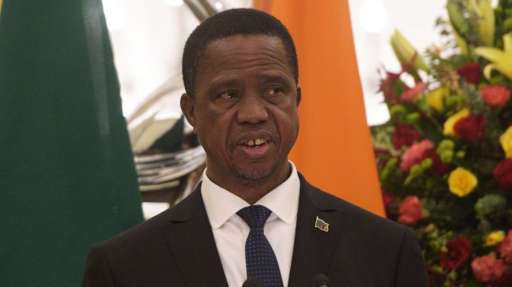
Zambia’s former President Edgar Lungu has taken the government to court after being allegedly barred from traveling to South Korea for a conference.
It is reported that Mr. Lungu had received an invitation to attend a world peace conference, but as he was about to depart, he was denied access to his plane due to a lack of government clearance for the trip.
Mr. Lungu has initiated legal proceedings in the Lusaka High Court, where he is challenging the government’s decision to prevent his travel to South Korea, as outlined in court documents he has submitted.
His political party, the Patriotic Front (PF), has denounced the government’s purported actions, labeling them as illegal.
“If he is invited and the trip is paid for or he can meet the cost of his own trip and that of his entourage, he doesn’t need to inform governments,” argued Emmanuel Mwamba, the PF’s spokesperson.
According to Mr. Mwamba, the former president had previously been denied permission from the cabinet office to leave for a medical trip.
“These draconian and dictatorial actions are a violation of fundamental rights of the former president and have no place in true democracy,” he said.
Hakainde Hichilema, the current president, ousted Mr. Lungu in 2021.
Even though he subsequently proclaimed his retirement from active politics, many people believe he is considering a comeback and may run in the 2026 elections.
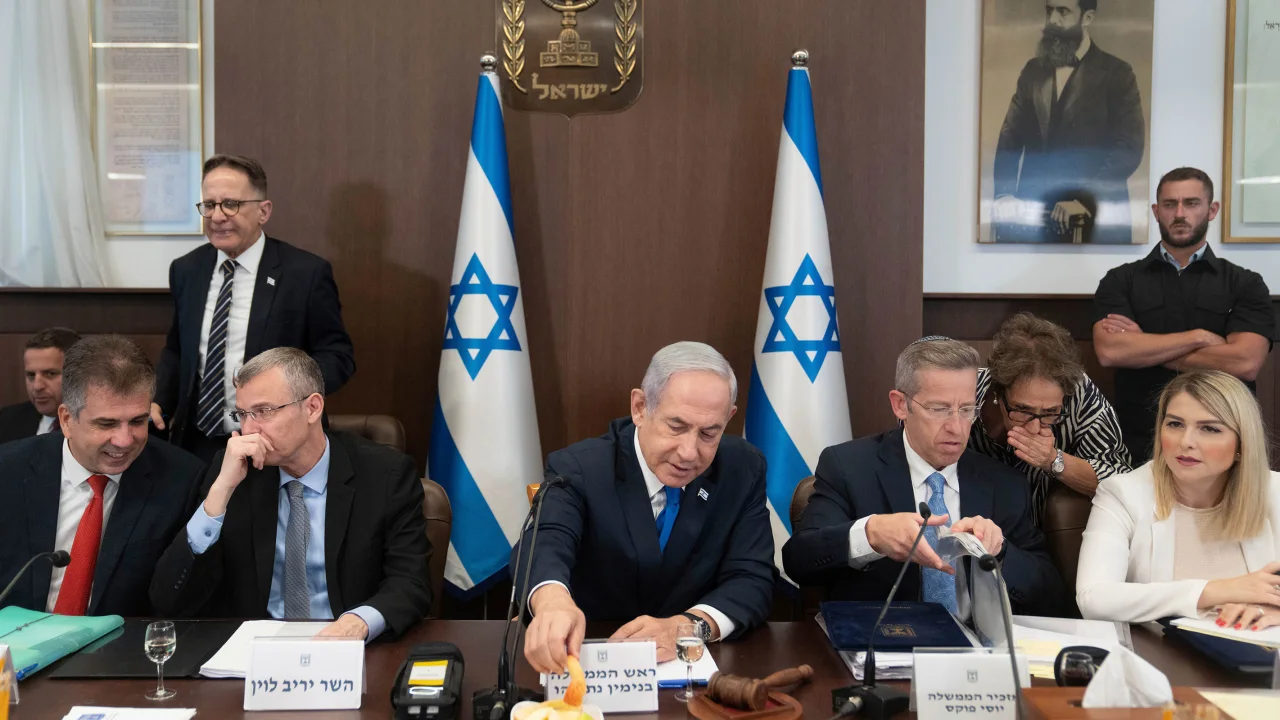
Israel’s Supreme Court opened hearings Tuesday on a law to curb its powers, in a case that could set the judiciary on a collision course with Prime Minister Benjamin Netanyahu’s hardline government after months of mass protests over the controversial legislation.
The court is hearing arguments for and against the first part of Netanyahu’s judicial overhaul plan to pass parliament – a law that restricts the court’s ability to nullify government actions it deems “unreasonable.”
Beyond the legal questions surrounding the law and the justices ruling on their own powers remains the question of whether Netanyahu’s government would even abide by a court ruling – possibly months away if it comes – striking down the law. That would set Israel up for an unprecedented judicial and political crisis.
Netanyahu has always claimed that he is in full control of this government – no matter who his ministers are. But the next few weeks could be critical to his own future.
“If Netanyahu wants to survive as prime minister, he must have his hands on the steering wheel, otherwise he will fall apart,” said Amit Segal, chief political correspondent for Israel’s Channel 12. “The Supreme Court and the government alike possess a credible nuclear threat against the other side … if both sides are rational actors, they will … disarm themselves. Problem is, we’re in a crisis that is not very rational anymore.”
Netanyahu’s proposals to weaken the courts have divided Israeli society, with critics describing them as a threat to the country’s democracy. Tens of thousands of Israelis took to the streets outside of the Supreme Court on Monday evening, part of the 36-week long protest movement against the overhaul, to show support for the justices ahead of the hearing. Some of the demonstrators later marched to the prime minister’s official residence in Jerusalem.
The Supreme Court is hearing appeals against the so-called “reasonableness law,” the first aspect of the judicial overhaul passed in July by Netanyahu’s government despite months of street demonstrations, warnings from the Biden administration and a boycott by all opposition lawmakers of the final vote on the bill.
The measure, which amended one of Israel’s Basic Laws, came into effect two days after it was passed and strips the Supreme Court of the power to strike down government decisions it finds to be unreasonable.
Like the United Kingdom, Israel doesn’t have a written constitution. Instead, it relies on 13 Basic Laws, as well as court ruling precedents that could one day become a constitution. That leaves the Supreme Court as the only check on the executive and legislative branches of government. Striking down a Basic Law would be uncharted territory for the Supreme Court, although it has examined and commented on Basic Laws before.
In 2021, the court outlined very narrow circumstances under which a Basic Law can be annulled. Supreme Court President Esther Hayut said a Basic Law could be struck down if it endangers democratic principles such as those that deal “a mortal blow to free and fair elections, core human rights, the separation of powers, the rule of law and an independent judiciary.”
That standard was then used this year when Netanyahu dismissed key ally Aryeh Deri from all ministerial posts, in compliance with a Supreme Court ruling that it was unreasonable to appoint him to positions in government due to his criminal convictions and because he had said in court last year that he would retire from public life.
In a historic first, all 15 judges on the court have been convened to hear the challenge to the controversial law, which is expected to last no longer than a couple of days. The court must issue its ruling by January 12, 2024, because of a retirement coming up on the bench.
In an interview with CNN in July, Prime Minister Netanyahu refused to commit to abiding by a potential Supreme Court decision to strike down the law, which he and his allies say is necessary to rein in an activist judiciary that is not accountable to the will of the people.
The anti-judicial overhaul demonstrations are now the longest and largest protest movement in Israeli history.
It started when Netanyahu took back power late last year – leading the most right-wing and religious coalition ever to hold power.
And though judicial reform was barely, if ever, mentioned during Netanyahu’s election campaign, it quickly became the main issue when Justice Minister Yariv Levin announced the sweeping plans days after being sworn in.
The original proposals included reshaping how Supreme Court justices are selected, taking away some of its powers to nullify government actions, significantly limiting the authority of government legal advisers, and even giving parliament the power in certain cases to overturn Supreme Court rulings with a simple majority.
Netanyahu’s coalition said the changes were necessary to rebalance the branches of government, claiming that the Supreme Court had become insular and elitist, and held too much power over the democratically elected legislators. Opponents saw the reforms as a power grab for the ultra-Orthodox and settler movements and as a way to help Netanyahu as he faces an ongoing corruption case – charges he has vehemently denied.
Although aspects of the reforms have been dropped or softened since their initial rollout, the demonstrations have grown and morphed into a wider protest movement against the government, whose far-right ministers like Bezalel Smotrich and Itamar Ben Gvir have made controversial statements about Israeli society and about Palestinians that have raised concerns from international allies.
Many Israelis, both those for and against the judicial changes, say Israel is risking tearing itself apart, and that the judicial overhaul is just one aspect of what’s really fueling the divide – the battle between secular and religious, settler and not.
“Every single Western democracy experiences an identity crisis in its third or fourth generation. Who are we?… What are we here for? And in Israel? The crisis is whether we are Jewish and democratic state, or a democratic and Jewish state. What is the 51%? And what is the 49%? Is it a strawberry banana yogurt, or a banana strawberry yogurt?” Segal said.
The judicial overhaul and the government’s actions have not only sparked the massive protest movement that has regularly shut down some of Israel’s busiest roads and highways, but it’s also affected everything from Israel’s military, to its economy, and its international relations.
Thousands of military reservists and even some active duty soldiers have vowed not to serve if the judicial overhaul went into effect. Banks and credit ratings agencies warned about the stability of Israel’s business climate as a result of the reforms. Israel’s famous high-tech community has been unanimous in expressing deep concern over the plans, and Israel’s security establishment, including former military generals, chiefs of staff, Ministers of Defense, and chiefs of Israel’s security and intelligence agencies have said such changes would or have already weakened Israel’s security.
Haim Tomer, who served as the Mossad’s chief of intelligence and then its chief of international liaison – meaning he worked with other nations’ spy agencies –until 2014, told CNN that Israel’s security is weakening because the spirit of the armed forces, the feeling of solidarity and “shared values” have taken a hit.
“The pro-Iran camp, Iraq, Lebanon, and other Shiite forces that actually are following what’s going on see it as a kind of opportunity. (Hezbollah leader) Hassan Nasrallah has said it in his own, I would say very clear-cut phrases, he said, ‘I see that the collapse of Israel has already started. We should wait on the sidelines and see how Israel is ruining itself,’” Tomer said. “So they are looking for an opportunity to help us to give us a little push to this collapse.”
Allies, most notably the United States, have expressed deep concern over the overhaul with President Joe Biden urging Netanyahu only to pass such changes under a broad compromise agreement with opposition parties. A meeting between Netanyahu and Biden in the US has been publicly mooted, though has notably not happened yet as a result of the legislation – highly unusual for two countries that claim to be such stalwart allies.
And Tomer said regional and newer allies, like the United Arab Emirates are also expressing concern.
“The need for unity is not only to be strong, vis a vis our enemies,” Tomer said. “But the need for unity is very much requested to keep up the relations or even to develop relationships with our partners in the region.”
There are reports in Israeli media that Netanyahu is considering announcing he’s agreeing to Israeli President Isaac Herzog’s compromise plan on judicial reform. But until legislation is credibly on the table or passed regarding the law the Supreme Court is weighing this week, the hearings will move forward.
Tomer says a move by the court to strike down the legislation could lead to some major dilemmas for Israel’s security leadership.
“It means that there is a question for the chief of police. Who should he – so to speak – obey? (National Security Minister) Ben Gvir that might ask him in two weeks to stop all licenses for demonstrating on the streets, because he’s against that? Or for the Supreme Court that might say we have a right to demonstrate, the right to strike by our so to speak legal system,” Tomer said.
Meanwhile Netanyahu is heading to the US to speak at the United Nations General Assembly next week as a Biden invitation remains unfulfilled, all the while a possible peace accord between Israel and Saudi Arabia is being hammered out, according to reports.
If Netanyahu wants such achievements, he must do so while also balancing the desires of his coalition partners, whom he needs to remain in power. A deal with Saudi Arabia would likely require serious concession to the Palestinians, which may be a step too far for some of his more ultra-nationalist partners.
“(Netanyahu) lacks the power to actually lead this coalition boat to the destination that he seeks, because he is fully dependent on his far-right partners, so Netanyahu that we know, wants to promote the peace accords with Saudi Arabia and to promote the economy. And yes, to have some judicial reform, but not the full monty,” Segal said. “So what I really think is that unless Netanyahu wakes up and tells his tells his partners that they must go to the direction that he wants to, his government is in danger of falling apart.”
The High Court in Accra has issued a seven-day ultimatum to the Ghana Police Service, requiring them to amend the title of their injunction application.
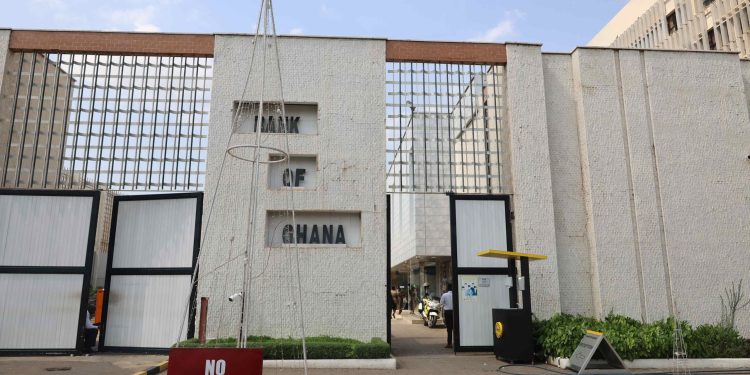
This application sought to prevent the Minority in Parliament from protesting against the Governor of the Bank of Ghana, Dr. Ernest Addison, and his two deputies.
In a ruling delivered today, Justice Edward Twum stated that the use of the title “Republic” in the application, as filed by the Police Service, was a mere oversight by the legal team representing the Police Service.
The Court acknowledged that the supporting documents submitted by the Police clarified their true intention, which was to act on behalf of the Inspector General of Police for the Police Service, a corporate entity with the legal capacity to initiate legal actions under the 1992 constitution, rather than the Attorney-General.
Justice Twum commended the lawyers representing the Minority in Parliament for their diligent scrutiny of the Police Service’s application. However, he emphasized that technicalities should not be exploited to delay the core matter, stressing the importance of fairness.
As a result, the Court granted the Police Service a seven-day period to revise the title of their application from “Republic” to “Inspector General of Police.”
The case has been adjourned to Monday, September 18, 2023. In the meantime, the Minority is scheduled to meet with the Accra Regional Police Command later today to discuss the logistical details of their demonstration. Originally scheduled for September 5, the protest was rescheduled to Tuesday, September 12, 2023, following the Court’s intervention.
A 20-year-old unemployed individual identified as Njandi has received a six-month prison sentence from the Nkwanta South District Court in the Oti Region for stealing a Techno mobile phone.
Detective Inspector Bright Nkansah, the prosecuting officer in the case, disclosed to the court that Tadir Njandi, aged 21, had stolen the phone from a residence in Pibilla, a farming community situated in Nkwanta North of the Oti Region. The phone in question was valued at GHC1,100.
Following the theft, Njandi went into hiding, However, the victim promptly reported the incident to fellow residents, leading to Njandi’s apprehension by members of the community. He was subsequently handed over to the police for legal action.
Njandi appeared before the Nkwanta Magistrate Court, facing charges of theft. He entered a guilty plea to the offense. In response, the presiding judge, Joseph Annang Okorokpa, handed down a sentence based on the defendant’s own admission of guilt.
During the delivery of the verdict, Judge Okorokpa emphasized that this sentencing was intended to send a clear message to potential thieves in the region. He highlighted that it serves as a robust deterrent aimed at safeguarding the community from such criminal activities in the future.
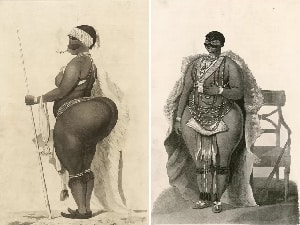
Her story has been recounted numerous times over many years, that of an African woman who endured suffering and exploitation due to a condition she had, known as steatopygia.
Sarah Baartman, originally named Saartje, possessed exceedingly prominent buttocks and hips as a result of steatopygia, a condition characterized by the accumulation of substantial fat in the buttocks.
Born into a Khoikhoi family in South Africa’s Eastern Cape in 1789, she hailed from a nomadic Khoikhoi community. Tragedy struck early in her life as her mother passed away when she was just two years old, and her father, a cattle driver, died during her adolescence.
As a teenager, Sarah entered into marriage with a fellow Khoikhoi from her tribe, only to witness his tragic murder by his slave master, a Dutch colonist. To survive, Sarah turned to domestic service in Cape Town, South Africa, but it was during this period that her tribulations began.
According to a feature in a BBC magazine, Sarah’s life took a fateful turn when she was discovered by a British surgeon named William Dunlop. This occurred after one of her employers, Hendrik Cesars, for whom she worked as a domestic worker, began exhibiting her at a city hospital in Cape Town, all in exchange for money.
Intrigued by her unique condition and physique, Dunlop made promises to take her abroad to work as an “indentured servant” and urged her to sign a contract to that effect. Despite her illiteracy, Baartman signed the contract, only realizing later that it had been intended for a different purpose.
She was subsequently dispatched to Europe, where she became a featured attraction in numerous British freak shows, particularly in London, at a venue located in Piccadilly Circus. There, she was given the stage name “Hottentot Venus,” a term that is now considered derogatory but was then used in Dutch to describe the Khoikhoi and San peoples, collectively known as the Khoisan.
The BBC magazine feature reveals that during her exhibitions, Sarah Baartman was dressed in skin-tight, flesh-colored attire, adorned with beads and feathers. She would smoke a pipe while performing on stage, singing and dancing. At times, affluent members of the audience would pay for private viewings in their homes, where guests were permitted to touch her.
It is reported that she was occasionally suspended in a cage on stage, subject to poking, prodding, and unwanted touching.
In 1807, after the British Empire had abolished the slave trade, campaigners who were appalled by Baartman’s mistreatment in London took legal action against her employers, accusing them of holding her against her will. Regrettably, when called to testify in court, she sided with her employers. This has since raised questions about whether she had been coerced into the exhibitions against her will or if she had faced threats of repercussions for testifying against her employers in court.
Following the campaigners’ unsuccessful lawsuit, Sarah went to Paris with Hendrik Cesars, where she was sold to an exhibitor named S. Réaux. During this period, she engaged in heavy drinking, smoking, and was allegedly subjected to prostitution.
She even consented to being studied and painted by certain scientists and artists, although she refused to appear completely nude before them, citing that it was beneath her dignity.
Baartman is believed to have passed away at the age of 26 due to an “inflammatory and eruptive disease,” which some sources speculate may have been a result of pneumonia, syphilis, or alcoholism. Her death occurred on December 29, 1815, yet her exhibition persisted.
According to the BBC, “The naturalist Georges Cuvier, who had danced with Baartman at one of Réaux’s gatherings, made a plaster cast of her body before conducting a dissection. He preserved her skeleton and preserved her brain and genitals, placing them in jars on display at Paris’s Museum of Man. These remains remained publicly exhibited until 1974, a fact described as ‘grotesque’ by some.”
Following Nelson Mandela’s election as South Africa’s president in 1994, he requested the repatriation of Baartman’s remains and the plaster cast created by Cuvier.
Following the French government’s approval, Baartman’s remains were returned to South Africa in March 2002. One hundred and ninety-two (192) years after leaving for Europe, her remains were interred in Hankey, Eastern Cape province, in August of the same year.
Chief Wole Olanipekun, SAN, a Senior Advocate of Nigeria and former Chairman of the Nigerian Body of Benchers, has called for a thorough examination and audit of past administrations in Nigeria.
He believes that such an audit would shed light on the reasons for the country’s economic challenges, the collapse of refineries despite significant expenditures on refurbishment, and other pressing issues.
Speaking at a colloquium held in Abuja to commemorate the 25th anniversary of Chief Joe-Kyari Gadzama’s elevation to the rank of Senior Advocate of Nigeria, Olanipekun also advocated for the renaming of Nigeria.
He argued that the name “Nigeria” was imposed by the colonial masters and carries a demeaning connotation.
He suggested that the country should adopt a name that reflects its indigenous identity and evokes a strong sense of pride and ownership.
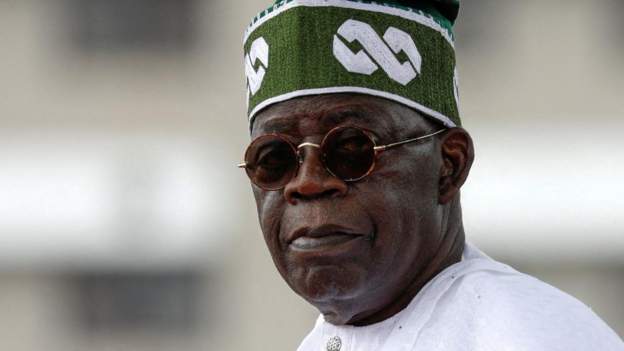
Furthermore, Olanipekun urged President Bola Tinubu to initiate a probe into past administrations to uncover the reasons behind the country’s current challenges.
He raised questions about the state of the economy, the use of allocated funds, the condition of critical infrastructure like airports, and the devaluation of the national currency, the Naira. He stressed the importance of accountability and transparency in addressing these issues.
The colloquium aimed to bring together experts and stakeholders to discuss pressing national issues and find solutions to the challenges facing Nigeria.
It addressed concerns such as corruption, nepotism, electoral rigging, and the need for good governance and transparency at all levels of government.
The event was chaired by retired Justice of the Supreme Court, Mrs. Mary Odili, and attended by notable dignitaries, including the Attorney-General of the Federation and Minister of Justice, Prince Lateef Fagbemi, SAN.
Director-General of the Social Security and National Insurance Trust (SSNIT), Dr. John Ofori-Tenkorang, has disclosed that the Trust has successfully recovered GH¢154 million through the legal pursuit of employers who neglected to fulfill their obligations of paying their employees’ contributions during the initial half of 2023.
Dr. Ofori-Tenkorang indicated that based on available data and projections, the Trust is making steady progress towards achieving its objectives for the entirety of the year.
Speaking during a session with the media on the sidelines of the 2023 SSNIT Employers Breakfast Meeting held in Koforidua, Dr. John Ofori-Tenkorang highlighted that SSNIT is in the process of broadening its scope to encompass individuals within the informal sector.
“Our goal and objective is to ensure that we do not miss any pension payments to people who rely on us as their only source of income for their livelihood. We want to expand, and that is why we are going out there to do the tough work and convince the self-employed to join SSNIT” he stated.
“The highest-paid SSNIT pensioner was a self-employed person who was not an employee of anyone and used to earn GH¢100,000 a month” he revealed.
He advised businesses to make SSNIT contributions on time in order to avoid prosecution, which he claimed was frequently the Trust’s last resort.
“The SSNIT law states that it is the employer’s obligation to ensure that SSNIT payments are remitted to SSNIT. If employers do this diligently, then we would not have to send compliance officers after them. However, due to some misunderstanding or sheer devilishness, some employers fail to remit their contributions to SSNIT.”
He concluded that if after repeated reminders, reluctant employers still do not make contributions, then they would have no choice but to take them to court.
“Some of these prosecutions have led us to retrieve GH¢154 million in the first half of the year” he added.
A pay TV operator headquartered in South Africa, MultiChoice, has taken the decision to temporarily cease its DStv service operations in Malawi. This move comes as a response to an injunction that restrains its local subsidiary from modifying the pricing structure of the DStv service.
MultiChoice Africa Holdings (MAH) stated that their choice was influenced by an injunction put forth by the High Court in Lilongwe. This legal matter emerged from a dispute involving MultiChoice Malawi (MCM) and the Malawi Communications Regulatory Authority (MACRA). The court order prevents any alteration to the tariffs associated with the DStv service.
MAH has maintained that its local subsidiary is not vested with the authority to determine the pricing of the service, as this responsibility rests with the parent company independently. It’s important to note that MultiChoice Malawi does not provide the DStv service to the general public in Malawi. Instead, the local entity oversees the digital-terrestrial GOtv service. For the latter, MultiChoice Malawi sought and obtained approval from the regulatory body for modifications to pricing.
Having consistently argued that the operations in Malawi were not responsible for the DStv service, MAH has conveyed that its subsidiary lacks the capability to comply with the court order mandating the implementation of MACRA’s pricing directive.
It declared it was pulling DStv out of the nation because disobeying may result in “grave consequences for the directors and management of MultiChoice Malawi, including imprisonment.”
Since failure to comply could have “grave consequences for the directors and management of MultiChoice Malawi, including imprisonment”, it said it was withdrawing DStv from the country.
The DStv service will be recognized for customers who have already paid their new membership fees up until the current 30-day viewing cycle expires on or before September 10, 2023. No new memberships or reconnections will be permitted after Wednesday, August 9, 2023.
The injunction was first imposed on July 31, but MultiChoice Malawi was successful in obtaining a stay of injunction, which was then extended until last Friday.
MultiChoice’s primary area of expansion outside of its home market of South Africa is the Rest of Africa segment. Inflation increased expenses and put pressure on its client base, which had a negative effect on its success in the South African market.
Investigative journalist, Manasseh Azure Awuni, has discredited tabloid fraud claims involving a businesswoman with a headquarters in France and a Court of Appeal judge.
The Facebook page of Mensah Thompson of ASEPA, which contains images of a police statement, is cited as the author of the fraud report narrative.
According to sources, Bire Marie-Dominique, the complaint, believes Justice Ekow Baiden defrauded her of $190,000.
Mr. Azure Awun claims that after being contacted by specific people over a month ago, he was inspired to look into the situation.
“I was extremely livid when the issue was first narrated to me and I wondered how a judge could do that.
“After carefully perusing the documents, however, I concluded that what I had been told and the documents I had were not enough to do the story. People have worked hard for their reputation and unless I have a good reason to do so, I will not publish their names with the allegations, a reason I’ve still been engaging the complainant’s sources,” the investigative journalist noted in a Facebook post on Saturday, August 5.
Mr. Azure Awuni mentioned that he got in touch with the complainant’s “brother,” and that according to what the “brother” told him, there was no fraud as claimed.
“In a chronology of events sent to me by the supposed brother of the buyer (a France-based Senegalese woman), this is what she wrote:
“April/May 2021: Upon my arrival in Accra to sign the Lease Agreement, the seller changes the terms (purchase price, sub-lease agreement duration), and refuses to sign the contracts. I raise the issue via email with my lawyer, who insists on engaging with various parties to finalize the deal (see emails).’” he stated.
According to the investigative journalist, in the police extract that Mensah Thompson posted, the woman claims the judge increased the price of the building from $190,000 to $250,000 and refused to sign the lease agreement. However, her petition to the Office of the Special Prosecutor “indicates that she opted out of the transaction because there was a disagreement in the number of years of the unexpired lease since she is a foreigner and could not get beyond 50 years of the unexpired lease”.
Further arguing out his point, he noted that in an April 2022 letter, the lawyer of the woman, Roberts Ekor Dassah, stated that her client “resiled the sale agreement” due to some “irreconcilable reasons” and per findings, the word “resile” means abandon a position or a course of action”.
In his research, Mr Azure found out that Bire Marie-Dominique expressed interest in a property that belonged to the judge and his wife; got her lawyer to do due diligence on the property and when she was satisfied with the documents, paid the money in two installments in March 2021 and took possession of the keys to the property, pending the signing of the lease agreement.
He, therefore, concluded that “there is nothing to show that it was the judge who refused to sign the agreement. I have tried to ask questions and get clarity on the contradictions of the woman making the allegations, but I’m yet to be satisfied.”
“There is also no evidence that the judge had increased the price of the property. This does not come up in any of the extensive exchanges between the parties involved or the lawyers acting on either side of the transaction.
“In any case, I found it strange that a seller who handed over the keys of the property to the buyer and allowed the buyer to take possession would not want to sign the agreement after taking his payment.
“It is also strange that the buyer would still want to proceed with the transaction after realising that the price had been increased from 190,000 to 250,000 dollars, and that it was the seller’s refusal to sign that stopped the deal,” he added.
Further findings of Mr Manasseh Azure Awuni are as follows:
DEFAMATION SUIT
Before the property was resold, the woman wrote to a number of institutions such as the police, EOCO, the Office of the President and the Chief Justice, accusing the judge of fraud and theft. She even wrote to the judge’s bank and alleged that the judge had received fraudulent payment into his account, a petition which resulted in a temporary blocking of the judge’s bank account. I have seen evidence of all that.
In the chronology of events written by the buyer/woman, the judge threatened her with a defamation suit in August 2021 but she insisted she would continue to involve state authorities until she got a refund of the money.
She says in December 2021, the judge asked to repossess or take over his property and sell it to someone else since she was no longer interested in buying it. In February 2022, the judge sued her for defamation.
In May 2022, the buyer, through her power of attorney, wrote to the institutions to retract and apologise for the defamatory statements against the judge.
In April 2022, (a year since the woman had taken possession of the property) the judge sold the property to a medical doctor for 190,000 dollars. (Note that it was still the same price at which it was sold to the woman, not the 250,000 dollars she claims the judge had increased it to). In April 2022, lawyers for the buyer wrote to the seller/the judge to refund the money to their clients since the property had now been sold to a different buyer after the woman opted out of the deal a year ago.
Sources close to the judge claim the defamation case was nearing determination and the judge held on with the payment so that should he win–which was likely because by the nature of the apologies and retraction, the woman had admitted defaming the judge–it could be used to offset the damages he was seeking.
The judge won the defamation case to the tune of about 2 million cedis. (This is part of the case concerning the withholding of the payment pending the outcome of the trial, I’m told, is being contested by the woman).
I have recounted my knowledge of the case and my reservations in covering this story due to the numerous allegations of compromise directed at individuals involved in various stages of the case.
The initial attorney of the woman, the police who initiated the investigation, and even the woman’s power of attorney, have all faced accusations of compromise.
If anyone were to assert that I was informed about this case but chose not to pursue it, I want to clarify that until the early hours of today, prior to the report published by Ghanaweb, those providing me with information on behalf of the complainant were still in the process of addressing critical inquiries regarding their own allegations against the judge, as indicated by a WhatsApp screenshot.
Her Ladyship Gertrude Torkornoo, the Chief Justice, expressed concern that approximately 70% of cases dismissed by the court can be attributed to inadequate legal representation.
According to her, the legal profession is intricate and requires a significant level of diligence, competence, and integrity from its practitioners.
She pointed out that many lawyers fail to adhere to the established rules of procedure and often present insufficient evidence and poorly defined causes of action, leading to the denial of justice for numerous clients.
Her Ladyship Gertrude Torkornoo emphasized the crucial role of diligence and competence in maintaining ethical standards within the legal profession.
During her address at the 7th annual legal ethics training programme organized by the Africa Centre for Law and Ethics in collaboration with the GIMPA Faculty of Law, she highlighted that lawyers’ failure to adhere to ethical conduct has resulted in severe consequences, causing many individuals to lose their properties, businesses, and entire livelihoods. Some nations, too, have suffered significant losses due to the consequences of poor legal representation.
Chief Justice, Her Ladyship Gertrude Torkornoo and colleagues
Her Ladyship urged law students and lawyers to prioritize ethical behavior to enhance the justice delivery system. She stressed that legal ethics is a collective responsibility shared by lawyers, judges, court registrars, bailiffs, Parliament, and the executive arm of government.
In her address, she urged lawyers not to resort to media publicity whenever they lose cases due to their own incompetence and lack of diligence, but instead, they should focus on being diligent and following proper procedures.
Dr. Kwaku Agyemang-Budu, the Dean of the GIMPA Faculty of Law and founder of the Africa Centre for Law and Ethics, further emphasized the importance of ethical behavior in the legal profession. He announced that the GIMPA Faculty of Law plans to introduce a course in Law and Ethics in the upcoming academic year to instill ethical principles in law students.
The purpose of the Legal Ethics Training Program is to introduce law students to the basic tenets and guidelines that govern professional legal and judicial practice.
The Judge overseeing the trial of the Assin North MP, James Gyakye Quayson has issued a warning, stating that if his lawyers are absent on Monday,July, 31, he will be required to proceed with and conclude the cross-examination of the prosecution’s first witness, Richard Takyi-Mensah.
This decision comes after the court denied a request from the accused’s lawyers to postpone the case until October or November.
On the scheduled Friday session, the accused’s lawyers were absent, as the lead counsel, Justin Teriwajah, informed the court of a three-day medical excuse provided by his doctor.
Teriwajah requested that the Friday session be adjourned to a date after the legal break, which ends in the first week of October.
He explained that Gyakye Quayson would be unavailable during the break due to medical treatment outside the jurisdiction, and Tsatsu Tsikata would also be unavailable within the same period.
“This case started in January 2022. PW1 gave evidence on July 12, 2022. It’s been one year, 16 days since PW1 mounted the witness box. In view of this, I like to pray that this matter is adjourned to Monday subject to my lady’s convenience to have cross-examination of PW1 completed,” Mr. Tuah Yeboah urged the court.
Deputy Attorney General, Alfred Tuah Yeboah, expressed sympathy for Teriwajah’s medical condition but opposed scheduling the return date after the legal break, citing fairness to the prosecution.
He pointed out that the witness had given his evidence on July 12, 2022, and more than a year had passed without completing the accused’s cross-examination.
He urged the court to adjourn the case to Monday, July 31, in order to complete the cross-examination.
If Monday is not convenient, Tuah Yeboah further requested that a date within the legal break be set to ensure the completion of Richard Takyi Mensah’s cross-examination.
Regarding Gyakye Quayson’s absence from the jurisdiction, Tuah Yeboah suggested that he could participate in the proceedings virtually if he is out of the country.
The request from Teriwajah to adjourn the case to a date after the legal break also mentioned Tsatsu Tsikata’s unavailability, but the Deputy Attorney General considered this irrelevant since Tsikata was not counsel on the matter but rather holding brief for Teriwajah.
Gyakye Quayson personally appealed to the court to grant his lawyers’ request to allow him to attend to his medical needs.
However, Judge Justice Mary Maame Ekue Yanzuh declined the request and adjourned the case to Monday, July 31, with a warning that if the accused’s lawyers are unavailable on that day, the Assin North Member of Parliament will be required to continue the cross-examination of prosecution witnesses.
The culprit in the recent Adisadel College assault caught on camera is expected to appear before the Court today, Friday July, 28, 2023.
Police arrested the student in Cape Coast, charging him for causing harm and assault before releasing him to the school’s Headmaster for court presentation on Friday.
Prompt action is being taken by the authorities to address the disturbing incident captured in the video, where one student violently attacked another in a dormitory.
In response to the incident, the victim, initially suspended, has been recalled to the school, and measures are being taken to ensure his well-being and recovery.
The school’s administration is determined to maintain a safe learning environment for all students and is taking strong action against any form of violence or misconduct.
Both the school and relevant authorities are collaborating to provide the necessary support to the victim and ensure that the perpetrator faces appropriate legal consequences for his actions.
He then slammed the victim’s head to a metallic bed, causing part of his head to swell and bleed.
He has been dismissed the by school management for his actions.
Meanwhile, the victim, who was initially suspended, has been called back to the school and is currently receiving medical treatment and psychological support to aid his recovery from the traumatic incident.
The said student who recorded the video will be suspended externally for one week and also face internal suspension for another week.
The other students who were at the scene but did not intervene and also failed to report the incident will also face severe internal punishment, the tweet added.
Also, the housemaster and his Deputy who are to supervise the behaviour of students they are responsible for will be suspended immediately pending the outcome of the findings by GES.
The incident has sparked widespread concern, leading the school to take prompt action by suspending all students involved pending further investigations.
Also, there is a national discourse on bullying in Ghanaian schools. Many want the matter addressed with immediate effect.
Governor of the Bank of Ghana, Dr. Ernest Addison, has voiced worry about the practice of some people stockpiling enormous sums of foreign currency outside of the banking system.
The Governor remarked that the behavior of the former Water Resources and Sanitation Minister Cecilia Dapaah allegedly hoarding one million dollars and 300,000 euros at her residence is concerning in response to a question at the Central Bank’s Monetary Policy Committee press conference in Accra.
He didn’t say anything else, though, about the case that was in court.
“It is a worry to all of us, but it is a matter that is still unfolding and is in court. Therefore, there is nothing to say about it.”
Over the years, the Bank of Ghana has urged people and organizations to keep their local and foreign currencies with Ghanaian commercial banks.
As part of the Inflation Targeting Policy, this will assist in properly monitoring the quantity of currencies in use. For the foreign currencies, it will assist in supplying the commercial banks with the foreign exchange they require to support their international activities.
What is Bank of Ghana doing to deal with spike in currencies outside Banks?
The Governor said the Central Bank is using the various monetary tools to deal with the challenge.
Fresh data from the Central bank showed that currencies outside the banking sector went up from ¢22.1 billion in May 2022 to ¢31.6 billion at the end of May 2023.
Dr. Ernest Addison explained that the Bank of Ghana has increased its open market operations as well as improved liquidity management instruments to also address the challenge.
“This is an area that the Bank of Ghana is taking a closer look at when it comes to liquidity operations and expect more measures from the Central Bank in the coming weeks”.
The Governor noted that there is a seasonal effect in terms of contributing to this spike, adding “One can talk about the purchase of cocoa and gold”.
But he noted that with the purchase of gold , there had been a cedi cover to deal with this challenge.
Capitalisation plans of commercial banks in Ghana
The Governor also announced that all commercial banks have submitted their re-capitalization plans to the Central Bank.
This is ahead of the September 2023 deadline.
The Central Bank at the last Monetary Policy Committee (MPC) meeting announced that commercial banks in the country have been directed to submit their recapitalization plans by September 2023.
This might influence any plan in the future in terms of banks that turn to the BoG for support with respect to operationalization of the Ghana National Financial Stability Fund.
Suspension of Fidelity and First National Banks’ Forex License
The Bank of Ghana earlier this month announced the suspension of the forex license of Fidelity Bank and First National Bank of South Africa for breach of operational measures, beginning June 29, 2023.
The two banks were also fined a combined 1,000 penalty points each for breaching sections 3.4, 3.5, and 3.9 of the Ghana Interbank Forex Market Conduct rules.
Given the license suspension, customers of the banks had to look elsewhere to do their forex business.
But responding to questions at the MPC press conference, the Governor said the licenses of these two banks have been restored even ahead of the deadline.
“The licenses of these commercial banks were restored some two weeks ago, this should mean that they did not do the full one month” the Governor noted.
The lead lawyer representing James Gyakye Quayson, the Member of Parliament for Assin North, skillfully questioned the first state witness during the ongoing criminal trial at an Accra High Court. Tsatsu Tsikata and his legal team finally had the opportunity for cross-examination after several unsuccessful attempts to secure a daily hearing for Quayson’s trial.
During the cross-examination, Tsikata delved into the witness, Richard Takyi-Mensah’s statement recording process and the events leading to Quayson’s clearance by the Electoral Commission to participate in the 2020 elections. A member of the National Democratic Congress (NDC) legal team shared excerpts of the exchanges, revealing that Tsikata managed to extract two crucial pieces of information from the witness.
Firstly, the witness confirmed that the Electoral Commission had indeed given the green light to Quayson to run for office. Secondly, it was revealed that despite Takyi-Mensah claiming that his statement was recorded in English, it was actually conducted in Twi.
These revelations shed light on the case and highlight the importance of the ongoing trial concerning James Gyakye Quayson.
Further Cross Examination by Tsatsu TSIKATA of PW1 on 18/7/2023
Tsatsu TSIKATA: Were you aware of a complaint lodged with the EC against the candidacy of the accused person for the election in December, 2020. PW1, Richard Takyi Mensah: Answer: I did read about it.
Q: Are you aware that following that complaint, the EC went into the matter of the complaint? A: As I did say, I did read about it.
Q: Are you aware that the complaint was that he was not qualified to stand for those elections, are you not? A: Per what I read, I read that a group sent a complete to the EC.
Q: And you are aware that the complaint was based on his owing allegiance to a country other than Ghana, are you not? A:Yes my lady per what I read, that was what the complaint was about.
Q: Are you aware that the EC cleared the Accused person to stand for those elections, are you not? A: Per what I read, the EC invited the complainant and the accused to a meeting and based on what the accused told the EC, then based on that the EC cleared him.
Q: The EC cleared the accused person, is that correct, are you aware of that? A: Yes my lady. I have already said that per what I read, the EC did clear him based on what the accused put before the EC.
Q: So you realize that the accused participated in that election on the basis of being cleared by the EC. A: Yes my lady based on what the accused told the EC.
Q: You cannot say on what basis the accused was cleared by the EC, can you? A: I am basing on what I read.
Q: And you are claiming that you read that he was cleared on the basis of what he told the EC, is that what you are saying to this court? A: Yes my lady.
Q: My question was, you are aware that the EC asked the complainant to provide evidence? A: No my lady that did not come to my attention.
Q: Just have a look at this document and see whether that is your signature at the back? A: Yes, it is my signature.
Q:If anybody claims that you spoke in Twi in making that statement to the Police, they would not be telling the truth, would they? A: I have already said that I did write in the English language.
Q: Just read to the hearing of the court the first sentence of Exhibit 1? A: PW 1 reads the first sentence of exhibit 1 in open court.
Q: So you have seen the statement, the complainant STATES in Twi Language. A: Yes that is what is stated in Exhibit 1.
Q: You signed this document according to you. A: Yes my lady.
Q:And you read the document before you signed it, did you not? A: I did.
In the course of the trial at the Financial and Economic Division of the High Court in Accra, it came to light that the Investigator assigned to the case involving the founder of the defunct Beige Bank lacks awareness of crucial details regarding a Share Purchase agreement. This agreement was between the Beige Group and First Africa Group (FAG) for the acquisition of First Africa Savings and Loans (FASL) by Beige Group.
FAG, being the parent organization of FASL, had reached an agreement with Beige Group for the latter to take control of FASL. However, despite being tasked with investigating the matter, Assistant Superintendent of Police (ASP) Joseph Abednego Atsah, the investigator, admitted to not being informed about the specifics explicitly outlined in the share purchase agreement.
ASP Abednego Atsah, who serves as the Fifth Prosecution Witness in the ongoing trial, had his Witness Statement recorded on December 8, 2022, and subsequently adopted by the Court as his evidence-in-chief, along with various exhibits, on July 7.
The purpose of his testimony in the Court, presided over by Justice Afia Serwah Asare-Botwe, a Justice of the Court of Appeal sitting as an additional High Court judge, is to support the Prosecution’s charges leveled against Mr. Michael Nyinaku.
Mr. Michael Nyinaku, the founder and Chief Executive Officer of the defunct bank, is facing allegations of siphoning customers’ funds and stands accused of stealing GH¢2.1 billion of depositors’ money from the bank.
He has entered a plea of not guilty to 43 charges, including stealing, fraudulent breach of trust, and money laundering, and has been granted bail during the legal proceedings.
Beige Group & FASL Purchase agreement
According to the Share Purchase agreement between The BEIGE Group and FAG, both parties agreed that Beige Group would assume complete control and management of FASL within 90 days from the effective date of the agreement.
The agreement laid out a structured three-stage process for the takeover: the Commencement date, the transitional period, and the Cut-off date. All these significant milestones were expected to occur within the 90-day timeframe, after which Beige Group would assume full responsibility for FASL.
During the negotiation process, FAG, jointly represented by Kwesi Tetteh Dadzie and Gifty Affenyi Dadzie, made representations to BEIGE, assuring them that they had obtained all the necessary approvals from the Bank of Ghana (BoG) for the share sale transaction. However, it later came to light that these representations were not accurate.
Under cross-examination by Defence Lawyers, led by Lawyer Thaddeus Sory, ASP Abednego Atsah, who has served at the Criminal Investigation Department of the Ghana Police Service for 21 years, admitted that he was not fully aware of the specific details of the agreement despite being involved in the investigation of the matter.
Cross-Examination
ASP Abednego Atsah, who had worked with the Police for the past 21 years, had made reference to the share purchase agreement in paragraph 9 of his witness.
But did not attach a copy of the said agreement as stated to his statement to the Court.
Shown a copy of the share purchase agreement by Lawyer ThaddeusSory, (Marked as Exhibit 20) between two entities one known as First African Group (FAG) and the Beige Group who are seller and buyer respectively, he confirmed to the court that the Share Purchase Agreement.
Asked by Mr. Sory, that from the parties to the agreement per exhibit 20, it is clear that contrary to what he had said in paragraph 9 of his witness statement, the purchaser of those shares is the Beige Group and not the Beige Bank.
“That is correct. I suppose there was a typographical error in the statement, it should have read ‘Beige Group’, ASP Atsah, the Investigator answered.
When it was put to him by Mr Sory that, “contrary to what you say in paragraph 11 of your witness statement, the signatories to the FASL account were representatives of the two parties stated in Exhibit 20 who are the First Africa Group (FAG) and the Beige Group and not the Beige Bank,”
The Witness in his response agreed, before explaining that, “I can recall that Counsel said that the Beige Bank is part of the Beige Group.”
Mr Sory again put to him that, the Beige Bank and the Beige Group are different, the Witness also agreed with Counsel, saying , “that is correct.”
Asked by Mr Sory if he had made any findings on Exhibit 20 as part of his investigation on the management of FASL, the Witness instead offered explanation.
“My lady because of the share purchase agreement, Beige Group had sent its representatives to work with FASL so the representatives had the opportunity to work with FASL as a result of the share purchase agreement,” the Investigator noted.
I’m not aware of Agreement details
Counsel for the accused had put to the Investigator that, “by that Share Purchase Agreement, there were three crucial dates in the Share Purchase Agreement, there was the commencement date, the transitional period and a cut-off date.”
But, the Witness in his response said, “My lady I do not know how counsel segregated it but all I know is that, there was a share purchase agreement between FAG and the Beige Group.”
Below are excerpts of the cross-examination conducted by Lawyer Thaddeus Sory
CROSS EXAMINATION OF PW5 BY MR. SORY
Q: Do you have any training in accounting?
A: No my lady. I have never done accounting.
Q: And apart from this case in which you were involved in the investigations, have you investigated any other matter that raised accounting related issues?
A: I have. In fact, I did financial analysis and reporting at the MSC Level.
Q: Can you tell the court what investigations you have conducted that raised accounting-related matters apart from this one?
A: I investigated a case involving a construction company’s account. I cannot recollect the name off head. It was constructing road awarded by the Ministry of Roads and Highways at the Effiduase Area in the Ashanti Region. The then Managing Director, one Kwasi Asare had embezzled several funds from the company’s account. The company’s accounts were at Ecobank Headquarters, Accra.
Q: Do you have any banking experience?
A: No my lady.
Q: But have you conducted any banking-related investigations apart from this particular one in which you were involved?
A: The only time I conducted banking-related investigations was when I went to Ecobank in respect of the case involving Akwasi Asare.
Q: Do you have any auditing background or experience
A: No I have never studied auditing before.
Q: And have you conducted any auditing related investigations apart from this case which you are involved?
A: Yes, I have conducted investigations in which we had to call for auditors reports when those cases were reported.
Q: As in “those cases”, do you mean this case or some other case?
A: In other cases.
Q: From your witness statement, your investigations covered a number of areas such as the supposed suspicious accounts opened in the name of First African Savings and Loans (FASL), the transfer of customer deposits from the Beige Bank to Beige Capital Assets and Management (BCAM), the transfer of funds from BCAM to the supposed suspicious FASL account, related third party transactions and other individual transactions involving the bank, is that correct?
A: That is correct.
Q: For purposes of your investigations, you not only interviewed and interacted with all individuals involved in the transactions as well as officials of the affected institutions but also collected documents from them, is that correct?
A: That is correct.
Q: And so in the course of your investigations, where a person made a statement which could be supported by a document, you called for it in order to authenticate or prove what the person is saying in their statement, is that correct?
A: That is correct.
Q: When you concluded your investigation, you wrote a report indicating your findings, is that correct?
A: That is correct.
Q: That report has not been attached to your witness statement, is that correct?
A: That is correct my lady. The cases were in segments. As and when the Receiver brings a particular aspect of the case, when I finish with that, report was written with findings. That is how it ran through all the cases until they were finally consolidated.
Q: Can you make the reports available to us before the next adjourned date?
A: Yes my lady.
BY COURT
The prosecution is directed to file further disclosures in respect of reports authored by PW5 in connection with Beige Bank/Beige Group investigations by Tuesday 11th July, 2023.
Q: In paragraph 9 of your witness statement, you make reference to a share purchase agreement which is not attached to your witness statement, is that correct?
A: That is correct?
Q: Take a look at Exhibit 20, that is a share purchase agreement between two entities one known as First African Group (FAG) and the Beige Group who are seller and buyer respectively, is that correct?
A: That is correct.
Q: Is that the Share Purchase Agreement you are referring to or there is another one?
A: This is the Share Purchase Agreement.
Q: From the parties to the agreement you are looking at which is Exhibit 20, it is clear that contrary to what you say in paragraph 9 of your witness statement, the purchaser of those shares is the Beige Group and not the Beige Bank?
A: That is correct. I suppose there was a typographical error in the statement, it should have read “Beige Group”.
Q: I am putting it to you that contrary to what you say in paragraph 11 of your witness statement, the signatories to the FASL account were representatives of the two parties stated in Exhibit 20 who are the First Africa Group (FAG) and the Beige Group and not the Beige Bank.
A: That is correct. I can recall that Counsel said that the Beige Bank is part of the Beige Group.
Q: I am putting it to you that the Beige Bank and the Beige Group are different.
A: That is correct.
Q: As part of your investigations into Exhibit 20 that you are holding, did you make any findings regarding the effect of Exhibit 20 on the management of FASL?
A: My lady because of the share purchase agreement, Beige Group had sent its representatives to work with FASL so the representatives had the opportunity to work with FASL as a result of the share purchase agreement.
Q: I am putting it to you that by that Share Purchase Agreement, there were three crucial dates in the Share Purchase Agreement, there was the commencement date, the transitional period and a cut-off date.
A: My lady I do not know how counsel segregated it but all I know is that, there was a share purchase agreement between FAG and the Beige Group.
Q: I am further putting it to you that from the transitional period which started from the commencement date up to the cut-off date, officials of the Beige Group (TBG) were to commence taking over full responsibility of FASL.
A: What I know is that the share purchase was 90% which part was paid for and for that matter, it could not have been full responsibility of FASL if it was 90% share agreement.
Q: I am further putting it to you that the transitional period as per Exhibit 20 was not to last beyond 90 days from the date of commencement.
A: That I am not aware of.
Q: I am also putting it to you that after the transitional period of 90 days from the date of commencement, there was then a cut-off date at which time officials of TBG now took over full control of FASL and that is what Exhibit 20.
A: That I am not aware of.
Q: I am finally putting it to you that at least by December 2017, the transitional period was over and officials of the BEIGE Group in accordance with the provisions of Exhibit 20 took over full control of FASL all of its operations and management.
A: I knew they were waiting for Bank of Ghana’s approval but I do not know if they had taken full control as at December 2017.
Q: You referred to the suspicious FASL account, can you tell the court when it was opened?
A: If I could refer to my statement.
By Court: The witness is granted permission to refresh his memory on his statement.
Q: You referred to the suspicious FASL account, can you tell the court when it was opened?
A: The specific date is not mentioned but the account number is captured here but the specific date is not here.
Q: So in other words, you do not know the date when that suspicious account was opened?
A: If I refer back to Susana Philip’s statement, she is the official who opened the account so I can get the actual date.
By Court:
The witness is granted permission to refresh his memory on the statement of Susana Philips.
Q: What is the date?
A: Susana indicated that she had instruction from Vanessa Akorfa Atsu on 14th March, 2018 to open the account.
Q: The Susana Philips’ statement you are looking at, it is dated 12th September, 2018, is that correct?
A: That is correct.
Q: And it was made to the Commercial Crime Unit of the CID, is that correct?
A: Yes my lady
Mr. Sory: My lady we wish to tender the document through the witness.
By Court: Any objection.
Mrs. Keelson: My lady we have no objection
BY COURT
The document is admitted without objection as Exhibit 26.
Q: If you look at the second page of that statement starting from about the 10th or 11th line, Susana told the Commercial Crime Unit (CCU) of the CID that the account was opened after all proper procedures of the bank were followed, is that correct?
A: My lady if I may read that portion. Witness reads the 10th and 11th lines to the hearing of the court.
Q: Take a look at the third line, it says that, that account was directly linked to the FASL operational account, is that correct?
A: That is correct my lady.
Q: She also made another statement to the Special Investigations Team (SIT) dated 18th January, 2019, do you have a copy of it?
A: Yes my lady, I do have a copy.
Mr. Sory: My lady we pray to tender that statement through the witness
By Court: Any objection.
Mrs. Keelson: My lady we have no objection.
BY COURT
The document is admitted without objection as Exhibit 27.
Q: If you look at the second page of that statement, from about the 7th line onwards, Susana explains to the Special Investigations Team (SIT) where you work that the purpose of that account which you call suspicious was to receive placements from BCAM, is that correct?
A: It was a reported speech from Yvonne Philips. If my lady will permit me to read.
By Court: The witness reads from the 7th line to the hearing of the court.
Q: It is clear what the purpose of the account you call suspicious was opened for, it was for BCAM placements, I am putting that to you.
A: Per the assertion of Susana Philips who opened the account, that is correct.
Q: Take a look at your statement again, there is one written by Yvonne Philips dated 7th September, 2018 written to the Commercial Crime Unit (CCU) of the CID, do you have it?
A: Yes my lady.
Mr. Sory: My lady we pray to tender that statement through the witness
By Court: Any objection.
Mrs. Keelson: My lady we have no objection.
BY COURT
The document is admitted without objection as Exhibit 28.
Q: If you read from line 17 to about line 25 on the second page, Yvonne Philips explains how this second account was opened.
A: Witness reads line 17 to line 25 of Exhibit 28 to the hearing of the court.
Q: I am putting it to you that the procedure was duly followed.
A: This is the account of Yvonne Philips to the police.
Q: From line 28 of that same statement, Yvonne Philips again tells the police that she became aware that BCAM made placements into that account.
A: Witness reads line 28 of Exhibit 28 to the hearing of the court.
Q: It is correct that BCAM placed funds with FASL into that second account which you call suspicious.
A: Per the statement of Yvonne Philips, that is so.
Q: I am putting it to you that from Exhibits 26 to 28, it is clear that when you say in paragraph 12 of your witness statement that the second account without the knowledge and consent of FASL management is not correct.
A: These accounts as read out are accounts from personnel who worked with Beige and they gave these accounts to the police both at the CCU and SIT
Q: So these personnel were also personnel from FASL and that is clear from paragraph 11 of your witness statement.
A: I did state that Vanessa Akorfa Atsu was at FASL representing the interest of Beige Group.
A seven-member panel of the Supreme Court is expected to deliver a judgment on November 22 regarding the constitutionality and legality of the presence and plight of street children.
The suit was filed by Child Rights International (CRI), a non-governmental organization, contending that streetism violates various articles of the 1992 Constitution, including those protecting children’s rights to education, health, human dignity, and social and economic rights.
Streetism refers to children living and working on the streets due to a lack of family ties or being caught in manipulative relationships where guardians exploit them for financial support through street-related activities.
CRI seeks several declarations and reliefs from the court, including a declaration that the Government of Ghana has breached constitutional articles by not taking prompt action to protect children from engaging in harmful work and ensuring access to healthcare and education.
The organization also requests the government to define penalties for child exploitation, improve healthcare provisions, establish procedures for free medical services, implement mechanisms to enforce education guarantees, and submit a plan of action outlining steps, strategies, and targets for compliance with the court’s orders.
Furthermore, CRI calls for periodic reporting to the court on progress made in adhering to the orders, with an initial report due two years after the final judgment and subsequent reports every six months until the completion of the three-year plan of action.
The South African athlete Caster Semenya’s case against the world athletics governing organization was upheld by the European Court of Human Rights (ECHR).
The judge ruled that the requirement that she artificially lower her naturally high testosterone levels in order to participate in women’s races constituted discrimination.
Semenya is a two-time Olympian in the 800-meter race, but she has been prohibited from participating at this distance since 2019 because she refused to get her hormone levels reduced.
She had stated that despite being legally recognized as female at birth and always identifying as female, the limits imposed by World Athletics violated her freedom to freely compete in women’s sports.
The case involving the Member of Parliament (MP) for Assin North, James Gyakye Quayson, has been adjourned by the High Court in Accra.
A ruling on the application for a stay of proceedings will be delivered on July 11.
On Thursday, July 6, the legal team representing the embattled MP filed an application requesting the court to stay the proceedings.
This would allow the Court of Appeal to hear their appeal seeking a review of the trial judge’s decision to conduct the case on a day-to-day basis.
Tsatsu Tsikata, the lead counsel for the defense, argued that not granting the stay of proceedings would be prejudging the appeal.
The prosecution, led by Godfred Dame, opposed the application.
Meanwhile, the Minority in Parliament chose to boycott Thursday’s sitting in a show of solidarity with two members of their caucus.
The Minority Leader, and James Gyakye Quayson, the MP for Assin North, were both scheduled to appear in court that day for their ongoing cases.
Dr. Ato Forson is currently facing criminal charges related to an alleged financial loss of €2.37 million to the state. The case revolves around a deal to purchase 200 ambulances between 2014 and 2016.
On the other hand, James Gyakye Quayson is undergoing trial at the High Court in Accra on charges of forgery and perjury. These charges stem from alleged offenses during the lead-up to the 2020 Assin North parliamentary election.
The Minority expressed unwavering support for their colleagues in a brief statement, highlighting their unity by abstaining from participating in parliamentary proceedings for the day.
“This is the beginning of a series of actions that the Caucus will be embarking on to end the ongoing persecution of the Minority Leader himself, the Hon. James Gyakye Quayson and the Hon. Collins Dauda.”
Two women, Hajia Serina Mohammed and Latifa Bumaye have been convicted by the High Court in Tamale for killing a man.
The court found them guilty of attacking and causing the death of 90-year-old Akua Denteh in Kafaba, Savannah Region, based on suspicion of witchcraft.
On Tuesday, July 4, 2023, the court sentenced Hajia Serina Mohammed to 12 years of imprisonment on each of the two counts.
Likewise, Latifa Bumaye was also sentenced to 12 years of imprisonment on each of the two counts, to be served concurrently.
Lugni located in the Northern Region, has regained its tranquility after a chieftaincy dispute that erupted on Thursday night, June 29, 2023.
The arrest of two suspects in connection with the conflict has instilled confidence among the residents, prompting them to return to the area.
As life gradually returns to normal, economic activities are picking up pace once again.
The two individuals apprehended, who were found in possession of firearms, are currently awaiting formal charges. Following their arrest by the local police, they have been granted police enquiry bail.
The victims may be brought before the court for legal proceedings either on Wednesday or Thursday.
A family court in Iyaganku, Ibadan, ordered the detention of skit creator Maruf Abdullahi, also known as Trinity Guy, on Monday due to allegations that he sexually exploited a 10-year-old girl.
The court also arraigned Isiaka Ahmed, 40, and his wife, Rofiat, 29, who are parents of the victim on two-count charge of conspiracy and sexual abuse and exploitation.
This comes after the Nigeria Police Public Relations Officer, Olumuyiwa Adejobi had last week called for the skit maker’s arrest following a trending video of his dangerous pranks.
The Magistrate, Mrs P.O. Adetuyibi, who did not take the defendants’ plea for want of jurisdiction, said that the case file had been filed and duplicated at the Oyo State Ministry of Justice.
She remanded the three defendants to Agodi Correctional Facility, Ibadan. The case is expected to be called on July 11.
Earlier, the Prosecution Counsel, Insp Oluwakemi Arowosaye, had told the court that the three defendants conspired together to sexually abuse the girl.
The prosecution said that the skit maker Trinity, on December 17, 2022, sexually abused and exploited the girl at Kuolaa area of Ibadan.
“Abdullahi was asking the victim the colour of his penis, recording the scene and posting it on social media,” the prosecutor said.
According to the prosecution, the offences are contrary to Section 35 (1) and punishable under Section 35 (2) of Oyo State Child Rights Law, 2006.
The prosecutor said that the offences also contravened Section 516 of the Criminal Code Laws of Oyo State, 2000.
However, if the skit maker is found guilty of the offence, he is liable to 15 years imprisonment under the Child Rights Law, 2006.
Director of research at the Institute of Economic Affairs (IEA), Dr. John Kwakye, has cautioned investigative journalist, Anas Aremeyaw Anasagainst setting up people to commit crimes in a way to expose them.
Dr Kwakye says setting people up to commit a crime is unacceptable and should be condemned.
His comments come after Anas said that he would be releasing a documentary on corruption in Ghana before the 2024 general elections.
Anas said this exposé will shake the foundation of the country.
He said these while answering questions in an interview on whether Anas was a ‘terrorist’ as was recently said by a High Court judge.
Anas defended his methods and talked about corruption in Africa.
He said “The work that I am doing now might be the last before we get into the [2024] elections. But already the signs are very clear and I can tell you that the foundation would be shaken once again.”
“There are a couple of international ones that are about to be released. But this one, talking to you as a Ghanaian, I mean the foundation of Ghana would be shaken,” he is reported to have said.
Commenting on this in a tweet, Dr Kwakye said “If Anas isn’t interested in cashing in on the elections, he should wait to publish his documentary after not before.
“Anas shouldn’t think that he can hold the whole country to ransom. No one is without blemish in this world. He himself isn’t an angel. Anas should work to catch people who commit actual crimes. He shouldn’t set people up to commit crimes. That’s unacceptable and should be condemned.
The court is now looking at a newspaper article from September 2007, reporting details of Prince Harry and his then girlfriend Chelsy Davy’s apparently troubled relationship.
“Prince Harry’s romance with Chelsy Davy is in crisis after a string of bitter bust-ups,” The People’s article exclaimed.
“Stunning Chelsy, 21, is said to be ‘furious and deeply upset’ with Harry after THREE monumental rows.” The People CrownCopyright: Crown
In his written witness statement, the prince says: “I really cannot understand how the defendant’s journalists obtained such specific details for this article, however given what I know about [the reporter] Dean Rousewell’s activities, I find it very suspicious.
“I certainly wasn’t discussing our relationship in these kind of details with anyone inside the Palace.
“Given the hours I was working at the time, it’s likely Chelsy and I did exchange voicemails even more often than normal, so I now believe that thisinformationmust have come from the hacking of our voicemails.”
Dr Ramon Adedoyin, a popular hotel owner, has been found guilty and condemned to death by hanging for the murder of Timothy Adegoke, a former Obafemi Awolowo University, Ile-Ife student who died between November 5 and 7, 2021, at the Hilton Honours Hotel in Ile-Ife.
Sentenced for same offence alongside Adedoyin are two of his staff; Adeniyi Aderogba and Kazeem Oyetunde.
While delivering her judgement, the Chief Judge of Osun and presiding Judge of the State High Court, Adepele Ojo, held that the circumstantial evidence available to the court, pointed to the killing of Adegoke while being a guest at the hotel owned by Adedoyin.
Justice Adepele Ojo however discharged and acquitted three of the staff while the seven defendant is to hear her sentencing on Wednesday following pleas by both the prosecution and defendant counsels.
A 51-year-old Liberian man is on trial after being accused of supplying too much alcohol and cigarettes to a chimpanzee he unlawfully possessed.
According to Front Page Africa, officials in the West African nation said Bobby Domah Parker’s actions caused the chimpanzee to become more aggressive, adding that the animal also endangered the safety of residents in the community as a result.
An order for Parker’s arrest was issued by Monrovia City Court magistrate, L. Ben Barco, on May 1. Court documents stated that Parker deliberately gained possession of the chimpanzee without a permit or license and provided it with excessive alcohol and cigarettes, putting its life at risk or in possible danger.
The defendant’s actions caused the animal to roam through the community, sometimes charging at residents and attempting to bite them, per the court documents.
The chimpanzee, which Parker named “Serena”, was in his possession for more than a year, investigations revealed. The defendant also disclosed that an individual sold the rescued animal to him.
Investigators determined that the defendant allowed the chimpanzee to wander around the community freely as he did not secure it, Front Page Africa reported. Parker is accused of violating Liberian law, as he did not have a permit or license to possess an animal of such nature.
The Asokore Mampong District Court has been greeted by a busload of the family of a 26-year-old mother of one who was allegedly shot multiple times and killed by her lover, a police inspector, in Kumasi.
The relatives claim they are in court to seek justice for their departed loved one.
They are dressed in red and black clothing, some of which bears the slogan ‘Justice for Maa Adwoa.’
Inspector Ahmed Twumasi, who is said to have shot his lover multiple times in the chest and abdomen with a service rifle, is appearing in court for the second time after being remanded into police custody a month ago.
In April, Police prosecution told the court the accused demanded a refund of Ghs5,000 he allegedly paid the deceased to settle an issue between the two in the presence of a female friend.
The Inspector says he had no intention of killing his lover adding that only God knows what happened on the day of the incident.
The Court of Appeals General Legal Counsel has rescinded its decision to suspend lawyer Kwame Fosu-Gyeabour.
The presiding justices of the case unanimously ruled that the lawyer’s continuous suspension will be an injustice as thecourthears his appeal, the Daily Guide newspaper reports.
On April 20, 2023, Fosu-Gyeabour was suspended by the General Legal Counsel from practicing as a lawyer for twelve months for breaching Rule 2(2) of the Legal Profession (Professional Conduct and Etiquette) Rule, 1960 (LL, 613), which requires a lawyer to uphold the dignity and high standing of his profession.
A notice of his suspension was issued to the public, and he was also banned from entering his chamber during the period of the suspension by the Judicial Secretary.
The report indicated that Fosu-Gyeabour filed an appeal to challenge the decision of the legal counsel.
He was accompanied by some of the loyal clients he represents, during the judgement of the case on Tuesday, May 23, 2023.
After the verdict the clients sang songs of praise toGod, some recalling how supportive the lawyer had been to them.
They accompanied him from the court to his chambers at West Ridge.
The lawyer, speaking at his chambers, expressed gratitude to God and his clients for their immense support.
The approval of the proposed remuneration structure and a payment schedule, according to the Judicial Service Staff Association of Ghana (JUSAG), would be sufficient to end the ongoing statewide strike.
This follows an appeal from the Judicial Service to JUSAG to call off the strike.
In a release dated May 25, 2023, management of the Judicial Service invited executives of the striking group for a meeting scheduled for Wednesday, May 31, to discuss their concerns.
Speaking to the media, General Secretary of JUSAG, Abdulai Yakubu, acknowledged the appeal by the Judicial Service, adding however that they will not back down on their decision until a payment plan is communicated to them.
“We respect the call by the Judicial Secretary to meet, and we are highly appreciative of the intervention that is coming from the management. However, the meeting that has been called is a work in progress and not an end to meeting our demand. So we will wait to get to the meeting before we make a decision,” he said.
Meanwhile, Chief Justice nominee, Justice Gertrude Torkornoo, during her vetting on Friday, May 26, said processes are ongoing to address the concerns of JUSAG.
Justice delivery is in limbo as the industrial action by JUSAG over salary increase and payment of arrears since January 2023 continues to bite harder.
The nominee for Chief Justice, Justice Gertrude Araba Esabaa Torkornoo, has warned the public against the practice of offering money to certain individuals to be provided to judges in order to influence their rulings.
She said the supposed monies on many occasions actually do not go to the judges but end up in the pockets of the said individuals who collect them.
Answering a question during her vetting today [Friday, May 26, 2023] by the Appointments Committee of Parliament, Justice Torkornoo, said the perception that judges can be influenced withmoney is alien to the legal profession and should not be tolerated by the public.
For her, some individuals have created a market where they milk unsuspecting people whose cases are before courts that when monies are given to judges, it will help to influence the cause of justice in their favour.
Giving an analogy to support her conviction that judges do not take money to determine cases, Justice Torkornoo said nine out of 10 people who take money under the guise of taking it to a judge to influence judgement end up pocking them.
“Don’t give money to people to be taken to judges,” she said, explaining that the reason people lose cases in courts are that their lawyers sometimes do not follow right procedures to argue their cases out.
“There is a whole market; we call it judicial predators. It’s a whole predatory group around our function and that is something that we constantly try to address in our study of ethics both for judges and staff,” she noted.
Justice Torkornooexpressed the worry that unfortunately some people have bought into the idea that when monies are paid to judges, they will rule in their favour.
“It is unfortunate that, that perception has prevailed… Our work is extremely technical, sometimes people lose cases because they didn’t abide with rules of courts; they didn’t abide the rules of evidence; they didn’t abide with substantive law precepts… and so they lose the case and they don’t understand. The law is difficult that is why law school is difficult and so when people lose cases, they tend to wonder why they lost and then they come up with all sorts of notions,” she explained.
Justice Torkornoo has, therefore, promised to engage the public to deepen understanding on how the law works so that they will understand how cases are determined.
Authorities in South Africa have reported that they have detained a guy who is accused of sharing and distributing pornographic materials containing images of the wives of Police Minister Bheki Cele, President Cyril Ramaphosa, and Cele.
According to an Associated Press report, The South African police launched an investigation when the images were first published on social media and distributed to police officers.
He was traced to the eastern city of Pietermaritzburg, where he was arrested on Sunday, May 21, 2023, with a device and SIM cards used.
The 34-year-old man will appear in court in Pretoria on Tuesday, May 23, 2023, on the charges of contravening the Cyber Crimes Act, which relates to unlawfully accessing or processing computer data.
Pornography is not illegal in South Africa but its distribution is restricted.
On Monday, a Nigerian court started considering several lawsuits that the opposition had filed to contest the incumbent party’s victory in the nation’s presidential election.
The presidential tribunal at the Court of Appeal in the capital, Abuja, heard the opening statements of lawyers representing opposition parties, which are challenging the outcome of the February vote won by Bola Tinubu of the ruling All Progressives Congress.
As the court hearing began, armed security personnel blocked major access roads and prevented a handful of journalists and lawyers from entering the facility. Some protesters waved Nigerian flags and displayed placards, alleging that the electoral process was flawed.
“Why I am demonstrating is because of the anger and the pain I have as a Nigerian not allowed to express and enjoy the resources of the land,” said protester James Mike, who accused the Nigerian political class of pilfering the country’s wealth from huge mineral and crude oil resources.
Nigeria’s election commission declared Tinubu the winner of the election in a televised broadcast after he garnered 37% of the votes.
But the two main opposition candidates rejected the result, questioning Tinubu’s qualification and alleging that results from the country’s 177,000 polling stations were tampered with.
Analysts and observers said that the voting on Feb. 25 was largely an improvement from Nigeria’s previous elections, but said that delays in uploading results might have given room for the figures to be tampered with.
In separate petitions, both second-place finisher Atiku Abubakar of the Peoples Democratic Party and No. 3 finisher Peter Obi of the Labour Party argued that Nigeria’s electoral commission violated the provisions of the law in announcing the results of the election.
Obi has said he has evidence to show he tallied the majority votes in the election while Abubakar has asked the court to disqualify Tinubu, alleging that he has a Guinean passport and therefore wasn’t eligible to enter the presidential contest under the Nigerian Constitution.
“We are telling the court that he (Tinubu) is not qualified and contrary to the law, he did not put (the election commission) on notice that he has citizenship of another country,” said Paul Ibe, a spokesman for Abubakar.
In Nigeria, an election can be invalidated only if it’s proven that the national electoral body largely didn’t follow the law and acted in ways that could have changed the result. None of Nigeria’s presidential election results has ever been overturned by the country’s Supreme Court, though analysts said this year’s vote is peculiar with the heavy deployment of technology in the electoral process.
The main opposition party has said without evidence that the ruling party is plotting to interfere with the court process, adding to tensions as the country awaits the judgment of the court while preparing for the inauguration of Tinubu as president.
The court challenge though is usually a lengthy process and is expected to last for months, beyond May 29 when Tinubu is due to take over from incumbent President Muhammadu Buhari.
Asabke Alangde, a convicted felon who was given the death penalty by a seven-person jury panel, has filed a notice of appeal asking the Court of Appeal to overturn the jury’s decision.
Asabke, a former Station Master of Bolgatanga-Kumasi Lorry Station was unanimously found guilty after the jury returned a guilty verdict for him on conspiracy.
But returned a 4:3 verdict not guilty for him and Gregory Afoko for the charge of murder while the court had ordered for Afoko’s retrial who also had a 4:3 verdict on conspiracy in his favour.
The two were accused for the acid incident which led to the death of New Patriotic Party’s Upper East Regional Chairman in May 20, 1015.
Six days after his conviction, documents sighted by Starrfm.com.gh indicated that the lawyers for Asabke have filed a notice of appeal to the appeal court for his conviction and the entire ruling to be set aside.
“Please take notice that the 2nd Accused / Appellant herein being dissatisfied with the ruling/conviction by Her Ladyship Wood JA (sitting as an additional High Court Judge) delivered on the 27 of April 2023 at the High Court, [General Jurisdiction 11], Accra, hereby Appeals to the Court of Appeal on the grounds set out in paragraph 2 below and will at the hearing of the Appeal seek the relief set out in paragraph 3 below,” the notice of Appeal filed on Wednesday, May 3, stated.
Grounds of Appeal
Per the groups of Appeal, the notice of appeal states that, “the trial judge failed to adequately direct the jury on the offence of conspiracy in the summing up leading to misdirection and conviction of the 2nd Accused/ Appellant.
“The unanimous verdict reached by the jury on conspiracy and a 4-3 majority verdict for murder for the 2nd Accused/Appellant; and 4-3 majority verdict on both counts of Conspiracy and murder in favour of the 1s Accused person, on the same set of facts and charges cannot be grounded in law and thus void.
“The conviction of the 2nd Accused/Appellant is erroneous and same is not supported by the evidence adduced at the trial.
He is seeking for a relief that, “the entire ruling / conviction of the High Court dated 27 April, 2023 be set aside.”
EIB Network’s Legal Affairs Correspondent, Murtala Inusah, gathered that, his legal team are also contemplating filing Certiorari at the Supreme Court to Quash the conviction of ASABKE on grounds of errors on the record.
*Jury verdict*
The seven member panel on Thursday , April 27, unanimously found him guilty for the offense of conspiracy for murder but returned a 4:3 verdict for him for murder
For Gregory Afoko, the jury which comprised of four ladies and three men also returned a 4:3 not guilty verdict in his favour on both counts of conspiracy and murder.
Justice Afua Merley Wood, a Justice of the Court of Appeal said per the law, said, a 4:3 means it is a “Hung jury” and Afoko must be Retried before another jury.
Before passing her sentencing, the judge said. “Asabke Alangde, the men and women you have chosen to try you have found you guilty of conspiracy,” the court informed him.
Asabke in his last words to the court said, “I have not done anything. I’m pleading with the court.”
Justice Wood while passing her sentence said, “you are sentenced to death by hanging. May God have mercy on your soul.”
The High Courtin Accra has postponed the sentencing of En Huang, also known as Aisha Huang, until the trial for all accusations leveled against her is completed, despite pleading guilty to the allegation of unlawfully entering Ghana.
The galamsey queen was convicted after she changed her plea in the immigration offence she is facing at the High Court to guilty.
She had earlier pleaded not guilty to four counts of undertaking a mining operation without license, facilitating the participation of persons engaged in a mining operation, the illegal employment of foreigners and entering Ghana while she had been prohibited from entry.
But after eight months of trial,Aisha Huang decided to change her plea in the last charge but her plea to counts on illegal mining remain not guilty.
She was arrested in 2022 for re-entering Ghana, engaging in illegal mining despite her deportation in 2018 for a similar offence.
The state in an attempt to prove the four charges have so far presented eleven witnesses consisting of immigration officers, police officers and community leaders to testify against the Galamsey Queen.
The last witness Superintendent of Immigration, Divine Ahumah Ocansey was put to the stand on Tuesday where he testified to the immigration and illegal mining offences of the accused person.
The decision of Aisha Huang to change her plea with respect to the immigration offence, followed the testimony of the eleventh witness. Even though Aisha Huang has been convicted, her sentencing has been deferred until the final determination of the matter.
TESTIMONY ON FALSE MARRIAGE
Superintendent of Immigration, Divine Ahumah Ocansey in his testimony revealed that he was tasked by the Ghana Immigration Service to investigate the immigration status of Aisha Huang when she was arrested in 2017.
During investigations, Superintendent Ocansey indicated that it emerged that Aisha Huang entered the country in May 2010 with a thirty-day visitor’s visa and had been travelling in and out of the country until she obtained a dependent permit on November 25, 2010, as the wife of one Anthony Fabian, a Ghanaian.
According to the witness, upon further checks on the processes leading to the acquisition of her indefinite residence it was discovered that ‘most of the documents supporting her application, like the Ghana Passport Biodata pages of Anthony Fabien and the marriage certificate of her alleged marriage to Anthony Fabian were forged.’
The witness further revealed that the bank account statement belonging to Anthony Fabien which was used to support the accused person’s indefinite residence application was found to be dormant and the said account was opened with the forged Ghanaian passport.
TESTIMONY ON ILLEGAL MINING
Superintendent of Immigration Ocansey indicated in his evidence in chief that his investigation established that the accused was conducting mining operations at Bepotenten where some four Chinese males were arrested in 2017.
He revealed that the four Chinese males during interrogation in 2017 admitted to having been employed by Aisha Huang to work on a mining concession and equipment belonging to her.
TESTIMONY ON IMMIGRATION OFFENCE
On the immigration offence, the witness testified that “the accused was deported on December 19, 2018, and arrived in China on December 20, 2018, and was directed to stay out of the country until any future approval by the comptroller-General”.
The accused is however said to have returned to Ghana in 2022 and investigations into her re-entry commenced on September 9, 2022.
The witness revealed that while Aisha Huang was deported with a passport bearing the name En Huang, she returned with another passport under the name Ruxia Huang. The second passport according to the witness however had no Ghana Visa Permitting her travel to Ghana.
Superintendent of Immigration Ocansey further testified that the “edge of the biodata page of the new passport had been cut and the last page slit meaning it was invalid”.
PROSECUTION CLOSES CASE
The prosecution closed its case after the cross-examination of the eleventh witness and the case has been adjourned to May 25 for a determination of whether prosecution has proved a prima facie case against the accused.
Meanwhile, Aisha Huang and his lawyers are expected to file their submission of no case by May 16 while prosecution is expected to respond by May 24.
Since January 2022, there have been a total of 119 criminal cases pending at the High Court and a few Circuit Courts across the nation. These cases involve the prosecution of roughly 725 people for crimes related to illegal mining (galamsey) in the nation.
The main regions where the prosecution of people involved in illicit mining is being done are the Eastern, Ashanti, Western, and Greater-Accra Regions. There are some in the Northern and Upper East Regions as well.
The Attorney-General and Minister for Justice, Godfred Yeboah Dame, provided a breakdown to the media and said that, on average, a typical galamsey case entails the arrest and prosecution of at least six or seven people.
For that matter, the total number of persons standing trial in the 119 cases is over 727. Most of the cases are prosecuted in the region in which the arrests were effected.
According to Mr. Dame, certain Ghanaians, Chinese, Nigerian, Nigerien, Burkinabe, and other West African nationals are involved in the trials.
Thirty-three (33) cases are being prosecuted at Tarkwa and Sekondi in the Western Region, twenty-three (23) cases are being prosecuted in the Obuasi and other parts of the Ashanti Region, and seven (7) cases are now pending in the High Court in Accra.
In the courts in Bolgatanga and Tamale, the Upper East and Northern Regions have three (3) and one (1) cases, respectively.
The Minerals and Mining (Amendment) Act, 2019 (Act 995) defines the offenses for which the accused are being tried as undertaking a mining operation without a license and buying or selling minerals without a license.
The passage of Act 995, spearheaded by the Akufo-Addo administration in 2019, enhanced the sentences for both buying and selling minerals without a licence and undertaking a mining operation without a licence.
In the case of a Ghanaian, it is now a term of a minimum of fifteen years imprisonment and a maximum of twenty-five years together with a fine of a minimum of ten thousand penalty units and not more than fifteen thousand penalty units. In the case of a non-Ghanaian, Act 995 has enhanced the punishment for the same offences to a term of a minimum of twenty years imprisonment and a maximum of twenty-five years, together with a fine of a minimum of one hundred thousand penalty units and not more than three hundred and fifty thousand penalty units.
The new punishment regime is in contrast to the situation under Act 703 passed in 2006, which prescribed a penalty of a minimum of three thousand penalty units or imprisonment of not more than five years for the offence of trading in minerals and mining without a licence.
Some severe challenges with prosecution of galamsey cases
The Attorney-General drew attention to some of the challenges which have accounted for the relatively slow pace of prosecution of suspected galamsey offenders.
He stated that the grant of bail by the court to accused persons on very lenient conditions enables accused persons to easily meet them and abscond afterwards.
A number of the accused persons standing trial around the country have absconded after they were granted bail by the courts. Estreating the bail bonds has proved futile since the sureties have also absconded. Even when they do not abscond, they go back to engage in galamsey after having been granted bail by the courts.
The A-G indicated that the Judiciary ought to cooperate in this fight against galamsey by being cautious in the grant of bail and speeding up its processes to ensure swift prosecution and punishment of offenders.
There is also a lack of cooperation on the part of witnesses. The prosecution sometimes finds it difficult to secure witnesses who initially give statements at the investigations stage to come to Court to testify.
The unwillingness to testify is attributable to the fact that witnesses in galamsey cases live in the same community as the accused persons and are often threatened and intimidated by them.
Mr. Dame also indicated that sometimes, investigators fail to seize the illegal mining equipment used to commit the crime, and even when they do, they fail to bring the items to court. This makes the case of the prosecution quite difficult.
Another challenge is the failure of arresting officers to arrest suspects on the mining site itself, thereby making it difficult to link the suspects to the offence.
The absence or lack of court interpreters who can speak and interpret court proceedings in the language accused persons may want to use, as witnessed in the trial of a Vietnamese national in Accra, slows down court proceedings.
The A-G assured the nation of the commitment of his Office to the prosecution and punishment of suspected offenders following the conclusion of sound investigations.
Wrong sentencing by the court
One major drawback to the prosecution of galamsey offenders is what the A-G describes as the “strange and absurd situation” where some judges fail to apply the new mandatory punishment for convicted persons and rather sentence them to a fine only.
He cited the example of a conviction of some Chinese and Ghanaian nationals for galamsey by a Circuit Court in Tarkwa in 2021 and the accused persons were sentenced to a fine.
Pursuant to the instruction of the A-G, the Western Region Office of the Attorney-General intervened and applied to the High Court for judicial review of the orders of the Circuit Court.
This application was upheld and the accused persons were then sentenced to terms of fifteen and 20 years as required by law, which are being served.
A similar situation has occurred in the Upper East Region with persons being prosecuted by the Police, having been convicted in 2022 and sentenced to only a fine. This has come to the attention of the A-G, who has instructed the Upper East Regional Office of the Attorney-General to take over and file applications to quash the sentences and for the mandatory minimum of fifteen years in jail to be imposed.
Galamsey cases in the Greater-Accra – Aisha Huang
Even though Greater Accra is not a “galamsey region”, the High Court, Accra, has been the scene of many high-profile prosecutions in the fight against galamsey, especially involving Chinese and other foreign nationals.
Notably, in September 2022, the Attorney-General, Godfred Dame, revived the prosecution of the alleged notorious galamsey queen, En Huang also known as Aisha Huang, after her prosecution had been discontinued by the Republic in 2018, and she had been subsequently repatriated.
The prosecution of Aisha Huang is proceeding steadily, with the prosecution expected to close its case by Thursday, 4th May, after having called 11 witnesses.
Mr. Dame stated that most of the galamsey cases involving foreign nationals are often coupled with charges under the immigration laws of Ghana, in view of the regular infraction by them of those laws. Most immigration offences are however punishable with the option of a fine, a situation the Attorney-General cited as responsible for the persistent violation by foreign nationals. There is a need for a strengthening of Ghana’s immigration laws to make the punishment for a violation stricter and more deterrent.
Prosecution of galamsey in the Eastern Region
50 galamsey cases are currently pending in the High Court and Circuit Courts in the Eastern Region. The prosecution has closed its case in about eight (8) of them, with the court holding that a case has been established for the accused persons to open their defence. The accused persons are thus calling evidence in their defence.
Convictions in the Eastern Region
The Attorney-General had cause to recognise the exceptional contribution of the Eastern Regional Office of the Attorney-General for their distinct contribution to the punishment of galamsey.
It would be recalled that in October 2022, the Attorney-General reported the conviction of 187 persons, including twenty-nine (29) nationals of Niger, seven (7) Nigerians and 3 Chinese for galamsey offences between 2017 and October 2022.
A majority of the accused persons were tried and sentenced under the old section 99 of the Minerals and Mining Act, 2006 (Act 703), which allowed punishment by a simple fine. This situation often compelled accused persons to plead guilty and walk away with just the imposition of a fine. The enhancement of the punishment for galamsey with the mandatory 15 years in prison, in the case of a Ghanaian and 20 years imprisonment in the case of a foreign national, in the view of the Attorney-General, has made trials in galamsey cases last longer as accused persons resist pleading guilty and resort to various processes to frustrate their trial.
This notwithstanding, out of the 187 convicted persons, thirty-three (33) were tried and sentenced under the new Act 995 between August 2021 and September 2022, and are currently serving various prison terms of between 15 years and 20 years, together with fines imposed by the court.
Galamsey trials in the Western Region
Mr Dame stated that 23 galamsey cases are currently pending, mostly at the courts in Tarkwa and Sekondi. These cases involve a range of people, including foreign nationals and officers of companies which have abused their exploratory and prospecting licences to illegally engage in mining.
Prosecution of galamsey offences in the Ashanti Region
The Ashanti Region also records 33 pending galamsey cases since 2022. The Attorney-General indicated that until recently, dockets on galamsey cases were prosecuted entirely by the Ghana Police Service, a situation which was fraught with serious challenges and which compelled the Attorney-General to instruct the Head of the Kumasi Office of the Attorney-General to call for all dockets on galamsey for prosecution.
This has sped up and boosted the general efficiency of prosecution of galamsey cases in the Ashanti Region.
An individual who fathered at least 550 children in the Netherlands and other nations and deceived prospective parents about the number of children he contributed to conception has been prohibited by a Dutch court from contributing any more of his sperm.
A judge at The Hague District Court ordered the halt in an injunction on Friday brought by the mother of a child conceived with the donor’s sperm and a foundation representing other parents.
The mother, identified by the foundation only as Eva, welcomed the court’s decision.
“I hope that this ruling leads to a ban on mass donation and spreads like an oil slick to other countries. We must stand hand in hand around our children and protect them against this injustice,” Eva said in a statement.
The court noted under Dutch guidelines, sperm donors are allowed to produce a maximum of 25 children with 12 mothers, and the donor lied to prospective parents about his donation history.
The donor, identified as Jonathan M under Dutch privacy guidelines, provided sperm to several Dutch fertility clinics and to a clinic in Denmark, as well as to many other people he connected with through advertisements and online forums, the court said.
The donor’s lawyer said in a court hearing he wanted to help parents who would otherwise be unable to conceive.
Video Duration 47 minutes 45 secondsSperm Smugglers – Al Jazeera World
‘Negative psychosocial consequences’
The judge who heard the civil case said the donor “deliberately lied about this in order to persuade the parents to take him as a donor”.
Sign up for Al Jazeera
Week in the Middle East
Catch up on our coverage of the region, all in one place.
“All these parents are now confronted with the fact that the children in their family are part of a huge kinship network, with hundreds of half-siblings, which they did not choose,” the court said, adding this “could possibly have negative psychosocial consequences for the children”.
The case was about “conflicting fundamental rights. On the one hand, the right to respect the privacy of the parents and the donor children … and on the other hand the same right of the donor”, it said.
The court ruled “the interests of the donor children and their parents outweigh the interest of the donor in continuing to donate sperm to new prospective parents”.
Jonathan M was ordered to immediately halt all sperm donations and pay 100,000 euros ($110,000) per case if he breaches the ban.
Lawyer Mark de Hek called the ruling “a clear signal and, as far as I am concerned, a final warning to other mass donors”.
The case is the latest in a series of fertility scandals to hit the Netherlands.
In 2020, a deceased gynaecologist was accused of fathering at least 17 children with women thinking they were receiving sperm from anonymous donors.
The year before, it emerged a Rotterdam doctor fathered at least 49 children while inseminating women seeking treatment.
Atwima Mponua has benefited from the Chief Justice of the Republic of Ghana’s ambition to make access to the courts fair and appropriate for all.
On the 25th day of April 2023, the Nyinahin court building was commissioned by the Chief Justice, the Member of Parliament, the District Chief Executive and Nananom of the Nyinahin traditional council within the District.
Giving his welcome address, the DCE of the Atwima Mponua Assembly, Isaac Kofi Marfo extolled the feat of the judicial honcho.He called on the resident judge to make maintenance her priority and dispense Justice to all without fear or favour.
Nana Oti Boadua II, the Akwamuhene who was at the program in the stead of his overlord, Nana Ampene Boateng Twum II, was happy about this turnkey project.
He noted that this court edifice will even give a good ambience for justice administration. He commended the government for giving Mponua its fair share of the national cake.
Mr. Isaac Kwame Asiamah, the Member of Parliament for the constituency called on the Chief Justice, to elevate the status to a circuit court.He noted that, Mponua has a vast land with an immense population, and some cases must be settled here without travelling to other jurisdictions.
In addition, the legislator pleaded with Manhyia and Otumfuo Osei Tutu II, to honour Justice Anin Yeboah for pitching Asanteman to a higher pedigree.
“I am pleading with Otumfuo Osei Tutu to honour such a great son of the land; a Ghanaian who has served as the Chairman of the Disciplinary Committee of FIFA is a great achievement,” he posited.
In addition, he thanked the NPP government for projects like Agenda 111, the Law Court, Nursing training and a Stadium.Delivering his keynote address, His Lordship Anin Yeboah told the gathering that, such edifice befits justice delivery.
He advised that, people should use other dispute resolution methods which are less aggressive, less time-consuming and less expensive to get matters resolved.
He maintained, the axiom, ‘Justice delayed is Justice denied’ is a threat to justice delivery and admonished all stakeholders for a swift delivery system that exudes contentment.
Furthermore, he called on all to exercise good candour and seek appellate judgement if they believe the lower courts have erred in their judgements and not to take matters into their hands and act on emotions.
He thanked the Chiefs for availing the parcel of land for the project; he also commended the DCE and his staff for playing a supervisory role from scratch till completion.
The commissioning was done, and the keys were handed over to the registrar of the court for the commencement of their duties.
In attendance were Justice Boakye Yiadom, the northern sector judicial secretary, district security chiefs, the clergy and heads of departments within the district.
An Accra High Court has accepted the confession, caution, and charge statement in the case involving the main suspects in the deaths of JB Danquah-Adu and Vincent Bosso, both of whom were former members of parliament from Abuakwa North.
The suspect, Daniel Aseidu, aka Sexy Don Don, admitted to stabbing the late MP during a confrontation, when he visited his residence.
The DailyGuide Newspaper on April 19, 2023, stated that statements of evidence, were accepted by the court by Justice Lydia Osei Marfo.
She noted that evidence was provided voluntarily by the accused, despite arguments from his lawyers that they were tortured into doing so.
According to the paper, video evidence was captured while interrogating the accused and reconstructing the scene at the residence of the late MP.
Background:
The substantive trial of Asiedu and Vincent Bossu has been on hold since July 2022.
The substantive trial of the case in which Daniel Asiedu alias Sexy Don Don is facing the charge of murder has been restored after nine months following the conclusion of the mini trial.
The Criminal Division of the Accra High Court on July 19, last year, put the substantive trial on hold for a mini trial after lawyers of Asiedu and Vincent Bossu accused the police of coercing them into giving statements without their will.
Justice Lydia Osei Marfo, the presiding judge after hearing testimonies from the investigator, independent witnesses and upon hearing the accused persons’ testimonies ruled that, the statements given to the police by the accused persons were voluntarily taken.
“I have looked at the various statements tendered by the prosecution as well as evidence of prosecution witnesses,” the court said.
“I have also considered the defence of both accused persons and I hereby ruled that the statements the accused persons offered to the police which were tendered during the mini trial by the prosecution was made voluntarily by the accused persons,” Justice Lydia Osei Marfo ruled.
“They were not coerced by the police to make any statements, neither were they promises any favours before they voluntarily gave their cautioned or charged statements.
“The objection by the defence in respect of the cautioned statements not being voluntarily taken is overruled,” Justice Marfo stated after nine months of mini trial.
It was the case of Sexy Don Don that the investigators subjected him to various degree of threat, coercion, intimation and violent abuse for him to accept whatever was thrown at him.
He also accused the investigators of forcefully holding his hands to sign those statements and also pushing him into thumb-printing them.
He, therefore, urged the court not to admit those statements which were going to be tendered into evidence by Chief Inspector Augustine Nkrumah, the eighth Prosecution Witness.
But, his allegations were strongly disputed by the Prosecution led by Mrs Sefakor Batse, a Principal State Attorney, who called the investigator, and independent witnesses who were present when those statements were taken to court to testify.
It was the case of the prosecution during the mini-trial that the accused person voluntarily gave his statements to the police in the presence of an independent witness who in turned explained to him in the language he understood.
The prosecution pointed out the inconsistencies in the testimonies of the accused person during the cross examination.
Vincent Bossu, the second accused, who has been charged together with Asiedu for abetment also gave a similar account and was subjected to cross-examination. Sexy Don Don is also separately facing the charge of robbery.