
Tag: COVID 19

  • Health Minister-designate, Okoe-Boye unveils COVID-19 book

    Health Minister-designate, Okoe-Boye unveils COVID-19 book

    Health Minister-designate Dr. Bernard Okoe-Boye’s book chronicling Ghana’s experience with the COVID-19 pandemic has been officially launched in Accra.

    President Akufo-Addo launched the book, titled “Fellow Ghanaians: Telling Ghana’s COVID-19 Story: A Journey of Fear, Facts, Faith, and Fortune,” at the College of Physicians and Surgeons in Accra on Wednesday, March 20, 2024.

    The book aims to serve as a study document presenting original research into the pandemic and engaging directly with all sections of Ghanaian society and beyond.

    President Akufo-Addo praised the book as a timely masterpiece, lauding Dr. Okoe-Boye for providing a comprehensive analysis of Ghana’s COVID-19 experience. He commended Ghanaians for adhering to safety protocols and urged reflection on the lessons learned and progress made toward nation-building.

    Dr. Okoe-Boye expressed his intention to share knowledge on Ghana’s efforts in fighting the pandemic with the world through his book.

    “The legacies of the pandemic lie in these intangible, priceless changes in attitude. Another intangible legacy of the pandemic going into the future has to do with the rekindling of the can-do spirit.

    “The experience we have had as a nation and the battles we have fought against the virus under the banner of ‘This too shall pass’ and the grace of the Almighty has established our belief in the Ghanaian. It is now clear that no problem can continue to persist, and no challenge can continue to linger on when we dare ourselves to be frontal with the issues and rise to the occasion.”

    He acknowledged the contribution of all key stakeholders in Ghana’s health ecosystem, especially the frontline health staff at various health facilities, whose hard work resulted in the official documentation of the book.

    Dr. Okoe-Boye announced that the monetary gains from the book launch would be used for the construction of new wards at the Lekma Hospital in the Greater Accra Region and an identified health facility in a deprived community in the Nkoranza district of the Bono East Region.

    Vice President Alhaji Dr. Mahamudu Bawumia commented that two features of the book stand out.

    “First, the language is highly accessible; everyone can read and understand the contents. This is good for both basic and advanced lovers of knowledge. Secondly, the story is told in detailed chronological accounts, making it easy for readers to follow the story as it is told. Future students of contemporary Ghanaian history or even global health history will find this book invaluable. The book is certainly a good record of the collective audacity of Ghanaians and our ability to fight the COVID-19 pandemic with such courage and alacrity. To get a copy of this book is to keep a piece of history on your bookshelf,“ he said.

    The First Lady, Rebecca Akufo-Addo assessed the book and stated, “The COVID-19 pandemic taught as many lessons and showed as that we are a resilient nation. Dr Okoe Boye’s book encapsulates that so succinctly. The book gives insight into our transition from the first reported case to our unique responsiveness to the global pandemic as it evolved. We are made to appreciate how the vulnerable in society adapted, as well as what the government did, to facilitate the survival of the whole nation.

    The simplistic vocabulary book dovetails a detailed account of how Ghana in the Sub-Region handled the COVID-19 pandemic using the whole-of-government and whole-of-society approach.”

  • North Korea relaxes Covid regulations to permit entry of citizens overseas

    North Korea relaxes Covid regulations to permit entry of citizens overseas

    According to KCNA state media, North Korea plans to allow its citizens to return home after a nearly four-year absence due to pandemic-related border restrictions.

    Medical professionals will monitor individuals who return for a week while they reside in a designated facility.

    After the first flight from Pyongyang arrived in Beijing since 2020, this appears to be their latest move aimed at easing Covid regulations.
    China recently started allowing commercial flights between Beijing and Pyongyang once again.

    North Korea is one of the few countries that still does that.

    Chinese and Russian officials were the first visitors from other countries to go to North Korea in a longtime. They went to Pyongyang to watch a military parade.

    Several weeks after, the country gave permission to a group of their athletes to join a taekwondo contest in Kazakhstan.

    On Tuesday, an Air Koryo airplane from North Korea’s main airline arrived in China. This happened one day after the Chinese foreign ministry said it gave permission for commercial flights to start again between the two countries.

    It was not clear who was on the flight back to Pyongyang, but Yonhap news said many North Koreans were waiting in line at Beijing International Airport.

    A lot of North Korean students, workers, and diplomats have been unable to leave China for three and a half years.

    People in the country can go back home, but we don’t know when foreign diplomats and aid workers will be allowed in.

    North Korea, which likes to be alone, closed itself off in early 2020 to protect against the pandemic. However, they also disconnected from trade and diplomatic relationships, which means they stopped getting important things like food and medicine from other countries.

    A lot of countries had to close their embassies in Pyongyang because they couldn’t change their staff or send supplies during most of the pandemic.

    After that, North Korea has had problems getting enough food, which has become even worse because other countries have put strict rules on them because of their nuclear program.

    But as North Korea starts to remove the last parts of its Covid-era restrictions, which it says matches the global pandemic situation, it has given hope that borders might reopen soon for foreign diplomats and aid.

    However, the process is anticipated to be closely monitored and may still require a significant amount of time.

  • China COVID peak to last two-three months, hit rural areas next

    China COVID peak to last two-three months, hit rural areas next

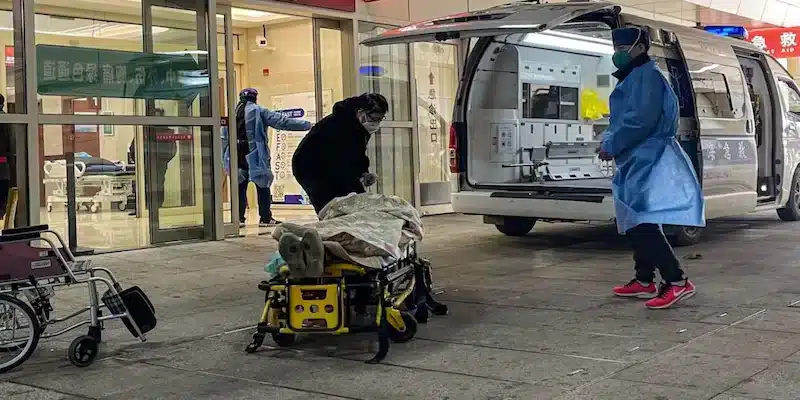
    Medical workers attend to patients of the coronavirus disease (COVID-19) at an intensive care unit (ICU) converted from a conference room, at a hospital in Cangzhou, Hebei province, China January 11, 2023. China Daily via REUTERS

    BEIJING, Jan 13 (Reuters) – The peak of China’s COVID-19 wave is expected to last two to three months, and will soon swell over the vast countryside where medical resources are relatively scarce, a top Chinese epidemiologist has said.

    Infections are expected to surge in rural areas as hundreds of millions travel to their home towns for the Lunar New Year holidays, which officially start from Jan. 21, known before the pandemic as the world’s largest annual migration of people.

    China last month abruptly abandoned the strict anti-virus regime of mass lockdowns that fuelled historic protests across the country in late November, and finally reopened its borders this past Sunday.

    The abrupt dismantling of restrictions has unleashed the virus onto China’s 1.4 billion people, more than a third of whom live in regions where infections are already past their peak, according to state media.

    But the worst of the outbreak was not yet over, warned Zeng Guang, the former chief epidemiologist at the Chinese Center for Disease Control and Prevention, according to a report published in local media outlet Caixin on Thursday.

    “Our priority focus has been on the large cities. It is time to focus on rural areas,” Zeng was quoted as saying.

    He said a large number of people in the countryside, where medical facilities are relatively poor, are being left behind, including the elderly, the sick and the disabled.

    Authorities have said they were making efforts to improve supplies of antivirals across the country. Merck & Co’s (MRK.N) COVID treatment molnupiravir is expected to be made available in China from Friday.

    The World Health Organization this week also warned of the risks stemming from holiday travelling.

    The UN agency said China was heavily under-reporting deaths from COVID, although it is now providing more information on its outbreak.

    China’s foreign ministry said the country’s health officials have held five technical exchanges with the WHO over the past month and have been transparent.

    Health authorities have been reporting five or fewer deaths a day over the past month, numbers which are inconsistent with the long queues seen at funeral homes and the body bags seen coming out of crowded hospitals.

    The country has not reported COVID fatalities data since Monday. Officials said in December they planned to issue monthly, rather than daily updates, going forward.

    Although international health experts have predicted at least 1 million COVID-related deaths this year, China has reported just over 5,000 since the pandemic began, one of the lowest death rates in the world.

    TENSIONS WITH JAPAN, SOUTH KOREA

    Concerns over data transparency were among the factors that prompted more than a dozen countries to demand pre-departure COVID tests from travellers arriving from China.

    Beijing, which had shut its borders from the rest of the world for three years and still demands all visitors get tested before their trip, has said it strongly opposes such curbs, which it finds “discriminatory” and “unscientific.”

    Tensions escalated this week with South Korea and Japan, with China retaliating by suspending short-term visas for their nationals. The two countries also limit flights, test travellers from China on arrival, and quarantine the positive ones.

    Japan’s Chief Cabinet Secretary Hirokazu Matsuno said on Friday Tokyo will continue to ask China to be transparent about its outbreak, labelling Beijing’s retaliation as one-sided, unrelated to COVID, and extremely “regrettable.”

    Parts of China were returning to normal life.

    In the bigger cities in particular, residents are increasingly on the move, pointing to a gradual recovery in consumption and economic activity this year. Still, traffic data and other indicators have not yet fully recovered to levels of just a few months ago.

    While China’s reopening has given a boost to financial assets globally after one of their worst years on record, policymakers from the United States to Europe worry it may fuel renewed inflationary pressures.

    However, December’s trade data released on Friday provided reasons to be cautious about the pace of China’s recovery.

    “With growth outside of China still slowing, exports may continue to contract until the middle of the year,” said Zichun Huang, economist at Capital Economics.

    Jin Chaofeng, whose company in the east coast city of Hangzhou exports outdoor rattan furniture, said he has no expansion or hiring plans for 2023.

    “With the lifting of COVID curbs, domestic demand is expected to improve but not exports,” he said.

    Data next week is expected to show China’s economy grew just 2.8% in 2022 under the weight of repeated lockdowns, its second-slowest since 1976, the final year of Mao Zedong’s decade-long Cultural Revolution that wrecked the economy, according to a Reuters poll.

    Growth is then seen rebounding to 4.9% this year, still well below the trend of recent decades.

    Some analysts say last year’s lockdowns will leave permanent scars on China, including by worsening its already bleak demographic outlook.