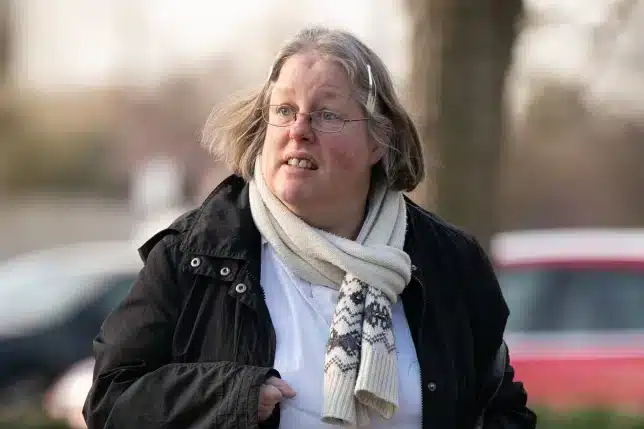
President John Dramani Mahama, on Thursday, October 2, swore in twenty-one (21) High Court Judges as Justices of the Court of Appeal. The swearing-in ceremony took place at the Jubilee House in Accra.
Speaking at the ceremony, President Mahama charged them to be transparent in the execution of their duties despite negative perceptions about the judiciary.
“What we must guard against is cynicism, the corrosive belief that the courts no longer serve the people but only the powerful in society. In recent times, our courts have not escaped criticisms. Citizens have openly and sometimes harshly questioned judicial decisions.
“But I want to say clearly criticism of judgments is not the end of hope; it is the evidence of hope. It shows that Ghanaians still believe in the courts, that justice still matters, and that verdicts have meaning in their lives,” he added.
The appointees include Dormaahene Osagyefo Oseadeeyo Agyeman Badu II, Mr Justice Senyo Amedahe, a Koforidua High Court Judge, Justice Justin Dorgu, Justice George Boadi, Justice Ayitey Armah-Tetteh, Justice Olivia Boeng Owusu, Justice Douglas Seidu, Justice Ali Baba Bature, Justice Mariama Samo, Justice Abena Adzin Doku, Justice Mary Maame Akua Yanzu, and Justice Jennifer Anne Myers Ahmed.
The rest are Justice John Bosco Nabarese, Justice Kwasi Anokye Gyimah, Justice Richmond Osei Hwere, Justice Apangano Achibonga, Justice Charity Akosua Asem, Justice Enyonam Adinyira, Justice Shiela Minta, Justice Bridget Kafui Antonio, and Justice Franklina Gesila Adanu.
In September, President John Dramani Mahama announced the removal of the Chief Justice from office on Monday, September 1, after receiving recommendations from the committee probing petitions seeking the removal of Chief Justice Gertrude Araba Esaaba Sackey Torkornoo.
Having violated Article 146 (9), as mentioned in the Committee’s report and recommendations, President Mahama dismissed Madam Torkornoo not only from her position as Chief Justice but also as a Supreme Court Judge.
In a statement dated September 1, the Presidency justified the dismissal of Gertrude Torkornoo as being in accordance with Article 146 (9) of the 1992 Constitution.
“NOW THEREFORE, KNOW YE ALL MEN that I, JOHN DRAMANI MAHAMA, President of the Republic of Ghana, in pursuance of the said Article 146(9), do hereby REMOVE the said Chief Justice, Justice Gertrude Araba Esaaba Sackey Torkornoo, from the office of Chief Justice and Justice of the Supreme Court, with effect from the date hereof,” parts of the statement noted.
According to Article 146 (9), “A Justice of a Superior Court or a Chairman of a Regional Tribunal shall not be removed from office except for stated misbehaviour or incompetence or on grounds of inability to perform the functions of his office arising from infirmity of body or mind.”
In the case of Madam Torkornoo, the committee found her guilty of stated misbehaviour, including unlawful expenditure of public funds, abuse of discretionary power, and interference in judicial appointments. These findings were tied not just to her role as Chief Justice, but also to her conduct as a Justice of the Supreme Court. Therefore, the committee recommended her complete removal from both roles, and President Mahama was constitutionally obligated to act on that recommendation.
Outlining the charges of unlawful expenditure of public funds, the Committee’s report suggested that, “In the opinion of the committee, the travel expenses which the Chief Justice heaped on the Judicial Service when she travelled on holidays in September 2023, first to Tanzania with her husband and second, to the United States of America with her daughter, together with the payment of per diem to the spouse and daughter of the Chief Justice, constituted unlawful expenditure of public funds.”
“Those acts… constitute avoidable and reckless dissipation of public funds and, in the view of the committee, to have been occasioned by the overall head of the Judiciary and the Judicial Service, whose duty is to guard public resources allocated by the Government, is caught within the spectrum of stated misbehaviour.”
According to the Committee, she also abused her powers as Chief Justice in the transfer of one Mr. Baiden, adding, “The committee also stated without fear or favour that the Chief Justice unjustifiably breached the provisions in Article 295 (a) and (b) of the Constitution, 1992, in the way and manner that she transferred Mr. Baiden. It said her conduct amounted to misbehaviour.”
On interference in judicial appointments, the Committee highlighted the Chief Justice’s deliberate actions of bypassing the designated system of selecting Supreme Court Judges. Hence, the Committee labelled her conduct as unacceptable and counted it as misconduct.
“Justice Torkornoo… cannot lay claim to ignorance of the nomination process and procedure, notwithstanding the fact that the process and procedure are not spelt out in the Constitution but case law.”
“Therefore, to seek, wittingly, to outwit this known process and procedure for appointing Supreme Court Justices amounts to misbehaviour in the eyes of the Committee and the Committee finds it as such,” excerpts of the report read.
The committee, chaired by Supreme Court Justice Gabriel Scott Pwamang, also included Justice Samuel Kwame Adibu Asiedu, former Auditor-General Daniel Yaw Domelevo, Major Flora Bazwaanura Dalugo of the Ghana Armed Forces, and Professor James Sefah Dzisah of the University of Ghana.
In July, an application for review regarding an ‘abuse of court processes’ by the embattled Chief Justice, Justice Gertrude Torkornoo, was dismissed by the Human Rights Division of the Accra High Court.
The court, presided over by Justice Amoako on Thursday, July 31, ruled that several claims, such as the illegal composition of the committee and wrongful conduct of adversarial proceedings, were already before the Supreme Court.
Justice Amoako argued that relitigating these issues would result in duplication of litigation and abuse of court processes. As such, the claims were dismissed. The judge also dismissed reliefs such as an order of certiorari to quash the committee’s proceedings and nullify its sittings on the basis that the Chief Justice did not receive a fair hearing, citing jurisdictional grounds.
The judicial review application filed on June 9 this year sought nine reliefs, including a series of declarations that the Article 146 committee set up to probe her removal from office had acted unlawfully. She wanted the court to prevent the committee from proceeding with its work without providing her with authenticated copies of the petitions seeking her removal and the subsequent responses.
The Chief Justice argued that the President’s prima facie determination contained no reasons or justification and was devoid of the judicial or quasi-judicial reasoning expected under the Constitution.
As the proceedings of the Article 146 committee are to be held in-camera in accordance with Article 146(8) of the Constitution, the court noted that it could not inquire into matters raised by the suspended Chief Justice.
In response, Justice Gertrude Torkornoo proceeded to the ECOWAS Community Court in Abuja, Nigeria, seeking compensation worth $10 million over her suspension from office by President Mahama.
This forms part of the 10 reliefs being requested. The Chief Justice’s recent suit follows several unsuccessful cases at the Supreme Court this year after her suspension.
The suspended Chief Justice also wants the court to ensure she continues to enjoy the paraphernalia and entitlements of her office as Chief Justice of Ghana pending the hearing and determination of the case.
The measures requested are: “That the Republic of Ghana suspend the disciplinary removal from office as Chief Justice process against the Applicant, pending the hearing and determination of the complaint on the merits.
“That Ghana refrains from taking any other measures that may harm the rights claimed by the Applicant and/or aggravate or extend the dispute submitted to the Court, or compromise the implementation of any decision that the Court may render.
“Given the urgency of the situation, the Applicant respectfully requests the Court to hold a hearing on this request as soon as possible, and that the President of the Court ask Ghana to act in order to allow any order that the Court may issue on the Request for Assignment of Precautionary Measures to have its appropriate effect.”
The other reliefs are as follows: “A declaration that the panel instituted by the Respondent (Ghana) to investigate and determine the allegations of misconduct against the Applicant was not constituted to guarantee its independence and impartiality and as such has violated the Applicant’s human right to fair hearing guaranteed by Article 7 of the African Charter on Human and Peoples’ Rights.
“A declaration that the purported suspension of the Applicant as the Chief Justice of the Republic of Ghana by the President of the Respondent State on 22 April 2025 constitutes a violation of her human right to fair, equitable and satisfactory conditions guaranteed by Article 15 of the African Charter on Human and Peoples’ Rights.
“A declaration that the purported suspension of the Applicant as the Chief Justice of the Republic of Ghana by the President of the Respondent State on 22 April 2025 has exposed her to public ridicule and odium locally and internationally and the said act constitutes a violation of her human right to dignity guaranteed by Article 5 of the African Charter on Human and Peoples’ Rights.
“A declaration that by subjecting the Applicant to an illegal and unfair investigation and trial since April 2025, the Respondent has inflicted injuries on her professional standing and image, thereby exposing her and her family to immeasurable public ridicule.
“An order to the Respondent Republic to act immediately to prescribe the rule of procedure to govern the investigation of allegations of misconduct against the Chief Justice of the Republic of Ghana in conformity with the right to fair hearing guaranteed by the Constitution of Ghana and the African Charter on Human and Peoples’ Rights.
“An order directing the Respondent to immediately lift the suspension and restore the Applicant to full office until the conclusion of fair constitutional proceedings.
“An order restraining the Respondent from continuing with the purported inquiry for the removal of the Applicant as the Chief Justice of the Republic of Ghana in its current form, until it conforms to fair hearing guarantees.
“An award of USD 10 million as compensation for moral and reputational damages suffered by the Applicant as a result of her illegal suspension and unfair investigation, and lastly, any other relief(s) as the Honourable Court deems just.”
On Thursday, August 14, the Bar Council of England and Wales and the Commonwealth Lawyers Association called for the immediate reinstatement of Ghana’s Chief Justice by President John Dramani Mahama and the Executive arm of government.
“Immediately and without delay, reinstate the Chief Justice of Ghana to her Office, consistent with both the hitherto strong attachment to the rule of law demonstrated by Ghana and also the constitutional duties incumbent upon it.
“And afford the Chief Justice due and fair process in the investigation and determination of the disciplinary matters brought against her, including but not limited to full and transparent access to that process by her legal representatives,” the group demanded in a joint statement issued on August 14.
Additionally, the group asked the government for a proper and impartial investigation of the disciplinary charges against her, with her lawyers given full and transparent access to the proceedings.
Both groups further demanded the establishment of transparent procedural rules to guide the disciplinary process, including a definite timeframe within which the investigative committee must conclude its work and communicate its decision.