Tag: crypto

  • BoG cracks down on crypto platforms running illegal USD wallets

    BoG cracks down on crypto platforms running illegal USD wallets

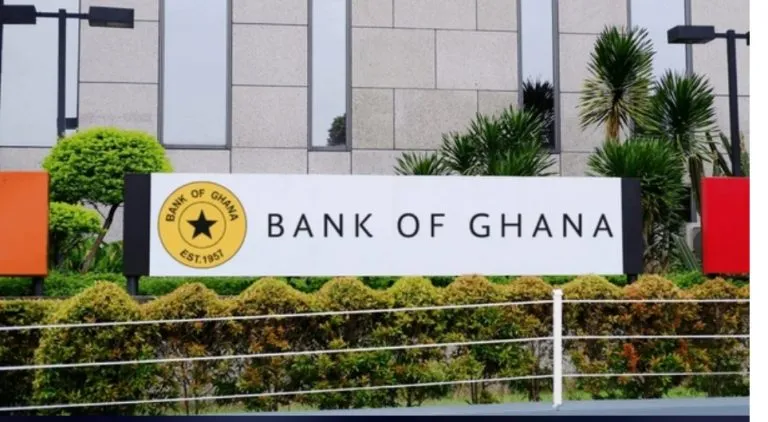
    Cryptocurrency (crypto) platforms operating fiat currency wallets, mainly in U.S. dollars, for Ghanaian users without authorization will have their licenses revoked in the coming days, the Bank of Ghana (BoG) has warned.

    According to a statement by the central bank these arrangements typically involve activities that require authorisation under the Payment Systems and Services Act, 2019 (Act 987), the Foreign Exchange Act, 2006 (Act 723), and other regulatory requirements.

    Part of the statement read, “Accordingly, banks, Specialised Deposit-Taking Institutions, Electronic Money Issuers, Payment Service Providers, and other Regulated Financial Institutions are hereby directed to refrain from establishing or maintaining arrangements that facilitate the funding, operation, settlement, or customer access to unauthorised fiat currency wallet services offered to users in Ghana.

    “Institutions that currently provide any banking, payment, card acquiring, settlement, or related services in support of such arrangements shall take immediate steps to discontinue such support. Failure to comply with this Directive may result in supervisory or enforcement actions”.

    Crypto, a digital form of money built on blockchain technology, allows peer‑to‑peer transactions without the interference of banks or governments.

    In 2024, the largest cryptocurrency exchange platform globally, Binance, published findings from a Binance & Pulse Survey revealing that Ghana leads in cryptocurrency and blockchain adoption across Africa.


    The survey underscores Ghana’s enthusiastic embrace of these technologies, with respondents showing a strong grasp of their benefits, applications, and potential. Ghana’s impressive ranking as ninth out of 27 countries in crypto adoption highlights its robust potential for further growth in the sector.


    This trend is significant amid a period of solid market expansion. Statista [2] projects revenues to reach $1.5 billion in 2024, growing at a compound annual rate of 8.62%, with expectations to total $71.7 billion by 2028.


    According to Mordor Intelligence [3], the rapid and continuous adoption of digital assets is propelling market advancement, enhancing transaction security and efficiency, and fostering broader adoption and integration across organizations and individuals.


    “Our pulse survey really underscores how Ghana is embracing blockchain technology and how open they are to engaging on the topic,” says Yande Nomvete, Operations Manager for Binance in Africa. “The quiz achieved more than 20,000 impressions with a reach of more than 20,000 users over a three-day period, which is exceptional.


    The quiz aimed to explore fundamental beliefs and perceptions held by users in the region. It covered topics ranging from the importance of financial literacy in cryptocurrency to how digital currencies can enhance financial adoption in Africa.

    Over 50% of respondents emphasized that financial literacy in cryptocurrency involves understanding market trends, avoiding scams, and making informed investment decisions. This underscores their awareness of the careful consideration needed to navigate cryptocurrency investments effectively.


    Over 70% of participants hold the view that cryptocurrency has the potential to enhance financial inclusion in Africa through fostering fintech innovation and driving economic growth. Concurrently, a significant majority (more than 70%) acknowledge the importance of vigilance and adherence to security protocols when engaging with cryptocurrencies.


    “It was impressive how many respondents chose the correct security answers to questions around best security practices and approaches,” says Nomvete. “For example, when asked what was not a recommended security practice for cryptocurrency users, more than 70% said sharing private keys with friends. Users in the region also immediately identified the importance of anti-money laundering (AML) best practices in mitigating fraud, and the value of doing extensive research into reputable cryptocurrency exchanges before handing over their funds (60%).”


    Ghana demonstrates a robust grasp of cryptocurrencies and the significance of establishing a portfolio with a trusted service provider known for its dependable reputation. Binance is committed to advancing the adoption of reliable and accessible cryptocurrencies globally.

    Recognizing the economic benefits of crypto and its role in fostering growth is crucial, and partnering with a platform that emphasizes security is vital for cultivating a prosperous portfolio. Binance adheres to rigorous protocols, employs cutting-edge technical safeguards, offers advanced data privacy features, and integrates security deeply within its organizational framework.


    “Our understanding of the market wedded to the impressive cryptocurrency savvy of Ghanaian users equals long-term success for investors in this country,” concludes Nomvete.

  • Nigeria seeks $10bn from Binance over alleged currency manipulation

    Nigeria seeks $10bn from Binance over alleged currency manipulation

    The Nigerian government has formally requested compensation of nearly $10 billion (£8 billion) from the cryptocurrency company Binance, alleging that it engaged in manipulative practices affecting foreign exchange rates through currency speculation and rate-fixing.

    These actions are claimed to have resulted in a significant depreciation of the Nigerian naira, losing almost 70% of its value in recent months.

    Earlier in the week, two Binance executives were arrested in Nigeria, and the company has not yet responded to inquiries from the BBC.

    Nigeria, as the largest economy in Africa and a major player in the global cryptocurrency market, has been grappling with the implications of these allegations.

    The central bank governor, Olayemi Cardoso, asserted that Binance Nigeria moved $26 billion in untraceable funds. Cryptocurrency transactions, constituting approximately 12% of Nigeria’s GDP, occurred in the year leading up to June 2023, according to Reuters.

    “These allegations are weighty,” Tilewa Adebajo CFG Advisory tells the BBC. “That’s a huge sum – even more than the annual Nigeria diaspora remittances of $24bn”.

    “The government must have done their homework, hence the allegations.”

    While cryptocurrencies are not illegal in Nigeria, the government insists that firms must register to operate within the country.

    Binance allegedly failed to comply with this requirement, as claimed by a special adviser to Nigeria’s president.

    The recent surge in exchange rates, leading to the abrupt collapse of the naira, is attributed to activities on the Binance platform, prompting the government’s intervention.

    Binance, a popular cryptocurrency platform in Nigeria, has faced suspension in the country, along with other firms like Coinbase, Kraken, Forextime, OctaFX, Crypto, and FXTM, in an attempt to stabilize the naira.

    The government also accuses cryptocurrencies of being utilized for money laundering and terror financing, citing the anonymity and privacy features of the cryptocurrency system.

    In response to the economic challenges posed by the depreciation of the naira, Nigeria has taken measures such as closing numerous bureaux de change and putting pressure on its central bank to stabilize the national currency. The current exchange rate is 1,595 naira to US$1, a significant decline from about 460 a year ago. This currency collapse has contributed to a cost-of-living crisis, including high food and commodity prices, fueling protests in recent weeks.

  • Cryptocurrency ban is still in effect, abstain from crypto transactions – Finance Ministry warns

    Cryptocurrency ban is still in effect, abstain from crypto transactions – Finance Ministry warns

    Government has warned all financial institutions in the country to abstain from conducting cryptocurrency transactions.

    Minister of State at the Finance Ministry, Dr. Mohammed Amin Adam, made the declaration while responding to inquiries on the floor of Parliament.

    “The government will continue to allow associated technologies, such as blockchain and distributed innovations in a sun box, as we explore the development of a framework.

    Until such a framework is in place, the government will like to reiterate its directive conveyed in several notices, including one issued on March 9, 2022, that all institutions licensed by the Bank of Ghana are prohibited from facilitating cryptocurrency transactions through their platforms or agents outlets,” the Minister of State at the Finance Ministry cautioned.

    In April 2022, the Central Bank issued cautionary directives to banks and financial entities regarding cryptocurrency trading and unregulated investment schemes.

    The objective was to ensure the regulation and purification of the digital space concerning cryptocurrencies.

  • Instagram crypto promotion: Kim Kardashian to pay over $1m to settle SEC charges

    In order to resolve allegations made by the US Securities and Exchange Commission regarding a post on Kim Kardashian’s Instagram account, she has agreed to pay $1.26 million (£1.12 million).

    According to the SEC, the reality TV actress did not declare she received $250,000 (£220,000) for endorsing a bitcoin asset on her feed.

    The commission said the post was touting EMAX tokens, the asset security being offered by EthereumMax, and she was paid by EthereumMax, through an intermediary, but did not reveal the payment.

    In June last year, Kardashian posted to her 331 million followers writing: “ARE YOU INTO CRYPTO??? THIS IS NOT FINANCIAL ADVICE BUT SHARING WHAT MY FRIENDS JUST TOLD ME ABOUT THE ETHEREUM MAX TOKEN.”

    Her Instagram post contained a link to the EthereumMax website, which provided instructions for potential investors to purchase EMAX tokens.

    Under US law, people who tout a certain stock or crypto security need to reveal not only that they are getting paid, but also the amount, the source, and the nature of those payments, SEC chair Gary Gensler said.

    He also said the Kardashian case was “a reminder that, when celebrities or influencers endorse investment opportunities, including crypto asset securities, it doesn’t mean that those investment products are right for all investors”.

    Lawyers for Kardashian released a statement saying she was pleased to have resolved the matter.

    “Kardashian fully cooperated with the SEC from the very beginning and she remains willing to do whatever she can to assist the SEC in this matter,” the statement read.

    “She wanted to get this matter behind her to avoid a protracted dispute. The agreement she reached with the SEC allows her to do that so that she can move forward with her many different business pursuits.”

    Kim Kardashian West speaks at the "Kim Kardashian West: The Justice Project" panel during the Oxygen TCA 2020 Winter Press Tour at the Langham Huntington, Saturday, Jan. 18, 2020, in Pasadena, Calif. (Photo by Willy Sanjuan/Invision/AP)

    Failing to disclose payment for promoting securities is a violation of federal law. The $1.26m (£1.12m) she paid includes her fee for the promotion, the interest and the $1m penalty.

    The reality TV star isn’t the only celebrity to have been charged by the SEC over crypto promotions.

    Boxer Floyd Mayweather Jr and music producer DJ Khaled were both charged in 2018 for allegedly not disclosing payments they received for promoting crypto coins.

    Neither Mayweather nor DJ Khaled admitted or denied the charges but agreed to pay a combined $767,500 (£682,700) in fines and penalties.