Tag: CSIR-SARI

  • Experts recommend farmers to prioritize the use of indigenous maize seeds

    Experts recommend farmers to prioritize the use of indigenous maize seeds

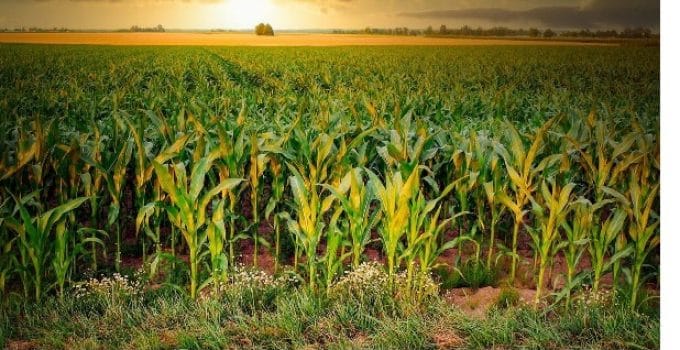
    The Center for Scientific and Industrial Research (CSIR-SARI) has advised farmers to consider using Open Pollinated Variety (OPV) of maize seed. The organization highlights the need for this alternative option to ensure continued productivity in maize farming. With the scarcity of hybrid seed, farmers are encouraged to explore the benefits of OPV seeds in maintaining their agricultural output. CSIR-SARI emphasizes the importance of adapting to the current situation to sustain maize cultivation and meet agricultural demands.

    Mr Haruna Ali, an Agronomist with the Savannah Agricultural Research Institute said the varieties that were produced through crossed pollination of two or more parents were well domesticated to suit the changing local environment like Sanzal sima, Bihilifa, Wangdata and Abeleehi.

    Mr Ali’s advice followed the publication by the Ghana News Agency of the shortage of foreign-made maize seed ‘Pioneer’ and Lake, which was affecting the planting of maize in the Sissala enclave.

    He stressed that hybrid maize seed was a progeny of two genetically different parents whose performance was supposed to be superior to its parents in terms of yield and genetic purity, and mentioned some to include Lake 601, Lima Grains (LG), paneer, Lake 606, Seedco, Pannar.

    He advanced the following reasons why farmers should go in for OPVs of maize that were available on the market for the farmers.

    According to him “Modern OPVs varieties were well suited to various locclimatesate and are capable of withstanding dry spells or tolerant to drought as a result of climate change effects than hybrids varieties.”

    “They can also be replanted year after year if production guidelines are maintained to enhance purity.

    They can give economic yields of an average of 22 to 25 bags per acre with proper good agronomic practices, which makes a difference of eight to 10 bags”, he added.

    The Agronomist also said another reason was the production of quality flour that had better flour volume than hybrids maize whilst the seeds did not require any special storage structure as it is done in hybrid maize.

    The agronomist espoused that the seed cost was relatively cheaper as compared to foreign hybrid maize varieties and more economical for small-scale farmers to afford.

    Mr Ali admitted that the OPVs did not demand high inputs requirements as was the case of hybrid maize and underscored that they were produced by the National Research institutions in the country that had expertise in the field of plant breeding.

  • Sissala: Maize seed shortage hampering planting – Farmers

    Numerous farmers in the Sissala region have bemoaned the scarcity of maize seeds for planting.

    Only those that bought the commodity in the dry season can sow now. 

    It came to light when the Ghana News Agency (GNA) went to selected Agro input shops in Tumu, Gwollu, and Welembelle to find out about the alleged shortage of some hybrid seeds demanded by maize farmers. 

    It came out that the major maize seed often used by the farmers included: ‘Pioneer’, ‘Lake’, ‘Pan 53’, ‘Kabamanoj’ and ‘LG 336’ which have become known seeds among farmers for their good yields and drought-resistant nature were out of stock. 

    A farmer, Asmiru Kwesi told the GNA he wanted pioneer seed but it was not there so he would wait for a few more days to see if they would be available ‘but today being the 21st of June if I don’t get it, I will be forced to go for anything available’. 

    At another agro shop, WY Farms, Mr Waris Ibrahim, representative of LakeSeedd, said he was expecting 1600 bags of the 50kg seed to come into the Sissala area in the next few days for farmers to buy and gave the assurance that they still had some quantities of the yellow lake seed available. 

    In an interview with Mr Isaac K. Razak, the Municipal Agriculture Extension Officer, he mentioned that over the years, the farmer’s preference for the Pioneer, Lake, and the LG 336 seed made their absence suggest there was no seed for farmers.  

    Mr Razak disclosed that there were other seeds such as ‘Seedco’, ‘kabamanoj’ and ‘Mastrop’ in some of the Agro shops including the ones produced by the Savannah Agriculture Research Institute of the Center for Scientific and Industrial Research (CSIR-SARI) which included ‘Wandata’, ‘Bihilnfa’ and encouraged the farmers to buy and plant as they could give equal yields. 

    Attempts to speak to Pioneer representatives were not successful except for dealers of their products including agro-input dealer Paapa and BB Slows Enterprises who assured the farmers they were working hard to get the seed for the farmers. 

    The situation of shortage of pioneer and lake seed product was reported in Tumu, Gwollu, Welembelle, and Funsi where thousands of acreage of maize field is expected to be cultivated around this farming season. 

  • CSIR-SARI showcases improved groundnut varieties

    Council for Scientific and Industrial Research – Savanna Agricultural Research Institute (CSIR-SARI) has showcased improved groundnut varieties to farmers to help improve productivity.

    It was undertaken during a field day trip to the Tingoli community in the Northern Region, which was in partnership with the Ministry of Food Agriculture (MoFA) with resource support from the WOTRO Organization.

    Mr Abdul Rashid Issah, Seed Technologist at CSIR-SARI, speaking during the field demonstration, said it sought to educate and showcase to farmers the need to adopt improved seed varieties for higher yields.

    He mentioned the improved seed varieties, which included SARI NUT two and CHINESE NUT introduced by CSIR-SARI to the Farmers in 2018 to enhance groundnut production in six districts in the northern sector, which included Tolon, Kumbungu, Binduri, Nadowli-Kaleo, Central Gonja and East Gonja.

    He said the varieties grew well and early compared to other groundnut varieties which took longer days to mature.

    Mr Issah said, “SARI NUT two has 45 per cent oil and 36 per cent protein, high yield with 11.3 per cent CP, suitable for use as confectionery.”

    He encouraged farmers to adopt the new varieties to secure and improve their farms to enable them to harvest more yields.

    He stated that the varieties were adaptable to climate change and high in protein and oil, better drought tolerance and long storage span, especially the SARI Nut two variety.

    A farmer from Tolon District, who planted the improved groundnut varieties, said he harvested 16 bags from an acre of land from the SARI Nut two variety compared to the available variety, which produced three to five bags on the same land size.

    Source: GNA