Tag: culture

  • Museums Board urged to collaborate with visual artists in preserving Ghana’s heritage

    Museums Board urged to collaborate with visual artists in preserving Ghana’s heritage

    Former Head of Visual Arts at the Centre for National Culture, Kizito Nii Amarh Amartey, has called on the Ghana Museums and Monuments Board to collaborate with Ghanaian artists in the preservation of our culture and heritage. 

    Speaking at the second edition of an Arts exhibition dubbed ‘Contemporary_emerge,’ on Saturday, December 9, 2023, Mr Amartey, voiced concerns over how Ghana is gradually losing its cultural identity.

    He noted that with the advent of various modern appliances like blenders, fufu pounding machines, cooking stoves, etc., traditional kitchen utensils that were once highly regarded and emblematic of our society, such as the grinding stone, mortar, and pestle, are gradually losing their value and could soon become extinct.

    In light of this, he charged the Museums and Monuments Board to ensure the preservation of this precious heritage.

    “Over the years, my experience in other museums is that, just by walking into a museum, you could tell the culture, you could tell the history, and the values of the country. In our part of the world [Ghana], we’ve had some facelift of our museum, but I think we still lack some pertinent ingredients.

    “Museums are not supposed to only capture and preserve things that are going extinct, but also what is it that the country is cherishing today. We have to explore all the regions so that our museum is well-represented. Secondly, I’ll be happy that a broader spectrum of artists are engaged so that we don’t only preserve history, but we also look at what is happening in the contemporary sense,” he noted.

    Kizito’s call adds to the myriad of voices advocating for the preservation of Ghana’s culture. He strongly believes one way this can happen is through collaboration between key stakeholders in the sector. 

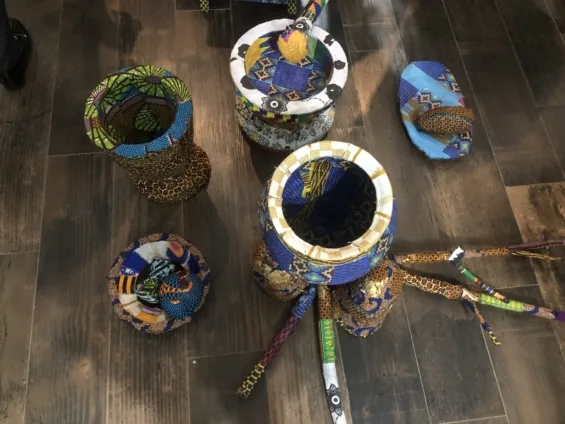
    As a means of contributing his quota to this cause, Kizito launched his latest masterpiece, “Mukasi,” which is a remarkable artwork that ingeniously incorporates local kitchen elements such as the kitchen stool, earthenware pot, mortar, pestle, and more, at this year’s edition of Contemporary_emerge. 

    Contemporary_emerge is a dynamic platform for emerging artists to showcase their innovative works and perspectives.

    It was established by Kizito Nii Amarh Amartey to spotlight the evolving trends and voices within the contemporary art scene as well as provide a space for artists to present their creative expressions, engage with diverse themes, and contribute to the cultural discourse.

    Nine young talented Ghanaian artists; Ernest Boafo, Suzzy Owusu Boadi, Judith Edem Quansah, Adam Tata Dasagbor, Lilian Asiamah, Asiedu Edward Ankomah, Adel Emefa Dogbe, Gregory Adjei Kumah and Jerome Cudjoe, were also prominently featured and celebrated at this year’s edition of the Contemporary_emerge Arts Exhibition. 
  • Meaning behind Tepahene’s white Attire vs Otumfuo’s black garb at funerals

    Meaning behind Tepahene’s white Attire vs Otumfuo’s black garb at funerals

    The vibrant culture of the Ashanti people in Ghana is deeply rooted in traditions, art, and social structures. In Ashanti culture, the use of color plays a significant role in conveying mood and occasion, while large umbrellas, depending on their size and characteristics, communicate identity, authority, and spiritual significance.

    As the head of the Ashanti Kingdom, Otumfuo Osei Tutu II holds the highest authority, overseeing numerous paramount chiefs. During state occasions such as funerals, Otumfuo traditionally wears black, symbolizing mourning and sorrow in Akan culture.

    A distinctive practice observed in the Ashanti Kingdom is the variation in attire and umbrella color among paramount chiefs. Notably, the paramount chief of Tepa, witnessed at the recent burial rites of the late Berekumhene, Daasebre Amankona Diawuo II, wore white and used a white umbrella. This deviation is rooted in the role of Tepa Baanie, a revered deity under the Tepahene, with historical significance in the kingdom.

    Tepa Baanie is renowned for its mystic powers, including granting children to the barren and playing significant spiritual roles in the kingdom’s historical expansion wars. In acknowledgment of Tepa Baanie’s importance, the Tepahene and his priest are permitted to wear white, while the Asantehene and other chiefs wear black during mourning ceremonies.

    Functioning as a source of spiritual power and protection for Otumfuo’s reign, the Tepa Baanie priest performs rituals for the Asantehene.

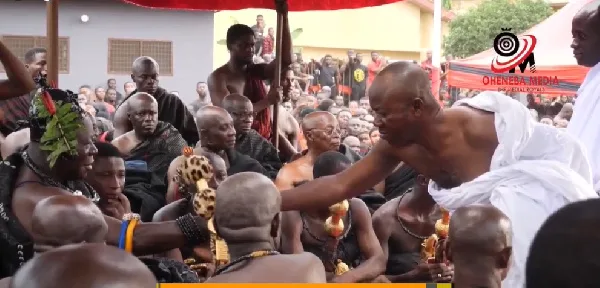
    A video from the Berekumhene’s funeral depicts the Tepa Baanie priest tapping the Asantehene with an animal tail, and a deity carried by the Tepahene’s entourage is presented to Otumfuo, who places his hand on the deity for fortification.

  • Osu Castle to serve as presidential and governance museum

    The Ministry of Tourism, Arts, and Culture has revealed government’s intentions to transform the Osu Castle into a presidential and governance museum.

    This museum will be dedicated to Ghana’s former presidents and will serve to deepen understanding of the nation’s political history.

    The Minister of Tourism, Arts, and Culture, Dr. Ibrahim Awal Mohammed, shared this announcement in Accra.

    This initiative aligns with the ministry’s goal of establishing a space that commemorates and honors Ghana’s past presidents.

    Dr. Mohammed stated, “We are planning to establish new museums across the country. We’re starting with the heroes’ park for the big six. We will modernize circles like the Danquah circle, Busia circle at 37, in Saltpond, Tamale, Kyebi, and other regions next year.”

    He added, “Once renovated and modernized, the Osu Castle will serve as a presidential museum dedicated to all former presidents of Ghana.”

    Additionally, the ministry is seeking media support for the Destination Ghana Project, which aims to boost the tourism industry and enhance its contribution to the country’s Gross Domestic Product (GDP).

    The project aspires to attract four million domestic and international visitors to various tourist sites across the country.

    Dr. Mohammed shared these details during an Editor’s Forum, seeking media collaboration to foster industry growth. He emphasized that the project’s objective is to generate revenue surpassing $6 billion and create over 150,000 job opportunities within four years.

  • Did you know corsets are used in  Dinka culture to determine the age and wealth of men?

    Did you know corsets are used in Dinka culture to determine the age and wealth of men?

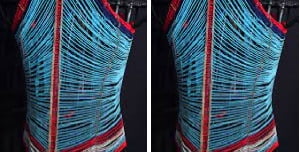
    The Dinka people of South Sudan have been pastoralists for millennia; as such, many of their assets are practical valuables they can bring with them whenever they take care of their animals rather than tangible items like houses and furnishings. They prefer it to be wearable objects or items they can decorate their bodies with. One of the prized valuables in the Dinka customs is corsets.

    The corset is made using a variety of materials, including leather and beads of various colors. These corsets are also crafted from glass beads, shells, ostrich eggshells, cow hide, metal, and ivory. One intriguing feature of the corset is the colors and patterns they take. Each element that goes into its weaving communicates a message, according to the learner. It can determine a person’s age, social standing, and level of prosperity. Aside from the decorative purpose of the corset, in the Dinka culture, it is a sign of many things. The corset is intricately beaded and serves as a form of body adornment.

    For a Dinka man, it is his life’s garment, which is not worn beyond the rows of beads – that is the covering they rely on. For his entire life’s journey, what might change are the colors and rows, but the corset is the outfit he would wear either at home or on the field. The red and black rows which form the majority of the coloring of the corset, distinguish the difference between 15 and 25-year-old men.

    The yellow beads found in the corset indicate the fact that the wearer may be over the age of thirty. The glass beads and wire used in making the corsets are imported products, making the outfits considerable markers of status and prestige. The vertical strip that runs on the spine represents the Dinka man’s wealth, and if the strip is higher than the shoulder, then it means he has a large herd of livestock.

    The corset is primarily worn by elderly men as a symbol of their status and wisdom. The amount of beads on the corset indicates the age of the wearer, with more beads representing a higher age. It is also used as a way to differentiate between the younger and older men in the community, with only the elderly men being permitted to wear the corset.

    It is believed that the wearing of corsets emerged among the people of Dinka in the 19th century after the arrival of the Turkish slavers from Cairo. The glass beads were imported from the Czech Republic for the slave trade with the Bari tribe, who are found on the banks of the White Nile.

    With time, the Dinka people were impressed with the aesthetics as they controlled trade in the north of Juba and began incorporating it into their culture. It suffered extinction after the Islamist government of Sudan prohibited the use of corsets with the passing of Sharia in 1984, according to last places.

  • Nomsa Philiso: How entertainment can be used to instigate a cultural shift

    How many of us look forward to collapsing on the couch to watch our favourite series at the end of a long day? Or, getting the family together for the traditional Sunday night movie? While entertainment has long been viewed as a way to relax, it’s come to mean more than that to many people across the world.

    A global study from 2018 called The Truth About Entertainment found that 76% of Americans say entertainment has influenced the person they are today. And 60% of people say they have a go-to source for entertainment when they’re feeling low. Dr Valorie Salimpoor, a neuroscientist at Baycrest Health Sciences in Toronto says, “entertainment stimulates the pleasure and reward centres of the brain, which are very central to humanity”.

    Entertainment gives us many ways to connect with friends, family, and society at large, helping us de-stress and divert our attention from life’s demands. One could even go as far as saying movies or series help promote happiness, which is fundamental in improving mood, strengthening friendships, and increasing competence.

    The entertainment industry plays a crucial role in our lives and societies. But how has it changed over the years? And how can something as simple as movies and TV series be used to bring about cultural shifts and the expansion of an audience’s perspectives?

    The value of entertainment in societies and cultures  

    I’ve always believed that a good piece of entertainment content should leave you better off than you were before sitting down to watch it. It’s about evoking emotions and displaying elements of relatability so that people feel part of what they’re consuming.

    In South Africa, at the moment, most audiences are looking for a feeling of hope. Whether you’re watching a period drama, documentary, or a reality series, it’s best if you can come away thinking, “my problems don’t seem so bad, I’m sure it’ll all work out in the end”.

    But, despite wanting to create a positive atmosphere for viewers, the content we create should also reflect the society and community we’re in. It’s about finding a balance between escapism and social realism. It’s important to tackle a few social issues that people care about and find a new way to represent themes and angles that might help create corrective or teachable moments.

    It doesn’t have to feel like learning for a test but, hopefully, audiences come away with a little more insight into and understanding of current issues. In this way, entertainment can be used as a catalyst to encourage diverse conversations, foster a culture of tolerance, and help create a more inclusive society.

    Challenging viewers and content creators

    A show like Becoming…, which explores the lives of four transgender people from conservative African backgrounds, pushes the boundaries when it comes to the stories we tell on TV. We certainly wouldn’t have seen anything like it 10 or 15 years ago. But it became incredibly popular and has even been renewed for a second season.

    Challenging content creators and viewers with these stories has multiple benefits. It gives certain viewers an opportunity to see stories similar to their own on screen, it expands the knowledge of audiences, and it helps reflect the modern culture we’re part of. Hopefully, it also helps shift today’s community culture to be even more open-minded and accepting. Bravery, inclusivity, and authenticity are three ingredients for success in today’s entertainment industry.

    Where are we headed?

    While the willingness to learn or broaden one’s understanding isn’t the same everywhere in Africa, there’s more demand for provocative content than you’d imagine. This is evident in social spaces where people feel more confident expressing their true opinions and preferences – and that’s a brilliant place to generate content ideas.

    It also helps to have several platforms on which to display various content. While live TV may encourage more family-friendly viewing, there’s nothing stopping anyone from streaming a show like Devilsdorp or Sex in Afrikaans on their mobile tablets in a private room. There’s definitely room to be more experimental on streaming services – and audiences are lapping it up. It’s clear that today’s culture is vastly different to that of 50 years ago, and it’s the entertainment industry’s job to not only reflect the current culture but keep pushing it to evolve and adapt.

    Entertainment is a form of activity that holds the attention and interest of an audience, giving pleasure and delight. Understanding how entertainment functions as part of culture could lead to an important interaction with others in how people see the world. People are all influenced by media – TV, film, music, and internet culture – almost more than they are influenced by their surroundings.

    For this reason, it’s vital to view entertainment as more than simply passing the time. Entertainment provides a valuable opportunity for stories, characters, and themes inclusive of all kinds of people to be shared because educating audiences can shift cultural norms and understanding.

    Source:myjoyonline.com

  • Ruddy Kwakye, Panji Anoff, Trigmatic named speakers for Showbiz Roundtable

    The breeze that blows from Joy Entertainment’s zone is one that industry players can’t keep calm about. Indeed, some of Ghana’s finest minds will converge for intellectual deliberations on the growth of the industry during the Showbiz Roundtable forum on October 29.

    The event, powered by Joy Entertainment, has revealed its list of speakers for the forum, themed, ‘Music Business and Tourism’. Hosted by seasoned broadcaster George Quaye, the thought-leadership forum seeks to dissect the dynamic facets of contracts, artistes PR, revenue, royalties, global hits, tourism, culture, among others.

    Ruddy Kwakye, Panji Anoff, Trigmatic named speakers for Showbiz Roundtable

    Few days ago, organizers of the event confirmed former CEO of 3 Music Networks, Sadiq Abdulai Abu, as one of the speakers for the thought-leadership forum, followed by the announcement of successful playwright, James Ebo Whyte and President of GHAMRO Rex Omar, as keynote speakers. The latest to join the rich list as renowned speakers are Trigmatic, Ruddy Kwakye and Panji Anoff.

    Sadiq Abdulai Abu is a media practitioner and no stranger to listeners of Joy FM’s Showbiz A–Z. Every week, the founder of Wildaland Festival, expresses insightful thoughts as a pundit, on varied issues in the entertainment space. He comes on board with experience and vast knowledge in the showbiz space and understands the need to steer talks in the direction of individual and collective development and benefits.

    Ruddy Kwakye, Panji Anoff, Trigmatic named speakers for Showbiz Roundtable

    Trigmatic is a songwriter, rapper and entrepreneur, known officially as Enoch Nana Yaw Oduro-Agyei. Having visited and collaborated with artistes from other parts of Africa, he comes on board with rich experience in music and its associated business. In March this year, he successfully held the Africa Music Business Dialogue in Accra, with the aim of educating musicians on the importance of elevating their quests beyond just making music.

    Ruddy Kwakye, Panji Anoff, Trigmatic named speakers for Showbiz Roundtable

    Ruddy Kwakye is an accomplished serial entrepreneur, content curator, media practitioner and often referred to as a creative thought-leader. He has spent years working hard behind some of Ghana’s biggest events, including the famous Afro Nation festival, which returns to Ghana in December. Ruddy’s accomplishments, achievements and managerial roles played over the years makes him a perfect choice for Showbiz Roundtable.

    Ruddy Kwakye, Panji Anoff, Trigmatic named speakers for Showbiz Roundtable

    Panji Anoff is the CEO of Pidgen Music. Panji holds over 3 decades of experience in arts and entertainment, having managed and worked with some of Ghana’s biggest export, King Ayisoba. He is also known for managing and producing Hiplife pioneers Talking Drums and Atenteben, to mention a few. He is also a writer and fearless critic whose views leave a lot of food for thought.

    Ruddy Kwakye, Panji Anoff, Trigmatic named speakers for Showbiz Roundtable

    Keynote Speakers

    James Whyte, often called Uncle Ebo Whyte is a Ghanaian playwright, and the head of Roverman Production, producers of some of the best stage plays in Ghana. He doubles as an author and motivational speaker. He recently revealed in an interview that his career as a playwright happened only by accident, but has however, gone on to write his name in the history of Ghanaian theatre.

    Ruddy Kwakye, Panji Anoff, Trigmatic named speakers for Showbiz Roundtable

    Rex Omar is currently the chairman and president of Ghana Music Rights Organization. He is veteran highlife singer well known for his interests in music royalties. The latter inspired his quest to join GHAMRO with the aim of ensuring that musicians get what they rightfully deserve off their craft.

    Ruddy Kwakye, Panji Anoff, Trigmatic named speakers for Showbiz Roundtable

    Edward Nana Poku Osei is affectionately called ‘Hammer of The Last 2’. He is a legendary music producer and the founder of The Last Two Music Group. Hammer is well known for discovering and grooming some of the Ghana’s best Hiphop and Hiplife artistes, including Obrafour, Tinny, Kwaw Kese, Sarkodie and Edem. Hammer is also known for being opinionated in matters surrounding the Ghanaian showbiz industry.

    Ruddy Kwakye, Panji Anoff, Trigmatic named speakers for Showbiz Roundtable

    With the announcement of these resource persons, Joy Entertainment nears its big day for the Showbiz Roundtable, which aims to not only tackle the aforementioned aspects of the industry, but also discuss other pertinent progressive issues affecting the entertainment industry.

    The forum powered by Joy Entertainment, will take place at the Labadi Beach Hotel from 2pm to 6pm. It will broadcast live on Joy FM, Joy Prime, and stream on all Joy Entertainment social media platforms.

    Source:myjoyonline.com


  • Elgin Marbles: New body seeks to deliver statues to Greece

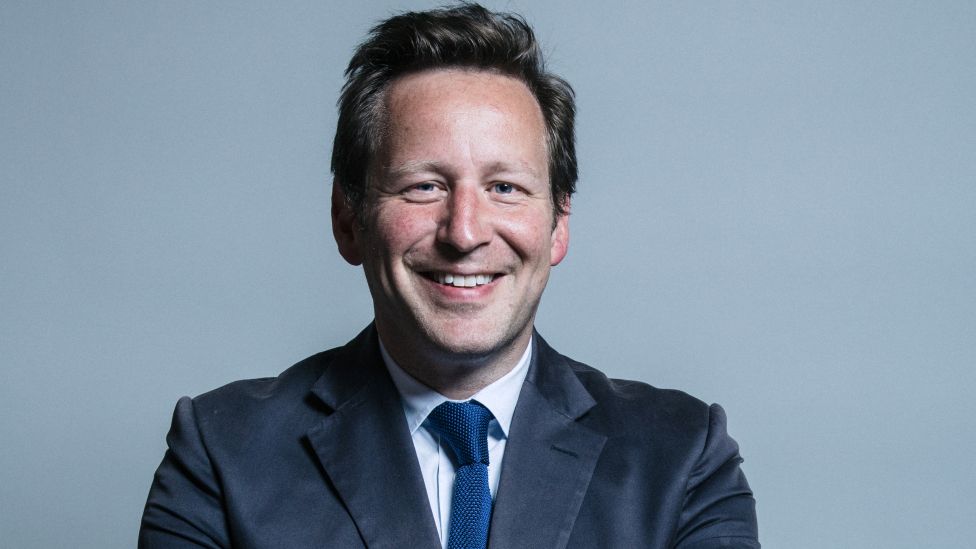
    The BBC has learned that a new organisation working to repatriate the alleged Elgin Marbles to Greece would be overseen by a former Conservative culture minister.

    Lord Vaizey, who served as minister of culture from 2010 to 2016, says that “a deal is within reach.”

    On Thursday, the House of Lords will debate an act that restricts museums from disposing of objects in their collections.

    The government said it had no intention of changing the law.

    The Department for Digital, Culture, Media, and Sport (DCMS) said: “The British Museum is prevented by law from removing objects from its collections, except in some narrow circumstances. The government has no plans to change this act.”

    The Elgin Marbles are currently housed in the British Museum.

    In a statement, the museum said: “We will loan the sculptures, as we do many other objects, to those who wish to display them to the public around the world, provided they will look after them and return them.

    “Deepening public access and understanding, creating new ways and opportunities for collections to be shared and understood right across the world, and forging connections between the present and the past, remain at the core of what the British Museum seeks to achieve,” they added.

    Asked recently about a potential deal that could lead to the return of the sculptures to Athens, Prime Minister Liz Truss said: “I don’t support that.”

    Ed Vaizey
    IMAGE SOURCE,UK PARLIAMENT Image caption, Former culture minister Ed Vaizey will chair the new board aiming to return the sculptures to Greece

    The fate of the Parthenon Sculptures, as they are more frequently becoming known, is the most high profile in the hotly contested debate about whether museums should return items in their collections to their countries of origin.

    For years, Greece has lobbied to bring the sculptures home. They were removed from Greece’s Parthenon temple in the early 19th Century by the Scottish soldier and diplomat, Lord Elgin.

    The British Museum has always said that only the government can decide their fate, though the government says the “collections are a matter for the trustees”.

    Now an advisory body plans to campaign for a “win-win” deal as a poll shared exclusively with the BBC appears to show the majority of British people support sending the Marbles home.

    Lord Vaizey is joined by other founding members on the advisory board of the Parthenon Project, an organisation founded by the Greek businessman John Lefas.

    The board also includes two other Conservative peers, the renowned author Lord Dobbs and Baroness Meyer. They’re joined by Stephen Fry and the journalist Sarah Baxter.

    The former Conservative Chancellor, George Osborne, now chairman of the British Museum, said earlier this year a “deal is to be done”, though the current Conservative administration appears less keen.

    A poll of nearly 2,000 people, commissioned by the Parthenon Project, suggests while 16% of the British public think the Parthenon Sculptures should stay in Britain, 54% think they should be returned.

    The strongest reason for supporting the return was because they “rightfully belong to Greece”.

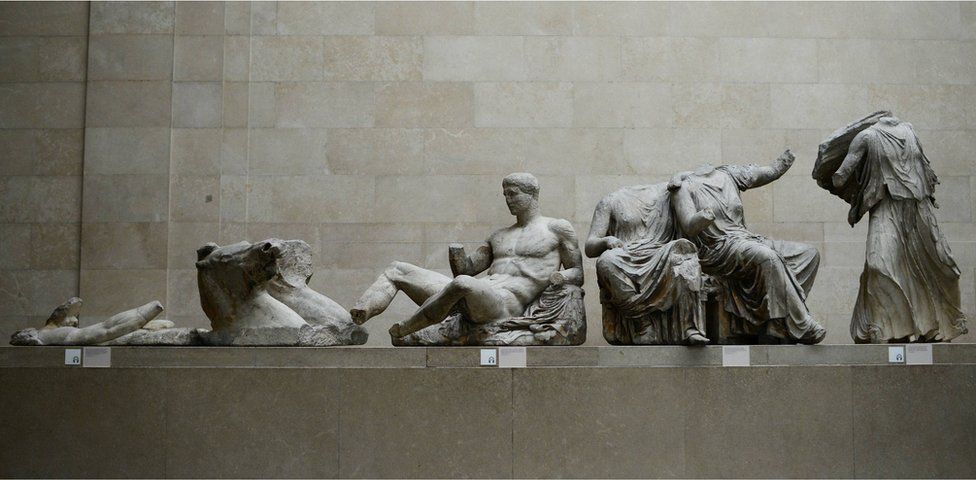
    Elgin Marbles from the East Pediment of the Parthenon. These sculptures are part of The Parthenon Marbles, a collection of stone objects, inscriptions and sculptures, also known as the Elgin Marbles, on display at the British Museum in London
    IMAGE SOURCE,REUTERS Image caption, Polling suggests a majority of British people would support returning the Elgin Marbles to Greece

    The Parthenon Project points to a breakdown of the poll which shows, amongst people who voted Conservative in 2019, 44% thought the sculptures should go to Greece and 28% didn’t mind either way.

    Lord Vaizey, new Parthenon Project chair, said: “I am confident that a deal is within reach. Support for the reunification of the Parthenon Sculptures in Athens from the public, and in particular Conservative-leaning voters, is clear.”

    He added it would be “in the best interests of the British Museum and UK government to begin meaningful engagement on this issue”.

    On Thursday, Lord Vaizey will prompt a debate in the House of Lords about the National Heritage Act.

    With growing calls from some quarters to return items held in British collections to their original countries of origin, some museums, including the V&A, run by Tristram Hunt, have called for the act to be amended or replaced.

    The British Museum says it is restricted from returning items from its collection, including the Benin Bronzes from Nigeria, by another act, the British Museum Act of 1963. It has similar terms to the Heritage Act.

    Other smaller museums aren’t bound by the same restrictions. London’s Horniman Museum recently announced it was returning its collection of Benin Bronzes. These items were looted by British forces in the late 19th Century.

    Glasgow Museums has also agreed to return seven stolen artefacts to India.

    The Parthenon Project believes a cultural exchange is a solution to the stalemate over the Elgin Marbles.

    Fry said he was “delighted” to be supporting the Parthenon Project, adding: “I firmly believe that we now have a real chance to find a solution that benefits both Britain and Greece. It is time to put our energies into an exchange involving a revolving collection of never-seen-in-London before artifacts populating the Duveen Gallery in the British Museum, whilst the sculptures are returned to Greece.”


  • ‘Unadulterated shambles’: Investigation into £120 million “Festival of Brexit” launched

    The programme, according to the government and organisers, has expanded employment possibilities and access to culture in more than 100 towns, cities, and villages across the United Kingdom.

    An investigation has been launched into the £120m “festival of Brexit” amid concerns visitor numbers were less than 1% of early targets.

    A cross-party parliamentary committee has asked the National Audit Office (NAO), the public spending watchdog, to look into how the project was managed to “help get to the bottom of how so much taxpayer money could be frittered away for so little return”.

    Originally unveiled in 2018 by Theresa May as Festival UK 2022 – it was supposed to be a nationwide celebration of creativity following the departure from the EU.

    Jacob Rees-Mogg dubbed it the “Festival of Brexit before it was rebranded as the Unboxed festival.

    However, earlier this year Politics Home reported that the festival – which is supposed to evoke the spirit of the Great Exhibition of 1851 and the 1951 Festival of Britain – had received 238,000 visitors compared with organizers’ initial “stretch target” of 66 million.

    And last month the Commons Digital, Culture, Media and Sport Committee (DCMS) called for the investigation after finding it to be an “irresponsible use of public money” and criticising its planning as a “recipe for failure”.

    Its chairman, the Conservative MP Julian Knight, said: “That such an exorbitant amount of public cash has been spent on a so-called celebration of creativity that has barely failed to register in the public consciousness raises serious red flags about how the project has been managed from conception through to delivery.

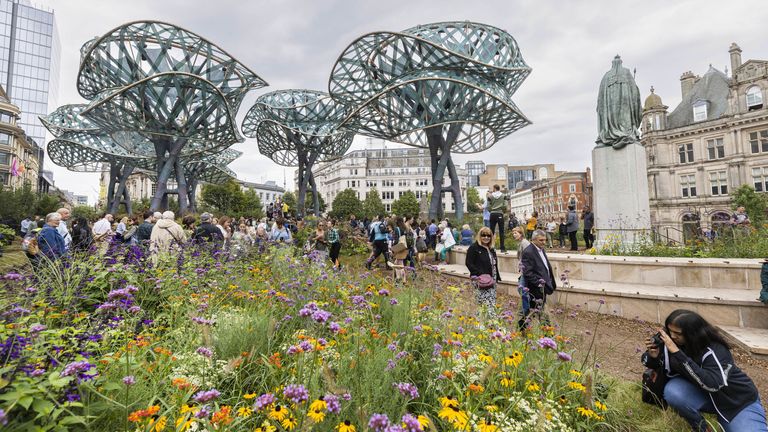
    People at the opening of PoliNations, a garden in Birmingham's Victoria Square hosting a 17-day festival of free events themed around diversity, produced by Trigger and commissioned by Unboxed: Creativity in the UK.
    Image:People at the opening of PoliNations in Birmingham’s Victoria Square

    Calling for the investigation in September, Mr Knight said the design and delivery of the festival “have been an unadulterated shambles”.

    “The paltry numbers attracted to the festival despite such a hefty investment highlight just what an excessive waste of money the whole project has been,” he added.

    The NAO’s comptroller and auditor general Gareth Davies has proposed a “short, focused report on Unboxed” which could be completed and published by the end of this year.

    Meanwhile, the government and organisers claim the programme has reached every part of the UK, in more than 100 towns, cities, and villages, spreading work, and opportunities and opening up access to culture.

    A spokesperson for the Department for Digital Culture Media and Sport (DCMS) said: “More than four million people have engaged in Unboxed programming so far and these numbers are set to rise further.”

    General views of SEE MONSTER, a decommissioned North Sea offshore platform, which has been transformed into one of the U''s largest public art installations
    Image:The SEE MONSTER is a decommissioned North Sea offshore platform that has been transformed into one of Unboxed’s largest public art installations

    And a spokesperson for Unboxed: Creativity in the UK said: “The numbers reported misrepresent the public engagement with Unboxed and reflect attendance at only eight of the 107 physical locations within the programme.

    “Unboxed’s art, science, and tech commissions have been presented in over 100 towns, cities and villages, engaged millions across live and digital and employed thousands of creatives around the UK.

    “The Unboxed programme continues until the end of the year.”


  • Former Pres Kuffour, 14 seasoned journalists honoured for promoting free speech

    Fourteen awardees described as legends of journalism and promoters of free speech were on Wednesday night honoured in Accra.

    Former President, John Agyekum Kufuor, was also honoured for his role in the country’s media space and for repealing the Criminal Libel Law.

    The rest of the awardees included Kofi Badu, Elizabeth Ohene, KwakuAddoSakyiAddo, K.G. OseiBonsu, KabralBlayAmihere, Gifty Affenyi Dadzie, and Abdul-Malik KwekuBaako.

    Others were Kwasi Pratt Jnr, Anthony AkotoAmpaw, Nana Kofi Coomson, Prof. Kwame Karikari, Godwin Avernogbo, Sir Samuel Esson Jonah, and Prof. Paul VianneyAnsah (PAV).

    Organised by the Centre for Communication and Culture, a not-for-profit organisation, the awards was in collaboration with the Ghana Journalists Association (GJA), Sportswriters Association (SWAG), Ghana Independent Broadcasters Association, Private Newspapers Association and the Institute of Public Relations (IPR).

    MrEnimilAshon, Executive Director of Centre for Communication and Culture, said that the awards was under the “Ghanaian Media, The Bold, Beautiful, the Ugly and the Maverick” project which would be rolled in three packages, including interviews on television , a 200-page book on the lives and times of the legends.

    Commending the legends, he said he was hopeful that present and future journalists would fight for the same course.

    An Economist, Kwame Pianim, commended the legends for chalking such feats, adding that there was the need to also honour the spouses of these legends who stood by them in those trying times.

    He extolled the former president for his role in the media space and indicated that maintaining free speech and press freedom required the efforts of all and sundry.

    MrPianim noted that we could have the Ghana we wanted if we applied selflessness, discipline and the rule of law.

    “We are a young nation with a mission to be a shinning beacon of Africa so it is not the institutions but we Ghanaians. We need to have the courage to speak our minds,” he stated.

    “We have an attitude that an elder does not err and that is doing us lots of bad than good and we have to work on that,” he added.

    The economist recommended that the organisers go beyond the giving of just plaques to the legends, adding that the GJA could establish a fund with support from the government to help these legends.

    The President of the GJA, Mr Albert Dwumfuor, hinted that the Association would soon introduce the GJA retirees support fund to support some of these legends who were faced with financial challenges.

    He congratulated the legends for the pace set, adding that he was hopeful that young journalists would carry on with what they have learnt from them to continue to make the country a better place.

  • Stand against widowhood rites, other outmoded cultural practices Akufo-Addo to chiefs

    The President, Nana Addo Dankwa Akufo-Addo is asking chiefs and traditional leaders in the country to consider discarding outdated traditional practices that seek to undermine the fundamental rights of citizens.

    The President was speaking at a meeting with the newly created Bono East Regional House of Chiefs as part of his tour of the Region where he referenced “practices that seek to discriminate between women and children.”

    He further cited widowhood rights as one of the cultural practices which needed to be discarded.

    “It is difficult again to find a justification for some of the widowhood rites that persist today among many of our people,” President Akufo-Addo said.

    He thus urged the chiefs “to be at the forefront of fighting to discard these outmoded practices.”

    Widowhood rites are generally considered negative cultural practices because of its association with the violation of the rights of women.

    Such rites have been described as dehumanising and uncivilized by observers.

    In some instances, widows are tortured, stripped naked, have their hairs shaved, forced to drink concoctions prepared with leaves, hairs and fingernails of their late husbands.

    Assurances to traditional leaders

    The President also assured all the Houses of Chiefs across the country that the government will continue to support the chieftaincy institution so it can be strong and resilient.

    He also highlighted some recent infrastructure support to the new house of chiefs.

    “Six new office complex and bungalows would be provided the six new Regional Houses of Chiefs. Additionally, as I have said, we would strive to give to the institution the requisite support to resolve chieftaincy matters, and carry out research in the many areas of relevance to curb chieftaincy related conflicts,” he said

    Source: citinewsroom