Tag: curfew

  • Nkwanta South: Night-time curfew leaving emergency patients at risk

    Nkwanta South: Night-time curfew leaving emergency patients at risk

    Healthcare services in the Nkwanta South Municipality of the Oti Region are under severe strain due to a night-time curfew imposed in response to recent violent clashes.

    Medical personnel say the restrictions, which run from 8:00 PM to 6:00 AM, are significantly affecting their ability to provide critical care, particularly emergency services and community outreach programs.

    The curfew, enforced by the Ministry for the Interior since January 28, was introduced to curb escalating tensions following deadly tribal conflicts.

    However, the unintended impact on healthcare has raised serious concerns, with medical staff now hesitant to work at night due to security risks.

    Dr. Osei Kuffour Afreh, the Oti Regional Director of Health Services, expressed his deep concern over the situation, emphasizing the growing fear among health workers. He noted that the prevailing insecurity has already resulted in a tragic loss within the health sector.

    “The curfew is really affecting healthcare delivery in the Nkwanta South Municipality. Unfortunately, during the recent clashes in January this year, through that, one of our health workers, an IT manager, was shot dead at home,” he stated.

    According to Dr. Afreh, the anxiety among medical staff has made it increasingly difficult for them to attend to patients in need.

    The dangers faced by health workers were further highlighted when a vehicle transporting personnel for an outreach program came under gunfire.

    “One of our vehicles that was en route to the community for outreach services also received some bullets of about 30 bullet holes,” he revealed.

    The situation has left many in the municipality concerned about access to healthcare, particularly for those in critical need of medical attention during curfew hours. With no immediate resolution in sight, stakeholders are calling for urgent measures to ensure both security and uninterrupted healthcare delivery.

  • Bawku curfew renewed, govt imposes weapons ban

    Bawku curfew renewed, govt imposes weapons ban

    The government has extended the curfew imposed on Bawku Municipality and its surrounding areas in the Upper East Region, following a directive from the Ministry for the Interior.

    Interior Minister Muntaka Mohammed-Mubarak, through an Executive Instrument, announced a revision of the curfew hours, which will now run from 8:00 PM to 5:00 AM, effective Monday, February 24, 2025. This adjustment was communicated in an official statement released on the same day.

    In light of ongoing tensions in the area, the government has called on traditional leaders, community elders, youth, and residents to promote peace and exercise restraint while encouraging dialogue as the path to resolving disputes.

    The statement also declared a strict ban on carrying arms, ammunition, and any offensive weapons within the affected communities. Authorities have warned that any individual caught violating this directive will face arrest and prosecution.

    The government reiterated its commitment to restoring peace and ensuring the safety of residents in the Bawku area as efforts to resolve conflicts continue.

  • Curfew imposed on Walewale renewed

    Curfew imposed on Walewale renewed

    The Ministry of Interior has extended the curfew on Walewale and its surrounding areas, enforcing restrictions from 6:00 a.m. to 6:00 p.m., following recommendations from the North East Regional Security Council.

    This decision comes in response to a wave of violent incidents along the Walewale-Wulugu stretch of the Bolgatanga-Tamale highway, where rising cases of gun attacks and arson have heightened security concerns.

    Between February 11 and 15, a series of deadly assaults claimed the lives of 13 travelers, including an infant, with three buses reportedly set ablaze. In response, the Ministry initially imposed a curfew to restore order and curb further violence.

    Despite objections from local residents, who raised concerns about alleged military brutality linked to the enforcement of the curfew, Interior Minister Muntaka Mubarak has reaffirmed the necessity of the restrictions. The renewed curfew took effect on February 22, 2025, as part of ongoing efforts to stabilize the area.

    The Ministry maintains that the curfew is essential to ensure public safety and prevent further loss of life in the troubled region.

  • Curfew imposed on Walewale politically motivated – MP 

    Curfew imposed on Walewale politically motivated – MP 

    The Member of Parliament for Walewale, Dr. Mahama Tiah Abdul-Kabiru, has strongly opposed the government’s decision to impose a curfew on Walewale and nearby communities in the North East Region.

    Describing the move as hastily and politically driven, he has however criticized the Interior Ministry for enforcing the restriction without prior engagement.

    His remarks come in response to the curfew order, which follows two recent attacks suspected to be linked to the Bawku conflict.

    In a statement, Dr. Abdul-Kabiru expressed disappointment over the lack of consultation, stressing that such a major decision should not have been made without input from local representatives, given its direct impact on his constituents.

    “The Interior Ministry together with the Ministry of Defence consulted with MPs from the Bawku area without extending an olive branch to those of us equally affected in this matter. This is clearly a decision that does not seek to foster peace but an attempt to use state power to unjustifiably punish innocent civilians,” he said.

    Dr. Abdul-Kabiru questioned why similar measures had not been introduced in other troubled areas such as Binduri, Zebilla, and Garu, where travelers have also faced deadly attacks.

    “Between December 2021 till date, there have been at least 25 attacks in these areas, 3 of which occurred in the last one month. The selective application of this security measure suggests that the lives of travellers to and from Bawku do not matter,” he stated.

    The MP proposed that increasing highway patrols and providing military escorts for commuters would have been a more effective security strategy than enforcing a curfew.

    “Half of the police and military personnel that will be used to enforce this curfew would have provided the security for travellers and businesses,” he noted.

    Dr. Abdul-Kabiru also accused the military of excessive force against civilians, alleging that their actions had led to fatalities and multiple injuries.

    “In the last two days, the military have tortured any person on sight in Kukua, Loagri, Walewale, Gbimsi and Wulugu communities, leading to the loss of one life and several others maimed,” he alleged.

    “The decision to impose the curfew and communication from the Interior Minister suggest that the people of Walewale are those responsible for the attacks. This is clearly a deliberate misunderstanding of the situation,” he said.


  • Tema Newtown to observe 4-hour curfew for  traditional rites

    Tema Newtown to observe 4-hour curfew for traditional rites

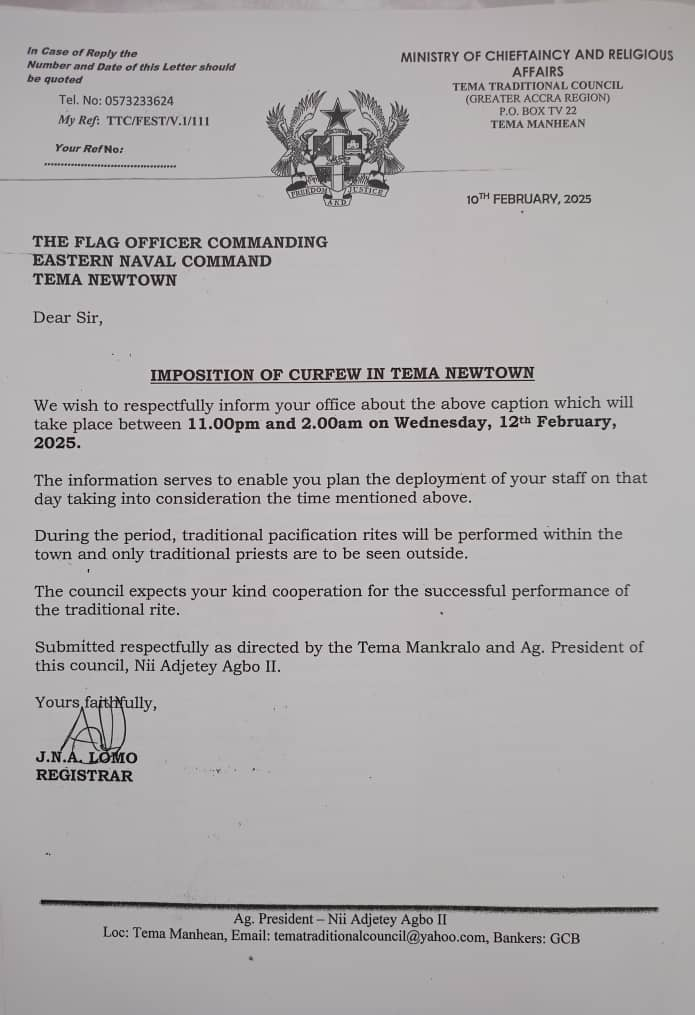
    The Tema Traditional Council (TTC) has declared a four-hour curfew for Tema Newtown, set to take place from 11:00 p.m. to 2:00 a.m. on Wednesday, February 12, 2025.

    A statement issued by the Council and signed by Registrar Jeffrey Lomo has been sent to the Eastern Naval Command, requesting the deployment of personnel for enforcement.

    The statement clarified that the curfew will allow for traditional pacification rites to be conducted within the town, with only traditional priests permitted to be outdoors during these hours.

    Read the full statement below:

  • Interior Minister extends curfew in Bawku

    Interior Minister extends curfew in Bawku

    Minister for the Interior, Henry Quartey, has extended the curfew in Bawku Municipality and its surrounding areas in the Upper East Region through an Executive Instrument.

    Effective from Tuesday, October 22, 2024, the curfew will now run from 10:00 p.m. to 4:00 a.m.

    In an official statement, the Minister called on chiefs, elders, opinion leaders, youth, and residents to remain calm and resilient amid their current challenges.

    He urged them to adopt peaceful, non-violent means to maintain harmony.

    Additionally, the ban on the possession of firearms, ammunition, or any offensive weapons within these areas remains firmly in place.

    “Any person found with any arms or ammunition will be arrested and prosecuted,” the statement said.

  • Nigeria: Curfew imposed in Kano after protests over prices turn violent

    Nigeria: Curfew imposed in Kano after protests over prices turn violent

    A curfew has been implemented in Kano, Nigeria’s second-largest state, following protests against high living costs that were reportedly overtaken by vandals engaging in extensive looting and property damage, according to the governor’s office.

    On the first day of nationwide demonstrations, Kano saw the largest crowds, causing numerous businesses to close.

    Protesters across major cities chanted slogans like “We are hungry.”

    In response to the large crowds, police in Kano city deployed live ammunition, tear gas, and hot water to disperse thousands of demonstrators, resulting in four people being hospitalized.

    Protesters had previously set tires ablaze outside the residence of Governor Abba Kabir Yusuf and looters had broken into a nearby warehouse, carrying away 25-liter cartons of vegetable oil and mattresses. Many in Kano were seen with these yellow cartons of cooking oil.

    The newly imposed curfew aims to halt the protests and requires all residents to stay indoors.

    According to the 2006 census, Kano state had a population of 9.4 million, though current estimates suggest it may be around 20 million.

    The protests, planned to last 10 days, were organized via social media and were inspired by recent successful protests in Kenya that led to the reversal of a tax increase.

    Governor Yusuf’s spokesman stated that while the protests in Kano were initially peaceful, the curfew was necessary to “restore order and ensure the safety of our communities” because of “rampant looting, destruction of property and violence” unleashed by “thugs”.

    In Abuja, a court instructed protesters to confine their demonstrations to the National Stadium on the city’s outskirts.

    However, when protesters began moving into the city center on Thursday morning, police used tear gas to disrupt the march, causing traffic issues.

    Security forces have been stationed at key locations within the capital and surrounding towns, where even banks are closed.

    In Lagos, Nigeria’s economic hub, protesters chanted “ole,” meaning “thief” in Yoruba, targeting President Bola Tinubu and his administration.

    The anger is largely directed at Tinubu’s removal of a fuel subsidy, announced immediately during his May 2023 inauguration, which led to soaring fuel prices and increased costs for other goods.

    Abiodun Sanusi, a protester in Abuja, stated, “Top on our demand is the subsidy removal. The government should reverse that decision”.

    Protesters are also calling for extensive reforms in Nigeria’s electoral system and judiciary.

    Despite government appeals for patience to allow time for policies to take effect, protesters like Kingsley Uadiale argue that hunger is driving the demonstrations.

    Mr Uadiale criticized the administration’s decision to purchase new planes for Tinubu and his deputy, Kashim Shettima, as a sign of insensitivity.

    “Hunger is the reason why we’re all here. You can’t beat a baby and ask the baby not to cry.”

    “You can’t tell us to be patient and you’re acquiring a private jet,” he added.

    Dabiraoluwa Adeyinka, an activist in Lagos, emphasized that the protests aim to reverse the price hikes on essential goods. “If they don’t yield, we will continue to protest,” she told the BBC.

  • Lift self-imposed curfew on us – Bole-Bamboi MP to Interior Minister

    Lift self-imposed curfew on us – Bole-Bamboi MP to Interior Minister

    The MP for Bole-Bamboi, Yusif Sulemana, has once again urged Minister of Interior Henry Quartey to implement effective measures to stop the ongoing serial killings in the Bole area.

    He emphasized that these killings have led residents to impose a self-imposed curfew, causing them to retire early out of fear of potential attacks and violence.

    Speaking in Parliament, Sulemana described the alarming pattern of mysterious deaths in the region as a growing concern that demands immediate attention.

    In Bole, located in the Savannah Region, residents have enforced a self-imposed curfew due to a disturbing series of brutal serial killings. Sulemana highlighted that victims’ bodies are often discovered mutilated, with body parts missing and left in public places.

    He called for the Interior Minister to brief Parliament on these developments.

    MP Abdul Rasheed Hassan Pelpuo of Wa Central also noted a similar crisis unfolding in the Wa Municipality, urging swift action from both the police and the interior minister to prevent further loss of life.

    MP for Nsawam-Adoagyir Constituency and Majority Chief Whip, Frank Annor Dompreh, echoed the concerns of his fellow MPs and appealed to the Speaker of Parliament to compel the Interior Minister to provide a detailed briefing to Parliament on these urgent matters.

  • Curfew on Kpatinga renewed by Henry Quartey

    Curfew on Kpatinga renewed by Henry Quartey

    The Minister-designate for the Interior, Henry Quartey, has issued an Executive Instrument to extend the curfew hours in Kpatinga and its surrounding areas.

    The new curfew hours will be from 12:00 midnight to 4:00 am, starting on Friday, May 17, 2024.

    This decision follows a recommendation from the Northern Regional Security Council.

    In a statement, the Ministry acknowledged the cooperation of the chiefs, elders, opinion leaders, youth, and residents in adhering to the curfew regulations.

    The government urged community members to remain calm and exercise restraint during these challenging times. They are encouraged to use non-violent means to address their concerns and work towards maintaining peace in the region.

    “Meanwhile, there is a total ban on all persons in the Kpatinga and surrounding areas from carrying arms, ammunition or any offensive weapon, and any person found with any arms or ammunition will be arrested and prosecuted,” the statement added.

  • Curfew hours renewed for Alavanyo and Nkonya townships

    Curfew hours renewed for Alavanyo and Nkonya townships

    The Minister for the Interior, Henry Quartey, has authorized an extension of the curfew hours in the Alavanyo and Nkonya Townships and their adjacent areas within the Oti Region.

    The revised curfew now spans from 6:00pm to 6:00am, commencing on Sunday, May 19, 2024.

    This decision stems from recommendations put forth by the Oti Regional Coordinating Council, as outlined in a press release issued by the Ministry.

    The objective behind this extension is to bolster security measures and uphold peace within the affected localities.

    The government has expressed gratitude towards the chiefs, elders, opinion leaders, youth, and residents for their adherence to the curfew regulations, acknowledging their cooperative efforts in maintaining public safety and tranquility in the region.

    Additionally, the statement underscores the importance of utilizing established mechanisms for conflict resolution and dispute settlement within the community.

    “The Minister for the Interior has by Executive Instrument renewed the Curfew hours imposed on Alavanyo and Nkonya Townships and their environs in the Oti Region from 6:00pm to 6:00am effective Sunday, May 19, 2024″

    “Government continues to express its appreciation to the chiefs, elders, opinion leaders, youth and people of the area for their efforts in ensuring peace in the area and urges them to use the established mechanisms for the resolution of all their conflicts and disputes.”

  • Curfew hours renewed in Alavanyo and Nkonya by Interior Minister

    Curfew hours renewed in Alavanyo and Nkonya by Interior Minister

    Under an Executive Instrument, Minister-designate for the Interior Henry Quartey has extended the curfew hours for Alavanyo and Nkonya Townships and their vicinity in the Oti Region.

    Effective from Sunday, May 12, 2024, the curfew spans from 6:00pm to 6:00am.

    In a statement, the Minister commended the Chiefs, Elders, Opinion Leaders, Youth, and residents for their efforts in upholding peace.

    He urged them to utilize established conflict resolution mechanisms.

    Moreover, the government reiterates a prohibition on carrying arms, ammunition, or offensive weapons within the specified areas.

    Violators will face arrest and prosecution.

    Originally imposed on Sunday, June 18, 2023, by former Interior Minister Ambrose Dery following clashes resulting in fatalities, the curfew remains a safeguard for community security.

  • Interior Ministry extends curfew hours in Bawku

    Interior Ministry extends curfew hours in Bawku

    The Interior Ministry, through an Executive Instrument, has extended the curfew hours for the Bawku Municipality and its surrounding areas in the Upper East Region.

    Effective from Tuesday, April 30, 2024, the curfew hours will span from 8:00 pm to 5:00 am.

    In a statement, the government urged Chiefs, Elders, Opinion Leaders, Youth, and residents of the affected areas to maintain composure amidst the challenges they face, advocating for non-violent approaches to preserving peace.

    Additionally, a complete prohibition is imposed on the possession of arms, ammunition, or any offensive weaponry.

    The Ministry sternly warned of arrests and prosecution for anyone found in possession of such items.

    The decision to renew the curfew stems from a recent clash that occurred on Wednesday, April 24, involving heavily armed soldiers and Prison Service personnel in a tense standoff.

    This altercation arose when military personnel demanded the release of two individuals who had sought sanctuary in the prison yard to evade arrest.

    These individuals reportedly caused a disturbance during the official launch of the 40th-anniversary celebration of Bawku Naba, Naba Asigri Abugrago Azoka, at his palace.

  • Karaga residents under curfew over clash with military

    Karaga residents under curfew over clash with military

    Following a clash between locals of Karaga and military personnel, resulting in the tragic death of one individual and injuring three others, the Karaga Security Council in the Northern region has implemented a curfew.

    The conflict stemmed from the appointment of a new regent after the demise of a self-proclaimed chief within the community.

    On Monday, March 25, supporters gathered at the regent’s residence to demonstrate their allegiance, prompting military intervention to disperse the crowd and maintain order.

    However, the situation rapidly deteriorated, with some individuals allegedly hurling projectiles at the military, leading to further escalation and ultimately gunfire, resulting in loss of life.

  • Haiti extends curfew at night and state of emergency

    Haiti extends curfew at night and state of emergency

    Haiti’s leaders said they will continue to have a state of emergency and a curfew at night to stop violent gang attacks in Port-au-Prince. This is part of a fight for political control.

    A curfew was supposed to last for three days, but gangs are still attacking police stations and other government buildings at night. The police in Haiti are having a hard time stopping the violence because they don’t have enough people and resources.

    “The people with the guns basically control Haitian politics,” explained Robert Fatton, who is an expert in Haitian politics at the University of Virginia. “The gangs are winning the fight for now. ”

    The attacks started one week ago, after Prime Minister Ariel Henry said he would have elections in mid-2025, while at a meeting with leaders from the Caribbean in Guyana. Gangs have set fire to police stations, fired guns at the main airport, and broke into Haiti’s two largest prisons, letting more than 4,000 prisoners go free.

    At that time, Henry went to Kenya to ask for a UN-supported police force from the East African country to go to Haiti and help stop gangs. In January, a court decided that sending the troops was not allowed. It’s not certain if the troops will still go to Haiti because the situation there is getting worse.

    Henry is now in Puerto Rico because armed groups stopped him from returning home on Tuesday. They made it impossible for him to land at the airport.

    Many people have been killed in recent gang attacks in Haiti, including some police officers. The fighting has made over 15,000 people have no place to live, and also 300,000 people lost their homes because of gang fights.

    Also, there were reports that on Thursday gangs stole food from shipping containers at the main port in Port-au-Prince. This raised worries that the food supply in the capital and other areas would run out fast.

    Laurent Uwumuremyi, the director of Mercy Corps in Haiti, said that if we cannot get to those containers, people in Haiti will run out of food soon.

    The port operator, Caribbean Port Services SA, announced on Thursday that it is stopping all activities due to harmful acts of damage and destruction.

    The UN spokesperson, Stephane Dujarric, said that because of the danger, the World Food Program had to stop using boats to take food and medicine from Port-au-Prince to other places in the country. Twenty-four trucks with equipment, medical supplies, and food are unable to move from the port in Port-au-Prince.

    He also said that the UN special representative for Haiti, Maria Isabel Salvador, wants the UN to send a group of soldiers right away to stop the country from falling into more chaos because gang violence in Haiti is at an all-time high.

    Salvador is talking a lot with the prime minister, the government, and other political groups to help Haitians solve their problems peacefully.

    Meanwhile, an American A Marine Corps security team called FAST is going to Haiti to keep the U. SsafeAn embassy is like a home for ambassadors from one country in another country. It’s a place where they work and represent their country’s interests. The official talked, but didn’t want to say their name because they weren’t allowed to talk about the deployment. A final choice about where to send something has not been made yet.

    “The country is in trouble and everyone sees it,” said Fatton, who had negative things to say about the U. SThe government didn’t do anything for over two years and now Haiti is in a bad situation. “I am really surprised. ” I thought I had seen it all.

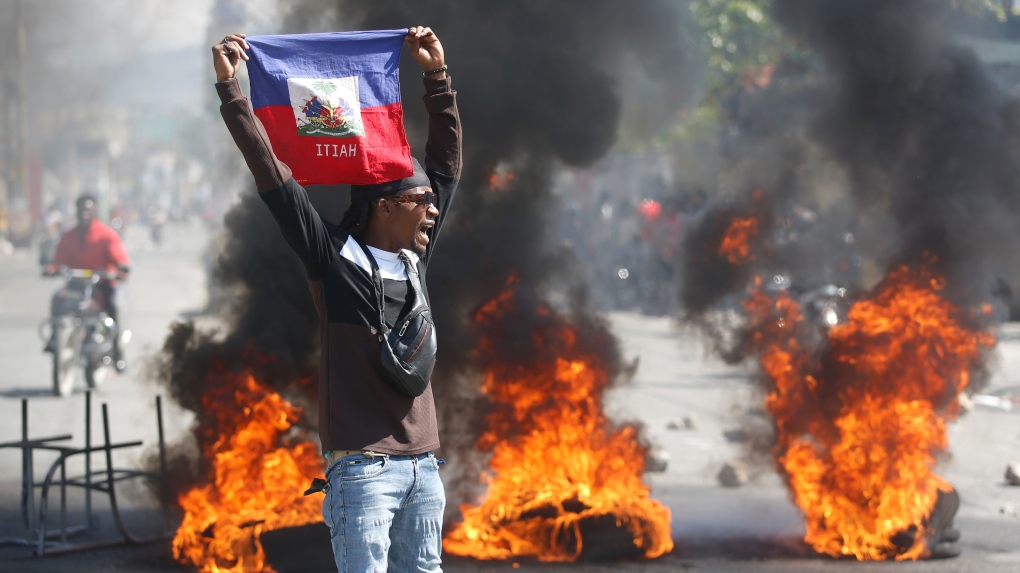
    Gunshots could still be heard in parts of Port-au-Prince on Thursday. People were blocking roads with burning tires and calling for new leaders for the country, which has been through a lot. Schools and businesses stayed closed, but some neighborhoods saw a few stores and banks open for limited hours.

    Germain André, a 40-year-old shop owner, has been having a hard time finding food to sell in Port-au-Prince because there is not enough food available due to people moving around in fear. He sells things like rice, oil, beans, and milk in his store.

    “He said that traveling is really frightening because armed groups have been stopping cars. ” No one is safe. Everyone is afraid of one another. We are not sure if they are part of a gang.

    The Royal Bahamas Police Force set up a blockade in the southeast of the Bahamas because of the worsening situation in Haiti. This was because there were two jail breaks and a lot of Haitians were forced to leave their homes because of the violence. Haitians like to go to the Bahamas, which is about 530 miles north, to escape their country.

    ambassador to the United Nations, addressed the Security Council on the ongoing crisis in Yemen.

  • Haiti imposes nightly curfew to settle things down after violent jail break

    Haiti imposes nightly curfew to settle things down after violent jail break

    In order to ensure the safety of the streets in Haiti, the government has implemented a curfew requiring people to remain indoors at night. This occurred due to the extensive violence, as gang gunmen seized control of the two primary prisons and set the prisoners loose.

    A 3-day state of emergency started on Sunday night. The government said they will search for the people who escaped from prison and committed crimes like killing and kidnapping.

    “The police were told to use all the right ways they have to make sure people follow the curfew and catch anyone who breaks the rules,” said a statement from Finance Minister Patrick Boivert, who is now the acting prime minister.

    Last week, Prime Minister Ariel Henry went to other countries to get support for bringing in a UN security force to help make Haiti safer and more stable in the face of rising crime.

    A new law was made after a very violent weekend in Haiti. Since Thursday, at least nine people have been killed in Port-au-Prince, including four police officers. Gangs have been attacking government buildings and important places like the airport and soccer stadium.

    The attack on the National Penitentiary on Saturday was a big surprise for Haitians, even though they are used to the constant threat of violence.

    Almost all of the around 4,000 prisoners got away, so the prison was strangely empty on Sunday. There were no guards around and there was a mess of sandals, clothes, and furniture outside. Three people were shot and are lying at the entrance of the prison.

    In a different area, two men were found dead with their hands tied behind their backs, lying on the ground. People had to walk around roadblocks made of burning tires to get by.

    18 ex-Colombian soldiers stayed in prison for being accused of working as mercenaries in the murder of Haitian President Jovenel Moise in July 2021. During the fighting on Saturday night, some of the Colombians recorded a video asking for their lives to be spared.

    “Please, please give us help,” Francisco Uribe, one of the men, said in a message that many people have shared on social media. “They are killing people without caring who they are inside the cells. ”

    On Sunday, Uribe told reporters that came into the usually well-protected place, “I didn’t run away because I’m innocent. ”

    Colombia’s government asked Haiti to take extra care of the men.

    Another prison in Port-au-Prince, with about 1,400 prisoners, was also taken over.

    Group of armed men took over the country’s main soccer stadium and caused damage. They also kept one worker there against their will for a long time, according to Haiti’s soccer federation.

    Shots were heard in many parts of the city. Many people in Haiti lost their internet connection because the main mobile network said that a fiber optic cable was cut during a violent attack.

    In less than two weeks, gangs have been attacking state institutions more often. They are working together more and targeting places like the Central Bank, which they wouldn’t have attacked before. Gangs worked together to attack and kill four police officers on Thursday.

    Last week, gangs shot at Haiti’s airport and the U. SThe Embassy announced that they are stopping all work trips to the country and they are asking all American citizens to leave as soon as they can. The embassy said it will cancel all consular appointments until Thursday.

    The Biden administration is very worried about the danger in another country. They won’t send soldiers, but they will give money and help with planning.

    There have been more attacks after violent protests became even more deadly. The prime minister went to Kenya to talk about a plan for a security mission in Haiti.

    Henry became the prime minister after Moise was killed. He keeps delaying the elections for both the parliament and the president, which haven’t happened for almost 10 years.

    Haiti’s National Police has about 9,000 officers to keep over 11 million people safe, as reported by the United Nations. They often can’t keep up with gangs, who are believed to control most of Port-au-Prince.

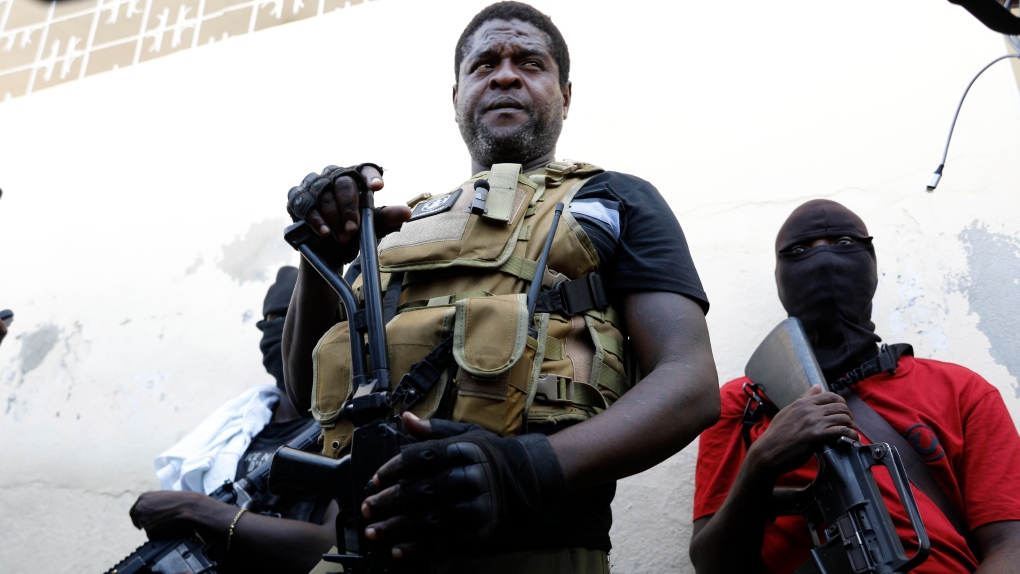
    Jimmy Cherizier, a former police officer called Barbecue, now leads a gang group and admitted to causing the increase in attacks. He wants to catch Haiti’s police chief and government ministers and stop Henry from coming back.

    The prime minister, who is a brain surgeon, ignored requests for him to quit and didn’t say anything when asked if he thought it was okay to go back home.

  • Nkwanta South traders bemoan curfew over ethnic conflict

    Nkwanta South traders bemoan curfew over ethnic conflict

    The Nkwanta South Traders Association has urged the Interior Ministry to reassess the curfew imposed on their township, citing adverse effects on their businesses.

    Mr. Richard Owusu Ansah (Paa Rich), the Secretary of the Association, expressed concerns over the current curfew schedule, which runs from 1700 to 0600 hours, attributing it to the ongoing ethnic conflict.

    He highlighted the significant impact on business activities in Nkwanta South and neighboring areas since November 2023, with approximately 14 fatalities and extensive property damage recorded.

    The traders emphasized the necessity of revising the curfew to facilitate a return to normal business operations, noting the stark transformation of the once bustling business center into a desolate environment.

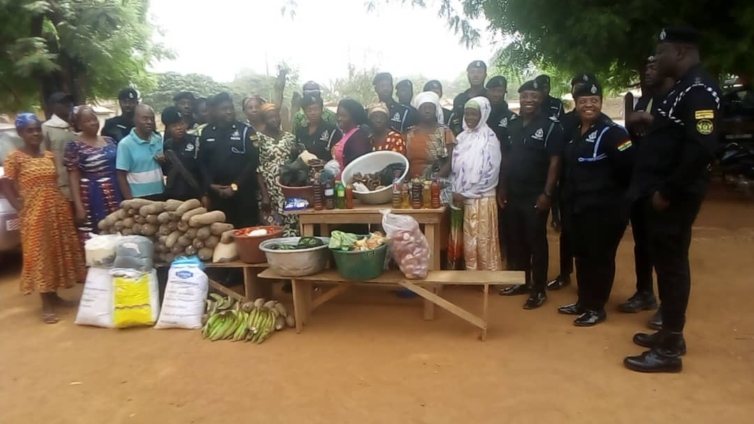
    During their presentation of food items to security agencies as a gesture of support for peacekeeping efforts in the Nkwanta South Municipality, the traders voiced their appeal for a reconsideration of the curfew.

    Chief Superintendent Michael Asiedu, the Divisional Police Commander, received the donation and lauded the traders for their contribution. He reiterated the commitment of the police and other security forces to diligently work towards restoring peace in the area.

    Chief Supt. Asiedu also urged residents to collaborate with law enforcement by providing essential assistance to mitigate the conflict’s escalation in the region.

  • Indian town imposes curfew and directs police to shoot offenders

    Indian town imposes curfew and directs police to shoot offenders

    Officials in a town in northern India put a curfew in place and told the police to shoot anyone who does not follow it. This came after fights over the building of a Muslim school and mosque led to at least five deaths and over 150 injuries.

    On Thursday, there was violence in Haldwani, Uttarakhand. Because of this, the government shut down internet services and schools in the area. This was confirmed by Chief Radha Raturi.

    Police officer A. Psaid that nearly 4,000 police officers rushed to the area and got the situation under control. He said the police were told to shoot protesters who didn’t follow the curfew.

    On Thursday, a lot of people tried to stop government officials and police from tearing down the religious school and mosque. A court decided that the buildings were constructed on government land without permission.

    As the violence got worse, the police used guns and tear gas to break up the protesters who were throwing petrol bombs and stones at them. They were attacking a police station and setting some vehicles on fire. Anshuman said this.

    The head of the state police, Abhinav Kumar, said that five people were killed in the fighting. He didn’t give all the information but he said that there were no new violent incidents on Friday.

    Government worker Vandana Singh Chauhan said that more than 150 police officers got hurt and many people had to go to the hospital.

    Anshuman did not say if the police shooting caused the protesters to die. He also did not say what religion the victims were.

    Haldwani is around 270 kilometres (170 miles) to the northeast of New Delhi.

    Muslim groups and rights organizations say that India’s government, which is mainly made up of Hindus, has destroyed their homes and businesses before. Officials say they are only going after illegal buildings, but some people think they are unfairly punishing activists from minority groups. They call it “bulldozer justice. ”

    Amnesty International said this week that bulldozers have destroyed homes, businesses, and places where Muslims worship. They said this was often done without warning and as an excuse to take over land illegally.

    The Indian government is destroying Muslim homes, and this is being called “bulldozer justice” by some leaders and the media. This is very cruel and terrible. Agnes Callamard, who is the leader of the rights group, said that forcing people out of their homes is very unfair, not allowed by law and unfair because of treating people differently.

    Between April and June 2022, researchers from the group found that in five states, authorities used demolitions as punishment after incidents of communal violence or protests. They recorded at least 128 demolitions during this time.

    Many people have criticized Prime Minister Narendra Modi for not doing anything about hate speech against Muslims in India, who make up 14% of the population.

    Modi’s party says the accusations are not true.

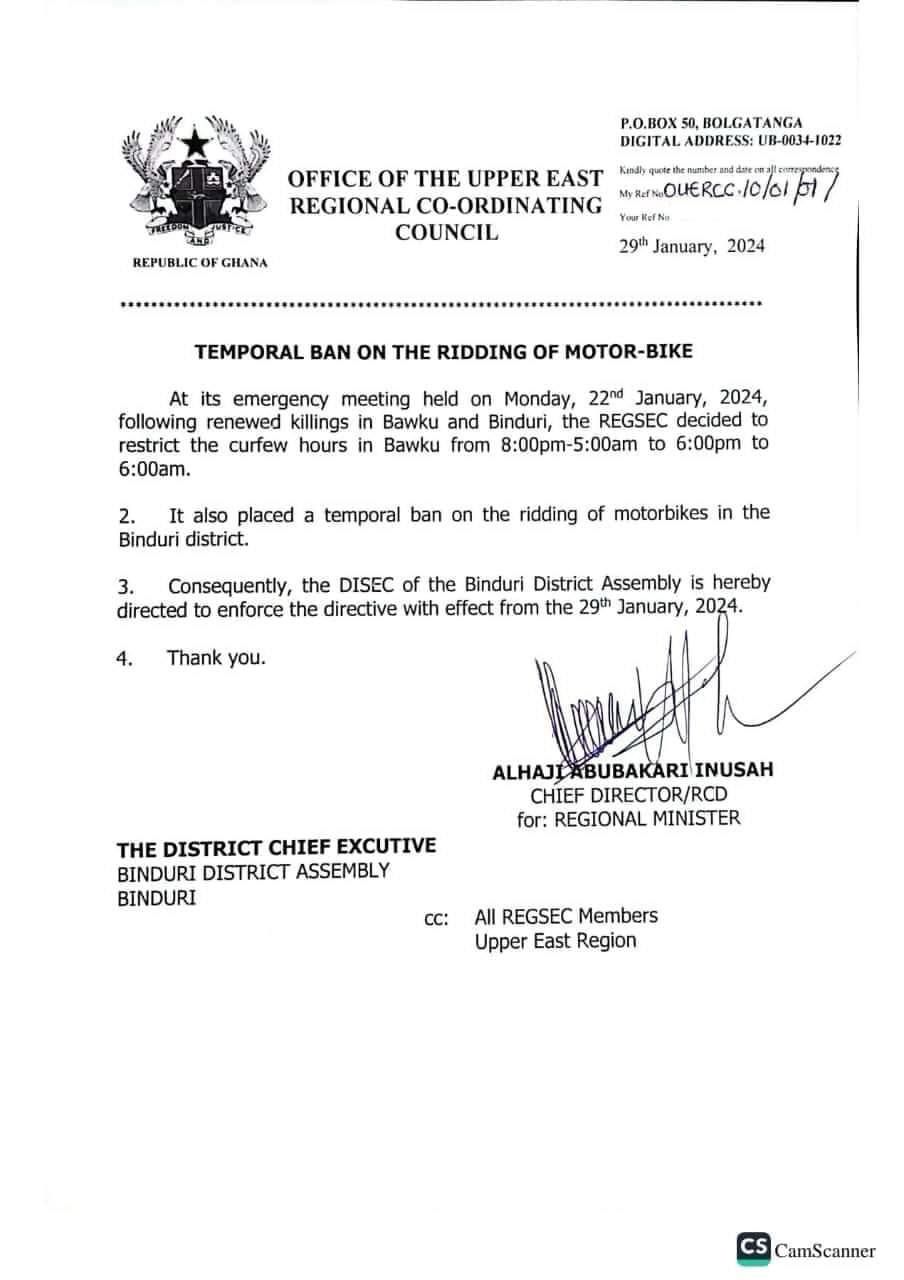
  • Upper East: Riding of motorbikes in Binduri banned over recent murders

    Upper East: Riding of motorbikes in Binduri banned over recent murders


    In response to recent killings, the Upper East Regional Security Council has imposed a temporary ban on motorbike riding in the Binduri district.

    The decision was reached during an emergency meeting held on Monday, January 22, 2024, in light of the escalating incidents in the Bawku and Binduri districts.

    Additionally, the Upper East Regional Security Council announced a modification in the curfew hours for Bawku.

    The original curfew, effective from 8 PM to 5 AM, has now been extended to 6 PM to 6 AM.

    The council urged the District Security Council in the Binduri area to enforce this directive promptly.

    Read the full document below

  • Gabonese junta eases curfew restrictions

    Gabon’s military leaders have eased the curfew that was imposed in the aftermath of President Ali Bongo’s overthrow.

    The newly announced curfew, declared by the Committee for the Transition and Restoration of Institutions (CTRI) on Wednesday, will now be in effect from midnight to 05:00.

    Previously, the curfew varied by location, starting between 18:00 and 22:00 and ending at 06:00.

    The junta has introduced this new curfew as part of their efforts to reinvigorate economic activities in the country. Unlike the previous modified curfew, which had exemptions for certain areas, this one will apply uniformly across the entire nation.

    Colonel Ulrich Manfoumbi Manfoumbi, the junta’s spokesperson, explained that the purpose of the new curfew is to “support economic operators in all sectors.”

    Additionally, the transition committee has cited the start of the school year as a contributing factor to their decision.

  • Ethiopian govt imposes night-time curfew in Gambella region

    Ethiopian govt imposes night-time curfew in Gambella region

    Authorities in the western Ethiopian region of Gambella have imposed a night-time curfew.

    The curfew which restricts movement between 19:00 and 06:00 has been imposed in response to the recent outbreak of violence that resulted in numerous fatalities.

    While the regional government has not released specific casualty figures, it issued a statement promising to hold accountable those “members of the leadership” who were involved in the disturbance of peace.

    Local media reports indicate that the violence, which has ethnic dimensions, started earlier this week and led to clashes in at least two areas. As a result, businesses and offices in the regional capital, Gambella city, remained closed on Wednesday.

    Gambella, which shares a border with South Sudan, has experienced recurring violence in recent months. In May, there were reports of at least seven people killed and more than a dozen wounded in clashes in Gambella city.

    Additionally, last year, the city faced a raid by rebel fighters from the neighboring Oromia region, resulting in the deaths of dozens of people.

  • REGSEC wants curfew hours imposed on Bawku Municipality reviewed

    REGSEC wants curfew hours imposed on Bawku Municipality reviewed

    A reassessment of the curfew imposed on Bawku Municipality inhabitants is being requested by the Upper East Regional Security Council (REGSEC).

    The curfew should be adjusted from 10 p.m. to 4 a.m. to 6 p.m. to 6 a.m. with immediate effect, REGSEC has suggested.

    Following a critical evaluation of the circumstance in Bawku, the REGSEC made the recommendation at its meeting on Friday, April 28.

    A statement by the Office of the Upper East Regional Coordinating Council said, “The Regional Security Council (REGSEC) at its meeting on Friday, 28th April 2023 reviewed the general security situation of the region and upon a critical assessment of the situation in Bawku, it recommended that the curfew hours imposed on the Bawku Municipality be reviewed from 10 pm – 4 am to 6 pm – 6 am with immediate effect”.

    REGSEC expressed hope that its views will help to temporarily help manage the security situation in the area.

    “This in our candid view would temporarily help manage the security situation in the area. Please accept our assurance of the highest esteem in this regard,” REGSEC stated.

    The protracted chieftaincy dispute in Bawku has left scores of people dead and others sustaining injuries.

    About 10 people were reported dead in recent disturbances.

    The Minister for Chieftaincy and Religious Affairs, Stephen Asamoah Boateng, during a working visit at the Bawku Naba’s palace on Saturday, April 15, 2023, assured the people of Bawku in the Upper East Region that, government will use legitimate means and the rule of law to resolve the protracted ethnic conflict in the area.

  • Moscow-installed official announces 24 hour curfew in Ukraine’s Kherson city

    A 24-hour curfew has been imposed in the Russian-controlled city of Kherson, a local Moscow-installed official has said.

    Kirill Stremousov, the Russia-backed deputy governor of the Kherson region, said in a video message posted on Telegram that the measure was necessary “in order to defend our city of Kherson” from what he referred to as “terrorist attacks”.

    Stremousov repeated earlier calls for civilians to leave Kherson city, saying that columns of Ukrainian vehicles had been spotted on areas of the frontline and that an attack was possible.

    Ukrainian forces have in recent weeks drawn closer to the city, the only regional capital to fall to Moscow since it launched its invasion on February 24.

    Source: Aljazeera.com 


  • Curfew in Bawku reviewed effective September 5

    The curfew imposed in Bawku and its surroundings to reduce insecurity in the municipality has been reviewed by the Interior Ministry, Ambrose Dery.

    In a statement, the Ministry said that based on the advice of the Upper East Regional Council, the review begins today, Monday, September 5, 2022.

    The present curfew time of 8:00pm has been changed to 6:00am, 6:00pm, and 6:00am.

    “The review of the curfew has been as a result of threat to security in the communities concerned”, the statement added.

    The administration is also urging local citizens and youth to put their energy toward constructive endeavors rather than violence, which is endangering the peace.

    The release further announced that, “there is a total ban on all persons in the aforementioned communities and its environs from carrying arms, ammunition or any offensive weapon and any person found with any arms or ammunition will be arrested and prosecuted.”

    Bawku is a hotspot for clashes between residents of various ethnic groups.

    The government has on several occasions imposed a curfew on the town to calm tensions and maintain law and order.


  • Kwabenya under curfew from May 5 to May 8 over funeral rites of chiefs

    The Dome-Kwabenya Traditional Council in the Greater Accra Region, has slated a royal burial and funeral rite for its chiefs for Thursday May 5, through to Sunday May 8, 2022.

    This follows information that has reached Angelonline.com.gh indicating that two chiefs of the community have died for which reason the traditional authorities have organized activities to mark the occasion.

    In line with the burial and funeral rites, the authorities have placed curfew on the community, such that the townspeople and visitors are banned from the streets from 7pm until morning beginning from Thursday through to Sunday.

    Friday and Saturday which are market days, have been cancelled for trading activities in observation of the rites for the late chiefs.

    They have also directed that lights around the homes of the residents be turned off from the evenings to mornings until the scheduled days elapse.

    The people including visitors to the community are therefore advised to perform their duties and attend to their needs before due time or they face the repercussions of their actions which amount to disobedience.

    Source: angelonline.com.gh

  • Ministry of Interior renews curfew hours in Bunkpurugu

    The Minister for the Interior, Ambrose Dery, has by Executive Instrument renewed the curfew hours imposed on Bunkpurugu Township and its environs in the North East Region from 2000 hours to 0600 hours.

    The review took effect on Tuesday, 14th July 2020.

    A press release issued by the Ministry urged chiefs, opinion leaders, youth and people of the area to exercise restraint in the face of challenges and use non-violent means to channel their energies into ensuring that peace prevailed in the area.

    “Meanwhile, there is a total ban on all persons in the Bunkpurugu Township and its environs from carrying arms, ammunition or any offensive weapons and any persons found with any arms or ammunition will be arrested and prosecuted,” it said.

    Tensions in Bunkpurugu

    Several clashes between the factions in Bunkpurugu have resulted in numerous deaths and curfews.
    In 2016, the police administration confirmed that 35 houses were destroyed during a renewed chieftaincy clashes in the Bunkprugu Township between the Jamong and Jafog Bimoba clans.

    Three persons died whilst an unknown number of people fled the area into neighbouring Togo

    Source: GNA
  • Uganda extends border closure and curfew

    Uganda’s President Yoweri Museveni has extended the nationwide coronavirus controls for 21 days.

    In his address to the nation at the end of an initial 14-day lockdown, the president said that all control guidelines previously announced will remain in place.

    The measures include closure of national borders, including Entebbe International Airport, to passenger travel, a dusk-to-dawn curfew, and a ban on public transport.

    Mr Museveni said that the extension will help health workers study the situation, and monitor about 18,000 people said to have come into the country between 7-22 March.

    Air and road cargo transport are still permitted.

    Inter-state long-distance truck drivers, whether transiting through or destined for Uganda, will be tested at the border points.

    So far, over 5,600 samples have been tested and 54 cases confirmed in the country, eight of whom have recovered.

    Source: bbc.com

  • You will return to curfew if you breach the peace Dery to Bole residents

    The Interior Minister, Ambrose Dery has assured the people of the Bole that the curfew lifted in the treaditional area will be reimposed if they fail to keep the peace they are currently enjoying.

    Speaking in Damongo during the final funeral rites of Chief Frewura Alex Seidu Sofo, former member of Parliament for the then Damongo/Daboya Constituency and a former deputy minister for roads and highways in the erstwhile John Agyekum Kufour administration, Mr Dery cautioned the people of Bole that the area will be back to curfew if they break the peace of the area.

    He was, however, optimistic that the peace will be maintained because the residents will not want to return to curfew.

    Mr Dery said the government lifted the curfew through a recommendation by the overlord of the Gonja traditional area, Yagbonwura Sulemana Tutumba Bore-Essa I and the Savannah Regional Security that promised to ensure that peace prevails in the area.

    The interior minister described the late MP as very hard working who will be remembered for contributing his quota towards the development of Ghana.

    The Savannah Regional Minister, Adam Salifu Braimah also in a tribute to the former legislature described him as a hard working man who will be remembered for his role in the areas of road networks, education, business and general supports for humanity.

    He went further to say that the late Sofo would be difficult to replace in the New Patriotic Party (NPP) in the Savannah region.

    The late Alex Sofo Seidu until his demise was an educationist, politician, philosopher, a businessman and traditional ruler in the Busunu traditional area.

    He was 70 years and survived by two wives and 10 children.


    Source: classfmonline.com

  • Keep the peace or face fresh curfew Minister urges Bole residents

    The Interior Minister, Ambrose Dery has reminded the chiefs and people of Bole traditional area in the Bole district of Savannah Region to keep the current peace or risk having another curfew imposed.

    The Minister who was speaking as the head of government delegation at the final funeral rites of the late Member of Parliament (MP) for then Damongo/Daboya, Alex Sofo Seidu in Damongo, said government lifted the curfew following the good counsel and recommendations by the king of Gonja land, Yagbonwura Sulemana Tutumba Bore-Essa I.

    He also added that the Savannah Regional Security and would ensure that peace prevails in the area.

    People from all walks of life and the political divide were in attendance to pay their last respect to late Alex Sofo Seidu.

    The Savannah Regional treasurer of the opposition National Democratic Congress, NDC, Ali Kasim said the demise of the late MP has created a vacuum in the areas of leadership and philosophy and would be missed.

    Savannah Regional Minister, Adam Salifu Braimah recounted the role the late Alex Sofo Seidu played in the areas of road networks, education, business and general support for humanity adding that the deceased would be missed with no immediate placement the NPP in the region.

    The late Alex Sofo Seidu until his demise, was an educationist, politician, philanthropist, an entrepreneur and traditional ruler.

    He was born in 1950 and started his education at Busunu L/A Primary School in Busunu through to the then Damongo Middle Day Boarding school in West Gonja district before enrolling in EP Teacher College of Education, Bimbila.

    After college, late Sofo taught briefly and was promoted to the West Gonja district education office before joining partisan politics in the year 1996. He went to Parliament for two terms, thus, 2000 and 2008 and was Deputy Minister for Roads and Highways in his second term in Parliament under former president John Agyekum Kufour.

    Late Alex Sofo Seidu before his demise was enskinned a sub-chief with the skin name, Frewura and also as a member of the council of elders for NPP in Savannah region. He left behind two wives and ten children.

    The late MP would be remembered for tarrying the Damongo township and hospital roads, the boarder status for Ndewura Jakpa  SHS and the establishment of  Damong Nurses training college among others.


    Source: myjoyonline 

  • Government renews curfew hours imposed on Drobo

    The Minister for the Interior has by Executive Instrument, renewed the curfew hours imposed on Drobo and adjourning communities in the Jaman South Municipality of the Bono Region.

    The curfew hours are now between 8:00 p.m to 5:00 a.m effective, Thursday, November 14, 2019, a statement signed by the Interior Minister, Ambrose Dery said.

    Imposition of curfew on Bunkpurugu township and its environs

    “Meanwhile, there is a total ban on all persons in the afore-mentioned communities and their environs from carrying arms, ammunition or any offensive weapons and any persons found with any arms or ammunition will be arrested and prosecuted,” the statement added.

    While expressing its appreciation to “the Chiefs, Elders, Opinion Leaders, Youth and people of the area for their efforts in ensuring peace in the area”, the government also urged “them to use the established mechanisms for the resolution of all their conflicts and disputes.”

    Source: Myjoyonline.com