Tag: Cyril Ramaphosa

  • Cyril Ramaphosa’s decision to sign a contentious education bill into law to strain south Africa

    Cyril Ramaphosa’s decision to sign a contentious education bill into law to strain south Africa

    The stability of South Africa’s uneasy coalition government is about to face a major test as President Cyril Ramaphosa prepares to sign new education reforms into law during a public ceremony on Friday.

    In the run-up to May’s general election, which led to the African National Congress (ANC) forming a coalition, the two main partners had clashed over the Basic Education Laws Amendment (Bela) Bill.

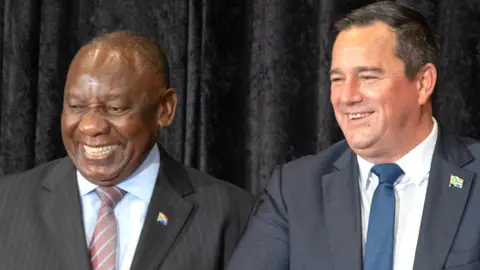
    Despite now sharing power, the ANC and the Democratic Alliance (DA) remain at odds over the bill’s provisions.

    DA leader John Steenhuisen has warned that if the signing proceeds, the party will “have to consider all of our options on the way forward”.

    What is in the Bela bill?

    The contested bill, which was passed by the ANC-majority parliament shortly before the election, introduces several significant and controversial changes to current education legislation.

    Key reforms include:

    – School admissions and the language of instruction will be regulated nationally

    – Home schooling will be regulated

    – Parents who fail to ensure their child is in school may face jail
    Grade R, for four and five-year-olds, will be the new compulsory school starting level – a year earlier than currently

    – The abolition of corporal punishment will be backed by fines and possibly jail time for those who administer it

    The ANC says the changes are necessary in order to transform the education system and address continued inequalities.

    Why is there such fierce opposition?

    The clause which has caused the most controversy is the one concerning strengthening government oversight over language and admission policies.

    This is a sensitive topic relating to racial integration.

    The previous ANC government argued that language and other admission criteria were being used to “derail access to schools [for] the majority of learners”.

    Although apartheid, a system of legally enforced racism, ended over thirty years ago, its legacy continues to affect certain areas of education.

    While the legislation does not explicitly address Afrikaans, the ANC argues that some children are being barred from schools where Afrikaans, the language of the white-minority Afrikaners, is the medium of instruction.

    The DA has supported the right of school governing bodies to establish their own language policies, citing constitutional provisions and the importance of learning in one’s native language.

    The most vocal opposition has emerged from the Afrikaans-speaking community.

    Civil rights group AfriForum has described the bill as an attack against Afrikaans education and has said it remains committed to opposing the legislation as “it poses a threat to the continued existence of Afrikaans schools and quality education”.

    The Freedom Front Plus – another one of the 10 parties in the coalition government and seen as representing the interests of Afrikaners – is also opposed to Bela. It called it “ill-conceived”, saying it would “cause needless uncertainty and disputes about clearly established rights and responsibilities related to Basic Education”.

    Some are also concerned about the reforms to home schooling. There are currently many unregulated schools popular with the middle classes because of the poor state of government schools.

    These are allowed to continue through a loophole in the current law where the students are registered as “home learners” and the teachers offer “tuition”. But through the Bela bill, the government wants to close the loophole and ensure they are regulated like state schools.

    Could this threaten the coalition government?

    After the ANC lost its outright majority in parliament, it needed coalition partners to remain in power.

    It reached a deal with its long-time opponent, the DA, and eight other parties to form the Government of National Unity.

    Steenhuisen, who is the agriculture minister, has said that enacting the Bela bill would violate “the letter and spirit” of the coalition agreement as the DA had made it clear that the bill was unacceptable “in its current form”.

    But he does not yet appear to be pulling the plug on the coalition.

    On Thursday, the DA leader said conflict over policy was not necessarily “an existential threat to the government”, echoing similar comments from the president’s spokesperson.

    But Steenhuisen said this did not mean it would never walk away, especially if the ANC was “trashing the constitution”. The DA has said it has some simple amendments to the bill which would make it acceptable and, as it sees it, bring it in line with the constitution. However, these have not been incorporated in the bill signed by President Ramaphosa.
  • I swear I will be faithful; I will obey – Ramaphosa’s pledge at inauguration for second term

    South Africa has entered a “new era,” announced President Cyril Ramaphosa as he was inaugurated for his second full term.

    Despite the African National Congress (ANC) not achieving a parliamentary majority in last month’s election, Ramaphosa remains in power.

    The ANC formed a coalition with its long-time rival, the Democratic Alliance (DA), and other parties to govern. In his inauguration speech, Ramaphosa commended this coalition but cautioned that failure to address deep inequalities could lead to instability in the country.

    “Through the ballots that they have cast, the people of South Africa have made plain their expectation that the leaders of our country should work together,” President Ramaphosa, 71, said solemnly.
    “They have directed their representatives to put aside animosity and dissent, to abandon narrow interests, and to pursue together only that which benefits the nation.”

    Among those in attendance were the leaders of Nigeria, Angola, Zimbabwe, Congo-Brazzaville, and Eswatini, who gathered in the Nelson Mandela Amphitheatre outside the Union Building in Pretoria. A large crowd assembled outside the government’s official seat, waving national flags.

    Under a crisp blue winter sky, Chief Justice Raymond Zondo administered the oath of office to President Cyril Ramaphosa. This event marks a significant moment for South Africa, highlighting Ramaphosa’s journey from union leader to mine boss to president, and underscores the unity deal as a pivotal moment in the nation’s history.


    “I swear I will be faithful to the Republic of South Africa… I will obey, observe and uphold the constitution and all other laws of the republic,” the president said.

    A band performed the national anthem, followed by a 21-gun salute and an army helicopter fly-past. The African National Congress (ANC), which has ruled since the end of apartheid in 1994, lost its majority for the first time after the May 29 election yielded no clear winner.

    The ANC secured 40% of the vote, a 17 percentage point drop, losing 70 seats in parliament. Lawmakers re-elected Mr. Ramaphosa after the ANC formed a power-sharing agreement with the pro-business Democratic Alliance (DA), which received 22% of the vote, and three smaller parties.

    The DA, the ANC’s main new governing partner, holds free-market ideologies that conflict with the ANC’s social welfare traditions and is often perceived as serving the interests of the white minority, an allegation it denies. Despite their differences, both parties are united in their goal to repair the country’s infrastructure, ensure basic services like water and power, and create jobs.

    This coalition represents a shift towards the political center, as the ANC’s left-wing and populist breakaway factions declined the invitation to join a national unity government.

    In his address, Mr. Ramaphosa assured South Africans that the coalition is dedicated to reducing inequalities and fostering economic growth. He also highlighted the stark divisions between the affluent and the impoverished within the country.


    Despite progress, “our society remains deeply unequal and highly polarized,” he said.

    “There are toxic cleavages and an incipient social fragmentation that can easily turn into instability.”
    And he warned against “those who seek to stand in our way, to inflame tensions” and “undermine our institutions.” They will not succeed because South Africans are resolute, he said.


    Mr Ramaphosa did not say to whom he was referring. But the uMkhonto weSizwe (MK) party formed six months ago by former President Jacob Zuma didn’t attend what it called the “farcical” inauguration.
    The party, which won 15% of votes and obtained 58 parliamentary seats, also boycotted parliament’s first sitting last Friday.

    It has since joined a counter-coalition of opposition parties, vowing to oppose the policies of what Mr Zuma described as an “unholy alliance” between black and white elites to benefit the markets, not the people.
    It “must be crushed before it finds its feet,” he said, “in the streets, in the courts and in parliament.”

    MK has stated that its protests will be peaceful, though concerns remain that Mr. Zuma’s stance could incite violence among his supporters, who previously instigated deadly riots in July 2021 following his imprisonment for refusing to testify at a public inquiry into corruption during his presidency.

    President Ramaphosa is expected to appoint a cabinet in the coming days, incorporating members from the DA and three other smaller parties, collectively holding 68% of the parliamentary seats. Following this, the president is anticipated to outline policies aimed at reviving the struggling economy.

    The coalition faces several challenges, including potential ideological clashes within the alliance, dissatisfaction from left-wing elements within the ANC, and the threat of volatile political opposition. Despite these obstacles, many South Africans are hopeful for the coalition’s success.

    “This is a moment when we must choose to either move forward together,” Mr Ramaphosa said “or risk losing all we have built.”
    The former trade unionist and business tycoon first became president in 2018 when his predecessor, Mr Zuma, was forced to resign because of corruption allegations. Mr Zuma has repeatedly denied any wrongdoing.

  • Ramaphosa criticizes election advert by opposition involving burning of national flag

    Ramaphosa criticizes election advert by opposition involving burning of national flag

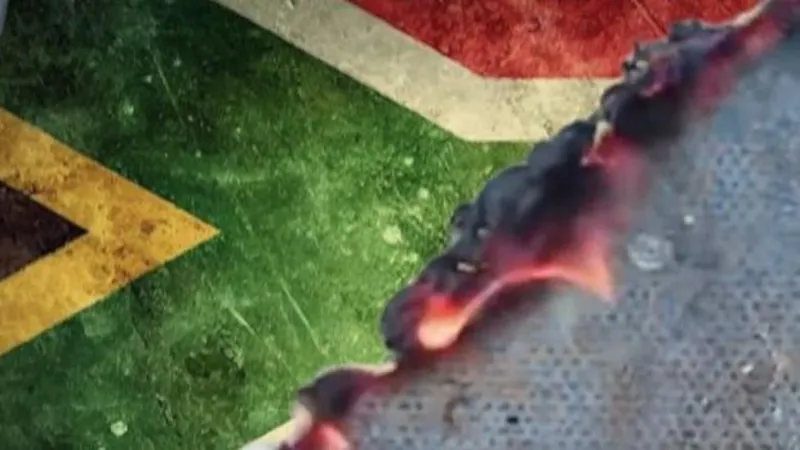
    President Cyril Ramaphosa of South Africa has criticized the main opposition party for featuring a burning national flag in one of its election adverts.

    The Democratic Alliance (DA) defended the image, stating it aimed to highlight the country’s challenges.

    While burning the flag isn’t illegal, President Ramaphosa called it an “abuse” and argued it undermines national unity.

    Campaigning ahead of the May 29 general election has become increasingly contentious.

    In the advert, as the flag ignites, a voice warns of worsening conditions under the African National Congress (ANC) rule since 1994.

    The flag then returns to its original form, symbolizing hope if voters support the DA.

    Some South Africans criticized the DA for using the flag in this manner.

    President Ramaphosa emphasized the importance of free speech but stressed that it should be exercised respectfully to avoid social unrest.

    Acknowledging the country’s challenges, Mr. Ramaphosa highlighted the progress made since the end of apartheid.

    DA leader John Steenhuisen defended the advert, calling it a symbolic representation of South Africa’s potential future under the DA.

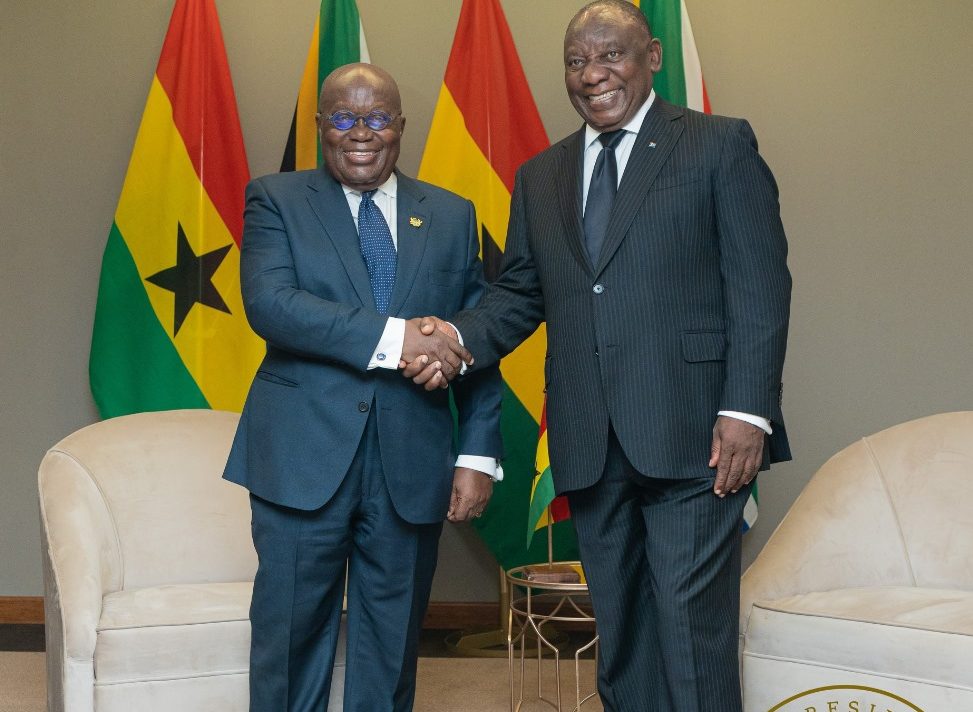
  • We have seen a boost in tourism after visa waiver with Ghana – South Africa’s Ramaphosa

    We have seen a boost in tourism after visa waiver with Ghana – South Africa’s Ramaphosa

    South African President Cyril Ramaphosa and Ghanaian President Nana Akufo-Addo have hailed the recent visa waiver pact between their nations, citing a notable surge in air travel and trade activity.

    The agreement, effective November 1, 2023, permits citizens of both countries to visit for up to 90 days without needing a visa.

    At the Bi-National Committee meeting in Johannesburg, President Ramaphosa lauded the visa waiver’s positive influence on bilateral ties.

    He highlighted its role in boosting tourism, fostering business connections, facilitating educational and scientific collaborations, and strengthening interpersonal relationships.

    “We welcome you to the second session of the Bi-National Commission between the Republic of South Africa and the Republic of Ghana, we welcome you with warm hearts. One of the recent highlights in our bilateral relations was the signing of the reciprocal visa exemption for ordinary passport holders for a period of 90 days per annum, which entered into force on November 1, 2023.

    The surge in travellers between our nations has not only benefited tourism but has also strengthened our business connections, educational collaborations, and interpersonal relationships,” President Akufo-Addo echoed President Ramaphosa’s sentiments, underscoring the deepening of Ghana’s ties with South Africa due to the visa waiver.

    He emphasised the importance of the partnership and its potential for both countries and their citizens. The Bi-National Committee meeting, attended by representatives from both nations, aims to enhance cooperation and mutual respect between Ghana and South Africa.

    “I come with warm greetings from the people and government of Ghana to you, your Excellency, Matamela, Cyril Ramaphosa, and the good people of the Republic of South Africa. As we gather at this Binational Commission meeting, I’m reminded of the profound significance of our partnership and the boundless potential it holds for our two nations and peoples.

    “Our current deliberations mark yet another chapter in our shared commitment towards nurturing a relationship built on trust, cooperation, and mutual respect.

    Under the bi-national committee arrangements, the two countries have also eliminated the visa barriers through the visa waiver agreement, which came into effect on November 1, 2023, to encourage people to engage with the two countries for business as well as tourism. And like you, Mr. President, I’m impressed by the increase in the number of exchanges that are taking place between our two countries.”

  • New palace to be built for Zulu King by South Africa province

    New palace to be built for Zulu King by South Africa province


    The provincial government in KwaZulu-Natal, South Africa, has announced intentions to construct a new palace for the Zulu monarch, King Misuzulu kaZwelithini.

    During her State of the Province Address on Wednesday, Premier Nomusa Dube-Ncube revealed this plan, citing Zulu customs which suggest that the king’s residence should not be at his late father’s palace.

    Ms. Dube-Ncube expressed satisfaction with the positive relationship between her government and the Zulu king, stating, “In consultation with His Majesty, we are finalizing plans to build a new palace for the king in Nongoma.”

    She also assured continued government support to the reigning king, similar to the assistance provided to the late monarch.

    This announcement occurs amidst ongoing legal challenges to the king’s legitimacy. In December, a court deemed President Cyril Ramaphosa‘s official crowning of the new Zulu king as “unlawful and invalid,” prompting an inquiry into the king’s accession to the throne’s conformity with customary laws.

  • Ramaphosa affirms intention to enact National Health Insurance bill into law

    Ramaphosa affirms intention to enact National Health Insurance bill into law

    South Africa’s President Cyril Ramaphosa has indicated that he will soon sign the National Health Insurance bill into law, which aims to provide universal health coverage to all citizens.

    However, he did not specify a timeline during a press briefing in Cape Town on Thursday.

    The controversial bill, passed by lawmakers last year, has faced opposition from political parties and stakeholders who fear it will negatively impact the healthcare sector and the country’s economy. Concerns include potential disinvestment in healthcare, corruption undermining implementation, and budget constraints hindering funding for basic services.

    Doctors with the South African Medical Association express skepticism about the bill’s effectiveness in achieving its objectives.


    Two business organizations, Business Unity South Africa and Business for South Africa, have voiced their support for transitioning towards universal health coverage. However, they express reservations regarding the design and implementation of the NHI bill.

    Calling for amendments to the bill, the organizations emphasize the importance of addressing concerns before moving forward with its implementation.

    Despite its popularity among voters, especially in light of the upcoming competitive election year, the NHI bill’s phased implementation at a significant cost raises concerns among business stakeholders.

  • President of South Africa meets with Jewish leaders

    President of South Africa meets with Jewish leaders

    South Africa’s President Cyril Ramaphosa met with a Jewish lobby group and said the country strongly supports Palestinians in the ongoing war with Israel.

    During the meeting, the South African Jewish Board of Deputies asked President Ramaphosa to keep the community safe from antisemitism.

    They asked Mr Ramaphosa to fully recognize Israel and open the South African embassy in Tel Aviv. They also wanted to stop the closure of Israel’s embassy in Pretoria.

    They also asked Mr. Ramaphosa to speak out or take action against the boycott of Israeli and Jewish businesses in South Africa.

    In answer, President Ramaphosa spoke out against hatred of Jewish and Muslim people, but confirmed that South Africa still supports Palestinians.

    “President Ramaphosa restated the South African government’s stance on the current fight between Israel and Palestine,” said the president’s office in a statement.

    The President said the government does not agree with treating Jewish people badly in South Africa, like boycotting their businesses, and being afraid of people who practice Islam.

  • No proof South Africa provided Russia with weapons – inquiry

    No proof South Africa provided Russia with weapons – inquiry

    President Cyril Ramaphosa has said that an investigation has concluded there is no proof that South Africa gave weapons to Russia.

    The group disagreed with the statements made by the US ambassador to South Africa that a Russian ship was filled with weapons and ammunition in Cape Town in December of last year.

    The claims caused people to doubt if the country was really staying neutral in the war with Ukraine.

    Mr Ramaphosa said that it had hurt the country’s money and how people view them.

    “The group determined that there was no proof to back up the assertion that the ship carried weapons from South Africa to Russia,” the president explained in a speech to the country on Sunday, broadcasted on television.

    No permission was given to send weapons out of the country, and no weapons were sent out.

    A representative from the US embassy in Pretoria said that the US understood that South Africa took the claims seriously, but they choose not to say anything about what was in the report.

    The investigation discovered that the Russian cargo ship brought weapons from Russia to South Africa, which were ordered in 2018.

    Ambassador Reuben Brigety talked about a boat called Lady R that arrived at the Simon’s Town naval base on December 6th to 8th, 2022.

    In May, during a press conference in Pretoria, he said that he was sure that weapons and ammunition were put on the ship as it sailed back to Russia.

    The next day, South Africa’s foreign ministry said Mr. Brigety had said sorry without holding anything back for the claims.

    After the meeting, Mr Brigety expressed his thanks on social media for the chance to. Fix any misunderstandings caused by my public statements.

    Mr Ramaphosa instructed a impartial investigation led by a judge, after Mr. Brigety made some remarks.

    Mr Ramaphosa stated that none of the people who made these accusations were able to provide any proof to support the claims made against our country. This statement was made after the conclusion of the investigation.

    The president will only share a brief summary of the report for safety reasons.

    The investigation went to the navy base and talked to about 50 people and looked at over 100 documents, Mr.

    South Africa has tried to be friends with Russia since it invaded Ukraine in February 2022. The US and other Western countries have criticized them for this.

    This country is one of the few that didn’t vote in favor or against in several UN votes about the conflict. They chose not to openly criticize Russia regarding this issue.

    The US has been worried before about Russia and South Africa doing naval exercises together.

  • South Africa: Cyril Ramaphosa emphasizes neutrality ahead of Brics summit

    President of South Africa, Cyril Ramaphosa, has reaffirmed that his nation will not be pulled into international power dynamics.

    Prior to Tuesday’s gathering of the Brics countries — Brazil, Russia, India, China, and South Africa — in Johannesburg, Mr. Ramaphosa gave a broadcast speech.

    “We will not be drawn into a contest between global powers. Instead, our country strives to work with all countries for global peace and development,” he said.

    He noted, however, that this “does not mean that we are neutral on matters of principle and national interest”.

    Vladimir Putin, the president of Russia, will take part virtually after agreeing with Mr. Ramaphosa not to go.

    Following Russia’s invasion of Ukraine, an arrest order for him has been issued by the International Criminal Court. If he enters the nation, South Africa must detain him in accordance with the legislation there.

    A fifth of the world economy is made up of the Brics nations, and this year has seen a significant increase in interest in joining the organization.

  • South Africa makes sign language official

    South Africa makes sign language official

    The 12th official language of South Africa is now sign language.

    During a ceremony in Pretoria, President Cyril Ramaphosa legally signed the Sign Language Bill into law.

    Other languages spoken in the nation include English, Xhosa, Zulu, and Afrikaans.

    After Kenya, Zimbabwe, and Uganda, South Africa is the fourth nation on the continent to recognize signing as an official language.

    The law was deemed “long overdue” by the South African National Deaf Association. There are 1.4 million people with hearing loss and 600,000 people who are deaf in South Africa, according to estimates.

  • Seasoned anti-apartheid ex-minister Pahad, passes away

    Seasoned anti-apartheid ex-minister Pahad, passes away

    In a statement from President Cyril Ramaphosa’s office, it has been announced that Essop Pahad, a revered anti-apartheid veteran and former Minister in the Presidency of South Africa, has passed away at the age of 84.

    “We mourn the passing of a veteran of our struggle,” President Ramaphosa said, citing Mr Pahad’s contribution to South African democracy.

    “Security crackdowns, banning and exile shaped Essop Pahad’s contribution over decades to our struggle and, as Parliamentary Counsellor to President Thabo Mbeki and Minister in the Presidency, to the early design and impact of our democratic state.”

    Described as a visionary and strategist, Essop Pahad embarked on his remarkable political journey 65 years ago when he joined the Transvaal Indian Congress, an organization that actively opposed white-minority rule during apartheid in South Africa.

    He subsequently became a member of the African National Congress (ANC), the party led by President Ramaphosa. Pahad’s activism led to his arrest and subsequent exile in the 1960s, but even in exile, he continued to contribute to the cause of the banned ANC.

    In 1990, coinciding with the lifting of the ban on the ANC and the dawn of a new era for South Africa, Pahad returned to his homeland. This pivotal year marked the end of apartheid and the birth of a democratic government.

    Later, during the presidency of Thabo Mbeki from 1999 to 2008, Mr. Pahad served as Minister in the Presidency, further solidifying his dedication and service to the nation.

  • Dutch and Danish politicians visit South Africa together

    Dutch and Danish politicians visit South Africa together

    The leaders of the Netherlands and Denmark, who are in South Africa on a combined working visit, were welcomed by President Cyril Ramaphosa on Tuesday.

    The visit by Prime Minister Mark Rutte and his Danish counterpart Mette Frederiksen is aimed at solidifying the three countries’ relationship in the areas of green hydrogen, renewable energy and a just energy transition, South Africa’s public broadcaster SABC reported.

    South Africa and the Netherlands will sign a Memorandum of Understanding on cooperation on green hydrogen.

    The European leaders brought with them large business delegations.

    A Business Forum under the theme “Green Energy Transition and Green Hydrogen Partnerships for Impact” will focus on key areas in green energy and green hydrogen.

    Keen to break their dependence on Russian energy, European countries have been looking to their African counterparts to fill the gap.

  • Opposition in South Africa seeks to prevent Putin visit

    Opposition in South Africa seeks to prevent Putin visit

    South Africa’s largest opposition party has made claims on Tuesday May 30 that it has taken legal measures to ensure that Vladimir Putin is arrested if he enters the nation for a summit in August.

    The Democratic Alliance (DA) is asking the courts for “an order” stipulating that if Mr Putin arrives in South Africa to take part in the Brics summit (a group of countries comprising South Africa, Brazil, China, India, and Russia), the government must arrest him, as required by the International Criminal Court (ICC).

    The ICC, based in The Hague, issued an arrest warrant against Vladimir Putin in March for the war crime of “deporting” Ukrainian children as part of Moscow’s offensive against Ukraine.

    As South Africa is a member of the ICC, it is theoretically supposed to arrest the Russian president on his arrival in the country.

    But Pretoria, which maintains close diplomatic relations with Moscow and insists on its “neutrality” in the conflict in Ukraine, has not yet indicated whether it will do so.

    The DA explains that it has launched a “pre-emptive” judicial application to ensure that the government “respects its obligations” and hands Mr Putin over to the ICC if he comes to South Africa. No “judicial ambiguity” should persist, the statement said.

    Kremlin spokesman Boris Peskov confined himself to saying on Tuesday that Russia would be “duly represented” at the Brics summit, without specifying whether Mr Putin planned to attend.

    Moscow “assumes, of course” that its Brics partners “will not be guided” by “illegitimate decisions”, namely the ICC arrest warrant, he added.

    The DA’s legal action comes as the government granted diplomatic immunity to officials attending a meeting of BRICS foreign ministers this week, followed by a summit of heads of state in August.

    Some read the decision as a preparatory step to provide legal cover for Putin’s visit, but Pretoria insists it is standard procedure for the organisation of international conferences.

    “These immunities do not cancel an arrest warrant issued by an international court against any participant in the conference”, the foreign affairs ministry defended itself on Tuesday morning.

    South Africa has been criticised since the start of the war in Ukraine for its proximity to Moscow. In April, Mr Ramaphosa said that the ICC’s arrest warrant against Mr. Putin was putting a “spanner in the works” for South Africa.

  • Man in South African arrested for sharing phonographic photos with president’s face

    Man in South African arrested for sharing phonographic photos with president’s face

    Authorities in South Africa have reported that they have detained a guy who is accused of sharing and distributing pornographic materials containing images of the wives of Police Minister Bheki Cele, President Cyril Ramaphosa, and Cele.

    According to an Associated Press report, The South African police launched an investigation when the images were first published on social media and distributed to police officers.

    He was traced to the eastern city of Pietermaritzburg, where he was arrested on Sunday, May 21, 2023, with a device and SIM cards used.

    The 34-year-old man will appear in court in Pretoria on Tuesday, May 23, 2023, on the charges of contravening the Cyber Crimes Act, which relates to unlawfully accessing or processing computer data.

    Pornography is not illegal in South Africa but its distribution is restricted.

  • South Africa launches investigation into Gold Mafia exposé

    South Africa launches investigation into Gold Mafia exposé

    Cyril Ramaphosa, the president of South Africa, has declared that the government has opened a criminal investigation into a documentary about major financial irregularities involving the nation’s banking system.

    The four-part documentary titled ‘Gold Mafia’ entailed a number of rogue businessmen who spoke about an extensive money laundering and gold racketeering business across a number of African countries.

    Ramaphosa, responding to a question in Parliament said, the government took the allegations very seriously and that even though no arrests have been made, a formal probe had commenced.

    “The government takes the allegations made in the Al Jazeera documentary titled Gold Mafia very seriously. We are committed to preserving the integrity of our financial system in the interest of the broader economy and ordinary citizens.

    “With respect to actions currently being taken to investigate individuals who are alleged in the documentary to be criminally implicated an inquiry has been registered to investigate these syndicate and individuals,” he stated.

    He said no arrests had been made at the time he was speaking but that, “details of steps cannot be divulged,” as the financial action taskforce investigates with the view to prosecute and prevent financial activities as were captured in the film.

    Ghana was also mentioned in one sequel of the film, with Alistair Mathias a self-confessed money launderer stating among others that he was friends with president Nana Addo Dankwa Akufo-Addo who was a lawyer of his at a point.

    The president told Al Jazeera that he had no recollection of dealing with Mathias before his lawyer also denied that he acted at a point for Mathias or his company. Alistair himself denied knowing Akufo-Addo.

    After the documentary was aired, government wrote to Al Jazeera demanding a retraction and apology for some parts of their reportage but the Doha-based channel said it owed the president no apology because it had done due diligence in telling both sides of the story.

  • South Africa: Closure of coal stations may delay due to Blackout-beset

    South Africa: Closure of coal stations may delay due to Blackout-beset

    South Africa may postpone the deadline for closing many of its highly polluting coal-fired power plants, according to President Cyril Ramaphosa, as the country struggles with debilitating daily electricity shortages.

    South Africa may delay shutting down many of its highly polluting coal-fired power stations, President Cyril Ramaphosa said Monday, a move that could stem a crisis of daily electricity blackouts but would slow a shift to greener energy sources.

    South Africa is Africa’s most developed economy but is experiencing rolling nationwide blackouts, sometimes for more than 10 hours a day, because of an electricity shortfall. The blackouts, which have become worse over the past year, have been deeply damaging to the economy and to the popularity of Ramaphosa’s government ahead of national elections next year.

    Under the new plan, which Ramaphosa outlined only broadly in his weekly letter to the nation, South Africa will consider a delay in the decommissioning of some of its 14 coal plants to help ease the electricity cuts, known as “load-shedding.”

    About 80% of South Africa’s electricity is provided by coal. The nation is the world’s 16th-largest emitter of greenhouse gases overall, at about 1.13% of global emissions, and 45th per capita based on 2019 data, according to ClimateWatch.

    “In some cases, it may be necessary to re-examine the timeframe and the process of decommissioning or mothballing of coal-fired power stations temporarily to address our electricity supply shortfall,” Ramaphosa wrote. “Few would argue that we should close down power stations even as we experience load-shedding.”

    The blackouts are cutting electricity to South African homes and businesses and its 60 million people several times a day, usually in two-hour blocks.

    Ramaphosa wrote that South Africa was still committed to the world’s climate targets but had to balance that with its energy security requirements and the immediate priority of ending, or at least reducing, the power cuts. He pointed out that South Africa wasn’t the only country leaning on coal to address short-term energy supply problems.

    “A number of countries in Europe that had decommissioned or mothballed their fossil fuelled power stations are recommissioning them to address the current energy shortage as a result of the conflict between Ukraine and Russia,” Ramaphosa wrote.

    Extending the life of the coal stations would throw scrutiny on South Africa’s Just Energy Transition policy, for which it has already received pledges of $8.5 billion from the United States, Britain, France, Germany and the European Union to help phase out fossil fuels.

    Under the policy, South Africa has committed to reducing its reliance on coal for its electricity by at least 50% by 2035. It says it will need at least $84 billion to complete the transition to “net zero” carbon emissions from its electricity generation by 2050.

  • South Africa : Government revokes national state of disaster

    South Africa : Government revokes national state of disaster

      South African officials on Wednesday April 5 2023, revoked the country’s state of disaster due to the persistent energy crisis.

      The national state of disaster Wednesday, which was proclaimed by the South African government in February to address the dire power shortage, has been lifted.

      Government officials announced they will be working to reduce the impact of power cuts using existing legislation.

      The country’s ongoing energy crisis has crippled multiple sectors including telecommunications services which are struggling to keep phone networks up and running.

      “Our costs have gone through the rood,” lamented Sitho Mdalose, Vodacom’s South Africa managing director. 

      Operators such as MTN, Telkom and Vodacom are spending millions to install solar panels, batteries, and trialing wind turbines in an effort to sustain network stability as Africa’s most advanced economy is forced to live in the dark for up to ten hours a day.

      The countless power outages have cost number two operator MTN nearly 640 million rand (36 million dollars) in service revenue in the past year, forcing it to downgrade its medium-term margin target. 

      Telkom has incured over 150 million rand in additional costs in the last quarter of 2022 alone. 

      While most network towers in South Africa are equipped with a backup battery, more advanced systems are less common. MTN has 12,900 towers in Sotuh Africa but approximately 3000 diesel generators and solar panels at a few pilot sites. 

      As they battle to mitigate the worsening power crisis, telecommunications companies have had to divert capital away from much needed network upgrades and 5G rollouts. Government regulations are also blocking potential solutions such as sharing backup power infrastructure with their competitors.

      The power crisis and logistical constraints are expected to erase 2 percentage points from economic growth this year according to African Reserve Bank governor.

    • South African president to announce cabinet reshuffle

      South African president to announce cabinet reshuffle

      South African President Cyril Ramaphosa is set to inform the public on plans to change to his cabinet at 19:00 (17:00 GMT) on Monday, his spokesperson Vincent Magwenya said on Sunday.

      The changes were widely expected after Mr Ramaphosa was re-elected as leader of the ruling African National Congress (ANC) party in December.

      It paved the way for him to seek a second presidential term in elections scheduled for next year.

      Mr Ramaphosa is expected to name a new deputy president following the resignation of David Mabuza.

      The seat is widely expected to be taken by the new ANC Deputy President Paul Mashatile.

      Mr Ramaphosa is also expected to fill the newly created position of electricity minister as the country battles a power crisis.

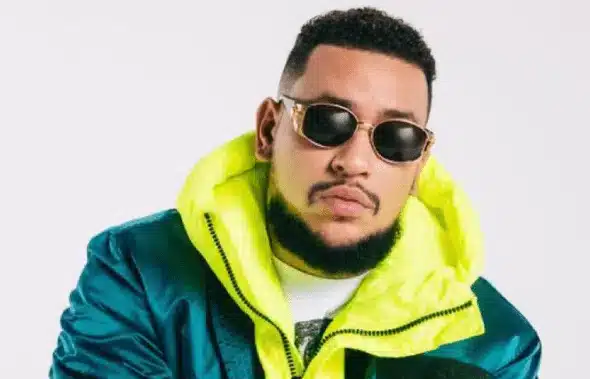
    • President of SA declines state funeral request rapper AKA

      President of SA declines state funeral request rapper AKA

      The President of South Africa reportedly turned down a province government’s request for a state funeral for South African rapper AKA who was murdered last week.

      Gauteng’s premier Panyaza Lesufi had written to President Cyril Ramaphosa requesting permission to give slain rapper Kiernan Forbes, popularly known as AKA, a state funeral.

      On Thursday, Mr Lesufi said his request had been denied.

      He said he had not requested for state funds for the funeral, but for the coffin to be draped with the national flag and flags to be flown at half-mast in honour of the rapper.

      “We felt that the person of his international stature, person of his national stature, there must be some form of honour, and we want to clarify it is not a financial contribution,” he is quoted as saying.

      The rapper will be buried on Saturday.

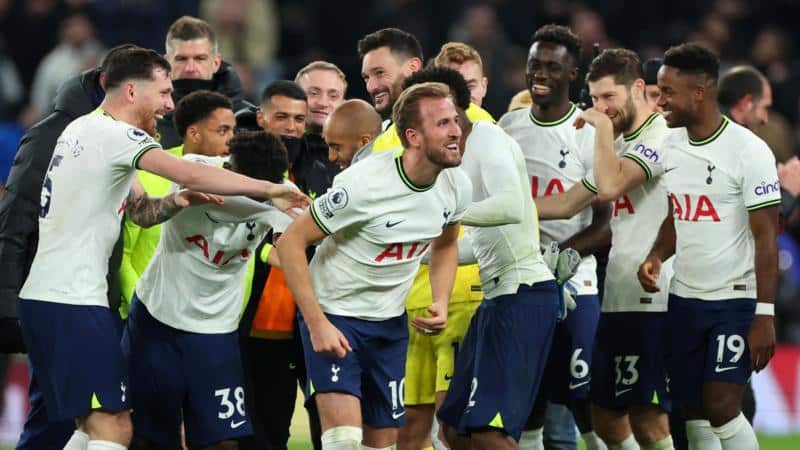
    • SA Tourism to meet Ramaphosa over deal Tottenham sponsorship

      SA Tourism to meet Ramaphosa over deal Tottenham sponsorship

      The controversial $51.5 million sponsorship agreement between South African Tourism and English Premier League club Tottenham Hotspur will be discussed by the nation’s president, Cyril Ramaphosa, following the brouhaha.

      Following the uproar, which saw sports federations and labour unions criticize the amount of money being spent on a club in Europe while they struggle to make ends meet at home, tourism minister Lindiwe Sisulu will meet with Ramaphosa this week.

      South Africa Tourism (SAT) and Tottenham have tentatively agreed to a three-year shirt sponsorship agreement that will begin at the start of the 2023–24 season and run through the 2026–27 season.

      SAT will gain kit branding, interview backdrop branding, match-day advertising, partnership announcements, training camps in South Africa, and more in exchange for the investment.

      But on 3 February, Presidency spokesperson Vincent Magwenya said that Mr Ramaphosa “did not think spending so much money in the manner that is being suggested will be justified”.

      Manchester United link

      Cyril Ramaphosa
      Cyril Ramaphosa is making efforts to relaunch his political agenda

      The meeting is likely to be convened before the President’s annual State of the Nation address which takes place at the opening of Parliament on Thursday.

      Sisulu met with SAT board members over the weekend to discuss the proposal – a proposal which she denies having seen before news of the controversial deal was leaked to the Daily Maverick website last week.

      Since then, three SAT board members – Enver Duminy, Ravi Nadasen and Rosemary Anderson – resigned with immediate effect over the weekend, ostensibly because of their opposition to the proposed deal.

      Themba Khumalo, acting Chief Executive of SAT, believes the deal would assist in bringing in large numbers of tourists into the country and would provide a good return on the investment given the large worldwide following of the Premier League.

      Khumalo revealed that the north London club had been chosen because it was the only one of the Premier League’s top eight teams that was still available for such a sponsorship deal.

      However, in a new twist, a tweet by UtdChronicles showed a video of an excited Khumalo opening a Manchester United branded box containing the Red Devils’ white away jersey with a large “Visit South Africa” emblazoned on the front of the shirt.


      “1.1 billion followers worldwide – if we convert just 1% there’s 110 million. So this is a proposal from Manchester United,” he is heard exclaiming on the video which has been verified, according to UtdChronicles.

      The Old Trafford club is searching for a new shirt front sponsor “in a normalised market” following a decision to end a deal with TeamViewer which was done at the height of the Covid-19 pandemic for a sum believed to be $56.6 million per year.

      This is much less than the $77 million per year deal it had until 2021 with American car manufacturer Chevrolet.

      Shortly after news of the proposed Spurs sponsorship deal broke, many of the country’s national sports federations expressed outrage saying the money could be better spent on development projects and financing struggling athletes.

      The Congress of SA Trade Unions (COSATU), the country’s biggest trade union federation labelled the proposed deal as a misguided vanity project.

    • Ramaphosa requests his deputy postpone his resignation

      Ramaphosa requests his deputy postpone his resignation

      David Mabuza, the president’s deputy, has been asked to hold onto his position until the transition is complete.

      According to reports, Mr. Mabuza informed mourners at a funeral on Saturday that the president had “accepted” his resignation and that a statement regarding it would be released soon.

      He stated that he thought it made sense for him to make way for Paul Mashatile, who was chosen as the ANC party’s deputy president in December.

      However, the president wanted Mr. Mabuza to stay until the transition process was complete, according to the presidency’s spokesman on Sunday.

      Mr Mashatile is due to be sworn in as an MP on Monday. His entry into parliament will pave the way for the president to name him as the country’s deputy president.

      Mr Ramaphosa is due to deliver his state of the nation address in Cape Town on Thursday.

    • Ramaphosa skips Davos due to power crisis at home

      Ramaphosa skips Davos due to power crisis at home

      Power outages have become common in South Africa over the last decade as state utility Eskom struggles.

      South African President Cyril Ramaphosa will not attend the World Economic Forum (WEF) in Davos due to the country’s ongoing energy crisis, his spokesman announced on Sunday.

      Power outages have worsened since Tuesday, when the country’s struggling state utility Eskom announced that it would implement its worst-ever outages until further notice.

      Over the last decade, power outages have become a major source of public dissatisfaction with the ruling African National Congress (ANC) and a drag on economic growth in Africa’s most industrialized nation.

      “Currently the President is convening a meeting with leaders of political parties represented in parliament, NECCOM [National Energy Crisis Committee] and the Eskom board,” Vincent Magwenya, presidential spokesman said.

      He added that further briefings with key stakeholders will take place in the coming week.

      The beleaguered utility supplies the vast majority of South Africa’s electricity, relying mainly on an ageing fleet of coal-fired power stations that are unreliable and prone to faults.

      Eskom has also had to deal with strikes by its workforce, including most recently in June after negotiations with trade unions including the National Union of Metalworkers of South Africa broke down.

      The loss-making utility, saddled with a huge debt pile approaching 400 billion rand ($25bn), is trying to contain costs as part of turnaround efforts under Chief Executive Andre de Ruyter.

      Source: Aljazeera.com
    • Court suspends private prosecution against Ramaphosa

      Court suspends private prosecution against Ramaphosa

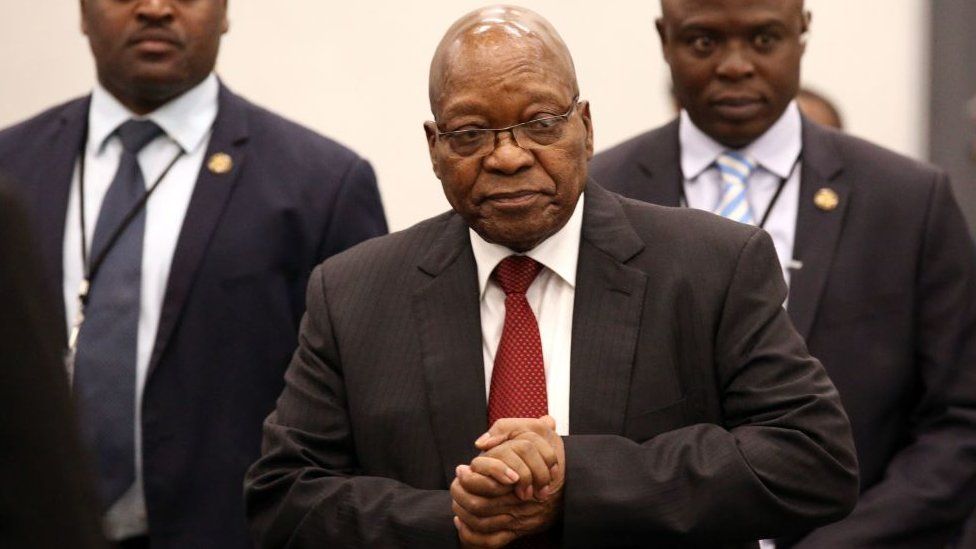
      A South African court has put a stop to a private investigation launched by former president Jacob Zuma against President Cyril Ramaphosa.
      To try to put an end to the endeavor, Mr. Ramaphosa had filed a lawsuit.

      Mr. Zuma claims that the president did nothing to stop a journalist and a state prosecutor from illegally leaking his private medical documents.

      http://backend.theindependentghana.com/ramaphosa-cancels-trip-to-davos-due-to-energy-crisis/

      As a result of the temporary ruling to stop Mr. Ramaphosa’s prosecution, he will no longer appear in court as an accused party.

    • Ramaphosa cancels trip to Davos due to energy crisis

      Ramaphosa cancels trip to Davos due to energy crisis

      South Africa’s President Cyril Ramaphosa has cancelled his trip to Davos for the World Economic Forum (WEF) program.

      According the president’s spokesman, his decision comes as a result of the ongoing energy crisis in his country.

      The country is facing its biggest ever power crisis with people experiencing rolling blackouts of up to six hours a day.

      Mr Ramaphosa was due to lead a government delegation to the event, the AFP news agency reports.

      But he will instead hold talks with leaders of political parties and the state-run power company Eskom, said presidential spokesman Vincent Magwenya.

      “President Cyril Ramaphosa has already engaged with the leadership of Eskom and National Energy Crisis Committee(NECCOM) and those meetings will continue,” he said.

      Source: BBC

    • Experts from South Africa gather to discuss new Covid version

      Experts from South Africa gather to discuss new Covid version

      The National Coronavirus Command Council will meet on Tuesday to discuss a new variation that has been found in the nation this week, according to President Cyril Ramaphosa of South Africa.

      The new Covid sub-variant, known as XBB.1.5, has also been recorded in the US and UK.

      It is an offshoot of the globally-dominant Omicron Covid variant and is highly transmissible.

      President Ramaphosa confirmed Tuesday’s meeting to local journalists and urged South Africans not to panic.

      “We are agile enough to want to have that meeting tomorrow, and thereafter there will be information that will be shared with the rest of the country,” he told Eyewitness News

      on Monday.

      ““Some people have said ‘are we going to have restrictions, the lockdown and all that?’ — far from that. We just need to be informed about what’s happening with this variant,” he added, according to Business Day

      news site.

      South Africa recorded over three million Covid-19 infections at the height of the pandemic – the highest number of confirmed cases by any African country.

      Source: BBC

    • Cyril Ramaphosa defies scandal to win party vote

       The scandal-plagued president of South Africa,Cyril Ramaphosa, has been re-elected as head of the ruling ANC to raucous applause from his followers.

      He defeated his rival Zweli Mkhize by 2,476 votes to 1,897.

      Mr Ramaphosa won despite being dogged by allegations of money laundering, and a last-minute surge in support for Mr Mkhize, who has also been accused of corruption. Both deny the allegations.

      His victory puts him in pole position to lead the ANC in the 2024 election.

      But he is still at risk as he is being investigated by police, the tax office and central bank over allegations that he stashed at least $580,000 (£475,000) in a sofa at his private farm, and then covered up its theft.

      A panel of legal experts, appointed by the speaker of parliament, said that he had a case to answer as he may have both violated the constitution and broken an anti-corruption law.

      His supporters burst into song and dance after he was declared the winner, in a result that saw him win by a bigger margin than when he first ran for the leadership of the governing party – the African National Congress – in 2017.

      Mr Ramaphosa’s re-election bid was bolstered by the fact the ANC used its parliamentary majority to vote down the findings of the panel.

      The president has denied any wrongdoing, and has launched legal action to annul the panel’s report.

      He said the $580,000 came from the sale of buffaloes, but the panel said there was “substantial doubt” over whether a transaction took place.

      Mr Mkhize was the health minister in Mr Ramaphosa’s government until he was forced to resign last year over allegations of misspending funds set aside to deal with the Covid-19 pandemic.

      He too has denied any wrongdoing, and his supporters saw the allegations as an attempt to discredit him.

      Mr Ramaphosa was the odds-on favourite to win, but some of Mr Mkhize’s supporters looked stunned after the result was announced.

      They were confident of victory after offering key posts to other powerful leaders in deals struck just ahead of delegates casting their ballots at the conference.

      Both sides denied accusations of vote-buying.

      The ANC has been in power since white-minority rule ended in 1994, and is hoping to secure a sixth term in the 2024 parliamentary election. But opinion polls suggest that its vote has shrunk considerably because of widespread corruption in government, high unemployment and poor public services – including constant power cuts.

      The ANC elected a new deputy leader, Paul Mashatile, who defeated Mr Ramaphosa’s preferred candidate for the second-most powerful post in the party.

      Mr Mashatile is now the front-runner to become South Africa’s deputy president, and president in the event Mr Ramaphosa is forced out of power.

      The president’s allies won other powerful posts in the party, including that of secretary-general and national chairperson.

      Defeated candidates embraced the winners in a show of unity after a bruising conference.

      Supporters of ex-President Jacob Zuma had heckled Mr Ramaphosa during his opening speech at the conference last week.

      But no leader from KwaZulu-Natal, the political heartland of Mr Zuma, was elected to any of the ANC’s top seven posts, in the latest sign of his and the region’s declining influence in the party.

      Source: BBC

    • South Africa: Cyril Ramaphosa heckled at ANC conference

      South African President Cyril Ramaphosa displayed serenity and authority Friday at the opening of the ANC convention, the historic party in power, on the eve of a crucial vote to designate its next leader and probable future head of state.

      He maintained a tight smile in the face of the jeers and chants of opponents in the hall where 4,500 delegates from all over the country were gathered. Before delivering a speech similar to those he regularly addresses to the nation, reviewing the challenges and successes of his first term.

      As if to inscribe his action in the continuity.

      South Africans “expect us to have the courage and honesty to recognize our failures and to correct them,” he declared in an ANC jacket, referring to “the triple challenge of poverty, unemployment and inequality.

      But “green shoots are beginning to sprout,” he added. “I am convinced that better days are ahead.

      The “comrades” of the African National Congress (ANC) have taken over this conference center near Soweto for five days of debates in a green-yellow-black mass atmosphere.

      “Let us show discipline, political awareness,” Ramaphosa demanded, calling for unity and hoping that delegates would debate calmly “rather than shouting at each other.

      Due to major delays in the schedule, the vote could now take place late Saturday, a senior ANC official who did not wish to be named said.

      The affable Cyril Ramaphosa, 70, sometimes mocked for a bonhomie that hides a shrewd negotiator, is well placed to retain the party’s presidency and win a second term, if the ANC wins the 2024 general election.

      His only rival at this stage, far behind, is his former health minister, Zweli Mkhize, 66, who was removed after a corruption scandal.

      – No credible alternative –

      The head of state is approaching this vote just days after escaping impeachment proceedings, which paradoxically have closed ranks around him.

      Mr. Ramaphosa is accused of trying to cover up the theft in 2020 of bundles of dollars hidden in a sofa at his rural Phala Phala estate. He has not been charged and the police investigation is continuing.

      In the absence of a credible alternative within the ANC, the majority party in parliament supported him, ruling out on Tuesday the possibility of a vote on a forced departure of the head of state. Some voices have been raised against the “line” imposed, but the watchword is clear: play the Ramaphosa card.

      Thwarting an impeachment procedure has “probably strengthened his candidacy for re-election”, eliminating any “uncertainty” on the choice to be made, says the political analyst Susan Booysen to AFP.

      The ANC has been losing votes for the past ten years and for the first time fell below 50% in local elections last year. The party, which has been in power since the end of apartheid, is thus haunted by the fear of defeat in the 2024 general election.

      Cyril Ramaphosa, who is very popular despite the scandal, seems to be the party’s best asset.

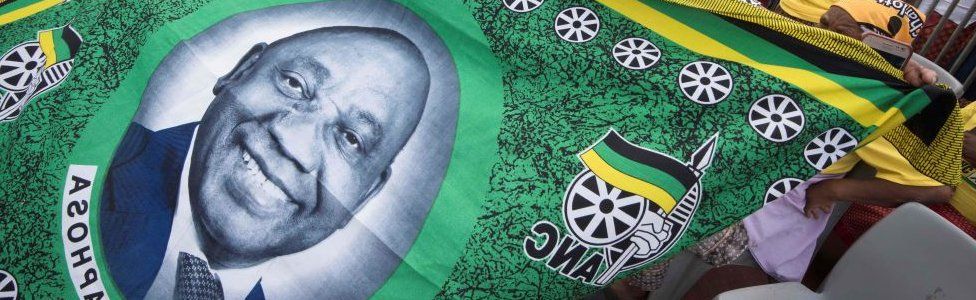
      Tumi Mogotla, 37, who sells ANC-branded items outside the congress, hopes he will be nominated for a second term. Despite the turmoil of recent weeks, he still believes “Ramaphosa is best placed to root out corruption.

      “The ANC needs Ramaphosa. He will win,” says analyst Ralph Mathekga. “Even those who hate him need him to win,” he added, referring to the internal divisions tearing the party apart.
      And with the opposition struggling to organize itself, the way seems clear for Ramaphosa to retain power.

      Source: African News

    • Ramaphosa on track to win ANC race after cash scandal

      South Africa’s governing ANC starts its national conference on Friday morning to elect its new leadership.

      President Cyril Ramaphosa is hoping to be re-elected as party leader after escaping an impeachment inquiry earlier this week.

      This after ANC MPs voted against the adoption of a report which found that he may have breached the country’s anti-corruption legislation following the theft of a large sum of foreign currency at his private game farm.

      Mr Ramaphosa will face off against former Health Minister Zweli Mkhize for the top post.

      It is widely expected that the party’s integrity committee will table its report on the “Farmgate” scandal that almost cost Mr Ramaphosa his job as well as a corruption scandal that entangled his competitor.

      It’s alleged Dr Mkhize benefited from a Covid-19 government tender in which communication contracts were awarded to his allies.

      This will be followed by the adoption of credentials – a process that could take hours and is usually contested by various factions because that determines which delegates are eligible to take part and vote.

      Mr Ramaphosa is likely to retain his position despite recent the setbacks.

      Source: BBC

    • Ex President Jacob Zuma files private prosecution against Ramaphosa

      Jacob Zuma, the former president of South Africa, says he has filed a private lawsuit against Cyril Ramaphosa, his successor.

      The Jacob Zuma Foundation made the announcement on Thursday night, stating that President Ramaphosa had been charged with “serious crimes” in a Johannesburg court.

      “President Cyril Ramaphosa has been charged in a private prosecution with the criminal offence of being accessory after the fact in the crimes committed by among others Advocate Downer namely, breaching the provisions of the [National Prosecuting Authority] NPA Act,” the foundation said in a statement.

      It added that the crimes carry a sentence of 15 years imprisonment.

      In a response on Twitter on Friday, President Ramaphosa accused Mr Zuma of “abuse of legal processes”.

      He termed the charges “completely spurious and unfounded”.

      In a response on Twitter on Friday, President Ramaphosa accused Mr Zuma of “abuse of legal processes”.

      He termed the charges “completely spurious and unfounded”.


    • Cyril Ramaphosa to face vote from parliament over cash-in-sofa scandal

      South Africa’s parliament will vote on whether to start impeachment procedures against President Cyril Ramaphosa during a special session.

      The president is accused of covering up the theft of a large sum of foreign currency from his farm in 2020, some of which had been hidden in a sofa.

      The debate will focus on an independent report which concluded he may have violated the constitution.

      Mr Ramaphosa, who is up for re-election as ANC leader, denies any wrongdoing.

      The African National Congress has told its MPs to block a possible impeachment – although some could break ranks and side with opposition parties to vote for proceedings to get under way.

      But some last-minute legal questions could halt the sitting altogether.

      If Mr Ramaphosa survives, he is thought likely to win re-election at his party’s conference, which starts on Friday. He will then be in pole position to become the ANC’s presidential candidate at the next election in 2024.

      The report, which was commissioned from a panel of legal experts by the speaker, is due to be debated in parliament from 12:00 GMT (14:00 local time) on Tuesday.

      The 70-year-old leader has denied any wrongdoing calling the report, which he has challenged in the Constitutional Court, “flawed”.

      Mr Ramaphosa became president in 2018 pledging to tackle corruption. He replaced Jacob Zuma, whose time in office had been weighed down by many such allegations.

      This scandal erupted in June, when a former South African spy boss, Zuma-ally Arthur Fraser, filed a complaint with police accusing the president of hiding a theft of $4m (£3.25m) in cash from his Phala Phala game farm in 2020.

      Mr Ramaphosa admitted that some money, which had been hidden in a sofa, had been stolen, but said it was $580,000 not $4m.

      The president said the $580,000 had come from the sale of buffalo, but the panel, headed by a former chief justice, said it had “substantial doubt” about whether a sale took place.

      South Africa has strict rules on holding foreign currency, which say that it must be deposited with an authorised dealer such as a bank with 30 days. It appears as though the president may have broken those rules, according to the panel’s report.

      Furthermore, if the money was from selling buffalo as he said, this money should have been declared, rather than kept in cash.

      In his submission to the Constitutional Court, Mr Ramaphosa wants the country’s top judges to rule that the findings of the panel are unlawful and set aside.

      The president argues that the panel went beyond its scope when looking at whether he had a case to answer related to the robbery at the farm.

      He is also asking the court to declare that any steps taken by parliament on the back of the release of the report to be declared unlawful and invalid.

      Source: BBC


    • SA minister calls on president to resign over scandal 

      South Africa’s Tourism Minister Lindiwe Sisulu has called on the president to resign.

      Cyril Ramaphosa is facing allegations that he covered up the theft of a huge sum of money from his farm.

      The controversy comes ahead of next month’s ANC conference with the president seeking a second term in office.

      Ms Sisulu – who says she wants the top job herself – told the BBC’s Newshour programme that Mr Ramaphosa should step down, as he was holding the whole party to ransom.

      Next week parliament is due to discuss the issue and the president, who denies any wrongdoing, could potentially face impeachment.

      Source: BBC

    • Cyril Ramaphosa: How Arthur Fraser got South Africa’s president in hot waters

      South Africa’s President Cyril Ramaphosa is fighting back after being politically harmed by allegations that he hid a large sum of foreign currency in a sofa on his game farm and then covered it up.

      He has rallied his governing African National Congress (ANC) to back him in parliament, while his high-powered legal team is attempting to overturn a panel of legal experts’ damning findings against him in the biggest scandal to rock his presidency.

      Former spy chief Arthur Fraser is Mr Ramaphosa’s accuser, and his allegations against the president appear to be straight out of a John le Carré novel – except that they are contained in statements he made to law-enforcement agencies and have been included in the panel’s report, which parliament will consider.

      Mr Fraser alleged that a close aide of Mr Ramaphosa, Bejani Chauke, brought “large sums” of US dollars from Saudi Arabia, Egypt, Morocco, and Equatorial Guinea, and, adding to the intrigue, he alleged that the aide hid the money in a couch at his home in a plush suburb in South Africa’s main city Johannesburg, before taking the cash to Mr Ramaphosa’s game farm with his “full knowledge and acquiescence”.

      But in a nightmare for the president, robbers, allegedly working in cahoots with one of his employees, stole what is “speculated” to be somewhere between $4m (£3.3m) and $8m.

      That is small change compared to the spymaster’s other allegation – that a whopping $20m was “moved” to a South African citizen, whom he named, after he asked police to investigate the president.

      While some would dismiss Mr Fraser’s claims as nothing more than a good bed-time read, they have given Mr Ramaphosa a huge political and legal headache, as about eight bodies – including the central bank – became involved in investigations.

      Mr Ramaphosa has denied any wrongdoing, and the panel – led by a former chief justice – said it could not “verify” the allegations, while “the President has rightly criticised the evidence contained in Mr Fraser’s statements as full of hearsay”.

      Mr Chauke had also denied the allegations.

      What Mr Ramaphosa did admit was that $580,000 had been stolen from his farm in February 2020.

      While Mr Fraser alleged that this was part of the cash previously stashed in Johannesburg, the president gave a completely different version of events – that his lodge manager had sold 20 buffaloes to a Sudanese businessman on Christmas Day 2019, and this was the money stolen.

      But in a blow to Mr Ramaphosa, the panel said there was “substantial doubt” that this sale took place, noting that neither the lodge manager nor the Sudanese national had confirmed this is what happened.

      “We think that the President has a case to answer on the origin of the foreign currency that was stolen, as well as the underlying transaction for it,” the panel added.

      It also questioned whether only $580,000 was stolen, saying the information at its disposal suggested that an apprehended suspect had confessed to stealing $800,000, while an investigator, in an audio clip, mentioned an amount of “20 million”.

      “Whether the investigator was referring to US$ or ZAR [South African rand] this amount is far more than $580,000 that was alleged to have been hidden inside the sofa [at the president’s farm],” the panel said.

      Supporters of South African President Cyril Ramaphosa gestures against Carl Niehaus (not framed), veteran member of the African National Congress (ANC) outside the NASREC Centre in Johannesburg, on December 05, 2022 before the start of a National Executive Committee (NEC) meeting of the Africa National Congress (ANC) to discuss the fate of the Presiden
      IMAGE SOURCE,GETTY IMAGES Image caption, South Africa’s president is seeking re-election as the governing ANC’s leader later this month

      The panel said that in another “troubling feature”, the theft was neither reported to local police as an “ordinary crime” nor to the Directorate for Priority Crime Investigation (DPCI), the police unit responsible for stamping out money-laundering and organised crime in South Africa.

      The panel said this was despite the fact that, in its view, the president, as the farm’s owner, was required by the Prevention and Combating of Corrupt Activities Act to report it to the DPCI.

      It believed there were grounds for an impeachment committee of parliament to investigate whether or not Mr Ramaphosa had committed a “serious” violation of the Act, which, the panel noted, imposes a fine or a prison sentence on anyone who fails to report a theft of more than 100,000 rand that they become aware of.

      “A person who keeps huge sums of illicit money concealed at his or her house is unlikely to report the theft of such money for fear of being discovered that he or she is involved in money laundering,” the panel said.

      “For this reason, the legislature considered it prudent to require any person who has knowledge of the commission of the offence of theft to report it,” the panel added.

      The panel also concluded that the head of Mr Ramaphosa’s bodyguard unit, Gen Wally Rhoode, put together a team that “surreptitiously” investigated the theft, tracking down suspects in Cape Town and across the border in Namibia.

      Despite this, no-one has been prosecuted or convicted of the theft, the panel’s report said, adding: “All of this occurs amid accusations of torture and bribery of the suspects to buy their silence.”

      The panel also said that the information before it suggested that Mr Ramaphosa had sought the help of his Namibian counterpart, Hage Geingob to apprehend a suspect, and Gen Rhoode had travelled to Namibia as part of the investigation.

      The panel said it had noted that Mr Geingob’s office issued a press statement earlier this year denying any wrongdoing on the Namibian leader’s part, but “significantly” it did not deny that President Ramaphosa had approached him.

      “Nor does it deny that the request was acceded to,” the panel added.

      South Africa's President Cyril Ramaphosa speaks during a press conference in central London on November 24, 2022
      IMAGE SOURCE,GETTY IMAGES Image caption, Mr Ramaphosa, 70, became president in 2018 on a promise to fight corruption

      In another damaging blow to Mr Ramaphosa, the panel went on to say that the South African leader “abused his position as Head of State to have the matter investigated and seeking the assistance of the Namibian President to apprehend a suspect”.

      As if that was not enough, the panel said it appeared that Mr Ramaphosa had “thrust himself into a situation where there was a conflict of interest between his official responsibilities as the Head of State and as businessperson involved in cattle and game farming” and he had “acted in a manner that was inconsistent with his office”.

      As a result, the panel felt there were sufficient grounds for parliament to establish an impeachment committee – which would have the power to subpoena witnesses, and documents – to carry out further investigations, before deciding whether or not the president should be removed from office for endangering “our constitution and the rule of law”.

      “The authority to impeach is deeply rooted in the principle of accountability,” it said.

      However, Mr Ramaphosa has challenged the panel’s report in South Africa’s highest court, the Constitutional Court, with his lawyers describing it as “unlawful” and saying it should be annulled.

      And in a sign of his strong position in the ANC as he seeks a second term as party leader later this month, its top leadership body has ordered its MPs, who form a majority in parliament, to vote against the report’s adoption because of the court case.

      The law states that a president can be impeached only if his alleged violations of the constitution and law are “serious”.

      Mr Ramaphosa’s many supporters will be hoping that South Africa’s most senior judges rule in his favour, and, at most, he is accused of minor transgressions.

      As for the stolen money, its current whereabouts are unclear.

      Namibian police reported – according to the panel – that they had identified bank accounts, lodges, houses and vehicles suspected to have been purchased with the proceeds of the crime, while Mr Fraser alleged that Gen Rhoode had “seized” cash in Namibia, although the president’s main bodyguard has “emphatically denied that he investigated the theft of money”.

      The plot thickens.

    • S.Africa’s Ramaphosa files suit over damning report

      President of South Africa, Cyril Ramaphosa, has filed a petition with the Constitutional Court to have a parliamentary report that implicated him in a corruption scandal and whose conclusions opened the door for impeachment proceedings against him overturned.

      In a document submitted to the supreme court, a copy of which was obtained by AFP on Monday, the head of state demanded that the report submitted to parliament on Wednesday be “reviewed, declared illegal and not taken into account”, while the report is still pending.

      The 70-year-old Ramaphosa, who has been embarrassed by the scandal for several months, is accused of trying to cover up a burglary at one of his properties in 2020 by not declaring it to the police or tax authorities. The criminals took $580,000 in cash, hidden under the cushions of a sofa.

      Source: African News

    • South Africa: Ramaphosa arrives at ANC emergency meeting that could seal his fate

      Despite Cyril Ramaphosa’s weekend declaration that he would not step down, the South African president still has to face a parliamentary vote on Tuesday, December 5, 2022 that might result in his impeachment.

      The ruling African National Congress (ANC) will meet Monday to discuss Ramaphosa’s fate after a parliamentary panel’s report last week said he might have acted illegally in covering up a burglary at his farm.

      Despite deep divisions inside the party, there appears to be a majority backing the president.

      There was pressure last week from some quarters for Ramaphosa to quit or be forced from office over what has become known as the Phala Phala affair, after the farm at the centre of the controversy.

      But Ramaphosa looked relaxed and cheerful Sunday as he spoke to journalists outside a conference centre where some ANC delegates were already discussing the case against him.

      With a smile, he explained he had been excluded from the meeting, agreeing that, in the circumstances, it was best for him not to take part.

      He has been accused of having covered up the burglary of more than half a million dollars in cash from his farm in northeastern South Africa.

      Last week’s report said the president “may have committed” serious violations and misconduct.

      – Parliamentary scrutiny –

      The president has been under fire since June, when a former spy boss filed a complaint with the police alleging that Ramaphosa had hidden the February 2020 burglary from the authorities.

      He accused the president of having organised for the robbers to be kidnapped and bribed into silence.

      Ramaphosa said a vast sum of cash stashed at the farm was payment for buffaloes bought by a Sudanese businessman. A police inquiry is ongoing, but he has not so far been charged with any crime.

      And while Ramaphosa insists he is innocent of any wrongdoing his explanations did not convince the parliamentary panel, which consists of three lawyers who were appointed by parliament.

      On Monday, the ANC’s highest body — the National Executive Committee (NEC) — meets to discuss the matter.

      On Tuesday the report will go before parliament to be examined and there will be a vote on whether to launch an impeachment process against the president.

      In South Africa, impeachment means removal from office.

      The scandal, with its colourful details of more than half a million dollars in cash being hidden under sofa cushions, comes at the worst possible time for Ramaphosa.

      On December 16, he will contest elections for the ANC presidency — a position that also holds the key to staying on as the nation’s president.

      – ‘Flawed’ report –

      On Saturday Ramaphosa’s spokesman said the president would challenge the parliamentary report in court.

      “President Ramaphosa is not resigning based on a flawed report, neither is he stepping aside,” said Vincent Magwenya.

      “It is in the long-term interest… of our constitutional democracy, well beyond the Ramaphosa presidency, that such a clearly flawed report is challenged, especially when it’s being used as a point of reference to remove a sitting head of state,” he added.

      A majority is needed to trigger the impeachment procedure — and if it is launched, it would take a two-thirds majority to remove the president from office.

      Despite its divisions, the ANC has a comfortable majority in parliament.

      “Ultimately the decision on impeachment would be a political one in parliament,” said a judicial source who requested anonymity.

      US Presidents Bill Clinton and Donald Trump had “survived their impeachment processes because the necessary majorities couldn’t be found by their challengers”, the source pointed out.

      Nor is it even certain that parliament will vote to launch the procedure.

      As well as Ramaphosa, some legal experts have outlined flaws in the report.

      They argue that without recourse to the ongoing criminal investigation it is based largely on hearsay, Ramaphosa’s statements, and the initial complaint lodged by an opponent of the president.


      Source African News

    • Cyril Ramaphosa: South Africa president’s fate in hands of the ANC

      Leaders of South Africa’s governing party are meeting to discuss President Cyril Ramaphosa’s future amid a corruption scandal that has led to calls for him to resign.

      A panel of legal experts said last week that Mr Ramaphosa may have broken the law by allegedly covering up the theft of a large sum of cash at his farm.

      The president’s spokesman described the report as “flawed”.

      Speaking on Sunday, Mr Ramaphosa said his fate was in his party’s hands.

      The meeting of the African National Congress’ executive committee – its top decision-making body – comes a day after a smaller group of leaders met to discuss the issue, but failed to reach a conclusion.

      Mr Ramaphosa’s legal team is also expected to lodge papers with the country’s Constitutional Court on Monday to undertake a legal review of the report by the panel that was appointed by the speaker of parliament.

      The scandal erupted in June, when a former South African spy boss, Arthur Fraser, filed a complaint with police accusing the president of hiding a theft of $4m (£3.25m) in cash from his Phala Phala game farm in 2020.

      Mr Ramaphosa admitted that some money, which had been hidden in a sofa, had been stolen, but said it was $580,000 not $4m.

      The president said the $580,000 had come from the sale of buffalo, but the panel, headed by a former chief justice, said it had “substantial doubt” about whether a sale took place.

      The panel’s findings have been handed to parliament, which is set to examine them and decide whether or not to launch impeachment proceedings against the president.

      The president is also under pressure from the opposition, as well as rivals within the ANC, to resign.

      But the ANC leaders could instruct its MPs to back Mr Ramaphosa, when the issue is due to be discussed by parliament on Tuesday.

      The scandal is especially damaging for the president because he came to power vowing to clear up the corruption which had dogged the country under his predecessor, Jacob Zuma.

      The ANC remains deeply divided between supporters of Mr Zuma and those who back Mr Ramaphosa.

      Source: myjoyonline.com

    • Cyril Ramaphosa, Mandela’s protégé now in scandal

      The South African president Cyril Ramaphosa, who was a favorite of Nelson Mandela and one of the most talented of his generation, has fallen from his pedestal, tainted by a scandal that has plagued him for months.

      A parliamentary commission assured Wednesday that he “may have committed violations and misconduct” in a botched 2020 burglary at one of his properties that revealed a dollar fortune hidden in a sofa.

      Soon, one question loomed large and heady: Can he stay on as a leader? Mr. Ramaphosa promised to address his fellow citizens soon.

      But the road ahead seemed clear. He was expected to be reappointed in December as president of the ruling ANC party and to serve a second term as head of state, but everything froze with the threat of impeachment hanging over his head.

      The plump, round-faced 70-year-old, sometimes mocked for his apparent bonhomie concealing a formidable negotiator, succeeded the sulphurous Jacob Zuma in 2018, making the fight against corruption his hobby horse.

      But a complaint filed in June accuses him of not reporting the burglary at his Phala Phala farm, located two hours north of Pretoria, to either the police or the tax authorities. The case is still under police investigation.

      This scandal, for months, makes “doubt his probity and reminds that he is not a superman”, says the political scientist Susan Booysen, adding that the president had so far forged an image of “icon of the fight” against corruption.

      – From Mandela to Coca-Cola –

      Born on November 17, 1952, in Soweto, the epicenter of the struggle against apartheid near Johannesburg, Mr. Ramaphosa longed for the supreme office before he reached it.

      As a law student, he became an activist in the 1970s and spent eleven months in solitary confinement. He turned to trade unionism, the rare legal way to fight the racist regime. In 1982, he founded the powerful miners’ union, which shook the white power with massive strikes.

      He was at the side of the iconic Mandela when he was released from prison in 1990 and contributed to the democratic transition. He was a candidate for the presidency of the ANC in 1999, but the party caciques preferred him to Thabo Mbeki.

      This father of four then moved away from politics and turned to business. With interests in McDonald’s and Coca-Cola, he amassed millions of thanks to the black economic emancipation program and entered the Forbes ranking of the 50 richest people in Africa.

      He developed a passion for breeding rare cattle, which earned him the nickname “the buffalo”. His wealth has sometimes been a handicap, with his detractors claiming that the businessman came before the politician.

      – Shadow of the picture –

      In 2012, as a director of the mining group Lonmin, he supported a police intervention against striking miners in Marikana. Thirty-four of them were killed in the worst police shooting since apartheid. He was not prosecuted, but even today, some people still hold him responsible.

      But this did not prevent him from returning to politics. First as deputy president of the ANC in 2012, then to President Jacob Zuma in 2014. This will later earn him reproached for his silence during this era of corruption.

      Patient and strategist, he finally took over the leadership of the ANC in 2017. With Zuma ousted the following year, he took the reins of the country.

      He spearheaded the battle for equitable access to vaccines, and his handling of the Covid crisis won international acclaim. But at home, he has faced growing discontent fueled by unemployment and high inequality.

      Cyril Ramaphosa is also struggling to resolve the energy crisis in Africa’s leading industrial powerhouse, which is plagued by chronic power outages.

      Source: African News

    • Ramaphosa ‘plays tough’ into allegations of breaching anti-graft laws

      South African President Cyril Ramaphosa is facing serious calls to step down after a parliamentary probe found he may have breached the country’s anti-corruption laws related to the theft of millions of dollars at his Phala Phala game farm.

      This follows allegations laid by the country’s former head of intelligence, Arthur Fraser, that Ramaphosa tried to conceal the theft of millions of dollars at his farm in 2020.

      Ramaphosa was due to appear in parliament on Thursday and answer questions but instead postponed.

      Dr. Dale T. McKinley, an independent political analyst, said that “the evidence seems to be overwhelming” in lieu of all the evidence having been presented.

      “I think it’s really the way in which he’s approached it,” McKinley said of Ramaphosa.

      Ramaphosa approached it in “a very secretive, very non-disclosing kind of way” that will “permanently” damage his “political legitimacy” McKinley said.

      In its report, the parliamentary panel raised questions about the source of the money and why it wasn’t disclosed to financial authorities, and cited a potential conflict between the president’s business and official interests.

      Ramaphosa has denied any wrongdoing, insisting that the money was proceeds from the sale of animals at his farm.

      But opposition parties and Ramaphosa’s detractors in the ruling African National Congress party have called for him to step down.

      The South African rand has fallen amid the uncertainty.

      “I don’t see Cyril Ramaphosa stepping aside unless he’s charged. If he’s charged, he’s got to. He has to,” McKinley said.

      Lawmakers are expected to debate the report on Tuesday, and they will vote on whether further action should be taken, including whether to proceed with impeachment proceedings.

      ANC lawmakers are a majority in Parliament and may push back against attempts to impeach their leader.


      Source: Africa News

    • Anxious wait as ANC meet to decide Ramaphosa’s future

      South Africa is on tenterhooks as the top leadership of the governing ANC party meets behind closed doors, to debate the scandal engulfing President Cyril Ramaphosa over his response to a robbery two years ago.

      There has been intense speculation that he would resign. But ahead of Friday’s meeting, ANC chairman Gwede Mantashe said he didn’t think President Ramaphosa should resign, that he wasn’t a liability to the party, and that the full process must be allowed to unfold at the meeting.

      This comes after a damning report into a burglary at Mr Ramaphosa’s private game farm in 2020 in which at least $580,000 (£470,000), and maybe much more, in foreign currency was stolen.

      The findings of the report suggest that the president may have committed serious misconduct, but he denies any wrongdoing.

      Some in the ANC have been calling for the president’s resignation while those close to him have said he will take a decision that is in the best interest of the country.

      Source: BBC

    • Big beasts of business back Ramaphosa inquiry

      Some of the biggest businesses in South Africa have voiced their support for a panel that found the nation’s president may have broken the law in his handling of a robbery at his farm.

      Business Leadership South Africa – a grouping that includes Shell, MTN, Citigroup and BMW among others – said Wednesday’s report was healthy for democracy and urged the authorities to continue investigating “without fear or favour”.

      Political turmoil and fears that President Cyril Ramaphosa would resign caused a slump in the value of the rand on Thursday, but the currency has rallied somewhat as of Friday morning.

      Businesses and stakeholders are seeking stability and a quick resolution.

      “We would also like to call on all the other organs of state who are working on this matter to conclude their processes and come forward with their findings,” read the statement from Business Leadership South Africa.

      Source: BBC

    • Cyril Ramaphosa: South Africa’s president considers future amid corruption scandal

      South Africans are waiting, many in deep trepidation, to find out if President Cyril Ramaphosa is about to resign in the wake of a murky and highly politicised scandal involving cattle, a sofa, and the theft of hundreds of thousands (and possibly millions) of dollars.

      Much now hangs on a meeting, starting on Friday, of the leaders of the country’s governing party, the African National Congress (ANC).

      Mr Ramaphosa’s most ardent supporters – and he remains a popular leader – frame this moment as an all-or-nothing fight between a decent man, desperately trying to clean up a corruption-ridden country, and the forces of chaos with the ANC who are trying to get rid of him in order to keep hold of their loot and keep themselves out of prison.

      One commentator likened the drama to Shakespeare’s Henry V, urging Mr Ramaphosa to “stiffen the sinews” and fight to clear his name.

      There’s no doubt that the case against Mr Ramaphosa was – at least to begin with – politically motivated.

      A well-known political rival, linked to South Africa’s disgraced former President, Jacob Zuma, dramatically revealed allegations that millions of dollars – hidden in a sofa – had gone missing from Mr Ramaphosa’s high-end Phala Phala game farm, and that there had been a police cover-up.

      The president – a wealthy businessman and former liberation struggle icon, once backed by Nelson Mandela to succeed him – loftily declared that he was innocent.

      But the story has not gone away, and over time, as fresh details and denials have leaked out, even some of his supporters have acknowledged that the scandal has been poorly handled by Mr Ramaphosa and his aides.

      “There are questions that he has not been able to answer… about these huge sums of cash. He’d told us he’d put all these [businesses] in blind trust. I think he was very clumsy and careless… and out of touch,” said Nombonisa Gasa, a political analyst.

      So now what?


      In the over-heated world of the ANC – a party so long in power that its furious internal feuds now feel more like open-warfare – the campaigning and jockeying are in full swing.

      The party is due to select a leader later this month – with Mr Ramaphosa an easy favourite to win. But those calculations are now changing fast.

      Cyril RamaphosaImage source, Getty Images
      Image caption, The process of finding a successor for Mr Ramaphosa may weaken the ANC heading to the next elections

      It’s been widely reported that Mr Ramaphosa has already decided to quit, but is being persuaded by allies to think again, or at least to buy time in order to ensure a smooth transition to someone credible.

      His current deputy, and automatic heir, Vice-President David Dabede Mabuza, is not tipped as the right man for that role.

      But could anyone in the current ANC leadership – so many tainted, themselves, by allegations of corruption – garner the levels of nationwide popular support that Mr Ramaphosa still enjoys?

      And if not, are we watching the slow unravelling of the party that once liberated South Africa from apartheid – and election defeat in 2024?

      South Africa’s main opposition party, the Democratic Alliance, is certainly hoping to capitalise on the current crisis, calling for early elections. Some analysts see the ANC’s decline as both inevitable, and good for the country’s young democracy.

      “Most South Africans are really concerned about what will happen next. Because there is no-one ready to [replace Mr Ramaphosa]. But this is the beginning of the end for the ANC – and that’s a good thing. The ANC has done its job. It liberated the country. It’s time for something new,” said political analyst Thembisa Fakude.

      “I think South Africa has managed to establish very strong democratic shock absorbers, and [Mr Ramaphosa’s resignation – if it happens, would be] exemplary for Africa – here’s a leader who voluntarily resigned.”

      Jacob ZumaImage source, Getty Images
      Image caption, Former President Jacob Zuma remains an influential figure in the country’s politics

      It seems unlikely – but still possible – that Mr Zuma’s faction within the ANC will be able to capitalise on the chaos, return to power, and derail the entire anti-corruption drive. That would be a recipe for political oblivion at the next elections.

      “The Zuma faction is battling to cohere, beyond a group of people have grievances because they might face charges of corruption. But it’s too early to say they cannot come back,” said Ms Gasa.

      But even a moderately competent replacement for Mr Ramaphosa is likely to shake the markets and drive away the few foreign investors still willing to give South Africa a chance, at a time when the economy – grappling with almost daily power cuts – is struggling to recover from the pandemic, and from the years of state corruption during Mr Zuma’s era.

      Last year, the feuding within the ANC triggered riots in Durban and elsewhere that left more than 300 people dead and caused billions of dollars in damages. There was a sense then that South Africa had peered over the abyss and stepped back – that it now understood how fragile its young democracy was.

      That may be the case, but with no single, credible party poised to capitalise on the ANC’s struggles, the concern here is that South Africa is heading towards an era of deeply unpredictable and unstable coalition politics, easily exploited by smaller populist parties.

      As for President Ramaphosa himself – many wonder whether he has the stomach for a long fight, or whether the billionaire businessman, credited for his institution-building approach to government, but criticised for a lack of political muscle – may prefer to leave the ANC to its battles and return to his cattle ranch.

      “He did not have enough fighting instinct and an ability to go for the jugular, in getting rid of the most toxic anti-constitutional folk [in the ANC]. We needed someone with a more muscular approach,” said political analyst Eusebius McKaiser.

      Seven things about Cyril Ramaphosa:


      A cloth being held by African National Congress (ANC) supporters showing the face of South African President and ANC President Cyril Ramaphosa tImage source, AFP
      • Born in Soweto, Johannesburg, in 1952
      • Detained in 1974 and 1976 for anti-apartheid activities and launched the National Union of Mineworkers in 1982
      • Chairman of the National Reception Committee which prepared for Nelson Mandela’s release from prison in 1990
      • Became an MP and chairman of constitutional assembly in 1994
      • Moved full-time into business in 1997, becoming one of South Africa’s richest businessmen
      • On Lonmin board during 2012 Marikana massacre
      • Elected ANC leader in 2017 and on 15 February 2018 became president after the resignation of Jacob Zuma

      Source: BBC

    • Opposition demand snap polls over Ramaphosa scandal

      As President Cyril Ramaphosa deals with a controversy that could cost him his job, the opposition Democratic Alliance (DA) party in South Africa plans to introduce a motion in parliament calling for an early election.

      The president has been accused of covering up a $4m (£3.3m) theft from his farm in 2020, including kidnapping and bribing the burglars into silence. He denies any wrongdoing.

      The country’s parliament is set to examine a report on the scandal and decide whether or not to launch impeachment proceedings next week.

      DA leader John Steenhuisen said the country cannot leave it up to the ruling party to “choose the future of our country” – referring to the upcoming ANC conference where Mr Ramaphosa will seek a second term as the leader of the ruling party.

      “The party of Nelson Mandela has become a cess pit of corruption, greed and dishonesty from top to bottom,” said Mr Steenhuisen.

      The motion for an early election would need a simple majority of 50% plus one of the national assembly to vote for the dissolution of government, which would then trigger an early election, he added.

      Source: BBC

    • Farmgate: South Africa president faces threat of impeachment

      South African President Cyril Ramaphosa may face impeachment over the “Farmgate” scandal.

      The president is accused of covering up a $4 million (£3.3 million) theft from his farm in 2020, including kidnapping and bribing the burglars.

      According to a leaked report from an independent panel, Mr Ramaphosa abused his position and may have violated an anti-corruption law.

      He has denied wrongdoing and stated that the money was earned by selling buffalo.

      The panel’s findings have been delivered to parliament, which will review them and decide whether to initiate impeachment proceedings next week.

      Mr Ramaphosa is less than a month away from a conference which will decide if he can run for a second term with his party, the African National Congress (ANC), in 2024. The incident could be particularly damaging as Mr Ramaphosa ran for office on an anti-corruption ticket.

      The ANC will hold a meeting with its executive on Thursday, where it is expected that the issue will be discussed.


      The Farmgate scandal erupted in June, when a former South African spy boss, Arthur Fraser, filed a complaint with police accusing the president of hiding a theft of $4m from his Phala Phala farm in the north-east of the country in 2020.

      Mr Fraser, who is a close ally of former President Jacob Zuma, alleged that the money could have been the proceeds of money-laundering and corruption, and accused the president of kidnapping and bribing the burglars.

      Holding such a large amount of money in dollars could violate foreign exchange control laws.

      Mr Ramaphosa has confirmed a robbery, but said the amount stolen was less than that alleged, and denied attempting to cover it up.

      Some $580,000 which had been paid in cash for buffalo was stolen from under sofa cushions in the farmhouse, he said.

      “I did not ‘hunt’ for the perpetrators of the theft, as alleged, nor did I give any instructions for this to take place,” he wrote in a submission to the panel’s report, according to AFP news agency.

      The panel concluded that there were many unanswered questions, calling it a “very serious matter”.

      Little information was kept about the man who supposedly paid the money for buffalo, it said, adding that he had still not collected the animals two and a half years later.

      The panel also said it was strange that the money had been kept hidden in a sofa, rather than in a safe until it could be lodged in a bank account.

      “We think that the president has a case to answer on the origin of the foreign currency that was stolen, as well as the underlying transaction for it,” the report said. It added: “The president abused his position as head of state to have the matter investigated and seeking the assistance of the Namibian president to apprehend a suspect.”

      Namibian president Hage Geingob has previously denied any involvement in the incident.

      Seven things about Cyril Ramaphosa:

      A cloth being held by African National Congress (ANC) supporters showing the face of South African President and ANC President Cyril Ramaphosa t
      IMAGE SOURCE,AFP

      • Born in Soweto, Johannesburg, in 1952
      • Detained in 1974 and 1976 for anti-apartheid activities and launched the National Union of Mineworkers in 1982
      • Chairman of the National Reception Committee which prepared for Nelson Mandela’s release from prison in 1990
      • Became an MP and chairman of constitutional assembly in 1994
      • Moved full-time into business in 1997, becoming one of South Africa’s richest businessmen
      • On Lonmin board during 2012 Marikana massacre
      • Elected ANC leader in 2017 and on 15 February 2018 became president after the resignation of Jacob Zuma
    • Panel releases Ramaphosa farm scandal report

      The speaker of South Africa’s parliament has received a report from a panel tasked to establish whether President Cyril Ramaphosa should face impeachment for allegedly covering up a crime.

      The panel investigated the circumstances around an alleged cover-up of a robbery that took place at his private farm, Phala Phala, back in February 2020.

      It handed over its report to Speaker Nosiviwe Mapisa-Nqakula at a televised event on Wednesday morning.

      Ms Mapisa-Nqakula said that the report will be made public on 6 December, according to local media reports.

      President Ramaphosa denies any wrongdoing. He previously “pledged his full co-operation to the investigation” and said he was happy to be held accountable.

      Source: BBC


    • South Africa: President Ramaphosa plays down risk of impeachment

      South African President Cyril Ramaphosa has played down the threat of impeachment over accusations that he attempted to cover up a multi-million-dollar cash theft at his luxury cattle farmhouse.

      Speaking at a press conference at the end of a state visit to the United Kingdom, Ramaphosa also discusses his government’s response to ongoing power cuts in his home country and praises the new vision for the Commonwealth of King Charles III.

      The scandal erupted in June when South Africa’s former national spy boss filed a complaint with the police alleging that robbers broke into Phala Phala and stole $4m in cash stashed in furniture at the president’s farm in the northeast of the country.

      It alleged that Ramaphosa hid the robbery from the authorities and instead organised for the robbers to be kidnapped and bribed into silence. The scandal is believed to pose a threat to Ramaphosa’s bid for a second term as president of the African National Congress (ANC) as the ruling party heads to contested internal polls in December.

      Ramaphosa’s office responded in written answers in testimony to a parliamentary panel on Sunday, November 6 that he has always made it a point “to abide by his oath of office and set an example in his respect for the constitution”.


      Sources: African News

    • Britain’s King Charles III hosts South Africa president for first state visit of his reign

      Britain’s King Charles III on Tuesday welcomed South African President Cyril Ramaphosa to London for the first state visit of his reign.

      After the two men inspected the guard of honour together, they travelled to Buckingham Palace in a carriage procession escorted by mounted soldiers from the Household Cavalry.

      Climate change, trade, and the Commonwealth are expected to be on the agenda in discussion between the two.

      Ramaphosa will also visit parliament for an address to both the upper and lower houses, attend a state banquet at Buckingham Palace, and hold talks with Prime Minister Rishi Sunak during his stay.

      At the start of the visit, the two governments announced the launch of the next phase of the UK-South Africa Infrastructure Partnership.

      ‘South Africa is already the UK’s biggest trading partner on the continent, and we have ambitious plans to turbocharge infrastructure investment and economic growth together,’ Sunak said.

      Britain’s Foreign Secretary, James Cleverly, said the choice of Ramaphosa for Charles’ first state visit was a sign of the country’s ‘enduring commitment’ to Africa, even as it eyes new partners in Asia.


      Source: African News

    • South Africa’s Ramaphosa leads in two-horse race for ANC presidency

      South Africa’s President Cyril Ramaphosa appears to be firmly ahead in the race to head the ruling African National Congress (ANC) for the next five years.

      The outcome of nominations for the ANC’s top six positions, announced on Tuesday, has seen Ramaphosa garnering more than double his nearest rival for the top job.

      In his bid for a second term as party president, he will face off against Zweli Mkhize, a former health minister who resigned during Covid-19 amid graft allegations. Ramaphosa polled 2,037 nominations from party branches to Mkhize’s 916.

      Outgoing ANC treasurer general, Paul Mashtile, leads the deputy presidential race, which will pit him against two other contestants.

      With the nominations finalised, members will vote on the top six posts during the party’s 55th National Elective Conference in December.

      Party branch nominations are indicative of the final outcome, as the votes will be cast in person by branch representatives on the first day of the conference.

      The new ANC president will be South Africa’s head of state, should the party win the 2024 national elections.


      Source: Africa News

    • Ramaphosa’s alleged corruption report to be examined on December 6

      A long-awaited report on an alleged corruption scandal targeted at South African President Cyril Ramaphosa a month before a crucial deadline for his political future, will be examined on December 6, the parliament announced Thursday.

      An independent parliamentary committee was tasked in September with examining President Ramaphosa‘s accountability in the 2020 case and issuing findings that could lead to a possible vote for his impeachment.

      “The parliamentary committee met this morning. The date for the submission of the report was extended to November 30. It was decided that the National Assembly would examine this report on December 6,” ten days before the congress of the historic ruling party, the ANC, parliamentary spokesman Moloto Mothapo told AFP.

      The parliamentary recess that was supposed to start on December 1 has been postponed to consider the report, which was originally due by Thursday.

      The African National Congress (ANC) must meet from December 16 to choose whether or not to invest Mr. Ramaphosa’s candidate for a second term in the presidential election of 2024, re-electing him president of the party.

      The successor to Jacob Zuma, who was forced to resign in 2018 after a series of scandals, the current president is expected to tackle the corruption front that he has vowed to eradicate.

      According to a complaint filed in June by former South African intelligence chief Arthur Fraser, burglars broke into a farm owned by the president in Phala Phala, in the country’s northeast, in February 2020. They found large sums of money in cash.

      Cyril Ramaphosa is accused of concealing the robbery from the police and the money from the tax authorities, organizing the kidnapping and interrogation of the robbers, and then bribing them to keep quiet.

      The President, who was repeatedly attacked on the subject during heated sessions in the Assembly, denied the accusations, questioning the amounts mentioned and maintaining that the money found was in fact from the sale of livestock. He also denounced the political aims of his opponents.

      In South Africa, the impeachment of the head of state is subject to a two-thirds majority vote in the National Assembly. The ANC led by Cyril Ramaphosa holds more than two-thirds of the seats.


      Source: African News

    • Ramaphosa ‘to step aside’ if charged over scandal

      South Africa’s President Cyril Ramaphosa will “step aside” if charged over an alleged cover-up of a robbery at his private farm, according to his spokesman.

      “Should the president be charged he would gladly step aside – should it be the case,” presidential spokesman Vincent Magwenya told journalists.

      He added: “But as things stand there are no criminal charges against the president. What you have is a series of investigations that he’s fully co-operating with and he will continue to do so.”

      Dubbed “farmgate”, the controversy surrounds the robbery at Phala Phala farm back in February 2020 and the alleged aftermath.

      The theft was allegedly committed by Namibian nationals who conspired with a domestic worker at the farm.

      The president is accused of kidnapping, bribery and acting unlawfully by allegedly authorising the pursuit of the suspects who stole an estimated $4m (£3.2m) from his farm. He denies any wrongdoing.

      Source: BBC

    • Ramaphosa ‘to step aside’ if charged over scandal

      Cyril Ramaphosa, the president of South Africa, has stated that he will “step aside” if accused of covering up a robbery that occurred on his private farm.

      “Should the president be charged he would gladly step aside – should it be the case,” presidential spokesman Vincent Magwenya told journalists.

      He added: “But as things stand there are no criminal charges against the president. What you have is a series of investigations that he’s fully co-operating with and he will continue to do so.”

      Source: Afican News

    • Kenyans to enter South Africa visa-free from January

      The presidents of South Africa and Kenya said Wednesday they have resolved a long-standing visa dispute and Kenyans will be able to visit South Africa visa-free for up to 90 days in a calendar year.

      South Africans already get free visas on arrival in Kenya, while Kenyans were charged and required to provide proof of sufficient funds and return flight tickets.

      The new agreement is set to take effect on Jan. 1.

      South African President Cyril Ramaphosa was in Kenya on his first official trip to the country.

      He and Kenyan President William Ruto praised the Ethiopia peace agreement signed last week in South Africa and brokered by the African Union.

      They appealed to the parties to “ensure full implementation of the agreement to reach a lasting political settlement.”

      The Kenyan and South African leaders also directed their trade ministers to address barriers that limit trade between the two countries.

      The two nations are among the strongest economies on the African continent.


      Source: apnews.com