Finance and Economics expert from the University of Ghana Business School (UGBS), Prof. Godfred Bokpin, has criticised the government for mismanaging public funds on dubious projects, citing the 1 Village, 1 Daminitiative as an example.
He pointed out that inefficient use of public resources continues to hinder the country’s progress. Prof. Bokpin argued that projects like the recently inaugurated Flower Pot Interchange often fail to provide genuine value for money, as they are frequently overpriced.
He further noted that while significant funds have been allocated to building interchanges and dams—many of which are now underutilised—numerous roads across Ghana remain in deplorable conditions.
Prof Bokpin stated, “There are instances where we have spent taxpayers’ money to construct dams, supposedly, and you may find that potholes on our roads actually hold more water than the dams we’ve constructed.”
He emphasised, “If the Ghanaian government constructs an interchange and you look at the cost of constructing that interchange, comparing it maybe to world averages, you will see inefficiency. That’s where the problems arise for us, and that is what we have to address.”
Prof. Godfred Bokpin shared his concerns on Joy FM’s Super Morning Show on Wednesday, November 20, where he discussed the rising cost of living in Ghana as the country approaches the December elections.
He emphasized the importance of efficient resource management, noting that given the scarcity of resources, it is crucial to use them wisely.
The economist highlighted the criticism surrounding the One Village, One Dam initiative, particularly from opposition groups, who argue that the project failed to deliver on its objectives.
Prof. Bokpin called for “credible leadership” to address the ongoing mismanagement of public funds and stressed the need to create a better investment environment to foster the country’s development.
Initially awarded at GH¢69.5 million in 2016 by the NDC government, the project’s cost ballooned to GH¢147 million by 2017, and under the current administration, it is approaching GH¢1 billion.
Ghana is presently working to avert a food crisis amidst a prolonged dry spell that has adversely affected eight regions in the Northern part of Ghana.
These regions, Bono, Bono East, Oti, Northern, North East, Savannah, Upper East, and Upper West, contribute about 62% of the country’s grain production.
Due to the absence of irrigation to ensure continuous crop production, the government has placed an embargo on the export of grains to ensure the domestic demand is met.
Many citizens are now questioning the relevance of government’s flagship programme, One Village One Dam, which they believe, if it had been effective, would have averted the current crisis the country has found itself.
The government spent GH₵201,113,875.00 of the petroleum revenue to construct 285 dams under the flagship programme, One Village One Dam policy, research findings have revealed.
The research was conducted by the Northern Patriots in Research and Advocacy (NORPRA), a Convener of Northern Coalition of Civil Society Organisations with funding support from the Africa Center for Energy Policy (ACEP) as part of expenditure and performance tracking of the dams.
The findings titled; “Ghana’s Oil Money on Dried Dams” was made known to stakeholders in Bolgatanga in the Upper East Region.”
The research’s purpose was to ascertain whether the dams constructed in the five regions of the north under the 1V1D policy were supporting all year-round irrigation activities as intended and the amount spent on them.
The research showed that averagely, government spent GH₵670,350.00 on each dam, an amount far higher than the GH₵250,000.00 stated by the government and noted in the contract award letters.
It also uncovered that GH₵10,064,250.00 of the Annual Budget Funding Amount was spent on paying consultancy services for construction supervision of the dams while payment for construction of some dams exceeded the contract sums.
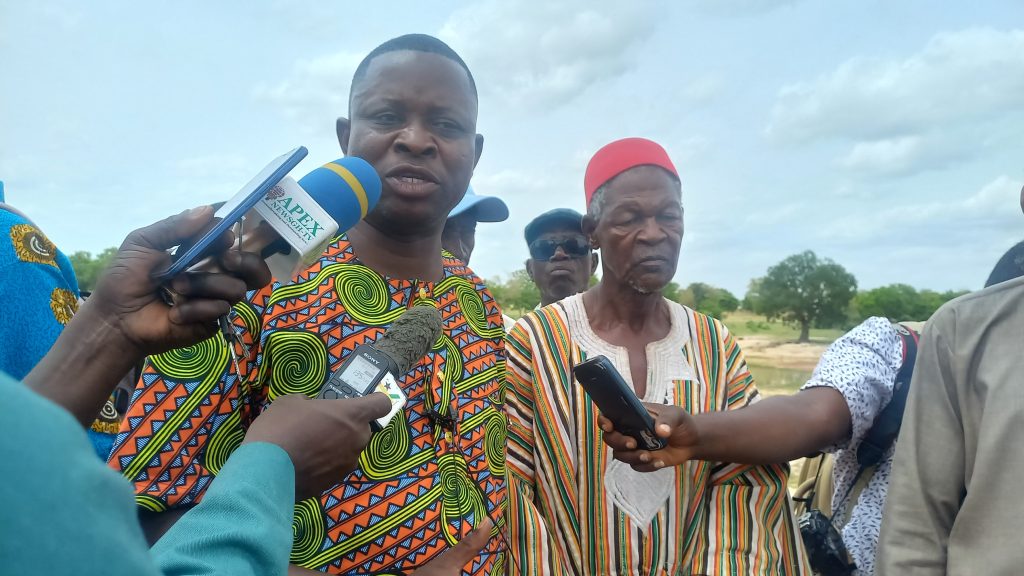
Mr Bismarck Adongo Ayorogo, the Executive Director, NORPRA, who presented the findings, noted that although many of the dams were completed, they were not serving the intended purpose of supporting farmers to engage in dry season farming.
Mr Ayorogo noted that all the dams visited had dried up and farmers could not practice irrigation farming.
“The community members who participated in the focused group discussions and backed with community scorecards said the dams did not contribute to anything and when we visited the dams, almost all the dams were dried up, no single dam was functioning or having water and there was no dry season farming around any of the dams,” he said.
The findings also established that no audit report on the 1V1D projects was found, even though the government had stated in the 2018 Budget Statement and Economic Policies that the Audit Service was increasing its audit coverage on 1V1D to ascertain value for money.
It also revealed that the Ghana Irrigation Development Authority (GIDA) with institutional capacity of dam construction did not lead in the design, construction, and supervision of the 1V1D projects and the community members were also not involved or consulted and that contributed to the poor implementation of the policy.
The findings therefore recommended that there be an audit into the 1V1D dams while review the policy and including the GIDA and Ministry of Food and Agriculture to ensure that dams were properly constructed to meet the objects of the increasing food security, reducing poverty, and creating jobs.
The government through the then Ministry of Special Development Initiatives in 2018 constructed earth dams as part of the pro-poor policies under the Infrastructure for Poverty Eradication Programme (IPEP) to address regional imbalances, increase food security and jobs creation.
Mr Ayorogo expressed disappointment at the failed policy and called for attention to be paid towards revamping existing dams that were already supporting farmers to practice dry season farming.
Meanwhile, Minister for Food and Agriculture, Dr Bryan Acheampong, has clarified that the ongoing drought affecting parts of the country should not be viewed as a failure of the government’s ‘One Village, One Dam’ (1V1D) policy.
In his remarks, the Minister emphasized that the 1V1D initiative was not designed to address the broader irrigation challenges that farmers are currently facing.
“In the situation we find ourselves, what we need is irrigation. All the 574 dams were to hold rainwater and they have been extremely effective and never a failure,” he added.
He further clarified, “With the irrigation, it will require us to pump water from a big water source into a big canal or dam to hold the water.”
A man who lived close to one of two dams that broke during Storm Daniel and caused a big wave of water to flood the Libyan city of Derna last week said that the people living there had been asking for the dams to be fixed for many years.
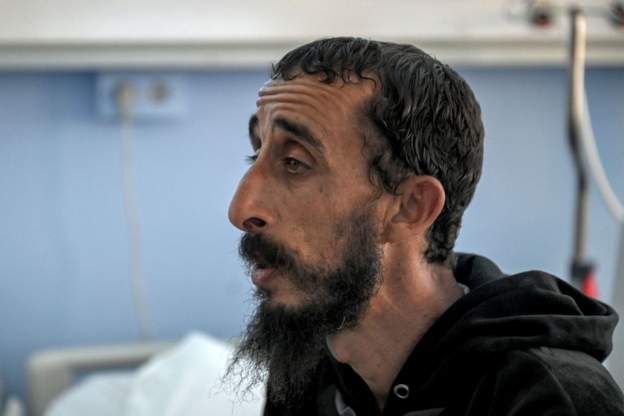
“Abdelqader al-Omrani, a 48-year-old, told AFP news agency that two years ago, there were already leaks in the big dam, even though it was only halfway filled. ”
Mr Omrani talked to AFP from his hospital bed in the city of Benghazi. He was taken there after surviving the floods that caused the death of six of his family members.
He was able to avoid the water that was getting higher by running to his rooftop, then climbing onto a tree and up the side of a mountain.
He said that after the water went away from his town, there was nothing left – no buildings, no trees, only the mountain and no people.
I went through the end of the world, and I’m not exaggerating.