Tag: Death penalty

  • Sosu goes global with death penalty repeal; charges US to abolish law

    Sosu goes global with death penalty repeal; charges US to abolish law

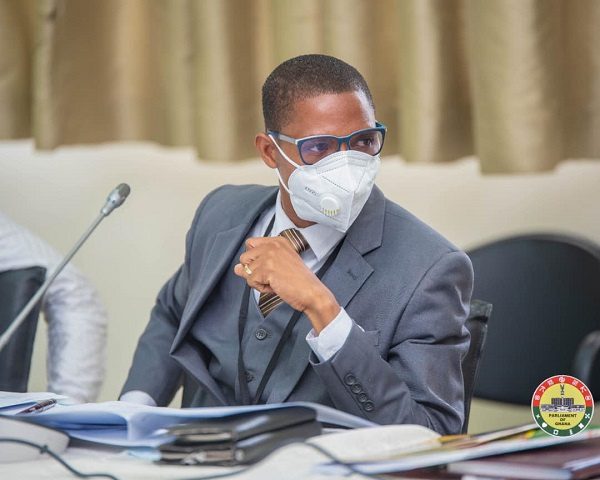
    Francis-Xavier Sosu, Member of Parliament for Madina Constituency in Ghana, has taken his advocacy against the death penalty to the global stage.

    Speaking at the 2024 visiting scholar program at Center College in Danville, Kentucky, and at the University of South in Sewanee, Tennessee, USA, Sosu charged the United States to abolish its death penalty laws.

    As a visiting professor, Sosu addressed convocations on the theme “Championing a Free, Fair, and Just Society through Human Rights Advocacy: Chronicles of a Lawyer, Legislator, and Activist.”

    He highlighted the recent abolition of the death penalty in Ghana, replacing it with life imprisonment for ordinary crimes, despite being a signatory to international human rights treaties.

    “Distinguished ladies and gentlemen, in my journey of activism, I have over the years spoken up against various ills in society, and championed the rights of many persons in Ghana. I have confronted and kicked against treatments meted out as a result of one’s vulnerability, social status, economic or financial incapacity, and cultural practices, among others.

    “For instance, I have spoken up against injustices and corrupt practices in our Judiciary; against the continued retainment of the death penalty in our statute books and imposition of same by Courts in Ghana; advocated strongly for the removal of taxes on menstrual hygiene products; participated in demonstrations and advocated for increased access to legal education in Ghana; among others,” he said.

    In the United States, the death penalty can only be imposed on defendants convicted of capital offenses, such as murder, treason, genocide, or the killing or kidnapping of a Congressman, the President, or a Supreme Court justice. Despite many states halting its use, the federal government may still implement it.

    In Ghana, the death penalty was imposed for murder, attempt to commit murder, genocide, or piracy and smuggling of gold or diamond. However, Ghana’s Parliament passed the Criminal Offences Amendment Act 2022, replacing the death penalty with life imprisonment.
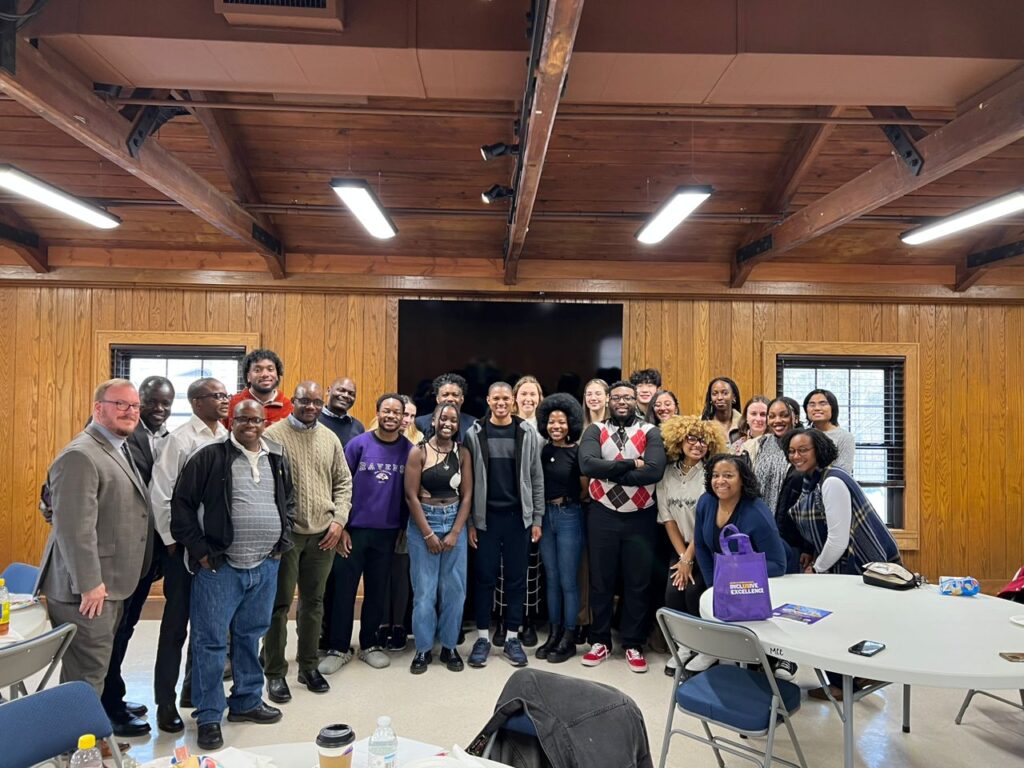
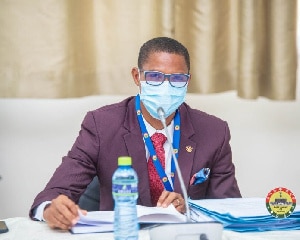
    Member of Parliament for Madina Constituency, Francis-Xavier Sosu at 2024 visiting scholar program

    On January 24, 2024, the High Court sentenced six of the coup plotters to death by hanging. The Court, however, acquitted Assistant Commissioner of Police Benjamin Agordzo, Colonel Samuel Kodzo Gameli, and one other junior military officer, Corporal Seidu Abubakar.

    Mr Sosu expressed dissatisfaction with the death sentences handed to six coup plotters in Ghana and announced plans to escalate the issue to the ECOWAS Court of Justice.

    He described the verdict as ‘disheartening’ and emphasized the need for Ghana to review its laws.
  • Zimbabwe’s cabinet backs abolition of death penalty

    Zimbabwe’s cabinet backs abolition of death penalty

    Zimbabwe’s cabinet has endorsed proposed legislation to abolish the death penalty, signaling a significant step in ending capital punishment in the nation.

    Information Minister Jenfan Muswere announced the decision on Tuesday Jan 6, stating that it followed extensive consultations nationwide.

    If approved by parliament, the bill would establish life imprisonment as the maximum sentence.

    President Emmerson Mnangagwa has previously voiced opposition to capital punishment, a stance influenced by his own experience: in 1965, he was sentenced to death for alleged involvement in a bombing during the fight against white minority rule, though his sentence was commuted due to his age.

    Zimbabwe’s death penalty originates from colonial-era laws, and the nation has not executed anyone since 2005.

  • Kill govt officials found guilty of corruption – Presidential aspirant

    Presidential candidate of the Begin Ghana Party, Edward Ohene Kyei, has proposed the death penalty as a drastic measure to combat corruption in Ghana.

    He argued that just as the death penalty has been utilized for treasonable offenses, it should also be employed as a deterrent against corruption.

    Mr Kyei emphasized that Ghanaians naturally fear death, and the prospect of facing such severe consequences would dissuade individuals from engaging in corrupt activities.

    During an exclusive interview with Dr. Ren on Rainbow Radio 92.4FM in the United Kingdom, he asserted that corruption is rampant in Ghana due to the absence of stringent laws to deter it.

    Mr Kyei pledged to organize a referendum to persuade Ghanaians to vote in favor of implementing the death penalty for all corrupt officials.

    He stated, “Our leaders are visionless and lack the natural love to help Ghana develop. We lack incorruptible leaders, which is why I will urge Ghana’s youth to rise and fight to protect our country from corrupt leaders.

    “We have used the death penalty to combat treason, and we can take the same approach to dealing with corruption. Ghanaians and humans are particularly afraid of death, so we must sentence all corrupt officials to death,” he added.

    Before imposing the death penalty, he proposed that all assets acquired through corrupt means would be confiscated and sold, with the proceeds directed towards Ghana’s development.

    Mr Kyei further criticized Ghanaian politicians, alleging a lack of genuine patriotism and commitment to the nation’s welfare. He highlighted the need for policies promoting job creation, economic growth, healthcare expansion, decentralization, and business development.

    In some countries, like China and North Korea, public officials have been executed or may face death for corruption and other related crimes like bribery.

    In 2011, China sentenced to capital punishment Xu Maiyong, former vice mayor of Hangzhou City, and Jiang Renjie, vice mayor of Suzhou City in 2011. The officials were found guilty of bribery amounting to $50 million.

  • Kpebu, Sosu receive awards for their role in abolishing death penalty in Ghana

    Kpebu, Sosu receive awards for their role in abolishing death penalty in Ghana

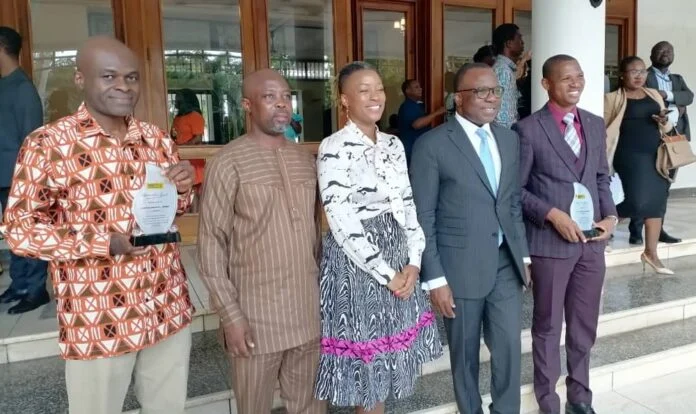
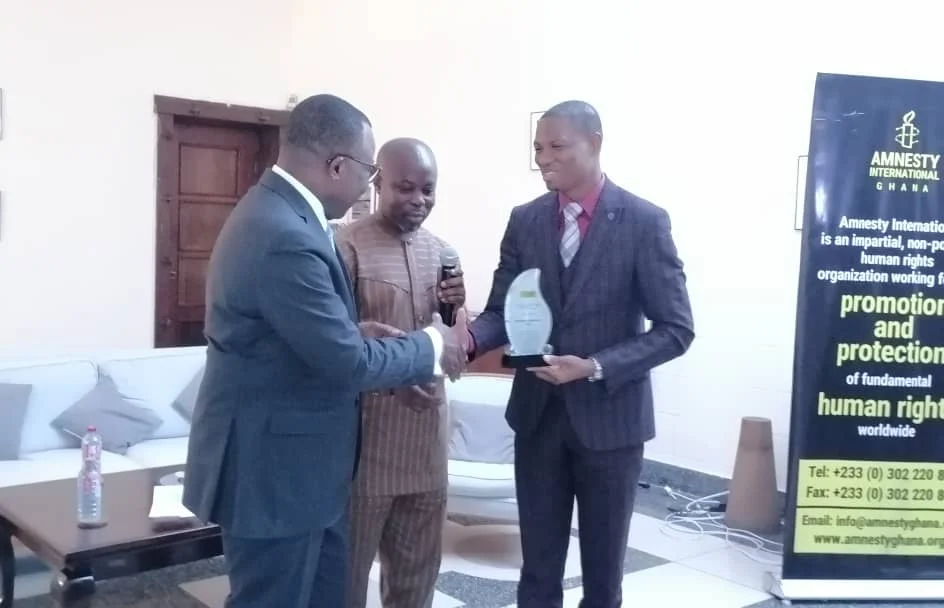
    Private legal practitioner Martin Kpebu and Madina lawmaker Francis-Xavier Sosu were recognized and honored by the French Embassy and Amnesty International Ghana for their roles in the abolition of the death penalty in Ghana.

    The recognition came during a ceremony in Accra to commemorate the World Day against the Death Penalty, celebrated on the 10th of October each year.

    Ghana’s Parliament abolished the death penalty on July 25, 2023, through a Private Member’s Bill initiated by MP Francis-Xavier Sosu.

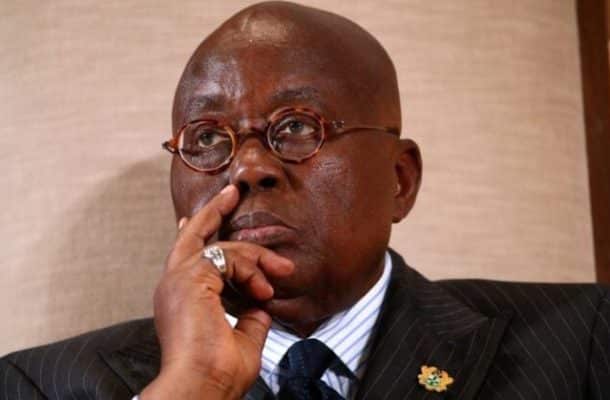
    This marked the end of several years of unsuccessful attempts to remove the provision from the Criminal Offences Act. President Nana Addo Dankwa Akufo-Addo subsequently signed the bill into law on August 2.

    Currently, there are 186 condemned prisoners on death row in Ghana, consisting of six females and 180 males. Both awardees called on President Akufo-Addo to commute all death sentences to life imprisonment by signing the second option protocol.

    Francis-Xavier Sosu, who is also the Deputy Ranking Member for the Constitutional, Legal, and Parliamentary Affairs Committee of Parliament, commended the President for prioritizing the abolition of these provisions from Ghana’s constitution.

    He also urged the removal of any remaining death penalty provisions from the constitution.

    Genevieve Partington, Country Director of Amnesty International, emphasized that the efforts of Kpebu and Sosu signify that the approach to abolition was a home-grown solution with no external forces involved.

    The French Ambassador to Ghana, Jules-Armand Aniambossou, highlighted France’s own history of abolishing the death penalty and called for partnerships between civil society organizations to combat all forms of human rights abuses.

  • Akufo-Addo urged to sign Protocol on Civil, Political Rights

    Akufo-Addo urged to sign Protocol on Civil, Political Rights

    The Speaker of Parliament, Alban Sumana Kingsford Bagbin, has commended the House for passing the Criminal Offences (Amendment) Bill, 2022, which eliminates the Death Penalty in Ghana.

    Bagbin stated that the House has meticulously examined 14 of the 15 laws related to the Death Penalty. The last remaining law pertains to the Constitutional Article – Article 3(3) of the 1992 Constitution, which establishes the offense of high treason.

    Recognizing the complexity of amending this entrenched clause, Bagbin appealed to the President to sign the Second Optional Protocol to the International Covenant on Civil and Political Rights, thereby finalizing the abolition of the Death Penalty.

    This protocol serves as a supplementary agreement to the International Covenant on Civil and Political Rights.

    Speaking in his closing remarks on the Parliament floor before the adjournment for the Second Meeting of the Third Session of the Eighth Parliament of Ghana, Bagbin highlighted that the passage of the Bill has propelled Ghana into a higher echelon of democratic nations.

    “It is a resounding testament to the House’s dedication to human rights and democracy… and a clear declaration of our commitment to the rule of law,” he asserted.

    Quoting Martin Luther King Jr., Bagbin emphasized, “The old law of an eye for an eye leaves the whole world blind.”

    He reiterated that through the Bill’s passage, the House has further illuminated Ghana’s pro-abolitionist stance adopted since 1993.

    Bagbin implored the President to sign the Second Optional Protocol to the International Covenant on Civil and Political Rights, aligning with the spirit of the Amendment. This step would bring the abolition of the Death Penalty in Ghana to fruition.

    The House also successfully passed the Anti-Witchcraft Accusation Bill, an achievement that resonated positively with the people of Ghana.

    “We have advocated for the marginalized, the elderly, and their gratitude is genuine,” Bagbin expressed.

    He underscored that the citizens of Ghana hold Parliament in high regard and are ready to support the House in fulfilling its mandate.

    Bagbin noted that Ghanaians have closely followed the House’s progress, including the developments concerning the Proper Human Rights and Ghanaian Family Values Bill.

    He shared that the Muslim community in Ghana bestowed an award upon the House, a gesture of appreciation for Members’ efforts. Bagbin humorously remarked, “They wish they could place the award on all 275 heads in the House, but that’s not feasible. It ended up on my head, not yours, for today, and that’s why I’m adorned in this manner.”

    “They recognize you, they thank you, they honor you for your contributions.”

    The House is set to reconvene for the Third Meeting of its Third Session in the third week of October.

  • It is a wrong move – Dr Kofi Amoah faults Parliament for death penalty abolishment

    It is a wrong move – Dr Kofi Amoah faults Parliament for death penalty abolishment

    Economist and development activist, Dr Kofi Amoah, has expressed strong disapproval of Ghana’s 8th Parliament’s decision to abolish the death sentence in the country.

    The outspoken businessman believes that the presence of the death penalty served as a deterrent to those who may seek to harm the nation or engage in heinous acts within society.

    In his view, the abolition of the death penalty creates a conducive environment for increased corruption and violence.

    According to Dr. Amoah, a more appropriate course of action for Ghana’s parliament would have been to review and refine the existing death penalty law, ensuring that it serves its intended purpose rather than completely abolishing it.

    Writing on his verified Twitter handle, Dr Amoah said, “Instead of reviewing to strengthen the country’s death penalty laws to become credible deterrent of corruption, Parliament wants Ghana to be counted among the world’s countries who have abolished the death penalty … SMH.”

    Dr. Kofi Amoah firmly asserts that Ghana’s decision to abolish the death penalty was not driven by any external pressure from a development partner. He believes that Ghana, with its unique challenges, should have retained such laws in its legal framework. In a tweet regarding the abolition of the death penalty, Dr. Amoah emphasized that the country’s specific circumstances warranted the continued existence of these laws in Ghana’s statute books.

    “Parliament is wrong with the abolition of the death penalty in Ghana. Corruption and corruption-related offenses are KILLING Ghana, big time!

    And this has also created a culture of “get-rich-quick-by-any-means”, poisoning the indispensable essence of honesty and hard work that are necessary for the advancement of any society.
    Instead of reviewing to strengthen the country’s death penalty laws to become a credible deterrent of corruption, Parliament wants Ghana to be counted among the world’s countries that have abolished the death penalty … SMH.

    Do we really appreciate the challenges Ghana faces and the areas of governance we must differ so that we can also make progress and catch up with the “developed world” we wish to compare ourselves to?

    A new progressive Parliament and Prez must propose more robust Death Penalty Laws for larger public discussion and adoption. We must remove the cancer that is killing our dreams for PROGRESS!!”

    The decision by parliament earlier this week to abolish the death penalty means Ghana joins a long list of African countries that have done so in recent years.

    The country currently has 170 men and six women on death row, whose sentences will now be replaced by life imprisonment. The last execution took place in 1993.
    Execution has been the mandatory sentence for murder in Ghana.

  • Removal of death penalty: This is a remarkable feat – Afenyo-Markin

    Deputy Majority Leader, Alexander Afenyo-Markin, has expressed immense delight as Ghana has abolished the death penalty law.

    He called it a remarkable “feat” and urged the nation to celebrate this historic gesture.

    On Tuesday, July 25, Parliament passed the Criminal Offences (Amendment) Bill 2022, effectively eradicating the death penalty from Ghana’s laws.

    The Bill empowers the President to commute death penalty sentences into life imprisonment.

    While the death penalty had been present in Ghana’s Criminal Offences Code, no President in the Fourth Republic had ever signed an execution order, prompting calls from human rights advocates for its expunction.

    With the passage of the Bill, offenders will no longer face the punishment of death.

    Addressing the press in Parliament after the passage of the Bill, Mr. Afenyo Markin, also representing Efuttu as a lawmaker, stated, “For well over 50 years, we have had a death penalty in our statute books, and it has been a concern. I’m happy to say that we have, by this amendment of the parent act, been able to repeal that provision that deals with the death penalty. So simply put, the death penalty is no more a punishment in our statutes.”

    He emphasized the value of human life, asserting that no person’s life should be taken simply because they committed an offense.

    “I’m happy to say that we have by this amendment of the parent act been able to repeal that provision that deals with the death penalty. So simply put, the death penalty is no more a punishment in our statutes,” he stated.

    He clarified that the abolition of the death penalty does not encourage those who take the lives of others, but rather upholds the sanctity of life, recognizing it as a gift from God that should not be taken away through state-sanctioned executions.

    “What we are saying is that God gives us life and under no circumstances should a person’s life be taken merely because of the commissioning of such an offense.”

  • Cletus Seidu Dapilah displeased with the abolishment of death penalty

    Cletus Seidu Dapilah displeased with the abolishment of death penalty

    While many, particularly human rights advocates, are pleased with the repeal of Ghana’s Criminal Offences (Amendment) Bill 2022 by Parliament, the Member of Parliament for Jirapa, Cletus Seidu Dapilah, has expressed his dissatisfaction with the decision.

    According to him, he is unhappy about the passing of the Bill because, during its existence, it served as a deterrent to potential offenders.

    He further noted that although no president under Ghana’s Fourth Republic had ever authorized the execution of any individual on death row, having the law in place compelled these Heads of State to fulfill their duties.

    A report by 3news.com highlighted his concerns, where he also mentioned that having the law in the statutes did not impose any financial burden on the nation.

    “I can tell you that the law being on our books does not cost anything. I can tell you it deters people and now we have lost that deterrence and we shouldn’t be surprised we see people killing others anyhow knowing that they will be in prison for life and the government will feed me,” he explained.

    On Tuesday, July 25, 2023, Ghana’s parliament made a significant move by officially repealing the death penalty from the country’s statute books. This milestone was achieved through the approval of an amendment to the Criminal and Other Offences Act. The driving force behind this progressive change was the Member of Parliament for Madina, Francis-Xavier Sosu, who sponsored the Bill. While parliament has given its approval, the final step in enacting this change into law requires the signature of the president, Nana Addo Dankwa Akufo-Addo, which is yet to be obtained.

  • Ghana abolishes death penalty in landmark vote

    Ghana abolishes death penalty in landmark vote

    Ghana has joined the growing number of African countries that have abolished the death penalty after its parliament voted on Tuesday to replace it with life imprisonment.

    The Criminal Offences (Amendment) Bill, 2022, sponsored by Francis-Xavier Kojo Sosu, a member of parliament from the opposition National Democratic Congress (NDC), aims to reform the criminal justice system and align it with international best practices.

    The bill amends the Criminal Offences Act, 1960 and the Armed Forces Act, 1962, which prescribe the death penalty for offences such as murder, attempted murder, genocide, piracy and smuggling of gold and diamond.

    The death penalty, also known as capital punishment, is the state-sanctioned execution of individuals convicted of certain crimes. In Ghana, the death penalty can be carried out by hanging or shooting by firing squad, according to the Criminal and Other Offences (Procedure) Act, 1969.

    However, Ghana has not executed anyone since 1993, when 12 people were killed by firing squad for armed robbery or murder. Since then, successive presidents have refused to sign execution warrants, leaving hundreds of death row inmates in limbo.

    According to Amnesty International, Ghana had 172 people on death row by the end of 2022, seven of whom were sentenced that year. The human rights group has been campaigning for the global abolition of the death penalty, which it considers a violation of the right to life and a cruel, inhuman and degrading punishment.

    The bill was passed by a majority vote in parliament after a heated debate that saw some lawmakers opposing the abolition of the death penalty. They argued that it could lead to more crime and mob justice and that it was justified by the principle of retribution.

    However, supporters of the bill said that the death penalty was ineffective as a deterrent, unjust as a punishment and incompatible with Ghana’s obligations under international treaties and conventions.

    The Speaker of Parliament Alban Bagbin announced the passage of the bill after putting it to a vote. He said that the bill would now be sent to President Nana Akufo-Addo for his assent.

    Following the passage of the Bill, Mr Alexander Kwamina Afenyo-Markin, the NPP MP for Efutu and the Deputy Majority Leader, told the Parliamentary Press Corps that the Bill’s passage was a triumphant day for the people of Ghana.

    “Today the Parliament of Ghana has made the country proud, it has signed onto that which has become an international human rights position.

    “We have had the Death Penalty in our Statues Books for well over 50 years, it’s been a concern and Parliament after deliberations and through a member of Parliament championed this private member’s Bill.

    “And I am happy to say we’ve by this amendment of the parent Act been able to repeal that provision that deals with death Penalty.”

    “So, simply put the Death Penalty is no more a punishment in our Statutes Books….”

    Samira Daoud, Amnesty International’s West and Central Africa Director, also welcomed the parliamentary vote as a major step forward for Ghana. She urged the president to sign the bill into law without delay and commute all death sentences to prison terms.

    She also called on the Ghanaian authorities to take steps to remove the death penalty from the constitution, which still provides for high treason to be punishable by death.

    “Today’s parliamentary vote is a major step by Ghana towards the abolition of the death penalty. It is also a victory for all those who have tirelessly campaigned to consign this cruel punishment to history and strengthen the protection of the right to life,” she said in a statement.

    “As of today, 23 out of 55 African countries have abolished the death penalty for all crimes. Amnesty International opposes the death penalty in all cases without exception because it violates the right to life as proclaimed in the Universal Declaration of Human Rights. The death penalty has no place in our world.”

  • Death penalty abolished by Parliament

    Death penalty abolished by Parliament

    Ghana’s Parliament has struck out “dormant” death penalty from it laws after the house sat on July 25, 2023.

    Parliament passed the Criminal Offences Amendment Act, 2022 which seeks to replace the death penalty with a life sentence.

    In Ghana, the death penalty is imposed after a conviction for murder, attempt to commit murder, genocide, or piracy and smuggling of gold or diamond.

    However, some human rights activists have argued that the death penalty is too final and irreversible, thereby demanding a replacement with a life sentence.

    Passing the bill, Speaker of Parliament, Alban Bagbin, said, “The Criminal Offences Amendment Act, 2022 is duly read the third time and duly passed.”

    The Deputy Majority Leader, Alexander Afenyo Markin says the passage of the bill calls for celebration as a country.

    Although the death penalty was inherited from the colonial administration as a punishment for murder, attempted murder, genocide, piracy, and smuggling of gold or diamonds, successive presidents of Ghana have not signed a death warrant for the execution of offenders since 1993.

  • Inusah Fuseini declares stance on abolition of the death penalty

    Inusah Fuseini declares stance on abolition of the death penalty

    Former MP for Tamale Central, Inusah Fuseini, has expressed his endorsement for the abolition of the death penalty in Ghana.

    According to him, the existing law is in itself redundant, and the need to abolish it is the right step.

    Speaking in an interview, the former MP explained that the essence of the death penalty doesn’t apply any longer because there is a need for persons caught in such webs to receive compassion.

    “I stand for the abolition of the death penalty. Evidence abound that many people have been subjected that penal punishment when subsequent evidence exonerates them. That is number one. Number two, that is the old law where it says death for death, an eye for an eye. No.

    “You should look at the Bentham Theory. There must be utility for a punishment. Why are we punishing a person? We punish the person to reform, so if we kill that person, we deny that person the opportunity to reform. The reformative aspect of punishment is something that should engage our thinking and our understanding. People have committed grievous offenses need compassion; need our love; need empathy and so you sentence them to death, they are hanged or shot, and then is that compassion?”

    “Thirdly, I don’t know the last time anyone who was sentenced to death was ever killed. So, the language at the Nsawam is under debilitating conditions, we treat them in an inhuman way. The constitution says that the dignity of a human being is invaluable, meanwhile, go and see them,” he stated.

    MPs divided over a proposal to replace the death penalty with life imprisonment

    On Friday, July 14, 2023 Members of Parliament (MPs) in Ghana found themselves at odds regarding the report presented by the Constitutional, Legal, and Parliamentary Affairs Committee on the amendment to the Criminal Offences Act.

    The proposed amendment aims to substitute the death penalty with life imprisonment.

    Although the death penalty was initially inherited from the colonial era as a punishment for offenses like murder, attempted murder, genocide, piracy, and smuggling of gold or diamonds, Ghana has refrained from executing offenders since 1993.

    During the parliamentary debate on the amendment bill, MPs expressed varying opinions concerning the abolishment of the death penalty.

    Cletus Avoka, the MP for Zebilla Constituency, voiced his concerns, stating, “I first submit that the arguments they have advanced in terms of the motion are very scary and have no measures at all. Arguments in favor of the motion are unmeritorious.”

    On the other hand, Francis-Xavier Sosu, the MP for Madina and a proponent of the amendment, emphasized Ghana’s current stance, saying, “the current position of Ghana is that we are abolitionists in practice. This is so because, since 1993 to date, Ghana has not signed a death warrant to execute anyone, and that is very commendable.”

    During the debate, James Agalga, the Builsa North MP, and Habib Iddrisu, the Second Deputy Majority Whip, pointed out a correction, stating, “We cannot count universal declaration on human rights as part of our treaty obligations with the greatest of respect. The universal declarations on human rights are declarations; they are non-binding, and so they do not qualify as a treaty.”

  • “I support the repeal of death penalty” – Inusah Fuseini

    “I support the repeal of death penalty” – Inusah Fuseini

    A former representative for Tamale Central, Inusah Fuseini, has stated that he agrees with proposals to abolish the death penalty in Ghana.

    He thinks that since the current law is already unnecessary, getting rid of it is the best course of action.

    The former MP argued that the death penalty’s original purpose no longer applied in an interview with Citi TV because those caught in such webs now need to be treated with compassion.

    “I stand for the abolition of the death penalty. Evidence abound that many people have been subjected that penal punishment when subsequent evidence exonerates them. That is number one. Number two, that is the old law where it says death for death, an eye for an eye. No.

    “You should look at the Bentham Theory. There must be utility for a punishment. Why are we punishing a person? We punish the person to reform, so if we kill that person, we deny that person the opportunity to reform. The reformative aspect of punishment is something that should engage our thinking and our understanding. People have committed grievous offenses need compassion; need our love; need empathy and so you sentence them to death, they are hanged or shot, and then is that compassion?”

    “Thirdly, I don’t know the last time anyone who was sentenced to death was ever killed. So, the language at the Nsawam is under debilitating conditions, we treat them in an inhuman way. The constitution says that the dignity of a human being is invaluable, meanwhile, go and see them,” he stated.

    MPs divided over a proposal to replace the death penalty with life imprisonment

    The media covered a noteworthy event on Friday, July 14, 2023, where Members of Parliament (MPs) in Ghana found themselves in disagreement over the report presented by the Constitutional, Legal, and Parliamentary Affairs Committee regarding an amendment to the Criminal Offences Act.

    The proposed amendment seeks to replace the death penalty with life imprisonment as a punitive measure.

    Historically, the death penalty was inherited from the colonial era, serving as a punishment for crimes such as murder, attempted murder, genocide, piracy, and smuggling of precious minerals like gold or diamonds. However, Ghana has abstained from executing offenders since 1993.

    During the parliamentary debate on the amendment bill, MPs voiced diverse opinions regarding the abolition of the death penalty.

    Cletus Avoka, the MP for Zebilla Constituency, voiced his concerns, stating, “I first submit that the arguments they have advanced in terms of the motion are very scary and have no measures at all. Arguments in favor of the motion are unmeritorious.”

    On the other hand, Francis-Xavier Sosu, the MP for Madina and a proponent of the amendment, emphasized Ghana’s current stance, saying, “the current position of Ghana is that we are abolitionists in practice. This is so because, since 1993 to date, Ghana has not signed a death warrant to execute anyone, and that is very commendable.”

    During the debate, James Agalga, the Builsa North MP, and Habib Iddrisu, the Second Deputy Majority Whip, pointed out a correction, stating, “We cannot count universal declaration on human rights as part of our treaty obligations with the greatest of respect. The universal declarations on human rights are declarations; they are non-binding, and so they do not qualify as a treaty.”

  • Akufo-Addo supports removal of death penalty bill – Madina MP

    Akufo-Addo supports removal of death penalty bill – Madina MP

    Member of Parliament representing the Madina constituency, Francis-Xavier Sosu, has revealed that President Akufo-Addo supports the Criminal Offences Amendment Act, which aims to replace the death penalty with life imprisonment.

    In support of abolishing the death penalty, the Madina MP Francis-Xavier Sosu, while upholding international human rights conventions, said President Akufo-Addo at the UN voted for scrapping the death penalty from the statutes of countries around the world for the first time.

    “The president [Nana Akufo-Addo] at the UN voted in favor of the abolishment of the death penalty for the first time, and he has even made public statements in support of the abolishment. It was the president that called for a cross-party approach to passing this bill when stakeholders called on him, and so he fully endorses and supports the position,” he said in a media interaction.

    When the amendment bill was discussed in Parliament on Friday, July 14, Members of Parliament found themselves in a state of disagreement, causing division among them. The debate on the bill sparked contrasting opinions and viewpoints among the legislators.

    The parliamentary debate on the amendment bill also sparked widespread discussion among the Ghanaian public. Different segments of society expressed varying views on the matter. Some individuals advocated for the complete abolition of the death penalty, citing reasons such as humanitarian concerns and the belief in rehabilitation over punishment.

    On the other hand, there were those who argued in favor of retaining the death penalty, emphasizing its potential as a deterrent against heinous crimes and the need for justice to be served.

    These contrasting perspectives contributed to a broader conversation among the Ghanaian populace regarding the implications and effectiveness of the death penalty in the country’s legal system.

    Mr. Sosu emphasised that even though the death penalty has not been used since 1993, a corrupt government could still use it at any time to hunt down its opponents, as in the case of Myanmar.

    “The government in 1991 said there were not going to be executions again, but 12 people were executed by firing squad in 1993, and from colonial times till 1993, 37 people were killed.”

    “When you take the case of Myanmar, the country had not used the law for 42 years, but it was there on its books and last year when there was a military takeover, they used it against their opponents and gave legal reasons where four leaders were killed, and a hundred others were convicted to death.”

    Having carried out its last execution in 1993, Ghana is considered abolitionist in practice, although no official moratorium on execution has been imposed.

    The country’s domestic legislation, therefore, still provides for the use of capital punishment for crimes of treason under the Constitution and a series of other crimes, including murder, genocide, treason, and smuggling of gold and diamonds, under the Criminal Code and Other Offences Act.

    The Armed Forces Act also allows for the use of the death penalty in cases of treason and mutiny by military personnel in times of war.

    Ghanaian judges continue to impose death sentences, mainly in murder cases, despite concerns related to the circumstances under which these trials are carried out and the alleged miscarriages of justice or other violations of the right to a fair trial under Article 14 of the International Covenant on Civil and Political Rights (ICCPR).

    According to civil society reports, people condemned to capital punishment are imprisoned in a separate wing for males and a separate cell for women, sometimes in poor conditions.

  • Madina MP says death penalty has become irrelevant

    Madina MP says death penalty has become irrelevant

    Member of Parliament representing Madina, Francis-Xavier Sosu, has expressed firm endorsement for the substitution of death penalties with life imprisonment.

    The report of the Constitutional, Legal, and Parliamentary Affairs Committee on the Criminal Offences Amendment Act, which seeks to replace the death penalty with life imprisonment, has divided parliamentarians.

    The Human Rights lawyer believes that although the death penalty was inherited from the colonial administration as a punishment for murder, attempted murder, genocide, piracy, and smuggling of gold or diamonds, Ghana has not signed a death warrant for the execution of offenders since 1993.

    The MP stated that “since Ghana gained independence in 1957, 49 people have been executed either by firing squad or by hanging, and the majority of those executions primarily occurred during military regimes” in an interview with Kwabena Agyapong on Frontline on Rainbow Radio 87.5Fm.

    “Ghana’s current stance is that we actively oppose slavery. This is the case because, commendably, Ghana has not signed a death warrant since 1993 to execute anyone.

    He explained that we should understand how the death penalty was introduced, the circumstances surrounding it, and whether it was still relevant in our books as society progressed.

    “Today, the death penalty is irrelevant. We must remove it from our records and replace it with a life sentence. In practice, we have people sentenced to death, but after 38 years, we release them, so why have the law if you don’t use it again? That is the first question. Second, families of victims of crimes carrying the death penalty have no closure when the people sentenced to death are not executed. Because how does a person get closure if they are sentenced to death and you do not execute them?”

    He stated that there are currently about 176 people on the death roll in Ghana’s condemned cells.

    The conditions in the cells, he lamented, were deplorable and unfit for human habitation.

    “As a human rights lawyer, I have visited the condemned cells and witnessed the conditions in which those who reside there live. It’s terrible, and I urge anyone who is listening to go see for themselves. If you keep people in such a state, the best option is to execute them or change the law to a life sentence.”

    He claims that it is widely acknowledged that the death penalty should be abolished and that the work of the constitutional review commission under the late Atta Mills reflected this.

    He noted that recently when he took part in a UN event, President Akufo-Addo supported the call for repeal as well and even voted in favour of it.

    He came to the conclusion that there is a political and judicial agreement to abolish the death penalty, and as Ghanaians, we must accept that it is time to deal with it.

  • Parliament divided on replacing death penalty with life sentence

    Parliament divided on replacing death penalty with life sentence

    The report on the Criminal Offences Amendment Act, presented by the Constitutional, Legal, and Parliamentary Affairs Committee, has sparked a division among Members of Parliament (MPs).

    The proposed amendment aims to replace the death penalty with life imprisonment.

    Originating from the colonial era, the death penalty in Ghana was historically applied to crimes such as murder, attempted murder, genocide, piracy, and smuggling of gold or diamonds.

    However, since 1993, the country has refrained from issuing death warrants for the execution of offenders.

    During the parliamentary debate on the amendment bill, MPs expressed a range of contrasting opinions regarding the abolition of the death penalty.

    MP for Zebilla Constituency, Cletus Avoka said “I first submit that the arguments they have advanced in terms of the motion are very scary and have no measures at all. Arguments in favour of the motion are unmeritorious.”

    MP for Madina and proponent of the amendment, Francis-Xavier Sosu noted that “since the attainment of independence in 1957, Ghana has executed 49 persons either by firing squad or by hanging and most of those executions mainly happened during military regimes.”

    “The current position of Ghana is that we are abolitionists in practice. This is so because since 1993 to date, Ghana has not signed a death warrant to execute anyone and that is very commendable.”

    Builsa North MP, James Agalga and Second Deputy Majority Whip, Habib Iddrisu made a correction that “we cannot count universal declaration on human rights a part of our treaty obligations with the greatest of respect. The universal declarations on human rights are declarations, they are non-binding, and so they do not quality for a treaty.”

  • Death penalty is too final – Justice Gertrude Torkornoo

    Death penalty is too final – Justice Gertrude Torkornoo

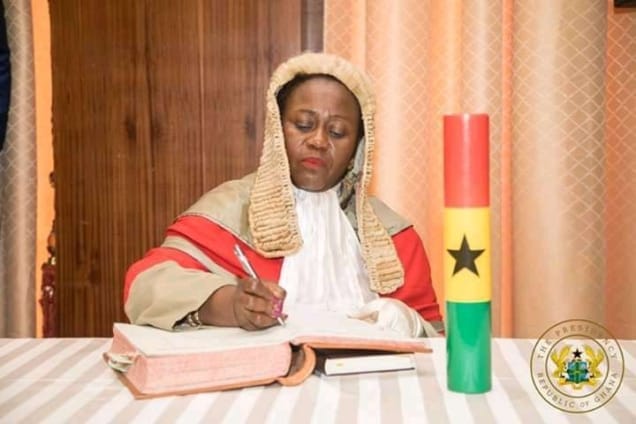
    In a groundbreaking move, Gertrude Torkornoo, the nominee for Chief Justice, has put forth a compelling argument for a comprehensive examination of capital punishment within the constitutional framework of the country.

    Speaking in Parliament during her vetting on Friday, she said that for her as an individual, the death penalty sentence handed to convicts seems too definitive.

    Justice Torkornoo thus called on parliament to take a review of the death penalty.

    “As a justice of the Supreme Court, I am mindful of the fact if cases come to court. It will be my duty to preside over it. But on a personal level, I do think the death penalty is too final and I would be grateful if the legislative body would begin to look at it,” Justice Torkornoo said.

    When asked if as a judge she should not be firm in handing down death sentences, especially to convicted murderers, she noted “sentencing is always guided by law, so long as the law says it I can’t dispute it.

    For years, some civil society organisations have called for the abolition of the death penalty. In Ghana, capital punishment is a mandatory sentence for certain offenses including murder, treason and genocide.

    However, Ghana last executed convicts on death row in 1993, the year of Ghana’s return to civilian rule. Twelve people convicted of armed robbery or murder were executed by firing squad.

    According to a report by Amnesty International, as of the end of 2020, 160 people – 155 men and five women – were under sentence of death. These included six foreign nationals, one from Benin, two from Burkina Faso and three from Nigeria.

    Amnesty International cited a lack of effective legal representation among others for the plight of some convicts on death row.

    “The death penalty in Ghana has been frequently used in violation of international law and standard, affecting predominantly those from disadvantaged socioeconomic backgrounds, as shown by research carried out by Amnesty International. It is high time the authorities of Ghana acted to fully abolish it.”

    “Conditions for men and women on death row do not meet international standards. Both men and women reported overcrowding, poor sanitary facilities, isolation, and lack of adequate access to medical care and to recreational or educational opportunities available to other people in detention. Amnesty International opposes the death penalty in all cases without exception,” parts of the research read.

    Among other things, they are calling for an express abolishment of death penalty for all crimes, commuting the death sentences of all death row prisoners to terms of imprisonment; reviewing the cases of all death row prisoners to identify any potential miscarriages of justice and providing all death row prisoners, regardless of means, with adequate and effective legal aid to pursue any appeals against their convictions and death sentences.

    Meanwhile, In June 2021, Francis Xavier Sosu, a member of Parliament for Madina Constituency in Ghana, initiated a proposal for the introduction of a bill to remove the death penalty from the Criminal and Other Offences Act, 1960 (Act 29). The proposal seeks to abolish the death penalty for most capital offences under national legislation.

    The move is seen as a unique opportunity for Ghana to make significant steps towards the abolition of the death penalty for all crimes. You can support abolition in Ghana in three simple steps.

  • Death penalty for serious crimes no longer applicable in Malaysia

    Death penalty for serious crimes no longer applicable in Malaysia

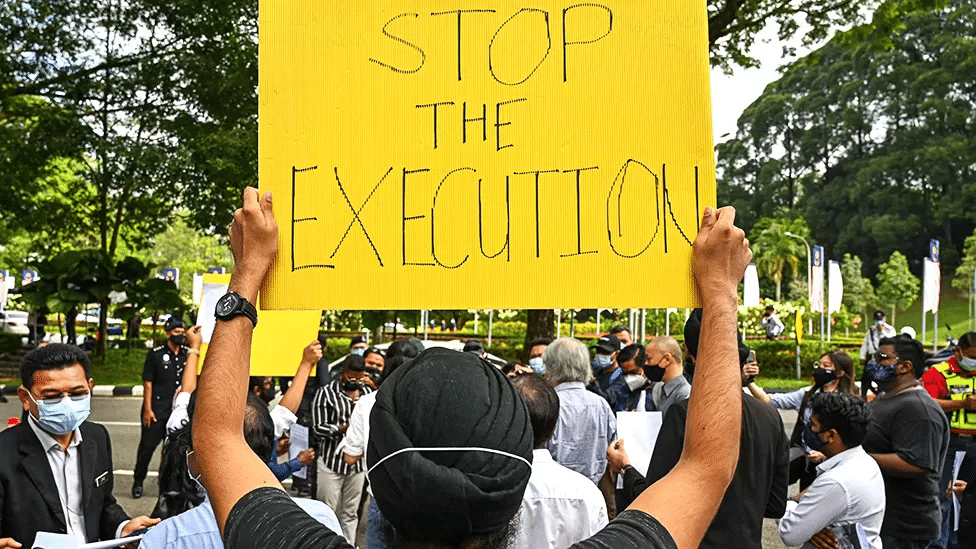
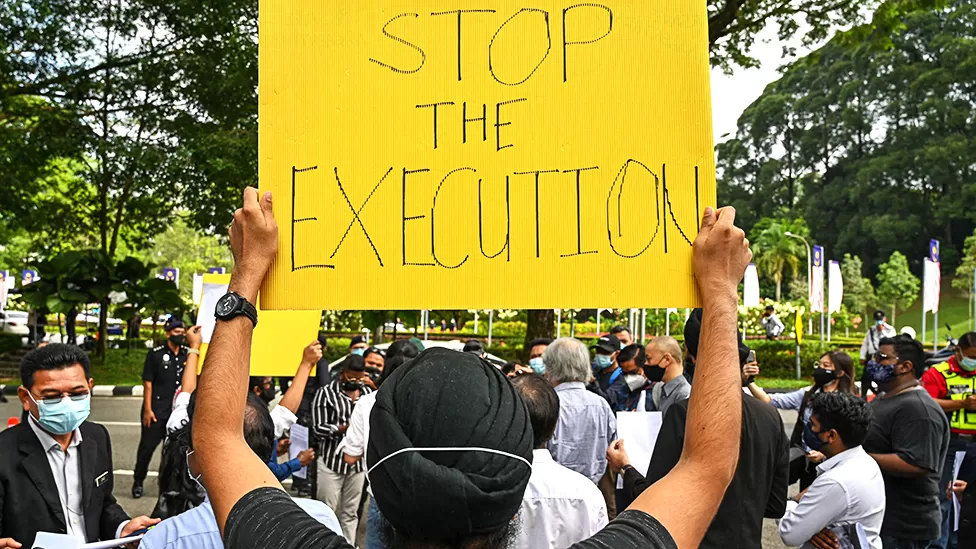
    The capital sentence is no longer mandatory in Malaysia, potentially saving the lives of more than 1,300 people who are now on death row.

    Since 2018, there hasn’t been any executions in the nation.

    Nonetheless, lawmakers unanimously decided to abolish the death penalty as the mandatory punishment for 11 major offenses, including terrorism and murder, on Monday.

    Judges will still have the option to apply the death penalty in unusual circumstances.

    Yet, for the most heinous offenses, the courts will now impose caning or life sentences of up to 40 years, according to MPs.

    The reforms still need to clear the country’s upper house but are widely expected to pass.

    Speaking in parliament on Monday, Malaysia’s deputy law minister said capital punishment was irreversible and had not worked as a deterrent to crime.

    “The death penalty has not brought the results it was intended to bring,” said Ramkarpal Singh.

    There are 34 criminal offences punishable by death in Malaysia – 11 of which before Monday carried the mandatory death penalty.

    The new laws once enacted will apply retrospectively, allowing those on death row 90 days to seek a review of their sentences.

    Malaysia ends mandatory death penalty for serious crimes
    There has been a moratorium on executions in Malaysia since 2018

    There are currently 1,341 such prisoners in the country, more than 60% of whom had received a mandatory sentence according to an Amnesty International assessment.

    The legislative process of overturning the country’s death penalty began last June, when the former government under Prime Minister Ismail Sabri Yaakob announced it would abolish the death penalty as a mandatory punishment.

    However Malaysia has been debating abolishing capital punishment for over a decade now. The two critical bills to reform the laws were introduced into parliament last week following a year of political debate.

    Rights groups have hailed the reform as a major step forward for Malaysia and the wider South East Asia region, with Human Rights Watch saying it hoped it might influence neighbouring countries.

    Last year, neighbouring city-state Singapore executed 11 people for drug trafficking offences.

    The military government in Myanmar also handed down its first death sentences in decades, executing four pro-democracy activists.

    According to official data, some 1,318 prisoners were hanged between 1992 and 2023 in Malaysia.

  • American couple could face death penalty for allegedly torturing foster child in Uganda

    An American couple living in Uganda accused of torturing their 10-year-old foster child could face the death penalty if convicted of their latest charge, prosecutors said.

    Nicholas Spencer and Mackenzie Leigh Mathias Spencer, both 32, were arrested and charged earlier this month with aggravated torture, which carries a life sentence if convicted, for alleged abuse spanning two years.

    This week, they were also charged with aggravated child trafficking, which carries the death sentence if convicted, Joan Keko, an attorney with the Ugandan state prosecutor’s office, confirmed to ABC News.

    The Spencers previously pleaded not guilty to the aggravated torture charge, The Associated Press reported. They will be able to plead to the new charge once the case moves to a higher court, according to the AP.

    The two are being detained at a maximum-security prison in Luzira, a suburb of the capital of Kampala, and were not granted bail after being determined a flight risk, Keko said.

    The couple allegedly “constantly tortured” the foster child between 2020 and 2022, which “attracted the attention of neighbours,” who notified Kampala Metropolitan police, according to a statement from the Uganda Police Force.

    American couple could face death penalty for allegedly torturing foster child in Uganda
    PHOTO: American couple Nicholas Spencer and Mackenzie Leigh Mathias Spencer, both 32, stand in the dock at Buganda road court, where they were charged with torturing a 10-year-old, in Kampala, Uganda, on Dec. 14, 2022. (Abubaker Lubowa/Reuters)

    The child was allegedly locked in an empty room, without clothes, food or water, and a medical report showed beating marks on his body, according to Kampala Metropolitan spokesperson Luke Owoyesigire.

    Police received video evidence from a neighbor and nurse who were checking on the child, a Kampala police source told ABC News.

    he Spencers are originally from South Carolina, according to Keko. They moved to Uganda in 2017 as volunteers, police said.

    The couple fostered three children in 2018, including the one they were alleged to have tortured, from an organization called Welcome Ministry, in Jinja City, police said. The couple then joined a private company and moved to Upper Naguru, a neighborhood in Kampala, police said.

    Their work permit expired in 2021, according to Keko.

    Source: BBC

  • YNW Melly might face death penalty if convicted following Appeals Court decision

    Rapper YNW Melly could be facing the death penalty if convicted after a Florida Appeals court ruled a judge’s decision in his murder case was incorrect.

    Per Billboard, Florida’s District Court of Appeal has overruled Judge Andrew Siegel’s decision to forbid prosecutors from seeking the death penalty. Siegel made the ruling in July, and said prosecutors had violated state rules when they failed to give Melly and his attorneys the appropriate notice they planned to seek capital punishment. Florida’s District Court of Appeal, however, said prosecutors complied with state rules because they gave notice when they charged Melly in 2019.

    If convicted in his upcoming trial, Melly could be sentenced to death. The decision won’t be reached until the Florida Supreme Court rules on the case.

    When reached for comment, the Broward State Attorney’s Office told Complex they do not comment on pending cases.

    This story is being updated.

    Source: Complex.com

  • ‘The death penalty sins against the principle of human dignity’ – Catholic Bishops’ Conference

    The Ghana Catholic Bishops’ Conference has thrown its support behind two bills currently before Parliament which seek to abolish the death penalty from the country’s legal system.

    The bills when passed will amend the law that gives the state the authority to take away human life when an accused person is convicted of crimes such as murder, attempted murder, treason, piracy, mutiny with violence etc.

    It will also substitute the death penalty in favour of life imprisonment.

    'The death penalty sins against the principle of human dignity' - Catholic Bishops' Conference

    In a memorandum to that effect, the Ghana Catholic Bishops’ Conference has called on all Ghanaians to “work with determination to abolish the death penalty from our legal system.”

    According to them, human dignity is inviolable and as such every human has a fundamental right to life.

    “God created the human person in His image and likeness and therefore He alone can take back the human life. It is therefore, an obligation of every possessor of life to strive at all times to preserve the sanctity of human life,” the memorandum read.

    While describing the death penalty as a sin, the Catholic Bishops’ Conference further stated that “the death penalty does not offer the convicted person the opportunity to repent and seek forgiveness.”

    Also, it noted that sometimes, innocent people fall victim to the law in cases of a miscarriage of justice.

    “It is for this aforementioned that the Ghana Catholic Bishops’ Conference submits this Memorandum in support of the two Bills laid before Parliament of Ghana to end the death penalty in our statute books,” the statement signed by the President of the Conference, Most. Rev. Philip Naameh concluded.

    Source: MyJoyOnline


  • Equatorial Guinea abolishes death penalty in Obiang’s tenure

    Equatorial Guinea has abolished its death penalty following a new criminal code signed by President Teodoro Obiang.

    The new penal code will be implemented after 90 days, Reuters reports.

    The move comes three years after President Obiang promised to abolish the death penalty.

    Mr Obiang’s son, Vice-President Teodoro Nguema Obiang Mangue, described the decision as “historical and memorable,” Reuters news agency reports.

    The last execution in the country took place eight years ago.

    Capital punishment remains legal in just over 30 African countries, but more than 20 of those have not carried out executions for at least 10 years, according to data provider Statista.

  • Death by Firing squad and electric chair executions: They are ‘torture’ – US judge rules

    The judge was informed that the bullets used in executions are intended to shatter inside the heart and that the effects of the electric chair on the body’s interior organs are comparable to frying.

    Executions via lethal injection or firing squad are unlawful and constitute “torture,” according to a US judge.

    Lawyers for four inmates in South Carolina who took legal action against the state had argued prisoners would feel terrible pain whether their bodies were “cooking” by electricity or when their heart was stopped by a marksman’s bullet – assuming they are on target.

    And on Tuesday, Judge Jocelyn Newman ruled that both the state’s newly-created firing squad and its use of the electric chair should desist.

    The state’s governor, Republican Henry McMaster, said he planned to appeal her decision.

    From 1995 to 2011 – when the state’s last execution was performed – South Carolina carried out the death penalty with lethal injections on 36 prisoners.

    But, as the state’s supply of lethal injection drugs expired in 2013, an involuntary pause in executions resulted from pharmaceutical companies’ refusal to sell the state more.

    Condemned inmates technically had the choice between injection and electrocution, meaning that opting for the former would in essence leave the state unable to carry out the sentence.

    Execution ‘ought to be humane’

    Struggling to implement new execution protocols, prison officials sought help from state lawmakers, who for several years had considered adding the firing squad as an option to approved methods, but the debate on it never advanced.

    Last year, Democratic Senator Dick Harpootlian and Republican Senator Greg Hembree, both of whom previously served as prosecutors, again argued in favour of adding the firing squad option.

    “The death penalty is going to stay the law here for a while. If it is going to remain, it ought to be humane,” Mr Harpootlian had said.

    ‘The death chamber’ at the state penitentiary in Huntsville, Texas – the state which executes more people than any other

    During last month’s hearing before Judge Newman, lawyers representing the state provided evidence from their experts who appeared to agree with them and said death by the yet-to-be-used firing squad or the rarely used electric chair would be instantaneous and the condemned would not feel any pain.

    The ultimately approved measure, signed into law by Mr McMaster last year, made South Carolina the fourth state in the United States to allow the use of a firing squad, and made the state’s electric chair – built in 1912 – the default method for executions, thereby giving prisoners a new choice.

    The South Carolina Supreme Court subsequently blocked the planned executions of two inmates by electrocution, however, saying they could not be put to death until they truly had the choice of a firing squad option set out in the state’s newly revised law.

    Ammunition ‘splits up in the heart’

    Earlier this year, the state rolled out its updated execution protocols, to include the new method.

    During last month’s trial, a Corrections Department official said he devised the firing squad protocols after consulting a prison official in Utah, the location of the only three inmates to die by firing squad since 1977.

    Colie Rushton, the department’s security director, testified the 308 Winchester ammunition to be used is designed to fragment and split up in the heart to make death as fast as possible.

    In her ruling, Judge Newman recalled the testimony of two physicians, who said an inmate “is likely to be conscious for a minimum of ten seconds after impact”.

    During that time, the judge wrote, “he will feel excruciating pain resulting from the gunshot wounds and broken bones,” a sensation that “constitutes torture” as it is “exacerbated by any movement he makes, such as flinching or breathing”.

    Dr  Jonathan Arden testified the electric chair caused “effects on parts of the body, including internal organs, that are the equivalent of cooking”.

    Just three prisoners in South Carolina have chosen the electric chair since lethal injection was made available in 1995.

    Officials with the state Corrections Department told the Associated Press they were “assessing the ruling”.


  • Life is sacred, I don’t support death penalty – Yoni Kulendi tells Vetting Committee

    Renowned Private Legal Practioner, Mr. Yoni Kulendi, has said he does not support the death penalty under the Criminal and other Offences Act on the basis that legal processes are prone to error.

    He was of the view that persons found guilty of committing a crime should be sentenced to life imprisonment rather than the death penalty because life is sacred and human life should not be terminated by anybody.

    Mr. Yoni Kulendi made the comment before the Appointments Committee of Parliament today (Tuesday) during his Vetting as a nominee by the President to the Supreme Court. It was in response to a question by Samuel Okudzeto Ablakwa, MP for North Tongu on his opinion about the death penalty.

    In response to a question by Sampson Ahi, MP for Bodi on Legal education in the country, Mr. Yoni Kulendi said there is the need for reform in legal education in the country.

    He, therefore, suggested the conduct of a comprehensive study to determine the type of reform needed in legal education in the country.

    Answering another question by Sampson Ahi on what he will do in a situation where a case involving the President, Nana Akufo-Addo comes before the Supreme Court if his (Kulendi’s) nomination is approved by Parliament since he worked with him in his Chambers as a lawyer from 1995 to 2002, Mr. Yoni Kulendi said he will abide by the oath of a Judge which requires Judges to be fair, just, equitable and reasonable in their judgment.

    Answering a question by the Minority Leader, Haruna Iddrisu on the upper limit of Judges who should be appointed to the Supreme Court, Mr Yoni Kulendi said there should be no specific limit to the number of Judges to be appointed to the Supreme so that as and when necessary Judges could be appointed to serve as Supreme Court Judges without the need for amendment of the Constitution.


    Source: Peace FM

  • Nigerian man to die by hanging for phone theft

    An Ado Ekiti High Court has sentenced a middle-aged man, Isa Abdulkareem, to death by hanging for armed robbery.

    Justice Mosunmola Abodunde, while delivering the judgment on Friday, held that the prosecution proved its case beyond reasonable doubts and consequently found the defendant guilty as charged.

    During the trial, the prosecutor from the state Ministry of Justice, Mr Gbemiga Adaramola, told the court that Abdulkareem, armed with a gun and cutlass, robbed one Taiwo Olomola of N110, 000 and Techno phones.

    Adaramola said Abdulkareem carried out the robbery on December 19, 2016, at Ureje area in Ado-Ekiti, the state capital.

    He said, “Abdulkareem also robbed one Adeya Olalekan of N74, 000 and an Infinix Note 2 phone. The two-count charges of conspiracy and armed robbery contravened Section 402 (2) of the Criminal Code Law, Cap C 16, Laws of Ekiti State, 2012.” Abdulkareem had pleaded not guilty to the charges.

    The convict was said to have been arrested at the point of the crime with weapons and other exhibits, which made it easy for the police to bring witnesses to testify against him.

    The prosecutor called four witnesses to prove his case and tendered exhibits including the two guns, five live cartridges, phones, as well as a confessional statement of the convict.

    The convict was represented by Mr Adeyinka Opaleke, who called only the convict as his witness during the trial.

    Source: punchng.com

  • Over 80-year-old on death row; Death penalty ban urgent Amnesty International

    Various stakeholders within the agricultural sector have been sensitised on the engagement principles for production landscape initiatives in the Agro-commodity production in the Western Region.

    The project implemented by ProForest, a Farmer-based organisation will focus on four forest risk commodities such as oil palm, cocoa, ribber and Ribber as a pilot project.

    Read: Family of slain Gomoa Akraman Gyaasehene puts trust in police

    Dr. Augustus Asamoah, one of the facilitators at the sensitisation workshop said the commodities accounted for 20 percent of the Nation’s GDP and directly engaged 41 percent of the population which must be guided through proper landscaping and other agro practices.

    Commodity agriculture and forestry are integral parts of the national development strategies for many tropical countries and contribute significantly to local livelihoods and national economic development.

    Meanwhile, the socio-economic benefits of agriculture and forestry production come at the great expense of environmental and social to countries.

    The Pro forest Production landscape programme would deliver guidance that would help address the negative impacts of agriculture and forestry commodities production in collaboration with companies and other stakeholders.

    Read: Abolish death penalty Ghanaians urge government

    Dr Asamoah said, beside the environmental challenges, the production landscape was saddled with a myriad of social issues including; land tenure, child labour, smallholder inclusion and gender equality.

    Mr Ignatius Asaa-Mensah, District Chief Executive of Mpohor, who gave an overview of Adum smallholder project and its potential in addressing environmental and social issues in the district noted how integrated and technical assistance had helped farmers in the area to be environmentally responsible.

    Mr James Paka, a Facilitator urged farmers to check on excessive chemical application on the environment adding, “We need to do the right things now, some day, the earth cannot take it”.

    He said sustainable agriculture had become imperative in the event of climate change, global warming and other issues.


    Source: kasapafmonline.com