Tag: Debt Exchange Programme

  • COCOBOD extends deadline for debt swap offer programme amid public holiday

    COCOBOD extends deadline for debt swap offer programme amid public holiday

    The Ghana Cocoa Board (COCOBOD) has made an important announcement regarding an extension of the closing date for its debt exchange offer programme.

    This initiative is designed to manage debt securities and provide investors with improved investment opportunities.

    The decision to extend the closing date was prompted by an error in the previously announced date, which coincided with a statutory public holiday.

    To rectify this, COCOBOD clarified that the voluntary cocoa bills exchange programme, launched on July 14, 2023, will now close on August 3, 2023, at 4 pm.

    The original offer period was initially set to end on July 31, 2023, and August 4, 2023. However, the correction was necessary due to August 4, 2023, being declared a statutory public holiday by the Minister of Interior.

    This extension aims to ensure that all participants have ample time and opportunity to take part in the debt exchange programme, offering holders of COCOBOD’s short-term debt securities the chance to swap their bills for longer-term debt securities issued by COCOBOD.

    “We refer to the debt securities exchange programme launched by the Ghana Cocoa Board (COCOBOD) on 14th July, 2023 (the Exchange Programme). It would be recalled that the transaction timetable provided in press releases and the exchange memorandum in relation to the Exchange Programme (the Exchange Memorandum) states that the offer period for the Exchange Programme opened at 4pm on 14th July, 2023 and closes at 4pm on 31st July, 2023 and 4th August, 2023. The date in the press release was in error; therefore, the 4th August date is the correct closure date,” a statement from COCOBOD read.

    “Subsequently, by a press release issued on 26th July, 2023, the Minister of Interior has declared 4th August, 2023 as a statutory public holiday and mandated that the day should be observed as such throughout the country. In compliance with the directive regarding the observation of 4th August, 2023 as a statutory public holiday, we urge all persons who intend to participate in the Exchange Programme to submit their applications by 4pm on 3rd August, 2023 instead of 4th August, 2023, which is now a public holiday,” it added.

    All other dates in the transaction schedule, as stated in the Exchange Memorandum, will remain the same, according to COCOBOD, unless specifically extended by COCOBOD, in its sole discretion, and with the Securities and Exchange Commission’s prior consent.

    Additionally, it stated that the window for exchanging chocolate bills had ended.

    The GH7.93 billion exchange program intends to replace current bonds with updated ones that have revised terms in an effort to improve the organization’s debt management and give investors a more alluring investment alternative.

    If their offers are approved, holders will get five distinct bonds, each with a different maturity date between 2024 and 2028 and a total principal amount equal to the principal of the tenderized cocoa bills.

    The timing of this event coincides with local banks’ recent calls for better conditions in the reorganization of cocoa bill holdings. Five new bonds have been proposed by the government to replace the bills, prompting worries about how this would affect the holders’ financial records.

  • Suspension of external debt aided current account balance in reaching surplus – BoG

    Suspension of external debt aided current account balance in reaching surplus – BoG

    The government’s suspension of foreign debt service contributed to the current account balance turning positive.

    According to data from the Bank of Ghana, the trade surplus widened in the first 4-months of 2023, hitting $1.6 billion (2.2% of Gross Domestic Product) compared to the ¢1.2 billion (1.6% of GDP) recorded in the same period last year.

    The wider trade surplus was supported by a sharper compression in total imports to $4.0 billion (-13.9% year-on-year) compared to a 3.6% year-on-year decline in total export revenue ($5.6 billion).

    The wider trade surplus combined with an improvement in the services accounts swung the current account balance from a deficit in quarter 1, 2022 into a surplus of $661.4 million (0.9% of GDP) in first quarter of 2023.

    The Bank of Ghana attributed the improved services account balance to the suspension of external debt service and higher remittance inflows.

    During quarter 1, 2023, inward remittances increased by 16.3% year-on-year to $1.2 billion, combining with the debt service suspension and the trade surplus to churn out a surplus on the current account.

    IC Research said “given that ongoing negotiations with external creditors could stretch into late 2023, the suspension of external debt service should anchor the current account balance in 2023. However, a potential resumption of external debt service in 2024 will revive pressure on the current account balance if debt restructuring is not secured ahead of debt service resumption”, it said.

    Ghana received the first tranche of the International Monetary Fund cash of $600 million under the ongoing Fund programme.

    The forex inflow supported the gross international reserves, according to the Bank of Ghana, to $5.7 billion, equivalent to 2.6 months of import cover as of May 19, 2023.

    This IC Research suggests a lingering weak external account buffer with a limited capacity to fund real sector demand, emphasising the vulnerability to exchange rate shocks and a bearish outlook for real GDP growth.

  • Ghana needs $10.5bn by December to save economy from collapse – Haruna Iddrisu

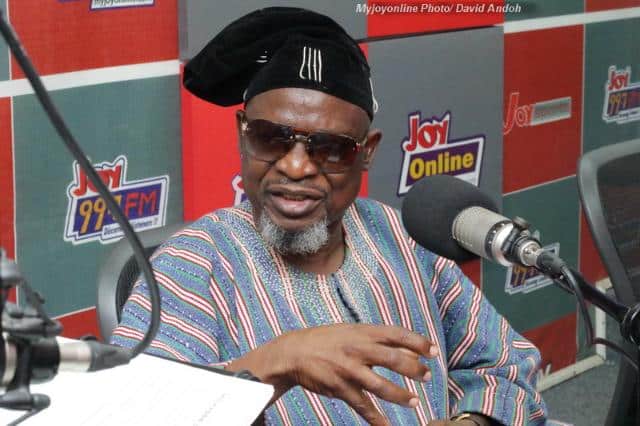
    Former Minority leader, Haruna Iddrisu, has claimed that the government will need to raise about $10.5 billion by the end of the year to save the economy from collapsing.

    Giving a breakdown, he explained that the government plans to receive $3 billion from the International Monetary Fund (IMF) and bilateral or multilateral donors each.

    However, he noted that the government is currently unable to determine where exactly it would raise the remaining $4.5 billion to ensure full recovery.

    “The expectation is that 3 billion (dollars) will come from the IMF. Another 3 billion (dollars) from bilateral and multilateral donors. The other 4.6bn (4.5bn) sic. Government has no clue where that will come from. We are in distress, major economic distress. We have gone beyond an economic crisis,” he told JoyNews.

    With respect to receiving support from the IMF, the Member of Parliament for Tamale South, asserted that Ghana would only be able to access the money in July of this year.

    He did not provide reasons for this assertion, however, he said “I do not foresee an IMF closing until July 2023.”

    Government has failed to meet the deadlines it has provided to receive assistance from the Fund. Government had predicted March but failed to see to it.

    The Fund is currently unable to release the funds to Ghana due to the country’s inability to receive financial assurance from creditors who are to provide assurances they will restructure its debt as a condition of signing off on the loan.

    According to the IMF, until this is done, it would not be able to provide the credit facility.

    In view of this, economic experts are projecting that Ghana would receive assistance from the IMF by May this year.

    Meanwhile, Finance Minister Ken Ofori-Atta has said a memorandum of understanding with official creditors and an agreement in principle on Eurobond restructuring are expected by July, with a 2030 Eurobond partially guaranteed by the World Bank included in the restructuring.

    Ghana began formal engagements with the IMF in July 2022 and reached a staff agreement in December of that year.

  • Govt’s debt exchange programme is good – Senyo Hosi

    Govt’s debt exchange programme is good – Senyo Hosi

    Convenor of the Individual Bondholders Forum, Senyo Hosi, has described the policy document of the government’s second round of debt exchange programme as a “good deal.”

    According to him, the terms of this policy are more favourable in comparison to the earlier debt restructuring exercise and thus must be critically analysed by pension funds that are its target.

    Speaking on JoyNews’ PM Express, he said, “It’s a good deal, no two ways about that. That it is technically or financially a good deal, but inherent may be political risk. But outside of that is a political risk that pension funds will always have to face because their liabilities are long term not short term.”

    He noted that the main opposition to the programme from the labour unions is due to the government once again not prioritizing stakeholder consultations.

    “I don’t think that if government manages the consultation properly and the communication properly, it can’t get some progress with the labour unions and the trustees. You could hear from the trustees – because they’re a bit more technical – and they realize that if you’re actually looking at boosting pensions returns of the union members, it is rather the deal you should take.

  • Cringe: Second wave of domestic debt exchange in the offing – Finance Minister hints

    Cringe: Second wave of domestic debt exchange in the offing – Finance Minister hints

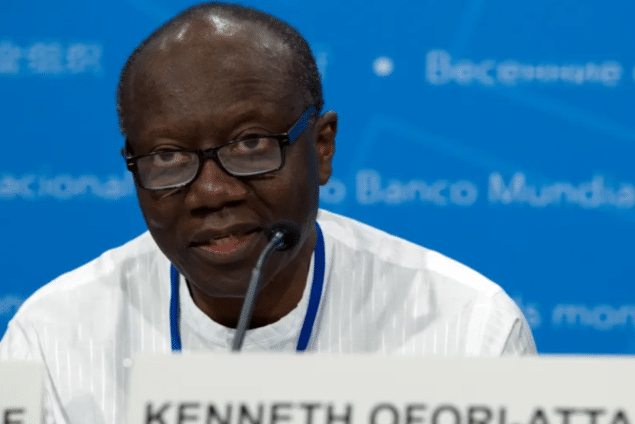
    The Minister for Finance, Ken Ofori-Atta, has hinted that there will be an imminent 2nd round of restructuring of the country’s domestic debts.

    According to him, despite completing the restructuring of some GH¢98bn worth of domestic debts in February, there are ongoing negotiations to restructure some additional GH¢123 billion domestic debt instruments.

    Mr. Ofori-Atta made this known during a presentation to stakeholders on macroeconomic developments and the upcoming public debt restructuring as part of the ongoing IMF/World Bank spring meetings in the US.

    “In February we successfully completed the first pillar of our domestic debt exchange programme, we realized that there was no other alternative to a full domestic debt exchange,” he told stakeholders.

    “The February DDEP covers GHS 98bn of our domestic debt and we expect the rest of our debt instruments to be included in the perimeter of the domestic debt to be exchanged,” he added.

    Amongst the debt instruments to be affected by the next round of debt exchange are Pension fund holdings, coco-bills, US$ local bonds, local currency loans, and Government’s debt to the Bank of Ghana, totaling some GHS 123bn.

    Ken Ofori-Atta however insists treasury bills will not be affected.

    “Talk of treasury bills, it has been excluded to preserve financial stability and ensure government funding.”

    Government in December at the start of its first domestic debt exchange programme had indicated it could exchange more domestic debt stating “it intended to exchange domestic non-marketable debt and Cocoa bills, under comparable terms at a later stage”

  •  BoG raises policy rate to 29.5%.

     BoG raises policy rate to 29.5%.

    The Bank of Ghana has increased its policy rate by 150 basis points to 29.5% to help check the high inflation and any downside risks to the economy.

    This means the cost of credit will continue to remain high, affecting household spending and private sector growth.

    Average lending rates shot up marginally to 36.64% in February 2023, from 35.58% recorded in December 2022. This is equivalent to 3.02% interest rate on loans per month.

    Announcing the development few minutes ago, Governor of the Bank of Ghana, Dr. Ernest Addison, said the ease in price pressures abroad will likely impact positively on Ghana’s domestic inflation profile going forward.

    “Headline inflation has declined marginally for two consecutive months, but continues to remain relatively high compared to the medium-term target of 8±2 percent. To place the economy firmly on the path of stability and reinforce the pace of disinflation, it is important that the monetary policy stance be tuned further to re[1]anchor inflation expectations towards the medium-term target. Given these considerations, the MPC decided to increase the Monetary Policy Rate by 150 basis points to 29.5 percent”, he said.

    He said the recent Domestic Debt Exchange Programme (DDEP) has impacted negatively on banks, hence the need for the Central Bank to make necessary adjustments to its regulatory requirements to support the banks.

    “Whiles the domestic economy still faces relatively tight global financing conditions and heightened uncertainty about the global economic outlook, the effects of these could be amplified inherent vulnerabilities including structural and excess liquidity following the DDEP and the widening negative outlook gap”.

    He, however, said the banks remain strong, sound and stable based on its recent stress test.

    He added that the Monetary Policy Committee of the Bank of Ghana will continue to monitor developments within the banking industry to reduce the downside risks to the economy.

    He explained that on fiscal policy, the Committee noted that the budget statement for 2023 has set fiscal policy on a consolidation path which is consistent with key elements agreed with the IMF at the Staff Level in December 2022.

    “The domestic debt exchange, new revenue measures, and structural fiscal reforms will provide significant reduction of debt service and help create fiscal space”.

    Dr. Addison stated that the fiscal outlook is contingent on financing of the budget and will require the conclusion of the domestic debt exchange programme as well as securing the requisite financing assurances from bilateral donors.

    “Indications are that these discussions are proceeding well. Based on the above, it is imperative that Parliament prioritizes the passage of the revenue bills currently before it. Under the Staff Level Agreement with the IMF, the Bank of Ghana and the Ministry of Finance have finalised a Memorandum of Understanding on zero financing to the budget, which will be signed shortly”, he said.

    He added that the passage of the relevant revenue bills by Parliament will conclude the required prior actions to advance Ghana’s programme to the IMF Executive Board.

    This, he said will be critical in resetting the economy on the path of recovery, including putting it firmly on a disinflation path and sustained growth.

  • Government transferring its bankruptcy to Ghanaians – Minority Leader

    Government transferring its bankruptcy to Ghanaians – Minority Leader

    The Minority Leader in parliament, Cassiel Ato Forson, has accused the government of burden shifting instead of the burden sharing it proposed since the country’s economic crisis began.

    He said the domestic debt exchange programme is the government’s way of transferring its bankrupt nature to individuals, banks, and Ghanaians at large.

    Ato Forson asserted that Ghana is the first country ever to undergo debt restructuring and this is the first time the country has defaulted on its domestic debts.

    Speaking on the floor of parliament on February 16, 2023, noted that the country’s current status was and is still an avoidable phase if the government commitment to embark on stringent expenditure cut measures.

    “Domestic debt restructuring is like surgery; you don’t do it if you are not sure. There is a good reason no African country has restructured its debts. There is a good reason Ghana has never defaulted on the payment of domestic debts. Today Ghana is the first country ever to restructure its debts. This is the first time we have defaulted on our debt payment,” he stated.

    The Minority Leader further stated: “Instead of the government engaging in burden sharing, they are engaging in burden shifting, Burden shifting in the sense that if the country is going on a very catastrophic, it shows by cutting expenditure. But what this government is doing, is shifting the burden to the ordinary Ghanaian. By the time this government will be done with what they are doing, the insolvency we are seeing, the bankrupt Ghana we will now see bankrupt pensioners, bankrupt individuals, and bankrupt rural banks.”

    “We are only transferring the bankruptcy from the central government to individuals, unfortunately, our country is simply bankrupt,” he concluded.

  • Government draws closer to securing IMF programme

    Government draws closer to securing IMF programme

    Fund’s Executive Board is expected to approve the country’s bailout request by end of first-quarter 2023, with government having already obtained a government-secured staff-level agreement (SLA) three months ago.

    Although the deal also hinges on a number of prior actions, key among which is the restructuring of public liabilities through the debt exchange programme – expected to be completed before the request can receive approval, successful closure of the DDEP paves way for government to expedite action toward reaching a full agreement with the Fund.

    In addition to the DDEP, government is seeking to restructure its foreign debt and has initiated discussions with bilateral lenders to create an official creditor committee… which is the initial step required to begin negotiations on debt-relief.

    If this step is not taken, approval of the IMF programme will be delayed; which could mean that the much-needed disbursements will be hindered.

    As much as other countries undergoing the common debt restructuring framework treatment have faced slow progress, government is hopeful of a rapid debt overhaul.

    “Ghana stands ready to complete all prior actions before end-March 2023; but more importantly, Ghana is committed to the IMF programme as a whole,” Finance Minister Ken Ofori-Atta said during the announcement of the SLA.

    He added that: “We can only get to the IMF Board if we get sufficient commitment from our creditors in support of the debt operation”.

    Two weeks ago, German Finance Minister Christian Wolfgang Lindner pledged unwavering support for the creditor committee’s establishment at the Paris Club for Ghana.

    “I hope that an international creditors committee under the current framework can be formed soon. I would like to call on all creditors to join the efforts as swiftly as possible, and to be frank I remind China of its responsibilities as a very important bilateral creditor to Ghana – as I did already on the international level on occasion; for example, in the last IMF meeting,” the German Finance Minister said.

    According to Reuters, the Paris Club of creditor nations has contacted other bilateral creditors, such as China and India, to engage in forming the committee.

    Following Chad, Ethiopia and Zambia, Ghana is the fourth country to request a debt restructuring under the G20 Common Framework, which was established in 2020 to simplify the coordination of creditor governments in restructuring debts of low-income countries after the COVID-19 pandemic.

    Data from the Institute of International Finance (IIF) suggest that China is Ghana’s single biggest bilateral creditor with US$1.7billion of debt, while the country owes US$1.9billion to Paris Club members. Chinese lending represents around 80 percent of non-Paris Club debt, as the nation’s total external debt is US$28.4billion.

    Calling on all creditors, the German Finance Minister added that it is essential to see a fair sharing among all creditors, saying: “This is why we need the creditor committee as soon as possible, in which China has to participate”.

    In December 2022, the main holders of Ghana’s foreign debt established a creditor consortium to negotiate debt restructuring with government after a surprise announcement about the suspension of interest payments on its external debt. Already, data from the financial market data aggregator, Refinitiv, show that Ghana’s dollar-denominated debt ranges from 2023 to 2061, totalling more than US$13billion.

    The nation’s Debt Sustainability Analysis (DSA) demonstrates that debt servicing absorbs more than half of total government revenues and almost 70 percent of tax revenues. Additionally, the total public debt stock, including that of state-owned enterprises among others, exceeds 100 percent of the gross domestic product (GDP) and had accelerated to GH¢575.7billion at the end of November 2022, according to official data.

  • Former CJ-Gabby saga : A display of arrogance of power – A.B.A Fuseini fires Gabby Otchere

    Former CJ-Gabby saga : A display of arrogance of power – A.B.A Fuseini fires Gabby Otchere

    The comments made by prominent NPP member Gabby Asare Otchere Darko towards the former Chief Justice for speaking out against the Debt Exchange Programme, according to Sagnarigu MP A.B.A. Fuseini, are proof of the arrogance of power.

    According to former Chief Justice Alhassan Bashir Alhassan Fuseini, Sophia Akuffo should be praised for standing up for pensioners rather than condemned.

    “This government has become so dead insensitive and arrogant,” he claimed.

    “This speaks volumes about the kind of government that we have—the kind of government that shows not an iota of respect to people who have sacrificed their entire working lives for this country,” he said.

    “They don’t care about the people of this country; this government is not interested in the people of this country.” “They are just interested in what they can make as a nation, and that is where the problem is, so for him to say things like this is very unfortunate,” he added.

    He applauded the former Chief Justice for hitting back at Gabby Asare Otchere Darko.

    He also commended Sophia Akuffo for picketing at the Finance Ministry in solidarity with the pensioner bondholders’ call for exemption.

    “She has shown that she has the disposition to stand with the downtrodden, to stand with the long-suffering people of this country, and especially with the very vulnerable pensioners who have nobody to speak for them,” he added.

    It would be recalled that on Friday, former Chief Justice, Sophia Akuffo joined the pensioner individual bondholders to picket at the Finance Ministry to call for an exemption from the Debt Exchange Programme.

    But her decision to show solidarity with the pensioners was criticised by Mr Otchere Darko.

    The cousin of President Akufo-Addo, in a series of tweets on Sunday, said the former Chief Justice should have taken the time to understand issues pertaining to the ongoing Domestic Debt Exchange Programme (DDEP) before choosing the side of the pensioners.

    “For a former CJ to take up a noble cause such as she did but at such late hour when all was done and for all that publicity, she owed it to herself and her social standing to have understood the issues far better than what she exhibited last Friday. She is bigger than that,” Mr Otchere-Darko tweeted.

    Meanwhile, former Chief Justice Sophia Akufo has fired back at the President’s cousin, Gabby Asare Otchere-Darko, describing him as a “disturbance.”

    She said Mr Asare Otchere-Darko “can call me paranoid, but I don’t care,” adding, “He doesn’t decide for me what I need to do and not do.”

  • With interest rates at 35%, the government secures a GHC 500 million oversubscription from T-bills

    With interest rates at 35%, the government secures a GHC 500 million oversubscription from T-bills

    The current auction for Treasury Bills on February 3, 2023 saw an oversubscription of roughly GH500 million.

    The Central Bank’s auction results show that the 91, 182, and 364-day treasury bills brought in GH1.95 billion for the government.

    The aim of GH 1.423 billion is still 530.83 million away.

    The 91-day bill, which raised GH1.571.46 billion and the 182-day bill, raised GH382.37 million, attracted the majority of subscriptions.

    However, the interest rates were generally around 35%.

    On the other hand, the 365-day charge was not a part of the subscriptions from the previous week.

    The increase in the subscription is an indication of investor confidence as the government has made some significant progress in the debt exchange programme.

    The government reached an agreement with banks to pay a 5% coupon rate in 2023, a development that has made the government’s aim of attaining an 80% participation rate in the program.

    Individual bondholders are still calling on the government to exclude them from the programme, however, as the deadline for the invitation draws nigh government is yet to announce their exclusion or otherwise.

    However, the deadline for the debt exchange programme is February 7, 2023.

    But pensioner bondholders have picketed the Finance Ministry to demand a total exemption from the debt exchange programme.

  • IMF board clearance for Ghana is anticipated by the first quarter of 2023 – Fitch Solutions

    IMF board clearance for Ghana is anticipated by the first quarter of 2023 – Fitch Solutions

    According to the international rating agency Fitch Solutions, the IMF board may have approved Ghana’s economic recovery plan by the first quarter of 2023.

    According to reports on myjoyonline.com, Mike Kruninger, a senior country risk analyst at Fitch Solutions, stated that “the first thing I should mention is that the IMF Executive Board approval will come in the next weeks.”

    He did note, however, that further postponing the Board’s approval would worsen investor mood given the nation’s present inflation rates and economic downturns.

    “So, in the first quarter of 2023, should this not happen, we will be expecting investor confidence to remain rather weak in the coming months which will put additional pressure on the exchange rate. So, in that case, the currency will depreciate furthermore significantly than we currently anticipate,” he explained.

    Mr. Kruninger added, “so what will happen in that instance is inflation will remain much higher for much longer. And this will then weigh on incomes, it will weigh on overall private sector activities.”

    “So, in this instance, the economic wealth will become much weaker than the 2.9 percent that we are currently forecasting,” he stated.

    According to a January 2023 Sub- Saharan Africa Macroeconomic Update, the progress made by the country in the debt exchange programme, a key requirement by the IMF has been lauded and is an indication of the country’s chances of getting the Fund’s support.

    Ghana is seeking $3 billion in financial support from the International Monetary Fund to shore up its reserves and boost its balance of payments.

  • To address the debt exchange program, a group effort is required – financial consultant

    To address the debt exchange program, a group effort is required – financial consultant

    According to financial consultant Mr. Bernard Ofori-Adjei, Ghana’s debt exchange program is a major economic dilemma that calls for a group effort to overcome in order to put the country on the proper path to economic stability and advancement.

    He regretted that the administration had not adequately explained the debt exchange scheme to the populace in order for them to fully comprehend, value, and embrace the dynamics and complexities involved as well as the advantages that the country stands to earn.

    Mr. Ofori-Adjei highlighted in an interview with the Ghana News Agency (GNA) in Sunyani that the debt exchange has turned into a national problem that we all need to mouth to jaw and settle if the country fails “to get the IMF deal” passed.

    “Whether we like it or not it is necessary we do this to get the IMF deal pass or else the nation’s economy will head towards a dangerous path which would be difficult to repair,” Mr Ofori-Adjei stated.

    “The nation’s economy is now in a state of dilemma, and we cannot afford to reject the debt exchange programme. But the problem is that the government is not communicating well to the citizens on the debt exchange programme,” he stated.

    Currently, Mr Ofori-Adjei said the nation’s external capital market had closed, and the “best option for Ghana now is to go for the IMF deal and debt exchange has become part of the IMF conditionalities.”

    “If the debt exchange goes through the government can reduce about US14 million from its total debt which would provide the government space to go to the capital market again to get the IMF support”.

    “As we speak now the nation has a total deficit of export cover of over GHC1.5 billion dollars, an indication that currently the nation is in a shortfall in its reserve for international trade, so we need the debt exchange programme to go through the IMF conditionalities”, he stated.

    Mr Ofori-Adjei therefore called on everybody to rally behind the government to go through the debt exchange programme, saying “debt and exchange or restructuring has not been easy for any country. Any moment a country takes such a decision, then that country’s economic situation is in a mess.”

    “Many people are resisting the debt exchange programme because the government has not communicated well for the people to clearly understand the financial situation of the country,” he stated.

    Mr Ofori-Adjei also called on the government to reduce its ministerial portfolios, and cut down its presidential staffers to save the nation’s financial coffers.

    “In fact, we need the debt exchange programme at all costs to put the nation on the right path to her economic transformation,” he added.

  • Treasury bills subscribed to 20% despite high interest rate

    Treasury bills subscribed to 20% despite high interest rate

    For the first time in weeks, the government missed its goal for treasury bills by 20%, failing to meet its goal.

    Out of the objective of GH2415 million, the government succeeded in GH1930 million, according to the results of the most recent Bank of Ghana auction on January 20, 2023.

    The 91-day bills, 182-day bills, and 364-day bills produced the biggest amounts of money, totaling GH 1,581.49 million, GH 292.43 million, and GH 56.82 million, respectively.

    Interest rates have remained high at 35.8%, nearly the same rate as for last week’s auction, despite the steep fall that can be linked to uncertainty caused by controversies surrounding the debt swap scheme.

    Last week’s auction saw an oversubscription of 52% of the target.

    Treasury bills have been oversubscribed since the announcement of the debt exchange programme by the government.

    The government noted that treasury bills were exempt from the programme, an assurance many attributed the confidence in the securities market to.

    Meanwhile, the finance minister after meeting individual bondholders assured that treasury bills will not be affected by the debt exchange programme.

    “We can’t afford to touch it. Let me assure you, Treasury bills will forever remain sacrosanct. Treasury bills are exempted completely. We have done the sustainability analysis. We are not including treasury bills. That is how government funds its operations,” he said.

  • Kwabena Marfo fumes at ‘heartless, insensitive’ Ofori-Atta for including pensioners in DDEP

    Kwabena Marfo, a broadcast journalist with Despite Media group has censured Minister of Finance, Ken Ofori-Atta over the decision to include pensioners in the Domestic Debt Exchange Programme (DDEP).

    Kwabena Marfo says the move by the finance ministry smacks of heartlessness and insensitivity on the part of finance minister, Ken Ofori-Atta.

    He wonders if Ken Ofori-Atta exhorted his mind to the plight of the pensioners and the possible effect of the move on them before rolling out the programme.

    “He is heartless and insensitive to the plight of the people. Only someone who doesn’t care and has concern for people will do what Ken Ofori-Atta is doing. Most of the people you see holding the bible are hypocrites.

    “If you want to sin and go scott free, just take up the Bible. These are some of the reasons people don’t go to church. If Ken Ofori-Atta was in my church, I wouldn’t step there. I won’t even attend his church. I have never seen a heartless human being like that. How do you go after the monies of pensioners. These little monies from the pensioners and you want to touch it.

    “Has he thought about the people who could die as a result? Has he thought about the people who will not able to afford medications? How can you take the country ransom and behave like we are slaves. We shall see in 2024,” he fumed.

    The decision to include pensioners in the DDEP has courted controversy with concerns over how the over-60-year-olds will survive.

    Peter Kojo Nyansepe, a 77-year-old sick retiree is dreading the program as he believes it could drive him to his grave.

    He told Joy News that he will picket at a branch of the GCB to retrieve his monies.

    “I gave the money to the Ghana Commercial Bank so they’ll give me the money before I come. I’m going to stay there.

    “If they say the money is not there, I’m going to stay there. I’m going to stay there until they carry me wherever they want to carry me because I cannot walk myself so they’ll carry me.

    “Wherever they want to carry me they have to carry me and go. That’s the only thing I can do. I cannot fight them also”, he said.

    Meanwhile the Pensioner Bondholder Forum called off its earlier threat to picket at premise of Ministry of Finance last week.

    The decision follows invitations for extensive talks with the ministry over the DDEP.

  • G20 creditors agree to Ghana’s debt relief talks

    G20 creditors agree to Ghana’s debt relief talks

    All member countries of the G20 group of economic powers are on board for a restructuring of Ghana’s debt.

    The Paris Club members are ready to take the first step toward forming a creditor committee, an official of the club told Reuters.

    Ghana last week requested a restructuring of debt it owes to other governments, becoming the fourth country after Chad, Ethiopia and Zambia to do so under a G20 Common Framework.

    The programme, which was launched in 2020, was supposed to streamline the process of coordinating among creditor governments the restructuring of low-income countries’ debts after the pandemic.

    However, progress has proven glacial for the first cases, a situation Western countries say is in part due to a lack of restructuring experience by China, a non-Paris Club G20 creditor that has become a major lender in recent years.

    “There is a commitment by the leaders to form the creditor committee, so it’s a question of time. We know that all the G20 members are committed to undertake the debt treatment under the Common Framework,” the Paris Club official told journalists.

    The official requested they not be named to speak freely about the restructuring situation.

    Forming a creditor committee took a couple of months for previous cases, however, the official said the Paris Club members were all ready to do so for Ghana and hoped it could be done in a month.

    The official said Ghana’s case was less complex than Zambia, whose case the official said was progressing after struggling since it became the first African country to default after the pandemic.

    “We think that the process will become smoother and smoother on the basis of the previous cases,” the official said, adding that Ghana’s authorities had sought assurances its case would be dealt with in a “timely manner”.

  • Individual bondholders may opt out of the debt exchange program, – minister

    Individual bondholders may opt out of the debt exchange program, – minister

    Individual bondholders who requested to be left out of the debt swap program were informed by Finance Minister Ken Ofori-Atta that doing so was not required.

    The debt exchange program is voluntary, according to the Minister. No bondholder is required to accept the terms of the scheme, he said.

    He was speaking to members of the press and bondholders who had met with him to discuss the issue. He stated that the administration aims for an 80 percent program participation rate.

    The move is aimed at helping the government address the economic challenges confronting the country.

    “It is a voluntary programme and the expectation is that we have an 80 percent participation and so, that should be factual for everybody,” Mr Ofori-Atta said.

    The debt exchange programme seeks to encourage bondholders to voluntarily exchange GH¢137 billion domestic notes and bonds of the Republic including ESLA and Daakye for a package of new bonds.

  • Debt Exchange Programme: Minority to embark on nationwide roadshows

    Debt Exchange Programme: Minority to embark on nationwide roadshows

    The Minority NDC Caucus in Parliament is set to hold nationwide roadshows to promote a better understanding of the Debt Exchange Programme.

    The Programme is a government initiative seeking to classify domestic bonds into four categories to create fiscal space as part of preparations to qualify Ghana for an International Monetary Fund facility.

    Among other things, the roadshows would rally Ghanaians to demand a more favorable resolution to the alleged unprecedented economic crisis Vice President Mahamudu Bawumia-led Economic Management team has plunged the country into.

    Addressing a press conference in Parliament, in Accra on Monday, Mr Haruna Iddrisu, the National Democratic Congress (NDC) Minority Leader, said: “The inclusion of individual bondholders in the Domestic Debt Exchange is the biggest transfer of funds from the pockets of Ghanaians to the government.”

    “ This will leave affected persons, mainly the middle class, improvised while worsening the plight of the poor. This must immediately be stopped.”

    “We wish to take this opportunity to indicate our intention to embark on nationwide roadshows to foster a deeper understanding of this matter and rally Ghanaians to demand a more favorable resolution of the economic crisis….”

    Mr Iddrisu, the Member of Parliament for Tamale South, called on President Akufo-Addo to suspend the ongoing Domestic Debt Exchange Programme.

    He, therefore, urged the President to engage in more comprehensive consultations on the matter with all stakeholders and the Ghanaian people.

    Meanwhile, the Government on Monday announced an extension of the Debt Exchange Programme to Tuesday, January 31, 2023.

  • Exempt seniors and the disabled from the debt exchange program – Lord Mensah

    Exempt seniors and the disabled from the debt exchange program – Lord Mensah

    Professor Lord Mensah, a professor of economics at the University of Ghana Business School, has petitioned the government to exclude bondholders who are presently unable to engage in productive economic activity to earn income.

    He contends that the amount of bonds held by pensioner bondholders is not a sizeable portion that the government cannot do away with.

    He pointed out that individual bondholders are not solely responsible for the program’s performance.

    Because you typically know very well that producing economic activity surrounding these people will be quite low, I rather we exempt retirees and the disabled.

    “So, I will plead with the government: I don’t think the quantum of bonds that they are holding within the entire debt structure will be so much,” he said. “I don’t think they will exceed GHC3 billion,” he is quoted by asaasenews.com.

    Meanwhile, pensioner bondholders have served notice that they would converge at the Ministry of Finance on January 23, 2023, if the finance minister does not honour their invitation for a broader stakeholder engagement.

    The forum, led by Dr. Adu A. Antwi, stated that a petition has been sent to the finance minister to exclude them from the programme and protect their pensions but all efforts to reach the minister have been unsuccessful.

    According to him, the convergence at the ministry is to register their displeasure over their inclusion in the debt exchange programme.

    Speaking to journalists on January 16, 2023, he said “If, by January 23, there is no response from the Finance Minister, about 50 of us will converge at the Ministry. A lot of us would have loved to be there but some of us are weak and we cannot even stand for long.”

    Pensioners Petition Finance Minister, Others To Protect Their Benefits

    Source: Ghanaweb

  • DDEP: On January 23, pensioner bondholders will congregate before the MoF

    DDEP: On January 23, pensioner bondholders will congregate before the MoF

    Pensioner bondholders have given notice that if the finance minister does not accept their request for a larger stakeholder engagement, they will assemble at the Ministry of Finance on January 23, 2023.

    A petition to keep them out of the program and secure their pensions was addressed to the finance minister, according to the forum, which was run by Dr. Adu A. Antwi, but all attempts to get in touch with him have been futile.

    He claims that the ministry is coming together to express their discontent with being included in the debt exchange program.

    He noted that the pensioners still maintain their stance on their exclusion from the programme despite the deadline of January 16, 2023.

    Meanwhile, the deadline has been extended by the governemnt to January 31, 2023 for broader stakeholder consensus to be made.

    On January 16, 2023, the finance minister announced, “Building consensus is key to a successful economic recovery for Ghana. Pending further stakeholder engagement with institutional and individual investors recently invited to join the debt exchange programme, the government is extending the DDE expiration to Jan 31, 2023.”

    The government announced the inclusion of individual bondholders in the debt exchange programme. But the bondholders have noted that this will not be in their best interest and may lead to a depletion of their investments.

    Pensioner Bondholders to converge at Ministry of Finance on January 23

  • Pensioner bondholders are concerned for their safety, as they reject the government’s invitation

    Pensioner bondholders are concerned for their safety, as they reject the government’s invitation

    Pensioner bondholders have admitted that they are too terrified to speak out, despite the fact that their involvement in the debt exchange plan has an impact on their investments and means of subsistence.

    They contend that the government violated the zero-risk agreement they had before enrolling when it decided to include them in the program, which is unfair to them on top of being unfair to the government.

    In order to protect herself from attack, a 61-year-old retiree spoke to GhanaWeb Business on the condition of anonymity. She claimed that when she first became a pensioner, the bank encouraged her to buy government bonds and treasury bills because there was no chance she would lose her money.

    But since the announcement was made, she has dreaded the decision to partake in government bonds.

    She said, “I went to the bank when I retired and asked them for good advice on how I can use my money. They told me to invest in government bonds and treasury bills because there was no way the government will owe me. I only had my first coupon on January 9, 2023, and that’s what I have been using to buy medicine and take care of myself. Thankfully I no longer pay school fees, but other responsibilities demand that I am financially stable.”

    “They can’t do this to us. And even though it is our own money, we can’t say much or reveal our identities because of fear of what may happen to us.
    I realized that being too vocal in Ghana today will only land you in trouble,” she said on anonymity.

    The Pensioner bondholders have stated that they will not partake in the debt exchange programme.

  • Debt exchange programme extended to January 31

    Debt exchange programme extended to January 31

    The deadline for the government’s domestic debt exchange programme has been extended to January 31.

    This has been done to increase stakeholder involvement in the policy proposal.

    In a tweet posted on Monday, the Office of the Finance Minister noted that the deadline had been extended until the end of the month in order to give the government more time to build consensus for the program’s successful execution.

    http://backend.theindependentghana.com/reject-domestic-debt-exchange-programme-ghana-individual-bondholders-forum/

    “Building consensus is key to a successful economic recovery for Ghana.

    “Pending further stakeholder engagement with institutional and individual investors, recently invited to join the debt exchange programme, government is extending the expiration of the DDE to Jan 31, 2023”, the tweet said.

  • Debt exchange: Don’t prevent bondholders from going to court – Lawyer

    Debt exchange: Don’t prevent bondholders from going to court – Lawyer

    A lawyer and business strategist, David Ofori, is of the view that telling bondholders they will lose when they go to court is not a fair call.

    According to him, whether they will be successful or not is not the case of anyone outside the court to determine.

    He also added that discouraging affected bondholders may lead to more unrest than there already is.

    “A contract has certain principles for it to be able to become a contract. But no contract can be enforced if it’s illegal. What if you went to court and a judge declared that, that very clause you’re talking about is void for illegality as an example, notwithstanding that you entered into it. I’m not saying that, that is what will happen.

    “The point I’m making is there’s a public policy principle I want us to avoid; that public policy principle is the situation where anybody, it doesn’t matter who will deny the individual the ability to go to court and seek redress even if he will lose. Give them that chance. Don’t prevent people from going,” myjoyonline.com quoted him.

    He further explained, “Our constitution under both the directive principle of state policy and throughout article 20 draws attention to our economic right, and the right of a person’s asset not to be expropriated. If for example, you deny me, my principal, essentially are you not denying me my right to my asset?

    “So it becomes a constitutional issue as to whether you will go to the supreme court for interpretation or whatever, that’s another matter. I want to emphasise that no lawyer will ever tell anybody that don’t go to court. I’m not advising anybody to go to court either.”

    He added that denying people the opportunity to seek legal redress is also a danger to the economy.

    “I’m more concerned about the first approach many people take, ‘don’t go to court, you will lose etc,’ because it makes people frustrated and the opposite of ‘don’t go to court, you will lose’ is very dangerous for the society. I think we should avoid that…let them go and leave the judges to decide,” he said.

    Lawyer Dorte made the statements on the back of the government’s decision to include individual bondholders in the debt exchange programme.

    The Finance Ministry has cautioned individual bondholders who refuse to take the Amended and Restated Exchange Memorandum under the debt exchange programme that they will find it difficult to obtain a judgement against the government.

  • An explainer on Ghana’s debt exchange programme

    An explainer on Ghana’s debt exchange programme

    Debt exchange has recently emerged as one of the expressions that Ghana’s media uses the most frequently.

    Government representatives, legislators, and financial experts frequently use this phrase while discussing how the Ghanaian government would manage the enormous debt it has accumulated over the previous few years, which many people believe is the root of the nation’s economic problems.

    A debt exchange scheme known as the Domestic Debt Exchange (DDE) program was announced by the government through the Ministry of Finance.

    Following threats of strikes in response to the announcement, the administration changed some DDE specifics. The announcement caused some controversy in the labor sector.

    However, the average Ghanaian does not fully understand what this Debt Exchange scheme is, even if they can be affected by it.

    This article aims to clarify all aspects of the Debt Exchange scheme.

    http://backend.theindependentghana.com/individual-bondholders-should-be-excluded-from-the-debt-exchange-program-ibf-to-government/

    What is a bond?:

    Every government in the world, even those of developed nations like Germany and the United States, borrows money both domestically (from its people) and internationally to fund its economy.

    By issuing debt instruments like bonds through financial intermediaries like banks and other financial institutions, it does this.

    If a regular Ghanaian lends the government a specified sum of money (principal) after a specified amount of time, the government offers a profit (interest). This contract is an example of bonds (government bonds).

    Debt Exchange:

    Now, the government is attempting to modify the interest it promised the Ghanaian who lent it money (the bondholder) as well as the time period for which the lender is meant to receive his interest and principle back through its debt exchange program, or DDE.

    In other terms, the debt exchange refers to the government replacing the original arrangement (the period and the guaranteed interest) it had with the bondholder with a new one.

    For instance, if you had a government bond as of December 1, 2022, which was due to mature in 2025, the government is now promising you four new bonds (agreements) with maturities set for 2027, 2029, 2029, 2032, and 2037, respectively.

    Additionally, you are anticipated to receive 0% interest in 2023, 5% interest in 2024, and 10% interest in 2025, which will continue until the bond’s expiration (when you are expected to get your investment with the promised interest).

    Consequences of debt exchange:

    Why are many bondholders protesting the government’s proposal, then? Will they suffer a financial loss?

    Well, the time worth of money is the basis for the majority of these denials. In other words, even if bondholders will receive their investment back, doing so later means that due to inflationary pressures, the value of the money they receive will be lower.

    In other words, you can buy a house with the GHC 100,000 you would earn in 2023, but you might not be able to do so in 2027.

    Additionally, some bondholders depend on the interest payments they obtain from the government for their daily needs, therefore their way of life would be impacted.

    Who will the DDE programme affect?

    The government first claimed that the initiative would have an impact on private banks, investment firms, insurance plans, pension funds, and non-resident investors.

    However, following pressure and strike threats from labor unions, the government disallowed pension funds that may have impacted organizations like the Health Services Workers’ Union, Mineworkers Union, Trades Union Congress, Ghana Medical Association, and Chamber of Corporate Trustee, Ghana Registered Nurses and Midwives Association Ghana National Association of Teachers Ghana National Association of Graduate

    Individual bondholders have now been included by the government to the DDE program.

    But many Ghanaians were already indirectly impacted by the program’s inclusion of financial institutions since they were unable to get their interest and principal payments. This was true even before the introduction of individual bonds.

    What happens if you decide not to take the government’s DDE offer:

    The DDE is a voluntary initiative, and the government has provided deadlines for domestic bondholders to join that it has repeatedly amended. According to reports, government bond intermediaries are urging holders to join the scheme by sending alerts to them.

    There is a chance that government bondholders will experience some undesirable effects, even though the government has not specified any penalties for refusing to participate in the scheme.

    For instance, if the bond’s maturity date has passed, it’s possible you won’t receive your money, in which case your sole recourse is to file a lawsuit against the government.

    Another potential is that, like numerous Ghanaians who have invested in private bonds of financial organizations like Data Bank, you can lose all of the interest on your bond and perhaps even some of your investment.

  • Debt Exchange: After building wealth on our backs,you are now putting your hands in our pockets – Senyo Hosi to politicians

    Debt Exchange: After building wealth on our backs,you are now putting your hands in our pockets – Senyo Hosi to politicians

    A financial and economic policy analyst Senyo Hosi has criticised the government for its decision to include individual bondholders in its proposed debt exchange programme.

    Speaking in a JoyNews on Wednesday, December 12, 2022, Hosi said that the government has squandered all the resources of the country which has led to the current economic mess and it is not lifting a finger to resolve it.

    He added that the government is rather worsening the hardship ordinary Ghanaians are facing by tempering with their investments which they depend on for survival.

    “On our backs, you are living large. On our backs, you guys have built wealth that you never merit. On our backs, you are living lives that your salaries can not justify.

    “And nobody is chasing you for it. You can keep it. At the right time, God will ask you. But please don’t come and now put your hands in our pockets. Some people called saying now they don’t know how there are going to pay their wards’ school fees.

    “… what crime have individual bondholders committed? Their only crime is that they trusted their government,” he said.

    The government after promising that its debt exchange programme, dubbed Domestic Debt Exchange (DDE), will only affect securities dealers and funds, private banks and investment companies, insurance schemes, pension funds, and non-resident investors, has now extended it to individual bondholders.

    This was after it excluded pension funds from the programme after severe pressure and threats of strikes by labour unions.

  • Debt exchange program to bring economic indicators back to one-digit territory – Government

    Debt exchange program to bring economic indicators back to one-digit territory – Government

    Ghanaians could be curious about the state of the economy when the debt exchange program is finished.

    The debt exchange program was made public by the Finance Ministry, inviting bondholders to trade in existing bonds for new ones with later maturities.

    The government said that the country’s high debt level made this essential.

    While answering some frequently asked questions on the debt exchange programme, the government said “Once the domestic debt exchange is successfully completed, and as progress is made on securing international financial support, the government will benefit from macroeconomic stability, larger fiscal space, and new affordable debt service obligations. The associated risks and discount factors are expected to then go back to reasonable levels, close to one-digit territory.

    “As such, the new bonds are expected to ensure the maximum recovery possible for the domestic financial sector under our very constrained fiscal and debt situation,” it added.

    However, spelling out the modalities of the programme during its announcement, the government noted that individual bondholders were excluded from the programme.

    Also, the government strongly discouraged Eligible Holders from making partial Offers, noting that, the government shall, in its sole discretion, determine whether to accept or reject any partial Offers (i.e., Offers made by an Eligible Holder in respect of less than their/its entire holding of Eligible Bonds).

    “In fact, by tendering their Eligible Bonds, Eligible Holders represent and warrant that such Eligible Bonds constitute all the Eligible Bonds beneficially owned by them,” the ministry added.

  • Debt exchange programme is a worry to some banks – Yaw Asante

    Debt exchange programme is a worry to some banks – Yaw Asante

    Nigerians complain about lack of new naira notes in banksA section of banks has stated that the debt exchange programme announced by the government has some issues that they have been addressing.

    The Managing Director of FBN Bank Ghana, Victor Yaw Asante, stated that the banks have been engaging the government and other stakeholders on some of the modalities of the programme.

    According to him, the programme poses several challenges to their businesses and also the private sector.

    He however assured that the general public, as well as customers, will be updated as and when any new development occurs.

    “We’ve been engaging all players. This includes the government because they are rolling it and whatever they do has implications for us and our regulators. There has been a lot of engagement since the announcement was made,” he is quoted by myjoyonline.

    “We wait and see. We are now going to bake in all the changes and see how it pans out. The debt exchange programme has many problems. There are liquidity issues,” he added.

    Yaw Asante however added that the debt exchange programme also poses liquidity challenges to banks.

    “Banks are now worried that we may not have liquidity. We are engaging our regulator about how we will manage the liquidity and see how we can have a forbearance around some of the requirements of the regular bank or else it will affect us,” he added.

    On debt forgiveness, however, Yaw Asante intimated that even though it would be relieving to get debt forgiveness, Ghana must make sure to find good ways to solve its debt issues.

    “We owe money. If your debtor forgives you, thank God for it. But for now, we are in a serious position because we are not generating as much as we should generate in terms of debt service and we all know what happened at the beginning of the year, our debt went up, revenue didn’t come as we thought, so it’s good if we get the cancellation,” he said.

    Source: Ghanaweb

  • Debt exchange programme: We cannot survive if individual bonds are included – Government told

    Debt exchange programme: We cannot survive if individual bonds are included – Government told

    Some individual bondholders have vehemently rejected being included in the government’s debt exchange programme.

    According to one such bondholder, Roberta Sittie, a mother of five, her inclusion into the government’s debt exchange programme will rob her and her family of their means of survival.

    She explained that she had invested her entire severance pay into the bond and had been living on the coupons from the bond investment.

    With the introduction of the debt exchange programme, the coupons, which she described as barely adequate, will be robbed from her and her family; putting them in a rather precarious financial situation.

    “That is the money I’m surviving on. The coupon is what I’m surviving on now. Someone will ask, ‘but is she not married?’ Yes, I am married. And my husband also is into contracts, but unfortunately the contract is also not paying.

    “We can’t survive if it is being held, if the bonds are being held or the bonds are being rolled into the debt exchange. So please the government should please think about this. 17 and a half years working and then coming home, no, nobody should include that into their debt exchange, they should think of getting another way,” she said on JoyNews’ PM Express.

    According to her, the government should instead explore other avenues to restructure their debt for debt sustainability rather than including individual bondholders in the debt exchange programme.

    “If it is about they cutting their expenditures, yes. But please on your platform we’re getting through to the Finance Minister, he shouldn’t in any way include our bonds into his debt exchange; we’re begging him because I can’t survive.

    “How much am I even getting on the coupon? It’s even not up to 30,000 and look at the children I have, the number of children with the family I have. It is inadequate. So how do you include me into a debt exchange programme? It’s a no-no,” she said.

    Meanwhile, some individual bondholders are filing a class action law suit against the government for including them in the debt exchange programme.

    Source: Myjoyonline

  • ‘If you were the one’ – A pensioner’s plea to government

    ‘If you were the one’ – A pensioner’s plea to government

    With the government’s 16th January deadline for the debt exchange programme looming close, individual bondholders who were just added to the programme are peeved.

    Many have accused the government of treating them unfairly and also failing to provide enough information on the modalities of the exchange programme.

    The government had introduced the exchange programme to restructure and stabilize its debts to sustainable levels in order to boost economic growth in the New Year.

    However, individual bondholders, like Reverend Venunye Gbeblewu, a pensioner says the government’s proposed debt exchange programme will do more harm than good.

    According to him, when government announced the debt restructuring programme, he had attempted withdrawing his funds only to find out he would lose 30% of his investment during the transaction.

    “But the agreement is that you take my money for three years, you give me benefits for the three years. Then you revert my money back to me. And if you cannot continue, at least give me my money; give me my money so that I can use it for something else,” he said.

    Reverend Venunye Gbeblewu who is currently sponsoring his daughter through her university education at the University of Professional Studies, Accra (UPSA) says without the money, she might have to truncate her education.

    He has called on the President and his Finance Minister to “sit down and ask themselves ‘if you were the one.’”

    “They should sit down, maybe today they are having their money they don’t need anything so they can misbehave anyhow. They’re eating, they’re drinking, they’re flying, doing anything at all. They’re not reasoning. This is the citizens’ life. They live unconcerned. They should go on,” he said.

    Source: Myjoyonline

  • Explain your stance on the debt exchange program allegations – former UT boss

    Explain your stance on the debt exchange program allegations – former UT boss

    Prince Kofi Amoabeng, the founder and former CEO of the now-defunct Unique Trust Bank, has urged the government to be transparent about its position on the proposed Domestic Debt Exchange Program.

    He claims that the government’s present stance on the program is just causing more economic uncertainty and that it should therefore publicly acknowledge its responsibility for the poor judgments made in the face of the current economic difficulties.

    “The government should come out after he [Finance Minister – Ken Ofori-Atta] is done with all needed research and say this is the way we’re going, but not to be changing its position. Because pensioners are talking or complaining, then you say this is not part of it…why?” he said this in interaction with Joy Business.

    “Get a grasp of the full facts and come out one time and explain to the people that this is what we are doing. You cannot just throw information at the people. We know you can make mistakes but the information should be backed by some facts, and then you apologise to Ghanaians for any error made rather than just be telling us stories…really?” Prince Amoabeng is quoted by myjoyonline.com

    Meanwhile, a number of investors who will be affected by the debt exchange programme are being led by Private Legal Practitioner, Martin Kpebu to engage the government over the inclusion of individual bondholders in the debt exchange programme.

    Although individual investors were initially not part of the debt restructuring, the government decided to include individual bondholders in the debt exchange programme some days after the exemption of pension funds from the programme.

    The Domestic Debt Exchange Programme is a key requirement ahead of Ghana securing a Board-Level Agreement with the International Monetary Fund under an Extended Credit Facility for an amount of $3 billion to restore macro-economic stability.

  • Debt Exchange: Government has enough money to settle debts – Martin Kpebu

    Debt Exchange: Government has enough money to settle debts – Martin Kpebu

    Private Legal Practitioner, Martin Kpebu has countered government’s claim over not having money to settle debts.

    To alleviate the debts owed by the country, government initiated a domestic debt exchange programme (DDE), which has affected individual bondholders.

    Martin Kpebu asserted in an interview with Joy FM on Monday that, government has money to settle the debts, but has rather decided to channel the funds into infrastructure and developmental projects contained in the 2023 budget.

    “I don’t believe government doesn’t have money. I have looked at the budget and straight away if I look at the projects we intend to do, I believe government can cut back,” he stated.

    In consideration of these, the lawyer described the debt exchange programme, which initially excluded individual bondholders, as robbing ‘Peter to pay Paul’.

    “It’s not like people are asking for freebies, it is their hard-earned money that they lend to government and it is time to pay and government is like no, we don’t have money but government intends to continue certain developmental projects. You can’t rob Peter to pay Paul.” he is quoted by myjoyonline.com

    Concerning that, the legal practitioner is leading some affected individual investors to engage government in negotiation. He added that a class action lawsuit against government will follow if negotiations yields no results.

    A notice inviting affected individuals to join the class action suit, encouraged Ghanaians not to allow government to use its power to make them poor or deprive them of vitality.

    The notice stated, “government cannot be allowed to use its might to impoverish Ghanaians.”

    Source: Ghanaweb

  • Affected individual bondholders to engage government over debt exchange – Martin Kpebu

    Affected individual bondholders to engage government over debt exchange – Martin Kpebu

    Some affected individuals by the debt exchange programme are being led by Private Legal Practitioner, Martin Kpebu US comedian Dave Chappelle arrives in Ghana with some cultural moves, to engage the government over the inclusion of individual bondholders in the debt exchange programme.

    Although individual investors were initially not part of the debt restructuring exercise, government decided to include individual bondholders in the debt exchange programme some days after pension funds were exempted from the programme.

    Martin Kpebu said in an interview on Joy FM’s Super Morning Show that they will, first of all, engage government in negotiation, but should that fail, a class action lawsuit against the government will follow.

    According to the legal practitioner, government can generate more revenue if it cuts down on some projects highlighted in the 2023 Budget.

    “I don’t believe government doesn’t have money. I have looked at the budget and straight away if I look at the projects we intend to do, I believe government can cut back,” he is quoted by myjoyonline.com.

    “It’s not like people are asking for freebies, it is their hard-earned money that they lend to government and it is time to pay and government is like no”, Martin Kpebu added.

    He also stated that the affected investors do not want any ‘haircut’ on their matured investments.

  • Debt Exchange: The government may make up for pension exemptions in other ways – Economist

    According to Professor Lord Mensah, an economist and finance lecturer at the University of Ghana, the government has other sources of income that could allow for the exclusion of pension funds from the debt swap program.

    He contends that the government may reduce spending in other ways that won’t interfere with its goals for debt sustainability.

    “The government should have no trouble cutting roughly 41 billion from pension funds to pay interest.
    This is due to the fact that there is still a way out; the government can realign and change some of the budget lines to make room for this exception, he told myjoyonline.com.

    Government and Organised Labour have reached an agreement to exempt pension funds from the debt exchange programme after several agitations.

    However, despite growing concerns that external bondholders may make similar demands, Prof. lord Mensah noted that the conditions are different.

    “These investors are long-term in nature, and they will not be responding immediately to some of these measures that the government is undertaking,” he said.

    The finance ministry announced the extension of the expiration date of the invitation date for the Voluntary Domestic Debt Exchange to Monday, January 16, 2023 (at 1600 hours).

    The Settlement Date for the Invitation is now expected to occur on Tuesday, January 24, 2023, “or as soon as practicable thereafter, but no later than the Longstop Date which is now scheduled for Tuesday, January 31, 2023, unless further extended by the Government pursuant to the Invitation,” a press release from the Finance Ministry stated.

    “The announcement Date is now expected to occur on or about 17th January 2023″.

    The previous deadline for the invitation was set for Friday, December 30, following the extension of the original deadline of Monday, December 19.

  • Treasury bills see a modest decline as interest rates decline a little

    Results from the Bank of Ghana’s weekly treasury bills auction indicate a little decline from subscriptions from the previous week.

    The total subscription, which was GH2,015.85, was revealed at the December 23 auction.

    Even though it exceeded the goal of GH1,438 million, the amount was less than what was obtained in the previous auction.

    Following the 182-day bill, which had a loss of 0.50% to 36.03%, the 91-day T-Bill saw a dip of 0.64% to 34.93%.

    On the other hand, interest rates also dropped to 35.36% for the 91-day bill and 35.90% for the 182-day bill.

    The 91-day bill accepted GH¢1,413.86 million whiles the 182-day bill accepted GH¢601.99 million.

    The reduction in interest rates in the last few weeks has been attributed to the debt exchange programme and the announcement that treasury bills were exempted from the programme.

    Also, a reduction in the interest rate will mean that the yields on the bills will be less.

  • Debt Exchange: Ato Forson asks, “Why sneak it in on Christmas Eve?”

    Cassiel Ato Forson, a ranking member of the parliamentary finance committee, referred to the government’s choice to include specific bondholders in the debt exchange program as “not surprising.”

    He thus questioned the timeliness of the information’s dissemination.

    On December 25, 2022, Ato Forson posted on his Twitter account, “Folks,

    According to this Ministry of Finance Press Release’s Point 3(v), the government has now included holders of domestic bonds in the domestic debt exchange!

    “Not Surprising but why sneak it in on the eve of Christmas???” he asked.

    The government in a press statement on December 24, 2022, announced that individual bondholders will be affected by the debt exchange programme.

    The finance ministry said that the government was “expanding the type of investors that can participate in the Exchange to now include individual investors.” 

    It also added the setting of a non-binding target minimum level of overall participation of 80 percent of the aggregate principal amount outstanding of eligible bonds. 

    “Offering accrued and unpaid interest on eligible bonds, and a cash tender fee payment to holders of eligible bonds maturing in 2023,” the statement added.

    Meanwhile, when the government announced the programme on December 5, 2022, it stated that individual bondholders and treasury bills were to be exempted from the programme.

    But the Christmas eve statement said, “there would also be eight new instruments to the composition of the new bonds, for a total of 12 new bonds, one maturing each year starting January 2027 and ending January 2038.”

    However, the ministry said the modifications would be set forth fully in an Amended and Restated Exchange Memorandum, expected to be published in the week of December 26, 2022. 

    “Conforming changes (including adding and modifying defined terms) in respect of the above amendments and modifications to cure ambiguity, omission, defect, error or inconsistency may be included in the Amended and Restated Exchange Memorandum,” the Ministry added in the release. 

    The government also announced an extension to the deadline for voluntary participation in the debt exchange programme to January 16, 2023, from the previous December 30.

  • Government further extends its Domestic Debt Exchange expiration date to Jan. 16, and amends terms

    Government has announced a further extension of its Domestic Debt Exchange expiration date to January 16, 2023.

    According to a press release from the Finance Ministry on Saturday, December 24, it has amended the terms of the Debt Exchange.

    “The Government today announces its decision to extend the Expiration Date of the Invitation from Friday, December 30, 2022, at 4 pm (GMT) to Monday, January 16, 2023, at 4 pm.

    “The Settlement Date for the Invitation is now expected to occur on Tuesday, January 24, 2023, or as soon as practicable thereafter, but no later than the Longstop Date which is now scheduled for Tuesday, January 31, 2023, unless further extended by government pursuant to the Invitation.

    “The Announcement Date is now expected to occur on or about January 17, 2023,” the Ministry said.

     In addition to the foregoing extensions, government has announced modifications to the Invitation to Exchange. They are;

    1. Offering accrued and unpaid interest on Eligible Bonds, and a cash tender fee payment to holders of Eligible Bonds maturing in 2023;
    2. Increasing the New Bonds offered by adding eight new instruments to the composition of the New Bonds, for a total of 12 New Bonds, one maturing each year starting January 2027 and ending January 2038;
    3. Modifying the Exchange Consideration Ratios for each New Bond. The Exchange Consideration Ratio applicable to Eligible Bonds maturing in 2023 will be different than for other Eligible Bonds;
    4. Setting a non-binding target minimum level of overall participation of 80% of aggregate principal amount outstanding of Eligible Bonds; and
    5. Expanding the type of investors that can participate in the Exchange to now include Individual Investors.

    “These modifications will be set forth fully in an Amended and Restated Exchange Memorandum which is expected to be published during the week of 26th December 2022. Conforming changes (including adding and modifying defined terms) in respect of the above amendments and modifications to cure ambiguity, omission, defect, error or inconsistency may be included in the Amended and Restated Exchange Memorandum,” the Finance Ministry said.

    As part of its efforts to address the country’s ongoing economic crisis, on December 5, 2022, government launched a Domestic Debt Exchange.

    Pursuant to this, it invited certain holders of approximately ¢137.3 billion of the principal amount outstanding of certain of our domestic notes and bonds issued by the Government, E.S.L.A. Plc or Daakye Trust Plc to exchange their Eligible Bonds for a package of new bonds to be issued by the government.

    “The terms and conditions of the Invitation are described in an exchange memorandum available at https://projects.morrowsodali.com/ghanadde.

    Capitalised terms used but not defined herein have the meaning ascribed to such terms in the Exchange Memorandum.

    Government subsequently announced an extension of the Expiration Date to Friday, December 30, 2022, and the Settlement Date to Friday, January 6, 2023.     

    As set forth in the Exchange Memorandum, the Government said it “reserves the right in its sole discretion to extend the timetable for the Invitation at any time and to make amendments to the Invitation at any time.

    “Any Eligible Holders whose Eligible Bonds are held on its behalf by a broker, dealer, bank, custodian, trust company or other nominees must contact such entity if it wishes to participate in the Invitation, as such entities may establish an earlier deadline to receive instructions to tender Eligible Bonds,” the Finance Ministry said.

    It further stated that “In making this decision to extend and the modifications described herein, the Government considered feedback from the financial sector in relation to the need to secure internal approvals.

    “Further, this extension affords the Government of Ghana the opportunity to consider suggestions made by all stakeholders with the aim of adjusting certain measures acceptable within the constraints of the Government’s Debt Sustainability Analysis.”

    Source: myjoyonline

  • Government further extends its Domestic Debt Exchange expiration date to Jan. 16, and amends terms

    The domestic debt exchange’s expiration date has been further postponed by the government to January 16, 2023.

    The conditions of the Debt Exchange have been modified, according to a news statement issued by the Finance Ministry on Saturday, December 24.

    “The Government today announces its decision to extend the Expiration Date of the Invitation from Friday, December 30, 2022, at 4 pm (GMT) to Monday, January 16, 2023, at 4 pm.

    “The Settlement Date for the Invitation is now expected to occur on Tuesday, January 24, 2023, or as soon as practicable thereafter, but no later than the Longstop Date which is now scheduled for Tuesday, January 31, 2023, unless further extended by government pursuant to the Invitation.

    “The Announcement Date is now expected to occur on or about January 17, 2023,” the Ministry said

    .

     In addition to the foregoing extensions, government has announced modifications to the Invitation to Exchange. They are;

    1. Offering accrued and unpaid interest on Eligible Bonds, and a cash tender fee payment to holders of Eligible Bonds maturing in 2023;
    2. Increasing the New Bonds offered by adding eight new instruments to the composition of the New Bonds, for a total of 12 New Bonds, one maturing each year starting January 2027 and ending January 2038;
    3. Modifying the Exchange Consideration Ratios for each New Bond. The Exchange Consideration Ratio applicable to Eligible Bonds maturing in 2023 will be different than for other Eligible Bonds;
    4. Setting a non-binding target minimum level of overall participation of 80% of aggregate principal amount outstanding of Eligible Bonds; and
    5. Expanding the type of investors that can participate in the Exchange to now include Individual Investors.

    “These modifications will be set forth fully in an Amended and Restated Exchange Memorandum which is expected to be published during the week of 26th December 2022. Conforming changes (including adding and modifying defined terms) in respect of the above amendments and modifications to cure ambiguity, omission, defect, error or inconsistency may be included in the Amended and Restated Exchange Memorandum,” the Finance Ministry said.

    As part of its efforts to address the country’s ongoing economic crisis, on December 5, 2022, government launched a Domestic Debt Exchange.

    Pursuant to this, it invited certain holders of approximately ¢137.3 billion of the principal amount outstanding of certain of our domestic notes and bonds issued by the Government, E.S.L.A. Plc or Daakye Trust Plc to exchange their Eligible Bonds for a package of new bonds to be issued by the government.

    “The terms and conditions of the Invitation are described in an exchange memorandum available at https://projects.morrowsodali.com/ghanadde.

    Capitalised terms used but not defined herein have the meaning ascribed to such terms in the Exchange Memorandum.

    Government subsequently announced an extension of the Expiration Date to Friday, December 30, 2022, and the Settlement Date to Friday, January 6, 2023.     

    As set forth in the Exchange Memorandum, the Government said it “reserves the right in its sole discretion to extend the timetable for the Invitation at any time and to make amendments to the Invitation at any time.

    “Any Eligible Holders whose Eligible Bonds are held on its behalf by a broker, dealer, bank, custodian, trust company or other nominees must contact such entity if it wishes to participate in the Invitation, as such entities may establish an earlier deadline to receive instructions to tender Eligible Bonds,” the Finance Ministry said.

    It further stated that “In making this decision to extend and the modifications described herein, the Government considered feedback from the financial sector in relation to the need to secure internal approvals.

    “Further, this extension affords the Government of Ghana the opportunity to consider suggestions made by all stakeholders with the aim of adjusting certain measures acceptable within the constraints of the Government’s Debt Sustainability Analysis.”

  • Ghana Federation of Labour opposes the idea for exchanging domestic debt

    The Ghana Federation of Labour (GFL) Secretary General, Mr. Abraham Koomson, emphasized that Organized Labor, which includes all recognized unions and workers’ organizations, continues to oppose the government’s domestic debt exchange program.

    Organized labor has aggressively opposed the debt swap program, according to Mr. Koomson, who claimed this in an interview with the Ghana News Agency (GNA) Tema.

    To prevent any labor upheaval in the nation, he consequently urged the government to respect the viewpoint of labor unions.

    He emphasized that the reason he was so determined to oppose it was because it would hurt workers and pensioners.

    “Organized Labour vehemently opposed to government’s announced of domestic debt exchange programme to satisfy the International Monetary Fund (IMF) conditions for a bailout from the self-inflicted economic mess,” he said.

    The GFL Secretary General added that, “various workers’ organizations have spontaneously reacted against this programme having considered the devastating consequences on workers’ pensions, and other investments when implemented.”

    According to him, the government had not demonstrated good faith in discussions with organized labour prior to opting for IMF support in addressing Ghana’s economic crisis.

    He said it was on record that the government never considered going to IMF as a progressive alternative to revive the ailing economy.

    “The 13 affiliate unions of GFL were taken aback by the government reneging on its assurance in Parliament never to seek IMF assistance in dealing with Ghana’s economic challenges,” he started.

    The Ministry of Finance on December 04, 2022, announced its domestic debt restructuring programme; noting that “Under the Programme, domestic bondholders will be asked to exchange their instruments for new ones.”

    Also under the programme, existing domestic bonds as of December 1st, 2022, would be exchanged for a set of four new bonds maturing in 2027, 2029, 2032 and 2037.

    “The annual coupon on all these new bonds will be set at zero percent in 2023, 5 percent in 2024 and 10 percent from 2025 until maturity. Coupon payments will be semi-annual.”

    Treasury Bills were, however, completely exempted and all holders will be paid the full value of their investments on maturity, according to the Finance Ministry.

    The Ministry also noted that there would be no haircut on the principals of bonds, while individual holders of bonds would not be affected.

  • Government must repackage Debt Exchange Programme – Prof. Bokpin

    Professor Godfred Bokpin, a professor of finance at the University of Ghana, has requested that the government repackage its domestic debt exchange program to protect the integrity of the financial system.

    While stating that the Staff-Level Agreement signed with the IMF “is wonderful news,” he cautioned that progress may be hampered if the Government’s domestic debt-reduction agenda was rejected.
    forum

    Prof. Bokpin stated the Debt Exchange Programme is “not in good shape” and may “systematically damage the balance sheet of the participating financial institutions” while speaking to press about the 2023 Budget on Thursday in Accra.

    “If we are not careful, in our attempt to polish the public balance sheet, we may be creating some crisis that later would come to bite us.

    “We all know that debt restructuring is unavoidable, but let’s do it in a way that preserves financial sector stability and enables the sector to be able to support the Government’s overall economic strategy,” he said.

    Under the proposed Debt Exchange Programme, which was announced by the Government last week, existing domestic bonds as of December 1, 2022, would be exchanged for a set of four new bonds maturing in 2027, 2029, 2032 and 2037.

    Also, the annual coupon on all these new bonds would be set at zero per cent in 2023, five per cent in 2024 and 10 per cent from 2025 until maturity – coupons would be semi-annual.

    Prof. Bokpin said if the Government were able to reach some level of understanding with external creditors it would help expedite ongoing engagements with the IMF and further strengthen confidence in the economy.

    “The domestic debt is contributing more to the interest cost and therefore that still needs to be restructured in a way that invites the participating financial institutions to the table,” he said.

    Parliament approved the 2023 Budget document last week, paving way for the House to begin to consider various estimates of ministries, departments, and agencies by relevant sector committees.

    Prof. Henry Kwasi Prempeh, Executive Director, Centre for Democratic Development, said the 2023 Budget presented an opportunity for the Government to take drastic measures to revive the economy under the current economic challenges.

    “We missed the chance to press the reset button in this crisis,” he said.

    Prof. Prempeh disagreed with the Government’s decision to allocate GHS80m for the construction of the National Cathedral Project, saying: “this is not the time for vanity projects.”

    Touching on tax administration, he said the Government must institute measures that would enable the state to do “means testing” so that taxes and social interventions would be targeted.

    Prof. Abena Oduro, Associate Professor in the Department of Economics, University of Ghana, said the 2.5 per cent increment in Value Added Tax (VAT) would lead to an increment in prices, reduce value of real income, all of which could increase poverty.

    “The reduction of the E-Levy rate will help to reduce the burden on the public, but the removal of the threshold will increase the burden,” she added.

  • TUC kicks against Debt Exchange Programme

    The Trades Union Congress (TUC) has voiced its opposition to the government’s proposed debt exchange program, claiming that if it is implemented, it will harm employee pensions.

    The TUC has made the definite determination that the Debt Exchange Programme will adversely affect member pension funds and, as a result, the security of workers’ retirement income after a thorough review of the proposal and discussion of its consequences.

    In a news conference yesterday in Accra, TUC Secretary-General Dr. Yaw Baah said: “The TUC and its affiliate National Unions have determined that the pension funds of our members would not be part of the Domestic Debt Exchange Programme.

    The TUC is also worried over the lack of engagement with Labour before considering the plan, given that a substantial portion of workers’ pensions is invested in government bonds.

    Dr. Baah said the TUC took special notice of the statement by the finance ministry – that the programme is voluntary – and promised its members that they will be fully protected from the programme.

    Indeed, the TUC, according to Dr. Baah, has already dispatched a letter to Finance Minister Ken Ofori Atta to exempt all pension funds invested in government bonds from the Domestic Debt Exchange Programme.

    The letter, dated December 12, 2022, asked government to – within a week of receiving the letter – announce that all pension funds, including SSNIT, are excluded from the programme.

    The letter, which is available to the B&FT, has the TUC concluding that: “the Union will advise itself if government fails to accede to this demand”.

    “I would like to remind you that the one-week ultimatum for government to announce the exemption of pension funds from the Debt Exchange Programme will expire on December 19, 2022. We’ll hold another presser on that day to update members and the public on the General Council’s decision, and actions that will be taken in the event that government refuses to accede to our demand to exempt pension funds from the programme,” Dr. Baah disclosed.

    He asked workers to get ready to participate fully in any industrial action to protect pensions funds, adding: “Workers will no longer bear the consequences of any IMF-inspired policies. Government is responsible for all the consequences of its decisions”.

    The Domestic Debt Exchange Programme

    The Domestic Debt operation involves an exchange for new Ghana bonds with coupons of a longer average maturity. Existing domestic bonds as of December 1, 2022 will no longer be exchanged for a set of four new bonds maturing in 2027, 2029, 2032 and 2037.

    The annual coupon on all these new bonds according to the MoF, will be set at zero percent in 2023, five percent in 2024, and 10 percent in 2025 until maturity. Coupon payments will be semi-annual, with the programme not affecting individual bondholders.

    Source: Ghanaweb

  • Reduction in coupon payments the exact effect of ‘haircut’ – Togbe Afede XIV

    The government’s claim that “no haircuts” are required is untrue, according to Togbe Afede XIV, the Agbogbomefia Paramount Chief of Asogli State.

    He added that the government’s declaration of a decrease in coupon payments amounts to a “haircut” and called it a disgrace to the Ghanaian people.

    Togbe Afede XIV said in a 14-page opinion piece: “We are now faced with problems regarding debt sustainability and our capacity to find the fiscal room to fund urgent and important development demands.

    “Now, the fears about Ghana defaulting on its debt repayment have effectively materialized with the announcement of a domestic Debt Exchange Programme. And we are making a mockery of ourselves talking ‘no haircuts’ when that is exactly the effect of reduction in promised coupon payments,” he said.

    “These high-interest rates made it difficult for businesses to borrow to invest in the real sectors of the economy to achieve the value-addition we crave. It also perpetuated our import dependence, while making it difficult for local entrepreneurs to borrow, invest and increase local ownership of the economy,” he noted.

    He further accused the BoG officials of inadvertently frustrating efforts aimed at restructuring the Ghanaian economy.

    “Bank of Ghana officials have inadvertently frustrated the restructuring of the economy, which they themselves have identified as the solution to our balance of payments deficit and currency depreciation problems.”

    “It is difficult to see how policy rate increases can fight cost-pushed inflation resulting from food or crude oil price increases or increased taxes on petroleum products. Sadly, even at the height of the COVID-19 pandemic, when income levels had fallen worldwide, and stimulus packages were being implemented everywhere to boost economic activity, BoG still ensured that we suffer under strangulating high-interest rates,” the economist added.

  • 8 banks engaged in government business may be hard hit by debt exchange program – Report

    According to reports, the country’s debt exchange programme may be especially harmful to eight banks.

    Some of the investments made by the banks whose names have been omitted are in government securities, mainly bonds, issued by the government of Ghana.

    According to myjoyonline.com, these institutions could experience losses if the debt exchange programme, which aims to exchange bonds worth approximately GH137 billion, is effective.

    The programme may have an impact on its liquidity situation based on the size of its balance sheet, even though the loss’s exact size is yet unknown.

    According to the November 2022 Ghana Fixed Income Market report, eight banks—four foreign and four domestic—controlled around 83.91 percent of the debt market.

    The myjoyonline.com report also said despite the knowledge of a possible debt restructuring, the banks traded a significant volume of bonds and bills on the bond market in the month of November 2022.

    The report also stated that these banks, if push comes to shove, could be cushioned by their parent companies.

    Meanwhile, rating agencies have downgraded four Ghanaian banks this year. The downgrades came after Ghana’s creditworthiness status was downgraded consistently throughout 2022.

    “The downgrade of the banks follows the downgrade of Ghana’s Long-Term IDRs as the banks’ standalone credit profiles are closely linked to that of the sovereign (Ghana),” one of the rating agencies said.

    Also, six leading investment banks that control about 89.13% of the debt instrument market may be affected by a restructuring.

    During the announcement of the debt program by the finance minister on December 5, 2022, he stated that a financial Stability Fund would be created to offer liquidity support to banks during the exchange program.

    According to him, the fund will provide liquidity support to banks, pension funds, insurance companies, fund managers, and collective investment schemes to ensure that they can meet their obligations to their clients.

    Speaking at a press conference to launch Ghana’s debt restructuring, the finance minister said the Governor of the Bank of Ghana will follow suit with details of the necessary assistance in due course.

    “We have also dialogued extensively with regulators across the financial sector, including the Securities and Exchange Commission (SEC), National Insurance Commission (NIC), and National Pensions Regulatory Authority (NPRA) to agree that regulatory forbearance will be provided to all entities whose financial position is adversely affected by virtue of participating in this exchange,” Ken Ofori-Atta explained.

  • Who is likely to be affected by Ghana’s debt exchange program?

    On December 5, 2022, the finance minister unveiled a debt exchange programme.

    Domestic bondholders are encouraged to exchange their bonds for new ones with later maturities as part of the programme.

    “Inviting holders of domestic debt to voluntarily exchange approximately GH137 billion of the domestic notes and bonds of the Republic, including E.S.L.A. and Daakye bonds, for a package of New Bonds to be issued by the Republic,” according to Ken Ofori-Atta, was the stated purpose of the announcement.

    The Minister explained that: “In particular, it does not embed any principal haircut on Eligible Bonds, as we promised. Let me repeat this fact as plainly as I can, in this debt exchange individual holders of domestic bonds are not affected and will not lose the face value of their investments.

    “So let us remove any doubt and discard any speculation that the Government is about to cut your retirement savings or the notional value of your investments. That is not the case. As already announced, Treasury Bills are completely exempted, and all holders will be paid the full value of their investments on maturity. There will be NO haircut on the principal of bonds. Individuals who hold bonds will also not be affected at all.

    With the above explanation by the government, it is quite clear that persons who are direct holders of government bonds are exempt from the programme.
    However, holders who have invested in bonds with financial institutions such as banks, insurance companies, investment companies, pension schemes, etc will be affected.

    Some of the entities to be likely affected are as follows

    1. Securities dealers & funds
    2. Private banks and investment companies
    3. Insurance schemes
    4. Pension funds
    5. Non-resident investors

    Also, various associations and creditors have asked the government not to touch their investments.

    “We, at the GSIA understand the difficult crossroads at which our nation currently finds itself and the difficult choices that need to be made to set us on the path to debt sustainability. However, we are unable to accept the bond exchange program announced by the Minister of Finance in its present form,” GSIA added in the statement issued on December 7, 2022.

    Here are some of the groups
    Mineworkers Union
    Trades Union Congress
    Ghana Medical Association
    Chamber of Corporate Trustees
    Ghana Securities Industry Association
    Health Services Workers’ Union
    Ghana National Association of Teachers
    National Association of Graduate
    Ghana Registered Nurses and Midwives Association

    The finance minister also explained the debt swap as follows.

    “Our domestic debt operation involves an exchange for new Ghana bonds with a coupon that steps up to 10% as soon as 2025 (with a first interest payment in 2024) and longer average maturity. Existing domestic bonds as of 1st December 2022 will be exchanged for a set of four new bonds maturing in 2027, 2029, 2032, and 2037.

    “Predetermined allocation ratios are as follows: 17% for the short bonds, 17% for the intermediate bond, 25% for the medium-term bond, and 41% for the long-term bond. The annual coupon on all of these new bonds will be set at 0% in 2023, 5% in 2024, and 10% from 2025 until maturity. Coupon payments will be semi-annual. For emphasis, this domestic debt exchange programme will not affect individual bondholders,” he stated.

  • Debt Exchange: Ghana’s ‘take it or leave it’ model highly unusual – Bright Simons

    Bright Simons, the vice president of IMANI Africa, called Ghana’s approach to the debt exchange programme “very uncommon.”

    He claims that in order to reach an agreement, nations and institutions that have undertaken debt restructuring have consulted investors and creditors.

    However, in the instance of Ghana, the proposed initiative has faced strong opposition because, according to stakeholders, they weren’t consulted.

    The Ghana Chamber of Trustees, the Ghana Medical Association, and the Trades Union Congress were among the organisations and unions that strongly opposed the initiative.

    Bright Simons in a series of tweets on December 9, 2022, said “1 week after presenting creditors an offer to restructure Ghana’s debt, the govt is facing rejection by those who hold ~70% of the debt:
    1. Securities dealers & funds
    2. Private banks.
    3. Insurance schemes
    4. Pension funds
    5. Non-resident investors
    With 10 days b4 the deadline”

    He further said that the “Success rate in sovereign debt restructuring is 90%+ so govt has a long way to go. It may have to contend with a “Dominica situation” where the process ended up taking months. Expert Trebesch shows that virtually all recent restructurings have been co-designed with creditors.

    “Thus Ghana’s “take it or leave it” model with no menu of options to suit different creditor circumstances is highly unusual. Even stranger is the total lack of creditor input in the design of the program. Another serious credibility crisis is now brewing for govt,” he added.

  • Peace Council to intervene in Organised Labour, governmnet stalemate over 2023 base pay

    GBC News has learnt that the National Peace Council is taking steps towards resolving the various disagreements between the government and organized labour amicably in the current rising tensions among worker unions in the country.

    The Council has already engaged with the labour unions to get them to reach an agreement with the government in the matter of the ongoing new Base Pay for public sector employees on the Single Spine Structure for 2023, the negotiation of which has stalled following a breakdown in the discussions.

    The Executive Secretary at the Ashanti Regional Secretariat of the Peace Council, Reverend Emmanuel Badu Amoah, made this known to GBC News.

    The intervention by the Peace Council, according to the Executive Secretary, is pursuant to the Council’s mandate to pre-empt for resolution as well as amicable management of potential or real conflict that could disturb the general peace, safety, security and stability of the country.

    Touching on the recently announced government’s policy of the Debt Exchange Programme which has since ruffled feathers among the labour movement and other interested parties, Reverend Badu Amoah, assured that, the Council is not losing its guard in that matter and that there is an urgent need for all parties to appreciate the concerns of each other in the ultimate national interest.

  • Reducing debt-to-GDP ratio to sustainable levels must be paramount – Deloitte to government

    Deloitte Ghana, an auditing and accounting firm, has urged the government to concentrate on stabilizing the ratio of the nation’s total debt to gross domestic product.

    The company feels that in the medium to long term, the ratio must decrease to at least the 60 percent criterion after reviewing the 2023 Budget Statement and Economic Policy.

    The company noted that the present total domestic debt, which is equal to 100% of GDP, is fairly concerning and calls for serious efforts and measures to bring the amount down to manageable levels.

    It noted that although government has often relied on the international capital market to raise borrowed funds, the domestic component of the public debt has been on an upward trend.

    “It is important to note that the increasing domestic debt limits the amount of credit available to private businesses as banks tend to lend more to the government, which is considered much lower in terms of risk profile as compared to the private sector. This ultimately results in higher lending rates for private sector businesses to compensate for their higher default risk”, Deloitte explained.

    It further called on government to reduce its dependence on the domestic debt market through pragmatic and innovative revenue generation measures.

    The firm further said government must also adopt effective measures to boost the country’s foreign exchange reserves and stabilise exchange rates in a bid to reduce the external debt accumulation resulting from local currency’s depreciation.

    “Commercial banks should also be incentivized to increase lending to the private sector,” Deloitte said in its review.

    Touching on government’s intended Debt Exchange Programme, Deloitte Ghana said the implementation could result in cash retention as it would have primarily deferred the commitment to settle maturing investments within the short term.

    It noted that government could however channel the cash retained to other policies aimed at boosting local production and economic development.

    In all, Deloitte said the debt exchange programme will also culminate in reduction of interest payments and overall improved cash flows in the short to medium term.

  • Government poised on structural reforms – Deputy finance minister

    The Akufo-Addo-led administration is prepared to start structural reforms with the 2023 budget, according to Madam Abena Osei-Asare, Deputy Finance Minister of Ghana and Member of Parliament for Atiwa East Constituency.

    On December 7, 2022, the Deputy Minister expressed concern and disappointment over the cedi’s severe depreciation against the dollar during an appearance on Ekosisen, a political program on Asempa FM.

    The Finance Minister last month presented the nkabom budget for the year 2023, which has caused discussions across the length and breadth of the country. As part of the recovery of the Ghanaian economy, the Finance Minister launched the Debt Exchange Program on December 5, 2022, which has raised some concerns among domestic investors.

    Touching on these issues, the Deputy Finance Minister said the Debt Exchange Programme is in place to restore confidence in the economy and bring it back to its feet. She also added that the halt of the one million Ghana Cedis per constituency, the fifty percent reduction of fuel allocation to government appointees, and salary cuts are all among other projects that the Finance Ministry, in collaboration with the government, wants to roll out to reform the economic structure.

    Madam Osei-Asare pleaded with domestic investors to support the government in putting the economy back on its feet.

  • These organizations have protested the operation of government debt

    In response to the government’s domestic debt exchange program, which is expected to affect institutional bondholders, a number of professional institutions have spoken out against it.

    The primary defense is that government shouldn’t ever intervene in pensions, the majority of which are held in institutional bonds.

    All debts have been divided into four categories as part of a restructuring exercise that has been made necessary by recent economic headwinds, according to an announcement made by Minister of Finance Ken Ofori-Atta on December 5.

    Whiles individual bondholders and investors in Treasury Bills were exempt from the exchange, the Minister outlined the main modalities as follows:

    “Under the Programme, domestic bondholders will be asked to exchange their instruments for new ones. Existing domestic bonds as of 1st December, 2022 will be exchanged for a set of four new bonds maturing in 2027, 2029, 2032 and 2037.

    “The annual coupon on all of these new bonds will be set at 0% in 2023, 5% in 2024 and 10% from 2025 until maturity. Coupon payments will be semi-annual.”

    Since the announcement, the following bodies have kicked against the programme.

    National Association of Graduate Teachers (NAGRAT)

    Speaking to the press in Accra on Monday (December 5) the President of NAGRAT, Angel Carbonu, said that if the government proceeds with its plan, his union and other labour unions in the country will lay down their tools.

    “We enter into a contractual agreement that I am buying bonds at ‘X’ per cent. So, I have informed the beneficiaries that I have bought bonds on your behalf at this rate. All of a sudden, government who is the party on the other side of the agreement comes to say, for me, this is what I can pay, take or leave it.

    “This will not be accepted, my union NAGRAT, the teacher unions do not accept this. We are members of the forum made up of the public sector unions and we want to assure our members that we will resist this move by the government,” he said.

    The Ghana Registered Nurses and Midwives Association (GRNMA)

    The GRNMA through a press statement registered their dismay and disappointment at the proposed Debt Exchange programme.

    The Association explained the basis for its rejection stating that “Pension funds are a collection of contributions of individuals. By design they are meant to protect the vulnerable during retirement.

    “Thus any treatment of “individuals” as stated by the Minister of Finance must be indeed extended to all individuals as with pension funds including our GRNMA Fund, a Provident Fund for over 101,000 contributors who are nurses and midwives within the nursing and midwifery fraternity;

    “Pension funds, particularly Tier 3 schemes, were encouraged to hold their investments for a minimum of 10 years. Since its inception in 2012, most schemes have just met the 10 years or will be 10 years next year.

    “Debt exchange for pension funds will mean that workers will not have access to Tier 3 funds after waiting for 5 – 15 years. This is simply unacceptable! To the National Pension Regulatory Authority’s (NPRA) regulations, all Pension Schemes have most of their assets in GOG securities,” the statement read in part.

    Ghana Medical Association (GMA)

    The GMA in a statement on December 6 said the debt restructuring programme will have a negative impact on its members’ pensions funds and healthcare delivery in the country.

    “The GMA is also concerned about the negative effect of the debt exchange programme on Private Health facilities, private health insurance and mutual schemes that have invested heavily with Government of Ghana bonds.

    “This we believe will impact negatively on patient care, medication supply and claims management,” the statement said.

    Trades Union Congress (TUC)

    “We have taken special note of the statement by the Minister for Finance that the Debt Exchange Programme is voluntary. The TUC will scrupulously analyse the propriety or otherwise of the participation of pension funds of its members in the programme.

    “We are assuring workers, that the TUC and its Affiliate unions will do everything in our power to ensure that our members are fully protected and that not even a pesewa of pension funds is lost in the Debt Restructuring Programme,” the TUC said in a statement issued on December 5, hours after the Minister’s announcement.

    Ghana Chamber of Commerce

    “On 30th October, 2022, The President of Ghana Nana Addo Dankwa Akuffo Addo addressed the nation and assured all Ghanaians that “there would be no haircuts on pension funds”. A few weeks after this announcement, we are all witnessing, rather surprisingly, a major U-turn from that position.”

    “We have carefully analyzed the announcement by the Minister of Finance on the Debt Exchange Program and are of the opinion that it is injurious to the interest of contributors to pension schemes,” the Chamber said in a December 6, 2022 statement.


  • Government must adopt other options for debt-related operations – Banking Consultant

    Dr. Richmond Atuahene, an economist and banking consultant, has issued a warning that the government’s choice to forgo additional debt-related procedures will put the nation in an even more precarious fiscal position.

    This follows the government’s announcement on December 5 that it will launch a domestic debt exchange program, allowing investors to freely exchange existing bonds for new ones.

    Dr. Atuahene responded to the news in an interview with GhanaWeb Business by suggesting that the government implement both a debt rescheduling program and a debt re-profiling program in addition to the DDE to ensure that the nation’s soaring debt levels reach manageable levels.

    He however expressed concern that undertaking one debt operation could be counterproductive and could significantly impact the economy negatively.

    “There are currently quite a number of options for debt operations model which Ghana could undertake but it seems like government has decided to stick with one that could make things more difficult for us. I believe government could have looked into these options,” he noted.

    “For now, government does not want to adopt the word ‘haircut’ but per my calculations, if government undertakes even 5 percent of its Net Percent Value, I strongly think we could get somewhere with our debt programme,” Dr. Atuahene explained.

    He continued “…And then if adopt the debt rescheduling and debt re-profiling programmes, it places us in a much better position but if you take only one model and go straight to implement, it could hit the country real hard and that could be disastrous”

    Touching on the potential effects of the debt exchange programme on economic output, Dr Atuahene said the exercise could result in high unemployment rates and lower revenue generation streams.

    “Nobody thinks about the output, it’s going to have an effect on the output. And it will, in turn, affect revenue generation, because if people are being laid off, production is going to go down, how are you going to get taxes on the profitability and what have you? So, we’re in a very critical situation but I believe it is not too late,” the economist stressed.

    The Banking Consultant, thus, called on government to as a matter of urgency conduct extensive engagements with relevant stakeholders, investors and citizens to properly explain the modalities behind the programme.

    Meanwhile, a statement issued by the Finance Ministry on December 5 said Ghana is inviting eligible holders to exchange GH¢137.3 billion of the domestic notes and bonds, including Energy Sector Levy Act Plc and Daakye Trust Plc, for a package of New Bonds to be issued.

  • 2023 Budget anchored on four key programmes to achieve debt sustainability

    The 2023 Budget Statement and Economic Policy, according to Dr. John Ampontuah Kumah, Deputy Finance Minister, are based on four crucial initiatives to ensure debt sustainability.

    The International Monetary Fund (IMF), the Debt Exchange Programme through aggressive tax mobilization, the development of local export capability, and the Social Protection Programme to offer a safety net for the underprivileged are some of these programs.

    He stated that the administration thought the action would reduce the

    Commenting on the 2023 Budget Statement and Economic Policy presented by Ken Ofori-Atta, the Finance Minister, to Parliament on Thursday, John Kumah said: “The government is going on an aggressive revenue mobilisation path thereby raising VAT by 2.5 percent and bringing the E-levy down from 1.5 percent to 1 percent.”

    He said the government was building local capacity for exports by improving agricultural produce through the creation of conducive environment for farmers to thrive.

    The property rate tax is also ready for implementation to support the Debt Exchange Programme.

    Providing a safety net and social protection programmes for the poor were major projects to be enhanced by increasing the current beneficiaries of the Livelihood Empowerment Against Poverty (LEAP) at 320,000 to 450,000 with a corresponding increase in their GH¢45 monthly payments to Ghc95 bi-monthly, he said.

    The LEAP provides cash transfers to very poor people, particularly in households with orphans or vulnerable children, the elderly, and people with extreme disabilities.

    Other social protection programmes would also be reviewed to ensure efficiency, including increment in the school feeding rates for caterers, Mr Kumah said.

    “Government is committed to expanding coverage to all 2,500,000 extremely poor individuals as estimated by the Ghana Living Standards Survey (GLSS 7) by 2024,” he quoted from the Budget Statement.

    He said the expansion of the programme would have a long-lasting impact on the development of the human resource base of the country and improve living standards of the vulnerable.

    Established in 2008, the LEAP aimed to support the poorest families in Ghana to better meet their basic needs, prioritise health, enrol children in school and improve their attendance, increase savings, work and invest more to pull themselves out of poverty.

    Currently, it supports 1.5 million extremely poor Ghanaians from 344,023 households across the country while providing support for the elderly aged 65 and above, and the severely disabled.