Tag: Debt Management Office (DMO)

  • Nigeria has not defaulted on Chinese loans – DMO

    Nigeria has not defaulted on Chinese loans – DMO

    The Federal Government of Nigeria’s federal government did not fall behind on interest payments to China for loans, according to the Debt Management Office (DMO) of Nigeria.

    According to local media, Nigeria incurred a $90 million (£81 million) penalty after its debt to China increased to $240 million (£217 million) over the previous two years.

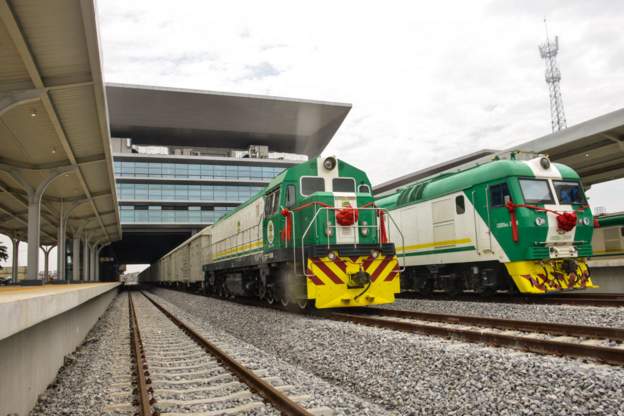
    The country’s railway lines were supposedly renovated thanks to the financing.

    The DMO referred to the accusations as untrue in a statement on Wednesday, asserting that Nigeria was completely committed to honoring its debt obligations and had not missed any deadlines for debt service.

    “Nigeria remains unwaveringly committed to fulfilling its debt obligations in a responsible and timely manner,” the statement added.

    It urged the public to ignore the reports. As of December 2021, the DMO said, Nigeria’s debt to China stood at $4.1bn. It was, however, silent on the current status of the Chinese loans to Nigeria.

    Nigeria has in recent years suffered revenue losses following a spate of attacks on rail tracks and the kidnap of train passengers that resulted in the stoppage of train services on some routes for a while.

  • Nigeria’s debt profile under Buhari rise by N1 trillion in just three months

    Reports from the Debt Management Office (DMO) indicate that Nigeria’s overall debt stock increased to N44.06 trillion as of September 30, 2022, up from N42.84 trillion on June 30.

    According to a recent announcement by the Debt Management Office, Nigeria’s debt profile does not appear to be decreasing as the amount increased once more by over N1 trillion in just three months, between June and September 2022.

    According to the DMO, Nigeria’s overall debt stock increased to N44.06 trillion as of September 30, 2022, up from N42.84 trillion on June 30.

    The debt “comprises the Total Domestic and External Debt Stock of the Federal Government of Nigeria (FGN), all State Governments, and the Federal Capital Territory (FCT),” the Debt Management Office said in a release on Friday.

    According to DMO, the increase in the public debt stock was largely due to new borrowings by the federal government to finance the deficit in the 2022 Appropriation Act, as well as new borrowings by state governments.

    With a proposal to further borrow over N11 trillion to fund the 2023 budget deficit, President Muhammadu Buhari may bequeath a debt profile in excess of N55 trillion when he leaves office next May.

    Former President Olusegun Obasanjo, under whose leadership Nigeria cleared its external debts, earlier in the year criticised the incumbent regime for accumulating debt for future generations, describing it as a “foolish” and “criminal” act.

    But Buhari’s media adviser, Femi Adesina, justified the huge borrowings, saying the regime is borrowing for infrastructural development, unlike past governments who looted loans.

    SaharaReporters had in September reported how amid the gruelling economic challenges facing the country, the Buhari-led government between January and March 2022 incurred N2trillion in Public Debt, bringing total debts to a record N41trillion.

    The country in the first quarter of 2022 alone spent an average of N9.94 billion on debt servicing.

    “A World Bank report showed that in terms of debt to GDP ratio, Nigeria is low but for debt service to revenue ratio, we are very high. So, if you look at the tax-to-GDP ratio of these other countries, they are in multiples of Nigeria.

    “The World Bank survey report of about 197 countries revealed that Nigeria is number 195, meaning we beat only two countries and that was Yemen and Afghanistan and I don’t think we want to be like those places,” DMO’s head, Patience Oliha, had warned in September.