Tag: Deloitte

  • Audit findings by Deloitte false and incomplete –  National Cathedral Secretariat fires back

    Audit findings by Deloitte false and incomplete – National Cathedral Secretariat fires back

    The National Cathedral Secretariat has responded to a recent report by an audit firm, Deloitte Touche, revealing the misappropriation of funds within its operations.

    According to an internal memo to staff dated July 21, Executive Director of the Secretariat, Dr. Paul Opoku-Mensah, branded the report as false and incomplete.

    “While the government press conference made reference to audit findings, what was presented was not the actual audit report but rather audit queries that had been responded to in detail.

    “This audit report does not exonerate anyone. However, it confirms that there has been no misuse of state funds. All payments made were supported by contracts and guided by legal and financial protocols,” the memo noted.

    Deloitte Touche was tasked by President John Dramani Mahama earlier this year to conduct an independent audit on the National Cathedral project.

    The report, which covered activities from December 2021 and December 2023, accused the Secretariat of procurement breaches, unsupported expenditures, and governance lapses.

    During a press briefing on Friday, July 18, Felix Kwakye Ofosu disclosed that the Secretariat spent 18,500 Ghana cedis on the expenses of one Kharis Psalmist; however, it failed to document the full cost rendered in its records.

    “A key example involves academic payment for Mr Kharis Psalmist who was lodged at the Movenpick Hotel from 16th to 28th February 2022 at a cost of 18,500 Ghana cedis.

    “However, only 4,976.00 Ghana Cedis was recorded in the books with no documentation accounting for the remaining 13,524.00 Ghana Cedis, which reportedly a refund issued by the hotel but not traceable in the financial records,” he stated.

    As a result, the Attorney General (AG) has been instructed by President John Dramani Mahama to ensure all legal processes are initiated for the revocation of the board’s mandate.

    “The National Cathedral Ghana was registered limited by guarantee. In view of that, the Attorney General has been directed to take legal steps… and we expect that to be done in the coming days.

    The report further explained that, contrary to the $58 million claimed by the former NPP government spent on the National Cathedral project, an outstanding $39 million owed to the contractor brings the total cost to $97 million.

    The National Cathedral, originally proposed under the administration of former President Nana Addo Dankwa Akufo-Addo, was envisioned as a monumental Christian worship centre in Ghana.

    But the project progressed at a snail’s pace, spiralling costs and the use of public funds in a secular state. According to reports, a total amount of $58 million was spent on the project deemed to be Ghana’s most expensive bit.

    Over a year ago, Member of Parliament for North Tongu, Samuel Okudzeto Ablakwa, raised concerns with the Commission on Human Rights and Administrative Justice (CHRAJ), alleging irregularities in the project’s construction and the operations of the National Cathedral Secretariat.

    After investigating the case for several months, the Commission recommended that the Office of the Auditor-General intervene and conduct a forensic audit to ascertain whether funds allocated for the project were used for their intended purposes.

    The Commission highlighted that GHS225.9 million in “seed money” had been spent on activities including site preparation, contractor mobilization, and consultancy services as of May 31, 2022.

    CHRAJ’s detailed report recommended the potential prosecution of the board of trustees overseeing the National Cathedral project, citing their role in awarding the contract to Ribade Company Limited.

    The report highlighted multiple violations of procurement regulations and warned that the failure of those involved to address the issues could tarnish Ghana’s reputation both locally and internationally.

    The government, in April this year, dissolved the National Cathedral Secretariat after noting that it would no longer provide funding for the abandoned project.

    Meanwhile, the government has revealed its plans to repurpose the stalled National Cathedral project into a National Cultural Convention Centre (NCCC) to become a central hub for Ghana’s creative economy and cultural diplomacy.

    Under the new “SH0W24” plan, part of the 24-hour economy for the creative sector, the NCCC will be developed with support from the African Continental Free Trade Area (AfCFTA) Secretariat and host exhibitions, film festivals, trade expos, and major summits.

    The project, the government notes, offers a smart solution to infrastructure challenges without clashing with religious or national values.

    “At the national level, a bold flagship intervention is proposed: converting the National Cathedral site into the National Cultural Convention Centre (NCCC), in partnership with the AfCFTA Secretariat. This venue will serve as Africa’s premier cultural diplomacy and creative economy forum, hosting international exhibitions, film festivals, trade shows, and summits-filling a critical infrastructure gap without conflicting with national values or faith institutions,” the document stated.

    The National Cultural Convention Centre (NCCC) is a key component of a wider strategy to revitalise Ghana’s creative arts, culture, and tourism sectors as major drivers of economic transformation.

    Its development marks a major policy shift regarding the use of the contested National Cathedral site, which has faced public criticism due to delays, rising costs, and questions about its necessity.

    Under the SH0W24 initiative, the NCCC is expected to become the flagship infrastructure project for the creative economy, with the capacity to host global exhibitions, festivals, and large-scale cultural events.

    The first phase of SH0W24 (2025–2026) will focus on feasibility studies, while the centre is expected to be fully operational in Phase 3 (2028–2030). Phase 2 will see the rollout of the Ghana Cultural Passport, regional programmes, and creative districts aimed at energising local economies. Phase 3 will take things further, focusing on exports and cross-border cultural partnerships.

    In addition, the SH0W24 strategy includes the creation of a National Creators Academy, which will train young people in fields such as music, film, fashion, digital media, and cultural performance, using modern tools like AI and virtual reality, along with business and cultural education.
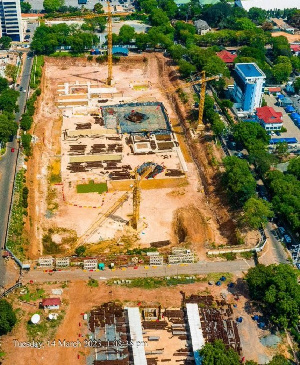
  • Deloitte’s full audit report on National Cathedral project

    Deloitte’s full audit report on National Cathedral project

    The National Cathedral project, initiated under the previous Akufo-Addo government, has sparked recent debate, following a report by an audit firm Deloitte and Touche.

    The firm was tasked by President John Dramani Mahama earlier this year to conduct an independent audit on the National Cathedral project.

    According to the report, the country incurred $97 million loss on the National Cathedral project.

    The report explained that, contrary to the $58 million claimed by the former NPP government, an outstanding $39 million owed to the contractor brings the total cost to $97 million.

    The National Cathedral, originally proposed under the administration of former President Nana Addo Dankwa Akufo-Addo, was envisioned as a monumental Christian worship centre in Ghana.

    But the project progressed at a snail’s pace, spiralling costs and the use of public funds in a secular state. According to reports, a total amount of $58 million was spent on the project deemed to be Ghana’s most expensive bit.

    Over a year ago, Member of Parliament for North Tongu, Samuel Okudzeto Ablakwa, raised concerns with the Commission on Human Rights and Administrative Justice (CHRAJ), alleging irregularities in the project’s construction and the operations of the National Cathedral Secretariat.

    After investigating the case for several months, the Commission recommended that the Office of the Auditor-General intervene and conduct a forensic audit to ascertain whether funds allocated for the project were used for their intended purposes.

    The Commission highlighted that GHS225.9 million in “seed money” had been spent on activities including site preparation, contractor mobilization, and consultancy services as of May 31, 2022.

    CHRAJ’s detailed report recommended the potential prosecution of the board of trustees overseeing the National Cathedral project, citing their role in awarding the contract to Ribade Company Limited.

    The report highlighted multiple violations of procurement regulations and warned that the failure of those involved to address the issues could tarnish Ghana’s reputation both locally and internationally.

    The government, in April this year, dissolved the National Cathedral Secretariat after noting that it would no longer provide funding for the abandoned project.

    Read full Deloitte audit report below: 

  • Real Madrid breaks records with over €1 billion in revenue – Deloitte

    Real Madrid breaks records with over €1 billion in revenue – Deloitte

    Real Madrid is the first football club to earn more than €1 billion ($1.04 billion) in a year, according to a report by Deloitte on Thursday.

    The report, which looks at the 2023-24 season, shows that the Spanish and European champions made €1.045 billion in revenue, putting them at the top of the list.

    Manchester City is in second place with €838 million, followed by Paris Saint-Germain with €806 million, Manchester United with €771 million, and Bayern Munich with €765 million.

    English Premier League clubs dominate the top 10, with Barcelona, Arsenal, Liverpool, Tottenham Hotspur, and Chelsea also making the list.

    The 20 clubs included in the study collectively received €11.2 billion, which is up 6% on 2022-23, Deloitte said.

    In the 2023-24 season, Real Madrid achieved major successes, winning the Champions League after defeating Borussia Dortmund in the final at Wembley and securing La Liga with a 10-point lead over second-place Barcelona.

    Their total revenue of €1 billion came from €248 million in matchday income, €316 million from broadcasting rights, and €482 million in commercial earnings.

    The ongoing improvements to the Santiago Bernabéu Stadium contributed to a significant increase in matchday revenue, which doubled compared to the previous year.

    Madrid’s €248 million from matchdays is the highest of any club, with Paris Saint-Germain coming in second at €170 million.

    Their commercial revenue also grew by 19%, surpassing all other clubs.

    Deloitte reported that the revenue gap between the top two clubs, Real Madrid and Manchester City, is now a record €208 million, making it the largest difference ever seen in the study.

  • Mining, ICT, construction among Ghana’s fastest-growing sectors – Deloitte

    Mining, ICT, construction among Ghana’s fastest-growing sectors – Deloitte

    Global professional services firm Deloitte has projected significant growth in five key sectors of Ghana’s economy in 2025. These include Mining and Quarrying, Information, Communication and Technology (ICT), Construction, Finance and Insurance, and Agriculture.

    The Mining and Quarrying sector has shown remarkable progress, recording a 14.8% growth in the second quarter of 2024, compared to 1.4% in the same period last year. Gold mining, a major contributor to export earnings and foreign exchange for the country, continues to be a key driver of this growth. Deloitte attributes the sector’s expansion to increased government investments and planned growth initiatives.

    In the ICT sector, while growth slowed to 12.8% in the second quarter of 2024 from 25.1% in 2023, it remains one of the fastest-growing areas of the economy. Deloitte highlighted the increasing use of technology and artificial intelligence as factors propelling its continued significance.

    The Construction sector has also rebounded strongly, with an 8.4% growth in the second quarter of 2024, following an 11.7% contraction in the same period of 2023. Deloitte credits this recovery to government infrastructure investments, such as the Economic Roads Improvement Programme (ERIP), which is expected to further boost the sector.

    The Finance and Insurance sector expanded by 7.6% in the second quarter of 2024, a significant improvement from the 0.4% growth recorded in 2023. The sector’s stability has been supported by a $250 million International Development Association (IDA) credit from the World Bank under the Ghana Financial Stability Project, aimed at addressing challenges caused by the domestic debt exchange programme.

    In Agriculture, initiatives like the enhanced Planting for Food and Jobs programme and projects under the GhanaCARES Economic Enclaves are expected to improve transparency, efficiency, and private sector participation in the agricultural value chain.

    Deloitte’s analysis underscores the importance of these sectors in driving Ghana’s economic growth in the coming year.

  • National Cathedral’s financial records are accurate – Deloitte

    National Cathedral’s financial records are accurate – Deloitte

    After conducting a year-long independent audit of the National Cathedral of Ghana’s (NCG) financial records, an international audit firm, Deloitte, has confirmed that the Secretariat maintained precise and transparent documentation of all income and expenditures for the fiscal year ending December 31, 2020.

    In a letter dated Tuesday, September 24, 2024, the Board Chairman of the National Cathedral of Ghana,Apostle Professor Opoku Onyinah, informed church leaders and heads of various denominations about a meeting held on Friday, September 20, 2024.

    The purpose of the meeting was for Deloitte to present its statutory audit report, which encompasses the project’s entire timeline up to December 31, 2020.

    “This forms the first report of an ongoing statutory audit by Deloitte Ghana initiated by the Board. The audit for the year ended December 31, 2021, is also in progress, while the remaining audits comprising the years ended December 31, 2022, and 2023 are planned for completion by the end of the year.

    “The Board has been concerned by the length of time it has taken to complete the audit, which formally started in July 2023. However, upon receipt of the first report, we appreciate the meticulous audit processes adopted by Deloitte, including the thorough circularisation procedures that involved all parties related to monies received and expenditures on the project,” the NCG communique said.

    In its statement, the NCG emphasized that the audit was a crucial request from church leaders and the broader Ghanaian public to ensure the project’s credibility.

    With the first report now complete, the NCG announced plans to resume preparations for the construction of the National Cathedral, which had been paused for over a year to facilitate the audit

  • Improve taxpayer education, clean-up tax register – Deloitte’s measures to expand Ghana’s tax base

    Improve taxpayer education, clean-up tax register – Deloitte’s measures to expand Ghana’s tax base

    Deloitte Ghana has proposed several strategies to the government aimed at broadening the country’s tax base.

    First, in its review of the 2024 Mid-Year Budget, it recommends that the government streamline business operations at the ports, enhance taxpayer education, and ensure the Ghana Revenue Authority (GRA) website is consistently updated to address taxpayer concerns.

    Second, the firm advocates for the ongoing refinement of the tax register and the implementation of electronic systems to expand the taxpayer base and improve their overall experience.

    Additional suggestions include establishing guidelines for the Emissions Levy and environmental excise duty on plastics, enhancing data sharing and information exchange with other jurisdictions to boost revenue collection, launching a simplified digital solution and electronic bookkeeping system for the informal sector’s modified taxation regime, and integrating 2,000 new taxpayers into the electronic Value Added Tax (VAT) invoicing system by the end of 2024.

    Regarding tax incentives, Deloitte recommends finalizing the regulations for the Exemptions Act, 2022 (Act 1083); amending the VAT regulations, 2017 (L.I. 2255) to extend exemptions for active pharmaceutical inputs, excipients, and other finished pharmaceutical products; revising existing tax laws to align with modern tax requirements; and completing draft regulations to operationalize the Independent Tax Appeals Board (ITAB).

    For revenue mobilization policies, Deloitte suggests developing a framework to reintroduce road and bridge tolls through an efficient, modern tolling system by the end of 2024, reinstating the integrated property tax system to ensure effective property tax assessment and collection, and creating legislation and a strategic framework for mobilizing and managing non-tax revenue.

  • Govt’s decision to maintain current tax levels applauded by Deloitte

    Govt’s decision to maintain current tax levels applauded by Deloitte

    Deloitte Ghana’s analysis of the 2024 Mid-Year Budget Review acknowledges that the government’s decision to maintain current tax levels offers some relief to businesses and individuals.

    The audit and tax services firm cautions, however, that any additional tax increases could negatively affect private sector productivity, especially given the challenges of high inflation and currency depreciation.

    The analysis underscores that debt restructuring and the International Monetary Fund (IMF) programme have significantly reduced the country’s interest payments from GH₵55.9 billion—previously the largest expenditure item—to GH₵48.0 billion, now the second-largest.

    This reduction, according to Deloitte, provides the fiscal space needed for the government to implement key programmes aimed at revitalizing and transforming the economy.

    Furthermore, the Government of Ghana has projected an increase in capital expenditure from 2.5% of GDP in 2023 to 2.8% in 2024.

    Deloitte interprets this forecast as a strong focus on improving social infrastructure and essential services, potentially driving robust economic performance in the medium to long term.

    The firm also highlights that the reduction in total expenditure in the 2024 mid-year budget review largely results from savings on interest payments, which have decreased following the completion of external debt restructuring, including bilateral, multilateral, and Eurobond debts.

  • Present challenges haven’t affected Ghana’s economic growth – Deloitte

    Present challenges haven’t affected Ghana’s economic growth – Deloitte

    Deloitte Ghana has indicated that despite recent economic challenges, Ghana’s economy continues to show signs of recovery.

    This observation was made in Deloitte’s review of the 2024 Mid-Year Budget, based on information provided by Finance Minister Dr. Mohammed Amin-Adam.

    The review highlighted that the 2024 mid-year budget statement did not include a request for additional allocations from Parliament, unlike in previous years.

    Instead, the focus was on tracking the progress of the 2024 budget’s implementation and revising key economic indicators. According to Deloitte, the data shared by the Finance Minister underscores the resilience of the economy, noting, “The information shared by the finance minister suggests the economy is recovering despite economic challenges in recent years.”

    Deloitte also pointed out that the improved economic performance in the first half of 2024 has bolstered the government’s confidence, which is expected to positively influence investor sentiment.

    A significant highlight in the review was the strong performance of the industry sector, which expanded by 6.8% in the first quarter of 2024.

    This marks a notable rebound following a contraction in 2023 and only marginal growth in the years preceding it. The mining and quarrying subsectors were identified as the primary drivers of this growth, registering a 12.9% increase, attributed to a rise in global commodity prices.

    Deloitte noted, “We expect to see a positive impact on the economy as jobs, wages, and community infrastructure are all expected to increase.”

    For 2024, overall Gross Domestic Product (GDP) growth is now projected at 3.1%, slightly higher than the initial forecast of 2.8%. Non-oil GDP growth has also been revised upward to 2.8% from the earlier estimate of 2.1%. Looking ahead, overall GDP is expected to grow at an average rate of 4.4% per annum between 2024 and 2027. In 2023, Ghana’s economy grew by 2.9%, surpassing the revised target of 2.3%, with non-oil GDP expanding by 3.3% compared to the revised target of 2.8%.

    The growth in 2023 was largely driven by the services sector, which grew by 5.5%, and the agriculture sector, which expanded by 4.5%, while the industry sector saw a contraction of 1.2%.

  • Nigerians blast Tinubu after questioning in London

    Many Nigerians are angry and disappointed after a presidential candidate made a rare media appearance on Monday at Chatham House, a UK-based think tank.

    Bola Tinubu, a two-time governor of Lagos state who is running for the ruling All Progressives Congress (APC) in the February elections, has avoided the Nigerian media since winning the party’s ticket, instead delegating spokespeople to speak on his behalf.

    In addition, in the run-up to the elections, he avoided presidential debates and town hall meetings with other candidates.

    As a result, many people who tuned in to Mr Tinubu’s highly publicised appearance in London had high hopes of hearing him answer key policy questions.

    How would he deal with widespread insecurity in Nigeria? How would he solve the country’s huge unemployment rate? How would he stop oil theft in the Niger Delta?

    Thankfully, these questions were asked by journalists inside the packed hall but many were stunned as Mr Tinubu elected aides to respond on his behalf, a departure from the norm at the institute popular with those seeking elective offices in Nigeria.

    A spokesman for the candidate of the main opposition Peoples Democratic Party (PDP) described it as “an abdication of responsibility” while many others said it confirmed Mr Tinubu’s lack of physical and mental rigour to lead Africa’s most populous country.

    But Dele Alake, his media adviser – who answered a question on his behalf at the event – said those criticising Mr Tinubu “are ignorant of the nuance and dynamics of leadership”.

    “He wanted to show the calibre of his team,” he said.

    The APC candidate did take some questions though, speaking publicly for the first time on controversies surrounding his age and work profile.

    He confirmed he was 70 saying he was born in March 1952 – there had previously been a lot of speculation about his age.

    He also said that he had been schooled at Chicago State University and later worked at financial consultancy firm Deloitte, both facts have been greatly disputed in the past.

    Mr Tinubu is one of three frontrunners seeking to lead Nigeria next year.