Tag: Democracy

  • My government will tolerate no violence against journalists – Mahama

    My government will tolerate no violence against journalists – Mahama

    Ghana has a troubling history of attacks on journalists. Over the years, journalists have been attacked in their line of duty, some by civilians and in other cases by some security officials who are mandated to protect them.

    A very recent case of assault on a journalist is that of some Ghana National Fire Service (GNFS) officers attacking a class media journalist during his follow-up coverage of a fire incident at the Kaso New Market last Sunday, sparking widespread concerns.

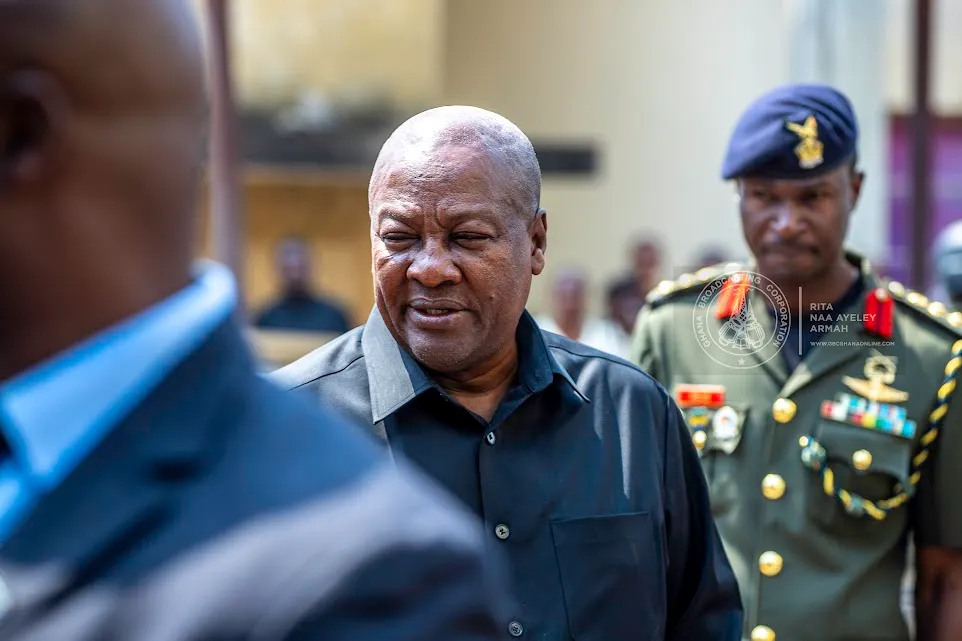
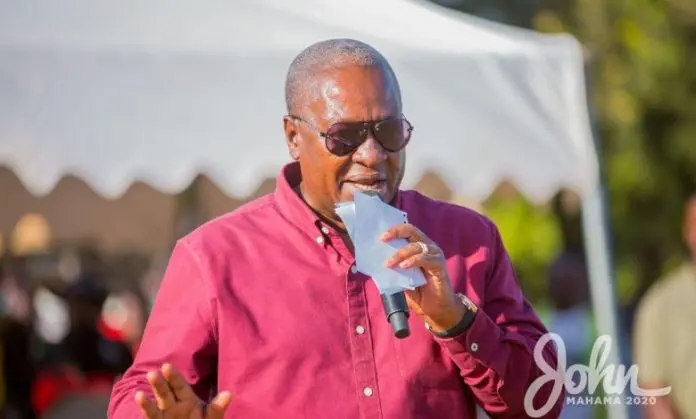
    President John Mahama speaking in reaction to it during a visit to the state media house, Ghana Broadcasting Corporation, yesterday, Thursday 8, January, stated that “Violence against journalists has no place in a democratic society.” 

    President John Mahama has revealed that personnel of the Ghana National Fire Service who assaulted a journalist with Class FM have been identified and interdicted.

    He made this revelation during his visit to the Ghana Broadcasting Corporation (GBC) as part of his tour to selected media houses.

    The President condemned the attack, highlighting that there is zero tolerance for violence against journalists in a democratic society.

    “I’m a journalist by training, and so there’s no way we can countenance the continued assault on journalists. The Minister of Government Communications has taken it up, and I think the officers have been identified and interdicted as investigations are going on, “President Mahama said.

    To avert future occurrences, President Mahama revealed that his administration has begun engagements with the Ghana Journalists Association and security agencies to address the matter and prevent future incidents, citing the need for the reorientation of some security personnel to respect the work of journalists while they are in the field carrying out their duties.

    President Mahama said there is a need for a change in attitude among some security personnel, noting that journalists and security officers play complementary roles in society.

    “We’ve been in touch with the Ghana Journalists Association on these issues. We’ve put them in touch with the security services. We need a reorientation of many of our security personnel to understand that just as they are doing their job of providing peace and safety, journalists are also doing their job of informing the people as to what is happening. They’re not antagonistic to each other. Indeed, they’re both serving the same public,” he explained.

    While acknowledging the occasional occurrence of such incidents, he insisted they must be handled decisively. “When they come, they must be dealt with as firmly as possible,” he said.

    About the assaulted journalist and the circumstances leading to his attack

    Meanwhile, the class media journalist, Samuel Addo, has officially filed a police report providing details on the attack.

    His assault happened during an official assignment for a follow-up coverage of a fire outbreak at the Kasoa New Market, which started on Sunday, January 4.

    According to him, he was overpowered by a group of fire officers when he made attempts to take a video of the officers beating a suspected thief at the fire scene. A lone officer first approached him. After Addo identified himself as a member of the media, the officer walked away, only to return minutes later with about ten colleagues, who he says,

    “… held my neck, pulled my hands behind my back, and assaulted me. They took my phone, tore my belt, and took both away,” he stated.

    According to him, his mobile phone was later returned following the intervention of the area’s Member of Parliament (MP), Phyllis Naa Koryor; however, more than half of the money he had been carrying before the incident was missing.

    Mr Addo stated that he arrived at the fire scene with GH¢20,000 but later realised that GH¢10,200 had gone missing, leaving him with just GH¢8,000.

    “The money is still missing. I have reported everything to the police,” he added.

    The journalist has been issued a police medical form and is seeking hospital treatment for his injuries.

    History of attacks on journalists 

    The cases of assaults, particularly during the by-elections in 2024, affected our ranking in press freedom on the global level, as confirmed by President Mahama.

    Some months ago, about three journalists were assaulted during the coverage of the Ablekuma North by-election held on July 11.

    During the election, a police officer deployed to one of the polling stations, Church of Pentecost, North Odorkor 4 polling station, slapped and pushed a GHOne TV journalist, Kwabena Agyekum Banahene. According to the journalist, the police officer singled him out during his coverage of the by-election. When he refused to leave, explaining that he was doing his duty to report the electoral process, the officer still went ahead to assault him without justification, even after presenting him with an ID card. He sustained mouth injuries and was treated at Cocoa Clinic.

    Another disturbing attack was that on ATV-Ghana’s journalists, Vida Wiafe, who was hit with pepper spray by police officers at St. Peter’s Society Polling Station while interviewing voters. She lost consciousness and required medical attention.

    Sally Martey, a JoyNews reporter, was assaulted on live TV by a masked thug who slapped her from behind and shoved her to the side while reporting at the same polling station. The incident was captured on video and widely condemned.

    Also, about two journalists who have faced repeated assaults in their line of duty are JoyNews’ Latif Iddrisu and galamsey reporter Erastus Donkor.

    Latif’s case is currently still being dragged in court. On  March 27, 2018, he was brutally beaten by police officers at the CID Headquarters in Accra, which nearly cost him his life.

    According to reports, this near-fatal assault occurred while he was covering a protest. During an engagement with some of the protesters, officers turned on him, striking him repeatedly. He suffered head injuries, including a fractured skull, with the trauma leading to long-term neurological complications.

    Latif underwent extensive medical treatment and therapy, including care in California, USA. Despite attempts to return to frontline reporting, he continues to struggle with pain and trauma. 

    The officers involved have not been publicly prosecuted to date.  In a separate incident this year, March 27, Latif was covering a protest at the Economic and Organised Crime Office (EOCO) in Accra related to the arrest of NPP’s Ashanti Regional Chairman, Bernard Antwi Boasiako (Chairman Wontumi) when he was physically assaulted by NPP supporters, threatened, and later received death threats via text message warning him to withdraw his police complaint. Latif was forced into hiding due to threats against him and his family. He requested police protection, but no tangible response was provided.

    However, one suspect, Theophilus Thompson, has since been arrested. On June 7, Theophilus was apprehended and is currently in police custody. On the other hand, investigations are ongoing to identify other perpetrators.

  • African Political Parties Initiative to strengthen democratic governance launched by Mahama

    African Political Parties Initiative to strengthen democratic governance launched by Mahama

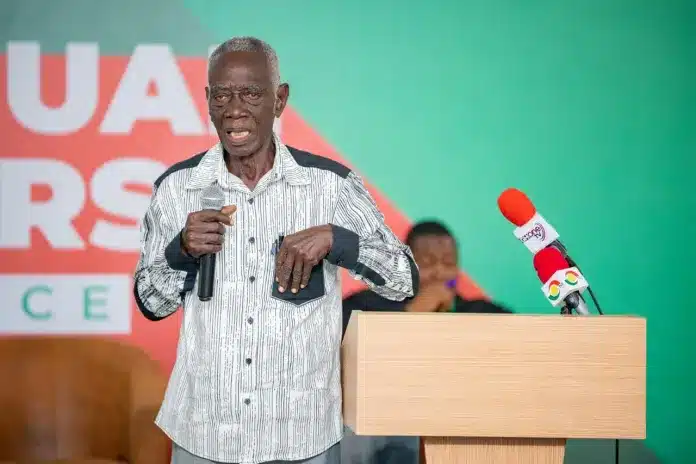
    President John Dramani Mahama has launched the African Political Parties Initiative (APPI), a new platform aimed at fostering cross-party collaboration and strengthening democratic governance across the continent.

    The initiative was unveiled on Friday, March 7, at the Accra International Conference Centre, drawing participation from distinguished political leaders across Africa. It serves as a precursor to the African Political Parties Summit, scheduled for July this year.

    In his keynote address, President Mahama highlighted the initiative’s significance, framing it as an opportunity for Ghana to reaffirm its pan-African commitment. He emphasized its alignment with the vision of “an integrated, prosperous, and peaceful Africa, driven by its own citizens, representing a dynamic force in the international arena.”

    Commending the Africa Governance Centre for spearheading the initiative, Mahama praised its focus on fostering dialogue and cooperation across political lines. “It is my pleasure to also voice support for the APPI, and congratulate the team of the Africa Governance Centre for this great initiative,” he stated.

    The former president stressed that the initiative was timely, given the complex challenges facing global and African governance. These include conflicts, pandemics, populism, climate change, and the rapid evolution of digital technologies. He expressed optimism that APPI’s approach—anchored on non-partisan, inter-party engagement—would provide a much-needed framework for addressing these challenges collectively.

    “The African Political Parties Initiative’s vision of a non-partisan and non-ideological inter-party dialogue and a truly pan-African approach to how political parties reflect on and address the challenges of development will be an invaluable component of how Africa embraces its present challenges and considers them as opportunities for growth.

    Indeed, this is a rightly groundbreaking initiative, which provides a rare opportunity to break cultures of mistrust and deep divisions across political parties that undermine our capacity to confront challenges that require a collective response.”

    Mahama further urged political parties to prioritize national development over partisan gains, warning against politics driven by polarization, misinformation, and obstructionist tactics.

    Also speaking at the event, the Chair of the Advisory Board of the Africa Governance Centre underscored the importance of building capacity and fostering meaningful interactions among political parties across the continent.

    He noted that in the face of rising geopolitical instability, economic marginalization of youth and women, and the climate crisis, Africa must seize the moment to offer a new vision for inclusive growth.

    “Africa stands on the precipice and can provide the world a refreshing lens to escape from this deep impasse and find imaginative ways of securing meaningful inclusive growth,” he asserted.

    The Advisory Board Chair also stressed the need for governance to be built on cooperation rather than conflict, arguing that Africa’s full economic potential could only be realized through unity.

    Taking the stage, Ms. Benedicta Lasi, Chairperson of the Executive Council of the Africa Governance Centre, outlined the APPI’s goals and the extensive groundwork already laid. She emphasized the Centre’s role as a strategic hub for promoting democratic governance, economic transformation, and institutional development across Africa.

    Ms. Lasi also detailed key focus areas of the initiative, including leadership development, policy research, advocacy, communication, and public engagement. These, she said, would be complemented by robust monitoring and evaluation mechanisms.

    Despite being unable to attend in person, Ambassador Bankole Adeoye, the African Union Commissioner for Political Affairs, Peace, and Security, addressed the gathering virtually. He commended African political parties for their role in advancing democracy, highlighting the increasing number of peaceful elections across the continent.

    “We (The Africa Union) consider the year 2024 a super year for elections. Fifteen member states held presidential and parliamentary elections seventeen times. That is indeed a record, and in many of our electoral processes, we continue to see huge great leaps forward in terms of improvement in electoral practices,” he noted.

    Ambassador Adeoye called for both continental and global support for APPI to consolidate these democratic gains.

    In her closing remarks, H.E. Edite Ten Jua, former Minister of Justice and Foreign Affairs of São Tomé and Príncipe and Executive Secretary of the upcoming African Political Parties Summit, reinforced the call for sustained collaboration among political parties to drive Africa’s development.

    She extended appreciation to all attendees, particularly President Mahama and other high-ranking dignitaries, while urging political stakeholders to actively participate in the summit slated for July 2025.

    The African Political Parties Initiative, convened by the Africa Governance Centre, is a flagship program dedicated to strengthening political leadership, governance, and party systems across the continent. Beyond its annual summit, APPI includes a range of governance-focused activities such as the Youth in Politics Forum, Women Political Leadership Summit, Political Leadership Academy, Political Parties Governance Index, and the Diaspora Political Parties Exchange.

  • Progress under democratic governance has been sluggish, intangible – Mahama

    Progress under democratic governance has been sluggish, intangible – Mahama

    Former President John Dramani Mahama has raised concerns about the slow pace of development in Africa despite the continent’s commitment to democratic governance. He noted that many citizens, especially the youth, have yet to see the tangible benefits of democracy.

    Speaking at the 2025 Africa Prosperity Dialogues in Accra on February 2, Mahama lamented that while democratic governance was expected to drive economic growth and improve livelihoods, progress has been largely “sluggish and intangible.”

    “Our youth are tired and frustrated at the lack of opportunities to realize their dreams and aspirations. Our decision to embrace democratic governance was supposed to yield a dividend that would improve the lives of our people and bring prosperity to all. Unfortunately, progress has been sluggish and intangible,” he stated.

    The former president stressed that economic prosperity in Africa hinges on good governance, transparency, and accountability. He highlighted the need for stability, clear policies, and adherence to the rule of law to attract investment and drive sustainable development.

    “Investors and businesses thrive where there is stability, predictable policies, and the rule of law,” he emphasized.

    Mahama urged African leaders to take decisive steps to strengthen democratic institutions, ensure free and fair elections, and intensify efforts to combat corruption.

    “We must reaffirm our commitment to strengthening democratic institutions and ensuring free, fair, and transparent elections. We must also fight corruption, which robs our nations of resources needed for development,” he said.

    He further warned that economic growth cannot be sustained in an atmosphere of instability, stressing the importance of maintaining peace and security across the continent.

    “As leaders, we must promote peace and security, as economic growth is impossible in times of conflict,” he concluded.

  • Democracy is the best governance system we have got – Bawumia

    Democracy is the best governance system we have got – Bawumia

    Dr. Mahamudu Bawumia, former Vice President of Ghana, has reaffirmed that democracy, despite its flaws, remains the most effective form of governance for protecting individual freedoms and promoting accountability.

    Speaking in Nigeria on Monday, January 27,Dr. Bawumia lauded democracy as the ultimate system for safeguarding human rights and ensuring citizens play a role in determining their future. Acknowledging its imperfections, he stressed that no other form of governance offers the same level of liberty and accountability.

    “It’s not a perfect system, but it’s the best we’ve got,” he stated, underscoring democracy’s ability to balance governance with individual rights.

    Quoting Winston S. Churchill, Dr. Bawumia added, “Democracy is the worst form of government, except for all the others,” to emphasize the enduring value of democratic governance over authoritarian alternatives.

    Reflecting on Nigeria’s democratic journey, Dr. Bawumia highlighted findings from the 2023 Open Society Barometer report, which revealed that 92% of Nigerians believe living in a democracy is important. Additionally, 69% prefer democracy to any other form of governance.

    “This should leave no doubt that democracy has been embraced by the Nigerian people,” he said, commending the nation’s strong commitment to democratic ideals.

    Dr. Bawumia, however, acknowledged that democracy in Nigeria still faces challenges but encouraged the nation to continue strengthening its institutions. He emphasized that the collective desire for democratic governance provides a solid foundation for progress.

    “Let us strengthen democracy, for it is through robust democratic systems that we can achieve greater prosperity and political stability,” he urged, calling on both leaders and citizens to commit to building an inclusive and participatory system of governance.

    By acknowledging both the strengths and imperfections of democracy, Dr. Bawumia encouraged a renewed dedication to improving democratic practices across the continent, ensuring that governance systems serve the best interests of their people.

  • Our democracy is at stake – Alan reacts to parliament, Supreme Court’s impasse

    Our democracy is at stake – Alan reacts to parliament, Supreme Court’s impasse

    The founder and leader of the Movement for Change, Alan Kyerematen, has denounced the current stand-off between the Supreme Court and the Speaker of Parliament, Alban Bagbin, describing it as detrimental to the health of the nation’s democracy.

    During a press engagement on Thursday, October 31, the former trade minister, who is now an independent presidential candidate for the 2024 election, expressed his belief that both Parliament and the Supreme Court have poorly managed the situation regarding the vacant seats.

    “The current impasse between the Supreme Court and Parliament is unwarranted, unjustifiable, unproductive, and unhealthy for our fledgling democracy. Both the Supreme Court and Parliament must respect the Constitution and the laws of Ghana. This impasse amounts to grandstanding by both institutions.”

    He characterized the Supreme Court’s decision to grant Alexander Afenyo-Markin’s application as unconstitutional, asserting, “the Supreme Court, in its ruling on the application of the Leader of the NPP Caucus in Parliament, Hon. Alexander Afenyo-Markin, to reverse the ruling of the Speaker of Parliament regarding the status of the four Members of Parliament, was and is, in my considered and respectful opinion, unconstitutional, and could be described as an abuse of the power of the Supreme Court under Article 130 (1) to interpret provisions of the Constitution.”

    Mr. Kyerematen argued that rejecting the Supreme Court’s ruling would constitute a violation of the law by Parliament, as Article 133 (1) of the Ghanaian Constitution mandates that all individuals and state institutions are bound by the Supreme Court’s decisions.

    He added that the Speaker had made the correct decision by filing a motion with the Supreme Court to overturn its initial ruling on the vacant seats.

    “Parliament will be in breach of the law if it refuses to accept the ruling of the Supreme Court. Even if Parliament believes that the Supreme Court’s decision is wrong, it must comply with the orders of the Court and adopt a judicial path to resolve the matter.”

    Referring to legal principles, he noted that Speaker Alban Bagbin acted appropriately in declaring the seats vacant.

    “Parliament took the right step, albeit belatedly, in filing an application for the review of the Supreme Court’s decision. However, it is my considered and respectful opinion that the course of action and the associated remedies endorsed in the writ of application from Parliament are meritorious and lack judicial grounding. By arguing that the decision of the Supreme Court cannot affect a non-judicial order of Parliament, it is a subversion of the rule of law and an abuse of the judicial process.”

    Mr Kyerematen then called on all stakeholders involved to address the issue before the general election on December 7.

    “With barely four weeks to the general elections, it is absolutely critical that all parties—namely the Judiciary, the legislature, the executive, and the citizenry of Ghana—work towards a resolution of this delicate matter to ensure a peaceful path towards the 2024 general elections in December.”

    The Supreme Court has since postponed the hearing to November 11, 2024.

    Below is Mr Alan Kyerematen’s full press statement:

    STATEMENT TO THE MEDIA BY ALAN KYEREMATEN, FOUNDER AND LEADER, MOVEMENT FOR CHANGE (M4C) AND PRESIDENTIAL CANDIDATE, ALLIANCE FOR REVOLUTIONARY CHANGE (ARC) ON THURSDAY 31ST OCTOBER, 2024

    THE SUPREME COURT AND PARLIAMENT OF GHANA MUST BOTH RESPECT THE LAW AND WORK WITHIN ITS CONFINES

    Members of the Media,

    Good Morning,

    I speak to you this morning not only in my capacity as a lawyer but also as a leading political figure in Ghana and a Presidential Candidate for the General Elections in December 2024.

    The current impasse between the Supreme Court and Parliament is unwarranted, unjustifiable, unproductive, and unhealthy for our fledgling democracy. Both the Supreme Court and Parliament must respect the Constitution and the Laws of Ghana. The current impasse amounts to grandstanding by both institutions.

    The concept of separation of powers and checks and balances between the various arms of Government are two sides of the same coin and logically reinforce each other. This must provide the context for resolving the dispute between the Supreme Court and Parliament.

    1. The Case in Respect of the Supreme Court

    i. The Supreme Court, in its ruling on the application of the Leader of the NPP Caucus in Parliament Hon. Alexander Afenyo-Markin, to reverse the ruling of the Speaker of Parliament, on the status of the four members of Parliament, was and is in my considered and respectful opinion unconstitutional, and could be described as an abuse of the power of the Supreme Court under Article 130 (1) to interpret provisions of the Constitution.

    The Constitution of Ghana rightly so entrusts to the Supreme Court the responsibility for interpreting provisions of the Constitution. In this regard, the Supreme Court has both original and final jurisdiction for the interpretation of the Constitution.

    Any application brought before the Court seeking interpretation of any provision of the Constitution to the extent, that the application is filed in line with the processes and procedures of the Supreme Court would be deemed to have been brought properly before the Supreme Court.

    ii. Against this background, I hold a contrary view to the position adopted by the respected retired Justice of the Supreme Court, Justice Atuguba, that the Supreme Court should have declined jurisdiction in the matter under reference. The Supreme Court was right in hearing the application to the extent that it was a request for interpretation of the Constitution.

    iii. Article 97 (1) (g) and (h) of the Constitution, cannot be said to lack clarity and therefore does not lend itself to an enquiry of interpretation by the Supreme Court. The said provisions are very clear in both spirit and letter, and unconditionally impose a duty on the Speaker of Parliament to declare vacant, the seat of any sitting Member of Parliament, who decides to change their status in Parliament, either by declaring themselves as Independents, or by account of losing their membership of the Parties that originally sponsored their entry into Parliament.

    For the avoidance of doubt, Article 97 (1) (g) and (h), reads as follows:

    Article “97. (1) “A member of Parliament shall vacate his seat in Parliament –

    (g) if he leaves the party of which he was a member at the time of his election to Parliament to join another party or seeks to remain in Parliament as an independent member….

    (h) if he was elected a member of Parliament as an independent candidate and joined a political party.”

    iv. It is obvious from the mandatory language of the provision referred to above, and also by the Rules of Interpretation under Common Law, that no issue arises of interpretation, requiring the Supreme Court to exercise its discretion. The Supreme Court’s mandate to interpret provisions of the Constitution, is not to be exercised capriciously, particularly in very sensitive contexts, with implications for subverting the rule of law and obstructing the principle of Separation of Powers.

    Ladies and Gentlemen,

    Indeed if there is no issue of interpretation, then the posture of the Supreme Court, in the matter under reference, raises serious questions about whether or not the Court is interfering in the work of Parliament.

    1. The Case in Respect of Parliament

    i. By the dictates of the Rule of Law and Article 133 (1) of the Constitution of Ghana, any decision by the Supreme Court can only be reviewed and varied by the Supreme Court itself. In this regard, individuals, Judicial and non-Judicial bodies, including Independent Constitutional Bodies (ICBs), and the various arms of Government, are all bound unconditionally, by the decisions of the Supreme Court.

    ii. In cases where any party in the categories referred to above, is aggrieved by the decisions of the Supreme Court, the only recourse available to such a party, is to apply to the Supreme Court for a revision of its decision.

    iii. In light of the above, Parliament will be in breach of the Law, if it refuses to accept the ruling of the Supreme Court.

    Even if Parliament is of the view that the decision of the Supreme Court is wrong, it must comply with the orders of the Court, and adopt a judicial path to the resolution of the matter.

    iv. Against this background, Parliament took the right step, albeit belatedly, in filing an application for the review of the Supreme Court decision. However, it is my considered and respectful opinion that the course of action and the associated remedies endorsed on the writ of application of Parliament, are unmeritorious and lack judicial grounding. By arguing that the decision of the Supreme Court cannot affect a non-judicial order of Parliament, is a subversion of the Rule of Law and an abuse of the judicial process.

    v. For the avoidance of doubt, all individuals, legal personalities, judicial and non-judicial bodies, Independent Constitutional Bodies, and the various arms of Government are bound Stricto Senso, by the decisions of the Supreme Court. As indicated earlier, any aggrieved individuals or bodies as referred to above, can only apply to the same Supreme Court for a review of its decisions. The claim by Parliament that it is a “Master of Its own Rules,” has no merit in law and seeks to undermine the very spirit underpinning the concept of checks and balances, between the various arms of Government.

    In light of all of the above, the Speaker of Parliament is right to declare the four seats vacant and issue a consequential order for the Minority Caucus in Parliament to be considered as the Majority Caucus in Parliament.

    This order, however, can only be made by the Speaker of Parliament, if and only if, the Supreme Court makes a ruling in favour of Parliament in the determination of the substantive case currently before it.

    Ladies and Gentlemen,
    With barely four weeks to the General Elections, it is absolutely critical that all parties, i.e.: the Judiciary, the Legislature, the Executive and the citizenry of Ghana, work towards a resolution of this delicate matter, to ensure a peaceful path towards the 2024 General Elections in December.

    I thank you for your kind attention.

    God Bless our Homeland Ghana and make our Nation great and strong!

  • Ghana’s democracy under scrutiny as U.S. issues visa restrictions ahead of election 

    Ghana’s democracy under scrutiny as U.S. issues visa restrictions ahead of election 

    The United States (U.S.) government has introduced visa restrictions aimed at individuals involved in actions that could undermine Ghana’s democratic processes. 

    This move is part of the United States’ commitment to supporting democracy worldwide and will apply to those engaged in election-related manipulation, intimidation, or violence, including certain family members of those directly involved.

    Announced on the U.S. Department of State’s website, the policy underscores that these restrictions are part of Washington’s broader effort to discourage actions that could disrupt Ghana’s upcoming elections on December 7, 2024. 

    Under Section 212(a)(3)(C) of the U.S. Immigration and Nationality Act, these restrictions target those “believed to be responsible for, or complicit in, undermining democracy in Ghana.” This includes potential sanctions for those engaged in election rigging, voter intimidation, suppression of freedoms of assembly, or other tactics that may unfairly sway electoral outcomes.

    The U.S. emphasised the importance of Ghana’s history of peaceful and democratic power transitions and intends these restrictions to align with the country’s aspirations for a free, fair, and transparent election process. 

    The statement underscored that the policy would extend to individuals at any stage in the election cycle, before, during, or after the voting process.

    “This visa restriction policy is pursuant to Section 212(a)(3)(C) of the Immigration and Nationality Act, and allows the Department of State to implement visa restrictions for individuals believed to be responsible for, or complicit in, undermining democracy in Ghana, including through the manipulation or rigging of the electoral process; the use of violence to intimidate, coerce or prevent people from exercising their rights to freedoms of association and peaceful assembly; the use of measures designed to intimidate, coerce or prevent political party representatives, voters, or members of civil society or the media from voicing or disseminating their views; or engaging in any other activity designed to improperly influence the conduct or outcome of an election. 

    “ Certain family members of such persons may also be subject to these restrictions.  Persons who undermine democracy in Ghana — including in the lead-up to, during, and following Ghana’s 2024 elections may be found to be ineligible for visas under this policy,” it added.

    The move has drawn support from Ghanaian leaders, including North Tongu Member of Parliament Samuel Okudzeto Ablakwa. 

    He welcomed the U.S. action as a critical step in safeguarding Ghana’s democracy. In a social media post, Ablakwa stated that the policy could serve as a deterrent to those considering unlawful actions during the election period. “A most welcome statement from the U.S. Secretary of State,” he wrote. 

    “Those misguided unpatriotic elements who think they can instigate violence, rig elections and subvert the will of the Ghanaian people only to escape with their families to other countries are very likely to rethink,” he added.

    As Ghana prepares for its elections, the U.S. has reaffirmed its stance against any threats to democratic integrity, with a clear warning that those who compromise this process could face visa ineligibility.

  • Our democracy is at risk due to Bagbin – Kaliba

    Our democracy is at risk due to Bagbin – Kaliba

    Social commentator and activist James Kwabena Bonfeh, popularly known as Kabila, has raised alarms about the actions of Speaker of Parliament Alban Bagbin, claiming that he poses a significant threat to Ghana’s democracy.

    Speaking on Peace FM on Wednesday, October 23, Kabila criticized Bagbin’s handling of parliamentary affairs, particularly regarding the ongoing dispute over the status of four parliamentary seats.

    The controversy originated when Dr. Cassiel Ato Forson, the National Democratic Congress (NDC) leader in Parliament, invoked Article 97(1)(g) of the 1992 Constitution on October 15, 2024, leading to questions about the status of four MPs—two from the New Patriotic Party (NPP), one from the NDC, and one independent MP.

    Despite the Supreme Court staying the ruling on this matter, NDC MPs have vowed to disregard the court’s decision, stating that they will only adhere to Speaker Bagbin’s directives. Kabila expressed concern that this standoff has escalated into a significant political and legal confrontation, exacerbated by Bagbin’s decision to adjourn the House indefinitely on October 22 amid rising tensions.

    Kabila argued that Speaker Bagbin’s actions are undermining the stability of Parliament and, by extension, the nation’s democratic institutions. He emphasized that the Speaker’s role is to uphold the law and ensure smooth parliamentary proceedings, yet Bagbin’s decisions seem to be fueling division within the House.

    Calling on Ghanaians to remain vigilant, Kabila urged leaders to respect the rule of law, warning that Bagbin’s behavior could have serious implications for Ghana’s democracy.

    He stated, “By law, we have 275 seats in Parliament and nobody can vary that number to 271, not even the Supreme Court. The number is a given that we have 275 seats in Parliament. So what Ato Forson did for the Speaker to wrongly declare those seats vacant amounts to endangering the country’s democracy, and that is what Speaker Bagbin has become. He is a danger to our democracy.”

    @peace104.3fm #Kokrokoo ♬ original sound – PEACE104.3FM
  • Security measures in place for Democracy Hub demo – Police

    Security measures in place for Democracy Hub demo – Police

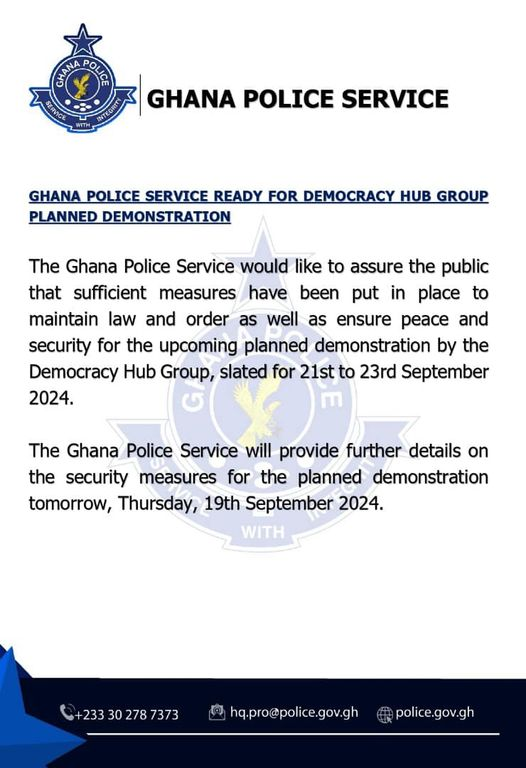
    The Ghana Police Service has reassured the public of its commitment to maintaining law and order during the upcoming demonstration organized by the Democracy Hub Group, set to take place from September 21 to 23, 2024.

    In a statement issued on Wednesday, the Police Service confirmed that comprehensive security arrangements have been made to ensure the safety of participants and the general public during the protest. The statement emphasized that the Police are prepared to safeguard public peace and prevent any disruption.

    This assurance follows recent legal developments in which a court injunction was sought to halt the demonstration. The injunction is part of ongoing legal disputes concerning the legality of the protest and its potential impact on public order.

    Despite these legal challenges, the Police Service has sought to address public concerns and affirm that measures are in place to maintain peace throughout the demonstration period.

    “The Police have put in place adequate security measures to ensure the safety of participants and the public,” the statement noted.

    The Police further stated that details of the specific security arrangements will be provided in an update scheduled for Thursday, September 19, 2024, to inform the public and participants of the security protocols in place.

    The planned demonstration by the Democracy Hub Group has attracted significant public attention, and the proactive steps taken by the Police reflect their efforts to balance the constitutional right to peaceful assembly with the need to maintain public order.

    As the date for the protest approaches, the Ghana Police Service remains committed to ensuring a secure environment for all involved, with further updates expected to keep the public informed about the preparations.

  • Akufo-Addo advocates culture of democracy amid “Democracy Cup” celebration

    Akufo-Addo advocates culture of democracy amid “Democracy Cup” celebration

    President Akufo-Addo has emphasized the crucial role of all branches of government in consolidating democratic progress in Ghana.

    He has urged collective efforts to maintain and enhance the democratic gains achieved since the inception of the Fourth Republic in 1993.

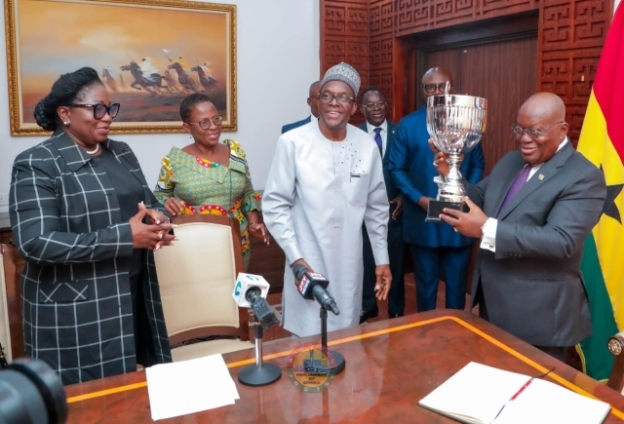
    During a meeting with Speaker of Parliament, Alban Bagbin, who presented the commemorative Democracy Cup trophy, President Akufo-Addo underscored the need for unity and collaboration across the nation to fortify Ghana’s democratic institutions.

    “I believe it is imperative that we do not take for granted the democratic strides we have made since 1993,” remarked President Akufo-Addo.

    “It is incumbent upon all of us—government, parliament, and the judiciary—to work together diligently to advance our democratic principles.”

    The President praised the Parliament of Ghana for launching the inaugural “Democracy Cup” competition, marking 30 years of Parliamentary Democracy. He expressed enthusiasm for the initiative, noting its potential to deepen the culture of democracy among Ghanaians.

    “I fully endorse and support this noble initiative, which promises to entrench democratic values in our society,” President Akufo-Addo affirmed. “I look forward to its continued success and hope it becomes a fixture in our national calendar for years to come.”

    Speaker Alban Bagbin utilized the occasion to appeal to Ghanaians, particularly the youth, to prioritize peace and unity as the country approaches the 2024 elections. He highlighted the Democracy Cup as a means to engage young people in understanding and appreciating the essence of democracy through sports, particularly football.

    “The objective of the Democracy Cup is to use football as a platform to involve our youth in the 30th anniversary celebrations and to foster a deeper understanding of democracy,” Speaker Bagbin explained. “This initiative aims to promote peace and unity among our youth, crucial elements as we navigate towards the upcoming elections in December.”

    The inaugural Democracy Cup match is scheduled to feature a showdown between Accra Hearts of Oak and Asante Kotoko at the Accra Sports Stadium on Wednesday, July 17th. Additionally, a special curtain raiser match between ex-Black Stars players and Members of Parliament is set to precede the main event.

    Notable attendees at the event included Chief of Staff Akosua Frema Osei-Opare, Secretary to the President Nana Bediatuo Asante, Clerk to Parliament Cyril Kwabena Oteng Nsiah, and other dignitaries from both the Presidency and Parliament.

    The Democracy Cup initiative aims not only to celebrate Ghana’s democratic journey but also to instill democratic values and principles among the youth, ensuring a future generation committed to the ideals of peace, unity, and democratic governance.

  • Ghana is now working under ‘moneycracy’, not democracy – Haruna Iddrisu

    Ghana is now working under ‘moneycracy’, not democracy – Haruna Iddrisu

    The Member of Parliament for Tamale South, Haruna Iddrisu, has raised serious concerns about the increasing monetization of politics in Ghana.

    He describes the current state of democracy as being driven by money rather than merit.

    Speaking at the 15th MTN Pulse Africa Transform Summit in Kumasi, the National Democratic Congress (NDC) MP expressed his worries about the transformation of Ghanaian politics into what he termed “moneycracy.”

    He pointed out that governance has increasingly become the domain of the highest bidder, rather than individuals with genuine competence and vision.

    “We have reduced our democracy to moneycracy. Here it is now about who pays more and who is the highest bidder. That is wrong and as young people, you must speak about it even though I am an actor of it,” Iddrisu stated.

    Reflecting on the past, Mr Iddrisu noted a significant shift from the days when politics was about contributing personal resources for the nation’s benefit.

    He recalled his early days in politics when dedication and resourcefulness mattered more than wealth.

    “When my generation started, it was not about how much money you brought to a polling station and how much you paid. In fact, I used to borrow a motorbike to campaign,” he reminisced. “Today I am not sure a candidate on a motorbike will be accepted. So, speak out and speak out for the good of the country.”

  • Democracy is not allowing Ghanaians to think for themselves – Akosua Bame

    Democracy is not allowing Ghanaians to think for themselves – Akosua Bame

    Ghanaian author, Akosua Bame has issued a thought-provoking critique of Ghana’s democratic system, suggesting that citizens have been misled about the true nature of their political freedom.

    She said this while speaking at a public lecture held on Thursday, June 6, 2024, at the British Council on the theme “Looking Beyond the Fourth Republic Towards Nation-Building,” the author of “The Mindset Revolution” 

    “For decades, Ghanaians have been programmed not to think for themselves; They have been deceived with the ideology of democracy perceiving that because they can insult a leader on a radio or televised programme they are truly enjoying the benefit of democracy,” she stated.

    Madam Bame argued that this perceived freedom to criticize leaders on public platforms gives a false sense of democratic participation. 

    She believes that such actions are often seen as the hallmark of democracy, yet they do not translate into meaningful political change or accountability.

    The author highlighted that even empowering declarations, like “be citizens and not spectators,” quickly lose their impact once those in power achieve their goals.

    According to her, these slogans are designed to placate the public and fade away as soon as political objectives are met.

     “They are truly enjoying the benefits of democracy even when declarations such as be citizens and not spectators are made; they fizzle out immediately that the power is attained. What has been the response when issues have emerged with the current government? 

    She questioned  the current government’s response to public dissent, particularly when significant issues arise. 

    She referenced the widespread calls for the resignation of the then-Minister of Finance, a demand that was largely ignored.

     Instead of being removed, the minister was “rewarded with another portfolio” on January 10, 2023. 

    Following the resignation of Alan Kyerematen, the Finance Minister was appointed as the caretaker minister of the Ministry of Trade and Industry.

    When Ghanaians asked the then honorable minister of Finance to resign or be sacked by the president he was recently rewarded with another portfolio on 10th January 2023 as caretaker minister of the Ministry of Trade and Industry following the resignation of Alan Kyerematen”.

    She emphasized the need for genuine democratic engagement where public opinion leads to substantial action and accountability from leaders.

  • Ghana’s democracy at risk over rising chieftaincy disputes – National Security Minister

    Ghana’s democracy at risk over rising chieftaincy disputes – National Security Minister

    Minister for National Security, Albert Kan-Dapaah, has voiced deep concern over the escalating incidents of chieftaincy disputes and landguard activities, which he views as significant threats to the country’s democratic stability.

    Kan-Dapaah’s worry comes in the wake of the tragic death of Lance Corporal Michael Danso during a conflict over land ownership at Millenium City in Gomoa East.

    The Minister emphasized that chieftaincy disputes, in particular, present a persistent challenge to internal security and require urgent and decisive action.

    Speaking at the 2024 Civil Service Week and 2023 Awards Ceremony in Accra, Kan-Dapaah stressed the need for sustained efforts to effectively address these issues and prevent future occurrences.

    “Let me say that chieftaincy disputes, in particular, remain a thorny internal security threat that must be permanently dealt with. It is interesting to note that chieftaincy disputes constitute a significant portion of the daily situational reports that are received by my ministry.

    “The potential for such chieftaincy disputes to degenerate into violent confrontations compels us to constantly dedicate considerable amounts of resources to the mitigation of such threats. And these are resources that would have been channelled into other productive sectors of the economy.”

  • Ghana is democratically poorer because of Akufo-Addo, Bawumia – Mahama

    Ghana is democratically poorer because of Akufo-Addo, Bawumia – Mahama

    Former President John Mahama has criticized the Akufo-Addo-led New Patriotic Party (NPP) government for allegedly failing to uphold Ghana’s democratic principles in the 4th Republic.

    The NDC flagbearer expressed concern, stating that the current administration has not taken sufficient measures to strengthen the country’s democratic foundations.

    In a tweet posted on X on Monday, April 15, Mr. Mahama accused the government of prioritizing political expediency over other concerns, which he believes has had detrimental effects on the nation.

    He lamented that Ghana has suffered as a result of these alleged actions by the government.

    “The Nana Akufo Addo and Bawumia-led administration has crossed many red lines in our democratic practice.

    “Their deliberate acts of putting political convenience ahead of democratic consolidation have left Ghana’s 4th Republic the poorer for it,” he posted.

    The former President reiterated his stance that significant efforts are required to reverse the current trend and ensure the protection and advancement of Ghana’s democratic values.

  • Democracy under threat globally – Prof. Diamond

    Democracy under threat globally – Prof. Diamond

    A Democracy Scholar affiliated with the Hoover Institute and Stanford University, Prof. Larry Diamond, has voiced his apprehensions regarding the global regression of democracy.

    Highlighting a decline in the number of democracies worldwide compared to a decade ago, Prof. Diamond noted citizens’ increased discontent with their governments.

    During an interview on The Point of View on Citi TV, hosted by Bernard Avle, Prof. Diamond cited countries such as Niger, Burkina Faso, Mali, and Tunisia, where insurgencies have erupted.

    “Democracy is in decline globally, which means there are fewer democracies now than it was 10 years ago. More countries have been living in democracy than have been moving to it. Witnessed Niger, Burkina Faso, Mali, Tunisia, if you want to go further North, the only Arab countries that had democracy no longer has it.

    “We have had troubles in Latin America. We’ve had troubles elsewhere in Africa. South Africa is not doing very well right now democratically because of bad governance.”

    “So, if you ask why [I say democracy is in decline], one reason is the failure to control corruption. The poor quality of governance and the rule of law are often a leading indicator. But there’s also a trend of greater social polarization as a result of social media, and disinformation, particularly from authoritarian actors like Russia and China,” he asserted.

    Prof. Diamond attributed the erosion of democracy to governmental failures in curbing corruption and ensuring effective governance.

    He also underscored the exacerbation of social polarization due to the proliferation of social media and disinformation campaigns, particularly originating from Russia and China.

    “The decline in democracy can be attributed to governments’ inability to curb corruption and uphold the rule of law. Additionally, the rise of social media has fueled social divisions, exacerbated by disinformation campaigns from authoritarian regimes,” he explained.

    Prof. Diamond emphasized citizens’ heightened expectations for economic progress, juxtaposed with disappointments stemming from the global economic downturn since the 2008 financial crisis.

    While acknowledging citizens’ enduring faith in democracy, Prof. Diamond stressed the urgent need for global efforts to strengthen democratic institutions and combat corruption.

    “More democracies are failing, and it seems to be on trial because it’s often yielding to authoritarian rule, via military coups we have seen in West Africa. We have a lot of work to do to show that democracy can be made to work, and can become more effective. To fight corruption and improve the rule of law,” he opined.governments must address citizens’ economic grievances and combat corruption to restore trust in democratic governance,” he advocated.

  • Africa should have a King, not democracy – Sonnie Badu

    Africa should have a King, not democracy – Sonnie Badu

    In a recent interview on Accra 100.5 FM’s Ayekoo Ayekoo midmorning programme with Nana Romeo, Sonnie Badu expressed skepticism about democracy as a governance system for Africa.

    He attributed many of the continent’s challenges to its abundant mineral and natural resources.

    Badu questioned the practicality of democracy in Africa, particularly when compared to monarchies.

    He drew parallels with countries like the United Kingdom, where a monarchy coexists with democratic institutions, and highlighted the developmental progress made by nations under monarchic rule, such as Dubai and Saudi Arabia.

    “Sometimes, you see hospitals and clinics that are dilapidated, but the politician’s focus is elsewhere. You will see cases of money spent by politicians on one project or another, and you will ask why they couldn’t use the money to fix schools under trees or something.

    “The issue is that when they get into politics and they come across these huge sums of money, they have to pocket that money for themselves and for when they leave power. They also have to use money to settle those living with them.

    “You may not understand until you get into their shoes, that’s how politics works,” he said.

    He stressed the stability and advancement brought by monarchs compared to the political turbulence often observed in democracies.

    Badu advocated for African nations to consider monarchies, pointing to the steady development and safeguarding of resources evident in such systems.

    He condemned politicians’ focus on self-interest, attributing it to the exorbitant costs of political campaigns and the necessity to recover investments.

    The former musician, now a pastor, lamented the lack of emphasis on the well-being of citizens by African leaders, observing widespread poverty despite ample resources.

    He highlighted the familial connections that often transcend political boundaries, fostering a culture of profiting at the expense of the people.

    Acknowledging the imperfections within the political system, Badu implied that such conduct is inherent in politics and might persist until individuals encounter it firsthand. He warned against the deceit embedded in political opposition, often prioritizing politicians’ interests over the populace’s.

    In summary, Badu voiced apprehension for the African citizens’ predicament amid political maneuvering, advocating for a deeper comprehension of political dynamics and their societal repercussions.

  • You can’t be perpetrator of flowed democracy when journalists are attacked, killed – Historian tells Akufo-Addo

    You can’t be perpetrator of flowed democracy when journalists are attacked, killed – Historian tells Akufo-Addo

    Renowned financial analyst, economist, and historian Scott Bolshevik has criticized President Akufo-Addo for failing to protect Ghana’s democratic system.

    He pointed to the attacks and murder of journalists such as Manasseh Azure Awuni and the late Ahmed Suale as evidence.

    In a post on social media platform X, Bolshevik stated, “I have witnessed victimization, intimidation and even killing of journalists in this government administration in Ghana It’s untruthful for the president to position himself as a sympathizer and not a solicitor and a perpetrator of flowed democracy. The victim list is endless.”

    Bolshevik’s criticism comes in the wake of President Akufo-Addo’s strong condemnation of the use of state power to suppress dissenting voices in Africa, which he labeled as unacceptable.

    Speaking at a conference hosted by the African Union on unconstitutional changes of government in Africa, President Akufo-Addo emphasized the importance of democracy in Africa and the need for its firm establishment across the continent.

    “When elections are not truly free and fair and legal tactics are employed to undermine the spirit of democracy, when legal loopholes are exploited to subvert constitutional provisions that guarantee inclusion and participation, and when state apparatus is used to muzzle freedom of expression, citizens begin to feel the democratic processes have taken them hostage and often celebrate anything that looks like an end to their present predicament.”

    https://twitter.com/scottbolshevik/status/1770356565012349346?s=46
  • Ghana’s democracy deteriorating – Economic Intelligence Unit report

    Ghana’s democracy deteriorating – Economic Intelligence Unit report

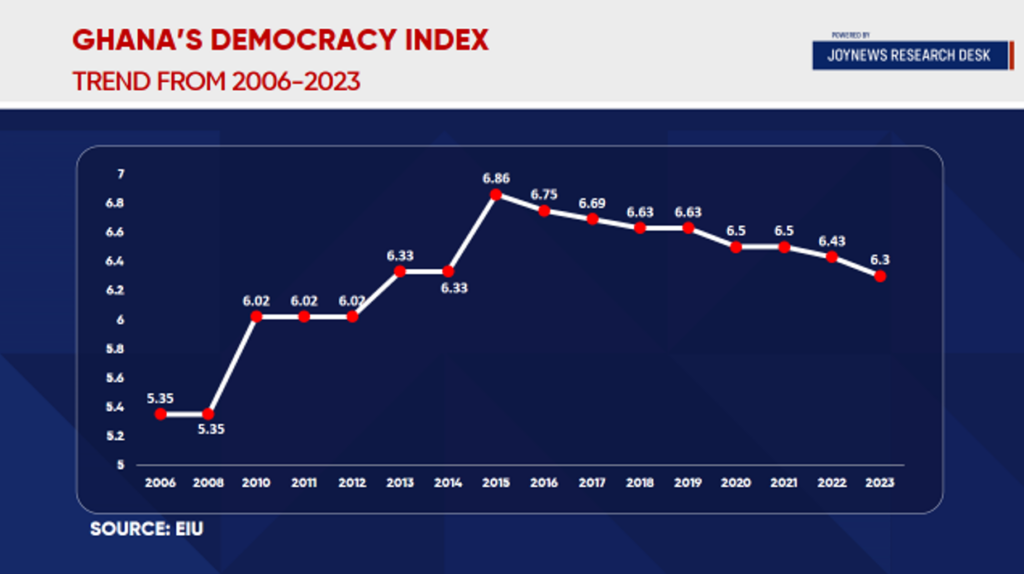
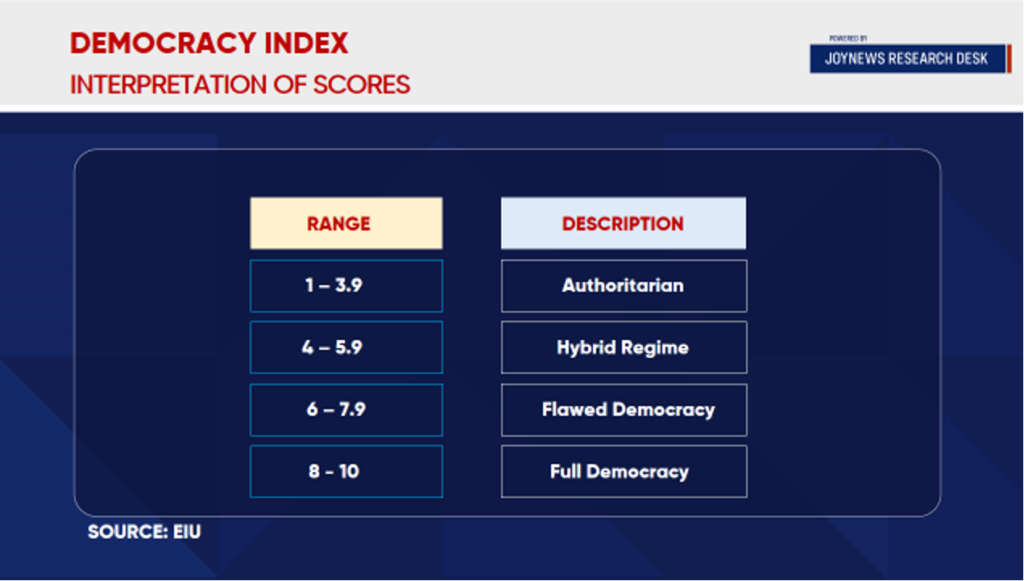
    Ghana’s democracy has once again been deemed flawed in the 2023 Democracy Index report by the Economic Intelligence Unit.

    According to the report, Ghana experienced a decline in both the Democracy Index and its global ranking. In 2022, Ghana had an index score of 6.43 out of 10 and ranked 63rd globally. However, in 2023, the country’s index dropped to 6.3 out of 10, and its global ranking fell to 65th place.

    Ghana also slipped from 4th to 5th place in Africa, trailing behind Mauritius, Cape Verde, South Africa, and Namibia. This decline reflects a deterioration in the practice of democracy in the country.

    Ghana’s index has been on a downward trend since 2015 and has been classified as a flawed democracy since 2010.

    The Democracy Index evaluates countries across five categories: electoral process and pluralism, functioning of government, political participation, political culture, and civil liberties.

    Ghana scored lowest in the functioning of government, with a score of 5.0 out of 10, and highest in electoral process and pluralism, with a score of 8.33 out of 10.

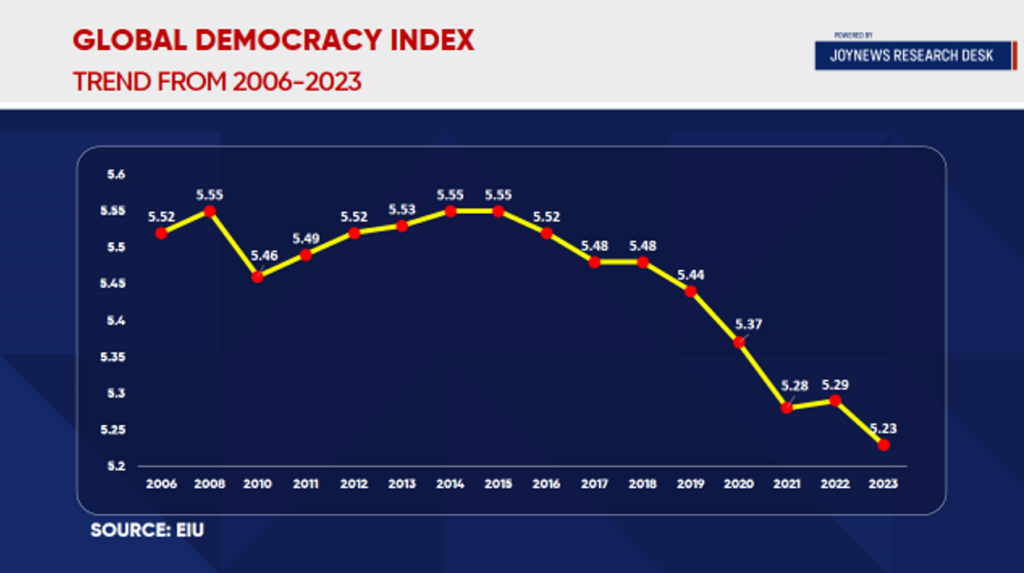
    In 2023, the global democracy index decreased from 5.29 out of 10 in 2022 to 5.23 out of 10. This is the lowest level since the index began in 2006, and the decrease is attributed to ongoing wars and conflicts worldwide.

    The Russia-Ukraine war, Azerbaijan’s conquest of Nagorno-Karabakh, the civil war in Sudan, and Israel’s conflict with Hamas are identified as leading threats to security and democracy globally.

    According to the 2023 Democracy Index, 74 of the 167 countries and territories covered by the model are democracies of some type. The number of “full democracies” (those scoring more than 8.00 out of 10) remained at 24 in 2023, the same as the previous year. The number of “flawed democracies” increased from 48 in 2022 to 50 in 2023.

    Of the remaining 95 countries in our index, 34 are classified as “hybrid regimes”, combining elements of formal democracy and authoritarianism, and 59 are classified as “authoritarian regimes”.

    Less than 8% of the world’s population live in a full democracy, while nearly 40% live under authoritarian rule—a proportion that has been steadily increasing in recent years.

    The rise in violent conflicts has significantly impacted the global democracy score and hindered any recovery following the pandemic years of 2020-2022.

    Most of the regression in democracy index occurred among the non-democracies classified as “hybrid regimes” and “authoritarian regimes”. Between 2022 and 2023 the average score for “authoritarian regimes” fell by 0.12 points and that for “hybrid regimes” by 0.07 points.

    The year-on-year decline in the average score of the “full democracies” and “flawed democracies” was modest by comparison, falling by 0.01 and 0.03 points respectively. This suggests that non-democratic regimes are becoming more entrenched, and “hybrid regimes” are struggling to democratize.

  • Loss of experienced MPs every 4 years detrimental to Ghana’s democracy – Speaker

    Loss of experienced MPs every 4 years detrimental to Ghana’s democracy – Speaker

    Speaker of Parliament, Alban Sumana Kingsford Bagbin, has voiced concern over the loss of experienced Members of Parliament (MPs) during political party primaries held every four years, stating that it undermines Ghana’s democracy.

    Bagbin acknowledged that primaries are a fundamental aspect of the democratic process but emphasized that it is detrimental for seasoned MPs to be denied the opportunity to continue representing their constituencies.

    He highlighted the significant cost to the country associated with this loss of experience.

    The Speaker called upon political parties to address this issue urgently, emphasizing the importance of preserving the expertise and continuity that experienced MPs bring to governance.

    “We woke up one Saturday and by the evening we’ve lost 28 MPs through the primaries of the New Patriotic Party (NPP). Earlier last year, we lost 17 MPs through the primaries of the National Democratic Congress … the primaries are part of the process for the [voters] to determine who represents them in Parliament but the case of voluntary discontinuance of MPs [from the House] is not a good signal for the legislature and for Ghana’s democratic development,” Bagbin says.

    “Experience as we all know counts in this House but the endorsement of your parties to contest is equally important. The hemorrhage and cost to the nation is, however, a great concern worth considering by all stakeholders and I want to appeal to the political parties to take this matter up seriously because the investment that is made in an individual MP is so huge for the nation just to go waste after every four years.”

  • NDC is Ghana’s public enemy – Kwamena Duncan 

    NDC is Ghana’s public enemy – Kwamena Duncan 

    Former Central Regional Minister, Kwamena Duncan, has openly criticized the National Democratic Congress (NDC), labeling the opposition party as “the only public enemy of democracy.”

    The critique comes at a time when the political landscape is still charged with political analyses and discussions given the upcoming 2024 elections. 

    Mr Duncan in an interview on PeaceFM, pointed to what he perceives as unfulfilled promises by the NDC, accusing the party of neglecting the welfare of Ghanaians. He emphasized that the NDC’s actions are indicative of a power-hungry agenda rather than a genuine commitment to serving the people.

    “If there’s any public enemy of our democracy, no Ghanaian should be left in doubt who they are… NDC does not care about Ghanaians, they are just power sick,” he said. 

  • Africa’s unity is a threat to our enemies – Julius Malema

    Africa’s unity is a threat to our enemies – Julius Malema

    South African firebrand politician Julius Malema has delivered a powerful message during his recent visit to Ghana, emphasizing the urgent need for African unity. 

    In a stirring address, Malema highlighted the enduring challenges faced by Ghana and other African nations in achieving true independence, particularly in the economic sphere.

    He asserted that while countries like Ghana have advanced in terms of democracy, it continues to rely on outdated economic structures that perpetuate dependency on entities with historical ties to colonial powers. 

    Malema commended Ghana’s long-standing democracy, recognizing it as one of the oldest on the continent. However, he drew attention to the persistent issue of economic control, pointing out that the means of production in Ghana are still largely owned by entities with colonial ties. The discrepancy between political freedom and economic dependence, he argued, renders the former meaningless without the latter.

    “Ghana’s democracy is very old compared to other democracies in the continent but the means of production are still owned by those who previously colonized us and how do we go beyond that because political freedom without economic emancipation is meaningless and this type of engagement seek to ensure that the people of Africa are aware that if we stand divided only the imperialist and colonialist stands to benefit,” he stated. 

    “The unity of Africa is a threat to the enemies of Africa,” Malema passionately declared, emphasizing the importance of solidarity among African nations in the face of external pressures. 

    He warned against division, asserting that a fragmented Africa only serves the interests of imperialists and colonialists who continue to benefit from economic disparities.

  • Afari-Gyan laments sorry state of Ghana’s democracy; says ‘All is not well’

    Afari-Gyan laments sorry state of Ghana’s democracy; says ‘All is not well’

    A former Chairman of the Electoral Commission (EC), Dr Kwadwo Afari-Gyan, has raised serious apprehensions about the state of Ghana’s democracy

    Dr Afari-Gyan points to a troubling landscape marked by unfulfilled promises and widespread instances of vote-buying, signaling a critical evaluation of the country’s democratic foundations.

    Underlining the imperative for corrective actions, he underscored the pressing need to address these issues, affirming that the nation is regressing in its democratic trajectory.

    Dr Afari-Gyan pointed out the widespread occurrence of electoral malpractices, noting that politicians are giving precedence to hollow promises rather than substantive policies.

    Addressing the audience during the Constitution Day Public Lecture on Monday, January 8, he issued a cautionary statement, expressing his concern that Ghana is treading a precarious path. He warned that if not addressed, the diminishing political sincerity may erode voters’ faith, posing a significant threat to the democratic process.

    “In days gone by, whatever vote buying or selling there took place in secrecy. It’s not so these days. What we have now looks like an open market where candidates can freely buy votes and citizens can freely sell their votes in broad daylight while we all look on seemingly unconcerned.”

    “It is a shameful spectacle because vote buying and vote selling are unlawful,” he stated.

    Dr Afari-Gyan concluded that “All is not well with our democracy.”

    He thus emphasised the need for Ghanaians to demand better from their leaders and actively participate in safeguarding the principles that underpin a healthy democracy.

    His blunt assessment serves as a rallying cry for citizens to take a proactive stance in shaping the future of Ghana’s democratic landscape.

  • 2024 polls must be clean – Lawrence Tetteh to NPP, NDC

    2024 polls must be clean – Lawrence Tetteh to NPP, NDC

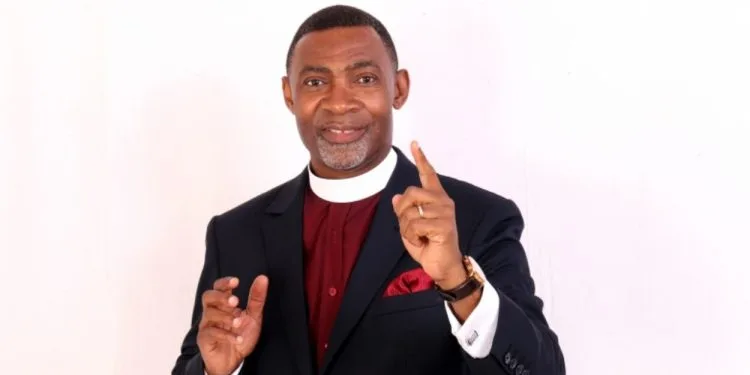
    Founder and President of the Worldwide Miracle Outreach, Rev Lawrence Tetteh, has emphasized that elections should not be arenas of conflict. He urged all political parties to guarantee a fair and transparent conduct of the 2024 polls.

    Stressing the importance of democratic practices, he underscored the necessity for political parties to uphold democracy without resorting to attacks as the nation prepares for the upcoming presidential and parliamentary elections.

    Rev. Lawrence Tetteh made these remarks during a national prayer rally at the Old Obra Spot in Accra on New Year’s Eve, themed “Come, Let’s Pray for a Peaceful and Transparent Election.”

    “They should remember that politics is not war, elections are not war, and democracy is not war. We should be able to practice democracy devoid of insults. This year’s elections should be clean, fair, and transparent,” he advised.

    The Founder and President of the Worldwide Miracle Outreach further advised the political parties, especially the major ones, to refrain from using well-built men called ‘macho men’ to terrorize voters during the elections.

    “The youth shouldn’t be abused, our macho men shouldn’t be used and if people are used to causing chaos because of their deprived situation, they should wake up to the responsibility and the challenge that they will also answer when the nation gets doomed,” he asserted.

  • Rise to the occasion and reinforce Ghana’s status as bastion of democracy – Akufo-Addo tells public

    Rise to the occasion and reinforce Ghana’s status as bastion of democracy – Akufo-Addo tells public

    President Akufo-Addo expressed confidence that Ghanaians will uphold Ghana’s status as a bastion of democracy in Africa during the upcoming 2024 elections.

    In a Christmas Day radio broadcast, he emphasized the importance of conducting the elections with a sense of responsibility to ensure they are free, fair, and transparent.

    This, he said, “will enable the Ghanaian people to choose in peace and serenity the person and persons who will manage their affairs on their behalf for the next four years.”

    “I am confident that yet again Ghanaians will rise to the occasion and reinforce the status of Ghana as a bastion of democracy on the African continent. For my part, I will always be grateful to Almighty God and to you, the Ghanaian people, for allowing me to serve you,” he added.

    President Akufo-Addo reassured Ghanaians of his commitment to building a free and prosperous nation with opportunities for every Ghanaian child, regardless of their circumstances of birth.

    He added that he will ensure that every Ghanaian “has a fair chance to strive for a happy and dignified life and realize his or her aspirations and where we can unleash the sense of enterprise, creativity, and innovation of the Ghanaian people so that together we can build a progressive, prosperous Ghana whose citizens live in harmony and security in fulfilment of the dreams of the founding fathers of our nation.”

  • Coup in Africa: We must value our democracy and not toy with it – Asiedu Nketiah

    The Chairman of the National Democratic Congress (NDC), Mr. Johnson Asiedu Nketiah, has issued a call to action for Ghanaians to take all necessary measures to safeguard the nation’s democracy and stability.

    He has encouraged citizens to demonstrate courage and to vocalize their concerns regarding actions that could jeopardize the country’s peace and order.

    “We have never had this length of democratic stability, so, it is something that we should value and not toy with,” he said.

    “We have never come this low, where. as a country, we are unable to service our debt let alone to pay, we have never come this low where corruption in the country has become like an American buffet, eat all you can for $10. 

    “We are at a point where our nation’s Central Bank, on paper, does not exist, we are at a stage where our security services have been politically compromised. 

    “The least said about our justice system the better and in all this, what helps to stabilise nations in crisis like this is the freedom to demonstrate because when people are frustrated and they get the opportunity to vent out their feelings, it’s a way of preventing an explosion, but that right too is being trampled upon,” he said. 


    Mr. Nketiah cautioned the Electoral Commission (EC) against implementing policies and initiatives that could potentially disenfranchise Ghanaians, especially the youth, and undermine the nation’s political stability.

    “I am calling on civil society organisations, opinion leaders, faith-based organisations to bring pressure to bear on the government to make sure that the last right of the youth to cast their ballot and to determine their leaders are not taken away from them, because when you block peaceful avenues of change you are inviting violent avenues of change,” he stated.

    He called upon the recently inaugurated national executives to exert their utmost effort in securing victory for the party in the December 2024 elections.

    General Secretary of the NDC, Mr. Fifi Fiavi Kwetey, similarly urged the new executives to prioritize the party’s interests over their individual aspirations to ensure a successful outcome.

  • Democracy suspension in Gabon temporary – Military chief

    Democracy suspension in Gabon temporary – Military chief

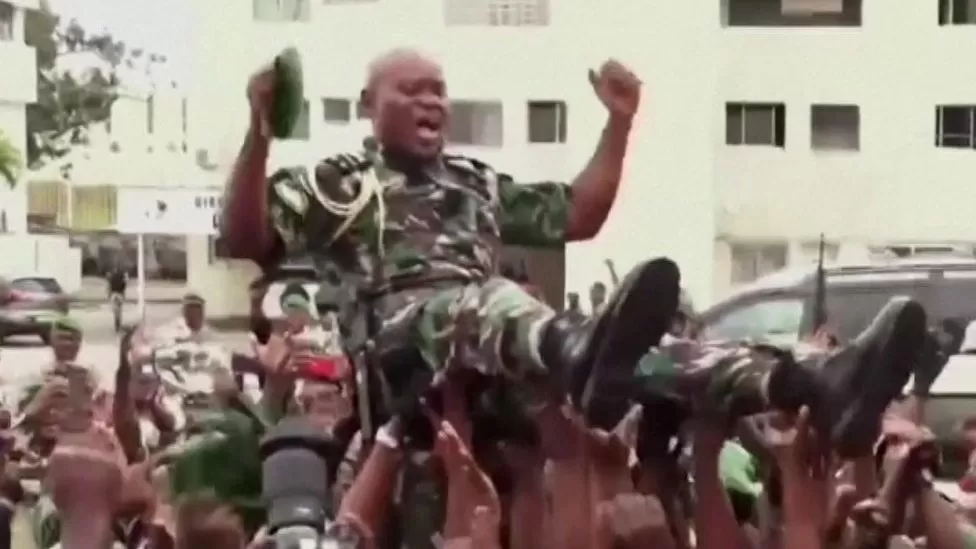
    Gabon’s newly appointed military leader, General Brice Oligui Nguema, has affirmed his commitment to restoring democracy in the country. However, he has refrained from specifying a timeline for holding fresh elections.

    General Nguema has assured that Gabon’s state institutions will undergo reforms aimed at enhancing their democratic nature, emphasizing that their suspension is intended to be a temporary measure. Despite these assurances, the opposition coalition in Gabon remains skeptical, contending that the military has yet to demonstrate a clear intention to transfer power back to a civilian government.

    Following the ousting of President Ali Bongo, who was subsequently placed under house arrest, army officers took to state television during the early hours of Wednesday to declare their control, bringing an end to the Bongo family’s 55-year reign over the central African nation. They also announced the nullification of the results of the recent presidential election, in which Mr. Bongo had been declared the winner but was contested by the opposition, who alleged fraud in the election process.

    During a televised address on Friday evening, General Nguema emphasized the military’s commitment to taking swift but deliberate actions to prevent elections that might perpetuate the same problems of keeping the same individuals in power.

    He stated, “Moving quickly does not mean rushing into hasty elections, which would only repeat previous mistakes.”

    Gabon’s primary opposition group, Alternance 2023, which claims to be the rightful victor of the Saturday election, called on the international community to support a return to civilian governance.

    Alexandra Pangha, a spokesperson for Alternance 2023 leader Albert Ondo Ossa, expressed hope that the international community would advocate for the restoration of civilian rule and democracy in Gabon rather than allowing General Nguema to be sworn in as a transitional president on Monday, describing such a plan as “absurd.”

    The coup in Gabon marks the eighth such event in West and Central Africa since 2020, following similar incidents in Niger, Mali, Guinea, Burkina Faso, and Chad.

    This coup has garnered condemnation from the United Nations, the African Union, and France, Gabon’s former colonial power with strong ties to the Bongo family.

    Mr. Bongo, who had been in power since 2009, made a video appearance from his home this week, calling on his “friends all over the world” to advocate on his behalf. Nevertheless, his removal has been met with celebration by many Gabonese who have grown disillusioned with his family’s long-standing rule. Crowds in the capital, Libreville, and other areas were observed celebrating the army’s announcement earlier in the week.

  • African democracy at risk due to declining satisfaction – CEO of Afrobarometer

    African democracy at risk due to declining satisfaction – CEO of Afrobarometer

    During the Africa Drive for Democracy Conference – Elders Retreat in Arusha, Tanzania, Afrobarometer CEO Joseph Asunka addressed participants and shared concerning news about the declining satisfaction with democracy across Africa. Asunka emphasized that this decline is eroding citizens’ confidence in democratic governance.

    The conference provided a valuable platform for former heads of state and key elders to come together and engage in discussions about the current state of democracy in Africa. Their collective wisdom and imagination were harnessed to explore potential pathways for revitalizing and sustaining democracy on the continent.

    Asunka highlighted several factors that might be contributing to the growing dissatisfaction with democratic rule in Africa.

    These factors include non-compliance with presidential term limits, an increase in crime and insecurity, and rampant corruption within the political system. Addressing these issues is essential for restoring faith in democratic institutions and ensuring the prosperity of democratic governance in the region.

    “The data shows that Africans’ commitment to democracy remains strong,” he said.
    “However, governments and elected leaders have failed to meet these popular democratic aspirations. This has led to a decline in popular confidence in democratic governance and an increasing attraction to military rule and intervention.”

    According to recent data from Afrobarometer, which surveyed 36 countries in 2021/2022, it was found that a significant majority of Africans, around two-thirds (66%), prefer democracy as their preferred form of government. Furthermore, there is a strong rejection of one-man rule (80%), one-party rule (78%), and military rule (67%) among the surveyed populations.

    However, the data also reveals that only 38% of Africans express satisfaction with the functioning of democracy in their respective countries.

    Noteworthy attendees at the conference included Joachim Chissano, Ernest Bai Koroma, Hailemariam Desalegn, and Jakaya Mrisho Kikwete, who are former heads of state from Mozambique, Sierra Leone, Ethiopia, and Tanzania, respectively. Tanzanian President Samia Suluhu Hassan graced the event as the guest of honour.

    During the conference, these esteemed leaders emphasized the importance of finding practical and actionable solutions to strengthen democracy in Africa. Their shared commitment reflects the recognition of the challenges and opportunities ahead in preserving and enhancing democratic governance on the continent.

    “Unless and until African governments address the deficiencies in democratic governance and deliver essential public services to their people, democracy will remain an aspiration never to be meaningfully realised,” Hassan said.

    Addressing the conference theme, “Securing Africa’s democratic future through learning and engaging,” Koroma said confronting these challenges demands collective action to preserve and strengthen democratic norms and institutions.
    “We’re all in this together because we believe in the transformative power of democracy,” he said.

    “No doubt democracy is not without obstacles, but together we must confront the
    challenges that threaten its foundations: poor leadership, ineffective citizenship, corruption, poverty, political polarisation, rogue elections, and all the attendant ramifications of social
    unrest and political instability.”

    Throughout the discussions, participants acknowledged the vital role of African elders in shaping the continent’s democratic future.

    Across a continent that has experienced 21 coups in eight years, Afrobarometer data show that the extent of citizens’ opposition to military rule has declined by 10 percentage points over the past decade.

    Only three of the 36 surveyed countries (Liberia, Uganda, and Sudan)
    have recorded significant increases in their resistance to military rule. Worryingly, a slim majority (53%) of citizens are willing to endorse military intervention if elected leaders abuse their power.

    The Africa Drive for Democracy Conference – Elders Retreat served as a platform for constructive dialogue, seeking concrete approaches to advance democracy and ensure sustained democratic gains for Africa.

  • Bagbin urges strategic action for Ghana’s governance

    Bagbin urges strategic action for Ghana’s governance

    Speaker of Parliament, Alban Sumana Kingsford Bagbin, has advocated for the adoption of tactical measures to strengthen democratic government and hasten national progress.

    He expressed concern over the global decline in democratic governance and warned that Ghana’s situation could worsen if proactive steps are not taken to preserve it.

    The Speaker made these remarks at a press soiree held in Tamale, the capital of the Northern Region. The event was organized as part of the activities commemorating 30 years of uninterrupted parliamentary democracy in Ghana.

    Alban Bagbin emphasized the critical role of the media in governance and called on practitioners to serve as partners in the country’s progress.

    “There is a decline in democratic governance around the world, but ours has reached a point where we must take action. If we want to develop, we must all take action. So we are here to use you not as tools, but as partners in development.”

    “Whatever we do, if it is not the media that gives it meaning, then we have done nothing. You convey it to the people we want to reach, and you explain it better to the people. So, you are the linguists for the people to understand us better. It is not just a mantra that you are the fourth arm of government. It is a reality because without the media, there will be no government.”

    The speaker also weighed in on the ongoing debate on the use of artificial intelligence. He described the tool as a double-edged sword that is valuable in the fast-changing technological world, noting that there is a proposal in parliament regarding the need to regulate its use.

    He stated that the house will deliberate and seek broader input from experts and the public before it is passed into law.

  • Parliament to mark 30 years of uninterrupted parliamentary democracy this year

    Parliament to mark 30 years of uninterrupted parliamentary democracy this year

    Ghana’s Parliament will this year, 2023, mark thirty years of uninterrupted parliamentary democracy.

    To commemorate the milestone, series of activities have been earmarked throughout the year under the auspices of the Speaker of the Eighth Parliament, Mr Alban Sumana Kingsford Bagbin.  

    This is contained in a press release issued by Mr Mr Ebenezer Ahumah, Director, Coordinator, 30™ Anniversary Celebrations Committee and copied the Ghana News Agency.  

    “These activities will be celebrated in four regional zones, beginning with the Northern Zone namely Wa,Tamale and Bolgatanga, and will include Mock Parliament, Public Forum and Peace Walk,” it said.  

    The activities, it said would foster civic engagement and enhance public awareness of parliamentary democracy.  

    The commemoration, themed: “Thirty years of parliamentary democracy under the Fourth Republic: The Journey thus far”, will provide an opportunity for Parliament and Ghanaians to reflect on Parliament’s achievements, acknowledge challenges and recommit to the principles of democracy, justice and equality that have guided the nation over the years.

    It said to kick start the celebrations, three key programmes would be held in the Northern Zone; a Mock Parliament in Wa in the Upper West Region on Thursday, June 15, 2023 at the Regional Library Complex.  

    The Mock Parliament, it said, would bring together five selected tertiary education institutions in the northern zone.  

    A public forum would also be held at Tamale in the Northern Region at the University of Development Studies (UDS) campus on Friday June 16, 2023.  

    That, it said would be followed by a peace walk and sporting activities would also take place at Bolgatanga in the Upper East Region the next day to climax the activities.  

    The converging point for the event would be the Regional Coordinating Council in Bolgatanga, it added.  

    Ghana’s 30th anniversary of parliamentary democracy is a significant milestone for the country and testament to its commitment to democratic governance.  

    It also serves as a reminder of the progress made in the past three decades and the need to continue to strengthen democratic institutions and processes.  

    A television broadcast will showcase the parliamentary journey thus far, with particular emphasis on the pivotal role and significant contributions of women in the history of Parliament.  

    Parliament encourages all Ghanaians to actively participate in the 30th anniversary as we reflect on the past and forge ahead, let us strengthen our resolve to preserve and enhance Ghana’s parliamentary democracy, safeguarding it for generations to come,” the release said.

  • June 4 events should encourage leaders to work towards a better Ghana – Mahama

    June 4 events should encourage leaders to work towards a better Ghana – Mahama

    For a better future for Ghana, John Mahama has implored leaders to take inspiration from the events of June 4.

    In a Facebook post on Sunday June 4, 2023, the former President stated that it is regrettable that the fight for justice and accountability resulted in the loss of lives.

    “Forty-four years ago today, our nation was gripped by a conflagration- triggered by a fight for justice and accountability. Regrettably, lives were lost.

    “We honour the memory of all who were involved in the catastrophic events of June 4, 1979. Their sacrifices paved the way for the democracy and constitutional governance we enjoy today,” M. Mahama stated.

    He continued: “June 4 birthed the principles of probity and accountability. The events of that uprising must spur those of us in positions of leadership today to work selflessly and tirelessly towards a brighter future for Ghana and uphold the legacy of those who came before us.

    “Let us commemorate this important day with utmost respect and gratitude.”

  • New website launched to track global state of democracy and human rights

    New website launched to track global state of democracy and human rights

    A new website that closely tracks the status of democracy and human rights around the world has been launched on April 27, by the Stockholm-based International Institute for Democracy and Electoral Assistance, or IDEA.

    It will provide monthly analysis and data on 173 countries based on over 100 indicators, from holding clean elections to fair access to justice and civil liberties.

    Seema Shah, head of the Democracy Assessment team at IDEA, says she thinks it is a valuable tool as it documents what is happening in a country through the lens of democracy, and why and how it is being impacted.

    “It’s one thing to say, ‘oh, well, the democratic health of country X is weak right now because they just had a flawed election‘. But it’s another thing to really dig into that election and see what happened that made it flawed. Why should that matter to the overall health of democracy?”

    For each country tracked, the website will include basic information such as the population, system of government, and head of state.

    But it also includes analysis that aims to give policymakers and others globally the tools to assess and understand the quality of their democracies.

    While it doesn’t rank countries, rather compares trends within a nation over time, IDEA’s data shows that democracy in 25 of them is on the decline, while just 11 have shown progress.

    “What we’ve seen is that democracy all over the world has been declining for at least the last decade, if not more. And all the interventions that have been created and all the policy recommendations that are circulating out there so far haven’t been able to stem the tide,” said Shah.

    She said IDEA thinks having more timely data would be able to help decision-makers to be able to make more strategic decisions using the most up to date information out there.

    The data is based on Global State of Democracy indices that are the evidence base for IDEA’s annual Global Report on the State of the Democracy.

  • Hate speech has never been used to win elections – – Dr. Asah-Asante

    Hate speech has never been used to win elections – – Dr. Asah-Asante

    Political science lecturer Dr. Kwame Asah- Asante argues that history has demonstrated that voters are more receptive to communications that speak to their hearts and brains than to overtly inciting ones.

    ‘’No one has won an election, using hate speech,’’ he asserts.

    While contributing to a discussion on Joy News on Hate Speech, Dr. Asah-Asante said that in Ghana, everything points to the fact that the conduits of hate speech have not entirely been helpful to the political process.

    He said it is important to institute safeguards that would protect or punish persons who fall foul in a bid to serve as a deterrent to others.

    As a way to protect Ghana’s democracy, Dr. Asah-Asante suggested that the media boycott the activities of political actors who consistently use inciteful language or hate speech while communicating with the electorate.

  • Akufo-Addo charges EC to prioritize credibility of 2024 polls

    Akufo-Addo charges EC to prioritize credibility of 2024 polls

    President Akufo-Addo has tasked the Election Commission (EC) to ensure that election 2024 is free, credible, and fair.

    According to him, a fair election will strengthen Ghana’s democratic credentials.

    “It is no secret that I have spent most of my adult life trying to fight for the establishment of democracy and human rights in this country and I have always fought and advocated for credible elections in Ghana. In emphasizing the importance of the credibility of elections, it must be pointed out that the counting, collation and declaration of the results, cannot and should not be more important than the sacred God-given rights of the citizen casting his or her ballot.”

    Nana Akufo-Addo made this statement at the swearing-in of two EC Board members at the Jubilee House.

    The President further charged that the electoral management body should not be intimidated by pressure from political parties.

    According to the President, criticisms are part of the country’s democracy and cannot be dismissed. 

    He asked the electoral management body to focus its efforts on the expectation of Ghanaians. 

    “Remember that now and ever, every single decision you take will be scrutinized to the letter.” That, however, should not scare you, and let no one try to coerce you into submission. On the contrary, let this expectation of the Ghanaian people spur you on to great heights, and above all, work to ensure that the will of the Ghanaian people is upheld.”

    President Akufo-Addo swore in three new members of the Electoral Commission (EC) at the Jubilee House.

    The newly inducted EC officials, namely, Dr Peter Appiahene, Salima Ahmed Tijani, and Rev. Akua Ofori Boateng, were inducted into office on Monday, March 20. 

    The President, however, urged them to uphold diligence in executing their mandate.

    Following the swearing-in, Dr. Appiahene, speaking on behalf of the members, declared that they were prepared to deliver and strengthen Ghana’s democracy.

    “We are, therefore, aware of the massive responsibilities and tasks that come with it.

    “We want to state that we are poised and more prepared to deliver and contribute to the development of our democracy, especially in this digital era.” he said

  • Parliament marks 30 years of continuous dispensation

    Parliament marks 30 years of continuous dispensation

    Parliament on Wednesday, February 22, 2022, celebrated its 30 years of continuous parliamentary dispensation.

    The 30th anniversary celebrations was launched by the Speaker of Parliament, Rt. Hon. Alban Sumana Kingsford Bagbin.

    The theme for this year’s celebration is “Thirty (30) Years of Parliamentary Democracy under the Fourth Republic: The Journey Thus Far

    It is significant to note that the current Speaker has participated in all 8 Parliaments, serving in various leadership capacities and as 2nd Deputy Speaker in the Seventh Parliament and finally as Speaker in this 8th Parliament.

    Source: The Independent Ghana

  • EIU report indicates Ghana’s democracy is flawed

    EIU report indicates Ghana’s democracy is flawed

    Ghana’s democracy is classified as being in need of improvement in the most recent edition of the Economic Intelligence Unit’s (EIU) democracy index study.

    A maximum score of 10 was allowed for the survey, which was based on five different measurements. The evaluation factored in the democratic political culture, civil freedoms, political engagement, pluralism in the electoral process, and government operation.

    Elections are fair and free, and fundamental civil liberties are upheld, although there may be problems with flawed democracies (e.g. media freedom infringement and minor suppression of political opposition and critics). These countries may have serious flaws in other democratic features, such as a weak political culture, low levels of political involvement, and problems with how the government operates.

    The report indicated that Ghana scored 6.43 out of 10 which is a 0.07 decrease from the previous 6.5 in 2021. The score according to the report shows that Ghana’s democracy is a flawed one since the score falls within that category.

    Ghana’s democracy index has been on a downward trajectory in the last 6 years and has been in the flawed region since 2010.

    https://datawrapper.dwcdn.net/Ipxki/1/

    Ghana however, ranked 4th in Africa and 63rd in the world for the global democracy index. It came behind Botswana (1st), South Africa (2nd), and Namibia (3rd) who scored 7.73, 7.5 and 6.52 respectively.

    Global Democracy

    The global score increased by 0.01 from 2021 to 5.39 in out of 10 in 2022. According to the report this represents stagnation rather than a reversal of the democratic recession that began in 2016.

    The report finds that almost half (45.3%) of the world’s population live in a democracy, while more than a third (36.9%) live under authoritarian rule. The survey rates the state of democracy across 167 countries.

    The global score, however, has been on a downward stream and some of the accounts can be attributed to the widespread suppression of individual liberties during the covid-19 outbreak for protection. This was seen in the significant fall in the global score in 2020 and 2021.

    Source: MyJoyOnline.com

  • US bars entry for Nigerians ‘undermining’ democracy

    US bars entry for Nigerians ‘undermining’ democracy

    The United States government has announced a visa ban on some unnamed Nigerians “for undermining the democratic process in a recent Nigerian election”.

    In a statement on Wednesday, US Secretary of State, Antony Blinken described the action as a reflection of his government’s “commitment to supporting Nigeria’s aspiration to combat corruption and strengthen democracy and the rule of law”.

    The senior US diplomat explained that the individuals affected will not be granted visas to enter the US, “under a policy to restrict visas of those believed to be responsible for, or complicit in, undermining democracy in Nigeria”.

    He also said that their family members may also be subject to these restrictions.

    “Additional persons who undermine the democratic process in Nigeria—including in the lead-up to, during, and following Nigeria’s 2023 elections—may be found ineligible for US visas under this policy,” the statement said further.

    Mr Blinken, however, clarified that the visa ban was not targeted at the Nigerian people or the government.

    It comes barely two months after the political counsellor at the US embassy in Nigeria, Rolf Olson, made a similar statement.

    In the lead up to the Edo and Ondo governorship polls of 19 September and 10 October 2020, the US government had also announced visa restrictions on some individuals.

    The country is due to hold general elections on 25 February.

    Source: BBC

  • Benin allows opposition to run in parliamentary vote after four years

    Benin allows opposition to run in parliamentary vote after four years

    The election is seen as a test of democracy because opposition candidates are allowed to run after a four-year absence.

    Voters in Benin will go to the polls for a parliamentary election seen as a test of democracy, with opposition parties returning to the ballot after boycotting or being barred from the most recent presidential and legislative elections.

    Benin’s image as a bastion of democracy and stability in West Africa has suffered under President Patrice Talon, who broke a pledge not to run for re-election and oversaw a crackdown on the opposition since taking office in 2016.

    Seven parties are competing in the vote, including the Les Democrates party linked to Talon’s predecessor and rival Thomas Boni Yayi.

    Boni Yayi’s supporters led protests in 2019 after opposition parties were blocked from the legislative vote for failing to meet strict new eligibility criteria.

    “I will vote for this party [Les Democrates] for the rebalance of power,” civil society activist Isidore Odountan, 31, told Reuters news agency in the largest city Cotonou.

    Preliminary results, which are expected on January 11, may also be an indicator of the strength of the various political forces jostling to succeed Talon. The next presidential election is due in 2026 when the next parliamentary vote will also be held.

    Talon does not belong to any party but is supported by the two parties currently in power in parliament – the Bloc Republicain and Union Progressiste le Renouveau.

    There is no immediate sign the vote will see protests like in 2019 or those that broke out in 2021 against Talon’s decision to seek re-election, said political analyst Expedit Ologou, head of Beninois think tank Civic Academy for Africa’s Future.

    “The atmosphere seems calm, peaceful, friendly, fraternal in most areas of the country,” he told Reuters.

    Under Talon, the political protests have been met with deadly police violence, while politicised prosecutions and other legal tactics have been used to stifle the opposition, US democracy watchdog Freedom House said in its 2022 report.

    Talon has denied targeting political opponents or violating human rights.

    With more parties on the ballot, turnout should return to normal levels of about 60 percent after slumping to just 27 percent in 2019, Ologou said.

    Regional security may be higher up in voters’ concerns in this election as Benin, alongside neighbouring Togo and Ivory Coast, has seen increasing attacks from armed groups linked to al-Qaeda and ISIL (ISIS) as violence creeps south from the Sahel countries of Mali, Burkina Faso and Niger.

    The insecurity and higher living costs linked to the war in Ukraine pose a threat to Benin’s recent economic gains, the International Monetary Fund warned last July.

    Benin’s agriculture-dependent economy has rebounded since the coronavirus pandemic, growing more than 7 percent in 2021 and the first half of 2022. But the country of 12 million remains one of the poorest in the world with one-fifth of the population living on less than $1.90 per day, according to the World Bank.

    Beyond the opposition’s drive to reclaim seats in parliament, Sunday’s election will affect the future of some of the other institutions in the small country, which sits between Nigeria and Togo.

    The mandate of the Constitutional Court ends this year and, three years before the 2026 presidential ballot, the court’s composition is crucial as it oversees decisions on elections.

    Four judges are appointed by lawmakers while the other three are chosen by the president.

    Talon, a wealthy businessman, was elected in 2016 and re-elected in 2021.

    Source: Aljazeera.com
  • Ghana’s democracy will last longer if its government mechanisms are transparent and accountable – Akufo-Addo

    Ghana’s democracy will last longer if its government mechanisms are transparent and accountable – Akufo-Addo

    President Nana Addo Dankwa Akufo-Addo says that for the country to continue on its democratic path, it is critical to improve transparency and accountability in governance structures that can combat corruption and the misappropriation of public funds.

    Furthermore, the Electoral Commission should work to ensure that all stakeholders in the electoral process – citizens, civil society organizations, and political parties – have no lingering doubts about the legitimacy of an election.

    On the eve of Ghana’s 30th anniversary of the Fourth Republic, President Akufo-Addo made the remarks in a televised address in Accra on Friday.

    January 7, 2023 marks exactly the 30th Anniversary of the nation’s return to constitutional regime after eight military takeovers.  

    “By all accounts, we have come a long way, and we should not take it for granted that everybody in Ghana has accepted democracy as the preferred mode of governance. 

     “There are those who would rather have authoritarian rule, because they claim our country is underdeveloped and democracy is cumbersome, and we need to get things done in a hurry.  

    “We still have some work to do to convince such people that we are all safer under democracies,” the President pointed out. 

     The President stated that without any form of equivocation his government had undertaken, arguably, the boldest initiatives since independence to reform and strengthen the capacity of  governance institutions to tackle corruption in the public sector, including the financial empowerment of the anti-corruption bodies. He cited, for instance, the passage of the Right to Information Act and the establishment of the Office of the Special Prosecutor to investigate and prosecute acts of corruption.   

    “As President of the Republic, I assure you that, out of duty to our children and grandchildren, and to generations yet unborn, my government will not give up when it comes to deepening our democracy and guaranteeing the integrity of the electoral process,” he added.  

    President Akufo-Addo was of the belief that efficient management of the economy would lead to enhancement in the standards of living of the people and ensure prosperity for all.  

    “We must do everything within our means to safeguard our democracy,” he stated. 

    “Tomorrow’s milestone is to the great credit of you, the Ghanaian people, the ordinary men and women who make up the fabric of our nation. Thirty (30) years ago, all of us resolved to build, under God, a united nation, grounded in democratic values and the rule of law,” the President recalled. 

    “We have advanced a great deal in realising this vision, and I am confident that, with a spirit of fairness, hard work, integrity and reconciliation, the best days of Mother Ghana lie ahead of us,” the President assured.  

    He observed that although the nation was presently confronted with difficulties in her economic performance, but with collective efforts she would soon surmount the challenges, and back onto the path of progress and prosperity.  

    “Let us, therefore, continue to work to create the platform for the evolution of a new Ghanaian civilisation, which will give true meaning to the foundational values of freedom and justice on which our nation was birthed,” he stated.  

    Source: myjoyonline.com
  • Big money is choking India’s free press — and its democracy

    Big money is choking India’s free press — and its democracy

    The recent resignation of anchor and Modi critic Ravish Kumar underlines how monopolization is threatening Indian media.

    When popular Indian television journalist Ravish Kumar announced his resignation from New Delhi Television Ltd (NDTV) — the country’s oldest private broadcaster — at the end of November, it was a grim reminder of the vanishing independent news media landscape in the world’s largest democracy.

    It was no ordinary departure. Kumar had been a popular voice on NDTV for a quarter of a century and is known for his fearless, hard-hitting reporting and willingness to take on those in power. Of late he has criticised other news outlets for taking a stance explicitly in favour of Prime Minister Narendra Modi’s government and for stoking communal discord between Hindus and Muslims.

    Yet Kumar felt compelled to quit after the world’s third-richest man, Gautam Adani, became the majority shareholder of NDTV. Adani is considered close to Modi, who used the tycoon’s aircraft for campaigning ahead of the 2014 national election. Since 2014, when Modi came to power, Adani’s wealth has jumped from $7bn to $110bn.

    Adani has insisted that NDTV under his ownership will retain its independence to call out the government when it has “done something wrong”. But the worries about his takeover of one of the few Indian TV channels seen as brave enough to challenge the Modi government reflect broader fears centred on a question that journalism around the world has been grappling with: what happens when the ownership of platforms meant to protect free speech is concentrated in the hands of a few elite businesspeople?

    Or as Kumar said: “How can a channel, bought by a corporat[ion] whose success is seen to be linked to contracts granted by the government, now criticise the government? It was clear to me I had to quit.”

    A global problem

    To be sure, this isn’t a problem unique to India.

    Corporate monopolisation of media has increasingly been under scrutiny in the United States. In 2017, Bernie Sanders wrote of how Comcast, News Corp, Disney, Viacom, Time Warner and CBS — just six companies — owned 90 percent of the media in the country. Forbes wrote in 2016 that 15 billionaires owned all major national newspapers, including The New York Times, The Wall Street Journal and The Washington Post.

    In the United Kingdom, the Media Reform Coalition has described “concentrated ownership” in the sector as a “significant problem for any modern democracy”. In 2015, 71 percent of the UK national newspaper market was dominated by three companies – News UK, Daily Mail Group and Reach. By 2019, their market share had grown to 83 percent, and by 2021, to 90 percent.

    Some countries have regulatory measures in place to curb media monopolisation. In Germany, for instance, no single company can control “more than 30 percent of all TV audiences”.

    But the landscape varies across Europe: In Italy, the holding company Fininvest, which is controlled by the family of former Prime Minister Silvio Berlusconi, owns all three of the country’s main TV channels as well as the nation’s largest publisher for newspapers and books.

    Canary in the Indian media mine

    India’s economic boom since the 1990s has spawned a fast-growing media industry, with a market size expected to grow from $21.5bn in 2021 to $54bn in 2026. This has resulted in a news media landscape that now boasts more than 100,000 newspapers and 380 news channels. Add the rapid growth of internet and social media usage, and a wide variety of news platforms ought to be available to the Indian consumer.

    But like in the West, Indian media too is increasingly owned by a select few corporations. The first warning bells were sounded a decade ago when Reliance Industries – India’s largest company in terms of revenue – entered the media sector.

    In 2011, the Indian parliament passed the Cable Television Networks (Regulation) Amendment Bill that made “digitisation of cable television across the country mandatory in three years”. But as Arvind Rajagopal, professor of media studies at New York University pointed out at the time, the bill also effectively paved the way for concentrated corporate control of media since “the largest cable service providers [were] already owned by broadcasting companies”.

    In January 2012, Reliance — headed by Mukesh Ambani, the world’s eighth-richest man — invested in the heavily debt-ridden Network18 media group. The result was the creation of India’s largest media conglomerate which included a bouquet of general news and business channels in English, Hindi and several regional languages. Journalists and analysts raised concerns over how this would impact the media coverage of a company, Reliance, whose decisions influence the nation’s economy. In 2014 Reliance took complete control of Network18 in a hostile takeover. Rajdeep Sardesai, the editor-in-chief of the company’s flagship channel CNN-IBN, resigned. In his farewell email, he wrote : “Editorial independence and integrity have been articles of faith in 26 years in journalism and maybe I am too old now to change!”.

    Today, the ties between big business, politics and Indian media extend beyond any one company. Zee Media Corporation, another influential TV network, is part of the conglomerate Essel Group, which is led by Subhash Chandra, a former member of the upper house of the Indian parliament. His candidature was supported by Modi’s Bharatiya Janata Party (BJP).

    A 2019 report by Reporters Without Borders found many other similar examples. Odisha TV is owned by the family of Baijayant Panda, who is the BJP’s national vice president and spokesperson. News Live, one of the most popular TV channels in India’s northeast, is owned by Riniki Bhuyan Sarma, wife of the BJP chief minister of the northeastern state of Assam, Himanta Biswa Sarma.

    ‘Godi media’

    Ravish Kumar coined a term that captures this unholy mix of news, money and politics: Godi media. “Godi” means lap. Godi media refers to the lapdog nature of the many pro-establishment mouthpieces that the Modi years have birthed. And looking at how the mainstream Indian media has celebrated events like the BJP-led demolitions of the homes of Muslim activists or criticised farmer protests in 2021, it’s hard to get away from a sense that Kumar is spot on.

    Meanwhile, amid a spate of attacks on journalists and government critics, India is slipping in the World Press Freedom Index, where it is now ranked 150 among 180 nations.

    It’s important to cling to the hope that the tide will turn. Yes, good journalism needs money. But it also needs freedom. If media monopolisation cuts out critical voices like Kumar’s, it can never be healthy for Indian democracy.

    DISCLAIMER: Independentghana.com will not be liable for any inaccuracies contained in this article. The views expressed in the article are solely those of the author’s, and do not reflect those of The Independent Ghana

    Source: Aljazeera.com

  • Democracy at risk if majority of Ghanaians are jobless – Asiedu Nketiah

    Democracy at risk if majority of Ghanaians are jobless – Asiedu Nketiah

    If the majority of the population is unemployed, the country’s democracy cannot be maintained, according to Johnson Asiedu Nketiah, National Chairman of the opposition National Democratic Congress (NDC).

    He claims that if the majority of people are having trouble finding work so they can support themselves, protests will be rampant.

    Without work for the youth, he continued, the government will be unable to maintain peace, and if jobs are produced for them, no youth will participate in protests.

    In order to prevent protests, Mr. Asiedu Nketiah urged the Akufo-Addo administration to avoid spending money on riot gear for the police and increase employment opportunities for young people.

    “If you are in a country and more of your people are jobless, you cannot sustain any democracy. You cannot continue to sustain peace in that country. And that is why I believe strongly that instead of spending more money on buying riot gear for the police to foil demonstrations, it is better to find jobs for the youth so that when they are engaged, they will not find the need to demonstrate,” the NDC chairman said.

    During an 80-female graduation ceremony in Anfoega, in the Volta Region, he made these remarks.

    The 80 female graduates received training in beautician and fashion design thanks to Joycelyn Tetteh, a North Dayi member of parliament.

    Mr. Asiedu Nketiah applauded the legislator for her initiative in empowering women with the needed skills, admonishing other MPs to emulate the initiative in their various constituencies.

    On her part, the MP said the necessary logistics have been provided for females, adding, “we will monitor them for five months to know if they are doing well or not, then we will advise ourselves on the way forward”.

  • How Ghana’s economic crisis is shaping its democracy

    Ghana is experiencing economic turbulence on a level not seen since the 1980s. Its currency, the cedi, is the worst performing in the world and Ghana’s debt-to-GDP ratio has risen to over 80 per cent.

    Consumer prices rose over 40 per cent in October. Food prices in Ghana are now the highest in Africa, and there is a real risk of worsening food shortages in coming months.

    Much of the international news coverage surrounding Ghana’s economic crisis has rightly focused on the impacts on Ghanaian businesses and consumers, responses from international investors and the government’s contentious relationship with the International Monetary Fund. Our analysis points out another important dimension of the crisis: changes in Ghana’s politics.

    Since June, frustrated Ghanaians have protested the government’s management of the economy. They demand that President Nana Akufo-Addo dismiss Minister of Finance and Economic Planning Ken Ofori-Atta. On social media, critics are using the #KenMustGo hashtag to question Ofori-Atta’s handling of the economic crisis — and accuse him of benefiting personally from Ghana’s debt.

    The president’s refusal to dismiss Ofori-Atta prompted an unusual response from Ghana’s parliament: a motion to censure the minister. If the motion passes, it would mark the first time that Ghana’s legislative branch has exercised its constitutional power to remove a minister. While the presidency remains very powerful in Ghanaian politics, we see this as a new chapter in which the parliament will have more leverage to hold the president and the cabinet to account.

    Why the president won’t dismiss the finance minister

    One of the more puzzling aspects of this controversy is why the president refuses to remove Ofori-Atta. Last month, for instance, British Prime Minister Liz Truss tried to save her government after a series of disastrous economic moves by firing her finance minister. In Ghana, the situation seems to leave the president at risk of the embarrassment of being overpowered by members of parliament (MPs) from both the opposition and his own party.

    Our research in Ghana suggests two political reasons the president hasn’t fired his finance minister — a move that might help deflect the criticism of Ghana’s poor economic performance.

    First, as Rachel Sigman demonstrates in her forthcoming book “Parties, Political Finance, and Governance in Africa,” ministerial appointments are tied to how African leaders finance their political operations. In Ghana, presidents often select loyal party elite to serve in minister positions, where they can steer contracts and other government business to party-aligned businesses in exchange for financial support to the party.

    For Akufo-Addo, dismissing Ofori-Atta would probably jeopardize his ability to raise funds for the New Patriotic Party (NPP) in advance of the 2024 presidential elections. Having long served as the party’s chief financier, Ofori-Atta has deep experience fundraising for the NPP. Akufo-Addo would struggle to find a minister with the requisite technical, political and financial acumen to fill the role.

    The difficulty of finding a replacement minister is further complicated by the presence of sharp divisions within the NPP — the subject of George M. Bob-Milliar’s research. The NPP is dominated by two factions: one that is aligned with Akufo-Addo and the other with former president John Kufuor.

    Ghana’s term limits mean Akufo-Addo will step down in January 2025 — and the competition between the two factions to determine the next NPP presidential candidate will be fierce. There are rumors that the Kufuor faction is exploiting the #KenMustGo controversy to its advantage. Those aligned with Akufo-Addo, meanwhile, would look for a replacement finance minister that supports his faction’s efforts to maintain power within the party, further limiting the pool of potential appointees.

    Will Ghana strengthen legislative oversight?

    The president’s refusal to dismiss Ofori-Atta has led to a rare instance in which parliament may use its constitutional authority to remove a minister from office. Legislative oversight of the executive is weak in Ghana, even when compared with less-democratic African countries. Ghana’s presidents have been known to use their appointment powers to shore up their support in parliament, helping them to evade accountability for government actions.

    The current events surrounding Ofori-Atta signal a change to this pattern. The censure motion appears to have support from both major parties. At least 98 MPs from the president’s party have indicated their support for Ofori-Atta’s removal. These MPs planned to boycott Ofori-Atta’s presentation of the 2023 budget until a last-minute intervention by party elders appealed to the MPs to attend the presentation. Nevertheless, MPs have sent a strong signal to the president.

    The NPP members’ public support for Ofori-Atta’s removal is significant. The MPs appear frustrated that their constituents are suffering. By prioritizing constituent concerns over party loyalty, MPs in Ghana are pushing parliament — and, ultimately, Ghana’s democracy — in a more responsive and accountable direction.

    Parliamentary moves to remove Ofori-Atta are bolstered by the unprecedented partisan composition. Since the reintroduction of multiparty democracy in Ghana in 1992, the current eighth parliament is the only one in which the president’s party does not enjoy an absolute majority. The hung parliament presents both opportunities and challenges for Ghana’s legislature.
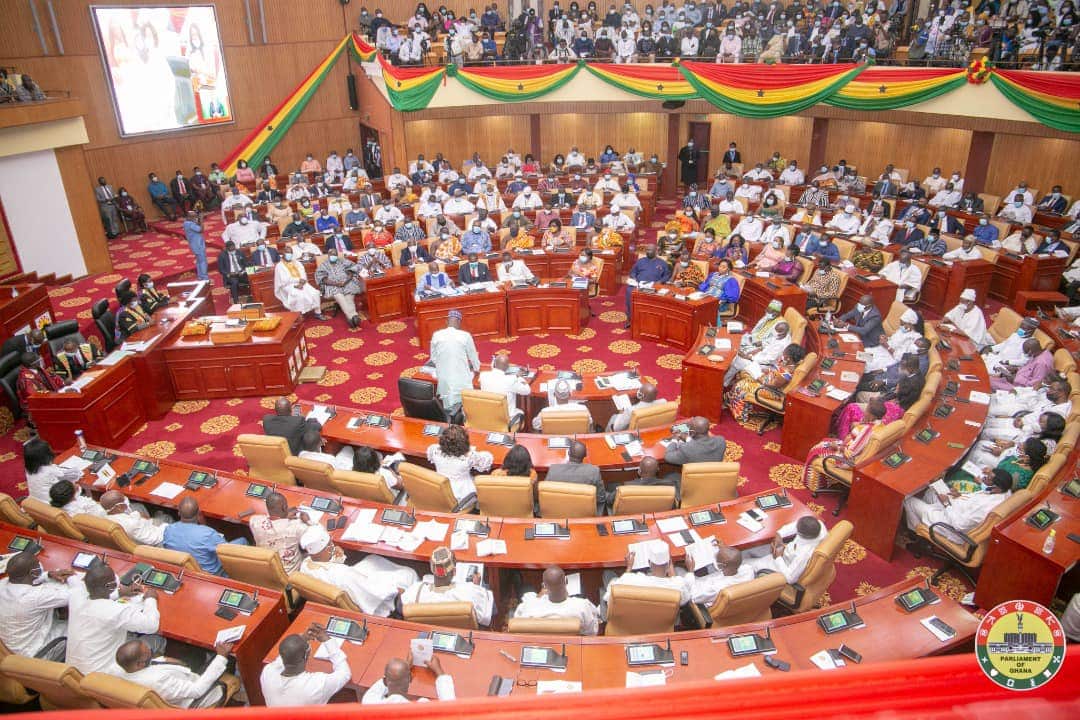
    No matter what happens with the vote to remove Ofori-Atta, these events in Ghana hold implications both within and beyond its borders. Other leaders in Africa face divided legislatures that threaten the primacy of executive power. Perhaps one silver lining of the looming economic turbulence that’s not unique to Ghana is that economic pressures could push legislatures to assert their independence — and strengthen democratic institutions.

    *****

    George M. Bob-Milliar is an associate professor in the Department of History and Political Studies, Kwame Nkrumah University of Science and Technology, Ghana. His research interests lie in the area of electoral politics, and Ghana’s social and political history.
    Rachel Sigman is an assistant professor of democratic governance in the Josef Korbel School of International Studies at the University of Denver. She is the author of Parties Political Finance and Governance in Africa (Cambridge University Press, forthcoming).

    Source: George M. Bob-Milliar and Rachel Sigman via The Washington Post

  • Democracy is on the ballot – Biden

    With less than a week until the US midterms, President Joe Biden has warned voters that “democracy is on the ballot”.

    Biden was speaking at a fundraising event for Charlie Crist, the Florida Democratic candidate for governor, who is running against Ron DeSantis, the state’s incumbent Republican governor.

    “You’ve got 350-so-election deniers on the ballot, on the Republican ticket … democracy is on the ballot this year,” Biden said.

    He was referring to Republican candidates who back Donald Trump’s false assertion that he won the 2020 presidential election.

    Biden also took aim at DeSantis.

    “Charlie is running against Donald Trump incarnate,” he said.

    DeSantis is widely believed to be considering a presidential run in 2024, along with former President Trump.

    Crist said DeSantis “is tearing us apart”.

    He accused his opponent of “attacking anyone who doesn’t look like him, doesn’t act like him, doesn’t think like him and they are women, people of colour, LGTBQ community, teachers, doctors, scientists.

    “He punishes businesses like Disney World because they disagree with him on a bill. It’s unconscionable.”

    “Governor DeSantis only cares about the White House. He doesn’t give a damn about your house,” he added.

    Source: BBC.com 


  • Attacks on democracy are weakening – Republican official

    Stephen Richer is a one-man embodiment of the anguish and despair that lies at the heart of traditional Republicanism.

    Long a GOP supporter and elected official in charge of running the voting process in Maricopa County, Arizona’s largest county, he now finds himself very much out of step with the direction his party has taken.

    The Republican slate here is dominated by election deniers in a state where the conspiracy has really taken root.

    “One of the most preposterous allegations that still has people believe in it is that we took ballots from the 2020 election, we fed them to chickens, and then we incinerated the chickens,” Richer tells me.

    With key positions – including the job of administering Arizona’s vote in the 2024 presidential election – being contested by candidates who claim Donald Trump won in 2020, Richer says he’s deeply worried about the future health of US democracy.

    While he believes many of the candidates don’t actually believe the last election was stolen and are instead supporting the theory purely for “pecuniary of political gain” he sees little comfort in that.