Tag: Dmitry Peskov

  • UK to provide Ukraine with more weapons

    UK to provide Ukraine with more weapons

    Prime Minister of UK, Rishi Sunak has promised to deliver Ukraine hundreds more missiles and attack drones in an effort to shift the pattern of the war.

    Zelenskyy landed by helicopter at Chequers, the British leader’s official country retreat, where he was greeted by Rishi Sunak with a handshake and a hug. It’s Zelenskyy’s second trip to the U.K. since Russia invaded Ukraine in February 2022.

    "Your country's bravery and fortitude is an inspiration to us all", PM Rishi Sunak tells Ukrainian President Zelenskyy as they meet at Chequers.
    
    "We are thankful and privileged to be here," Zelenskyy responds.https://t.co/RaneCGCSkd
    
    📺 Sky 501, Virgin 602 and YouTube pic.twitter.com/1PbH58KEQm
    — Sky News (@SkyNews) May 15, 2023

    Zelenskyy thanked Britain for its support so far, and said the war was a matter of “security not only for Ukraine, it is important for all of Europe.”

    Sunak told Zelenskyy that “your leadership, your country’s bravery and fortitude are an inspiration to us all.”

    This is the fourth European country Zelenskky has visited in the past few days, after France, Germany and Italy. He is seeking more aid as Ukraine prepares a long-anticipated spring offensive to retake territory seized by Russia.

    The Kremlin said it took London’s promise to supply Ukraine with more weapons “extremely negatively,” but at the same time believed the supplies wouldn’t drastically change the course of the war, spokesman Dmitry Peskov said Monday.

    “Britain aspires to be at the forefront among countries that continue to pump weapons into Ukraine,” Peskov said. “We repeat once again, it cannot yield any drastic and fundamental influence on the way the special military operation (in Ukraine) is unfolding. But, definitely, it leads to further destruction, further action. … It makes this whole story for Ukraine much more complicated.”

    Sunak responded by pledging the U.K.’s long-term support for Ukraine.

    The U.K. has become one of Ukraine’s major military allies, sending Kyiv short-range missiles and Challenger tanks and training 15,000 Ukrainian troops on British soil. Last week, Britain announced it had sent Ukraine Storm Shadow cruise missiles, which have a range of more than 250 kilometers (150 miles) — the first known shipment of the weaponry that Kyiv has long sought from its allies.

    Sunak’s office said that on Monday Britain would confirm it was giving Ukraine hundreds more air defense missiles, as well as “long-range attack drones” with a range of more than 200 kilometers (120 miles).

    “This is a crucial moment in Ukraine’s resistance to a terrible war of aggression they did not choose or provoke,” Sunak said. “They need the sustained support of the international community to defend against the barrage of unrelenting and indiscriminate attacks that have been their daily reality for over a year.

    “We must not let them down.”

    Zelenskyy said more work was needed to have allies build a “fighter jet coalition” to provide Ukraine with vital air defenses.

    While Sunak’s spokesman said no planes would be provided, the prime minister said the U.K. would be a key part of the coalition and would begin training Ukrainian fighter pilots as soon as this summer.

    Sunak will also push allies to deliver more support to Ukraine at a meeting of Group of Seven leaders in Japan later this week, Downing Street said.

    As Zelenskyy visited European capitals, Russia stepped up attacks across Ukraine with drones and missiles. On Sunday, Russia shelled two communities in the northern border region of Sumy, regional officials said on Telegram. They said 109 explosions were recorded.

    Zelenskyy’s office said Monday that the shelling had killed nine civilians and injured 19 in the past day. Six of the deaths were in the Kherson region. Two civilians were killed in Chuhuiv in the Kharkiv region and one in Prymorsk, which is on the Azov Sea coast about 12 miles (20 kilometers) from Russian-occupied Berdyansk.

    The presidential office also reported that Marhanets, which lies across the river from the Zaporizhzhia nuclear plant, was shelled.

    Zelenskyy’s stop in London followed a previously unannounced visit to Paris on Sunday evening, where he met French President Emmanuel Macron.
    French President Emmanuel Macron, right, welcomes Ukrainian President Volodymyr Zelenskyy at the Elysee palace in Paris, on May 14, 2023.
    French President Emmanuel Macron, right, welcomes Ukrainian President Volodymyr Zelenskyy at the Elysee palace in Paris, on May 14, 2023.

    Michel Euler via Associated Press

    Macron’s office said France would supply dozens of light tanks, armored vehicles and more air defense systems “in the weeks ahead,” without giving specific numbers.

    About 2,000 Ukrainian soldiers would also receive training in France this year and nearly 4,000 others in Poland as part of a wider European effort, Macron’s office said.

    France had dispatched a plane to pick up Zelenskyy in Germany, where he met with Chancellor Olaf Scholz earlier Sunday.
    Ukrainian President Volodymyr Zelenskyy, left, and German Chancellor Olaf Scholz, right, shake hands during the award ceremony of the Charlemagne Prize in Aachen, Germany, on May 14, 2023.
    Ukrainian President Volodymyr Zelenskyy, left, and German Chancellor Olaf Scholz, right, shake hands during the award ceremony of the Charlemagne Prize in Aachen, Germany, on May 14, 2023.

    Ina Fassbender/Pool via Associated Press

    It was his first visit to Berlin since the start of the invasion and came a day after the German government announced a new package of military aid for Ukraine worth more than 2.7 billion euros ($3 billion), including tanks, anti-aircraft systems and ammunition.

    After initially hesitating to provide Ukraine with lethal weapons, Germany has become one of the biggest suppliers of arms to Ukraine, including Leopard 1 and 2 battle tanks, and the sophisticated IRIS-T SLM air defense system. Modern Western hardware is considered crucial if Ukraine is to succeed in its planned counteroffensive.

    On Saturday, Zelenskyy met Pope Francis and Italian Premier Giorgia Meloni in Rome.
    Ukrainian President Volodymyr Zelenskyy, left, and Italian Premier Giorgia Meloni shake hands during a press conference after their meeting at Chigi Palace, Government’s office, in Rome, on May 13, 2023.
    Ukrainian President Volodymyr Zelenskyy, left, and Italian Premier Giorgia Meloni shake hands during a press conference after their meeting at Chigi Palace, Government’s office, in Rome, on May 13, 2023.

    Alessandra Tarantino via Associated Press

    During his European trip, Zelenskyy said Ukraine would aim to liberate Russian-occupied areas within Ukraine’s internationally recognized borders, and not attack Russian territory.

    The Washington Post cited previously undisclosed documents from a trove of U.S. intelligence leaks suggesting that Zelenskyy had considered trying to capture areas in Russia proper for possible use as bargaining chips in peace negotiations to end the war launched by Moscow.

    This would put him at odds with Western governments that have insisted that weapons they provide must not be used to attack targets in Russia.

    Asked about the report, Zelenskyy said: “We don’t attack Russian territory, we liberate our own legitimate territory.”

    “We have neither the time nor the strength (to attack Russia),” he said, according to an official interpreter. “And we also don’t have weapons to spare with which we could do this.

    “We are preparing a counterattack for the illegally occupied areas based on our constitutionally defined legitimate borders, which are recognized internationally,” Zelenskyy said.

    Among areas still occupied by Russia are the Crimean peninsula and parts of eastern Ukraine with mainly Russian-speaking populations.


  • Russia vows to destroy Ukraine jets

    Russia vows to destroy Ukraine jets

    Following two promises from its allies to provide planes, Russia has threatened to destroy any fighter jets that are given to Ukraine.

    On Friday, Slovakia pledged some MiG-29 aircraft to Kiev, a day after Poland. Slovakia was the second Nato country to do so.

    The jets are no longer in use in Slovakia after the fleet was grounded last year.

    Although Ukraine has requested modern jets from Western nations, these are only considered as long-term solutions due to the lengthy training requirements.

    After a year of the Russian invasion, it views additional aircraft as crucial for its defences and potential counterattacks.

    Other Nato countries are considering sending planes such as the MiG-29 – a model which dates from the time of the Soviet Union – which Ukrainian pilots are trained to fly.

    Kremlin spokesman Dmitry Peskov condemned the plans, saying that the aircraft would not affect the outcome of Moscow’s “special military operation”, as it calls the war.

    He said they would only “bring additional woes for Ukraine and the Ukrainian people”.

    “Of course, during the special military operation, all this equipment will be subject to destruction,” the spokesman added.

    The Polish and Slovak pledges are a positive move for Ukraine – which has more pilots than planes – but will not make a decisive difference.

    The Ukrainians say what they really need is US-made F-16 fighters.

    Yuri Sak, a senior Ukrainian defence adviser, says the fourth-generation fighters have better capabilities.

    It still seems unlikely that Ukraine would get them – at least for now, as it would take time to train Ukrainian pilots on Western jets.

    Western military officers remain sceptical about modern fighters. Their focus is on helping Ukraine win the battle on the ground.

    The front lines are swamped with air defence systems on both sides. The Russian air force is much bigger than Ukraine’s and it hasn’t been able to gain control of the skies.

    At the start of Russia’s full-scale invasion, Ukraine was believed to have about 120 combat capable aircraft – mainly ageing MiG-29s and Su-27s.

    On Friday, Slovakian Prime Minister Eduard Heger tweeted that his government had approved sending the country’s 13 MiG-29s to Ukraine.

    He said “promises must be kept” and that he was glad others were answering Ukrainian President Volodymyr Zelensky’s call for more weapons.

    It is not clear how many of the Slovakian planes are operational.

    Mr Heger said Slovakia would also send Ukraine part of its Kub air defence system.

    On Thursday, Poland pledged four MiG-29s, to be sent in the coming days, but more are expected to follow.

    As with its pledge of Leopard tanks, Poland has broken a barrier. This was a step no-one was prepared to take a year ago.

    News of the pledges came amid Russian media reports that Russian Defence Minister Sergei Shoigu had decorated pilots involved in an incident earlier this week .

    Washington has condemned the Russian actions, in which it says one of the Su-27 jets clipped the drone, as reckless, but Moscow says the drone failed on its own.

  • Putin claims Ukraine attacked its border while Kyiv dismissed Russian “provocation”

    Putin claims Ukraine attacked its border while Kyiv dismissed Russian “provocation”

    On Thursday, Russian security officials reported that a small Ukrainian armed group had entered the southern Bryansk region from Russia. Kyiv denounced these claims as a “typical planned provocation” by the Moscow.

    In a statement distributed through state-run media outlet RIA Novosti on Thursday, the Security Service of Russia (FSB) said that the organization was conducting operations in response to “armed Ukrainian nationalists who broke the state border” in the area.
    A local official reported that two civilians died in the incident, and President Vladimir Putin later referred to it as a terrorist act.

    CNN cannot independently verify the Russian claims, and local media have not carried any images of the supposed incidents, any type of confrontation or an alleged raid reported by Russian authorities.

    US and Ukrainian officials have in the past warned that Russia has planned so-called “false flag” attacks along Russia’s border with Ukraine as a pretext for military escalation, including Russian claims ahead of last year’s full-scale invasion that Ukraine was sending “saboteurs” over the Russian border.

    The Bryansk region shares a border to its south with Ukraine, and to its west with Belarus, the close Russian ally nation that helped facilitate Putin’s invasion of Ukraine last year.

    The governor of the region, Alexander Bogomaz, said Wednesday on his Telegram channel that in the village of Lyubechan, two civilians were killed and a 10-year-old child was injured. In the village of Sushany, also located in the Klimovsky district, Bogomaz said a residential building caught fire from a shell dropped from what he claimed was a Ukrainian drone, according to RIA Novosti.

    Putin canceled a planned trip to southern Russia due to the incident in Bryansk, his spokesman Dmitry Peskov said earlier on Thursday. While making remarks on the incident, Putin didn’t specify if the group had crossed the border from Ukraine, but blamed the attack on “neo-Nazis,” without giving additional details. He also promised to “put them away.”

    “Today, [they] committed another terrorist act, penetrated the border area and opened fire on civilians,” Putin said during a televised meeting on Thursday. “They saw that civilians and children were sitting there, [in] an ordinary Niva (car). They opened fire on them.”

    An adviser in Ukrainian President Volodomyr Zelensky’s office, Mykhailo Podolyak, said the alleged raid was either a Russian provocation, or the work of local partisans taking a stand against the Kremlin, denying any Ukrainian involvement.

    “Ukraine is not attacking,” Podolyak said. “This is either a provocation by the Russian side or Russian partisans who are beginning to dismantle the Putin regime. Because they still want to preserve some political chances for the post-war future of Russia, which will lose this war.”

    Podolyak also said this type of operation was consistent with previous Russian provocations.

    “This is classic Russia. It always goes for provocation, lies, it always creates information pretexts,” he said. “Ukraine does not attack Russian territory, does not send special reconnaissance groups there, does not kill people, especially civilians. Ukraine does not need this. This is not a strategic object and there is no point in going there.”

    “Or it is something else,” he also said. “Either Russian partisans are actively starting to show their personality because they want to prove that a protest movement is also possible in Russia.”

  • Vladimir Putin rids of traditional annual news conference

    For the first time in ten years, Russian President Vladimir Putin will not hold his customary large year-end news conference, according to the Kremlin.

    However, the president “we hope the president will after all find an opportunity to talk” to the media according to spokesman Dmitry Peskov.

    The cancellation was not explained, but it coincides with a rise in unease among Russians over Mr. Putin’s choice to invade Ukraine in February.

    Since then, Russian troops have experienced a number of traumatic setbacks.

    “Regarding the big press conference, yes, it won’t happen before the New Year,” Mr Peskov told reporters on Monday.

    But he added that Mr Putin could find a way to talk to the media, stressing that “he does it regularly”.

    Over the past 10 years, the carefully choreographed annual press conferences attended by dozens of journalists – both Russian and foreign – usually lasted for hours in Moscow.

    Mr Putin went to great lengths to be seen on national TV as a leader directly involved with ordinary Russians, patiently answering a wide range of questions – from regional reporters about fixing poor roads in remote villages and publicly castigating local officials, to the world of grand geopolitics.

    But a number of opposition Russian experts have said that – in the absence of press freedom – such gatherings resembled staged shows, where pro-Kremlin reporters were reduced to asking the country’s all-powerful ruler mostly flattering questions.

    They said the fact a handful of independent journalists were also present – but not always given a chance to ask questions – did not change the overall picture.

    Still, such conferences were closely monitored by politicians around the world, who were trying to gauge the direction the Kremlin leader was keen to take Russia.

    In June the Kremlin also postponed President Putin’s annual televised marathon phone-in with members of the public – and did not set a new date for it.

    The Kremlin leader is also required by the constitution to make an annual State of the Union speech to parliament by the end of the year. Mr Peskov said this issue was under review.

  • The EU bases its work on emotions, lacks professionalism: Kremlin

    The European Parliament bases its work on emotions, the Kremlin spokesperson Dmitry Peskov told Russian media as reported by TASS news agency, adding that Moscow takes its resolve into little consideration.

    His remarks came after the EU institution labelled Russia a state sponsor of terrorism, a move that is not legally binding but rather symbolic.

    “It’s no secret to us that in the recent years the European Parliament has had little love for us. In return, we have had little desire to take into account what’s going on there,” Peskov was quoted as saying.

    “And emotions is such a changeable thing. Today they are Russophobic, tomorrow there will be something else. And then, maybe a moment of clarity will come,” he said, adding that Russia belived the European parliament lacked a professional approach.

    Source: Aljazeera.com 


  • Leave if you can to save energy – Ukraine power boss

    The head of Ukraine’s biggest private energy firm says people should consider leaving the country to reduce demand on the country’s power network.

    “If they can find an alternative place to stay for another three or four months, it will be very helpful to the system,” DTEK chief executive Maxim Timchenko told the BBC.

    Russian attacks have damaged almost half of Ukraine’s energy system.

    Millions of people are without power as temperatures drop for winter.

    Blackouts – both scheduled and unscheduled – have become common in many parts of Ukraine, as Russia aims regular waves of missile attacks at parts of the energy infrastructure.

    Earlier this week, Kremlin spokesperson Dmitry Peskov suggested that the strikes were a “consequence” of Ukraine’s refusal to negotiate with Russia.

    Several Western leaders have said that targeting civilian infrastructure is a war crime.

    Mr Timchenko, whose company supplies more than a quarter of Ukraine’s power, says the system becomes less reliable with each Russian attack, and reducing electricity consumption is the key to keeping it running.

    The government has urged people to limit their use of domestic appliances such as ovens and washing machines.

    But the damaged energy system is still unable to produce enough electricity to meet current needs, so any way of reducing usage – including leaving the country – should be seen as helping Ukraine to win the war against Russia, Mr Timchenko explained.

    “If you consume less, then hospitals with injured soldiers will have guaranteed power supply. This is how it can be explained that by consuming less or leaving, they also contribute to other people.”

    Russia’s attacks on infrastructure increased after a series of setbacks on the battlefield, including a major Ukrainian counter-offensive in the Kharkiv region and territorial gains in the south of the country, which eventually led to the recapture of the city of Kherson.

    With temperatures in some parts of Ukraine already below freezing, there is concern that millions of people will be left without power and heating throughout the winter.

    Until now, blackouts have generally been limited to a few hours, but more Russian attacks could lead to longer periods without power. Fixing the damaged infrastructure is also becoming more difficult.

    “Unfortunately we have run out of equipment and spare parts… That’s why we appeal to our partners, government officials, companies and equipment producers to help us with the immediate supply of available equipment,” Mr Timchenko said.

    Russia’s historical ties with Ukraine – including in developing its energy system – are also proving a problem.

    “They were colleagues, now they are enemies,” Mr Timchenko said. “They bring all this knowledge to Russian military forces, educate them, make very concrete targets, know big parts of our grid or power stations.”

    Despite the difficulties though, Ukrainian engineers continue to work in some of the most dangerous parts of the country, risking their lives to reconnect towns and cities to the grid.

    Early on Saturday, the Ukrainian defence ministry announced that the railway station in Kherson was the first building in the city to have electricity.

    Source: BBC.com 

  • Russia to wait for full Nord Stream damage assessment before repairs

    Russia will wait until a full damage assessment to the Nord Stream gas pipelines is done before deciding on any repairs, Kremlin spokesman Dmitry Peskov said.

    “The very fact that data has already begun to come in, in favour of confirming a subversive act or a terrorist act … once again confirms the information that the Russian side has,” Peskov told reporters.

    “It is very important not to stop, it is very important to find the one behind this explosion.”

    Swedish investigators have found traces of explosives at the site of the damaged Nord Stream pipelines, confirming that gross sabotage had occurred.

    The Swedish Prosecution Authority said in a statement “Analysis that has now been carried out shows traces of explosives on several of the objects that were recovered.”

    Adding that, the findings establish the incident as “gross sabotage”.

    Source: Aljazeera.com 

  • Kremlin: Prisoner swap talks must be confidential

    The Kremlin says it keeps the door open for talks on a possible prisoner swap with US basketball star Brittney Griner but reiterated that discussions must be kept strictly confidential.

    Kremlin spokesman Dmitry Peskov was asked if Griner could be freed as part of a prisoners swap with Washington and said, “We always say that any contacts about possible exchanges can only be conducted in silence under a tight lid on any information.”

    On Tuesday, Russian courts rejected Griner’s appeal against her nine-year sentence for drug possession.


  • Annexation celebration underway as Moscow’s Red Square prepares

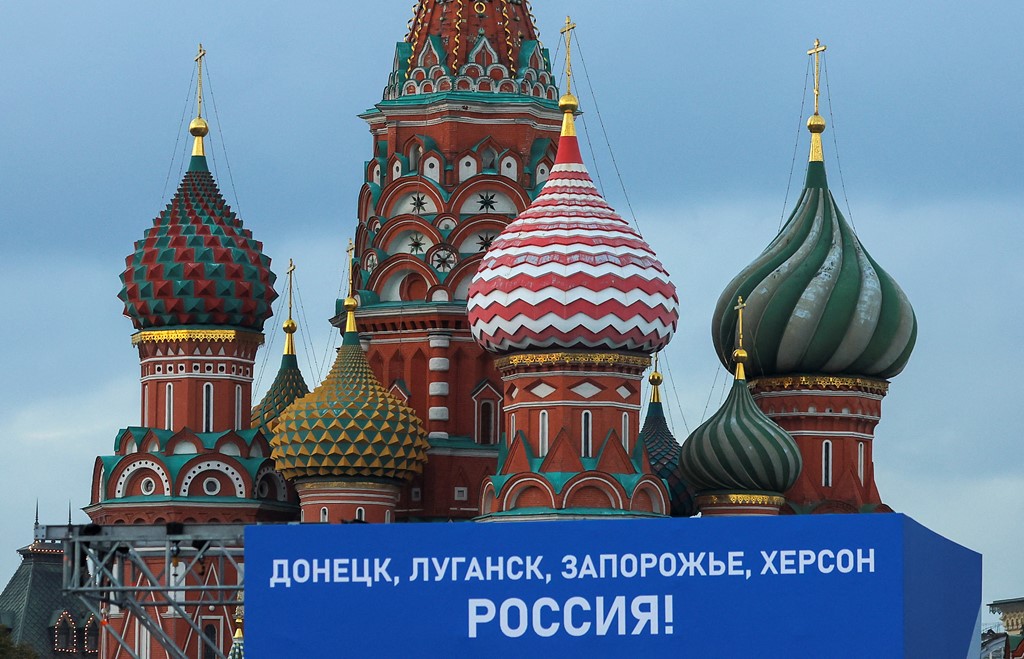
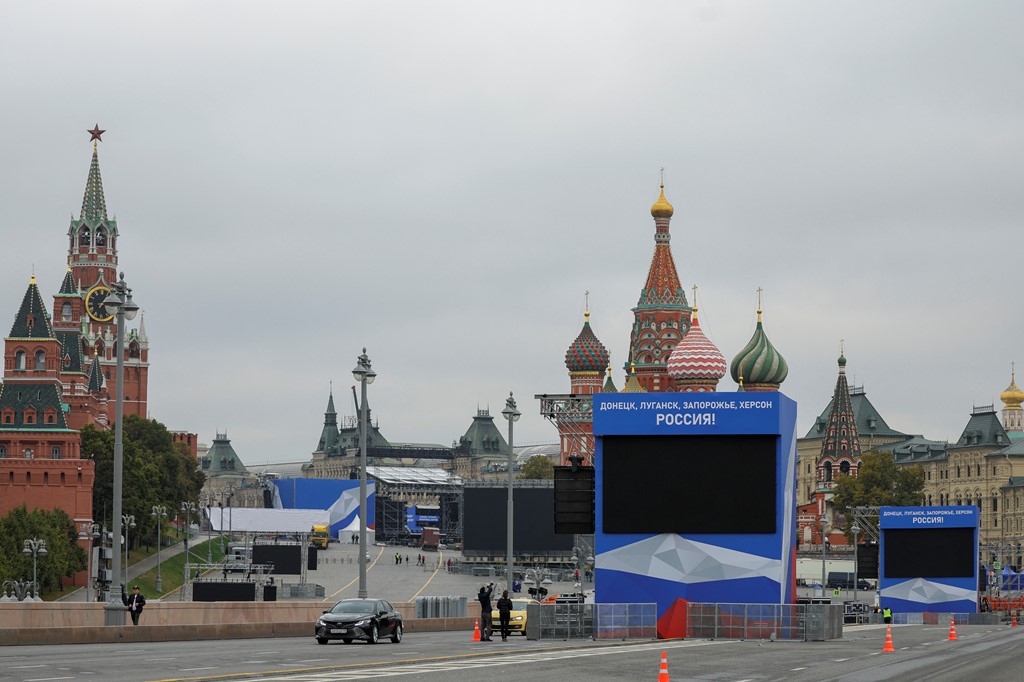
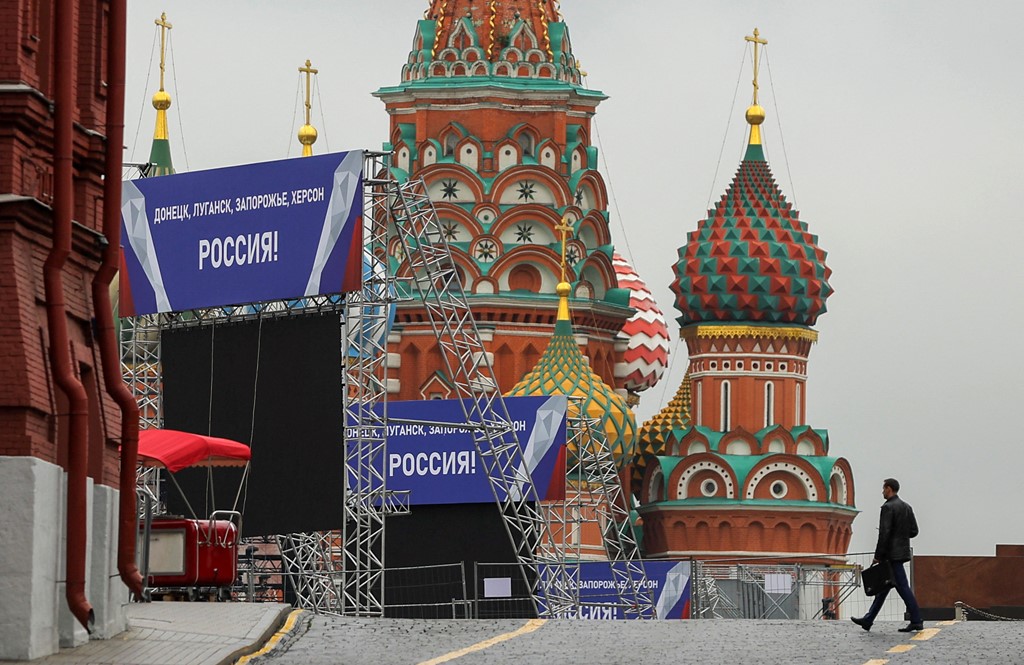
    In Moscow’s Red Square, arrangements are being made for a large event that will formally ratify Russia’s takeover of four regions of Ukraine.

    The area has been closed to visitors and tourists for the works and a stage, giant video screens, and billboards can be seen that read, “Donestsk, Luhansk, Zaporizhzhia, Kherson – Russia”, declaring the inclusion of the regions into Russian territory.

    A pop concert is also planned on Red Square.

    Vladimir Putin’s spokesman Dmitry Peskov has said the Russian president will sign accession documents in an ornate Kremlin hall, give a speech, and meet leaders of the self-styled Russian-backed Donetsk People’s Republic and Luhansk People’s Republic as well as the Russian-installed leaders of the parts of Kherson and Zaporizhzhia that Russian forces occupy.

    Mr Peskov did not say whether Mr Putin will attend the Red Square celebration, as he did a similar event in 2014 after Russia proclaimed it had annexed Ukraine’s Crimea region – however, the Russian leader is widely expected to be there.

  • Russia and Hungary cheer new Italian leaders

    Now that Meloni is expected to win, there has been a greater reaction, with Moscow declaring its openness to forging “constructive” ties with Rome.

    “We are ready to welcome any political forces that are able to go beyond the established mainstream, which is filled with hate for our country,” Kremlin spokesman Dmitry Peskov told reporters.

    Meloni’s political allies in Italy have both made controversial remarks about Russia.

    Silvio Berlusconi claimed last week that Russian President Vladimir Putin was “pushed” into invading Ukraine, though he later made clear Russia’s aggression against Ukraine was “unjustifiable and unacceptable”.

    Meanwhile, Matteo Salvini has questioned Western sanctions on Moscow – something Meloni herself supports at the EU level.

    Meanwhile, Hungary’s nationalist leader Prime Minister Viktor Orban has congratulated Meloni – whose rhetoric on the EU is close to that of the Hungarian nationalist leader – and her allies on the election results.

    He added he looked forward to future cooperation over peace, the European economy, and the energy crisis.