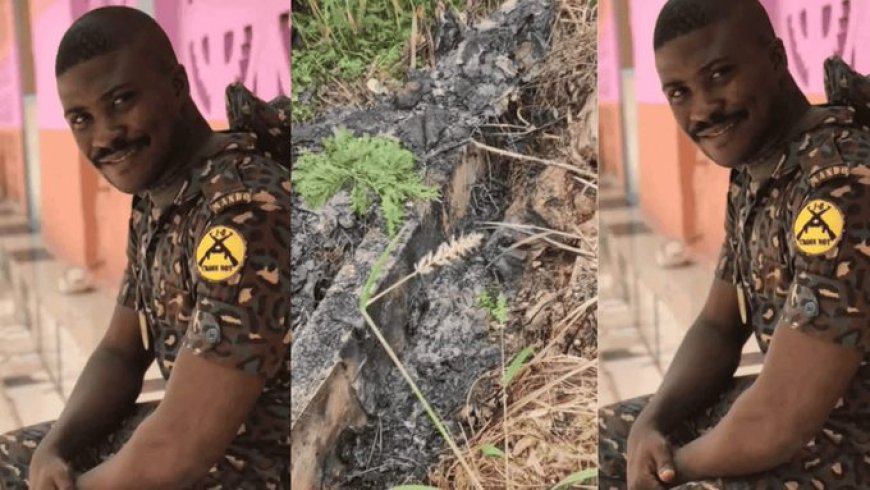
Police have confirmed that they have received the DNA report linked to the murder of a Ghana Immigration Service officer, Stephen King Amoah; however, they have yet to receive the full autopsy report from the Police Hospital, the service informed the Adabraka District Court on Monday, June 15.
Consequently, Chief Inspector Apeweh Achana, leading the prosecution, requested a two-week adjournment to allow his outfit some time to submit a duplicate docket to the Attorney-General’s Department.
The victim was allegedly murdered, and his body was partly burnt in a bush around Ashongman Estates in Accra in July 2025.
He therefore prayed for a two-week adjournment to enable the Police to submit a duplicate docket to the Attorney General’s office.
The court adjourned the case to June 29, 2026, and remanded the two accused persons, Bright Aweh, also known as Highest Bright, Thomas Zigah, into police custody.
The two have been jointly charged with conspiracy to commit murder and murder. Their pleas have been preserved by the court.
Background
The lifeless body of the immigration officer was discovered in a drainage system near GBC Satellite, opposite Comet Estate, Accra, on Wednesday, July 9.
The deceased is said to have gone missing five days (since July 3) before his tragic death. This was contained in a press statement by the Ghana Police Service on Thursday, July 10.
Providing more details about the tragic incident, the police noted that the murderer(s) of the 38-year-old also set his body on fire.
The police have disclosed that their preliminary investigations indicate the deceased had gone to meet his debtor, one Bright Aweh, who had promised to pay the outstanding debt owed on Thursday, July 3, in the evening.
Police investigations linked the meeting to a financial dispute between the deceased and Aweh, following a WhatsApp exchange that reportedly contained images of cash.
Aweh allegedly claimed he had given Amoah GH¢500,000 to settle a debt and return the balance, but inconsistencies in his account led to his arrest.
A search at Aweh’s residence reportedly uncovered a camouflage outfit with suspected bloodstains and a wooden pestle wrapped in polythene.
Consequently, an earlier kidnapping charge against Aweh was dropped, and he was subsequently held in connection with the murder.
Further investigations led to the arrest of Zigah, while Police say they are pursuing a third suspect believed to be involved in the crime.
In January this year, Aweh Bright Aweh, the key suspect in the murdered Immigration officer’s case, Monday denied killing the officer, insisting on his innocence.
“I did not kill my friend. I am not a murderer. I will pass through it and justice will be served,” Aweh for the first time spoke as he was escorted into a Police vehicle to be returned to custody.
Some relatives of the deceased told the GNA that they had sufficient evidence to show that Aweh was involved in the murder of Stephen King Amoah and said they would pursue justice through lawful means.
Aweh, also known as Highest Bright, is standing trial with Thomas Zigah for their alleged roles in the murder of Amoah, an Immigration Officer, at Ashongman in Accra.
When the case was called before the Adabraka District Court, presided over by Nana Abena Asoh Owusu-Omenyo, the prosecution said Police were still awaiting advice from the Attorney-General’s Office.
The samples of the remains of the deceased involved in the tragic Ghana Armed Forces helicopter crash in the Adansi Akrofuom District of the Ashanti Region on August 6 have been transported to South Africa for DNA analysis to aid in their identification.
Per reports, the autopsy and identification procedures were to have been carried out by the 37 Military Hospital; however, the conditions of the bodies have called for advanced forensic processes.
The deceased are Minister for Defence, Dr Omane Boamah, Minister for Environment, Science, and Technology, Ibrahim Murtala Mohammed, who is the Member of Parliament for Tamale Central, Alhaji Muniru Mohammed—Acting Deputy National Security Coordinator and former Minister for Food and Agriculture; Dr Samuel Sarpong, Vice Chairman of the National Democratic Congress; Samuel Aboagye, former Parliamentary candidate; Squadron leader Peter Bafemi Anala; Flying Officer Twum Ampadu; and Sergeant Ernest Mensah.
Meanwhile, the burial of Muslim victims has been suspended until further notice, according to the Deputy Minister for Roads and Highways and Member of Parliament for Tamale North, Alhassan Suhuyini, on Thursday, August 7.
Burial for Minister for Environment, Science, and Technology, Ibrahim Murtala Mohammed, who doubles as the Member of Parliament (MP) for Tamale Central and Acting Deputy National Security Coordinator and former Minister for Food and Agriculture, was expected to be conducted on Thursday, August 7, as per Islamic tradition.
However, speaking to the media, the Deputy Minister explained that the recent development was due to the condition of the victims’ remains, adding that the government and families of the deceased are awaiting autopsy results and investigative clearance. According to him, a new date will be fixed after a conclusion has been made.
“The information earlier was that, because of Islamic tradition, the Muslims among them were to be buried today. I am sure those decisions were taken before the actual state of the remains was determined.
“When that was done, it was clear to all that it was going to be practically impossible to carry out any burial today. So, those who had to be communicated to were quickly informed last night, and arrangements were suspended until further notice, or until some examinations are done before new dates are communicated,” Suhuyini added.
The Ghana Armed Forces (GAF) earlier reported that its airforce helicopter Z9, which took off this morning at 0912 hrs from Accra and headed for Obuasi, was off the radar.
Hours later, the Chief of Staff Julius Debrah confirmed the unfortunate demise of the 8 individuals comprising three crew and five passengers. The news came as a shock to many, and several individuals could not hold back their tears. Interior Minister, Muntaka Mohammed-Mubarak broke down in tears as the Chief of Staff announced the death of the individuals at the Jubilee House.
Edward Bawa, former Member of Parliament for Bongo and current CEO and Managing Director of GOIL PLC who was at the residence of the late Murtala Mohammed, could not hold back his tears while engaging a journalist. Also, Attorney General Dr. Dominic Ayine broke down in tears at Hon. Murtala’s residence while engaging the media.
Meanwhile, the government has noted that details regarding the State Funeral and any additional arrangements will be communicated through official government channels.
As Ghana sets aside three days to mourn, it has called on members of the public to collectively mourn and reflect on the profound loss the country has experienced. “We urge all citizens to observe the period of national mourning with dignity and respect,” the Office of the Presidency noted.
Ghanaian singer and rapper Maradona Yeboah Adjei, popularlyknown as Guru, has revealed that a woman accused him of fathering a child that was not his.
During an interview on GHPage TV on November 2, 2024, the artist behind the hit song “Lapaz Toyota” explained that a DNA test confirmed the true paternity of the child after the woman gave birth.
“Oh yeah! A lady I had intercourse with nearly pinned a pregnancy that was not mine on me. I have been through a lot in life, and maybe I survived. But I am not sure everyone can survive this same incident,” he shared.
Guru went on to advise men to consider conducting DNA tests on their offspring.
“The bloodline matters. Conducting a DNA test is very important. When a lady gives birth, the first thing the man should do is to conduct a DNA on the child to prove the paternity,” he emphasised.
Currently, Guru has a new song titled “Bebere” released in October, which has garnered 1.8k views on YouTube.
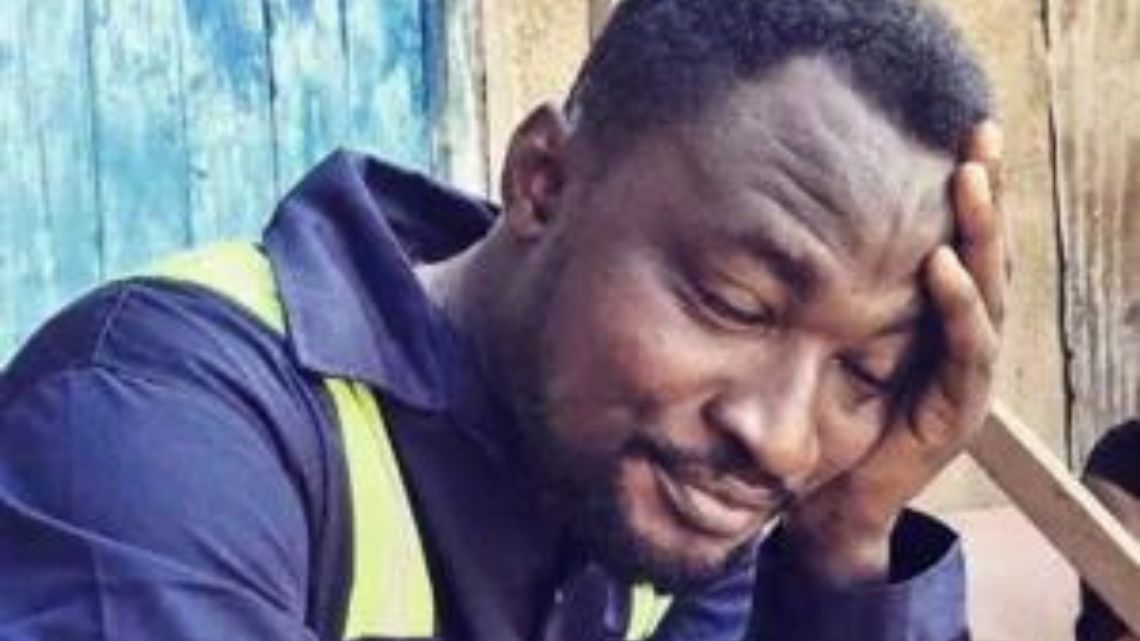
Ghanaian comedian Funny Face has publicly apologised to his ex-partner, Vanessa Nicole, and her family after clarifying the paternity of their daughters.
In an emotional video, he reflected on his previous behaviour, where he disrespected Vanessa and her family, and expressed his commitment to making amends.
He shared that recent hospital communications revealed an error in the initial DNA tests, which had incorrectly indicated he was not the father.
Learning that he is indeed their biological father brought him joy, but he also acknowledged the pain and regret caused by the misunderstanding that led to his earlier outbursts.
Additionally,Funny Face extended his apologies to Vanessa’s parents, Majesty and Jah Wisdom, and requested permission to reconnect with his daughters.
He emphasized the importance of fostering a healthy relationship with Vanessa and her family for his mental well-being, vowing to work towards rebuilding those ties and establishing a stable family environment.
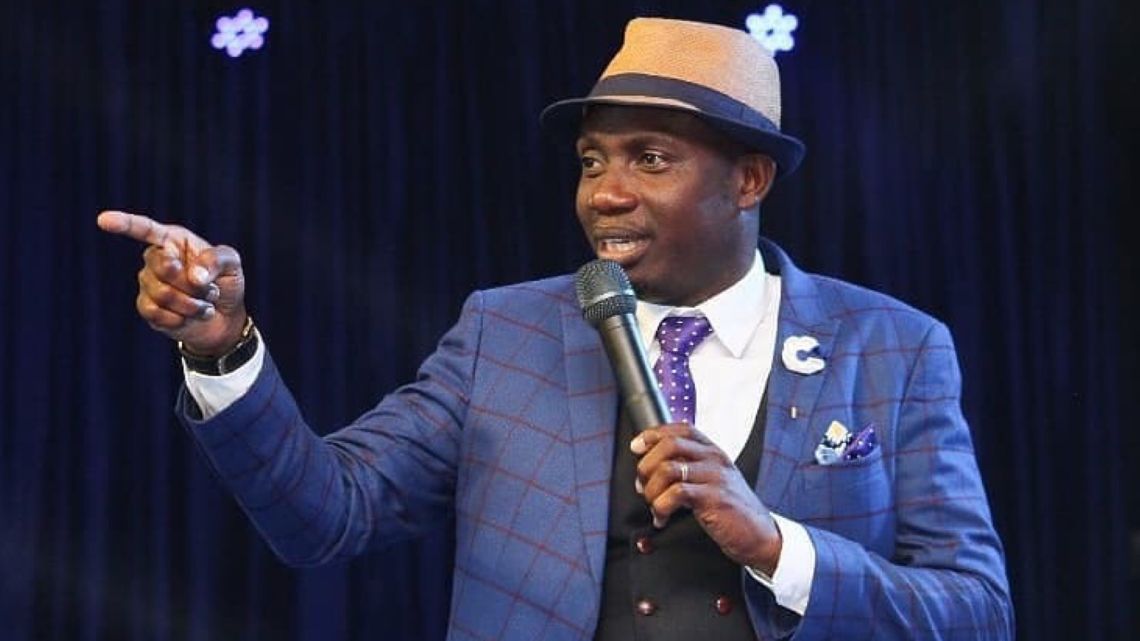
Counsellor Lutterodthas taken a strong stance against men who opt for DNA tests to determine the paternity of their children.
Speaking during an appearance on “U Cook” with gospel singer Empress Gifty, he questioned the necessity and value of such tests, suggesting that they undermine trust in relationships.
He criticised men who resort to DNA tests, labelling their actions as senseless and unnecessary.
He said, “People who conduct DNA tests have mental health issues. What are you doing the DNA tests for? I have no use for DNA tests.”
Referring to ex-footballer Nii Odartey Lamptey’s paternity issue with his ex-wife, Counsellor Lutterodt revealed that he would not be upset if his wife cheated and became pregnant by another man.
He added: “Why would I cry if my wife cheated on me and got pregnant? I have always said that I won’t be bothered if my wife has an affair with another man. I have been married to her for 26 years, so why would I cry if she cheats on me once? She understood what she did.”
Ghanaian comedian Funny Face has reignited discussions about conducting a DNA test on his children.
A few months ago, Funny Face’s “baby mama”, Vanessa, reportedly cut off contact between him and his children, prompting him to publicly contemplate the possibility of a DNA test.
This consideration arose when Funny Face encountered a recent change in his relationship with Vanessa, suspecting foul play.
Now, empathizing with Medikal’s situation and drawing parallels to his own past experiences, Funny Face has revisited the idea of DNA testing for his three children with Vanessa.
In the aftermath of expressing solidarity with Medikal and subtly criticizing his own baby mama following Medikal’s revelations, Funny Face took to social media to express his eagerness to undergo a DNA test through legal means if necessary.
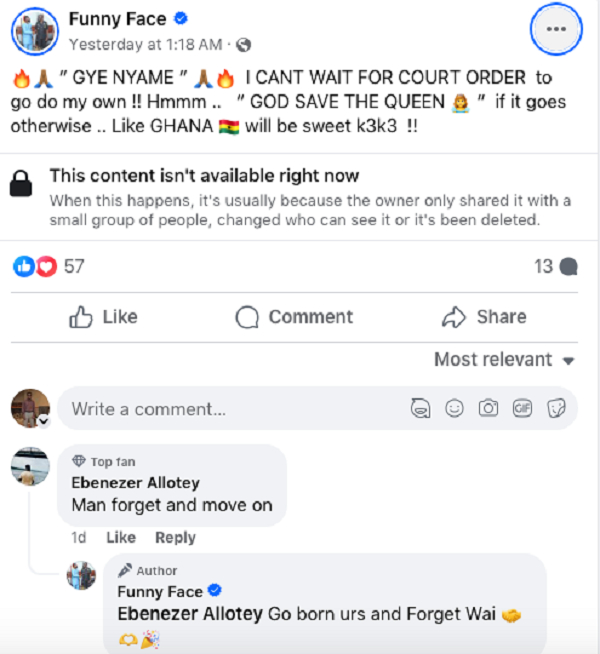
In a post shared on his social media platforms, the comedian expressed his impatience for a court order to conduct the test, suggesting a sense of readiness to face whatever outcome it may yield.
This took place amidst his social media rants when he encountered a post narrating a man’s distressing revelation that he is not the biological father of his children.
He shared that particular post on Facebook with the caption, “I CAN’T WAIT FOR COURT ORDER to go do my own !! Hmmm .. GOD SAVE THE QUEEN. if it goes otherwise .. Like GHANA will be sweet k3k3 !!”
Lawyer and Convener of the Fix The Country Movement, Oliver Barker-Vormawor, has called for an end to DNA tests, stating that women deserve better treatment from men.
His statement comes amidst a wave of men on social media claiming to have been taking care of children who are not biologically theirs.
Barker-Vormawor in a post on X emphasized the need for men to treat women with respect and dignity, rather than resorting to DNA tests to verify paternity.
He argued that such actions undermine the trust and respect in relationships and called for a change in mindset towards women.
“Stop DNA tests! Women deserve better,” he wrote.
The call by Barker-Vormawor has sparked a debate on social media, with some supporting his stance, while others argue that DNA tests are necessary to ensure transparency and honesty in relationships.
The issue of paternity testing and its implications on relationships is a complex and sensitive topic, with varying opinions on the matter.
Barker-Vormawor’s statement adds to the ongoing discourse on gender relations and the importance of trust and respect in relationships.
Stop DNA tests! Women deserve better. 👀
Shalom
— Osagyefo Oliver Barker-Vormawor (@barkervogues) March 30, 2024
The Director of Lagos State DNA and Forensic Centre, Richard Somiari, announced on Wednesday that the autopsy results for the late singer Ilerioluwa Aloba (aka Mohbad) would be available in three to four weeks.
During a coroner’s inquest into Mohbad’s death, Mr. Somiari assured the court of the timeline for the autopsy results.
The inquest, initiated by the Lagos State Government due to controversies surrounding Mohbad’s passing, began on 13 October 2023 at the Ikorodu Magistrates’ Court.
Mr. Somiari testified, asserting, “We expected to get the first set of autopsy results in three to four weeks and re-confirm to authenticate the cause of the death.”
He emphasised the thoroughness of the investigation, including examining multiple possibilities, including the involvement of poison.
Regarding the security and monitoring of samples, Mr. Somiari assured the public of stringent measures, asserting, “We have a place where items are stored for safety and security of results. There is a procedure for monitoring samples moved abroad.”
Testifying at the inquest, Sadiq Ayobami, also known as Spendy, recalled seeing Mohbad the day before his passing.
He mentioned attending a concert together and returning to his house, leaving before Mohbad’s death.
The Coroner, Magistrate Adedayo Shotobi, adjourned the case to 15 April, directing all parties involved to be present on that day for further proceedings.
Researchers say sea turtles are closely related to olive ridley turtles and modern-day turtles, marking one of the few times genetic material has been identified in ancient vertebrate fossils live like that, researchers said THURSDAY.
Some bone cells, called osteocytes, are perfectly preserved in fossils discovered along the Caribbean coast of Panama in 2015, researchers say.
The fossil is only partial, with a relatively complete shell – the turtle’s shell – but not the rest of the skeleton. They said the turtle could have been about 30cm long when alive. In some bone cells, the cell nucleus was preserved and reacted with a chemical solution, allowing researchers to recognize the presence of DNA remnants, said paleontologist Edwin Cadena, lead author. , a molecule that carries genetic information necessary for the development and functioning of an organism. . of the study published in the Journal of Vertebrate Paleontology.
Cadena, from the Universidad del Rosario in Bogota and the Smithsonian Tropical Research Institute, added: “I want to emphasize that we did not extract DNA, we were only able to recognize the presence of traces of DNA in the seeds core”.
View shows a turtle fossil, in Bogota, Colombia, in this photo taken in 2022.
DNA is quite susceptible to damage, although under the right conditions it has been preserved in some ancient sites.
Last year, researchers reported the discovery of DNA from animals, plants and bacteria dating to about 2 million years ago in sediments in the northernmost region of Greenland.
Cadena said the only vertebrate fossils older than the newly described turtle found with similar DNA traces belong to two dinosaurs: Tyrannosaurus, which lived about 66 million years ago, and Brachylophosaurus, which lived about 78 million years ago. DNA traces have also been reported in insects dating back tens of millions of years, Cadena said.
The turtle belongs to the same genus – Lepidochelys – as two of the world’s seven living sea turtle species – the Kemp’s ridley, the world’s smallest sea turtle, and the olive ridley, Cadena said.
A man has shared his sad story of how she fathered a child for 15 years only to find out that she was not his daughter.
Speaking on the issue of paternity fraud on Joy News, Edward who called during a phone-in session said he came back from the US some years ago and his wife took seed a few months after but he got to find out 15 years later that the baby was not his.
“I was married, travelled to the US and came back. A few months later the woman said she was pregnant and I thought that was mine because she was my legally married woman. 15 years down the line, I got to realise that the child wasn’t my biological child,” he said.
On how he discovered the truth, Edward said he only found out after his wife hatched a plot and relocated with the 15-year-old girl to be with her ex-boyfriend who is the actual father.
Interestingly, the gentleman in question had won a visa lottery to the US, relocated from Ghana to the US and was in constant communication with my spouse without my knowledge to the extent of the man remitting, the man knows very well that the child was his. So when he got his documentation in the US and everything, he decided to file for his daughter which apparently I thought was mine. Now the mother found out and came up with a strategy to tell me ‘don’t you think it be better to go to the US where the girl will get a better life and everything?’
“I was financially down too by then so who was I to say no? I drove them to the airport. There was nothing [suspicious]. We went to the airport, had lunch and everything thinking that my wife is going to the US and back. A month later the mother calls me in Ghana to tell me ‘we are sorry to tell you my daughter has gone to find out the man who impregnated her and has gone to settle with him in the US… that the child is not yours, it’s for the man in the US,” he narrated.
On how the event has impacted his life, Edward says he is yet to recover some 3 years after he was confronted with the truth.
He said the incident has caused him to lose his confidence and self-worth and that his wife has since cut all forms of communication with him after travelling to the US.
Sometime in August 2022, a certain young man named Stephen Opoku stormed the studios of Nhyira FM with strong suspicions that the baby he has with his girlfriend is not his.
He was on the popular ‘Obra’ show on Nhyira FM with claims of infidelity on the part of her girlfriend whiles seeking help with DNA to ascertain the true identity of the child.
Producers of the show heeded his request and arranged for the DNA test to be done and the results came out shocking.
After the results were ready, the couple were invited to receive them and also discuss the outcome which was clearly read to the hearing of the public.
It turns out that Stephen Opoku’s suspicions were right as the child, whom he has looked after right from the onset of the pregnancy till date, belonged to a Saudi Arabian man based in Ghana.
“The comparison of the DNA profiles of Stephen Opoku and Sandra Opoku (The baby) shown in the data below, does not support the hypothesis that Stephen Opoku is the biological father of Sandra Opoku. Mismatches were observed between the alleged father and child, when no mismatches are expected between the true biological father and child,” parts of the DNA reports read.
Per the DNA report, it is 99.9999999% more likely that Sadat Ibrahim is the biological father of the ‘baby in question’.
“A comparison of the DNA profiles of Sadat Ibrahim and Sandra Opoku(The baby) composed of the DNA markers listed in the technical data shown below, supports the hypothesis that Sadat Ibrahim is the biological father of Sandra Opoku. it is 9.226.955.748.722 more likely that Sadat Ibrahim is the biological father of Sandra Opoku than another unrelated man from the same position.”
Following the announcement of the results, an unperturbed Cecilia (the woman at the center of the issue), refused to either comment or apologize.
On his part, ‘the victim’, Stephen Opoku, raised his hands in excitement whiles indicating that he has been vindicated.
According to Stephen, he has been encountering attacks from the other man over the baby and this result will guarantee him some peace of mind.
A US manwho had been imprisoned for nearly four decades for murder was released after new DNA evidence pointed to a different person.
Maurice Hastings was sentenced to more than 38 years in state prison for the 1983 murder of Roberta Wydermyer and two attempted murders in California.
However, new DNA evidence pointed to another man who died in prison in 2020.
Now 69, Mr Hastings has been released from prison after his 1988 conviction was vacated on 20 October.
LA County District Attorney George Gascón described his conviction as a “terrible injustice”.
“The justice system is not perfect, and when we learn of new evidence which causes us to lose confidence in a conviction, it is our obligation to act swiftly,” he added in a statement.
Roberta Wydermyer was found in the boot of her car with a single gunshot wound to the head in 1983. She had earlier been sexually assaulted.
Mr Hastings was subsequently charged with murder and prosecutors sought the death penalty.
After a hung jury, a second jury convicted him and he was sentenced in 1988 to life in state prison without the possibility of parole.
At the time of the victim’s autopsy, semen was detected in an oral swab. Mr Hastings had maintained his innocence from the moment he was arrested, but a request for DNA testing of the swab in 2000 was denied by the district attorney.
Eventually he was able to put in a claim of innocence to the DA’s Conviction Integrity Unit in 2021 and DNA testing in June found that the semen was not his.
The DNA profile instead matched a man who had been convicted of an armed kidnapping where he placed his female victim in a trunk of a vehicle.
Following a court hearing on 20 October to vacate his conviction, Mr Hastings told reporters he wasn’t bitter and wanted to enjoy the rest of his life.
“I prayed for many years that this day would come,” the Associated Press quoted Mr Hastings as saying. “I am not pointing fingers; I am not standing up here a bitter man, but I just want to enjoy my life now while I have it.”
In post-ice age Britain, two different groups of humans have been identified by British researchers.
After analyzing the oldest human DNA found in Britain, researchers found two distinct demographic groupings that had resided there following the last ice age.
A sample from roughly 14,000 years ago that was found in Somerset, England’s Gough’s Cave was compared to one from about 1,000 years later that was found in Wales’ Kendrick’s Cave.
“We knew from our previous work, including the study of Cheddar Man, that western hunter-gatherers were in Britain by around 10,500 years ago, but we didn’t know when they arrived in Britain, and whether this was the only population that was present,” said Selina Brace, a principal researcher at the Natural History Museum in Britain, who studies ancient DNA.
By studying the remains found in Gough’s Cave, researchers were able to determine that humans were present in Britain 300 years earlier than scientists had previously thought, meaning they were present before Britain began to warm after the last ice age.
Genetic studies of the two samples revealed that they came from two distinct genetic groups, meaning that at least two completely different populations of humans were living in Britain within a relatively short timeframe.
“The evidence from the human remains found at Kendrick’s Cave suggests that the cave was used as a burial site by its occupiers,” said Silvia Bello, a researcher at the Natural History Museum who specializes in the evolution of human behavior.
It was also revealed that these early inhabitants were using parts of animals believed to have already been extinct in Britain at the time including a spear tip made out of mammoth ivory and a baton made of reindeer antlers.
According to Chris Stringer, a research leader on human evolution at the Natural History Museum, “this raises several interesting questions: Did they bring these artifacts from somewhere colder? Or was Britain even more complicated and still had mammoth and reindeer surviving in the highlands?”
Following the discovery of new DNA evidence in the case, Adnan Syedwas exonerated of all charges related to the 1999 murder of his ex-girlfriend, Hae Min Lee.
The Baltimore state’s attorney’s office said a yearlong investigation revealed Syed had been wrongfully convicted of strangling and killing Lee, and that new DNA tests showed he was not involved in Lee’s death.
Syed maintained his innocence while in prison for nearly 25 years. But his case won a massive boost from an unlikely source – a podcast.
What is Serial and when did it come out?
More than a decade after Syed was sent to prison, Rabia Chaudry, a Baltimore-based lawyer and family friend of the Syeds, emailed a journalist named Sarah Koenig and asked her to re-investigate Lee’s murder.
That email helped launch the first season of the podcast Serial. The show premiered in the autumn of 2014 and each episode tried to piece together a timeline of what happened the night Lee was killed.
Who killed Hae Min Lee?
That’s the question at the heart of Serial.
“For the last year, I’ve spent every working day trying to figure out where a high school kid was for an hour after school one day in 1999,” Ms Koenig says in the first episode.
Only now, the “kids” she interviewed were adults and some of their stories had changed.
As each episode revealed new details – and potential new suspects – internet sleuths and armchair detectives sprang into action and argued their theories on social media.
Within months, the chatter around Syed’s case would ultimately help him win a new trial.
Who are the other suspects?
In an episode of Serial released after Syed’s conviction was overturned, Koenig lays out why the case was thrown out. She says his lawyers argued new evidence had emerged showing that during the original trial prosecutors failed to investigate and rule out two potential suspects who were known to detectives at the time. Syed’s lawyers also questioned the reliability of witness statements and mobile phone evidence originally used to convict him.
A judge agreed and overturned Syed’s conviction. The state’s attorney’s office later cleared Syed of all charges on the basis of that new evidence, as well as multiple rounds of DNA testing that revealed Syed’s DNA was not present on any of the victims’ clothing. “As a representative of the institution, it is my responsibility to acknowledge and apologise to the family of Hae Min Lee and Adnan Syed,” said Baltimore City State’s Attorney Marilyn Mosby.
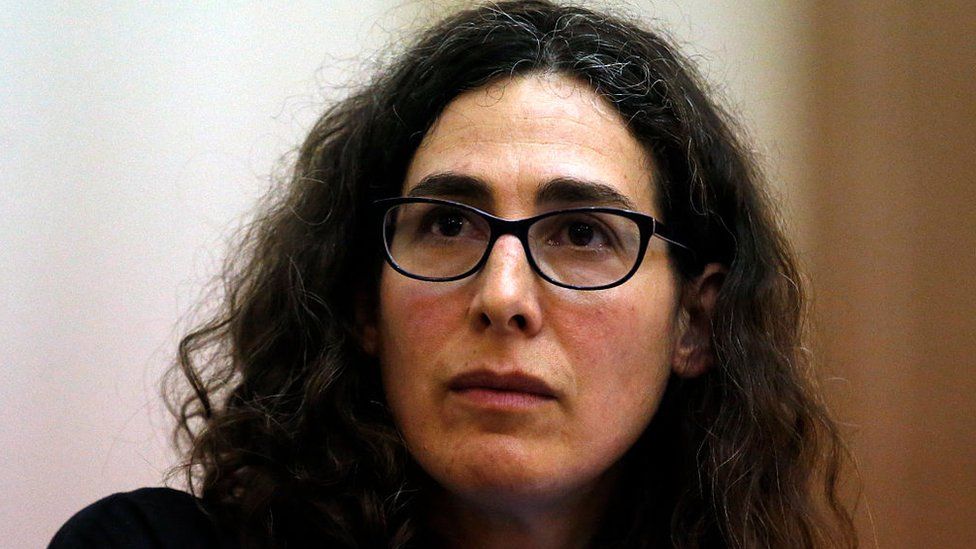
IMAGE SOURCE,GETTY IMAGES Image caption, The Serial podcast is hosted by journalist Sarah Koenig
Why was the show so popular?
Serial helped ignite the popularity of podcasts. Ms Koenig’s signature confessional style, as well as the true crime topic, kept listeners returning – and downloading – the show every week.
The first season of Serial has been downloaded more than 300m times and the show is widely cited as one of the most popular podcasts in the world.
Though subsequent seasons of the show were less popular, in many ways, Ms Koenig and her team helped create the formula for a “bingeable” podcast.
But did it really help Syed?
In 2015, Syed was granted a new trial based, in part, on new evidence uncovered while making Serial.
But a judge also denied his request for bail. He remained imprisoned for years as his legal team argued for a new trial and tried to appeal against his conviction all the way to the Supreme Court.
In 2019, HBO premiered a four-part documentary series produced by Ms Chaudry called The Case Against Adnan Syed.
The series argued that Syed, who is Muslim, was convicted, in part, because of racial bias.
It ultimately revealed that forensic analyses had found no trace of his DNA on Lee’s body at the time of the murder.
What about Lee and her family?
The Lee family refused to participate in Serial and has always maintained that they believe Syed was rightfully convicted and justice was served during the original trial.
In 2016, when Syed was granted a new trial, the family told reporters that the podcast had “reopened wounds few can imagine”, according to the Baltimore Sun. They also said they believed people had been misinformed by the podcast and regretted that “so few [were] willing to speak up for Hae”.
Before the judge ruled on Monday, Young Lee, the victim’s brother, made an emotional plea before the court on behalf of the family.
“This is not a podcast for me. This is real life – a never-ending nightmare for 20-plus years.”
What’s next?
Now that the charges against Syed have been dropped, his attorneys will begin the process to have him officially exonerated.
Hepatitis B is a potentially life-threatening liver infection caused by the hepatitis B virus (HBV).
It can cause both acute and chronic disease and hence has become a major global health problem.
The virus was discovered in 1965 by Dr. Baruch Blumberg.
Originally, the virus was called the “Australia Antigen” because it was named for an
Australian aborigine’s blood sample that reacted with an antibody in the serum of an American hemophilia patient.
It can cause chronic infection and puts people at high risk of death from cirrhosis and liver cancer.
However, a safe and effective vaccine that offers 98% to 100% protection against hepatitis B.
Worldwide, chronic hepatitis B and C cause 80% of all liver cancer, which is the second most common cause of cancer death.
Therefore, a vaccine that protects against a hepatitis B infection can also help prevent liver cancer.
Working with Dr. Blumberg, microbiologist Irving Millman helped to develop a blood test for the hepatitis B virus.
Blood banks began using the test in 1971 to screen blood donations and the risk of hepatitis B infections from a blood transfusion decreased by 25 percent.
Four years after discovering the hepatitis B virus, Drs. Blumberg and Millman developed the first hepatitis B vaccine, which was initially a heat-treated form of the virus.
Current Recombinant Hepatitis B Vaccines:
In 1986, the research resulted in the second generation of genetically engineered (or DNA recombinant) hepatitis B vaccines.
These newly approved vaccines are synthetically prepared and do not contain blood products – it is impossible to get hepatitis B from the new recombinant vaccines that are currently approved in the United States.
HBV infection is a global public health issue, affecting more people than HIV, and
ranked the 7th leading cause of mortality worldwide in 2013.
Despite the availability of safe and effective vaccines since the 1980s, the availability of successful treatment since 1991, and the implementation of universal vaccination programs [11], HBV is still endemic in sub-Saharan Africa with an estimated seroprevalence of 6.1% [12]. As of 2015, 257 million
people were living with chronic HBV infection.
In Ghana, this situation is not any different, where HBV remains a huge public health issue.
Although there is currently the availability of a safe and effective vaccine, Ghana is considered an endemic zone with a prevalence of 8.36%
For some people, hepatitis B infection becomes chronic, meaning it lasts more than six months.
Having chronic hepatitis B increases your risk of developing liver failure, liver cancer, or cirrhosis — a condition that permanently scars the liver.
Hepatitis B signs and symptoms may include:
1.Abdominal pain
2.Dark urine
3.Fever
4.Joint pain
5.Loss of appetite
6.Nausea and vomiting
7.Weakness and fatigue
8.Yellowing of your skin and the whites of your eyes (jaundice)
Caution: If you think you have these signs or symptoms of hepatitis B, contact your doctor.
Preventive treatment may reduce your risk of infection if you receive the treatment within 24 hours of exposure to the virus.
However, signs and symptoms of hepatitis B range from mild to severe.
They usually appear about one to four months after you’ve been infected, although you could see them as early as two weeks post-infection.
Some people, usually young children, may not have any symptoms.
Causes
The hepatitis B infection is caused by the hepatitis B virus (HBV). The virus is passed from person to person through blood, semen, or other body fluids. It does not spread by sneezing or coughing as many believe so.
Let’s look at some common ways by which HBV is spread.
Hepatitis B spreads through contact with blood, semen, or other body fluids from an infected person. Your risk of hepatitis B infection increases if you:
1.Have unprotected sex with multiple sex partners or with someone who’s infected with HBV
2.Share needles during IV drug use
3.Aman who has sex with other men
4.Live with someone who has a chronic HBV infection
5.Is an infant born to an infected mother
6.Have a job that exposes you to human blood
7.Travel to regions with high infection rates of HBV, such as Asia, the Pacific Islands, Africa, and Eastern Europe
Hepatitis B infection may be either short-lived (acute) or long-lasting (chronic).
Acute hepatitis B infection lasts less than six months.
Your immune system likely can clear acute hepatitis B from your body, and you should recover completely within a few months. Most people who get hepatitis B as adults have an acute infection, but it can lead to chronic infection.
Chronic hepatitis B infection lasts six months or longer.
It lingers because your immune system can’t fight off the infection. Chronic hepatitis B infection may last a lifetime, possibly leading to serious illnesses such as cirrhosis and liver cancer.
The younger you are when you get hepatitis B — particularly newborns or children younger than 5 — the higher your risk of the infection becoming chronic.
Chronic infection may go undetected for decades until a person becomes seriously ill from liver disease.
People with chronic hepatitis B infection have an increased risk of liver cancer. People with chronic hepatitis B may develop kidney disease or inflammation of blood vessels.
Acute liver failure is a condition in which the vital functions of the liver shut down. When that occurs, a liver transplant is necessary to sustain life.
Prevention
The hepatitis B vaccine is typically given in three or four injections over six months. You can’t get hepatitis B from the vaccine.
The hepatitis B vaccine is recommended for:
1. Newborns
2. Children and adolescents not vaccinated at birth
3. Those who work or live in a center for people who are developmentally disabled
4. People who live with someone who has hepatitis B
5. Health care workers, emergency workers, and other people who come into contact with blood
6. Anyone who has a sexually transmitted infection, including HIV
7. Men who have sex with men
8. People who have multiple sexual partners
9. Sexual partners of someone who has hepatitis B
10. People who inject illegal drugs or share needles and syringes
11. People with chronic liver disease
12. People with end-stage kidney disease
13. Travelers planning to go to an area of the world with a high hepatitis B infection rate
According to the Ghana National Hepatitis Elimination profile.
In 2021, the Coalition for Global Hepatitis Elimination (CGHE) 2021 launched the National Hepatitis Elimination Profile (N-HEP) Initiative to accelerate progress toward hepatitis elimination.
The prevalence of chronic HCV was estimated to be at 3.0% nationally in 2016 while the national prevalence of chronic HBV was estimated to be between 8.36% (2020) and 12.30% (2016).
Deaths related to HBV and HCV continue to rise.
From 2015 to 2019, there was a 7% increase in HBV-related deaths and an 8% increase in HCV-related deaths, the opposite direction of the WHO 2020 goal of reducing HBV and HCV-related deaths by 10% from 2015 to 2020.
Ghana has achieved the 2020 Sustainable Development Goal target of HBV prevalence among children under 5 years of age under 1%.
The lack of up-to-date national data on HBV and HCV is a major roadblock to informing national planning in Ghana.
Surveillance and reporting systems are not yet established for tracking incidence, mortality, or the number of persons tested and treated.
The future for hepatitis elimination is bright for Ghana
The Ghana National Hepatitis Elimination Profile highlights the next steps agreed upon by these partners include;
Establishing a national hepatitis elimination strategy and also improving  strategic information by developing an electronic data management system and expanding the surveillance system.
Reduce mother-to-child transmission of HBV and HCV by introducing a Hep B birth dose policy.
DNA research on the Dead Sea Scrolls has revealed not all of the ancient manuscripts came from the desert landscape where they were discovered, according to a study published Tuesday.
Numbering around 900, the manuscripts were found between 1947 and 1956 in the Qumran caves above the Dead Sea in the occupied West Bank.
The parchment and papyrus scrolls contain Hebrew, Greek and Aramaic and include some of the earliest-known texts from the Bible, including the oldest surviving copy of the Ten Commandments.
Research on the texts has been ongoing for decades and in the latest study, DNA tests on manuscript fragments indicate that some were not originally from the area around the caves.
“We have discovered through analysing parchment fragments that some texts were written on the skin of cows and sheep, whereas before we thought they had all been written on goat skin,” said researcher Pnina Shor, who heads the Israel Antiquities Authority (IAA) project studying the manuscripts.
“This proves that the manuscripts do not come from the desert where they were found,” she told AFP.
The researchers from the IAA and Tel Aviv University were unable to pinpoint where the fragments came from during their seven-year study, which focused on 13 texts.
The Dead Sea Scrolls date from the third century BC to the first century AD.
Many experts believe the manuscripts were written by the Essenes, a dissident Jewish sect that had retreated into the Judaean desert around Qumran and its caves. Others argue that some of the texts were hidden by Jews fleeing the advance of the Romans.
“These initial results will have repercussions on the study of the life of Jews during the period of the Second Temple,” which was destroyed in Jerusalem by the Romans in 70 AD, said Shor.
Such archaeological research remains a sensitive subject in Israel and the Palestinian territories, as findings are sometimes used by organisations or political parties to justify their claims to contested land.
In total, some 25,000 parchment fragments have been discovered and the texts have been continuously studied for more than 60 years.
“It’s like piecing together parts of a puzzle,” said Oded Rechavi, a professor who led the Tel Aviv University team.
“There are many scrolls fragments that we don’t know how to connect, and if we connect wrong pieces together it can change dramatically the interpretation of any scroll,” he said.