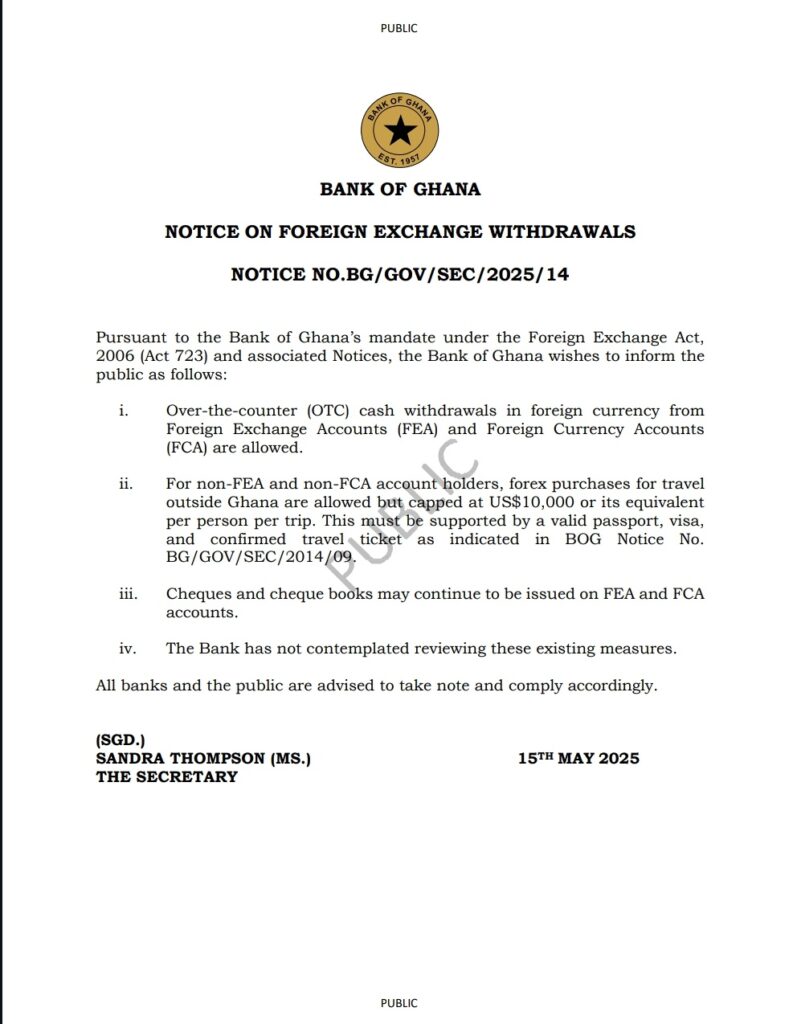
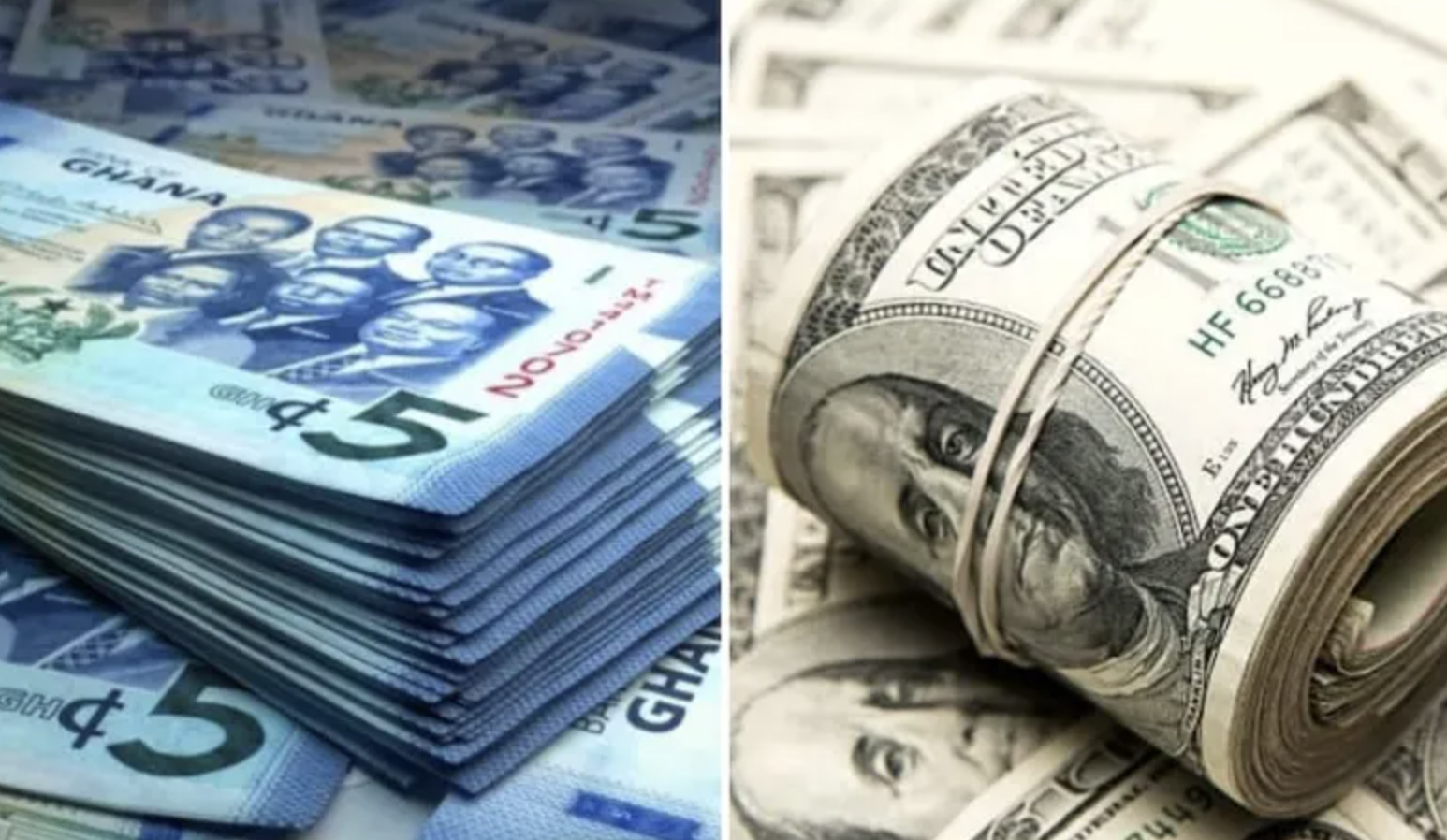
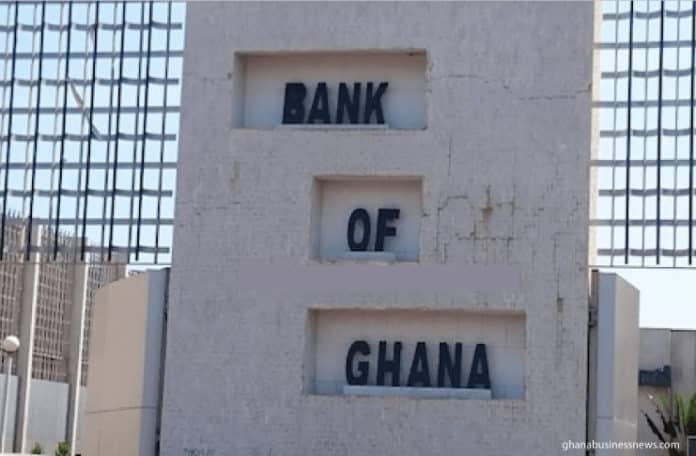
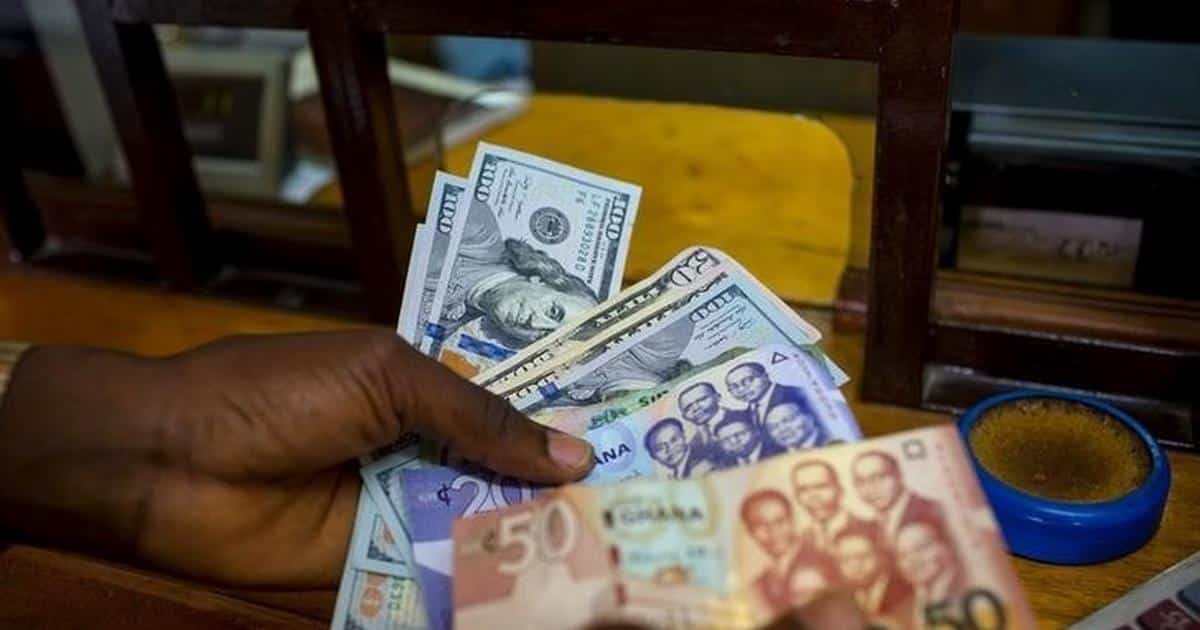
The Bank of Ghana (BoG) has clarified that over-the-counter (OTC) cash withdrawals in foreign currency from Foreign Exchange Accounts (FEA) and Foreign Currency Accounts (FCA) are allowed.
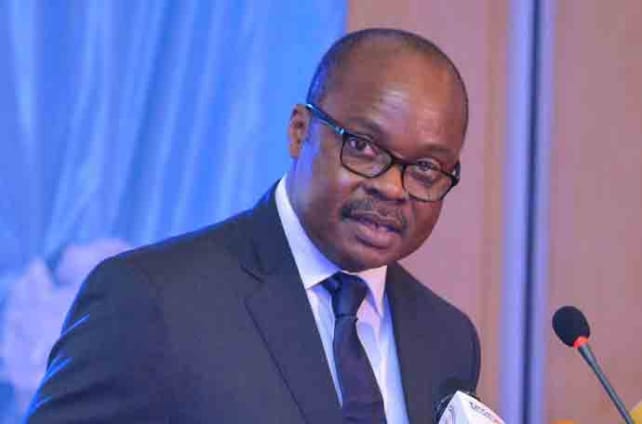
This clarification comes after a board member of the central bank, Isaac Adongo, noted that the central bank is set to introduce a number of measures to quell the magnitude of over-the-counter US dollar withdrawals.
Isaac Adongo noted that this measure, coming at a time when the cedi is recording a significant amount of appreciation against major foreign currencies, forms part of the bank’s role to regulate the use of the legal tender.
Speaking in an interview on JoyNews’ PM Express, he said; “If you put your dollars in the bank account, it is okay. We are happy with that; you can only get dollars if indeed you are going to use them for a dollar-denominated transaction.”
The Member of Parliament of Bolgatanga Central added; “When you request dollars, we’ll provide cedis instead.”
However, the BoG has noted in a press statement dated May 15 that “the Bank has not contemplated reviewing these existing measures.”
The central bank has also announced that it has capped the forex purchases for travel outside Ghana by non-FEA and non-FCA account holders at US$10,000 or its equivalent per person per trip.
“This must be supported by a valid passport, visa, and confirmed travel ticket as indicated in BOG Notice No. BG/GOV/SEC/2014/09 Cheques and cheque books may continue to be issued on FEA and FCA accounts,” the statement added.
The Ghana cedi has been recognized by Bloomberg as the world’s best-performing currency, having appreciated nearly 16% against the US dollar since April.
The average interbank rates used by commercial banks for transactions at the close of business, 14th May, show the US dollar buying at GH₵12.44 and selling at GH₵12.45. The British pound is buying at GH₵16.55 and selling at GH₵16.57. The euro is currently being bought at GH₵13.95 and sold at GH₵13.96.
Following the appreciation of the cedi, there have been calls by stakeholders for traders to revise the prices of the goods and services to reflect the gains.
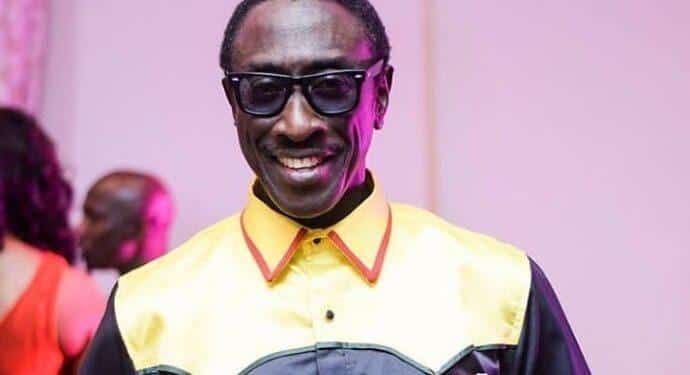
Renowned Ghanaian comedian and social commentator Kwaku Sintim-Misa, popularly known as KSM, has criticized Chief Executive Officer of the Ghana Gold Board, Sammy Gyamfi, over a viral video that captured him giving money to Evangelist Patricia Asiedu, popularly known as Nana Agradaa.
According to KSM, public figures must demonstrate a sense of responsibility and focus, especially when interacting with controversial personalities.
He suggested that such gestures even if well-intentioned, should be handled more discreetly to avoid misinterpretation.
“You can still be a people person. You can still respect people. But at the very worst, tell the person to call your PA and then come to the office. That shows you have a certain level of responsibility and focus,” he advised. KSM explained that as a public official, Sammy Gyamfi must be mindful of the optics and the impact of his actions on public trust.
“To Sammy Gyamfi and others who say that there was nothing wrong with what he did, maybe you’re right. But the optics are not good,” he said.
He illustrated his point by saying that if Sammy Gyamfi had helped a vulnerable patient at a hospital, such as someone unable to affor medical bills, the public would have likely applauded him.
“But the optics of Sammy Gyamfi dashing a woman called Agradaa, who has been seen notoriously on record bashing the NDC. Its not good,” KSM stressed.
Meanwhile, there have been growing calls for Sammy Gyamfi to be penalized or removed from office following the viral video incident.
Members of the New Patriotic Party (NPP) have publicly demaded his dismissal, citing concerns over the image and intergrity of public office .
The Chief of Staff, Julius Debrah has invited him for questioning and many Ghanaians are closely watching to see what disciplinary actions, if any, will be taken against the Ghana Gold Board CEO.
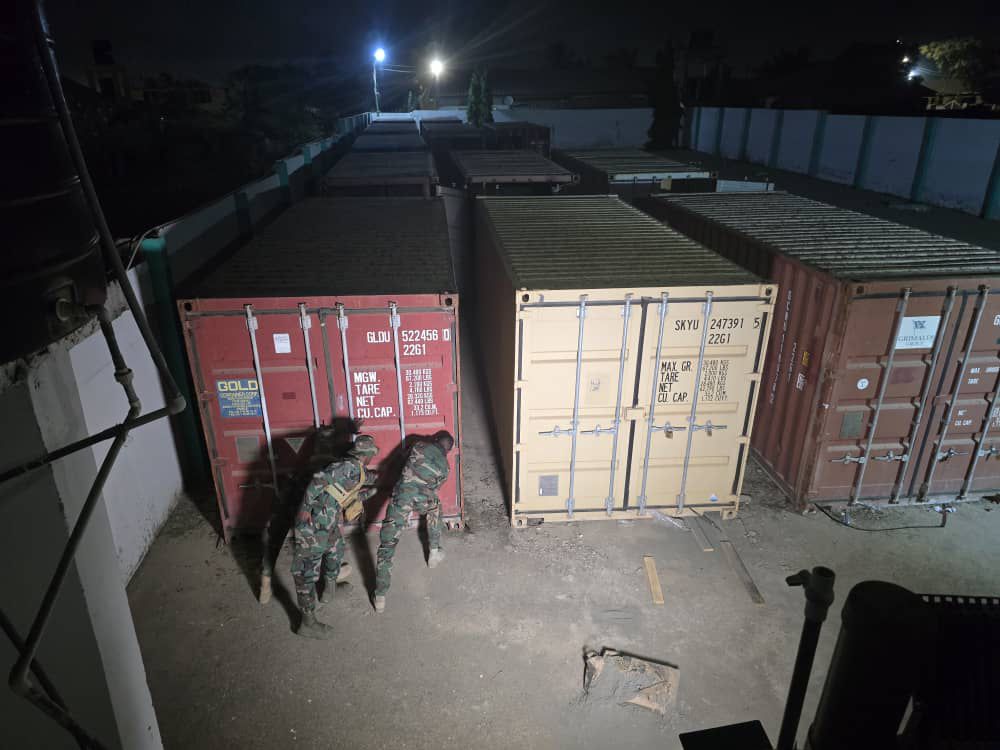
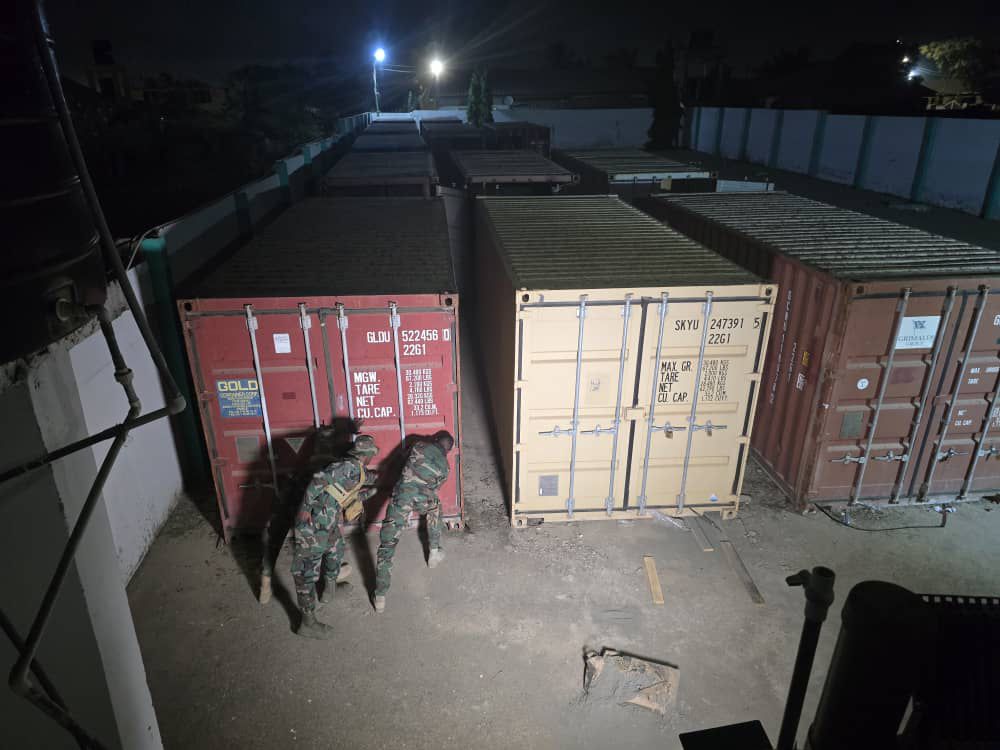
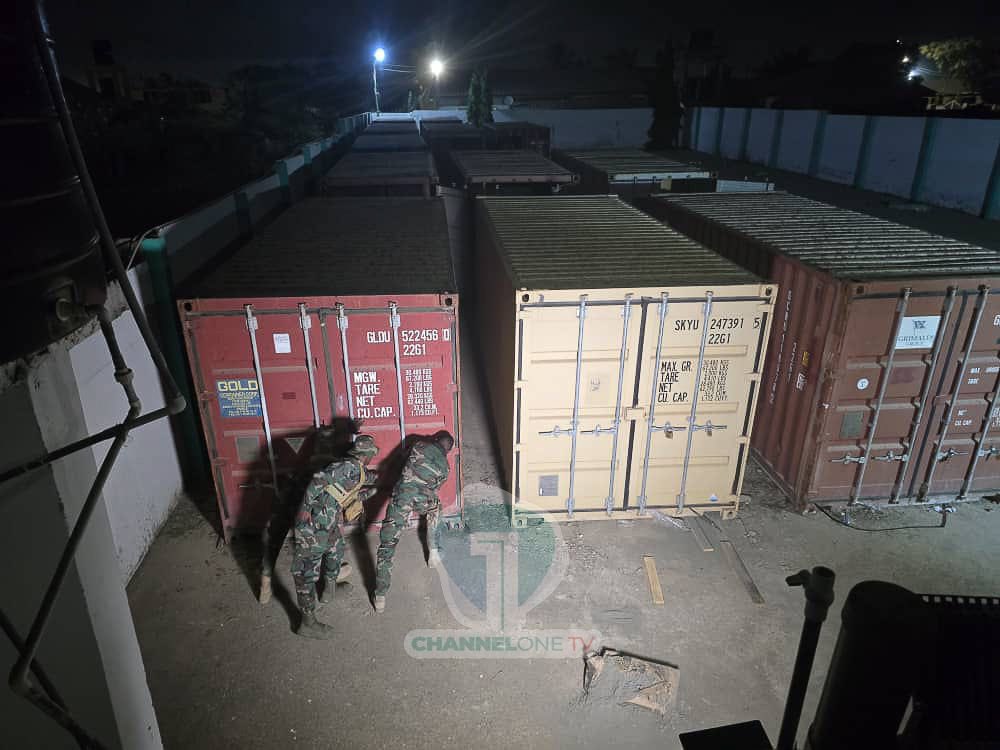
National Security operatives have intercepted a large consignment of counterfeit currency and suspected gold bars concealed in twelve 20-foot shipping containers.
Acting on intelligence, officers carried out a raid at a warehouse in Sapeiman, located in the Ga South Municipality, where they discovered the illicit haul.
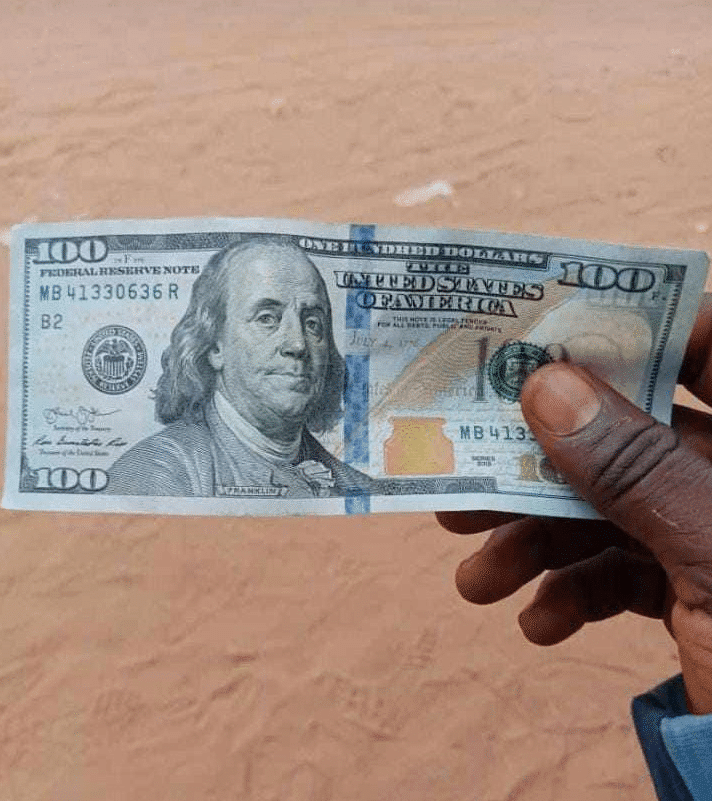
During the operation, bundles of fake US dollar notes were uncovered, hidden inside wooden crates and encased in cement to evade detection.
Authorities also confiscated counterfeit Ghana cedi notes, along with fraudulent Ghana Army uniforms and boots, heightening security concerns.
Officials revealed that two of the containers remain missing, with intensified efforts in place to track them down.
Meanwhile, a pursuit is underway for four suspects, including a key figure known only as Alhaji. National Security has assured the public that investigations are ongoing to dismantle the syndicate and ensure all those involved are held accountable.
National Security operatives have seized a major consignment of counterfeit currency and suspected gold bars concealed in twelve 20-foot shipping containers.
The operation, carried out following an intelligence tip-off, led officers to a warehouse in Sapeiman, located in the Ga South Municipality, where the illicit cargo was discovered.
Upon examination, officials found wooden boxes stuffed with fake US dollar bills hidden within layers of cement to evade detection. Additional confiscated items included counterfeit Ghana cedi notes, imitation Ghana Army uniforms, and boots, raising concerns about a potential security threat.
Authorities have disclosed that two of the twelve containers remain missing, with ongoing efforts to locate them.
Meanwhile, a manhunt has been launched for four key suspects, including an individual known only as Alhaji, believed to be the mastermind behind the operation. National Security has assured the public that investigations are ongoing to dismantle the syndicate and ensure those responsible are brought to justice.
National security operatives working with intelligence officials have intercepted a consignment of counterfeit US dollars, local currency, and gold bars in 12 shipping containers at a warehouse in Sapeiman.
The Ghanaian cedi has weakened by roughly 19.6% against the US dollar on the interbank foreign exchange market as of July 2024, according to the Bank of Ghana.
This figure is less than the approximate 21% depreciation against the US dollar in the retail market.
According to the Central Bank’s July 2024 Summary of Financial and Economic Data, the cedi depreciated by 7.7% against the dollar in March 2024 and by 10.5% in April 2024. In June 2024 and July 2024, it further declined by 15.9% and 18.6%, respectively, against the US dollar.
While the cedi is trading at an average of GH¢15.60 per dollar on the retail market, the Bank of Ghana quotes one dollar at GH¢14.78.
Against the British pound, the cedi has depreciated by 20.8% so far, trading at GH¢19.10.
It has also fallen 18.4% in value against the euro, with a current rate of GH¢16.09.
Cedi Stabilized Against Dollar
Last week, the Ghana cedi continued its upward trend against the US dollar amid increasing corporate demand.
The market’s expectation of a potential rate cut by the US Federal Reserve soon has weakened the American dollar.
As a result, the local currency appreciated by 0.29% week-on-week against the dollar, ending the week’s trades at a mid-rate of GH¢15.64/$ on the retail market.
This marks the second consecutive week the cedi has gained value against the US dollar.
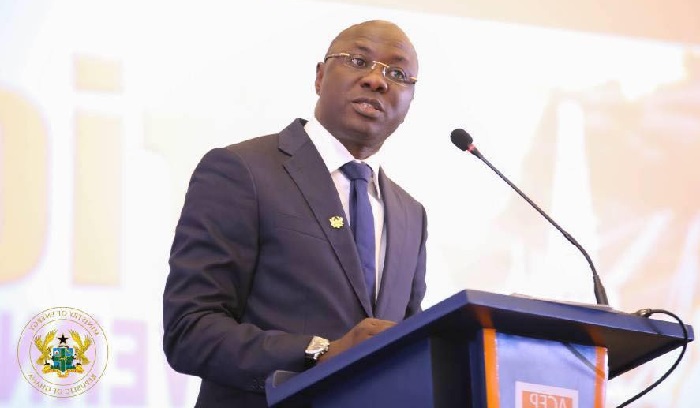
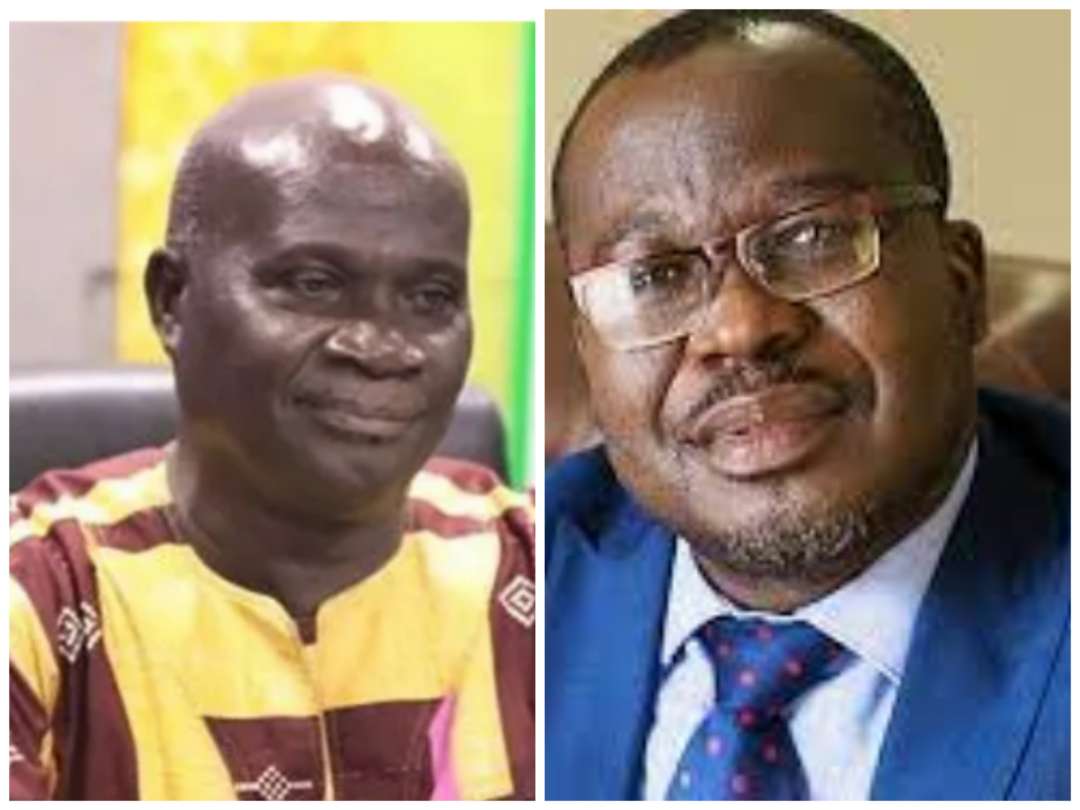
The Finance Minister, Dr. Mohammed Amin Adam, criticized MP for Bolgatanga Central, Isaac Adongo, for allegedly promoting dollar purchases for business operations.
Dr. Amin Adam accused Mr. Adongo of undermining the Ghanaian Cedi and worsening its depreciation.
During a press conference on Monday, July 1, Dr. Amin Adam, also representing Karaga, deemed his colleague’s actions inappropriate.
He asserted that Mr. Adongo’s remarks were intentionally aimed at stirring negative sentiments against the recent strengthening of the local currency.
However, Dr. Amin Adam assured the public and business community that the Cedi has shown gradual improvement compared to the same period last year.
He highlighted that the Cedi is set for significant growth, supported by the upcoming fourth tranche of the IMF loan and the completion of the debt restructuring program.
Dr. Amin Adam credited President Akufo-Addo’s leadership and the support of Ghanaians for the positive performance of the Cedi.
He urged citizens to maintain confidence in the government’s efforts to stabilize and strengthen the national currency.
“We have said over and over that the problem with the Cedi can also be largely attributed to speculation, and therefore while we’ve been making efforts to influence market sentiments positively, we also know that some other people are inciting speculation. We have had intelligence that people have been deliberately inciting speculation but we never got it too real as we saw only two or three days ago.”
“When my good friend and brother Isaac Adongo went out there urging people to buy dollars to do their business and this was after I indicated at a town hall meeting in the UK that with all the policies we are implementing and with the flows that we are expecting from external sources and with the completion of the debt restructuring with our bilateral official creditors and Eurobond holders, we saw the Cedi becoming stronger and stronger. My brother went out there to say people should ignore Amin Adam and go out there and buy dollars,” he said.
The Finance Minister additionally remarked on Ghana’s economy displaying robust signs of recovery.
He pointed out encouraging economic metrics for the first quarter of 2024, indicating a promising outlook for the rest of the year.
Dr. Amin Adam underscored the ongoing stability of the macroeconomic environment as the government persists in implementing the IMF-backed program.
This announcement follows the completion of the IMF Executive Board’s second review of Ghana’s US$3 billion, 36-month Extended Credit Facility (ECF) Arrangement.
“Growth, as we’ve heard from the previous two distinguished speakers, is proving to be more resilient and robust than initially programmed, and the economy continues to show strong signs of recovery, particularly in the first quarter of 2024,” stated Dr Adam.
“The results were remarkable. Overall, real GDP growth for quarter one of 2024 was 4.7%, the highest since quarter one of 2022. This growth performance is better than the 3.1% growth recorded in the same period in 2023,” he added.
The naira surged to its strongest level in over a month as Nigeria’s central bank intervened in the foreign exchange market by selling dollars.
On Monday, the naira strengthened by 9.7% to reach 1,339.33 per dollar, marking its highest level since April 26 and recording its most significant one-day increase since mid-January.
However, it retreated above 1,400 per dollar in intra-day trading on Tuesday, as reported by two traders in Lagos via the currency platform operated by the FMDQ Exchange.
According to two individuals familiar with the situation, authorities intervened on both Monday and Tuesday. The central bank has yet to respond to requests for comment.
“The central bank dollar sales and OMO auction” helped to strengthen the naira, said Olaolu Boboye, an analyst at asset manager CardinalStone in Lagos, referring to the central bank’s open market operations.
On Friday, there was a significant increase in dollar liquidity after the central bank auctioned one-year treasury bills, attracting substantial inflows.
The auction, which amounted to 1.143 trillion naira ($800 million) worth of bills at a yield of 22.49%, more than doubled liquidity in the foreign exchange market to $556 million. However, this surge in liquidity did not persist into Monday, as the volume of dollars sold in the market declined to $181 million despite central bank interventions.
Samir Gadio, head of Africa strategy at Standard Chartered Bank, stated that the central bank is currently selling dollars at rates ranging from 1,260 to 1,320 per dollar, which is significantly lower than the current exchange rate of below 1,400. These sales are occurring in anticipation of the maturity of a $1.3 billion naira futures contract scheduled for Wednesday.
“The rationale may be to contain and pre-empt a potential increase in dollar demand in the coming days,” Gadio said. It is also “conceivable” that there could be another bill sale to offset the impact of the expiring contract, he said.
Since mid-April, the naira has experienced significant volatility, undoing much of the progress it made in March due to increased dollar inflows. It has emerged as one of the weakest currencies tracked by Bloomberg over the past month, despite being the strongest performer in March.
Last week, the central bank hiked its benchmark interest rate to a record high of 26.25% in an effort to lure dollar inflows and combat inflation, which surged in April to a 28-year peak of 33.7%.
“The Nigerian naira’s dizzying swings — sharpest among liquid currencies globally since the start of the year — are driven by capital flows and may persist at least until inflation peaks, likely in the coming months,” Bloomberg Intelligence analyst Sergei Voloboev said in a note last week.
Today, May 21, 2024, the Bank of Ghana’s Interbank forex rates reveal that the Ghana Cedi is trading against the dollar at a buying price of 13.8326 and a selling price of 13.8464.
In Accra’s forex bureau, the dollar is purchased at a rate of 14.85 and sold at 15.15.
Against the Pound Sterling, the Cedi is traded at a buying price of 17.5729 and a selling price of 17.5919.
In Accra’s forex bureau, the pound sterling is bought at 18.50 and sold at 19.20.
The Euro is traded at a buying price of 15.0273 and a selling price of 15.0409.
In Accra’s forex bureau, the Euro is bought at 15.80 and sold at 16.40.
The South African Rand is traded at a buying price of 0.7600 and a selling price of 0.7608.
In Accra’s forex bureau, the South African Rand is bought at 0.40 and sold at 1.20.
The Nigerian Naira is traded at a buying price of 109.3985 and a selling price of 109.6897.
In Accra’s forex bureau, Nigerian Naira is bought at 9.00 Naira for every 1 Cedi and sold at 13.00.
As for the CFA, it is traded at a buying price of 43.6116 and a selling price of 43.6510.
In Accra’s forex bureau, CFA is bought at 22.00 CFA for every 1 Cedi and sold at 24.50 CFA for every 1 Cedi.
Note that these rates may differ at a forex bureau near you. Our forex bureau rates are provided by Afriswap Bureau De Change in Osu, Accra.
Our forex bureau rates are provided by Afriswap Bureau De Change in Osu, Accra.
Minority Leader Dr. Cassiel Ato Forson has urged President Nana Akufo-Addo to promptly direct his appointees who have stockpiled foreign exchange to release them.
During a press conference on Wednesday, May 15, Dr. Ato Forson emphasized the urgency of this directive to address the challenges posed by the depreciation of the Ghanaian Cedi.
The Member of Parliament for Ajumako-Enyan-Essiam reiterated his belief that these appointees have deliberately hoarded foreign exchange for personal gain, highlighting the detrimental impact of such actions on the Ghanaian economy.
Dr. Ato Forson accused government appointees of prioritizing their self-interests over the nation’s economic well-being and stressed the need for immediate action from President Akufo-Addo to prevent further harm to the currency.
“We call on the Akufo-Addo government to among others order his appointees to release the FX stashed in their homes,” he said.
Dr. Ato Forson also criticized the government’s choice to borrow GH¢7 billion from the treasury bills market to cover contractor payments not included in its budgetary allocations.
The Minority Leader expressed concern that this move sets a troubling precedent of surpassing budget limits for political reasons, worsening the Cedi’s depreciation against the dollar.
“They are on an expenditure spree, spending money as if there is no tomorrow. In the last few days, we are aware that they have paid approximately GH¢7 billion to contractors, off-budget contractors, off-budget expenditures, GH¢7 billion.”
“They borrowed from the T-Bill market, so they borrowed the money from ordinary Ghanaians then they paid this money to these contractors, and the contractors are also not certain so they have engaged in currency substitution.”
“The contractors got cedis and went and changed it into US dollars and kept the money because of a lack of confidence in the economy.”
Director of Research at the Institute of Economic Affairs(IEA),Dr. John Kwakye, criticised the government’s heavy reliance on foreign aid to support the local currency during a press briefing at the IEA headquarters.
He raised concerns about the sustainability of Ghana’s economic strategy, particularly its dependence on funds from institutions like the International Monetary Fund (IMF) and the World Bank, labeling this approach as a “lazy man’s approach.”
Dr. Kwakye highlighted the risks associated with such borrowing, including Eurobonds and cocoa syndicated loans, and warned of increased pressure on the Ghanaian cedi when these loans come due for repayment.
Citing statistics from the recent Monetary Policy Committee meeting of the Bank of Ghana (BoG), he noted that the Cedi depreciated by 6.8 percent against the US dollar in the year leading up to March 20, 2024.
“The Governor admitted that the foreign exchange market came under some pressure, both seasonal and non-seasonal, in February and early March. He reported that in the year to March 20, 2024, the Ghana cedi recorded a depreciation of 6.8 percent against the US dollar. He, however, stated that the cedi “continues to recover its value.” But the question is, by what measure?
“Certainly, not in nominal terms, because since he spoke on 25th March, the cedi has continued to depreciate, reaching nearly GH¢13 to the dollar. Let us repeat right here that relying on funds from the IMF, World Bank, Eurobonds, cocoa syndicated loans, etc. to bolster the cedi, as we have been doing, is not only a lazy man’s approach. To say the least but also clearly unsustainable, as the pressure would be back on when the loans fall due for repayment.”
“The way to stabilise the cedi on a durable basis is to increase our FX earnings through greater ownership of, and value addition to, our natural resources, to reduce our import demand through domestic industrialization and to entrench fiscal and monetary discipline,” citinewsroom.com quoted him to have said during the press briefing.
Today, March 20, 2024, the Bank of Ghana‘s interbank forex rates indicate that the Ghana Cedi is trading against the dollar at a buying price of 12.7018 and a selling price of 12.7146.
At a Forex bureau in Accra, the dollar is being purchased at a rate of 13.20 and sold at 13.55.
Against the Pound Sterling, the Cedi is trading at a buying price of 16.1390 and a selling price of 16.1564.
At a Forex Bureau in Accra, the pound sterling is being bought at a rate of 16.60 and sold at 17.10.
The Euro is trading at a buying price of 13.7893 and a selling price of 13.8030.
At a Forex Bureau in Accra, the Euro is being bought at a rate of 14.10 and sold at 14.60.
The South African Rand is trading at a buying price of 0.6708 and a selling price of 0.6712.
At a forex bureau in Accra, the South African Rand is being bought at a rate of 0.40 and sold at a rate of 1.10.
The Nigerian Naira is trading at a buying price of 119.2049 and a selling price of 120.1681.
At a forex bureau in Accra, the Nigerian Naira is being bought at a rate of 6.00 Naira for every 1 Cedi and sold at a rate of 11.00.
For the CFA, it is trading at a buying price of 47.5228 and a selling price of 47.5700.
At a forex bureau in Accra, CFA is being bought at 20.50 CFA for every 1 Cedi and sold at a rate of 22.50 CFA for every 1 Cedi.
Our forex bureau rates are provided by Afriswap Bureau De Change in Osu, Accra.
Note that these rates may differ at a forex bureau near you. Our forex bureau rates are provided by Afriswap Bureau De Change in Osu, Accra.
A first-year student at the University of Cape Coast, studying Procurement, expresses his commitment to academic excellence over monetary gain.
Despite facing initial academic challenges, including receiving a zero on his first quiz, he remains steadfast in his pursuit of a first-class degree.
During an interview, the student surprises the host by choosing a first-class degree over one million dollars when presented with the hypothetical choice.
Despite the host’s disbelief, he reiterates his preference for academic achievement.
When asked to explain his decision, the student emphasizes the potential long-term benefits of a first-class degree in securing lucrative opportunities, highlighting the value of education over immediate financial gain.
A Senior Lecturer at the University of Ghana’s School of Languages, Professor Kofi Agyekum, has condemned MP for Bibiani Anhwiaso, Alfred Obeng-Boateng, over his decision to persuade New Patriotic Party (NPP) delegates with money ahead of the party’s primaries.
Member of Parliament (MP) representing the Bibiani Anhwiaso Constituency, Alfred Obeng-Boateng, has made it clear that he is fully willing to financially support delegates of the New Patriotic Party (NPP) to secure the party’s parliamentary ticket for the upcoming 2024 general election.
In a widely circulated audio clip broadcasted by Sompa FM, the MP revealed that he had previously allocated substantial amounts, up to GHC3,000 per delegate, during the previous primaries.
He further emphasized his readiness to match or exceed any financial offers made by his competitors to gain the favor of the delegates in the upcoming selection process.
“I knew from day one that upon all the resistance I faced during my coming (into office), this time people will regroup more forces, pull their resources together and fight one person.
“So knowing all this, I know everyone’s financial strength; I know everyone’s financial limit here. So I know how much they can easily pull without being worried about it. When you have say a million Ghana cedis, you can give away GHC1,000 each without flinching.
“So we are about to go for primaries with about a thousand-two hundred delegates, the other time we paid around GHC3000 minimum per person and the primaries is coming again,” the MP said.
He stressed that he has deliberately set aside funds in US dollars to shield himself from the effects of inflation and is ready to provide up to GHC20,000 to each of the 2,200 delegates within the constituency to ensure his nomination for the party’s parliamentary ticket.
“I am telling you that the money I will use for the primaries is in dollars and that money has been secured long ago, I must be frank with you. That is money I am not touching under any circumstance.
“So I laugh seeing all that they are doing, I have dollars there for that primaries. What I can tell my delegates is that I will pay more than double of what anyone who will contest me will offer them, they should take that from me. If they come together and decide to pay GHC10,000 per delegate I will pay more than that.
“Whatever they pay, even if they pay GHC20,000 I will pay more than GHC20,000 because I know how much I have put there; I know how much I have reserved. That is why I saved in dollars so that the money will not lose value,” he noted.
Reacting to his comments in an interview on Peace FM, Professor Kofi Agyekum noted that it is unwise for political ambitions to run on one’s ability to distribute money to electorates.
According to him, such an unfortunate trend will only prevent credible people from running the affairs of the country.
“The man who are we talking about, it found it very annoying. Oh yes. If you say that you have gathered dollars and that the some people paid 1,000 and I paid 3,000. This time round, I’ve heard they will pay 10,000. I will pay 20,000.
So I asked, those who are going to vote, how many are they. So I asked Kwame and he was like the man will pay about GHS 40 million. So if you have wisdom, and you don’t have this money to share to people, you can’t enter politics,” he said.
On Thursday, October 25, Nigerian billionaire Femi Otedola marked his inauguration as the chancellor of a private university in Lagos with a generous contribution of nearly a million dollars.
He pledged one million naira to each of the 750 students at Augustine University, emphasizing his commitment to supporting institutions he is affiliated with.
The cumulative amount of 750 million naira exceeds US$950,000.
Femi Otedola, an entrepreneur and philanthropist who serves as the Executive Chairman of Geregu Power PLC, underscored that this donation would not only benefit the students but also provide relief to parents during these challenging times.
“Today, I was inaugurated as the Chancellor of Augustine University. I strongly believe in transforming establishments that I am associated with. I gave a gift of One Million to each of the Seven Hundred and Fifty Students. I hope this donation of Seven Hundred and Fifty Million Naira assists the plight of the parents of our students in this difficult time…” he posted on Twitter (now X).
Pictures from his inauguration ceremony, where he first saw his gown and carried out his new duties, were posted with the post.
Today, I was inaugurated as the Chancellor of Augustine University. I strongly believe in transforming establishments that I am associated with. I gave a gift of One Million to each of the Seven Hundred and Fifty Students. I hope this donation of Seven Hundred and Fifty Million… pic.twitter.com/uaz5eVhMci
However, the project has sparked controversy over its pricing in US dollars, which many have deemed unaffordable for low and middle-income earners.
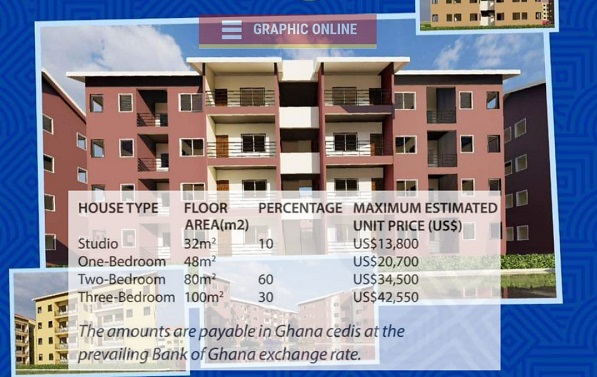
The project, which is a public-private partnership, will provide 8,000 housing units of different types, ranging from studio apartments to three-bedroom houses. The prices are as follows:
A studio apartment: $13,800
One-bedroom house: $20,700
Two-bedroom house: $34,500
Three-bedroom house: $42,550
These prices are payable in cedis at the prevailing exchange rate, and developers are prohibited from selling above the agreed price ceiling. However, they have the flexibility to sell units below the set prices.
The project is part of the National Affordable Housing Programme, which aims to deliver 14,000 housing units in Pokuase and Dedesua in the Ashanti Region. The programme was initiated by President Nana Addo Dankwa Akufo-Addo, who cut the sod for the Pokuase project on Tuesday.
The Minister of Works and Housing, Francis Asenso-Boakye, said the project marked a significant milestone in the quest to provide access to safe, quality, decent, secure and affordable housing for Ghanaians.
He also said the project would create jobs and stimulate economic activity in the area.
However, some critics have questioned the affordability of the project, given that the prices are in dollars and that many Ghanaians earn less than $1000 a year.
They have also accused the government of neglecting previous housing projects initiated by former administrations, such as theSaglemi Affordable Housing Project.
Some have also expressed concern over the environmental and social impact of the project, such as the displacement of residents and farmers, the destruction of natural habitats and water bodies, and the lack of adequate infrastructure and amenities in the area.
The government has defended its pricing in dollars, saying that it is necessary to ensure that the houses are affordable to foreign investors and that it reflects the cost of construction materials and labour.
It has also assured that it will complete all ongoing housing projects and that it will provide subsidies and mortgages for eligible buyers.
In the third quarter of 2023,Bank of Ghana(BoG) has announced its plan to sell $120 million to Bulk Oil Distribution Companies (BDCs) through the FX Forward Auction Calendar.
As per the schedule outlined in the calendar, $40 million will be auctioned in July, August, and September 2023 respectively. In July, $20 million will be sold on both the 14th and 28th. In August, $20 million will be sold on both the 15th and 30th. Lastly, in September, $40 million will be sold, with $20 million each being sold on the 14th and 29th.
The aim of this FX support to the BDCs is to alleviate the dollar liquidity constraints faced by oil importers, which will help enhance the supply of petroleum products and stabilize prices at fuel stations.
Bank of Ghana (BoG)
The Bank of Ghana emphasizes that the BDCs Forex Forward Auction will be governed by guidelines published and available on its official website.
Interested parties are invited to submit bids in the prescribed format to purchase United States Dollars against Ghana cedis, separately on each auction date, via the dedicated email bogforwards@bog.gov.gh.
It is important to note that the International Monetary Fund (IMF) has previously advised the Central Bank to consider suspending the program due to concerns over the emergence of multiple exchange rates resulting from the BoG’s occasional provision of forex support at rates that differ from those prevailing in the market.
The IMF expects the BoG to ensure that its forex liquidity is provided at market exchange rates and to implement measures supporting the unification of exchange rates across the board.
Today, June 15, 2023, the Ghana Cedi is trading against the dollar at a purchasing price of 10.9780 and a selling price of 10.9890, according to the Bank of Ghana’s interbank exchange rates.
At a forex bureau in Accra, the dollar is being bought at a rate of 11.50 and sold at a rate of 11.90.
Against the Pound Sterling, the Cedi is trading at a buying price of 13.9355 and a selling price of 13.9505.
At a forex bureau in Accra, the pound sterling is being bought at a rate of 14.40 and sold at a rate of 15.10.
The Euro is trading at a buying price of 11.9107 and a selling price of 11.9215.
At a forex bureau in Accra, Euro is being bought at a rate of 12.30 and sold at a rate of 12.80.
The South African Rand is trading at a buying price of 0.5996 and a selling price of 0.6001.
At a forex bureau in Accra, South African Rand is being bought at a rate of 0.30 and sold at a rate of 0.90.
The Nigerian Naira is trading at a buying price of 42.3119 and a selling price of 42.4250.
At a forex bureau in Accra, Nigerian Naira is being bought at a rate of 12.00 Naira for every 1 Cedi and sold at a rate of 19.00.
For the CFA, it is trading at a buying price of 55.7128 and a selling price of 55.7682.
At a forex bureau in Accra, CFA is being bought at a rate of 17.00 CFA for every 1 Cedi and sold at a rate of 21.00 CFA for every 1 Cedi.
Our forex bureau rates are provided by Afriswap Bureau De Change in Osu, Accra.
Note that these rates may be different at a forex bureau near you. Our forex bureau rates are provided by Afriswap Bureau De Change in Osu, Accra.
Parliamenthas been urged to investigate “damning evidence” that it may have been misled by the Bank of England over interest rate rigging.
Senior Conservative backbencher David Davis said new evidence cast doubt on statements to Parliament by its former deputy governor.
In a House of Commons debate he called for a renewed parliamentary inquiry into the scandal.
He was supported by former Labour shadow chancellor John McDonnell.
Mr Davis cited evidence given by the Bank of England’s former deputy governor, Paul Tucker, who told the Treasury in July 2012 he’d only come to learn about interest rate manipulation “in the last few weeks”.
“Yet there appears to be damning evidence this was untrue, including meetings, phone calls, and sworn testimony to US authorities,” Mr Davis said.
“It was also claimed that there were no Bank of England instructions to change Libor submissions,” he added. “But evidence uncovered by Mr Verity suggests this is also untrue.”
The evidence cited by Mr Davis suggests that Mr Tucker was aware of the most serious form of manipulation, called “lowballing”, as early as August 2007.
Banks have been fined billions of dollars by US and UK regulators for this practice.
During the financial crisis of 2007-09 banks routinely understated the interest rates they were paying to borrow cash – “lowballing”.
They did so when publishing daily estimates of their borrowing costs for the purpose of setting Libor, the benchmark interest rate that tracks the cost of borrowing cash between the banks.
What does ‘rigging’ Libor or Euribor mean?
What the FTSE 100 is to share prices, Libor is to interest rates – an index that tracks the cost of borrowing cash. For most of the past 35 years, 16 banks have answered a question every morning at 11am: At what interest rate could you borrow money?
They submit their answers (e.g. RBS estimates 3.14%, Lloyds 3.13% etc) and an average is taken to get Libor, short for “London Interbank Offered Rate”. To set Euribor, the process is similar but with more banks involved.
The evidence against the traders jailed for rate “rigging” consisted entirely of requests they had made to colleagues to tweak those estimated interest rates up or down, typically by one hundredth of a percentage point (known on the money markets as a “basis point”).
The hope was that it might shift the Libor average marginally in the right direction to benefit the bank’s trades which went up or down linked to Libor.
In the other form of rate rigging, known as lowballing, banks pretend to be able to borrow cash much more cheaply than they really can. It is on a much larger scale.
The evidence, which emerged in the course of research for a book I have written, casts doubt on the prosecutions of 37 traders and brokers for “manipulating” Libor and Euribor, the equivalent of Libor for euros.
It includes an email chain reporting a meeting on 14 August 2007, where Mr Tucker is said to have sworn senior bank executives to silence as they discuss how banks’ Libor estimates of the cost of borrowing are too low.
In sworn testimony, given in February 2011 to the US Department of Justice, senior Barclays executive Jerry del Missier says Paul Tucker told him on 1 September 2007 that Barclays’ should get its Libor rates down.
When former deputy governor of the Bank of England Paul Tucker was interviewed by the Treasury committee of MPs on 9 July 2012, he was asked when lowballing was first raised.
‘I mean, I wasn’t aware of allegations of, of, lowballing until … the last few weeks,’ he said.
Mr Tucker has been asked by the BBC to comment on this but has repeatedly declined.
Speaking in parliament, David Davis also said there had been “serial miscarriages of justice where 37 traders were prosecuted, 19 convicted and nine jailed simply for doing their jobs”.
He called for the Treasury Select Committee to investigate whether they had been misled.
Former Labour shadow chancellor John McDonnell said: “It’s very clear that the House has been misled from the evidence we’ve seen.”
He added: “These were egregious miscarriages of justice” and called for the Treasury Select Committee to examine it.
Speaking for the government, junior Treasury minister Andrew Griffith said the issues were whether state authorities were involved in lowballing, and whether the Treasury Select Committee had been misled. He said: “I like [Mr Davis] look forward to hearing the response of the Treasury Select Committee chair”.
Mr Davis also cited former Lord Chancellor Lord Mackay of Clashfern, who has said there are “serious questions” that are “worthy of the Supreme Court” about the law used to convict traders, nine of whom went to jail for a much smaller form of interest rate “rigging”, now not regarded as a crime in any jurisdiction but the UK.
Convictions of traders in US courts have been overturned after a US appeal court ruled last year that prosecutors had failed to prove the former traders had made or procured any false or misleading statements.
The Bank of England has been asked repeatedly by the BBC about this evidence, declining to comment except to say any claims about its role were “unsubstantiated”.
Today, May 17, 2023, the Ghana Cedi is trading against the dollar at a purchasing price of 10.9538 and a selling price of 10.9648, according to the Bank of Ghana’s Interbank Foreign Exchange Rates.
At a forex bureau in Accra, the dollar is being bought at a rate of 10.40 and sold at a rate of 11.40.
Against the Pound Sterling, the Cedi is trading at a buying price of 13.6758 and a selling price of 13.6906.
At a forex bureau in Accra, the pound sterling is being bought at a rate of 14.00 and sold at a rate of 15.00.
The Euro is trading at a buying price of 11.8972 and a selling price of 11.9080.
At a forex bureau in Accra, Euro is being bought at a rate of 12.00 and sold at a rate of 13.00.
The South African Rand is trading at a buying price of 0.5734 and a selling price of 0.5740.
At a forex bureau in Accra, South African Rand is being bought at a rate of 0.30 and sold at a rate of 0.90.
The Nigerian Naira is trading at a buying price of 42.2545 and a selling price of 42.3458.
At a forex bureau in Accra, Nigerian Naira is being bought at a rate of 13.00 Naira for every 1 Cedi and sold at a rate of 18.00.
For the CFA, it is trading at a buying price of 55.0854 and a selling price of 55.1354.
At a forex bureau in Accra, CFA is being bought at a rate of 17.00 CFA for every 1 Cedi and sold at a rate of 20.50 CFA for every 1 Cedi.
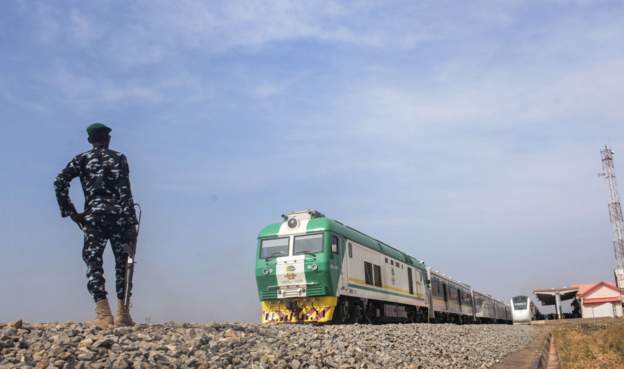
The China Development Bank has been accepted by the Nigerian Senate as the new funder for a rail project, which is expected to cost close to $1 billion.
Another Chinese lender had been due to fund the line between Kaduna and Kano – the largest city in the north – but it pulled out in 2020.
When President Muhammadu Buhari came to power eight years ago, he prioritised upgrading the country’s poor transport network and power supply.
However, funding has been a major constraint.
Parliament has approved several billion dollars worth of loans from Chinese and other international lenders but funds have yet to materialise.
When president-elect Bola Tinubu takes over in May, he will inherit a raft of challenges including double-digit inflation and widespread insecurity.
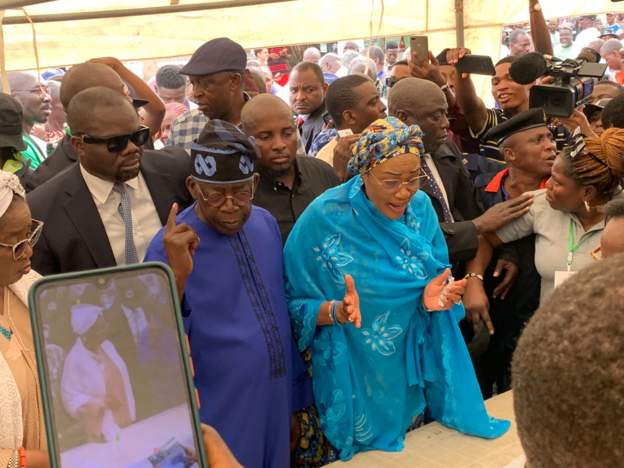
Information reaching the Independent Ghana is that the All Progressives Congress (APC) is allegedly engaged in vote-buying as Nigeria heads to the poll.
According to social media user @tamicute_mina, the party is distributing US dollars to people living in Ondo state, Irele local government,
Per reports, the APC is targeting the rural areas. The reason for this is currently unknown.
APC is sharing dollars in ondo state, irele local government. Their targets are the villages… This is not a fake news
The United States of America has once again declared support for Africa.
US President Joe Biden has announced billions of dollarsin new funding for Africa at a summit of dozens of heads of state in Washington.
“The United States is ‘all in’ on Africa’s future,” President Biden told the over 40 African leaders attending the summit.
He also spoke optimistically of improved links with Africa during a summit in which he announced $55bn (£44.4bn) in new funding for the continent over the next three years. This included $100m for clean energy projects.
He told the gathering in Washington that when Africa succeeded, so too did the United States.
Mr Biden spoke of the importance of good governance, healthy populations and affordable energy.
The summit of heads of state is seen as an attempt by America to re-assert its influence in Africa at a time when China, Russia and Turkey are deepening their involvement.
It’s the first such gathering hosted by Washington for eight years.
Nearly a day after the government’s Debt Exchange Program start, the Ghana cedi appreciated versus the dollar.
The value of the local currency increased in comparison to the pound and the euro, two other significant international currencies.
The average price at which forex bureaus are selling it to the American “greenback” is 13.70. Additionally, it is being sold for 14 euros and 16.70 pounds.
However, it is unclear why the cedi rose in value in comparison to these other world currencies.
But given that the government set the program’s parameters to make room for a program from the International Monetary Fund, some market observers and analysts may attribute it to the Debt Exchange Programme.
Particularly in recent weeks, the local currency had been comparatively steady against the dollar.
On the retail market, it increased by 3.12% against the dollar, 0.88% against the pound, and 3.79% against the euro week over week.
However, since the start of the year, it has declined by little over 50%.
Experts said a rise in the cost of long-term borrowing due to the market turmoil meant the cost to lenders of offering new mortgage deals was too expensive.
Sterling fell to an all-time low earlier against the US dollar after Chancellor Kwasi Kwarteng pledged further tax cuts at the weekend on top of Friday’s mini-budget where he announced the biggest tax cuts in 50 years.
The pound had been sliding as global markets reacted to the sharp increase in government borrowing required to fund the cuts.
A weak pound makes it more expensive to buy imported goods and risks pushing up the rising cost of living even further. Imports of commodities priced in dollars, including oil and gas, are also more expensive.
UK inflation, the rate at which prices rise, is already rising at its fastest rate for 40 years.
Some economists had predicted the Bank of England would call an emergency meeting in the coming days to raise interest rates in a bid to stem the fall, as well as calm rising prices.
But the Bank of England instead said it was “monitoring developments in financial markets very closely” and would make a full assessment at its next meeting on 3 November.
Investors are now predicting that interest rates could more than double by next spring to 5.8% from their current 2.25%, to curb high inflation, which is expected to be fuelled by the huge tax cuts announced in Friday’s mini-budget.
‘Not affordable’
Samuel Tombs, chief UK economist at Pantheon Macroeconomics, said if interest rates rise as predicted, the average household refinancing a two-year fixed rate mortgage in the first half of next year would see monthly payments jump to £1,490 from £863.
“Many simply won’t be able to afford this,” he said.
A late afternoon double dose of attempted reassurance – firstly from the Treasury, and then from the Bank of England.
What’s new from the Treasury is a timeline with dates attached. There will be a series of statements from various cabinet ministers about ideas we heard about on Friday.
And then in just under two months, a parliamentary moment. What’s being described as the “Medium Term Fiscal Plan” – and the Office for Budget Responsibility’s number crunching.
In short, what the Treasury is attempting to say is this: don’t panic, we know what we’re doing.
Well, let’s see what the markets do next.
The market volatility following Mr Kwarteng’s mini-budget has also been linked in part to the government’s decision not to publish a forecast of expected UK growth and government borrowing from independent forecaster the Office for Budget Responsibility.
Martin Weale, Professor of Economics at King’s College London and former member of the Bank of England’s Monetary Policy Committee, which votes on interest rates, told BBC Radio 4’s PM programme that people “are concerned that the government has no plan for bringing the national debt under control.”
“Sterling has fallen because market traders have been frightened by the government’s policies, and I think they got further frightened by the sense over the weekend that this was only the first installment of some tax cuts.”
But Lord David Frost, Conservative peer and former chief Brexit negotiator, said the reaction on global markets was “an overreaction”.
“I don’t think anything has gone wrong, actually, Liz Truss promised change, a different economic approach to get us back to growth and away from stagnation.”
He said as part of this change in approach, interest rates would rise and the government would need to provide additional support via tax cuts, and whilst it would need to reduce spending medium term, the details of that would come in November.
The government said its financial plan set for 23 November would include full growth and borrowing forecasts from the Office for Budget Responsibility.
It also pledged to set out further details on the government’s spending rules, including how it will try to decrease debt.
Paul Dales, the chief UK economist at Capital Economics, said given the pound had fallen back since the statements from the Bank and the Treasury the markets “may well need more reassurance and some actual action”, saying a change in policy from the government or an interest rate hike from the Bank at an emergency meeting before 3 November may be necessary.
The Bank of Ghana has reiterated its caution to institutions that do not have permission to price in foreign currencies to desist from engaging in such transactions.
According to the Central Bank, it is illegal for companies, particularly those in the hospitality and the real estate sectors, to quote their offerings in foreign currencies, and will thus not hesitate to punish them.
Speaking to the media, the Head of Other Financial Institutions Supervision Department, Yaw Sarpong, said it will step up its monitoring activities to address the challenge.
“As I indicated earlier, the pricing in dollars, other currencies by institutions is engaging our attention and we have teams out there that identify some of these institutions for us to deal with them. I want to re-echo that it is illegal to price or advertise foreign currency unless you have permission from Bank of Ghanato do that”.
“There are a few institutions in the country that by the nature of their operations have been able to secure exceptions, other than that it is illegal to do that.
Mr. Sarpong further said the Bank of Ghana will step up its monitoring activities to make sure that recalcitrant firms’ pricing in dollars are punished.
He, however, encouraged the general public to inform the Central Bank of any institution quoting its services in dollars.
“The ones that come to our attention, we will deal with them, but we need everybody on board, the media. So if anybody comes to your station wanting to advertise in dollars, you have to let the person know that this is illegal and you don’t want to be associated with it.”
“We have to let the advertising agencies know that and we have. I am sure that if we all collaborate we can deal with this situation”, Mr. Sarpong explained.
Nigerian Afropop group ENE Yatt has criticized the management of rapper Sarkodie for requesting a whopping 25,000 dollars as a service fee for a collaboration.
The music group, who identify as underground artists, stated that the fee was outrageous given the fact that they are currently unable to raise that amount.
The Ghana-based duo Smart and Snazy expressed discontent that most musicians “do not know how to develop relationships.” The emphasis is constantly on paying for features.
“We wanted to do a song with Sarkodie, we were asked to pay 25,000 dollars. This was like a couple of months ago
“The fact is, paying this money is not actually the problem but taking this money from an underground artiste who is trying to come up. I wonder where you want him to get to. One of the big problems we’ve noticed in Ghana is that most artistes don’t know how to build relationships,” they disclosed in an interview on Hitz FM.
ENE Yatt noted that the celebrated Ghanaian rapper is worth more considering his relevance in the industry, however, his team should have been considerate considering the fact that they are still finding their feet in the industry.
“Sarkodie is big, he deserves to be paid more than $25,000. He can take more than $100,000 but definitely not from artistes who are trying to survive…we spoke to his management. We spoke to Angel Town and a couple of people but the point is, we are not that artiste you should take that kind of money from,” they disclosed.
The Tema Police has arrested a 35-year-old woman from Swedru for allegedly defrauding unsuspecting people of various sums of money under the pretext of
Gifty Osei, who claimed to be a financial consultant and the chief executive officer of Royal Ancient Root Venture, was arrested at the Tema Melcom shop while going about her tricky stock in trade.
Speaking to the Ghanaian Times after the arrest the Community 1 District Police Commander, Chief Superintendent Stephen Kwakye, said the suspect who had managed to swindle over 30 people was picked up upon a tip-off.
Police impounded a bag she was carrying at the time of her arrest which was loaded with counterfeit 100 dollar bundles.
Supt. Kwakye said the suspect who also paraded herself as a returnee from the United Kingdom has been detained and would be put before the court after investigations were completed.
The Nigeria Customs Service say $8m (£6m), wrapped in large brown envelopes, were found hidden inside a car at the Murtala Muhammed International Airport in the commercial capital Lagos.
The cash was allegedly being smuggled out of the country by a “money laundering syndicate assisting corrupt government officials,” customs boss Hameed Ali said.
Two drivers working for a company at the airport, who are alleged to have been caught moving the cash into the airport, have been arrested.
The Bank of Ghana will auction US$715 million in Forward Foreign Exchange Auctions in the whole of 2020.
The months with the expected highest auctions of US$80 million each are January, February and March 2020.
In accordance with the Foreign Exchange Forward Auction guidelines issued on the 23 September 2019, the Bank of Ghana said bids are invited as per the prescribed format to purchase/sell US dollar against Ghana cedi separately on each auction date.
In addition to the auction guidelines, all Authorised Foreign Exchange Dealer Banks were to comply with the provisions of the Code of Conduct for the Interbank Foreign Exchange market in Ghana.
Since the introduction Foreign Exchange Forward Rate Auction, it has been recording a significant oversubscription.