Tag: Domestic Violence

  • Ghana has a Domestic Violence Act: But can a victim afford to use it?

    Ghana has a Domestic Violence Act: But can a victim afford to use it?

    Imagine your daughter calls you tonight. Not somebody else’s daughter, but yours. The child you raised, educated, prayed over, advised and tried your best to prepare for life. You taught her to respect herself, choose carefully, work hard, build a future and make good decisions. Now she tells you that the person she shares a home with has assaulted her.

    Or imagine it is your son. He tells you in a voice you barely recognize that the person he lives with has been beating him, threatening him, humiliating him, controlling him financially or slowly destroying him psychologically. Perhaps he has said nothing for months because he already knows what some people will say. “How can a woman beat you?” “You are a man.” “Handle your home.” He has been suffering, but shame has convinced him that silence is safer than asking for help.

    What would you tell either of them? You would probably say, “Report it.”

    That sounds simple because Ghana has a Domestic Violence Act. Ghana has the Domestic Violence and Victim Support Unit of the Ghana Police Service, commonly known as DOVVSU. Ghana has courts and a Domestic Violence Secretariat. We have a Domestic Violence Fund. We have social welfare officers, health facilities and organizations working in the field. We even have a One-Stop Centre in Accra intended to bring some of those services together.

    So, report it. But then comes the question that tells us whether our laws are working in the lives of ordinary people or are merely beautifully written pieces of legislation: What happens after the victim reports?

    That is where this conversation must begin.

    The Domestic Violence Act, 2007 (Act 732) is not an empty law. It gives important protections to victims. It recognizes that domestic violence goes beyond physical assault and can include sexual, economic, emotional, verbal and psychological abuse.

    It places responsibilities on the police when receiving complaints. Police are supposed to assist victims to obtain medical treatment where necessary, help them reach places of safety, help preserve evidence and inform them about available rights and services.

    Most significantly, Section 8 under subsection (1) (c) provides that a domestic violence victim assisted by the police to obtain medical treatment is entitled to free medical treatment from the State.

    Read that again carefully: free medical treatment from the State.

    Now place the law on one side of the table and the lived experience of victims on the other. What happens when a woman who has just been assaulted is told she must find money for something associated with her medical examination?

    What happens when she needs transportation from one institution to another? What happens when she needs copies of documents, repeated trips to a police station or court, medication, temporary accommodation, food for herself and her children or simply money to get away from the person who has harmed her?

    What happens when an administrative process that looks small to someone sitting behind a desk becomes an impossible financial barrier for someone who left home with nothing but the clothes she was wearing?

    This is why we have to stop discussing domestic violence only as a legal issue. It is also a financing issue. A right that exists in legislation but becomes inaccessible because a victim cannot afford the process is not yet a fully functioning right.

    This is especially important because many victims are already fighting an internal battle before they ever reach a police station. Some have no support system.

    Some have parents who tell them to return to the marriage because leaving would bring embarrassment to the family. Some are financially dependent on the person abusing them.

    Some have children and do not know where they will sleep if they leave. Some belong to religious or social environments where endurance has been confused with virtue.

    Some are afraid nobody will believe them. Some fear retaliation. Others know that reporting the abuse could expose details of their private lives to relatives, neighbors, employers and an entire community.

    And many simply remain silent.

    The 2022 Ghana Demographic and Health Survey gives us reason to take that silence seriously. About one-third of Ghanaian women aged 15 to 49 reported having experienced physical violence since age 15, while 14 percent reported having experienced sexual violence.

    Among ever-partnered women, more than one-third had experienced physical, sexual or emotional violence by a current or most recent husband or intimate partner.

    Perhaps one of the most troubling findings is that among women who had experienced physical or sexual violence, 51 percent had never sought help and had never told anyone.

    That means the cases reaching DOVVSU are not the whole story. Police statistics can tell us something about people who enter the formal system.

    They cannot tell us about every woman sitting quietly in a bedroom trying to hide swelling before going to work the next morning. They cannot count every child who has learned to recognize the sound of an angry parent’s footsteps.

    They cannot automatically count the man who covers scratches with a long-sleeved shirt because he is afraid his friends will laugh if they know what is happening at home.

    There is a hidden Ghana living behind the reported Ghana.

    That is why stigma cannot be treated as a side issue. Stigma is part of the infrastructure that allows abuse to continue.

    When we ridicule male victims, blame female victims, ask what someone did to “provoke” a beating, pressure couples to stay together at all costs or treat family violence as something outsiders should never interfere with, we are helping to build the silence in which abuse survives.

    And after a victim finally finds the courage to leave that silence, the State must be careful not to replace one form of trauma with another.

    DOVVSU itself says its services are intended to be free, that victims and their families should be treated with respect and courtesy, and that the unit should connect survivors with medical, psychological and social support. The very history of DOVVSU also reminds us that this is not solely a women’s issue.

    The former Women and Juvenile Unit was renamed partly because men experiencing domestic violence were reluctant to approach an institution they perceived as serving only women and children.

    Women and children remain disproportionately vulnerable and must remain central to the national response. Recognizing that reality does not require us to erase men who are abused. A serious protection system should be capable of holding both truths at the same time.

    If your daughter is being beaten, she deserves protection. If your son is being assaulted, threatened, controlled or psychologically abused, he deserves protection too. Neither should have to prove that they look enough like society’s idea of a victim before somebody takes them seriously.

    The question for Ghana, therefore, is not whether we have institutions. We do. The question is whether those institutions have been given enough resources, personnel, authority and geographical reach to deliver what we tell citizens they are entitled to receive.

    I am therefore grateful to ACEPA and Global Affairs Canada for the opportunity provided through the Inclusive Legislatures for Gender-Responsive Policies (ILGRP) initiative to participate in these conversations.

    Spaces like these matter because they allow us to look beyond the existence of legislation and examine whether our laws are being translated into meaningful change in people’s lives. But the value of these conversations should not end in the meeting room.

    They should make us more willing to ask difficult questions about implementation, financing, accountability and the experiences of the people these laws are supposed to serve.

    That question has stayed with me. A country can pass progressive legislation, hold consultations, establish institutions and make commitments, but implementation ultimately happens in the life of an ordinary person. It happens when a woman walks into a police station after being assaulted.

    It happens when someone needs a medical examination but does not have money. It happens when a survivor needs somewhere safe to sleep, when a social worker needs transportation to follow up on a case, or when someone needs legal assistance but cannot afford it. If the resources do not reach that point, then we have to be willing to ask where the chain is breaking.

    My concern about this is not theoretical. Through my participation in one of the women’s organizations working groups under the African Centre for Parliamentary Affairs (ACEPA), I have had the opportunity to engage in discussions around three pieces of legislation that matter to me: the Domestic Violence Act, the Land Act and the Affirmative Action Act.

    Looking at these laws alongside the budgets and resources intended to support their implementation has forced me to think beyond what legislation says on paper and ask a more difficult question: Are the resources actually reaching the people the laws were created to protect?

    That brings us to the money.

    The Ministry of Gender, Children and Social Protection administers some of Ghana’s largest social programs. School Feeding and the Livelihood Empowerment Against Poverty program, LEAP, are important interventions. Children should be fed. Extremely poor households need support. This is not an argument for taking food away from schoolchildren or cash away from vulnerable families.

    It is an argument about what we call social protection.

    In 2025, the Ministry’s total budget was approximately 3.2 billion Ghana Cedis. Yet the Government of Ghana allocation recorded for the Domestic Violence Office was only 337,500 Ghana Cedis. The office was also programmed to receive 1.5 million Ghana Cedis in donor funding, bringing its total planned funding to approximately 1.84 million Ghana Cedis.

    In other words, the vast majority of the programmed funding for that office that year depended on donors rather than the Government of Ghana.

    That should concern us even if every pesewa of donor funding was well intentioned and properly spent. Domestic violence in Ghana is not a foreign problem. Act 732 is not a foreign law. A Ghanaian woman being assaulted in a Ghanaian home is not someone else’s citizen. A Ghanaian child requiring a safe place after violence is not someone else’s responsibility.

    Development partners can support us, and we should appreciate genuine support. But there is something uncomfortable about a country depending heavily on outside funding to fulfill rights that its own Parliament has established in law.

    What happens when donor priorities change? What happens when one program cycle ends? What happens when a foreign government changes policy? What happens when money is redirected to another crisis in another country? Do Ghanaian victims simply wait?

    This is where sovereignty has to mean more than flags and speeches. One of the clearest expressions of sovereignty is the ability of a country to protect its own people.

    The 2026 budget again forces uncomfortable questions. Ghana’s Ministry of Finance documents show an allocation of 1 million Ghana Cedis to the Domestic Violence Fund in the original 2026 budget table, while subsequent figures used in current budget comparisons place the amount at approximately 1.17 million Ghana Cedis. The Ministry’s overall resources are counted in billions.

    Whatever explanation exists for the precise revised figure, the larger issue remains unchanged: we are discussing a national fund for domestic violence in terms of roughly one million cedis. For the entire country.

    The argument should not simply be that the number looks small. Government should tell us what that amount is expected to accomplish. How many victims is it calculated to support? How much is earmarked for shelters? How much for emergency accommodation?

    How much for transportation? How much for medical support? How much for psychological services? How much for legal assistance? How much for reintegration? How much for public education? How much reaches the regions? How much reaches districts? How much actually reaches an individual survivor?

    And there is another distinction citizens have every right to ask about: budgeted money is not the same as released money, and released money is not necessarily the same as money that reaches the person for whom the program exists.

    A budget line can look reassuring on paper. That does not tell the woman sitting in a police station on a Friday evening whether there is somewhere safe for her to sleep.

    This is why government should publish, in plain language, how much money was budgeted for the Domestic Violence Fund, how much has been released, when it was released, how much has been spent and what the money purchased.

    As of September 10, 2026, the public deserves a clear accounting of the 2026 position. Transparency should not require citizens to become forensic accountants searching through dozens of government PDFs.

    The Ministry of Finance has already published the 2026 Mid-Year Fiscal Policy Review. The logical next question is whether the domestic violence allocation translated into timely cash releases and measurable services during the year. If it did, government should show us. If it did not, government should explain why.

    This is not an accusation. It is a request for accountability.

    Then there is the One-Stop Centre in Accra.

    The idea behind it makes sense. Survivors should not have to tell their traumatic story repeatedly to five different institutions while traveling across the city searching for services.

    The Accra facility brings together services including a clinic and laboratory, courts, shelter-related assistance, social welfare and psychological support. DOVVSU reported in late 2025 that clinic and laboratory services at the facility were being provided free to survivors. In February 2026, a therapeutic garden was also inaugurated at the Centre to support counseling and recovery.

    Those are positive developments and they should be acknowledged. But a good service in Accra creates another question rather than ending the conversation.

    What happens to the woman in Ho? What happens to the girl in Wa? The mother in Bolgatanga? The victim in a village outside Tamale?

    The man in Keta? The teenager in the Western North Region? The woman who does not have money to travel to Accra, does not know anyone in Accra and cannot simply disappear from her job and children for several days?

    A national law cannot have an Accra address.

    The same quality of protection should not become geographically dependent. One-stop services should ultimately be part of a national pathway in which every region can provide, or quickly access, medical care, safe accommodation, trained investigators, social welfare support, psychological care and legal protection without requiring survivors to undertake another exhausting journey simply to receive services the law already promises.

    This also means we must talk about frontline workers with some fairness. It is easy to blame an officer at a desk.

    Sometimes that officer may indeed behave badly, dismiss a victim or communicate without the sensitivity the situation requires, and that must be addressed through training, supervision and accountability. But there are also police officers, social workers, health workers, lawyers and counselors trying to serve people inside systems that may themselves be under-resourced.

    We should therefore ask two questions at the same time: Is the victim being treated properly, and has the worker been given what is necessary to treat the victim properly?

    A social worker without transportation cannot magically conduct every home visit. A shelter without beds cannot accommodate an unlimited number of people. A counselor overwhelmed by cases cannot provide meaningful therapy to everyone. A DOVVSU officer cannot build a national victim-support system using commitment alone.

    Good people cannot permanently compensate for weak systems.

    And that is one of the greatest dangers in social protection. We become accustomed to celebrating people who “go above and beyond” until going above and beyond becomes the unofficial financing mechanism of the State. Someone uses their own fuel.

    Someone calls a friend. Someone persuades an NGO to help. Someone contributes money personally. Someone knows somebody at the hospital.

    The victim survives because somebody cared enough to bend the system. But what happens to the victim who meets nobody willing or able to bend it?

    That is why this conversation cannot remain behind desks. Those preparing budgets may finish work and go home. Those approving releases may finish a meeting and move to the next agenda item.

    Those of us writing articles may eventually close our laptops. The person being abused still has to go home.

    That is the lens through which the Domestic Violence Act must be evaluated. Not only how many workshops were held. Not only how many stakeholders were engaged. Not only how many people were sensitized. But what happened when a frightened human being asked Ghana for help?

    Was the person believed? Was the person safe that night? Was medical treatment actually free? Was evidence properly collected? Was the perpetrator investigated? Was counseling available? Was there somewhere to stay? Were children protected? Could the victim continue working?

    Was there legal assistance? Did the case move through court? Did somebody follow up three months later? Did the person rebuild a life?

    That is what successful implementation looks like.

    This should matter to all of us because none of us knows what life will bring. Parents can raise children well and still watch them enter harmful relationships. A woman can be educated, financially independent and careful and still encounter an abusive partner.

    A man can be responsible, loving and respected in his community and still become a victim inside his home. Someone can marry a person who appears kind and later discover something very different. Mental health can deteriorate. Financial pressures can intensify.

    Addiction can enter a household. Jealousy can become control. Control can become violence. People change. Circumstances change.

    We are not God. We do not know how the cards will be dealt. That is precisely why civilized societies build institutions. We do not build them because every citizen will need them. We build them because any citizen might.

    So imagine again that the telephone rings tonight. Imagine it is your daughter. Imagine it is your son. Imagine you did everything you believed a parent was supposed to do, and now your child is telling you, through tears, that home is no longer safe.

    Would GH¢1 million for a national fund still sound sufficient to you? Would you be satisfied hearing that there is a beautiful law? Would you tell your child to wait until the next budget year? Would you accept that the nearest comprehensive service is several hours away?

    Would you be comfortable being told that an institution has no vehicle, no shelter space, no counselor available or no funds? Would you tell your child that the State has priorities?

    This is not a question for one political party. Domestic violence did not begin with the current government, and it will not disappear with the next election. Governments have changed since Act 732 was passed in 2007. The obligation has remained.

    Almost two decades later, Ghana should be asking whether the architecture we created is adequately funded, nationally accessible and functioning as intended.

    We need the Ministry of Gender, Children and Social Protection, Ministry of Finance, Ghana Police Service, Ghana Health Service, Judicial Service, local government authorities and Parliament to look beyond expenditure lines and examine the journey of the victim from beginning to end.

    Who owns that journey? Who pays at every stage? Where does responsibility change hands? Where are victims dropping out? Which regions lack services? What costs are victims still paying that the law says they should not have to pay? Where are the shelters?

    How many beds exist? What is the average time between reporting and receiving medical assistance? How many cases reach prosecution? How many protection orders are issued? How many survivors receive counseling? How many return to unsafe homes because there is nowhere else to go?

    And perhaps most importantly, we need victims themselves at the table. Not merely institutions speaking about them.

    Ask survivors what happened after they reported. Ask those who abandoned their cases why they stopped. Ask women who never reported what they feared.

    Ask male victims what prevented them from seeking help. Ask frontline officers what resources they lack. Ask social workers what would make them more effective. Ask doctors where implementation of free treatment breaks down.

    Then build the budget around what the evidence says people actually need.

    Because Ghana does not need another conversation about how seriously we take domestic violence. We need to demonstrate how seriously we take it.

    A country tells us what it values not only through the laws it passes but through the money, people and institutions it puts behind those laws.

    Act 732 contains a promise. The promise is that when violence enters a Ghanaian home, the victim has somewhere to turn.

    The next stage of our national development must be making sure that promise works whether the victim is rich or poor, male or female, living in Accra or far from it, surrounded by family or completely alone.

    Our laws should not become privileges available mainly to people who can afford to navigate them. Our protection system should not depend on whether a survivor knows somebody. And the safety of Ghanaian citizens should never depend primarily on whether an international donor has included Ghana in this year’s funding cycle.

    We can appreciate development partners while still accepting that this responsibility is ours. As Africans, and specifically as Ghanaians, we must ask ourselves a difficult question: If we will not adequately finance the protection of our own people, who exactly are we waiting for to do it?

    Government should take another look at the Domestic Violence Fund. Parliament, The Ministry of Finance, The Ministry of Gender, Children and Social Protection should take another look. DOVVSU, Health, Social Welfare and the Judicial Service should sit around the same table and follow a victim’s journey from the first report through safety, medical care, investigation, prosecution, rehabilitation and reintegration.

    Then tell the country what that journey actually costs. Fund it. Track it. Publish the results. And hold the system accountable when it fails.

    Because one day the person asking for help may not be a statistic in somebody’s presentation. It may be someone whose number is saved in your phone as Daughter. It may be your Son. It may be your sister, brother, mother, father, colleague or friend. It may even be you.

    Ghana has already written the promise into law. After almost twenty years, the question is no longer whether we believe domestic violence is wrong. The question is whether we are prepared to pay the real cost of protecting people from it.

    It is time to fund the promise.

  • Regina Daniels’ best friend, Ann, arrested but released over alleged $40,000 theft

    Regina Daniels’ best friend, Ann, arrested but released over alleged $40,000 theft

    Regina Daniels’ best friend, Ann, who was arrested on Monday, January 12, has been released.

    According to the report, Ann’s arrest was necessitated by an alleged $40,000 theft by Regina Daniels’ estranged husband, Senator Ned Nwoko.

    After spending two nights in detention, Regina Daniels’ elder brother, Sammy, announced on his Instagram story on Wednesday, January 15 that  “My T.E.D. Ann is out.”

    Adding that, “Similar techniques. Not letting legal representative or family aware of the whereabouts. Not allowing anyone know the court, final stage prison. Case adjourned until March 5th.”

    Before Ann’s release, Sammy had disclosed that Ann was taken to court without access to her legal representative.

    However, Ann reportedly regained her freedom on Wednesday evening after the case was adjourned to March 5, 2026.

    Senator Ned Nwoko made the fresh allegation two months after Regina Daniels parted ways with him over alleged domestic violence.

    However, Regina Daniels has confidently stated that she is psychologically unhealthy to consider remarrying again.

     Responding to an X user asking whether she would consider marrying another man and if he would be her age.

    She candidly replied, “Nopeee! Traumatized with that institution.”

    Regina has asked netizens to put an end to hurling insults at her mother over her estranged marriage to Nigerian senator Ned Nwoko.

    “Stop insulting my mother. She’s the best woman on earth. She warned me. My brothers warned me. Everybody warned me. Nobody’s going to cry on this camera. Everybody warned me, and then I drove out at night. I was going to kill myself if I didn’t marry Ned,” she said in a video posted on her Instagram page on November 5, 2025.

    Contrary to claims that her parent endorsed her marriage to Ned for money, Regina says she was genuinely in love despite opposition from her entire family.

    She recounted an instance where she drove out of home at night to kill herself over her family’s resistance towards her choice of man.

    “I went to the police station and said, ‘Arrest me. My family does not want me to marry the love of my life.’ But I actually did fall in love. It’s crazy, but I did. And I still care and respect him. That’s love. What is love? Care and respect,” she stated.

    Earlier this year, Regina Daniels returned to Instagram after a brief disappearance, but one striking detail has caught fans’ attention—her husband, Senator Ned Nwoko, is missing from her page.

    The Nollywood actress, who had deactivated her account weeks ago, reappeared with a video post captioned, “Even for convoy I Dey with my Google Map 📌#young&accomplished!” However, what stood out was a noticeable change in her profile.

    Her name, previously displayed as Regina Daniels Nwoko, now reads Regina Daniels Nneamaka Favour. In addition, all posts featuring Senator Nwoko have vanished from her account.

    Her social media break coincided with swirling rumors that the senator had welcomed a child with actress Chika Ike—claims he later denied.

    Though Regina has not addressed the changes, her updated profile and missing posts have sparked widespread speculation, with fans flooding her comment section, eager to know the status of her marriage.

    Regina Daniels revealed that her mother and entire family were against her marriage to Ned Nwoko, the Senator from Delta North.

    Disclosing this during a live on Instagram, the actress said: “I went to visit my boyfriend, and I was so angry about why we had to go sightseeing, but when we got there, I met a cute man.

    “The moral of the story is that your boyfriend should not stop you from seeing your husband.

    “When I started with my husband, I forgot I was to have boyfriends; of course, I had like 20. When people think I don’t have a choice, I’m like, what?

    “People were saying Mummy forced me, not knowing that she was against the marriage; my full family said no.”

    Nwoko tied the knot with Regina Daniels in May 2019 in the Aniocha Local Government Area of Delta State, despite their significant age difference.

    The 63-year-old politician expressed that he chose to marry the 23-year-old actress because she hails from his community.

    “For her particularly, I married her because she is from my place. I wanted to marry a wife from my place and was looking for the right person. By the time I met her, I knew she must be the one,” Nwoko had said.

    Nigerian actress Regina Daniels has expressed her deep joy and pride in being a mother of two, describing it as her greatest honor.

    Sharing a touching photo with her children on Instagram on March 31, 2025, Daniels highlighted her commitment to protecting them and doing everything in her power to ensure their happiness and safety.

    “My greatest honour in life is being a mother to these two adorable angels, and everything I will ever do will be for them,” she shared in the post, radiating love and warmth as she celebrated her role as a mother.

    In her message, Daniels emphasized the significance of motherhood in her life, revealing how her children have transformed her world in ways words can hardly capture.

    Beyond the personal celebration, Daniels also surprised her fans with a generous giveaway, pledging ₦50,000 each to 10 lucky followers to do something special for their own families. She encouraged her followers to share what makes their mothers special, adding an extra layer of joy to the celebration.

    “My children are my everything, and I would do anything for them. It is an honor beyond measure,” she said, clearly overjoyed by the blessing of motherhood.

  • Prosecution withdraws domestic violence allegations against Ryan Giggs

    Prosecution withdraws domestic violence allegations against Ryan Giggs

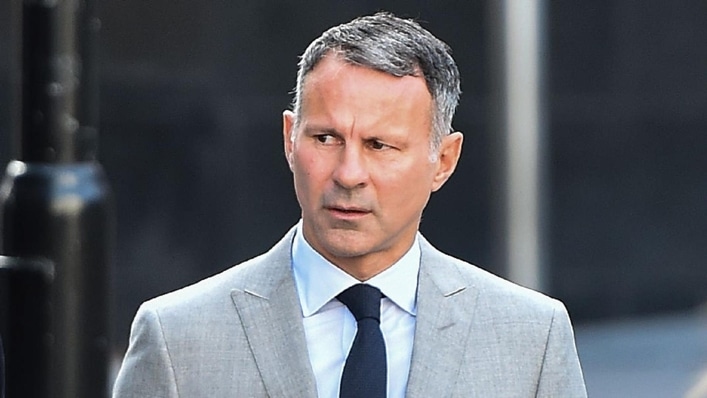
    The retrial of former Manchester United winger and Wales manager Ryan Giggs on domestic violence charges, scheduled for later this month, has been abandoned as the prosecution withdrew.

    Ryan Giggs, 49, was set to face trial for a second time on July 31, accused of controlling or coercive behavior towards his ex-girlfriend Kate Greville between August 2017 and November 2020.

    Additionally, Giggs faced accusations of assault for allegedly headbutting Greville and common assault for elbowing her sister Emma in the jaw during an argument at his home in Worsley, Greater Manchester, on November 1, 2020.

    Giggs denied the charges and went through a month-long trial, which concluded in August of the previous year with the jury failing to reach a verdict.

    Following that, the prosecutors applied for a retrial, which was granted, and was scheduled to begin on July 31. The complainants had expressed their willingness to testify at the second trial.

    However, on Tuesday, prosecutor Peter Wright KC informed Manchester Crown Court that the Crown Prosecution Service (CPS) had decided not to proceed with the case.

    During Giggs’ time at Old Trafford, Manchester United won 13 Premier League titles, two Champions League trophies, four FA Cups and three League Cups.

    Giggs stood down as Wales boss following a period of leave since November 2020.

    He won 64 caps for Wales and is co-owner of Sky Bet League Two side Salford.

  • Parents urged to take sexually abused children to hospital first

    Parents urged to take sexually abused children to hospital first

    Sexually abused children need immediate medical attention before reporting the case to the police, parents have been told.

    This will help the victims to receive physical and mental care, as well as medication that can prevent HIV and other infections.

    Harriet Odoley Klufio, a Child Protection Specialist at the Korle Bu Teaching Hospital, said if the abuse was reported within 72 hours, anti-retroviral drugs could be given to stop HIV infection.

    She warned parents not to delay or try to settle the case at home with the perpetrators.

    “You should not dilly-dally trying to get money from the perpetrators to settle the case at home,” she advised.

    She said while the abuse was a criminal act that needed police intervention, taking the child-victim to the police station first could scare them.

    “So, we prefer that the victims are brought to the hospital first for us to stabilise them psychologically and physically so that they will be able to narrate the incident in a calm state of mind.”

    She said the Child Protection Unit of the hospital was child-friendly and had trained staff who could get the necessary information from the victims.

    She said the police could visit the victims at the clinic, home or crime scene after they had been discharged.

    Trauma and damage

    Mrs Klufio, who is also the first Ghanaian Forensic Nurse, described child sexual abuse as a very bad act that caused trauma and damage to the victims.

    She said some of them had to undergo several surgeries to repair the opening between the vagina and the rectum caused by the abuse.

    She advised parents to educate their children to run away from sexual predators and not to believe their threats.

    She said the hospital recorded an average of 40 cases of child abuse every year, with 80 per cent being sexual abuse.

    The rest were physical abuse and neglect.

    Abandonment of newborns

    She also disclosed that abandonment of newborn babies was rising in the hospital due to economic hardships.

    She said some women, especially adolescents, delivered their babies and left them at the hospital, claiming they had no money or support.

    “They do it all the time. It is not everybody that will have an abortion. They may not even have money for safe abortion so they carry the pregnancy to term, come and deliver, abandon the baby and go back home to say they lost the child.”

    She said the National Health Insurance Scheme did not cover everything after delivery and some mothers could not afford diapers and other essentials for their babies.

  • Tina Turner who inspired domestic violence survivors never let abuse define her

    Tina Turner who inspired domestic violence survivors never let abuse define her

    In a 1993 interview with Vanity Fair, Tina Turner was asked about what she had stood up for, to which she responded succinctly, “I stood up for my life.”

    As a rock and feminist icon, Turner’s candidness about the violence she endured from her ex-husband and musical partner, Ike, was revolutionary. By openly addressing the issue, she became one of the first prominent figures to shed light on domestic abuse, giving a voice to countless others facing similar situations.

    Her bravery initiated a transformative shift in the discourse surrounding domestic violence and the treatment of survivors. Importantly, Turner refused to let her experiences define her.

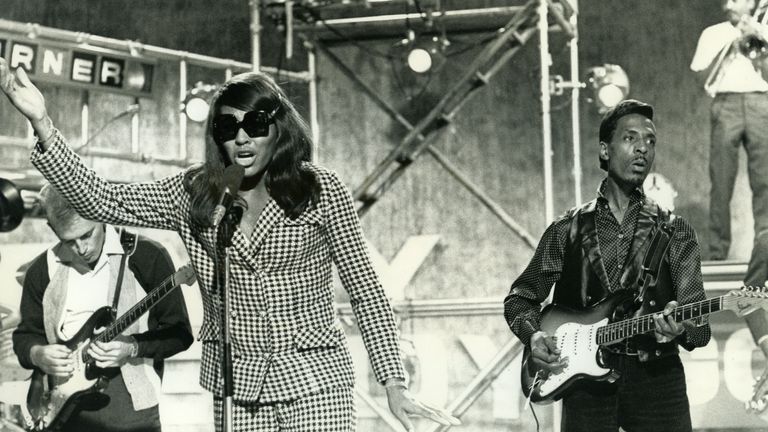
    Tina Turner and Ike Turner on Ready,Steady,Go in 1966.
    Image:Tina Turner on stage with Ike Turner in 1966

    After first revealing the abuse to People magazine in 1981, in her memoirs and when asked subsequently in interviews, she spoke of the “torture” of her 16-year marriage; about the broken bones and the humiliation, the beatings before she would have to dazzle audiences alongside him on stage.

    “I was living a life of death,” she said in the 2021 documentary about her life. “I didn’t exist. But I survived it. And when I walked out, I walked. And I didn’t look back.”

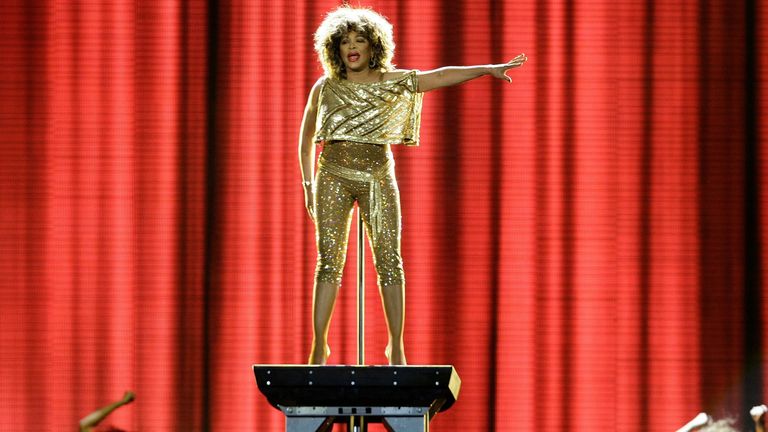
    Tina Turner performs at the O2 Arena in London March 3, 2009

    Turner was already a star. But after her marriage, she would later become an icon: the Queen of Rock’n’Roll.

    “When a survivor who is in an abusive relationship hears a woman like Tina Turner talk about her experiences, talk about her survival journey, and then can see the success and recovery that she’s achieved – it really does give survivors and those experiencing domestic abuse the courage and the hope to reach out and seek help,” Women’s Aid chief executive Farah Nazeer told Sky News.

    “[Turner shows] it is possible to move away from these harmful relationships, which can feel all-encompassing, which can feel like imprisonment. It’s incredibly powerful to have a woman like Tina Turner, an iconic woman, a celebrity, speak out in this way.”

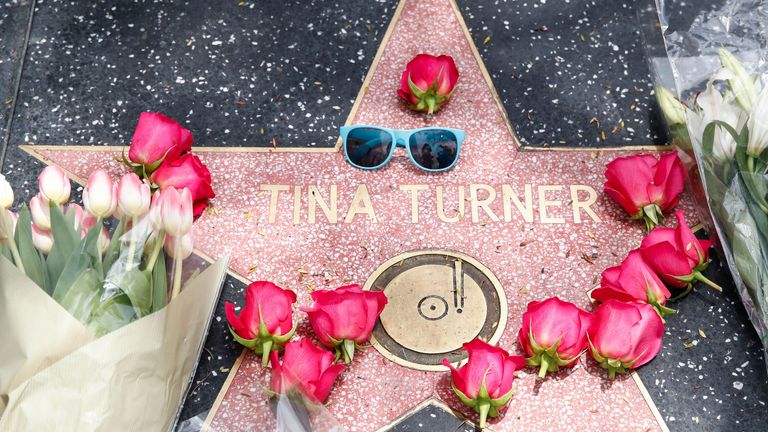
    Flowers lie across US singer Tina Turner's Hollywood Walk of Fame Star in Los Angeles.

    When Turner first revealed the abuse she had endured, it was “revolutionary”, Ms Nazeer says. “It provided a voice to those women who felt that they could not talk about it; it wasn’t something that was societally acceptable to talk about.

    “It began that transformation where we now do talk about these issues, and we now do accept more and more that domestic abuse is the crime of the perpetrator and survivors shouldn’t feel guilt, they shouldn’t feel shame. But that was very much the culture in those days.”

    Boney M singer Liz Mitchell, who was friends with Turner, praised the star’s courage in overcoming the struggles she faced in life. “Today, her whole image is a testimony for many women to realise that things can go wrong in your life, but if you can find a way out of it, take the way, and move on like she did. She just stayed strong.”

    Source: SkyNews

  • Sociologist calls for support for ‘under resourced’ DOVVSU

    Sociologist calls for support for ‘under resourced’ DOVVSU

    A Sociologist at the University of Ghana, Dr Mark Kwaku Mensah Obeng, has called on the government to support the Domestic Violence Victim Support Unit (DOVVSU) of the Ghana Police Service with the needed resources and infrastructure to beef up their workout put. 

    His position comes on the back of reported cases of jilted murder in the last month and the DOVVSU’s seeming inability to clamp them down. 

    In an interview with GhanaWeb, the Sociologist mentioned that often times the facilities of the DOVVSU are not welcoming to abuse victims. 

    “I think our DOVVSU really needs support. In fact, in some of the places, when you go there, even the desk that is supposed to be given to the woman who has been traumatized is not welcoming,” he said. 

    Dr Mensah Obeng stressed that abuse victims must be met with welcoming environments. 

    “Somebody is running from murder, somebody has been threatened, the first thing you want to assure that person is that, there is a shelter for somebody. I don’t mean the physical shelter but at least the officer should be welcoming, he added. 

    Although the Ghana Police Service organises trainings for their personnel, Dr Mensah Obeng, said sometimes the personnel do not put the training to use. 

    “And I know the police service has been running a series of trainings for their officers but sometimes you see the difference between the training and what actually happens on the ground. I think we need to double our game,” he stated. 

  • Let us eliminate violence against women and girls together – ActionAid

    Let us eliminate violence against women and girls together – ActionAid

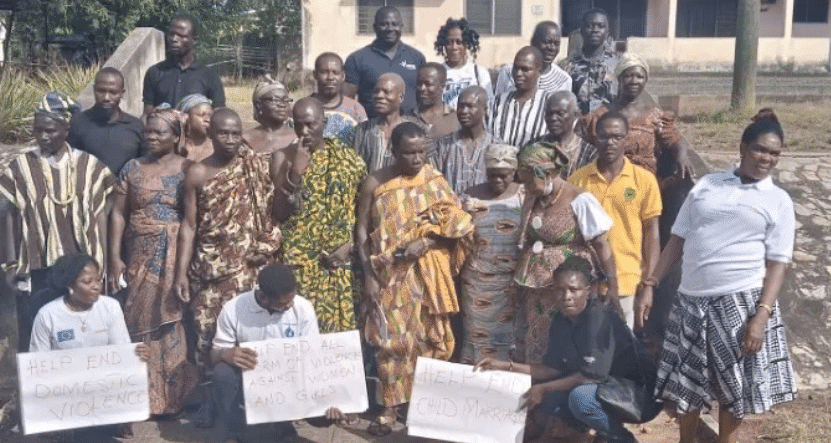
    ActionAid Ghana has appealed to the Chiefs, Queenmothers, religious leaders, youth, and assembly members to help eliminate all forms of violence against women and girls for the rapid development of the country. 

    Women and girls are the most vulnerable in society as they are exposed to all forms of violence including, but not limited to, domestic violence, child marriage, forced marriage, sexual violence, and harassment. 

    Madam Agnes Afua Obour, Co-ordinator, Network of Communities in Development (NOCID), a Kadjebi-based non-governmental organisation, said this on behalf of ActionAid Ghana at a day’s workshop organised by ActionAid Ghana in partnership with NOCID for Chiefs, Queenmothers, religious leaders, youth, and Assembly members at Kadjebi in the Oti Region. 

    The activity aimed at educating the participants on Laws, Acts and Conventions against the act to help curb the menace. 

    Madam Obour said any act of gender-based violence that results in, or is likely to results in physical, sexual or psychological harm or suffering to her, including threats of such acts, coercion or arbitrary deprivation of their liberty whether occurring in private or public should be condemned. 

    She said instead, there was the need to encourage them to express their feelings when they were in difficult, scary and confusing situations as a show of love and affection. 

    Mr. Eric Arthur Fynn, Kadjebi District Director of Commission on Human Rights and Administrative Justice (CHRAJ), said the 1992 Constitution, Criminal Offences Act, 1960 (Act 29), Juvenile Justice Act, 2006, Children’s Act, 1998 (Act 560), among others prohibited child marriages. 

    He said in line with Section 15 of the Children’s Act, 1998 (Act 560), “any person who contravenes a provision of this Sub-Part commits an offence and is liable on summary conviction to a fine not exceeding [GH₵500:00] or to a term of imprisonment not exceeding one year or to both”. 

    Mr. Fynn, named poverty, tradition and culture, lack of awareness, gender discrimination, among others as some of the causes of child marriages in Ghana. 

    He said the act violates the fundamental human rights of the girl-child, so must stop. 

    The CHRAJ District Director, who also presented a paper on Laws governing Inheritance in Ghana, said both Wills Act, 1971 (Act 360) and the Intestate Succession Law, 1985 (PNDCL 111) contained provisions that are fixated on ensuring that the rights of children to proprietary and financial claims are salvaged if they lost a parent. 

    He advised the participants, especially the traditional rulers, to follow the provisions in the Act and the Law in distribution of deceased property, whether dead estate or intestate.  

    Daasebre Oduro Guranim, Paramount Chief of Dodo Traditional Area, in contributing, called for stiffer punishment against perpetrators of violence against women and girls to serve as deterrent to others. 

    He also called for the amendment to the Children’s Act, 1998 (Act 560) as penalty for contravention therein is not deterrent enough now. 

  • Orlando Brown arrested for domestic violence in Ohio

    Orlando Brown has had another run-in with the law.

    According to an online booking record obtained by Complex, the 35-year-old actor was arrested in Ohio for domestic violence. More specifically, the record says he was charged with “domestic violence – cause belief of imminent physical harm by threat of force” on Thursday morning.

    TMZ reports that a Lima Police Department spokesperson said they received a call about a physical altercation on Thursday and ended up apprehending Brown for the misdemeanor crime. At first, it wasn’t known who called the cops on Brown, but it was said that he had a confrontation with someone in his family or who was staying in the home. 

    The outlet later found out that Brown’s brother Matthew claimed that Brown is homeless and didn’t want him to stay in a shelter. So, instead, Matthew let Brown stay in a home that was being fixed up, and at this point, has been in Lima, Ohio for over a month.

    However, on Thursday, Brown apparently started verbally attacking Matthew by accusing him of raping his wife—and then Brown physically attacked Matthew by threatening him with a broken-off knife blade and hammer, behavior Matthew said was “crazy.” Matthew said Brown didn’t actually physically hurt him and put them down at some point.

    Brown has had several prior bouts with the law and has attended rehab. In 2018, he was arrested for narcotics possession and purported burglary.

    Source: Complex

  • Former NBA player Eric Bledsoe arrested for domestic violence after allegedly slapping girlfriend

    Former NBA point player Eric Bledsoe was arrested for domestic violence earlier this week, TMZ Sports reports.

    Bledsoe was arrested on Wednesday after officers responded to a call claiming that he had struck his girlfriend. When authorities arrived at his Lost Hills, California residence, Bledsoe was booked for misdemeanor domestic violence. The 32-year-old former NBA player was taken to the Lost Hills Sheriff’s station, but has since been released.

    His girlfriend, who has not been named, reportedly shared a since-deleted post on Instagram that showed a red mark across her face. “NO RELATIONSHIP LIKE THIS IS EVER WORTH STAYING IN,” the post read, per TMZ. “Domestic violence is real! This wasn’t the first time but I sat here and stayed so it’s my fault!! … ERIC BLEDSOE really is a monster.”

    Bledsoe most recently played for the Los Angeles Clippers, where he also began his NBA career in 2010.

    Source: Complex.com

  • Gender Ministry calls for resources for Domestic Violence Fund

    Minster Designate, Gender, Children and Social Protection, Mrs Zuweira Lariba Abudu, has called on the general public to support the Domestic Violence Fund.

    She said that would enable it provide support in all forms to victims and survivors of domestic violence.

    Mrs Abudu made the call at the official launch of Gender Rights and Empowerment Programme (GREP) organised by the STAR- Ghana Foundation.

    The programme is intended to increase the effectiveness of civil society advocacy for women and girls’ political and social rights, particularly rights to inclusive and quality social services and participation in public governance at the national and sub-national levels.

    It will cover six regions, including the three regions in northern Ghana, Central, Eastern and Volta regions.

    Participants at the launch included representatives from the Gender Ministry, UK Foreign Commonwealth and Development Office (FCDO), Parliament, Ghana Education Service, Ghana Health Service, Commission on Human Rights and Administrative Justice, (CHRAJ), and Civil Society partners.

    Mrs Abudu said: “Some victims and survivors come to the Support Centre in just their panties, and we have to get them what to wear before listening to their issues.”

    Some persistent cultural beliefs, and social norms, the Minister Designate noted, contributed to intimate partner violence whiles preventing women and girls from reporting violence and abuse against them.

    Mrs Abudu appealed for access to justice for victims and survivors to be intensified to enhance confidence in Ghana’s judicial system and said governments over the years had embarked on programmes to address peculiar challenges that women and girls faced in exploiting their full potentials.

    They include free maternal healthcare under the National Health Insurance, School Feeding, Capitation Grants and Livelihood Empowerment Against Poverty, targeting poor communities.

    Alhaji Ibrahim Tanko Amindu, Executive Director, STAR- Ghana Foundation, said the Foundation was focused on increasing the effectiveness of Civil Society’s influence for inclusive development, and access to public services for citizens, particularly women and girls.

    He noted that complex issues such as cultural practices and religious beliefs, and systemic challenges at the state level prevented the realisation of gender rights in the country.

    Alhaji Amidu called for increased advocacy and awareness creation on the rights of women and girls, and the need for them to be empowered to achieve a more inclusive society.

    Mrs Enyonam Azumah, Team Leader, Human Development, UK FCDO, said globally, Civil Society backing had been significant for influencing changes in law and approaches.

    Hence, she said, FCDO was providing £580,000 through STAR-Ghana to 18 Civil Society Organisations to champion the rights and empowerment of women and girls in Ghana through the GREP.

    The project, the Team Leader said, was consistent with the second priority of UK’s International Development Strategy to provide women and girls the freedom they needed to succeed by educating, empowering and ending violence against them.

    Source: GNA 

  • Boy, 8, whipped with naked wire by uncle over house chore

    An eight-year-old is nursing severe wounds after he was whipped by the uncle with a naked wire.

    His uncle whipped him with the naked wire which caused him to bleed profusely.

    According to what this website has gathered, the boy was asked by the grandmother to pound her palm so she could sell in the market.

    However, the boy complained of being tired.

    This did not go down well with her grandmother who reported him to the uncle.

    For his punishment, he was reportedly tired to an orange tree and whipped with the naked wire tired to a rope.

    After several lashes which left him with severe wounds, the auntie applied pepper to the wounds.

    The incident occurred at Techimentia in the Ahafo region.

    His teacher, Mr. Odenkyi shared the ordeal of the boy on social media.

    This has left several persons astonished wondering why the uncle assaulted the nephew in that manner.

    Speaking on Nyankonton Mu Nsem, the teacher said the boy was also starved on the day of the incident and locked up.

    He indicated that he had to go to the house because the boy was not reporting to school.

    He added the issue was reporter and the auntie was arrested and granted bail.

    The uncle is currently on the run.

    Source: rainbowradioonline.com

  • Lady receives severe beating for asking boyfriend to marry her

    29-year-old Mary Ama Nyorkey received the beating of her life when she asked her boyfriend to officially seek for her hand in marriage.

    Before the incident, her boyfriend, Delali Kwasi Atakpa, is said to have asked Mary to move in with him but she refused, adding that they needed to perform the necessary customary rites first.

    This infuriated Delali, and as a result, he inflicted severe wounds on his fiance. He, there after took to his heels to avoid police arrest

    The two are said to be residents of Adieso Amankrom in the Upper West Akim District of the Eastern Region of Ghana.

    Meanwhile, according to sources, Mary has been discharged from the hospital.

    She has since lodged a complaint with the police in the area who have mounted a search for the suspect.

    Source: My News GH

  • Man has penis bitten in roadside attack

    The penis of a man has been bitten in a roadside attack at Oyoko in the New Juaben North Municipality of the Eastern region.

    The victim, Eric Kwadwo, has suffered deep cuts on his penis.

    Starr News has gathered on April 6, 2020, the victim- Eric Kwadwo, was returning from town and met an 11-year-old son of the suspect at the roadside peeling sugar cane.

    The boy pleaded the victim to assist him in peeling his sugar cane but suddenly the suspect-Atta Kwaku appeared at the scene furious and angrily queried the victim why he was standing with his son around 8:00pm.

    According to the victim, to avoid an altercation, he decided to walk away from the scene but the suspect followed him casting aspersions, then violently pushed him to the ground which he fell facedown resulting in injuries below the nostrils, on the face and on the right hand.

    Suspect not satisfied pounced on him grabbed and bit his penis resulting in a deep cut.

    The Public Relations Officer of the Eastern Regional Police Command, DSP Ebenezer Tetteh confirmed the incident to Starr News. He said the incident was reported on April 8, 2020, and medical forms issued to the victim.

    He added that the suspect has since gone into hiding but Police has however launched a manhunt for his arrest to assist in the investigation.


    Source: starrfm.com.gh