Tag: Donald Trump

  • Coronavirus: US to halt funding to WHO – Trump

    US President Donald Trump has said he has instructed his administration to halt funding to the World Health Organization (WHO).

    He said the WHO had “failed in its basic duty” in its response to the coronavirus outbreak.

    He accused the UN body of mismanaging and covering up the spread of the virus after it emerged in China, and said it must be held accountable.

    Mr Trump has previously accused the WHO of being biased towards China.

    The US president has himself come under criticism at home over his handling of the outbreak.

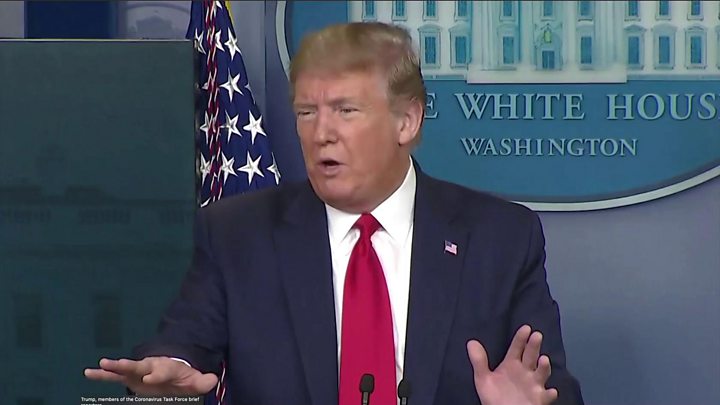
    “I am directing my administration to halt funding while a review is conducted to assess the World Health Organization’s role in severely mismanaging and covering up the spread of the coronavirus,” Mr Trump told a news conference at the White House.

    “The WHO failed in its basic duty and it must be held accountable,” he added.

    America is the WHO’s biggest single funder, providing $400m (£316m) last year – just under 15% of its total budget.

    “With the outbreak of the Covid-19 pandemic, we have deep concerns whether America’s generosity has been put to the best use possible,” the president said.

    The US is the worst-affected country in the coronavirus pandemic with 592,743 cases and 25,239 deaths.

    President Trump accused the WHO of having failed to adequately assess the outbreak when it first emerged in the city of Wuhan.

    “Had the WHO done its job to get medical experts into China to objectively assess the situation on the ground and to call out China’s lack of transparency, the outbreak could have been contained at its source with very little death,” he told reporters.

    “This would have saved thousands of lives and avoided worldwide economic damage. Instead, the WHO willingly took China’s assurances to face value… and defended the actions of the Chinese government.”

    Correspondents have pointed out, however, that Mr Trump himself praised China’s response to the outbreak and downplayed the danger of the virus at home.

    What about the lockdowns?

    Speaking in the Rose Garden at the White House, President Trump also said that plans to reopen the country were “close to being finalised”.

    “I will be speaking to all 50 governors very shortly and I will be authorising each individual governor of each individual state to implement a plan,” he said.

    “The federal government will be watching them closely. We will hold governors accountable, but will be working with them to make sure it goes really well.”

    Mr Trump caused a furore on Monday when he said that he, and not state governors, had the authority to lift lockdowns and restart the economy.

    Experts agree it is the governors who are responsible for policing their states under US law.

    Earlier on Tuesday, New York Governor Andrew Cuomo accused President Trump of “spoiling for a fight”.

    New York state has the most cases, with almost 190,000 cases and over 10,000 deaths. However, there are signs of improvement with the number of people there needing hospital treatment falling for the first time.

    Source: bbc.com

  • Wisconsin Democrat Jill Karofsky in Supreme Court election upset

    Democrat Jill Karofsky has ousted Justice Daniel Kelly from his seat at Wisconsin’s top court in a shock win.

    The election went ahead despite Democrat calls for it to be postponed, or held by postal voting, owing to coronavirus fears.

    Justice Kelly is the second incumbent state Supreme Court justice to be ousted by voters since 1967. He had the support of President Donald Trump.

    Wisconsin is expected to be crucial in the presidential election in November.

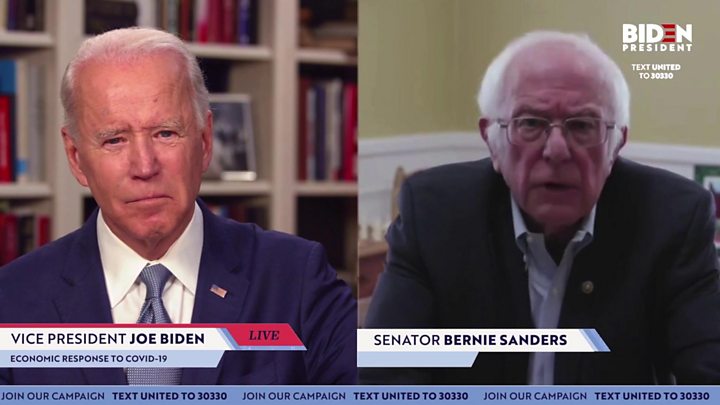
    Former Vice-President Joe Biden looks set to become the Democratic Party challenger to President Trump after his main rival Bernie Sanders dropped out and backed him.

    Media captionBernie Sanders endorses Joe Biden for US president

    The US is now the country worst hit by the coronavirus pandemic with 554,684 confirmed cases and 23,608 deaths.

    Wisconsin has recorded more than 3,400 coronavirus cases and 154 deaths.

    The Wisconsin Supreme Court vote – and the Democratic Party primary election – went ahead last week, after the same court blocked the governor’s effort to postpone it to June.

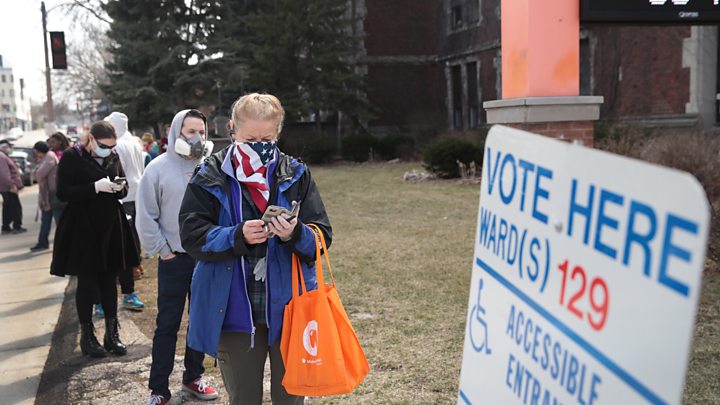
    Voters braved long queues at a limited number of polling stations where some staff wore hazmat suits.

    Judges had ordered a delay in the publication of results to make sure absentee votes had arrived and been included in the count.

    “Despite the result, the fact that this in-person election took place was a searing loss for Wisconsin,” said Ben Wikler, the chairman of the Wisconsin Democratic Party. “Wisconsin voters will not forget this travesty.”

    Media captionWisconsin continues in-person voting

    Wisconsin was the first state in a month to hold a primary with in-person voting since stay-at-home orders swept the US due to the pandemic. The Badger state imposed its own lockdown on 25 March.

    All other states have postponed their primary season elections or moved entirely to postal votes while the country remains in the throes of its health emergency.

    Dane County Judge Jill Karofsky’s win for the 10-year term reduces the conservative majority in the top court to 4-3.

    The court is expected to decide a case that seeks to purge more than 200,000 people from Wisconsin’s voter rolls.

    The issue is sensitive in a state where presidential elections have been decided by fewer than 30,000 votes. Mr Trump won Wisconsin in 2016.

    Media captionWATCH: Reporter challenges President Trump at briefing

    Source: bbc.com 

  • Coronavirus: Trump claims ‘total’ authority to lift lockdown

    President Donald Trump has claimed “total” power to lift the nationwide coronavirus lockdown, contradicting governors and legal experts.

    “The president of the United States calls the shots,” Mr Trump said during a combative press conference in which he feuded with reporters.

    But the US Constitution says the states maintain public order and safety.

    Ten states on the US East and West coasts are planning to lift their strict stay-at-home orders.

    The US is the global epicentre of the coronavirus pandemic with 682,619 confirmed cases and 23,608 deaths.

    What did President Trump say?

    Mr Trump, a Republican, told the daily White House coronavirus briefing on Monday that his administration was finalising a plan to reopen the US economy, which has been largely shut down to slow the spread of the coronavirus.

    The Trump administration has signalled 1 May as a potential date for easing the restrictions.

    The current White House recommendations for Americans to avoid restaurants and non-essential travel and keep in-person gatherings to no more than 10 people expire on 30 April.

    But when journalists queried whether Mr Trump had the authority to over-ride stay-at-home orders imposed on a state-by-state basis, he said: “When somebody is the president of the United States, the authority is total.

    “It’s total. The governors know that.”

    He added: “That being said, we’re going to work with the states.”

    The president insisted “numerous provisions” in the US founding charter give him such power, without specifying which ones.

    But legal experts say the president does not have the authority to reverse a public health restriction put in place at the state or local level.

    Asked by the BBC’s Jon Sopel if he was concerned about the possibility of having to close the economy again if a second wave of coronavirus strikes, Mr Trump said: “It does weigh on my mind.”

    He told reporters the number of deaths from the virus in the US had begun to plateau, indicating that social distancing efforts had succeeded.

    During the briefing, the White House played a video montage lambasting the media coverage, touting the president’s handling of the pandemic and clips of governors praising the Trump administration.

    Several news outlets, which have been broadcasting the daily briefings live, quickly cut away.

    Source: bbc.com

  • Trump defends handling of coronavirus outbreak in US

    U.S. President Donald Trump lashed out Monday at weeks of criticism over his handling of the Novel Coronavirus outbreak in the country.

    Speaking at a White House coronavirus task force briefing, Trump said the Centers for Disease Control and Prevention (CDC) issued a travel notice on Jan. 6 for Wuhan, the Chinese city where the virus originated last December, due to its spread.

    He recalled that the CDC also issued a Level I travel health notice on Jan. 11 and there was not a single confirmed case then.

    “People wanted me to act. I am supposed to close down the greatest economy?” he said.

    Trump said that on Jan. 17, the CDC began implementing public health entry screenings at three major airports that received a great volume of passengers from Wuhan at his instruction.

    “You remember what happened, when I did act. I was criticized by [House Speaker] Nancy Pelosi, Sleepy Joe. In fact, I was called xenophobic,” he said, referring to presidential candidate Joe Biden.

    The first case of COVID-19 in the U.S. was reported on Jan. 21 and the CDC activated an operation center in response to the outbreak. The first death occurred on Feb. 29 in Washington state.

    “On Jan. 31, I issued a travel restriction on China. Nobody died and I issued. You cannot get earlier than that,” he said. “I got brutalized over it by the press because I was way too early.”

    On March 11, Trump announced a ban on travelers to the U.S. from Europe during a televised address to the nation as part of measures to stem the spread of the virus.

    Trump has long been criticized by Democrats and several media outlets for his “poor” handling of the outbreak, with some citizens claiming the president has the blood of the people who died from the virus on his hands.

    “Everything we did was right,” he added.

    As of Monday evening, more than 23,600 people in the U.S. have died from the novel coronavirus and more than 581,000 have been infected, according to data from Johns Hopkins University.

    The U.S. is the country with the highest number of cases and deaths worldwide.

    The virus has spread to 185 countries, infecting nearly 2 million people since first emerging in Wuhan, China late last year. The global death toll is nearly 120,000, while about 450,000 people have recovered.

    Source: www.aa.com.tr

  • Sweden challenges Trump — and scientific mainstream — by refusing to lock down

    Much of Europe is still on coronavirus lockdown, with severe restrictions on movement and penalties for those who transgress.

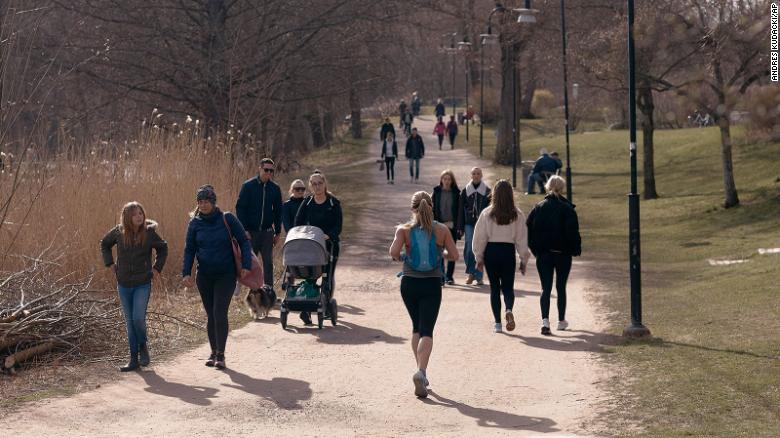
    But not Sweden. Restaurants and bars are open in the Nordic country, playgrounds and schools too, and the government is relying on voluntary action to stem the spread of Covid-19.
    It’s a controversial approach, and one that’s drawn US President Donald Trump’s attention. “Sweden did that, the herd, they call it the herd. Sweden’s suffering very, very badly,” Trump said on Tuesday.
    But the Swedish government is confident its policy can work. Foreign Minister Ann Linde told Swedish TV on Wednesday that Trump was “factually wrong” to suggest that Sweden was following the “herd immunity” theory — of letting enough people catch the virus while protecting the vulnerable, meaning a country’s population builds up immunity against the disease.
    Sweden’s strategy, she said, was: “No lockdown and we rely very much on people taking responsibility themselves.”
    The country’s state epidemiologist, Anders Tegnell, also pushed back against Trump’s criticism that Sweden was doing badly. “I think Sweden is doing okay,” he told CNN affiliate Expressen. “It’s producing quality results the same way it’s always done. So far Swedish health care is handling this pandemic in a fantastic way.”
    As of April 9, Sweden has 9,141 cases of the Covid-19 virus and 793 deaths, according to Johns Hopkins University figures.
    Swedish authorities have allowed a large amount of personal freedom unlike other European countries.
    Swedish authorities have allowed a large amount of personal freedom unlike other European countries.
    Sweden’s actions are about encouraging and recommending, not compulsion. Two days after Spain imposed a nationwide lockdown on March 14, Swedish authorities were encouraging people to wash hands and stay at home if sick. On March 24, new rules were introduced to avoid crowding at restaurants. But they very much stayed open.
    So did many primary and secondary schools. Gatherings of up to 50 people are still permitted.
    Tegnell defended the decision to keep schools open. “We know that closing down schools has a lot of effects on health care because a lot of people can’t go to their work anymore. A lot of children are suffering when they can’t go to school.”
    Elisabeth Liden, a journalist in Stockholm, told CNN the city is less crowded now. “The subway went from being completely packed to having only a few passengers per car. I get the sense that a vast majority are taking the recommendations of social distancing seriously.”
    But she added that while “some Swedes won´t even kiss their spouse, others are throwing Easter parties.”

    Fresh surge

    Much of Sweden’s focus has been to protect the elderly. Anyone aged 70 or older has been told to stay at home and limit their social contact as much as possible. One Swedish government official said that on the whole people supported the government’s approach, but many were “upset about the fact that no ban on visiting homes for elderly was set until recently [April 1], and now the virus is widely spread among these homes, causing the death toll to rise.”
    The World Health Organization (WHO) is skeptical of Sweden’s approach. Noting a fresh surge in the country’s infections, the WHO told CNN Wednesday that it’s “imperative” that Sweden “increase measures to control spread of the virus, prepare and increase capacity of the health system to cope, ensure physical distancing and communicate the why and how of all measures to the population.”
    Swedish restaurants have very much remained open.
    Swedish restaurants have very much remained open.
    “Only an ‘all of society’ approach will work to prevent escalation and turn this situation around,” said a WHO Europe spokesperson.
    Sweden’s “curve” — the rate of infections and deaths caused by coronavirus — is certainly steeper than that of many other European countries with stricter measures. A study by Imperial College London estimated that 3.1% of the Swedish population was infected (as of March 28) — compared to 0.41% in Norway and 2.5% in the UK.
    As for deaths, by April 8, coronavirus accounted for 67 fatalities per 1 million Swedish citizens, according to the Swedish Health Ministry. Norway had 19 deaths per million, Finland seven per million. The number of deaths rose 16% on Wednesday.
    Some Swedish researchers are demanding the government must be stricter. This week several prominent Swedish clinicians wrote an open letter lamenting that large numbers of people are visiting bars, restaurants and shopping malls, even ski slopes. “This unfortunately is translating into a death toll that continues to climb in Sweden.”
    Cecilia Söderberg-Nauclér — a virus immunology researcher at Sweden’s Karolinska Institute — is one of more than 2,000 health professionals and researchers who signed a petition demanding tougher action. She told CNN: “We are not winning this battle. It is horrifying.
    “Where I live people are working from home, but they go to local restaurants, local cafés and they mix up old people and young people from schools and universities. That is not social distancing.”
    Söderberg-Nauclér says the situation in Stockholm, where the great majority of the country’s infections have occurred, is “lost,” but adds: “It is not too late for rest of the country. I wish we would lock down and take control of regions not affected in same way.”

    Weather the storm

    Tom Britton, professor of mathematical statistics at Stockholm University, models how infectious diseases behave in a population. He believes 40% of the Swedish capital’s population will be infected by the end of April. While acknowledging the difficulty of measuring the rate of infection, he told CNN that “my best guess today would be 10% or a bit more” of Swedes currently have the virus nationwide.
    Some opponents of the government’s policy fear that reliance on voluntary behavior will cause a much faster spike in cases, potentially overwhelming the health care system. Sweden also has one of the lowest ratios of critical care beds per capita in Europe, and the government official who spoke with CNN said that supplies of protective equipment are only just staying ahead of demand.
    In some ways, however, Sweden is better prepared to weather the storm than other countries. Some 40% of the country’s workforce worked from home regularly, even before the virus struck and Sweden has a high ratio of people living on their own, whereas in southern Europe it’s not uncommon to have three generations under one roof.
    Emma Grossmith, a British employment lawyer working in Stockholm, says another factor in Sweden’s favor is a generous social welfare net that means people don’t feel obligated to turn up for work if their young child is sick. State support kicks in on day one of absence from work due to a child being sick. “The system here was already well set up to help people to make smarter choices which ultimately benefit the wider population,” she told CNN.
    But Grossmith notes a big gap between the way Swedes and expatriates view the virus. “There is a native trust in the system amongst those who have grown up with it. In contrast, many of the expat community feel that the strategy has neither been communicated clearly nor robustly challenged in the Swedish press. They are deeply worried.”
    The next month will determine whether the Swedish system got it right.
    Source: CNN

  • Trump administration to keep critical medical supplies in U.S – Pompeo

    U.S. Secretary of State Mike Pompeo on Tuesday announced an additional $225 million in U.S. aid for global efforts to fight the coronavirus pandemic but said the Trump administration will keep critical medical supplies in the United States given the domestic need.

    “Right now, given the great need for PPE (personal protection equipment) in our own country, our focus will be on keeping critical medical items in the United States until demand is met here,” Pompeo told a State Department news conference.

    At the same time, he announced that the United States will disperse $225 million in new assistance to global efforts to contain the coronavirus pandemic on top of $274 million already provided to 64 countries.

    The new funding “will be used to reduce transmission” of the highly contagious novel coronavirus “through virus diagnosis, prevention, and control, to bolster health systems, to prepare labs to train healthcare workers, to increase awareness and much, much more,” Pompeo said.

    “No country can match this level of generosity,” he said.

    Source: reuters.com

  • Hydroxychloroquine: Can India help Trump with unproven ‘corona drug’?

    India is reportedly “considering” a request by Donald Trump to release stocks of a drug the US president has called a “game-changer” in the fight against Covid-19.

    Mr Trump called India’s Prime Minister Narendra Modi on Sunday, a day after the country banned the export of hydroxychloroquine, which it manufactures in large quantities.

    The two leaders are on friendly terms, and Mr Trump recently made a high-profile trip to India.

    But is India really in a position to help the US? And does hydroxychloroquine even work against the coronavirus?

    What is hydroxychloroquine? Hydroxychloroquine is very similar to Chloroquine, one of the oldest and best-known anti-malarial drugs.

    But the drug – which can also treat auto-immune diseases like rheumatoid arthritis and lupus – has also attracted attention over the past few decades as a potential antiviral agent.

    President Trump said that the US Food and Drug Administration (FDA) had approved it for treating coronavirus, something the organization has denied. Mr Trump later said that it had been approved for “compassionate use” – which means a doctor can give a drug that is yet to be cleared by the government to a patient in a life-threatening condition.

    Doctors are able to prescribe chloroquine in these circumstances as it’s a registered drug.

    So, can India really help President Trump? Hydroxychloroquine could be bought over the counter and is fairly inexpensive. However, its purchase and use has been severely restricted ever since it was named as a possible treatment for Covid-19.

    On Saturday, India banned the export of the drug “without any exception”. The order came even as the number of positive cases of Covid-19 spiked in the country. India has now recorded 3,666 active cases of the virus with more than 100 deaths, according to the latest data released by the ministry of health.

    But now it seems the government could be reconsidering this stance, possibly following Mr Trump’s call to Mr Modi. Local media quoted government sources as saying that a decision on this could be taken as early as Tuesday after considering what domestic requirements could look like in the near future.

    But does India – one of the world’s largest manufacturers of the drug – have the capacity to actually supply other countries as well?

    Yes, according to Ashok Kumar Madan, of the Indian Drug Manufacturer’s association.

    “India definitely has capacity to cater to both global and local markets. Of course, domestic considerations must come first, but we have the capacity,” he told the BBC.

    Mr Madan also denied reports that China had severely limited the export of the active pharmaceutical ingredient (API) that is used to manufacture hydroxychloroquine. He acknowledged that 70% of all the APIs needed by India to manufacture drugs come from China, but said that supplies from China had steadily continued “by both sea and air”.

    But does it work? Many virologists and infectious disease experts have cautioned that the excitement over hydroxychloroquine is premature.

    “Chloroquine seems to block the coronavirus in lab studies. There’s some anecdotal evidence from doctors saying it has appeared to help,” James Gallagher, BBC health correspondent, explained.

    But crucially there have been no complete clinical trials which are important to show how the drug behaves in actual patients, although they are under way in China, the US, UK and Spain.

    Even so, some are sceptical about how successful they will prove to be.

    “If it truly has a dramatic effect on the clinical course of Covid-19 we would already have evidence for that. We don’t, which tells us that hydroxychloroquine, if it even works at all, will likely be shown to have modest effects at best,” Dr Joyeeta Basu, a senior consultant physician, told the BBC.

    Raman R Gangakhedkar, a senior scientist with the Indian Council of Medical Research, said the policy at the moment is that the drug is not to be used by everyone.

    “It is being given to doctors and contacts of lab confirmed cases. When their data will be complied only then a call can be taken whether it should be recommended to everyone,” he told reporters last week.

    Despite the fact trials are yet to conclude, people have begun to self-medicate – with sometimes disastrous consequences.

    There have been multiple reports in Nigeria of people being poisoned from overdoses after people were reportedly inspired by Mr Trump’s enthusiastic endorsement of the drug.

    An article in the Lancet medical journal also warns hydroxychloroquine can have dangerous side-effects if the dose is not carefully controlled.

    This lack of certainty has prompted social media sites like Facebook and Twitter to delete posts that tout it as a cure – even when they are made by world leaders.

    Source: bbc.com

  • Wall Street opens higher on coronavirus slowdown hopes

    U.S. stocks opened higher on Monday, after President Donald Trump expressed hope that the coronavirus health crisis was “leveling-off” in some of the hardest-hit U.S. states.

    The Dow Jones Industrial Average .DJI rose 641.10 points, or 3.05%, at the open to 21,693.63.

    The S&P 500 .SPX opened higher by 89.63 points, or 3.60%, at 2,578.28. The Nasdaq Composite .IXIC gained 287.09 points, or 3.89%, to 7,660.17 at the opening bell.

    Source: reuters.com

  • Coronavirus: Trump voices hope for levelling-off in US hotspots

    President Donald Trump has expressed hope coronavirus cases were “levelling off” in US hotspots, saying he saw “light at the end of the tunnel”.

    On Sunday, New York, the epicentre of the US outbreak, reported a drop in the number of new infections and deaths.

    Mr Trump described the dip as a “good sign”, but warned of more deaths as the pandemic neared its “peak” in the US.

    “In the days ahead, America will endure the peak of this pandemic,” Mr Trump said at his daily coronavirus briefing.

    He said more medical personnel and supplies, including masks and ventilators, would be sent to the states that are most in need of assistance.

    Deborah Birx, a member of the president’s coronavirus task force, said the situation in Italy and Spain, where infections and deaths have fallen in recent days, was “giving us hope on what our future could be”.

    “We’re hopeful over the next week that we’ll see a stabilisation of cases in these metropolitan areas where the outbreak began several weeks ago,” Dr Birx said at the same news conference.

    Optimism from Dr Birx and Mr Trump contrasted with other leading US experts, including top advisor Dr Anthony Fauci, who earlier said the short-term outlook was “really bad”.

    The US surgeon general, meanwhile, warned that this will be “the hardest and the saddest week of most Americans’ lives”.

    “This is going to be our Pearl Harbor moment, our 9/11 moment,” Surgeon General Jerome Adams told Fox News on Sunday.

    The US has reported 337,274 confirmed infections and 9,619 deaths from COVID-19, by far the highest tally in the world.

    Source: bbc.com

  • Coronavirus: Trump to defy ‘voluntary’ advice for Americans to wear masks

    US President Donald Trump has said he will not wear a face mask despite new medical guidance advising Americans to do so.

    He could not see himself greeting “presidents, prime ministers, dictators, kings, queens” in the Oval Office while wearing one, he said.

    He stressed that the guidance released on Friday was “voluntary”.

    “You do not have to do it,” he said. “I don’t think I’m going to be doing it.”

    The guidelines issued by the Centers for Disease Control and Prevention, the government’s public health advisory agency, came as the US reported at least 270,473 confirmed cases of Covid-19, with nearly 7,000 deaths.

    Until now, US health authorities had said that only the sick, or those caring for patients of coronavirus, should wear masks, but newer studies suggest that covering up one’s face is important to prevent inadvertent transmission.

    “From recent studies we know that the transmission from individuals without symptoms is playing a more significant role in the spread of the virus than previously understood,” Mr Trump said on Friday.

    However, he told reporters after announcing the CDC’s new guidance: “I just don’t want to do it myself.”

    “Sitting in the Oval Office… I somehow don’t see it for myself.”

    Americans are now advised to use clean cloth or fabric to cover their faces whilst in public. Officials have stressed that medical masks remain in short supply, and should be left for healthcare workers.

    The guidance comes as the number of cases globally climbs past one million.

    Source: bbc.com

  • Trump warns of ‘horrific’ weeks ahead as US virus death toll tops 5,000

    President Donald Trump gave another dire press conference warning of ‘horrific’ weeks to come as the US reported its highest one-day Coronavirus death toll of 884 people.

    “Difficult days are ahead for our nation,” US President Donald Trump told reporters at the White House on Wednesday.

    “We’re going to have a couple of weeks, starting pretty much now, but especially a few days from now, that are going to be horrific.”

    Trump had initially played down the virus’ severity, but White House medical experts now forecast that even if Americans follow unprecedented stay-at-home orders, some 100,000 to 240,000 people could die from the respiratory disease.

    The World Health Organisation said the global case count will reach 1 million and the death toll 50,000 in the next few days. It currently stands at 43,412.

    US has its highest one-day death toll

    The coronavirus has killed 884 people over the past 24 hours in the US, a new one-day record for the country with by far the highest number of reported cases anywhere in the world, Johns Hopkins University said Wednesday evening.

    That took the total death toll in America to 5,116 people.

    The number of reported cases rose by 25,200 over the past 24 hours to 216,772, said the university’s coronavirus tracker.

    The grim record for deaths in one day is held by Italy with 969 on March 27.

    Connecticut Governor Ned Lamont announced what he called a tragic milestone as the virus claimed its youngest known US victim to date, a six-week-old baby.

    “It just is a reminder that nobody is safe from this virus,” Lamont said at a field house at Southern Connecticut State University in New Haven, where more than 200 hospital beds have been set up.

    New York Governor Cuomo turns the thumbscrews

    New York Governor Andrew Cuomo on Wednesday clamped down harder on public gatherings in the face of the coronavirus, calling residents “selfish” for refusing to stay home as California’s governor warned his state may run out of intensive care beds and ventilators next month.

    New York Governor Andrew Cuomo told New York City police to more aggressively enforce rules for social distancing as deaths in the state shot up to nearly 2,000.

    “Young people must get this message, and they still have not gotten the message, you still see too many situations with too much density by young people,” said Cuomo in imposing new rules to close playgrounds, swing sets, basketball courts and similar spaces.

    The Democratic governor sounded vexed by reports of crowds gathering at a Manhattan pier to watch the arrival of the US Navy hospital ship, the Comfort.

    “How reckless and irresponsible and selfish for people not to do it on their own,” he said.

    Source: France24

  • As tragic toll from virus rises, so do questions about Trump’s leadership

    President Donald Trump’s White House appears powerless to halt an increasingly tragic trajectory in the coronavirus pandemic as the death toll climbed by nearly 1,000 on a single, dark day.

    Vice President Mike Pence warned in a CNN interview that the most comparable example for what is to come is Italy, which has endured weeks of misery as the previous epicenter of the global crisis.

    For all the formidable power of the White House, Trump and his top officials can do little more to urge Americans to stay home to ease the terrible demands being placed on medical staff in hospitals in worst-hit areas that are crammed with sick patients and running out of basic supplies. There is a feeling of a terrible storm approaching with the government predicting the worst over the next month or so.

    “It’s still heartbreaking when we think about the lives that could be lost — and so our message yesterday, our message over the next 30 days, is the future is in our hands,” Pence told CNN.

    The vice president was speaking after the administration Tuesday warned that between 100,000 and 240,000 Americans could die from the virus — even if mitigation efforts, like stay-at-home orders now affecting 9 in 10 Americans, are properly observed.
    The deepening sense of foreboding is focusing debate on whether Trump — who spent weeks downplaying the likely impact of the pandemic — had cost lives by not being more proactive.
    Democratic House Speaker Nancy Pelosi told CNN’s Jake Tapper Sunday that Trump’s “denial at the beginning was deadly,” saying that as the President “fiddles, people are dying.”
    Then there were calls Wednesday for the President to mandate a nationwide shutdown with some states still dragging their feet, even as Johns Hopkins University reported 216,515 confirmed cases in the US and 5,119 deaths as of midnight Wednesday — figures that show that nowhere in the country is likely to be immune.
    Adding to the evidence that the federal government is falling short, officials confirmed that a national stockpile of ventilators and protective medical gear, desperately needed by frontline health workers, is all but exhausted.

    Trump has moved from denying the severity of the pandemic and agitating to open the economy to a recognition of how bad things could get.

    “America continues to wage all-out war to defeat the virus — this horrible, horrible virus,” Trump said Wednesday. The President has extended nationwide self-distancing guidelines until April 30.

    But after an unusually somber appearance in the briefing room on Tuesday, the President was back to his habitual efforts to distract from any personal culpability for the situation.

    He didn’t even want to start his regular dinner time appearance before reporters by talking about the virus, on the deadliest day yet for Americans.

    Instead he highlighted a new anti-narcotics initiative in a fresh example of how he has often sought to turn coronavirus briefings into the political platform he lacks with campaign rallies canceled.

    Bizarrely, the President also boasted about his popularity on Facebook, and suddenly floated a scheme to build two new hospital ships — a project that would take years in the event the Navy commissions them.

    And Trump and Pence dodged on tough questions about the crisis — for instance, on loopholes in Florida’s belated stay-at-home directives finally imposed by Republican Gov. Ron DeSantis, a Trump ally. After Pence waffled on a query over whether Obamacare exchanges could be opened up to help Americans who lost insurance along with their jobs when the economy was shut down, Trump poured praise on his vice president.

    “That was one of the greatest answers I’ve ever heard, because Mike was able to talk for five minutes and not answer your question,” Trump told a reporter.

    His performance appeared to confirm the skepticism of critics who saw his much hailed change of previous tone about the scope of the virus as a temporary departure from his unchained norm.

    New questions about Trump’s responsibility

    As the crisis gets worse, with the federal government now predicting between 100,000 and 240,000 Americans could die, even if self-distancing works, the question over whether the death toll could have been eased with an earlier White House response are becoming ever more acute.

    The White House claims that Trump’s leadership has been all but perfect, despite his downplaying of the virus and failure to order a huge preparation effort when it took hold in China.

    But a Trump adviser working with the task force told CNN’s Jim Acosta that Trump bet that warmer weather in the spring would cause the virus to dissipate.

    “He took a gamble and got it wrong,” the adviser said. “He analyzed the data and opinions of experts and sided with the one that said warm weather will likely slow the virus.”

    Such a decision could turn out to be one of the most fateful moments of the US response to the pandemic. The indications of how Trump handled the approaching storm will fuel claims by Democrats that he cost lives by not acting more quickly.

    The President also tried to deflect blame on Wednesday, insisting no one could have predicted that the US could be struck by a disease that would spread like wildfire among the population.

    “This is so contagious. Nobody’s ever seen anything like this, where large groups of people all of a sudden, just by being in the presence of somebody, have it,” he said in the briefing.

    That argument was untrue. As China faced a rising challenge from the virus and quarantined the city of Wuhan, the virulence of the pandemic was obvious and could be gleaned from news sources.

    At the end of February, a senior Centers for Disease Control and Prevention official, Nancy Messonnier, warned publicly that “disruption to everyday life may be severe.”

    Trump also confirmed Wednesday that the government was nearing the end of its stocks of items like protective personal equipment and ventilators.

    Officials said that the stockpile was never meant to be the sole source of supply for items like protective equipment and that local authorities should seek to fill their need on the open market. That will come as terrible news to state governors and frontline health care workers who are pleading for more equipment — and for Trump to fully unleash the power of government to surge manufacturing of such items.

    Republicans blame impeachment for virus response delays

    The scale of the looming disaster would have tested any administration and was bound to highlight flaws in governance at the local and state level as well. But Trump is being criticized so vehemently because he was so vocal in dismissing the threat from the virus for weeks. It also took him a prolonged period to fully embrace the warnings of his scientific advisers on the need for national self-distancing measures.

    As the continuing inadequacy of the federal government effort becomes clear, a coordinated effort by the White House and Republican allies to redirect blame is under way.

    “I will be very candid with you and say that in mid-January the CDC was still assessing that the risk of the coronavirus to the American people was low,” Pence said.

    “The very first case, which was someone who had been in China — in late January around the 20th day of January,” Pence told CNN’s Wolf Blitzer. “The reality is that we could’ve been better off if China had been more forthcoming.”

    There are serious questions about China’s cooperating in sharing data about the specifics of the virus. But anyone watching the news could have concluded the new respiratory disease sooner or later was likely to arrive on US shores.

    In fact, Miami Mayor Francis Suarez told CNN’s Wolf Blitzer on Wednesday that his fire chief made such an evaluation on Super Bowl weekend — February 1 and 2 — and ordered protective equipment for his crews, who are as a result now well stocked.

    Senate Republican Majority Leader Mitch McConnell opened another front in the effort to deflect criticism from the President on Tuesday, saying that the impeachment saga had distracted Washington from the looming threat of the virus.

    His spin was enthusiastically taken up by Republican senators.

    “I think there’s no question it was a huge distraction,” Missouri Sen. Roy Blunt told Hugh Hewitt on his radio show Wednesday. “Now it doesn’t mean we weren’t paying any attention to what was happening in China or other places, but there’s no doubt it was a huge distraction.”

    On the same show, Texas Republican Sen. Ted Cruz said there was “zero interest manifested by either (House Speaker) Nancy Pelosi and (Senate Democratic Minority Leader) Chuck Schumer in the coronavirus outbreak, in anything problematic occurring in China and the Chinese Communist government’s coverup of the coronavirus outbreak.”

    Such arguments ignore the primary responsibility of the executive in keeping Americans safe. A future investigation will for sure probe whether Washington as a whole took the investigation sufficiently seriously and may find that Congress was asleep at the switch.

    But the impeachment argument is questionable for several reasons. First, the most visible public official dismissing the seriousness of the coronavirus threat was the President himself.

    And Trump was acquitted on charges of abusing power and obstructing Congress after a Senate trial on February 5.

    On January 26, Schumer, the top Senate Democrat, called on the administration to declare a public health emergency over coronavirus to free up funding.

    Source: CNN

  • US in good shape to meet virus ‘peak’ – Trump

    Donald Trump has said the US will be in “a very good shape” in terms of the number of ventilators available by the time the coronavirus outbreak peaks.

    The president said at least 10 US companies were now making the medical devices, and some might be exported.

    The virus can cause severe respiratory issues as it attacks the lungs. Ventilators help keep patients breathing.

    The US has more than 160,000 confirmed virus cases and nearly 3,000 deaths.

    New York City is the worst-hit place in America, with nearly 800 confirmed fatalities, according to Johns Hopkins University.

    The US last week became the country with the most reported cases, ahead of Italy and China.

    Speaking at Monday’s Coronavirus Task Force briefing at the White House, Mr Trump said: “We have now 10 companies at least making the ventilators, and we say go ahead because, honestly, other countries – they’ll never be able to do it.”

    Asked whether there would be enough ventilators for all patients in the US who needed them during a predicted peak in infections in two weeks’ time, Mr Trump responded: “I think we going to be in a very good shape.”

    He said more than a million Americans had been tested for the virus, “more than any other country by far. Not even close”.

    He accused a reporter who pointed out that South Korea had tested proportionally more people when measured by population size of negativity.

    And he added that he should be congratulated on his administration’s progress in fighting the virus.

    Source: bbc.com

  • US in good shape to meet coronavirus ‘peak’ – Trump

    Donald Trump has said the US will be in “a very good shape” in terms of the number of ventilators available by the time the coronavirus outbreak peaks.

    The president said at least 10 US companies were now making the medical devices, and some might be exported.

    The virus can cause severe respiratory issues as it attacks the lungs. Ventilators help keep patients breathing.

    The US has more than 160,000 confirmed virus cases and nearly 3,000 deaths.

    New York City is the worst-hit place in America, with nearly 800 confirmed fatalities, according to Johns Hopkins University.

    The US last week became the country with the most reported cases, ahead of Italy and China.

    What did Trump say?

    Speaking at Monday’s Coronavirus Task Force briefing at the White House, Mr Trump said: “We have now 10 companies at least making the ventilators, and we say go ahead because, honestly, other countries – they’ll never be able to do it.”

    Asked whether there would be enough ventilators for all patients in the US who needed them during a predicted peak in infections in two weeks’ time, Mr Trump responded: “I think we going to be in a very good shape.”

    He said more than a million Americans had been tested for the virus, “more than any other country by far. Not even close”.

    He accused a reporter who pointed out that South Korea had tested proportionally more people when measured by population size of negativity.

    And he added that he should be congratulated on his administration’s progress in fighting the virus.

    Mr Trump also repeated his allegations that some US state governors were “hoarding” critical medical equipment, and that items including face masks were being stolen from hospitals. He gave no evidence for either claim.

    Mr Trump said “challenging times are ahead for the next 30 days”, but that social distancing could save more than a million American lives.

    “We will have a great victory,” he added.

    Asked by a CNN correspondent whether his previous comments downplaying the threat of the outbreak were wrong, the president responded that they were “all true”.

    “I don’t want panic in the country. I could cause panic much better than even you,” he told the reporter.

    Mr Trump has been accused of slowness in implementing measures to stem the spread of the virus as he feared the economic impact could hurt his re-election prospects later this year.

    “The economy is number two on my list, we’re going to save a lot of lives,” he insisted.

    What’s the situation in the US?

    Nationwide guidelines being implemented by many states say citizens must continue to avoid non-essential travel, going to work, and eating at restaurants or bars. Gatherings are limited to groups of under 10 people.

    But stricter restrictions apply to millions in some of the worst-hit states.

    On Saturday residents of New York, New Jersey and Connecticut were advised not to travel elsewhere within the country for 14 days.

    Non-essential gatherings in New York City are banned and most businesses are closed as the city faces more than 33,000 cases. Police can issue fines of $250-500 (£200-£400).

    In California, a “shelter in place” order remains.

    What about the shortage of equipment?

    Earlier on Sunday, Mr Trump accused hospitals in some states of “hoarding” ventilators, face masks and other critical medical supplies.

    “We do have a problem with hoarding… including ventilators. Hospitals need to release them – in some cases they have too many, they have to release medical supplies and equipment,” he said.

    Hospitals “can’t hold [ventilators] if they think there might be a problem weeks down the road”, he said, alleging that some were “stocked up”.

    The availability of ventilators is a major concern among health professionals as demand has surged. A number of states have warned that they will soon not have enough to treat patients suffering from Covid-19.

    Source: bbc.com

  • Coronavirus: Trump extends US guidelines beyond Easter

    President Donald Trump has said federal coronavirus guidelines such as social distancing will be extended across the US until at least 30 April.

    He had previously suggested that they could be relaxed as early as Easter, which falls in mid-April.

    “The highest point of the death rate is likely to hit in two weeks,” Mr Trump said.

    He appeared to be referring to peak infection rates that it is feared could overwhelm hospitals.

    White House medical adviser Dr Anthony Fauci had earlier warned that the virus could kill up to 200,000 Americans.

    Dr Fauci said that it was “entirely conceivable” that millions of Americans could eventually be infected.

    The US now has more than 140,000 confirmed cases.

    As of Sunday evening, 2,493 deaths had been recorded in the country in relation to Covid-19, according to figures collated by Johns Hopkins University.

    The United States overtook both China and Italy last week in the number of reported cases.

    What did Trump say?

    Speaking during the latest Coronavirus Task Force press briefing at the White House on Sunday, the president said that measures such as social distancing were “the way you win”, adding that the US “will be well on our way to recovery” by June.

    The measures mean residents must continue to avoid non-essential travel, going to work, and eating at restaurants or bars. Gatherings are limited to groups of under 10 people.

    Suggesting that the “peak” of death rates in the US was likely to hit in two weeks, Mr Trump said that “nothing would be worse than declaring victory before victory is won – that would be the greatest loss of all”.

    Analysts suggest that when Mr Trump referred to a peak in the “death rate”, he probably meant the total number of recorded infections.

    He said the decision to extend social distancing was made after he heard that “2.2 million people could have died if we didn’t go through with all of this”, adding that if the death toll could be restricted to less than 100,000 “we all together have done a very good job”.

    The 2.2 million figure he was referring to appeared in a coronavirus impact report published by Imperial College London on 16 March.

    Mr Trump had previously said that Easter – 10-13 April – would be a “beautiful time” to be able to open at least some sections of the country. On Sunday he said that lifting restrictions at Easter was “just an aspiration”.

    “I wish we could have our old life back… but we’re working very hard, that’s all I know. I see things, I see numbers, they don’t matter to me. What matters to me is that we have a victory over this thing as soon as possible,” he said.

    The president also talked on Sunday about the medical response. He said that “rapid testing” had been approved to get Covid-19 results within five minutes, and that doctors, nurses and other healthcare workers would be tested.

    What about the shortage of equipment?

    Earlier on Sunday, Mr Trump accused hospitals in some states of “hoarding” ventilators, face masks and other critical medical supplies.

    “We do have a problem with hoarding… including ventilators. Hospitals need to release them – in some cases they have too many, they have to release medical supplies and equipment,” he said.

    Hospitals “can’t hold [ventilators] if they think there might be a problem weeks down the road”, he said, alleging that some were “stocked up”.

    The availability of ventilators is a major concern among health professionals as demand has surged with the spread of the virus. A number of states have warned that they will soon not have enough to treat patients suffering from Covid-19.

    The new coronavirus can cause severe respiratory issues as it attacks the lungs, and ventilators help to keep patients breathing.

    President Trump has ordered General Motors in Detroit to produce more of the medical machines to satisfy demand.

    In a separate development, a new breathing aid has been created that can help keep coronavirus patients out of intensive care. The device was built by the Mercedes Formula One racing team, working in collaboration with engineers from University College London.

    What is the latest from elsewhere?

    More than 33,000 people are now confirmed to have died worldwide after being infected with the new coronavirus.

    Some of the latest major global developments include:

    – Australia has tightened its restrictions on movement, with public gatherings now limited to just two people and playgrounds, outdoor gyms and parks closed from Monday

    – South Korea’s President Moon Jae-in has said emergency cash payments will be made to all households except the top 30% by income

    – In the UK, Prime Minister Boris Johnson revealed that about 20,000 former NHS staff had returned to work to help the fight against coronavirus

    – Spain recorded a new daily record of deaths, reporting 838 victims on Sunday, as new restrictions came into force requiring all non-essential workers should stay at home for the next 11 days

    – Italy recorded 756 new deaths over 24 hours, bringing the total to 10,779 a slight drop in the daily toll

    – France reported 292 new deaths, bringing its total to 2,606 as specially modified trains began transporting patients from the worst-hit areas in the east of the country to hospitals in the south

    – Tight new restrictions have been imposed on the movement of people in the Russian capital Moscow, with residents only permitted to leave their homes for medical emergencies, essential work and to shop for food or medicine

    – Hundreds of passengers on a coronavirus-stricken cruise ship off Panama were told on Sunday that the Dutch-owned operator was still trying to “figure out” where people could disembark.

    Source: bbc.com

  • US regulator gives anti-malaria drugs emergency approval to treat coronavirus

    A limited emergency-use authorization for two antimalarial drugs touted as game-changers by President Donald Trump has been issued by the US Food and Drug Administration to treat coronavirus patients.

    In a statement published Sunday, the US Department of Health and Human Services detailed recent donations of medicine to a national stockpile including chloroquine and hydroxychloroquine, both being investigated as potential COVID-19 treatments.

    It said the FDA had allowed them “to be distributed and prescribed by doctors to hospitalized teen and adult patients with COVID-19, as appropriate, when a clinical trial is not available or feasible.”

    Trump said last week that the two drugs could be a “gift from God,” despite scientists warning against the dangers of overhyping unproven treatments.

    Many researchers including Anthony Fauci, the United States’ leading infectious disease expert, have urged the public to remain cautious until larger clinical trials validate smaller studies.

    Two US medical bodies the National Institutes of Health and the Biomedical Advanced Research and Development Authority are currently working to plan such trials.

    Some in the scientific community fear Trump’s endorsement of the medicines could create shortages for patients who need them to treat lupus and rheumatoid arthritis, diseases for which they are approved.

    The US has more than 140,000 novel coronavirus cases and 2,489 deaths, according to a tracker maintained by Johns Hopkins University.

    Source: France24

  • Trump ditches hopes of quick virus bounce-back for US

    President Donald Trump has extended emergency coronavirus restrictions for the United States where his top scientist warned up to 200,000 people could die.

    The reassessment by Trump, who had previously said he wanted the country back to work in mid-April, came as Britain and hard-hit Italy warned measures to prevent the spread of the disease would be in place for months to come.

    COVID-19 has already killed almost 34,000 people worldwide, according to a tally kept by Johns Hopkins University, with the number of confirmed cases nearing three-quarters of a million.

    As of Sunday, more than 3.38 billion people were asked or ordered to follow confinement measures, according to an AFP database, as the virus infects every sphere of life; wiping out millions of jobs, postponing elections and clearing the sporting calendar.

    Trump warned that the US crisis, which has seen a doubling of infections in only two days, would continue to get worse for some time.

    “The modelling estimates that the peak in death rate is likely to hit in two weeks,” he said, announcing an extension of social distancing guidelines until April 30.

    “Nothing would be worse than declaring victory before the victory is won.”

    The president was speaking after Anthony Fauci, who leads research into infectious diseases at the National Institutes of Health, said he believed 100,000 to 200,000 Americans could die from the disease, and millions could be infected.

    Officials continued to sound the alarm over medical shortages, with some bemoaning a system that has states competing for desperately needed supplies.

    “We’re bidding against one another,” said Michigan’s Governor Gretchen Whitmer.

    The human consequences of a shutdown that has seen huge chunks of the US economy grind to a halt were playing out at food banks in New York, where organizers say demand has exploded.

    “Before, there were 1.2 million people in New York who needed help for food. Now, there are three times as many,” said Eric Ripert of City Harvest, a food rescue organization.

    Six months

    Trump’s re-evaluation of a back-to-normal timeline came as British officials said life may not return to usual for six months.

    The country’s Deputy Chief Medical Officer Jenny Harries said it would be several weeks before doctors could tell if the current lockdown had slowed the spread of the disease.

    “But we must not then suddenly revert to our normal way of living — that would be quite dangerous. If we stop then, all of our efforts would be wasted and we could potentially see a second peak.”

    She said measures to contain the virus would be reviewed every three weeks, “probably over the next six months” or even longer.

    In Italy, which has logged a third of global deaths, the government warned citizens should be ready for a “very long” lockdown that would only be lifted gradually, despite the economic hardship it was causing.

    “We are in a very long battle,” said government medical adviser Luca Richeldi. “Through our behaviour, we save lives.”

    Yet the strains on Italian society imposed by measures that might have seemed unimaginable just weeks ago are gradually starting to show.

    The starkest example came when armed police began guarding entrances to supermarkets in Sicily after reports of looting by people who could no longer afford food.

    Global divide

    Africa’s biggest city, Lagos, was due to join the global stay-at-home from Monday, with Nigerian President Muhammadu Buhari ordering a two-week lockdown.

    The measures also apply to the capital Abuja.

    Nigeria, Africa’s most populous nation with some 190 million people, has so far registered just 97 confirmed infections and one death from COVID-19, but testing has been limited.

    Officials have warned that the country risks seeing an “exponential” rise in cases unless contacts of suspected carriers are tracked down faster.

    Authorities in Lagos, a sprawling megacity of 20 million, had already closed schools, shut non-food shops and restricted gatherings to limit movement.

    Enforcing a total lockdown will be a mammoth challenge for authorities in a country where tens of millions live in dire poverty and rely on their daily earnings to survive.

    The same holds true for large parts of Africa.

    In Benin, President Patrice Talon said his country could not enforce public confinement because it lacks the “means of rich countries.”

    Aid groups have warned that the coronavirus toll in the developed world could pale compared with the devastation it wreaks on defenseless populations in poor states and war zones such as Syria and Yemen.

    Three billion people around the world lack access to running water and soap, the most basic weapons of protection against the virus, according to UN experts.

    Source: France24

  • Trump wants US reopened by Easter as virus cases mount

    President Donald Trump Tuesday said Tuesday he “would love to have the country opened up and just raring to go” in less than three weeks as the U.S. recorded 600 coronavirus deaths and state officials warn the worst is yet to come.

    “I would love to have it open by Easter,” Trump said during a Fox News town hall meeting, The holiday is celebrated April 12 this year — 19 days from Tuesday. “I think it’s possible. Why isn’t it? We’ve never closed the country before and we’ve had some pretty bad flus and we’ve had some pretty bad viruses, and I think it’s absolutely possible.”

    The U.S. economy has nosedived as the coronavirus pandemic has spread within its borders, with all three stock indices recording major losses following all-time highs earlier this year. The losses have been fueled, in large part, by efforts to limit travel and individual interactions with businesses to rein in the virus known as COVID-19.

    “We have to get our country back to work,” Trump said as he braces for re-election in November’s nationwide polls.

    “This cure is worse than the problem,” he added, referring to measures being implemented in states that include business closures and orders for residents to remain at home.

    Trump’s assessment came just hours after New York Governor Andrew Cuomo warned virus cases in his state are “spiking” with the worst to come.

    “The apex is higher than we thought, and the apex is sooner than we thought. That is a bad combination of facts,” Cuomo said during a televised news conference, warning the height of new infections could be reached in two to three weeks.

    The number of hospital beds that will be required at the height of infections in New York state has been raised from 110,000 to 140,000 as the rate of new infections doubles roughly every three days, Cuomo said, warning that the virus is spreading like a “bullet train.”

    “That is a dramatic increase in the rate of infection,” he warned. “We’re not slowing it and it is accelerating on its own.”

    New York currently has nearly, 25,700 confirmed coronavirus, according to official state data.

    That is about 10 times as much as California and Washington states, Cuomo said, imploring federal authorities to prioritize resources, including vital medical equipment like ventilators, for his state.

    There are over 49,700 confirmed coronavirus cases, and 600 deaths in the U.S., according to a list being compiled by Johns Hopkins University in Baltimore, Maryland.

    Source: www.aa.com.tr

  • WHO sees potential of U.S. becoming new coronavirus epicenter

    The World Health Organization said on Tuesday it was seeing a “very large acceleration” in coronavirus infections in the United States which had the potential of becoming the new epicenter.

    Asked whether the United States could become the new epicenter, WHO spokeswoman Margaret Harris told reporters: “We are now seeing a very large acceleration in cases in the U.S. So it does have that potential.”

    Source: reuters.com

  • US Senate approves $105B virus aid bill, sends to Trump

    The Senate overwhelmingly passed Wednesday a sweeping bill from the House of Representatives to provide billions of dollars in emergency aid as the U.S. and Americans combat the spread of the new coronavirus.

    The Senate’s 90-8 vote on the Families First Coronavirus Response Act sends the package to Trump, who is expected to quickly sign off on the measure.

    It includes free COVID-19 testing, paid family and sick leave for many Americans who otherwise lack the benefit. It applies to employees who work for companies who have between 50 and 500 employees. Companies below the lower employee threshold can apply for a waiver.

    The Joint Committee on Taxation pegged the estimated cost of the package at $105 billion.

    Ahead of the vote, Senate Majority Leader Mitch McConnell announced his support, but called the Democratic measure imperfect, and said it has “real shortcomings,” including the gaps in sick leave coverage and potential financial impacts on small businesses.

    “I will vote to pass their bill,” McConnell said. “This is a time for urgent bipartisan action, and in this case I do not believe we should let perfection be the enemy of even a subset of workers.

    The Senate meanwhile is working on a separate package in tandem with the White House that would include sending funds directly to Americans, as well as other stimulus measures as fears of a recession caused by the outbreak persist.

    The stock market has heavily cratered in past weeks as the virus has spread in the U.S. with all three major indices down significantly from their February highs.

    Senate Republicans want a vote on that package by next week.

    Source: www.aa.com.tr

  • Trump invoking war powers to combat virus outbreak

    U.S. President Donald Trump said Wednesday he is activating a war-time law that allows him to more directly mandate the production of the private sector as the U.S. seeks to combat the spread of the new coronavirus.

    Trump said he will “be invoking” the Defense Production Act, a 1950 war powers act originally signed into effect at the onset of the Korean War, “in case we need it.”

    It gives the president broad authorities to direct private firms to produce certain goods needed for the national defense in an effort to increase the necessity of producing goods that are urgently needed.

    The U.S. is currently facing a shortage of badly-needed medical equipment, including ventilators, respirators and hospital masks, as it seeks to stymy the spread of COVID-19.

    The president said he would be signing the act shortly after he briefed reporters during a press conference, saying it is “prepared to go.” But the White House has yet to officially say he has taken the action.

    The U.S. and Canada earlier Wednesday announced the closure of their mutual border, which 200,000 people cross daily, to “non-essential travel.” The transit of commercial goods, however, has not been impeded as the global economy grapples with the economic shocks being caused by the ongoing pandemic.

    Trump declared a national emergency last Friday under the Stafford Act to allow the federal government to more easily share resources with state and local governments amid the coronavirus pandemic.

    The president’s newest effort comes as the number of coronavirus infections worldwide has surpassed 212,000, including over 8,000 deaths, according to a tally compiled by Johns Hopkins University in Baltimore, Maryland.

    That includes over 7,300 cases in the U.S. where 115 deaths have been counted.

    Source: www.aa.com.tr

  • Sanders to ‘assess’ campaign after Biden sweeps latest primaries

    Leftist Bernie Sanders was under fresh pressure Wednesday to bow out of the race for the Democratic White House nomination after losing the three latest primaries in contests hobbled by the coronavirus pandemic.

    Political moderate Joe Biden swept all three of Tuesday’s contests, building a solid lead in delegates to the party’s July nominating convention as Democratic voters appeared to coalesce around him as the best chance to defeat President Donald Trump in November.

    Sanders, once the race’s frontrunner, was considering his options as more states postponed their primary votes amid a national shutdown for the COVID-19 emergency.

    “The next primary contest is at least three weeks away,” said Sanders’ campaign manager Faiz Shakir in a statement.

    “Sen. Sanders is going to be having conversations with supporters to assess his campaign.”

    Biden handily trounced Sanders in each of Tuesday’s battlegrounds. In the biggest prize of Florida, the 77-year-old former vice president grabbed 62 percent of the vote against 23 percent for 78-year-old Sanders.

    In Illinois, Biden topped 59 percent to Sanders’ 36 percent, and in Arizona, Biden came in with more than 43 percent to Sanders’ nearly 32 percent, while former New York mayor Michael Bloomberg, who has already withdrawn from the race, came in a distant third.

    Biden has now won 19 of the 24 contests, with just over half to be held.

    The victories underscored Biden’s position as the party’s frontrunner and the eagerness of Democratic leaders and party rank and file to come together around a moderate flag bearer, to challenge Trump.

    According to a count by RealClearPolitics, Biden has racked up 1,147 delegates to Sanders’ 861, with 1,991 needed to capture the nomination.

    Given Biden’s solid lead in national opinion polls among Democrats and in many of the states yet to hold primaries, Sanders faces a very steep battle to overtake his rival.

    “Our campaign has had a very good night,” Biden said in televised remarks from his home in Delaware.

    “We’ve moved closer to securing the Democratic Party’s nomination for president, and we’re doing it by building a broad coalition that we need to win in November.”

    – Trump taunt –

    From the White House Trump taunted the Democrats, repeating his accusation that the party elite sabotaged the campaign of Sanders — whom the president’s own campaign views as the weaker opponent in the November contest.

    The Democratic National Committee “will have gotten their fondest wish and defeated Bernie Sanders, far ahead of schedule,” Trump tweeted.

    “Now they are doing everything possible to be nice to him in order to keep his supporters. Bernie has given up, just like he did last time. He will be dropping out soon!” he said, referring to Sanders’ failed fight for the nomination in 2016.

    By all accounts it is an astonishing reversal of fortune for Biden, whose campaign was left for dead just one month ago after poor showings in early voting states.

    But following a string of victories in high-profile contests starting with South Carolina in late February, and continuing into his latest show of strength Tuesday, Biden now has a commanding lead in the all-important race for delegates.

    Political analyst David Axelrod concluded that Sanders was a mortally wounded candidate.

    “No Dem has ever come back from anything like this deficit,” tweeted Axelrod, chief strategist for Barack Obama’s two successful presidential campaigns.

    Source: France24

  • Trump favors direct payments to Americans as Senate weighs coronavirus aid bill

    U.S. President Donald Trump’s administration pushed lawmakers to send money directly to Americans to counter the economic toll of the coronavirus outbreak, as the Senate weighed a multibillion-dollar emergency bill passed by the House of Representatives.

    Treasury Secretary Steven Mnuchin was poised to meet with Senate Republicans to discuss a plan to send checks to Americans affected by the crisis, and Trump told reporters the payments could amount to $1,000.

    The Republican president’s tone on the coronavirus pandemic has changed sharply in the past few days. After initially playing down the threat of the outbreak that has spread rapidly across the United States, killing at least 95 people, his administration has begun pushing for urgent action to stem the disease’s economic toll.

    The administration was talking about a new stimulus package of around $850 billion, one U.S. official said, speaking on condition of anonymity.

    It would be the third coronavirus aid plan to be considered by Congress just this month. Trump signed the first $8.3 billion package to battle the coronavirus on March 6.

    The House over the weekend passed a second measure that would require paid sick leave for some workers and expand unemployment compensation, among other steps, including nearly $1 billion in additional money to help feed children, homebound senior citizens and others.

    McConnell: ‘anxious’ to approve House measure

    Senate Majority Leader Mitch McConnell has said his chamber is “anxious” to approve the House measure, a move that could take place on Tuesday.

    “The Senate will not adjourn until we have passed significant and bold new steps, above and beyond what the House passed,” McConnell said on the Senate floor.

    Senate Democratic Leader Chuck Schumer, however, warned that cutting the payroll tax – one of Trump’s favored proposals – “may be premature and the wrong response” to fighting the impact of the coronavirus on the economy. Even some Senate Republicans were not enamored of cutting the payroll tax.

    Members of both political parties were talking about large amounts of additional money to help blunt the impact of the fast-spreading disease. The outbreak has killed more than 7,500 people worldwide, caused massive disruptions to daily life across the country and hammered the U.S. stock market that Trump has long touted as a barometer of his administration’s performance.

    Trump, Mnuchin discuss potential third aid bill

    An administration official, speaking on condition of anonymity, early Tuesday said the White House wanted $500 billion in a payroll tax cut, a $50 billion bailout for airlines struggling from plummeting demand, and $250 billion for small business loans.

    But when Trump and Mnuchin spoke at midday, their emphasis had shifted; both men noted that a payroll tax cut would take longer.

    Schumer has talked of spending $750 billion on things like expanding unemployment insurance, bolstering the Medicaid healthcare program for the poor and funding emergency childcare for healthcare workers.

    In the House, Speaker Nancy Pelosi issued a statement laying out what she wanted to see in a third coronavirus aid package, including refundable tax credits for self-employed workers and ensuring that sick workers can get longer-term leave if needed.

    “During negotiations, the Democratic House will continue to make clear to the administration that any emergency response package must put families first, before any aid to corporate America is considered,” Pelosi said.

    Senator Kevin Cramer, a Republican ally of Trump, expressed concerns about the size of the proposed third-phase bill, which he said could take the Senate days or even weeks to deliberate.

    Republican Senator Mike Braun, another White House ally, said the first priority should be to help small-business employees hit by the outbreak through the unemployment insurance system rather than through the House tax credit and sick leave mandate. He said larger stimulus issues, including a payroll tax cut, can wait.

    “I don’t think it’s wise to spend our money on so-called stimulus, like a payroll tax cut. I think it is a good idea to spend money stabilizing the economy,” said Senator Lamar Alexander, a Republican. “The economy’s not the problem, the disease is the problem. When we restrain the disease, the economy will bounce back, in my opinion, probably quickly.”

    Source: reuters.com

  • White House, Fed rolling out big plans to save US economy

    US President Donald Trump is drawing up a massive emergency spending package while the Federal Reserve opens the financing floodgates to contain growing economic damage from the coronavirus pandemic.

    After downplaying the severity of the outbreak for weeks, Trump on Tuesday called for bipartisan support to rush out immediate cash payments to American families.

    “We don’t want people losing jobs and having no money to live,” Trump said at a White House press conference, adding that the package “is a substantial number. We are going big.”

    With businesses shutting down nationwide due to the spreading pandemic, Americans need “cash now,” Treasury Secretary Steven Mnuchin said at the White House.

    “We are looking at sending checks to Americans immediately… I mean now, in the next two weeks,” he said.

    He warned Republican senators on Tuesday morning that the pandemic could drive US unemployment to 20 percent, a Republican Senate source told CNN.

    That would be double the worst point of the financial crisis about a decade ago.

    Speaking on Capitol Hill, Mnuchin said the package could surpass $1 trillion, in addition to $300 billion in deferred tax payments, making it among the largest federal emergency plans ever and far surpassing assistance during the 2008 global financial meltdown.

    The package would include up to $500 billion in direct payments and up to $500 billion for small businesses, according to media reports, as well as the full $50 billion the airline industry has requested.

    Mnuchin said that, for airlines, “this is worse than 9/11,” with travel virtually ceased.

    And while Republicans balked at a large stimulus package in 2008, over concerns about the government deficit, Mnuchin told reporters “this is not the time to worry about it.”

    “Congress right now should be worried about American workers and small businesses.”

    The independent Congressional Budget Office last month said the deficit is expected to swell this year to more than $1 trillion and remain above that level for a decade as government debt balloons.

    The talk of stimulus cheered battered Wall Street indices, with the Dow closing the day up 5.2 percent after Monday saw its worst drop since 1987.

    Flooding the markets

    The US central bank in the past two weeks has moved aggressively to boost confidence and keep financial markets and the US economy from seizing up due to fear and a shortage of cash, acting far more quickly than it did during the 2008 turmoil.

    The Fed on Sunday slashed the benchmark borrowing rate to zero, ramped up purchases of Treasury debt, and repeatedly made massive cash infusions into financial markets.

    In its latest move Tuesday, the Fed unveiled two new credit facilities to help ensure households and businesses stay afloat.

    “By ensuring the smooth functioning of this market, particularly in times of strain, the Federal Reserve is providing credit that will support families, businesses, and jobs across the economy,” the Fed said in a statement.

    One mechanism is aimed at providing short-term funding to major financial institutions so they can push cash out to businesses and households.

    The other would allow companies to roll over commercial debt and repay investors.

    The more than $1 trillion market for commercial paper “is critical to the plumbing of the financial system” and will allow firms to continue paying their bills and their workers, said economist Mickey Levy of Berenberg Capital Markets, who applauded the moves.

    Though slow to react over a decade ago, “this time is very likely to be far different, as the Fed’s aggressive action is expected to achieve quicker results, even as the acute stage of the pandemic generates deep economic contraction,” Levy said in an analysis.

    ‘Bigger, stronger, better’

    Mnuchin presented the stimulus plan to Senate Republicans, but it is unclear when it will be ready for a vote.

    Senators Bernie Sanders and Elizabeth Warren, current and former Democratic presidential candidates, warned that any bailout to airlines must come with strings attached, including a $15 hourly wage for workers.

    Trump again acknowledged that the economy could be headed for a recession but said it would come back strongly once the virus is defeated.

    “We’re going to take care of it, we’ll be bigger, stronger and better than ever before,” the president said.

    Source: France24

  • ‘We’re giving churches their voices back’: Trump signs exec. order protecting religious freedom

    WASHINGTON — President Donald Trump marked the National Day of Prayer by signing an executive order designed to protect and promote religious liberty.

    “Today my administration is leading by example as we take historic steps to protect religious liberty in the United States of America,” the president, flanked by Vice President Mike Pence and his religious advisors, including Paula White, declared during Thursday’s signing ceremony.

    The long-awaited order effectively weakens the enforcement of an IRS rule barring churches and tax-exempt groups from being involved with politics (this addresses the Johnson Amendment).

    “We are giving churches their voices back,” Trump told those gathered in the White House Rose Garden. “No one should be censoring sermons or targeting pastors.”

    “Faith is deeply embedded into the history of our country, the spirit of our founding and the soul of our nation,” he said. “We will not allow people of faith to be targeted, bullied or silenced anymore.”

    The order also declares that it’s a policy of the executive branch to protect and promote religious liberty.

    In addition, it promises regulatory relief to religious groups that have a moral objection to the contraception mandate in Obamacare.

    “Freedom is not a gift from government; freedom is a gift from God,” Trump noted, adding that no American should be “forced to choose between the dictates of the federal government and the tenets of their faith.”

    The majority of Trump’s religious advisory board was present for the solemn event, including Paula White, Southern Baptist pastor Robert Jeffress, evangelist Franklin Graham, Focus on the Family founder James Dobson, former Congresswoman Michele Bachmann, South Carolina TV evangelist Mark Burns, and Faith and Freedom Coalition Chairman Ralph Reed.

    “It was a reunion more than anything,” the Black Christian News Network 1 quoted Bachmann. “For people of faith, there was so much trepidation about what would happen in this election. They really felt that if Mrs. Clinton had prevailed it would have spelled a diminution of the nation, the nation would have morally suffered.”

    Thursday’s order a much watered down version of the first draft of the order leaked early in the president’s term fails to specifically address religious persecution in the military or against individuals who practice their faith in all aspects of their lives, including the workplace.

    Even so, faith leaders wasted no time expressing their support for the executive action, while acknowledging more needs to be done.

    “President Trump deserves praise for applying an emergency brake on the government’s movement toward coercion and discrimination. There is much that is commendable in the executive order, even while there is much that is missing and that I pray will be soon addressed,” Dr. Jerry A. Johnson, CEO and president of National Religious Broadcasters, said in a statement.

    “Today’s action is a breath of fresh air and should be understood, I believe, as a first step toward righting the wrongs of recent years and reassuring people of faith that they are not second-class citizens,” he continued.

    Officials from the The Catholic Association echoed that sentiment.

    “Today’s executive order provides welcome relief to the Little Sisters of the Poor, who have been threatened with discriminatory government fines that would shut down their beautiful ministry of caring for the elderly poor,” said Maureen Ferguson, senior policy advisor for the The Catholic Association.

    “We applaud the Trump administration for taking an important step to protect conscientious objectors like the Little Sisters of the Poor who faced millions of dollars in fines for refusing to violate their deeply held beliefs,” Catholic Association senior fellow Ashley McGuire said.

    “However, there is more work to be done to restore broad protections for people of all faiths in health care, business, education, and countless other fields who face harassment, bullying, and lawsuits because of their faith,” she continued. “The American people want strong protections for religious liberty.”

    Source: CBNNews.com

  • Germany and US wrestle over coronavirus vaccine

    cor

    The governments of Germany and the United States are wrestling over the German-based company CureVac, which is working on a vaccine for the novel coronavirus, reported German newspaper Welt am Sonntag.

    The prominent German media outlet reported, citing unnamed sources, that US President Donald Trump was offering large sums of money to German scientists working on a vaccine. He wanted to secure exclusive rights to their work, the newspaper reported.

    However, in a news release, the company on Sunday rejected “any claims on a possible sale of the company or its technology.”

    The Welt am Sonntag had quoted an anonymous German government source as saying that Trump was doing everything he could to secure a vaccine for the United States, “but only for the US.”

    On Sunday, the head of CureVac’s biggest investor said that an exclusive contract with the US was out of the question.

    “We want to develop a vaccine for the whole world and not individual countries,” the chief executive of dievini Hopp Bio Tech Holding, Christof Hettich, told the Mannheimer Morgen newspaper, echoing a similar statement in the company’s press statement.

    German Health Minister Jens Spahn told German public television that a takeover was not on the cards and that the ministry “has been in good talks with the company for the last two weeks.”

    Interior Minister Horst Seehofer said the matter would be discussed in the government’s newly created crisis committee on Monday, while Economy Minister Peter Altmaier told German public TV that “Germany is nor for sale.”


    The company is based in the southwestern German city of Tübingen and works with the Paul Ehrlich Institute, linked with the German Health Ministry. It also has sites in Frankfurt and the US city of Boston.

    The company hopes to have an experimental vaccine developed by June or July, and then to get approval for testing on people. The research into several possible vaccines had begun and the two most promising would be chosen for clinical tests, CureVac co-founder and chief production officer Florian von der Mülbe told Reuters on Friday.

    Meeting with Trump

    Trump on Saturdaytested negative for the coronavirus after potentially being exposed to several cases.

    The COVID-19 outbreak, which started in China, has spread across the globe with more than 156,000 confirmed cases and 5,800 deaths. More than 70,000 people have recovered from the virus, which presents for most people as a mild to moderate illness, but can become a serious condition in others.

    On March 2, CureVac’s then-CEO Daniel Menichella attended a meeting at the White House to discuss coronavirus vaccine development with Trump and members of his coronavirus taskforce.

    On March 11, the company announced Menichella would be replaced by company founder Ingmar Hoerr, without giving a reason why.

    Source: dw.com


  • Trump declares national emergency — and denies responsibility for coronavirus testing failures

    President Donald Trump said Friday he was declaring a national emergency — “two very big words” — to free up $50 billion in federal resources to combat coronavirus even as he refused to take personal responsibility for administration failures early in the outbreak.

    The announcement was part of a raft of new measures Trump hopes can bring a roiling health crisis under control after a week of market seesaws and major disruptions to everyday life.

    As he sought to project an air of competence, Trump denied there were missteps that some health experts say have aggravated the crisis.

    “I don’t take responsibility at all,” he said, insisting problems that led to slow test-kit distribution were the fault of previous administrations. “We were given a set of circumstances and we were given rules, regulations and specifications from a different time.”

    Speaking during an afternoon Rose Garden event, Trump gathered American retail executives to announce they were donating resources to institute drive-through testing at locations across the country, collected on a new online portal that he said would available on Sunday evening.

    Later Friday evening, however, the companies indicated they had few details on how many tests they could offer or when the test kits would be available. And Google — the company Trump said was developing the online platform – said it was not publishing a national-scale website; a health-based subsidiary of Google’s parent company, Alphabet, is launching a small-scale website to begin triaging California-based patients only.

    Trump went on to say he was allowing his health secretary to bypass certain regulations to provide more flexibility to doctors and hospitals responding to the outbreak.

    And he announced he was waiving interest on student loans and purchasing more crude oil for the US strategic reserve to fill it “right to the top.”

    After a widely derided prime-time address on Wednesday that preceded a historic plunge in stocks, Trump faced pressure to demonstrate a handle on the crisis. Unlike that address, which framed the virus as a foreign threat, Friday’s statement pointed to a full-blown domestic crisis requiring massive federal resources.

    He said the emergency action would “unleash the full power of the federal government” and called on Americans to band together in a time of national strain.

    “Through a very collective action and shared sacrifice, national determination, we will overcome the threat of the virus,” he said.

    But Trump’s own words at times belied a sense of political unity. He blamed Democrats for not bending enough in negotiations over a legislative package to combat coronavirus and he accused past administrations — misleadingly — of hampering his ability to confront the virus.

    The delays in testing, however, have come under Trump’s watch and even Dr. Anthony Fauci, the nation’s top infectious disease specialist, said this week the situation amounted to a “failing.”

    Trump on Friday also claimed to lack any knowledge that a pandemic control group within his own National Security Council was disbanded under his watch, calling a question on the topic “nasty.”

    “I don’t know anything about it,” he said. “When you say ‘me,’ I didn’t do it.”

    The National Security Council’s global health directorate was folded into other areas of the council in 2018.

    Even as he was announcing a scaling up of testing capacity for coronavirus, the President said Friday he did not believe all Americans should rush to be tested.

    “We don’t want people to take a test if we feel that they shouldn’t be doing it. And we don’t want everybody running out and taking — only if you have certain symptoms,” he said in the Rose Garden.

    One person he did suggest would take a test was himself, saying it was likely he would receive one “fairly soon,” after he recently came into contact with a Brazilian official who later tested positive.

    If that encounter startled Trump into taking more protective actions to prevent himself from contracting or spreading the virus, however, it was not in evidence on Friday. During his event Trump shook hands with nearly every retail executive who came to his podium to speak, ceasing only when the final participant offered an elbow bump instead.

    “I like that. That’s good,” Trump said.

    The President, who began his remarks by giving himself plaudits for his response to the outbreak, still appeared to believe the spread could be limited even as he also suggested it would worsen before eventually improving.

    “It could get worse. The next eight weeks are critical,” Trump said. “Some of the doctors say it will wash through, it will flow through. Interesting terms.”

    Trump has been under pressure to take more decisive action as the virus begins altering everyday life for nearly every American.

    On Thursday, CNN reported that the President had decided to make the emergency declaration but that it was undergoing legal review at the White House.

    Washington Gov. Jay Inslee, a Democrat, spoke to Vice President Mike Pence on Thursday and requested that the Trump administration declare an emergency to provide vital assistance to states such as Inslee’s that are on the front lines of the coronavirus crisis, a Washington state official told CNN.

    The official told CNN they are “hopeful that (Friday’s) announcement will provide the kinds of assistance that the governor requested.”

    White House aides have been weighing the move for the past several days as a way to provide more resources for combating the coronavirus outbreak. Trump has also been debating whether to support a legislative package to combat the outbreak negotiated by House Speaker Nancy Pelosi and his treasury secretary Steven Mnuchin.

    Trump signaled in the Rose Garden that he does not currently support the House Democrats’ coronavirus bill, which would — among other things — provide paid leave to Americans who can’t go to work during the pandemic.

    “We just don’t think they’re giving enough. We don’t think the Democrats are giving enough,” he said.

    The emergency declaration would free up funding and allow the Federal Emergency Management Agency to head certain aspects of the outbreak response.

    Earlier this week, Senate Minority Leader Chuck Schumer, in conjunction with Democratic Sens. Patty Murray of Washington state and Gary Peters of Michigan, sent a letter asking Trump to “immediately” consider disaster declaration requests for the coronavirus.


    Source: CNN

  • Trump has not been tested for coronavirus – White House

    President Donald Trump has not been tested for coronavirus, the White House said Monday, despite indirect contact through at least two lawmakers.

    White House officials announced late Monday that the president had not been tested after a series of encounters with lawmakers who had contact with others who had tested positive for the virus. Top among those was Rep. Matt Gaetz, R-Fla., who announced he was placing himself in quarantine less than an hour after getting off Air Force One.

    “The president has not received COVID-19 testing because he has neither had prolonged close contact with any known confirmed COVID-19 patients, nor does he have any symptoms,” White House press secretary Stephanie Grisham said. “President Trump remains in excellent health, and his physician will continue to closely monitor him.”

    During a briefing at the White House on Monday, Vice President Mike Pence said he didn’t know whether or not the president was tested. Pence said he was not tested.

    “I’ve had no recommendation that I will be tested,” Pence said.

    “The White House physicians, their directive is to see to the health and well-being of the president of the United States.”

    Though there is zero indication the president has been exposed to the virus there have been several circumstances in which it has come close to him. Gaetz said Monday that he had come into contact with a person who tested positive at the Conservative Political Action Conference in Maryland late last month. He flew with Trump aboard Air Force One from Florida back to Joint Base Andrews outside of Washington, D.C., on Monday.

    Days before Rep. Doug Collins, R-Ga., announced he had placed himself in quarantine, he was seen meeting with Trump at the Centers for Disease Control and Prevention in Atlanta, shaking the president’s hands on the tarmac before the visit.

    Both Collins and Gaetz said they had no symptoms.

    A self-acknowledged germophobe who is said to frequently slather his hands with sanitizer, Trump recently told Fox News there is no way to politely avoid shaking hands.

    “You can’t be a politician and not shake hands,” Trump said at the town hall in Scranton, Pa., on Thursday. “The bottom line is, I shake anybody’s hand now. I’m proud of it.”

    Source: usatoday.com

  • Biden’s bid to take on Trump gets major boost

    Former US vice-president Joe Biden has been handed a huge boost in the race to challenge Donald Trump in November’s election.

    He is set for a large victory in South Carolina’s primary, where voters have been picking who they want to be the Democratic nominee for the election.

    Left-winger Bernie Sanders, who is second in South Carolina, is likely to remain in the lead overall.

    Another 14 states vote on Super Tuesday this week.

    By the end of Super Tuesday, it could become much clearer who the nominee will be. South Carolina is only the fourth state to have voted so far in the months-long primary season.

    This is Mr Biden’s first ever victory in a primary in what is his third run for US president. In a victory speech, he said: “Just days ago the press and the pundits had declared this candidacy dead. Now, thanks to all of you – the heart of the Democratic Party – we just won, and we’ve won big.”

    What happened in South Carolina?

    With 90% of the votes counted, Mr Biden has 49% of the share, ahead of Mr Sanders and billionaire hedge-fund manager Tom Steyer. It is Mr Steyer’s best performance of the primaries, but he will now end his campaign, leaving seven candidates in the running.

    Mr Biden had been pinning his hopes on a strong result in the southern state, after performing poorly in Iowa, New Hampshire and Nevada.

    He regularly cited his strong support among African-Americans, and polls suggest an endorsement by influential black congressman James Clyburn played a significant part in how people voted.

    He also appears to have performed well among voters over the age of 45, an exit poll by Edison Media Research suggests.

    Victory will hand the 77-year-old a boost ahead of the biggest day of voting on Tuesday, and allow him to make the case that he is the best-placed moderate Democrat to take on Mr Sanders.

    Candidates who have won more than 15% of the vote in South Carolina will be awarded delegates, who will then go to the party’s convention in July to support their Democratic candidate.

    It looks like Mr Biden could claim the vast majority of the state’s 54 delegates, with Mr Sanders the only other candidate to cross the 15% threshold.

    In his speech, Mr Biden attacked Mr Sanders – an independent senator running for president as a Democrat – without naming him.

    “Democrats want a nominee who is a Democrat,” he said. “A life-long Democrat. A proud Democrat. An Obama-Biden Democrat. We have the option of winning big or losing big.”

    What happens next?

    This Tuesday is Super Tuesday, the most important date in the race to pick the nominee.

    Democrats in 14 states will vote (as well as American Samoa and Democrats Abroad). A massive 1,357 delegates will be distributed – almost a third of all those available through the entire primary season, and the two most populous states, California and Texas, will be voting.

    The entire picture could change in one day. Or we could see Mr Sanders cement his lead as the front-runner – and even extend into a near-unbeatable lead, as seems possible.

    This will also be the first time that New York billionaire Michael Bloomberg will be on the ballot – the performance of moderates like Mr Biden on Super Tuesday will be determined to some degree by that of Mr Bloomberg.

    We’ve pulled together a guide on what to look out for in each state on Super Tuesday.

    How did Biden win?

    South Carolina had been billed as Joe Biden’s last stand – where he poured time and resources into securing a positive result. Just a few weeks ago, as his poll numbers sank across the nation, it also appeared it would be his campaign’s final resting place.

    Instead, after a week of furious effort, South Carolina gave Biden his first primary victory of the year – his first win in any of his three presidential bids, in fact.

    Biden may have one man in particular to thank for his success: Congressman James Clyburn, a powerful voice in the state’s black community, who endorsed the vice-president on Wednesday. Exit polls indicate Clyburn’s backing was an important factor for about half of the primary voters – and probably one of the reasons Biden posted such a dominating performance among the state’s black voters.

    If he can match that kind of showing in states to come, he’s going to give Bernie Sanders a tough fight.

    Biden is going to have to hope his success in South Carolina translates into a surge on Super Tuesday without much assistance from his campaign, however. He only recently began advertising in the upcoming states, and a Saturday afternoon trip to North Carolina was the first time he left South Carolina in almost a week.

    He’s still running on a wing and a prayer, but at least for one night and in one state, those prayers were answered.

    Source: bbc.com

  • Trump administration weighs emergency funds to combat coronavirus

    The Trump administration is considering asking legislators for emergency funding to ramp up its response to the fast-spreading coronavirus, a White House spokesman and an administration source said on Monday, though they did not say how much money was needed.

    “We need some funding here to make sure that we … protect all Americans, that we keep us safe,” White House spokesman Hogan Gidley said on Fox News Channel.

    Asked how much funding the administration may ask Congress to approve, Gidley later told reporters at the White House that there was no announcement yet on the amount.

    Politico and the Washington Post, citing unnamed individuals familiar with the planning, had reported the administration may request one billion dollars in funding from the US Congress. An administration official told Reuters News Agency the amount was still being finalised, and the request could go to legislators this week. The New York Times, citing an unnamed congressional aide, said the request could come as soon as Monday.

    The official said US Health and Human Services Secretary Alex Azar was seeking an amount that some within the administration viewed as out of proportion, given the limited number of US cases and other HHS funding that has not yet been used.

    The outbreak has spread beyond central China to South Korea, Iran and Italy, rattling global markets.

    Trump at odds with advisers

    The United States has not seen the kind of community spread that has hit China, but health officials are preparing for such a possibility even as those Americans affected so far have been quarantined.

    There have been 13 cases of people diagnosed with the virus in the US and 21 cases among Americans repatriated on evacuation flights from the virus epicentre of Wuhan, China, as well as from a cruise ship in Japan, according to the US Centers for Disease Control and Prevention.

    Representatives for the US Department of Health and Human Services declined to comment on the funding requests.

    US President Donald Trump has tapped Azar to lead a taskforce coordinating the response to the outbreak that the department has declared a public health emergency.

    Democrats, who control the US House of Representatives, have urged the administration to seek emergency funds after it notified Congress in recent weeks that it had already spent millions of dollars for its virus response, according to the Washington Post.

    Trump has been at odds with his own White House advisers over China’s coronavirus response and has sought to downplay the effects of the virus, saying it could fade in April with warmer spring weather – something health experts said is unknown.

    “We have aggressively worked to combat the spread of this virus, tried to prevent it as best we could from coming into this country,” Gidley told reporters.

    The administration is also grappling with where to send Americans evacuated from the Diamond Princess cruise ship who tested positive for the virus after backing off plans to quarantine them in a federal facility in Alabama.

    In a statement on Monday, HHS cited a “rapidly evolving situation,” but said the Alabama centre was “not needed at this time” and that it was looking for alternatives.

    “Any action that HHS takes, working with our federal, state and local partners, to address this public health emergency will be done in a way that protects both those infected with the virus and other citizens, as well,” HHS said.

    Source: aljazeera.com

  • Trump acquitted at end of months long impeachment process, found not guilty of two articles

    The Senate voted to acquit President Donald Trump on two articles of impeachment Wednesday, marking the inevitable and historic end to a bitterly fought, divisive impeachment trial that will reverberate into the 2020 election and shape Trump’s presidential legacy.

    But the final day of the Senate’s impeachment trial was not without suspense: Sen. Mitt Romney, a Utah Republican, found the President guilty of abuse of power, becoming the first senator in US history to vote to remove from office a president from the same party.
    The third Senate impeachment trial of a sitting president in US history concluded Wednesday afternoon with votes finding the President not guilty of abuse of power and obstruction of Congress, the impeachment articles the House charged Trump with in December. Romney was the sole Republican to vote to convict the President on the first article of impeachment, abuse of power, joining with all Senate Democrats in a 52-48 not guilty vote. Romney voted with Republicans against the obstruction of Congress charge, which fell along straight party lines, 53-47 for acquittal.
    The acquittal verdict was the final act of a four-month impeachment process that inflamed the partisan tensions simmering throughout the course of the Trump administration, friction that boiled over during the State of the Union even though Trump left impeachment out of his speech. While Wednesday’s vote marks the end of the formal impeachment process, Trump and his Democratic detractors are sure to take up the fight over the ultimate significance of the President’s impeachment as the presidential campaign heats up.

    Source:CNN
  • No more birth tourism: United States limits visas to pregnant women

    In the latest immigration control measure, the United States said Thursday it would no longer issue temporary visitor visas to pregnant women seeking to enter the country for so-called “birth tourism.”

    In announcing the rule change, which takes effect Friday, the White House said foreigners were using the visas “to secure automatic and permanent American citizenship for their children by giving birth on American soil.”

    Read:Trump to become first US president to attend March for Life

    “The integrity of American citizenship must be protected,” it said in a statement.

    Calling the practice “a glaring immigration loophole,” the White House argued the crackdown on “birth tourism” was for public safety and national security as well as immigration control.

    “The birth tourism industry threatens to overburden valuable hospital resources and is rife with criminal activity, as reflected in federal prosecution.”

    Read:Trump latest travel ban may include four African countries

    The US constitution guarantees automatic American citizenship to anyone born on US soil.

    US President Donald Trump has made restricting immigration a top priority of his administration, and has threatened in the past to abolish birthright citizenship.

    Source: africanews.com

  • Democrats to focus on legality for removing Trump

    Democratic managers will resume their opening presentations Thursday at the Senate impeachment trial of President Donald Trump.

    The seven managers, who are acting as the de facto prosecutors in the Senate, are expected to focus on the Constitution and layout the legal grounds for Trump’s removal from office. They spent about eight hours Wednesday detailing the first article of impeachment — arguing the president abused his power last year by withholding hundreds of millions of dollars in military aid to pressure Ukraine to investigate Democratic presidential candidate Joe Biden.

    Thursday’s session — Democrats’ second of three days to make their opening statements — will begin at 1 p.m. EST.

    Read:Pelosi loses Senate Democrats on Trump impeachment delay

    Manager Rep. Adam Schiff, who gave Democrats’ opening remarks Wednesday, said they plan to “apply the facts to the law as it relates to the president’s abuse of power.”

    Democratic managers are expected to take eight hours per day to fulfill the 24 hours they’re allotted to make their opening presentation before Trump’s White House attorneys make their case, most likely on Saturday. They will continue their opening remarks Monday and Tuesday before the questioning stage begins mid-next week. After that, the off-ramp stage will consider motions, including any by the White House to dismiss the case and those to include witnesses.

    Read:Trump impeachment: Democrats plan first formal vote

    Trump attorney Jay Sekulow indicated Wednesday, however, the president’s defense team will not seek to dismiss the case.

    “I want to let them try their case,” he told reporters. “And we want to try our case because we believe without a question the president will be acquitted. There is not a doubt.”

    Wednesday’s session followed a marathon fight to set the rules on Tuesday, during which Republicans defeated nearly a dozen Democratic amendments — including those to include key administration witnesses like former national security adviser John Bolton.

    Senate Democratic leader Charles Schumer assailed his GOP counterpart, Sen. Mitch McConnell, and accused him of continuing a cover-up in behalf of Trump.

    Read:Democrats add last-minute evidence to Trump impeachment case before Senate trial

    Trump, who returned to the United States Wednesday after attending the World Economic Forum in Switzerland, said he would like to see witnesses like Bolton appear at the trial, but said it’s out of the question due to national security concerns.

    Source: ghananewsagency.org

  • Trump latest travel ban may include four African countries

    US President Donald Trump is planning to add four African countries to the travel ban list, according to media reports.

    The four countries are thought to be Nigeria, Tanzania, Sudan and Eritrea, according to multiple US media outlets who reported they had spoken to people who had seen the list.

    Read:U.S. watchdog says Trump administration violated law by withholding Ukraine aid

    President Trump, in an interview with Wall Street Journal on the sidelines of the World Economic Forum in Davos, Switzerland, confirmed that he was considering adding some countries to the travel ban list but declined to name them.

    The list is not final and could be changed, the Politico website said.

    The ban will not be a blanket one for all the listed countries but will be on specific types of visas, such as business or visitor visas.

    The list is still being debated but the final announcement could be made next week, media reports said.

    Read:Trump impeachment articles delivered to Senate

    In September 2017, President Trump issued a travel ban prohibiting most people from Iran, Libya, Somalia, Syria and Yemen from entering the US.

    The ban was challenged in court but a Supreme Court ruling in June 2018 upheld it.

    Source: bbc.com

  • U.S. watchdog says Trump administration violated law by withholding Ukraine aid

    The Trump administration violated federal law last year by withholding security aid for Ukraine that had been appropriated by Congress, a U.S. congressional watchdog said in a report released on Thursday.

    Read:Trump impeachment articles delivered to Senate

    “Faithful execution of the law does not permit the President to substitute his own policy priorities for those that Congress has enacted into law. OMB withheld funds for a policy reason, which is not permitted under the Impoundment Control Act (ICA),” the U.S. Government Accountability Office said, referring to the Office of Management and Budget.

    “The withholding was not a programmatic delay. Therefore, we conclude that OMB violated the ICA.”

    Source: reuters.com

  • Trump impeachment articles delivered to Senate

    Two articles of impeachment against Donald Trump were delivered from the US House to the Senate on Wednesday, setting in motion the trial of the 45th US president.

    Democratic House Speaker Nancy Pelosi signed the articles, which charge Trump with abuse of power and obstruction of Congress, before they were ceremonially walked through the Capitol to the Republican-controlled Senate.

    “So sad, so tragic for our country, that the actions taken by the president to undermine our national security, to violate his oath of office and to jeopardize the security of our elections, has taken us to this place,” said Pelosi, before using several ceremonial pens to sign the articles.

    Read:Pelosi loses Senate Democrats on Trump impeachment delay

    Held in blue folders, the articles were delivered to a Senate clerk by officials including the House managers chosen to prosecute the case against Trump, after a message notifying the Senate of the impeachment charges was read aloud on the floor of the chamber.

    Senate Majority Leader Mitch McConnell then invited House managers to formally read the articles on the Senate floor at noon Thursday.

    Later that day at 2:00 pm, US Supreme Court Justice John Roberts will arrive to be sworn in.

    “Then the chief justice will swear in all of us senators,” a somber McConnell said on the floor.

    The Senate will be converted into a court of impeachment for only the third time in US history.

    “The trial will commence in earnest on Tuesday,” McConnell said.

    Read:Pelosi says Republicans will pay price for denying impeachment witnesses

    “We’ll pledge to rise above the petty factionalism and do justice for our institutions, for our states and for the nation,” he said.

    “I’m confident that this body can rise above short-termism and factional fever and serve the long-term best interests of our nation. We can do this, and we must.”

    McConnell said the White House would be notified of Trump’s pending trial, and that the Senate will “summon the president to answer the articles and send his counsel.”

    Trial expected to last two weeks

    Trump is accused of secretly holding up aid to Ukraine between July and September to pressure Kiev to investigate former vice president Joe Biden, the Democratic frontrunner in this year’s White House race.

    He was formally impeached on December 18 when the Democratic-controlled House charged him with abusing his power by illicitly seeking help from Ukraine for his reelection.

    Read:Democrats add last-minute evidence to Trump impeachment case before Senate trial

    The president is also charged with obstruction for holding back witnesses and documents from the House impeachment investigation in defiance of Congressional subpoenas.

    Wednesday’s ceremonial procedures mark the end of a weeks-long standoff between House Democrats and the Senate’s Republican leadership over whether to call witnesses in the trial.

    Pelosi has demanded witnesses testify, including key Trump administration officials with firsthand knowledge of the president’s efforts to pressure Ukraine which formed the basis of his impeachment.

    Republicans say they will only consider witnesses once the initial trial rules are approved and the trial, expected to last two weeks, is underway.

    Trump’s conviction in the Senate is highly unlikely as the president’s Republican Party has a 53-47 majority. A two-thirds super-majority of senators is required to find him guilty and remove him from office.

    Source: France24

  • Trump becomes third US president to be impeached

    Donald Trump has become the third US president in history to be impeached by the House of Representatives, setting up a trial in the Senate that will decide whether he remains in office.

    The House voted on two charges – that the president abused his power and that he had obstructed Congress.

    Both votes fell along party lines with nearly all Democrats voting for the charges and all Republicans against.

    As voting took place, President Trump was addressing a campaign rally.

    He told the crowd in Battle Creek, Michigan: “While we’re creating jobs and fighting for Michigan, the radical left in Congress is consumed with envy and hatred and rage, you see what’s going on.”

    The White House released a statement saying that the president was “confident that he will be fully exonerated” in a Senate trial.

    Read:Trump declines to attend impeachment hearing

    The proceedings on Wednesday began with members of Mr Trump’s Republican Party calling for votes on procedural issues in an effort to frustrate the process.

    That was followed by a vote on the rules to be set out for the impeachment, which kicked off six hours of partisan debate on the merits of the two impeachment charges against President Trump.

    At about 20:30 local time (01:30 GMT), the House called for votes on the two charges: first, abuse of power, stemming from Mr Trump’s alleged attempt to pressure Ukraine to announce investigations into his Democratic political rival, Joe Biden; and second, obstruction of Congress, because the president allegedly refused to co-operate with the impeachment inquiry, withholding documentary evidence and barring his key aides from giving evidence.

    The vote for the first article of impeachment, abuse of power, was passed 230-197 and the second, for obstruction of Congress, 229-198.

    Being impeached places Donald Trump alongside only two other presidents in the nation’s history – Andrew Johnson and Bill Clinton – and sets up a trial in the Senate for his presidency.

    Read:Trump impeachment vote delayed after long debate

    A day of hyper-partisanship

    And so it is done. Donald Trump now becomes the third member of the exclusive club that no-one wants to be a member of.

    But the framers of the constitution with its impeachment provision could never have imagined the hyper-partisanship – on both sides – that has been witnessed during today’s sterile House proceedings. Each side with its own narrative, neither side listening to the other. And one can say with some certainty – I would bet all my yet-to-be-gifted Christmas presents – that it will be much the same once this becomes a trial in the Senate in the New Year.

    Donald Trump will be acquitted. He won’t be forced from office. So what changes? Well, Donald Trump will have a place in the history books – and for a man with such a huge sense of self that will hurt. Acutely. But 2020? Far from this being a killer blow against President Trump, it might turbo charge his bid for a second term. The House Speaker Nancy Pelosi was always wary about going down the impeachment route. We’ll discover next November whether that concern was well founded.

    During the House debates, Mr Trump tweeted several times, calling the Democratic arguments “ATROCIOUS LIES BY THE RADICAL LEFT” and an “ASSAULT ON THE REPUBLICAN PARTY!!!!”.

    Read:In historic move, U.S. House set to vote to impeach Trump

    The Republican Party has a majority in the Senate, making it highly unlikely the president will be removed from office when senators cast their votes. Republican Senate Leader Mitch McConnell last week said that Republican senators would act in “total co-ordination” with the president’s team during the trial, outraging Democrats who pointed out that Senators are obliged to act as impartial jurors.

    What did House members say?

    Democratic House Speaker Nancy Pelosi opened the debate on Wednesday with a speech from the floor of the House.

    “For centuries Americans have fought and died to defend democracy for the people, but very sadly now our founder’s vision of a republic is under threat from actions from the White House,” she said,

    “If we do not act now, we would be derelict in our duty. It is tragic that the president’s reckless actions make impeachment necessary. He gave us no choice.”

    Democratic representative Joe Kennedy, a grand-nephew of President John F Kennedy, used his speech to address his children directly, explaining his decision to vote for impeachment.

    “Dear Ellie and James: This is a moment that you’ll read about in your history books,” the Massachusetts congressman said, going on to accuse the president of “using his power as a weapon against his own people”.

    Read:House of Representatives impeaches President Donald Trump

    Doug Collins, the top Republican on the House Judiciary Committee, accused Democrats of conducting an unfair and illegitimate inquiry.

    “This is an impeachment based on presumption. This is a poll-tested impeachment about what actually sells to the American people,” Mr Collins said.

    Republican Barry Loudermilk compared the impeachment process to the fate of Jesus Christ. “During that sham trial, Pontius Pilate afforded more rights to Jesus than Democrats have afforded this president in this process,” Mr Loudermilk said.

    Democrats were reportedly instructed by Ms Pelosi to treat the process solemnly. She told reporters outside the chamber she was “sad” about the proceedings, and a number of Democrats reflected on their disappointment at being involved in impeachment proceedings.

    Across the country in the 24 hours leading up to the vote, pro-impeachment protesters took to the streets. Hundreds of people gathered in Times Square in New York on Tuesday night, chanting: “Tell me who’s above the law? Nobody is above the law!”

    A man displays a pro-Trump sign near the Capitol on Wednesday The president had made an extraordinary intervention on the eve of Wednesday’s vote, penning an irate six-page letter to Ms Pelosi accusing her of declaring “open war on American democracy”.

    In the letter, which was published by the White House, the president claimed he had been “deprived of basic Constitutional Due Process from the beginning of this impeachment scam”. He was in fact publicly invited by the Democratic chair of the House Judiciary Committee to give evidence, a move that would also have allowed his legal team to question witnesses, but he declined.

    Source: bbc.com

  • Trump restores tariffs on steel from Brazil and Argentina

    US President Donald Trump has said he will restore tariffs on steel and aluminium imports from Brazil and Argentina.

    He suggested the countries’ weak currencies and cheap exports were harming US farmers.

    “Brazil and Argentina have been presiding over a massive devaluation of their currencies,” Mr Trump said.
    Brazil’s President Jair Bolsonaro said he would seek talks with Mr Trump.
    Argentine production minister Dante Sica said he too would request a conversation with his US counterparts.

    Read: Trump declines to attend impeachment hearing

    For Mr Trump, farmers in rural states are an important block of voters, and they have had a difficult time in the past year

    Across the country, farm bankruptcies have surged 24% since September 2018, a few months after US trade disputes with China and other countries led to higher tariffs on key farm goods including soyabeans, cotton and dairy, according to analysis by the American Farm Bureau Federation

    Source: bbc.com


  • Twitter users react after Trump posts bare chested image of his face on a Rocky Balbao body

    The president of the United States, Donald Trump took to his Twitter account to post a picture showing his head super imposed on the bare-chested body of Sylvester Stallone acting as the fictional boxing character Rocky Balbao.

    Read:Trump blames energy-efficient bulbs for making him look orange

    The original photo was from Rocky III, but Trump tweeted his version on the 34th anniversary of the release of Rocky IV.

    Trump posted the tweet after he said in his rally on Tuesday night that his personal doctors at Walter Reed Hospital had told him: ‘Show us that gorgeous chest.”, in reference to how physically fit he was.

    Read:Trump Twitter photo attack backfires as Pelosi owns it

    Twitter users react after Trump posts bare chested image of his face on a Rocky Balbao body

    See reactions from Twitter users below…

    Twitter users react after Trump posts bare chested image of his face on a Rocky Balbao body

    Twitter users react after Trump posts bare chested image of his face on a Rocky Balbao body

    Twitter users react after Trump posts bare chested image of his face on a Rocky Balbao body

    Twitter users react after Trump posts bare chested image of his face on a Rocky Balbao body

    Twitter users react after Trump posts bare chested image of his face on a Rocky Balbao body

    Twitter users react after Trump posts bare chested image of his face on a Rocky Balbao body

    Twitter users react after Trump posts bare chested image of his face on a Rocky Balbao body Twitter users react after Trump posts bare chested image of his face on a Rocky Balbao body Twitter users react after Trump posts bare chested image of his face on a Rocky Balbao body

    Twitter users react after Trump posts bare chested image of his face on a Rocky Balbao body

    Twitter users react after Trump posts bare chested image of his face on a Rocky Balbao body

    Source:lindaikejisblog.com

  • Appeals court hands Trump another loss, saying Congress can seek his tax returns

    An appeals court has denied for the second time President Donald Trump’s attempt to stop an accounting firm from turning over his financial documents to the House, making it the second tax case Trump’s lawyers say they are taking to the Supreme Court.

    The DC Circuit Court of Appeals said on Wednesday that a panel of eight judges out of 11 voted against allowing Trump to continue his appeal.
    The decision is another loss stacked against Trump, after federal judges have repeatedly rebuked him and greenlighted the House’s effort as it also pursues his impeachment. The case, if Trump loses again with the Supreme Court, could deliver his tax returns or closely related financial documents into the hands of House Democrats.

    The opinion reiterates the strong signal the court sent last month, when it upheld a lower court ruling that Trump’s longtime accounting firm Mazars USA must comply with a House subpoena of his tax documents and turn over eight years of accounting records.

    Read:Judge orders Donald Trump to pay $2M to group of NGOs

    Trump’s attorney Jay Sekulow said Wednesday that they will appeal the decision to Supreme Court, noting “well reasoned dissent” from three judges to Wednesday’s opinion.

    In a separate case, Trump faces a Thursday deadline to ask the Supreme Court to block a Manhattan grand jury subpoena for copies of his financial records and tax returns. His attorneys have previously said they intend to ask the Supreme Court to take up the New York case.

    And in yet another new filing in a third case Wednesday night, Trump’s legal team asked a judge for a two-week buffer period if the US House asks for his tax returns through New York state. Congressional Democrats countered in that court filing that they’d like to write an argument this week responding to this request and have an in-person hearing before the judge makes a decision.

    Courts have previously refused to curtail Congress’ subpoena power.

    Read:Trump impeachment hearings to go public next week

    The majority of the appeals court did not give reasoning why they declined to hear Trump’s appeal on Wednesday. But two judges, Greg Katsas and Neomi Rao, both Trump appointees to the federal appellate bench, wrote that they disagreed with the vote and would have heard Trump’s arguments again.
    Katsas, who served in the White House Counsel’s office before taking the bench, wrote that he wanted a larger panel of judges on the court to hear the case, which he said presents “exceptionally important questions regarding the separation of powers among Congress, the Executive Branch and the Judiciary. ”

    He said that because the records are “personal” and not related to the office of the presidency, the “unavailability” of an assertion of executive privilege “creates an open season on the President’s personal records.”
    Rao, who also served in the Trump administration and also dissented from the three-judge panel’s opinion, charged that when the court allowed the subpoena to go forward it “shifted the balance of power between Congress and the President and allowed a congressional committee to circumvent the careful process of impeachment.”

    Read:Trump threatens to pull California wildfire funds

    She said that even though the House has subsequently authorized an impeachment inquiry, the committee in issuing the subpoena was not relying on impeachment power.

    A third judge, Karen Henderson, appointed to the circuit by President George H.W. Bush, signed onto their reasoning.

    The administration has continued to stand its ground against all efforts to obtain Trump’s tax returns. Trump has claimed that ongoing IRS audits have stopped him from making his tax returns public, even though audits don’t prevent individuals from releasing tax returns.

    Source: cnn.com

  • Donald Trump confirms Islamic State leader killed by US military

    Donald Trump has confirmed that Islamic State leader Abu Bakr al Baghdadi was killed in a US military operation.

    The notorious terror group leader was one of the world’s most wanted criminals, with a bounty of $25m (£19.5m) on his head.

    He was at the centre of an international manhunt for years but he had not made an appearance since 2014.

    Read:Trump sees total rout of Islamic State group as imminent

    Speculation began on Saturday night when President Trump tweeted “Something very big has just happened!” but gave no further explanation.

    The Syrian Observatory for Human Rights earlier reported an attack in Syria’s northwestern Idlib province, where IS operatives were believed to be hiding in the area.

    The UK-based observatory documented nine deaths in the attack.

    Read:Islamic State group defeated as final territory lost, US-backed forces say

    The strike came amid concerns that a recent US pullback from northeastern Syria could infuse new strength into the militant group, which had lost vast stretches of territory it had once controlled.

    Al Baghdadi, who led IS for the past five years, was seen in the summer of 2014 in the pulpit of the Nouri mosque in Mosul.

    He urged Muslims around the world to swear allegiance to the caliphate and obey him as its leader.

    Source: www.news.sky.com

  • Trump Twitter photo attack backfires as Pelosi owns it

    President Donald Trump’s Twitter attack on House Speaker Nancy Pelosi following an acrimonious White House meeting appears to have backfired spectacularly.

    Trump tweeted a picture of the encounter Wednesday showing a standing Pelosi pointing at the president while he and everyone else in the room was seated, with the caption “Nervous Nancy’s unhinged meltdown!”

    However, far from being upset at the picture, Pelosi posted it as her Twitter banner, and her supporters said it showed her literally standing up to Trump.

    “Can a woman beat Donald Trump? Yes. Speaker Pelosi does it every day,” Democratic Senator Amy Klobuchar said as she retweeted the picture.

    “Thanks for the new cover photo @realDonaldTrump!,” tweeted Pelosi’s deputy chief of staff Drew Hammill.

    Read:Pelosi says public opinion shifting in support of impeachment inquiry

    Others pointed out that several members of Trump’s cabinet looked as if they would rather be somewhere else.

    “The men on your right reflect the embarrassment we all feel,” tweeted actress Mia Farrow.

    Pelosi has previously gone viral with her apparent trolling of Trump, with her slow clapping of his last State of the Union speech becoming an instant meme.

    After leaving the White House meeting, told the press she prayed for the president and his family “all the time.”

    “Now we have to pray for his health, because this was a very serious meltdown on the part of the president,” she said.

    Hours later, Trump pressed suggested Pelosi had mental problems of her own.

    Read:Trump amps up complaints, says Pelosi may be guilty of treason

    “Nancy Pelosi needs help fast! There is either something wrong with her ‘upstairs,’ or she just plain doesn’t like our great Country. She had a total meltdown in the White House today. It was very sad to watch. Pray for her, she is a very sick person!,” Trump tweeted.

    One of the Democrats who attended the meeting, Senate Minority Leader Chuck Schumer, said Trump launched into a “nasty diatribe” against them, while Pelosi said the president experienced a “meltdown.”

    Trump’s spokeswoman Stephanie Grisham rejected the Democratic version of events, saying the president had been “measured and decisive,” and that Pelosi walking out was “baffling but not surprising.”

    The meeting was the first face-to-face encounter between Trump and Pelosi since her explosive September 24 statement announcing a formal impeachment inquiry.

    Source: France24

  • Trump says his DOJ should ‘rescue’ Brett Kavanaugh

    President Donald Trump called on his Justice Department Sunday to “rescue” Supreme Court Justice Brett Kavanaugh after The New York Times published an excerpt of a new book detailing sexual misconduct allegations against Kavanaugh that he has previously denied.

    The excerpt from “The Education of Brett Kavanaugh: An Investigation,” written by Times reporters Robin Pogrebin and Kate Kelly, revisits an allegation raised during the Supreme Court justice’s confirmation process in 2018.

    That allegation from Deborah Ramirez accused Kavanaugh of exposing himself to her at a party when he was a freshman at Yale, according to an account published in The New Yorker. Kavanaugh has repeatedly denied the allegation.

    The book revisits Ramirez’s claim and contains a former male classmate’s new allegation which the authors say was corroborated by two sources.

    The authors reported the former classmate came forward to the FBI and senators concerning an incident he witnessed and said the FBI did not investigate the incident.

    The New York Times Sunday evening published an Editor’s Note saying the female victim declined to be interviewed and friends say she does not recall the incident.

    Read:Trump blames energy-efficient bulbs for making him look orange

    A person close to Kavanaugh told CNN the accusation isn’t new because, according to the book’s authors, it had previously been reported to the FBI and some on Capitol Hill. This person said, citing the new book, that some Democratic senators, despite having been told of the allegations before Kavanaugh was confirmed, did not act.

    CNN is not reporting any details related to the allegation because CNN has not independently verified it.

    Trump tweeted Sunday that Kavanaugh “should start suing people for libel, or the Justice Department should come to his rescue.” (The President initially misspelled the word “libel” before deleting the tweet and correcting the word in a subsequent tweet.)

    In nominating Kavanaugh, Trump seized a rare opportunity to solidify a conservative majority for a generation on the Supreme Court. The President and those who worked to get him on the bench are now waiting to see if their calculation was correct, and for a sense of how far and how fast the conservative majority will move.

    A Supreme Court spokeswoman said Kavanuagh had no comment on the new allegation against the justice or the calls for impeachment.

    The President’s pick for the Supreme Court faced allegations of sexual misconduct that threatened to derail his confirmation in 2018.

    Christine Blasey Ford, a California professor and the first accuser to come forward, testified before the Senate Judiciary Committee that Kavanaugh sexually assaulted her at a party when they were both teenagers. He has also denied that allegation.

    Read:Trump delays tariff hikes on Chinese goods ahead of talks

    Trump at the time sought to discredit Ford and Ramirez, and said Kavanaugh was “under assault.” He mocked and imitated Ford at a campaign rally, and accused Democrats of masterminding “a con game” against his Supreme Court nominee.

    Conservatives throughout the controversy largely stood by Kavanaugh, who was confirmed in October to take former Justice Anthony Kennedy’s seat after the vicious approval battle and a 50-48 Senate vote.

    Senate Majority Leader Mitch McConnell tweeted Sunday he looks forward “to many years of service to come from Justice Kavanaugh.”

    “Fortunately a majority of Senators and the American people rallied behind timeless principles such as due process and the presumption of innocence,” McConnell wrote.

    2020 Democrats respond

    Several Democratic presidential candidates were quick to weigh in Sunday, with some calling for Kavanaugh’s impeachment from the high court. California Sen. Kamala Harris, a member of the Senate Judiciary Committee, tweeted Kavanaugh should be impeached.

    “I sat through those hearings. Brett Kavanaugh lied to the U.S. Senate and most importantly to the American people,” Harris wrote. “He was put on the Court through a sham process and his place on the Court is an insult to the pursuit of truth and justice.”

    Former Housing and Urban Development Secretary Julián Castro also called for Kavanaugh’s impeachment and for an investigation into the latest allegation. “Congress should review the failure of the Department of Justice to properly investigate the matter,” Castro said.

    In a separate tweet, Castro fired back at Trump’s Sunday Kavanaugh comments. “The Department of Justice isn’t your law firm, or Brett Kavanaugh’s. Even if (Attorney General) Bill Barr acts like your lawyer,” Castro said in reference to Trump’s tweet defending the Supreme Court justice.

    Minnesota Sen. Amy Klobuchar, also a member of the Judiciary Committee, told ABC’s “This Week” on Sunday she strongly opposed Kavanaugh’s confirmation, and accused Barr of “shielding documents” related to the allegations against Kavanaugh.

    “I strongly opposed him, based on his views on executive power, which will continue to haunt our country, as well as how he behaved, including the allegations that we are hearing more about today,” Klobuchar told ABC.

    Klobuchar said the “process was a sham” and added, “I don’t think that you can look at impeachment hearings without getting the documents — the House would have to get the documents — and the Attorney General is shielding documents.” She said all of the relevant information needs to come forward before considering an impeachment process against Kavanaugh.

    Read:U.S. Supreme Court allows Trump to deny asylum to many Central Americans

    Massachusetts Sen. Elizabeth Warren called the new revelations “disturbing,” saying on Twitter, “Like the man who appointed him, Kavanaugh should be impeached.”

    Vermont Sen. Bernie Sanders wrote on Twitter, “The revelations today confirm what we already knew: During his hearing, Kavanaugh faced credible accusations and likely lied to Congress. I support any appropriate constitutional mechanism to hold him accountable.”

    Former Texas congressman Beto O’Rourke tweeted, “Yesterday, we learned of another accusation against Brett Kavanaugh — one we didn’t find out about before he was confirmed because the Senate forced the F.B.I. to rush its investigation to save his nomination. We know he lied under oath. He should be impeached.”

    South Bend, Indiana, mayor Pete Buttigieg called on Kavanaugh to resign and said, “if he doesn’t, the House should impeach him.”

    Former Vice President Joe Biden did not call for Kavanaugh’s impeachment Sunday, saying “We must follow the evidence to wherever it leads.”

    “Doing this the right way is critically important in getting the truth and restoring the American people’s faith in their government,” Biden added. “The women who continue to come forward, as Dr. Blasey Ford courageously did, deserve to be treated with dignity and be listened to. It takes enormous courage for a woman to come forward, under the bright lights of millions of people watching, and relive a traumatic memory.”

    Source: cnn.com

  • Trump delays tariff hikes on Chinese goods ahead of talks

    US President Donald Trump will delay a planned tariff hike on $250bn (£202.8bn) of Chinese goods as a “gesture of good will”.

    In a tweet, Mr Trump said a 5% increase to duties scheduled for 1 October will be postponed for two weeks.

    He said the delay had been requested by China, and also follows a move by Beijing to scrap some US tariffs.

    It comes as the two sides prepare to hold fresh talks aimed at resolving their long-running trade dispute.

    Last month, the US said it would increase the tariff rates on all Chinese goods, which included raising a 25% tax on $250bn of Chinese imports to 30%.

    Read:Trade war: US set to hit China with new wave of tariffs

    On Wednesday, Mr Trump said China’s Vice Premier Liu He had asked him to postpone the upcoming tariff increase from 1 October as the date coincided with the anniversary of the People’s Republic of China.

    Earlier, China released a list of 16 US imports that will be exempted from tariffs including anti-cancer drugs and animal feed.

    Significant US exports to China, like pork, soybeans and American-made cars, are among the goods that will still be hit by the hefty taxes.

    Growing tensions

    The world’s largest economies have been locked in a bruising trade fight for the past year that has hurt businesses and weighed on the global economy.

    Tensions escalated in recent months and Washington said it would target all Chinese imports to the US with new duties by the end of the year.

    Read:US will delay tariff hike on Chinese-made cell phones, toys

    Against that backdrop, both sides are preparing to return to the negotiating table.

    Preliminary meetings are set to take place later this month in Washington before US treasury secretary Steven Mnuchin and trade representative Robert Lighthizer meet China’s Mr Liu in October.

    Still, some analysts argue the latest gestures by the US and China have not brought a resolution to their trade row much closer.

    “A broad settlement is not in sight,” Gary Hufbauer of the Peterson Institute for International Economics said.

    “Beijing is prepared for a continuation of tariffs and hostile rhetoric through 2020. And Trump cannot back down without getting a storm of criticism from the hawks, both Democrats and Republicans.”

    Source: bbc.com