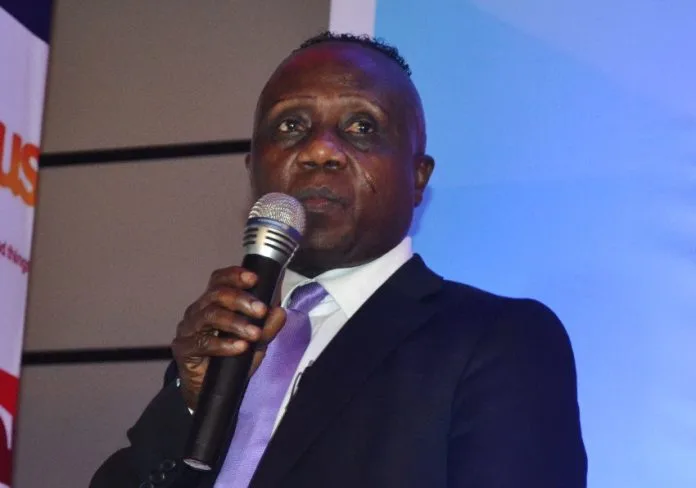
Director of Research at the Institute of Economic Affairs (IEA), Dr. John Kwakye, has stressed the need for the government to prioritise Ghana’s natural resources as a primary means of generating internal revenue for development rather than relying on borrowing.
In his message to the President-elect, John Dramani Mahama, Dr. Kwakye stated that this approach would help prevent the nation from sinking deeper into its ongoing debt crisis.
“The Mahama administration must leverage Ghana’s natural resources as the main source of development financing. It must abandon the habit of borrowing to avoid further debt crises,” Dr. Kwakye stated on his X page.
He added, “It is the hope of Ghanaians that you will use the second opportunity and your experience to bring about the necessary change to meet their aspirations through inclusive government.”
Dr. Kwakye’s comments come against the backdrop of Ghana’s severe debt crisis, which has forced the government to adopt drastic measures, such as the Domestic Debt Exchange Programme (DDEP), to restructure its liabilities.
Under the current administration led by President Nana Akufo-Addo, Ghana’s public debt has ballooned to approximately $58 billion, representing 72.3% of GDP. This figure surpasses the cumulative debt accumulated by all previous administrations combined. It is estimated that the government has added about GH¢620 billion to the national debt since 2017.
The government has often attributed the debt crisis to external factors such as theCOVID-19 pandemicand the Russia-Ukraine war. However, unsustainable borrowing, a depreciating currency, and dwindling international reserves have exacerbated the situation.
The DDEP, introduced to address these fiscal challenges, has had significant repercussions. Domestic bondholders, including pensioners and individual investors, suffered substantial losses due to reduced interest rates and extended repayment periods. These measures also triggered widespread protests, with pensioners arguing that they were unfairly targeted.
Director of Research at the Institute of Economic Affairs (IEA), Dr. John Kwakye, has called on all economists to contribute ideas for resolving the challenges facing the local currency.
Expressing his frustration, Dr. Kwakye questioned why, despite the abundance of economists in Ghana, the Cedi continues to face difficulties.
In a series of posts on his X page, he said “As economists, we have a duty to rescue the vanishing cedi. I am inviting all economists to offer one solution each. I will then pass them on to our economic managers. If they didn’t act on them, at least we would have done our part. So, as economists, we don’t have a solution to the extinguishing cedi? What did we go to school for? We must be ashamed of ourselves.
“How much more cedi depreciation can we tolerate? Why are we all sitting down while our currency is being extinguished? The cedi depreciation should be embarrassing to all economists. We seem to have failed Ghanaians. We need a national dialogue to save the cedi. It seems it has been completely abandoned to find its own level.”
The cedi is going for GH¢16.40 to one American greenback at the Forex Bureau or the retail market.
The local currency lost a marginal value to the US dollar increasing its year-to-date loss to about 26%. This was due to the heightening of corporate demand and the recent Eurobond coupon payments. The Central Bank held a 7-day FX auction, accepting all the $51.4 million bids submitted on the day.
The auction failed to keep the local unit stable as the local unit shed 0.15% week-on-week against the US dollar to close the week’s trading at a mid-rate of GH¢16.38/$. It also depreciated by 0.24% and 0.70% week-on-week vs the pound and euro.
In the aftermath of IMF’s approval of the second review of Ghana’s Extended Credit Facility (ECF) arrangement, Director of Research at the Institute of Economic Affairs (IEA), Dr. John Kwakye, has criticized the US$360 million received by the government as insufficient.
He noted that the third tranche of US$360 million would not address Ghana’s economic challenges, given the current state of the country’s foreign exchange market.
In a post on X viewed by GhanaWeb Business, Dr. Kwakye argued that stabilizing the local economy requires the government to fully manage the country’s natural resources and generate additional revenue to support the cedi.
Dr. Kwakye emphasized that this approach is the only viable solution to prevent the cedi from continuing to lose value against major currencies such as the US dollar and the British pound.
He said, “Relying on IMF disbursements to bolster the cedi isn’t sustainable. The US$360 mn inflow is peanuts compared with our FX needs. Taking ownership of our natural resource wealth to support the cedi is the only sustainable option.”
he release of the third tranche of the IMF bailout package, amounting to US$360 million, increases the total disbursement to US$1.56 billion.
According to a statement from the IMF, Ghana’s performance under the programme has been generally strong, meeting all the quantitative performance criteria for the second review and nearly all the indicative targets.
The IMF also noted that the country has made progress on its debt restructuring efforts and that significant structural reforms are progressing.
In an effort to address high inflation and stabilize the economy, the government announced on July 1, 2022, its intention to seek a $3 billion financial bailout from the International Monetary Fund (IMF).
Following this announcement, an IMF team visited Ghana from July 6 to July 13, 2022, to discuss a potential economic support programme with local authorities.
A staff-level agreement between the Government of Ghana and the IMF was finalized in December 2022.
On May 17, 2023, the IMF’s executive board approved Ghana’s $3 billion loan facility.
The first tranche of $600 million was disbursed to the Bank of Ghana (BoG) on May 19, 2023.
The IMF programme is designed, according to the government, to restore macroeconomic stability and ensure debt sustainability, among other goals.
The Director of Research at the Institute of Economic Affairs (IEA), Dr. John Kwakye, has voiced criticism against the New Patriotic Party flagbearer, Dr. Mahamudu Bawumia, for characterizing the GH¢60.81 billion losses reported by the Bank of Ghana in 2022 as merely technical losses.
The economic researcher contends that these losses will necessitate reductions in crucial operations of the Bank as it seeks to manage costs.
In an article titled “Dr. Bawumia’s Speech: Turning an Impossibility into the Possibility?”, Dr. Kwakye pointed out that one immediate consequence of these losses is the fluctuating inflationary figures witnessed in the country.
Dr. Kwakye disputed Dr. Bawumia’s assertion that the Bank of Ghana’s actions were responsible and temporary.
“Dr. Bawumia said BoG’s action was responsible and that it was temporary, as the Bank had advanced money to Government in only two of the past seven years. The Minister of Finance had expressed similar sentiments in the past, which was not surprising because Government was the direct beneficiary of the monetary financing.
“However, as central bankers, we know that the most inflationary source of financing the budget is high-powered money coming directly from the central bank vault. It is not the fact that BoG advanced money to Government that is the issue, for the Bank’s Act provides for such advances up to 5% of the previous year’s revenue. It is the magnitude of the advance—over 50% of the previous year’s revenue—that is disturbing. It is no wonder inflation peaked at 54.1% in 2022—and depreciation ballooned to 54.2% in November 2022, before falling bank to 30.0% in December 2022. Meanwhile, as Government debt to BoG was also discounted under the DDEP, the Bank made a whopping loss of GHS61 billion and a record negative equity of GHS54 billion in 2022.”
“Both the Minister and the Governor seem to have played down the loss as only a technical loss. However, the fact is that the Bank’s balance sheet has been severely impacted, and this would force it to cut back on some of its important operations so as to save costs.”
He highlighted that while it is not unusual for the Bank to advance money to the government, the magnitude of the advance—exceeding 50% of the previous year’s revenue—is concerning.
This, according to Dr. Kwakye, contributed to the spike in inflation and depreciation in 2022.
Despite attempts by the Finance Minister, Ken Ofor-Atta, and the Bank of Ghana to downplay the losses as technical, Dr. Kwakye emphasized that the Bank’s balance sheet has been significantly impacted. He argued that this impact would compel the Bank to scale back on crucial operations in order to cut costs.
The Director of Research at the Institute of Economic Affairs (IEA), Dr. John Kwakye, has contested President Akufo-Addo’s claim that Ghana’s economy has turned the corner toward recovery.
Despite the government citing indicators like the decline in inflation as signs of recovery, Dr. Kwakye contends that the ongoing Christmas festivities reflect a different economic reality.
In a social media post, he expressed, “This is an Xmas to forget. Dry, dull and boring. Millions of Ghanaians can’t afford even one decent meal as a chicken costs 100gh. Yet we are told inflation is low and the economy has turned the corner. Really? Maybe it’s turned the corner for a few but not the majority.”
Dr. Kwakye’s post follows President Akufo-Addo’s assertions in his 2023 Christmas message, highlighting the recent decline in inflation, a relatively stable exchange rate, and overall economic growth as signals of a rebound.
President Akufo-Addo stated, “We continue to attract investments in our economy both domestic and foreign, reinforcing our position as the gateway to Africa and remain a beacon of democracy, peace, and stability in Africa. The country is not yet completely out of the woods, but there is a growing sense of confidence that with hard work and determination, Ghana will make it, and collectively, we will secure our futures.”
“…The country is not yet completely out of the woods but there is a growing sense of confidence that with hard work and determination, Ghana will make it and collectively, we will secure our futures,” he added.
This is an Xmas to forget. Dry, dull and boring. Millions of Ghanaians can't afford even one decent meal as a chicken costs 200gh. Yet we are told inflation is low and the economy has turned the corner. Really? May be it's turned the corner for a few but not the majority.
The Director of Research at the Institute of Economic Affairs (IEA), Dr. John Kwakye, has contested President Akufo-Addo’s claim that Ghana’s economy has turned the corner toward recovery.
Despite the government citing indicators like the decline in inflation as signs of recovery, Dr. Kwakye contends that the ongoing Christmas festivities reflect a different economic reality.
In a social media post, he expressed, “This is an Xmas to forget. Dry, dull and boring. Millions of Ghanaians can’t afford even one decent meal as a chicken costs 100gh. Yet we are told inflation is low and the economy has turned the corner. Really? Maybe it’s turned the corner for a few but not the majority.”
Dr. Kwakye’s post follows President Akufo-Addo’s assertions in his 2023 Christmas message, highlighting the recent decline in inflation, a relatively stable exchange rate, and overall economic growth as signals of a rebound.
President Akufo-Addo stated, “We continue to attract investments in our economy both domestic and foreign, reinforcing our position as the gateway to Africa and remain a beacon of democracy, peace, and stability in Africa. The country is not yet completely out of the woods, but there is a growing sense of confidence that with hard work and determination, Ghana will make it, and collectively, we will secure our futures.”
“…The country is not yet completely out of the woods but there is a growing sense of confidence that with hard work and determination, Ghana will make it and collectively, we will secure our futures,” he added.
This is an Xmas to forget. Dry, dull and boring. Millions of Ghanaians can't afford even one decent meal as a chicken costs 200gh. Yet we are told inflation is low and the economy has turned the corner. Really? May be it's turned the corner for a few but not the majority.
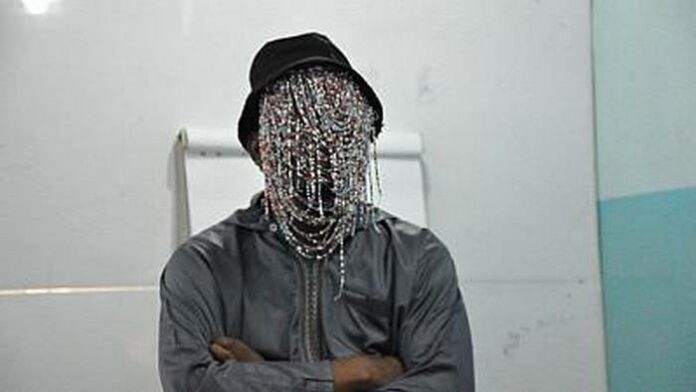
Director of research at the Institute of Economic Affairs (IEA), Dr. John Kwakye, has cautioned investigative journalist, Anas Aremeyaw Anasagainst setting up people to commit crimes in a way to expose them.
Dr Kwakye says setting people up to commit a crime is unacceptable and should be condemned.
His comments come after Anas said that he would be releasing a documentary on corruption in Ghana before the 2024 general elections.
Anas said this exposé will shake the foundation of the country.
He said these while answering questions in an interview on whether Anas was a ‘terrorist’ as was recently said by a High Court judge.
Anas defended his methods and talked about corruption in Africa.
He said “The work that I am doing now might be the last before we get into the [2024] elections. But already the signs are very clear and I can tell you that the foundation would be shaken once again.”
“There are a couple of international ones that are about to be released. But this one, talking to you as a Ghanaian, I mean the foundation of Ghana would be shaken,” he is reported to have said.
Commenting on this in a tweet, Dr Kwakye said “If Anas isn’t interested in cashing in on the elections, he should wait to publish his documentary after not before.
“Anas shouldn’t think that he can hold the whole country to ransom. No one is without blemish in this world. He himself isn’t an angel. Anas should work to catch people who commit actual crimes. He shouldn’t set people up to commit crimes. That’s unacceptable and should be condemned.
To ensure debt sustainability in the shortest amount of time, the government has been recommended to utilize a three-pronged strategy of fiscal, structural, and debt restructuring.
This was stated in an exclusive interview with the Ghana News Agency regarding the ongoing DDE program by Professor Godfred Bokpin, Professor Peter Quarter, and Dr. John Kwakye, all distinguished Ghanaian economists.
Additionally, efforts should be intensified to change the structure of the economy from being highly-import-driven by streamlining various sectorial agriculture, manufacturing and trade policies and implementing them effectively, they said.
However, the Economists stated that DDE programme alone, requiring bondholders to trade about 80 per cent of a total of GHS137 billion in bonds for new ones, could not secure debt sustainability.
They, therefore, asked the Government, to immediately reduce the number of ministers and merge some ministries to save money in addition to intensifying efforts to change the structure of the economy with prudent and sustainable initiatives to spur manufacturing and industrial growth.
Prof Bokpin of the University of Ghana Business School said efforts by the government such as the audit of Ghana’s COVID-19 expenditure and reaching some level of agreement with bondholders signalled a sign of progress on the DDE.
However, he said: “When your debt is judged to be unsustainable, measures for sustainability must be a triangle approach, which involves fiscal adjustment, structural adjustment and debt restructuring.”
He said: “If the president decides that he is going to have to reduce the size of the government by 50 per cent and also reduce the number of ministers, and merge some Ministries, Agencies, and Departments, we could have saved more than GHS10 bn.”
Prof Quartey, Director, Institute of Statistical, Social and Economic Research (ISSER) said the government, in addition to the proposed reduction in spending as put in 2023, should “go ahead and reduce the size of government.”
The ISSER Director said: “If we minimise waste, and corruption and ensure value for money in our expenditure, add value to our raw materials and support the agriculture value chain and manufacturing, we’ll be able to export more and get more foreign exchange and enhance our revenue mobilisation.”
“The Government should keep its focus, continue dialoguing and build consensus with the key stakeholders and ensure that we’re able to sign onto this IMF programme and get it running by the first quarter of this year.” He advised.
He added: “Hopefully when we sign onto the programme, we should make judicious use of the resources so, we’re able to grow the economy out of where we find ourselves. Once we do that, we can restore confidence and get our economy running.”
Dr Kwakye, Director of the Institute of Economic Affairs (IEA), noted that while the government urged bondholders to make some sacrifices, it was also prudent for it to do same.
“We believe the DDEP cost should be spread across the economy to the widest extent possible, in the spirit of burden-sharing,” he said and encouraged the Government to also make some sacrifices.
“All the borrowings that the government accumulated, the Finance Minister earned GHS160 million directly or indirectly, as part of burden sharing, why doesn’t he say, I’m also refunding 50 per cent?” He quizzed.
The DDE forms part of efforts by the government to assure the International Monetary Fund (IMF) of debt sustainability through creditors’ confidence by signing up for the programme, which has so far seen four postponements in the deadline as the government continues to engage stakeholders.
Individual bondholders and pension schemes have been exempted from the programme, though the Government has made new provisions for individual bondholders to be part of the DDE.
Director of Research at the Institute of Economic Affairs (IEA), Dr John Kwakye, has averred that government’s announcement of a debt exchange programme was influenced by the International Monetary Fund (IMF).
He further asserted that the 2023 budget statement presented by the Finance Minister, Ken Ofori-Atta was also geared towards securing a financial bailout from the IMF.
Dr Kwakye in a tweet said, “IMF’s fingerprints are all over the 2023 Budget and the debt exchange presented by the Minister.”
The finance minister, at a press conference in Accra on Monday, December 5, 2022, said under the debt exchange programme all domestic bondholders will exchange their instruments for new ones.
Existing domestic bonds as of December 1, 2022, will be exchanged for a set of four new bonds maturing in 2027, 2029, and 2037.
The annual coupons on all of these bonds will be set at 0% in 2023, 5% in 2024 and 10% from 2025 until maturity.
Meanwhile, Ghana is targeting an amount of $3 billion over a three-year period from the IMF once an agreement on a programme is reached.
The new amount requested as a loan is double the government’s initial target of $1.5 billion.
The IMF programme is aimed at restoring macroeconomic stability and safeguarding debt sustainability among many others.
IMF’s fingerprints are all over the 2023 Budget and the debt exchange presented by the Minister.
According to information in the budget declaration, the deficit is anticipated to be GH61.5 billion, or 7.7 percent of the Gross Domestic Product, in 2023. (GDP).
It is anticipated to reach GH 71 billion, GH 54.4 billion, and GH 61 billion in 2024, 2025, and 2026, respectively. As the Bank of Ghana (BoG) reduces its monetisation of the deficit, this amount would be covered by foreign parties.
Already, the central bank has financed the 2022 budget with an injection of GH¢49.9billion – a development analysts are concerned will keep inflation up. The BoG has had to make the interventions mostly because deposit money banks (DMBs) have demanded a premium to purchase government securities due to deteriorating market conditions.
This has seen interest rates trend upward across the spectrum of the yield curve, with the base 91-day Treasury bill accelerating from 12.49 percent at the beginning of the year to 31.53 percent in October – with the 182-day Treasury bill following suit, rising from 13.91 percent to 32.61 percent over the same period and similar developments on the 364-day instrument, 2-year, 3-year and 5- and 6-year bonds.
Welcoming the expected lower level of participation by the BoG in financing the budget shortfall, the IEA however noted that solely dependinge on foreign parties could have dire consequences for domestic development projects.
“The entire financing for the period is to be provided by multinational and other international partners. This is worrisome, because if for some reason they do not fully materialise – such as due to government’s inability to meet some conditions – government may have to fall back on the BoG and/or forgo some development projects and programmes,” stated IEA’s Director of Research, Dr. John Kwakye.
CAPEX
The situation has assumed increased importance over the historically low percentage share of capital expenditure (CAPEX) to GDP, especially when compared to recurrent expenditure.
The 2023 budget projects a CAPEX of GH¢27.7billion (3.5 percent of GDP) compared to big-ticket, recurrent items such as compensation (GH¢45billion) and interest payment (GH¢52.6billion).
With the desperate need for hard and soft infrastructure – roads, bridges, hospitals, schools, factories, housing facilities, energy systems, water systems, sanitation systems, etc. – to transform the economy, the IEA made a bold call for an increase of CAPEX to a minimum of 5 percent to GDP in 2023, with increased allocation of between 7 and 8 percent in 2024, 9 and 10 percent in 2025 and 12 and 15 percent in 2026, arguing that such a line of action would bring the domestic rate in line with the standard “deemed acceptable for countries in the process of developing”.
“The CAPEX allocation, which is equivalent to about US$2billion (at today’s exchange rate of US$1 = GH¢14, which will reduce further with more depreciation), is insignificantly small to meet the country’s huge development needs … This will require raising more resources and allocating relatively more to CAPEX,” the public policy think-tank added.
The IEA also proposed an amendment to the Fiscal Responsibility Act (FRA) to guarantee that use of all borrowed funds be channelled toward CAPEX only, “with none going to recurrent expenditure” while asking parliament to oversee and enforce the provision.
The Institute, however, did not provide guidance on how immediate recurrent expenditure would be met if its proposal were to be adopted.
The Director of Research at the Institute of Economic Affairs (IEA) Dr John Kwakye has shared his views on the gold for imported oil new policy by the government.
The Vice President Dr Mahamudu Bawumia, has revealed a remarkable new policy by government that would see the government pay for imported oil products with gold rather than through US Dollars.
Revealing the policy in a post on his Facebook page on Thursday, Vice President Bawumia said the policy is expected to take effect by the end of the first quarter of 2023.
He said in a Facebook post that “The Use of Gold To Buy Imported Oil Products
“The demand for foreign exchange by oil importers in the face of dwindling foreign exchange reserves results in the depreciation of the cedi and increases in the cost of living with higher prices for fuel, transportation, utilities, etc. To address this challenge, Government is negotiating a new policy regime where our gold (rather than our US dollar reserves) will be used to buy oil products. The barter of sustainably mined gold for oil is one of the most important economic policy changes in Ghana since independence.
“If we implement it as envisioned, it will fundamentally change our balance of payments and significantly reduce the persistent depreciation of our currency with its associated increases in fuel, electricity, water, transport, and food prices. This is because the exchange rate (spot or forward) will no longer directly enter the formula for the determination of fuel or utility prices since all the domestic sellers of fuel will no longer need foreign exchange to import oil products.
“The barter of gold for oil represents a major structural change. My thanks to the Ministers for Lands and Natural Resources, Energy, and Finance, Precious Minerals Marketing Company, The Ghana Chamber of Mines and the Governor of the Bank of Ghana for their supportive work on this new policy. We expect this new framework to be fully operational by the end of the first quarter of 2023.”
Sharing his views on this, Dr John Kwakye said in a tweet that “This is mere window dressing and will not address the perennial depreciation of the cedi.
“The viable option is to restructure the economy and continually increase the foreign exchange cover for the currency issue.”
“I don’t get the rationale of this policy at all. To me, gold is as good as forex. So, whether we use gold or forex to purchase oil, we’ll be depleting our reserves and the pressure will be back on the cedi.”
The next 2023 budget, which will be read in parliament on Thursday, November 24, 2022, according to Dr. John Kwakye, director of research at the Institute of Economic Affairs (IEA), needs to concentrate on the nation’s macroeconomic stability.
In 2023, he urged the government to raise the nation’s Gross Domestic Product (GDP) to at least 15 to 16%.
Dr. Kwakye also urged the nation’s economic controllers to reduce poverty and establish the framework for long-term sustainable growth.
He stated at an Accra press conference that “it must break from the past and chart a new route to restore macroeconomic stability while building the groundwork for long-term sustainable growth and poverty alleviation.”
“The 2023 budget must break from this unacceptable past. We believe that we should be able to increase tax revenue/Gross Domestic Product to at least 15-16% in 2023 and further to 18-20% in 2024. At the same time, total revenue/GDP could be increased to 18-20% in 2023 and 22-25% in 2024”, he stressed.
This will allow the Finance Minister to review the budget statement and economic policy of the government and supplementary estimates for the 2023 financial year.
Earlier, the Majority Leader in Parliament, Osei Kyei-Mensah-Bonsu, had hinted that the presentation of the 2023 budget statement might delay due to the ongoing negotiations with the International Monetary Fund.
The government is requesting $3 billion from the Bretton Woods institution to help stabilize the economy.
Dr. John Kwakye, director of research at the Institute of Economic Affairs (IEA), has stated that the country’s macroeconomic stability should be a priority for the next 2023 budget, which will be read in parliament on Thursday, November 24, 2022.
Dr. Kwakye also requested that economic controllers build the foundation for the nation’s long-term sustainable growth and reduce poverty.
He stated, “It must break from the past and chart a new route to restore macroeconomic stability while building the groundwork for long-term sustainable growth and poverty alleviation,” at a press conference in Accra.
The presentation of the budget in parliament is in pursuance of the Public Financial Management Act, 2016 (Act 921).
This will allow the Finance Minister to review the budget statement and economic policy of the government and supplementary estimates for the 2023 financial year.
Director of Research at the Institute of Economic Affairs (IEA) Dr John Kwakye has said all ministers who are resigning or being sacked should be made to declare their assets and compare to what they declared when they were appointed.
Dr Kwakye asked the Office of the Special Prosecutor (OSP) to ensure that that is done.
“All those resigning from office or being sacked must be made to declare their assets before they leave and this must be compared with the declaration when they assumed office. OSP, over to you,” Dr Kwakye tweeted.
All those resigning from office or being sacked must be made to declare their assets before they leave and this must be compared with the declaration when they assumed office. OSP, over to you!
The OSP earlier announced in a statement signed by the Special Prosecutor Mr Kissi Agyebeng on Tuesday November 15 that, it has commenced in investigations to the alleged corruption by the sacked Minister of State at the Finance Ministry Charles Adu Boahen.
The statement said “The Office of the Special Prosecutor has promptly commenced investigations into the action of Mr Charles Adu Boahen and any other implicated persons contained in the investigative exposé, ”Galamsey Economy’.”
“The President of the Republic, Nana Addo Dankwa Akufo-Addo, has terminated the appointment of the Minister of State at the Ministry of Finance, Mr. Charles Adu Boahen, with immediate effect.
“After being made aware of the allegations levelled against the Minister in the exposé, ‘Galamsey Economy’, the President spoke to Mr. Adu Boahen, after which he took the decision to terminate his appointment, and also to refer the matter to the Special Prosecutor for further investigations.
“The President thanked Mr. Adu Boahen for his strong services to his government since his appointment in 2017, and wished him well in his future endeavours,” a statement issued by the Director of Communications at the Presidency, Mr Eugene Arhin said on Monday November 14.
A Government Communicator Kofi Tontoh said the principle of natural justice will play out properly when Adu Boahen gets his day before the OSP to answer allegations of corruption made against him.
Mr Tontoh stated that investigations by the OSP will determine the next action to be taken against him.
Commenting on this matter, Mr Tontoh said on the Big Issue on TV3 with Berla Mundi on Tuesday November 15.“This is a decisive decision by the President.”
He added “It is an attempt to show that the President doesn’t condone corruption but let us allow Adu Boahen to have his day and ones all the facts come out if any further action is needed it will be taken.”
The dollar is currently selling at GH¢14.95 as of today, November 17, 2022.
His comments come after the National Tripartite Committee (NTC) increased the minimum wage to GH¢ 14.88 from the earlier GH¢13.53.
Dr. Kwakye in a Twitter post on November 17, 2022, wrote: “It’s unconscionable for Govt to pay anybody GHc14.88 (equivalent to US$1.00) a day. It shows the failure of economic management.”
The determination was based on Section 113 (1) (a) of the Labour Act, 2003 (Act 651).
At the end of the meeting, it was concluded that beginning January 1, 2023, the minimum wage would be pegged at GH¢14.88, an increase in the NDMW by 10% over the 2022 NDMW.
“In determining the 2023 NDMW, the NTC took into account the current economic challenges, cost of living, sustainability of businesses and desirability of attaining a higher level of employment, as well as the need for rapid restoration of macroeconomic stability,” a statement by the Committee read.
Ghana’s current inflation stands at 40.4% as of October 2022. This has depleted the purchasing power of most Ghanaians as they have de-cried the stagnant nature of salaries.
It’s unconscionable for Govt to pay anybody GHc14.88 (equivalent to US$1.00) a day. It’s shows failure of economic management.
— J. K. Kwakye (@JohnKwabenaKwa1) November 17, 202
The Director of Research at the Institute of Economic Affairs (IEA) Dr John Kwakye has indicated that financial indiscipline is what is causing high inflation and also drop in the strength of the Cedi.
He noted that as the Central Bank continues to monetize the deficit through direct advances to government and takeover of maturing Treasury Bills, it must ensure that it is not breaching the lending ceiling and fiduciary currency issue.
“Fiscal and monetary indiscipline is fueling inflation and cedi depreciation. While we expect the Treasury and the Central Bank to collaborate positively, they are rather collaborating negatively as the former has been compelling the latter to monetize the deficit,” he tweeted.
His comments come at a time Bolga Central MP Isaac Adongo has accused Governor of the Bank of Ghana (BoG) of illegally giving an amount of ¢70 billion to the government to finance matured debts.
The Deputy Ranking Member on the Finance Committee has served notice to sue Dr Addison over the matter.
Addressing a press conference in Parliament on Tuesday November 8, he said “Ask yourself why the same taxes that we imposed on petroleum products two years ago to deliver a liter of 4. 50 pesewas.
“So essentially, now the problem is not even about the taxes, it is about the exchange rate. Who is supposed to manage the exchange rate? It is the Governor of the central bank Dr Addison.”
He added “Another big problem we have now is inflation. The Bank of Ghana manages the inflationary target framework whiles the Ghana Statistical service reports actually but the man who is in charge of managing our inflation targeting framework and ensuring that inflation expectations are anchored, is the Governor of the Central Bank.
“The inflationary targeting framework within the confines of the Bank of Ghana provided very strict rules on what we call fiscal governance over monetary policy, in other words there are strict rules on the government of Ghana can borrow from the Bank of Ghana.
“Those restricted rules are quite clearly stated that the BoG at any point in time should not have lent more than five percent of the previous revenue cumulatively. If you consider last year ‘s revenue then the government cannot even borrow five million Cedis from the BoG.
“But by the end of the year 2021, Dr Addison has illegally lent to government ¢35billion, and by May this year he had added an additional ¢22billion when the Minister came at Mid year review. As we speak today, Dr Addison has been financing government and paying maturing debt obligations the domestic market that the government cannot find, we are currently looking at something in excess of 7billion of illegally borrowing by the Government of Ghana from the BoG.
“If you have a corrupt government such as Akufo-Addo and Dr Bawumia and you pump 70billion to the economy that does not belong to the economy, they steal them and they put them in their rooms under their beds.
“Under the current circumstance, the best storage of money is Dollars and not Cedis. So Dr Addison’s 70 billion are now in the homes and beds of government functionaries, is what is chasing the Dollar.
“How can Dr Addison still be the Governor of the Central bank? I call on Dr Addison as a matter of urgency, to exit BoG and give Ghana the chance to clear the mess. Today, I have instructed my lawyers to serve him notice and to remind him again of a letter I served him, that if by the end of the third meeting of the second sitting of the 8th Parliament, he has not complied with his obligation to parliament for us to exercise our oversight role, I will sue him and I will proceed to court.”
He asserted that, in light of the current challenges, the President ought to think about assembling a fresh group of specialists and pros to save the nation’s economy.
Dr. Kwakye tweeted, “One of the needed confidence-building measures would be reconstituting the Economic Management Team and bringing in experts and professionals.”
Although Cabinet has commenced a meeting in earnest to find solutions to the challenges, it is not clear if President Akufo-Addo will heed calls to bring in fresh limbs to save the precarious situation.
Mr. Akufo-Addo, meeting with a couple of groups at the Presidency, said he is fully aware of the problematic times Ghanaians are going through.
Mr. Akufo-Addo admitted that times are hard. The local currency is not doing well against the dollar, and prices of goods and services, including sachet water, are rising.
The President indicated that he needs the support of everyone to deal with the issues.
“I have seen the difficulties that our currency has been having. I have seen the difficulties and dramatic rise of price levels, significant rise in the cost of living and difficulties generally, in the manner the economy is rising,” he told journalists at the Jubilee House, on Thursday, October 27, 2022.
Mr. Akufo-Addo added, “We have to understand that all sectors and actors of the economy, either on the side of management, labour and workers, have to find a way of balancing the various considerations so that we can all progress and continue, hopefully, in building a stronger economy.”
He claims that the maximum amount the nation has ever received from the Fund was GH3 billion when it was designated as a HIPC.
On October 25, 2022, he stated at the 11th Ghana Economic Forum, “the most we have had by way of intervention and that was HIPC was 3 billion.
No government has ever received 1 billion to make a change.
The amount we spent, which occurred after 2017 and under the current administration, was the highest at GH950 million.
He also stated that the notion that Ghana was doing well before 2020 needs to be re-examined.
Meanwhile, the Director of the Institute of Economic Affairs, Dr. John Kwakye, has stated that Ghana’s revenue targets have not been ambitious enough to rake in the expected revenue needed for development.
“As a country, we need both resources and policies to advance our development. For Ghana, we have lacked adequate resources, and our policies have also been defective in so many areas,” he said.
No country has received GH¢1 billion from the fund – Seth Terkper
Every country needs sound policies and the capacity to utilize its resources to thrive, but in Ghana’s case, neither has been present.
On October 25, 2022, he was a speaker at the 11th Ghana Economic Forum.
“As a country, we need both resources and policies to advance our development. For Ghana, we have lacked adequate resources, and our policies have also been defective in so many areas,” he said.
Dr. Kwakye also noted that Ghana has not built enough economic buffers to be able to withstand shocks the reason the country is going through these challenges.
“We collect only a fraction of our potential tax revenue. I hear sometimes them pat themselves on the back and say we have exceeded our target. But of course, it depends on how ambitious the target is. Our revenue targets have not been ambitious enough. We collect just about 12% of our GDP. Many of our peers do even more than two times that. So, we have a big potential to raise more revenue to fund our developments.”
According to him, Ghana’s inability to raise enough tax revenues does not depend on its rates, but instead, the loopholes that exist in the system.
He thinks the cedi can have long-term stability under a monetary structure akin to a currency board.
However, Dr. Kwakye cautioned that the economic administrators must establish the currency board gradually.
I concur with Prof. Hanke that the cedi can only have long-term stability under a monetary system akin to a currency board.
But we should advance in that direction gradually.
The complete modalities can be figured out, according to a 3news report by Dr. John Kwakye.
He noted in his October 20 tweet that the cedi has depreciated by 43.98% against the US dollar since January 2022 to be placed 4th on his weekly Hanke’s currency watchlist.
He said, for the cedi to gain its strength and appreciate against the US dollar, the President together with the managers of the Ghanaian economy must install a currency board.
“The Ghanaian cedi has depreciated against the USD by 43.98% since Jan 2022, which is why #Ghana takes the 4th place in this week Hanke’s #CurrencyWatchlist. To save the cedi, GHA must install a #CurrencyBoard, NOW,” Prof. Steve Hanke’s tweeted.
The Cedi has recently been classified by Bloomberg as the worst-performing currency against the US Dollar.
Currently, the Cedi is trading at above GH¢14 to a dollar at some forex bureaus. The depreciation rate is a contributory factor for the ongoing shop closures ordered by the Ghana Union of Traders Association (GUTA).
According to the group, the fast depreciation of the Cedi is eroding their profits and also increasing the cost of doing business.
According to Steve Hanke, founder and co-director of the Institute for Applied Economics and professor of applied economics at Johns Hopkins University, Ghana’s economy is currently in free fall.
He claims that as of Sunday, October 22, 2022, the country’s inflation rate in West Africa is 109 percent.
In a tweet sighted by GhanaWeb, the economist reiterated his point that it is only a currency board that can help stabilise the depreciation of the Ghana cedi against the US dollar.
He noted that just as the then Gold Coast had a currency board between 1913 to 1958, present-day Ghana needs a currency board else debt default is just around the corner.
Prof Hanke’s assertion that a currency board can stabilise the cedi has been reaffirmed by Dr. John Kwakye, Director of Research, Institute of Economic Affairs (IEA).
He told 3news in a report that a currency board-type monetary system can give the cedi lasting stability but warned that installing the currency board must be done progressively.
“I agree with Prof. Hanke that only a currency board-type monetary system can give the cedi lasting stability. We should, however, move progressively towards it. The full modalities can be worked out.”
This is a 2.0 percent month-on-month increase from the 33.9 percent rate recorded in August 2022.
However, the rate is also 37.2% higher than that of September 2021.
Year-on-Year inflation varied upwardly by 2.2 percentage points between August (31.7%) and September (33.9%) 2022.
Food inflation was 37.8% while non-food inflation was 36.8%.
Inflation for locally produced items was 35.8% while inflation for imported items was 40.7%.
Western Region recorded the highest food inflation (47.0%) and Eastern Region, the highest non-food inflation (42.0%). Eastern Region recorded the overall highest inflation (41.0%) followed closely by Western Region (40.2%) and Greater Accra Region (39.3%).
Transport (68.7%) recorded the highest rate of inflation in the Eastern Region, for food inflation in the Western Region, Fish and Other Seafood had the highest rate of inflation at 64.0%.
His comment comes after the cedi was adjudged by Bloomberg the world’s worst-performing currency against the US Dollar.
Bloomberg reported that the cedi lost about 45.1% to the US dollar this year to sell at GH¢11.2625 per dollar.
This makes the cedi’s depreciation the worst among 148 currencies tracked by Bloomberg, overtaking Sri Lanka’s rupee whose depreciation has been 44.7%.
Reacting to this in a tweet sighted by GhanaWeb, Dr John Kwakaye said, “Urgent interventions are needed to stop the haemorrhaging of the cedi.”
Director of Research at the Institute of Economic Affairs (IEA), Dr John Kwakye, has called on government to devise strategic measures to stop the continuous depreciation of the local currency.
His comment comes after the cedi was adjudged by Bloomberg the world’s worst-performing currency against the US Dollar.
Bloomberg reported that the cedi lost about 45.1% to the US dollar this year to sell at GH¢11.2625 per dollar.
This makes the cedi’s depreciation the worst among 148 currencies tracked by Bloomberg, overtaking Sri Lanka’s rupee whose depreciation has been 44.7%.
Reacting to this in a tweet sighted by GhanaWeb, Dr John Kwakaye said, “Urgent interventions are needed to stop the haemorrhaging of the cedi.”
Meanwhile, Ghana is targeting an amount of $3 billion over a three-year period from the IMF once an agreement on a programme is reached.
The new amount requested as a loan is double the government’s initial target of $1.5 billion.
Urgent interventions are neede to stop the haemorrhaging of the cedi. #FixTheCediNow
A Senior Economist and Director of Research, at the Institute of Economic Affairs (IEA), Dr. John Kwakye, says investors are worried over the pace of the Government of Ghana and the International Monetary Fund (IMF), negotiation over a US$3 billion programme.
According to him, this panic among the investor community has affected the Ghana cedi more as compared to the dollar.
He lamented in a series of tweets, that instead of managers of the economy reacting to it, they are rather sitting aloof, as if nothing is happening.
This, behaviour, Dr Kwakye added, is unacceptable.
“The IMF is moving at a snail’s pace in negotiating Ghana’s program, as if nothing is at stake. The delay and uncertainty are fueling speculation and panic in the investor community, causing continued damage to the cedi. Yet our economic managers stand aloof. This is unacceptable!” Dr. Kwakye tweeted.
He further observed that the government of Ghana at the moment does not have enough money to meet its economic obligations which have exacerbated its inflation growth.
“Sadly, the economy is being run aground. Gov’t doesn’t have money to meet its obligations. Ghana has one of the highest inflations in the world. The cedi is one of the worst-performing currencies. Our debt is rising to pre-HIPC levels. And yet our economic managers stand aloof,” Dr. Kwakye tweeted further.
Dr. John Kwakye, the director of research at the Institute of Economic Affairs, has raised concern about how slowly the government and the International Monetary Fund (IMF) are negotiating an economic program.
He claims that the delay and uncertainty are prompting the investor community to speculate and panic, which is harming the cedi and is unacceptable.
“The IMF is negotiating Ghana’s package at a glacial pace, as if nothing is at risk.
The uncertainty and delay are leading the investor community to speculate and panic, which is doing more harm to the cedi. However, our economic managers keep a distance. The tweet read, “This is intolerable!”
Dr. Kwakye who once worked with the Fund also accused the government as the main beneficiary of the huge cedi depreciation in the form of increased cedi-valued import taxes and oil proceeds.
“Government is a major beneficiary of the huge cedi depreciation in the form of increased cedi-valued import taxes and oil proceeds”.
He continued “sadly, the economy is being run aground. Government doesn’t have money to meet its obligations. Ghana has one of the highest inflations in the world. The cedi is one of the worst performing currencies. Our debt is rising to pre-HIPC levels. And yet our economic managers stand aloof.”
Dr. John Kwakye, the director of research at the Institute of Economic Affairs (IEA), reprimanded the Bank of Ghana for not making the government manage its budget outside of the banking industry.
Dr. Kwakye claims that he struggles to see why the central bank will continue to support the budgets of succeeding governments.
His recommendations followed the Bank of Ghana’s (BoG) Monetary Policy Committee raising the monetary policy rates by 250 basis points, from 22 to 24.5 percent.
According to the central bank, the move is expected to stem the inflation which has been soaring recently due to the cedi depreciation, upward adjustment in tariffs, and Ghana’s awaiting the IMF-supported programme.
Meanwhile, the Governor of the Bank of Ghana, Dr. Addison at a press conference Thursday, October 6, 2022, at the 108th Monetary Policy Committee (MPC) commenting on the fiscal situation said the expenditures have been broadly on target, revenue performance has been below expectations, complicating fiscal policy implementation.
“Financing the budget so far has been predominantly done by the banking sector with the central bank absorbing a larger share. Persistence uncovered auctions and portfolio reversals by non-resident investors continue to post risk to the financing of the budget resulting in the monetization of the budget deficit by the central bank,” the economist said.
Sharing his views on the development in a Twitter post, Dr John Kwakye stated the government must be compelled to manage its budget outside of the banking sector.
“Why should the central bank continue to finance the budget? Doesn’t that further fuel inflation and cedi depreciation?
“Why doesn’t the central bank force Gov’t to pay the right price and finance the budget outside the bank? So, this is what we had to wait for IMF input for?” the researcher questioned.
He questioned why the government’s budget would still be funded by the central bank.
“Why should the central bank maintain its support of government spending? Doesn’t that just fuel the decline of the cedi and inflation?
Why doesn’t the central bank compel the government to negotiate a fair price and secure outside financing for the budget?
“So this is what we had to wait for IMF input for?” Dr Kwakye tweeted after the Governor Dr Ernest Addison said that financing of the government’s budget so far has predominantly been from the banking sector.
Dr Addison said these at the 108th Monetary Policy Committee (MPC) press conference in Accra on Thursday October 6.
Dr Addison told the press that on the fiscal situation, while expenditures have been broadly on target, revenue performance has been below expectations, complicating fiscal policy implementation.
“Financing of the budget so far has predominantly been from the banking sector with the central bank absorbing a larger share. Persistent uncovered auctions and portfolio reversals by non-resident investors continue to pose risks to financing of the budget, resulting in monetization of the budget deficit by the central bank.
“The Monetary Policy Committee recognizes the fact that the current condition is sub-optimal and will be interim until agreements are reached on an IMF-supported programme.
“The Committee assesses that the engagement with IMF has been positive and early
conclusion of the programme discussions will help re-anchor stability,” he said.
He stressed “The outlook for the Ghana Cedi has improved, aided by the recent disbursement of the loan from Afreximbank of US$750 million, the signing of the syndicated Cocoa Loan of US$1.13 billion, and the agreement with gold and oil companies to purchase the repatriated foreign exchange earnings of about US$83.9 million so far, will help stabilise the exchange rate.”
Inflation, he said, remains elevated and the balance of risks is on the upside. Although the forecasts are for monthly inflation to continue to slow down, the risks are on the upside, emanating largely from pass-through effects of the currency depreciation, the recent upward adjustment in utility tariffs, and rising inflation expectations. The Committee remains committed to re-anchoring inflation expectations and returning to
a disinflation path.
He stressed that the nation primarily dependent on its primary products and encouraged the government to diversify its natural resources and add value to them in order to produce the necessary cash for the nation.
With these contributions, Dr Kwakye stated that the two countries should have used their comparative advantage to have the biggest cocoa industries in the world to address some of their economic challenges.
The cedi depreciation, he stated, started several decades and attributed the causes to supply and demand, which had exposed the country’s vulnerability and existing structure.
The cedi has so far depreciated by about 30 percent to the US dollar in 2022 as against an appreciation of 0.5 percent during the same period in 2021.
He said the country needed a long-term solution such as establishing a gold refinery, oil refinery, and cocoa processing plant to add more value to its products and be competitive in the world market to address the cedi depreciation.
Dr Kwakye said the Governments over the years had not shown any commitment to working towards addressing the issues, stressing “we need structural changes to be economically viable.”
“The reluctant nature of our leaders to take bold decisions on our natural resources has worsened the situation. Because of the personal benefit, they are not able to negotiate better deals for the country with foreign companies,” he said.
He said the duopoly of the New Patriotic Party and the National Democratic Congress was not helping the country’s economic development path, and called on civil society organisations to push harder to ensure drastic change.
Dr Kwakye said the Ukraine War and the COVID-19 pandemic were external factors that contributed to economic setbacks and currency depreciation globally, and noted that many economies had survived the shocks.
He stated that these external factors, had exposed the country’s vulnerability because the state was not efficiently prepared to withstand the shocks due to its overdependence on primary goods and the inability to match our import and export products.
He said the IMF bailout intervention, the 750 million dollars from Exim bank and the cocoa syndicated loan would bring some form of stability into the country’s economic space for the short-term and called for a sustainable drive to boost the industrial sector.
Dr Kwakye stated that the cedi injection into the system would solve the problem of cedi depreciation, and that the Francophone countries had established a monitoring union that imposed strict rules to prevent government borrowing from the central bank to ensure fiscal discipline.