Tag: drug

  • Police intercept suspected drug shipment, arrest driver

    Police intercept suspected drug shipment, arrest driver

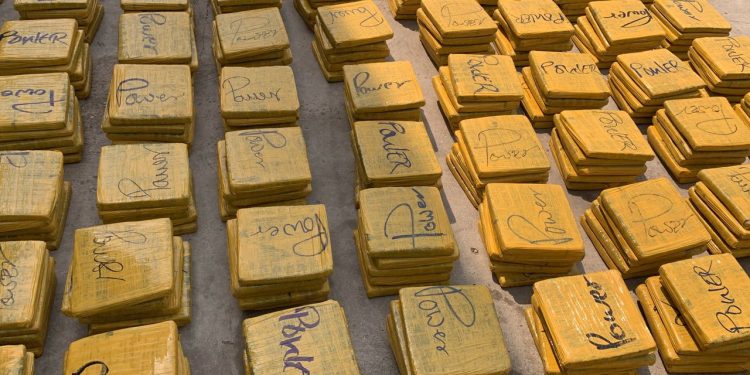
    A 50-year-old commercial driver, Atampugri Akanyani, has been nabbed by the police after 714 slabs of suspected Indian hemp were found in his possession.

    The slabs which were hidden in nine nylon sacks were discovered during a routine snap check by police officers at the Asanso checkpoint along the Bekwai–Aputogya road on Tuesday, January 26, 2026.

    Atampugri Akanyani disclosed that an unknown individual at the Kejetia Lorry Terminal in Kumasi handed over the suspected Indian hemp to him for delivery, at a fee of six hundred Ghana cedis, to another unidentified person in Obuasi.

    Meanwhile, Atampugri Akanyani has since been arraigned before the court. Last year, 600 fertiliser sacks of Indian hemp, weighing a total of 47,530kg and valued at about GH¢4.2 billion, were destroyed by the Volta Regional Police Command.

    The destruction exercise, which occurred on Monday, November 17, was carried out pursuant to an order from the Ho Circuit Court. This information was contained in a statement issued on Thursday, November 20, and signed by Chief Inspector Francis Kwaru Gomado, Head of the Public Affairs Unit of the Volta Region.


    Parts of the statement read, “the six hundred sacks contained a total of forty-seven thousand, five hundred and thirty kilograms (47,530kg) with an estimated face value of about 4.2 billion Ghana cedis.”


    In August 2025, the Central East Regional Police Command arrested two suspects in possession of 519 compressed parcels of dried leaves suspected to be Indian Hemp.


    The suspects, identified as Eric Nkyeke, 30, and Francis Klu, 28, were held in police custody. The Toyota Hilux pick-up with registration number GS 6849-21 was impounded at Nyanyano in the Gomoa East District.


    This was revealed in a statement issued by the Nyanyano District police command. In June, the police nabbed two suspects for having in their possession 84 parcels of substances suspected to be Indian hemp.


    The police team, through an intelligence-led operation on June 15, intercepted an Opel Astra vehicle with registration number GT 6430-13 driven by suspect John Dzeble, together with suspect Adzobi Mesiwotso on board.

    A search conducted on the vehicle revealed 86 compressed parcels of substances suspected to be Indian hemp, discreetly concealed in the inner compartments of the car, including the engine, doors, and boot.


    In addition to the compressed parcels, the officers retrieved a portable measuring scale machine and a roll of masking tape, also concealed, believed to have been used in the packaging of the substancesThe suspects, along with the exhibits, are currently in Police custody, assisting with investigations.


    The Oti Regional Police Command has commended the swift and professional action of the personnel involved in the arrest and reaffirmed its commitment to curbing drug trafficking and related criminal activities.


    The arrest comes after a recent incident where the police captured one Christopher Partey for unlawful possession of 40 parcels of a substance suspected to be narcotic drugs.


    The National Highway Patrol Unit of the Ghana Police Service arrested on Wednesday, June 11.


    The team intercepted a Ford Transit bus with registration number AS 524-16 near the outskirts of Ayikuma township while on routine patrol along the Accra–Somanya corridor.


    A search of the vehicle revealed 40 tightly wrapped parcels concealed in a fertilizer sack in the vehicle’s boot. Upon interrogation, Christopher Partey, a passenger on board, admitted ownership of the items.


    The exhibits retrieved have been handed over to the Drug Law Enforcement Unit at the Police Headquarters for further investigation.

    The suspect is currently in police custody, assisting investigations, and will be put before the court. In April, a total of 189 Cadets were officially inducted into service to support Ghana’s ongoing efforts to combat narcotic drug trafficking and related crimes.


    The induction, held at the Eastern Naval Command, marked a significant collaboration between the Leadership Training School (LTS) and the Narcotics Control Commission (NACOC).


    The event, which featured the ceremonial swearing of an oath of allegiance, signified the commitment of the new recruits to serve the nation with dedication and uphold the values of integrity and national security.


    The training, led by the Commanding Officer of LTS, is designed to build the capacity of cadets by focusing on the fundamentals of narcotics law and enforcement.


    The course places particular emphasis on confidence-building, professional discipline, and a thorough understanding of legal procedures necessary for their roles in narcotics control.


    As part of the induction, NACOC leadership underscored the importance of adherence to institutional rules and the responsible handling of classified information.


    The Commission reiterated its mission to disrupt the narcotics trade and act as a stabilizing force in communities vulnerable to the influence of drug-related activities.


    NACOC reaffirmed its commitment to making Ghana an unattractive hub for drug trafficking, prioritizing public safety and the protection of the nation’s borders.


    Calls have also been made for increased government support to enhance the Commission’s operational capacity, including the recruitment of additional personnel and the provision of improved financial and logistical resources.


    The new cadets are expected to play a key role in reinforcing the Commission’s enforcement operations across the country.

  • Notorious drug ‘queen’ in Buduburam arrested

    Notorious drug ‘queen’ in Buduburam arrested

    A 32-year-old woman, identified as Rebecca Afia Naa Dei Kotei and popularly known as “Mother,” has been nabbed by the Narcotics Control Commission (NACOC) for allegedly being a central player in illicit drug activities in Buduburam and surrounding communities in the Gomoa East Municipality of the Central Region.

    She was arrested on Friday, January 16, 2026, as part of NACOC’s nationwide campaign against drug trafficking and abuse. Suspected cannabis, tramadol, and other controlled substances, as well as items believed to be linked to drug peddling, were retrieved during the operation.

    More than 11 nationwide intelligence-led swoops were conducted between March and December 2025 by the Narcotics Control Commission (NACOC), aimed at cracking down on illicit drug activities.


    Speaking to the media on Friday, December 19, the Acting Director of Public Affairs and International Relations at NACOC, PNCO Francis Opoku Amoah, indicated that during that period, the swoops were carried out in areas such as:


    “From March till now, we have conducted more than 11 swoops, which, in our line of work, is a good number because investigations take time. For us to have achieved this means we are doing well.


    “This year, we have carried out swoops in Fadama, Effiakuma in the Western Region, Atinkpoko, parts of the Ashanti Region, and other areas. It all depends on where the intelligence is coming from and the type of intelligence we receive,” he said.


    In September, 1,195 boxes of Tramadol Hydrochloride 120mg, locally known as ‘Red’, were confiscated, with six individuals arrested following a joint operation by the Ghana Police Service and the NACOC. The seizure took place at Gbintri, near Nalerigu in the North East Region, on Thursday, September 18.


    This information was contained in a statement signed by Deputy Superintendent of Police (DSP) Robert Anabiik Anmain of the Public Affairs Unit and issued by the North East Regional Police Command on September 21.


    The trucks, with registration numbers GR 1712-16 and AW 4417-14, were loaded with Tramadol en route to Gbintri from Sankase in the Republic of Togo.


    The suspects have been identified as Alhassan Braimah, Yakubu Muntaka, Abdulai Shakur, Mumuni Iddrisu, Mumuni Yakubu, and Moses Ayorik.


    “The North East Regional Police Command in collaboration with the Narcotics Control Commission (NACOC) in Nalerigu, has intercepted 1,195 boxes of Tramadol Hydrochloride 120mg, popularly known as “Red,” a restricted drug concealed in a truck and arrested six suspects at Gbintri near Nalerigu in the North East Region.


    “A search of the trucks uncovered the 1,195 boxes of Tramadol Hydrochloride 120mg, popularly known as “Red,” concealed among other goods in the truck with registration number GR 1712-16. The exhibits have since been secured for evidential purposes.


    During interrogation, the suspects admitted that the consignment was destined for Moses Ayorik at Gbintri for onward delivery to another individual at Gushegu,” part of the statement read.


    According to the statement, the apprehended individuals are in police custody assisting with investigations. In addition, efforts are underway to trace and arrest other individuals connected to the case.


    Officials of the Ghana Revenue Authority (GRA) at the Transit Terminal on Thursday, June 19, intercepted a shipment disguised as general merchandise and headed for Niger. The officials uncovered 100 cartons of Tramadol (50 of 250mg and 50 of 120mg), also known on the streets as “red.”


    The operation, led by CRO William Kpodo and the monitoring team, has now been escalated to the Tema Collection’s Investigation Unit in collaboration with the Narcotics Board, Port Security, and the Joint Port Control Unit (JPCU).


    In March, the Ghana Revenue Authority (GRA) Customs Division intercepted contraband goods at Tema Port. Boxes containing opioids were confiscated before noon.


    There were 26 cartons of Rahol Tapentadol 250mg, 160 cartons of Tafradol Tapentadol 120mg, 40 cartons of Timaking Tapentadol 120mg, four cartons of Timaking Tapentadol 250mg, 190 cartons of Diazole Loperamide 2mg, and 320 cartons of Chlorpheniramine Maleate.
    The drugs were worth approximately GH₵20 million.

    The shipment was en route to Niger, its final destination. Engaging the media, Health Minister Mintah Akandoh condemned the use of land borders to smuggle drugs and announced that the impounded consignment would remain in the safe custody of the Authority.


    “There are only two designated areas for the import and export of medication—Tema Port and Kotoka International Airport. Drugs are not imported through our land borders,” he said.


    He called on stakeholders and security agencies to confiscate any drugs brought in through the land borders. The Health Minister indicated that authorities would swiftly seek a court order for the proper disposal of the consignment. Following the court order, the consignment was disposed of.


    Ghana is witnessing a surge in drug consumption and addiction among young people. As such, the Ministry of Youth Development and Empowerment, led by George Opare Addo, has introduced an initiative to address the rising issue of substance abuse among young people through a campaign dubbed “Ghana Against Drugs (GAD) – Red Means Stop,” which aims to combat the problem effectively.


    In a recent interview, the Minister for Youth Development and Empowerment, George Opare Addo, revealed that a survey conducted among tertiary students discovered that about 28 out of every 100 university or college students abuse codeine and cough syrup.

    On Thursday, August 28, he indicated that 12 in every 100 tertiary students are involved in cocaine abuse. The Minister further reported that 11% of participants admitted to overusing heroin.


    “Codeine and cough syrups stand at 28%. And then you will be amazed to know that 12% of our university and tertiary students are abusing cocaine and 11% heroin,” he added.


    According to him, more than half of the respondents admitted to consuming marijuana-infused products. In July, Minister for Health, Hon. Kwabena Mintah Akandoh, declared opioid abuse a national emergency.


    During the induction of a new cohort of pharmacists joining the Pharmacy Council of Ghana, the inductees were charged to support the government’s efforts in combating the opioid crisis, particularly the misuse of tramadol.

    Hon. Akandoh reminded the new pharmacists of their motto, “Amicus Humanis Generis” — Friends of the Human Race — urging them to uphold it with compassion, ethics, and excellence.


    The ceremony, held under the theme “The Future is Now: Young Pharmacists at the Forefront of Preventing Opioid Misuse in Ghana”, highlighted both the promise and responsibility that lie ahead for the nation’s newest healthcare professionals.


    Hon. Akandoh described the event as a “special day” marking the beginning of a crucial professional journey. “You have reached this milestone through dedication, hard work, and perseverance,” he said.


    The Minister emphasised the critical and evolving role of pharmacists in Ghana’s healthcare landscape, describing them as “frontline healthcare providers, educators, patient advocates, and guardians of public health.” He noted that pharmacists’ work has a direct impact on health outcomes and the well-being of the public.


    The Minister highlighted how pharmacists are central to the government’s broader health agenda, including the MahamaCares and Free Primary Health Care initiatives. These programmes, he said, rely on pharmacists to deliver accessible, quality healthcare and manage chronic diseases at the community level.


    The Ministry of Health extended its heartfelt congratulations to all newly inducted pharmacists and commended the Pharmacy Council for its unwavering commitment to excellence in healthcare delivery.


    In April, the Ministry of Health destroyed a significant consignment of illicit opioid-containing drugs that had entered Ghana under questionable circumstances.


    The consignment, which consisted of 128 boxes of Tafrodol, 92 boxes of Timaking Tapertado, and 10 boxes of Rahol Tapentadol—totalling 230 boxes—posed serious risks to public health, particularly due to the potential for widespread misuse and addiction among the youth.


    The destruction of the drugs took place at Vigour-DW Enterprise, a waste management company based in Ashaiman, and was supervised by key regulatory and legal authorities.


    The operation was carried out in strict compliance with a court order. In a rare and highly symbolic gesture, the Ministry chose to publicly incinerate the drugs, sending a strong message to those involved in the illegal drug trade.


    Minister for Health, Hon. Kwabena Mintah Akandoh, emphasised that this action was only the beginning in the fight against illicit drug trafficking.


    “We will not stop here. After the safe disposal of this consignment, we will further investigate the clearing agent and the importer, and hand them over to the Attorney General for prosecution,” he stated firmly.


    A BBC Africa Eye investigation uncovered that Aveo Pharmaceuticals, based in Mumbai, has been producing unlicensed, highly addictive opioids that are illegally exported to West Africa.


    These drugs, packaged to resemble legitimate medications, contain a dangerous combination of tapentadol, a powerful opioid, and carisoprodol, a muscle relaxant banned in Europe due to its addictive properties.


    This combination, which is not licensed for medical use anywhere in the world, can cause severe side effects, including respiratory distress, seizures, and fatal overdoses.


    Despite these risks, the drugs have gained popularity as cheap, readily available street substances in Ghana, Nigeria, and Côte d’Ivoire.
    The Pharmaceutical Society of Ghana (PSGH) has condemned the illegal importation of dangerous opioids and called for a thorough investigation into the matter.


    The Society urged multiple agencies—including the Food and Drugs Authority (FDA), the Pharmacy Council, the Ghana Revenue Authority (GRA) Customs Division, the Criminal Investigation Department (CID) of the Ghana Police Service, the Narcotics Control Authority, and the National Intelligence Bureau—to probe the issue and hold those responsible accountable.


    “If any local pharmaceutical company is found to have breached regulatory protocols, appropriate sanctions should be enforced to maintain the integrity of the pharmaceutical supply chain in Ghana,” PSGH stated in a press release issued on February 24.


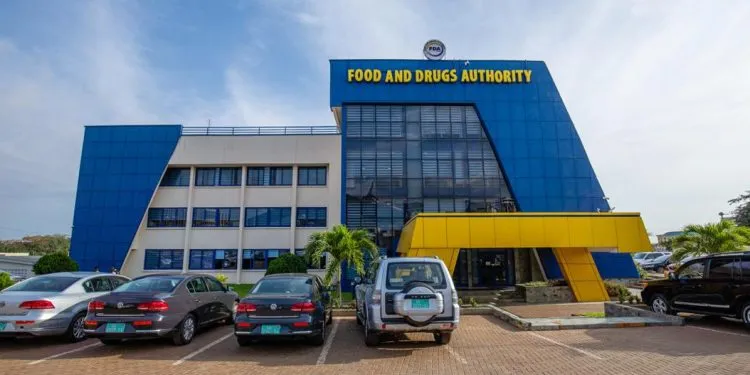
    Ghana’s Food and Drugs Authority (FDA) has revoked the Good Manufacturing Practices (GMP) certification of Aveo Pharmaceuticals, an Indian pharmaceutical company, after investigations linked it to the illegal distribution of opioid-based medications in West Africa.


    As part of the crackdown, the FDA has also directed Samos Pharma, a Ghana-based importer, to terminate all business relations with Aveo Pharmaceuticals and Westfin International.


    Additionally, the registration of six products from Masters Pharmaceutical Limited, which intended to use Aveo as a contract manufacturer, has been suspended.
    However, despite persistent appeals from traditional leaders and locals, the offenders continued their illegal activities.
  • FDA revokes Aveo Pharmaceuticals’ license following BBC opioid exposé

    FDA revokes Aveo Pharmaceuticals’ license following BBC opioid exposé

    The Food and Drugs Authority (FDA) has rescinded the GMP certification of Aveo Pharmaceuticals, an Indian drug manufacturer, over its alleged involvement in the unlawful distribution of opioid-based medications in West Africa.

    This action follows a BBC Africa Eye investigation that uncovered how Aveo Pharmaceuticals, through Westfin International, was reportedly shipping unauthorized drugs containing tapentadol and carisoprodol to nations such as Ghana, Nigeria, and Côte d’Ivoire.

    These substances are classified as highly addictive and pose severe health hazards, including respiratory complications and potential fatal overdoses when misused.

    In response to the findings, the FDA has instructed Samos Pharma, a pharmaceutical importer in Ghana, to immediately sever all ties with both Aveo Pharmaceuticals and Westfin International.

    Furthermore, the approval process for six products linked to Masters Pharmaceutical Limited, which intended to source production from Aveo Pharmaceuticals, has been put on hold.

    Reaffirming its resolve to combat opioid abuse, the FDA highlighted its ongoing regulatory measures, including drug seizures, financial penalties, and legal actions against illegal distributors.

    The agency assured the public that it will persist in working alongside security agencies to curb the circulation of harmful pharmaceuticals.

    This latest move strengthens Ghana’s regulatory enforcement against illicit drug trade while reinforcing measures to protect public safety.

  • A friend laced my ‘weed’ with cocaine – Drug addict narrates downfall moment

    A friend laced my ‘weed’ with cocaine – Drug addict narrates downfall moment

    A Ghanaian man has opened up about his dramatic fall from wealth and affluence into the abyss of poverty and drug addiction.

    Preferring to remain anonymous, the man recounted his story during a recent radio interview, detailing how his life spiralled downward after an encounter with a drug dealer, he regarded as a friend.

    The man, who once enjoyed a luxurious lifestyle complete with expensive cars and a high-profile marriage to a white woman, described how his fortunes took a severe downturn after relocating abroad.

    His descent began in Ghana but worsened after he met a dealer he referred to as a “friend” in London.

    This individual introduced him to a dangerous combination of cocaine and marijuana, which he was initially led to believe was just a potent form of marijuana.

    “A friend in London laced my ‘weed’ with cocaine,” he revealed, explaining how the mix led him into a state of debilitating addiction.

    Unable to go a day without the substance, he found himself increasingly dependent on the deadly drugs.

    As his addiction deepened, the man lost everything he had worked for, including his wealth and status. Despite his academic achievements and previous success, he has become a mere shadow of his former self, struggling with poverty and substance abuse.

    He notes that withdrawing from drugs has not been easy owing to the toll it has on one’s body and the mental health.

  • The drug I now take is worse than cocaine – Abena Korkor

    The drug I now take is worse than cocaine – Abena Korkor

    Bipolar disorder patient, Abena Korkor Addo has revealed that the effect of her current mental drug is worse than cocaine.

    Speaking on the KSM show she indicated that anytime she takes the medicine,  Lithium carbonate, makes her act unusual unlike her previous drugs.

    She recalled an incident in a hospital where she destroyed air conditioners, broke louvers and cut herself as a result of the drug.

    According to her, it took the intervention of TV3 to clear the damages she caused at the hospital.

    “ Even with my medication now I am on Lithium carbonate, it is worse than cocaine. When I was in Abokobi, Dr Nfordjour brain and mind clinic, I destroyed  ACs, I used my hands to break louvers, I was cutting myself. TV3 paid over 60,000 cedis. I don’t know if they have finished paying. When I am aware when I am creating damages. It’s nice,” she added.

    In 2021, Abena Korkor was removed from her position as a host of the TV3 program, Ladies Circle show. 

    The decision came after she posted a semi-nude video of herself on the multimedia messaging app Snapchat, which quickly went viral.

    Taking to social media, Abena Korkor announced the termination of her contract herself. 

    She stated that her employers had contacted her to inform her of their decision to remove her from the show, which she co-hosts with Anita Akuffo and other women.

    According to Abena Korkor, the Media General group, which owns TV3, cited a recent video of her appearing nude, wearing only lingerie, as the reason for her termination. 

    She revealed that the show’s sponsors deemed the video to be negative publicity, and as a result, they did not want their brands associated with it, prompting her employers to take action.

    As part of her announcement that she no longer works with TV3, Abena Korkor shared a snippet of the video on her Instagram reel.

    Captioned that: “May I loose it all but not myself. I am no longer a TV presenter, in fact, I don’t fit the script and I don’t think I ever will.No one should tag any organization here.”

  • Treat creatives who are addicted to drugs with love and care – Rex Omar

    Treat creatives who are addicted to drugs with love and care – Rex Omar

    Ghanaian music icon Rex Omar has urged the public to show love and compassion towards individuals struggling with drug addiction.

    He emphasized that stigmatizing them only hinders their path to recovery.

    Speaking during a discussion on the documentary ‘Creative Addictions,’ produced by Kwame Dadzie and aired on JoyNews on April 2, 2024, Rex Omar stressed the importance of supporting those grappling with addiction rather than blaming or belittling them.

    “I advise those who have not yet fallen victim to addiction to maintain a clean lifestyle. It’s possible to succeed and thrive without substances,” he remarked. “For those already struggling, we must extend a helping hand and not add to their feelings of inadequacy.”

    Rex Omar highlighted factors such as shyness and societal pressure as contributing to drug use among creatives.

    He mentioned that many artists, actors, and athletes turn to substances due to emotional sensitivity and the overwhelming expectations thrust upon them by society.

    “Being in the limelight brings immense pressure, yet often the rewards may not match the expectations. This can lead to using substances as a coping mechanism,” he explained.

    The renowned musician also addressed the role of managers and handlers in introducing drugs to industry professionals, cautioning against practices that exploit vulnerabilities for temporary confidence boosts.

    He called on educational institutions and relevant authorities to intensify awareness campaigns about the dangers of drug addiction and provide adequate support systems for those in need.

    The documentary ‘Creative Addictions’ delves into the personal journeys of creatives battling addiction and includes insights from psychiatric experts on effective interventions and support mechanisms.

  • Syria’s drug crisis overshadows Assad’s recovery

    Nearly five months after Arab nations offered an olive branch to Syrian President Bashar al-Assad, there are signs that some of the initiative’s key architects may be increasingly skeptical about his commitment to the deal.

    Jordanian Foreign Minister Ayman al-Safadi said this week that trafficking of the amphetamine Captagon from Syria to Jordan only increased after normalization talks led to Assad’s return to the Arab League. in May.

    Syria was expelled from the Arab League in 2011, following a brutal regime crackdown on opposition forces seeking to overthrow Assad.

    Jordan has been one of the biggest supporters of his rehabilitation, having been one of the main victims of Syria’s drug trade, but now feels the regime is unwilling or unable to calm down. suppress this trade.

    “Jordan is fighting on the border to make sure drugs do not enter the country,” Al-Monitor quoted the king as saying last week. “Bashar (al-Assad) doesn’t want conflict with Jordan… I don’t know if he’s in complete control.”

    One of the Arab states’ main demands of Syria in exchange for its recovery was that Assad help stop the trade in Captagon. Most of the global supply for the $57 billion Captagon industry is believed to come from Syria, with neighboring countries and the Gulf region being the main destinations.

    This trade turned Syria into a narco-state that allowed the Assad regime to replenish its coffers after years of war and sanctions, and gave it enormous leverage over the neighboring countries and was partly responsible for bringing them to the negotiating table with Assad.

    In another sign of Arab discontent with Assad, Saudi Arabia’s Asharq al-Awsat newspaper reported this month that the Arab ministerial committee responsible for overseeing the normalization of Syria- The Arabs suspended meetings with Damascus due to lack of response to the developed roadmap. normalization of Arab-Syrian relations.

    However, Arab League Deputy Secretary General Hossam Zaki denied this information. “They are not real,” Zaki told CNN on Friday.

    Emile Hokayem, director of regional security at the International Institute for Strategic Studies (IISS) in London, said it was not surprising that Syria’s reintegration efforts were facing setbacks.

    “Nothing significant was achieved while Assad achieved a symbolic victory that limited Arab participation for years to come,” Hokayem told CNN, adding that it was difficult to see how the May decision “could be overturned and how the stick could be used to force them to comply.” .

    In an interview with Sky News Arabia last month, the Syrian leader sounded confident and said he would not rush to reconcile with his neighbors until they changed. He blamed the lack of progress in normalizing relations with Arab countries on poor Arab politics. Arabs, he said, were good at “optics” but not “execution.”

    Assad said the drug trade had gotten worse after the war and therefore responsibility for Syria’s Captagon problem belonged to “the countries that contributed to the chaos in Syria, not not the Syrian state”. He added that it was Syria, not its Arab neighbors, that had offered to resolve the drug crisis because it was “win-win”.

    Experts say that Syria’s recovery process has many shortcomings.

    “The problem is that there really is no accountability mechanism for the normalization initiative,” said HA Hellyer, a researcher at the Carnegie Endowment for International Peace.

    “If Assad simply ignored the demands of the Arab countries, even though he initially appeared to take them seriously, there would be no process to punish him,” Hellyer told CNN. for any violation.” “It’s all quite ad hoc and arbitrary.”

    According to Jordan, the Captagon trade is booming as smugglers use increasingly advanced technology to smuggle amphetamines out of Syria and into neighboring countries. “The Syrians have promised to cooperate with us to resolve this challenge, but the situation on the ground remains extremely difficult,” said Jordanian Foreign Minister Ayman al-Safadi. “We are seeing an increase in activity and as a result we are doing what we need to do.”

    Safadi describes the Captagon trafficking operation as a “highly organized operation” in which drug traffickers “have access to very advanced technology,” including drones and goggles night. For every two or three arrests, two or three more people cross the border, Safadi explained.

    Jordan, which shares a 378 km border with Syria, views instability with its neighbor as detrimental to its national security.

    Gulf states and Jordan regularly report drug seizures with large quantities of drugs found in everything from construction signs to baklava shipments. This month, the United Arab Emirates said it had foiled a plot to smuggle 13 tons of Captagon – worth more than $1 billion – hidden in a shipment of doors and building decorative panels. Jordanian armed forces regularly shoot down drones coming from Syria and carrying irritants.

    Experts believe that the two parts of the Arab-Syrian normalization treaty did not meet people’s expectations. Assad may not have found a strong enough incentive to abandon his lucrative drug trade. And what he wants can be difficult to achieve. “What Assad has always wanted is not what the Arab countries can or will offer:
    unconditional political support, huge financial aid, as well as Arab pressure to lift Western sanctions,” Hokayem said.

    Arab countries are now at risk of falling into a state of deadlock.

    “Their mobility is limited,” Hokayem said. “Direct and direct coercion is not an option and some countries do not care enough to devote effort and political capital to Syria,” he said, adding that stubborn policies of Assad may even motivate “some countries.”