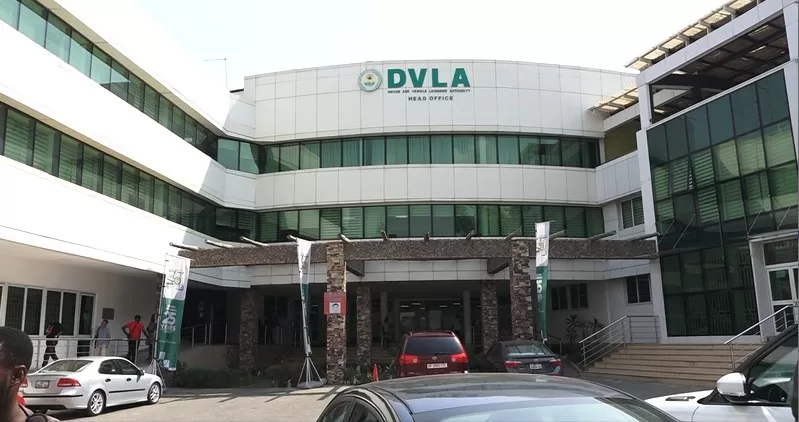
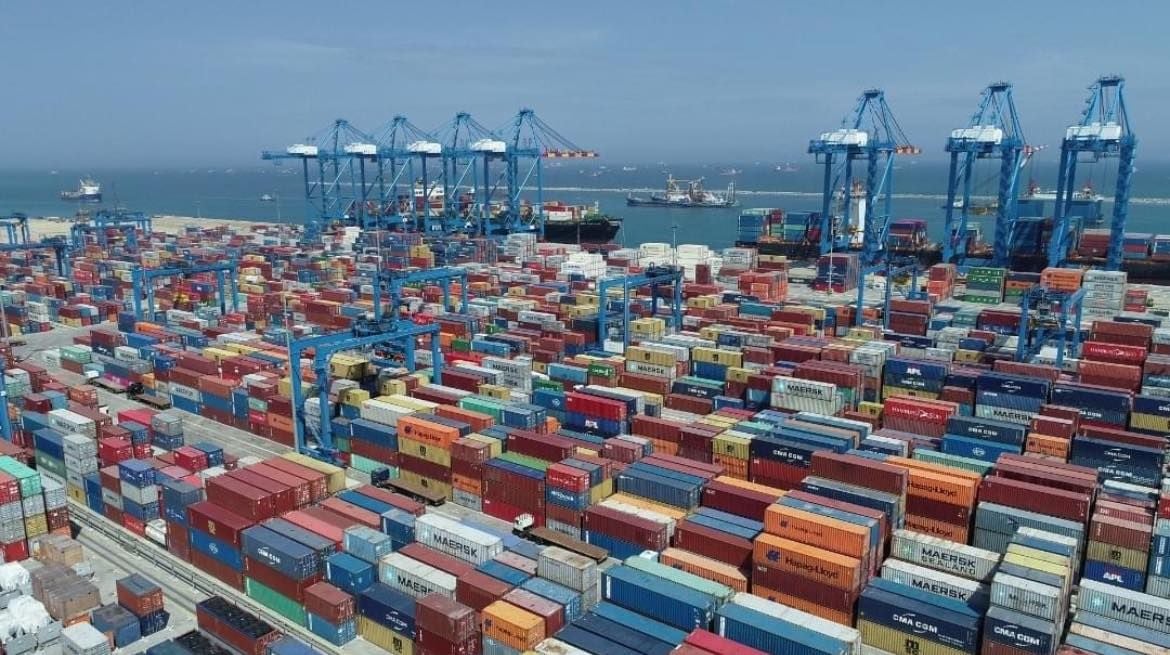
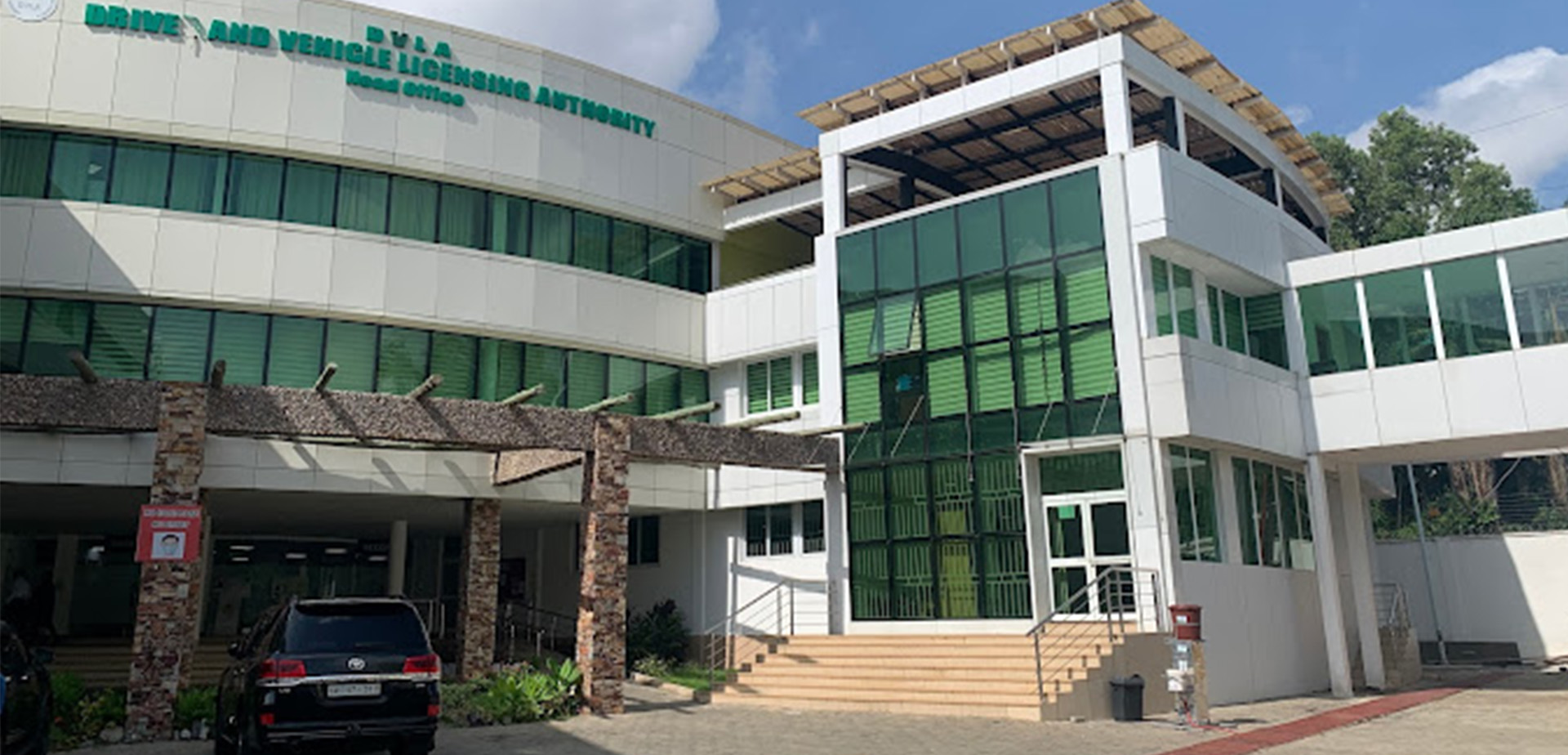
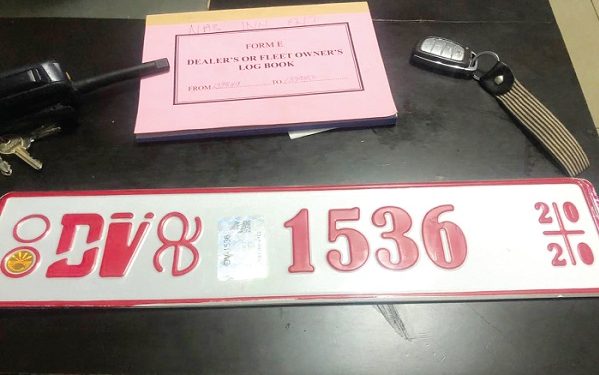
Forty (40) vehicles have been impounded by the Driver and Vehicle Licensing Authority (DVLA) at the Tema Harbour for the usage of fraudulent Drive from Port (DP) stickers. The seizure follows an intelligence-led operation conducted by the DVLA on Friday, April 17.
According to a statement by DVLA, its preliminary investigations indicate vehicles imported by CFAO, a subsidiary of Toyota Tsusho Corporation, did not undergo the required clearance processes.
“However, evidence suggests that an agent engaged to clear the vehicles on behalf of the company employed illegal methods, resulting in the discrepancies identified,” parts of the statement read.
The DVLA introduced DP stickers to address revenue leakages associated with the previous aluminum DP plate system. Following this reform, the Authority recorded a significant increase in the issuance of DP stickers from an average of 2,000 stickers per month to approximately 15,000 in the month of October 2025.
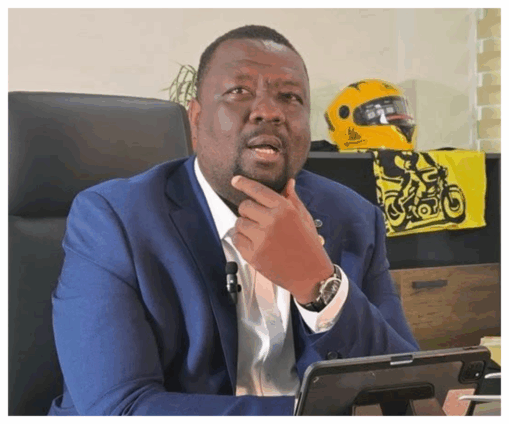
In recent months, however, a noticeable decline in DP sticker issuance at the ports prompted further investigations. Last year, the Chief Executive Officer of the Driver and Vehicle Licensing Authority (DVLA), Julius Neequaye Kotey, met with the Office of the Special Prosecutor (OSP).
He appeared before the committee, Friday, October 31, to defend a recent claim that he turned down a GH¢4 million bribe offer from some powerful individuals who sought to block the government’s new Digitalised Vehicle Registration Plate (DP) initiative.
In an interview, Mr Kotey revealed, “… When I started this thing [car registration initiative], let me say that a gentleman called me. I don’t even know where that gentleman is from, whether it was a trap or not. He brought GH¢4 million to my office (sic)…
“They came to my office saying that they do not want the DP sticker to be introduced since it would not help them benefit from monies in any way. They know they are stealing from the county. They brought cash, and my security can attest to that… I just said I can’t take it”.
The DVLA boss was spotted leaving the OSP premises; however, what transpired during the meeting is yet to be made public. The Digitalised Vehicle Registration Plate (DP) initiative forms part of the government’s effort to improve road safety and curb vehicle-related fraud.
On Monday, October 27, a tense moment erupted during a Public Accounts Committee (PAC) sitting when Chairperson Abena Osei-Asare sharply confronted the DVLA boss over privacy concerns tied to the authority’s proposed digital number plate system.
The exchange followed Mr. Kotey’s explanation that the new plates would contain Radio Frequency Identification (RFID) chips to enhance security and make it difficult for outsiders to tamper with or duplicate them.
Mrs. Osei-Asare, however, raised concerns about whether the new plates would display vehicle owners’ surnames, warning that such information could expose personal data.
In response, Mr. Kotey said the DVLA would comply with Ghana’s Data Protection Law, noting that the system would only digitalize existing information without altering its basic format. When pressed for a clear answer on whether names would appear, he replied, “It depends on what the law says; we’ll go by it.”
That response immediately drew a sharp reaction from the PAC Chair, who retorted, “You don’t tell me it depends on what the law says. You are doing it, so you should be able to tell us what the law says. I’m asking a specific question: is it going to have the user’s surname on the number plate?”
Mr. Kotey later clarified that names do not appear on standard number plates, explaining that only personalized plates bear such identifiers. The Chair, however, maintained that the Committee’s inquiries were in the public interest and aimed at ensuring transparency and accountability in the rollout of the new digital number plate system.
The government’s planned nationwide SIM re-registration exercise is expected to establish a more reliable subscriber database while correcting irregularities identified during earlier registration processes.
This information was disclosed by the Director-General of the National Communications Authority (NCA), Edmund Yirenkyi Fianko on Monday, March 9.
He noted that, “What we want to do is to have a single source of truth. We want to ensure the ID details are correct and that the person who brought the ID is indeed the person”.
According to him, documents submitted by subscribers during the first registration exercise conducted in 2011 did not meet verification standards, leading to inconsistencies in the subscriber database.
“This will be the third official registration process. The first one was done in 2011. The challenge with it is that there was no verification at all of the IDs. What we did was a manual verification of some limited cases along the way,” he said.
He added that, “There was supposed to be verification of the ID card; we did one part of it, but the second part didn’t happen. The policymaker, NIA, couldn’t get alignment to do the second phase, which was the validation of the biometric”.
“There are cases, including fake photos, where the same name is used by a different person. We saw fake IDs used to register”.
On Monday, March 9, the Cabinet gave the green light for a completely new SIM registration exercise following an extensive review of the previous process.
This was announced by the Communication Minister, Samuel Nartey George, during high-level discussions with the Ghana Chamber of Telecommunications and the National Communications Authority on March 9.
Between 2021 and 2023, the erstwhile government ordered a SIM registration exercise in Ghana, which required all mobile subscribers to re‑register their SIM cards using the Ghana Card; an exercise aimed at checking fraud and enhancing national security, but was plagued by weak biometric enforcement, data inconsistencies, long queues, and widespread complaints, leaving many citizens frustrated and some SIMs blocked over incomplete processes or unsuccessful registration process.
Consequently, the Ningo Prampram MP revealed that the imminent exercise will not be a continuation of the previous one, which was undertaken by the former government, but will be a completely new reset exercise.
How different is this exercise from the previous one?
Detailing the difference between the previous registration and the yet to be conducted one, Mr Nartey noted that the imminent exercise will feature centralised data under the National Communications Authority, strict biometric enforcement, cross‑network fraud prevention, and new legislation
The Minister said, “A Central Equipment Identity Register (CEIR) will be introduced to enable cross-network blocking of stolen or fraud-linked devices”, adding that, “a revised Legislative Instrument (L.I.) is being prepared to regulate the exercise.”
Telecom operators who participated in the meeting welcomed the initiative but raised some operational concerns.
However, it is not yet clear when the new registration exercise will commence or who will bear the cost of implementing it.
Earlier in May 2025, an INTERPOL-led operation codenamed “Safe Wheels” dismantled a major vehicle trafficking network in West Africa. The exercise detected about 150 stolen vehicles and seized over 75 across 12 countries, including Ghana and Nigeria.
The two-week operation also launched 18 new investigations and exposed two organised crime syndicates. Most of the stolen vehicles were trafficked from Canada, with others originating from France, Germany, and the Netherlands.
In response, DVLA Chief Executive Officer Julius Neequaye Kotey, in a statement shared on Facebook on Monday, August 25, 2025, announced that the new plates will be fitted with Radio Frequency Identification (RFID) technology and linked directly to a central database. This innovation, he explained, will make it impossible to register “Togo cars” or vehicles smuggled into the country without proper documentation.
“The new system will ensure that every vehicle can be authenticated against our database. This way, smuggled cars or those that have avoided the payment of duties cannot slip through the cracks,” he explained.
He emphasized that the new number plate system is designed not only to ensure compliance but also to enhance road safety.“The introduction of a new number plate system is a significant step forward for vehicle regulation and security. The new plates will be equipped with RFID technology and other features to modernise vehicle management and improve road safety,” he said.
According to the DVLA, the new plates will also facilitate toll payment in the future, as the embedded chip will allow vehicles to make automatic, cashless payments at toll points.
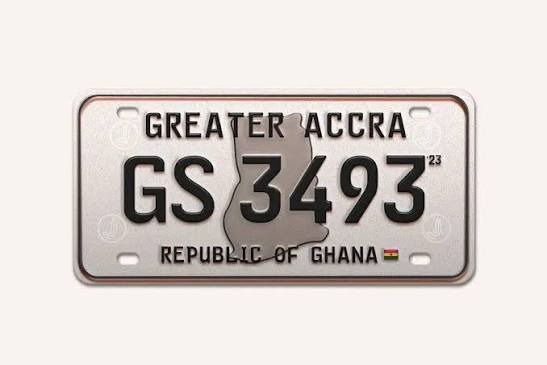
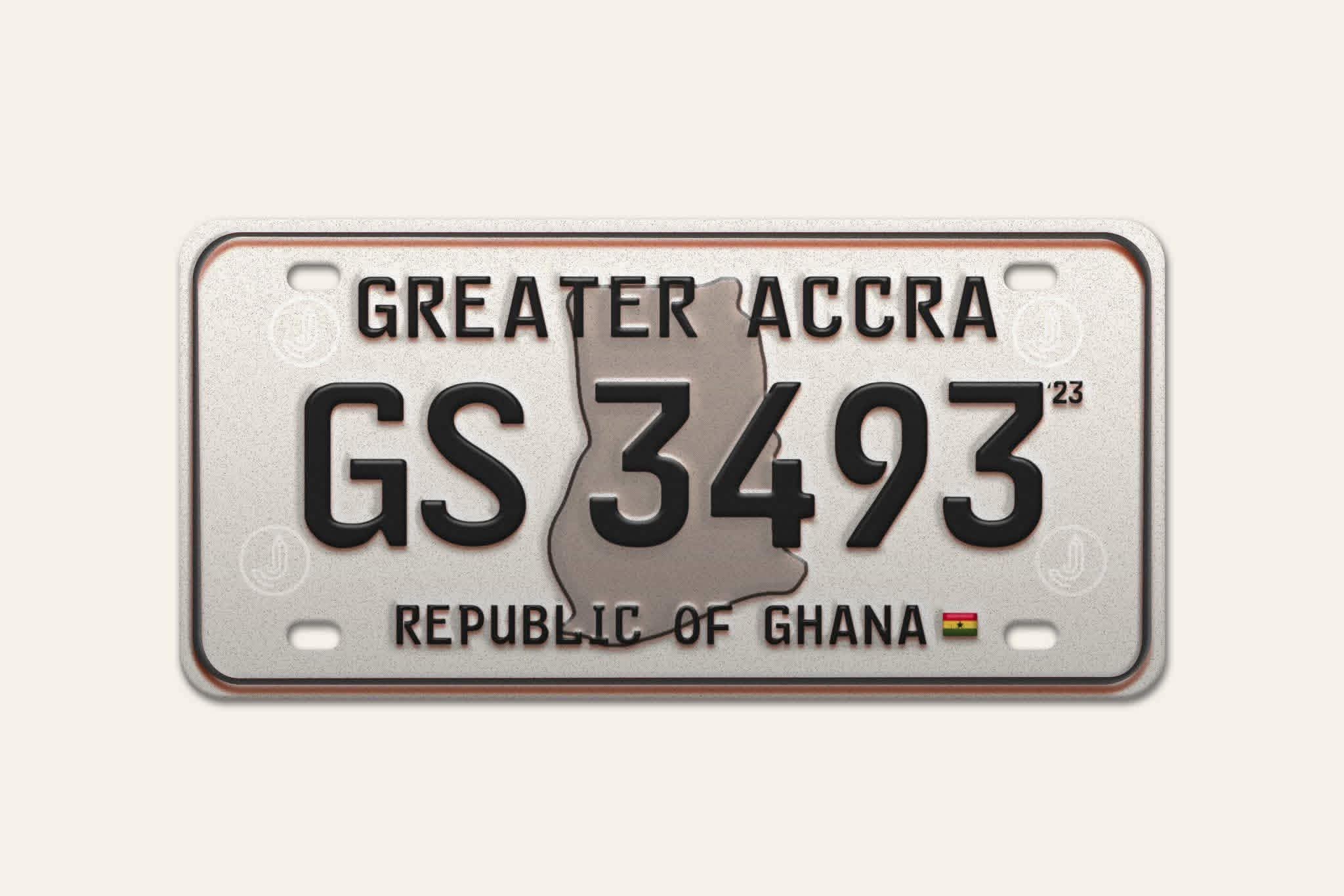
Instead of showing the year of registration, the plates will display a regional code to simplify the identification of a vehicle’s origin. Other security features include a reflective surface to improve visibility at night and in bad weather conditions.
Mr. Kotey added that although the nationwide rollout is expected in 2026, work is still ongoing to finalise the design and ensure the plates meet both local and international security standards.“This is about more than just plates — it is about creating a secure, transparent, and modern vehicle management system that benefits both motorists and the general public,” he added.
Beyond the new plates, the DVLA has also revealed that it will soon roll out an e-licence as part of its broader digital transformation agenda to modernise service delivery and improve convenience for Ghanaian drivers.
This was disclosed by Mr. Kotey on Tuesday, August 5, 2025, during the launch of the DVLA Lorry Terminal Project at Circle.He said: “The launch of the Lorry Terminal Project aims to bring DVLA services closer to drivers. The services provided are acquisition of a driver’s licence, renewal of licence, replacement of missing and expired licences, and conversion of a foreign driver’s licence.”
According to him, the DVLA has significantly improved its operations by adopting digital solutions in line with global technological trends. He noted that the introduction of the e-licence will enable drivers to prove their eligibility to drive without necessarily carrying their hardcopy licence.
“Most of us don’t carry our licenses with us, and it shouldn’t be the case that the police or any other party takes advantage of that. If I don’t have my license with me and I am a driver, I’m still a driver. I should have an app that allows me to identify myself as a legitimate driver on the street, and that’s what the e-licence is about.”
He clarified that the e-licence will not replace the traditional one but will serve as a complement.“It is not here to replace the physical licence but rather to provide an additional option to access your licence on your Android or iPhone.”
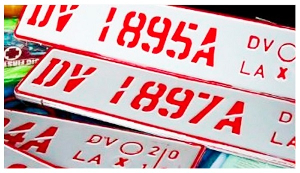
Meanwhile, the DVLA has cautioned the public against the misuse of Defective Vehicle (DV) plates. Shedding light on their proper usage, Mr. Kotey explained that DV plates are exclusively designated for car dealers and are only valid when a car has not yet been certified as roadworthy.


“Only car dealers are supposed to use DV plates. It stands for ‘Defective Vehicle’ because the vehicle hasn’t yet been inspected by us for roadworthiness. That’s why we call it a DV plate. It’s not meant for any other person, only for dealers when they’re working on the vehicle,” the DVLA CEO stated.
He further explained that, in partnership with the State Insurance Company (SIC), a two-week insurance cover is provided for cars at the ports.
These vehicles are then given a DP sticker, after which they must be registered.“SIC is providing two weeks of insurance cover. After that, you must register your car because DV plates are not supposed to be used by ordinary citizens,” he clarified.
The use of DV and DP plates is governed by the Road Traffic Act 683/04, as amended by Act 761/08, and the Road Traffic Regulations 2012, L.I. 2180.
Speaking on the persistent presence of “goro boys” — unofficial middlemen who often pose as helpers at DVLA offices — Mr. Kotey acknowledged that they have long been part of the Authority’s environment.
These individuals typically offer assistance with vehicle registration, licensing, and other administrative processes for a fee, despite not being officially employed by the DVLA.
He noted that the operations of “goro boys” have spanned decades, from the era of the late Jerry John Rawlings to the present Mahama-led administration, forming an informal but persistent part of the Authority’s ecosystem.
The Director of Corporate Affairs at the Driver and Vehicle Licensing Authority (DVLA), Stephen Attuh, has disclosed that the Authority inherited a backlog of more than 440,000 driver’s licence applications.
Speaking to the media on Friday, February 13, the Director of Corporate Affairs indicated that the Authority is gradually resolving the situation rolling out a 24-hour operational centre to centralise licence processing.
“Upon assumption of office by the current CEO, we noticed that there were over 440,000 backlog licence applications. So what he did was to commission a 24-hour centre because we wanted to centralise the system due to its security nature, so that we do not have people gaining access to it and issuing fake licences.
“What we are looking at currently is to operate our regional offices on a 24-hour basis. However, not all offices can function the same way. “For those areas that cannot run a 24-hour service, we operate an extended service running two shifts until we see high demand, then we roll it out fully,” he added.
Meanwhile, the Driver and Vehicle Licensing Authority’s new Radio Frequency Identification (RFID) embedded licence plates, which were scheduled to take effect from January 2, 2026, has been postponed until further notice.
A statement issued by the Driver and Vehicle Licensing Authority (DVLA) explained that a new date would be announced after Parliament completes the amendments to the Road Traffic Regulations, 2012 (L.I. 2180), which provide the legal framework for the introduction of the new licence plates.
The new vehicle number plate system aimed at tackling smuggling and preventing the registration of vehicles that evade import duties.
This move comes in response to the rising cases of car smuggling into West Africa, including Ghana. On August 26, the Economic and Organised Crime Office (EOCO) Head of Legal and Prosecutions, Leo Antony Siamah, revealed during a media engagement that 100 stolen luxury vehicles had been recovered in Ghana after being shipped in through dubious means.
Mr. Siamah cautioned the public to exercise extreme vigilance when purchasing vehicles, particularly high-end ones, to avoid becoming unwitting accomplices in criminal activities.
He further disclosed that the anti-graft agency is currently investigating about 300 additional cases of suspected stolen vehicles in collaboration with Interpol, the Federal Bureau of Investigation (FBI), and the Royal Canadian Mounted Police (RCMP).
Earlier in May 2025, an INTERPOL-led operation codenamed “Safe Wheels” dismantled a major vehicle trafficking network in West Africa. The exercise detected about 150 stolen vehicles and seized over 75 across 12 countries, including Ghana and Nigeria.
DVLA Chief Executive Officer Julius Neequaye Kotey, in a statement shared on Facebook on Monday, August 25, 2025, announced that the new plates will be fitted with Radio Frequency Identification (RFID) technology and linked directly to a central database.
This innovation, he explained, will make it impossible to register “Togo cars” or vehicles smuggled into the country without proper documentation.
“The new system will ensure that every vehicle can be authenticated against our database. This way, smuggled cars or those that have avoided the payment of duties cannot slip through the cracks,” he explained.
He emphasized that the new number plate system is designed not only to ensure compliance but also to enhance road safety.“The introduction of a new number plate system is a significant step forward for vehicle regulation and security. The new plates will be equipped with RFID technology and other features to modernise vehicle management and improve road safety,” he said.
According to the DVLA, the new plates will also facilitate toll payment in the future, as the embedded chip will allow vehicles to make automatic, cashless payments at toll points.
Instead of showing the year of registration, the plates will display a regional code to simplify the identification of a vehicle’s origin. Other security features include a reflective surface to improve visibility at night and in bad weather conditions.
Mr. Kotey added that although the nationwide rollout is expected in 2026, work is still ongoing to finalise the design and ensure the plates meet both local and international security standards.“This is about more than just plates — it is about creating a secure, transparent, and modern vehicle management system that benefits both motorists and the general public,” he added.
Beyond the new plates, the DVLA has also revealed that it will soon roll out an e-licence as part of its broader digital transformation agenda to modernise service delivery and improve convenience for Ghanaian drivers.
This was disclosed by Mr. Kotey on Tuesday, August 5, 2025, during the launch of the DVLA Lorry Terminal Project at Circle. He said: “The launch of the Lorry Terminal Project aims to bring DVLA services closer to drivers. The services provided are acquisition of a driver’s licence, renewal of a licence, replacement of missing and expired licences, and conversion of a foreign driver’s licence.”
According to him, the DVLA has significantly improved its operations by adopting digital solutions in line with global technological trends.
He noted that the introduction of the e-licence will enable drivers to prove their eligibility to drive without necessarily carrying their hardcopy licence.
“Most of us don’t carry our licenses with us, and it shouldn’t be the case that the police or any other party takes advantage of that. If I don’t have my license with me and I am a driver, I’m still a driver. I should have an app that allows me to identify myself as a legitimate driver on the street, and that’s what the e-licence is about.”
He clarified that the e-licence will not replace the traditional one but will serve as a complement.“It is not here to replace the physical licence but rather to provide an additional option to access your licence on your Android or iPhone.”
Meanwhile, the DVLA has cautioned the public against the misuse of Defective Vehicle (DV) plates. Shedding light on their proper usage, Mr. Kotey explained that DV plates are exclusively designated for car dealers and are only valid when a car has not yet been certified as roadworthy.
“Only car dealers are supposed to use DV plates. It stands for ‘Defective Vehicle’ because the vehicle hasn’t yet been inspected by us for roadworthiness. That’s why we call it a DV plate. It’s not meant for any other person, only for dealers when they’re working on the vehicle,” the DVLA CEO stated.
He further explained that, in partnership with the State Insurance Company (SIC), a two-week insurance cover is provided for cars at the ports.
These vehicles are then given a DP sticker, after which they must be registered.“SIC is providing two weeks of insurance cover. After that, you must register your car because DV plates are not supposed to be used by ordinary citizens,” he clarified.
The use of DV and DP plates is governed by the Road Traffic Act 683/04, as amended by Act 761/08, and the Road Traffic Regulations 2012, L.I. 2180.
Speaking on the persistent presence of “goro boys” — unofficial middlemen who often pose as helpers at DVLA offices — Mr. Kotey acknowledged that they have long been part of the Authority’s environment.
These individuals typically offer assistance with vehicle registration, licensing, and other administrative processes for a fee, despite not being officially employed by the DVLA.
He noted that the operations of “goro boys” have spanned decades, from the era of the late Jerry John Rawlings to the present Mahama-led administration, forming an informal but persistent part of the Authority’s ecosystem.
A planned demonstration at the Jubilee House has been announced by a group known as the Concerned Importers of Vehicles following claims that the ages of imported vehicles are being manipulated at Ghana’s ports.
The group says gaps in enforcement continue to allow some importers to alter the stated ages of vehicles brought in from Japan and Dubai in order to avoid penalties on over-aged cars.
Speaking to the media on January 25, 2026, a leading member of the group, Fredericka Ackah, said importers were assured last year that the ages of vehicles from Japan and Dubai would no longer be reduced, but some individuals are still benefiting from the practice.
“Last year, in 2025, we were told that importers bringing in cars from Japan and Dubai should not have the ages reduced, but some people are still doing it. Recently, a friend of mine imported vehicles from Japan; the ages of some were reduced while others were not,” she said.
She said the lack of consistency has caused uncertainty among vehicle importers and created opportunities for corrupt practices.
Ackah cautioned that the group would take the matter to the Presidency if the issue remains unresolved.
“The Commissioner should take action or we will storm the Jubilee House to report what is going on at the Ports and Harbours,” she stated.
She claimed that vehicles produced in 2007 or 2008 are sometimes recorded as 2011 or 2013, enabling importers to avoid penalties for over-aged cars.
The group has therefore urged the Driver and Vehicle Licensing Authority to strengthen inspections at the ports to stop the practice.
“There is a lot of confusion among importers. If the age can be reduced, people will take their vehicles to others who can do it for them just to dodge the over-age penalty. DVLA should be vigilant and ensure that any vehicle whose age has been reduced is thoroughly checked,” Ackah said.
She noted that the group possesses documents supporting their claim that the ages of some imported vehicles have been altered.
Ghana currently prohibits the import of salvaged vehicles and used cars over ten years old. This restriction is outlined in the Customs (Amendment) Act, 2020, which Parliament passed in March 2020 and which was signed into law by then-President Nana Addo Dankwa Akufo-Addo on April 30, 2020.
Under Section 154 (5) of the Act, the ban took effect six months after the presidential assent, starting in October 2020.
The rule is intended to encourage a viable market for vehicles manufactured or assembled in Ghana. It also offers import-duty incentives to companies that set up local vehicle production or assembly plants, supporting the government’s goals of industrialisation and job creation.
In 2024, the Ghana Institute of Freight Forwarders (GIFF), alongside the Association of Customs House Agents of Ghana, Freight Forwarders Association ofGhana, and Customs Brokers Association of Ghana, in collaboration with various trade groups and manufacturers, are protesting against what they label as exploitative actions by shipping lines operating in the country.
Also participating are the Ghana Union of Traders Association, EXIM Frozen Foods Association of Ghana, and the Food and Beverages Association of Ghana.
They are marching through Tema, submitting petitions to the Ministries of Transport, Trade, Finance, and other key bodies, urging immediate regulatory intervention.
GIFF asserts that these unregulated practices have severely harmed the logistics industry and the broader Ghanaian economy.
“Shipping lines have operated with impunity for too long, imposing unjustifiable costs that harm freight forwarders, importers, exporters, and ultimately consumers,” said a spokesperson for GIFF.
The group highlighted that these charges, when combined with delays and inefficiencies, inflate the cost of doing business and contribute to Ghana’s weakened foreign exchange position.
The protest also seeks to address a practice in which shipping lines, contrary to the Customs Act of 2015, are engaging in customs brokerage, sidelining freight forwarders and monopolizing services in a manner that the association views as anti-competitive.
Some of the clearing agents told 3news.com that many of their mates have folded up with many more of the getting out of business.
“The shipping lines now engage our clients behind us making us lose our business”.
The group has served notice of another massive protest towards the presidency in 14 days if their concerns are not addressed.
The Chief Executive Officer of the Driver and Vehicle Licensing Authority (DVLA), Julius Neequaye Kotey, has met with the Office of the Special Prosecutor (OSP).
He appeared before the committee today, Friday, October 31, to defend a recent claim that he turned down a GH¢4 million bribe offer from some powerful individuals who sought to block the government’s new Digitalised Vehicle Registration Plate (DP) initiative.
In an interview Mr Kotey revealed “… When I started this thing [car registration initiative], let me say that a gentleman called me. I don’t even know where that gentleman is from, whether it was a trap or not. He brought GH¢4 million to my office (sic)…
“They came to my office saying that they do not want the DP sticker to be introduced since it would not help them benefit monies in any way. They know they are stealing from the county. They brought cash, and my security can attest to that… I just said I can’t take it”.
The DVLA boss was spotted leaving the OSP premises; however, what transpired during the meeting is yet to be made public. The Digitalised Vehicle Registration Plate (DP) initiative forms part of the government’s effort to improve road safety and curb vehicle-related fraud.
On Monday, October 27, a tense moment erupted during a Public Accounts Committee (PAC) sitting when Chairperson Abena Osei-Asare sharply confronted the DVLA boss over privacy concerns tied to the authority’s proposed digital number plate system.
The exchange followed Mr. Kotey’s explanation that the new plates would contain Radio Frequency Identification (RFID) chips to enhance security and make it difficult for outsiders to tamper with or duplicate. Mrs. Osei-Asare, however, raised concerns about whether the new plates would display vehicle owners’ surnames, warning that such information could expose personal data.
In response, Mr. Kotey said the DVLA would comply with Ghana’s Data Protection Law, noting that the system would only digitalize existing information without altering its basic format. When pressed for a clear answer on whether names would appear, he replied, “It depends on what the law says; we’ll go by it.”
That response immediately drew a sharp reaction from the PAC Chair, who retorted, “You don’t tell me it depends on what the law says. You are doing it, so you should be able to tell us what the law says. I’m asking a specific question: is it going to have the user’s surname on the number plate?”
Mr. Kotey later clarified that names do not appear on standard number plates, explaining that only personalized plates bear such identifiers. The Chair, however, maintained that the Committee’s inquiries were in the public interest and aimed at ensuring transparency and accountability in the rollout of the new digital number plate system.
The Public Accounts Committee (PAC) of Ghana was established under Article 103 of the 1992 Constitution and formally constituted as part of Parliament’s Standing Committees. It has existed since the First Parliament of the Fourth Republic, which began in January 1993.
Its mandate is to review reports presented by the Auditor-General on the public accounts of Ghana, summon ministries, departments, and agencies (MDAs), as well as state-owned enterprises (SOEs), to explain financial infractions and irregularities, and in some cases, recommend sanctions, recoveries, or referrals for prosecution.
However, since its establishment, PAC has reportedly had no documented record of ensuring prosecution or imprisonment of culprits, though its recommendations can trigger EOCO investigations or action by the Attorney-General.
Over the years, the Committee has engaged several public institutions and their heads over reported financial irregularities, but little to no documentation of penalties has been recorded to serve as a deterrent. It will be recalled that in 2017, PAC recommended the prosecution of officials at the National Sports Authority for misappropriating funds, but no confirmed convictions followed.
Similarly, in 2021, the Committee traced non-existent staff under GETFund and MASLOC, yet no jail terms were recorded. In 2023, PAC recovered GH₵12.9 million, but this was through repayments rather than criminal penalties.
Meanwhile, more than GH¢12.9 billion in misappropriated public funds has been retrieved following collaboration between the Public Accounts Committee (PAC) and the Auditor-General’s Department.
Addressing the media on Wednesday, October 1, Chairperson of PAC, Abena Osei-Asare, attributed the remarkable recovery to the collective efforts of the Auditor-General’s Department.
“One thing I am clear about is that what we are doing is yielding positive results. We have a report we will look at. Per the work of the Public Accounts Committee, and with the support of the Auditor-General, we have been able to retrieve GH¢12.9 billion. There is a whole report on that which we will be sharing with the public at the right time,” she said.
According to her, the Committee will make the report’s details public at the appropriate time. The Committee is scheduled to resume its sittings on Monday, October 27. Various ministries, departments, and agencies have been interrogated by PAC in recent weeks to address infractions highlighted in the 2024 Auditor-General’s Report.
Recently, the Director of Administration at Tamale Teaching Hospital (TTH), Dr. Emmanuel Sena Kwasi Donkor, appeared before the Public Accounts Committee after the Auditor-General’s report indicated that the hospital paid salaries amounting to GH¢1,449,000 to a deceased staff member over a period of 26 months.
Dr. Donkor affirmed the report, adding that the hospital has so far recovered GH¢303,558.68 of the total amount. He explained that the banks previously handling the transactions had, through a letter, indicated that they had ceased processing them.
“We were able to recover some amounts. Before we got here, we had received letters from some banks stating that they had stopped transferring the funds to the government chest,” Dr. Donkor told the Committee.
He further urged Parliament to intervene and help the hospital recover the remaining funds. “Maybe at the end of this session, we will make a prayer to this House for the House to make an order directing those banks to transfer,” he said.
Dr. Donkor revealed that his office has submitted the names of the individuals implicated in the act to the Economic and Organised Crime Office (EOCO) for recovery. “EOCO has written back requesting the files of the people involved, and we have submitted them,” he added.
Meanwhile, Ranking Member Samuel Atta-Mills raised serious concerns regarding the issue. “Habib Napare – date of separation was 2022. This guy had died. Didn’t you go to the funeral? And you validated this dead person for 26 months? And now you are coming to tell Parliament to do what?” Atta-Mills asked sharply.
In the meantime, the Office of the Special Prosecutor (OSP) has released a fifty-page report covering investigations and prosecutions carried out between January 1 and July 31 this year.
The Chief Executive Officer (CEO) of the Driver and Vehicle Licensing Authority (DVLA), Julius Neequaye Kotey, is expected to appear before the Office of the Special Prosecutor (OSP) for questioning in the coming days.
He is to defend allegations suggesting that he rejected a GH¢4 million bribe offered by some powerful individuals to block the government’s new Digitalised Vehicle Registration Plate (DP) initiative.
The policy is part of the government’s effort to improve road safety and curb vehicle-related fraud. On Monday, October 27, a tense moment erupted during the Public Accounts Committee (PAC) sitting when Chairperson Abena Osei Asare sharply confronted the DVLA boss over privacy concerns tied to the authority’s proposed digital number plate system.
The exchange followed Mr. Kotey’s explanation that the new plates would contain Radio Frequency Identification (RFID) chips to boost security and make it difficult for outsiders to tamper with or duplicate.
Mrs. Osei Asare, however, raised concerns about whether the new plates would display vehicle owners’ surnames, warning that such information could expose personal data.
In response, Mr. Kotey said the DVLA would comply with Ghana’s Data Protection Law, noting that the system would only digitalize existing information without changing its basic format.
When pressed for a clear answer on whether names would appear, he replied, “It depends on what the law says; we’ll go by it.” That response immediately drew a sharp reaction from the PAC Chair, who retorted, “You don’t tell me it depends on what the law says. You are doing it, so you should be able to tell us what the law says. I’m asking a specific question: is it going to have the user’s surname on the number plate?”
Mr. Kotey later clarified that names do not appear on standard number plates, explaining that only personalized plates bear such identifiers. The Chair, however, maintained that the Committee’s inquiries were in the public interest and aimed at ensuring transparency and accountability in the rollout of the new digital number plate system.
The Public Accounts Committee (PAC) of Ghana was established under Article 103 of the 1992 Constitution and formally constituted as part of Parliament’s Standing Committees. It has existed since the First Parliament of the Fourth Republic, which began in January 1993.
Its mandate is to review reports presented by the Auditor-General on public accounts of Ghana, summon ministries, departments, and agencies (MDAs) as well as state-owned enterprises (SOEs) to explain financial infractions and irregularities, and sometimes suggest sanctions, recoveries, and referrals for prosecution.
However, since its establishment, PAC has reportedly had no documented record of ensuring the prosecution, and in other cases, the imprisonment of culprits, though its recommendations can trigger EOCO investigations or action by the Attorney-General.
Over the years, the Committee has engaged several public institutions and heads of these institutions over reported financial irregularities in their respective operations, but little to no documentation of penalties has been recorded, particularly to serve as a deterrent. It will be recalled that in 2017, PAC recommended the prosecution of officials at the National Sports Authority for misappropriating funds, but no confirmed convictions followed.
Similarly, in 2021, the Committee traced non-existent staff under GETFund and MASLOC, yet no jail terms were recorded. In 2023, PAC recovered GH₵12.9 million, but this was through repayments rather than criminal penalties.
Meanwhile, more than GH¢12.9 billion in misappropriated public funds has been retrieved following collaboration between the Public Accounts Committee (PAC) and the Auditor-General’s (A-G) Department.
Addressing the media on Wednesday, October 1, Chairperson of PAC, Abena Osei-Asare, attributed the groundbreaking development to the collective efforts of the Auditor-General’s Department.
“One thing I am clear about is that what we are doing is yielding positive results. We have a report we will look at. Per the work of the Public Accounts Committee, and with the support of the Auditor-General, we have been able to retrieve GH¢12.9 billion. There is a whole report on that which we will be sharing with the public at the right time,” she said.
According to her, the Committee will make the report’s details public at the appropriate time. The Committee is scheduled to resume its sittings on Monday, October 27. Various ministries, departments, and agencies have been interrogated by PAC in recent weeks to address infractions highlighted in the 2024 Auditor-General’s Report.
Recently, the Director of Administration at Tamale Teaching Hospital (TTH), Dr. Emmanuel Sena Kwasi Donkor, appeared before the Public Accounts Committee after the A-G’s report suggested that the hospital paid salaries amounting to GHS 1,449,000 to a deceased staff member over a period of 26 months.
Dr. Donkor affirmed the report, adding that the hospital has so far recovered GHS 303,558.68 of the total amount. He explained that the banks previously handling the transactions had, through a letter, indicated that they had ceased processing them.
“We were able to recover some amounts. Before we got here, we had received letters from some banks stating that they had stopped transferring the funds to the government chest,” Dr. Donkor told the Committee.
He further urged Parliament to intervene and help the hospital recover the remaining funds. “Maybe at the end of this session, we will make a prayer to this House for the House to make an order directing those banks to transfer,” he said.
Dr. Donkor revealed that his office has submitted the names of the individuals implicated in the act to the Economic and Organised Crime Office (EOCO) for recovery. “EOCO has written back requesting the files of the people involved, and we have submitted them,” he added.
Meanwhile, Ranking Member Samuel Atta-Mills raised serious concerns regarding the issue. “Habib Napare – date of separation was 2022. This guy had died. Didn’t you go to the funeral? And you validated this dead person for 26 months? And now you are coming to tell Parliament to do what?” Atta-Mills asked sharply.
In the meantime, the Office of the Special Prosecutor (OSP) has released a fifty-page report covering investigations and prosecutions carried out between January 1 and July 31 this year.
The Driver and Vehicle Licensing Authority (DVLA) has denied allegations of imposing unauthorized fees while maintaining that all its charges are legally approved.
This is a response to the Member of Parliament (MP) for the Effia Constituency, Isaac Boamah-Nyarko’s claim that the Authority is imposing charges without seeking the constitutionally required parliamentary approval.
Speaking to JoyNews on October 16, Director of Corporate Affairs at the DVLA, Stephen Attuh, explained that the Authority is a “law-abiding institution” that only permits fees duly approved in its operations.
“Let me be emphatic. DVLA is a law-abiding institution. An institution that is a creature of law. And at every point in time, whatever fees or charges that DVLA imposes are those approved by Parliament. At no point has DVLA imposed any fees that have not gone through Parliament,” he said.
He further stated that the mandate to operate under the Fees and Charges (Miscellaneous Provisions) Regulations, 2023 (LI 2481), which outlines the legally approved charges for various state agencies has not changed.
“In that LI at page 123, it contains the fees and charges that are approved by Parliament for the Driver and Vehicle Licensing Authority,” he noted. “If he believes that this was not approved or we are charging something illegal, we can have that roundtable discussion,” he said.
Adding that the Ministry of Finance compiles the fees of state institutions and submits them, through sector ministries, to the Parliamentary Select Committee on Finance for approval including the charges.
The DVLA, however, emphasized that its operations are fully in consonance with parliamentary and legal procedures.
Member of Parliament (MP) for the Effia Constituency,
“The DVLA had gone ahead to charge people for fines, amongst others, without a request to parliament. And that is an affront to the law,” he alleged.
Ahead of DVLA’s response, Member of Parliament (MP) for the Effia Constituency, Isaac Boamah-Nyarko, made claims that the Authority was imposing charges without seeking the constitutionally required parliamentary approval.
“The DVLA had gone ahead to charge people for fines, amongst others, without a request to parliament. And that is an affront to the law,” he alleged on JoyNews’ AM Show on Thursday.
Meanwhile, DVLA has announced a major shift in its number plate system as it phases out the old method of issuing plate numbers with the year of registration. The new system is expected to take effect in January 2026.
This change was announced by the Authority’s CEO, Julius Neequaye Kotey, during an interview with Channel One’s Umaru Sanda, which was aired on Tuesday, August 19. Mr. Kotey revealed that the new system will identify vehicles by the region in which they are registered rather than the year.
“And now, the concept of putting the year of registration at the end of the car number plate is coming to an end. From next year, we will no longer put the year of registration at the end of the plate.”
Explaining further, he said: “With the new plan, number plates will change. Currently, we have GW 2530. With the new plan, every region will have a regional code. For example, Greater Accra’s code could be GR. At the end of the number, where the year used to be, we will now place an area code. For example: GR 222 AD. That tells you the car was registered in Adenta, a particular district/office. So, instead of just the code, we will also put the region name on top of the plate. For example, Ashanti Region will have ‘Ashanti Region’ written on top, the regional code AS, then the number, and finally the district code — e.g., KM for Kumasi.”
According to him, Ghana currently operates the registration-year plate number system because the older method, which used alphabets, was exhausted when the final letter ‘Z’ was reached, necessitating a switch.
He noted that, globally, Ghana is the only country that issues number plates with the year of registration on them. “No country in the world puts the year at the end of the car. The whole world — there’s no single country, really. When you go to the US, you go to the UK, I’ve been to Germany — there’s no single country. So, it came because they were first using ABC at the end. Then Z came. Then there was nothing left for them to use; ‘Let’s put the 09.’”
Mr. Kotey explained that the removal of the registration year is also intended to curb the misuse of DV and DP plates, encourage proper vehicle registration, and reduce crimes involving unregistered cars. “And now, because of the year, that is why people are not willing to register their cars, and some even rent their cars out for robbery,” he said.
Effective Wednesday, October 15, the Driver and Vehicle Licensing Authority (DVLA) announced plans to suspend all fines issued by its Compliance Team on roads across the country. This was contained in a press statement issued by the Authority on October 14.
The Authority’s decision to temporarily halt the exercise follows public feedback on how the fines were being enforced, as well as further internal consultations.
According to the DVLA, “This suspension relates specifically to the fees and charges that were being enforced by the Compliance Team. It does not suspend the legal requirements for drivers and vehicles to operate on Ghana’s roads.”
Meanwhile, the Authority has urged all drivers and vehicle owners to continue adhering to road safety laws and regulations despite the suspension.
In August, the Authority announced a new vehicle number plate system aimed at tackling smuggling and preventing the registration of vehicles that evade import duties. This move comes in response to the rising cases of car smuggling into West Africa, including Ghana.
Effective Wednesday, October 15, the Driver and Vehicle Licensing Authority (DVLA) will suspend all fines issued by its Compliance Team on roads across the country. This was contained in a press statement issued by the Authority on October 14.
The Authority’s decision to temporarily halt the exercise follows public feedback on how the fines were being enforced, as well as further internal consultations.
According to the DVLA, “This suspension relates specifically to the fees and charges that were being enforced by the Compliance Team. It does not suspend the legal requirements for drivers and vehicles to operate on Ghana’s roads.”
Meanwhile, the Authority has urged all drivers and vehicle owners to continue adhering to road safety laws and regulations despite the suspension.
In August, the Authority announced a new vehicle number plate system aimed at tackling smuggling and preventing the registration of vehicles that evade import duties. This move comes in response to the rising cases of car smuggling into West Africa, including Ghana.
On August 26, the Economic and Organised Crime Office (EOCO) Head of Legal and Prosecutions, Leo Antony Siamah, revealed during a media engagement that 100 stolen luxury vehicles shipped into Ghana through dubious means had been recovered.
Mr. Siamah cautioned the public to exercise extreme vigilance when purchasing vehicles, particularly high-end ones, to avoid becoming unwitting accomplices in criminal activities.
He further disclosed that the anti-graft agency is currently investigating about 300 additional cases of suspected stolen vehicles in collaboration with Interpol, the Federal Bureau of Investigation (FBI), and the Royal Canadian Mounted Police (RCMP).
Earlier in May 2025, an INTERPOL-led operation codenamed “Safe Wheels” dismantled a major vehicle trafficking network in West Africa. The exercise detected about 150 stolen vehicles and seized over 75 across 12 countries, including Ghana and Nigeria.
The two-week operation also launched 18 new investigations and exposed two organized crime syndicates. Most of the stolen vehicles were trafficked from Canada, with others originating from France, Germany, and the Netherlands.
In response, DVLA Chief Executive Officer Julius Neequaye Kotey, in a statement shared on Facebook on Monday, August 25, 2025, announced that the new plates will be fitted with Radio Frequency Identification (RFID) technology and linked directly to a central database.
This innovation, he explained, will make it impossible to register “Togo cars” or vehicles smuggled into the country without proper documentation. “The new system will ensure that every vehicle can be authenticated against our database. This way, smuggled cars or those that have avoided the payment of duties cannot slip through the cracks,” he explained.
He emphasized that the new number plate system is designed not only to ensure compliance but also to enhance road safety. “The introduction of a new number plate system is a significant step forward for vehicle regulation and security. The new plates will be equipped with RFID technology and other features to modernize vehicle management and improve road safety,” he said.
According to the DVLA, the new plates will also facilitate toll payment in the future, as the embedded chip will allow vehicles to make automatic, cashless payments at toll points. Instead of showing the year of registration, the plates will display a regional code to simplify the identification of a vehicle’s origin. Other security features include a reflective surface to improve visibility at night and in bad weather conditions.
Mr. Kotey added that although the nationwide rollout is expected in 2026, work is still ongoing to finalize the design and ensure the plates meet both local and international security standards. “This is about more than just plates — it is about creating a secure, transparent, and modern vehicle management system that benefits both motorists and the general public,” he added.
Beyond the new plates, the DVLA has also revealed that it will soon roll out an e-license as part of its broader digital transformation agenda to modernize service delivery and improve convenience for Ghanaian drivers.
This was disclosed by Mr. Kotey on Tuesday, August 5, 2025, during the launch of the DVLA Lorry Terminal Project at Circle. He said: “The launch of the Lorry Terminal Project aims to bring DVLA services closer to drivers. The services provided are the acquisition of a driver’s license, renewal of a license, replacement of missing and expired licenses, and conversion of a foreign driver’s license.”
According to him, the DVLA has significantly improved its operations by adopting digital solutions in line with global technological trends. He noted that the introduction of the e-license will enable drivers to prove their eligibility to drive without necessarily carrying their hardcopy license.
“Most of us don’t carry our licenses with us, and it shouldn’t be the case that the police or any other party takes advantage of that. If I don’t have my license with me and I am a driver, I’m still a driver. I should have an app that allows me to identify myself as a legitimate driver on the street, and that’s what the e-license is about.”
He clarified that the e-license will not replace the traditional one but will serve as a complement. “It is not here to replace the physical license but rather to provide an additional option to access your license on your Android or iPhone.”
Meanwhile, the DVLA has cautioned the public against the misuse of Defective Vehicle (DV) plates. Shedding light on their proper usage, Mr. Kotey explained that DV plates are exclusively designated for car dealers and are only valid when a car has not yet been certified as roadworthy.
“Only car dealers are supposed to use DV plates. It stands for ‘Defective Vehicle’ because the vehicle hasn’t yet been inspected by us for roadworthiness. That’s why we call it a DV plate. It’s not meant for any other person, only for dealers when they’re working on the vehicle,” the DVLA CEO stated.
He further explained that, in partnership with the State Insurance Company (SIC), a two-week insurance cover is provided for cars at the ports. These vehicles are then given a DP sticker, after which they must be registered.
“SIC is providing two weeks of insurance cover. After that, you must register your car because DV plates are not supposed to be used by ordinary citizens,” he clarified.
The use of DV and DP plates is governed by the Road Traffic Act 683/04, as amended by Act 761/08, and the Road Traffic Regulations 2012, L.I. 2180.
Speaking on the persistent presence of “goro boys”, unofficial middlemen who often pose as helpers at DVLA offices, Mr. Kotey acknowledged that they have long been part of the Authority’s environment.
These individuals typically offer assistance with vehicle registration, licensing, and other administrative processes for a fee, despite not being officially employed by the DVLA.
He noted that the operations of “goro boys” have spanned decades, from the era of the late Jerry John Rawlings to the present Mahama-led administration, forming an informal but persistent part of the Authority’s ecosystem.
Chief Executive Officer of the Driver and Vehicle Licensing Authority (DVLA), Julius Neequaye Kotey, has announced that its Adenta office will now offer 24-hour service to clients.
According to him, the decision is aimed at improving the efficiency and accessibility of their services.
In an interview on Channel One TV’s Face to Face Show on August 19, 2025, Mr Neequaye Kotey clarified that “For now, we are only implementing this at the Adenta office. This is the first office I opened after the renovation, where you can access all our services.”
The 24/7 service at the Adenta office is expected to minimise waiting times and provide greater flexibility for individuals seeking vehicle registration, driver’s licenses, and other essential services.
“You can get a license, undergo testing, register your vehicle, or even have your eyes tested at 2 a.m. We have seen from our statistics that people do utilise these services at night,” he added.
The move also reflects President Mahama’s pledge to implement a 24-hour economy during his campaign period ahead of the 2024 Presidential elections.
The policy was officially launched on Wednesday, July 2.
It is aimed at enhancing economic productivity by encouraging businesses to operate continuously, creating more job opportunities, boosting revenue generation, and improving service delivery.
Sectors such as manufacturing, transportation, retail, healthcare, hospitality, and financial services stand to benefit significantly from this model.
Presenting the policy to the Speaker of Parliament, Kingsford Sumana Alban Bagbin, last week, Mr Goosie Tanoh, the Presidential Advisor on the 24-hour economy policy, mentioned the move is to officially inform ‘the people’s representatives’ about the government’s readiness to roll out the programme.
On some details on the policy, Mr Goosie Tanoh said the programme is expanded into three anchors: “production transformation, supply chain and market efficiency, and human capital development.” The three anchors, according to him, are supported by eight sub-programmes.
“Roll 24 – which is the agricultural component, Make 24 – which is the manufacturing component, Connect 24 – the supply chain component, Aspire 24 – which is the mindset change, the resetting of the Ghanaian and Ghanaian bureaucracy with a strong and powerful attitude to work and productivity,” he explained.
According to him, the government is set to include strong digital technology training in the TVET curriculum to train and equip an employable workforce with the requisite skills for employment opportunities.
Another component, dubbed ‘Show Ghana,’ is also set to focus on an intentional effort and approach by the government to give visibility to Ghana’s rich cultural heritage to the rest of the world to attract more tourists and increase revenue generation through tourism.
Speaker Alban Bagbin, in response, mentioned that the team’s arrival had been anticipated and his outfit would call on them for any clarity when the need be, urging the legislation to back the programme.
Earlier, President John Dramani Mahama stated that the 24-Hour Economy Policy is a long-term goal that will keep the country productive on a 24/7 basis, alongside stabilising the economy through the creation of more jobs.
According to him, the final draft of the policy has undergone review by him, and he is confident it will realise its objectives.
Meanwhile, Speaker of Parliament, Alban Bagbin, has noted that the Parliamentary Service will begin operating under the 24-hour economy policy.
This initiative, according to the Speaker, will enhance national productivity and address unemployment. He made this known during the presentation of the 24-hour economy policy document.
He bemoaned the lack of time to tackle the numerous tasks in Parliament and expressed optimism in addressing this issue with the 24-hour economy policy.
“This means they are going to work more hours; they will be reporting at 8:00 a.m. and may be going home at 10:00 p.m. or sometimes 11:00 p.m.—particularly those in the official division of the House.
This will allow more people to work here and will help reduce unemployment. I can assure you that the load of work here is unimaginable,” Bagbin stated.
Excavator owners and operators who fail to register their machines with the Driver and Vehicle Licensing Authority (DVLA) within two weeks risk losing them to the state, as the government intensifies efforts to clamp down on illegal mining activities.
The Chief Executive Officer (CEO) of the DVLA, Julius Neequaye Kotey, issued the directive in Accra, warning that effective June 1, any excavator not registered with the DVLA will be confiscated.
Speaking at a press briefing, Mr. Kotey announced that the Ghana Police Service and the DVLA’s operational team will begin nationwide enforcement after the deadline, arresting and impounding excavators being used at mining sites or for commercial purposes without proper documentation.
“This exercise will help identify every excavator that enters the country and trace how it is being used. The goal is to ensure we can monitor and hold people accountable,” Mr. Kotey said.
The directive falls in line with Section 38 of the Road Traffic Act, 2004 (Act 683), which mandates the registration of all motor vehicles and trailers, including farm and heavy-duty equipment. Despite the law, the DVLA has found many unregistered excavators operating in mining areas, some of which have been used in illegal activities.
Mr. Kotey emphasized that the DVLA, with its 34 offices nationwide, has the capacity to register all excavators and farm machinery within the two-week period and is ready to strictly enforce the directive.
He stressed the environmental toll caused by unregulated excavator use in illegal mining, saying, “Excavators in the hands of illegal miners have worsened the destruction of our environment. This is why we must act.”
To further control the situation, the DVLA, in collaboration with key agencies like the Minerals Commission, National Security, the Ghana Ports and Harbours Authority (GPHA), and the Customs Division of the Ghana Revenue Authority (GRA), has started tagging all newly imported excavators.
In addition to tagging new imports, the Minerals Commission has been tasked to lead a team that will tag all excavators already in the country. Legal small-scale mining sites have also been geo-fenced, with their site coordinates integrated into the Ghana Mine Repository and Tracking software for better oversight.
The move is part of broader government efforts to combat illegal mining. Just last month, Lands and Natural Resources Minister Emmanuel Armah-Kofi Buah announced the rollout of a system to monitor excavator imports and usage, involving port tagging and digital tracking in partnership with several state agencies.
The third most valuable item imported into this country is excavators, and it is worth GHC6.2 billion, according to the sector minister.
The joint Military-Forestry Commission task force that conducted targeted operations in high-risk districts across the Ashanti, Western, and Western North Regions led to the seizure of 100 excavators, three bulldozers, and four vehicles.
The Driver and Vehicle Licensing Authority (DVLA) has announced its plans to open six offices abroad in order to combat the use of fraudulent licenses by Ghanaians living overseas.
This was disclosed during the opening ceremony of a new state-of-the-art DVLA office in Adentan Municipality on Wednesday, May 7.
The Adentan office will operate 24/7, providing services such as driver licensing and vehicle registration.
DVLA CEO Julius Neequaye Kotey explained that the pilot program will begin in countries like Germany and Canada, among others.
“Under my leadership, the DVLA, along with Foster Yeboah, is going to open six new stations outside of Ghana to address licensing issues. We have already approached several embassies and secured participation from Germany, UK, USA, Canada, Dubai, and South Africa. We are going to begin piloting with them,” he said.
Transport Minister Joseph Bukari Nikpe, who was the guest speaker at the event, urged the DVLA to enhance its service delivery and fulfill its mandate effectively.
“On behalf of the president, we charge DVLA to improve service delivery. They are responsible for registering and ensuring that every vehicle on our roads is roadworthy. They must ensure that every vehicle is registered and provide quality service to the people of Ghana,” he said.
The Driver and Vehicle Licensing Authority (DVLA) has launched the 2025 DV plates across all its offices nationwide, introducing cutting-edge security enhancements to curb counterfeiting and guarantee authenticity.
Speaking on the release, DVLA’s Chief Executive, Julius Neequaye Kotey, emphasized that the upgraded plates mark a significant milestone in vehicle registration and licensing.
“We are excited to introduce the 2025 DV plate, which represents a significant improvement in vehicle registration and licensing in Ghana.
“The new plate demonstrates the Authority’s commitment to leveraging technology to enhance security and convenience for its customers,” he stated.
The 2025 plates feature advanced security elements such as holograms, watermarks, and QR codes, all designed to prevent unauthorized duplication and protect vehicle owners.
Now available at all DVLA operational offices, the new DV plates can be acquired by vehicle owners, automobile dealers, distributors, freight forwarders, and agents.
In collaboration with the Motor Traffic and Transport Department (MTTD) of the Ghana Police Service, the DVLA has also issued a stern warning against the use or sale of fake DV plates. Authorities are actively working to identify and prosecute individuals involved in such illegal activities.
For additional information, customers can reach out to the DVLA Customer Service Centre at 0302746760.
The Driver and Vehicle Licensing Authority (DVLA) has distributed the 2025 DV plates to all its regional offices across the country.
These new plates come with advanced security enhancements as part of the DVLA’s ongoing efforts to strengthen vehicle registration and licensing procedures.
The added security features, such as holograms, watermarks, and QR codes, are aimed at curbing counterfeiting and ensuring the plates’ authenticity.
“We are excited to introduce the 2025 DV plate, which represents a significant improvement in vehicle registration and licensing in Ghana. The new plate demonstrates the Authority’s commitment to leverage on technology to enhance security and convenience for its customers.” says the Chief Executive, Julius Neequaye Kotey.
From today, January 30, 2025, the 2025 DV plates will be distributed across all DVLA offices nationwide. Vehicle owners, car dealerships, distributors, freight forwarders, and agents can collect the plates at any operational office throughout the country.
The Authority has teamed up with the Motor Traffic and Transport Department (MTTD) of the Ghana Police Service to track down and penalize anyone involved in the use or trade of counterfeit (unauthorized) DV plates.
The Driver and Vehicle Licensing Authority (DVLA) has announced that it will officially begin the motor vehicle licensing process for the 2025 registration period on January 2, 2025.
However, pre-registration activities have already commenced this December to simplify and streamline the registration process across the country.
In a press release, the DVLA outlined the two-stage registration process, which will begin with pre-registration and culminate with final registration starting in January.
During the pre-registration phase, vehicle owners are required to present their vehicles and relevant customs entry documents for inspection and validation at authorized Vehicle Testing Stations and DVLA offices.
Once pre-registration is complete, owners can complete the final registration at their preferred DVLA office starting January 2, 2025. This includes making payments, capturing biometric details, and collecting essential registration documents, such as license plates and roadworthiness certificates.
As part of the registration process, vehicle owners will receive a Vehicle Registration Smart Card and a Certificate of Title, which will detail important information about the vehicle. To indicate the year of registration, all new license plates will bear a “-25” suffix, in accordance with the Road Traffic Regulations, 2012 (L.I. 2180).
The DVLA has emphasized the role of its Online Vehicle Registration System, which aims to enhance the security and efficiency of the registration process for all vehicle owners.
With this new system in place, the DVLA seeks to improve convenience for vehicle owners across Ghana and ensure a smooth, hassle-free registration experience.
Approximately 10% of Ghanaians experience common mental health conditions, while severe mental health conditions like schizophrenia affect only 1–3% of the population.
Yet, merely 2% of individuals with such conditions will access treatment.
As Ghana contends with the alarming rate of road accidents, one glaring reality emerges: the emphasis placed by the Driver and Vehicle Licensing Authority (DVLA) on eye tests poses a significant risk. It’s imperative to prioritize brain assessments to ensure road safety for all.
While eyes may reveal the soul, it’s the brain that dictates road safety. The DVLA must acknowledge this fact and prioritize comprehensive brain evaluations to prevent accidents and preserve lives.
Traditionally, the Ghanaian Driver and Vehicle Licensing Authority (DVLA) has prioritized eye tests for driver’s licenses. However, mounting evidence suggests that mental capabilities significantly impact driving competence and accident rates in Ghana.
This discrepancy raises serious concerns about the DVLA’s approach to road safety. In this analysis, I will delve into relevant data, explore the primary causes of road accidents, and advocate for a shift from eye tests to comprehensive brain assessments.
According to the National Road Safety Authority, the leading causes of road accidents in Ghana include speeding, reckless driving, driver error, fatigue, and vehicle defects.
These findings underscore the pivotal role of mental faculties in driving safety, challenging the DVLA’s focus on eye tests alone. It’s perplexing that the DVLA persists with eye tests despite overwhelming evidence pointing to the primacy of brain function in ensuring road safety.
1. Speeding and reckless driving require a lapse in judgment and decision-making, which are cognitive processes.
2. Driver error often results from a lack of attention, poor judgment, or inadequate knowledge, all of which are brain-related functions.
3. Fatigue impairs cognitive abilities, leading to decreased reaction time and poor decision-making.
4. Vehicle defects, while a physical issue, can often be traced back to cognitive lapses, such as neglect or a lack of maintenance.
Given the evidence, it is crucial for the DVLA to redirect its attention from eye tests to comprehensive brain assessments. Brain evaluations can assess a driver’s cognitive capabilities, knowledge, and expertise, offering a more thorough assessment of their suitability to drive.
This strategy would aid in identifying potential risks and dangers on the roads, ultimately lowering accident rates and fostering safer driving habits in Ghana.
The DVLA’s disproportionate focus on eye tests rather than brain assessments is a misguided priority that overlooks the underlying causes of road accidents in Ghana.
By pivoting towards brain-based evaluations, the DVLA can more effectively gauge drivers’ cognitive capacities, decision-making abilities, and overall driving proficiency, leading to a notable decrease in road collisions and a culture of safer driving in Ghana.
It is high time for the DVLA to reevaluate its priorities and embrace a more inclusive approach to driver licensing, one that prioritizes brain functionality over eye health. Only then can we ensure the safety of all road users.
The Ghana Private Road Transport Union (GPRTU) is scheduled to convene on Wednesday, April 10, to deliberate on potential adjustments to transport fares.
This decision comes in the wake of the Western regional branch’s announcement of a 30-percent fare hike, effective Monday, April 8, citing mounting expenses in fuel, spare parts, and DVLA documentation fees that are squeezing their profit margins.
Mr. David Agboado, president of the Concerned Drivers Association, expressed frustration with the escalating costs, particularly due to the reintroduction of the price stabilisation and recovery levy impacting fuel prices.
In an interview with Alfred Ocansey on Ghana Tonight, Mr. Agboado criticised the transport ministry for its perceived inaction, stating, “The ministry is not up and doing.”
Highlighting the pressing need for fare adjustments, Mr. Agboado indicated that the drivers’ association had been urging for fare increases over the past three months.
“Our business is going down…I’m sure after Wednesday’s meeting we will not have a meeting for the passengers, because we have traded for loss for a long time, and this time around we are going to increase our transport fares. We will not even wait to meet the [transport] ministry because the ministry is not up and doing.”
He stressed the urgency of the situation, mentioning that they are considering a fare hike between 20 to 30 percent to offset rising operational expenses.
The impending meeting aims to address these challenges and formulate a strategy to ensure the sustainability of the transport sector amidst economic pressures.
In a statement released on January 23, 2024, the DVLA issued a caution, stating that individuals holding driver’s licences and vehicle owners who neglect to renew their licenses and roadworthy certificates before the expiry dates will incur delinquency charges
“The Driver and Vehicle Licensing Authority (DVLA) wishes to remind its cherished customers of the need to renew their driver’s licences and roadworthy certificates when due.
The driver licence holders and vehicle owners who fail to renew their licences and roadworthy certificates on or before the expiry dates as indicated on their documents shall be made to pay for the appropriate delinquency charges as provided for, in the Fees and Charges Instrument 2015 (L.1.2220).”
DVLA has provided guidance for motorists whose vehicles may not be in use during the stipulated validity period for roadworthiness. The advice is to apply to the Licensing Authority to cancel the Vehicle Registration Certificate.
“DVLA further wishes to inform customers that Regulation 15 (1) of the L.I. 2180 provides that “where a motor vehicle is not in use during the stipulated validity period for roadworthiness, a person may apply to the Licencing Authority to cancel the Vehicle Registration Certificate and issue the applicant with a Lay-Off Certificate.” Vehicle owners’ are advised to take note of this regulation and comply when https://www.youtube.com/watch?v=ftZf4vnK4tkrequired,” the DVLA said in its statement.
Commercial Transport Operators in Ghana have declared a 30% increase in nationwide transportation fares starting January 22, 2024.
The decision to implement a 30% fare increase, has been attributed to the significant surge in the costs of lubricants, spare parts, and an increment in DVLA service charges, as stated by the transport operators.
In their official statement, the operators highlighted that the public transportation sector is facing escalating expenses, posing a growing challenge to sustain their operations.
“The continuous surge in lubricant prices, driven by fluctuations in global oil markets, has resulted in a considerable burden on drivers who rely heavily on oil to keep our vehicles running efficiently,” the drivers said in a statement.
Additionally, they said the escalating costs of spare parts, particularly for maintenance and repairs, have severely affected their ability to keep their vehicles in optimal condition.
This has resulted in reduced operational efficiency and increased downtime, negatively impacting both drivers and the commuting public.
Recognising the adverse effects of these circumstances, the Transport Operators Association indicated that they have engaged in extensive consultations with relevant stakeholders, including some state agencies and other transport associations.
The proposal for a fare increase, according to them aims to address the drivers’ financial challenges and ensure the sustainability of the public transportation industry in Ghana.
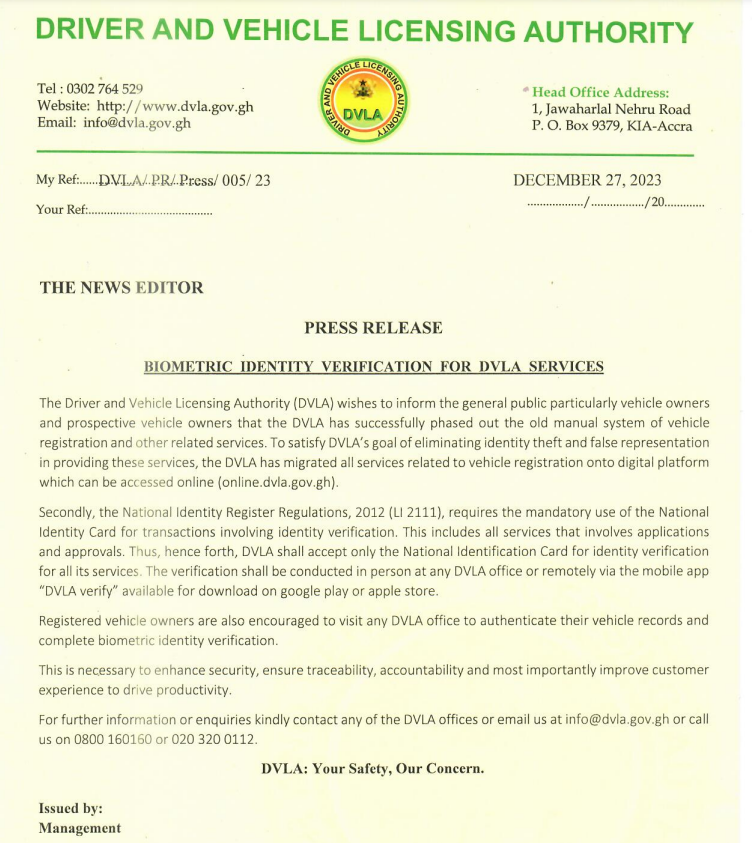
This decision, as stated by the authority, aligns with its objective of eradicating theft and false representation through the adoption of digital services.
In a significant move, the DVLA declared that, moving forward, the Ghana Card will be the exclusive identity verification method accepted for all its services.
“This is necessary to enhance security, ensure traceability, accountability and most importantly improve customer experience to drive productivity”, the statement said.
According to the DVLA, the decision to exclusively accept the Ghana Card for identity verification is in compliance with the National Identity Registration Regulations, 2012 (LI 2111).
These regulations mandate the compulsory use of the National Identity Card for transactions involving identity verification. The scope of this requirement extends to all services that involve applications and approvals within the DVLA.
“Thus henceforth the DVLA shall only accept National Identification Card for identity verification for all its services”, it reiterated.
The statement clarified that the verification shall be conducted in person at any DVLA office or remotely through the mobile app “DVLA verify”, available for download on Google play or Apple Store.
“Registered vehicle owners are also encouraged to visits any DVLA office to authenticate their vehicle record and complete biometric identify verification”.
Senior Presidential Advisor, Yaw Osafo-Maafo, has emphasized that the implementation of digitalized application processes for obtaining passports and driver’s licenses has successfully eradicated corruption.
He highlighted that this digitalization has significantly enhanced the efficiency and reliability of service delivery to the people of Ghana.
Addressing the audience at the inaugural global conference on cyber capacity building in Accra on Wednesday, November 29, 2023, Osafo-Maafo underscored that Ghana is making substantial progress in its digitalization agenda.
He said, “In these times, we definitely have to digitalize to make services that we give to our citizenry quick and reliable. We recently decided to modernize the passport office. There is a long queue of people waiting for something which is a right to have a passport as a Ghanaian and I noticed that it changed so many things.”
He added that, “Before then, you get there, the form you must complete to get the passport, you go there and they tell you the form is finished, come next week and you may go up and down for some time. Now, it is done online, so it eliminated go and come.”
“The moment you digitalize, you use technology to even fight corruption because corruption associated with getting a passport is now gone because of digitalization. We have done the same thing for the driving license…now, we are doing all the application process online and I think we should move in that direction,” Yaw Osafo-Maafo stated.
In the interim, there are intentions to raise the cost of the nation’s passport application procedures.
Deputy Minister of Foreign Affairs Kwaku Ampratwum-Sarpong defended the government’s new action by stating that it was required to continue providing Ghanaians with the best services possible.
The Driver and Vehicle Licensing Authority (DVLA) has announced its collaboration with the Ministry of Transport and various stakeholders to introduce electric and autonomous vehicles in Ghana.
According to the Authority, this will help enhance the country’s transportation infrastructure.
This revelation came during the inaugural International Driver and Vehicle Licensing Innovation Conference held in Accra, where transportation experts explored creative approaches to enhance the transport system.
Prince Opoku Edusei, the Deputy Chief Executive Officer of the DVLA, explained that the authority is implementing new innovations to advance the transportation sector in the country.
“We aim to bring together experts in the transport space to deliberate on the future of transport,” he said. “We all know several transformations have emerged globally as far as transport is concerned.
“We now have vehicles that drive themselves, vehicles that can even fly. Too many technologies are being introduced as far as transportation is concerned.”
Ranking Member on the Roads and Transport Committee of Parliament, Governs Kwame Agbodza, has called on the Driver and Vehicle Licensing Authority (DVLA) to enhance its public education efforts regarding the forthcoming changes to the current driver’s license.
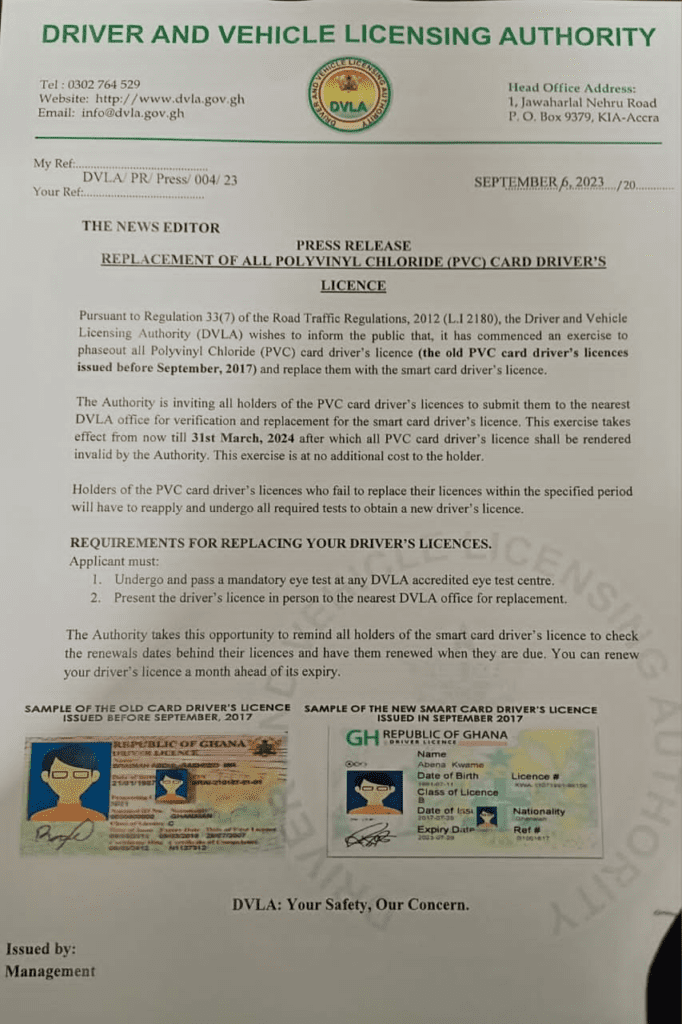
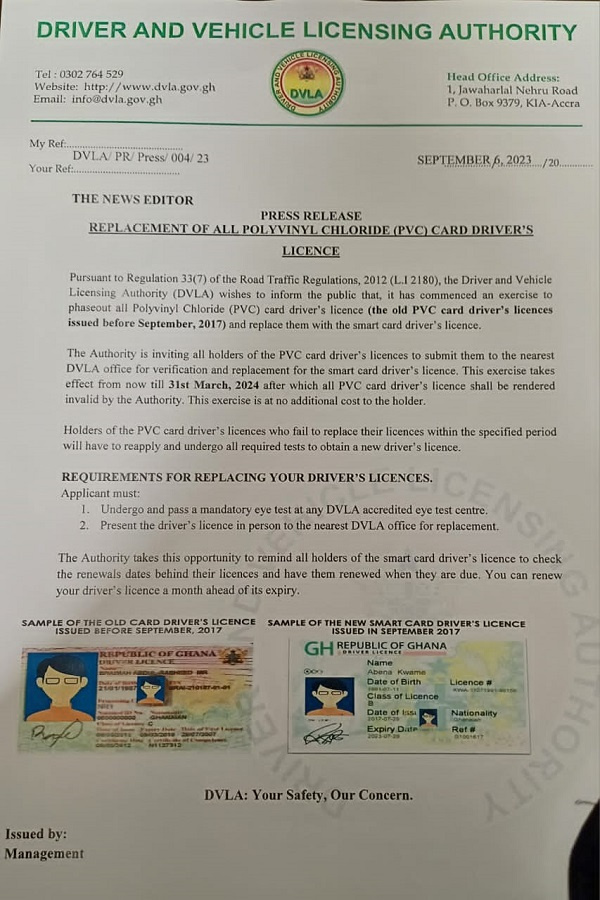
The DVLA has recently announced its intention to phase out all old driver’s license cards that were issued before September 2017, replacing them with smart driver’s license cards.
This transition will be implemented immediately and continue until March 31, 2024, after which all old card driver’s licenses will be deemed invalid by the DVLA.
Mr. Agbodza, who has expressed reservations about this decision, emphasized the importance of the DVLA effectively informing the public about the upcoming alterations to the driver’s license system in a Citi News interview.
“If you fundamentally want to change driving licenses, I feel that even before you go out talking about this, you do it the other way round. Carry the public along in terms of consultation and the interest groups such as the drivers, transporters, and everybody on how the law will work and embark on public education so that by the time you write the letter and give a deadline for the change, the average driver knows.”
The Prestige Centre located at DVLA Head Office provides an incredibly convenient and hassle-free services. Locate us on 1 Jawahalarl Nehru Road in Cantonments Accra. pic.twitter.com/dIstfZqUqL
External relations manager at the National Insurance Commission (NIC), Charles Ansong Dankyi, has emphasized the significance of car owners notifying their insurers and the Drivers car and License Authority (DVLA) whenever their vehicles’ colors change.
He claims that if something were to happen to the car, the police investigation would be aided by the update in the vehicle information.
Speaking about this on GhanaWeb TV’s Legal Agenda program, Mr. Dankyi said that the information provided by the owner of the car is kept in the motor insurance database, which also aids in insurance claims.
“Let me emphasize on the colour of the vehicle. Usually, when we go to do the insurance you say my vehicle is this type, this is the MID, the colour. The colour is important because even the police use these to do their own investigation as to whether you Ama, the car that you said you owe, the colour red or white as it is on the MID that is the motor insurance database and when that is done, it is a check,” he said.
“Many at times we change the color of our vehicles and we don’t endorse it through the insurance companies and usually when there is a claim, there are other ways that you can also check you can check on the engine number or you can check on the chassis number of the vehicle as another alternative identity of the vehicle,” he added.
The National Insurance Commission’s external relations manager continued, “But frequently, when they go to the insurance hall, they go with the registration number of the vehicle, the MID, and probably the color so sometimes where you could use chassis or the engine number to justify you may not be in the database. I will thus advise you to notify the DVLA and your insurance when you change the color of the vehicle.
Additionally, he pleaded with claimants to notify the NIC whenever legitimate insurance companies fail to handle their claims.
The Minority in Parliament has stated that the Driver and Vehicle Licensing Authority (DVLA) must seek Parliament’s consent before making any alterations to the existing driver’s license system.
Recently, the DVLA announced its intention to phase out all driver’s license cards issued prior to September 2017 and replace them with smart driver’s license cards.
This transition is set to be enforced immediately and will continue until March 31, 2024, at which point the old card driver’s licenses will become invalid.
Minority Chief Whip, Governs Kwame Agboza, voiced his concerns in an interview the media, emphasizing the importance of parliamentary approval for such changes.
He highlighted that legislative decisions should involve public consultation and education rather than being implemented abruptly.
Agboza stressed that the DVLA should not act independently but instead adhere to laws designed for the benefit of the Ghanaian population.
He expressed apprehension that without proper education, compliance with the proposed change could prove challenging for citizens. As such, he called on the DVLA to halt its plans and follow the necessary procedures.
“The laws we give them are supposed to be implemented in consultation with agencies. If you want to change the current driving license completely, I think that there should be public consultation and education. You can’t just write a letter. And my checks are such that the committee in Parliament is not aware of this, and that is why I am calling on them to pause, go back, and do the needful.”
“The DVLA is not a law unto themselves. They are supposed to implement laws that are supposed to be followed by Ghanaians. Without education, if they implement this change, it is going to be difficult for people to comply,” he stated.
The Driver and Vehicle Licensing Authority (DVLA) has announced the initiation of a process to phase out all driver’s license cards issued prior to September 2017.
These older cards will be replaced with new smart driver’s license cards.
This announcement was made in a statement released by the DVLA on September 6, 2023.
The DVLA’s plan will be in effect from now until March 31, 2024. After this deadline, all driver’s licenses issued with the old cards will be considered invalid by the Authority.
The DVLA is inviting all holders of the outdated card driver’s licenses to submit them to the nearest DVLA office for verification and replacement with the new smart card driver’s license.
“The Driver and Vehicle Licensing Authority (DVLA) wishes to inform the public that, it has commenced an exercise to phase out all Polyvinyl Chloride (PVC) card driver’s licence (the old PVC card driver’s licences issued before September 2017) and replace them with the smart card driver’s licence.”
“The Authority is inviting all holders of the PVC card driver’s licences to submit them to the nearest DVLA office for verification and replacement for the smart card driver’s licence. This exercise takes effect from now till 31st March 2024 after which all PVC card driver’s licence shall be rendered invalid by the Authority. This exercise is at no additional cost to the holder.”
The Authority has issued a warning that individuals holding PVC card driver’s licenses who do not replace their licenses within the designated period will be required to reapply and complete all necessary tests to obtain a new driver’s license.
The Driver and Vehicle Licensing Authority, has stated that all Polyvynl Chloride (PVC) Card driver’s licenses will be declared invalid and replaced by Smart Card driver’s licenses as of March 2024.
In a statement released on September 6, 2023, the DVLA stated that it is encouraging all PVC card license holders to bring their cards to the local DVLA office for verification and replacement with smart cards.
“This exercise takes effective from now till March 31, 2024 after which all PVC card driver’s license shall be rendered invalid by the Authority. The exercise is at no additional cost to the holder,” the statement said.
The DVLA also noted that those who have a PVC card driver’s license but fail to replace it within the allotted time would need to reapply and take all necessary examinations in order to get a new driver’s license.
Thirteen employees of the Driver and Vehicle Licensing Authority (DVLA) have been placed on interdiction, while three others have had their employment terminated due to violations of staff discipline, as disclosed by the Chairman of the authority’s Board, Frank Davies.
Davies emphasized the Board’s commitment to holding accountable anyone who breaches the authority’s code of conduct.
He called upon all staff members to uphold exemplary conduct and strive for behavior that sets a positive example for others.
While acknowledging the DVLA’s commendable progress in optimizing services and reducing processing times, Davies highlighted persisting challenges such as delays in printing driving licenses, certain staff members’ attitudes, increasing incidents of indiscipline, and unbecoming behavior.
Davies made these remarks during the launch of the 25th anniversary celebration and the commencement of the 2023 mid-year review conference in Sunyani, located in the Bono Region, last week. The event’s theme was centered around “Delivering quality service through optimization: A solution to solidify our achievements.”
Addressing the DVLA staff, Davies urged them to seek innovative solutions to enhance their processes and service delivery.
He underscored the importance of embracing technological advancements and exploring emerging trends to promote road safety and environmental sustainability in alignment with international best practices.
Davies challenged the staff to view challenges as opportunities for growth and transformation.
He assured the audience of the DVLA’s dedication to establishing a customer-centric organization that remains at the forefront of technological progress.
The Bono Regional Minister, Justina Owusu-Banahene, commended the DVLA for its efforts in improving its operations, including reducing delays and instances of extortion.
She encouraged the DVLA to digitize the process of renewing driving licenses and vehicle registrations, envisioning a future where patrons could renew their licenses and registrations conveniently through technology from the comfort of their homes.
Owusu-Banahene also raised concerns about the roadworthiness of certain vehicles, particularly older heavy-duty trucks, which sometimes caused traffic disruptions. She emphasized the importance of integrity, excellence, professionalism, and reliability as core values for the DVLA.
Kwasi Agyeman Busia, the Chief Executive Officer of the DVLA, advocated for the adoption of electric vehicles to usher in a new era of environmentally-friendly transportation. He stressed that promoting energy-efficient vehicles would mitigate the negative impact of fossil fuels on both human health and the environment.
Busia noted that ongoing efforts were underway to evaluate and redefine roles within the organization to ensure equitable and credible salary restructuring, as the current salary grading had been in place since 2016.
Furthermore, George Okyere, the Bono Regional Manager of the DVLA, highlighted the significant progress the organization had achieved over the past decade.
He acknowledged that emerging challenges, evolving customer dynamics, and technological advancements presented opportunities and threats, necessitating a strategic review to enhance DVLA’s operations.
Drivers, please pay attention. Making a simple check now could prevent you from receiving a hefty £1,000 fine. Given the current state of the economy, you probably could spend that money better elsewhere.
Anyone who took their test prior to 2014 should take note of an important announcement published by the DVLA (Driver and Vehicle Licencing Agency) to avoid breaking the law.
Anyone who took their test prior to 2014 must make sure their driver’s licence hasn’t expired as it must be updated at least once every ten years in order for the photocard to accurately depict them.
Richard Evans, head of technical services at WeBuyAnyCar, reportedly stated to the Swindon Advertiser: “To drive anywhere lawfully, you must carry a valid driving licence with the most up-to-current and accurate data of your name, date of birth, and full address.
“It’s imperative that you update your licence if you are aware that it is about to expire or if your personal information has changed.
The DVLA warns that failing to hold a valid licence might result in a £1,000 fine and perhaps the seizure of your car.
When should my driver’s licence be renewed?
The ‘Due to Renew’ government campaign informs people that they need to renew their driver’s licence every ten years.
If you are over 70, this does, however, change every three years.
Where is the license’s expiration date located?
The dates of your license’s expiration are shown in section 4b on the front of the card. How to have your licence renewed
The DVLA website is the most convenient place to renew your driver’s licence if you are between the ages of 29 and 69.
However, a survey conducted in 2021 revealed that just 35% of participants were aware that you could renew your driver’s licence online.
Online renewals cost £14 and are typically processed in five days.
You can also pay £17 for a postal renewal instead of the £21.50 required at a Post Office location.
The Driver and Vehicle Licensing Authority (DVLA) has announced the implementation of the Tertiary Students Drive Service (TSDS) initiative in all tertiary institutions nationwide.
According to the CEO of DVLA, Kwasi Agyemang Busia the aim of this initiative is to enable students to obtain valid driver’s licenses while in school.
Mr. Busia encouraged tertiary students to seize the opportunity and become competent licensed drivers before completing their academic studies.
During his official visit to the University for Development Studies (UDS) in Tamale, Mr. Busia expressed the intention to collaborate with the university to establish a research development center, benefiting the students and fostering a strong relationship between the institutions.
He emphasized that this partnership would contribute to educating the general public, including students, about road safety. The research would specifically focus on improving road safety in the northern region of the country.
Mr. Busia highlighted the DVLA’s collaboration with the National Road Safety Authority (NRSA), Ghana Police Service (GPS), and other relevant agencies to ensure road safety and promote responsible driving.
He reaffirmed that the DVLA’s mandate is to facilitate good driving practices and ensure safety on the roads.
“We as an authority would continue to ensure that the standard of good driving in this country be promoted to save lives,” Mr Busia added.
Professor Alhassan Seidu, the Vice Chancellor of the University for Development Studies (UDS), expressed gratitude to the CEO of DVLA and his team for their visit to the university. He acknowledged the university’s commitment to strategize and support the goals of the DVLA.
Prof. Seidu announced that the university would establish a research development department to enhance research capabilities and data analysis, complementing the reforms of the DVLA.
He emphasized that the partnership between the university and the DVLA would provide convenient access for management and students to acquire their licenses.
This collaboration would also facilitate increased revenue generation for both the DVLA and UDS, contributing to data gathering and overall financial support for both institutions.
“We want to partner with them in terms of academy and also designing of programs like transportation in economics so that we can work closely with DVLA to ensure our students acquire knowledge in driving,” he stated.
Okada usage and its brouhaha have been a great topic of interest in the country since it has grown to become one of the leading means of transportation especially in the small communities where access to vehicles has been difficult.
Over the years, there has been reports of upsurge in armed robbery and other related crimes using okada in some communities in the Akrofuom District. This has informed the assembly led by the District Chief Executive, Maurice Jonas Woode to act and nip the activities of such criminals in the bud.
In his sessional address at a general assembly meeting held on Tuesday, June 28, 2023, Woode said commercial motor business known as Okada has threatened the lives of the people in the district.
He said to curtail their activities the assembly through the District Security Council (DISEC) has tasked the Motor Transport and Traffic Directorate (MTTD) to conduct regular swoops on the riders, confiscate the motorbikes of suspects and release them only when they are able to provide evidence of registration and licenses from DVLA.
Progress in revenue generation
The District Chief Executive revealed that the Assembly was able to raise GHC 769,000 as at May, 2023. This was against an annual budgeted figure of GHC 880,000 representing 87.45%.
He however mentioned that there has been a proposal for an upward review of their revised target stressing that the assembly has resolved to construct a Kindergarten block using their Internally Generated Fund.
Education
The Akrofuom District Directorate has taken measures to improve student-teacher ratio. This according to the DCE is evidenced in the posting of 68 teachers to the district with 48% of them currently at post.
He however expressed the Assembly’s commitment to creating a congenial atmosphere for the teachers to work in the district. He also called on the people in the district to be more hospitable to teachers.
Agenda 111 project
Giving accounts on the Agenda 111 hospital project initiated by the government, the Akrofuom DCE said so far the project in the district has been temporary halted due to technical challenges with the main hospital block.
“Work is ongoing on the accompanied residential accommodation. I am hopeful of resumption of work very soon”, he said.
The Driver and Vehicle Licensing Authority (DVLA) and Ghana Post Company Limited have joined forces to introduce a new system for delivering drivers’ licenses directly to clients. This innovative initiative allows license holders to receive their documents at their preferred locations, including their homes, offices, or any other convenient place at a fee of GHS 30.
Speaking at the launch, Chief Executive Officer of DVLA, Kwasi Agyeman Busia revealed that the service was instituted with a customer centric approach hence the flat rate of GHS 30 per delivery across the country.
“For over 20 years, DVLA has provided regulated framework for more effective administration of driver licensing and vehicle registration. The recent growth of the DVLA’s consumer base has made it necessary for the authority to explore and improve means to efficiently deliver driver licenses to our clients,” he said.
The delivery service is part of DVLA’s efforts to contribute to the digitalisation agenda. The service which will be run by the Ghana Post seeks to clear 80,000 uncollected cards, prevent congestion at DVLA offices and increase compliance by clients among others.
Mr. Busia indicated that, “the foundation of our strategic plan pivots on the admixture of people, process and technology. This association with a government institution with core competency in package delivery and nationwide distribution apparatus augmented by digitisation is therefore obvious, needful and necessary”.
Managing Director of Ghana Post Company Limited, Bice Osei-Kuffuor intimated that the country’s Global Positioning System infrastructure is of high quality. He says his outfit is therefore equipped to deliver the task.
“It does not matter where you are in Ghana, DVLA will process the license and Ghana Post will deliver. Fellow Ghanaians, kindly leave that bit of the stress to us and concentrate on other assignments because at a token fee of just ¢30 we shall deliver with speed, efficiency and on time,” he assured.
Both institutions emphasised the need to foster public-public partnerships.
A private legal practitioner, Kofi Bentil, has said that it is illegal for police to confiscate a vehicle over the driver’s inability to provide the original driving license at the time.
Speaking to the media he said “carrying a photocopy of a drivers license is entirely lawful as a prima facie proof of the existence of that license. The Police can request that the original be produced in 24hours without impounding the car”.
“The law in Ghana does not allow you to impound cars because the driver doesn’t have his or her license with them. the car is not evidence in that context!! there is no probable cause or justification for impounding the vehicle,” he added.
Mr Bentil indicated that the law in Ghana allows the driver to produce the license in 24 hours.
“You don’t have any right to amend that on your whims,” he told the Police.
Some police officers have been reported to have impounded vehicles that the drivers did not have the original copies of the lives on them.
But Mr Bentil who is also Vice President of Imani Africa said in a Facebook post that “If you continue infringing peoples rights like these, one of these days someone will sue the Ghana Police for impounding their vehicle without probable cause and take damages for distress and loss of use from the Police (Not DVLA).”
Beos is his full statement…
Dear GHANA POLICE / DVLA
The LAW in Ghana DOES NOT ALLOW YOU TO IMPOUND CARS BECAUSE THE DRIVER DOES NOT HAVE A LICENSE ON HIM!! the car is NOT Evidence in that context!! there is no probable cause or justification for impounding the vehicle.
The law in Ghana allows the driver to produce their license in 24 hours. You dont have any right to amend that on your whims.
Carrying a photocopy of a drivers license is entirely lawful as a prima facie proof of the existence of that license. The Police can request that the original be produced in 24hours WITHOUT IMPOUNDING THE CAR.
If you continue infringing peoples rights like these, one of these days someone will sue the Ghana Police for impounding their vehicle without probable cause and take damages for distress and loss of use from the Police (Not DVLA).
YOU HAVE TO HAVE THE SYSTEM (AND I BELIEVE YOU DO) TO TAKE THE PERSONS PARTICULARS AND REQUEST THEM TO REPORT AT A POLICE STATION WITH THE NECESSARY PAPERS FAILING WHICH YOU CAN CAUSE THEIR ARREST.
Effective May 1, 2023, vehicles belonging to drivers without valid licenses will be impounded.
This is according to the Driver and Vehicle Licensing Authority (DVLA).
The exercise, which is in accordance with Road Traffic Regulations 47, 158 of LI 2180 of 2012, will begin on May 1.
Those to be affected by the directive include drivers;
Driving without an original license
Do not have a license at all
Driving with an expired license
Driving with photocopied license
Driving with a fake license
Use the wrong class of license.
According to the Authority, there will be “no exemptions except [for] vehicles [with] police, prisons, fire, military and immigration registered number plates.”
“Please treat this as a caution to avoid embarrassment and inconvenience,” it warned.
As part of efforts to address accommodation challenges faced by public sector workers, the government is constructing fifteen-bedroom self-contained flats.
According to President Akufo-Addo, the edifice will be occupied by employees of the Ghana Meteorological Agency, the Ghana Airport Company Limited, and the Greater Accra Regional Office of the Driver and Vehicle Licensing Authority (DVLA).
Speaking at the commissioning of the Kwabenya Police Barracks Project on Wednesday, April 19, the president noted that works are far advanced to ensure the implementation of the Aviation City Project.
“I have been briefed that work is also far advanced on the construction of fifteen-bedroom self-contained flats for the Ghana Meteorological Agency, the Ghana Airport Company Limited, and the Greater Accra Regional Office of the Driver and Vehicle Licensing Authority (DVLA). The completion of these projects is crucial to the implementation of the Aviation City Project,” President Akufo-Addo said.
Since assuming office in 2017, the government has launched several initiatives aimed at addressing Ghana’s housing deficit, which currently stands at some two million units.
On Thursday, the Ghana Police Service received five hundred and fourteen (514) one- and two-bedroom self-contained flats, of which three hundred and twenty-two (322) have been completed and ready to be occupied.
Aside from residential purposes, the Kwabenya Police Barracks Project also provides a school with modern facilities, a clinic, an astroturf football field, a tennis court, a standby generator, a police station, a fuel filling station, a workshop enclave and other essential amenities.
This, the President said, “is further testimony of our unwavering commitment to provide decent accommodation and other facilities for our security personnel. Not only will this facility improve the welfare of our police officers, it will also enhance their capacity to serve our nation even more effectively.”
Meanwhile, the Ministry of Lands and Natural Resources, and the developer the Lands Commission and Unique Development Company have been entreated to work in earnest and complete the remaining one hundred and ninety-two (192) housing units, and other facilities that make-up the second phase of the project.
Mr. Kwesi Agyeman Busia has been chosen as the top CEO of the year 2022 for DVLA’s (Driver and Vehicle Licensing Authority) innovative and revolutionary initiatives.
The 7th World Business Quality Branding Awards were presented to the DVLA CEO on Friday, March 24, in Accra by the Entrepreneurs Foundation of Ghana (EFG).
In choosing Mr. Busia as the CEO of the year, the EFG took into account all of his accomplishments during the past four years at the DVLA, including changing the organization’s appearance, utilizing technology to streamline operations, digitizing the vehicle registration process, and putting in place a new, strict roadworthy certification regime.
Among other things, he drafted and implemented a business plan leading to achieving financial independence for the DVLA and coordinated the installation of a modern customer service call center.
At the same event, the CEO of the Ghana Export Promotion Authority (GEPA), Dr Afua Asabea Asare, was named the female Public Sector CEO of the year for her role in turning round the fortunes of the authority.
The CEO of JRA Cosmetics Limited, Jane Reason Ahadzie also emerged the female CEO of the year.
The other award winners were the CEO of KAB-FAM Ghana Limited, Charles Antwi-Boahen, who emerged as business executive of the year; CEO of Alpha TND Limited, Pankaj Bhati, who won the Outstanding Managing Director category; and the Managing Director of Lambodra Enterprises Ghana Limited, Er Nikkesh Neel, who went home with the young CEO plaque.
Motivation
In an interview with the Daily Graphic at the event, Mr Busia said the recognition he had received was a testament that the DVLA was walking the right path.
Again, he said the honour was a wake-up call for him to do more to ensure that the DVLA lived up to its mandate.
“This award tells us that we need to innovate to stay relevant. The driver and Vehicle licensing landscape continues to evolve so we can only respond to it by adopting technology to address the challenges,” he said.
He added that going forward, the DVLA was focused on consolidating and entrenching the good initiatives it had put in place to improve on service delivery.
“We do not want to wake up tomorrow and realise that DVLA has been reduced to nothing. We have a policy where we are making sure that for everything we do, the systems are entrenched; the enforcement is entrenched; and data is entrenched,” he said. Mr Busia added that the DVLA had fully integrated its systems with the National Identification Authority (NIA)
Top brands unveiled
Apart from the individuals who won honours, the EFG also unveiled the 25 most popular global brands and the premium quality brands in Ghana.
Some of the premium quality brands in the country were McDan Shipping Company Limited, Bel-Aqua Mineral Water, B5 Plus Group, Dzata Cement, Azar Paints, and Emirates.
The top 25 most popular global brands included MTN, Nestlé, Danote Group, Ethiopian Airlines, Nissan, Samsung and Samsung.
Good leadership
The Founder and President of EFG, Sam Ato Gaisie, urged leaders of both private and public organisations to strive for excellence in the discharge of their duties.
He said it was when managers of such institutions provided quality leadership that the country would achieve sustainable development.
Mr Gaisie also said in the wake of technological advancement, it was important for CEOs and business leaders to adopt innovative strategies to improve productivity.
The National Coordinator for Compliance and Enforcement of the DVLA, Richard Kwesi Eyiah, said the failure on the part of drivers to observe safety regulations on the road accounted for most of the accidents on the road.
At a sensitisation activity in Kasoa at the Liberia Camp taxi and bus terminal, Mr Eyiah called on members of the public to be ambassadors of road safety to check the spate of road crashes and their attendant injuries and deaths.
The programme formed part of the DVLA’s effort to take road safety education to stakeholders at the grassroots level to improve adherence to traffic regulations.
Topics discussed included the maintenance of vehicles and drivers’ health and safety.
Roadworthy
Mr Eyiah advised the drivers to renew their roadworthy certificates at least one month before they expired.
“The drivers are now aware that they do not have to wait until their roadworthy has expired before renewing it, and we are very excited about educating them.
It is very important that car brakes are effective on the road, tyres should not wear out, and you should have good lighting system,” he stressed.
He cautioned that it was dangerous to drive without a licence, and urged all drivers to desist from driving with expired license and advised them to renew their licenses at least every two years and get a replacement every six years to avoid getting involved with the police.
Mr Eyiah also advised against the use of tinted glasses in commercial vehicles.
Concerns
Mr Eyiah observed that the drivers’ major concerns were bad roads, the absence of streetlights, faded road markings, and the absence of road signs.
“These are vital information, and if our drivers have knowledge about these, then we have good drivers on the road,” he said.
He gave the assurance that the authorities would take the concerns of the drivers into consideration in designing policies and actions to improve road safety.
A taxi driver, Evans Donkoh, suggested that the DVLA should help to contain those problems for the betterment of these drivers and the country as a whole.
He appealed that the DVLA helped drivers to get acquire and renew their licences smoothly and without outrageous prices.
“I was charged an outrageous amount of money to get my drivers licence. This has discouraged most drivers from getting licences.
Now that we have been educated, we know the right channels to go through to get things done right, and we are grateful,” he said.
Ghanaian actor, Oboy Siki has called on the Ghana Police Service and the Driver and Vehicle Licensing Authority (DVLA) to retrieve the license of his colleague, Don Little, as he explains that his stature doesn’t permit him to be on the road.
Oboy Siki in an interview with Kofi Adoma Nwanwani called out authorities for issuing a license to the popular actor with dwarfism.
“Ghanaian police have made a big mistake because he (Don Little) doesn’t qualify for driving with his height. He can’t even acquire a license but someone managed to obtain it for him illegally.
“The office which issues licenses put a lot of things into consideration before granting an individual a license. There are rules and regulations that guide their operations…in Ghana, we take a lot of things for granted,” he said.
Oboy Siki in reaction to a viral video that captured Don Little cruising in his car with actor Yaw Dabo, argued that the man will lose control of the steering wheel in case of an accident.
He raised safety concerns and admonished his colleague to employ a driver.
“How can he (Don Little) manage when his car hits a big pothole? What hands will he use to hold on tight to the steering wheel? He can easily fall. When they travel abroad, the white folks see them as kids… whoever got him that license is looking for his death…Yaw Dabo has never driven a car so I will admonish Don Little to desist from driving,” he advised.
The Member of Parliament (MP) of North Tongu has called out some state institutions for their silence over the issue of Rev Victor Kusi Boateng, the founder and leader of Power Chapel International, illegally having multiple statutory documents under different names.
Samuel Okudzeto Ablakwa said that the state agencies that Rev Kusi Boateng scammed to illegally acquire multiple documents including the Ghana Revenue Authority (GRA), Registrar Generals Department, Passport Office and the Driver and Vehicle Licensing Authority (DVLA), must explain to Ghanaians how the blunders happened.
In a Citi TV interview monitored by GhanaWeb, the MP posited that these agencies should be conducting internal investigations to find out how they issued the same person with multiple documents under different names.
“All these institutions should be issuing statements by now (and) carrying out investigations. How is it that they are (so quiet)? Is it that they are complicit?
“How did they take advantage of them so easily. GRA, Registrar General Department, Passport Office, DVLA. How did this happen?” he queried.
The MP in his latest corruption exposé on the National Cathedral made some allegations against Rev. Victor Kusi Boateng, who is the secretary to the Board of Trustees of the National Cathedral of Ghana.
In an earlier revelation about the National Cathedral, Okudzeto Ablakwa said that a whopping GH¢2.6 million was dished out to a company named JNS Talent Centre Limited.
In his latest exposé, Ablakwa said that further investigations into the alleged payment led to the discovery of one Kwabena Adu Gyamfi as a director of JNS Talent Centre.
Having confirmed the identities of two out of three directors of the centre, Ablakwa dug deeper in a bid to discover the identity of the third director, Kwabena Adu Gyamfi.
According to his findings, citing a number of statutory documents including passports, Tax Identification Numbers and driver’s licenses, Kwabena Adu Gyamfi was the same as Reverend Kusi Boateng, who has allegedly been operating under the pseudonym Kwabena Adu Gyamfi.
The Member of Parliament (MP) of North Tongu has called out some state institutions for their silence over the issue of Rev Victor Kusi Boateng, the founder and leader of Power Chapel International, illegally having multiple statutory documents under different names.
Samuel Okudzeto Ablakwa said that the state agencies that Rev Kusi Boateng scammed to illegally acquire multiple documents including the Ghana Revenue Authority (GRA), Registrar Generals Department, Passport Office and the Driver and Vehicle Licensing Authority (DVLA), must explain to Ghanaians how the blunders happened.
In a Citi TV interview monitored by GhanaWeb, the MP posited that these agencies should be conducting internal investigations to find out how they issued the same person with multiple documents under different names.
“All these institutions should be issuing statements by now (and) carrying out investigations. How is it that they are (so quiet)? Is it that they are complicit?
“How did they take advantage of them so easily. GRA, Registrar General Department, Passport Office, DVLA. How did this happen?” he queried.
The MP in his latest corruption exposé on the National Cathedral made some allegations against Rev. Victor Kusi Boateng, who is the secretary to the Board of Trustees of the National Cathedral of Ghana.
In an earlier revelation about the National Cathedral, Okudzeto Ablakwa said that a whopping GH¢2.6 million was dished out to a company named JNS Talent Centre Limited.
In his latest exposé, Ablakwa said that further investigations into the alleged payment led to the discovery of one Kwabena Adu Gyamfi as a director of JNS Talent Centre.
Having confirmed the identities of two out of three directors of the centre, Ablakwa dug deeper in a bid to discover the identity of the third director, Kwabena Adu Gyamfi.
According to his findings, citing a number of statutory documents including passports, Tax Identification Numbers and driver’s licenses, Kwabena Adu Gyamfi was the same as Reverend Kusi Boateng, who has allegedly been operating under the pseudonym Kwabena Adu Gyamfi.
Vice President Mahamudu Bawumia has stated that the government is still steadfastly devoted to the fight against corruption and would continue to offer the assistance and logistics required for the organizations responsible for crime prevention, detection, and prosecution.
The Akufo-Addo government has made a persistent, aggressive push in the fight against corruption by passing laws, tightening those that already exist, introducing greater digitalization in governance and the use of public funds, while increasing resources allocated to the fight. The Vice President made this statement on Monday, December 12, 2022, at the 2nd Annual District Auditors’ Conference.
“On assuming office, corruption was prevalent in many areas such as the DVLA, where one had to pay a bribe to ‘goro boys’ in order to get a drivers licence; same thing at the Passport Office; Customs and other officers were having a field day at the ports; it was difficult renewing ones NHIS, and for some reason, dockets kept getting ‘missing’ at the courts,”he said.
“There was inadequate funding for anti-corruption agencies; the Right to Information Law had not been passed; there was no legal backing for a beneficial assets register; and no law on Witness Protection.
“But since 2017, we have taken a number of far-reaching steps in the fight against corruption, including the implementation of a digitization agenda to disrupt corruption in the public sector.
“We have also passed a number of key laws, including the Witness Protection Act, 2018 (Act 959), the Office of the Special Prosecutor Act, 2018 (Act 959), the Right to Information (RTI) Act, 2019 (Act 989), and the Companies Act, 2019, (Act 992). Which provides a framework for enacting a beneficial ownership register,” Dr Bawumia explained.
“To further boost the fight against corruption, deficits in logistics and personnel of law enforcement agencies, especially the Ghana Police Service, and other accountability institutions, are being addressed,” he emphasized.
“For instance, since 2017, Government has increased budgetary allocations to all the accountability institutions of State, including Parliament of Ghana, the Judiciary, CHRAJ, EOCO, the Office of the Attorney-General and Ministry of Justice, the Auditor General, the Office of the Special Prosecutor and the Ghana Police Service,” Dr Bawumia stated in Accra.
While commending the Auditor-General, Johnson Akuamoah Asiedu, the Board of the Audit Service and staff of the Service for the “very good work being done”, Vice President Bawumia reminded the District Auditors and their colleagues across the country that when corrupt activities such as financial improprieties such as misappropriation of funds, payroll fraud, and contract and procurement irregularities take place, the expectation of the taxpayers is that the public officials who commit these financial crimes would be sanctioned according to law.
One of the functions of the Auditor-General which can combat these financial malpractices is disallowance of any item of expenditure which is contrary to law and surcharge the amount of any expenditure disallowed.
“The public, and, in particular the Civil Society Organisations have expressed dissatisfaction that the Auditor-General has not performed this critical function effectively. I am informed that the District Auditors will use greater part of this conference to discuss this very important topical issue of disallowance and surcharge. I expect these discussions to produce outcomes to inform the processes for disallowances and surcharges.”
“Nevertheless, let me assure the Auditor-General and Members of the Audit Service Board that in the same spirit of cooperation, The Government of Nana Addo Dankwa Akufo-Addo will continue to provide the necessary support to the Audit Service to ensure that it operates independently as the Constitution of the Republic of Ghana mandates.”
A social media story that claimed the Ghana Revenue Authority (GRA) had levied fees on upscale vehicles has been denied by the Authority.
In a statement, the GRA asked the general public to ignore the aforementioned letter, claiming that its contents are entirely untrue and that neither the DVLA nor any charges on luxury vehicles have been authorized.
“The attention of the Ghana Revenue Authority (GRA) has been drawn to a purported letter from the authority being circulated on social media titled ‘Implementation of Luxury Vehicle Levy’. The said letter states that the Driver and Vehicle Licensing Authority (DVLA) has been authorised to collect an annual levy imposed on luxury vehicles with high engine capacities”.
“GRA wishes to inform the general public that this publication was not issued by the authority and its contents are completely false No levies have been imposed on luxury vehicles and neither is the DVLA authorized to collect such levies”.
It further cautioned those spreading the false information to desist from doing so, adding, “Investigations are currently being carried out into the source of this misleading information and persons found to have deliberately fabricated and circulated this information will be sanctioned appropriately”.
The GRA advised its customers and the general public to verify information on taxes and levies or any information relating to the authority by contacting them on 0800-900-110, on info@gra.gov.gh or by WhatsApp on 0552 990 000 and 0200 631 664.
Dr. Freda Prempeh, the Member of Parliament for the Tano North constituency in the Ahafo Region, has called on the Ghana Education Service (GES) to collaborate with the National Road Safety Authority (NRSA) and the. Driver Vehicle and Licensing Authority (DVLA) to conduct routine inspections on school buses in the country.
This would go a long way toward ensuring that school buses, particularly those used by private basic schools, meet the required road safety standards.
She emphasised the use of ‘over-aged’ buses for conveying and risking the precious lives of ‘innocent’ schoolchildren in the country remained unacceptable and breached road safety regulations.
“The uncontrolled use of over-aged buses to convey school children do not only risk the lives of the children, but also remains a serious road safety offense as well,” Dr. Prempeh told reporters at Duayaw-Nkwanta when she reacted to a crash which happened on the Techire-Adrobaa stretch in her constituency.
Police have since put the death toll at six, in a gory crash that happened on the Techire-Adrobaa stretch in the early hours of Friday, November 11, 2022.
The accident happened when the driver, also deceased, of the DS Elites Academy school bus with registration number AW 6315-11 had gone to pick and transport the school children from Adrobaa to Techire.
On their way back, the ‘old’ Benz bus was said to have developed a mechanical fault, and in the process, the driver lost control.
Describing the crash as unfortunate, Dr. Prempeh, also a Minister of State at the Office of the President, asked the GES to intensify its monitoring and supervisory roles in all basic schools in the country.
She said with support from the GES, the NRSA, and the DVLA, they would be able to identify and stop schools that used over-aged buses to convey children.
The MP, however, expressed her deepest condolences to the bereaved families and their relatives and entreated them to take comfort in God.
As of the filing of this report, journalists had gathered the mortal remains of the deceased children, which were to be laid in state at the Adrobaa town square on Thursday, November 17.
The campaign aims to improve road safety consciousness among commercial drivers and motorcyclists to help ensure the reduction of road accidents involving public transport vehicles.
As part of the campaign, Vivo organized training sessions for the drivers on best practices in driving and first aid among others.
Speaking to commercial drivers at the launch of the campaign in Accra, on Thursday, the HSSE Manager of Vivo Energy, Joseph Kankam, said that the campaign will abreast drivers with the needed knowledge they will need to ensure that they continue to drive safely.
He added that Vivo will be sharing the best practices its drivers have been using to transport their products with the commercial drivers.
“Because we transport our product on the same road as you (commercial divers). We want to collaborate with you so that today together with the National Road Safety Commission, the DVLA and other partners, we can resolve the major challenge on our roads which is road accidents and its related deaths and injuries.
“This campaign will enjoin on us the need to drive safely so that we can avoid needless deaths and injuries on our roads,” he said in Twi.
As part of the programme, the drivers were also taken through an eye screen exercise.
This is to enable drivers to get proper training on the usage of road signs and driving techniques to help curb road accidents.
Speaking to KMJ on Prime MorningShowon Thursday, the Chairman of the Greater Accra Region, Ali Wahab, revealed that policies are being put in place to publish a list of well-equipped driving schools to ensure that drivers are well educated.
“In the near future, we have things in place. We’re also going to publish the names of good driving schools in the dailies. If you want to send your ward, your child, or anybody to driving school, make sure you go through this list,” he said.
“Before somebody joins the association, you need to be certified by DVLA. DVLA has to inspect the classroom, the cars, and certified instructors to be able to teach,” he added.
He indicated that formal training is key in driving, believing that “Experience is a factor, but knowledge is a major factor.”
The Chairman is of the view that driver education will enable drivers to be knowledgeable about road signs and help the road safety initiative.
He also revealed that the association is working on introducing local languages in the various schools, saying language can never be a barrier in training drivers.
“Even our regulators have deemed it necessary that education should not be a barrier for someone learning how to drive. So now the computer things, they’re putting some in five local languages, which is about to roll up,” he explained.
Additionally, he said, “We’ll make sure that any language that you deem necessary to understand, to the best of your knowledge, we’re going to take you through it. Hopefully, by the end of the year, we’re going to roll those things out.”
The Driver and Vehicle Licensing Authority (DVLA) has introduced some five key digital appliances in its operations to ensure a regulated framework for an enhanced and a more effective supervision of drivers and vehicles.
They comprise the vehicle windscreen glasses tint meter, handbrake tester, hand-held tablet computer, tyre tread depth gauge and tyre air presser gauge.
Obuasi station is the first to take delivery of the hand-held tools, while all 32 district offices across the country are to receive the kits for effective operations.
The DVLA says the appliances will help detect approved tinted windscreens, test the brake efficiency of a vehicle, and get instant access to a driver’s particulars upon keying in their registration and certificate of competence numbers to establish the authenticity or otherwise.
In the past, most driver offenders were let off the hook because the authority lacked these standard gadgets to strengthen their checks on the road.
The Compliance and Enforcement Manager of DVLA, Richard Kwasi Eyiah, explained that “after all checks are carried out on a vehicle, an automated gadget instantly issues out a receipt to the driver to know the status of the car as to whether it passed the test or not”.
Field demonstration
The Appliance and Enforcement Unit of the DVLA, last Thursday (September 29), organised a brief demonstration of the tools to the media in Kumasi and later moved on to the streets to test their innovative kits on drivers and vehicles.
During the field demonstration, it was detected that some vehicles had issues, but no arrests were made.
However, the DVLA field officers urged the drivers to update their papers, as well as put their vehicles in shape in order not to fall foul of the law.
Enforcement
Mr Eyiah in a post-test run interview said the tools would be used effectively to ensure compliance on the roads to ensure maximum safety on the roads with only roadworthy vehicles.
“Road rules will only be obeyed if drivers are made aware that not obeying them would result in detection and unwanted outcomes such as fines or licence suspension or cancellation.
“With these gadgets, there will be no hiding place for recalcitrant drivers,” he emphasised.
Mr Eyiah used the opportunity to commend the government for resourcing the authority which had enabled it to play its role more efficiently.
The Driver and Vehicle Licensing Authority (DVLA) is to embark on an enforcement exercise to arrest and prosecute motorists who use expired trade plates contrary to road traffic regulations.
The Authority said the exercise, which would be carried out in collaboration with the Motor Traffic and Transport Department (MTTD) of the Ghana Police Service had become necessary following an observation that some drivers continued to use expired Defective Vehicle (DV) Plates last year, DV 2021.
A statement issued by the management of the DVLA, and copied to the Ghana News Agency, said the practice was contrary to Regulation 23(2) of the Road Traffic Regulation, 2012 (L.I. 2180) which stated that “a trade license is valid for a period of one year and only in relation to the specific motor vehicle for which the trade license was issued.â€
The Authority said it had also noted that motor vehicles bearing trade plates were being used for carrying fare-paying passengers, goods, and for hiring purposes against Regulation 23(8) “which only authorizes the carrying of passengers who are engaging in testing or inspecting the motor vehicle with the view of purchasing the vehicle.”
“Unfortunately, most of the motor vehicles used under a trade plate, do not have the plates affixed on the front and rear of the vehicle, which is also an upfront to the law, specifically, Regulation 23(9) of L.I. 2180.
Most dealers or fleet owners also failed to enter the movements of the motor vehicle in the trade license logbook as captured in Regulation 24(2) of the Road Traffic Regulation, 2012 (L.I. 2180), it said.
The Authority also expressed concerns over the use of Direct from Port (DP) plates beyond the stipulated time of two weeks.
“The misuse of these trade plates is prevalent during holidays and weekends and the Authority wishes to caution the general public against these occurrences,” it said.
“We wish to remind motorists that the law provides for severe sanctions on persons who contravene the regulations, including imprisonment,†it added.
The Authority urged dealers, fleet owners, and the general driving public to either get valid trade plates for 2022 (DV 22) or have their vehicles registered before using the road.
It also urged road users to drive cautiously with the onset of the rains, observe road signs, and avoid careless overtaking and over-speeding to avoid needless crashes.
Fire has razed parts of the Tamale branch of the Driver and Vehicle Licensing Authority (DVLA).
Reports indicate the incident happened around 7: pm on Sunday, November 29, 2020, destroying computers, important documents and other property.
Head of the DVLA Customs Division, Amissah Osman, speaking in an interview with Adom News, said the fire will greatly affect their operation.
According to him, the outfit has lost valuable details of clients to the fire, adding it will be difficult for them to retrieve them from any source.
The Assistant Station Officer of the Sagnarigu Fire Service station, Baba Hudu, who also spoke with Adom News said an ambulance driver called to report the fire outbreak at the DVLA office.
He said the cause of the fire cannot immediately be known.
However, he assured that they have commenced an investigation to ascertain the actual cause of the fire outbreak.
The Driver and Vehicle Licensing Authority (DVLA) has finally commented on the controversy surrounding the registration of a Black Range Rover gifted Nana Aba Anamoah.
The media personality celebrated her 42nd birthday on Friday, June 19, 2020, and in marking the day, she was gifted a Black Range Rover by an unidentified person.
The car driven by her friend Empress Jamila, a fashion stylist, to her workplace, GhOne TV, caught a lot of buzz on Twitter. But one thing that caught the attention was the number plate of the luxurious car; GR2050-20.
The controversy was heightened when it was alleged a Nissan Rogue Sports Utility had been spotted in town with the same number plate.
Reacting to the controversy in a statement copied to GhanaWeb, the DVLA has announced that the number plate on the vehicle purported to have been gifted to the Acting General Manager of GHOne TV, Nana Aba Anamoah is fake.
According to the management of DVLA, the registered vehicle in their system with the number plate GR 2050-20 is that of a Nissan Rogue Sports Utility vehicle and not the Range Rover.
As part of measures to fight the spread of the COVID-19 pandemic, the Sefwi Wiawso branch of the Drivers and Vehicle Licensing Authority (DVLA) has put in place some measures to protect clients who visit the office.
Mr. Robert Aklamanu, the Municipal Manager, who disclosed this to the media, said the necessary protocols like social distancing, washing of hands with soap under running water, wearing of nose masks and the use of hand sanitizers were put in place at the office.
He said management had also put stringent safety measures in place to protect customers and staff of DVLA.
“The number of workers and clients that attend the office have been reduced and compulsory wearing of nose masks before an officer attends to a client were being practiced by the authorities. We have also provided enough thermometer guns to check the temperature of every staff or client before entering the office,†he added.
Mr. Aklamanu acknowledged that the COVID-19 pandemic had greatly affected their work, stressing that, before the COVID-19, they used to go out to register and educate drivers, but now it was not possible to embark on such programmes, resulting in low turnout.
He noted that the measures put in place by the DVLA were clear indications that they cared about their staff and clients.
He in this regard advised Ghanaians especially drivers to adhere to the safety protocols by reducing the number of passengers they carry in their vehicles, wear nose and face masks, regularly use hand sanitizers as well as ensure passengers wore their nose masks.
The Bureau of Public Safety (BPS) is demanding timelines from the Driver and Vehicle Licensing Authority (DVLA) on their plan to revoke licences of recalcitrant drivers in the country.
The authority, in January this year hinted of the move indicating that drivers who are caught repeatedly breaking road traffic codes will soon have their licences suspended.
This was however aimed at reducing carnages on our roads.
So far, close to 400 people have been killed in road accidents since the year began, with the Kintampo-Tamale incident on Monday being the latest.
Speaking on Starr FM today, the Executive Director of the Bureau, Nana Yaw Akwada said the Authority must come out with a specific time frame to enforce measures to curb the menace of road accidents in the country.
“It is a delayed move but still welcomed. Because this suggestion was made as far back in 2017 and we raised submissions in the first quarter in 2019 for us to go this full circle before they realize the need to start cracking. DVLA should give us some timelines, they should give us who and who they are engaging”.
The National Road Safety Authority (NRSA) on its part has called on all stakeholders actively involved in reducing carnages on our roads.
On March 9, 2020, a horrific accident occurred on the Kintampo-Tamale highway which claimed 30 lives and burning 27 persons beyond recognition.
The accident involved two buses, a Yutong bus and Benz Sprinter. The Yutong bus reportedly veered off its lane and collided with the sprinter bus causing both vehicles to glow up in flames.
Meanwhile, the rampant accident cases recorded on the Kintampo stretch has been attributed to overspeeding and human error on the path of road users.