When a very strong earthquake hit a remote part of Japan on New Year’s Day, a small company warned millions of people. The company has a history of doing big things even though it is small.
NERV is managed by a small private company called Gehirn, which means brain in German. Gehirn has only 13 full-time employees.
However, its alerts about Japan’s frequent earthquakes are usually quicker than the ones issued by official organizations and the country‘s public broadcaster, NHK.
NERV’s account in Japanese on X (formerly Twitter) has 2. 2 million followers, and there are 35,000 people who use it in English. The app came out in September 2019 and has been downloaded over four million times from the Apple Store and Google Play.
It was made in 2010 as an account by a 19-year-old named Daiki Ishimori.
X is very popular in Japan and is the main social media platform for getting information about disasters in the country, especially after the 2011 earthquake and tsunami.
NERV gives information about earthquakes, tsunamis, and volcanic eruptions as they happen. They also tell people about bad weather like typhoons, flooding, and heavy snow.
The account gathers and shares information about natural disasters from different agencies. It often shares the information faster than the agencies do.
Mr Ishimori said that NERV is very affected by a popular anime TV show called Neon Genesis Evangelion. The show is about a world after a big disaster where half of the people are gone.
The account is named after an organization in the show that warns people about dangers to humanity.
“I made NERV as a fake account to make fun of Twitter because it was becoming popular,” Mr. Ishimori tells the BBC.
“I began as a hobby to program tweets automatically about weather alerts using data from the Japan Meteorological Agency. ”
Back then, the account only had about 300 people following it.
However, in 2011, the strongest earthquake ever recorded hit Japan.
The earthquake caused a tsunami and a nuclear accident in Fukushima. It also caused a lot of deaths in Ishinomaki in Miyagi.
Mr Ishimori couldn’t reach his family for four days. “Actually, I thought they were probably dead,” he remembers. He later learned that although his close family was safe, one of his aunts had passed away.
“I found out that we needed different ways, not just TV and radio, to share disaster information,” he says, because TV didn’t work when the power went out.
He began talking about earthquakes, and as Japan had more natural disasters, the account gained lots of new followers.
But, the recent changes to X affected NERV during the earthquake on New Year’s Day.
Last year, X started making users pay to use its application programming interface (API), which connects X to outside systems and allows for automatic posts on the platform.
Before, the platform’s API was free to use, but now you can only make up to 1,500 free automated posts every month.
Brain has a basic plan that costs $100 (£79) a month and allows 100 posts a day.
NERV sent out alerts about an earthquake and tsunami on Monday. They said it looked like they reached the limit and told their followers to download their app.
A few hours later, X registered its accounts in both Japanese and English as “public utility”, which fixed the problem.
However, NERV had already begun moving away from the platform in 2019 when its account was temporarily locked during an earthquake.
Mr Ishimori says that if we use someone else’s platform, their rules can change. That’s why we should focus on our own platform.
He says his goal has always been to “make Japan safer” – not to make money. He also wants to make the NERV app easy for everyone to use, including people with disabilities.
However, Ishimori agrees that as the app becomes more popular, his company needs to make money.
In 2020, the company started a paid membership program called the “supporters’ club” to help pay for its expenses. The cost is about 120 million yen ($829,200; £653,172) per year.
Mr Ishimori says we are not making money yet. He also says that about one third of our costs are paid by supporters.
“We need more money to buy new information, so that’s why we’re still losing money,” he says with a laugh.
Mr Ishimori feels really bad because he couldn’t help his aunt in 2011 and it still bothers him.
“We are aware that there will be another strong earthquake and a big tsunami. ” My goal is to make it easy for people to get information about disasters.
Tag: earthquakes
-
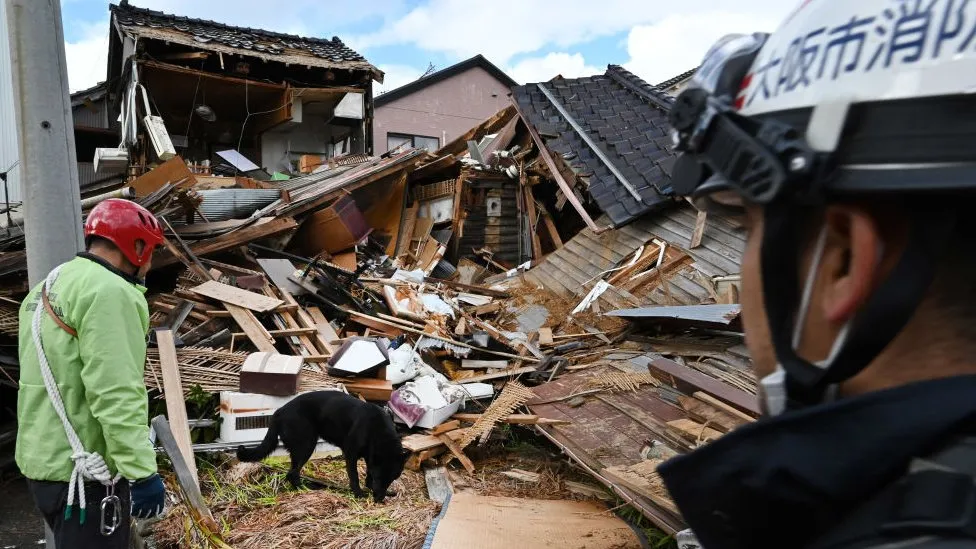
Japan’s little company reports earthquakes
-

A look at the top 10 most devastating earthquakes in world history
The recent 7.8 earthquake that hit Turkey and Syria which has caused havoc has led to a preview of similar past events which brought so much despair.
Below is the list of top 10 earthquakes in an ascending order.
Valdivia Earthquake (9.5)

The Chilean coast was severely battered On May 22, 1960, the coast of Chile, parallel to the city of Valdivia was hit. About 1,000 to 6,000 people died with about 3,000 people injured.
The main tsunami severely battered the Chilean coast, and raced across the Pacific Ocean and devastated Hilo, Hawaii.
Waves as high as 10.7 meters (35 feet) were recorded even 10,000 kilometers (6,200 mi) from the epicenter, and as far away as Japan and the Philippines.
Great Alaska Earthquake (9.2)

Many tried to outrun the tsunami On Good Friday, March 27, 1964, at 5:36 PM (local time, 3:36 UTC), the Prince William Sound region of Alaska experienced the Great Alaska earthquake.
It lasted for about 4.5 minutes and was the strongest earthquake ever recorded in the United States.
The Chenega village was demolished by a tsunami that reached a height of 27 feet (8.2 meters), killing 23 of the 68 inhabitants.
Survivors climbed to high ground and outran the tsunami. It also brought up a significant underwater landslide. 30 people died when the docks and harbor in Port Valdez city collapsed.
A total of 139 people are believed to have died: 15 as a result of the earthquake itself, 106 from the subsequent tsunami in Alaska, 5 from the tsunami in Oregon, and 13 from the tsunami in California.
Sumatra Earthquake (9.1)
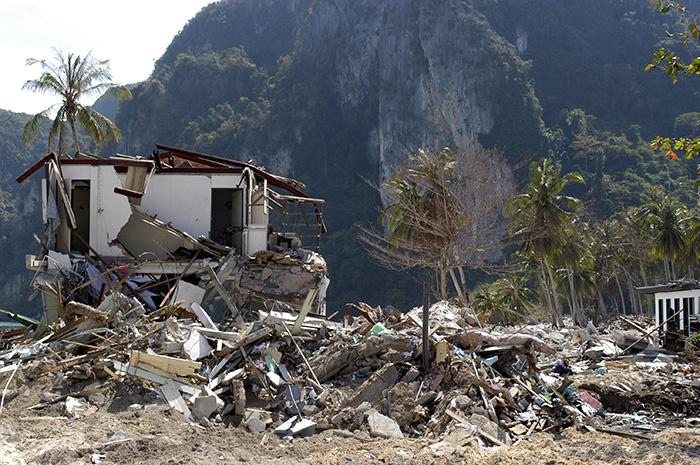
Malaysia, Myanmar, Bangladesh, Maldives, Somalia, Thailand, India, and Sri Lanka were all affected The 2004 Sumatra Earthquake, also known as the 2004 Indian Ocean earthquake, struck on December 26 and was one of the deadliest natural disasters in recent memory.
The faulting during the earthquake lasted for between 8.3 and 10 minutes, which was a record for faulting duration. This energy is less than that of the Tsar Bomba, the greatest nuclear weapon ever detonated, but more than 1,500 times that of the Hiroshima atomic bomb.
More over 200,000 people died, the majority on Sumatra, but also in smaller numbers in Malaysia, Myanmar, Bangladesh, Maldives, Somalia, Thailand, India, and Sri Lanka.
Tōhoku Earthquake (9.1)

There were over 15,000 deaths A significant underwater megathrust earthquake off the coast of Japan happened on March 11, 2011, on Friday at 14:46 local time (05:46 UTC).
An enormous tsunami with waves as high as 40.5 meters (133 feet) was caused by the earthquake. It was one of the deadliest in recorded history; the waves inflicted major structural damage in northeastern Japan, traveling as far inland as 6 miles (10 km).
Airports, highways, and railroads were destroyed, and 127,290 buildings completely, 272,788 partially, and 747,989 partially damaged. A dam gave way.
In particular, the level 7 meltdowns at three reactors in the Fukushima Daiichi Nuclear Power Plant complex were brought on by the tsunami.
On 10 March 2015, it was announced that the confirmed casualties were 15,894 deaths, 6,152 injured, and 2,562 people missing.
Kamchatka, Russia Earthquake (9.0)

The fatalities ranged between 10,000 to 15,000 In the extreme east of Russia, off the shore of the Kamchatka Peninsula, a massive earthquake struck on November 4, 1952, at 16:58 GMT (04:58 local time).
It generated a massive, deadly tsunami that swept across the whole Pacific Ocean, with waves as high as 15 meters (50 feet), which severely damaged the Kamchatka Peninsula and the Kuril Islands and resulted in the deaths of between 10,000 and 15,000 people.
Maule(Chile) Earthquake (8.8)

Damage done to houses by the 2010 earthquake with 8.8 magnitude in Concepcion city, Chile. The 2010 Chile earthquake, often referred to as the 2010 Maule Earthquake, struck the Maule Region of Chile on February 27, 2010, at 03:34 local time (06:34 UTC), roughly 3 kilometers (1.9 miles) off the coast of the Pelluhue commune.
Three minutes or so passed during the prolonged shaking. Numerous cities, including the capital Santiago, saw building collapses that resulted in many fatalities.
In January 2011, the authorities released the ultimate death toll of 525 deaths and 25 people still missing.
Ecuador-Colombia Earthquake (8.8)

Over 500 lives were affected On January 31, 1906, at 15:36 UTC, a large earthquake off the coast of Ecuador, close to Esmeraldas, occurred (a coastal city in northwestern Ecuador).
It is reported that the destructive tsunami caused at least 500 casualties on the coast of Colombia.
Rat Islands Earthquake (8.7)

No deaths were reported The 1965 Rat Islands Earthquake struck on February 4, 1965, at 05:01 UTC (19:01, February 3, in local time).
Due to its remote location, it only created a tsunami on Shemya Island in Alaska that was above 10 meters (33 feet) in height. There were no deaths, according to reports.
Assam-Tibet Earthquake (8.6)

Over 500 people died The Xizang-India border region experienced an earthquake on August 15, 1950, with the epicenter being close to Rima, Tibet. As a result of the earthquake, numerous structures were demolished, and between 1.500 and 3.000 people perished.
Large landslides obstructed the Subansiri River after the earthquake. 8 days later, this natural barrier collapsed, unleashing a 7 m (23 ft) high wave that flooded several communities and claimed the lives of 536 people.
Sumatra Earthquake (8.6)

Ten individuals died A magnitude 8.6 underwater earthquake struck the Indian Ocean on April 11, 2012, at 15:38 local time, close to the Indonesian city of Aceh. Authorities responded to a tsunami alert but later discontinued it.
The strongest documented strike-slip earthquake occurred during these extraordinarily powerful intraplate earthquakes.
There were reports of tsunamis ranging in size from 10 cm to 0.8 meters (3.9 inches to 31.4 inches), however none of them were devastating because it happened so far away from populated areas. Ten fatalities and twelve injuries were recorded, the most of which were due to anxiety and/or heart attacks.
Source: The Independent Ghana
-
Earthquakes: Ghana needs strong buildings to improve readiness – Geological Survey Department
Acting Director General of the Ghana Geological Survey Authority (GGSA) Mr Isaac Kuuwan Mwimbelle has advised the Government to encourage the building of earthquake resistant structures to enhance Ghana’s preparedness for any future earthquake.
“Earthquakes will definitely happen one day, as such, we need to rely on technology and look at how we can engineer a lot of our buildings to withstand such occurrences.”
“Over the years, building engineering has developed and even in areas where construction won’t be suitable, buildings can still be properly engineered to withstand earthquakes,” he said.
In an interview with the Ghana News Agency on Friday, the Ag Director General bemoaned the increasing development of structures along high-risk earthquake areas and urged City Authorities to halt such activities.
He also advised the public to desist from putting up structures in such high-risk areas for their own safety.
Mr Mwimbelle said the GGSA was putting together a sensitisation programme for occupants of high rising buildings, the public and institutions, on preparedness and response measures towards earthquakes.
He advised them to seek expert advice from the GGSA before putting up structures in any area, adding that, such a step would ensure that people did not build in high-risk zones.
The Ag Director said in the advent of an earth tremor or earthquake, it was advisable to hide under a bed or wooden table for protection against any falling object or the collapsing building.
“After the event, find open spaces and congregate there so that in case there are any structural failures, you will not be impacted by them. If you are also on a bridge, it is advisable to immediately get off the bridge so that if it falls, you will not be affected.”
“Also make sure you’re at a safe place where falling objects would not hurt you and only return to your place after relevant authorities have advised you on what to do,” he added.
Professor Mrs Paulina Amponsah of the School of Nuclear and Allied Sciences, Ghana Atomic Energy Commission, also told GNA that the recent earthquakes in Turkey and Syria should serve as a wakeup call to Ghana.
She said even though it was over 80 years since Ghana experienced an earthquake, the earth tremors experienced in recent times meant that energy was building up within the earth which could cause a major earthquake anytime in the future.
She said unlike Turkey, Ghana was very far from major earthquake zones and even in West Africa, the nation was in a stable zone.
She advised citizens to learn from Turkey and Syria’s cases and adhere to the right building codes.
“Policymakers and City Authorities are doing their best to enforce building regulations, but some citizens are hampering their progress by always finding ways to avoid them. Ghanaians should see what is happening elsewhere and mend their ways,” she said.
The Professor urged the Government to pay attention to seismic technology by putting aside budget for research in that field.
Mr George Ayisi, Director of Communications, National Disaster Management Organisation (NADMO), said the Institution was well positioned to provide relief services should any earthquake hit Ghana.
He said the various earth tremors recorded over these few years had prompted NADMO to take precautionary measures ahead of any earthquake occurrence.
Mr Ayisi said NADMO, together with the Ghana Ambulance Services, Ghana National Fire Service, 48 Engineers Regiment of the Ghana Armed Forces, Ghana Police, Ghana Water Company Limited, the Electricity Company of Ghana, Volta River Authority, Geological Survey and other sister agencies, had embarked on about four full scale simulation exercises to boost response to earthquakes.
-
Mount Semeru: Volcano erupts on Java island, raising alert level in Indonesia
Indonesia’s Mount Semeru volcano has erupted, spewing ash into the sky and forcing evacuations on the country’s main island, Java.
The volcano’s warning level was raised to the highest level, indicating that its activity had increased.
Although no injuries have been reported, nearly 2,000 people have been evacuated from the area surrounding the volcano.
As “hot avalanches” of lava poured from Semeru, people were advised to stay at least 8 kilometres (5 miles) away.
The threat level has been raised from three to four, which means the danger now threatens people’s homes, according to a spokesman for Indonesia’s Center for Volcanology and Geological Hazard Mitigation (PVMBG).
According to the organisation, a bridge that was being rebuilt following a previous eruption had been severely damaged.
Volcanic ash mixed with monsoon rain was falling on nearby villages and 1,969 people, including children and seniors, had been evacuated, the National Disaster Mitigation Agency (BNPB) said.
At least six villages had been affected, it added.
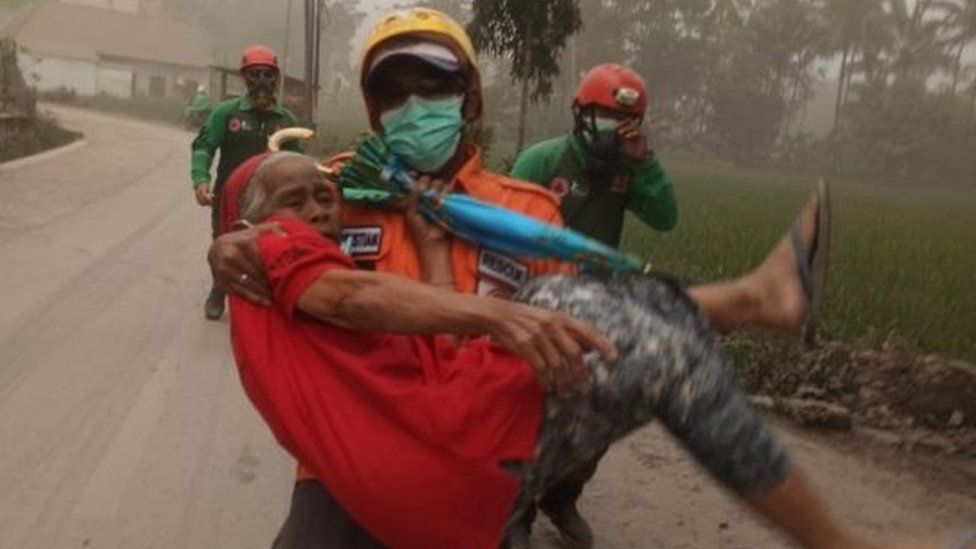
IMAGE SOURCE,REUTERS Image caption, Residents of six villages were evacuated by rescuers Videos of the event showed the sky turning black as a massive plume of ash blocked the sunlight.
Japan issued a tsunami warning for its southernmost islands after the eruption, but meteorologists said no tidal changes had been observed.
Mount Semeru, in East Java province, began erupting at about 02:46 local time (19:46 GMT), authorities said.
Indonesia sits on the Pacific “Ring of Fire” where tectonic plates collide, causing frequent volcanic activity as well as earthquakes.
Semeru – also known as “The Great Mountain” – is the highest volcano in Java at 3,676m (12,060ft) and one of the most active. Its last erupted exactly one year ago, killing at least 50 people and leaving streets filled with mud and ash.
The eruption also follows a series of earthquakes on the west of Java island, located about 640 km (400 miles) east of Indonesia’s capital Jakarta, including one last month that killed more than 300 people.
-
Strong earthquake jolts western Philippine province, capital region
A 6.4-magnitude earthquake jolted a western Philippine province and the capital on Monday, but no major damage has been reported so far, government seismologists said.
The quake struck at 5:05 am (2105 GMT) with an epicentre located off Lubang town in Occidental Mindoro province, 76 kilometres southwest of Manila, the Philippine Institute of Volcanology and Seismology (Phivolcs) said.
It was felt in different intensities in the capital region of Metro Manila, the nearby provinces of Batangas and Cavite and as far as the province of Zambales, 83 kilometres north of Lubang, Phivolcs said.
More than 40 aftershocks have been recorded since the quake, the strongest of which had a mag
The Philippines is located on the Pacific “Ring of Fire,” where about 90 per cent of the world’s earthquakes take place.
A 7.1-magnitude quake that killed more than 220 people in the central Philippines in October 2013 was the last major quake to hit the country.
In July 1990, more than 2,400 people were killed on the northern island of Luzon in a 7.8-magnitude earthquake, one of the strongest ever to hit the country.Source: GNA
-
Puerto Rico earthquake victims receive abandonded emergency supplies
Puerto Ricans dealing with the effects of almost non-stop earthquakes since last month have begun to receive emergency supplies, the National Guard said Tuesday — but the supplies were originally meant for hurricane victims two years ago.
The aid was found abandoned in warehouses in the US territory over the weekend, leading to protests and a judicial investigation.
On Monday, 10 of the towns most affected by the series of tremors received nearly 900 boxes of diapers, almost 1,400 cots, about 880 tarps and hundreds of boxes of batteries, gas stoves and bed sheets, among other items, Puerto Rico National Guard chief Jose Reyes said.
“The mission continues today,” Reyes said, “and the supplies will also be sent to other areas” as a preventative measure.
Read:Three killed, 20 injured in 5.8 magnitude earthquake in Iran
About 5,000 people are living in open-air shelters, nervous after the more than 1,000 earthquakes that have struck the southern part of the island since December 28 and which have left hundreds of homes uninhabitable.
Residents were irate when two warehouses — one in the southern city of Ponce and another near San Juan — were found to be filled with thousands of abandoned supplies, apparently never used after Hurricanes Irma and Maria in 2017.
The storms’ one-two punch left Puerto Ricans without power for months and killed nearly 3,000 people, according to the local government’s official numbers.
Read:Southern California shaken by 6.4 magnitude earthquake
“It is totally unacceptable what has happened,” Secretary of Public Affairs Osvaldo Soto told journalists after the government on Tuesday made public an inventory of the warehouses.
A Facebook user had on Saturday posted video of one of the facilities filled with undistributed aid.
Governor Wanda Vazquez Garced fired three high-ranking officials and referred the case to the courts.
On Monday, hundreds called for Vazquez Garced’s resignation during a protest in the capital of San Juan, where street demonstrations forced the resignation of her predecessor only six months ago.
US President Donald Trump has accused the Puerto Rican government of incompetence and siphoning off hurricane relief money, triggering a public spat between the president and San Juan’s Mayor Carmen Yulin Cruz, as well as the governor Ricardo Rossello.
Read:Earthquake imminent Senior Seismologist
The Puerto Rican leaders accused Trump of treating the population of the island like second class citizens.
Source:Â France24