A Political Scientist and International Security Analyst at Leeds Beckett University, Olayinka Ajala, has proposed a new approach for the Economic Community of West African States (ECOWAS) to address the situation in Niger following the recent coup.
He emphasized that ECOWAS can effectively resolve the crisis without resorting to the use of force, thereby preserving its credibility as an organization.
In an interview with the media on Tuesday, Ajala pointed out that ECOWAS made a mistake by imposing sanctions simultaneously.
He recommended that the regional bloc should reconsider its strategy and engage in negotiations for a shorter transition period instead.
Ajala expressed the need for a recalibration of the sanctions, acknowledging that the current measures have not significantly impacted the coup leaders.
He suggested that while certain sanctions, particularly those targeting the junta and their leaders, should be retained, others, such as the closure of borders and the restoration of electricity supply to Niger, should be lifted.
“There needs to be a realignment of sanctions. ECOWAS needs to take a step back and restrategize. The sanctions are not obviously affecting the juntas as much as we would have liked,” he said.
“Traditionally, sanctions don’t affect people at the top. So I think that ECOWAS needs to still keep some elements of the sanctions, especially on the junta and their leaders, but they need to release the sanctions affecting people, especially the closure of borders and Nigeria needs to restore electricity,” he stated.
Defence Chiefs from the 15 countries within the Economic Community of West African States (ECOWAS) have affirmed their willingness to join a standby force aimed at reinstating democratic governance in Niger Republic.
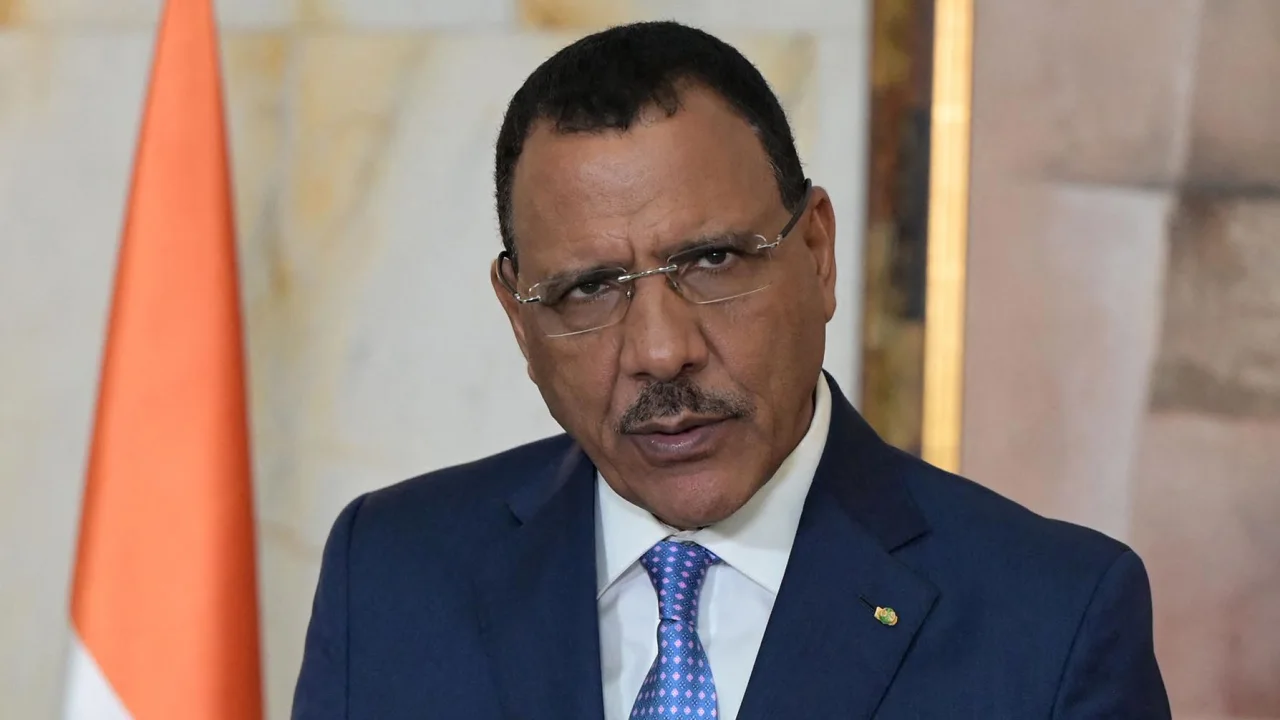
This move follows a military coup carried out by the Presidential Guards in Niger, resulting in the overthrow of President Mohamed Bazoum.
In response, ECOWAS issued a seven-day ultimatum for the military junta to restore power or face potential sanctions, including the use of force.
Despite the junta’s dismissal of ECOWAS‘ threat and their commitment to resist international intervention, the regional body called upon Defence Chiefs of member states to activate the standby force and facilitate the restoration of democracy in Niger.
During a meeting in Accra, Ghana, on August 17, the Defence Chiefs, excluding those from military-controlled states and Cape Verde, expressed their readiness to support the reestablishment of civilian rule in Niger.
The Chief of Defence Staff of Nigeria, General Christopher Gwabin Musa, also emphasized their stance against the coup plotters.
In Niamey, the capital of Niger, Zara Kada offers servings of rice, fish, and vegetables to her patrons who are seated on wooden benches. The widowed mother of seven depends on this company for her survival, but it is in jeopardy due to the rise in food costs caused by the economic sanctions that were put in place when the military took over.
“The price of cooking oil has gone up in addition to that of rice. In just one week, there has been an increase of 2,500F CFA ($4: £3), she explains as she stands beside her modest food stand. This is an issue for us because there will be no profits, only loses if I cook the rice and I can’t sell it.
Mohamed Bazoum, the nation’s democratically elected president, was ousted by the Niger army two weeks ago, drawing strong international criticism.
Abdel Fatau Musah, the head of Ecowas security, tells the BBC, “We are drawing the line in the sand.”
He states that there is a virus and wonders whose country would be the next if we do not resolutely halt what has occurred there.
Therefore, Ecowas reacted swiftly by stopping all financial transactions and electricity supply. In a particularly severe step for the landlocked Niger, ECOWAS also closed its land borders, preventing vital imports.
Following a second emergency conference on the Niger situation, regional leaders have now ordered the creation of a military force on standby, ready to invade the nation should the military maintain its hold on power.
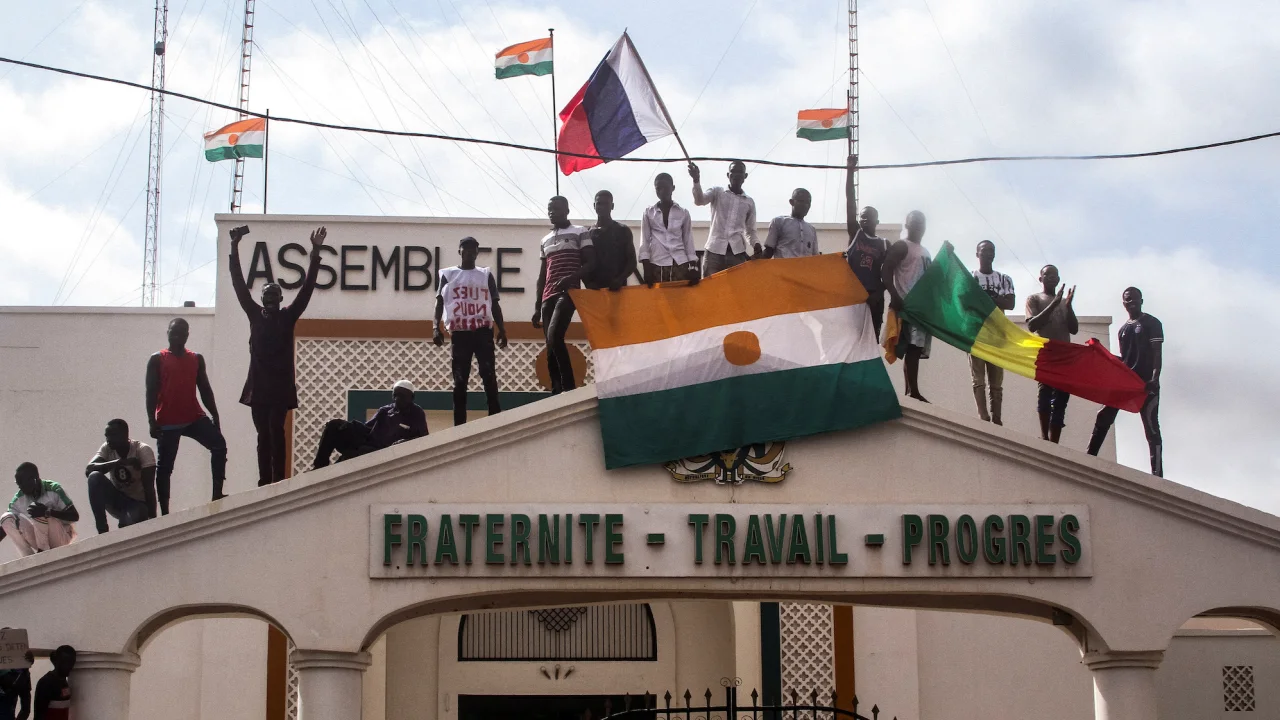
Real rage at the responses of the regional governments and the prospect of military intervention can be seen on the streets of Niamey.
The Niger soldiers are prepared to defend their nation from any type of invasion. They may rely on having the backing of the general public as well as its allies. We’re prepared,” declares Bana Ibrahim.
The 46-year-old is one of the unit’s leaders. The self-defense unit was formed in response to the Ecowas statement.
We are here to defend our country because the country is being attacked by ECOWAS mercenaries, says Moudi Moussa, another member of the force. They are what I refer to as mercenaries working for [French President Emmanuel] Macron. Therefore, we are here to defend Niger and its people.
Since the coup, businesses like Ms. Kada’s have suffered, while Ibrahim Souleymane’s is doing better.
He selects white, blue, and red pieces of cloth from his crowded tailor shop to represent the Russian tricolour.
“I began making flags when the [General] Tchiani coup was about to happen. For Russia in particular. Because they use it to assist our fighters who have seized control, a lot of people come to buy it, he claims.
Even though the flags of Russia and France, the previous colonial power in Niger, share the same colours, some people’s opinions of the two European nations couldn’t be more dissimilar.
“Because we are at war with France, people buy it [the Russian flag]. The military wants to put an end to France’s long history of causing us issues, says Mr. Souleymane.
The coup has sparked widespread anti-French sentiment throughout the nation. Paris is accused of unfairly profiting from Niger’s natural wealth while the majority of the population lives in poverty and continuing to exercise undue influence there even after independence.
Moscow has developed tight ties with the nearby countries of Mali and Burkina Faso, two other former French possessions that have recently experienced military coups. Through its propaganda channels, Russia is portrayed as a superior ally for African nations.
As a result of its diminished reputation among the populace in several francophone nations, France is now supporting ECOWAS’ unpopular action in Niger.
The Parisian administration issued a statement in which it “affirms its full support for all the conclusions” of the meeting this week.
As Mr. Bazoum was a close ally of both the US and France and permitted them to have military bases in the country to help fight Islamist insurgents who are targeting the entire Sahel region of West Africa, regional heads of state are being accused on social media networks of serving the interests of Western powers.
Ecowas has been charged with being influenced by France by protesters.
But what are the chances that ECOWAS will follow through on its threat to employ force?
According to West Africa analyst Marie-Roger Biloa, “They still say it’s on the table, but I think it’s up for negotiation.”
There are many people who oppose the military option, which will prove to be quite delicate. Even past Nigerian leaders and prime ministers are pleading with you not to assault their nation militarily. The populace will suffer greatly as a result.
Ms. Biloa thinks that in order to prevent additional coups on the continent, particularly in cases where military elites might take advantage of the inadequacies of civilian authority to gain power, regional leaders will need to find a solution.
She claims that African governments are struggling to meet the requirements of the populace.
“You have a vast population that is extremely young, unemployed, and uncertain of the future. You can always find supporters for you when you oust the incumbent in this political environment.
Ms Kada is concerned that an ECOWAS invasion could unleash a dangerous Pandora’s Box on her nation from her food stall back in Niamey.
Conflicts like this one are difficult to predict because we only know how they begin.
The Member of Parliament representing Bawku Central and a prominent figure within the Economic Community of West African States (ECOWAS) Parliament, Mahama Ayariga, has commended the regional organization’s decision to deploy its standby force for the purpose of restoring constitutional order in Niger.
Ayariga emphasized the significance of pursuing a diplomatic resolution to the crisis in Niger, while also underlining the importance of showcasing ECOWAS’ military capabilities.
He noted that the military junta in Niger has shown reluctance to engage in dialogue since the coup on July 27, making it imperative for ECOWAS to assert its military strength as a means of reinforcing its diplomatic efforts.
“While we are firmly of the belief that diplomatic channels should ultimately prevail, it is crucial that the military option remains a viable consideration. The parties involved in Niger must grasp that ECOWAS possesses the capacity to enforce its decisions. Without this demonstration of capability, the efficacy of diplomatic avenues could be compromised. Thus, it is unsurprising that ECOWAS is preparing to exhibit its strength to the Nigerien junta, highlighting its ability to effectively enforce its directives.”
Ayariga emphasized that although dialogue remains the ultimate path to resolution, such discussions cannot progress without the Nigerien junta recognizing ECOWAS’ capacity.
In addition to his comments on the crisis, the Bawku Central representative urged the sub-region to collectively determine the core values it wishes to uphold throughout its developmental journey.
Ayariga emphasized that if principles like the rule of law and democracy hold significant importance, then all member states must be willing to make the necessary sacrifices to uphold these values, regardless of the challenges that may arise.
“In our capacity as a sub-region, it is imperative that we establish a clear stance on the values that hold the utmost significance for us. If upholding the rule of law and democracy stands as a cornerstone, then we must collectively be prepared to face any obstacles in safeguarding these principles. No cost should be considered too high when it comes to preserving the integrity of these cherished values.”
West African leaders ratcheted up their criticism of the coup leaders in Niger on Thursday, ordering the “activation” and “deployment” of a regional standby force to reestablish the rule of law in the nation.
Economic Community of West African States (ECOWAS) leaders called for a deployment “to restore constitutional order in the Republic of Niger,” according to a statement read by Omar Alieu Touray, President of the ECOWAS Commission, at a meeting in Abuja, Nigeria, after the one-week deadline they gave the military junta in Niger had passed.
What the “deployment” and “activation” of the force would entail was not immediately obvious. The declaration emphasised a “determination to keep all options on the table for the peaceful resolution of the crisis.”
Since late last month, when the presidential guard overthrew President Mohamed Bazoum in a coup d’état, Niger has been mired in political upheaval. Days afterwards, ECOWAS responded by imposing sanctions and giving the military junta in power one week to disband or risk military intervention.
On Sunday, August 6, that deadline passed without causing the political climate to change. The leaders of ECOWAS have stated that they would only send soldiers in a last-ditch effort to resolve the problem diplomatically.
The regional bloc will “uphold all measures and principles agreed upon by the extraordinary summit held on Niger on July 30th 2023,” whereby severe penalties were established against the military regime in Niger.
Touray also issued a warning over the repercussions for “member states who by their action directly or indirectly, hinder the peaceful resolution of the crisis.”
The president of Ivory Coast, Alassane Ouattara, revealed that all the leaders of the 15-nation ECOWAS organisation had attempted to communicate with the junta but had been warned that they would hold the leader “as a hostage” instead.
We must take action; we cannot allow this to continue, added Ouattara.
He said that he had told his country to mobilise soldiers in preparation of the ECOWAS operation, saying the military junta should fight extremists “and not try to kidnap a democratically elected president.”
Mali and Burkina Faso, led by soldiers who overthrew the government, have declared their support for the Niger junta and issued a warning that any military action will be interpreted as an act of war. Additionally, Guinea has endorsed Niger.
A military source told CNN that the Nigerian armed forces appeared to be getting ready for a potential military intervention this week. At dusk on Sunday evening, a convoy of about 40 pick-up trucks carrying troops from other parts of the nation entered the capital.
Assembling the ECOWAS forces takes time, several analysts told CNN that a military action in Niger was probably not near.
According to Murtala Abdullahi, a defence and security expert based in Abuja, the communique is “about mobilising the necessary resources should an intervention be needed, but it’s also a signal to the junta in Niger that ECOWAS is prepared to take necessary actions, including force, should talks fail.”
The bloc provided no timetable, and the current head, Nigerian President Bola Tinubu, insisted that using force would only be a last choice. Abdourahamane Alkassoum, a security analyst for CNN, noted that the Nigerien military has been gaining popularity locally as ECOWAS continued to talk tough, suggesting that the news may be interpreted in Niger as being more urgent.
Another analyst recalled that ECOWAS‘s deployment to Gambia in 2017—a less challenging assignment than Niger—took 7 weeks.
According to Cameron Hudson, a senior associate at the Centre for Strategic and International Studies, “the mission to Gambia was much more straightforward.” A hostage rescue of a president who is under house arrest and being exploited as a human shield by the junta would take place in Niger, not only as an intervention.
He continued, “Niger has a sizeable army that has been trained by the US and is battle-tested after years of a counterinsurgency.
After President Mohamed Bazoum was allegedly taken hostage by members of the presidential guard on Wednesday, leading to protests in the capital, men in military fatigues claimed to have seized power in Niger.
We have decided to put an end to the government that you know, a man described as Colonel-Major Amadou Abdramane declared in a video communiqué, flanked by what appeared to be several troops. He cited the country’s deteriorating security situation and “poor economic and social governance.”
He also appeared to be reading from a book on the table before him when he added that national institutions had been suspended and the country’s land borders had been temporarily closed.
In a statement on Wednesday, the Economic Community of West African States (ECOWAS) stated that there had been a “attempt to seize power by force” in the West African nation earlier in the day.
The group also urged the coup plotters to release the democratically elected President of the Republic immediately and without conditions. “ECOWAS condemns in the clearest terms the attempt to grab power by force.
A source close to the president told CNN that the circumstance sparked lengthy conversations between the nation’s Presidential Guard and other officials. What was being discussed specifically was not made clear by the source.
The Nigerian presidential complex was closed off on Wednesday, and early that morning, members of the Presidential Guard began to gather in front of the Presidential Palace heavily armed. Later in the day, about twenty soldiers of the Presidential Guard were spotted outside the palace compound.
According to a statement posted on the presidency’s social media accounts, President Mohamed Bazoum is “doing well” and the army and national guard are “ready to attack the elements of the GP [Presidential Guard] involved in this fit of anger if they do not return to their better senses.”
Along with Bazoum, the interior minister of the nation, Hamadou Souley, was also taken into custody by the presidential guard on Wednesday morning local time. They are both currently being held in the presidential palace in Niamey.
Later, hundreds of Bazoum-supporting demonstrators gathered in Niamey, the nation’s capital. When protestors were about 300 metres (984 ft) from the presidential palace, presidential guards fired “warning shots” to stop their advance.
Later on Wednesday, up to 400 demonstrators could be seen, some carrying Bazoum memorabilia and placards that said, “No to the destabilisation of the republic’s institutions.”
In a tweet posted on Wednesday, the Nigeran presidential office stated that “spontaneous protests by democracy advocates broke out all over the (capital) city of Niamey, (around) the country, and in front of Niger’s embassies abroad after the announcement this morning that President (Mohamed) Bazoum is being held in his palace by his guard.”
According to Reuters and Agence France-Presse (AFP), Bazoum is being held by the presidential guards within the palace, which has been closed off by military vehicles since Wednesday morning. Security sources were reported by Reuters, and people close to Bazoum were cited by AFP.
There are currently no officials inside, a member of the National Guard who is manning the facility for both ministries informed CNN.
There have been rumours of political unrest in the nation’s capital, Niamey, according to the US Embassy in Niger.
The city is peaceful at this moment. Until further notice, we urge everyone to keep movements to a minimum and to avoid travelling along Rue de la Republique, the embassy added.
The rest of the city appears to be tranquil, according to CCTV from the capital Niamey.
Bola Tinubu, the president of Nigeria and the current ECOWAS chair, also released a statement denouncing “unpleasant developments” in Niger.
In his statement, Tinubu stated that they are “closely monitoring the situation and developments.”
All parties involved in the Republic of Niger should be aware that the ECOWAS leadership and all supporters of democracy around the world will not put up with any circumstance that weakens the nation’s democratically elected administration.
The statement read, “The ECOWAS leadership will not accept any action that impedes the effective exercise of legitimate authority in Niger or any other part of West Africa.”
In 2021, Bazoum won the election. In the landlocked West African nation, coup attempts are frequent. Since gaining independence from France in 1960, Niger has been the victim of four coups.
International leaders called for peace despite the apparent unrest in response to the situation in Niger, which was the subject of widespread censure.
The UN “stands by the Government and the people of Niger,” a spokesperson for UN Secretary-General Antonio Guterres declared on Wednesday.
The Niger situation is being closely monitored by the Secretary-General. In a statement, Stéphane Dujarric stated, “He condemns in the greatest terms any attempt to oust democratic governance, peace, and stability in Niger.
Josep Borrell, the head of foreign strategy for the EU, strongly denounced “any attempt to destabilise democracy and threaten the stability of Niger.”
The foreign ministry of France expressed worry and stated that it “is closely monitoring the development of the situation” in Niger.
Officials from the White House also stated that they “strongly condemn any attempt to detain or obstruct the democratically elected government of Niger from carrying out its duties.”
The alliance between Washington and the West African nation, according to US national security adviser Jake Sullivan, depends on its “continued commitment to democratic standards.”
The objective of this training was to equip the participants with the necessary knowledge and skills pertaining to the restitution and repatriation of stolen cultural items from West Africa.
Over the course of five days, a workshop was organized, enabling the establishment of a database and the accumulation of expertise in the domain of cultural property restitution among the member states.
This workshop served as a platform to share valuable insights, techniques, and protocols for the effective recovery of cultural artifacts.
Additionally, the workshop facilitated the development of a protocol outlining the procedures, steps, and tools to be employed for the restitution of cultural property.
This protocol has been made accessible to all member states, serving as a practical resource for future cultural property restitution endeavors.
Dubbed; ‘Capacity building of member states lawyers on restitution procedures and review of the ECOWAS Action Plan on the return of cultural property to their countries of origin,’ the programme was held in Accra on Friday.
During the training, Mr. Mark Okraku-Mantey, the Deputy Minister of Tourism, Arts, and Culture (MoTAC), delivered a speech through Mr. John Agbeko, the Chief Director of MoTAC.
In his address, Mr. Okraku-Mantey emphasized the significance of the training program and highlighted the exploration of principles related to restitution and reparation. He recognized these principles as essential steps in acknowledging past wrongs, rectifying historical injustices, and rebuilding the rich cultural heritage of the region.
Mr. Okraku-Mantey further stressed the importance of member countries fully implementing the ECOWAS Action Plan 2019-2023 on the restitution of cultural property to its countries of origin.
He emphasized the need for unified efforts among member countries, stating that it is crucial for all countries to move in the same direction in order to achieve this common goal.
Mr. Okraku-Mantey expressed his deep appreciation for the participants’ unwavering dedication to the repatriation of stolen cultural items back to Africa and their active involvement in the workshop.
He commended them for their commitment, acknowledging that their efforts in this important cause are truly praiseworthy.
He extended his gratitude for the invaluable contributions each participant has made, recognizing the significance of their input in advancing the goals of cultural heritage preservation and restitution.
Highlighting some of the challenges faced member states, he said “our biggest challenge is taking inventory of our stolen items, ratification of various conventions dealing with reparation and restitution, as well as, the implementation of existing laws in reparation and restitution.”
The Economic Community of West African States (ECOWAS) Court of Justice dismissed the lawsuit filed by the Ghana Integrity Initiative and Transparency International Ghana against the Agyapa Royalties deal.
This means that the court would not force Ghana’s government to halt the selling of the country’s gold royalties through the Agyapa contract.
During a virtual hearing on July 11, 2023, the court dismissed all of the plaintiff’s reliefs, Transparency International and its subsidiary, the Ghana Integrity Initiative.
The court has yet to explain its decision.
Transparency International, Ghana Integrity Initiative, and Ghana Anti-Corruption Coalition filed a complaint with the ECOWAS court against the Ghanaian government over the Agyapa agreement.
Below are the reliefs Transparency International was seeking:
1. A declaration that the Defendant’s actions towards entering into a relationship agreement with Minerals Income Investment Fund and Agyapa Royalties Limited in respect of transactions surrendering the sovereignty of Ghana over its gold mineral resources in perpetuity constitute an interference with the right guaranteed under Article 21(1) of the African Charter on Human and Peoples Rights as well as violation of Articles 2(1) And (2), 3(1), 16(1) And 17(3) of The Revised African Convention On The Conservation Of Nature And Natural Resources (revised Maputo Convention).
2. An order restraining Defendant from implementing the Agyapa deal, and cancelling/terminating the already existing contracts.
3. An order mandating the Defendant, where it desires to raise immediate funds from gold royalties, to restart the planning, impact assessment, consultations and other preparations in line with its international human rights law obligations.
4. An order mandating the Defendant to undertake a thorough and impartial investigation into the alleged corruption offences and ensure that any alleged perpetrators are brought to justice and held accountable for any violations.
5. An order mandating Defendant to immediately review its existing relevant national laws and policies to:
(a). Provide for adequate and effective safeguards against violation of the Right to Free Disposal of Wealth and Natural Resources by public officials and public bodies.
(b). Follow Revised ECOWAS Treaty’s fundamental principles enshrined in Article 4 paragraphs g) and h) and ensure compliance with its Article 31.
(c). Ensure that any entity with the function of sovereign wealth fund complies with the best international standards, such as the Santiago Principles.
6. Other consequential order (s) as this honourable court may deem fit to grant in the circumstance.
About the Agyapa Royalties deal:
The agreement began in June 2018, when Parliament established the Minerals Income Investment Fund (Act 2018) to handle equity holdings in mining firms and receive royalties on behalf of the Ghanaian government.
The Minerals Income Investment Fund is tasked with managing and investing the royalties and revenue it collects on behalf of Ghana in order to maximize returns.
To accomplish this, the statute authorizes the Fund to create Special Purpose Vehicles (SPVs) to appropriate these investments.
In July 2020, the government proposed a modification to the Act to ensure that the SPVs established by the Fund to handle investments have complete independence.
The Minerals Income Investment Fund established an offshore limited liability company known as Agyapa Royalties Limited (formerly Asaase Royalties Limited) in response to the change and the original requirements of the legislation.
The Agyapa Royalties Ltd is incorporated in the UK tax haven of Jersey. It has been incorporated in a tax haven to avoid the hefty tax costs linked with the returns that will flow to the state from the investments.
Agyapa Royalties Limited is an external corporation registered in Ghana.
This is the second time the city is hosting the event as it did same last year.
Over three hundred delegations made up of MPs from across member states, experts, and journalists, among others, are expected to be in attendance
Speaking to the media, the Member of Parliament for Effutu, Alexander Afenyo-Markinsaid the city is ready to host the event, adding that the necessary facilities are in place to host the event.
“I am happy to announce that by the grace of God, after successfully hosting the first ECOWAS extraordinary session in Winneba in 2021, it has pleased the Speaker and the entire ECOWAS Parliament Secretariat to select Winneba for another extraordinary congress in September”.
“The necessary letters have been written and delivered to the authorities, so we are going to start the necessary processes to receive the over three hundred people made up of MPs, experts, and journalists. We have the necessary facilities and infrastructure to host them.”
The MP added that choosing Winneba was also strategic since it is closer to Accra.
“Winneba is just an hour’s drive away from Accra by road and if there is traffic, you could spend just an hour and a half, so it is not out of reach that our Parliamentarians will leave Accra and come to Winneba for the session.”
Elvis Afriyie Ankrah had just finished reading a Master’s degree course in International Relations and was hoping that he would receive a callback from the Economic Community of West African States (ECOWAS) to start his dream job with them.
And as is the case for most young graduates, the urge to experience working in any environment that presented him with much more made his hopes even greater.
But Elvis Ankrah said something that jolted his dream sideways and put that long-time dream on permanent hold.
And it all started when he was approached by one of the stalwarts of the National Democratic Congress (NDC), Ato Ahwoi, to take up an unusual job: a spokesperson for a presidential candidate.
The job was for him to deputise as a spokesperson for the late former president of Ghana, Prof. John Evans Atta Mills, who was by then campaigning to become Head of State.
He explained to GhanaWeb TV’s Edward Smith Anamale that when that call came through, it was not one of the things on his mind.
“I went to do my Masters in International Relations and when I came back, I was on the verge of… I’d actually gone to ECOWAS to put in an application for a job and I was expecting a response because I had spoken with Dr. Chambas and all that, and then Mr Ato Ahwoi called me and said he wanted me to be the deputy campaign spokesperson for Prof Mills’ presidential primaries.
“It was a very difficult decision to make: go to ECOWAS, go and earn some good dollars because I studied international relations so that had been my interest; to work with an international agency: ECOWAS, AU or the United Nations, so local politics was not part of my plan,” he explained.
Elvis Afriyie Ankrah, however, explained in the election Desk interview on GhanaWeb TV that after a while, he agreed to take on that job, also because of something profound that Ato Ahwoi said to him.
“And he said, go and do this thing for us, and after several months, I eventually agreed because he told me something: ‘If you go to your ECOWAS or UN and after 15 years you come back to Ghana, don’t you know you’ll be a stranger, and your colleagues would have gone ahead of you? So, what will happen to all the experience you gathered as SRC president and NUGS.
“So, that really got me thinking so I took up the challenge and so, myself, Ludwig and Rojo, we went round with Prof Mills around the whole Ghana. We went to almost every city, town, village – every nook and cranny. It was a very eye-opening experience and that is where I gathered a lot of data and network with the grassroots,” he explained.
The two organisations have also asked the military junta to refrain from acts of violence and comply with a laid down process agreed with transition authorities to return the country to constitutional order by July 1, 2024.
This was contained in separate statements issued by ECOWAS Chairman, Guinea-Bissau’s President, Umaro Sissoco Embalo, and AU Commission Chairperson, Moussa Faki Maham, at the weekend.
In the country’s second coup in a year, Burkina Faso military leader, Paul-Henri Damiba, was on Friday deposed as army Captain, Ibrahim Traore, took charge, dissolving the transitional government and suspending the constitution.
Traore said on Friday evening that the new group of officers removed Damiba due to his inability to deal with a worsening armed uprising in the country for which he initially toppled the civilian government.
“ECOWAS finds this new coup a major setback at a time when progress had been made, particularly through diplomacy and efforts undertaken to ensure an orderly return to constitutional order by 1st July 2024”, the ECOWAS statement said.
While reaffirming its “unreserved condemnation” of any seizure or retention of power by unconstitutional means, it demanded the scrupulous respect of the timetable already agreed upon with the Transition Authorities for a rapid return to constitutional order.
“ECOWAS hereby warns any institution, force or group of persons who, by their actions, may hinder the planned return to constitutional order or contribute to undermining the peace and stability of Burkina Faso and the Region.
“The ECOWAS Commission remains seized with developments in the country”, the statement said.
The AU statement extended the AU Chair’s support for ECOWAS and expressed his deep concern about the resurgence of unconstitutional changes of the government in Burkina Faso and elsewhere on the African Continent.
It said the support was in conformity with the Lomé Declaration of Year 2000, the African Charter on Democracy, Elections and Governance and the Accra Declaration on Unconstitutional Changes of Government.
The Chairperson called upon the military to immediately and totally refrain from any acts of violence or threats to the civilian population, civil liberties, human rights, and ensure strict compliance with electoral deadlines for the restoration of Constitutional order by 1 July 2024, at the latest.
“The Chairperson reaffirms the continued support of the African Union to the people of Burkina Faso to ensure peace, stability and development of the country,” the AU statement said.
The two organisations have also asked the military junta to refrain from acts of violence and comply with a laid down process agreed with transition authorities to return the country to constitutional order by July 1, 2024.
This was contained in separate statements issued by ECOWAS Chairman, Guinea-Bissau’s President, Umaro Sissoco Embalo, and AU Commission Chairperson, Moussa Faki Maham, at the weekend.
In the country’s second coup in a year, Burkina Faso military leader, Paul-Henri Damiba, was on Friday deposed as army Captain, Ibrahim Traore, took charge, dissolving the transitional government and suspending the constitution.
Traore said on Friday evening that the new group of officers removed Damiba due to his inability to deal with a worsening armed uprising in the country for which he initially toppled the civilian government.
“ECOWAS finds this new coup a major setback at a time when progress had been made, particularly through diplomacy and efforts undertaken to ensure an orderly return to constitutional order by 1st July 2024”, the ECOWAS statement said.
While reaffirming its “unreserved condemnation” of any seizure or retention of power by unconstitutional means, it demanded the scrupulous respect of the timetable already agreed upon with the Transition Authorities for a rapid return to constitutional order.
“ECOWAS hereby warns any institution, force or group of persons who, by their actions, may hinder the planned return to constitutional order or contribute to undermining the peace and stability of Burkina Faso and the Region.
“The ECOWAS Commission remains seized with developments in the country”, the statement said.
The AU statement extended the AU Chair’s support for ECOWAS and expressed his deep concern about the resurgence of unconstitutional changes of the government in Burkina Faso and elsewhere on the African Continent.
It said the support was in conformity with the Lomé Declaration of Year 2000, the African Charter on Democracy, Elections and Governance and the Accra Declaration on Unconstitutional Changes of Government.
The Chairperson called upon the military to immediately and totally refrain from any acts of violence or threats to the civilian population, civil liberties, human rights, and ensure strict compliance with electoral deadlines for the restoration of Constitutional order by 1 July 2024, at the latest.
“The Chairperson reaffirms the continued support of the African Union to the people of Burkina Faso to ensure peace, stability and development of the country,” the AU statement said.
Along with the Economic Community of West African States (ECOWAS), the African Union (AU) has denounced the September 30, 2022 coup that occurred in Burkina Faso and saw one military junta overthrow another.
A report on National TV announcing the takeover on Friday night confirmed what had initially appeared to be a significant gunfire exchange earlier in the day.
Hours after the announcement, the ECOWAS Commission released a statement in which it sharply criticized the act at a time when the junta led by Lt. Col. Paul-Henri Sandaogo Damiba was moving toward a constitutional orderly transition by July 1, 2024.
The new junta led by Captain Ibrahim Traore said a new leader – civilian or military will be be announced in due course, but before that some measures put in place include dissolution of the government, the Transitional Legislative Assembly (ALT), and the Transition Charter as well as the closure of borders.
The AU statement signed by the Chairperson of the African Union Commission was titled: ‘The Chairperson of the African Union Commission unequivocally condemns the second takeover of power by force in Burkina Faso,’ and it read:
“In strong support of ECOWAS, the Chairperson of the African Union Commission, H.E. Moussa Faki Mahamat, and in conformity with the Lomé Declaration of Year 2000, the African Charter on Democracy, Elections and Governance and the Accra Declaration on Unconstitutional Changes of Government, expresses his deep concern about the resurgence of unconstitutional changes of Government in Burkina Faso and elsewhere on the African Continent.
“The Chairperson calls upon the military to immediately and totally refrain from any acts of violence or threats to the civilian population, civil liberties, human rights, and ensure strict compliance with electoral deadlines for the restoration of Constitutional order by 1 July 2024, at the latest.
“The Chairperson reaffirms the continued support of the African Union to the people of Burkina Faso to ensure peace, stability and development of the country.”