Tag: Economic growth

  • Ghana’s economy slows to 4.5% in July 2025, down from 8.3% last year

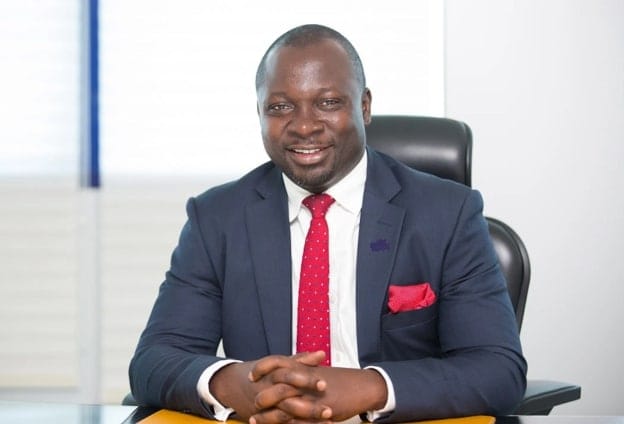
    The Ghana Statistical Service (GSS) has introduced a new index aimed at filling the information gap between quarterly GDP releases, providing policymakers and investors with a more immediate measure of economic performance.

    Data from the index indicates that the economy continued its growth momentum, with the MIEG rising to 110.2 in July 2025, up from 105.4 in the same period last year.

    Despite the positive trend, the latest figures point to a slowdown compared to the 8.3 percent growth recorded in July 2024. The expansion was largely supported by a strong rebound in agriculture, which grew by 8.0 percent, and steady growth in the services sector at 6.4 percent.

    The industrial sector, however, showed minimal growth, recording only a 0.1 percent increase.

    Presenting the findings, Government Statistician Dr. Alhassan Iddrisu said the MIEG provides “timely insights to support swift and evidence-based policy responses.”

    He added that the new measure serves as a “leading high-frequency indicator of GDP growth,” enabling better tracking of policy impacts and improving the forecasting of economic trends.

    According to the sectoral analysis, services contributed 2.63 percentage points to the 4.5 percent total growth, while agriculture accounted for 1.67 percentage points. The industrial sector made a modest contribution of 0.04 percentage points.

    Although industrial gold production increased, the GSS noted that this was largely offset by a decline in petroleum and gas output.

    The MIEG, which uses 2023 as its base year with an index of 100, is provisional and may be revised as more comprehensive data becomes available. The next update, covering August 2025, is scheduled for release on November 12.

    Meanwhile, the World Bank has made a U-turn on its earlier prediction of Ghana’s 2025 economic growth, upgrading the forecast from its previous estimate to 4.3 percent.

    This was contained in the October 2025 edition of Africa’s Pulse Report, released by the Bank in Washington, D.C. In April this year, the World Bank projected Ghana’s economy to expand by 3.9%.

    The Bank attributed weather-related uncertainties as factors that could influence the country’s overall economic performance. Meanwhile, the World Bank expects Ghana’s December inflation to close at 15.4%.

    Earlier in September, the World Bank disbursed $360 million from its International Development Association (IDA) to Ghana.

    This funding was made possible through the Second Resilient Recovery Development Policy Financing operation, to support Ghana’s efforts to restore macroeconomic stability.

    Parliament gave the nod in July after the World Bank Board approved the facility in June. The World Bank Group is a family of five international organizations that provide leveraged loans to developing countries. It is the largest and best-known development bank in the world, serving as an observer at the United Nations Development Group.

    The Bank is headquartered in Washington, D.C., United States. Its objectives are to restore fiscal sustainability, support financial sector stability and private sector development, improve energy sector financial discipline, and strengthen social and climate resilience.

    The recent disbursement comes at a time when Ghana’s local currency, the cedi, has been ranked as the worst-performing currency in a recent report published by the global financial news outlet Bloomberg.

    Ghana cedi’s strong performance was a central theme highlighted by President John Mahama during an interaction with potential investors in Singapore and Japan weeks ago. President Mahama emphasised the robust performance of the local currency to underscore Ghana’s macroeconomic stability and attractiveness as a destination for foreign capital.

    However, the cedi’s brief gains were short-lived after its rapid depreciation made it the worst-performing currency. According to Bloomberg’s recent report released on Thursday, September 4, the Ghana cedi is the worst-performing currency among all trading currencies, attributing the depreciation to a surge in demand for dollars by companies paying for imports.

    “A surge in demand for dollars by companies paying for imports has ended the Ghana cedi’s recent strong performance,” Bloomberg said.Bloomberg attributed the new development to the “strong gold prices,” while emphasizing that Ghana’s cedi has seen more than a ten percent (10%) depreciation in the current quarter.

    This, Bloomberg noted, has erased the fifty percent gain against the dollar in April and June. According to Bloomberg, the cedi traded 0.1 per cent weaker at GH¢11.9507 per dollar at 1:50 a.m. Despite the losses, it has gained 23 per cent so far this year.

    “Now, the currency, which had ranked first globally on the back of strong gold prices, has weakened by 13 per cent in the current quarter. Bloomberg data showed this was the steepest fall worldwide, erasing part of the 50 per cent gain recorded between April and June,” the report said.

    But Bloomberg has indicated that “Despite the losses, it has gained 23 per cent so far this year based on market data.” Reacting to Bloomberg’s report, the Bank of Ghana (BoG) noted, “The cedi should be stable within a reasonable range,” the central bank said in an emailed response.

    “Our role is to ensure fluctuations remain orderly, that they reflect fundamentals, and that they do not undermine confidence in the broader economy.”

    Bloomberg, in April this year, ranked the cedi as the best-performing currency with a sixteen percent (16%) gain against the dollar. What made the cedi earn the tag as the worst-performing currency is the steepest decline on the global level.
  • Mid-Year Budget review to be presented today

    Mid-Year Budget review to be presented today

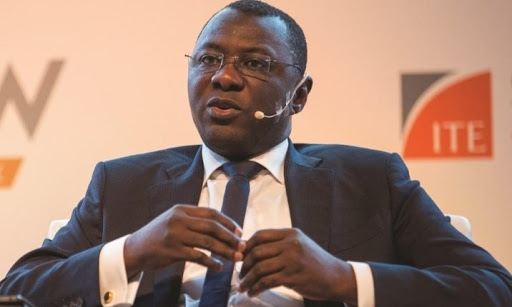
    The Finance Minister, Dr. Mohammed Amin Adam, is set to present the 2024 Mid-Year Budget Review in Parliament today, Tuesday, July 23, 2024.

    The presentation will update the House on the progress of the government’s 2024 Budget and offer revised financial plans along with an updated economic outlook for Ghana.

    In a statement dated Monday, July 22, the Ministry announced that the review will provide insights into the implementation of the 2024 budget, highlighting the economic and fiscal performance for the first half of the year.

    The update will cover growth measures, revenue and expenditure performance, financing, and debt sustainability.

    The Minister will also brief Parliament on the ongoing implementation of the US$3 billion International Monetary Fund (IMF) loan-supported Post-COVID-19 Programme for Economic Growth (PC-PEG).

    This will be Dr. Amin Adam’s inaugural presentation in Parliament since he assumed office as Finance Minister in February 2024, in accordance with Section 28 of the Public Financial Management Act, 2016 (Act 921).

  • Control child birth, Ghana is overcrowded – Kwame Pianim advises

    Control child birth, Ghana is overcrowded – Kwame Pianim advises

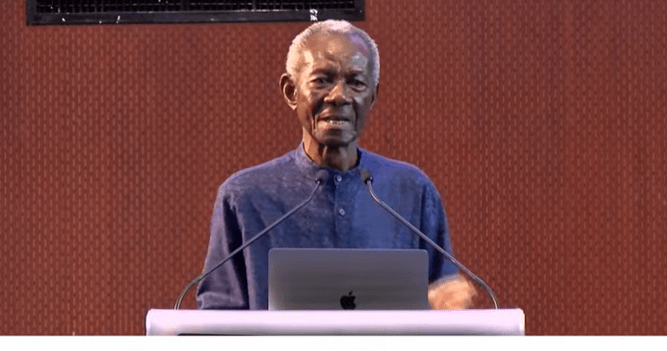
    Renowned economist Andrews Kwame Pianim has expressed the view that Ghana cannot achieve substantial economic growth given the current rate of population growth.

    He highlighted that no country has ever achieved development with a population growth rate exceeding 2 percent. Kwame Pianim made these remarks during the 5th edition of the University of Professional Studies’ Annual Leadership Public Lecture.

    He said “at the 2.12 per cent annual rate of growth of the population because our fertility level has continued high and mortality is declining, therefore constant at about 2 per cent or 2.1 per cent.

    “If we continue, doing that, by 2057 we will have 69 million Ghanaians in this small place. See how crowded we are. It will overburden the free senior school system, the school system, and the university systems, lecturers will be lecturing 200. In the primary schools, we have 100 and 200 pupils.”

    In supporting his argument, economist Andrews Kwame Pianim pointed to South Korea as an example. He highlighted that South Korea, facing a comparable population growth rate to Ghana in the 1950s, successfully transformed its economy within about 30 years by effectively managing its population growth.

    He added; “We started with Korea which had 3 per cent [and] 3.5 per cent for us in the 1960s. They brought it down so drastically that they are now negative and are trying to encourage people to have more children.

    “And we are still doing it. We cannot develop. No country has ever developed at 2% growth in population. And with an average woman having 6 children. We can’t do it. We need to modulate our population,” the economist emphasised.

    The lecture was organized under the theme “Re-imagining Ghana’s Development Trajectory for Peaceful Prosperous Nation by 2057. Our 100th Anniversary through the Perspective of the People.”

    The Annual Leadership Public Lecture at the University of Professional Studies aimed to encourage both the public and leaders to reconsider Ghana’s development path in light of the shortcomings of previous policies.

  • GAB Research confirms strong recovery of banking sector in 2023

    GAB Research confirms strong recovery of banking sector in 2023

    During the first quarter (Q1) of 2023, the release of prudential financial data by several universal banks in the country affirmed the impressive and resilient performance of the industry. This was notable despite challenges in the last quarter (Q4) of the previous year, mainly due to the government’s debt restructuring program, particularly the domestic debt exchange program (DDEP).

    Comparing Q1 2023 to Q4 2022, the industry’s balance sheet displayed remarkable growth. This growth was underpinned by sustained increases in deposits and capital levels, leading to robust expansion in total assets.

    The income statement of the industry demonstrated considerable strength in the reviewed period. Profit after tax (PAT) experienced a significant surge, attributed to substantial revenue growth relative to operating expenses. Private sector credit received a boost, resulting in a 7.31% increase from around GHȼ47.07 billion in 2022 to GHȼ50.51 billion in Q1 2023.

    Key indicators highlighted the industry’s strength and resilience within the broader financial system. These indicators encompassed asset quality, capital adequacy ratio (CAR), return on equity (ROE), liquidity, non-performing loans (NPLs), and market risk sensitivity.

    The capital adequacy ratio exceeded 21.96% in Q1 2023, surpassing the Bank of Ghana’s regulatory requirement of 16.60% as of December 2022. This substantial ratio indicated robust capitalization and enhanced financial resilience, ensuring that banks could maintain regulatory capital requirements even during credit risk concentration shocks.

    The industry’s overall financial stability was reflected in the quality of its assets, highlighting effective risk mitigation measures for both capital and loan formation. The average return on equity for Q1 2023 indicated efficient profit generation from shareholder investments.

    Liquidity coverage ratio (LCR) remained above 92.98% during the review period, reflecting ample high-quality liquid assets to address short-term cash outflows. This indicated banks’ preparedness to counter potential market-wide shocks and liquidity disruptions.

    Profitability indicators, including profit-before-tax (PBT), profit-after-tax (PAT), return on assets (ROA), return on equity (ROE), earning assets, and net interest income, showed substantial improvements in Q1 2023 compared to the end of 2022.

    The industry’s resilience, exemplified by high ROE and other factors, is projected to continue in the current financial year and beyond, making it an attractive investment for the financial sector and broader Ghanaian economy.

    Ghanaian banks have taken proactive steps to strengthen risk management and internal controls, positioning themselves to handle potential solvency challenges. Their collaboration with the Bank of Ghana and other stakeholders ensures continued industry stability.

    In conclusion, Ghanaian banks are prepared to engage with individuals, households, and businesses as the economy recovers. Their resilience, supported by improved operational performance, capitalization, and government policies, positions them to withstand shocks and contribute to economic growth through responsible lending.

    The sustained growth in deposits and capital levels suggests potential for financial deepening and credit expansion. The industry projects a positive outlook, supported by ongoing reforms and strategies to provide sound financial services and facilitate economic growth. The impressive performance of the first quarter of 2023 highlights the robustness of banks within the industry.

  • World economy entering ‘perilous phase’- IMF

    World economy entering ‘perilous phase’- IMF

    The world economy is entering a “perilous phase” of low economic growth and high financial risk, the International Monetary Fund has warned in its latest set of assessments.

    The IMF, which is holding its spring meetings in Washington this week, downgraded its outlook for global growth and said its medium-term forecast for the economic output was now at the weakest level since the fund began publishing these forecasts in 1990.

    However, its chief economist Pierre-Olivier Gourinchas added that there were also more severe risks in prospect.

    He said: “We are… entering a perilous phase during which economic growth remains low by historical standards and financial risks have risen, yet inflation has not yet decisively turned the corner.”

    “Below the surface,” he added, “turbulence is building, and the situation is quite fragile, as the recent bout of banking instability reminded us.

    “Inflation is much stickier than anticipated even a few months ago. While global inflation has declined, that reflects mostly the sharp reversal in energy and food prices. But core inflation, excluding the volatile energy and food components, has not yet peaked in many countries.”

    This cocktail of factors prompted the IMF to cut its forecast for global economic growth by 0.1 percentage points this year and next, to 2.8% and 3% respectively.

  • FULL TEXT: IMF, Ghana reach Staff-Level Agreement under ECF of US$3 billion

    IMF Reaches Staff-Level Agreement on a $3 billion, three years Extended Credit Facility with Ghana

    December 12, 2022

    * IMF staff and the Ghanaian authorities have reached staff-level agreement on economic policies and reforms to be supported by a new three-year arrangement under the Extended Credit Facility (ECF) of about US$3 billion.

    * The authorities’ strong reform program aims at restoring macroeconomic stability and debt sustainability while protecting the vulnerable, preserving financial stability, and laying the foundation for strong and inclusive recovery. To support the objective of restoring public debt sustainability, the authorities have launched a comprehensive debt operation.

    * In addition to a frontloaded fiscal consolidation and measures to reduce inflation and rebuild external buffers, the program envisages wide-ranging reforms to address structural weaknesses and enhance resilience to shocks.

    Accra, Ghana: An International Monetary Fund (IMF) team led by Mr. Stéphane Roudet, Mission Chief for Ghana, visited Accra during December 1 – 13, 2022, to discuss with the Ghanaian authorities IMF support for their policy and reform plans.

    At the end of the mission, Mr. Roudet issued the following statement:

    I am pleased to announce that the IMF team reached staff-level agreement with the Ghanaian authorities on a three-year program supported by an arrangement under the Extended Credit Facility (ECF) in the amount of SDR 2.242 billion or about US$3 billion. The economic program aims to restore macroeconomic stability and debt sustainability while laying the foundation for stronger and more inclusive growth. The staff-level agreement is subject to IMF Management and Executive Board approval and receipt of the necessary financing assurances by Ghana’s partners and creditors.

    “ The Ghanaian authorities have committed to a wide-ranging economic reform program, which builds on the government’s Post-COVID-19 Program for Economic Growth (PC-PEG) and tackles the deep challenges facing the country.

    “Key reforms aim to ensure the sustainability of public finances while protecting the vulnerable. The fiscal strategy relies on frontloaded measures to increase domestic resource mobilization and streamline expenditure. In addition, the authorities have committed to strengthening social safety nets, including reinforcing the existing targeted cash-transfer program for vulnerable households and improving the coverage and efficiency of social spending.

    “Structural reforms will be introduced to underpin the fiscal strategy and ensure a durable consolidation. These include developing a medium-term plan to generate additional revenue and advancing reforms to bolster tax compliance. This will help create space for growth-enhancing measures and social spending. Efforts will also be made to strengthen public expenditure commitment controls, improve fiscal transparency (including the reporting and monitoring of arrears), improve the management of public enterprises, and tackle structural challenges in the energy and cocoa sectors. The authorities are also committed to further bolstering governance and accountability.

    “To support the objective of restoring public debt sustainability, the authorities have announced a comprehensive debt restructuring. Sufficient assurances and progress on this front will be needed before the proposed Fund-supported program can be presented to the IMF Executive Board for approval.

    “Reducing inflation, enhancing resilience to external shocks, and improving market confidence are also important program priorities. Accordingly, the Bank of Ghana will continue to strengthen its monetary policy framework and promote exchange rate flexibility to rebuild external buffers. As part of the authorities’ debt strategy, a domestic debt exchange has been launched. The authorities are committed to taking the necessary mitigation measures to ensure financial sector stability is preserved.

    “IMF staff held meetings with Vice President Bawumia, Finance Minister Ofori-Atta, and Bank of Ghana Governor Addison, and their teams, as well as representatives from various government agencies. The IMF team has also continued to engage with other stakeholders. Staff would like to express their gratitude to the Ghanaian authorities, Parliament’s Finance Committee and all the private sector, trade union, and civil society representatives for their open and constructive engagement over the past few months.”

    Source: Ghanaweb

  • IMF-backed medium-term plan will restore economy – Market Observer

    The execution of government’s medium-term economic plans, backed by the International Monetary Fund (IMF), will bring the Ghanaian economy back to pre-COVID levels according to a market observer.

    However, the recovery process will be expensive for all stakeholders, Apakan Securities remarked in a post-2023 budget analysis.

    Per the 2023 budget, government has created the post-Covid-19 Programme for Economic Growth (PC-PEG) as a road map to deal with present economic issues. The main goals of the PC-PEG include re-anchoring inflation expectations, achieving low and stable inflation, and bolstering the exchange rate regime. It also aims to restore fiscal and debt sustainability, and reduce fiscal risks such as those associated with contingent obligations from state-owned enterprises (SOEs).

    Deepening structural reforms, regaining market access, regaining investor confidence, unlocking new sources of funding while creating the necessary buffers to strengthen resilience to economic shocks, as well as raising the nation’s sovereign credit ratings and regaining access to international capital markets are additional targets.

    “We believe government’s fiscal operations for 2023 will start on a smoother note compared to 2022, which witnessed a delay in the passage and implementation of some key revenue measures (notably the e-Levy). Layering this, passage of the Tax Exemptions bill 2022 by parliament will be a major lever for revenue collections moving forward, as this could help plug a significant amount of cedi lost via tax exemptions over the past years,” Apakan said.

    The market watcher noted that with VAT’s significant contribution of circa 60 percent and 24 percent to taxes on domestic goods and services and tax revenue from 2014 to 2021, approval of the 2.5 percent increment will be a boost to total revenue receipts.

    “That notwithstanding, a historical trend of revenue collection slippages – averaging about GH¢1.7billion from 2014 to 2021 – as well as expected receding economic growth will remain key risks to revenue targets,” it cautioned.

    Government implemented expenditure restraint measures – especially a 30 percent reduction in discretionary spending to make up the income losses – in response to vulnerabilities and slippages in total revenue receipts and a probable full-year shortfall in total revenue for 2022. The containment measures have, however, been countered by soaring interest payments made worse by significant cedi exchange losses against the US dollar. As a result, the first nine months of 2022 saw a fiscal deficit of 7.4 percent of GDP as opposed to the revised target of 6.6 percent of GDP.

    Similarly to this, government has set out a wide range of budgetary reductions and containments for 2023 in order to pursue debt and fiscal consolidation in the long term, get an agreement with the IMF and regain public trust in the Ghanaian economy.

    “While we see promising expenditures containment measures outlined by government, we still expect a rigorous attempt and commitment by government in its expenditure rationalisation to stay on the path of debt and fiscal sustainability in the medium-term.

    “We note that government’s engagement with the IMF has been impressive since the process started in Jul-2022, judged by statements from both parties showing stern commitments to fast-track the completion of a programme as fast as is feasible,” Apakan said.

    Nonetheless, it further warned that the crystallisation of a possible debt treatment by government to pave the way for an IMF deal remains a significant risk.

    Source: Ghanaweb

  • Ghanaian economy grew by 3.3% in first quarter of 2022

    Ghana’s economy grew by 3.3% in quarter one of 2022 compared to the same period in 2021, the Ghana Statistical Service said on Wednesday.

    The Government Statistician, Prof. Samuel Kobina Annim announced the provisional real Gross Domestic Product (GDP) in volume terms said growth was driven by Information and Communication (1.0%), Crops and Cocoa (0.9%), Transport and Storage (0.4%), Manufacturing (0.3%) and Trade: Repair of Vehicles, Household goods (0.3%).

    When seasonally adjusted, Ghana’s real GDP increased by 0.9% in quarter one (January to March) of 2022; 1.0 percentage points lower than what was recorded in quarter four (October to December) of 2021.

    The Services sector remains the largest sector of the economy with a 45percent share of GDP. The GDP share of Industry and Agriculture were 32percent and 23percent respectively.

    Main sub-sectors of expansion

    Prof Annim said the main sectors with more than 10 percent expansion in quarter one of 2022 are Information and Communication (26.6%); Fishing (26.1%); Water Supply, Sewerage, Waste Management & Remediation Activities (25.4%) and Electricity (15.9%).

    Contracted sub-sectors sectors

    He also mentioned that seven sub-sectors led by Professional, Administrative & Support Service activities (-12.8%) and Public Administration, Defense and Social Security (-9.8%) contracted.

    The remaining sectors that contracted during the period were Real Estate (-2.6%), Construction (-2.6%), Education (2.0%), Health and Social Work (-1.0) and Forestry & Logging (-0.1%).

    Nominal quarterly GDP

    Prof Annim said the GDP estimate at current prices in purchaser’s value for the first quarter of 2022 was GH¢139,390.0 million compared to GH¢115,691.6 million in the first quarter of 2021.

    The non-oil GDP (GDP without Oil and Gas) estimate at current prices for the 1st quarter of 2022 was GH¢131,025.2 million compared to GH¢111,105.1 million in the first quarter of 2021.

    Source: www.graphics.com.gh