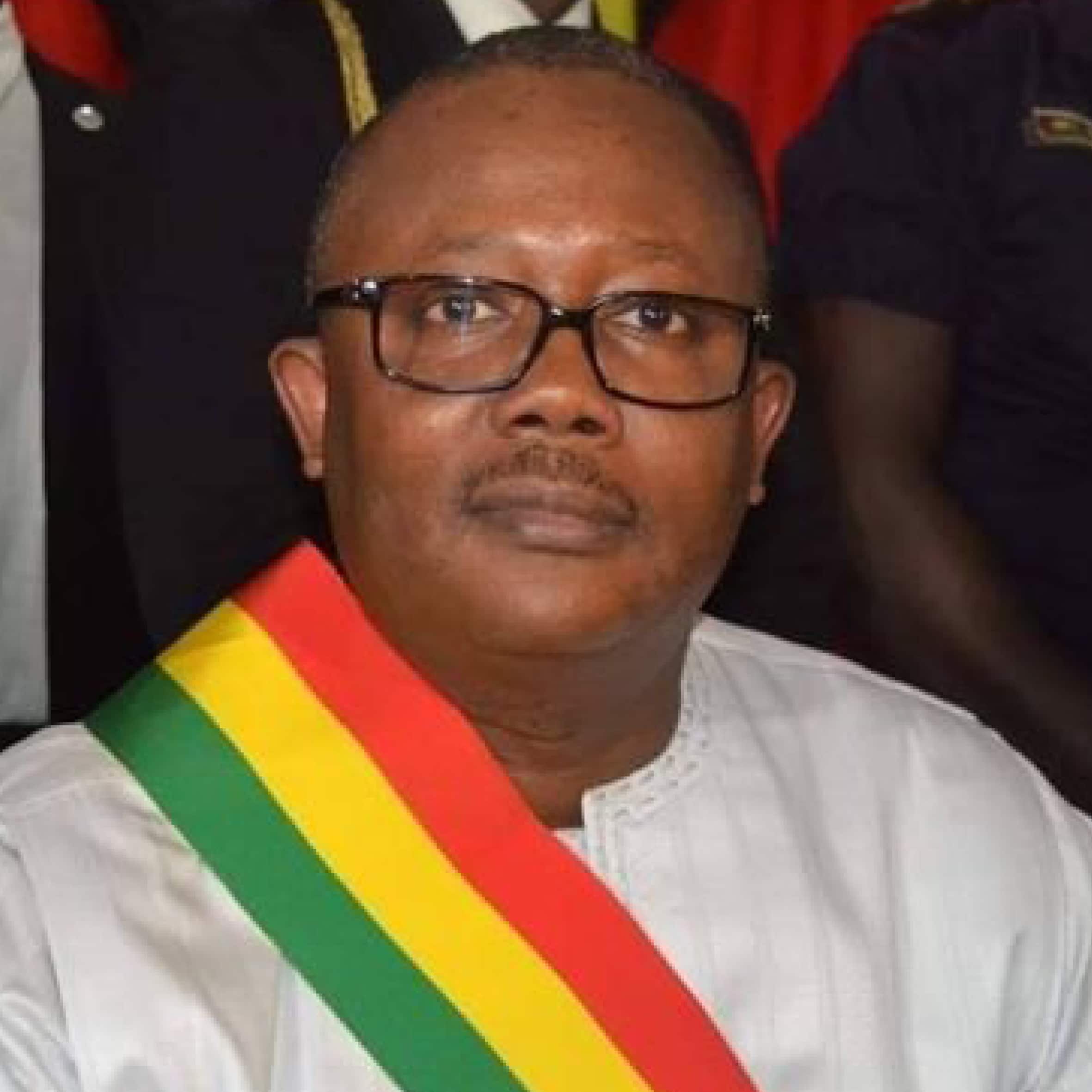
Ghana has earned accolades from Guinea-president, Bissau’s Umaru Sissoco Embalo, for taking the lead in the continent’s quest forindependence.
According to him, Dr. Kwame Nkrumah, Ghana’s first president, inspired numerous African nations to continue their fight for independence because of his outstanding leadership qualities.
Mr. Embalo, who is also the Chairperson of the Economic Community of West African States (ECOWAS) said that Ghana remained a powerful force that Africa looked to for democratic administration.
He said this when he was giving a speech during Ghana’s 66th Independence Day celebration at Adaklu Tsrefe.
“Nkrumah’s legacy is still valid for the whole of Africa,” President Embalo, the special guest at the event said.
He added that the people of Guinea-Bissau remained grateful to Ghana for supporting that country’s democratic journey.
Bilateral cooperation
President Embalo said his country looked forward to greater bilateral corporation with Ghana towards improving the welfare of their peoples and social development in both countries.
The celebration was on the theme: “Our unity, our strength, our purpose”.
The special guest said he was highly honoured to take part in the Independence Day celebration as Ghana still stood tall with gallantry for the liberation of the African continent.
The celebration took part on a carnival note with a large number of people from all works of life turning up at the venue long before sunrise.
When President Nana Addo Dankwa Akufo-Addo turned up at the venue soon after 10 a.m., the crowd burst into a state of euphoria with loud applause as he lit the perpetual flame.
The day also featured thrilling cultural displays, with chiefs from more than 50 paramountcies in the region and others present.
Among them were the Chairman of the Council of State and Omanhene of the Juaben Traditional Area, Nana Otuo Siriboe II; the President of the Volta Region House of Chiefs and Paramount Chief of Anfoega, Togbe Tepre Hodo IV; the Agbogbomefia of the Asogli State, Togbe Afede XIV, the Awomefia of Anlo, Torgbui Sri II; the Paramount Chief of Adaklu, Togbe Gbogbi Atsa V; the Paramount Chief of Ziavi, Togbe Kwaku Ayim IV, and the Paramount Chief of Klefe, Togbe Kwaku Dzaga.
Activities on the ground
The Youth Resource Centre at Adaklu Tsrefe, near Ho, the Volta regional capital, was a sight to behold as the security agencies treated members of the public who converged there for Ghana’s 66th Independence anniversary to artistic display of skills and drills.
The 20 contingents drawn from the various security agencies, namely the Ghana Armed Forces (GAF), Customs Division of the Ghana Revenue Authority (GRA), the Ghana Prisons Service, the Ghana Police Service, the Ghana Immigration Service (GIS), the Ghana National Fire Service (GNFS), as well as the National Ambulance Service (NAS) engaged in a quick match past, after performing various drills.
The GAF, in particular, performed more drills and displayed essential skills, including risky rescue operations and gymnastic displays to the admiration of spectators.
Displays
The displays by the security commenced with soldiers from the physical training school of the GAF, based at the El-Wak Barracks.
They engaged in physical fitness displays and rescue exercises.
Led by Lt Paa Kwesi Owusu of the 66 Regiment, the officers engaged in a series of ground operations, including forehead springs, dive and roll in pairs, running hand springs in pairs, staggered dive and roll, front somersault in pairs as well as individual skills.
The breath-taking moment for the gathering was when the soldiers took a dive and somersaulted through the loop with flames of fire around it.
The team also engaged in gymnastic displays including the pyramid formation.
As if that was not enough, the Special Force Unit of theGAF took the display to another level with deployments of ground troops to support an air assault team on a mock risky mission to rescue a government appointee from terrorists who are demanding hefty ransom.
About 10 rescuers, with a Belgian trained dog, Hazy, rappelled down a helicopter that hung about 70 metres from the ground to conduct the rescue exercise.
Equipment
Aside from the gymnastics, the security agencies also demonstrated their capacity to execute their mandate with the showcasing of sophisticated weapons, armored vehicles, fire-fighting equipment, helicopters, motorbikes for improved visibility and other resources.
The Ghana Police Service also showcased some equipment and new units such as the Canine Unit and the Formed Police Unit, alongside crowd control vehicles and three helicopters.
Besides the security services, 14 selected senior high and basic schools also took part in the march past at the centre.
A 21-gun salute by the GAF was flooded by fly pasts by a fighter jet, heralding the end of the parade and an invitation to the President to deliver the anniversary speech.
With patriotic songs in a background, the gun salute was sounded amid cheers from the crowd.
Cars and human beings competed for space at the venue, giving security personnel a hectic time controlling the crowd at the celebration which witnessed no untoward incident.
Former President John Dramani Mahama has expressed reservations over the administration of elections in Ghana compared to that of Nigeria.
Mr Mahama, who is on a pre-election tour to Nigeria under the auspices of the West African Elders Forum (WAEF), was impressed with the faith that all the candidates and parties have in the Independent Electoral Commission (INEC) of Nigeria.
He indicated that every political party in Nigeria has testified that INEC has acknowledged and taken their concerns into account.
He lamented that same cannot be attributed to Ghana’s Electoral Commission (EC). According to him, the EC used to be amongst the top election administration organisations in the world.
“I can’t say the same for my Electoral Commission (EC), which was once among the top election administration organizations in the world,” he said.
Mr. Mahama bemoaned what he called “hostility” meted out by the “EC and her other Commissioners” to the NDC, saying he wishes the EC could inspire the same level of confidence in all parties like the INEC.
However, the former president believes that his wish would remain so due to what he described as the EC’s rejection of all efforts by the National Peace Council to organize a meeting between the Commission and the two major political parties, the NDC and the NPP.
“Regrettably, I am not hopeful this will happen when we have an EC that has blatantly spurned all efforts by the National Peace Council to host a meeting between the Commission and the two major political parties, the NDC and NPP,” he said.
Former President John Dramani Mahama heads The West African Elders Forum (WAEF) in a duty to ensure a peaceful election as Nigeria seeks to elect a new president.
The Forum consists of former leaders in the sub – region including former President of Nigeria , Goodluck Ebele Jonathan, former Beninese President, Boni Yayi, Fatoumata Tambajang, former Vice President of the Gambia, former Burkinabe prime minister and president of the Economic Community of West African States (ECOWAS) Kadre Ouedraogo and Dr. Erastus Mwencha, former Deputy Chair of the African Union (AU).
Mr. Mahama is expected to be on the ground for the February 25 Presidential and National Assembly elections as well as the March 11, 2023, state elections.
Food and Beverage Association of Ghana (FABAG) is resisting government’s proposed 20 percent excise tax on sweetened fruit juice, spirits, and water.
The group wants government to withdraw the proposed excise tax on the aforementioned products since it can aggravate challenges in the Manufacturing sector.
as that can aggravate challenges in the Manufacturing sector.
“Manufacturers are already laboring under staggering multiple taxes, which has led to a massive decline in sales and are surprised that, instead of Government lessening these taxes, they rather decided to increase same”.
This was in their petition signed by Samuel Stop Aggrey, Executive Secretary of FABAG to Speaker of Parliament, Alban Sumana Kingsford Bagbin, and copied to Parliamentary Committees of Trade and Finance.
The statement added: “It has come to our attention that the Minister of Finance has presented a proposal to the Parliament of Ghana to increase the excise duty on existing excised products and introduce the same on new products including sweetened beverages and fruit juices.
It said the Minister for Finance, explained that the purpose of the Bill was to among other objectives amend Act 878 to implement the ECOWAS Directive on the harmonization of excise duties and raise revenue to mitigate the harmful effects of excisable products.
The statement said although the manufacturing sector catered for about 35 per cent of the direct private labour force in the country, they were not consulted for their opinion on the potential effects and impact of the proposed tax on the industry.
“The Government just increased VAT by 2.5 per cent from 12.5% to 15% just last December in the Budget. Electricity and water tariffs effective 1st February, 2023 have also been increased by 30% and 48% respectively for industry.
“The 30% discount we used to enjoy on raw materials imports have also been withdrawn. While we are yet to recover from these massive shocks, the Ministry of Finance has without any consideration to the plight of industry tabled this Bill to again increase excise duties which will definitely snowball the anticipated price increases by manufacturers”.
The statement said apart from Nigeria which introduced excise duty on sweetened beverages and fruit juices in 2021 amidst fierce opposition, no other ECOWAS country had excise duty on sweetened beverages and fruit juices.
“Even the rate in Nigeria translates to 2.4% on Ex-Factory and not 20% as being proposed in the Bill. The inclusion in the reasoning that sugar consumption is harmful hence the introduction of the duty is untenable and cannot be justified. For instance, when one looks at the World per Capita Consumption of sugar, Africa has the lowest of 15.3% and Ghana has 11.3%. The world’s average is 22.8. Evidently, the assertion that sugar consumption in Ghana is high thereby influencing introduction of excise duty on sweetened beverages and juices cannot be correct. Ghana’s sugar consumption ranks a low 124th out of 161 countries being tracked”.
The statement said the sweetened drinks were mainly patronized by children and as such any further increase in prices because of added taxes would make them totally not affordable.
The bare fact is that Government needs money, which we admit, but increasing taxes on already highly priced products would compel manufacturers to increase prices of their products which could lower patronage and lay off workers.
“Many of us in this sector are already considering our workforce under this high tax regime and will be forced to shut down if this proposed tax is passed by parliament due to its anticipated rippling effects on industry and when this happens, the economy may lose massively in terms of SSNIT, PAYE, Electricity and water bills payments, Salaries, withholding taxes and all other contributions that we make to the State. Indeed, we cannot wait for the woes of a pending social and economic disaster, when we can prevent it from happening.
“Mr. Speaker, it is our sincere plea that, you consider our prayer and halt the passage of this bill for further deliberations. We are available for further deliberations.”
Member of Parliament for Ketu South, Abla Dzifa Gomashie has lamented the lack of free movement between countries within the continent particularly in the ECOWAS sub-region.
According to the former broadcaster, it was time for African leaders to actualize free movement within the region and between countries because that used to be the case before colonialism came to partition different countries.
In a video shared by influential African Wode Maya, the MP said: “We have to tell the story of who we are. That we can continue blaming colonialists for all we want but they have been gone for so long and we need to wake up and smell the coffee.
“We need to wake up, all these seemingly hen coop thing we are doing business in, against ourselves is depressing, truly truly depressing. I am willing to break a few protocols speaking the way I am,” he added alluding to her role as a member of the regional commission on Ewe.
“The excuses are too much, when they go and sit on our behalf, I expected them to do better than they are doing… you owe it to us as citizens and we are demanding that you do better by us,” he added.
Wode Maya had gotten into violent exchanges with immigration officials at the Ghana – Togo border as he tried to have his passport stamped.
“This is me fighting to save my camera at the Togolese border because I refused to pay a bribe of CFA 2000 in order for my passport to stamped,” he captioned a tweet that showed him in a confrontation with supposed border officials.
Abla Dzifa Gomashie, who represents Ketu South in parliament, has bemoaned the lack of freedom of movement within the continent, notably in the ECOWAS sub-region.
According to the former broadcaster, it was time for African leaders to actualize free movement within the region and between countries because that used to be the case before colonialism came to partition different countries.
In a video shared by influential African Wode Maya, the MP said: “We have to tell the story of who we are. That we can continue blaming colonialists for all we want but they have been gone for so long and we need to wake up and smell the coffee.
“We need to wake up, all these seemingly hen coop thing we are doing business in, against ourselves is depressing, truly truly depressing. I am willing to break a few protocols speaking the way I am,” he added alluding to her role as a member of the regional commission on Ewe.
“The excuses are too much, when they go and sit on our behalf, I expected them to do better than they are doing… you owe it to us as citizens and we are demanding that you do better by us,” he added.
Wode Maya had gotten into violent exchanges with immigration officials at the Ghana – Togo border as he tried to have his passport stamped.
“This is me fighting to save my camera at the Togolese border because I refused to pay a bribe of CFA 2000 in order for my passport to stamped,” he captioned a tweet that showed him in a confrontation with supposed border officials.
Struggles on our African borders are truly depressing……… pic.twitter.com/kUBrZ8J1LM— Wode Maya (@wode_maya) January 28, 2023
This is me fighting to save my camera at the Togolese border because I refused to pay a bribe of CFA 2000 in order for my passport to stamped???? https://t.co/Emhhqsl5Ey pic.twitter.com/NnmZyNnyvz— Wode Maya (@wode_maya) January 27, 2023.
This would enable them to participate in trade promotion events such as trade missions, trade shows, inward trade missions, and Business-to-Business (B2Bs) events.
He noted that regional trade flows needed to be improved, particularly through fostering greater participation of regional businesses across value chains.
Dr Yakusak who is also the Executive Director/Chief Executive Officer of the Nigerian National Export Promotion Council (NEPC) made the statement at a workshop organised in Abuja, Nigeria by the ECOWAS Commission, under the West Africa Competitiveness Programme (WACOMP).
The workshop, organised in collaboration with the International Trade Centre (ITC) and the European Union (EU) focused on business creation methodology and trade promotion from January 23 to 27, 2023 a statement available to the Ghana News Agency in Tema stated.
Mr Kolawole Sofola, the Acting Director of Trade ECOWAS Commission speaking on behalf of Mrs. Massandje Toure-Litse, the ECOWAS Commissioner responsible for Economic Affairs and Agriculture highlighted the importance of promoting trade using the right instruments.
Mr Sofola said: “By learning different ways of supporting export ready companies, Member States would be better positioned to serve the interest of the region and contribute to wealth creation,”
He expressed hope that the knowledge gained by the trade experts from the training will better equip them to organize trade fairs and events and promote made-in-West Africa branded products.
Mr Frank Okafor, a Representative of the EU reiterated the commitment of the Union to support TPO activities through WACOM, adding that the workshop provides an opportunity to find areas of collaboration and synergy among the Member States.
Mr Ben Mohamed Imamo, ITC’s Senior Programme Officer, welcomed the commitment and support of the ECOWAS Commission, the regional partner, and the EU which is the funding partner.
He stressed that the training would assist the participants to better understand innovative tools in the field of trade such as business matching tools.
Principal Policy Advisor of the Economic Commission of Africa, Joseph Atta-Mensah has called for the removal of the VISA requirements among African countries.
According to him, the free movement of people on the continent is necessary to propel the economic growth of Africa.
Mr Atta-Mensah called for this rectification when discussing the topic ‘Africa Prosperity Dialogues: All you need to Know” on Accra-based Asaase Radio.
“You know, we fear each other and I don’t know why. We always use security as an issue to prevent people from coming but I think if there is a total collaboration among our security forces, to have data on someone [that can be done].
“Because just as there are bad people, there are good people who want to do good business to uplift the continent. So what we need to do is remove the VISAs completely, not VISA on arrival. And that can be done by having a common African passport. ECOWAS does it, we can do it and put on it African Union,” he noted.
Mr Atta-Mensah further urged business owners in Ghana to embrace the newly-established African Continental Free Trade Area (AfCFTA) which has its office situated in the country.
According to him, the onus lies on the business owners to take full advantage of it.
“Businesses always complain that government is not giving them the policies to operate but in North America, businesses are the ones who lobby for policies. “The African Continental Free Trade Area belongs to businesses so they should embrace it other than say that they are not been included because at the end of the day, they are the ones going to do the trading anyway.
The Economic Community of West African States (ECOWAS) said on Wednesday that West African authorities would not carry out their threat to impose sanctions on Mali for imprisoning 46 Ivorian soldiers, choosing to give the diplomatic dispute time to be resolved through Togo’s mediation.
Malian authorities detained the Ivorian troops after they arrived at Bamako airport on July 10 to provide backup security for a United Nations peacekeeping mission, accusing them of being “mercenaries”.
The move sparked diplomatic tensions between Bamako and Abidjan, which has decided not to replace its military contingent with the United Nations peacekeeping mission in Mali (MINUSMA) when the current group rotates out in August.
Regional bloc ECOWAS gave Mali a deadline of January 1 to free the troops or face sanctions.
Nevertheless, a Malian court last month sentenced the troops to 20 years in prison.
Guinea-Bissau’s President Umaro Sissoco Embalo, the current head of ECOWAS, told journalists on Wednesday that “there will be no immediate sanctions against Mali”.
“We have given time for Togolese mediators to do their job, in order to resolve the situation. It’s just a matter of common sense,” he said.
Togolese President Faure Gnassingbe paid a “friendly working visit” to Bamako on Wednesday, the Malian presidency said in a statement.
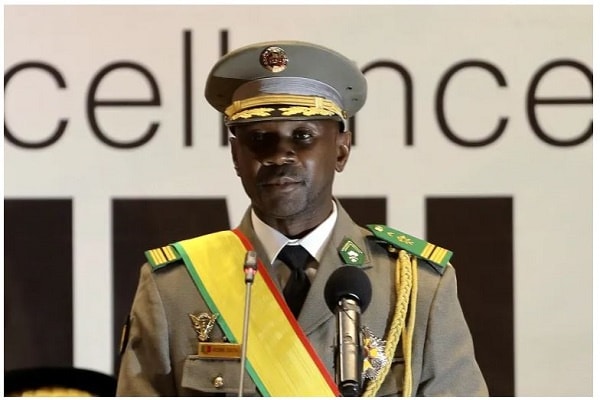
An official at the Malian presidency, speaking on condition of anonymity, told AFP that Gnassingbe had called for a “presidential pardon” for the troops during his meeting with Malian coup leader Assimi Goita.
Of the 49 soldiers who were initially arrested, three women were freed, however, the court sentenced them to death in absentia in its December 30 ruling.
The troops were found guilty of an “attack and conspiracy against the government” and seeking to undermine state security, public prosecutor Ladji Sara said in a statement last month.
In his New Year’s address, Ivorian President Alassane Ouattara promised that the imprisoned soldiers “will soon return to Ivorian soil”.
“We must trust the head of state,” Ivorian government spokesman Amadou Coulibaly said after a cabinet meeting on Wednesday.
“Ivory Coast has chosen a way – that of negotiation – it is the diplomatic way, we remain resolutely committed to this path,” he added.
He declined to comment on the convictions of the Ivorian soldiers.
“We never comment on court decisions taken in Ivory Coast; there is no reason for us to comment on court decisions taken abroad,” he said.
Ivory Coast has categorically denied the soldiers were “mercenaries”.
On December 22, an Ivorian delegation visited Bamako to discuss the detention of the soldiers. At the end of that visit, a memorandum was signed, and Ivorian defense minister Tene Birahima Ouattara said the matter was “on the way to resolution”.
However, Goita did not mention the Ivorian soldiers in his end-of-year speech on Saturday.
The office of the US Trade Representative stated that the decision was taken because of worries about “unconstitutional change” in the political system.
According to the US Trade Representative’s (USTR) office, Burkina Fasohas been removed from the US’s trade preference programme due to serious concerns over an “unconstitutional change” in the country’s government.
Two military coups in Burkina Faso occurred in 2022 as a result of frustration with the government’s inability to stop armed group activity. Although efforts to increase security have been made by both the previous and current military governments, the attacks have persisted.
The African Growth and Opportunity Act (AGOA) provides sub-Saharan African nations with duty-free access to the US if they meet specific eligibility requirements, including making progress towards political pluralism.
The USTR’s office said Burkina Faso had failed to meet the requirements of the AGOA statute and would be given “clear benchmarks” for a pathway towards reinstatement to the trade programme, adding that Washington would work with Ouagadougou.
On Monday, the Burkinabe Ministry of Foreign Affairs reacted to the decision by repeating a November statement saying the timetable for a return to democracy had not changed.
Burkina Faso had committed to returning to constitutional rule in 24 months in a July agreement with the West African regional bloc ECOWAS.
Burkina Faso, one of the world’s poorest countries, has been in the grip of a conflict in which armed groups linked to al-Qaeda and ISIL (ISIS) have killed thousands of civilians and created one of the continent’s fastest-growing humanitarian crises.
Nearly two million people have been displaced who reside in makeshift camps, many run by the United Nations, that dot the arid countryside.
The violence, which has rumbled on for about seven years, has been focused in the north and east, crippling local economies, causing mass hunger, and restricting access to aid organisations.
Just before Christmas, Burkina Faso’s military government asked a seniorUN official to exit the country. The UN contested the decision saying “the doctrine of persona non grata does not apply to United Nations officials”.
The Ghanaian legislator said some nations have shown they are unable to resolve internal problems with peace and security; as a result, the sub-region must intervene in those nations. He was speaking on the margins of the ongoing Second Ordinary Session of the ECOWAS Parliament in Abuja, Nigeria.
Mr. Ayariga further pointed out that an army that is adequately resourced, will be capable of playing an effective role in this regard.
He believes there are new emerging areas ECOWAS can tap into, in terms of taxing to support the sub-region.
“For instance, we have telecommunications across the sub-region. The telecom industry is playing a major role in the sub-regional countries, taxing and keeping the profits to themselves” he said.
Mr. Mahama Ayariga, suggested that countries within the sub-region can agree that if there are calls across the sub-region, a percentage of tariffs on those calls should go to ECOWAS. “For example, when I call Ghana now, there should be some tax that goes to ECOWAS”.
He added that all should be very much concerned about what happens in the sub-region.
“Whatever happens in one part of the sub-region affects everybody, what affects my constituency in Ghana can even affect neighboring countries like Burkina Faso“, he explained.
Mr. Ayariga therefore said he will not relent in supporting ECOWAS and various governments to provide peace and security in the West Africa sub- region.
“If the Government of Nigeria is in difficulties, I do expect the entire governments of West Africa to be there to help; same with Burkina Faso and I think every citizen of the sub- region should be willing to make some contribution to achieve this”.
The Ghanaian Law maker also said Authority of Heads of States and Governments, should seriously consider giving away power to some sub-regional institutions so that, they can effectively operate.
“In the area of security if they really give some national powers to a sub-regional police force or military force, I believe that it will be very effective. Sometimes, countries have their internal weaknesses; there are police force that they cannot quite control internally but sub-regional force may be able to rise above the task”.
Mr. Ayariga ended by commenting on the individual behaviors that undermine peace and security in the sub-region.
“If people know that if they misconduct themselves in their respective countries, they can be visited by a more powerful sub-regional enforcement agency, they will think twice before they misbehave” he said.
Samuel Razak Tachie, Sales and Marketing Manager of Passion Air, said it was a move to offer travelers a worthwhile experience.
He said, “In the medium to long term, we plan to connect every city in Ghana as long as there is an airport there and we are conducting our inaugural flight to Ho because we believe the city has the potential to boost tourism and investment opportunities.”
“We also want to offer travellers an additional option aside from the regular road travel because we know some people prefer driving regardless while others prefer to fly and, in this day, and age business and time is of the essence,” he added.
Read the full story originally published on December 1, 2021 by
The development comes after airliner, Passion Air on Wednesday, December 1, 2021, touched down in the Volta Regional capital ahead of its commencement of domestic flight operations from Saturday, December 4, 2021.
Samuel Razak Tachie, Sales and Marketing Manager of Passion Air in an interaction with GhanaWeb on-board the inaugural flight described the feat as a monumental one for commercial activities in that part of the country.
He said, “In the medium to long term, we plan to connect every city in Ghana as long as there is an airport there and we are conducting our inaugural flight to Ho because we believe the city has the potential to boost tourism and investment opportunities.”
“We also want to offer travellers an additional option aside from the regular road travel because we know some people prefer driving regardless while others prefer to fly and, in this day, and age business and time is of the essence,” he added.
Former Managing Director of Ghana Airports Company Limited, Charles Asare, delivering an address at the inaugural ceremony at the Ho Airport described the establishment of the facility as a major boost for business and tourism.
“With the introduction of such commercial flight and domestic operation, I am confident Ghana is poised to becoming the best aviation hub in the ECOWAS sub-region,” he said.
Togbe Adzi Lakle Howusu XII, the Avafiaga of Ho on his part called on the government especially the aviation authorities to establish a flight school and aircraft maintenance centre at the Ho Airport.
“I want to call on the government to establish a flight school and an aircraft maintenance centre at the Ho Airport. This will greatly improve local content within the region’s aviation hub and beyond,” the Chief urged.
Also, the Municipal Chief Executive of Ho, Divine Bosson made a plea to the Ghana Airports Company Limited to offer job opportunities for the teeming youth of Ho in and around the airport.
“Ho is a very attractive and clean city and we believe the establishment of this airport can provide a great opportunity for the youth of Ho who are yearning to feed themselves. We will plead with the Ghana Airport Company Limited that some of the jobs offered to persons from Accra to Ho must be reconsidered and offered to the youth of Ho for them to also earn a living,” the MCE said.
The construction of the Ho airport project which is valued at US$25 million, was completed in 2018.
The facility has a traffic control tower, a runway, a waiting area for over 1,000 passengers, a bus terminal, among others.
Meanwhile, PassionAir is expected to begin commercial flight operations with an Accra-Ho flight with a scheduled departure as well as an Accra-Wa flight.
According to him, illicit black-market traders’ activities were causing the cedi to continue to fall against other major currencies, such as the US dollar, necessitating a crackdown to maintain compliance with Ghana’s forex laws and regulations.
In response to worries expressed by Torgbui Amenya Fiti V, Paramount Chief of the Aflao Traditional Area, about the November 10 arrest of numerous currency dealers at the Aflao Border.
Mr Dery said: “We’re all aware of the falling cedi to the dollar and it’s the disorder and lawless way in which foreign exchange is being done in Ghana.”
“It’s not done anywhere that you can get foreign money/exchange without telling us how you got it. How could you go to a place without providing an identity and you can change money?”.
“The lawlessness in that is also contributing to the falling cedi and the Bank of Ghana has decided to ensure that it brings sanity. I’ll assure you, all those who are acting lawfully will be allowed to operate but all those operating illegally will be stopped.”
Mr Dery said the same reason applied to arresting the cedi’s free fall that the Central Bank had withdrawn forex support for the importation of some foods that could be produced locally including rice and vegetable oil.
The Minister promised to forward Torgui Fiti’s concerns but said it was important to explain the reason for the arrest.
He assured that the country’s borders would remain open as the government was committed to the ECOWAS border protocol but urged all stakeholders to cooperate with security agencies to keep the peace and security of the nation.
The Ministerial Session of the Accra Initiative (AI) ended in Accra yesterday after further deliberations on the need for joint actions by Member States to address cross-border security issues.
The conference brought together Ministers of Security and Defence of Member States of the AI, which are Benin, Ghana, Togo, Burkina Faso, Cote d’Ivoire, Mali, and Niger.
Other participants were some representatives of the United Nations (UN) and the Economic Community for West African States (ECOWAS).
The AI was established in September 2017 as a mechanism to enhance intelligence and security cooperation between the security agencies of member states.
Its formation was necessitated by the urgent need to address the deteriorating security situation in the Sahel region and curb the southward drift of the threat of terrorism to Coastal West African States.
Opening the session, Minister for National Security, Mr. Albert Kan-Dapaah, said with strong collaboration between African countries, winning the fight against terrorism in the sub-region could be possible.
He stated that the seemingly deteriorating security situation in some African countries did not mean efforts of leaders of the affected countries to combat violent extremism were in vain.
Rather, the minister stressed that the situation could have even been worst without some interventions like intelligence sharing and capacity building, put in place to monitor situations and avert further misfortunes.
He commended the AI for its dedication to ensuring that terrorists and extremists do not take refuge in its member states.
Commissioner, of Political Affairs, peace and security of the ECOWAS Commission, Dr. Abdel-Fatau Musah, in his remarks bemoaned that terrorism was steadily gaining a foothold in the region, especially in the Sahel with the onslaught of Boko Haram in Nigeria and the southward movement towards the coastal member states especially in Benin, Togo, and Cote d’Ivoire.
He noted that the incremental gains of a combination of determined efforts by the Multinational Joint Task Force (MNJTF), counterterrorism operations across the Lake Chad Basin as well as inter terrorist conflicts which had to some extent degraded the capacities of terrorist groups such as the Boko Haram.
According to Dr. Musah, the worrisome incursion of terror acts in Benin and Togo in recent times and the attacks in Cote D’Ivoire in 2016 confirmed the spread of the terrorist menace toward coastal member states.
Over the years, various counterterrorism mechanisms, he said had emerged to respond to the terrorist threat, “Which are often uncoordinated and independent of ECOWAS.”
“It is worthy to note that the three areas of effort of the AI namely, information exchange between intelligence services and security forces, training of intelligence services and security forces, and the joint military operations at the borders of member states correspond very well for the eradication of terrorism in the ECOWAS region,” he added.
In her remarks, a representative of the UN, Ms Giovanni Biha indicated that cross border cooperation and joint military operations to address the terrorist threat had been largely possible by virtue of the commitment of member countries of the AI.
She assured of her outfit’s readiness to continually support the AI in achieving its objectives.
The Ambassador of the European Union (EU) to Ghana, Mr. Irchad Razaaly, stressed that thinking outside the box to find innovative solutions to counter terrorism in the sub-region was very necessary.
Albert Kan-Dapaah, Minister of National Security, has warned that terrorists may take advantage of the galamsey activities in the country.
This is because the revenue generated from galamsey activities will be able to fund the criminal activities of these terrorists.
According to Kan-Dapaah, terrorists in countries like Burkina Faso and Mali, have been attracted to gold mining areas but he assured that his Ministry has taken cognizance of the development and working hard to avert the consequences.
He noted, the Accra Initiative, which aims to prevent the spillover of terrorism from the Sahel and to address transnational organized crime and violent extremism in ECOWAS member countries’ border areas.
“In Mali, in Burkina Faso, the terrorists have always been attracted to gold mining areas. Clearly, they try to make money from gold mining activities to undertake the criminal activities that they do. The criminals may want to take advantage of galamsey activities in our country to raise money to do what they do in other countries and what they may plan to do in our country.
“We are aware of this. We are studying it. We do know what has to be done in this area, and we work hard to make sure we are not overtaken by events. But clearly, one way that you can make cheap money to go and undertake some of these criminal activities is galamsey, so it’s of interest,” Albert Kan-Dapaah explained at a press briefing in Accra.
The West African sub-region has been confronted with terrorist threats, as Ghana’s neighbours Côte d’Ivoire and Burkina Faso have suffered attacks from terror groups in recent times.
The development has compelled the government to launch the “See Something, Say Something” campaign, which is aimed at encouraging citizens to report any suspicious activity.
Elvis Afriyie Ankrah had just finished reading a Master’s degree course in International Relations and was hoping that he would receive a callback from the Economic Community of West African States (ECOWAS) to start his dream job with them.
And as is the case for most young graduates, the urge to experience working in any environment that presented him with much more made his hopes even greater.
But Elvis Ankrah said something that jolted his dream sideways and put that long-time dream on permanent hold.
And it all started when he was approached by one of the stalwarts of the National Democratic Congress (NDC), Ato Ahwoi, to take up an unusual job: a spokesperson for a presidential candidate.
The job was for him to deputise as a spokesperson for the late former president of Ghana, Prof. John Evans Atta Mills, who was by then campaigning to become Head of State.
He explained to GhanaWeb TV’s Edward Smith Anamale that when that call came through, it was not one of the things on his mind.
“I went to do my Masters in International Relations and when I came back, I was on the verge of… I’d actually gone to ECOWAS to put in an application for a job and I was expecting a response because I had spoken with Dr. Chambas and all that, and then Mr Ato Ahwoi called me and said he wanted me to be the deputy campaign spokesperson for Prof Mills’ presidential primaries.
“It was a very difficult decision to make: go to ECOWAS, go and earn some good dollars because I studied international relations so that had been my interest; to work with an international agency: ECOWAS, AU or the United Nations, so local politics was not part of my plan,” he explained.
Elvis Afriyie Ankrah, however, explained in the election Desk interview on GhanaWeb TV that after a while, he agreed to take on that job, also because of something profound that Ato Ahwoi said to him.
“And he said, go and do this thing for us, and after several months, I eventually agreed because he told me something: ‘If you go to your ECOWAS or UN and after 15 years you come back to Ghana, don’t you know you’ll be a stranger, and your colleagues would have gone ahead of you? So, what will happen to all the experience you gathered as SRC president and NUGS.
“So, that really got me thinking so I took up the challenge and so, myself, Ludwig and Rojo, we went round with Prof Mills around the whole Ghana. We went to almost every city, town, village – every nook and cranny. It was a very eye-opening experience and that is where I gathered a lot of data and network with the grassroots,” he explained.
Ghana’s Competitive African Rice Platform (CARP) has been launched officially in Accra to boost the country’s rice sector.
The platform seeks to offer a voice and space for national rice stakeholders in Ghana to scale their local impact on sustainability and competitiveness. Overall, the CARP seeks to reduce the overdependence on imported rice and strengthen public-private dialogue.
The platform is supported by the UK’s Foreign, Commonwealth & Development Office (FCDO), AGRA (formerly Alliance for a Green Revolution in Africa), and the Gesellschaft für Internationale Zusammenarbeit (The platform seeks to offer a voice and space for national rice stakeholders in Ghana).
Under the initiative, small farmers across West Africa are being supported in boosting their rice harvests, improving product quality, and raising their incomes. Mr. Yaw Adu Poku, Board Chair for CARP Ghana, said: “We are honoured to have been selected to host the CARP, as Ghana’s first national rice chapter, and we see this as a great opportunity to collaborate with the government, international organizations, researchers and farmers to drive a transformation in Ghana’s rice sector.”
Following the launch in Accra on Tuesday, a secretariat to run the CARP will be set up to drive its operationalisation. A statement issued by Rebecca Weaver of AGRA explained that at a previous stakeholders meeting, the CARP’s governance structure was formalized, board members and executives appointed, and technical committees set up.
Based on field research and recommendations from public and private sector partners across ECOWAS member states, a regional “ECOWAS Rice Observatory” (ERO) had been previously created by the ECOWAS Commission and its partners. The ERO aims to coordinate rice sector-related programs, public/private investments, and policy recommendations for key decision-makers.
At the same time, national rice platforms, such as the CARP in Ghana, are being established across West Africa. The platform comprises primarily of private sector stakeholders across the value chain, as well as representation from research, government, and civil society, to coordinate country-specific investments and policies.
“Rice is a very important product for Ghana, accounting for nearly 15% of the country’s GDP. The CARP’s launch is, therefore, very timely as it will help different stakeholders to coordinate their investments in driving the transformation needed to boost the growth of the sub-sector for the benefit of local producers and the country at large,” said the Executive Secretary of ERO, Dr. Boladale Adebowale Abiola.
The UK filed new projects with the Ghana Investment Promotion Centre with the biggest value, totaling US$278.90 million, accounting for 35.5% of the US$785.62 million in FDI commitments made during the first half of 2020.
According to officials in the UK embassy’s commercial department in Accra, British trade and investment inquiries are at an all-time high.
Ghana purchased goods worth US$5.75 billion in 2018 and exported goods worth US$931.67 million to the UK, a 14 percent rise over the previous year.
As the United Kingdom gets closer and closer to a widely feared no-deal exit from the European Union, its private sector is already making moves to cement alternative trade and investment counterparties.
One of them is Ghana, a traditional major trade and investment partner which has lost ground to various counterparties in both western and eastern Europe over the past couple of decades because of the more favorable terms and conditions offered it by being part of a continental free market.
Instructively, during the first half of 2020, which saw a late rebound in foreign direct investment inflow commitments, the UK recorded the highest value of US$278.90 million for new projects registered with the Ghana Investment Promotion Centre, which translates to 35.5 percent of the US$785.62 million in FDI commitments made during the first six months of the year.
But the British government is pulling out all the stops to vastly increase business volumes between the two countries from next year as part of wider efforts to fill the inevitable huge void that will be created by BREXIT, especially if the UK and the European Union cannot agree on terms for an orderly exit as now seems increasingly likely.
Instructively the governments of both countries are currently engaged in negotiations which, if successful, would allow the two countries to continue the preferential trade terms applicable through the ECOWAS – EU Economic Partnership Agreement.
Commercial department sources at the UK’s embassy in Accra claim that trade and investment inquiries from Britain are reaching a long-term peak.
They explain that increasing interest is not being propelled by BREXIT alone; British businesses are also enthused by the prospect of being able to trade with the rest of Africa duty-free under the terms of the impending African Continental Free Trade Agreement as long as they set up manufacturing plants in Ghana so as to fulfill rules of origin requirements.
British enterprises favor Ghana as a manufacturing hub on the continent because of cultural similarities, political stability, economic liberalization, adherence to the rule of law, and good economic performance which is allowing for currency exchange rate stability.
In 2018, Ghana exported US$931.67 million worth of products to the UK a 14 percent increase over the previous year – and imported US$5.75 billion worth of products.
With regards to investments, the UK is one of Ghana’s traditional biggest sources of FDI.
Some of the biggest foreign corporations in Ghana – such as Tullow Oil, Unilever, Prudential Insurance, Vodafone, British Airways, and GlaxoSmith Kline among many others are British, UK’s Department of Trade now actively promoting Ghana as a preferred investment destination identifying in particular, the oil and gas, financial services, mining, infrastructure, agricultural technology, and healthcare sectors.
Importantly the London Stock Exchange announced a partnership with the Ghana Stock Exchange at the beginning of 2020. Instructively Ghana’s Agyapa Gold Royalties, the state special purpose vehicle for monetization of its share of expected gold royalties is to do an Initial Public Offer on the LSE, expectedly before the end of this year.
Trade analysts in London assert that BREXIT and the AfCFTA combined could double trade and investment volumes between the two counties in less than a decade.
The ECOWAS Bank for Investment and Development (EBID) has signed an agreement to extend a loan facility of 60 million dollars to the Ghana Grid Company Limited (GRIDCo).
A statement issued by the Bank, copied to the Ghana News Agency said the signing ceremony took place in Lome, Togo, its head office.
Dr George Agyekum Donkor, the President and Chairman of the Board of Directors, EBID, signed on behalf of the bank, while Mr Ebenezer Kofi Essienyi, the Chief Executive Officer of GRIDco, signed for the Company.
The facility is to finance the installation and upgrading of transmission lines in Ghana.
Dr George Agyekum Donkor (r) and Mr Ebenezer Kofi Essienyi, exchanging files.
Dr Donkor said as ECOWAS Member States worked towards post COVID-19 economic recovery, it was necessary to expand regional electricity connectivity to accommodate growth.
Therefore electricity infrastructure expansion in the sub-region is a key sector that must be given the necessary attention.
The Bank’s total commitment to Ghana stood at 250 million dollars as of October 12, 2022, he said.
He reiterated the Bank’s commitment to continuously finance infrastructure projects across all sectors of the economies of ECOWAS Member States to accelerate recovery and development of the Sub-region.
The project is in line with the Bank’s strategic objectives and aligned perfectly with Ghana’s Agenda for Jobs II.
Mr Kabral Blay-Amihere, the Chairman of the Board of Directors, GRIDco, said projects to be undertaken with EBID’s facility were part of a broader plan to upgrade infrastructure for improved efficiency and increase power transmission within Ghana and other West African countries such as Togo, Benin, Burkina Faso, Mali and the Ivory Coast.
While appreciating the confidence reposed in GRIDCo by EBID, he noted that the completion of the project would lead to reduction in technical losses to enhance businesses and livelihoods in Ghana and the ECOWAS sub region.
Mr Blay-Amihere commended the President of EBID and his team for their dedication and professionalism that saw the expeditious completion of the credit process and the consummation of the transaction.
Present at the ceremony were Mr Kofi Demetia, Ghana’s Ambassador to Togo, Mr Philip Owiredu, the Managing Director of Calbank PLC., and executives from C-Nergy Ghana.
EBID is a leading regional investment and development bank, owned by the 15 ECOWAS Member States.
These are Ghana, Benin, Burkina Faso, Cape Verde, the Ivory Coast, The Gambia, Guinea, Guinea-Bissau, Liberia, Mali, Niger, Nigeria, Senegal, Sierra Leone, and Togo.
Based in Lomé, Togo, it is committed to financing developmental projects and programmes covering diverse initiatives from infrastructure and basic amenities, rural development and environment, industry, and social services sectors, through its private and public sector windows.
Ghana and four other ECOWAS member countries have benefited from a USD 250 million fund from the ECOWAS Bank for Investment and Development (EBID).
The other beneficiary countries are Burkina Faso, Nigeria, Senegal, and Sierra Leone.
A copy of its release to the Ghana News Agency said the Board of Directors of EBID approved the fund to boost the oil and gas, energy, road infrastructure and agriculture sectors of member states.
The approvals are part of the intensified efforts by EBID to invest in key sectors to spur up post-COVID pandemic recovery and mitigate the impact of the Russian – Ukraine war on the Member States of ECOWAS.
The disclosure was made by Dr George Agyekum Donkor, the President and Chairman of the Board of Directors of EBID, at the just-ended 79th session of the Board of Directors of the bank.
Dr Donkor observed that the impact of the COVID-19 pandemic and the ongoing Russian – Ukraine war has left many economies in tatters.
He said the current market conditions had compelled investors to seek premiums on investments in sub-Saharan Africa thereby increasing the cost of capital.
According to the President of EBID, this had resulted in dampening economic growth, the wide-spread balance of payments deficits, unfavourable terms of trade, depletion of central bank international reserves, fiscal deficits, and debt distress.
Dr Donkor stressed the need for EBID, as the financial arm of ECOWAS, to deepen its financial inter-mediation in all the critical sectors of the Member States to assist them to recover from the economic challenges.
Present at the session was Damtien L. Tchintchibidja, the Vice-President of the ECOWAS Commission, who lauded the tremendous impact of EBID’s interventions in the sub-region and assured the Bank of the commitment of the new administration of the ECOWAS Commission to collaborate and support EBID in its multifarious activities especially in the area of resource mobilisation to transform the ECOWAS Communities.
The EBID is a leading regional investment and development bank, owned by the 15 ECOWAS Member States, namely, Benin, Burkina Faso, Cape Verde, Côte d’Ivoire, The Gambia, Ghana, Guinea, Guinea-Bissau, Liberia, Mali, Niger, Nigeria, Senegal, Sierra Leone, and Togo.
Based in Lomé, Togolese Republic, the Bank is committed to financing developmental projects and programs covering diverse initiatives from infrastructure and basic amenities, rural development and environment, industry, and social services sectors, through its private and public sector windows.
EBID intervenes through a long, medium, and short-term loans, equity participation, lines of credit, refinancing, financial engineering operations and related services.
Ghana is to commence the use of the ECOWAS Regional Network for Transit Trade (SIGMAT) in the first quarter of 2023, the Ghana Revenue Authority (GRA) has announced.
Mr Peter Antobre Ofori, Assistant Commissioner in charge of Transit at the Customs Division of GRA, said Ghana’s Customs administration has taken advanced steps to enrol in the SIGMAT system.
Mr Ofori speaking on the new system in Ghana Ports and Harbours Authority (GPHA) forum said ECOWAS required all customs administrations to automate their systems adding that some countries such as Liberia, Sierra Leone, and the Gambia were yet to automate theirs.
According to him, Ghana and Nigeria have done the automation but changed their systems, which required that they restart their networks.
“Presently, we haven’t been able to roll unto the SIGMAT, but we are in the process; We have established limited communication with Togo and designed a road map with Cote D’Ivoire and we are constantly meeting to ensure we roll on,” he said.
Mr Felix Kwakye, the Principal Programme Officer and Head of the Division of Tariff and Customs Procedures, at the ECOWAS Commission, said the SIGMAT system was an improvement over the Interstate Road Transit System which was a paper-based, manual system used in ECOWAS countries.
Mr Kwakye indicated that for quite a while, ECOWAS had been looking at leveraging information, communication, and technology to reform the transit regime within West Africa, as a measure to improve and make it more efficient.
“It will improve the exchange of messages between customs administrations based on the interconnectivity of the national customs IT systems; ECOWAS wants all 15 member states to roll unto the system.”
He said the transit trade had led to a lot of apprehension and a sense of insecurity for many countries, making them put in place measures to secure revenue and maintain security thereby incurring a lot of cost and delay in the transit trade for which the ordinary consumer at the country of destination bore.
He said to ensure that international conventions for trade were followed, and trade facilitated as efficiently as possible, SIGMAT was one of the interventions introduced to generate confidence in the transit trade and secure revenue.
Mr Kwakye revealed that feedback on revenue generation and trade facilitation has been encouraging from countries that have begun the use of the system.
He disclosed that processes have been undertaken for a “community guarantee mechanism” under the SIGMAT system, explaining that the bonds issued to cover cargoes on transit would have to be valid in every country throughout the entire transit corridor.
He added that the selected guarantor would have to be represented in all of those countries, stating that this measure and others were taken under the new ECOWAS regime were all geared towards checking cargo diversion.
The SIGMAT system according to customs would come at no extra cost to importers and exporters in the sub-region.
The system began pilotage in 2019, and in December 2021, the various heads of state within ECOWAS adopted a supplementary act on ECOWAS Community Transit which binds all member countries to implement the system.
The SIGMAT system which is already being operated in some Francophone countries is expected to enhance custom-to-custom communication, improve data collection, facilitate trade and secure revenue.
The political parties without Members of Parliament (MPs) have called on the National Democratic Congress (NDC) to rescind its decision to not consent to the new Constitutional Instrument (CI) which seeks to introduce the Ghana Card as the document to verify new voters.
They have also urged the Inspector General Police (IGP) to investigate an allegation by the leader of the Ghana Union Movement (GUM) to the effect that the Electoral Commission (EC) has recruited electoral officers affiliated to the New Patriotic Party (NPP).
The parties include Power Unity Party (PUP), People’s National Convention (PNC), Great Consolidated Popular Party (GCPP), National Democratic Party (NDP), Liberal Party of Ghana (LPG), United Progressive Party(UPP), Democratic People’s Party (DPP) and United Renaissance Party (URP).
Alhaji Mohammed Frimpong, Secretary General of NDP, at a press conference in Accra on Wednesday, said the fair and transparent conduct of elections, prevention of fraud and certainty of legal remedy processes were important duties of the EC.
“That is why we thoroughly discussed the new CI which seeks to introduce the Economic Community of West African States (ECOWAS) Card issued by the National Identification Authority as the document to verify new voter registrants as Ghanaians and also having attained the age of 18 years and above,” he added.
Alhaji Frimpong asked the NDC to resume meetings at the Inter-Party Advisory Committee (IPAC) for deliberations to continue on the CI to add their contribution to building a strong and enviable democracy that would continue to be worthy of emulation across the continent.
“As Parliament resumes sitting on October 25 this year, we want to entreat MPsto lay the new CI before the House so that we can carry on with the modalities in ensuring smooth continuous registration processes to enable new voters to register,” he indicated.
Concerning the allegations made against the EC, Alhaji Frimpong explained that all political parties were given the names of the electoral officers and were also granted the opportunity to provide feedback on each of them for which reason such an accusation was unacceptable.
Ato Dadzie, General Secretary of GCPP, cautioned that Election 2024 would be another watershed for the country, hence ensuring voter confidence was paramount in electoral processes and “we all have a part to play in this endeavour to strengthen our democratic dispensation through the EC.
“We appeal to the citizenry topray for the EC, join forces with them, lend our unflinching support and assistance, provide constructive criticisms, work with them, especially we the political actors, to enable them to carry out their constitutional mandate,” he intimated.
Ghana and four other ECOWASmember countries have benefited from a USD 250 million fund from the ECOWAS Bank for Investment and Development (EBID).
The other beneficiary countries are Burkina Faso, Nigeria, Senegal, and Sierra Leone.
A copy of its release to the Ghana News Agency said the Board of Directors of EBID approved the fund to boost the oil and gas, energy, road infrastructure and agriculture sectors of member states.
The approvals are part of the intensified efforts by EBID to invest in key sectors to spur up post-COVID pandemic recovery and mitigate the impact of the Russian – Ukraine war on the Member States of ECOWAS.
The disclosure was made by Dr George Agyekum Donkor, the President and Chairman of the Board of Directors of EBID, at the just-ended 79th session of the Board of Directors of the bank.
Dr Donkor observed that the impact of the COVID-19 pandemic and the ongoing Russian – Ukraine war has left many economies in tatters.
He said the current market conditions had compelled investors to seek premiums on investments in sub-Saharan Africa thereby increasing the cost of capital.
According to the President of EBID, this had resulted in dampening economic growth, the wide-spread balance of payments deficits, unfavourable terms of trade, depletion of central bank international reserves, fiscal deficits, and debt distress.
Dr Donkor stressed the need for EBID, as the financial arm of ECOWAS, to deepen its financial inter-mediation in all the critical sectors of the Member States to assist them to recover from the economic challenges.
Present at the session was Damtien L. Tchintchibidja, the Vice-President of the ECOWAS Commission, who lauded the tremendous impact of EBID’s interventions in the sub-region and assured the Bank of the commitment of the new administration of the ECOWAS Commission to collaborate and support EBID in its multifarious activities especially in the area of resource mobilisation to transform the ECOWAS Communities.
The EBID is a leading regional investment and development bank, owned by the 15 ECOWAS Member States, namely, Benin, Burkina Faso, Cape Verde, Côte d’Ivoire, The Gambia, Ghana, Guinea, Guinea-Bissau, Liberia, Mali, Niger, Nigeria, Senegal, Sierra Leone, and Togo.
Based in Lomé, Togolese Republic, the Bank is committed to financing developmental projects and programs covering diverse initiatives from infrastructure and basic amenities, rural development and environment, industry, and social services sectors, through its private and public sector windows.
EBID intervenes through a long, medium, and short-term loans, equity participation, lines of credit, refinancing, financial engineering operations and related services.
The President of the ECOWAS Court of Justice, Justice Edward Amoako Asante, was on Thursday, 13th October 2022 re-elected by his peers for an initial two years following an election by the Court’s five-member college of judges.
The election, which followed the assumption of duty of the two new judges of the Court who were sworn in last week in Bissau, Justices Claudio Monteiro Goncalves from Cape Verde and Sengu Mohammed Koroma from Sierra Leone, also saw the re-election of Justice Gberi be-Ouattara as the Vice President of the Court.
The two new Justices of the Court were sworn in on Thursday 6th October 2022 for the ECOWAS Court of Justice by the Chairman of the Authority of Heads of State and Government of the Community, President Umaro Sissoco Embalo of Guinea Bissau.
Justice Asante, who was among three judges of the Court whose tenure were extended by the Heads of State and Government of the Community, said his re-election showed the confidence his colleagues reposed in him.
He added that the re-election will afford him the opportunity to improve on the performance of the previous college in order to strengthen the court’s role in the delivery of justice and deepen its enviable jurisprudence which has made it a global brand, particularly in the areas of human rights that has become its signature mandate.
He welcomed the two new judges to the Court’s family and expressed confidence that with their pedigree, they would contribute immensely to furthering the work of the Court and assured them of the Court’s determination to provide the necessary tools to ensure that they functioned optimally.
Justice Asante also praised the outgoing judges of the Court- Justices Keikura Bangura from Sierra Leone and Januaria Tavares Silva Moreira Costa from Cape Verde- who just completed their tenure and assured them that they will continue to be a valuable resource for the Court.
The new judges, who were appointed for a four –year term, were later taken through some administrative issues related to their tenure as statutory appointees of the Community.
They were later introduced to the staff during a meeting attended by the new college of judges and their outgoing colleagues.
Among the three judges whose tenure was renewed by the Heads of State and Government of the Community, was Justice Dupe Atoki from Nigeria.
The board of directors of the ECOWAS Bank for Investment and Development (EBID) has approved a total of US$250 million for five member states to boost the oil and gas, energy, road infrastructure and agricultural sectors of West Africa.
The beneficiary countries are Burkina Faso, Ghana, Nigeria, Senegal, and Sierra Leone.
The approvals are part of the intensified efforts by EBID to invest in key sectors to spur up post-COVID pandemic recovery and mitigate the impact of the Russian – Ukraine war on the member states of ECOWAS.
This was disclosed by the president and chairman of the board of directors of EBID, Dr George Agyekum Donkor at the just ended 79th session of the board of directors of the bank.
In his opening statement, Dr Donkor observed that the impact of the COVID pandemic and ongoing Russian – Ukraine war have left many economies in tatters.
He indicated that the current market conditions have compelled investors to seek premium on investments in sub-Saharan Africa thereby increasing the cost of capital.
According to the president of EBID, this has resulted in dampening economic growth, wide-spread balance of payments deficits, unfavourable terms of trade, depletion of central bank international reserves, fiscal deficits, and debt distress.
Therefore, Dr Donkor stressed the need for EBID, as the financial arm of ECOWAS, to deepen its financial intermediation in all the critical sectors of the member states to assist them to recover from the economic challenges.
Present at the session was the vice-president of the ECOWAS Commission, Damtien L. Tchintchibidja, who lauded the tremendous impact of EBID’s interventions in the sub-region and assured the bank of the commitment of the new administration of the ECOWAS Commission to collaborate and support EBID in its multifarious activities especially in the area of resource mobilisation to transform the ECOWAS Communities.
ABOUT EBID
ECOWAS Bank for Investment and Development (EBID) is a leading regional investment and development bank, owned by the fifteen (15) ECOWAS Member States, namely, Benin, Burkina Faso, Cape Verde, Côte d’Ivoire, Gambia, Ghana, Guinea, Guinea-Bissau, Liberia, Mali, Niger, Nigeria, Senegal, Sierra Leone, and Togo.
Based in Lomé, Togo, the bank is committed to financing developmental projects and programs covering diverse initiatives from infrastructure and basic amenities, rural development and environment, industry, and social services sectors, through its private and public sector windows.
EBID intervenes through long, medium, and short-term loans, equity participation, lines of credit, refinancing, financial engineering operations and related services.
The President of the ECOWASCourt of Justice, Justice Edward Amoako Asante,was on Thursday, 13th October 2022 re-elected by his peers for an initial two years following an election by the Court’s five-member college of judges.
The election, which followed the assumption of duty of the two new judges of the Court who were sworn in last week in Bissau, Justices Claudio Monteiro Goncalves from Cape Verde and Sengu Mohammed Koroma from Sierra Leone, also saw the re-election of Justice Gberi be-Ouattara as the Vice President of the Court.
The two new Justices of the Court were sworn in on Thursday 6th October 2022 for the ECOWAS Court of Justice by the Chairman of the Authority of Heads of State and Government of the Community, President Umaro Sissoco Embalo of Guinea Bissau.
Justice Asante, who was among three judges of the Court whose tenure were extended by the Heads of State and Government of the Community, said his re-election showed the confidence his colleagues reposed in him.
He added that the re-election will afford him the opportunity to improve on the performance of the previous college in order to strengthen the court’s role in the delivery of justice and deepen its enviable jurisprudence which has made it a global brand, particularly in the areas of human rights that has become its signature mandate.
He welcomed the two new judges to the Court’s family and expressed confidence that with their pedigree, they would contribute immensely to furthering the work of the Court and assured them of the Court’s determination to provide the necessary tools to ensure that they functioned optimally.
Justice Asante also praised the outgoing judges of the Court- Justices Keikura Bangura from Sierra Leone and Januaria Tavares Silva Moreira Costa from Cape Verde- who just completed their tenure and assured them that they will continue to be a valuable resource for the Court.
The new judges, who were appointed for a four –year term, were later taken through some administrative issues related to their tenure as statutory appointees of the Community.
They were later introduced to the staff during a meeting attended by the new college of judges and their outgoing colleagues.
Among the three judges whose tenure was renewed by the Heads of State and Government of the Community, was Justice Dupe Atoki from Nigeria.
The Board of Directors of the ECOWAS Bank for Investment and Development (EBID) has approved $250 million for five member states to boost the oil and gas, energy, road infrastructure and agricultural sectors in those countries.
The beneficiary countries are Ghana, Burkina Faso, Nigeria, Senegal and Sierra Leone.
The approval is part of the intensified efforts by EBID to invest in key sectors to spur post-COVID-19 pandemic recovery.
The investment is also to mitigate the impact of the Russia-Ukraine war on ECOWAS member states.
The President and Chairman of the Board of Directors of EBID, Dr George Agyekum Donkor, disclosed this at the 79th Session of the Board of Directors of the bank in Lome last Wednesday.
Impact
Dr Donkor said the impact of the COVID-19 pandemic and the ongoing Russia-Ukraine war had left many economies in tatters.
He indicated that current market conditions had compelled investors to seek premium on investments in sub-Saharan Africa, thereby increasing the cost of capital.
That had resulted in dampening economic growth, widespread balance of payment deficits, unfavourable terms of trade, depletion of central bank international reserves, fiscal deficits and debt distress, the President of EBID stated.
He, therefore, stressed the need for EBID, as the financial arm of ECOWAS, to deepen its financial intermediation in all the critical sectors of member states to assist them to recover from the economic challenges.
Present at the session was the Vice-President of the ECOWAS Commission, Damtien L. Tchintchibidja, who lauded the tremendous impact of EBID’s interventions in the sub-region.
She assured the bank of the commitment of the new administration of the ECOWAS Commission to collaborate and support EBID in its activities, especially in the area of resource mobilisation, to transform the community.
Context
EBID is a leading regional investment and development bank, owned by the 15 ECOWAS member states.
Based in the Togolese capital, Lome, the bank is committed to financing developmental projects and programmes.
These range from infrastructure and basic amenities, rural development and environment, industry and social services sectors through to its private and public sector windows.
EBID intervenes through long, medium, and short-term loans, equity participation, lines of credit, refinancing, financial engineering operations and related services.
Two new Judges were on Thursday, 6th October2022 sworn-in for the ECOWAS Court of Justice by the Chairman of the Authority of Heads of State and Government of the Community, President UmaroSissoco Embalo of Guinea Bissau at a ceremony in Bissau.
Justices Sengu Mohammed Koroma from Sierra Leone and Claudio Monteiro Goncalves from Cape Verde will replace Justices Keikura Bangura and Januaria Tavares Silva Moreira Costa from Sierra Leone and Cape Verde respectively who justcompleted their tenure at the Court.
The new judges will join the President of the Court, Justice Edward Amoako Asante from Ghana, the Vice President, Justice Gberi-be Ouattara from Cote d’Ivoire and Justice Dupe Atoki from Nigeria, whoseterms were renewed by the Heads of State and Government of the Community.
Following their swearing in, the President of the Court, Justice Asante welcomed them to the team and expressed the hope that they will contribute to strenghtening the Court’s rich jurisprudence duringtheir four year tenure.
The President, who was among dignataries at the ceremony added : ‘ We are excited at theirappointment by the leaders of ECOWAS and look forward to their resumption of duty so that they cancontribute their quota to reducing the Court’s bulging cases docket.’
The Deputy Majority Leader, Alexander Afenyo-Markin, says while free movement within the ECOWAS sub-region is being embraced, this must be done within a framework that ensures the safety of member states’ borders and their stability.
According to him, with conflicts and jihadist insurrections taking place across the sub-region, member states have increasingly become wary of people that troop into their country, Ghana not being an exception.
This he says have led to the extra checks and scrutiny that occur at various borders across the sub-region.
Speaking at the 2022 extraordinary session of the ECOWAS Parliament, Afenyo-Markin noted that while free movement within the sub-region is guaranteed, Parliamentarians should work to educate their constituents about the limitations and protocols that surround such free movement.
“Free movement is something we should all embrace after all, one of the bona fides of getting ECOWAS in place was to create that atmosphere where as a sub-region we’ll not be limited by borders. But also, member countries have their challenges.
“The challenge of security, the challenge of political instability, so you’d realise that member states are also finding ways of controlling the free movement in a manner that they can manage so that they know who is coming in, what purpose, why and all that,” he said.
He added, “Member states or citizens of the sub-region are supposed to meet certain conditions if they’re trading in a member state. All these are very essential. To me as parliamentarians we should continue to create the awareness, let our citizens know the community protocols if they want to move from their home country to another we should be able to interact more and explain to our people but at the same time, we should also let our citizens appreciate the security challenges.”
Expounding on Ghana’s concern with immigration at its northern borders, he noted that the instability of the Sahel countries poses a grave concern to Ghanaian authorities as their persistence could lead to a spill over into the country; destabilising Ghana as well.
“My country Ghana for instance is very much concerned about its northern border with Burkina Faso. The instability in Mali, Niger and Burkina Faso is of great concern to Ghana and if we don’t control the influx, it would undermine our own security.
“So in this case, it cannot be that in controlling, or regulating, or seeing to it that you put in measures to prevent an influx you’re preaching community protocol of free movement. There’s an essential need to ensure that there is security in your own country so that people will not come in under the pretext of ECOWAS citizens to destabilise your country,” he said.
The Economic Community of West African States (ECOWAS) has called on the people of Burkina Faso to settle their differences through dialogue.
A statement signed by Umaro Sissoco Embalo, current chairman of the ECOWAS and President of Guinea-Bissau, also called on the Burkinabe authorities to “respect the commitment made with ECOWAS.”
Embalo also announced that as part of ECOWAS’ commitment to peace and stability in Burkina Faso, an ECOWAS delegation will be sent to Burkina Faso.
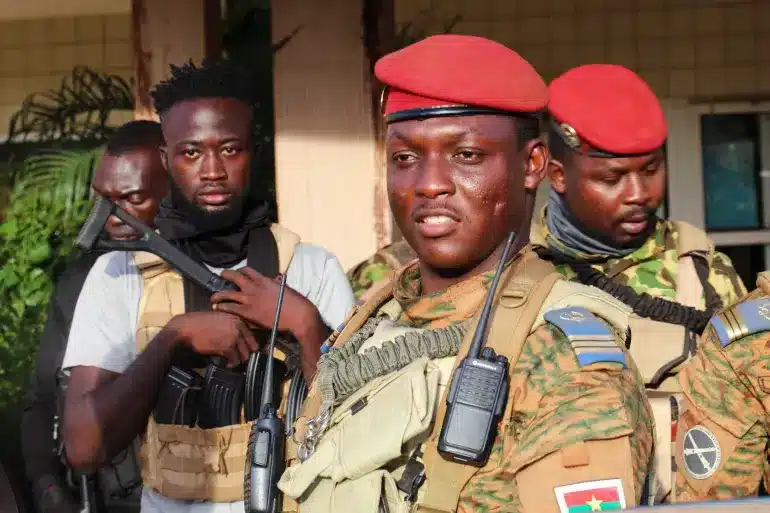
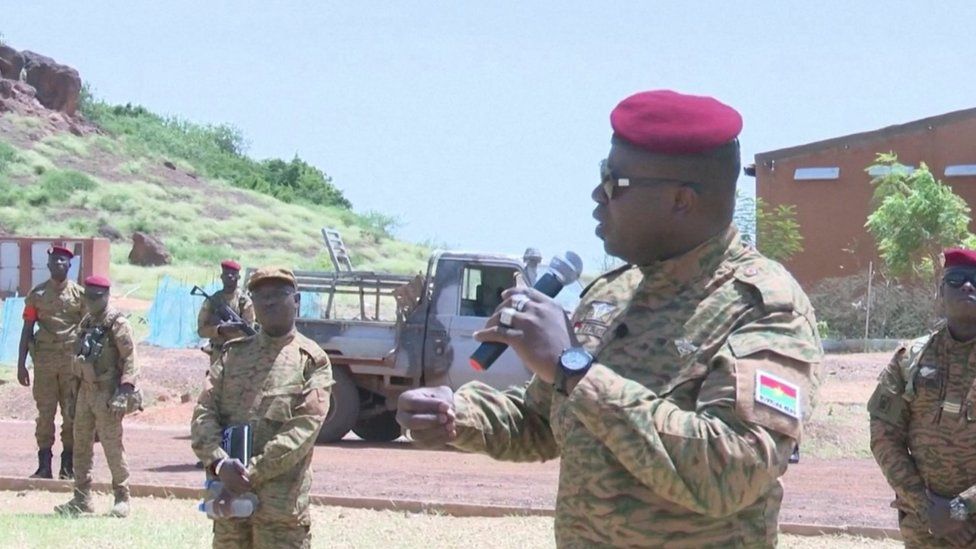
Burkina FasoArmy Captain Ibrahim Traore announced on Friday night that President Paul-Henri Sandaogo Damiba has been overthrown.
Damiba agreed to step down on Sunday in order to avoid confrontations with serious human and material consequences, religious and community leaders said in a statement.
Friday’s coup was the second this year in Burkina Faso. In the one on Jan. 24, President Roch Kabore was overthrown, and Damiba was sworn in on Feb. 16.
The ECOWAS mediator for Burkina Faso has ended his visit to the country following last Friday’s coup, the second in eight months.
Mahamadou Issoufou met with the country’s new strongman Captain Ibrahim Traoré.
Speaking to the press after the meeting, the ECOWAS mediator reaffirmed his commitment to the Burkinabe people.
“We will report on our mission to the current president of ECOWAS and to the heads of state. But I can already assure you that ECOWAS will remain at the side of the Burkinabe people.
…We will continue to accompany the Burkinabe people in this very difficult ordeal they are going through”, said Mahamadou Issoufou, ECOWAS mediator for Burkina Faso.
During the meeting, the new leader of Burkina Faso promised to keep the commitments made in July by the previous leadership regarding the organisation of elections and a return of civilians to power by July 2024 at the latest.
The two organisations have also asked the military junta to refrain from acts of violence and comply with a laid down process agreed with transition authorities to return the country to constitutional order by July 1, 2024.
This was contained in separate statements issued by ECOWAS Chairman, Guinea-Bissau’s President, Umaro Sissoco Embalo, and AU Commission Chairperson, Moussa Faki Maham, at the weekend.
In the country’s second coup in a year, Burkina Faso military leader, Paul-Henri Damiba, was on Friday deposed as army Captain, Ibrahim Traore, took charge, dissolving the transitional government and suspending the constitution.
Traore said on Friday evening that the new group of officers removed Damiba due to his inability to deal with a worsening armed uprising in the country for which he initially toppled the civilian government.
“ECOWAS finds this new coup a major setback at a time when progress had been made, particularly through diplomacy and efforts undertaken to ensure an orderly return to constitutional order by 1st July 2024”, the ECOWAS statement said.
While reaffirming its “unreserved condemnation” of any seizure or retention of power by unconstitutional means, it demanded the scrupulous respect of the timetable already agreed upon with the Transition Authorities for a rapid return to constitutional order.
“ECOWAS hereby warns any institution, force or group of persons who, by their actions, may hinder the planned return to constitutional order or contribute to undermining the peace and stability of Burkina Faso and the Region.
“The ECOWAS Commission remains seized with developments in the country”, the statement said.
The AU statement extended the AU Chair’s support for ECOWAS and expressed his deep concern about the resurgence of unconstitutional changes of the government in Burkina Faso and elsewhere on the African Continent.
It said the support was in conformity with the Lomé Declaration of Year 2000, the African Charter on Democracy, Elections and Governance and the Accra Declaration on Unconstitutional Changes of Government.
The Chairperson called upon the military to immediately and totally refrain from any acts of violence or threats to the civilian population, civil liberties, human rights, and ensure strict compliance with electoral deadlines for the restoration of Constitutional order by 1 July 2024, at the latest.
“The Chairperson reaffirms the continued support of the African Union to the people of Burkina Faso to ensure peace, stability and development of the country,” the AU statement said.
The Chief Executive Officer of Danadams Pharmaceuticals Industry (Ghana) Ltd, Dr. Yaw Adu-Gyamfi, is accused of issuing fake documents, defrauding by false pretenses, and money laundering. The case will be heard by the High Court’s Criminal Division on October 12, 2022.
The accusations stem from a credit facility Dr. Adu-Gyamfi and his business received from the ECOWAS Bank for Investment and Development (EBID) in 2013.
The bank in a related civil case, appear set to execute a Fi Fa order granted it by the High Court, Commercial Division against Danadams and its CEO, which action may see the former President of the Association of Ghana Industries lose properties including the Danpong Medical Centre and Head Office of Danpong Health Group located at the Spintex Road and at Baatsona near Tema, which were allegedly used as mortgages to partly secure the said loan.
Court documents on the matter indicate that EBID approved a loan facility of US$9,417,600.00, to Danadams in May 2013, to enable the company produce anti-retrovirus drugs for HIV/AIDS patients in the ECOWAS region.
Under the terms of the facility, Danadams was required to open an escrow account with a reputable bank in Ghana to be funded with an agreed amount as a condition precedent for EBID’s disbursement of the facility.
Dr. Adu Gyamfi allegedly subsequently submitted a letter purported to have been issued by the Royal Bank of Ghana, advising EBID of the opening of the escrow account and the funding of same with an amount of US$340,000.00.
EBID, based on the claims and other alleged representations by Danadams and its CEO, consequently disbursed part of the loan facility to Danadams amounting to the sum of $6,020,840.00.
However, a further probe by EBID of the letter allegedly submitted by Dr. Adu Gyamfi found it was forged, as The Royal Bank only acknowledged opening the escrow account upon Dr. Adu-Gyamfi’s request, but denied any knowledge of the account being funded or the letter allegedly making that claim.
EBID also claims that its further probe showed that the disbursed loan was misapplied, allegedly, contrary to the terms of the facility.
Meanwhile, EBID said its persistent calls on Dr. Adu-Gyamfi and Danadams to repay the loan fell on deaf ears, leading later to a total judgment debt of US$8,546,692.00. in 2020, and the subsequent Fi Fa order.
Burkina Faso military leader Paul-Henri Damiba, who was overthrown a day ago, is planning a counter-coup, Burkina Faso’s self-declared leader Col Ibrahim Traoré has disclosed.
He has also accused the French army of harbouring Lt Col Paul-Henri Damiba at one of their bases – which French diplomats have denied.
Gunshots have been heard in Burkina Faso‘s capital city Ouagadougou and helicopters are circling overhead.
Witnesses say troops have blocked main roads around the city and shops that had opened earlier are now shut.
Friday’s apparent takeover had been announced on national TV and was the second time this year that the country’s army had seized power.
On both occasions the coup leaders said they had to step in because national security was so dire.
Burkina Faso controls as little as 60% of its territory, experts say, and Islamist violence is worsening. Since 2020 more than a million people have been displaced in the country due to the violence.
The African Union has demanded the return of constitutional order by July 2023 at the latest, agreeing with the regional group ECOWAS that the ousting of leader Lt Col Damiba was “unconstitutional”.
ECOWAS earlier said it was “inappropriate” for army rebels to seize power when the country was working towards civilian rule.
The latest international criticism has come from the UN, whose chief António Guterres says he “strongly condemns” the coup.
For the second time in under 24 hours the coup leaders have issued a statement on national TV, signed by their leader Col Ibrahim Traoré.
This time they claimed Lt Damiba was planning a counter-attack because of their own willingness to work with new partners in their fight against the Islamists. The statement did not name these potential new partners, but rights groups say troops in neighbouring Mali have been working closely with Russian mercenaries from the Wagner group – although both nations deny this.
IMAGE SOURCE,AFP, Image caption, The gates to Ouagadougou’s main market have been shut and many roads are blocked off.
On Friday evening flanked by rebel soldiers in fatigues and black facemasks, an officer had read an announcement on national TV stating that they were kicking out Lt Damiba, dissolving the government and suspending the constitution.
That statement was also read on behalf of an army captain called Col Traoré, who said Lt Col Damiba’s inability to deal with an Islamist insurgency was to blame.
“Our people have suffered enough, and are still suffering”, he said.
Little is known about Col Traoré, the 34-year-old soldier who led an anti-jihadist unit in the north called Cobra.
His statement effectively declared himself the interim leader of Burkina Faso. But in Friday’s announcement came the promise that the “driving forces of the nation” would in time be brought together to appoint a new civilian or military president and a new “transitional charter”.
Lt Col Damiba’s junta overthrew an elected government in January citing a failure to halt Islamist attacks, and he himself told citizens “we have more than what it takes to win this war.”
But his administration has also not been able to quell the jihadist violence. Analysts told the BBC recently that Islamist insurgents were encroaching on territory, and military leaders had failed in their attempts to bring the military under a single unit of command.
On Monday, 11 soldiers were killed when they were escorting a convoy of civilian vehicles in Djibo in the north of the country.
The African Union has urged the military to “immediately and totally refrain from any acts of violence or threats to the civilian population, civil liberties, human rights”.
The Economic Community of West African States (Ecowas) earlier condemned the move too, stating it “reaffirms its unreserved opposition to any taking or maintaining of the power by unconstitutional means”.
The United States said it was “deeply concerned” by events in Burkina Faso and encouraged its citizens to limit movements in the country. France issued a similar warning to its more than 4,000 citizens living in the capital city Ouagadougou.
“We call for a return to calm and restraint by all actors,” a US State Department spokesperson said.
In January, Lt Col Damiba ousted President Roch Kaboré, saying that he had failed to deal with growing militant Islamist violence.
But many citizens do not feel any safer and there have been protests in different parts of the country this week.
On Friday afternoon, some protesters took to the capital’s streets calling for the removal of Lt Col Damiba.
The Islamist insurgency broke out in Burkina Faso in 2015, leaving thousands dead and forcing an estimated two million people from their homes.
The country has experienced eight successful coups since independence in 1960.
The West African regional bloc, Economic Community of West African States, ECOWAS, has condemned the September 30, 2022 coup that took place in Burkina Faso, where a new military junta overthrew another.
What started out as an exchange of heavy gunfire on Friday morning was confirmed late in the evening with a broadcast on National TV announcing the takeover.
In a statement issues from the ECOWAS Commission hours after the announcement, the bloc said it firmly condemned the incident at a time the Sandaogo Damiba-led junta was making progress on an orderly return to constitutional order by July 1, 2024.
The junta said a new leader – civilian or military will be be announced in due course, but before that some measures put in place include dissolution of the government, the Transitional Legislative Assembly (ALT), and the Transition Charter as well as the closure of borders.
COMMUNIQUE OF THE ECOWAS COMMISSION ON THE SOCIO-POLITICAL SITUATION IN BURKINA FASO
The Economic Community of West African States (ECOWAS) condemns in the strongest terms the seizure of power by force which took place Friday, September 30, 2022 in Burkina Faso.
ECOWAS finds this new coup inopportune at a time when progress has been made, thanks to diplomacy and the efforts of ECOWAS for a methodical return to constitutional order no later than July 1, 2024.
ECOWAS reaffirms its unreserved opposition to any taking or maintaining of the
power by unconstitutional means and demands scrupulous respect for the timeline already agreed with the Transitional Authorities for a swift return to constitutional order no later than July 1, 2024.
ECOWAS warns any institution, force or group of people who by acts would prevent the programmed return to constitutional order or would contribute to the weakening of peace and stability in Burkina Faso and the Region.
The ECOWAS Commission remains seized of the development of the situation.
Done in Abuja on September 30, 2022.
The President of the Commission
How the coup was announced:
A coup d’etat was announced by one Captain Ibrahim Traore on state TV flanked by fully armed and masked soldiers.
It came barely 10 months after the last one that removed democratically elected Christian Roch Marc Kabore from power. The Traore-led junta thus deposed Lt. Col. Paul-Henri Sandaogo Damiba from power.
Reports of heavy artillery gunfire in the wee hours of Friday morning and heavy military presence in parts of the capital Ouagadougou raised fears of a takeover.
But the Presidency in a statement on Facebook said negotiations were ongoing and that an enemy was seeking to sow division between the people.
The state broadcaster went off for hours and returned to normal programming. But this evening, a group of armed soldiers appeared on the state TV to announce a takeover according to multiple reports.
The new junta announced that they have deposed Damiba as leader of the same coup vehicle that came into power in January, hence they are only taking over the leadership of the MPSR.
They cited the continued degradation of the security situation in the West African country as basis for their action.
They have also promised an immediate reorganization of the military with the view to halt the terrorist attacks and to restore durable security across the country.
On May 24, 2021, Mali’s President, Bah N’daw, Prime Minister, Moctar Ouane and Minister of Defence, Souleymane Doucoure were captured by the Malian Army led by Vice President, Assimi Goita as the head of the junta.
They subsequently announced that N’daw and Ouane were stripped of their powers pending new general elections to be held in 2022.
This was the second time Goita had grabbed power, he emerged as the coup leader when late President Ibrahim Boubacar Keita was removed in 2020 on the back of mass protests arising largely from insecurity.
Guinea experienced a coup, on September 5, 2021, when its President, Alpha Condé, was captured by the country’s armed forces after gunfire in the capital, Conakry.
Special forces commander Mamady Doumbouya released a broadcast on state television announcing the dissolution of the constitution and government.
Burkina Faso recorded a coup on Monday, January 24, 2022. The country’s Army, led by Lieutenant Colonel Paul-Henri Sandaogo Damiba confirmed that it had dissolved the government and the national assembly, as well as closed the borders.
Damiba will go on to announce a reconciliation body and meet with other stakeholders including regional leaders with the view of transitioning to democratic rule in the shortest possible time.
As recently as a week ago, he defended the January coup describing it as necessary and calling for concerted effort to combat terrorism in the region when he spoke at the 77th United Nations General Assembly.
The country’s neighbours have blasted Friday’s alleged coup, calling it “inappropriate” for army rebels to take control when efforts were being made to impose civilian authority.
The removal of leader Lt Col Paul-Henri Damiba was deemed “unconstitutional” by regional organization Ecowas.
Both times, the coups’ leaders said they had to step in because national security was so dire.
Burkina Faso controls as little as 60% of its territory, experts say, and Islamist violence is worsening.
Flanked by rebel soldiers in fatigues and black facemasks, an army captain announced on national TV on Friday evening that they were kicking out junta leader Lt Col Paul-Henri Damiba, dissolving the government and suspending the constitution.
Ibrahim Traoré said Lt Col Damiba’s inability to deal with an Islamist insurgency was to blame.
“Our people have suffered enough, and are still suffering”, he said.
He also announced that borders were closed indefinitely, a nightly curfew was now in place from 21:00 to 05:00, and all political activities were suspended.
“Faced with the deteriorating situation, we tried several times to get Damiba to refocus the transition on the security question,” said the statement signed by Traoré.
“Damiba’s actions gradually convinced us that his ambitions were diverting away from what we set out to do. We decided this day to removeDamiba,” it said.
Since the takeover, there has been no word on the whereabouts of the ousted leader.
Lt Col Damiba’s junta overthrew an elected government in January citing a failure to halt Islamist attacks, and he himself told citizens “we have more than what it takes to win this war.”
But his administration has also not been able to quell the jihadist violence. Analysts told the BBC recently that Islamist insurgents were encroaching on territory, and military leaders had failed in their attempts to bring the military under a single unit of command.
On Monday, 11 soldiers were killed when they were escorting a convoy of civilian vehicles in Djibo in the north of the country.
Earlier on Friday, Lt Col Damiba urged the population to remain calm after heavy gunfire was heard in parts of the capital.
A spokesman for the ousted government, Lionel Bilgo, told AFP news agency on Friday that the “crisis” was, in essence, an army pay dispute, and that Lt Col Damiba was taking part in negotiations.
But since Friday evening Lt Col Damiba’s whereabouts are unknown.France is a traditional ally, but French diplomatic sources have told RFI radio that Lt Col Damiba is not with them nor is he under their protection.
The United States said it was “deeply concerned” by events in Burkina Faso and encouraged its citizens to limit movements in the country.
“We call for a return to calm and restraint by all actors,” a State Department spokesperson said.
The Economic Community of West African States (Ecowas) has condemned the move, stating it “reaffirms its unreserved opposition to any taking or maintaining of the power by unconstitutional means”.
IMAGE SOURCE, REUTERS Image caption, Lt Col Damiba urged the population to remain calm after heavy gunfire was heard in parts of the capital on Friday
In January, Lt Col Damiba ousted President Roch Kaboré, saying that he had failed to deal with growing militant Islamist violence.
But many citizens do not feel any safer and there have been protests in different parts of the country this week.
The West African regional bloc, Economic Community of West African States, ECOWAS, has condemned the September 30, 2022 coup that took place in Burkina Faso, where a new military junta overthrew another.
What started out as an exchange of heavy gunfire on Friday morning was confirmed late in the evening with a broadcast on National TV announcing the takeover.
In a statement issues from the ECOWAS Commission hours after the announcement, the bloc said it firmly condemned the incident at a time the Sandaogo Damiba-led junta was making progress on an orderly return to constitutional order by July 1, 2024.
The junta said a new leader – civilian or military will be be announced in due course, but before that some measures put in place include dissolution of the government, the Transitional Legislative Assembly (ALT), and the Transition Charter as well as the closure of borders.
COMMUNIQUE OF THE ECOWAS COMMISSION ON THE SOCIO-POLITICAL SITUATION IN BURKINA FASO
ECOWAS finds this new coup inopportune at a time when progress has been made, thanks to diplomacy and the efforts of ECOWAS for a methodical return to constitutional order no later than July 1, 2024.
ECOWAS reaffirms its unreserved opposition to any taking or maintaining of the
power by unconstitutional means and demands scrupulous respect for the timeline already agreed with the Transitional Authorities for a swift return to constitutional order no later than July 1, 2024.
ECOWAS warns any institution, force or group of people who by acts would prevent the programmed return to constitutional order or would contribute to the weakening of peace and stability in Burkina Faso and the Region.
The ECOWAS Commission remains seized of the development of the situation.
Done in Abuja on September 30, 2022.
The President of the Commission
How the coup was announced:
A coup d’etat was announced by one Captain Ibrahim Traore on state TV flanked by fully armed and masked soldiers.
It came barely 10 months after the last one that removed democratically elected Christian Roch Marc Kabore from power. The Traore-led junta thus deposed Lt. Col. Paul-Henri Sandaogo Damiba from power.
Reports of heavy artillery gunfire in the wee hours of Friday morning and heavy military presence in parts of the capital Ouagadougou raised fears of a takeover.
But the Presidency in a statement on Facebook said negotiations were ongoing and that an enemy was seeking to sow division between the people.
The state broadcaster went off for hours and returned to normal programming. But this evening, a group of armed soldiers appeared on the state TV to announce a takeover according to multiple reports.
The new junta announced that they have deposed Damiba as leader of the same coup vehicle that came into power in January, hence they are only taking over the leadership of the MPSR.
They cited the continued degradation of the security situation in the West African country as basis for their action.
They have also promised an immediate reorganization of the military with the view to halt the terrorist attacks and to restore durable security across the country.
Watch the address (in French) of the coup leader below:
On May 24, 2021, Mali’s President, Bah N’daw, Prime Minister, Moctar Ouane and Minister of Defence, Souleymane Doucoure were captured by the Malian Army led by Vice President, Assimi Goita as the head of the junta.
They subsequently announced that N’daw and Ouane were stripped of their powers pending new general elections to be held in 2022.
This was the second time Goita had grabbed power, he emerged as the coup leader when late President Ibrahim Boubacar Keita was removed in 2020 on the back of mass protests arising largely from insecurity.
Guinea experienced a coup, on September 5, 2021, when its President, Alpha Condé, was captured by the country’s armed forces after gunfire in the capital, Conakry.
Special forces commander Mamady Doumbouya released a broadcast on state television announcing the dissolution of the constitution and government.
Burkina Faso recorded a coup on Monday, January 24, 2022. The country’s Army, led by Lieutenant Colonel Paul-Henri Sandaogo Damiba confirmed that it had dissolved the government and the national assembly, as well as closed the borders.
Damiba will go on to announce a reconciliation body and meet with other stakeholders including regional leaders with the view of transitioning to democratic rule in the shortest possible time.
As recently as a week ago, he defended the January coup describing it as necessary and calling for concerted effort to combat terrorism in the region when he spoke at the 77th United Nations General Assembly.
Given the significant potential for value addition and export, Mr. Ruben Poolchund, Chief Officer for Africa at the International Trade Centre (ITC), claims that the development of the mango, cassava, and ICT sectors is necessary.
More than half of the 302 million tonnes of cassava produced worldwide in 2020, according to him, were produced in Africa.
Speaking in Accra at the opening of the second West Africa Connect event, Mr. Poolchund was there.
The West Africa Competitiveness Programme (WACOMP), which organizes the two-day event, hopes to increase access to markets and links with global value chains by bringing together regional suppliers and buyers from inside and outside the area.
This year’s event focuses on Mango, Cassava and ICT Value chains, with the objective of providing SMEs across the region with a platform for business engagement, market linkages and commercial exchanges that will serve to promote trade in the region
He said on the African continent, 52 per cent of total Cassava production was carried out in West Africa, with Nigeria alone accounting for 23.4 per cent of global production.
He said in the Mango sector, although a significant part of the production was not marketed, the ECOWAS Region led as the 7th Mango-exporting origin worldwide, with 90,000 tonnes exported in 2019 and the market share of global trade rising up to 5.1 per cent in 2020.
Mr Poolchund said West Africa also provided a vibrant ecosystem for the development of the ICT sector.
He said the ECOWAS region had both benefitted and contributed to the significant growth witnessed in the digital space in the past decade.
The Region has experienced up to 45 per cent additional share of the population using the internet between 2010-2019, with an estimated increase in bandwidth of up to 368 Tbps (Terabit per second) by 2023, allowing for faster and greater interconnectivity with the rest of the world.
He said the ICT space was important in itself, but also represented an important enabler for the rest of the economic sectors, including agritech.
He said businesses across the region have begun to embrace digital transformation in the way they trade and carry out operations, and the e-commerce sector was a prime example, with revenues expected to triple to more than €30 billion between 2017–2024.
He said across all three priority sectors, ITC had conducted a number of studies and initiatives in West Africa and beyond, supporting the promotion of these agric sectors through exports, as well as enabling the creation of a number of tech hubs for ICT SMEs and agritech start-ups, in support of the immense potential in the region.
More than 140 representatives of financial institutions across the ECOWAS Region have been trained on sustainable finance, in order to better serve the needs of West African SMEs and Business Support Organisations.
He said ITC was partnering with the ECOWAS Commission to support the first ECOWAS-wide network for Trade Promotion Organisations, recently established through the assistance of ITC.
Mr Kolawole A. Sofola, the Acting Director, Trade at ECOWAS Commission, said these four value chains were considered as a transversal value chain that could be used to leverage the transformation and export capacities of the three first value chains.
He said supporting the promotion of regional value chains and the development of the private sector were key priorities for the ECOWAS Commission.
He said the Vision 2050 statement of ECOWAS speaks of: “A fully integrated community of peoples, living in a peaceful and prosperous region, with strong institutions and respect for fundamental rights and freedoms striving for inclusive and sustainable development.”
He said WACOMP and the West Africa Connect 2022 were just illustrations of what ECOWAS was doing to promote the private sector and trade in the region.
The ECOWAS Commission has implemented a number of policies, strategies and institutions to create conditions for sustainable development and growth in the region.
Mr Fakhruddin Azizi, the Industrial Development Officer, Department of Trade Investment and Innovation of the United Nations Industrial Development Organisation, said the Organisation recognised the key role of the Programme to strengthen the competitiveness of West African countries.
He said the Programme was also key for improving food security in the region, by modernizing the agribusiness sector and supporting agri-food SMEs to meet the vital needs of the local population.
“UNIDO acknowledges the important contribution of the WACOMP in supporting the resilience and recovery of West African countries from the Covid-19 pandemic, particularly through digital and innovative initiatives and practices,” he said.
The CEO of Danadams Pharmaceuticals Industry (Ghana) Limited, Dr Yaw Adu-Gyamfi, is at the Criminal Court in Accra over alleged fraud and forgery in his dealings with the ECOWAS Bank for Investment and Development (EBID).
The former President of the Association of Ghana Industries (AGI) is also set to lose his properties including the Danpong Medical Centre and Head Office of Danpong Health Group among others.
According to court documents available to Myjoyonline, Danadams is said to have taken a loan using documents the Bank describes as “forged” as a prerequisite for the facility.
Loan request for anti-retroviral and anti-malaria drugs production
According to the EBID, by a Loan Agreement (No. 0078/AP/LA/BIDC/05/2013) dated 21st May 2013, it approved a loan facility of US$9,417,600.00 to Danadams for the production of anti-retroviral drugs for HIV/AIDS patients in the entire ECOWAS region.
“The loan facility was secured by two legal mortgages dated 4th August 2014, in respect of Dr Yaw Adu Gyamfi’s properties he made available to EBID for the payment of the principal amount, interest and other charges covenanted to be paid by Danadams to EBID in the event of a default on the loan facility.
“It was also secured by a legal charge created by Danadams in EBID’s favour in respect of equipment alleged by Dr Adu Gyamfi to be purchased by Danadams with the resources of the loan facility from an Indian Supplier.
According to EBID, “It was also an express term of the Loan Agreement that Danadams should open an escrow account with a reputable bank in Ghana to be funded with an amount of US$340,000.00 (representing one maturity in principal and interest) as a condition precedent for EBID’s disbursement of the first tranche of the loan in the sum of $6,020,840.00.
The Bank explained that this was “In order to induce EBID to disburse the first tranche of the loan, Dr Adu Gyamfi delivered to the Bank a letter dated 31st July 2014, purporting to emanate from the Royal Bank of Ghana, advising EBID of the opening of the escrow account and also assuring EBID that the account had been funded with the initial amount of US$340,000.00 as stipulated in the Loan Agreement. (This fraudulent letter is attached as ‘Appendix A’).”
It added, “Dr Adu Gyamfi also delivered to us a horde of official documents, including customs documents, purporting to show that Danadams had pre-financed the purchase of the equipment from the Indian company in the total sum of $6,020,840.00 through swift transfers made through Royal Bank of Ghana.”
“On the basis of the foregoing, and/or acting on the faith of these representations and induced thereby, EBID disbursed the first tranche to Danadams’ account with SG SSB Bank Ltd, Accra, the total sum of $6,020,840.00 on 14th January 2015, which Dr Adu Gyamfi acknowledged by a letter dated 15th April 2015.”
However, EBID said it later came to know that “The letter dated 31st July 2014, which Dr Adu Gyamfi presented to advise EBID about the opening of an escrow account was not issued by the Royal Bank of Ghana as he made us to believe. On the contrary, it was an elaborate forgery he created by cloning Royal Bank’s official stationary and also forging the signatures of the Bank’s officials on it.
“A supervision mission to the Royal Bank of Ghana conducted by EBID officials before disbursement of the second tranche of the facility revealed that even though the escrow account (No.1410310748215) was truly opened by Danadams with the Royal Bank, it was not funded with the sum of $340,000.00. It was during this mission that the Royal Bank delivered to EBID the actual letter they issued to Danadams which was not delivered to EBID.”
According to the Bank, “After the fraud had been detected, the Royal Bank issued a letter dated May 11, 2016, to Dr Adu-Gyamfi disassociating itself from his fraudulent activities and threatening to take legal action to purge their image.
“Swift payments delivered to EBID by Dr Adu Gyamfi as evidence of the purchase of equipment from the Indian Company were elaborate forgeries manufactured by him.”
The EBID further said, “Customs Declaration Forms delivered to EBID by Dr Adu Gyamfi as evidence of the importation of the equipment were fake or forgeries.
“Notwithstanding that he had executed or created a legal mortgage over his properties to secure Danadam’s repayment obligations to EBID, Dr Adu Gyamfi subsequently used the same property to secure Danadam’s repayment obligations to Royal Bank under a different facility in the sum of GH¢7 million from Royal Bank.”
The Bank said Dr Yaw Adu Gyamfi diverted the proceeds of the loan to other purposes other than for the purchase of the equipment, including paying off existing liabilities he and his company owed to SG-SSB Bank and other creditors.
Royal Bank distances itself from support letter
In its defence in a court document sighted by Joy News, the third defendant (The Royal Bank) – now defunct – told the Commercial Division (6) of the High Court in Accra that, “the first defendant (Danadams Pharmaceuticals) acting by the second defendant (Dr Yaw Adu-Gyamfi) approached them for a facility to construct a facility for the production of Anti-Retroviral and Anti-malaria drugs in Ghana.”
Under the terms of the facility, Danadams was expressly required to open an escrow account with a reputable bank in Ghana to be funded with an amount of $340,000 (representing one maturity in principal and interest) as a condition precedent for EBID’s disbursement of the facility.
In order to induce EBID to make disbursement of the loan, Dr Adu Gyamfi allegedly delivered to the Bank a letter dated July 31, 2014, purporting to emanate from the Royal Bank of Ghana, advising EBID of the opening of the escrow account and assuring EBID that the account had been funded with the initial amount of $340,000 as stipulated in the Loan Agreement.
According to the Royal Bank, on May 11, 2016, a delegation from EBID visited it “to enquire about the creation of an escrow account opened in the joint names of the Plaintiff and first defendant.
The Royal Bank “confirmed to the said delegation that indeed at the request of the first defendant, the escrow account has been opened but the same has not been funded. It was at this meeting that the delegation produced a letter dated July 31, 2014, allegedly coming from the third defendant and confirming that the same had been funded in the sum of $340,000.”
It further told the court that “on reading the content of the said letter produced by the delegation from EBID, third defendant noticed that the said letter was completely different in form and content from the one the third defendant wrote to the first defendant in relation to the opening of the escrow account.
“Third defendant avers that indeed the letter was produced by the delegation of EBID purporting to be coming from the third defendant in relation to the escrow account was complete forgery for the following reasons;
“(a) the letterhead on which the said letter was written was a complete forgery as the same was different from the normal letterhead used by the third defendant
(b) the letter written by the third defendant did not include the sentence “in addition, we write to confirm that an amount of $340,000 has been deposited in the Escrow Account Number 1410310310748215
(c) the characters in the terms of font etc are completely different from the ones written by the third defendant
(d) the signatures of the third defendant’s Head of Business Banking and Advisory Services was obviously forged as it is completely different from that of the said official of the third defendant
(e) the letter written by the third defendant to the first defendant was not copied to anybody but the which was produced by the delegation of EBID was actually copied to the President of the Plaintiff.
According to the Royal Bank, “they did not only deny the authorship of the said forged letter to the delegation of the plaintiff but the third defendant also wrote a letter dated 11 May 2016 seeking to know from the first defendant the source of the said letter as the same did not emanate from the third defendant. The said letter was copied to the plaintiff.
“…instead of the first defendant responding to the letter dated 11 May 2016, as aforementioned, the second defendant rather chose to respond by a WhatsApp message in which he referred to the forgery as a mistake and apologised to the third defendant for the wrongdoing.”
The Royal Bank also said apart from the WhatsApp message, “the first defendant also sent their lawyer namely Peter Dadzie” to its offices to “plead with the third defendant not to send to the Plaintiff, the Plaintiff’s copy of the letter aforementioned but this request was turned down.”
The Royal Bank, therefore, was surprised that EBID added it to the suit.
Reaction from Danadams
In documents to the Court 2020 sighted by Myjoyonline, Dr Yaw Adu Agyei Gyamfi “pleaded not guilty to all the charges.”
“A reading of the charge sheetwill confirm that the prosecution itself concedes that the basis of this whole prosecution is a loan agreement which Danadams as a Company secured and has defaulted in paying and that EBID as a bank is only using the criminal prosecution to frustrate and tarnish the hard-earned reputation of Dr Yaw Adu Agyei Gyamfi when at all times material EBID is much aware that the issue is a civil matter.
“It is not in doubt that Danadams Pharmaceuticals Limited secured the loan facility from EBID, it is also not in doubt that there has been a default on the part of Danadams Pharmaceuticals Limited. We wish to state emphatically that Dr Yaw Adu Agyei Gyamfi is innocent of the offences he has been charged with and that his prosecution is only a carefully crafted attempt to tarnish his hard-earned reputation.”
Judicial Service writes to Police Service
On July 12, the Judicial Secretary wrote to the Director General of the Police Legal Directorate asking it to help EBID to start the attachment process as granted in a judgement by the Court.
The Judicial Service explained that this was to “forestall any breach of peace that may arise, it will be greatly appreciated if you could detail armed Policemen to assist the Officers to execute the Writ.”
The Police Legal Directorate in return wrote to the regional Commander to assist EBID to carry out the process of attachment of the first and second defendants’ property.
The Economic Community of West African States, or ECOWAS, has announced more sanctions on Guinea’s military government after it failed to establish a new schedule for a transition to democracy.
In an extraordinary summit held on Thursday on the sidelines of the United Nations General Assembly in New York, leaders from West Africa’s main political and economic bloc agreed to freeze military government members’ financial assets and bar them from travelling to other countries in the region.
The regional bloc also gave Guinea until October 22 to establish a “reasonable” timetable or face additional sanctions.
“These sanctions were taken with a view to facilitating the process of an early return to constitutional order in Guinea, a prerequisite for peace, stability and development,” the bloc said in a statement following the summit.
Guinea has been ruled by the military since a coup in September 2021 removed President Alpha Conde, who had held power since 2010.
Guinea’s military-appointed prime minister, Bernard Gomou, earlier slammed ECOWAS chief Umaro Sissoco Embalo, describing him as a “puppet wearing the mantle of a statesman”.
It was not made clear who would be affected by the new sanctions, with much of the military leadership already under strict financial and travel restrictions since taking power.
The ECOWAS Development Bank said in a statement that it would suspend financing to Guinean development projects as part of the new sanctions. The bank currently supports at least two energy projects in the country.
ECOWAS first sanctioned Guinea’s military rulers and their families in the days following the September 2021 coup.
Interim President Mamady Dumbouya proposed a three-year transition schedule in May, which ECOWAS rejected in early July. They said the military rulers would face additional sanctions if no new date were set by the beginning of August.
In late July, Embalo said Guinea had agreed to cut the timeline of its planned transition to civilian rule from three to two years.
Embalo however warned on Wednesday that if the military rulers maintained that timetable, there would be sanctions.
Colonel Amara Camara, a senior military figure, responded by accusing Embalo of “lies” and “intimidation”.
The West Africa bloc has been struggling with a string of military coups in the region in the past two years.
ECOWAS leaders also used the summit as an opportunity to condemn the ongoing detention of 46 Ivorian soldiers in Mali, who have been held in the capital Bamako since July 10 on accusations of acting as mercenaries.
Ivory Coast, which has repeatedly called for their release, says the soldiers were deployed as part of a security and logistics support contract signed with the UN peacekeeping mission in Mali.
ECOWAS leaders condemned Malian authorities for using “blackmail” in their negotiations with Ivorian authorities and said the presidents of Ghana, Togo and Senegal will soon travel to Mali to negotiate for the soldiers’ unconditional release.
Regulators and operators of electricity in West Africa will meet in Accra to review some developments in the regional market.
The three-day meeting will start on Monday, September 26 and end on Wednesday, September 28, 2022, a statement issued by the Department of Communication, ECOWAS Regional Electricity Regulatory Authority (ERERA) said.
With the imminent launch of the second phase of the regional electricity market, ERERA is expected to put in place the enabling regulatory framework which will help in fast-tracking the development of the regional electricity market.
The experts would, among others, consider the Detailed Rules and Procedures for Market Surveillance as a guide to provide transparent procedures and processes to monitor the regional electricity market.
The Market Surveillance Rules would specify the roles to be played by national regulatory authorities, Transmission Service Operators and System and Market Operators.
This is to ease effective monitoring of the market and prevent abuse and distortions and sanction defaulters, the statement noted.
The draft Market Surveillance Rules include draft Guidelines for Market Surveillance of ECOWAS Regional Electricity Market, analysis of Existing Bi-lateral Contracts for Conformity with Model Bi-lateral Agreement.
The draft also has the ECOWAS Market Documents, as well as the Report on Definition and Revision of the Detailed Rules and Procedures for Market Surveillance.
It said the meeting would also review the Gap Analysis Report of a recent study, which was related to the Functional Model on System Reliability and Electricity Market for the ECOWAS Electricity Market.
Again, the regional experts would review the draft rules for the Harmonisation of Licensing Criteria for the Regional Electricity Market, the statement noted.
The harmonised framework for granting of licenses and authorisations for participation in the power market includes guidelines for grant of export and import licenses for cross-border power trading in ECOWAS countries and a model export and import licenses for adoption by Member States.
According to ERERA’s documents, a harmonised licensing framework would provide the regulatory tools that will help regulators keep an oversight of the market and help ensure that licensing does not restrict entry by players into the regional electricity market.
The participants at the meeting would be updated on the ECOWAS Directive on the Organization of the Regional Electricity Market, with emphasis on the drafting of national roadmaps.
In Accra, West African energy operators and regulators will gather to discuss recent changes in the local market.
The ECOWAS Regional Electricity Regulatory Authority (ERERA) and the Department of Communication announced that the three-day meeting will begin on September 26 and end on September 28.
ERERA is anticipated to establish the enabling regulatory framework that will aid in accelerating the development of the regional electricity market with the impending introduction of the second phase of the regional energy market.
The experts would, among others, consider the Detailed Rules and Procedures for Market Surveillance as a guide to provide transparent procedures and processes to monitor the regional electricity market.
The Market Surveillance Rules would specify the roles to be played by national regulatory authorities, Transmission Service Operators and System and Market Operators.
This is to ease effective monitoring of the market and prevent abuse and distortions and sanction defaulters, the statement noted.
The draft Market Surveillance Rules include draft Guidelines for Market Surveillance of ECOWAS Regional Electricity Market, analysis of Existing Bi-lateral Contracts for Conformity with Model Bi-lateral Agreement.
The draft also has the ECOWAS Market Documents, as well as the Report on Definition and Revision of the Detailed Rules and Procedures for Market Surveillance.
It said the meeting would also review the Gap Analysis Report of a recent study, which was related to the Functional Model on System Reliability and Electricity Market for the ECOWAS Electricity Market.
Again, the regional experts would review the draft rules for the Harmonisation of Licensing Criteria for the Regional Electricity Market, the statement noted.
The harmonised framework for granting of licenses and authorisations for participation in the power market includes guidelines for grant of export and import licenses for cross-border power trading in ECOWAS countries and a model export and import licenses for adoption by Member States.
According to ERERA’s documents, a harmonised licensing framework would provide the regulatory tools that will help regulators keep an oversight of the market and help ensure that licensing does not restrict entry by players into the regional electricity market.
The participants at the meeting would be updated on the ECOWAS Directive on the Organization of the Regional Electricity Market, with emphasis on the drafting of national roadmaps.
The ECOWAS leaders made the decision in New York where they were attending the UN General Assembly.
They agreed on “gradual sanctions” on a list of people linked to the Guinean junta who will be identified “very soon”, the AFP news agency reports.
Guinean leaders say they need three years to return the country to democracy and they are unhappy with Ecowas’ demands for a faster transition.
In a statement, the Guinean interim prime minister, Bernard Gomou, had earlier described the Ecowas chief and president of neighbouring Guinea-Bissau, Umaro Sissoco Embaló, as a “puppet” and an “overexcited” man who had “forced his way in” to lead the regional organisation.
Guinea was suspended from ECOWAS following the coup in September last year.
The Trade and Industry Ministry has mandated that enterprises, notably Small and Medium Enterprises (SMEs), go digital as a result of the development of technology.
This would assist these small and medium-sized businesses maintain their competitiveness while they conduct business with clients from other sub-regional nations, according to him.
He noted that government has put in measures to support the sector grow as most of the country’s export earnings come from this sector.
Speaking at the West Africa Connect programme in Accra on Tuesday, September 20, 2022, he said, “We also encourage them to go online with their products and we are having capacity-building training programmes for them so that we can network not only for the domestic market and for AfCFTA.”
“For AfCFTA as a whole, the government has put in place a measure to identify 100 MSMEs that are being supported both capacity building, and financially for them to be able to move across the borders of Ghana to trade with their partners in West Africa as a whole,” the Technical Advisor to the Minister of Trade, Dr John Asiedu Hawkins stated.
AfCFTA was introduced in 2018 and aims at creating a single market for Africa, as well as, ensuring the free movement of goods and services on the continent.
This free movement of goods and services will help expand Intra-African trade.
This implies that goods will be sold at a relatively cheaper price because of the increase in production which will in turn create both direct and indirect jobs for the teeming unemployed youth.
Leaders of the West African regional bloc Ecowas have condemned the violence that erupted in various parts of Sierra Leone on Wednesday.
Sierra Leoneans have been rallying against the high cost of living, corruption and police brutality. There are also calls for President Julius Maada Bio to step down.
Some protesters and policemen were killed on the third day of violent protests that have taken place in the capital, Freetown, as well as several other towns.
The government on Wednesday imposed a nationwide curfew in response.
In a statement in Abuja, Ecowas called on all to obey law and order and for the perpetrators of the violence to be identified and brought to justice.
Protesters on Wednesday blocked off the main entrance into the country’s Lungi airport and clashed with security agencies.
President Bio is currently out of the country with his family and has left Vice-President MohamedJuldeh Jalloh in charge.
The vice-president announced the curfew on Wednesday in a short state broadcast.
He said security forces had been authorised to deal with lawbreakers, accusing the protesters of destroying and burning down public facilities.
Sierra Leone is due to go to the polls next year to elect a new president. The protesters say that President Bio should not seek re-election.
Addressing Parliament on Wednesday, he stated that measures must be put in place to ensure the safety of public office holders as attacks on lives are unannounced.
“Japan never expected this and this is very sad, so Mr Speaker, I call on Parliament to invest in the security of Members of Parliament. I call on the executive to invest in the security of the executive. I call on all arms of government to take interest in the country of public office holders†he pointed out.
Alexander Afenyo-Markin further urged the Members of Parliament to communicate to their constituents despite the discourse that happens between the parliamentarians.
According to him, the kind of situations some Ghanaiansfind themselves in, compel them to act in a manner that may threaten the lives of legislators.
“Mr. Speaker the time has also come for us to go the extra mile to communicate with our constituents, because Mr. Speaker the situations people find themselves leads them to behave in a certain manner.
It is important that even in our discourse as politicians, we don’t encourage hard lying views and extremist views to take precedence over very liberal and moderate approach to our public discourse“ the MP advised.
Former Japanese Prime Minister Shinzo Abe died Friday July 8, 2022 after being shot at a campaign event, an attack that shocked a country where gun violence is virtually nonexistent.
Shinzo Abe, 67,was a towering political presence even after he stepped down as Japanese longest serving Prime Minister.
Abe was rushed to Nara Medical University Hospital after going into cardio and pulmonary arrest. The hospital announced his death shortly after 5am.
The Economic Community of West African States (ECOWAS) Sunday lifted economic and financial sanctions imposed on Mali. The bloc has also reversed the closure of Mali’s borders and has urged regional envoys to return to that country.
The sanctions were lifted because the west African country’s military authorities had taken steps to establish an electoral code and monitoring mechanism, as well as adopted a new constitution, which would lead to elections in March 2024.
Commission President Jean Claude Kassi Brou told a Press conference in Accra after an ordinary session of ECOWASleaders that the lifting of those sanctions, placed on Mali in January, takes immediate effect.
However, individual sanctions will remain in place and the country is still suspended from all activities on the block until constitutional order is restored.
On the situation in Burkina Faso, Kassi Brou told the media that the Junta had agreed to a 24-month period to return the country to democratic rule,starting July 1, 2022.
He said that ECOWAS Heads also removed the Economic and financial sanctions placed on the country.
The regional grouping however rejected a 36-month transition arrangement proposed by Guinea’s military authorities.
It asked the junta to submit a new timetable by the end of the month, and a new Mediator, former Beniniose President Yayi Bonyi, has been appointed to work with the country to ensure its delivers the new arrangement by the deadline.
The ECOWAS leaders decided to maintain the individual sanctions against members of the junta, amd the suspension of Guinea from the regional body.
Kassi Brou said failure on the part of the Guinean authorities to propose an acceptable transition arrangemt by the end of July will attract further economic and financial sanctions.
“Beyond that, economic sanctions will be imposed,” he said.
Special Envoy of the Economic Community of West African States (ECOWAS) to Guinea, Dr Mohamed Ibn Chambas, has communicated his intention to withdraw as a mediator to the West African State.
Guinea, whose junta has refused an ECOWAS mediator, announced a 36-month transition period and has conditioned any dialogue towards a successful transfer of power to a constitutionally recognised head of state on the appointment of another ECOWAS mediator.
Speaking to journalists on the side of the 61st Ordinary Session of the Authority of Ecowas Heads of State and Government on Sunday, July 3 in Accra, Dr Ibn Chambas said his decision to step down is to pave way for a successful dialogue to take place in order for Guinea to return to constitutional democratic rule.
“In Guinea, the transitional authorities continue to insist that there is no political crisis, yet it is evident that once a military has overthrown a civilian government, there is obviously a political crisis in the country. This reason is what the Guinean authorities have used to refuse to accept an ECOWAS envoy in the country in the person of myself.
“At this point, I believe that I should not be the stumbling block to dialogue between ECOWAS and Guinea. In order to facilitate forward movement on this issue, I have decided to withdraw myself as the envoy of ECOWAS to Guinea to allow the authority to come up with other names,†Dr Ibn Chambas said.
Dr Ibn Chambas was appointed in November, 2021 as Special Envoy to Guinea to strengthen dialogue with the Guinean military authority towards the successful and short transitional process.
Mali has expressed disappointment at the decision by the West Africa regional group, Ecowas, to maintain crippling economic sanctions on the Sahel country.
Malian Foreign Minister Abdoulaye Diop told state-owned ORTM that he hoped the Ecowas would revisit the issue at its summit next month.
Ecowas deferred its decision on proposedtransitional periods in Mali, Guinea and Burkina Faso to 3 July after its summit of heads of state in Accra, Ghana, on Saturday.
French public radio RFI reported that Ecowas leaders had differed over the proposed transitional periods in the three countries.
It reported that the traditional consensus was not reached between states over the 24 months of transition proposed by the Malian junta.
Regarding Burkina Faso, Ecowas leaders rejected a proposed 36-month transition, which they have considered too long.
Mrs Afi Azaratu Yakubu, the Executive Secretary of the National Commission on Small Arms and Light Weapons has commended ECOWAS and its partners for producing a report, which provides an excellent basis for an in-depth discussion on arms brokering within West Africa.
The report and accompanying operational guidelines provide further basis for the Member States to elaborate laws and procedures to regulate brokering practices.
Mrs Yakubu said this during technical experts’ meeting in Abuja, Nigeria on the Validation of Study Report on Arms Brokering in West Africa, organised by the ECOWAS Small Arms and Light Weapons Division, through the Organised Crime: West African Response to Trafficking Project.
It was to review and validate a draft study report and operational guidelines for regulating arms brokering in the ECOWAS.
Mrs Yakubu, in an interview with the Ghana News Agency, explained that in many countries, because of the lack of regulation and controls, it was easy for small arms to fall into the hands of people, who used them use them to commit crimes in violation of international humanitarian or human rights laws or diverted them to the illicit market.
Recent global data indicates that the arms trade had seen a shift from direct contact between government officials or agents to the pervasive use of private intermediaries, who operated in a particularly globalised environment, often from multiple locations, she said.
The United Nations Office for Disarmament Affairs Information indicates that “contemporary traders, agents, brokers, shippers and financiers regularly combine their activities, making it difficult to clearly distinguish small arms trade from brokering and related activitiesâ€.
Mrs Yakubu said many countries had not enacted specific laws or regulations covering arms brokering within their systems of arms export, therefore, the ECOWAS Arms Brokering regulations would ensure that member states regulated the importation and exportation of arms and contributed to the reduction of illicit transfers and diversions into unauthorised hands.
Mr Piex Joseph Ahoba, the Head of ECOWAS Small Arms Division highlighted the importance of the regulation of arms brokering activities.
He said it was a key that national and regional efforts were geared towards preventing, combating, and eradicating illicit circulation, trafficking and proliferation of Small Arms and Light Weapons.
He expressed optimism that the meeting would elicit inputs that enriched the draft Operational Guidelines on Arms Brokering given the richness of the experts assembled.
The Organised Crime: West African Response to Trafficking (OCWAR-T) is an ECOWAS project, commissioned by the German Government and co-funded by the European Union.
GIZ jointly implements the OCWAR-T with the United Nations Development Programme, UN Office on Drugs and Crime, Mines Advisory Group, International Centre for Migration Policy Development, Institute for Security Studies, and the Global Initiative Against Organised Crime.