Tag: EIU

  • Oil prices to stay above $80 per barrel till 2025 – EIU projects

    Oil prices to stay above $80 per barrel till 2025 – EIU projects

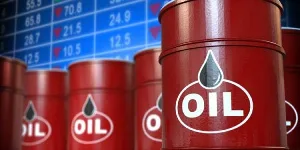
    The Economist Intelligence Unit (EIU) expects global oil prices to stay above $80 per barrel until late 2025, according to its recent latest projection.

    This will have a significant impact on inflationary pressures for many countries, especially those experiencing currency depreciation against the US dollar.

    The UK-based firm, citing data from the International Energy Agency, noted that the global oil market entered a deficit in the first quarter of 2024 due to geopolitical tensions and supply-demand pressures driving prices up.

    “We have revised our oil price forecasts, with dated Brent Blend expected to remain above US$80/barrel until late 2025. This will increase inflationary pressures in many countries as their currencies weaken against the dollar.”

    The EIU also predicts that oil prices will trade near $90 per barrel for the next few months of this year.

    “Even with minimal disruptions to oil shipments and traders overlooking military escalation concerns, prices are likely to stay high due to the global market deficit. OPEC+ is expected to adhere to reduced output quotas, and Saudi Arabia will maintain sharp voluntary cuts until mid-2024, gradually increasing production towards the end of the year.”

    “We anticipate a modest increase in US production in 2024 before stabilizing in 2025. Despite rising prices, the US oil rig count has decreased by 14% from last year, with companies prioritizing shareholder dividends.”

    The recent projection from the EIU is anticipated to affect Ghana’s economy, which is grappling with inflation, depreciation of the cedi, and an ongoing IMF program.
  • The 10 most expensive cities in the world

    The 10 most expensive cities in the world


    In news that won’t come as a surprise to anyone who’s been feeling the pinch, the global cost of living crisis is far from over, particularly impacting big-city dwellers.

    According to the annual Worldwide Cost of Living Index published by the Economist Intelligence Unit (EIU), the average cost of living rose by 7.4% this year, with grocery prices experiencing the fastest increase.

    Although this is slightly lower than the 8.1% jump recorded in the same survey in 2022, the numbers remain significantly higher than “historic trends.”

    On a positive note, utility prices, the fastest-rising category in the 2022 survey, showed the least amount of inflation this time around.

    The slowdown in price increases is attributed to the waning of supply chain issues since China lifted its Covid-19 restrictions in late 2022. However, grocery prices continue to rise as retailers pass on higher costs to consumers.

    “We expect inflation to continue to decelerate in 2024, as the lagged impact of interest-rate rises starts affecting economic activity, and in turn, consumer demand,” stated Upasana Dutt, Head of Worldwide Cost of Living at EIU. Dutt also warned of the upside risks of armed conflict and extreme weather, stating that further escalations of the Israel-Hamas war could drive up energy prices, while a greater-than-expected impact from El Niño could push up food prices even further.

    The increase in living costs has made many cities more expensive to live in, with Singapore and Zurich (Switzerland) topping the list as the most expensive cities in the world. Singapore tied with New York for first place last year but slipped to third this year. Zurich, which jumped from sixth place on last year’s list, was attributed to the strength of the Swiss Franc along with high prices of groceries, household goods, and recreation.

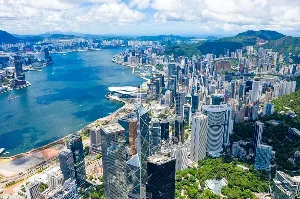
    Hong Kong, Los Angeles, Paris, Tel Aviv, Geneva, and San Francisco also featured in the top 10 most expensive cities. Notably, Russian cities Moscow and St. Petersburg experienced sharp drops in the ranking, and Damascus, Syria, remained the world’s cheapest city.

    The survey, which excluded Venezuela’s Caracas due to a significant rise in prices, covered 173 major cities, comparing more than 400 individual prices across 200 products and services.

  • Fitch Solution, EIU predict Mahama as winner of 2024 elections

    Fitch Solution, EIU predict Mahama as winner of 2024 elections

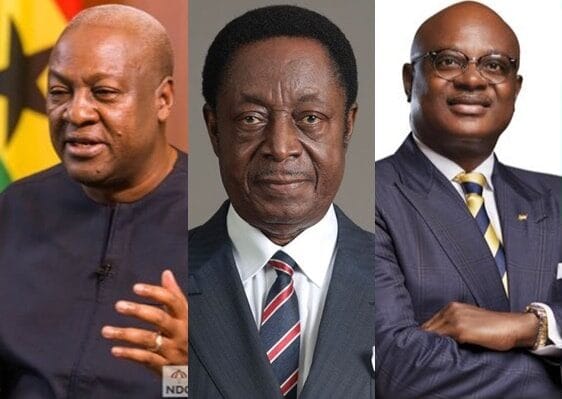
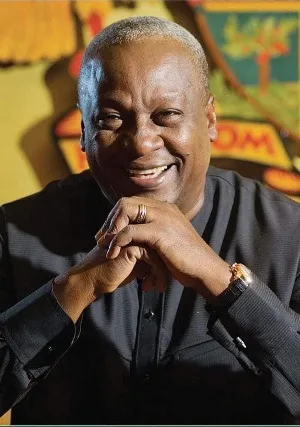
    Two UK-based research firms have predicted a win for former President John Dramani Mahama and the National Democratic Congress (NDC) in the 2024 general elections.

    The Economist Intelligence Unit (EIU) and Fitch Solutions, according to a myjoyonline.com report, made this projection.

    The EIU attributed the potential change to factors such as declining living standards, limited job opportunities, and inadequate public services in Ghana.

    Similarly, Fitch Solutions anticipates that the New Patriotic Party’s (NPP) tenure is unlikely to continue, predicting that former President Mahama will secure victory in the swing regions with a substantial margin, obtaining nearly 48% compared to Vice President Bawumia’s projected 29%.

    In support of their predictions, Fitch Solutions incorporated data from Global Info Analytics alongside their proprietary data.

    This data analysis places the NDC ahead of the NPP in key regions, including the Volta and Oti Regions, the three Northern Regions, and the Akan Regions, making it unlikely for the ruling NPP to retain power after the 2024 election.

  • Mahama to win 2024 election – Fitch Solution, EIU predicts

    Mahama to win 2024 election – Fitch Solution, EIU predicts

    According to a report on myjoyonline.com, both the Economist Intelligence Unit (EIU) and Fitch Solutions, two UK-based research firms, have predicted a win for former President John Dramani Mahama and the National Democratic Congress (NDC) in the upcoming 2024 General elections.

    The EIU attributes the potential shift to factors such as declining living standards, limited job opportunities, and insufficient public services in Ghana.

    Similarly, Fitch Solutions anticipates that the New Patriotic Party’s (NPP) tenure is unlikely to continue, projecting that former President Mahama will secure victory in swing regions with a significant margin, obtaining nearly 48% compared to Vice President Bawumia’s projected 29%.

    To support their forecasts, Fitch Solutions incorporated data from Global Info Analytics alongside their proprietary data.

    The analysis places the NDC ahead of the NPP in key regions, including the Volta and Oti Regions, the three Northern Regions, and the Akan regions, suggesting a challenging scenario for the ruling NPP to retain power after the 2024 election.

  • Akufo-Addo ‘begs’ Japan’s PM to help Ghana obtain $3bn IMF deal

    Akufo-Addo ‘begs’ Japan’s PM to help Ghana obtain $3bn IMF deal

    In order to assist Ghana in reaching a deal with the International Monetary Fund (IMF) Board for the 3 billion dollar balance of payment support, President Akufo-Addo has solicited the backing of Japan.

    According to Akufo-Addo, Japan which is a member of the Paris Club has a major role to play in Ghana securing the IMF deal.

    Speaking at a meeting with the Japanese Prime Minister, Fumio Kishida who made a stopover at the Jubilee House Tuesday evening, Mr Akufo-Addo said Ghana will repay Japan’s support.

    “Ghana is also counting on the support of Japan in reaching a favourable agreement with the International Monetary Fund which will pave the way for the robust recovery of Ghana’s economy,” President Akufo-Addo said.

    In July 2022, Ghana requested for a three-year, US$3bn extended credit facility (ECF) from the IMF. An arrangement was agreed with the IMF in December 2022, with the aim of restoring credibility among investors, building reserve buffers and improving fiscal and debt sustainability.

    However, debt restructuring needs to be agreed upon with Ghana’s external creditors before the IMF’s Executive Board can sign off on the ECF.

    Meanwhile, Ghana’s hope of securing an IMF board approval is expected to delay owing to prolonged external debt-restructuring negotiations, and the involvement of numerous stakeholders in the process, according to the Economic Intelligence Unit (EIU).

    The EIU in its 2023 Country Report on Ghana, stated that it anticipates Ghana to secure restructuring agreements on its public external debt during 2023-24, involving official and private creditors alike.

    It however, notes that, given the country’s pressing macroeconomic crisis, “the conclusion of a domestic debt-swap operation in February and increasing international attention on speeding up external debt restructurings, our core forecast remains that the IMF programme will be approved by mid-2023.”

    “We expect Ghana to secure restructuring agreements on its public external debt during 2023-24, involving official and private creditors alike. This will include a combination of write-offs, maturity extensions and reductions in interest rates. We expect official creditors to agree to a deal in 2023, and this, combined with the domestic debt restructuring that has already been secured, should provide enough reassurance to reduce Ghana’s risk of debt distress and allow the IMF to approve the agreed programme”.

    “However, there is a material risk that IMF board approval will be delayed owing to prolonged external debt-restructuring negotiations, given the involvement of multiple stakeholders in the process,” it noted.

  • EIU projects 1.3% GDP growth rate for Ghana in 2023

    EIU projects 1.3% GDP growth rate for Ghana in 2023

    The Economist Intelligence Unit predicts that Ghana’s GDP would grow by 1.3% in 2023, which will cause a substantial slowdown.

    This falls short of the World Bank’s and the IMF’s predictions of 1.8% and 1.6%, respectively.

    The UK-based group predicts that real GDP growth will decline in 2023 due to the impact that rising prices and monetary tightening will have on private consumption and investment.

    Government spending would thereafter decrease.

    According to its 2023 Country Report on Ghana, growth will be moderate in 2024 as tightness continues, but it will quicken up in 2025–2027 as new projects come online, driving an increase in gold and oil export revenues.

    “Growth will slow to 1.3% in 2023, as a cost-of-living squeeze, public spending cuts and monetary tightening by the BoG will cause domestic demand to contract for the first time since 2014. Reduced consumption and sustained cedi depreciation will, however, help to boost net exports, the sole growth driver in 2023 and the main factor behind our growth forecast of 2.3% for 2024″, it added.

    Further, EIU said macroeconomic instability and a public debt crisis will weigh on Ghana’s business environment and its ambitions to become a West African trading hub.

    A weak regional regulatory environment, poor transport links and low foreign trade, except in commodities, will also hamper progress.

    Continuing, the EIU said it expects the government to remain committed to fiscal consolidation in 2023-27 in a bid to bring the public finances and debt back onto a sustainable path, underpinned by an International Monetary Fund programme.

    The 2023 budget includes measures to both widen the tax net and extend spending cuts.

    In line with EIU expectations, in mid-April 2023, President Akufo-Addo assented to three new revenue-raising bills: the Income Tax Amendment Bill, the Excise Duty Amendment Bill and the Growth and Sustainability Amendment Bill.

    It added that the bills will boost revenue over the forecast period, helping to shrink the fiscal deficit to 7.1% of GDP in 2023 (from an estimated 8.3% of GDP in 2022) and steadily to 4.4% of GDP in 2027.

    It stressed that “despite revenue mobilisation measures in the 2023 budget including the reintroduction of road tolls, a 2.5-percentage-point rise in the value-added tax (VAT) rate, to 15%, and an increase in excise duties, a slowing economy will keep revenue/GDP ratio below potential in 2023″. 

    However, it concluded that the quickening economic growth will push up the ratio in 2024-27, adding “increasing administrative efficiency under IMF guidance will also boost revenue in 2023-27, as will an increase in the trade tax take in 2025-27, driven by rising gold and oil output”.

  • EIU predicts further delay in IMF approval for Ghana

    EIU predicts further delay in IMF approval for Ghana

    Given the involvement of numerous parties, the Economist Intelligence Unit (EIU) projects that the International Monetary Fund board approval for Ghana would be postponed due to protracted external debt-restructuring negotiations.

    The UK-based company predicted that Ghana would reach restructuring agreements on its public external debt during 2023–2024, involving both official and private creditors. This prediction was made in its 2023 Country Report on Ghana.

    This will incorporate a mix of write-offs, maturity extensions, and interest rate decreases.

    “We expect official creditors to agree to a deal in 2023, and this, combined with the domestic debt restructuring that has already been secured, should provide enough reassurance to reduce Ghana’s risk of debt distress and allow the IMF to approve the agreed programme”.

    “However, there is a material risk that IMF board approval will be delayed owing to prolonged external debt-restructuring negotiations, given the involvement of multiple stakeholders in the process”, it cautioned.

    Already, there had been mixed expectations of the IMF support programme by May 2023.

    Ghana first requested an IMF extended credit facility (ECF) programme in early July 2022 against a backdrop of unsustainable debt levels, soaring debt-service costs, a severely weakened currency and large twin fiscal and current account deficits.

    The local-currency debt swap that was announced by the government in early December 2022, and confirmation of plans to launch an external debt-restructuring programme, paved the way for the government to reach a staff-level agreement with the IMF for a three-year, $3 billion ECF arrangement on December 12, 2022.

    Soon afterwards, in mid-December, the country announced the suspension of payments on most of its external debt, setting the stage for a restructuring process.

  • NDC to win 2024 elections due to ‘poor’ NPP governance – EIU

    NDC to win 2024 elections due to ‘poor’ NPP governance – EIU

    The Economic Intelligence Unit has noted that the current economic hardship and fall in standard of living will cause electorates to abandon the New Patriotic Party (NPP) come 2024.

    In its latest assessment, the EIU has projected a change in government – where the ruling party hands over power to the opposition National Democratic Congress (NDC).

    “Our baseline forecast is that economic hardships, the fallout from debt restructuring and poor governance will create an anti-incumbency wave and push the electorate to seek change.

    “The NDC therefore stands a strong chance of winning the 2024 presidential poll,” parts of the report read.

    Also, the NDC is tipped to have the “majority” in Parliament.

    The 8th Parliament is a hung Parliament

    The London-based analyst reiterated that the shift in power shall be “driven by anti-incumbency sentiment and public discontent with the current government over worsening living standards.”

    The Member of Parliament for Abetifi, Bryan Acheampong, has also communicated that the NPP will work tirelessly to ensure the NPP retains power.

    The recent report however does not indicate whether whoever stands as flagbearer for the NDC could increase or thwart the party’s chances.

    In EIU’s previous report, it did indicate that the opposition party can revitalise the prospect of victory with a fresh presidential candidate. But that projection was quashed by the National Communications Officer of the party, Sammy Gyamfi, who said former President John Mahama remains the best candidate.

    Meanwhile, EIU expects “policy to continue to focus on ensuring macroeconomic stability,” irrespective of who retains power.

    Also, it anticipates that the new government “will face similar economic challenges to those its predecessor did” however, the “overall political stability will be maintained, as Ghana’s main parties and citizens have faith in the country’s well-established democratic institutions and confidence that any transfer of power will be fair”.

    Source: The Independent Ghana

  • Coronavirus could shake up world’s most expensive cities

    Hong Kong, Singapore, and Osaka have just been ranked as the world’s most expensive cities to live in.

    But this may not be the case after the full impact of the coronavirus pandemic takes its toll.

    Cities that get a large part of their income from tourism could become cheaper as their economies shrink and prices are driven down.

    This is one of the predictions made by the Economist Intelligence Unit (EIU), which tracks living costs globally.

    Its Worldwide Cost of Living Survey for 2020 was compiled in November 2019, before the coronavirus became a pandemic. Its the next survey could look very different.

    “Cities that rely on tourism should see some downward pressure on prices. So Singapore and Hong Kong might not hold the top spot going forward. We could see a different city on top,” said Simon Baptist, the EIU’s chief economist.

    The impact of the coronavirus has shaken the world economy, with the travel and tourism industries among the hardest hit. Hong Kong and Singapore are two of the cities that could see a big drop in revenue as demand for leisure activities, restaurants and accommodation plummets. This weaker demand could drive down prices, making these cities cheaper for their inhabitants.

    The EIU report saw Osaka knock Paris out of its top three most expensive cities as a stronger yen made Japan’s third-biggest city more costly to live in. The researchers looked at more than 400 prices across 160 products and services. These included cars and electronic goods, which have seen major supply disruptions in China.

    While the car industry was badly impacted by China’s factory shutdowns during January and February, production is gradually recovering to pre-coronavirus levels. This could result in cheaper cars as manufacturers and dealers have surplus stock.

    “Once demand starts to return, we would generally expect vehicle prices to be lower, rather than higher, as carmakers and dealers try to earn back some lost revenues. In some countries or regions where the auto is an important industry, subsidies will further help to lower prices,” Ana Nicholls, industry director at the EIU said.

    Consumers may switch car brands moving to those that have stronger supply chains and less disruption, she added.

    The EIU also predicted that the cost of living in some cities may rise as measures to slow the spread of the virus increases businesses overheads.

    Source: